Broccoli Pasta Salad Recipe for Potlucks
Consistency matters more than complexity when a potluck dish needs to satisfy different tastes without creating extra work.
Simple ingredients combined the right way often outperform complicated recipes that look impressive but fall flat on flavor. This broccoli pasta salad leans into balance instead of fussiness.
I started making versions of this after realizing most pasta salads either tasted bland or turned soggy too fast.
A few smart tweaks changed everything, and now it’s the bowl people actually finish first. It’s reliable, flexible, and honestly hard to mess up once you know the rhythm.

Ingredients
Method
- Bring a large pot of salted water to a boil and cook pasta until just past al dente. Drain and rinse under cool water. Let it cool completely.
- Chop broccoli into small bite-sized pieces. Optional: blanch for 30 seconds and cool immediately for a softer texture.
- In a bowl, whisk together mayonnaise, Greek yogurt, apple cider vinegar, Dijon mustard, honey, salt, and black pepper until smooth.
- In a large bowl, combine cooled pasta, broccoli, tomatoes, red onion, cheese, and bacon if using.
- Add dressing gradually and toss gently until evenly coated.
- Cover and refrigerate for at least 1 hour to allow flavors to develop.
- Toss again before serving and adjust seasoning if needed.
- Garnish with parsley if desired and serve chilled.
What Makes This Recipe Shine
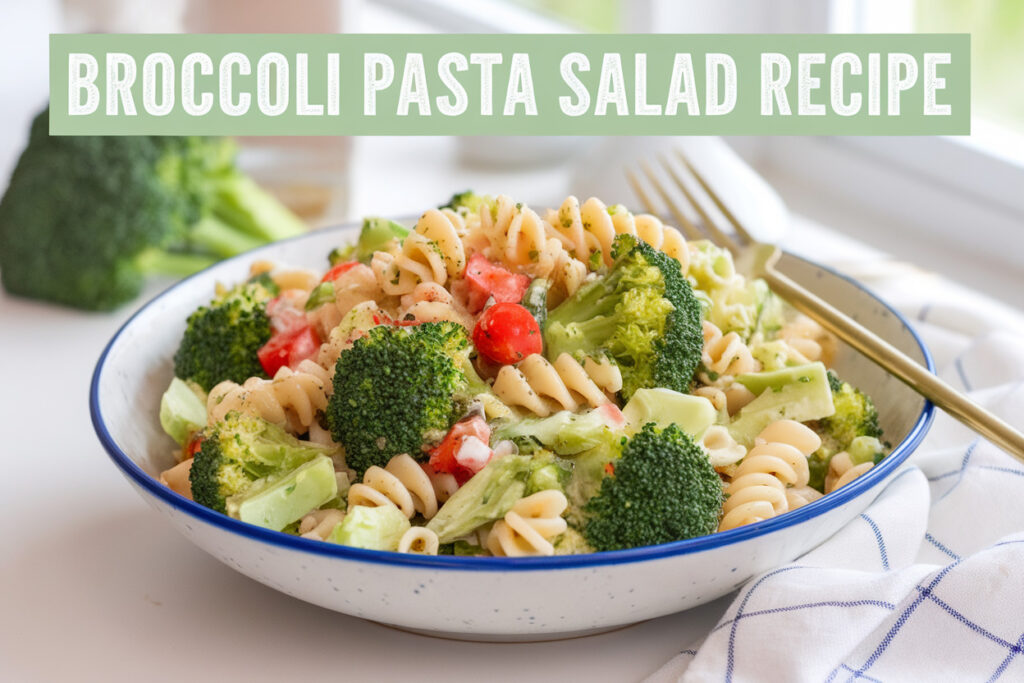
This recipe works because it solves the biggest pasta salad problem: texture collapse. Too many versions rely on heavy dressing that turns everything soft after an hour, but this one keeps the broccoli crisp while letting the pasta absorb just enough flavor to feel cohesive without becoming mushy.
The contrast between tender pasta and fresh broccoli creates real bite, which keeps every forkful interesting. I’ve learned that potluck food needs personality without being overwhelming, and broccoli quietly delivers that balance while still feeling familiar enough for picky eaters.
Another reason this recipe shines is how forgiving it is. You can prep parts ahead, adjust ingredients based on what’s in your fridge, and still end up with something that tastes intentional rather than thrown together at the last minute.
Flavor-wise, the dressing does the heavy lifting without shouting. It’s creamy but bright, slightly tangy, and designed to coat instead of drown the ingredients, which means people keep going back for seconds instead of feeling full after two bites.
I also love how well it travels. Some salads separate or dry out during transport, but this one actually improves after sitting for a bit because the flavors settle and mingle naturally, almost like leftovers that magically taste better the next day.
Most importantly, it fits real life. You don’t need specialty tools, complicated timing, or chef-level skills, and that’s exactly why it consistently works whether you’re feeding coworkers, family, or a group where everyone claims they’re “not that hungry” before demolishing the bowl.
Ingredients You’ll Need
- 12 oz short pasta (rotini or fusilli) – Shapes with grooves hold dressing better than smooth pasta.
- 3 cups fresh broccoli florets – Chop small so they mix evenly and stay crisp.
- 1 cup cherry tomatoes, halved – Adds freshness and a little sweetness.
- ½ cup red onion, finely diced – Use sparingly for flavor without overpowering.
- ¾ cup shredded cheddar cheese – Sharp cheddar works best for contrast.
- ½ cup cooked bacon pieces (optional) – Adds smoky depth if you want extra richness.
- ½ cup mayonnaise – Forms the creamy base of the dressing.
- ¼ cup plain Greek yogurt – Lightens the dressing while adding tang.
- 2 tablespoons apple cider vinegar – Keeps the flavor bright.
- 1 tablespoon Dijon mustard – Adds subtle sharpness and structure.
- 1 teaspoon honey – Balances acidity without making it sweet.
- Salt and black pepper to taste – Season gradually rather than all at once.
- 2 tablespoons chopped parsley (optional) – Fresh finish that wakes everything up.
Step-by-Step Instructions
Step 1: Cook the Pasta Properly
Bring a large pot of salted water to a rolling boil before adding the pasta. Salt matters here because it seasons the pasta internally instead of relying only on dressing later.
Cook until just past al dente but not soft, since the pasta firms slightly as it cools. Drain immediately and rinse under cool water to stop cooking and prevent clumping, which keeps the final salad light instead of sticky.
Let the pasta drain thoroughly because excess water dilutes the dressing. I usually spread it briefly on a baking sheet so steam escapes faster and texture stays firm.
Step 2: Prep the Broccoli for Maximum Crunch
Cut broccoli florets into bite-sized pieces rather than leaving large chunks. Smaller pieces distribute flavor evenly and prevent awkward fork moments at a crowded table.
If raw broccoli feels too aggressive, blanch it for 30 seconds in boiling water and immediately transfer it to ice water. This softens the edge slightly while preserving that fresh snap people actually enjoy.
Dry the broccoli completely before mixing. Moisture is the quiet enemy of pasta salad because it waters down seasoning without anyone noticing why the flavor feels muted.
Step 3: Build the Dressing
In a medium bowl, whisk mayonnaise, Greek yogurt, apple cider vinegar, Dijon mustard, and honey until smooth. The goal is creamy but pourable, not thick like sandwich spread.
Taste before seasoning because acidity levels vary between brands. Add salt and pepper slowly, mixing between adjustments so you don’t overshoot and end up chasing balance later.
The dressing should taste slightly stronger than you expect. Once mixed with pasta and vegetables, flavors mellow naturally, so a bold start leads to a perfectly balanced finish.
Step 4: Combine Ingredients the Right Way
Add cooled pasta to a large mixing bowl first, followed by broccoli, tomatoes, onion, cheese, and bacon if using. Toss lightly before adding dressing so ingredients distribute evenly.
Pour dressing in stages instead of all at once. This prevents overdressing and helps you control texture, which honestly separates good pasta salad from great pasta salad.
Use a large spoon or spatula to fold gently rather than stirring aggressively. Rough mixing breaks pasta and makes the salad look heavy instead of fresh.
Step 5: Chill and Finish
Cover the bowl and refrigerate for at least one hour so flavors settle together. This resting time isn’t optional because it transforms separate ingredients into a unified dish.
Before serving, taste again and adjust seasoning if needed. Pasta absorbs dressing over time, so a small splash of yogurt or mayo can revive creaminess if it feels dry.
Sprinkle parsley just before serving for freshness and color. It’s a small detail, but it makes the dish look intentional instead of rushed.
Common Mistakes to Avoid
One common mistake is overcooking the pasta because softer noodles seem harmless at first. Once mixed with dressing, though, they continue absorbing moisture and quickly turn the salad heavy and dull.
Another issue comes from skipping seasoning during cooking. Pasta cooked in plain water forces you to overcompensate later with salt-heavy dressing, which never tastes as balanced as seasoning from the start.
Many people add dressing while ingredients are still warm. Heat breaks down the creamy texture and causes separation, leaving you with an oily coating instead of a smooth finish.
Using oversized broccoli pieces also creates imbalance. Large chunks dominate bites and make the salad feel uneven, while smaller cuts blend naturally with pasta and other ingredients.
Overmixing quietly ruins texture. Stirring too aggressively crushes ingredients and releases moisture, which leads to a soggy consistency that no amount of chilling can fix afterward.
Finally, serving immediately after mixing limits flavor development. Giving the salad time to rest allows seasoning to settle and creates that cohesive taste people associate with really good potluck food.
Alternatives & Substitutions
If you prefer a lighter version, swap half the mayonnaise for additional Greek yogurt. I’ve done this plenty of times when I wanted something fresher, and it keeps the creaminess without feeling heavy.
For a dairy-free option, use a plant-based mayo and skip the cheese or replace it with roasted sunflower seeds. The crunch adds interest while maintaining the overall structure of the salad.
Protein variations work beautifully here. Grilled chicken, chickpeas, or even diced turkey transform this from a side dish into a complete meal without changing the core flavor profile.
You can also change the flavor direction by adjusting the dressing. Adding lemon juice instead of vinegar creates a brighter taste, while smoked paprika introduces subtle warmth without overpowering the vegetables.
Pasta swaps are surprisingly flexible. Whole wheat pasta adds nuttiness, and gluten-free varieties work well as long as you rinse and cool them carefully to prevent sticking.
Vegetable additions allow personalization without stress. Bell peppers, shredded carrots, or peas blend naturally, and honestly this recipe handles fridge clean-outs better than most structured salads.
FAQ
Can I make this broccoli pasta salad ahead of time?
Yes, and it actually benefits from being made several hours early. The flavors settle and deepen while chilling, which makes the salad taste more cohesive by serving time.
If preparing a day ahead, reserve a small amount of dressing to mix in before serving. This refreshes texture and prevents dryness after refrigeration.
How long does broccoli pasta salad last in the fridge?
Stored in an airtight container, it stays fresh for about three to four days. The broccoli softens slightly over time but still holds enough structure to remain enjoyable.
I usually give it a quick stir and adjust seasoning before eating leftovers. A tiny splash of yogurt or mayo brings everything back to life.
Can I use frozen broccoli instead of fresh?
Frozen broccoli works in a pinch, but texture changes significantly. It becomes softer after thawing, so the salad loses some of the crisp contrast that makes this recipe stand out.
If you use frozen, thaw completely and pat dry thoroughly. Excess moisture can dilute the dressing faster than you expect.
What pasta shape works best?
Short shapes with ridges like rotini, fusilli, or farfalle perform best because they trap dressing inside folds. Smooth pasta tends to let dressing slide off, which makes flavor distribution uneven.
Avoid long noodles since they make serving awkward at gatherings. Bite-sized pieces keep things practical and neat.
How do I keep the salad from drying out?
The key is slightly overdressing at the start while keeping a small reserve for later. Pasta naturally absorbs moisture, so planning for that prevents disappointment.
Proper storage also matters. Keeping the salad tightly covered reduces air exposure that dries the surface.
Is this recipe good for picky eaters?
Absolutely, because the flavors stay familiar without being boring. Creamy dressing, mild vegetables, and optional add-ins let people customize their portions easily.
I’ve brought this to mixed groups where everyone had different preferences, and it consistently disappeared first. That’s usually the best test any potluck recipe can pass.
Final Thoughts
Reliable recipes earn their place by working every single time without demanding perfection. This broccoli pasta salad hits that sweet spot between comforting and fresh, which explains why it keeps showing up at gatherings in my circle.
Once you make it a couple of times, you’ll start adjusting it naturally to match your taste or whatever ingredients you already have. That flexibility is what turns a good recipe into one you actually keep using long after the potluck ends.