
Oven Roasted Asparagus Recipe with Garlic
Roasted vegetables only taste impressive when the texture and seasoning are handled properly. Asparagus, in particular, turns bland or soggy the second you rush it or overthink it.
This version keeps things simple and controlled, so you get crisp edges, tender centers, and real garlic flavor in every bite.
I’ve made asparagus more times than I can count, and this is the method I always come back to.
It works for busy weeknights, dinner parties, or those random moments when you open the fridge and realize you need a solid side dish fast.
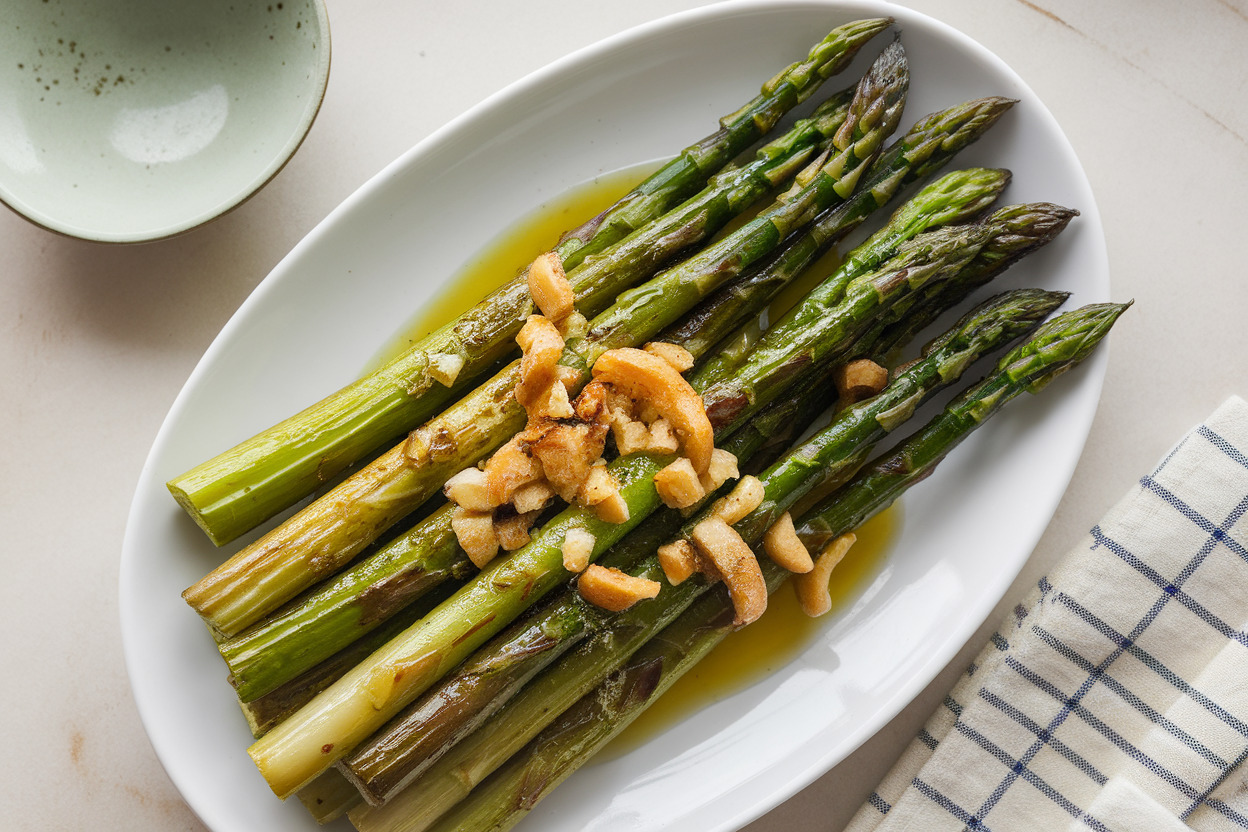
Ingredients
Method
- Preheat oven to 425°F (220°C).
- Wash asparagus and dry completely. Trim the woody ends by snapping them off.
- Place asparagus on a baking sheet in a single layer.
- Drizzle with olive oil and toss to coat evenly.
- Scatter sliced garlic over the asparagus, making sure it is lightly coated with oil.
- Sprinkle salt and black pepper evenly over the top.
- Roast for 10 to 14 minutes until tender with lightly crisp edges.
- Remove from oven and taste. Adjust seasoning if needed.
- Optional: finish with a squeeze of lemon juice or sprinkle with Parmesan cheese before serving.
What Makes This Recipe Shine
The real magic here comes down to balance. Asparagus cooks quickly, which means high heat and proper spacing matter more than fancy ingredients.
When you roast it hot enough, the natural sugars caramelize slightly, and that’s what gives you those lightly crisp tips that feel restaurant-level without any drama.
Garlic plays a supporting role, but it has to be handled carefully. If you throw it in too early or chop it too fine, it burns before the asparagus finishes cooking. I like slicing it thin and coating it lightly in oil so it softens and turns golden instead of bitter.
Texture makes or breaks roasted asparagus. Nobody wants limp spears sliding around on a plate. When you keep them in a single layer and don’t overcrowd the pan, you allow steam to escape and edges to crisp instead of turning mushy.
Another reason this recipe works so well is that it pairs with almost everything. I’ve served it alongside grilled chicken, baked salmon, pasta, steak, and even tossed leftovers into omelets the next morning. It’s low effort, high reward, and that’s my favorite kind of cooking.
Ingredients You’ll Need
- 1 bunch fresh asparagus (about 1 pound) – Look for firm spears with tight tips and bright green color
- 3–4 cloves garlic, thinly sliced – Slicing works better than mincing here
- 2 tablespoons olive oil – Use good quality; it makes a difference
- ½ teaspoon kosher salt – Adjust based on taste
- ¼ teaspoon freshly ground black pepper – Freshly cracked gives better flavor
- Optional: squeeze of fresh lemon juice – Adds brightness at the end
- Optional: grated Parmesan cheese – For a salty finish if you want it
Step-by-Step Instructions
1. Prep the Asparagus Properly
Start by washing the asparagus and drying it completely. Moisture creates steam, and steam is the enemy of crisp edges.
Trim the woody ends by snapping each spear near the bottom. It naturally breaks where the tough part ends, and that trick never fails.
If the spears are thick, you can peel the lower third lightly with a vegetable peeler. I only do this when they’re noticeably chunky, otherwise I leave them alone.
2. Season with Intention
Preheat your oven to 425°F. High heat is not negotiable here because it’s what gives you caramelization instead of softness.
Place the asparagus on a large baking sheet in a single layer. Drizzle olive oil over them and toss gently with your hands so every spear gets coated evenly.
Scatter the sliced garlic over the top. Make sure the garlic pieces touch the oil and aren’t sitting dry on the pan, or they’ll burn too quickly.
Sprinkle salt and pepper evenly across everything. Don’t dump it in one spot; seasoning distribution matters more than people realize.
3. Roast Without Overcrowding
Slide the tray into the oven and roast for 10 to 14 minutes. Thinner spears cook faster, so start checking around the 9-minute mark.
You’re looking for lightly browned tips and a vibrant green color. The stalks should feel tender when pierced with a fork but still hold their shape.
Avoid stirring halfway unless you see uneven browning. Every time you move them, you interrupt the roasting process and lose some of that crispness.
4. Finish Strong
Remove the tray from the oven and taste one spear immediately. This is where you adjust seasoning if needed.
If you like brightness, squeeze a little fresh lemon juice over the top. It cuts through the richness and makes everything pop.
For a richer version, sprinkle grated Parmesan while the asparagus is still hot. The residual heat melts it just enough without turning it greasy.
Common Mistakes to Avoid
One of the biggest mistakes is overcrowding the pan. When the spears overlap, they trap moisture and steam instead of roast. You end up with limp vegetables, and nobody gets excited about that.
Another issue is using low heat because you’re worried about burning something. Roasting asparagus at 350°F won’t give you the same caramelization, and it drags out cooking time. High heat works fast and keeps the texture intact.
Burning the garlic happens more often than people admit. If you mince it too fine or leave it exposed without oil, it turns bitter quickly. Sliced garlic coated in oil solves that problem almost every time.
Overcooking is the final trap. Asparagus goes from perfect to floppy in just a couple of minutes. Pull it out when it still has a slight bite, because it continues cooking from residual heat.
Alternatives & Substitutions
If you don’t have fresh garlic, garlic powder can work in a pinch. Use about ½ teaspoon and mix it into the oil before tossing the asparagus so it coats evenly.
Lemon zest makes a great swap if you’re out of fresh juice. It adds fragrance without extra moisture, which keeps the texture crisp.
Sometimes I toss in red pepper flakes for a little kick. It doesn’t overpower the dish, but it adds that subtle heat that makes you go back for another spear.
For a dairy-free finish, skip Parmesan and try toasted almonds instead. They add crunch and a slightly nutty flavor that pairs beautifully with roasted vegetables.
If olive oil isn’t your thing, avocado oil works just as well because it handles high heat nicely. I’ve tested both, and honestly, the difference is minimal when seasoned properly.
FAQ
How do I know when asparagus is done roasting?
Look at the tips and edges first because they tell the story. When they start browning slightly and the stalks turn bright green with a tender bite, it’s ready.
If it bends too easily or looks dull and wrinkled, you’ve gone a little too far. Aim for tender with structure, not soft and floppy.
Can I make this ahead of time?
You can roast it ahead and reheat briefly in a hot oven. Just avoid microwaving if possible because that softens the texture quickly.
I prefer making it fresh since it only takes about 15 minutes total. It’s one of those dishes that doesn’t need advance prep.
Should I line the baking sheet?
You can use parchment paper if you want easier cleanup. Just know that direct contact with metal sometimes gives slightly better browning.
I usually skip lining when I want maximum caramelization. A quick soak in warm water makes cleanup manageable anyway.
Can I use frozen asparagus?
Fresh works best for roasting. Frozen asparagus releases a lot of moisture, which makes crisping difficult.
If frozen is all you have, thaw and dry it thoroughly before roasting. Even then, expect a softer texture.
What proteins pair best with this recipe?
This asparagus works beautifully with roasted chicken, grilled steak, or baked salmon. Its simple seasoning makes it flexible.
I’ve even tossed leftovers into pasta with olive oil and extra garlic. It holds up surprisingly well in next-day dishes.
How do I store leftovers?
Place cooled asparagus in an airtight container and refrigerate for up to three days. Keep it dry to preserve texture.
Reheat in a hot oven or skillet rather than a microwave. That small step keeps it from turning soggy.
Final Thoughts
Simple techniques usually beat complicated recipes when ingredients are fresh and handled properly. This roasted asparagus proves that point every single time I make it.
Keep the heat high, respect the garlic, and don’t crowd the pan. Once you nail those basics, this side dish becomes one of those reliable staples you’ll make without even thinking about it.