Red Cabbage Salad Recipe for Crunchy Freshness
Consistency usually fails when salads rely only on leafy greens that wilt quickly and lose texture before the meal even starts.
A crunchy base changes everything because it keeps flavor and structure intact long after dressing hits the bowl. That simple shift turns salad from a side obligation into something people actually want seconds of.
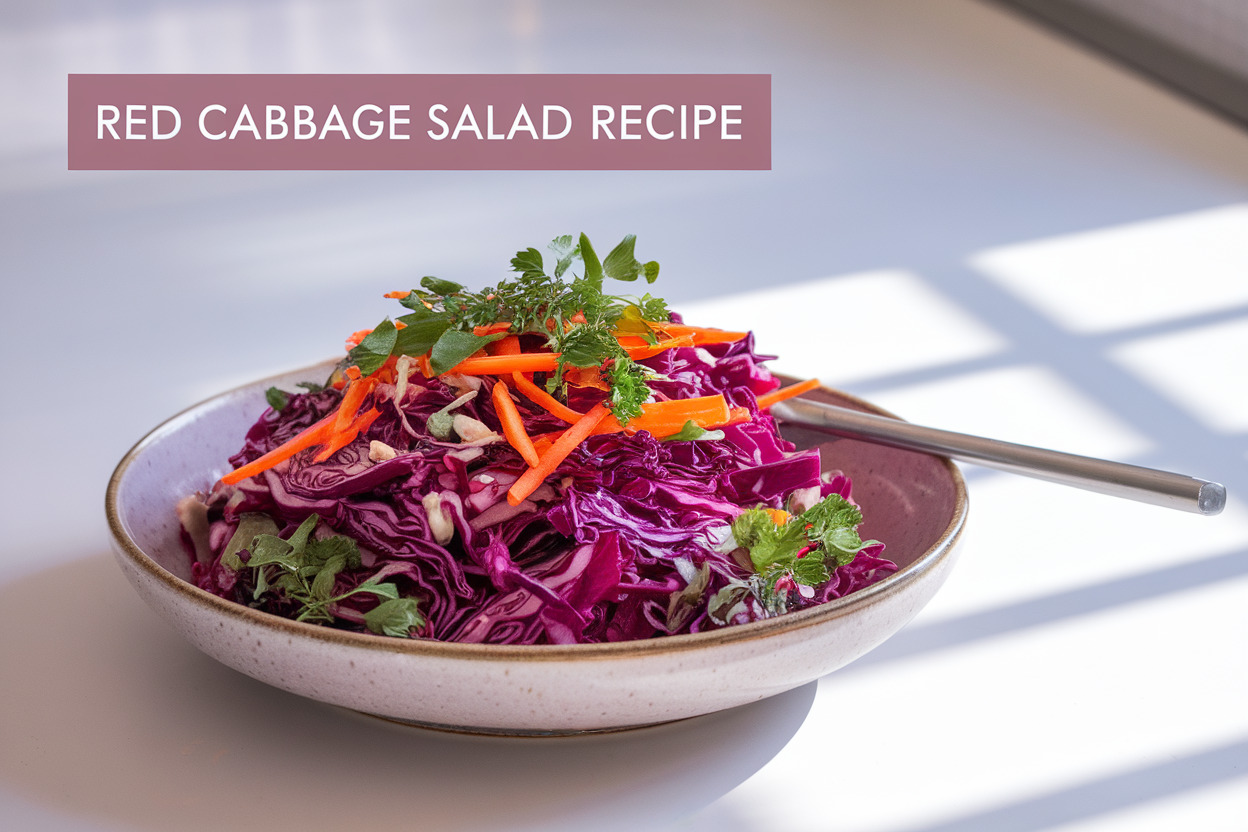
Red cabbage solves a problem most home cooks don’t realize they have. It holds dressing beautifully without turning soggy, and the flavor improves the longer it sits. Once I started using it regularly, regular lettuce honestly felt a little boring.
This recipe became my go-to when I wanted something fresh that didn’t require constant fussing. It works for quick lunches, heavy dinners, or those random fridge-cleanout moments where you still want food to taste intentional.
Ingredients
Method
- Finely shred the red cabbage and place it in a large bowl. Sprinkle with a pinch of salt and gently massage for about 1 minute to soften.
- Add grated carrot, chopped parsley, and nuts if using. Toss lightly to combine.
- In a small bowl, whisk together olive oil, apple cider vinegar, honey, Dijon mustard, lemon juice, salt, and black pepper.
- Pour dressing over the cabbage mixture gradually and toss well to coat evenly.
- Let the salad rest for at least 10 minutes to allow flavors to develop.
- Toss again before serving and adjust seasoning if needed.
What Makes This Recipe Shine
Red cabbage carries a natural balance that many vegetables struggle to achieve. It tastes slightly sweet, faintly peppery, and refreshingly crisp all at once, which means you don’t need complicated ingredients to make it interesting. The texture alone does half the work for you.
Unlike delicate salads that collapse under dressing, this one actually improves after mixing. The cabbage softens just enough while staying crunchy, creating that perfect middle ground between raw freshness and marinated flavor. I’ve left leftovers overnight more times than I can count, and somehow it tastes better the next day.
Another reason this recipe works so well comes down to contrast. The acidity from the dressing cuts through the cabbage’s earthiness, while small additions like nuts or herbs add layers without overwhelming the bowl. Everything feels intentional but still relaxed.
I also love how forgiving it is. Measurements don’t need to be perfect, substitutions rarely ruin it, and beginners can make it confidently without worrying about technique. That kind of flexibility makes cooking feel less stressful and more enjoyable.
Most importantly, it fits real life. You can prep it ahead, pack it for lunch, or serve it beside heavier meals to balance things out, and it never feels out of place. Some recipes demand attention; this one quietly makes you look like you planned ahead.
Ingredients You’ll Need
- 1 small red cabbage, finely shredded (remove tough core for better texture)
- 1 medium carrot, grated (adds natural sweetness and color contrast)
- 2 tablespoons fresh parsley, chopped (fresh herbs brighten everything)
- ¼ cup roasted peanuts or almonds, roughly chopped (optional but highly recommended for crunch)
- 2 tablespoons olive oil (use a mild one so flavors stay balanced)
- 1½ tablespoons apple cider vinegar (provides clean acidity)
- 1 teaspoon honey or maple syrup (balances sharpness without making it sweet)
- 1 teaspoon Dijon mustard (helps emulsify the dressing)
- ½ teaspoon salt, or to taste
- ¼ teaspoon black pepper, freshly ground if possible
- 1 teaspoon lemon juice (optional but adds freshness)
Step-by-Step Instructions
Step 1: Prepare the Cabbage Properly
Slice the cabbage into thin shreds using a sharp knife or mandoline. Thin slices matter because they soften faster and absorb dressing evenly instead of feeling tough.
Place the shredded cabbage into a large bowl and sprinkle a small pinch of salt over it. Massage it gently with your hands for about a minute to slightly break down the fibers and improve texture.
Step 2: Add Supporting Ingredients
Grate the carrot directly into the bowl so none of its moisture gets wasted. Toss in chopped parsley and nuts, distributing them evenly so every bite gets variety.
Mix lightly with your hands or tongs rather than over-stirring. Gentle mixing keeps the cabbage fluffy instead of compressed.
Step 3: Make the Dressing
In a small bowl, whisk olive oil, apple cider vinegar, honey, Dijon mustard, lemon juice, salt, and pepper. Whisk until the dressing looks slightly thick and unified rather than separated.
Taste the dressing before adding it to the salad. Adjust acidity or sweetness now because fixing it later becomes harder once mixed.
Step 4: Combine Everything
Pour the dressing gradually over the cabbage mixture instead of dumping it all at once. Toss thoroughly so every shred gets coated without drowning the salad.
Let the salad sit for at least 10 minutes before serving. This short resting time transforms the texture and allows flavors to settle together.
Step 5: Final Taste Adjustment
Taste again right before serving and adjust salt or acidity if needed. A tiny splash of vinegar or squeeze of lemon often wakes everything up.
Give the salad one last toss to redistribute dressing that settles at the bottom. Serve immediately or refrigerate for later.
Common Mistakes to Avoid
One common mistake is cutting cabbage too thick. Large chunks stay rigid and resist dressing, which makes the salad feel raw instead of pleasantly tender. Thin slicing completely changes the eating experience.
Another issue happens when people skip massaging the cabbage. That quick step softens fibers and reduces bitterness, and without it the salad can taste harsher than intended.
Overdressing ruins texture faster than anything else. Cabbage releases moisture naturally, so adding too much liquid early creates pooling at the bottom of the bowl instead of balanced flavor.
Many cooks also forget seasoning layers. Adding salt only at the end doesn’t penetrate the cabbage properly, while seasoning early helps flavors absorb more evenly.
Using dull knives surprisingly affects results too. Rough cuts bruise the cabbage and create uneven pieces, which leads to inconsistent texture throughout the salad.
Finally, serving immediately after mixing misses the magic window. Even ten minutes of resting time allows the dressing to mellow sharp edges and blend flavors naturally.
Alternatives & Substitutions
Green cabbage works if red cabbage isn’t available, though the flavor becomes slightly milder. I sometimes mix both for color contrast and a more layered crunch.
If vinegar feels too sharp, fresh lime juice offers a softer acidity. Lemon works beautifully as well, especially when paired with herbs like cilantro instead of parsley.
For added protein, toss in chickpeas or grilled chicken slices. The salad suddenly becomes a full meal rather than just a side dish, which honestly saves effort on busy days.
Nut allergies aren’t a problem here because sunflower seeds or pumpkin seeds deliver similar crunch. Toasting them lightly adds a deeper flavor that feels surprisingly satisfying.
You can also experiment with sweetness levels. A small grated apple or handful of raisins creates a sweet-savory balance that works especially well alongside spicy dishes.
Creamier versions exist too if that’s your preference. Mixing a spoonful of Greek yogurt into the dressing creates a tangy slaw-like texture without becoming heavy.
FAQ
How long does red cabbage salad last in the fridge?
It usually stays fresh for two to three days when stored in an airtight container. The texture softens slightly but remains pleasantly crunchy compared to lettuce-based salads.
Can I make this salad ahead of time?
Yes, and it actually benefits from early preparation. Making it a few hours ahead allows flavors to deepen while saving you last-minute kitchen stress.
Why is my cabbage salad too tough?
The cabbage likely wasn’t sliced thin enough or skipped the massage step. Both actions help break down fibers and make the salad easier to chew.
Is this recipe good for meal prep?
Absolutely, because it holds structure longer than most salads. I often pack it for lunches knowing it won’t turn soggy halfway through the day.
Can I skip the sweetener?
You can, but a small amount balances acidity and enhances natural cabbage sweetness. Without it, the dressing may taste sharper than intended.
What pairs well with red cabbage salad?
It works beautifully with grilled meats, roasted vegetables, or rice dishes. The freshness cuts through heavier foods and resets your palate between bites.
Can I use store-bought shredded cabbage?
Yes, though freshly shredded cabbage tastes brighter and stays crunchier. If using packaged cabbage, check dryness and remove any overly thick pieces.
Final Thoughts
Reliable recipes earn their place by solving everyday cooking problems without demanding extra effort. This red cabbage salad delivers freshness, crunch, and balance while staying incredibly simple to prepare.
Once you make it a few times, adjustments become second nature and the recipe starts feeling like your own. That’s usually the sign of a keeper, and honestly, this one keeps proving itself every time it lands on the table.