
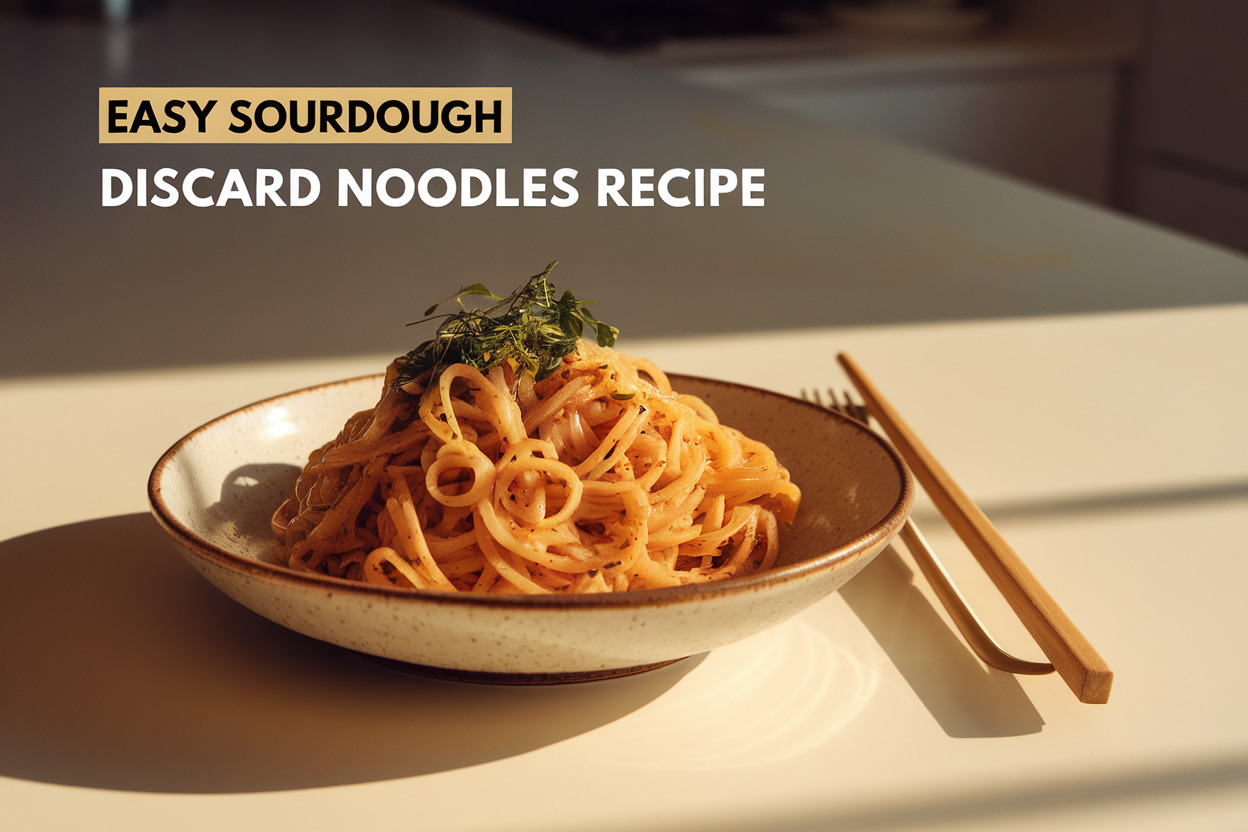
Easy Sourdough Discard Noodles Recipe
Sourdough discard gets wasted way too often for something that can turn into such a ridiculously good dinner.
These noodles are chewy, comforting, and honestly way more fun than pulling a box of pasta off the shelf. They cook fast, hold sauce like a champ, and taste like you actually tried.
The best part is they don’t need fancy equipment or complicated techniques. If you can mix dough and roll it out, you’re already qualified.
Ingredients
Method
- In a bowl, mix sourdough discard, egg, olive oil, and salt until combined.
- Gradually add flour and mix until a shaggy dough forms.
- Knead on a floured surface for 6 to 8 minutes until smooth and elastic.
- Cover and let the dough rest for 20 to 30 minutes.
- Divide dough and roll into thin sheets about 1 to 2 mm thick.
- Dust with flour or cornstarch, roll loosely, and slice into noodle strips.
- Unroll noodles and toss lightly with flour to prevent sticking.
- Bring salted water to a boil and cook noodles for 2 to 4 minutes.
- Drain and serve immediately with desired sauce or broth.
What Makes This Recipe Shine
The biggest win with sourdough discard noodles is the texture. Regular homemade noodles are great, but discard adds this slightly stretchy, bouncy bite that feels more “restaurant-style” without you having to do anything extra. It’s subtle, but once you notice it, you’ll want it every time.
Flavor-wise, you get a mild tang that plays so well with savory sauces. It’s not sour in an aggressive way, more like a little background depth that makes the noodles taste more interesting than plain flour-and-water pasta. Think “something’s different here” in a good way.
I also love how forgiving this dough is. If it’s a little sticky, you dust it with flour and move on with your life. If it’s too dry, a splash of water fixes it instantly. It doesn’t have that dramatic “ruin your whole day” attitude some dough recipes have.
And let’s talk convenience. This is one of those recipes that looks impressive but doesn’t take forever. Once you get the hang of rolling and slicing, you can crank out noodles faster than it takes to decide what to watch while you eat.
The real reason I keep coming back to these noodles is how versatile they are. They work in soups, stir-fries, garlic butter sauce, creamy sauces, and even simple broth bowls. Basically, if you’ve got a sauce and a stomach, these noodles will cooperate.
Ingredients You’ll Need
- 1 cup sourdough discard (unfed is totally fine, room temp is easier to work with)
- 2 cups all-purpose flour (plus extra for dusting and rolling)
- 1 large egg (adds richness and helps bind the dough)
- 1 tablespoon olive oil (keeps the dough smoother and less dry)
- 1/2 teaspoon salt (don’t skip it unless you enjoy bland noodles)
- 2–4 tablespoons water (only if needed, depends on your discard thickness)
- Cornstarch or extra flour (for preventing sticking after cutting)
Step-by-Step Instructions
1. Mix the Dough
Add your sourdough discard, egg, olive oil, and salt to a mixing bowl. Stir it together until it looks like a weird creamy batter with attitude.
Start adding the flour gradually, about half a cup at a time. Keep stirring until the dough starts forming and you can’t easily mix with a spoon anymore.
Once it turns shaggy and clumpy, switch to using your hands. Press and squeeze the dough together until it forms one rough ball.
2. Knead Until Smooth
Dust a clean surface with flour and place the dough on it. Knead for about 6–8 minutes until it becomes smooth, stretchy, and less sticky.
If the dough feels too wet, sprinkle in flour a little at a time. If it feels dry or cracks while kneading, add a teaspoon of water and keep going.
You’re aiming for a dough that feels like playdough but slightly firmer. It should bounce back when you poke it, but it shouldn’t glue itself to your fingers.
3. Let the Dough Rest
Wrap the dough ball in plastic wrap or cover it with an upside-down bowl. Let it rest for 20–30 minutes.
This rest time makes rolling the dough way easier. It relaxes the gluten so the dough stops fighting you like a stubborn toddler.
If you skip this step, you’ll still get noodles, but you’ll work harder for them. Resting is basically the cheat code.
4. Roll the Dough Out
Lightly flour your surface again and cut the dough into two pieces. Roll one half out while keeping the other half covered so it doesn’t dry out.
Use a rolling pin to flatten the dough into a thin sheet. You want it around 1–2 mm thick, which is thin enough to almost see through but not paper-thin.
If the dough sticks, dust with more flour and keep rolling. Don’t panic if it’s not a perfect rectangle, because noodles don’t care about geometry.
5. Cut Into Noodles
Dust the rolled dough sheet with flour or cornstarch on both sides. Roll it loosely into a log, kind of like you’re making a cinnamon roll but without the joy.
Use a sharp knife to slice the roll into strips. Thin slices give you ramen-style noodles, thicker ones give you more rustic pasta vibes.
Unroll the sliced strips gently with your fingers. Toss them with a little more flour or cornstarch so they don’t stick together in a sad clump.
6. Cook the Noodles
Bring a large pot of salted water to a boil. Drop in your noodles and stir right away so they don’t glue themselves to the bottom.
Cook for 2–4 minutes depending on thickness. Fresh noodles cook ridiculously fast, so don’t walk away unless you enjoy overcooked mush.
Taste one noodle before draining. When it’s chewy but cooked through, drain immediately and toss with your sauce or a little oil.
7. Serve Them Like You Mean It
These noodles taste best when you serve them right away. Toss them in garlic butter, soy sauce and sesame oil, creamy Alfredo, or a spicy chili sauce situation.
If you’re using them in soup, cook them separately and add them at the end. Otherwise, they soak up broth and get too soft fast.
Finish with fresh herbs, parmesan, chili flakes, or toasted sesame seeds. It’s not required, but it makes the whole bowl feel upgraded.
Common Mistakes to Avoid
One of the most common mistakes is adding too much flour too early. Sourdough discard varies a lot in thickness, so the dough might look sticky at first but tighten up after kneading. If you dump in extra flour right away, you’ll end up with noodles that feel tough and dry.
Another issue is skipping the resting step. People assume resting is optional because they’re hungry, but resting makes rolling easier and helps the dough behave. Without it, the dough pulls back every time you roll it out, which is annoying and honestly unnecessary stress.
Rolling the dough too thick is also super common. Thick noodles aren’t “wrong,” but they cook unevenly and can feel gummy in the middle. If you want that chewy noodle texture, thin rolling is the move.
Overcooking is a sneaky one because fresh noodles cook fast. You think, “Oh, pasta takes 8 minutes,” and suddenly your noodles are falling apart like wet paper. Start checking at the 2-minute mark and don’t trust your instincts unless your instincts are trained by years of noodle obsession.
And finally, not flouring the noodles enough after cutting is a classic rookie mistake. If you slice them and leave them sitting in a pile, they’ll fuse into one big noodle brick. Toss them with flour or cornstarch right away and save yourself the heartbreak.
Alternatives & Substitutions
If you don’t want to use all-purpose flour, bread flour works great. It gives the noodles more chew and strength, which is awesome if you’re using them in soup or stir-fry. The dough may feel a bit stiffer, but it’s totally manageable with a little extra water.
You can also swap in some whole wheat flour, but I’d keep it to about 25–30% of the total flour. Whole wheat adds a nutty flavor, but too much can make the noodles heavy and less stretchy. I like it best when I’m pairing the noodles with earthy sauces like mushroom or garlic herb butter.
If you don’t want egg in the dough, you can skip it. Just add a little more discard or a tablespoon of water plus a teaspoon of olive oil to make up for the moisture and richness. The noodles will still work, but they’ll taste slightly more rustic and less silky.
For extra flavor, you can mix in garlic powder, cracked black pepper, or even a little turmeric. Turmeric gives a gorgeous golden color without making the noodles taste weird, which feels like a win. I’ve done this when I want the noodles to look fancy without doing any actual fancy work.
If you want ramen-style noodles, add 1/2 teaspoon baking soda to the dough. It gives that classic bouncy texture and slight “springiness” ramen noodles have. It’s not traditional sourdough behavior, but it’s a fun little upgrade when you’re feeling bold.
FAQ
Can I make sourdough discard noodles without a pasta machine?
Absolutely, and honestly I do it by hand most of the time. A rolling pin works perfectly fine as long as you roll the dough thin enough.
The key is patience and flouring your surface so it doesn’t stick. Your noodles might look a little rustic, but rustic noodles taste amazing anyway.
How thick should I roll the dough?
Aim for about 1–2 mm thick. If you roll thicker than that, the noodles get heavy and chewy in a not-so-fun way.
If you like thicker noodles, go for it, but just expect a longer cooking time. Thin noodles are easier to cook evenly and they soak up sauce better.
Can I store the dough in the fridge before rolling?
Yes, and it’s actually a nice option if you want to prep ahead. Wrap it tightly and refrigerate for up to 24 hours.
Let it sit on the counter for 20 minutes before rolling so it softens slightly. Cold dough is workable, but it feels stiffer and more stubborn.
Can I freeze sourdough discard noodles?
Yep, they freeze surprisingly well. Toss the cut noodles in flour, spread them out on a baking sheet, and freeze until firm.
Once frozen, transfer them to a bag or container. Cook them straight from frozen, and just add about 1 extra minute to the boiling time.
Why are my noodles sticking together after cutting?
That usually happens when the dough is slightly moist and you didn’t dust enough flour or cornstarch. Fresh noodles are basically clingy by nature.
Toss them gently in flour right after cutting. If you’re not cooking immediately, spread them out so they don’t pile up.
What sauces go best with sourdough discard noodles?
Anything savory works, but creamy sauces are especially good because the tang from the discard balances the richness. Alfredo, garlic parmesan, and mushroom cream sauce all hit hard.
They also work great with Asian-style sauces like soy-sesame, chili garlic, or peanut sauce. Basically, they’re noodles, so they’re happy in almost any situation.
Do these noodles taste sour?
Not really, and definitely not in a strong way. You’ll get a mild tang that adds depth, but it won’t taste like you’re chewing on a sourdough loaf.
If your discard is extremely old and very acidic, the tang will be stronger. In that case, pair the noodles with a bold sauce like spicy stir-fry or garlicky butter sauce.
Final Thoughts
These sourdough discard noodles are one of the easiest ways to feel like you’re doing something impressive without actually suffering for it. They’re quick, satisfying, and way more interesting than basic pasta.
Plus, it’s just satisfying to turn “discard” into something that tastes like it belongs in a legit restaurant bowl. Once you make these a couple times, you’ll start looking at your sourdough jar like it’s a noodle factory instead of a guilt container.
