13 Farmhouse Pantry Organization Ideas for Cozy Storage
A farmhouse pantry is more than just a place to store food—it's the heart of a cozy home. Think warm wood tones, glass jars catching the light, and baskets that feel both practical and pretty. But keeping that rustic charm while staying organized?
That takes a little intention. Whether you're working with a walk-in pantry or a tiny reach-in closet, these 13 ideas will help you create storage that feels warm, lived-in, and genuinely useful.
No sterile bins or cold labels here—just smart, space-aware solutions with farmhouse soul. Let's turn your pantry into a spot you actually want to open the door to.
1. Open Shelving with Wooden Crates
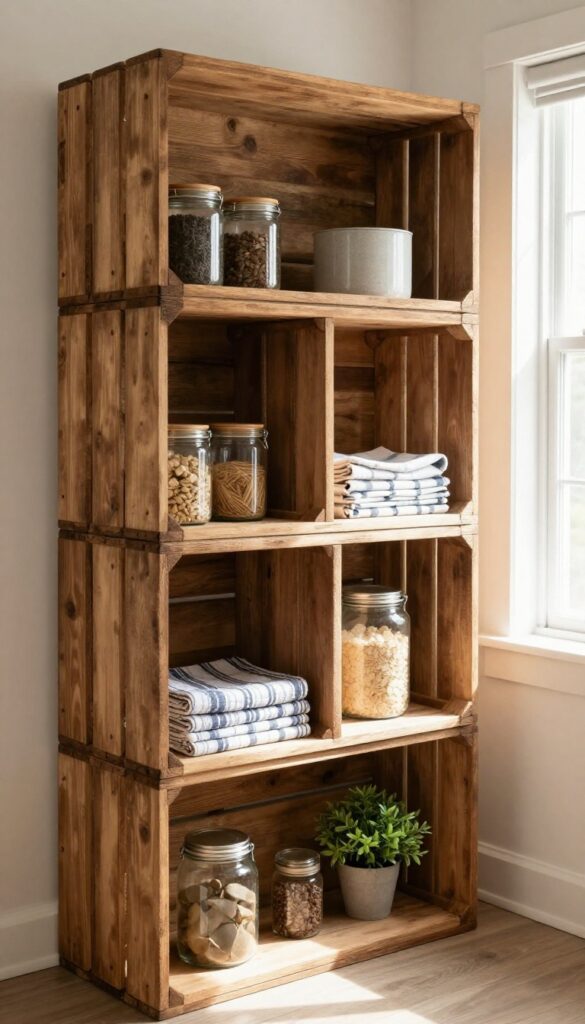
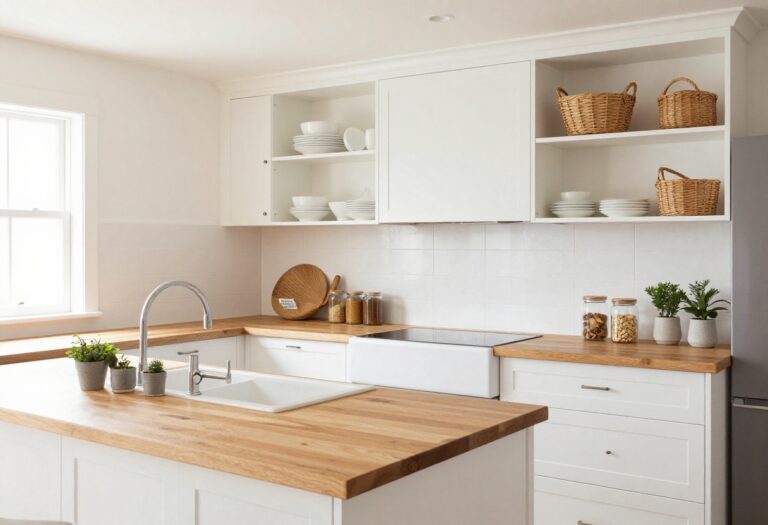
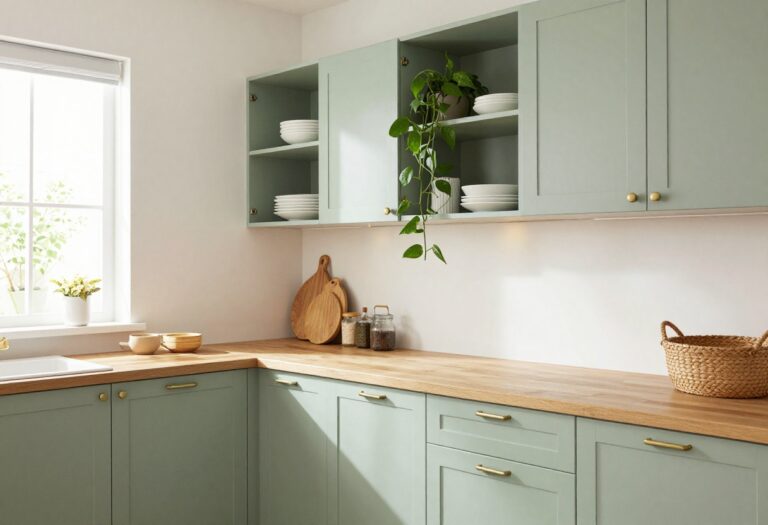
Swapping upper cabinet doors for open shelving instantly gives your pantry a cozy, market-style feel. Reclaimed wood shelves paired with vintage-style wooden crates create layers of texture and warmth, turning storage into a design feature. You can stack crates to hold dry goods, cookbooks, or even a small appliance, keeping everything visible and within easy reach.
This setup feels lived-in and inviting, like a corner of a country kitchen where practicality meets charm.
Why It Works
Open shelving eliminates the barrier between you and your ingredients, making it easier to grab what you need and see what's running low. The crates add structure and a touch of rustic character, while the mix of wood tones warms up the space. It's a smart way to maximize vertical storage without making the room feel closed off.
Best For
Farmhouse-style pantries or kitchens that need a warm, airy feel. It works especially well in narrow pantries where upper cabinets might feel bulky, or in open-plan kitchens where the pantry is visible from the living area.
Styling Tip
Arrange crates at different heights and angles for visual interest. Fill some with rolled tea towels or mason jars, and leave others partially empty to avoid a cluttered look. Stick to a neutral color palette with pops of green from herbs or eucalyptus for a fresh touch.
2. Glass Jars with Chalkboard Labels
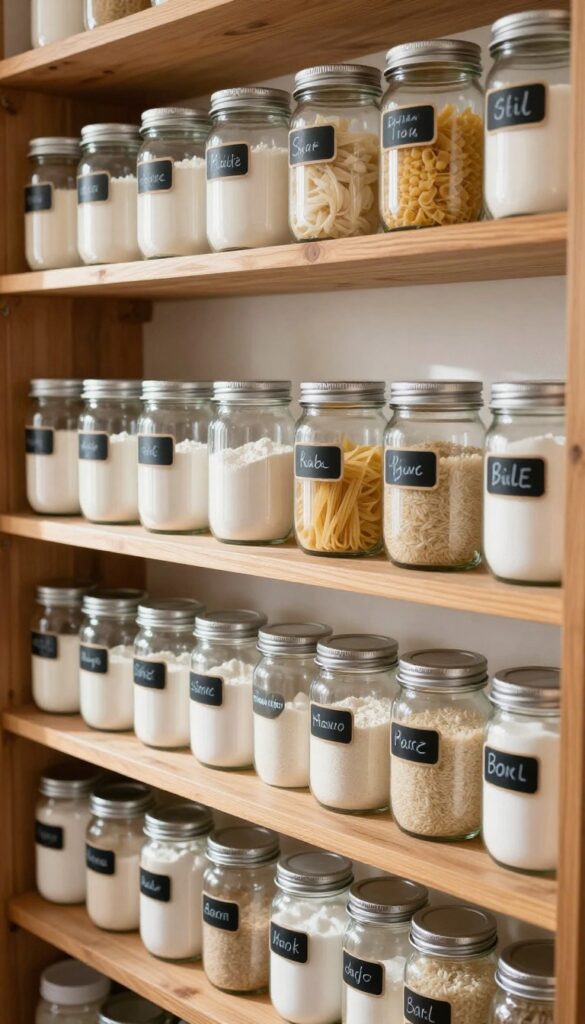
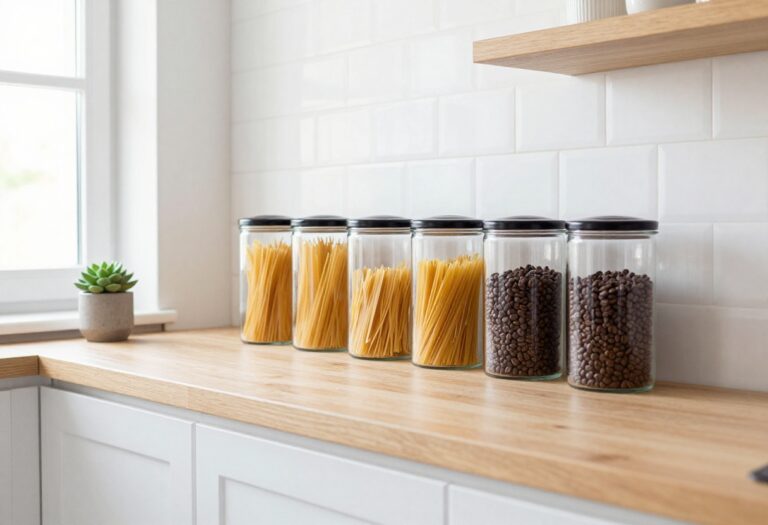
There's something quietly satisfying about opening a pantry door and seeing row after row of identical glass jars filled with pantry staples. The clear glass lets you spot exactly how much flour or pasta you have left, while the chalkboard labels add a handmade touch that keeps things from feeling too sterile. It's a look that balances practicality with a cozy, lived-in warmth—perfect for a farmhouse kitchen that actually gets used.
Why It Works
Uniform jars create instant visual order, cutting down on the clutter of mismatched boxes and bags. The chalkboard labels are easy to update when you switch out ingredients, and the see-through design means you'll never accidentally buy a duplicate of something you already have.
Best For
This idea works well in open shelving or glass-front cabinets where the jars become part of the decor. It's especially useful for dry goods like pasta, rice, flour, sugar, and snacks that you use regularly.
Styling Tip
Stick to one style of jar—either all the same size or a graduated set—for the most cohesive look. Write labels in neat handwriting or use a stencil for a cleaner finish. Group jars by category (baking, grains, snacks) to make grabbing ingredients even faster.
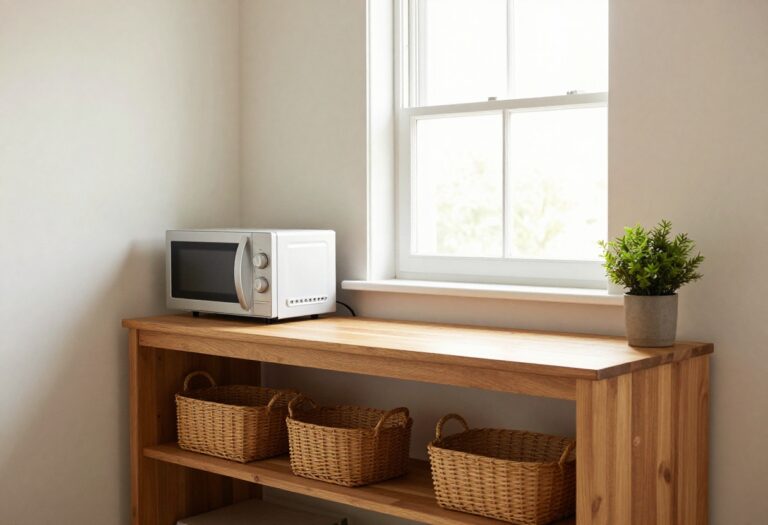
3. Woven Baskets for Bulk Items
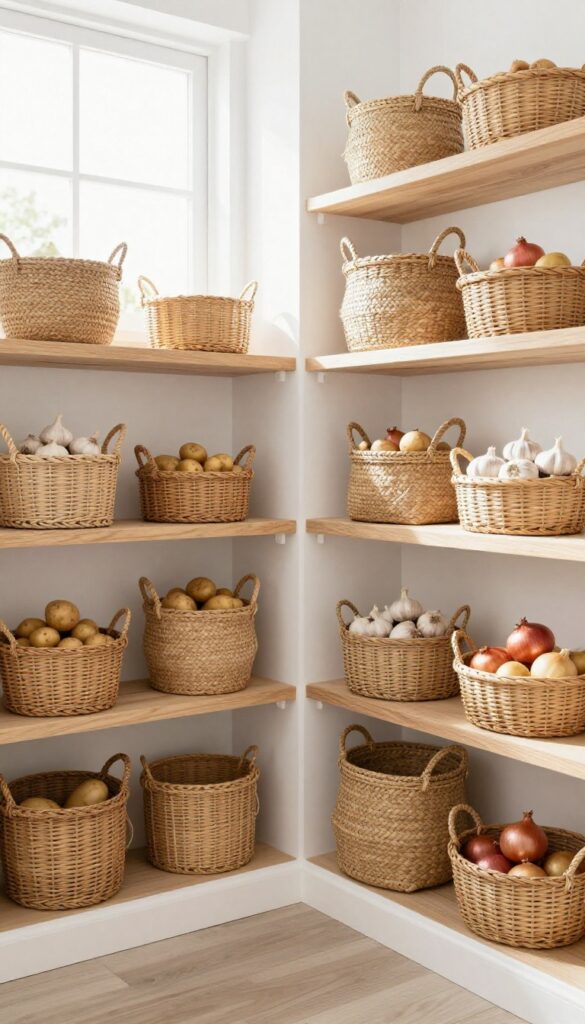
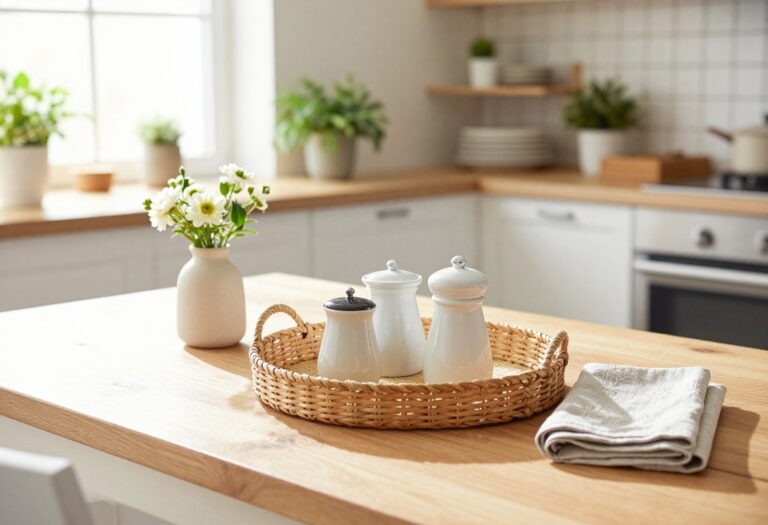
Nothing says cozy farmhouse quite like a collection of woven baskets sitting on the floor or lower shelves. They bring warmth and texture instantly, while keeping your potatoes, onions, and garlic neatly corralled. The natural fibers soften the hard lines of shelving and add an earthy, lived-in feel that makes the pantry feel more like a room than a storage closet.
Why It Works
Baskets allow air to circulate around produce, helping it stay fresh longer. They also hide the visual clutter of mesh bags and loose veggies, so the pantry looks tidy even when it's full. Plus, the handles make it easy to grab the whole basket and bring it to your countertop when you're cooking.
Best For
This works well in medium to large pantries where you have floor space or deep lower shelves. It's ideal for anyone who buys produce in bulk or likes to keep root vegetables visible but contained. If your pantry is very small, stick to one or two baskets on a low shelf to avoid crowding.
Styling Tip
Mix different weaves and natural tones—like seagrass, rattan, and water hyacinth—for a collected-over-time look. Line the baskets with a cloth or paper towel to catch any dirt or moisture, and avoid stacking them too high so you can still see what's inside.
4. Mason Jar Dispensers for Snacks
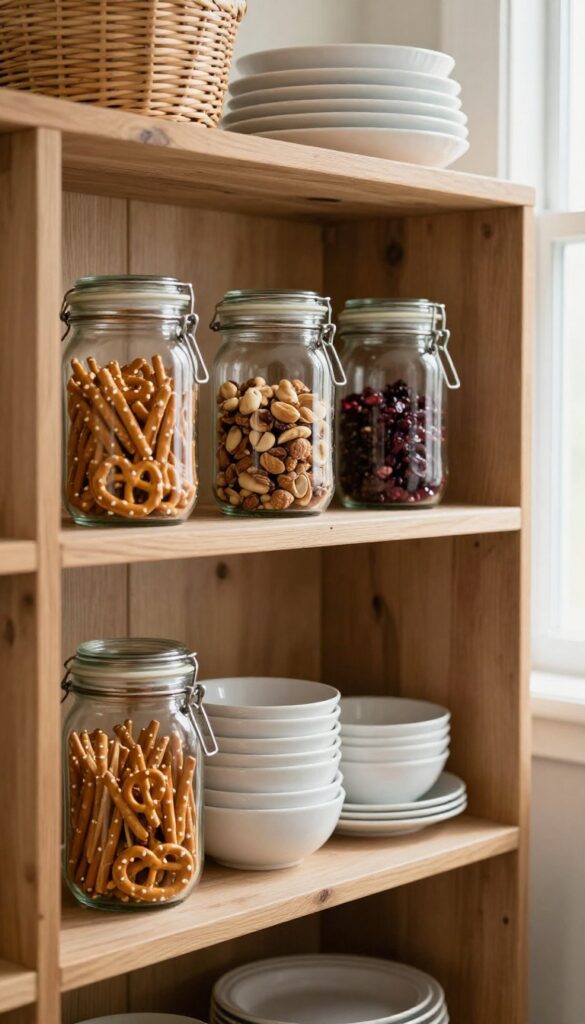
There’s something undeniably charming about seeing snacks stored in glass jars, but mounting them under a shelf with a dispenser lid takes the convenience to a whole new level. The jars hang neatly beneath an upper cabinet or open shelf, freeing up counter space while making nuts, dried fruit, or candy instantly accessible. It feels like a tiny self-serve station that adds a playful, lived-in warmth to the pantry.
Why It Works
Mason jar dispensers solve the problem of half-open bags cluttering shelves. The airtight lid keeps snacks fresh, and the one-touch dispenser makes grabbing a handful mess-free. It’s a simple upgrade that turns everyday items into an organized, attractive feature.
Best For
This idea shines in a family pantry where quick snacks are a daily need, or in a farmhouse kitchen where rustic glass jars enhance the cozy aesthetic. It’s also perfect for small pantries where every inch of vertical space matters.
Styling Tip
Use a mix of jar sizes for visual variety—tall jars for pretzel sticks, wide ones for granola. Label each jar with a chalkboard tag or a simple handwritten sticker. Keep the color palette neutral with clear glass and wood tones to maintain that warm, uncluttered look.
5. Tiered Wire Baskets for Canned Goods
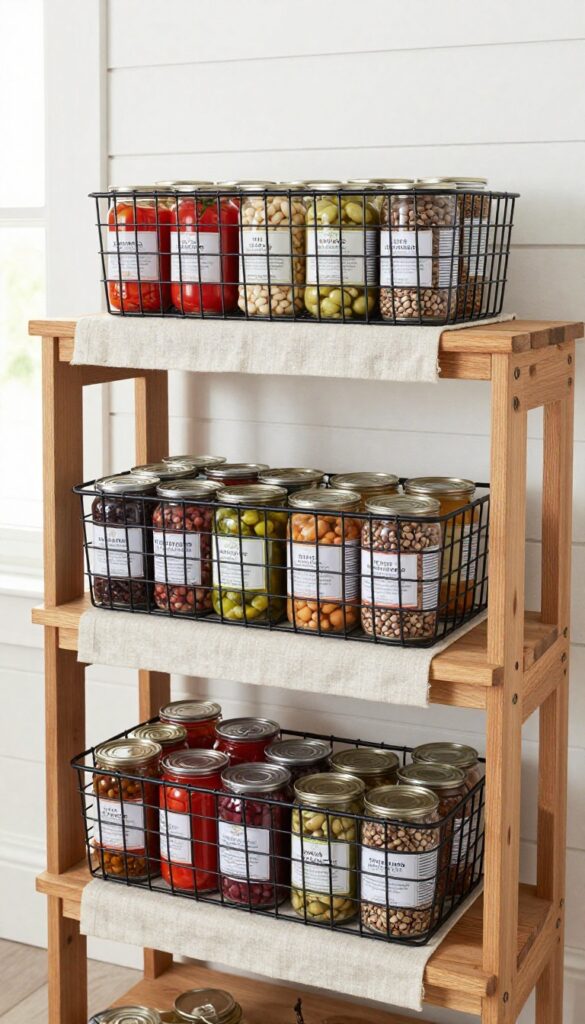
Stacking tiered wire baskets on a shelf transforms canned goods from a jumble into an organized display. The slanted design lets you see every label at a glance, so you can grab a can of diced tomatoes without shuffling through the whole stack. The industrial farmhouse vibe pairs well with wood and neutral tones, adding a touch of rustic charm that feels both purposeful and cozy.
Why It Works
The tiered layout maximizes vertical space while keeping every can visible and accessible. No more forgetting what’s in the back or buying duplicates. The open wire construction allows air circulation, which helps prevent moisture buildup around cans.
Best For
Pantries with deep shelves where cans tend to get lost in the back. Also great for small pantries where you need to store a lot of canned goods in a compact footprint. Works especially well if you have a mix of vegetable, soup, and sauce cans that you want to keep sorted by type.
Styling Tip
Stick to baskets with a black or galvanized finish to reinforce the farmhouse look. Group similar cans together—like all tomatoes on one tier and all beans on another—for a clean, intentional arrangement. If your baskets sit on a wooden shelf, add a small linen runner underneath to soften the industrial edge.
6. Pegboard Wall for Utensils and Tools
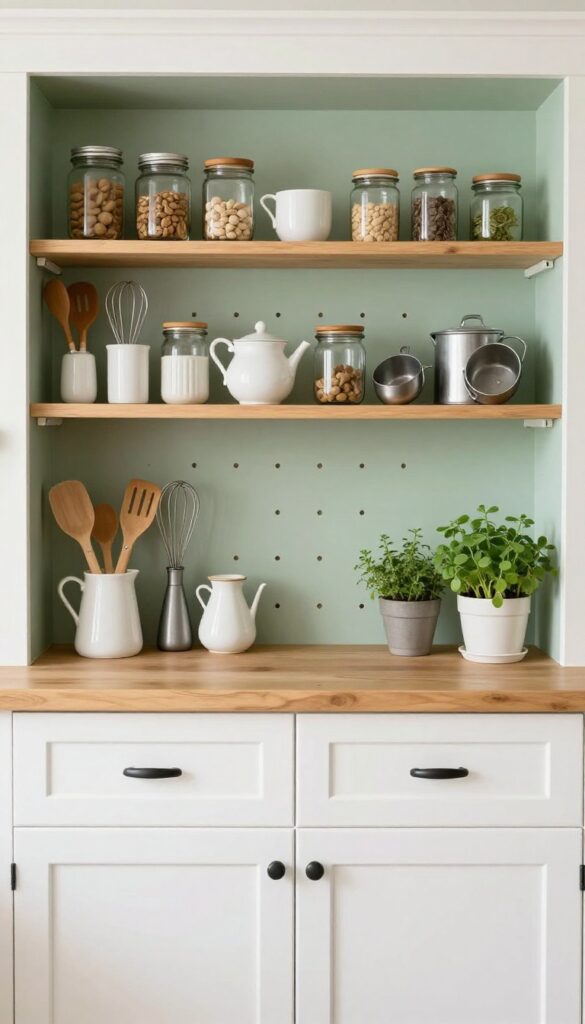
A pegboard wall brings that cozy, lived-in farmhouse feel while solving the eternal struggle of cluttered drawers. Instead of digging through a jumble of measuring cups and whisks, you can grab exactly what you need from a neatly arranged board. The warm wood frame and soft sage or cream paint keep it from feeling too industrial, so it blends right in with your vintage jars and open shelving.
Why It Works
It uses vertical space that would otherwise go empty, freeing up precious drawer real estate for bulkier items. The open display also makes it easy to see everything at a glance, so you’re not buying duplicates of tools you already own.
Best For
This works especially well in a pantry that has a blank wall near the counter or prep area. It’s also a smart move for anyone who cooks often and wants quick access to frequently used utensils.
Styling Tip
Stick to a cohesive color palette—think wooden handles, white ceramic, and muted metals. Group items by function (baking tools together, stirring utensils together) for a look that feels intentional, not chaotic.
7. Vintage Scale as a Decorative Organizer
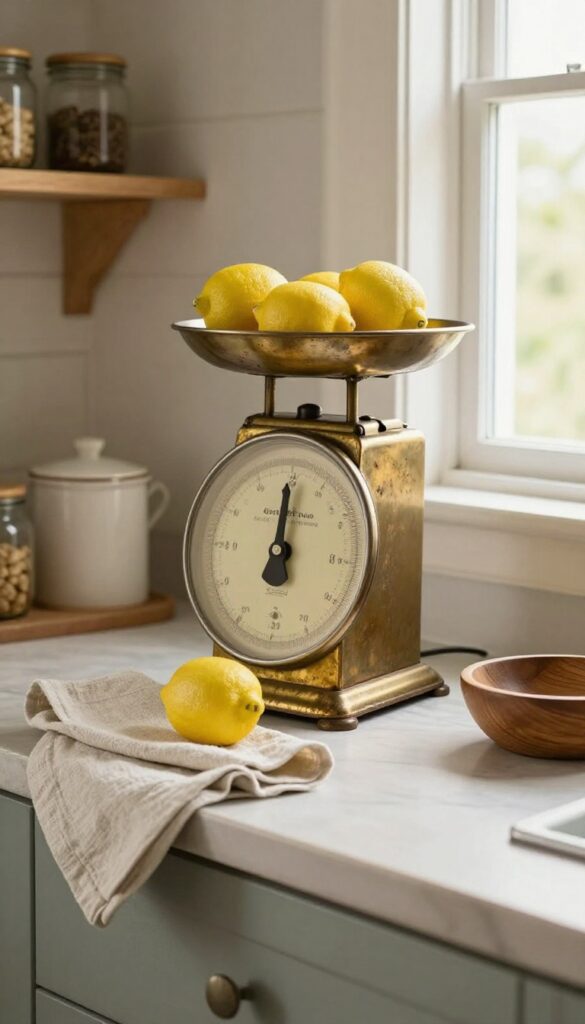
An old-fashioned scale does more than weigh things—it anchors a corner with character. Placed on the counter, it becomes a natural landing spot for fruit, tea towels, or small jars. The worn patina and solid weight give the pantry a warm, lived-in feel that no plastic bin can match.
It’s the kind of piece that makes you slow down and enjoy the space.
Why It Works
The scale combines form and function effortlessly. It corrals loose items that would otherwise clutter the counter, while its vintage look adds instant personality. You get a conversation starter and a practical catch-all without sacrificing an inch of storage.
Best For
This idea shines in medium to large pantries with counter space to spare. It’s perfect for farmhouse, rustic, or eclectic styles where aged finishes are welcome. If you love thrift store finds and want a piece that earns its keep, this is for you.
Styling Tip
Choose a scale with visible brass or copper details to warm up cool-toned counters. Layer it with a small stack of linen napkins or a wooden bowl of lemons. Keep the items on it simple—three or four things max—so it stays tidy and intentional.
8. Pull-Out Drawers for Deep Cabinets
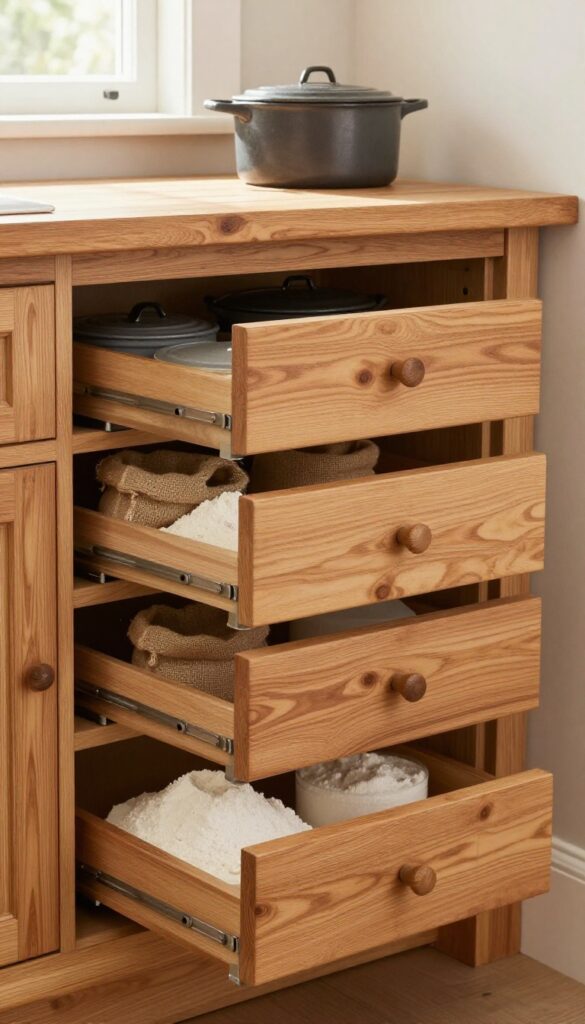
Deep lower cabinets often become black holes where pots, lids, and bulk bags disappear. Pull-out drawers change that completely. Retrofitting with wooden drawers or wire baskets brings everything forward on smooth glides, so you can see and grab what you need without kneeling or digging.
It’s a simple upgrade that makes the pantry feel both luxurious and genuinely functional.
Why It Works
Pull-out drawers eliminate the need to stack items or reach into dark corners. Every pot, lid, and heavy bag slides out into full view, saving time and frustration. The smooth glide mechanism also adds a touch of elegance that makes daily use feel effortless.
Best For
Deep lower cabinets in farmhouse pantries where bulky cookware, large mixing bowls, or heavy bags of flour and sugar are stored. It’s especially useful for anyone who struggles with accessibility or wants to maximize every inch of storage.
Styling Tip
Opt for unfinished wooden drawers with a natural seal to keep the farmhouse look warm and organic. Line them with non-slip shelf liner in a neutral linen or burlap texture to prevent items from shifting and to add a soft, lived-in feel.
9. Ladder Shelf for Vertical Storage
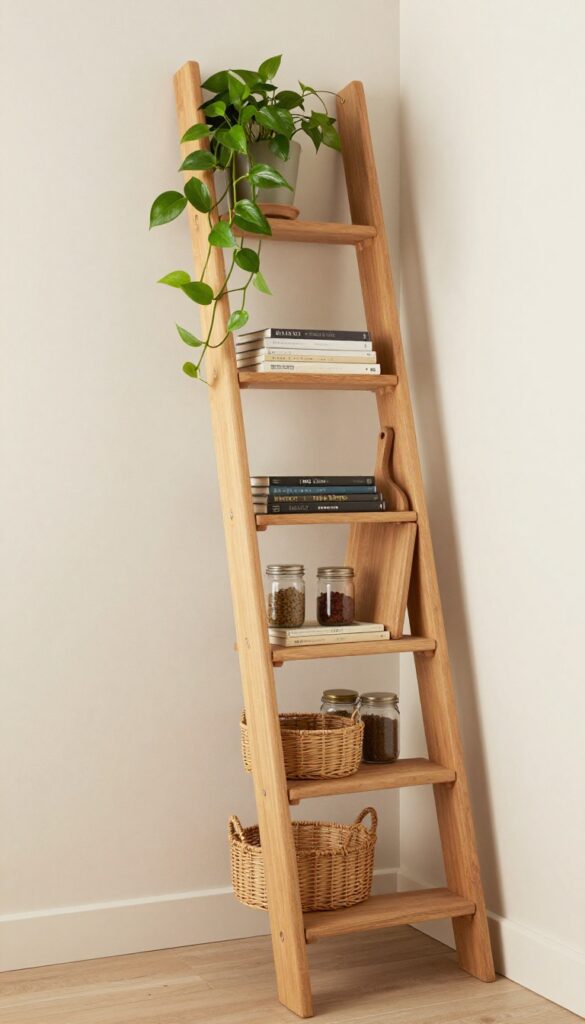
A wooden ladder shelf leaning against the wall brings instant farmhouse character while solving pantry clutter. The open rungs create natural spots for cookbooks, cutting boards, and mason jars, making everyday items part of the decor. This vertical approach keeps counters clear and draws the eye upward, which is especially helpful in narrow pantries where floor space is tight.
The warm wood tone softens the room and adds that lived-in feel without trying too hard.
Why It Works
Vertical storage maximizes every inch of wall space, turning an empty corner into a functional display. The ladder's slanted design feels less bulky than a traditional shelf, so it won't overwhelm a small pantry. Plus, you can lean it at an angle that works best for your layout, making it a flexible solution for awkward spots.
Best For
This idea shines in small or narrow pantries where floor space is limited but walls are free. It's also great for renters who can't install permanent shelving, since a ladder shelf stands on its own and leaves no damage when removed.
Styling Tip
Stick to a neutral color palette for the items on display—cream, wood, and soft green keep the look cohesive. Mix in a few woven baskets on the lower rungs to hide snacks or linens, and top the ladder with a trailing plant like pothos for a soft, organic touch.
10. Clothespin Label Clips on Baskets
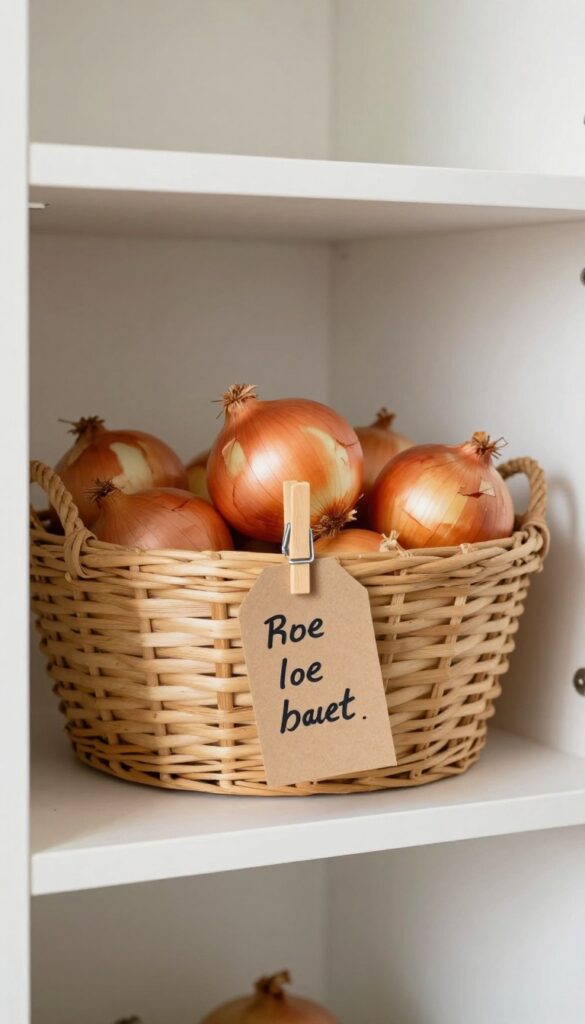
A basket full of onions might look charming on its own, but a tiny label clipped to the front makes it feel intentional. Clothespin label clips are the kind of low-effort detail that instantly warms up a pantry. They add a handmade touch without looking fussy, and you can swap them out whenever your storage needs shift.
Why It Works
Labels keep a busy pantry organized without requiring permanent commitment. Clothespins let you change tags in seconds, so you can adapt as your inventory changes. The natural wood and handwritten text blend with farmhouse decor, adding texture and personality.
Best For
Open shelving or countertop baskets where you store everyday items like bread, snacks, or produce. Also great for labeling bins on lower shelves that are harder to see into.
Styling Tip
Use small kraft paper tags or cut cardstock into uniform rectangles. Write labels in neat handwriting or a simple printed font. Clip them at a slight angle for a relaxed, lived-in look.
11. Magnetic Strip for Knives and Spices
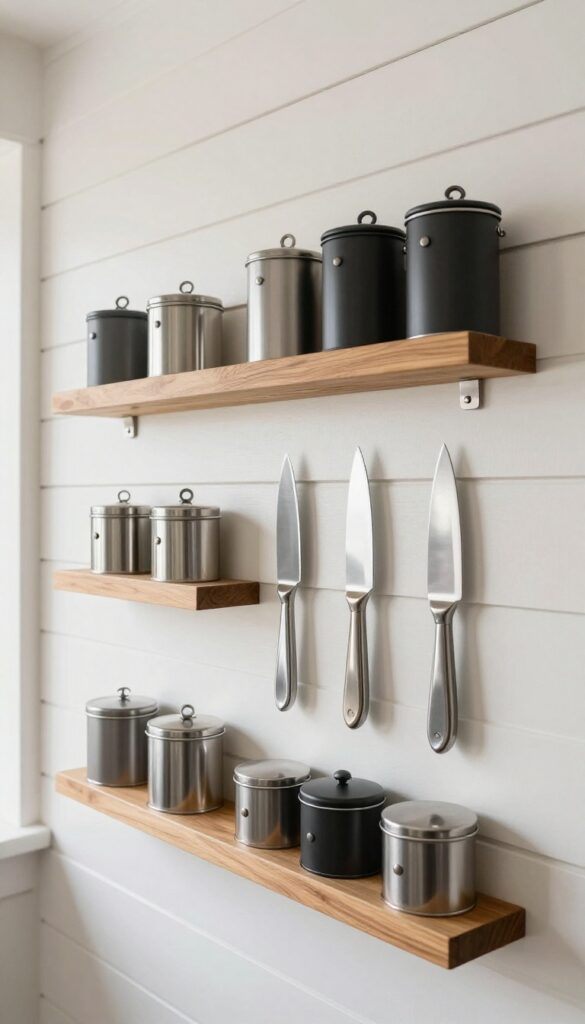
A magnetic strip mounted on the wall or inside a cabinet door does double duty—it holds knives securely and keeps metal spice tins or measuring spoons within easy reach. The brushed nickel or black finish blends right in with farmhouse hardware, adding a subtle industrial touch without feeling cold. It’s one of those small changes that clears counter space and makes cooking feel smoother, especially in a busy pantry.
Why It Works
By lifting tools off the counter, you free up valuable prep space and reduce visual clutter. The magnetic grip keeps everything visible and accessible, so you’re not digging through drawers for the right knife or spice. It also adds a layer of safety by keeping sharp blades out of reach of kids when mounted high.
Best For
This works well in narrow pantries or galley kitchens where every inch of counter counts. It’s also great for renters who can’t install permanent shelving—just screw the strip into a stud or use strong adhesive strips on a cabinet door. If you cook often and want your most-used tools at arm’s reach, this is a smart upgrade.
Styling Tip
For a cohesive farmhouse look, choose a magnetic strip with a wood backplate or one that matches your cabinet hardware finish. Group knives by size with the blades facing away from the wall, and arrange spice tins in a row for a tidy, graphic display. Leave a little breathing room between items so the strip doesn’t look overcrowded.
12. Rolling Cart for Extra Storage
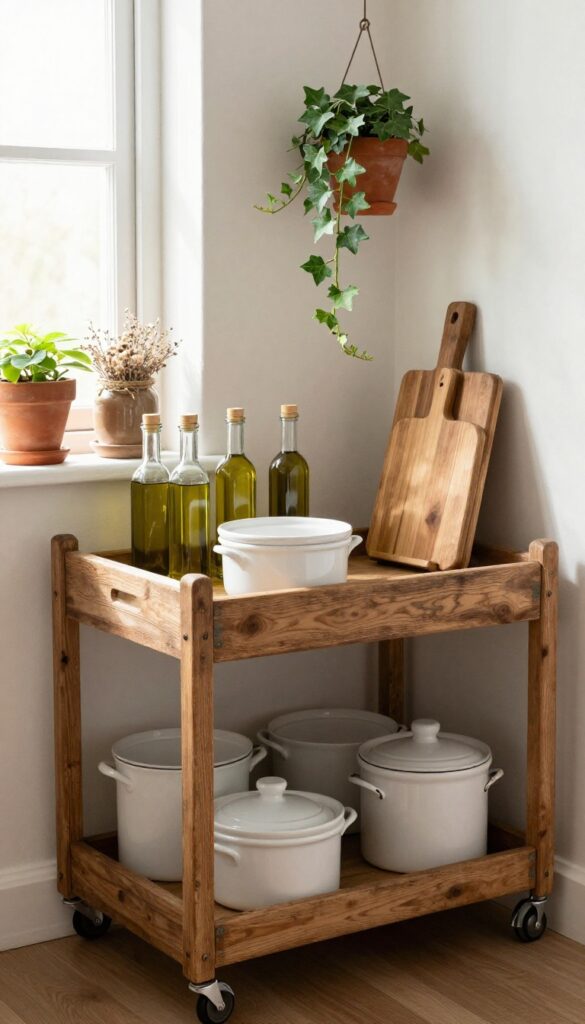
A rolling cart is one of those pieces that just makes sense in a farmhouse pantry. It fills that awkward empty corner without feeling permanent, and it gives you a spot for overflow items you reach for often—like olive oil, vinegar, and baking staples. The best part is the mobility: when you need to clear counter space for a big baking session, you just roll it out of the way.
To keep it feeling warm and lived-in, choose a wooden cart with a slightly distressed finish, or go for a matte black metal one if your pantry leans more modern farmhouse. Either way, top it with a small trailing plant or a little jar of dried flowers to soften the look.
Why It Works
A rolling cart turns dead space into functional storage without requiring any installation. It’s flexible enough to hold pantry overflow, and because it moves, you can reposition it as your needs change. The layered look—wood or metal with a plant on top—adds that cozy, collected feel that makes a pantry feel intentional, not cluttered.
Best For
This idea works especially well in medium to large pantries where you have an empty corner or a gap between shelves. It’s also great for renters who can’t install permanent shelving, or for anyone who wants extra counter space for small appliances like a toaster or coffee maker.
Styling Tip
Stick to a cohesive color palette on the cart: group together white ceramic crocks, clear glass bottles, and a few wooden utensils. Avoid overfilling it—leave some breathing room so the cart feels styled, not stuffed. A small cutting board leaning against the back adds texture and makes it look like a purposeful vignette.
13. Baskets on the Door for Small Items
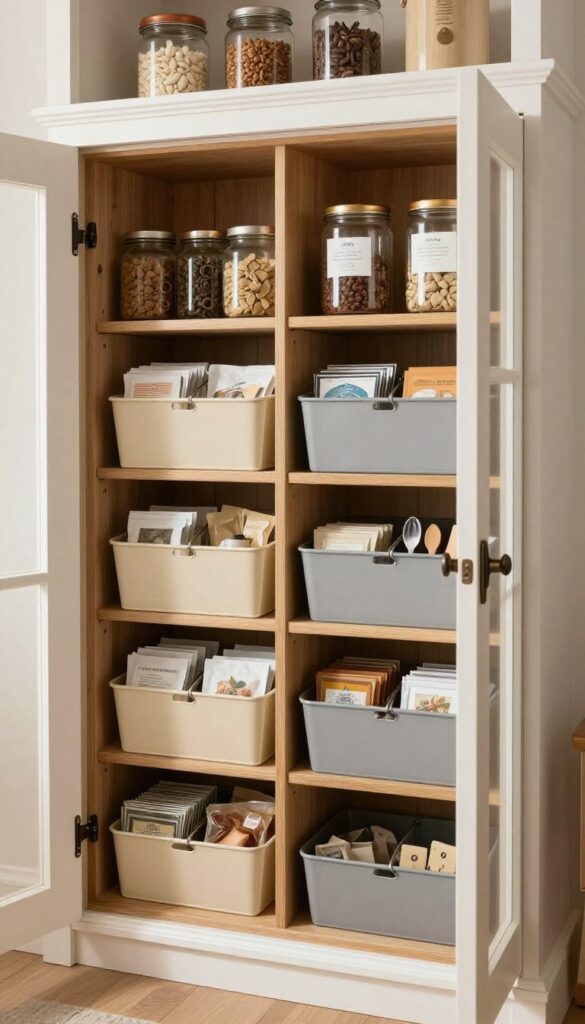
Pantry doors are prime real estate that often gets ignored. Hanging over-the-door wire baskets or fabric pockets turns that blank surface into a handy spot for spice packets, tea bags, and small kitchen tools. It’s a simple way to reclaim lost space and keep tiny essentials from vanishing into the abyss.
Go for neutral tones like warm beige or soft gray to keep the look cohesive and cozy.
Why It Works
This trick uses vertical space that would otherwise go to waste, freeing up shelf room for bigger items. The baskets keep small things visible and accessible, so you’re not digging through drawers every time you need a bay leaf.
Best For
Renters or anyone who can’t install permanent shelving, since over-the-door hooks are easy to remove. Also great for small pantries where every inch counts.
Styling Tip
Choose baskets with a tight weave or solid fabric to prevent tiny items from slipping through. Label each pocket with a chalk tag or simple sticker for a tidy, organized look.
FAQ
How do I keep my farmhouse pantry from looking cluttered?
Stick to a cohesive color palette—think whites, creams, wood tones, and soft greens. Use uniform containers and baskets to create visual order. Limit decor to a few meaningful pieces like a vintage scale or a small plant.
What are the best materials for farmhouse pantry storage?
Natural materials like wood, wicker, wire, and glass work best. They add warmth and texture while staying durable. Avoid plastic bins if you want an authentic farmhouse feel.
Can I organize a small pantry with farmhouse style?
Absolutely. Use vertical storage like ladder shelves or pegboards. Opt for clear glass jars to make the space feel larger.
Stick to a few key baskets and keep surfaces clear to avoid a cramped look.
How often should I reorganize my pantry?
Aim for a quick refresh every season. Check expiration dates, wipe down shelves, and rotate items. A deep reorganization once a year is usually enough to maintain the system.
What's an easy first step to farmhouse pantry organization?
Start by removing everything and grouping like items. Then choose one storage solution—like glass jars or woven baskets—and implement it fully. One change at a time keeps the process manageable.
Conclusion
A farmhouse pantry should feel like a warm invitation to cook and gather, not a stressful maze of mismatched containers. By blending practical storage with rustic charm, you can create a space that's both beautiful and easy to use every day.
Start with one or two ideas that speak to you, and let the rest follow. Before you know it, your pantry will be the coziest spot in the house—and you'll actually look forward to opening that door.