
11 Japanese Kitchen Organization Ideas for Calm Storage
Japanese kitchens have a quiet way of making even the smallest spaces feel orderly and inviting. It's not about perfection—it's about creating a rhythm that works for real life.
These 11 ideas focus on warm, lived-in storage that keeps your kitchen calm without feeling like a showroom. From clever drawer dividers to open shelving that actually stays tidy, each tip is designed to help you cook and move with ease.
Let's explore how small changes can bring a sense of balance to your daily routine.
1. Use a Single Tray for Daily Oils and Spices
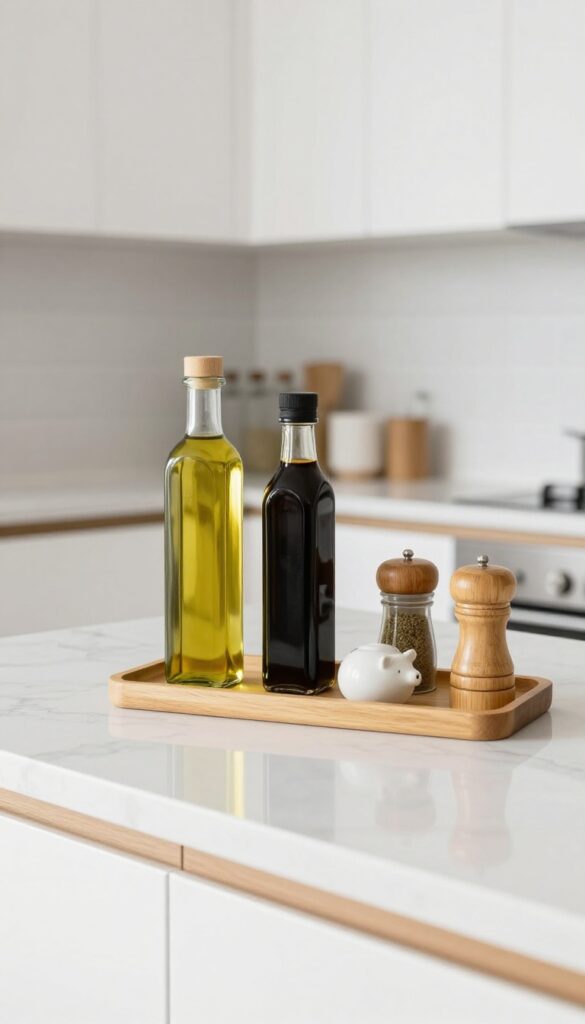
There's a quiet calm in limiting what sits on your counter. By corralling your go-to oils, salt, pepper, and a few spice jars onto one small tray, you create a designated landing zone that feels intentional rather than cluttered. The tray itself becomes a subtle anchor—wood brings warmth, ceramic adds a clean edge—and it makes wiping down the counter a breeze since you can just lift the whole thing.
Why It Works
- A tray defines a boundary, both visually and practically. Without it, bottles and jars tend to spread out, making the counter look messy even when everything is tidy. With a tray, you instantly contain the chaos, and the empty space around it feels more purposeful.
- Plus, it's easy to move the tray when you need to clean underneath.
Best For
This works beautifully for anyone who cooks daily and wants their most-used items within arm's reach without sacrificing a clean look. It's especially good for small kitchens where every inch of counter space matters, and for those who prefer a minimalist aesthetic but still need functionality.
Styling Tip
Choose a tray with a slight lip to catch any spills or drips from oil bottles. A warm wood tone or a matte ceramic in cream or soft gray complements most kitchens. Arrange the bottles by height, with the tallest in back, and leave a little breathing room between each item so the tray doesn't feel overcrowded.
2. Store Rice in a Dark, Sealed Container
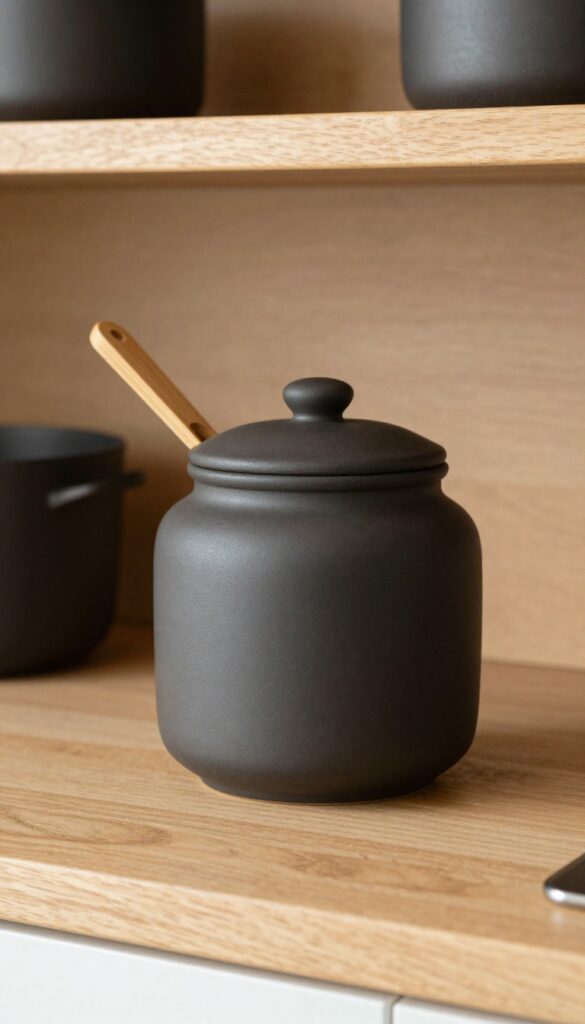
In a Japanese kitchen, rice is treated with respect—it's the heart of most meals. A simple ceramic or glass jar with a tight lid not only keeps rice fresh and bug-free but also turns an everyday staple into a quiet decorative element. The dark, opaque container hides the contents from light, which can degrade quality, while the clean silhouette adds a calm, grounded presence to your counter or shelf.
Why It Works
Light and air are rice's enemies. A dark, sealed container blocks both, preserving the grain's texture and flavor for weeks. Plus, the visual simplicity reduces counter clutter—one beautiful jar replaces a bulky bag or box, instantly making your kitchen feel more orderly and intentional.
Best For
Any kitchen with a dedicated rice supply, especially if you buy in bulk. It's also perfect for small kitchens where every item on the counter needs to earn its spot—this jar pulls double duty as storage and decor.
Styling Tip
Choose a matte ceramic jar in a warm neutral like charcoal, taupe, or deep olive to complement a lived-in look. Place it near your stove or prep area, and pair it with a small bamboo scoop tucked inside a matching pot for a cohesive, tactile moment.
3. Hang a Slim Magnetic Knife Strip
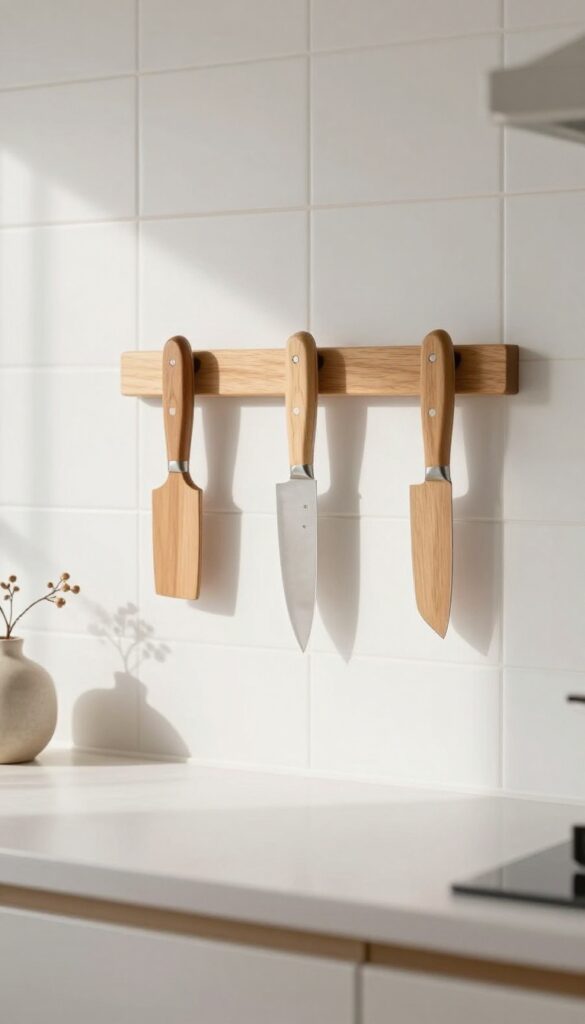
There’s something quietly satisfying about a knife strip mounted on the wall. It turns your most-used tools into a display of simple efficiency, and it frees up precious drawer space for other essentials. In a Japanese-inspired kitchen, this kind of intentional storage feels right—every item has its place, and nothing clutters the counter or gets lost in a jumble of utensils.
The slim profile of a magnetic strip keeps the visual weight low, so your backsplash or wall tile stays the star of the show.
Why It Works
A magnetic knife strip eliminates the need for a bulky knife block, which can take up counter space and collect crumbs. By mounting it on the wall, you keep knives within easy reach while cooking, and the open design allows air to circulate around the blades, helping them stay dry and sharp. It’s a small change that makes a big difference in how your kitchen feels—calmer, cleaner, and more intentional.
Best For
This idea works especially well in galley kitchens or small spaces where every inch of counter counts. It’s also a great fit for renters, since most strips can be installed with adhesive backing or removable hooks. If you have a tiled backsplash or a stretch of blank wall near your prep area, that’s your sweet spot.
Styling Tip
Choose a wooden magnetic strip instead of a shiny metal one to keep the look warm and natural. Pair it with a few wooden-handled knives in different sizes, and leave a little space between them so the strip doesn’t look overcrowded. If your kitchen has a neutral color palette, the contrast of dark blades against a light wall adds just the right amount of visual interest.
4. Add a Bamboo Drawer Divider Set
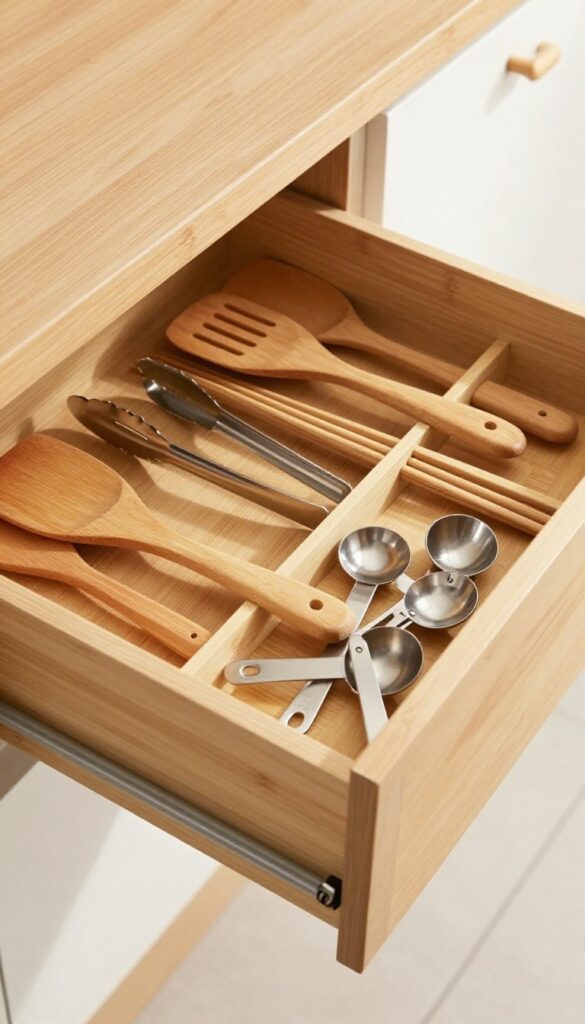
Open a kitchen drawer and find a chaotic jumble of spatulas, chopsticks, and measuring spoons—it’s a small frustration that can set a frazzled tone for the whole morning. Bamboo drawer dividers bring a quiet sense of order, letting each tool rest in its own designated spot. The warm wood tones soften the look, making the drawer feel less like a utility bin and more like a carefully curated collection.
Why It Works
Adjustable bamboo dividers let you customize the layout to fit your exact utensil collection, so nothing slides around or gets buried. The natural material adds warmth and texture, aligning with the calm, lived-in Japanese aesthetic. Plus, bamboo is durable and easy to wipe clean, making it a practical choice for daily use.
Best For
Deep or wide drawers that tend to become catch-alls for miscellaneous kitchen tools. It’s especially helpful if you have a lot of long-handled utensils or specific items like chopsticks and tongs that need their own lane.
Styling Tip
Before arranging, group your utensils by frequency of use and size. Place the most-used items (spatulas, ladles) in the front and less-used tools (skewers, pastry brushes) toward the back. For a cohesive look, choose dividers that match or complement your existing bamboo cutting boards or countertop accessories.
5. Use a Small Basket for Produce That Doesn't Need Fridge
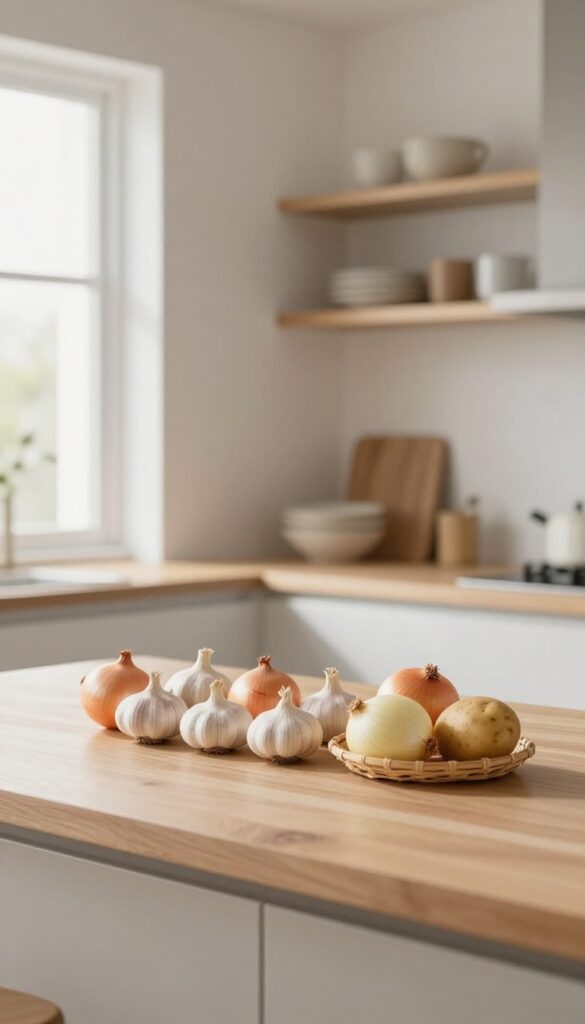
Not every vegetable belongs in the crisper drawer. Onions, garlic, potatoes, and even shallots actually last longer when kept in a cool, dark spot with good airflow. A small basket on your counter or tucked into a corner of the kitchen island keeps them within arm’s reach while adding a natural, grounded texture to the room.
The trick is choosing a basket that feels intentional—something with a bit of warmth and character, like seagrass or rattan.
Why It Works
Breathable materials like seagrass or rattan allow air to circulate around the produce, preventing moisture buildup that leads to sprouting or rot. Keeping these staples visible also means you're more likely to use them before they go bad, reducing food waste. Plus, the basket itself becomes a subtle decor piece that softens hard kitchen surfaces.
Best For
This idea works especially well in kitchens with open shelving or a bare stretch of countertop that could use a touch of organic texture. It's also perfect for small kitchens where every inch counts—baskets can sit on top of the fridge, on a shelf, or even on a narrow ledge.
Styling Tip
Choose a basket with a slightly wider rim so it doesn’t look like a jumble of veggies. Layer in a few whole garlic bulbs or a single sweet potato on top for a styled, intentional look. Keep the basket to a medium size—too large invites clutter, too small feels stingy.
6. Install a Low Open Shelf for Everyday Bowls
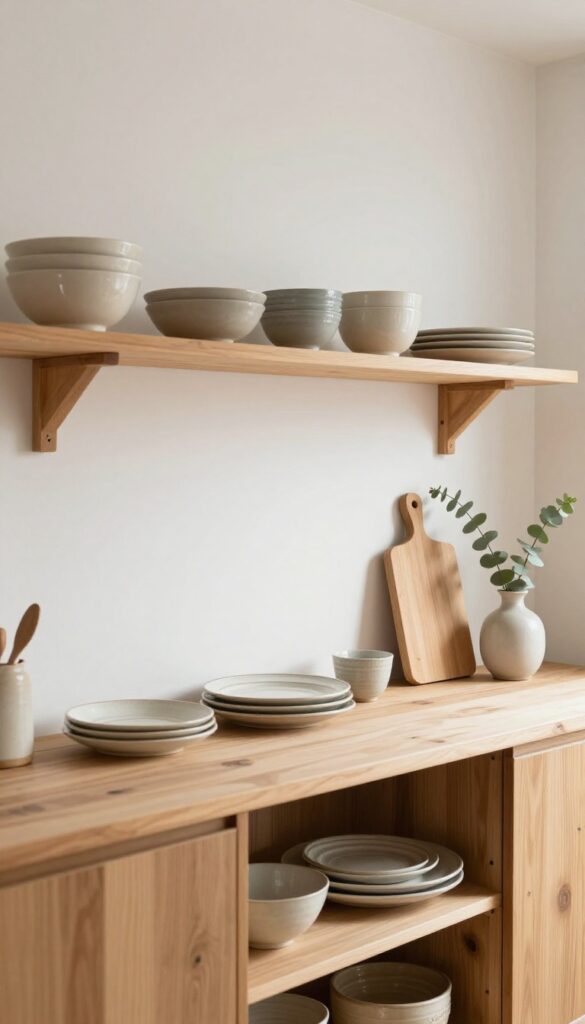
There’s a quiet beauty in having your most-used bowls and plates within easy reach, no cabinet doors or drawers required. A low open shelf—mounted at eye level or just below—turns daily dish grabbing into an effortless ritual. The look is warm and lived-in, like a kitchen that’s actually used, not just staged.
Think of it as a functional display: a stack of earthy ceramic bowls, a couple of handmade plates, maybe a small wooden cutting board leaning against the wall. The shelf itself should be shallow—just deep enough for a dinner plate—so it doesn’t intrude on counter space. This isn’t about showing off pristine collections; it’s about celebrating the pieces you reach for every morning and evening.
Why It Works
Open shelving at a lower height keeps your daily dishes accessible without stretching or bending awkwardly. It also eliminates the need to shuffle through stacked cabinets, saving time and reducing kitchen chaos. The visual effect is grounding—seeing your favorite bowls lined up adds a sense of order and warmth to the room.
Best For
This idea shines in small kitchens where upper cabinets feel cramped or far away, or in open-plan spaces where you want the kitchen to feel connected to the living area. It’s also perfect for renters who can install a simple floating shelf without major renovation.
Styling Tip
Stick to a neutral palette for the bowls and plates—cream, soft gray, or muted terracotta—to keep the shelf feeling calm. Add a single accent piece, like a small vase with a sprig of eucalyptus, to break up the repetition. Avoid overcrowding; leave a little breathing room between stacks so the shelf doesn’t look cluttered.
7. Keep a Tea Station on a Small Tray
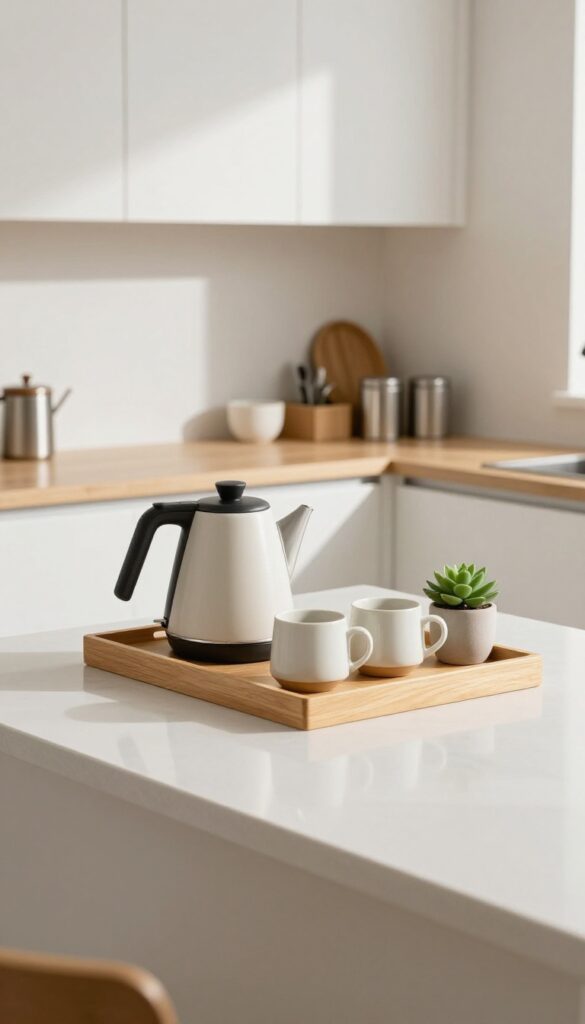
A corner of the countertop can become a tiny anchor for calm. By corralling a kettle, a couple of favorite mugs, and a few tea tins onto a small tray, you create a dedicated spot for pausing. The tray defines the space visually, so it feels intentional rather than cluttered—like a little ritual station ready for a quiet moment.
Why It Works
Grouping tea essentials on a tray prevents them from spreading across the counter, which keeps the surface tidy. The tray also makes it easy to lift the whole setup and wipe underneath, simplifying cleaning. Psychologically, having a designated tea corner signals your brain that this is a space for slowing down, not just another work zone.
Best For
This idea shines in small kitchens where counter space is precious but you still want a spot for daily rituals. It also works well in open-plan kitchens where the tea station can double as a visual softener between cooking and living areas.
Styling Tip
Choose a tray with a slight lip—wood or bamboo adds warmth, while a matte ceramic tray feels clean and modern. Stack two mugs of the same color, and store tea tins in a small wooden box or basket on the tray to keep the look cohesive. A tiny plant or a salt lamp nearby can reinforce the calm vibe.
8. Use Clear Glass Jars for Dry Goods
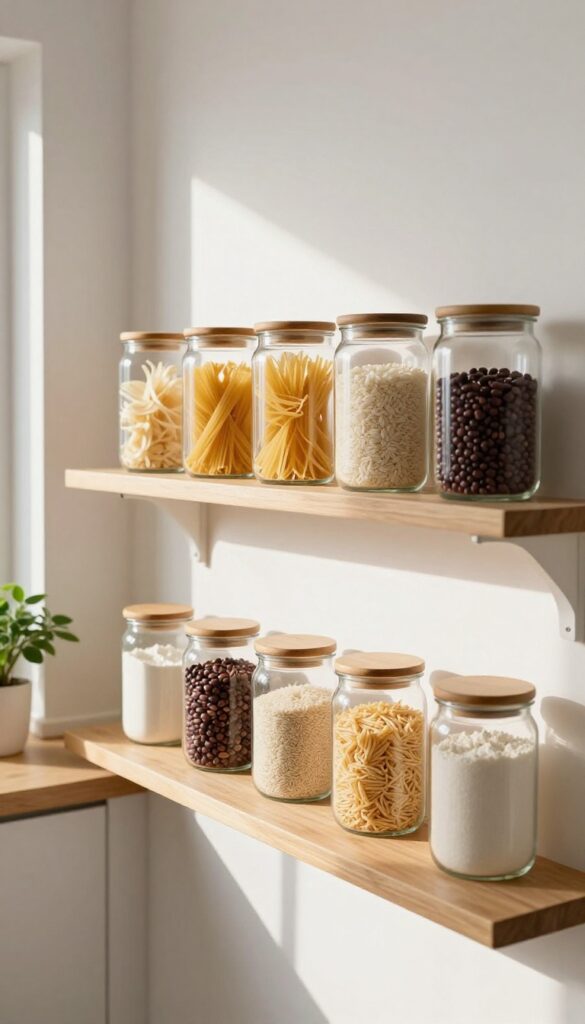
There's something calming about seeing your ingredients lined up like little soldiers. Clear glass jars turn everyday pasta, beans, and flour into a visual feature. The trick is to keep them uniform—same size, same style—so the shelf reads as one cohesive display rather than a jumble.
A warm wood or neutral shelf underneath keeps the look grounded and lived-in, not sterile.
Why It Works
Transparent jars let you see exactly what you have at a glance, so you never buy duplicate bags of rice or forget about that half-used bag of lentils. The visual rhythm of identical containers creates instant order, and the simple act of transferring dry goods into jars keeps pantry moths and moisture at bay.
Best For
Open shelving in a kitchen where you want to blend practicality with a warm, curated look. It's also perfect for small pantries where every inch counts—jars stack neatly and slide out easily.
Styling Tip
Stick to one jar shape (like square or round) and one lid style—either all wood or all metal. Use a chalk pen or small labels on the front, and group jars by frequency of use: daily staples on the lower shelf, occasional items up top.
9. Hang a Pot Rack Above the Stove
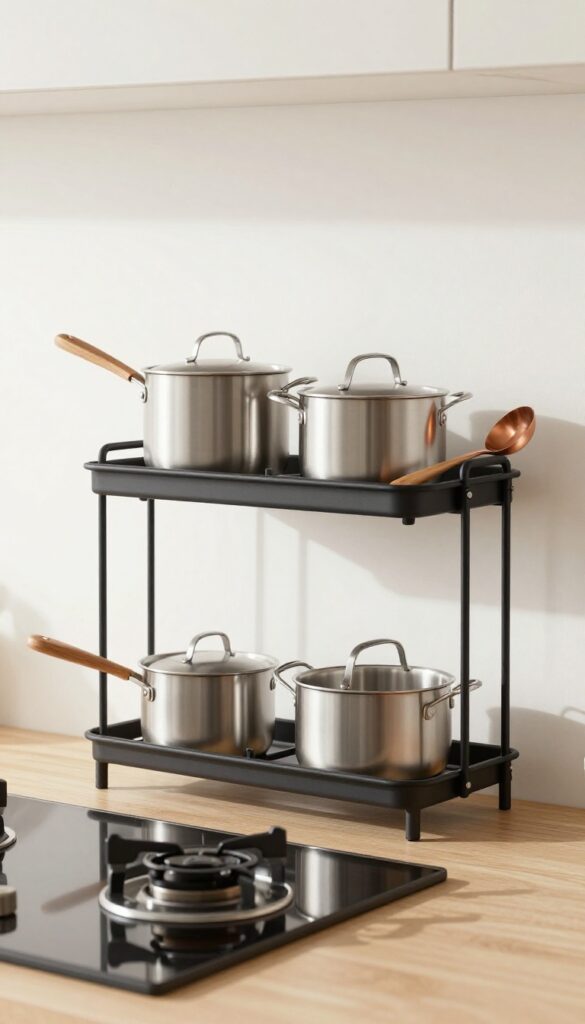
Above the stove, that empty stretch of wall or ceiling is just begging to be useful. A pot rack does more than store cookware—it turns your most-used tools into a visual feature. In a Japanese-inspired kitchen, the key is keeping it restrained: think a slim matte black rail or a simple wood ladder that holds just your daily pots and pans.
The result feels intentional, not cluttered, and the warm finish adds a lived-in touch.
Why It Works
Pots and pans are bulky, and they eat up prime cabinet real estate. Hanging them frees that space for dishes, pantry items, or just breathing room. Plus, having them within arm's reach of the stove makes cooking smoother—no more digging through cupboards while something simmers.
Best For
This works especially well in small kitchens where cabinet space is tight, or in open-plan layouts where you want the kitchen to feel part of the living area. It's also great for anyone who cooks daily and wants their most-used tools handy.
Styling Tip
Stick to a single finish—matte black or warm wood—and limit the rack to one row of pots. Mix in a few wooden spoons or a copper ladle for contrast, but avoid overcrowding. Let the pots themselves be the decoration.
10. Tuck a Step Stool into a Slim Gap
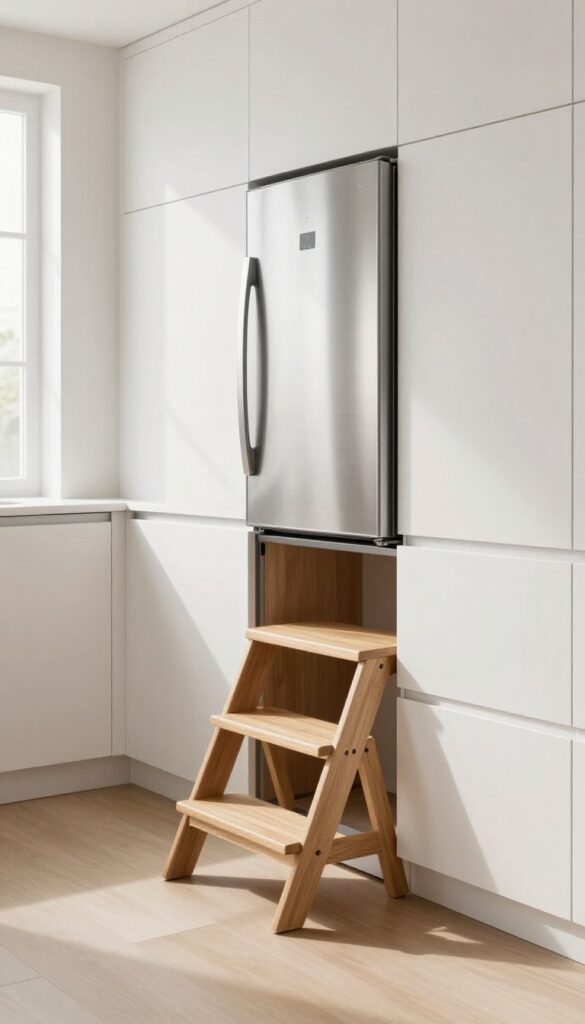
That narrow gap between the fridge and the counter often becomes a dust trap or a sad home for a recycling bin. But with a slim, foldable wooden step stool, it turns into one of the smartest storage tricks in the kitchen. The stool slides out easily when you need to grab something from the top shelf, then folds flat and disappears into the gap.
It feels almost like a secret helper, always there but never in the way.
Why It Works
The step stool stays completely out of sight, so your kitchen floor stays clear and calm. When you need it, it’s right where you left it—no hunting for a stool in the pantry or closet. The natural wood adds a warm, organic touch that softens the hard lines of appliances and countertops.
Best For
Kitchens with a slim gap of 4 to 6 inches between the fridge and an adjacent cabinet or wall. It’s also perfect for small kitchens where every inch of floor space matters and you want to avoid a bulky step stool sitting out in the open.
Styling Tip
Choose a stool with a light or medium wood finish to keep the look airy and cohesive. If your kitchen has warm wood tones, go for a similar hue; if it’s more neutral, a pale oak or bamboo blends in beautifully. You can also add a small hook on the side of the fridge to hang a lightweight kitchen towel—it makes the stool feel intentional and styled, not just hidden.
11. Add a Small Dish Drying Rack That Folds Away
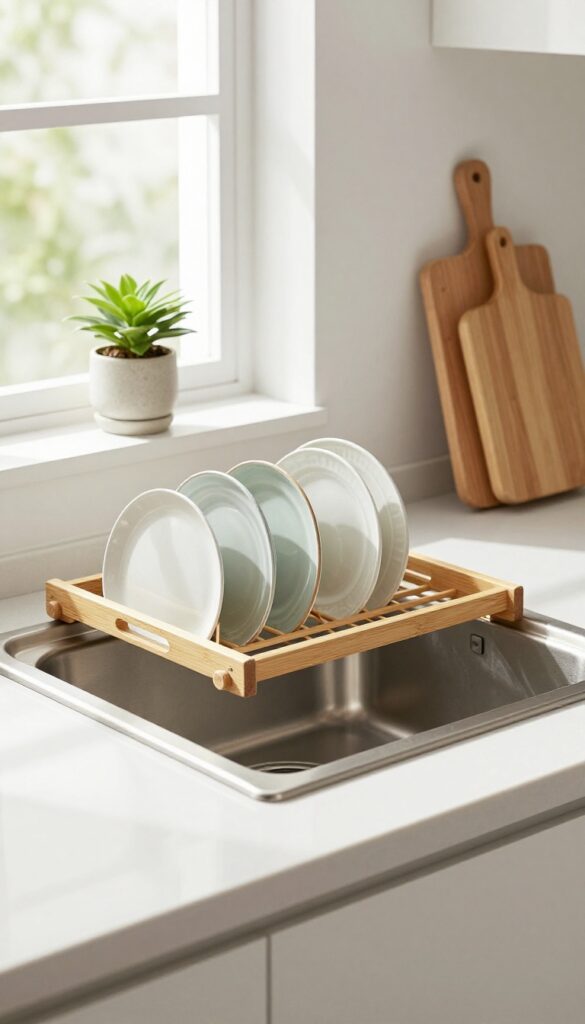
In a Japanese kitchen, every surface has a purpose, and clutter is quietly shown the door. A compact, foldable dish drying rack that lives over the sink or collapses flat when not in use keeps your countertops clear and your mind at ease. It's one of those small swaps that makes the kitchen feel instantly more spacious and intentional.
Why It Works
A foldable rack eliminates the permanent clutter of a bulky drying station. By using vertical space over the sink or tucking away completely, it frees up precious counter real estate for food prep or just a clean, open look. Plus, the act of folding it away becomes a small ritual that reinforces calm.
Best For
Small kitchens, galley layouts, or any space where counter space is at a premium. It's also ideal for people who prefer a minimalist aesthetic but still need practical drying solutions for hand-washed items.
Styling Tip
Choose a rack in natural bamboo or matte black metal to blend with warm wood tones or sleek modern finishes. Pair it with a small wooden cutting board propped against the backsplash and a single ceramic dish for a styled vignette that feels lived-in, not staged.
FAQ
What is the main principle behind Japanese kitchen organization?
It's about creating a calm, functional space where everything has a place. The focus is on simplicity, natural materials, and making daily tasks feel effortless.
Do I need a large kitchen to try these ideas?
Not at all. Many of these ideas work especially well in small kitchens, like using vertical storage or compact trays.
How do I keep open shelving from looking cluttered?
Group similar items together, use baskets or jars, and leave some empty space. Rotate items seasonally to keep the display fresh.
What materials are best for a warm Japanese look?
Natural materials like wood, bamboo, ceramic, and glass create warmth. Avoid plastic or overly shiny finishes.
Can I mix Japanese organization with other decor styles?
Absolutely. The principles are flexible—just focus on clean lines, natural textures, and intentional storage.
Conclusion
These Japanese kitchen organization ideas are less about strict rules and more about finding what feels right for your space. Start with one or two changes that address your biggest pain points, and let the calm spread naturally.
A kitchen that works for you doesn't have to be perfect—it just has to feel like home.