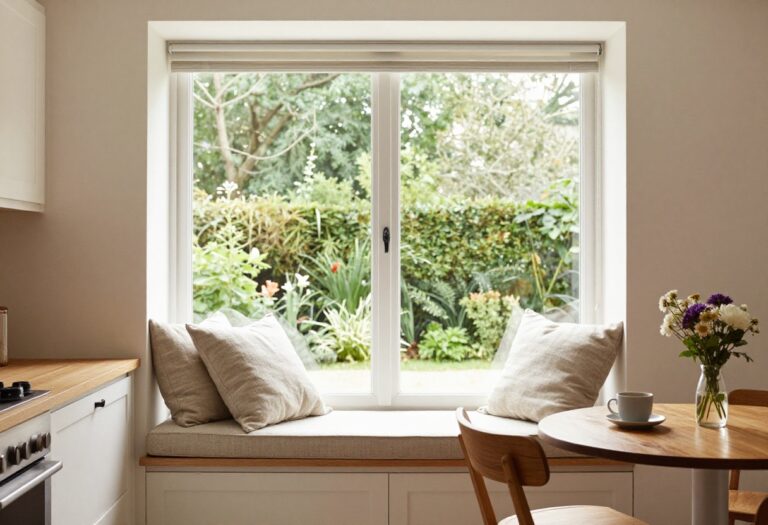
11 Kitchen Shelf Organization Ideas for a Cozy, Layered Display
Kitchen shelves are more than just storage—they're a chance to show off your style. But getting that cozy, layered look without crossing into clutter takes a little thought.
The secret lies in balancing function with warmth, using textures, heights, and everyday items to create a display that feels both intentional and inviting.
Whether you're working with open shelving or glass-front cabinets, these 11 ideas will help you turn your kitchen shelves into a highlight of your home.
1. Mix Open and Closed Storage
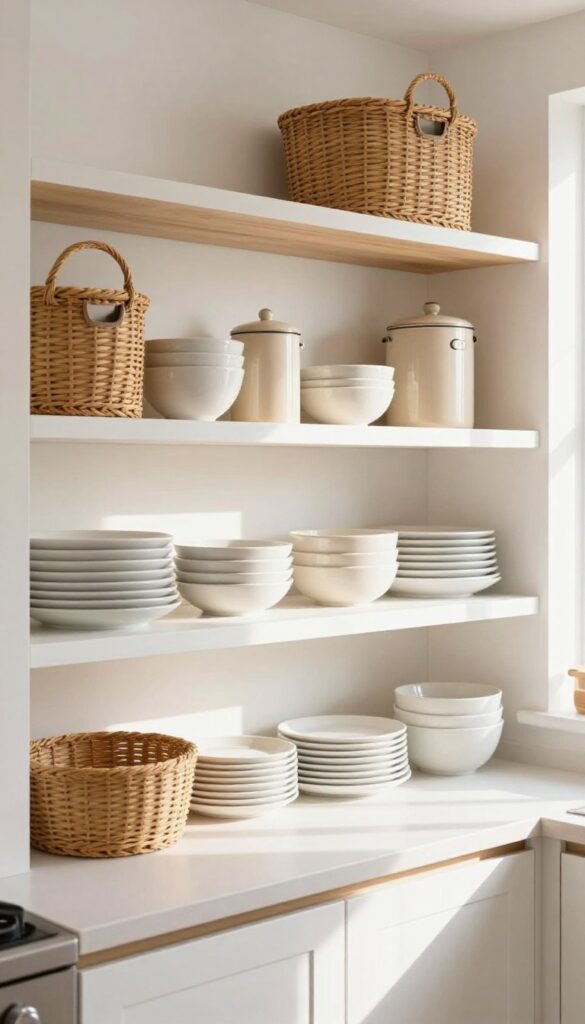
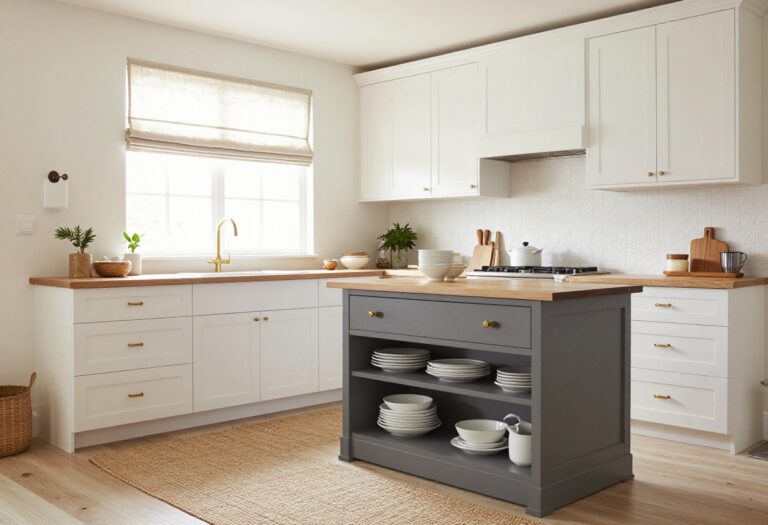
A kitchen shelf doesn't have to choose between being purely decorative or purely practical. Mixing open shelving with closed storage—like cabinets, baskets, or ceramic canisters—creates a cozy, layered look that feels both curated and lived-in. The trick is to let your everyday dishes take center stage on open shelves, while tucking away less attractive items like plastic containers or bulk pantry goods in woven bins or lidded jars.
This balance keeps the space from feeling cluttered while still giving you a chance to show off a few favorite pieces.
Why It Works
- Open shelving can easily look messy if every item is on display. By pairing it with closed storage, you create visual breathing room. The eye rests on the curated items, while the closed pieces add texture and warmth—especially when you use natural materials like rattan, seagrass, or ceramic.
- This mix also makes the kitchen feel more layered and intentional, not staged.
Best For
This idea works well in kitchens that have a mix of open and closed cabinetry already, or for renters who want to add character without major renovations. It's especially good for small kitchens where you need to hide some items but still want a few open shelves to make the space feel larger and more inviting.
Styling Tip
- Stick to a tight color palette for the items you display—think whites, warm woods, and soft earth tones. Use closed storage in a similar material or color family to tie everything together. For example, pair white open shelves with natural woven baskets and cream ceramic canisters.
- Group similar items together and leave a little negative space so the shelves don't feel overcrowded.
2. Layer in Natural Textures
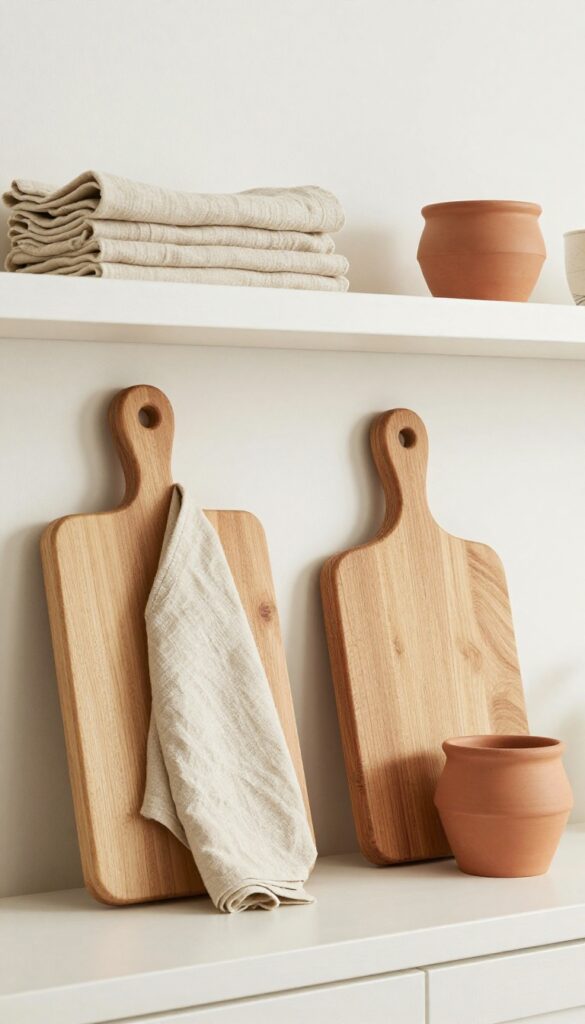
Wood cutting boards, linen napkins, and terracotta pots might sound like random odds and ends, but together they create a kitchen shelf display that feels warm and collected. The trick is mixing these materials so the eye moves from smooth ceramic to rough wood to soft fabric without any one element shouting too loud. This approach turns plain shelving into a scene that looks like it evolved over time, not something you staged in ten minutes.
Why It Works
Natural textures absorb light rather than reflect it, which softens the overall look of open shelves. The contrast between matte terracotta, grainy wood, and crinkled linen adds visual depth without relying on color, making the arrangement feel grounded and cozy even in an all-white kitchen.
Best For
This idea works beautifully in kitchens with warm neutral palettes—think creamy whites, beiges, and soft taupes. It also helps balance out sleek modern cabinets or cold stainless steel appliances by introducing organic, tactile elements.
Styling Tip
Stack two or three cutting boards of varying sizes vertically, then lean a linen napkin against them. Place a small terracotta pot on the opposite side of the shelf to create asymmetry. Keep the color palette tight: stick to unfinished wood, cream linen, and unglazed terra-cotta so the textures shine.
3. Play with Varying Heights
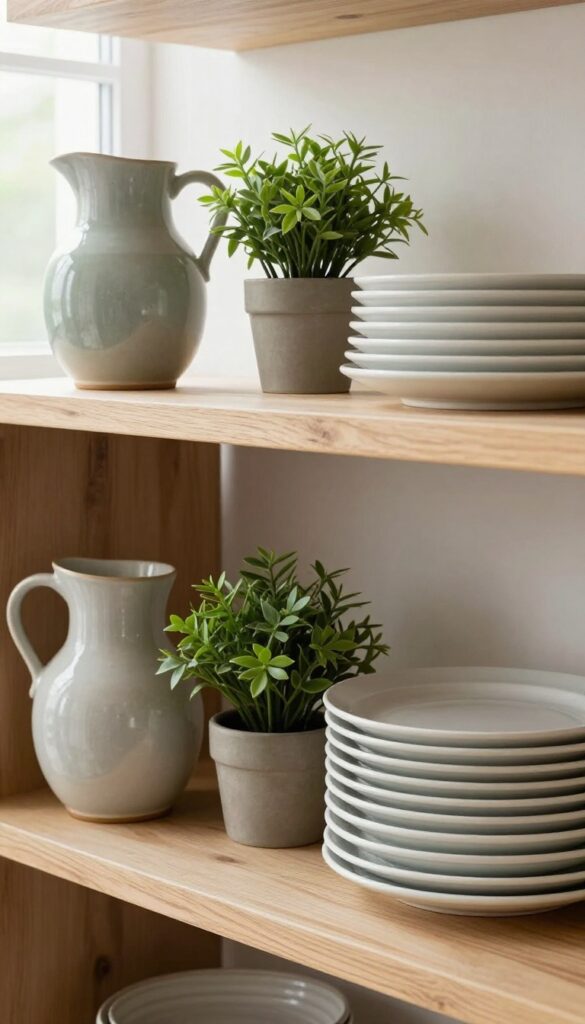
A shelf lined with items all the same height can feel flat and forgettable. The trick to making your kitchen shelves feel curated and collected is to break up the horizontal lines with objects that rise and fall at different levels. Think of it like a city skyline—some pieces should stand tall, others should stay low, and a few should hover somewhere in between.
This natural rhythm draws your eye across the shelf and makes every item feel intentional.
Why It Works
Varying heights create visual layers that add depth and interest to a shelf. When your eye moves up and down instead of just side to side, the display feels dynamic and thoughtfully arranged. It also prevents the shelf from looking cluttered—even if you have a lot of items, the different levels give each piece its own breathing room.
Best For
Open shelving in kitchens where you want to display a mix of functional and decorative items. It works especially well on narrow shelves or above a counter where you don't have a lot of horizontal space to spread out. If your shelf feels too busy or too sparse, playing with heights can instantly balance it out.
Styling Tip
- Start with your tallest piece at one end—a ceramic pitcher, a tall vase, or a stack of three cookbooks. Then add a medium-height riser or small pedestal in the middle to lift a plant or a jar. Finish with a low stack of plates or a small bowl at the other end.
- Keep the color palette cohesive so the height variation is the star, not a clash of colors.
4. Incorporate Greenery
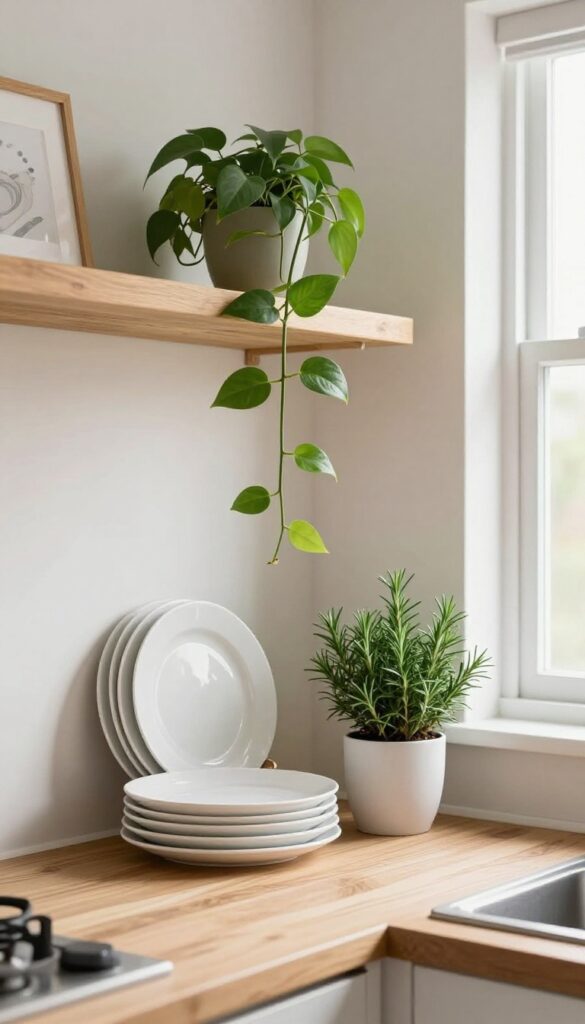
Adding plants to your kitchen shelves is one of the easiest ways to make the space feel alive and inviting. A trailing pothos draped over a stack of white plates or a small rosemary plant next to your cookbooks instantly softens the hard lines of cabinets and countertops. The contrast of organic green against ceramic and wood creates a cozy, layered look that feels both intentional and effortless.
Why It Works
Plants bring a natural, organic element that breaks up the monotony of straight lines and hard surfaces. They add color, texture, and a sense of freshness that makes the kitchen feel more like a living space. Plus, they improve air quality and can even provide fresh herbs for cooking.
Best For
This idea works well on open shelving or floating shelves where the plants can spill over the edges. It's especially effective in kitchens with neutral or monochromatic color schemes, as the greenery becomes a vibrant focal point.
Styling Tip
Mix trailing plants like pothos or string of pearls with upright herbs like basil or mint. Use simple ceramic pots in earthy tones or matte white to keep the look clean. Place them at different heights by stacking a few books or using a small plant stand to create visual interest.
5. Use Baskets for Bulk Items
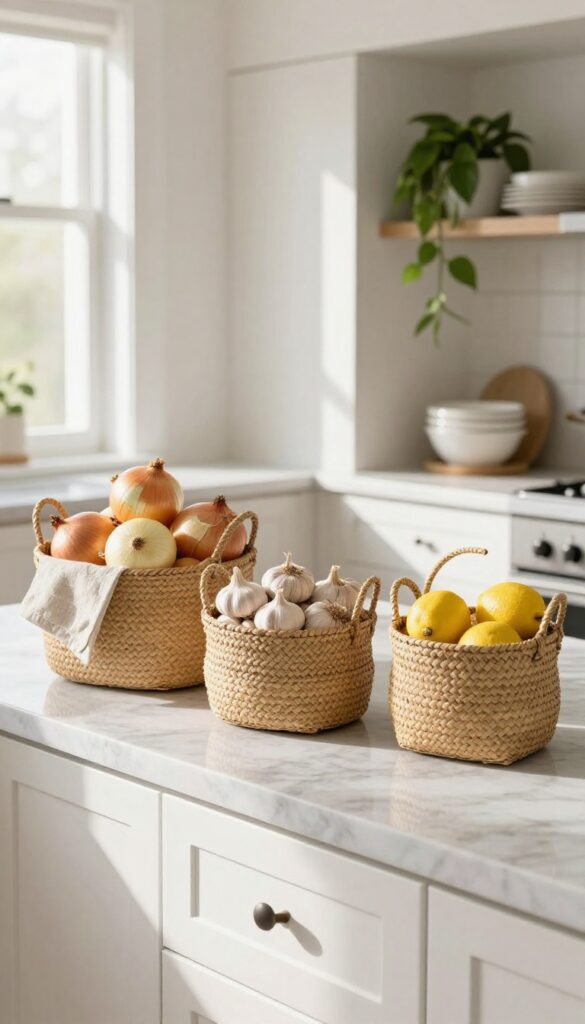
A pile of onions or garlic sitting loose on the counter can feel messy, no matter how tidy the rest of the kitchen is. Baskets solve that in the simplest way—they corral bulk produce and pantry staples into one contained spot while adding natural warmth. Woven textures like seagrass or rattan soften the hard lines of a kitchen and make the space feel more layered, almost like a farmhouse market corner.
The best part is how functional they are: grab a basket, pick what you need, and put it back without any fuss.
Why It Works
Baskets keep loose items from rolling around and visually clutter-free. The woven material adds texture that contrasts nicely with sleek countertops or open shelving, creating depth. They also make it easy to see what you have at a glance and grab ingredients quickly while cooking.
Best For
This idea works great for kitchens with open shelving or a dedicated counter corner. It's perfect if you buy onions, garlic, or bread in bulk and want them accessible but not scattered. Baskets also suit rustic, farmhouse, or boho kitchens, but a sleek dark metal basket can fit modern spaces too.
Styling Tip
- Choose baskets with a slightly wider mouth so you can reach in easily. For a cohesive look, stick to one material—like all rattan or all dark wire—and vary the sizes. Place the largest basket for onions, a medium one for garlic, and a small one for lemons or avocados.
- Line them with a cloth napkin if you want to catch any dirt or crumbs.
6. Group Items in Odd Numbers
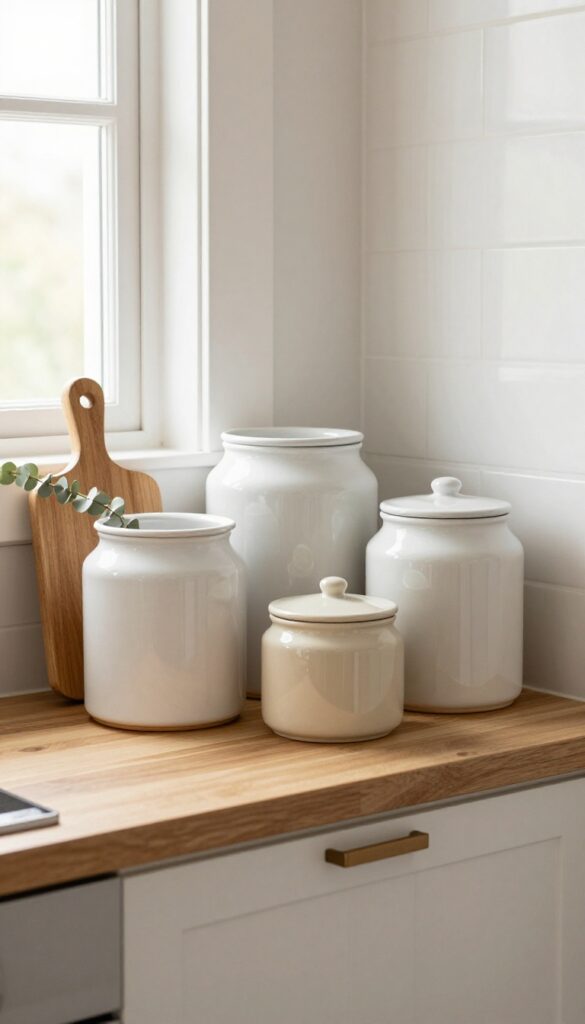
Think of your kitchen shelves as a gallery wall—odd numbers create a natural rhythm that feels balanced without being stiff. Three or five objects arranged together draw the eye in a gentle zigzag, making the display feel curated rather than cluttered. This trick works because our brains find odd groupings more visually interesting, so a cluster of three ceramic canisters or five stacked cookbooks instantly adds a cozy, layered look.
Why It Works
Odd-numbered groupings create a sense of movement and tension that even numbers lack. The asymmetry feels organic and relaxed, which is perfect for a cozy kitchen. It also prevents the shelf from looking too symmetrical or staged, so the display stays inviting and lived-in.
Best For
This idea shines on open shelving, especially above the sink or stove, where you want a focal point that doesn't overwhelm. It's also great for a kitchen island shelf or a narrow ledge where a single object would look lonely and a pair would feel too matchy.
Styling Tip
Mix heights and shapes within your group—a tall vase, a squat jar, and a round bowl create a pleasing silhouette. Keep a common color thread, like all white or warm neutrals, to tie the cluster together. For a cozy touch, add a small wooden cutting board or a sprig of dried eucalyptus to one of the items.
7. Add Warm Lighting
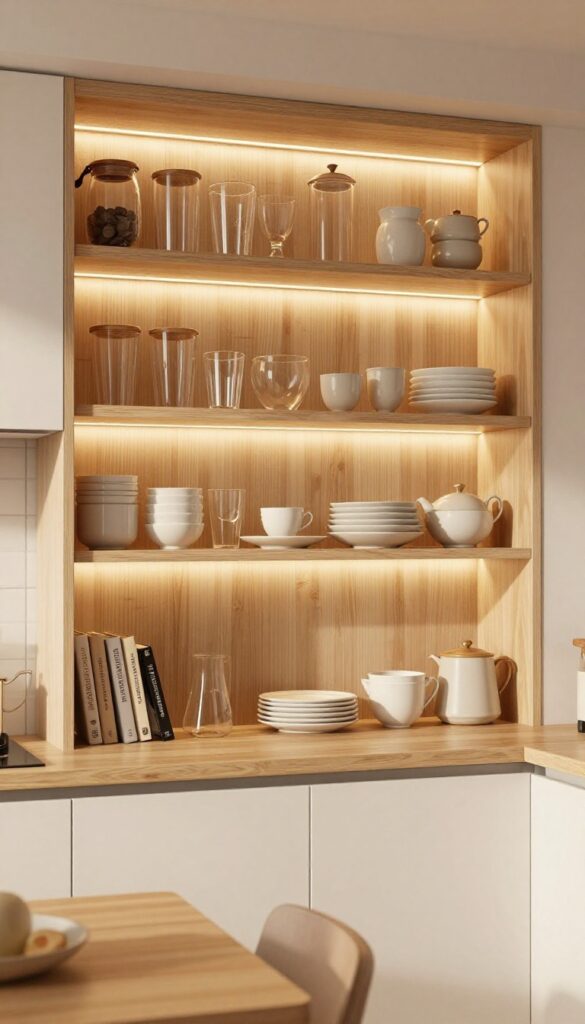
Lighting can transform a shelf from a simple storage spot into a glowing focal point. When you add small LED strip lights or puck lights under your kitchen shelves, the warm amber glow instantly makes glassware, ceramics, and cookbooks feel like curated treasures. The soft light bounces off surfaces, creating depth and a cozy atmosphere that turns an ordinary kitchen into an inviting space.
It's a small change that makes a big difference, especially during evening hours when you want the room to feel calm and welcoming.
Why It Works
Warm lighting highlights the textures and colors of your displayed items, making them stand out without harsh glare. It also adds a layer of ambient light that reduces shadows and makes the kitchen feel larger and more polished. The gentle illumination creates a restaurant-quality vibe that feels both sophisticated and homey.
Best For
This idea works beautifully in kitchens with open shelving, glass-front cabinets, or any display area where you want to draw attention to decorative pieces. It's especially effective in smaller kitchens or those without natural light, as it brightens the space without overwhelming it.
Styling Tip
Choose warm white LEDs (2700K to 3000K) for a soft, golden glow that complements wood tones and neutral palettes. Place the lights at the front edge of the shelf to illuminate items below without casting harsh shadows. For a seamless look, use adhesive-backed strips that are easy to install and hide the wiring behind the shelf or inside a cabinet.
8. Display Pretty Glassware
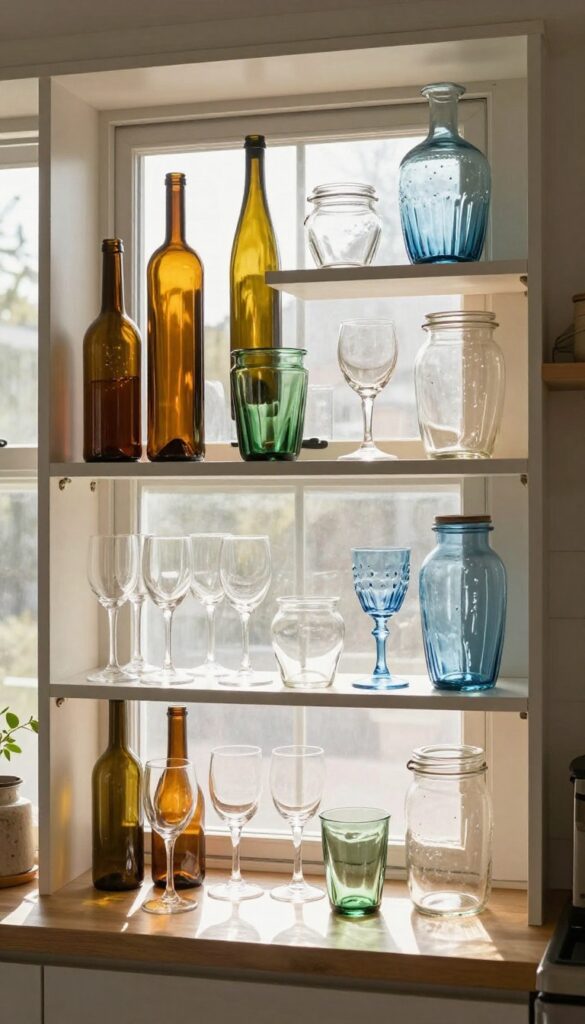
Let your glassware shine by turning it into a display feature on open shelves. Colored bottles, vintage jars, and elegant wine glasses catch the light and add a touch of sparkle without feeling fussy. This idea works especially well when you group similar shapes or hues together, creating a cohesive look that feels both curated and lived-in.
Why It Works
Glassware reflects light and adds visual texture, making shelves feel brighter and more dynamic. It also keeps your favorite pieces accessible for daily use while doubling as decor.
Best For
Open shelving in kitchens with good natural light or under-cabinet lighting. It's perfect for renters or anyone who wants an instant style upgrade without permanent changes.
Styling Tip
Mix clear glass with colored or frosted pieces for depth. Arrange taller bottles at the back and shorter glasses in front, leaving a little breathing room between items to avoid a cluttered look.
9. Incorporate Personal Touches
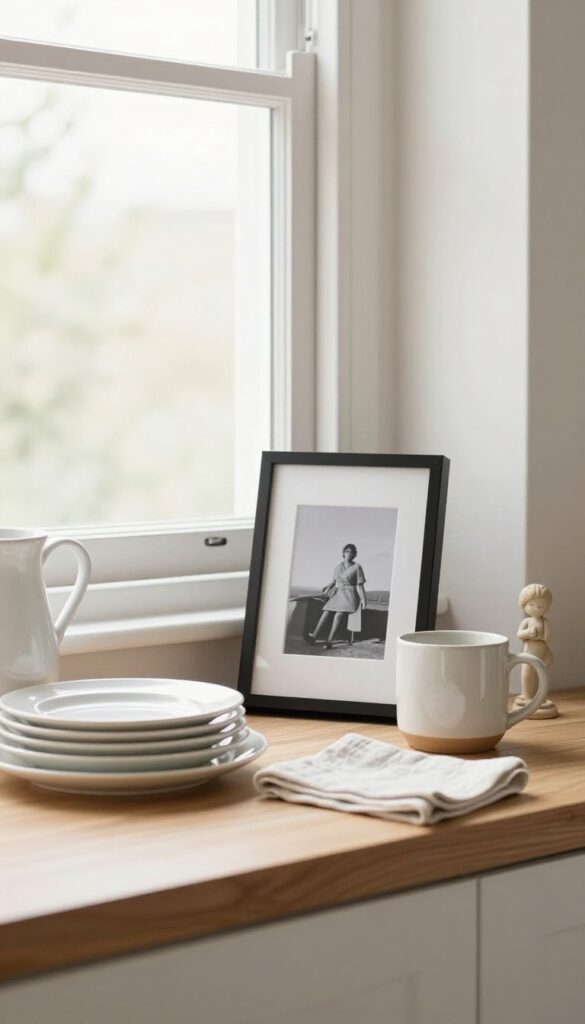
Your kitchen shelves don't have to be purely functional. By weaving in a few personal items, you can turn a simple display into something that feels warm and lived-in. A small framed photo of a favorite memory, a ceramic piece picked up at a local market, or a souvenir from a trip abroad adds character and a sense of story.
These touches break up the uniformity of stacked dishes and jars, making the space feel uniquely yours without sacrificing order.
Why It Works
Personal items inject warmth and personality into an otherwise utilitarian space. They create visual pauses among the practical storage, drawing the eye and inviting conversation. When balanced with neutral kitchen staples, they add depth and a cozy, layered look that feels curated rather than cluttered.
Best For
This idea works well in kitchens where you want to soften a minimalist or modern design, or in open shelving that's visible from a dining or living area. It's especially effective on a shelf that's at eye level, where small details can be appreciated without getting lost.
Styling Tip
Stick to one or two personal items per shelf to keep the look intentional. Place them near the front or slightly off-center, and pair them with simple objects like a white pitcher or a stack of linen napkins to maintain balance. Rotate items seasonally to keep the display feeling fresh.
10. Rotate Seasonal Decor
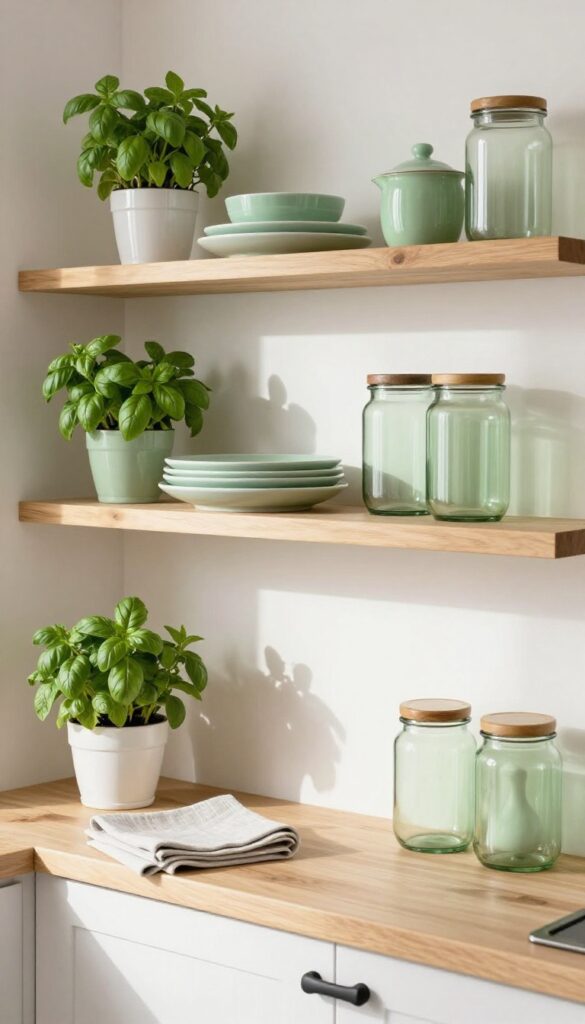
Your kitchen shelves don’t have to stay the same all year. Swapping out a few pieces each season adds a layer of warmth and personality that feels intentional, not cluttered. Think mini pumpkins and amber jars in autumn, pastel dishes and fresh herbs in spring.
It’s a simple way to keep your display feeling alive and connected to the world outside.
Why It Works
Seasonal rotation prevents visual fatigue and gives you a reason to declutter and reorganize. It keeps your kitchen from feeling static and makes the space feel more personal and lived-in.
Best For
Open shelving in kitchens that get natural light. It’s especially effective in farmhouse, cottage, or transitional kitchens where a cozy, layered look fits naturally.
Styling Tip
Stick to a consistent color palette for each season—like warm oranges and browns for fall, soft greens and whites for spring. Mix in natural textures like wood, linen, or ceramic to keep it from feeling too themed.
11. Keep Everyday Items Accessible
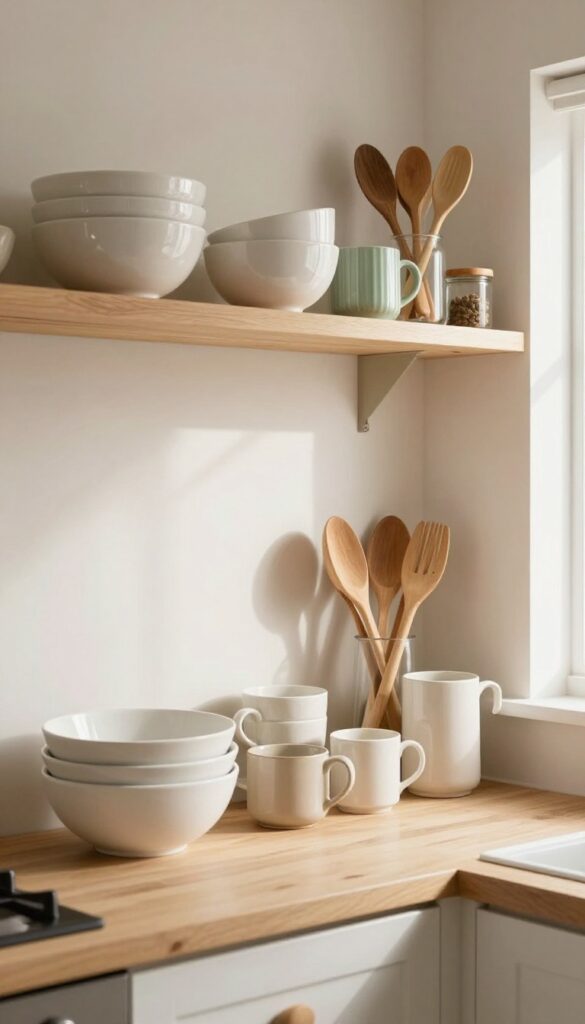
Your morning coffee ritual shouldn't require a treasure hunt. By placing your most-used mugs, bowls, and spices at eye level, you create a shelf that works as hard as you do. This approach blends practicality with style, turning everyday necessities into a curated display that feels warm and inviting.
Why It Works
Storing frequently used items at eye level saves time and reduces counter clutter. It also adds a lived-in, cozy feel because the items are part of the room's personality, not hidden away. The visual rhythm of stacked bowls or lined-up mugs creates a sense of order without feeling sterile.
Best For
Open shelving in small kitchens or galley layouts where every inch counts. It's also perfect for rental kitchens where you can't change the cabinets but want to add character. This idea shines in homes that value both efficiency and a layered, collected look.
Styling Tip
Mix heights and textures: a stack of ceramic bowls next to a tall jar of wooden spoons. Keep the color palette cohesive—think warm whites, soft earth tones, and one accent hue like sage or mustard. Leave a little breathing room between groups so the shelf doesn't look crammed.
FAQ
How do I keep open shelves from looking cluttered?
Stick to a color palette and limit the number of items per shelf. Use baskets or bins to corral small items, and leave some empty space for visual breathing room.
What are the best materials for a cozy kitchen shelf display?
Natural materials like wood, linen, ceramic, and rattan add warmth. Mix them with a few metallic accents (like brass or copper) for a touch of elegance.
How often should I reorganize my kitchen shelves?
Aim for a seasonal refresh—every three to four months. This keeps the display feeling current and gives you a chance to declutter.
Can I use open shelves in a small kitchen?
Yes, but be selective. Use them to display only your most attractive items, and keep the rest behind closed doors. This prevents visual overload.
How do I style shelves without making them look staged?
Mix practical items (like dishes and cookbooks) with decorative ones (like plants and art). Arrange things as if you use them daily—slightly imperfect but intentional.
Conclusion
Creating a cozy, layered kitchen shelf display is all about balancing practicality with personality. By mixing textures, playing with heights, and adding personal touches, you can turn even the simplest shelves into a warm focal point. Remember, the goal isn't perfection—it's a space that feels inviting and reflects how you live.
Start with one shelf, experiment with a few of these ideas, and let your kitchen evolve naturally. You might just find yourself enjoying the process as much as the result.