13 Kitchen Shelf Organization Ideas for Open Storage That Look Clean and Modern
Open shelving in the kitchen is a bold move. It forces you to keep things tidy, but it also gives your everyday items a chance to shine. The key is balancing practicality with a clean, modern look that doesn't feel sterile.
You don't need a designer to pull this off. With a few smart strategies, your shelves can become a highlight of the kitchen rather than a cluttered afterthought.
Think intentional groupings, neutral tones, and a touch of texture. Here are 13 ideas to help you organize your open shelves in a way that feels fresh, functional, and effortlessly modern.
1. Stick to a Neutral Color Palette
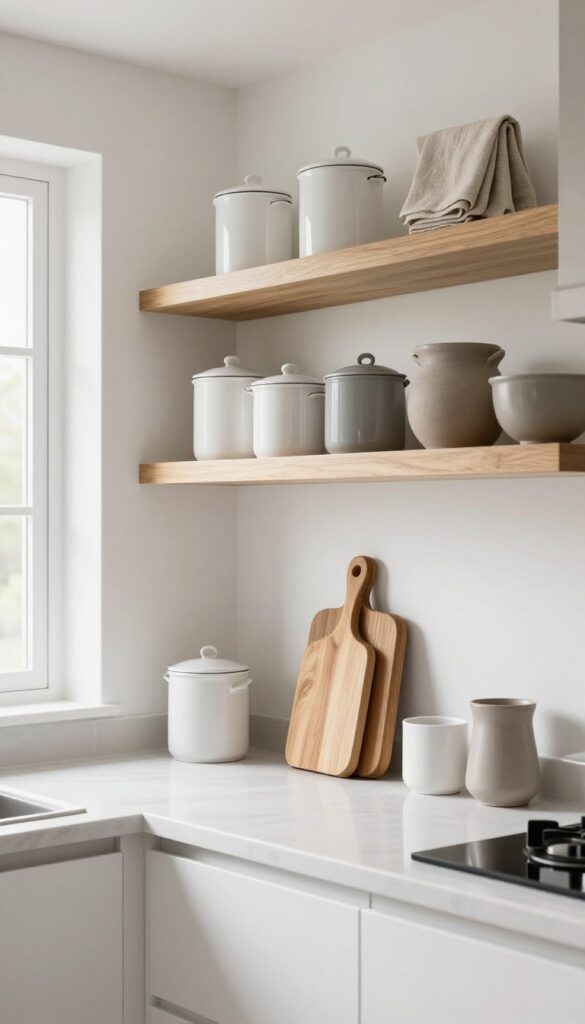
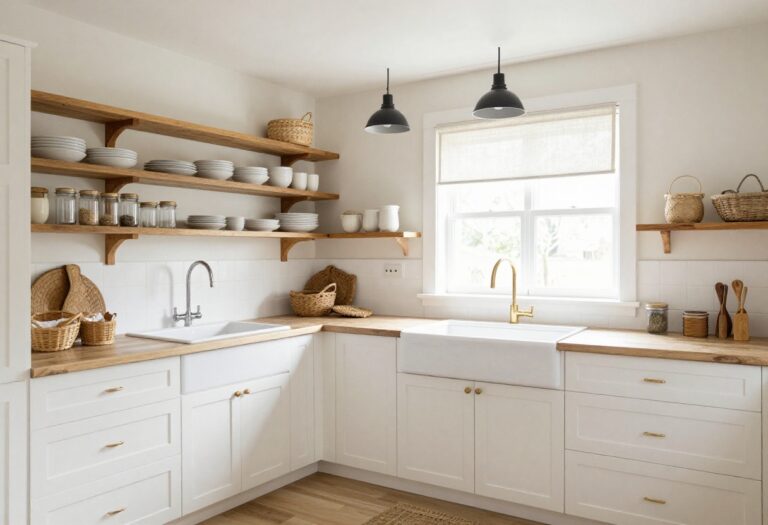
A neutral color palette is the secret to making open kitchen shelves feel intentional rather than chaotic. By limiting your display to whites, beiges, soft grays, and natural wood tones, you create a calm, cohesive look that feels airy and uncluttered. This approach works especially well in modern kitchens where clean lines and simplicity are key.
Why It Works
Neutrals naturally blend together, so even a mix of different items—like ceramic canisters, linen napkins, and wooden cutting boards—looks harmonious. The lack of bold colors reduces visual noise, making the shelves appear more spacious and organized. Plus, it's a foolproof way to achieve that serene, spa-like kitchen vibe.
Best For
This idea is perfect for kitchens with white or light-colored cabinets, as it extends the airy feel upward. It also works well in small kitchens where you want to avoid visual clutter, or in open-plan spaces where the kitchen flows into a neutral living area.
Styling Tip
Vary textures to keep the look from feeling flat—pair smooth ceramic with rough wood, matte stoneware with glossy glass. Add a few pieces in slightly darker neutrals, like charcoal or taupe, to create depth without breaking the palette.
2. Use Matching Canisters for Staples
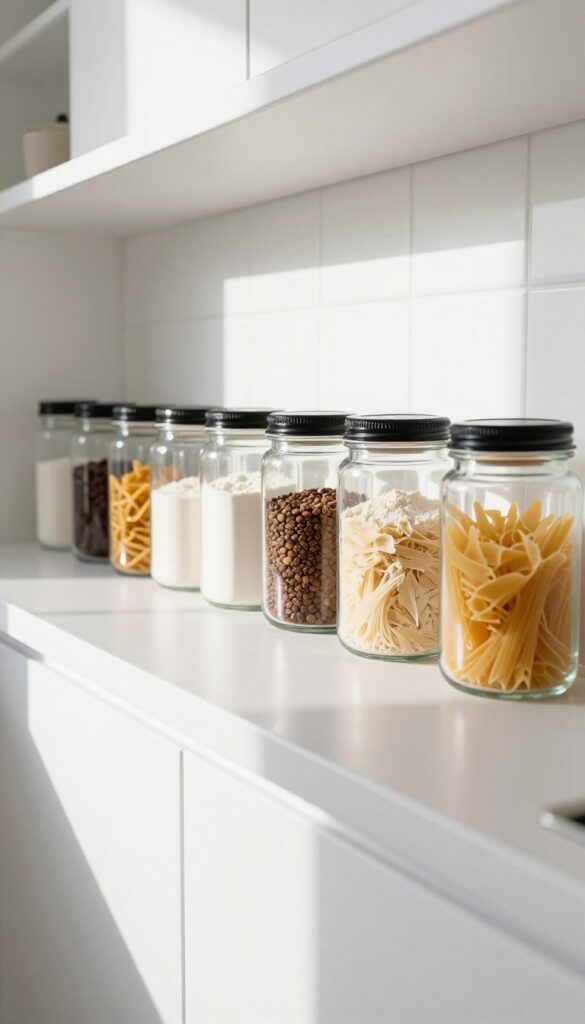
There’s something instantly calming about a row of identical canisters lined up on an open shelf. When you store flour, sugar, coffee, and pasta in matching glass or ceramic containers, the whole shelf feels intentional rather than cluttered. The repetition of shape and material creates a clean, modern rhythm that makes even a busy kitchen look put together.
Why It Works
Uniform containers reduce visual noise. Instead of your eye jumping between different labels, colors, and textures, it rests on a cohesive set. This simple swap makes open shelving feel curated, not chaotic.
Best For
This idea shines in kitchens with open shelving where you store everyday dry goods. It’s especially effective for small kitchens where every visual detail counts, or for anyone who wants a streamlined, modern look without remodeling.
Styling Tip
Stick to one material—either all glass or all ceramic—and choose canisters with the same lid style. For a cleaner look, opt for clear glass so you can see contents at a glance, or go with opaque ceramic if you prefer a more uniform color palette.
3. Layer in Natural Textures
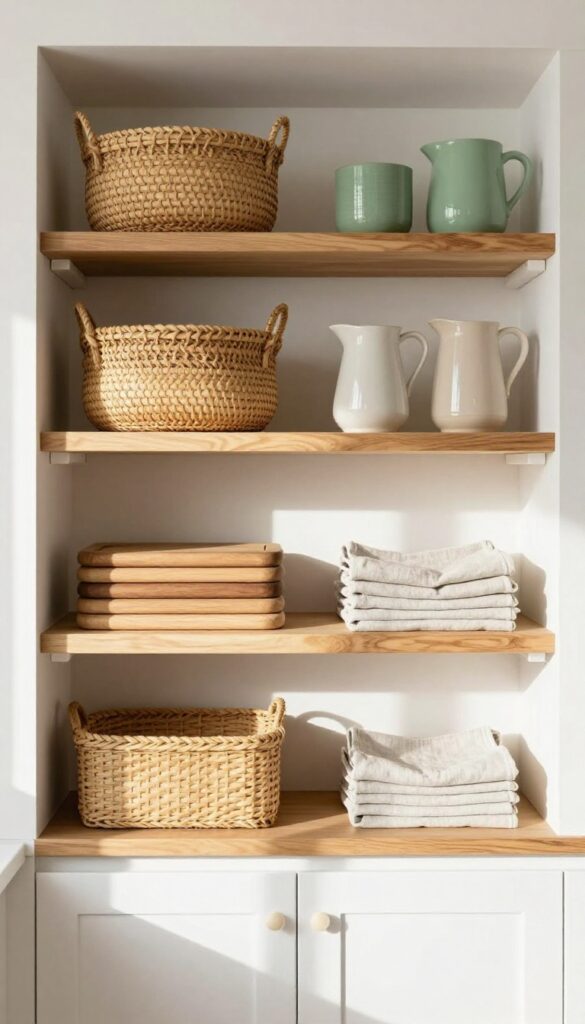
Open shelving can sometimes feel a little cold or one-dimensional, especially in a modern kitchen with lots of sleek surfaces. That's where natural textures come in. By weaving in materials like woven baskets, wooden cutting boards, and linen napkins, you instantly soften the look and make the space feel more lived-in and welcoming.
These elements add warmth without clutter, creating a curated yet effortless vibe.
Why It Works
Natural textures break up the monotony of hard surfaces like tile, glass, and metal. They introduce visual contrast and depth, making the shelves feel styled rather than just stacked. Plus, materials like wood and linen have a timeless appeal that keeps the kitchen from looking too trendy or sterile.
Best For
This idea shines in kitchens with a neutral or minimalist palette, where the textures become the main source of visual interest. It's also perfect for renters or anyone who wants to add character without permanent changes—just swap in baskets and boards that match your style.
Styling Tip
Mix a few large woven baskets for storing linens or dry goods with a stack of wooden cutting boards in different wood tones. Lean a couple of linen napkins or a simple ceramic pitcher in between. Keep the color palette cohesive—think warm browns, creams, and soft greens—so the textures stand out without feeling chaotic.
4. Group Items in Odd Numbers
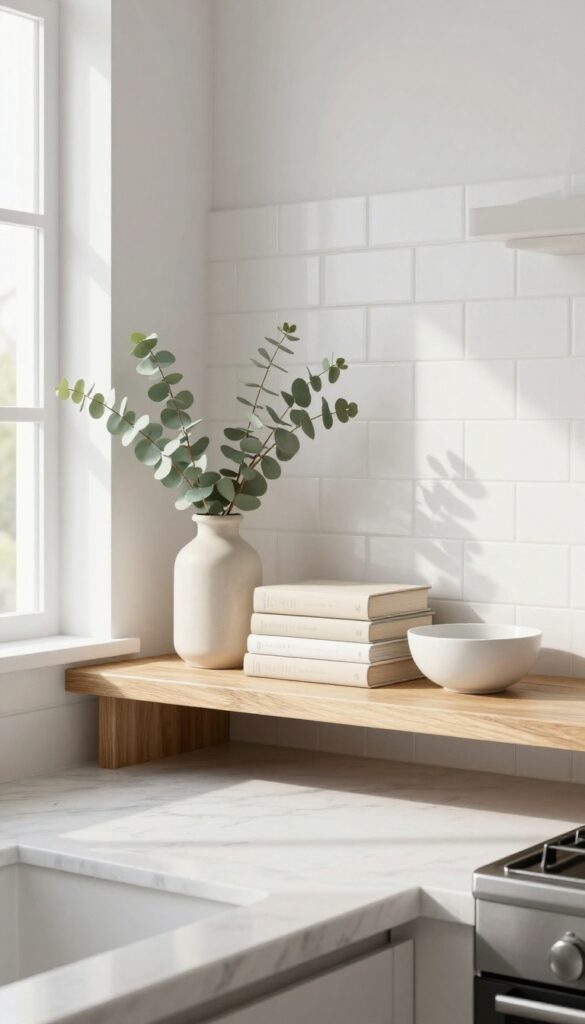
Odd-numbered groupings instantly add visual rhythm to your shelves. When you cluster three or five objects together, the arrangement feels intentional and dynamic rather than static. This simple styling trick works especially well on open kitchen shelving, where a mix of ceramics, cookbooks, and plants can look curated instead of cluttered.
Why It Works
Our eyes naturally find odd-numbered compositions more balanced and engaging. Pairs can feel too symmetrical or formal, while singles may look lonely. Groups of three or five create a sense of movement and completeness without being overwhelming.
Best For
This technique is perfect for open shelves that hold decorative items like vases, jars, or small plants. It also works well for cookbook displays and layered shelf styling where you want to avoid a flat, one-dimensional look.
Styling Tip
Vary heights and textures within your odd-numbered group. For example, combine a tall vase, a medium stack of books, and a small ceramic bowl. Keep colors cohesive—stick to two or three tones—so the grouping feels harmonious, not chaotic.
5. Keep Frequently Used Items at Eye Level
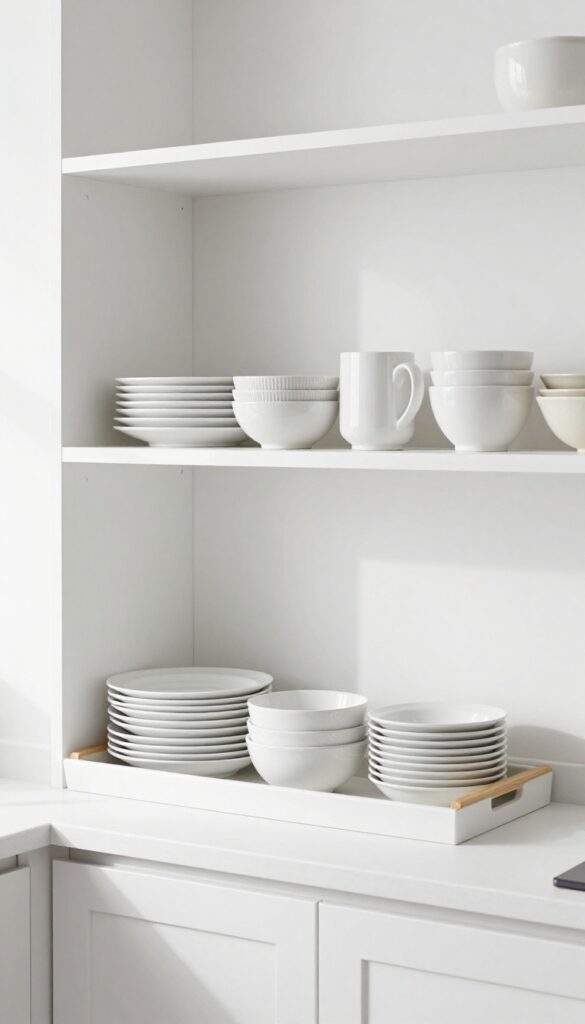
The middle shelf is prime real estate in any kitchen, and placing your daily dishes, glasses, and mugs there makes perfect sense. This spot is right at eye level and easy to reach, so you can grab a coffee mug or a cereal bowl without stretching or bending. It creates a natural rhythm in your morning routine and keeps the most-used zone looking tidy and intentional.
Why It Works
When everyday items live exactly where you need them, you save time and reduce clutter. The middle shelf becomes a functional landing zone that streamlines your workflow, while the upper and lower shelves can hold less-used pieces. This simple logic keeps the entire shelf system organized without requiring constant effort.
Best For
This idea works best for open shelving in a busy family kitchen or a compact apartment where every inch counts. It's especially helpful if you cook and eat at home regularly and want your most-used items within arm's reach. It also suits a modern, minimalist aesthetic where visual balance matters.
Styling Tip
Stack plates and bowls in neat piles, and group matching mugs together for a cohesive look. Use a small tray or a wooden riser to add height variation and prevent the shelf from feeling flat. Keep the color palette simple—white, cream, or soft neutrals—so the shelf feels calm and uncluttered.
6. Add a Few Greenery Touches
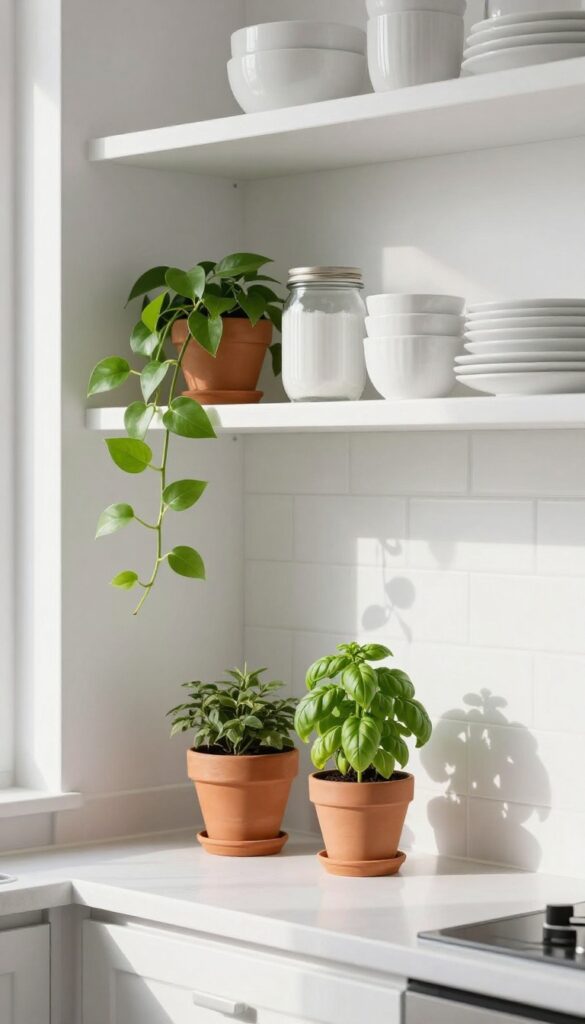
Plants bring a kitchen shelf to life without cluttering it. A single small potted herb or a trailing pothos adds a soft, organic contrast to clean lines and organized rows. The key is choosing low-maintenance varieties that thrive in the natural light most kitchens get, so you get the visual payoff without the fuss.
Why It Works
Greenery breaks up the hard edges of shelving and dishware, adding warmth and a sense of freshness. It also makes the space feel lived-in and inviting, not just sterile and tidy. Plus, herbs like basil or mint are practical—you can snip them while cooking.
Best For
This idea works well on upper shelves where trailing vines can drape down, or on a dedicated herb shelf near a window. It’s perfect for kitchens that feel a bit too clinical or lack color, especially modern all-white or neutral schemes.
Styling Tip
Stick to one or two plants per shelf to keep the look clean. Use simple, matte ceramic pots in neutral tones like terracotta, sage, or cream. Group a small upright plant with a trailing one for height variation, and place them near the edge to let vines cascade naturally.
7. Use Clear Glass for a Streamlined Look
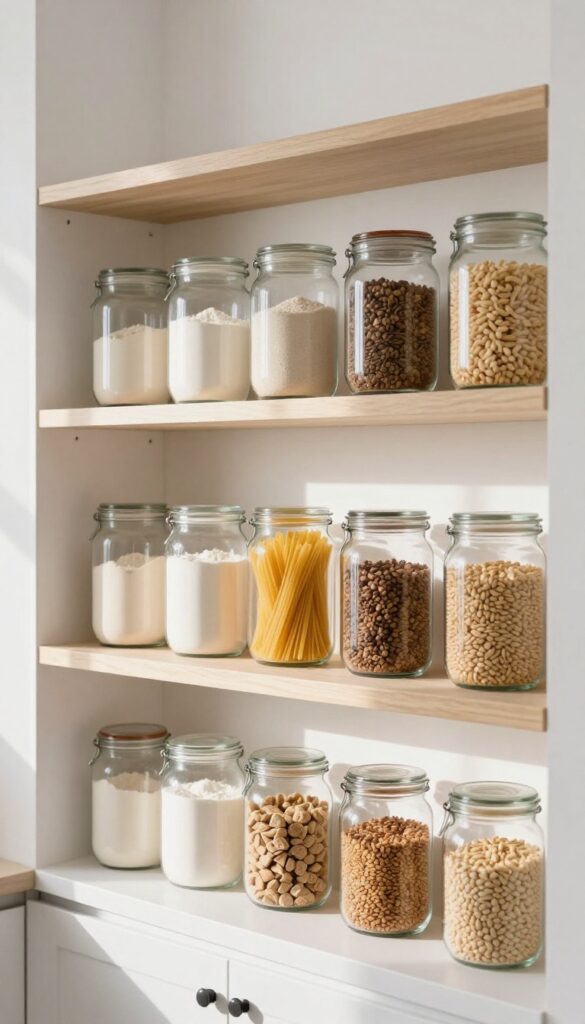
Glass jars and containers bring a sense of order and lightness to open kitchen shelves. Instead of hiding pantry staples behind cabinet doors, clear vessels turn everyday ingredients into part of the decor. The transparency creates visual calm because your eye sees exactly what's there—no guessing, no clutter.
Plus, glass surfaces catch and reflect light, which makes the whole shelf feel airier and more spacious, even in a small kitchen.
Why It Works
Clear glass eliminates visual noise. When everything is visible, you naturally keep things organized because there's nowhere to hide mess. The uniformity of matching jars creates a cohesive look, while the glass itself adds a subtle gleam that brightens the shelf.
Best For
This works especially well for kitchens with a modern or minimalist aesthetic. It's also ideal for small kitchens where you want to avoid dark, heavy storage that closes in the space. If you have a pantry with open shelving, glass containers make it easy to grab what you need without rummaging.
Styling Tip
- Stick to one or two jar shapes and sizes for a streamlined effect. Mixing too many different bottles can look chaotic. Label each jar with a simple tag or chalkboard sticker to keep things practical.
- Group similar items together—flours on one shelf, grains on another—and leave a little breathing room between jars so the shelf doesn't feel packed.
8. Incorporate Vertical Storage
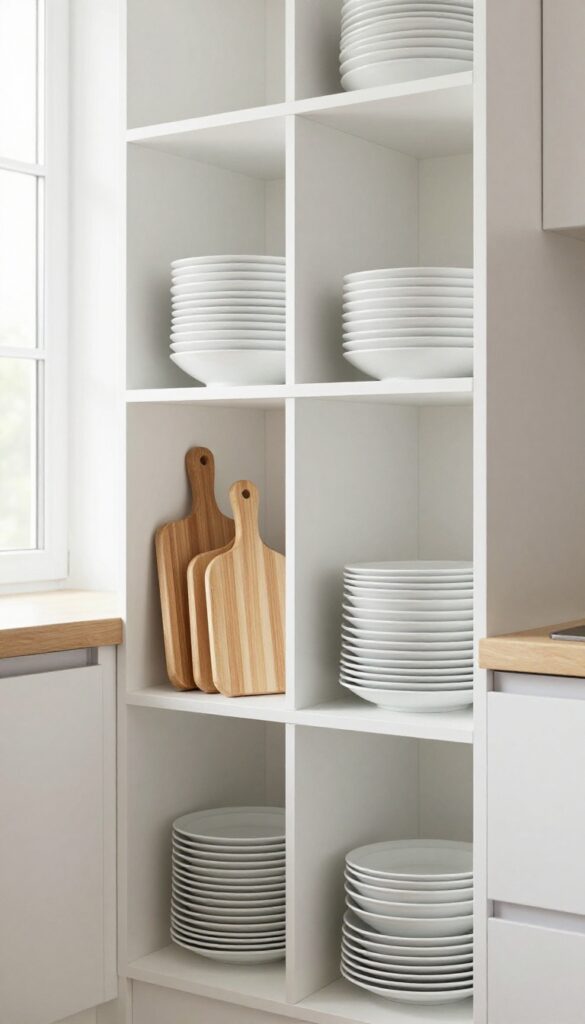
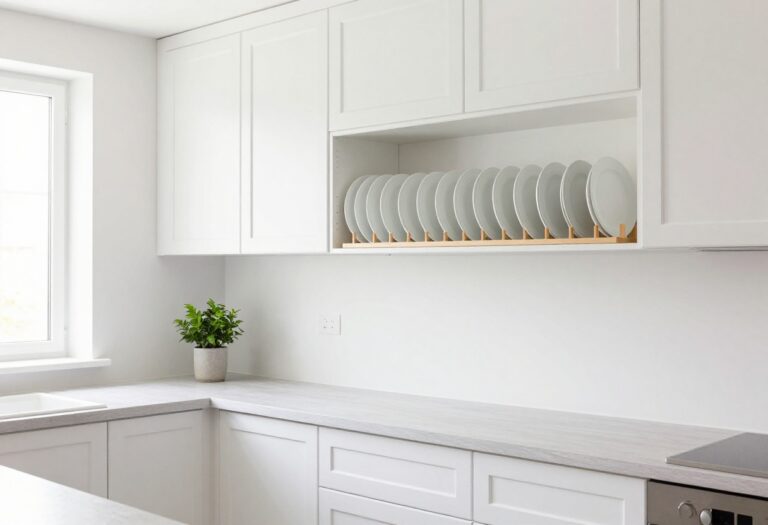
When your shelf space is limited, look up. Vertical storage solutions like slim risers or small tiered shelves let you stack plates, bowls, or cutting boards upright instead of piling them flat. This not only saves horizontal room but also makes each piece easy to grab without disturbing the whole stack.
The clean lines of a vertical arrangement keep your open shelving looking orderly and intentional.
Why It Works
Vertical storage doubles your usable space by taking advantage of the height between shelves. It prevents the wobbling and toppling that often happens with tall stacks of plates, and it keeps items visible and accessible. The result is a kitchen that feels both spacious and organized.
Best For
This idea is perfect for kitchens with narrow shelves or for anyone who stores a lot of dinnerware. It works especially well for plates, bowls, baking sheets, and cutting boards—items that tend to take up a lot of horizontal space when stacked flat.
Styling Tip
Choose slim, clear acrylic risers for a nearly invisible look, or go with warm wood or metal for a more intentional design statement. Group similar items together, like all white plates on one riser and colorful bowls on another, to create visual order.
9. Limit Decorative Objects to One or Two Per Shelf
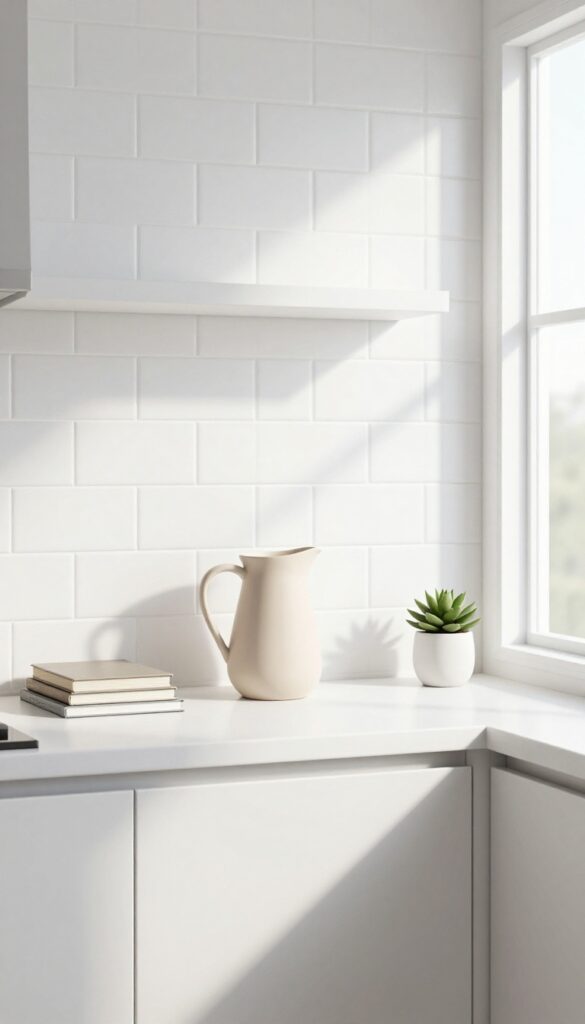
When open shelving starts to feel more like a cluttered display than a clean kitchen feature, the fix is often subtraction. Restricting decorative objects to one or two per shelf creates breathing room and lets each piece stand out. A single vase, a small ceramic sculpture, or a neatly stacked cookbook can anchor the shelf without overwhelming it.
This approach suits the modern, clean aesthetic where negative space is as important as the objects themselves.
Why It Works
Too many knick-knacks make shelves look busy and visually noisy. By limiting decor, you create a calm, curated feel that emphasizes quality over quantity. Each piece becomes a deliberate focal point, and the kitchen retains its functional, uncluttered character.
Best For
This idea works best for kitchens with a minimalist or contemporary style, especially if you have open shelving in a high-traffic area like above the counter or near the stove. It's also ideal for small kitchens where every inch counts and visual clutter can make the space feel cramped.
Styling Tip
Choose one larger statement piece per shelf, like a ceramic pitcher or a sculptural object, and pair it with a single small item if needed—for example, a small plant on a stack of books. Keep colors neutral or within a tight palette to maintain a cohesive, serene look.
10. Rotate Seasonal Items
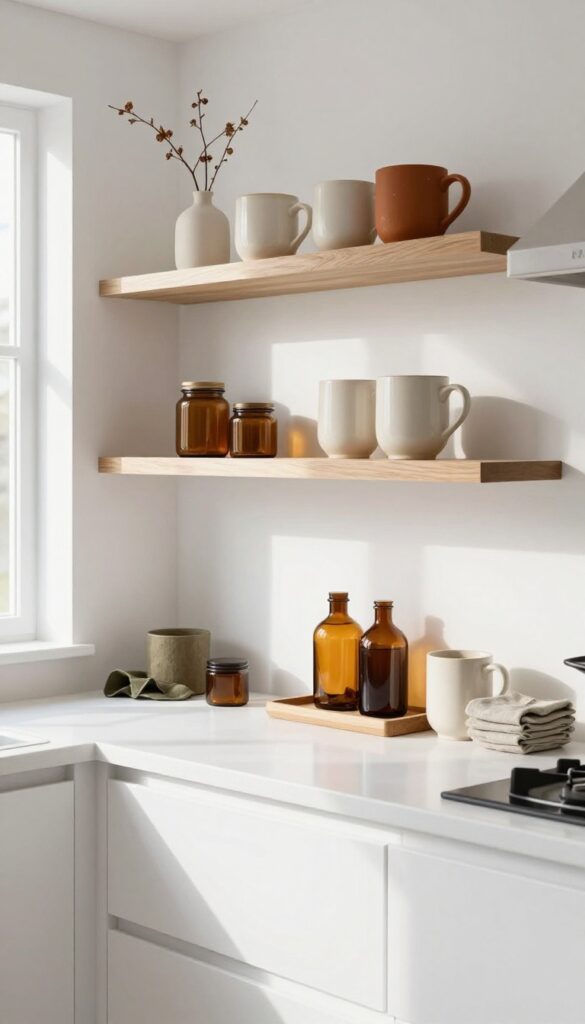
Your kitchen shelves don't have to look the same all year. Swapping out a few pieces with the seasons is an easy way to keep the space feeling current and personal, without buying a whole new set of decor. Think warm ceramic mugs and amber glass in fall, or light linen napkins and pastel bowls in spring.
It's a small shift that makes a big visual difference, and it keeps your open shelving from feeling static or stale.
Why It Works
Seasonal rotation prevents your shelves from becoming a permanent display that you stop noticing. By swapping just a few items, you create a reason to edit and refresh, which naturally reduces clutter. The changing colors and textures also add a layer of interest that feels intentional and curated, not chaotic.
Best For
This idea works especially well in kitchens with neutral or white cabinetry, where seasonal colors can pop without competing. It's also great for anyone who loves to entertain and wants their kitchen to feel festive without going overboard. If you have a small collection of dishware or decor you already love, rotating it by season is a low-cost way to make the most of it.
Styling Tip
Stick to a simple color palette for each season—like rust, cream, and olive for fall, or sage, white, and pale blue for spring. Keep the heavy items like dinner plates on lower shelves and lighter decor like vases or linens on upper shelves. A small tray or wooden box can corral smaller seasonal pieces so they feel like a set, not a jumble.
11. Use Baskets for Odd-Shaped Items
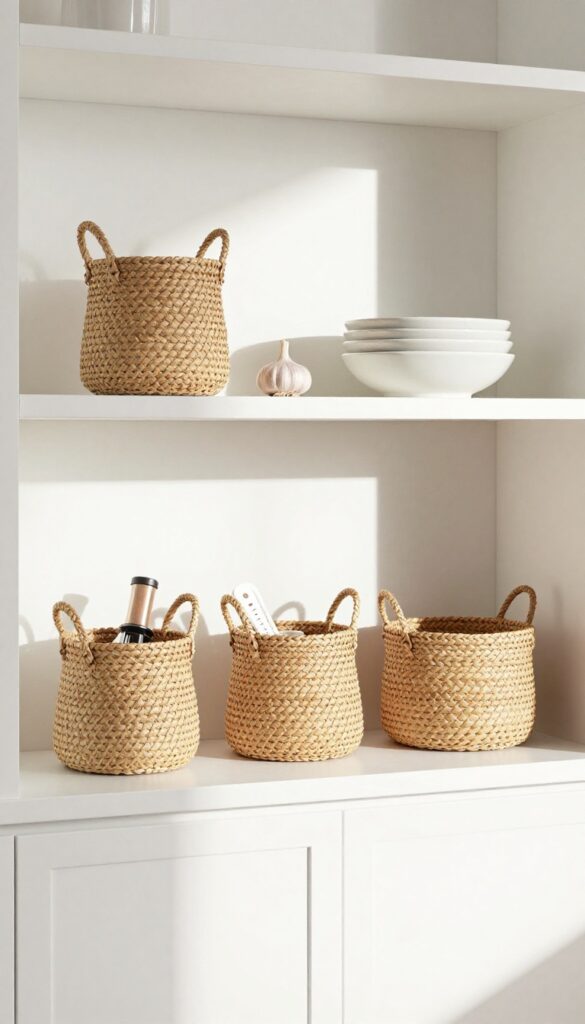
Not everything in your kitchen fits neatly into a jar or onto a shelf riser. Measuring cups, garlic presses, and snack packs all have awkward shapes that make open shelving look messy fast. That’s where baskets come in.
A well-chosen basket turns clutter into a styled vignette, adding warmth and texture while hiding the chaos inside. Whether you go with woven seagrass for a natural feel or sleek wire for a modern edge, baskets instantly make your shelves look intentional.
Why It Works
Baskets create a visual buffer between your items and the eye. Instead of seeing a jumble of different shapes and colors, you see a unified container. This trick reduces visual noise and makes your shelves feel curated, not crowded.
Best For
Odd-shaped tools like measuring cups, ladles, and small gadgets that don’t stack well. Also great for snack pouches, tea bags, or any lightweight items that need a home but don’t deserve a dedicated drawer.
Styling Tip
Stick to one basket material per shelf to keep the look cohesive. Mix sizes but not textures—for example, two small wire baskets and one larger one on the same shelf. Leave a little breathing room around each basket so the shelf doesn’t feel stuffed.
12. Keep a Consistent Shelf Liner
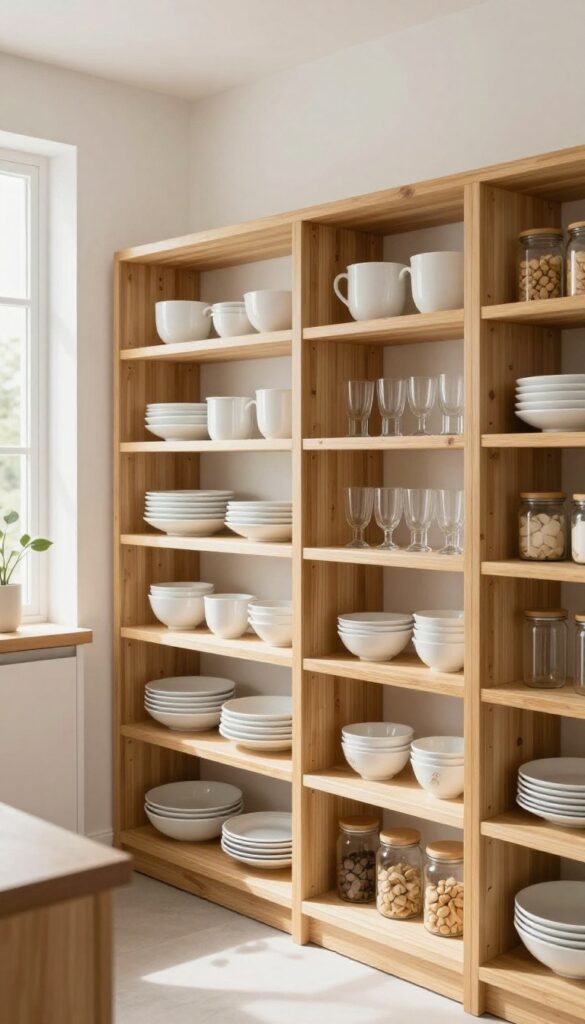
A uniform shelf liner does more than protect your shelves—it creates a visual anchor that pulls the whole display together. Whether you choose a subtle patterned paper or a natural bamboo mat, the repetition of the same liner across every shelf brings a sense of order and calm. It’s a small detail that makes open shelving feel intentional rather than accidental.
Why It Works
Consistency is key in modern design. When every shelf shares the same liner, your eye glides smoothly across the arrangement instead of getting caught on mismatched surfaces. It also protects your shelves from spills and scratches, so the look stays fresh longer.
Best For
This idea shines in kitchens with multiple open shelves, especially if you display a mix of dishware, glassware, and pantry items. It’s also perfect for renters who want to add a cohesive touch without permanent changes.
Styling Tip
Choose a liner with a subtle texture or pattern—think thin stripes, soft geometrics, or a natural bamboo weave. Keep it neutral (white, beige, light gray) so it fades into the background and lets your dishes take center stage.
13. Leave Breathing Room Between Groups
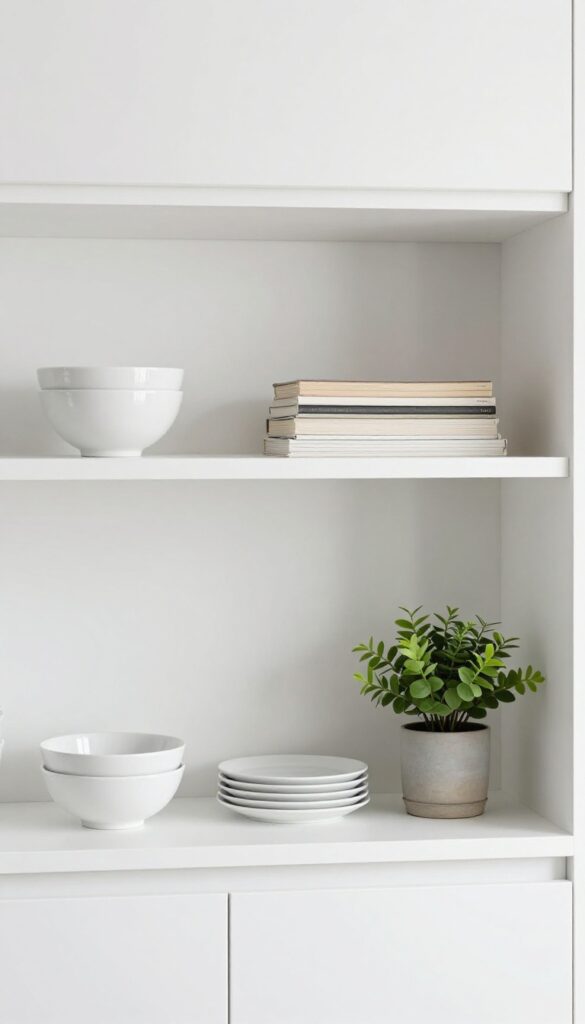
Open shelving can easily feel cluttered when every inch is packed. The trick to a calm, curated look is to leave intentional gaps between your item clusters. A few inches of empty space act like visual punctuation, letting each piece breathe and stand out on its own.
This approach turns your shelves into a gallery-like display rather than a storage catch-all.
Why It Works
Empty space is a design tool. It prevents the eye from feeling overwhelmed and gives each object room to be noticed. The contrast between filled and empty areas creates rhythm and balance, making the whole arrangement feel more intentional and polished.
Best For
This idea works especially well in modern kitchens with clean lines and neutral palettes. It's also great for smaller shelves where overcrowding is a risk, or for anyone who wants to highlight a few favorite pieces without visual noise.
Styling Tip
Aim for 2–4 inches of bare shelf between groupings. Use this space to separate different categories: keep cookbooks together, then a gap, then a stack of white bowls. Stick to odd numbers in each cluster for a naturally pleasing composition.
FAQ
How do I keep open shelves from looking cluttered?
Stick to a neutral color palette, use matching containers, and limit decorative items to one or two per shelf. Leave breathing room between groups.
What should I store on open kitchen shelves?
Store everyday dishes, glassware, and pantry staples in uniform containers. Avoid storing rarely used items or bulky appliances.
How often should I reorganize my kitchen shelves?
Do a quick tidy every week and a deeper reorganization every season. Rotating items keeps the look fresh and prevents buildup.
Can open shelves work in a small kitchen?
Yes, they can make a small kitchen feel larger by opening up wall space. Just keep items minimal and use light colors to avoid visual weight.
What are the best materials for shelf liners?
Natural bamboo, cork, or non-slip drawer liner are great options. They protect shelves and add a subtle texture without being too busy.
Conclusion
Open shelving doesn't have to be stressful. With a few intentional choices, you can create a kitchen that feels both organized and inviting. The trick is to treat your shelves as a living part of your home—adjust them as your needs change.
Start with one shelf and apply these ideas gradually. You'll soon find a rhythm that keeps your kitchen looking clean, modern, and completely yours.