12 Warm and Lived-In Indian Pantry Organization Ideas for Easier Everyday Meals
Your pantry is the heart of your kitchen, especially when it's stocked with the vibrant spices, dals, and grains that make Indian cooking so special. But let's be honest—keeping it organized can feel like a never-ending battle against cluttered shelves and forgotten ingredients. The good news?
You don't need a Pinterest-perfect pantry to make meal prep smoother. A few thoughtful tweaks can turn your storage into a warm, inviting space that actually works for you.
These 12 ideas focus on real-life solutions that embrace the lived-in look—think woven baskets, labeled jars, and a touch of personality. No rigid systems, just practical ways to keep your staples accessible and your kitchen feeling cozy.
1. Group Spices by Cuisine in Clear Jars
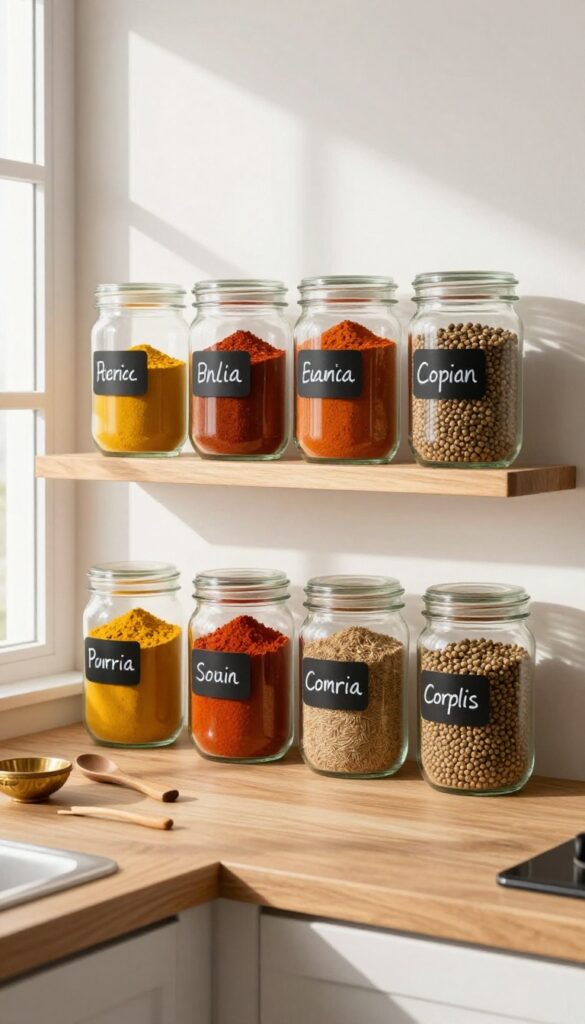
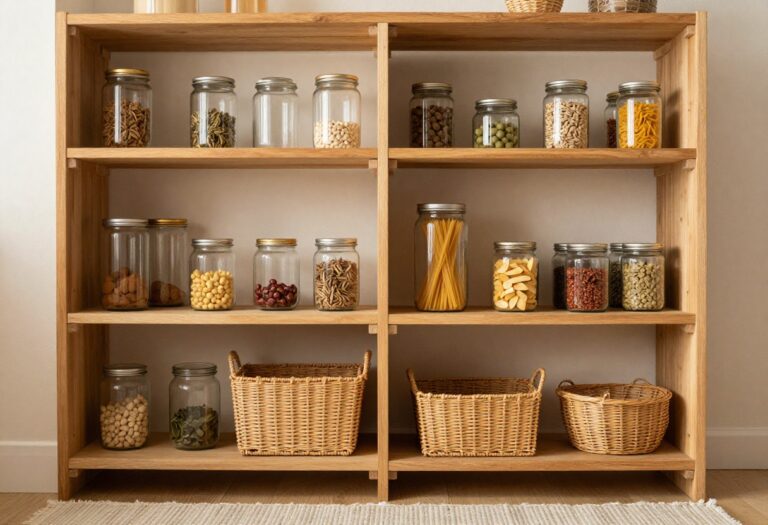
There’s something quietly satisfying about opening a cupboard and seeing all your spices lined up like little soldiers, each one labeled and ready to go. By sorting them into clear glass jars grouped by cuisine—South Indian, North Indian, and everyday basics—you not only save time hunting for that elusive jar of cumin but also turn a functional shelf into a warm, colorful display. The earthy yellows of turmeric, deep reds of chili powder, and rich browns of cumin create a natural palette that feels both intentional and lived-in.
Why It Works
Clear jars make it instantly visible when you’re running low on a staple, so you can restock before a recipe gets derailed. Grouping by cuisine stream your cooking flow: grab the South Indian section for a quick sambar or the North Indian cluster for a dal tadka without scanning every label. It’s a small system that cuts down decision fatigue and keeps your pantry feeling calm and curated.
Best For
This works beautifully in any kitchen, but especially if you cook a variety of Indian dishes regularly. It’s also a great fit for open shelving or glass-front cabinets, where the jars become part of the decor rather than hidden clutter.
Styling Tip
- Stick to uniform jars—either all the same shape or a consistent style—to keep the shelf looking tidy. Use a label maker or chalkboard stickers for a clean, readable look. Arrange jars in small trays or on a lazy Susan so you can pull out an entire cuisine group at once.
- For extra warmth, place a small wooden spoon or brass diya next to the jars to echo the cozy, lived-in vibe.
2. Use Woven Baskets for Bulk Dal and Rice
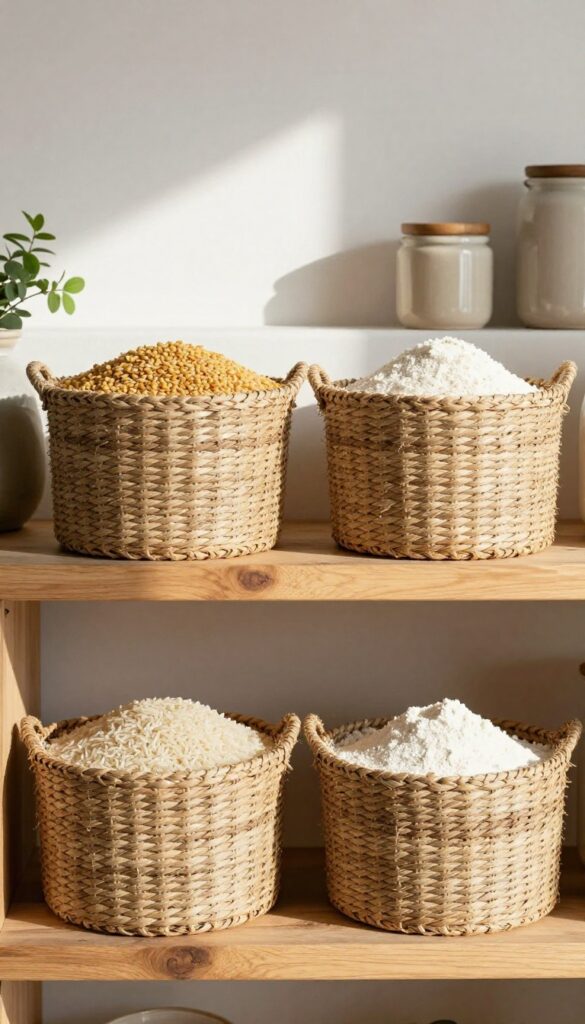
Open shelving or deep pantry cabinets can quickly become a jumble of half-empty bags. Woven baskets offer a simple fix: they corral bulk staples like dal, rice, and flour into neat, accessible containers. The natural texture of seagrass or rattan adds warmth and softness, turning what could look like a storage problem into a curated, lived-in display.
Plus, you can slide the basket out, scoop what you need, and push it back without wrestling with torn bags.
Why It Works
Baskets hide the chaotic plastic packaging while keeping contents easy to reach. Their breathable weave prevents moisture buildup, which is helpful for grains stored in humid kitchens. And because baskets come in various sizes, you can mix and match to fit your shelf dimensions perfectly.
Best For
Deep pantry shelves where bags tend to get lost, or open shelving in a kitchen that leans rustic or bohemian. It’s also great for renters who can’t install built-in storage but want a cohesive look.
Styling Tip
Stick to one basket material—like all seagrass or all rattan—for a unified look. Add a small chalkboard label or a wooden tag tied with twine to each basket so you can quickly identify the contents without peeking.
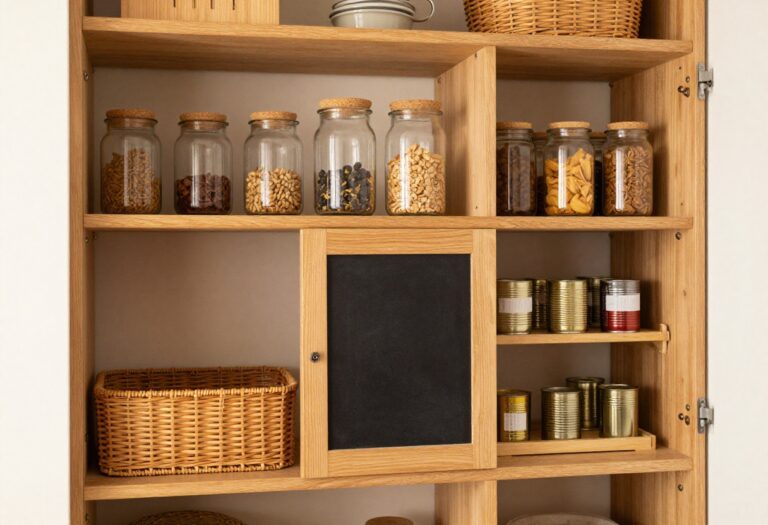
3. Label Everything with Chalkboard Stickers
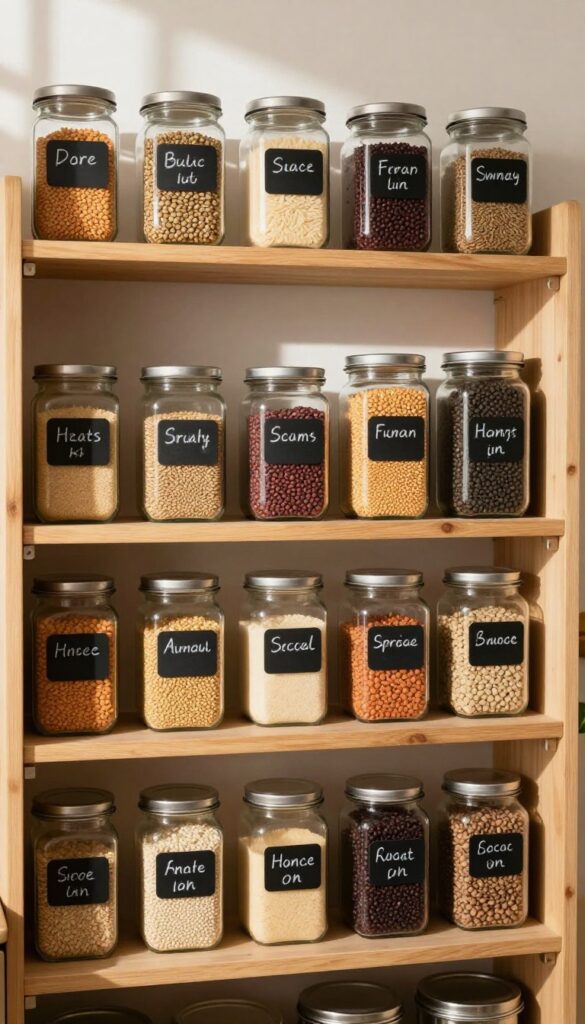
You know those jars you thought were full of rice but turned out to be lentils? Yeah, we've all been there. Chalkboard labels put an end to the guessing game.
Just stick them on your containers, write the contents with a chalk marker, and wipe clean when you refill. It's a small change that makes your pantry feel organized without being rigid. Plus, the matte black labels against glass or metal containers add a cozy, handmade touch that fits right into a warm, lived-in kitchen.
Why It Works
Chalkboard labels are reusable, so you can update them whenever you switch up your staples. They're also forgiving—if you make a typo or change your mind, a damp cloth erases it instantly. This flexibility means your pantry can evolve with your cooking habits without looking messy or mismatched.
Best For
This idea is perfect for anyone who buys in bulk, likes to decant dry goods into pretty jars, or wants a pantry that feels both organized and personal. It's especially handy if you have a mix of opaque containers where you can't see what's inside.
Styling Tip
Stick to a consistent label shape—rectangles or circles work well—and place them at the same height on each container for a clean, uniform look. Use a white chalk marker for high contrast against the black label, and write in simple, legible handwriting or a neat print. Group similar items together (all grains, all spices) to make the visual flow even smoother.
4. Create a Snack Station with Tiered Trays
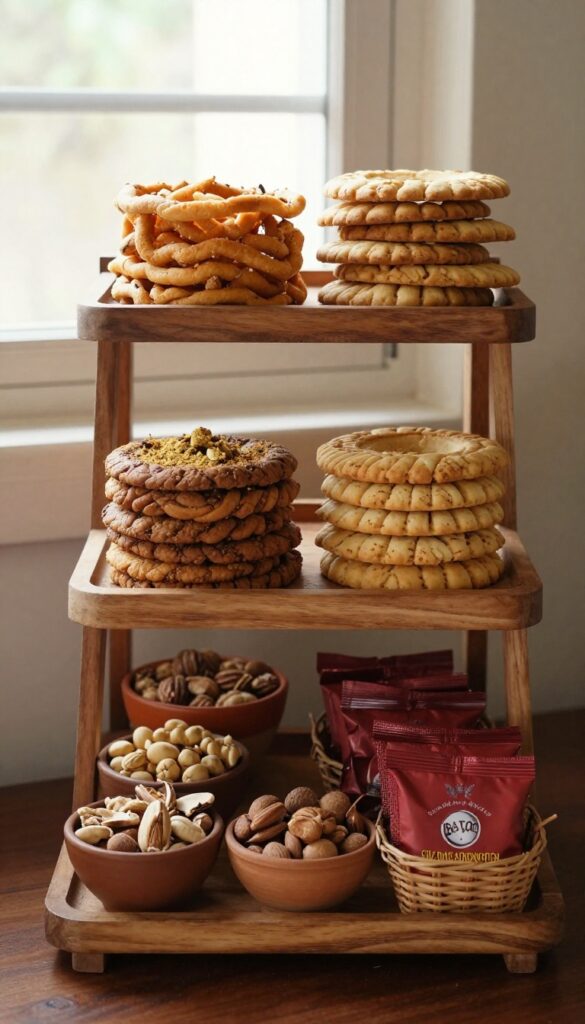
There’s something so inviting about a dedicated snack corner—especially when it’s styled with tiered trays. A metal or wooden stand instantly adds height and visual interest, turning a flat shelf into a mini bazaar of treats. Stack your favorite murukku, chivda, and biscuits on separate levels, and suddenly the pantry feels like a cozy little shop where everyone can grab their own goodie.
The best part? It keeps things tidy without looking too serious.
Why It Works
Tiered trays make the most of vertical space, so you can display multiple snacks without clutter. The layered look also creates a curated, intentional feel—like a styled shelf in a magazine, but totally practical. Kids can spot their snacks easily, and adults appreciate the neat organization.
Best For
This idea shines in a pantry with a deep shelf or a countertop near the kitchen. It’s especially great for families who go through packaged snacks quickly, because the open display encourages everyone to grab and go. If you have a mix of small bags and boxes, the trays keep them from toppling over.
Styling Tip
Choose a tray with a warm wood finish or a matte metal tone to match your pantry’s vibe. Add a small ceramic bowl for loose treats like nuts or seeds, and tuck a mini basket on the bottom tier for items in pouches. Keep the color palette cohesive—think earthy browns, creams, and muted reds—so the station feels like part of the room, not just storage.
5. Store Oils and Ghee in Dark Glass Bottles
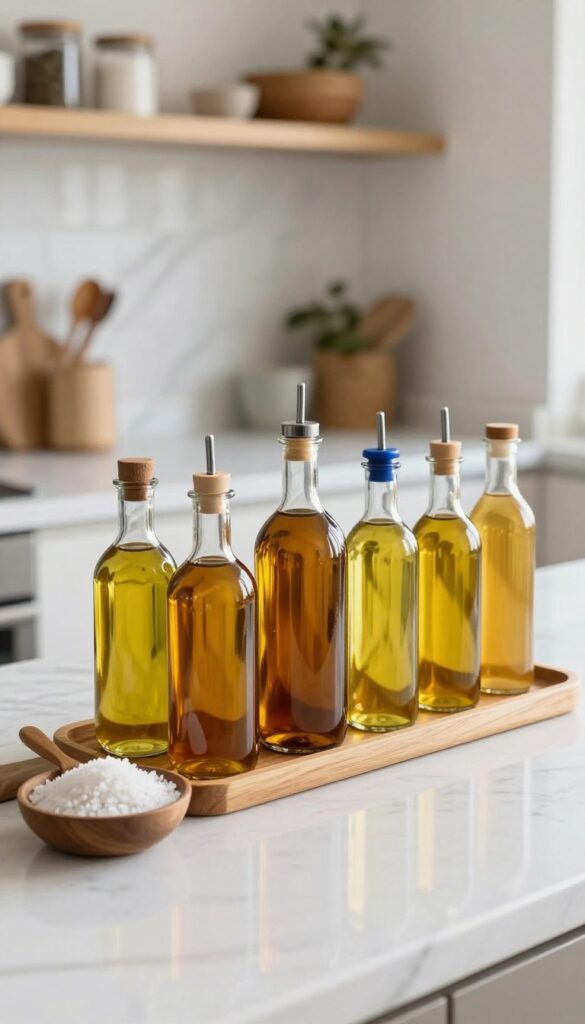
There's something quietly satisfying about seeing your everyday cooking oils and ghee lined up in dark glass bottles. The amber or cobalt hues instantly warm up a countertop or open shelf, while the pour spouts make drizzling oil into a pan feel effortless. It’s one of those small swaps that makes your kitchen feel more intentional—like a cozy apothecary where everything has its place.
Why It Works
Dark glass blocks light, which helps preserve the quality and shelf life of oils and ghee. Plus, the uniform bottles create a cohesive look that hides branding and clutter, making your pantry or counter feel instantly more curated.
Best For
This works beautifully on open shelving, a kitchen counter near the stove, or inside a pantry door where you can grab them easily. It’s especially handy if you cook with multiple oils and want them accessible without visual chaos.
Styling Tip
Group the bottles on a small wooden tray or a marble slab to anchor them. Add a small dish of sea salt or a wooden spoon nearby for a lived-in, warm feel. Stick to one color of glass—amber or cobalt—for a more cohesive look.
6. Hang a Small Spice Rack Inside the Door
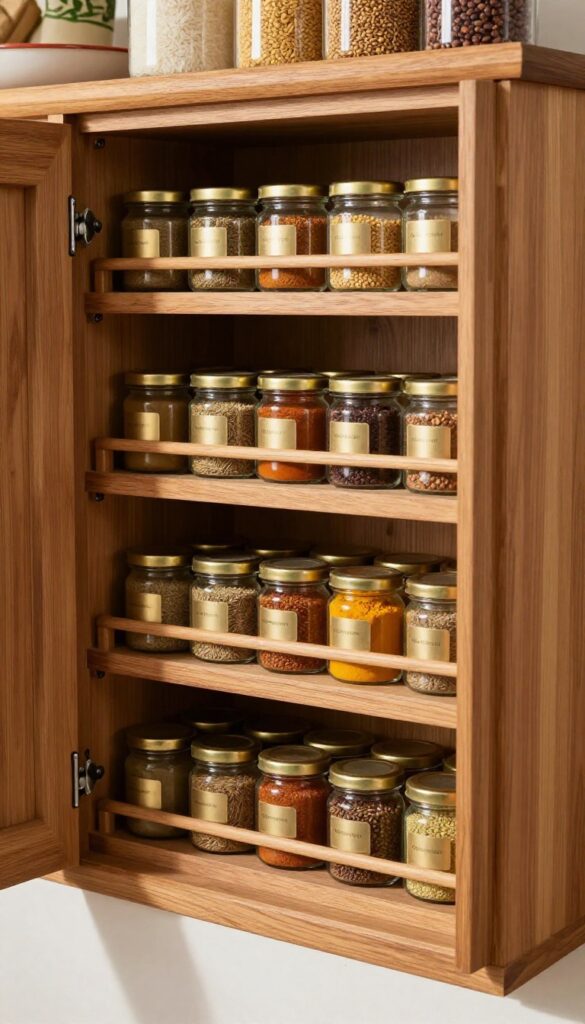
Pantry doors are prime real estate that often goes unused. Mounting a slim spice rack on the inside turns that blank space into a handy spot for your most-used masalas. It keeps them within easy reach, saves shelf room, and adds a cozy, lived-in feel to your pantry.
Why It Works
This trick frees up valuable shelf space for larger staples like rice and dal, while keeping everyday spices front and center. No more digging through jars or knocking over bottles—everything you need for a quick tadka is right there when you open the door.
Best For
Small pantries where every inch counts, or for anyone who cooks Indian food regularly and wants their go-to spices like cumin, mustard seeds, and turmeric at arm's reach. It also works well in rental kitchens where you can't modify cabinets permanently.
Styling Tip
Choose a wooden or brass rack to match your kitchen's warm tones. Stick to small, uniform jars with clear labels for a tidy look. Arrange spices by frequency of use—most-used on the top shelf—so you can grab them without a second thought.
7. Use Stackable Bins for Onions and Potatoes
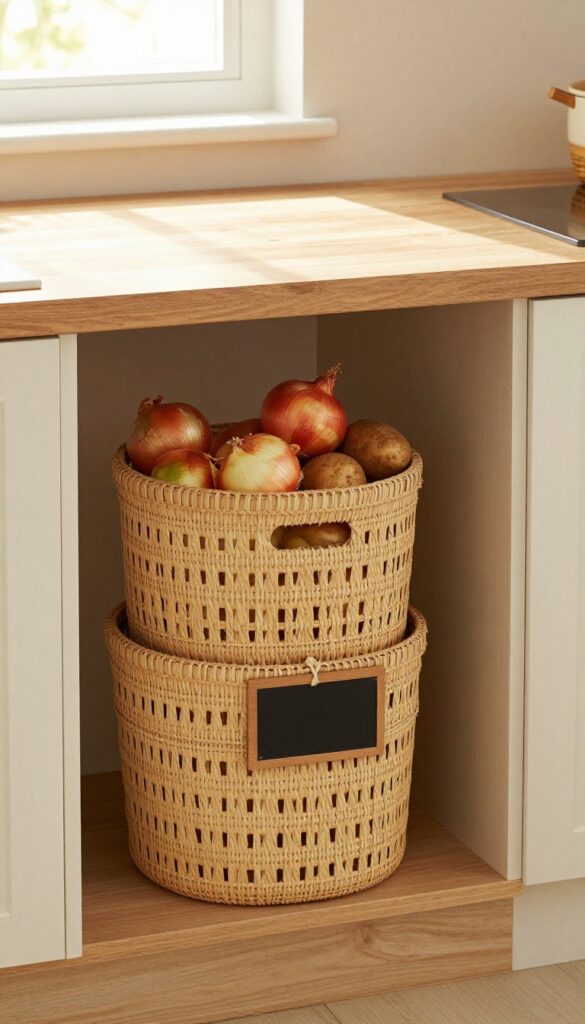
Root vegetables like onions and potatoes often end up in a sad heap on the counter or shoved into a dark cabinet where they sprout before you can use them. Ventilated stackable bins solve this by letting air circulate around each bulb, which keeps them fresher longer. The uniform look of stacked bins also transforms that messy corner into something tidy and intentional, fitting right into a warm, lived-in kitchen.
Why It Works
Good airflow is key for storing onions and potatoes, and these bins are designed with slats or holes that prevent moisture buildup. Stacking them vertically saves counter or shelf space, so you can keep your produce organized without sacrificing room for other essentials.
Best For
This works great for any kitchen with a small counter or a pantry shelf that tends to get cluttered. It's especially helpful if you buy root vegetables in bulk and need a practical way to store them without them going bad too quickly.
Styling Tip
Choose bins in a natural material like woven seagrass or bamboo to add texture and warmth. Place them on a butcher block counter or a wooden shelf, and tuck a small chalkboard label on the front so you can quickly grab what you need.
8. Add a Small Bamboo Shelf for Tea and Coffee
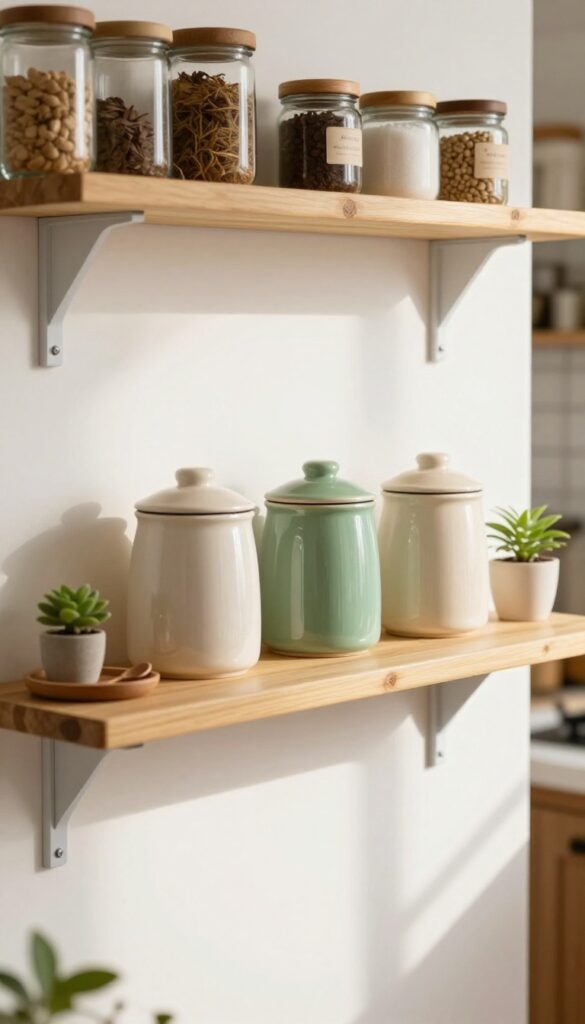
Imagine reaching for your morning chai without digging past bags of rice or forgotten spice jars. A narrow bamboo shelf dedicated to tea, coffee, and sugar canisters does exactly that—it carves out a cozy beverage nook right inside your pantry. The warm wood tone softens the utilitarian feel of shelving, making that daily ritual feel a little more intentional.
Plus, it keeps everything you need for a quick cuppa within arm's reach, so mornings run smoother.
Why It Works
Bamboo is naturally warm and lightweight, so it won't overwhelm a small pantry. By grouping all hot drink essentials in one spot, you eliminate the scramble for tea bags or instant coffee. The shelf also frees up counter space, which is always a win in Indian kitchens where every inch counts.
Best For
This idea shines in pantries with an empty wall or a gap between shelves. It's also perfect for renters who can't drill into tiles—bamboo shelves often come with adhesive strips or lean against the wall. If your pantry feels cluttered but you love a dedicated coffee corner, this is your solution.
Styling Tip
Choose a shelf with a small lip to prevent canisters from sliding off. Stack two or three matching ceramic jars for sugar, tea, and coffee, and add a tiny tray for spoons or a small plant. Keep the color palette neutral—cream, white, or soft green—to let the bamboo stand out.
9. Repurpose Glass Jars for Leftover Spice Mixes
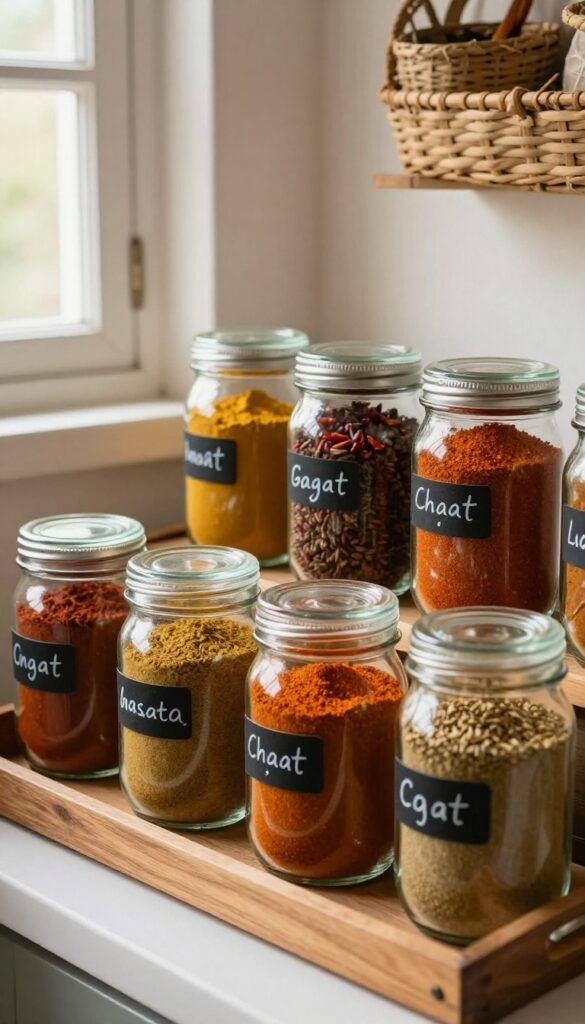
Those small glass jars from pickles, sauces, or chutneys don't need to go straight into recycling. With a quick wash and label, they become perfect little homes for your homemade spice blends. It's a small habit that adds a cozy, collected feel to your pantry—like each jar has a story.
The mix of different jar shapes and sizes on your shelf creates an instantly warm, lived-in look that no store-bought set can quite match.
Why It Works
Reusing jars cuts down on waste and saves money, while keeping your spice mixes fresh and visible. Labeling with the date helps you use them before they lose potency, so nothing goes to waste. Plus, having a dedicated jar for each blend makes cooking feel more intentional and organized.
Best For
This idea is ideal for anyone who frequently makes their own spice blends—like garam masala, chaat masala, or chai masala—and wants a charming, eco-friendly storage solution. It also works beautifully for small kitchens where every inch of storage counts.
Styling Tip
Arrange the jars on a small tray or a tiered shelf to create a mini spice station. Mix in a few vintage-style labels or use a chalk marker for a handwritten look. Keep the jars in a row by height for a tidy appearance, or group them by cuisine for easy access.
10. Install a Pegboard for Utensils and Small Tools
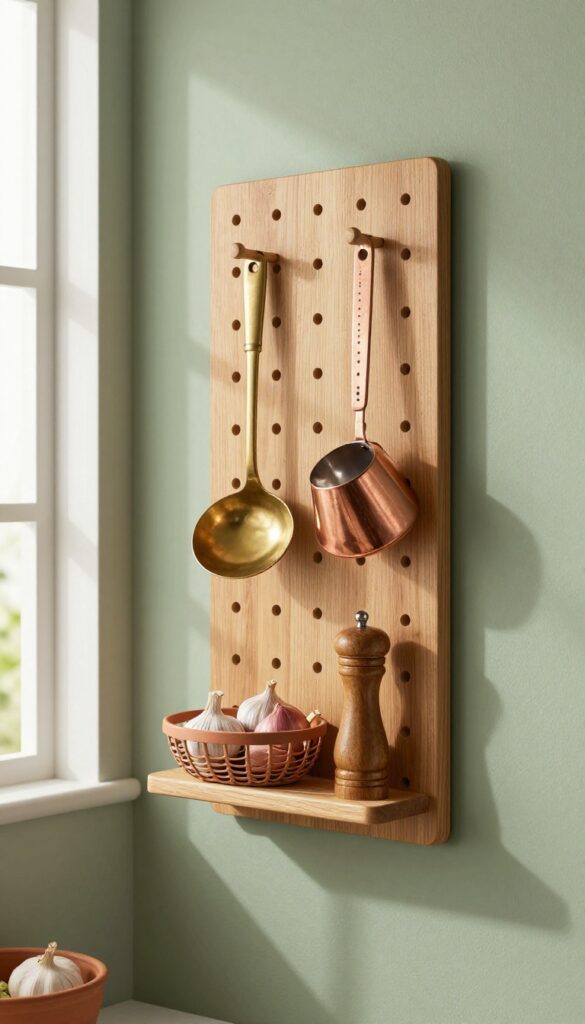
A pegboard might sound like something from a garage, but in a warm pantry it feels surprisingly inviting. Mounting a small one on the wall or inside the pantry door turns everyday tools into part of the decor. Ladles, measuring cups, and even a spice grinder hang within easy reach, saving drawer space and adding a functional, workshop-like charm that feels both practical and cozy.
Why It Works
Pegboards keep frequently used tools visible and instantly accessible, so you're not digging through drawers mid-cooking. The open storage also lets air circulate around utensils, preventing moisture buildup. Plus, the grid pattern adds a subtle graphic element that breaks up solid cabinet surfaces without feeling cluttered.
Best For
This idea shines in smaller pantries where every inch counts, or in any kitchen where you want to free up drawer space for larger items. It's also great for renters since pegboards can be installed with adhesive hooks or removable strips, making them a low-commitment upgrade.
Styling Tip
Choose a warm wood or a soft, muted color like sage green or terracotta for the pegboard to keep the look cozy. Arrange tools by size or color, leaving a little breathing room between each hook. Add a small basket on a lower peg to hold garlic, onions, or tea towels for extra warmth.
11. Keep a Lazy Susan for Condiments and Pickles
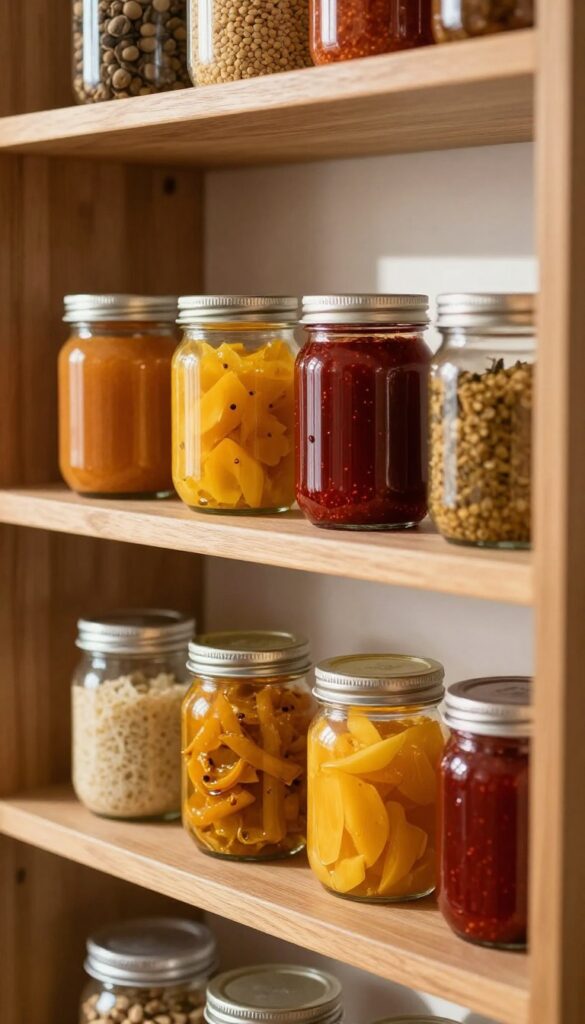
There’s something so satisfying about a pantry shelf that works as hard as you do. A lazy Susan might seem like a small addition, but it transforms how you grab that jar of mango pickle or bottle of chili oil. Instead of shoving things around, you just give it a spin—and suddenly, everything is within reach.
It’s one of those little upgrades that makes everyday cooking feel smoother and more enjoyable.
Why It Works
- A lazy Susan keeps all your condiments and pickles organized and accessible. No more digging to the back of a shelf or accidentally knocking over bottles. The spinning action brings every jar to the front, so you can quickly find what you need.
- It also prevents clutter from building up in one spot, making your pantry feel more spacious and intentional.
Best For
This idea is perfect for any kitchen with a deep pantry shelf or a cabinet that tends to get messy. It’s especially useful if you have a large collection of Indian pickles, chutneys, and sauces that come in different sizes. The lazy Susan works well for both open shelving and closed cabinets, adding a touch of practicality without sacrificing style.
Styling Tip
- Choose a wooden or bamboo lazy Susan to keep the look warm and natural. Arrange jars by frequency of use—daily essentials like lime pickle and tamarind chutney in the front, occasional treats like mango preserve toward the back. Group similar items together, and leave a little space between jars so the spin stays smooth.
- A small label on each jar adds a neat, curated feel.
12. Add a Cozy Touch with a Small Plant or Mat
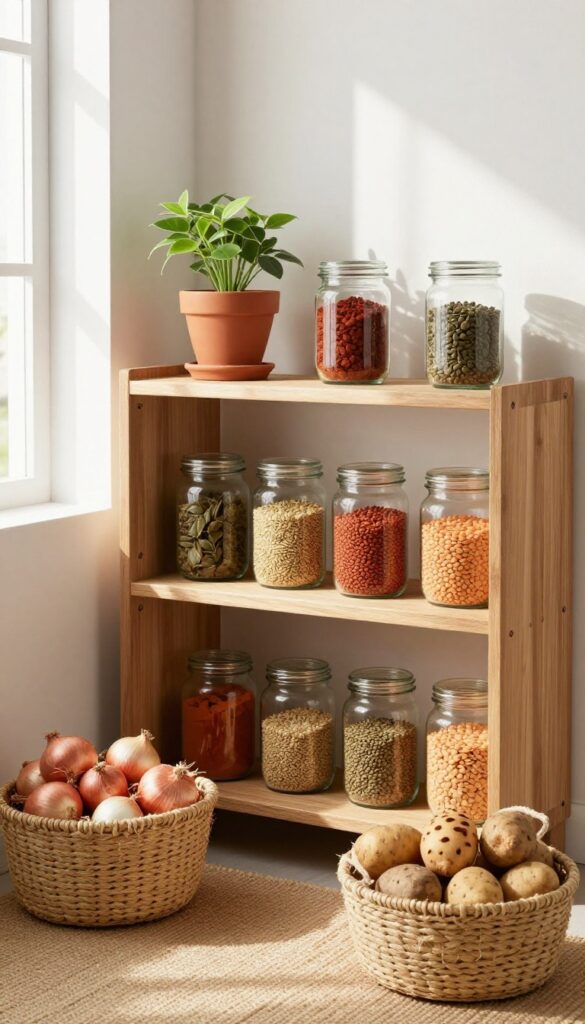
A pantry doesn't have to feel like a sterile storage closet. Tucking a small money plant on a shelf or laying a woven mat beneath your baskets instantly warms up the space. These tiny additions make the pantry feel like a natural part of your home, not just a forgotten corner.
Why It Works
Plants bring life and softness to an otherwise utilitarian area, while a mat adds texture and defines the floor space. Together, they create a visual anchor that makes the pantry feel intentional and inviting.
Best For
Any pantry that feels too clinical or bare, especially if you have open shelving or a walk-in pantry. It's also a great way to soften a pantry that doubles as a small breakfast nook or coffee station.
Styling Tip
Choose a low-maintenance plant like a pothos or snake plant that can tolerate lower light. For the mat, go with a natural fiber like jute or seagrass in a neutral tone to keep the look cohesive and easy to clean.
FAQ
How do I keep my Indian pantry organized without spending a lot?
Start with what you have—reuse glass jars, cardboard boxes, and baskets you already own. Focus on grouping similar items together and labeling them clearly. Small, low-cost changes like chalkboard labels or a lazy Susan can make a big difference.
What's the best way to store spices to keep them fresh?
Store whole spices in airtight glass jars away from heat and sunlight. Ground spices lose flavor faster, so buy in smaller quantities and use dark glass if possible. A cool, dark pantry shelf works perfectly.
How can I organize a small Indian pantry?
Maximize vertical space with stackable bins, door-mounted racks, and pegboards. Use clear containers so you can see contents at a glance, and group items by meal type or frequency of use. Every inch counts.
Should I decant all my pantry items into matching containers?
Not necessarily. Matching containers look neat, but a mix of clear jars, woven baskets, and repurposed bottles can feel more lived-in and personal. Focus on functionality and easy access rather than perfection.
How often should I clean and reorganize my pantry?
Aim for a quick tidy-up every month and a deeper clean every season. Check expiration dates, wipe down shelves, and rotate older items to the front. Regular maintenance keeps the system working without a big overhaul.
Conclusion
Organizing your Indian pantry doesn't have to mean sacrificing warmth for efficiency. These ideas are designed to work with your daily cooking rhythm, not against it—embracing the natural clutter of a busy kitchen while making every meal a little easier.
Start with one or two changes that speak to you, and let your pantry evolve into a space that feels both functional and inviting. After all, the best organized pantry is the one that makes you want to cook.