15 Kitchen Cabinet Glass Door Ideas for Airy Display Style
Glass-front cabinets can transform a kitchen from closed-off to breezy in an instant. They let you show off your favorite dishes while making the whole room feel larger and brighter. But choosing the right glass and styling it well makes all the difference between cluttered and curated.
Whether you lean toward classic or modern, there’s a glass door style that fits your kitchen’s personality. Clear glass keeps things open, while textured options add privacy without losing lightness. The key is balancing what you display with how much you hide.
Ready to let your cabinets breathe? Here are 15 kitchen cabinet glass door ideas that keep your space feeling airy, organized, and effortlessly stylish.
1. Clear Glass for a Seamless Open Look
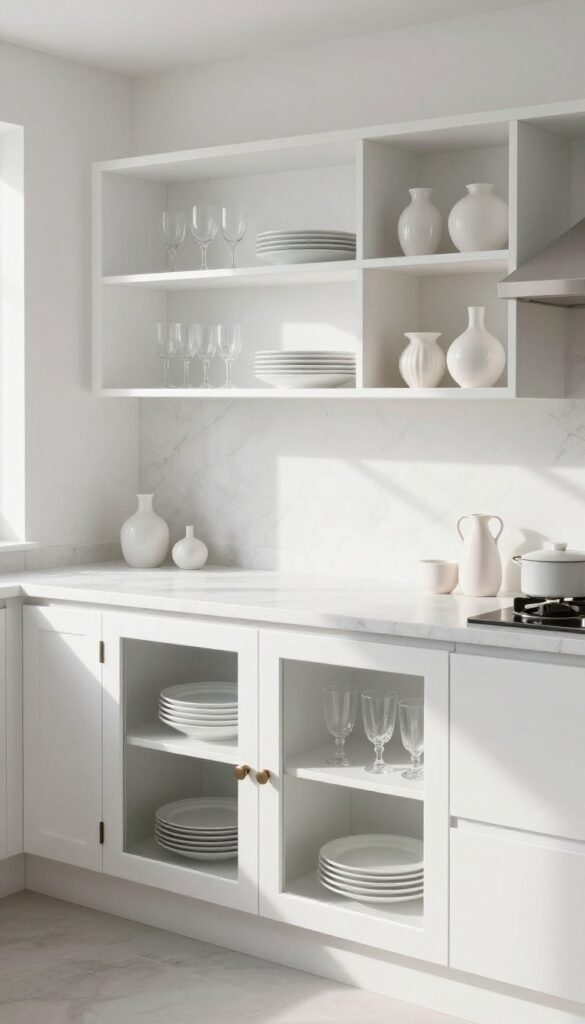
Clear glass cabinet doors are the ultimate trick for making a kitchen feel larger and more connected to the rest of the home. Without any tint or texture, they let your eye travel straight through, creating an uninterrupted visual flow that instantly opens up the space. The key to pulling off this look is keeping what's inside neat and intentional—think matching white dishes, simple glassware, and a few carefully placed pieces.
When done right, clear glass doors turn your cabinets into a living display that feels both practical and polished.
Clear glass doors work best in kitchens where you're willing to edit your cabinet contents. They're not for hiding clutter, but they reward a little extra effort with a gorgeous, airy result. Start by grouping similar items together—all white plates on one shelf, clear glasses on another—and leave a little breathing room between stacks.
If you have open shelving elsewhere, carry the same styling approach into your cabinets for a cohesive look. The transparency also makes it easier to find what you need, so you'll actually use those pretty dishes more often.
Best Colors For Inside
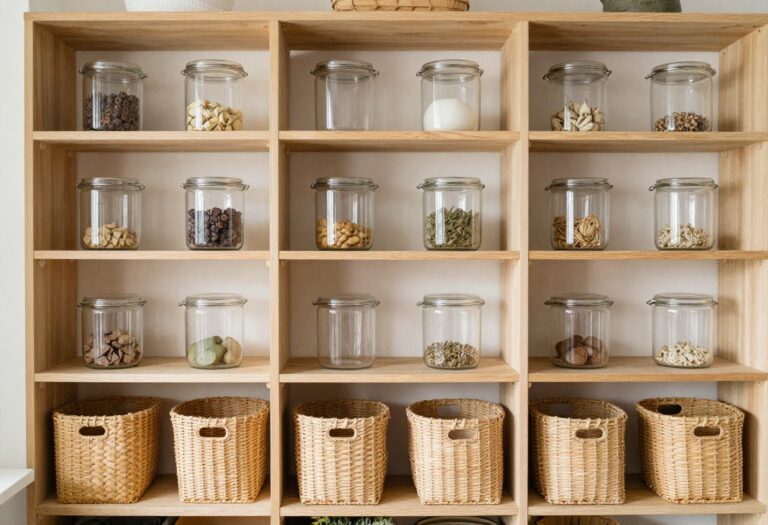
Stick with a neutral palette inside the cabinets to keep the view calm and cohesive. White, cream, or soft gray dishes work beautifully, as do natural wood cutting boards and woven baskets. Avoid busy patterns or bright colors unless you're going for a very eclectic vibe—they can make the whole kitchen feel chaotic through the glass.
Cabinet Styling Note
- Treat each shelf like a mini vignette. Place taller items like pitchers or vases at the back, and layer shorter pieces in front. A small stack of linen napkins or a single ceramic bowl can add just enough interest without looking crowded.
- Remember to leave some empty space—it's what gives the display that light, breathable feel.
Finishing Touch
Add subtle interior lighting to make your clear glass cabinets shine. LED strip lights along the top of each shelf cast a warm glow that highlights your dishes and makes the whole kitchen feel more inviting. Choose a warm white temperature (around 2700K) to keep the look cozy rather than clinical.
2. Frosted Glass for Soft Privacy
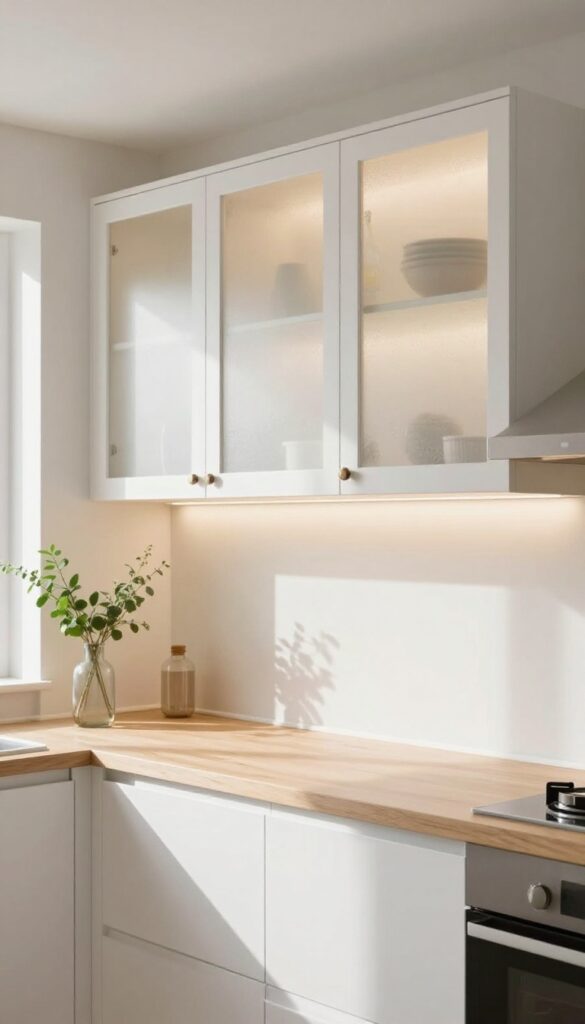
Frosted glass cabinet doors offer the best of both worlds: they let light pass through while keeping the contents of your cabinets gently obscured. This makes them a fantastic choice for kitchens where you want an open, airy feel without the pressure of perfectly styled shelves. The soft, diffused look adds a modern touch that works with both minimalist and cozy designs, and it's especially forgiving for everyday storage.
Frosted glass doors are a practical upgrade that instantly softens the look of your kitchen. They filter light beautifully, making the space feel brighter and more open, while hiding any clutter or mismatched containers behind a hazy veil. This style works well in both traditional and contemporary kitchens, and it pairs nicely with wood, painted, or metal cabinet frames.
The key is choosing the right level of frost—from a barely-there haze to a more opaque finish—depending on how much visibility you want.
Best Materials
For a cohesive look, pair frosted glass with cabinet frames in matte black, warm wood, or soft white. The glass itself can be acid-etched, sandblasted, or covered with a frosted vinyl film. Acid-etched glass is the most durable and has a smooth, consistent finish, while vinyl is a budget-friendly DIY option that's easy to remove if you change your mind.
Lighting Tip
Frosted glass really shines with interior cabinet lighting. Install LED strip lights inside the cabinets to create a warm glow that highlights the texture of the glass and the shapes of your dishes. This adds depth and makes the kitchen feel more inviting, especially in the evening.
Shelf Styling Tip
Even with frosted glass, a little organization goes a long way. Stick to a cohesive color palette for your dishware and pantry items—think white ceramics, clear glass jars, and neutral linens. Group similar items together and leave some breathing room so the hazy view looks intentional, not chaotic.
3. Reeded Glass for Subtle Texture
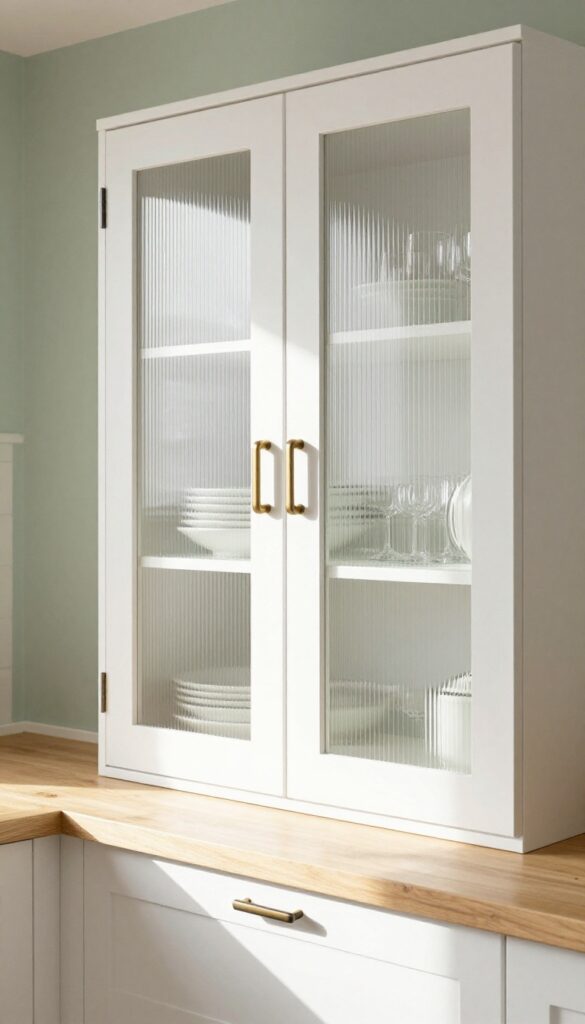
Vertical ridges on reeded glass add visual interest without overwhelming. They blur contents just enough to keep things tidy-looking while catching light beautifully. This texture works especially well in kitchens that lean modern or transitional, where you want a soft, airy feel without sacrificing privacy for your dishware.
Reeded glass strikes a perfect balance between openness and concealment. The linear texture creates a rhythmic pattern that draws the eye upward, making ceilings feel higher and the space more expansive. It's a practical choice for cabinets holding everyday items that don't need to be perfectly styled—think mixing bowls, coffee mugs, or pantry staples.
The glass diffuses light softly, reducing glare and adding a warm glow to the room. Pair it with simple, clean cabinet frames in matte black, brushed brass, or natural wood to let the texture shine. For a cohesive look, carry the reeded theme to other elements like a glass backsplash or a pendant light shade.
Best Colors And Finishes
Reeded glass works with almost any cabinet color, but it really pops against deep navy, charcoal, or sage green. Lighter cabinets in white or pale oak keep the look airy and Scandinavian. For hardware, opt for slim bar pulls or minimalist knobs in unlacquered brass or matte nickel to complement the vertical lines.
Cabinet Styling Note
- Keep the contents simple and color-coordinated. Group similar items—like all white dishes or clear glassware—to avoid visual clutter. Use low baskets or trays to corral smaller items.
- The reeded texture will do the heavy lifting, so you don't need to over-style.
Lighting Tip
Install under-cabinet lighting to highlight the ridges. Warm LED strips (2700K-3000K) cast a soft glow that emphasizes the texture and makes the glass look almost liquid. Avoid cool white bulbs, which can make the space feel clinical.
4. Leaded Glass for Vintage Charm
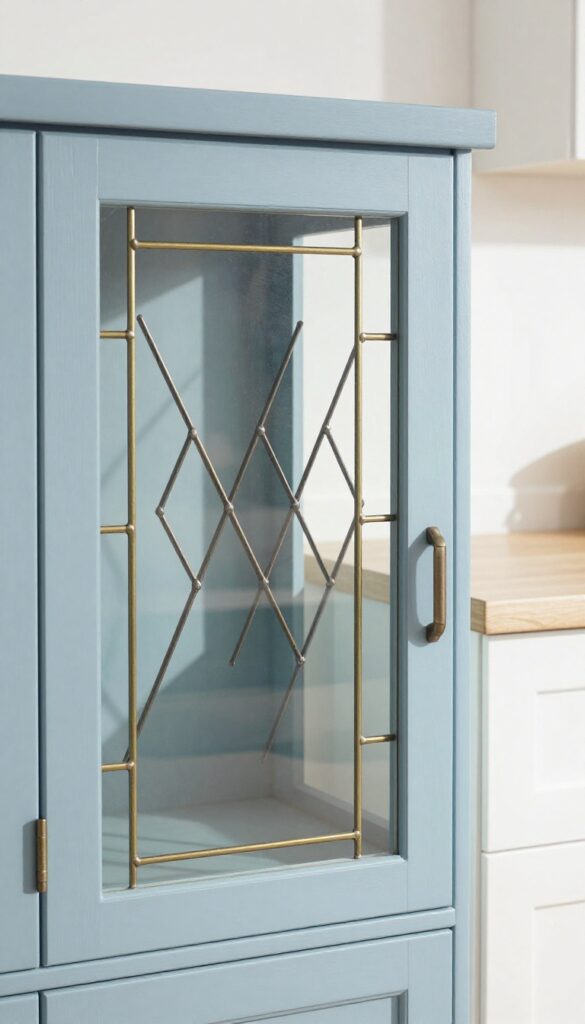
Leaded glass cabinet doors are like jewelry for your kitchen—they add instant character without overwhelming the space. The intricate patterns break up the glass surface, creating visual interest while still letting light flow through. This old-world detail feels right at home in traditional kitchens, but it can also add a touch of elegance to transitional spaces.
Leaded glass brings a timeless, handcrafted feel that plain glass just can't match. The geometric lines—from simple diamonds to more elaborate stars—give your cabinets a custom look without the custom price. Because the metal strips are thin, they don't block much light, so your kitchen stays bright and airy.
This style works especially well in kitchens with classic elements like shaker cabinets, butcher-block counters, or farmhouse sinks. To keep the look from feeling too heavy, balance it with light paint colors on the walls and open shelving nearby.
Best Patterns To Try
Diamond and square grids are the most common and pair beautifully with both painted and stained cabinets. For a softer look, try a cathedral arch pattern—it echoes window shapes and feels more romantic. If you want something unique, look for a star or sunburst motif; it adds a subtle focal point without overwhelming the door.
Finishing Touch
The metal strips in leaded glass are usually silver or black, but you can also find brass or copper finishes. Match the metal tone to your cabinet hardware and light fixtures for a cohesive look. A warm brass strip against navy or green cabinets creates a rich, collected-over-time feel.
Cabinet Styling Note
Because leaded glass has more visual texture, keep what's inside simple. Stick to a few matching dishes, clear glassware, or neutral linens. Avoid overcrowding—the pattern itself is the star, so let it shine by leaving some breathing room between items.
5. Mirrored Glass to Double the Light
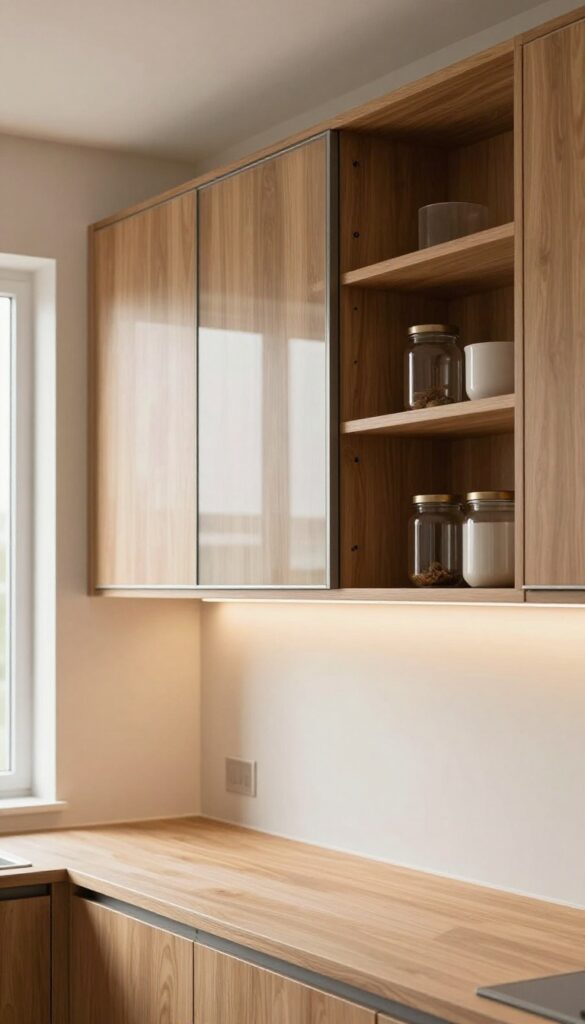
Mirrored cabinet doors act like little windows, bouncing light around the room and making the whole kitchen feel more spacious. In a galley kitchen or any space short on natural light, this trick can transform a cramped, dark corner into a bright, open-looking area. The reflective surface adds a subtle glam factor without being over the top, blending function with a polished, airy look.
Mirrored glass on cabinet doors is a clever way to amplify light and create the illusion of depth. Unlike clear glass, which shows everything inside, mirrored glass hides clutter while still reflecting the room. This makes it a practical choice for upper cabinets where you might store less visually appealing items.
The key is to use it sparingly—maybe on just a few upper doors or as an accent—to avoid an overwhelming mirrored effect. Pair it with matte hardware and warm wood tones to keep the look grounded and inviting.
Best Placement
Install mirrored glass on upper cabinets opposite a window to maximize light reflection. In a galley kitchen, use it on one side only to prevent a disorienting hall-of-mirrors effect. Lower cabinets are better left solid to hide everyday mess.
Styling Tip
Keep the shelves behind mirrored doors minimal—a few glass jars or metallic accents will reflect nicely without looking busy. Avoid overcrowding, as the mirror will multiply every item, making small spaces feel chaotic.
Finishing Touch
Choose a soft, warm LED strip light under the cabinets to bounce off the mirrored surfaces and create a cozy glow. This prevents the reflection from feeling too cold or clinical.
6. Wire Glass for Industrial Edge
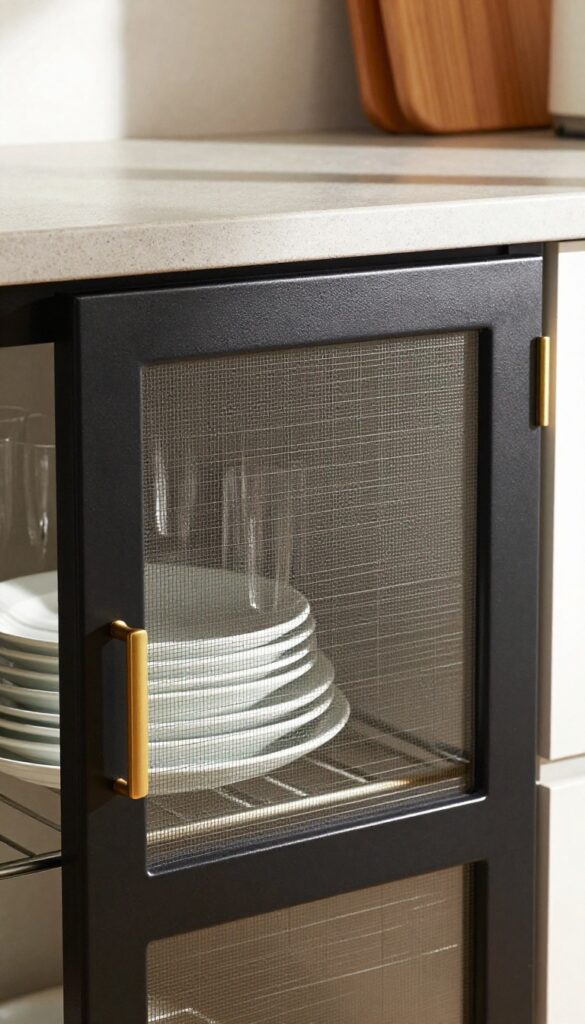
Wire glass brings a rugged, factory-inspired look to kitchen cabinets. The embedded metal mesh adds texture and a subtle grid pattern that catches the light, making it feel both sturdy and airy. It's a practical choice for display cabinets because the wire reinforcement makes the glass more durable, so you don't have to worry as much about accidental knocks.
This style works especially well in kitchens with exposed brick, concrete countertops, or black hardware, but it can also soften a mostly white space by introducing a bit of visual grit.
Wire glass is a smart pick if you want the openness of glass-front cabinets without the fragile feel. The metal mesh inside creates a distinctive pattern that adds depth without blocking the view entirely. It pairs beautifully with open shelving, especially if you carry the industrial vibe through with metal brackets and dark wood.
For a lighter look, combine wire glass cabinets with white walls and warm wood accents to keep the space from feeling too cold.
Best Colors And Materials
- Stick with neutral cabinet colors like matte black, charcoal, or warm gray to let the wire glass stand out. For a softer industrial feel, try sage green or navy blue cabinets. Pair with brass or copper handles for a touch of warmth, or go with black iron for a more rugged look.
- Countertops in butcher block or concrete will complement the texture nicely.
Styling Inside The Cabinets
Because the wire mesh slightly obscures the view, you can be a little more relaxed about what you store inside. Group items by color or material—think white dishes, clear glass jars, and metal canisters. Avoid clutter; a few neatly stacked plates or a row of matching mugs will look intentional and keep the airy feel.
Lighting Tip
Add under-cabinet LED strips to highlight the wire pattern and make the glass glow. Warm white lights (2700K-3000K) will soften the industrial edge and make the kitchen feel cozy. If you have a pendant light, choose one with a metal shade to echo the mesh detail.
7. Stained Glass for a Pop of Color
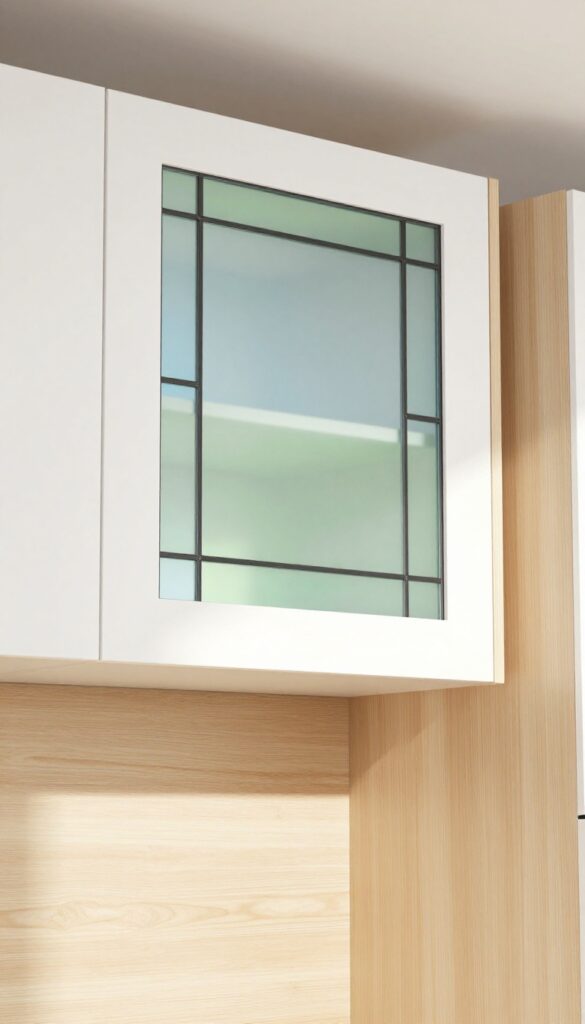
Stained glass isn’t just for churches and Victorian entryways—it can bring a playful but refined burst of color to your kitchen. A single stained glass insert in an upper cabinet door turns an ordinary storage spot into a piece of art. The key is choosing a simple pattern with just one or two accent colors so the effect feels curated, not chaotic.
This approach works especially well in kitchens that are otherwise neutral, giving the eye a deliberate place to land without overwhelming the space.
A stained glass insert can become the focal point of your kitchen. Choose a simple pattern with one or two accent colors to keep it from feeling too busy. The light filtering through the glass adds a soft, ever-changing glow that makes the whole room feel more alive.
Pair it with white or light wood cabinetry to let the colors really sing, and keep the surrounding decor minimal so the stained glass stays the star.
Best Colors
- Stick with a palette that complements your existing kitchen tones. For a light and airy feel, go with pale blues, soft greens, or warm yellows. If you want a bit more drama, a single deep jewel tone like emerald or sapphire can add richness without weighing the room down.
- Avoid using more than three colors in one panel to maintain that clean, uncluttered look.
Cabinet Styling Note
- Use stained glass on just one or two upper cabinet doors rather than every door. This creates a deliberate accent rather than a overwhelming pattern. Place them where they’ll catch natural light—like above the sink or near a window—to maximize the glow.
- Keep the items behind the glass simple, like clear glassware or white dishes, so the pattern remains the focus.
Finishing Touch
Frame the stained glass with a simple wood or metal trim that matches your cabinet hardware. A dark bronze or matte black frame can ground the colors, while a white or natural wood frame keeps the look soft and seamless. Add under-cabinet lighting to highlight the stained glass even after the sun goes down.
8. Textured Glass for Organic Flow
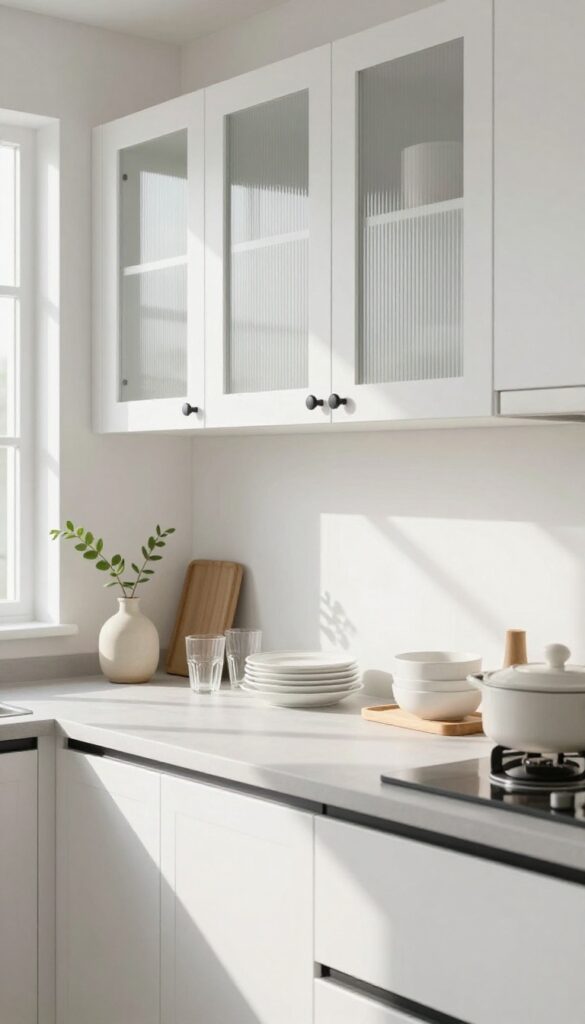
Rippled or wavy glass brings a subtle, organic movement to cabinet fronts that flat glass just can't match. The texture catches and scatters light, creating soft patterns across your kitchen throughout the day. It's a practical choice too—the distortion hides everyday dish stacks while still letting the space feel open and connected.
Textured glass works especially well in kitchens that lean toward natural materials like wood, stone, or earthy tile. The uneven surface plays nicely with matte black or unlacquered brass hardware, and it softens the hard edges of modern cabinetry. For a truly airy feel, pair it with open shelving on adjacent walls and keep the color palette neutral with warm wood tones.
Best Glass Patterns To Try
Look for glass with subtle ripples, small-scale waves, or a seeded texture. Avoid heavy patterns that feel busy or dated—think more like the surface of a calm pond than aggressive frosted glass. A light ripple is easiest to live with and still gives that spa-like privacy.
Cabinet Color Pairing
White or pale gray cabinets keep the look light and airy, while sage green or soft blue adds a gentle contrast that highlights the glass texture. Dark cabinets can work too, but stick to lower cabinets only so the textured glass on uppers doesn't feel heavy.
Styling Tip: Keep It Simple Inside
Since the glass obscures contents anyway, you don't need perfectly arranged dishes. Stick to matching white dinnerware or clear glassware for a cohesive look. A few ceramic pieces in neutral tones add interest without clutter.
9. Glass with Built-In Shelving
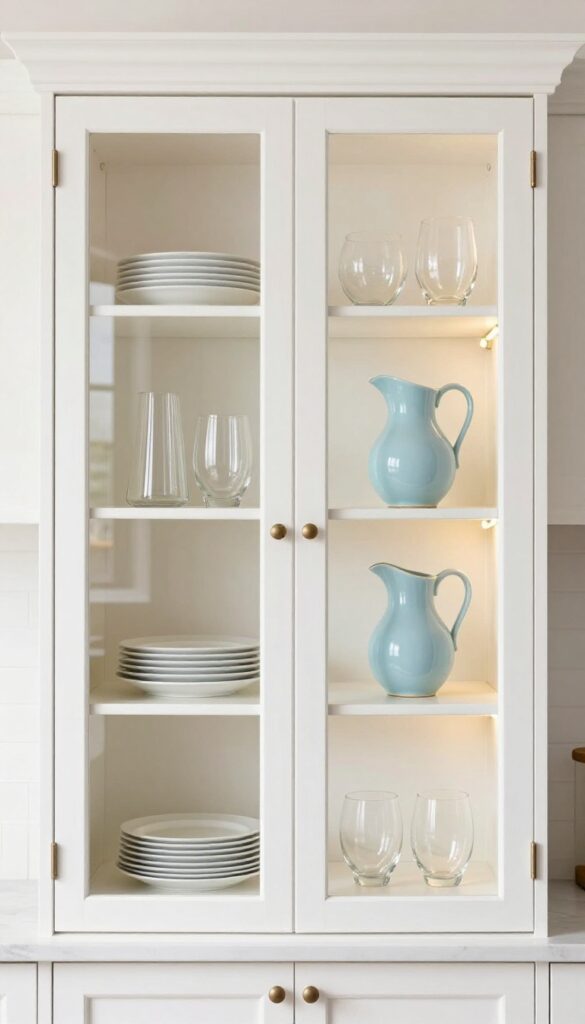
Nothing says light and airy like a cabinet you can see straight through. By pairing glass doors with interior glass shelves, you eliminate visual clutter entirely—no solid surfaces to block the eye. This setup is perfect for showcasing a curated collection of glassware, colorful ceramics, or treasured keepsakes that deserve to be seen every day.
The key to pulling off this look is restraint. Since everything inside is visible, you'll want to keep items organized and spaced out. Think of it as a display case rather than storage.
Group similar pieces together, use small risers or stands to add height variation, and leave some shelves with just one or two statement objects. The result is a cabinet that feels like a breath of fresh air—functional, but with the visual lightness of a decorative vignette.
Best Colors
Stick with a neutral or muted palette inside the cabinet to keep the focus on your displayed items. White, soft gray, or pale wood tones work beautifully. For the glass shelves themselves, clear or lightly frosted glass maintains that see-through effect without adding visual weight.
Shelf Styling Tip
Mix heights and textures to create depth. Place a stack of white dinner plates on one side, a set of clear glass vases on another, and a single colored pitcher as a focal point. Avoid overcrowding—leave about 30% of each shelf empty to let the eye rest.
Lighting Tip
Install LED strip lights along the top or bottom of each shelf. Warm white (2700K-3000K) lighting makes glassware sparkle and adds a cozy glow, while cool white keeps things crisp and modern. The light will bounce off the glass shelves, amplifying the airy feel.
10. Glass Upper Cabinets Only
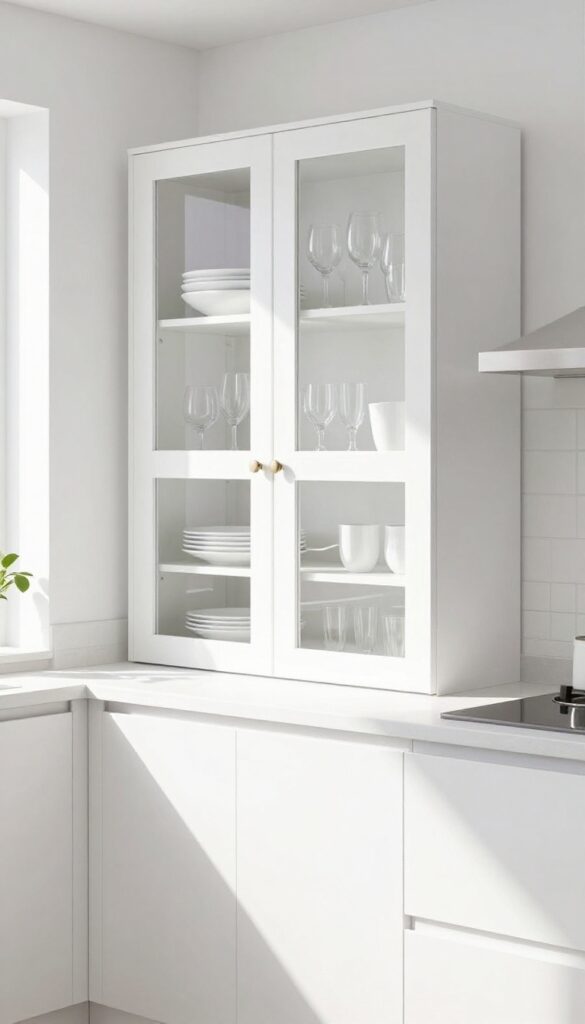
Restricting glass fronts to the upper cabinets keeps the lower half of your kitchen feeling solid and grounded. It’s a smart way to introduce that light, open look without committing to full transparency everywhere. The contrast between see-through uppers and closed lowers creates a natural visual break that makes the whole room feel balanced and intentional.
Limiting glass to the upper cabinets is a practical compromise that gives you the best of both worlds. You get the airy, display-friendly look above, while the lower cabinets stay clutter-free and easy to maintain. This setup works especially well in kitchens where you want to highlight pretty dishware or glassware without worrying about keeping every single cabinet perfectly organized.
The visual weight sits higher, which can make the ceiling feel taller and the room more open. Plus, it’s a budget-friendly approach since you’re only swapping out doors on the top row.
Best Glass Options
Clear glass is the most popular choice for upper cabinets because it shows off your items without distortion. If you want a little privacy, try textured or frosted glass—it still lets light through but hides any less-than-perfect stacks. For a warmer look, seeded or ribbed glass adds subtle character without overwhelming the space.
Styling The Shelves
- Treat the inside of your upper cabinets like a mini display. Stick to a cohesive color palette—white dishes, clear glassware, and a few neutral ceramics work beautifully. Group similar items together and leave some breathing room between stacks.
- A few small plants or a stack of linen napkins can break up the uniformity and add a soft, lived-in feel.
Lighting Tip
Add under-cabinet lighting to illuminate the glass-front uppers from below. This creates a lovely glow that highlights your displayed items and makes the kitchen feel brighter in the evening. LED strip lights are easy to install and can be tucked away so the focus stays on your cabinets.
11. Glass Doors with Interior Lighting
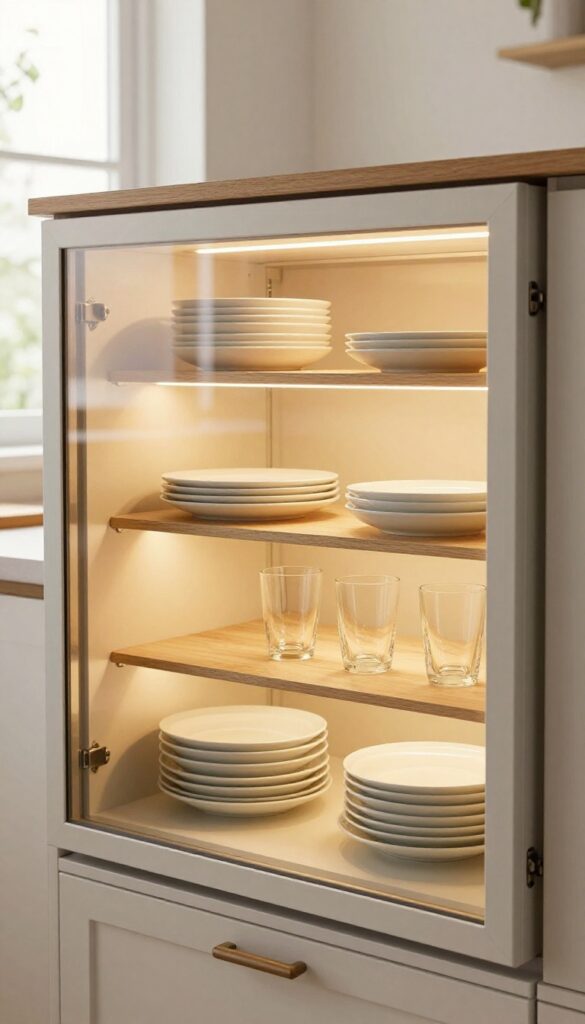
Imagine opening your kitchen cabinet at night and being greeted by a warm, soft glow that makes your favorite dishes look like museum pieces. That's the magic of adding LED strip lights inside glass-front cabinets. This idea turns ordinary storage into a subtle focal point, making your kitchen feel both airy and inviting after dark.
The light bounces off glass and ceramic surfaces, adding depth without cluttering your countertops.
Interior lighting transforms glass cabinets from simple storage into a design feature. It's especially effective in open-concept kitchens where the glow can spill into adjacent living spaces. The key is to choose warm white LEDs (2700K–3000K) for a cozy, residential feel rather than a clinical look.
Install the strips on the top or bottom of the cabinet interior, pointing toward the shelves, so the light spreads evenly. Pair with dimmers to adjust the brightness for different moods—brighter for meal prep, softer for evening relaxation. This works beautifully with clear or frosted glass, but clear glass shows off the lighting effect best.
Best Placement And Wiring
- For a seamless look, run LED strips along the front edge of each shelf so the light shines down on the items below. Hardwiring is the cleanest option if you're renovating, but battery-operated puck lights or plug-in strips are great for rentals. Hide wires by drilling small holes at the back of the cabinet and routing them to a nearby outlet.
- If you have multiple cabinets, connect them to a single switch for convenience.
What To Display
- Not everything needs to be lit. Reserve illuminated cabinets for your prettiest pieces—matching dinnerware, colored glassware, or a collection of white ceramics. Avoid overcrowding; leave some negative space so the light can play.
- A mix of heights and textures, like stacking plates with a vase or cookbook, adds visual interest. Keep everyday mismatched items behind solid doors.
Budget-Friendly Swap
- You don't need a full renovation to add this feature. Stick-on LED strip kits cost under $30 and come with remote controls. For a quick upgrade, place a slim rechargeable light bar on the top shelf pointing downward.
- It's not as polished as built-in, but it gives the same glow effect for a fraction of the cost. Just make sure the light source is hidden from direct view.
12. Glass Doors in a Contrasting Frame
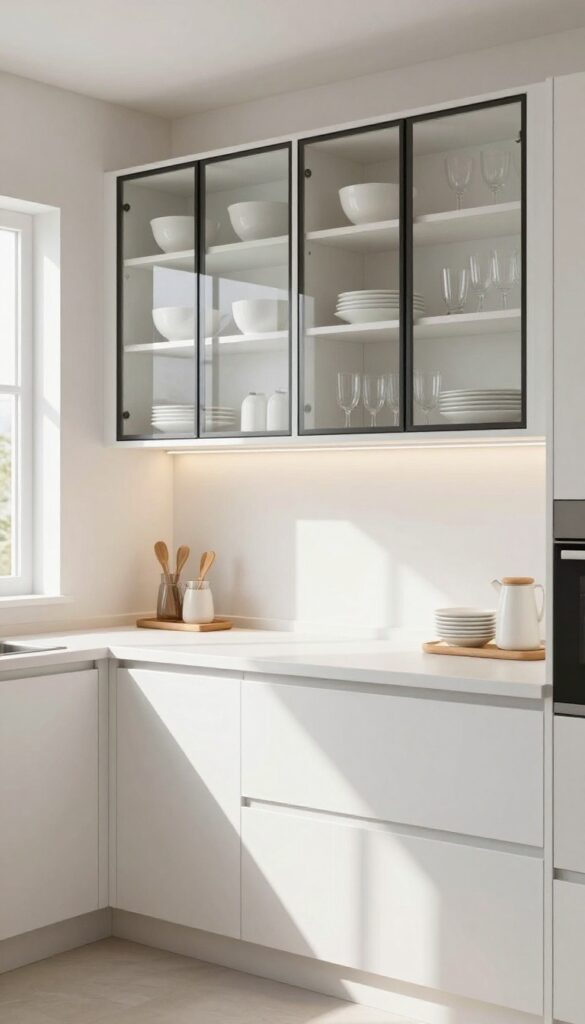
A contrasting frame around glass cabinet doors instantly draws the eye and creates a bold, graphic look. Think black frames against crisp white cabinets or dark bronze on light wood. This isn't just about color—it's about defining the glass area so it feels intentional, not like an afterthought.
The result is a clean, modern aesthetic that still keeps your kitchen feeling light and airy.
The key to making this work is choosing a frame color that stands out from the cabinet body. High-contrast combos like black on white or navy on cream create a striking, architectural feel. For a softer contrast, try dark brass on pale gray.
The frame should be slim enough to keep the look sleek—think 1 to 2 inches wide. This style works especially well in kitchens with clean lines and minimal hardware, letting the frame be the statement.
Best Colors
Black frames on white cabinets are the classic choice for a modern, crisp look. For a warmer feel, try dark bronze on light oak or navy on soft cream. If you want something unexpected, deep green frames on white cabinets add a touch of nature without overwhelming the space.
Cabinet Styling Note
Keep the inside of your cabinets tidy since the contrast will highlight everything inside. Stick to a cohesive color palette for dishes and glassware—white, clear, or muted tones work best. A few open shelves styled with matching items can tie the look together.
Finishing Touch
Add a thin strip of LED lighting under the cabinets to cast a warm glow on the glass fronts. This enhances the contrast and makes the frames pop even more, especially in the evening. It's a small detail that elevates the whole kitchen.
13. Glass Doors with Open Shelving Mix
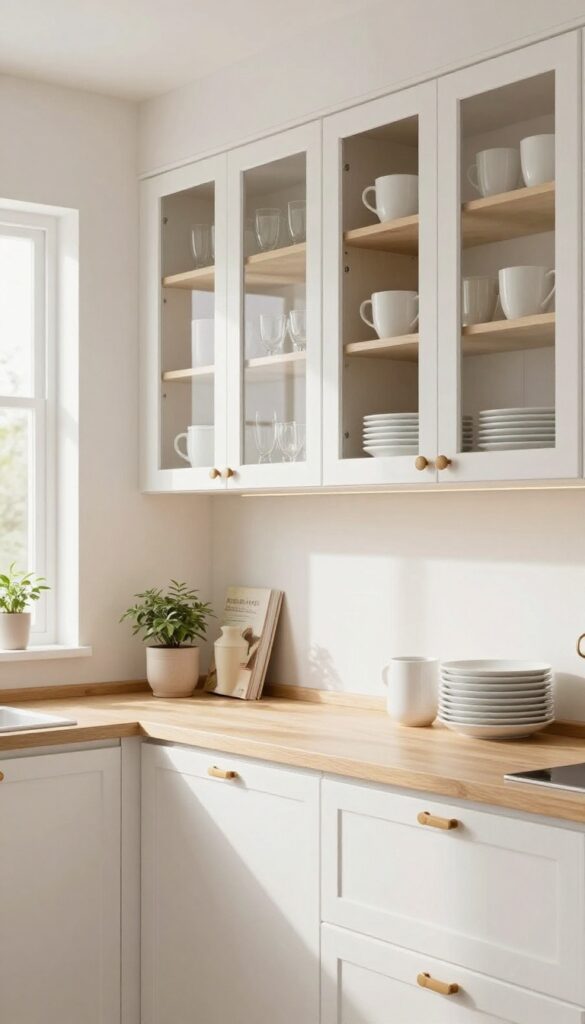
Blending glass-front cabinets with open shelving creates a kitchen that feels both curated and functional. The mix lets you showcase your prettiest dishes behind glass while keeping cookbooks and everyday ceramics within easy reach on open shelves. It’s a look that reads collected over time, not styled all at once.
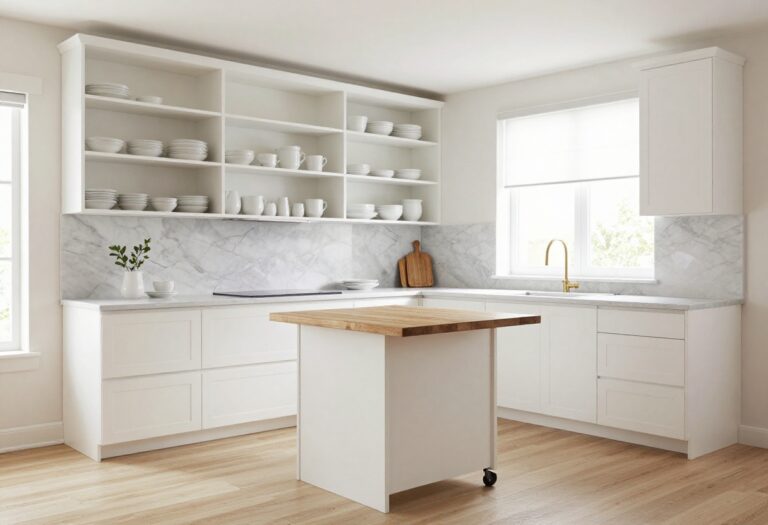
This approach works especially well in galley or L-shaped kitchens where you can dedicate one wall to glass uppers and the adjacent run to open shelving. The contrast between closed and open storage adds visual rhythm and keeps the room from feeling too uniform. Stick to a neutral palette for the cabinets and shelves so your displayed items take center stage.
Best Placement Strategy
Install glass-door cabinets on the wall opposite your main prep zone so they feel like a feature, not an afterthought. Then add open shelving on a side wall or above a coffee station. This separation prevents the eye from getting overwhelmed and gives each storage style its own moment.
Shelf Styling Tip
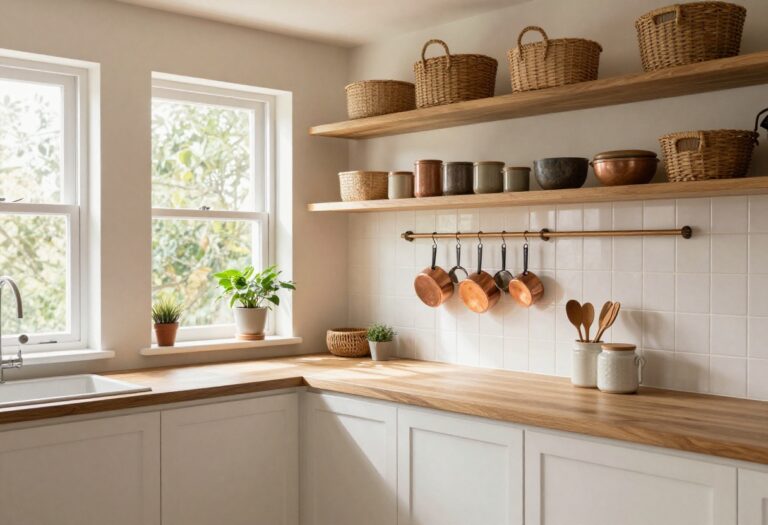
- Treat open shelves as a rotating gallery. Stack a few white dinner plates, lean a cookbook, and add a small plant or ceramic vase. Keep the color palette tight—two or three hues maximum—so it feels intentional.
- On the glass-door side, group similar items like all white mugs or matching glassware for a calm, unified display.
Finishing Touch
Install warm under-cabinet lighting on both the glass cabinets and open shelves. The glow highlights your collections and makes the whole kitchen feel airy and inviting, even at night. Choose LED strips with a dimmer so you can adjust the mood from bright task lighting to soft ambiance.
14. Glass Doors on a Single Accent Cabinet
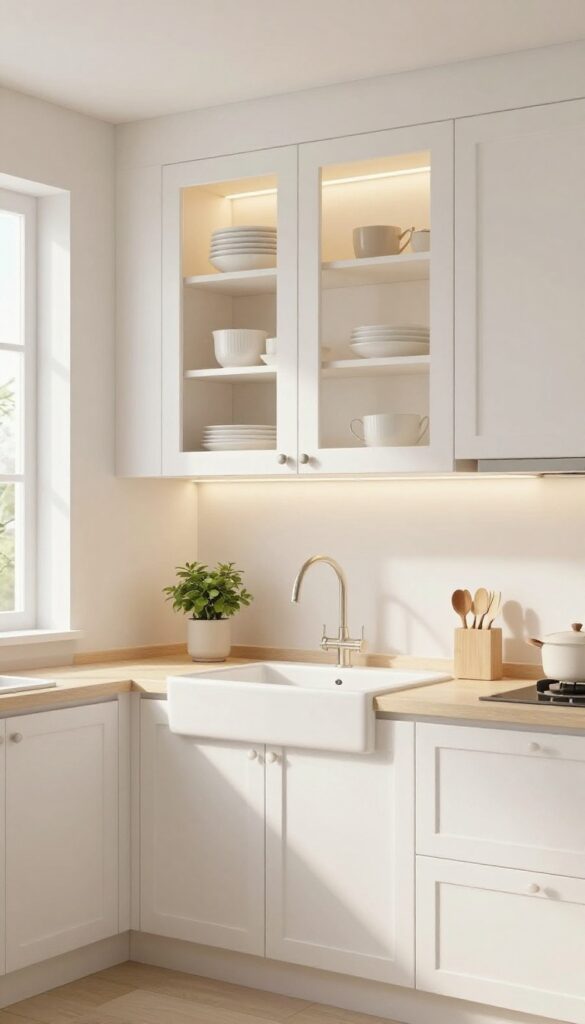
Not every cabinet needs to show off what's inside. In fact, limiting glass fronts to just one cabinet creates a deliberate focal point without overwhelming the room. This approach gives you that airy, open feel in a controlled dose while keeping the bulk of your storage neatly hidden.
It's a practical compromise that works especially well in kitchens where you want a touch of display style but still need plenty of closed storage for everyday items.
Pick one central upper cabinet—ideally the one above the sink or a counter workspace—and swap its solid door for a glass one. This single change draws the eye to that spot, making it feel like a little curated vignette. The rest of your cabinets stay streamlined and clutter-free, so the kitchen feels both open and organized.
It's a subtle way to introduce the light-and-airy vibe without committing to a full glass-front look.
Best Placement
Choose a cabinet that's naturally a focal point, like the one centered over the sink or the main prep area. Avoid placing it near a cluttered counter or next to an appliance that might distract. The goal is to create a clean visual anchor that feels intentional, not accidental.
Styling The Inside
- Keep the contents simple and cohesive. A few matching white dishes, a stack of glass bowls, or a set of neutral ceramic pieces work beautifully. Add a small plant or a single cookbook for a touch of personality.
- Remember, less is more—you want the display to feel curated, not crowded.
Finishing Touch
Install a low-wattage LED strip light inside the cabinet to gently illuminate your display. This soft glow adds warmth and makes the glass door pop, especially in the evening. It's a small detail that elevates the whole look without being flashy.
15. Glass Doors with Minimalist Hardware
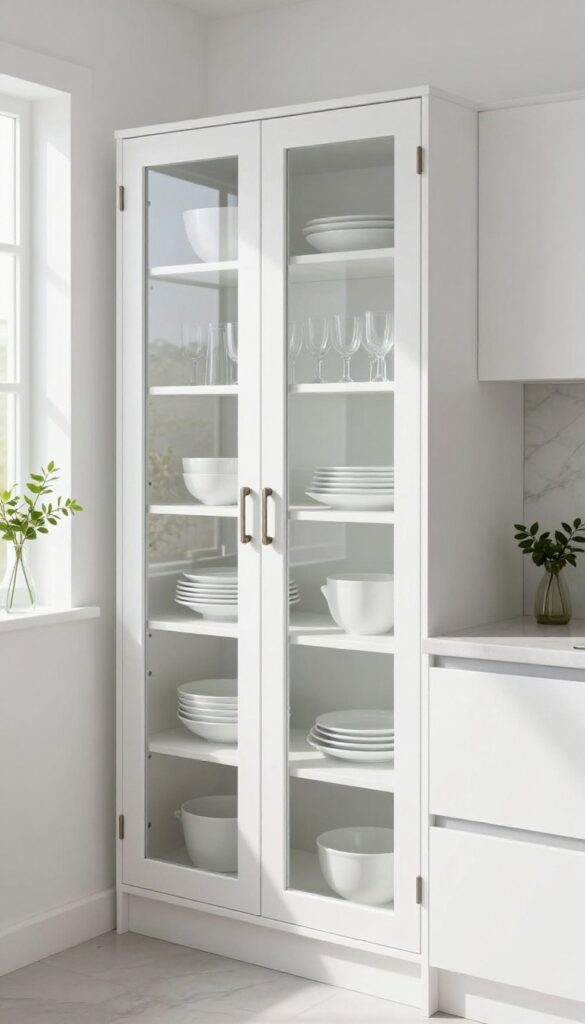
For a kitchen that feels open and uncluttered, glass cabinet doors paired with barely-there hardware are a game changer. The transparency keeps the space airy, while handleless designs or slim bar pulls remove visual distractions. This approach works especially well in modern or transitional kitchens where the goal is to let the contents—whether neatly stacked dishes or curated glassware—do the talking without competing for attention.
The magic of this look lies in its restraint. By choosing handleless doors (think push-to-open mechanisms or recessed pulls) or ultra-slim metal bars, you eliminate the bulk that traditional knobs and handles add. The glass becomes the star, reflecting light and making the kitchen feel larger.
It's a practical choice for anyone who wants a clean, gallery-like aesthetic without sacrificing functionality.
Best Glass Types
Clear glass is the most transparent option, but it requires neat organization inside. For a softer look, try frosted or ribbed glass—it hides clutter while still letting light pass through. Low-iron glass reduces the green tint and looks extra crisp, especially with white or light-colored cabinets.
Hardware Finishes
If you opt for slim bar pulls, stick with matte black, brushed brass, or satin nickel for a subtle contrast. Handleless cabinets work best with a seamless cabinet front—just make sure the push-to-open mechanism is reliable. For a cohesive look, match the hardware finish to your faucet or light fixtures.
Cabinet Styling Note
- Keep the inside of your cabinets intentionally styled. Group similar items together—like white dinnerware or clear glass jars—and leave a little breathing room between pieces. Avoid overcrowding; the goal is a curated display, not a packed shelf.
- Add a few open shelves nearby to balance the closed storage.
FAQ
Do glass cabinet doors show dust and fingerprints easily?
Yes, clear glass shows smudges and dust more than solid doors. However, frosted or textured glass hides fingerprints better, and regular wiping with a microfiber cloth keeps them looking clean.
What type of glass is best for hiding clutter?
Frosted, reeded, or textured glass are great for obscuring less organized items while still letting light through. They give a tidy appearance without requiring perfect arrangement.
Can I add glass doors to existing cabinets?
Absolutely. Many cabinet makers offer retrofit glass inserts, or you can replace solid doors with glass ones. It’s a relatively simple upgrade that instantly changes the look.
How do I style glass-front cabinets without them looking messy?
Stick to a cohesive color palette, use matching dish sets, and leave some empty space. Group similar items together and avoid overcrowding. Baskets or bins can hide smaller odds and ends.
Are glass doors safe for kitchens with kids?
Tempered glass is strong and shatter-resistant, making it safe for busy households. For extra safety, choose thicker glass or add a safety film. Keep fragile items on higher shelves.
Conclusion
Glass cabinet doors are a simple way to open up your kitchen and add a layer of visual interest. Whether you go for clear, frosted, or textured, the key is to style thoughtfully and let the glass do the heavy lifting.
Pick the idea that feels most like your kitchen’s personality, and enjoy the lightness it brings. A few smart swaps can turn your cabinets from ordinary into a breath of fresh air.