13 Kitchen Mantle Ideas That Frame the Cooking Zone
Kitchen mantles often get overlooked, but they're prime real estate for adding personality to your cooking zone. Whether you have a traditional hearth or a simple shelf above the counter, that horizontal surface can become a focal point without costing much.
The trick is to style it in a way that feels intentional but not cluttered. Budget-friendly doesn't mean boring.
With a few smart choices—like mixing textures, playing with heights, and sticking to a cohesive color palette—you can create a mantle that looks curated and personal. Think of it as a mini gallery that changes with the seasons or your mood.
1. Rustic Wooden Shelf with Hanging Herbs
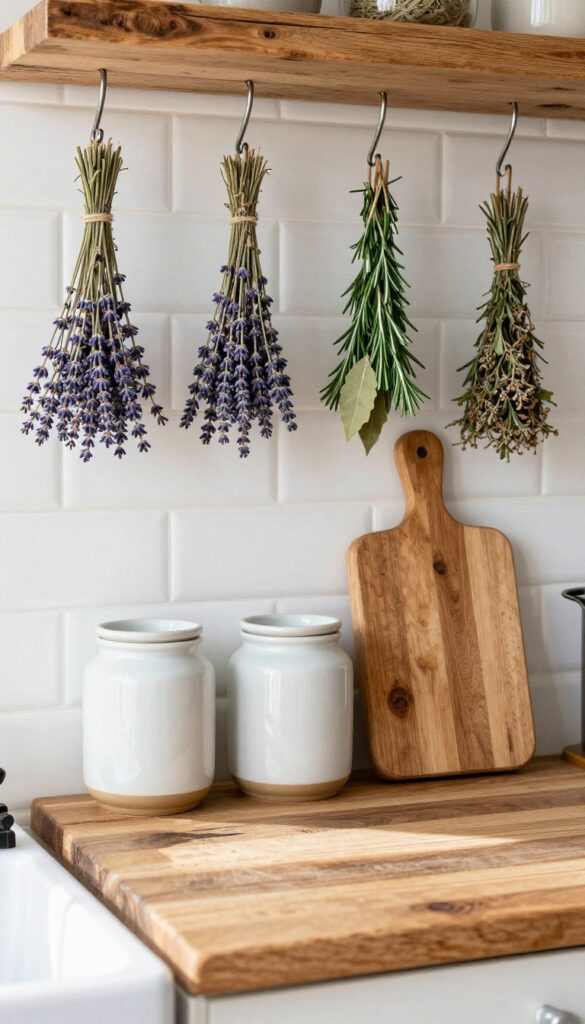
A reclaimed wood shelf above the stove or sink instantly warms up the kitchen with its natural grain and weathered texture. By adding small hooks underneath for dried herbs, you create a functional display that smells as good as it looks. This idea leans into budget-friendly styling—especially if you grow your own herbs—and turns a bare wall into a living, breathing part of your cooking zone.
The combination of rough-hewn wood and soft greenery softens the hard edges of tile and stainless steel. Dried lavender, rosemary, or bay leaves hang within easy reach for cooking, while their earthy tones complement the wood. It's a low-cost way to introduce organic texture and a subtle farmhouse feel without going full rustic overload.
Best Materials
Go with salvaged wood like barn boards or pallet planks for that lived-in look. If you're buying new, choose oak or pine with a matte finish to mimic aged wood. Avoid glossy or heavily stained pieces—they'll clash with the natural herb vibe.
Budget-Friendly Swap
Skip expensive pre-made herb planters. Instead, tie herb bundles with kitchen twine and hang them upside down from simple cup hooks. You can also dry herbs from your garden or farmers' market for nearly zero cost.
Shelf Styling Tip
Keep the shelf itself clutter-free—just a few ceramic jars or a small wooden cutting board. Let the hanging herbs be the main event. For visual balance, vary the lengths of the herb bundles so they cascade at different heights.
2. Minimalist White Vignette with Greenery
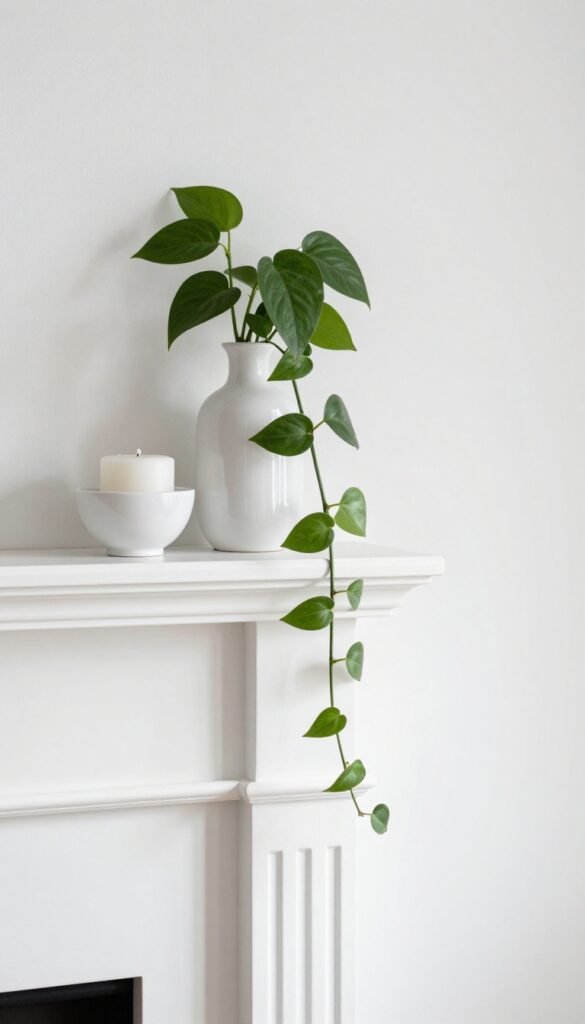
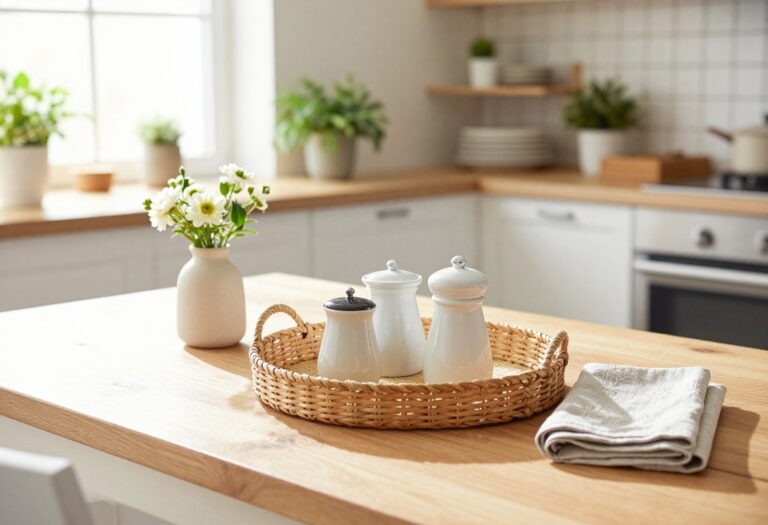
A kitchen mantel doesn't need a lot of stuff to make an impact. In fact, sometimes the most striking displays are the ones that barely try. This look is all about clean white ceramics—a vase, a small bowl, a candle—with a single trailing plant like pothos or eucalyptus.
The white palette keeps the space feeling open and airy, while the greenery adds just enough life to keep it from feeling sterile. It's a budget-friendly approach that works especially well in small kitchens where every inch counts.
You don't need to spend much to pull this off. White ceramic pieces are easy to find at thrift stores, discount home shops, or even your own cabinets. The key is to choose pieces with simple shapes—round, cylindrical, or softly curved—and avoid anything with heavy patterns or gold trim.
The plant is the star here, so pick a hardy, low-maintenance variety like pothos or a eucalyptus bunch that will stay fresh for weeks. Arrange the pieces in a loose cluster, varying heights slightly. Place the tallest item (the vase) slightly off-center, then nestle the bowl and candle around it.
Let the plant trail over the edge of the mantel for a relaxed, organic feel. This vignette works on any mantel style, from rustic wood to sleek marble, because the white and green combo is universally flattering.
Budget-Friendly Swap
- Instead of buying new ceramics, check your kitchen cabinets for white mugs, ramekins, or small plates. A simple white mug can double as a vase for a single stem or a small bunch of eucalyptus. Use a small white bowl to hold a tea light or a few dried bay leaves.
- This approach costs nothing and keeps the look intentionally minimal.
Plant Styling Tip
For a trailing plant like pothos, place the pot on the mantel and let the vines cascade down the front. If you prefer a more structured look, use a small white vase for a few stems of eucalyptus or a single white orchid bloom. Change the greenery seasonally—spring tulips, summer herbs, fall dried grasses—to keep the vignette feeling fresh without buying new decor.
Finishing Touch
Add a small white ceramic dish to hold a few matches or a salt cellar. This not only looks intentional but also makes the mantel feel useful, not just decorative. Keep the arrangement tight—no more than three to four pieces—so the eye rests easily and the space stays clutter-free.
3. Layered Framed Art and Small Plants
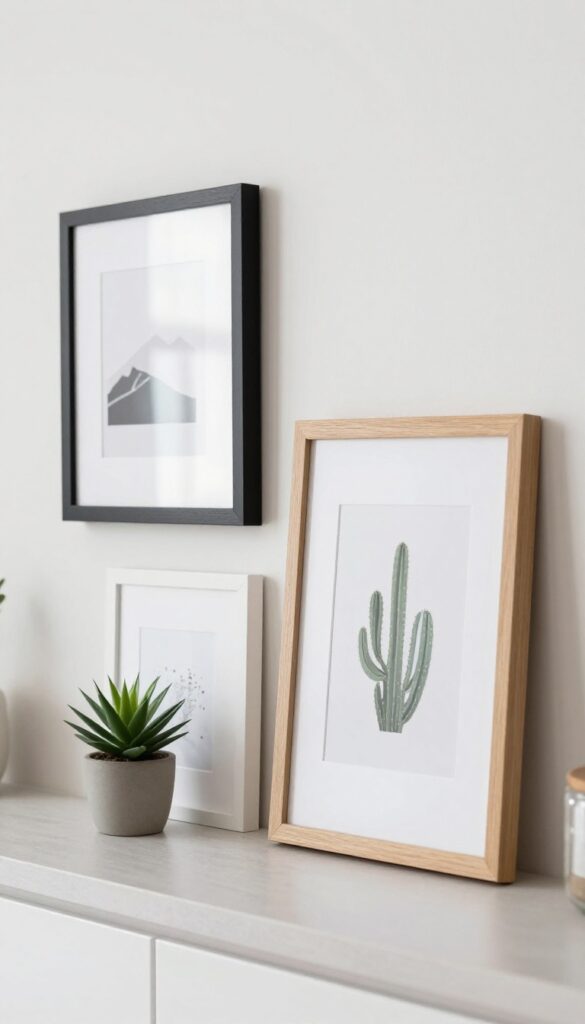
This idea turns your kitchen mantle into a mini gallery without requiring a single nail. By leaning a couple of small framed prints or photos against the wall and placing a tiny succulent or cactus in front, you create instant depth that feels curated and effortless. It’s a budget-friendly way to add personality, especially if you choose frames that echo your kitchen’s hardware finish.
Layering is the secret to making a mantle look styled rather than cluttered. Start with two or three small frames—mix a black-and-white photo with a simple line art print for contrast. Lean them at slightly different angles so they feel relaxed.
Then, set a small potted succulent or a mini cactus directly in front of one frame. The plant’s organic shape softens the hard lines of the frames, while the frames give the plant a visual anchor. This combo works on any mantle width, from a narrow shelf to a deep hearth.
For a cohesive look, match the frame color to your cabinet pulls or faucet finish—brass frames with brass hardware, for instance. The whole setup takes less than five minutes to arrange and costs next to nothing if you repurpose frames you already own.
Best Frames To Use
- Stick with slim, simple frames in neutral tones like black, white, or natural wood. Avoid ornate styles that compete with the plant. If your kitchen has warm undertones, go for brass or gold frames; for cool-toned kitchens, silver or matte black works better.
- Mixing two frame sizes adds visual interest without looking messy.
Plant Picks That Thrive
- Succulents and cacti are ideal because they need minimal light and water—perfect for a kitchen mantle that might not get direct sun. Try a small echeveria rosette, a haworthia, or a miniature barrel cactus. Use a plain terracotta or ceramic pot that complements the frame colors.
- If you prefer a low-maintenance alternative, a faux succulent looks just as good and never wilts.
Budget-Friendly Swap
- Skip expensive art prints and use postcards, greeting cards, or pages from a calendar. Lean them in inexpensive clip frames or simple wood frames from a thrift store. For the plant, buy a tiny succulent from a grocery store for under $5.
- This whole vignette can come together for less than $15.
4. Open Baskets for Extra Storage
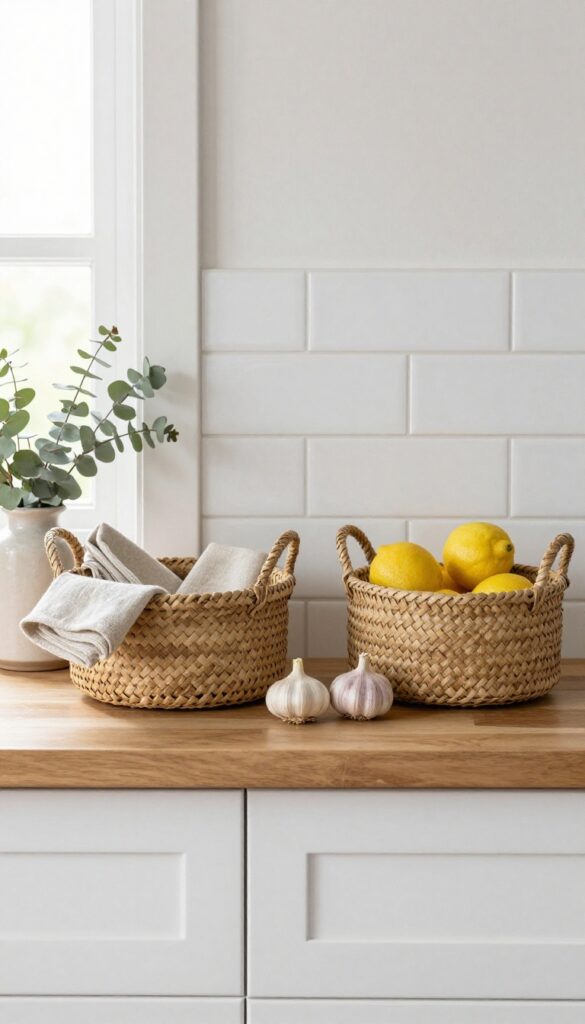
A kitchen mantle doesn't have to be just for show. Tucking a couple of woven baskets up there adds practical storage without sacrificing style. The natural texture of seagrass or rattan softens the hard lines of tile and countertops, making the space feel warmer and more lived-in.
Plus, it's an easy way to keep everyday items like dish towels or fruit within arm's reach but out of the way.
Open baskets on a kitchen mantle are a budget-friendly way to add storage and texture. They work especially well in smaller kitchens where every inch counts. The key is to choose baskets that complement your existing decor—think warm neutrals like beige, tan, or light brown for a cohesive look.
Use them to store linens, fresh produce, or small gadgets, but avoid overcrowding. One or two baskets spaced apart keep the mantle looking tidy and intentional.
Best Materials
- Stick with natural woven materials like seagrass, rattan, or water hyacinth. They add warmth and texture without feeling too rustic. For a cleaner look, opt for baskets with a tighter weave in a neutral tone.
- Avoid shiny or synthetic materials that can clash with the cozy feel of a kitchen.
Storage Tip
Use baskets to corral items you reach for daily. Roll dish towels and tuck them in one basket, or keep a small collection of lemons and garlic in another. Just make sure the baskets are easy to lift down—no need to store heavy pots or rarely used tools up there.
Styling Note
Balance the baskets with a few decorative objects. Place a small plant or a ceramic vase next to a basket to prevent the mantle from looking too utilitarian. Keep the overall arrangement asymmetrical but balanced—two baskets on one side and a candle on the other, for example.
5. Cookbook Display with a Bookend
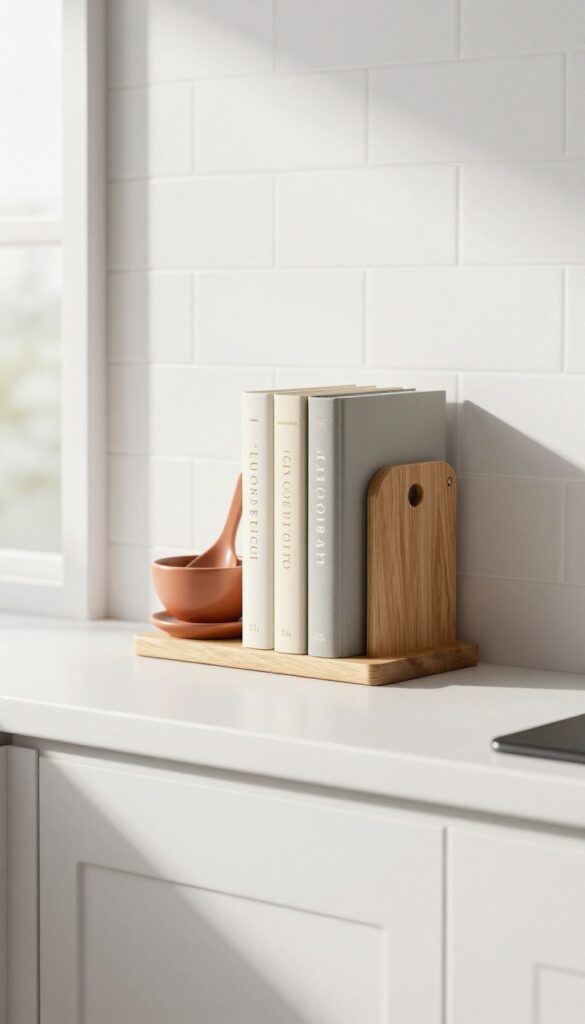
Your kitchen mantle can double as a mini library for your most-loved cookbooks. By standing two or three favorites upright with a simple bookend, you create a focal point that feels both personal and purposeful. Topping them with a small decorative object—like a wooden spoon or a spice jar—adds a subtle nod to your cooking passion without cluttering the surface.
This idea is especially budget-friendly because you likely already own the books and a bookend; if not, thrift stores are full of affordable options. Swapping books seasonally keeps the display feeling fresh all year long.
A cookbook display on the mantle celebrates your love for cooking while keeping the space functional. The key is to keep it simple: choose books with visually appealing spines that complement your kitchen’s color palette. A single bookend in a natural material like wood or marble anchors the stack without competing for attention.
The small object on top—perhaps a ceramic spoon rest or a tiny vase—adds a personal touch that ties the display to the cooking zone. This setup works best on a mantle that isn’t too deep, as the books will stand out nicely without getting lost. For a cohesive look, match the bookend’s finish to other metal or wood accents in the kitchen.
Best Book Choices
- Pick cookbooks with covers that coordinate with your kitchen’s color scheme. Neutral tones like white, cream, or soft gray work well in most kitchens, but a pop of color from a vibrant spine can add visual interest. Avoid books with overly busy or damaged covers unless you’re going for a rustic look.
- If your collection is limited, borrow from a friend or library for a seasonal swap.
Budget-friendly Bookend Options
You don’t need to spend much on a bookend. A smooth stone from your garden, a thrifted brass candlestick, or even a stack of small coasters can do the job. For a clean look, choose a bookend in a material that echoes your kitchen’s existing finishes—like a wooden one if you have butcher-block counters, or a metallic one if your hardware is brass or nickel.
Seasonal Swap Idea
- Keep the display dynamic by rotating books with the seasons. In spring, feature a fresh produce cookbook; in fall, highlight baking or comfort food titles. This not only refreshes the mantle’s look but also reminds you to try new recipes.
- Pair the swap with a tiny seasonal object on top, like a mini pumpkin in autumn or a sprig of rosemary in summer.
6. Monochrome Ceramic Collection
A row of ceramic pieces in the same soft color family—cream, beige, or pale gray—creates a quiet, elegant line across your kitchen mantle. This look is all about restraint: instead of a busy mix of colors, you let subtle variations in shape and height do the work. The result feels curated, calm, and surprisingly budget-friendly because you can hunt for affordable ceramic pieces at thrift stores, discount home goods shops, or even your local dollar store.
The uniform palette ties the whole cooking zone together without adding visual clutter, making your mantle feel like a deliberate design choice rather than an afterthought.
A monochrome ceramic collection is one of the easiest ways to give your kitchen mantle a polished, intentional look without spending a lot. The key is sticking to one color family—think warm cream, soft beige, or cool gray—and then playing with different shapes and heights. A tall vase, a medium jar, and a short bowl arranged in a row create a rhythm that feels balanced but not stiff.
This approach works especially well in kitchens where you want a sense of calm, like in open-plan spaces where the mantle is visible from the living area. Plus, because all the pieces share the same hue, you can mix textures like matte, glazed, and slightly rough finishes for extra depth without breaking the budget.
Best Colors
- Stick to one neutral shade that complements your kitchen's existing palette. Cream works beautifully with warm wood tones and brass accents, while soft gray feels modern next to stainless steel and white subway tile. Beige is a great middle ground, especially in kitchens with beige or greige walls.
- Avoid pure white unless your kitchen has very warm lighting—it can look stark. Instead, go for off-white, ivory, or oatmeal for a softer effect.
Layout Tip
- Place the tallest piece slightly off-center (about one-third of the way from one end) to create a more natural, less symmetrical look. Then arrange the medium and short pieces in descending height toward the other end. Leave a few inches of space between each piece so they don't feel crowded.
- If your mantle is narrow, use just two pieces: a tall vase and a short bowl.
Budget-Friendly Swap
- You don't need expensive pottery to pull this off. Thrift stores often have ceramic vases, pitchers, and bowls in neutral tones for a few dollars. Spray paint can unify mismatched pieces—use a matte ceramic paint in your chosen color.
- Another trick: look for plain white ceramic pieces and dip the bottoms in a cream or beige paint for a two-tone effect that still reads monochrome.
7. Hanging Copper or Brass Accents
A mantle is the perfect spot to introduce a little metallic warmth without going overboard. By suspending a small copper pendant light or a set of mini measuring spoons from the edge, you create a focal point that catches the light and adds a subtle gleam. This trick works especially well if your kitchen already has warm metal finishes on faucets or hardware, tying the whole look together without costing much.
Hanging copper or brass accents from the mantle is an easy, budget-friendly way to add a touch of elegance to your kitchen. The key is to keep it simple—a single small pendant light or a cluster of mini measuring spoons hung at different lengths. The metallic surfaces reflect light beautifully, creating a warm, inviting glow that makes the cooking zone feel more polished.
This idea shines brightest in kitchens with existing warm metal finishes, like brass cabinet pulls or a copper sink, as it creates a cohesive, intentional look. For a truly budget-friendly approach, repurpose an old copper measuring spoon set or thrift a small brass bell. Hang them from the mantle's edge using clear fishing line or thin leather cord so they appear to float.
The result is a charming, low-cost detail that feels custom and curated.
Best Materials
- Stick with real copper or brass for the best patina over time. If your budget is tight, look for copper-toned or brass-finished items at thrift stores or discount home goods shops. Avoid plastic imitations—they won't catch the light the same way and can look cheap.
- A single copper pendant light (even a small one) or a set of mini measuring spoons are both excellent choices.
Lighting Tip
Position the hanging accent so it catches natural light from a nearby window or under-cabinet lighting. The metallic gleam will bounce around the room, making the space feel brighter and more spacious. If you use a pendant light, choose a warm LED bulb (2700K-3000K) to enhance the copper or brass tones.
Budget-Friendly Swap
Instead of buying new, hunt for vintage copper or brass items at flea markets or online resale platforms. An old brass bell, a copper creamer, or even a set of brass curtain rings can be repurposed as hanging decor. You can also spray-paint inexpensive metal objects with a copper or brass finish for a custom look that costs pennies.
8. Seasonal Decor Rotation
A kitchen mantle that changes with the seasons keeps the heart of your home feeling fresh and festive all year long. The beauty of this approach is that you don't need a huge budget or a storage unit—just a few well-chosen pieces that rotate in and out. Think mini pumpkins and dried leaves in autumn, a small evergreen branch with fairy lights in winter, and maybe a vase of fresh tulips in spring.
It's an easy, low-commitment way to celebrate the season without overwhelming your cooking zone.
Rotating decor seasonally is one of the most budget-friendly ways to keep your kitchen mantle feeling current and inviting. By investing in a few key pieces each season—like a set of ceramic pumpkins, a string of warm fairy lights, or a simple spring garland—you can completely transform the look of your mantle without breaking the bank. The trick is to keep the base neutral (a wood mantel or a simple white shelf) and let the seasonal accents pop.
This approach works especially well in kitchens where you want a touch of personality without clutter getting in the way of meal prep.
Best Colors
- Stick to a seasonal color palette that complements your kitchen's existing tones. For fall, think warm oranges, deep burgundies, and muted golds. Winter calls for crisp whites, silvers, and touches of evergreen.
- Spring is perfect for soft pastels like blush pink and sage green, while summer can handle bright corals and sunny yellows. Keeping the palette cohesive ensures the mantle looks intentional, not chaotic.
Budget-Friendly Swap
- You don't need to buy new decor every season. Shop your own home first—a bowl of lemons can become a summer centerpiece, or a stack of vintage books with fall-colored spines can double as autumn decor. Thrift stores and dollar stores are gold mines for seasonal items like mini gourds, glass ornaments, or small vases.
- The key is to mix a few new finds with pieces you already love.
Finishing Touch
- Add a subtle sensory element to complete the seasonal vibe. In fall, a cinnamon-scented candle on the mantle warms the space. In winter, a small dish of pinecones or a sprig of rosemary adds texture and a gentle fragrance.
- These tiny details make the rotation feel thoughtful and complete, not just a visual swap.
9. Black and White Contrast with Geometric Shapes
High-contrast black and white decor brings a crisp, modern edge to your kitchen mantle. Geometric patterns—think striped vases, checkered cloths, or angular candle holders—add visual punch without clutter. The trick is letting the mantle be the focal point while the rest of the kitchen stays neutral.
This look is budget-friendly because you can mix thrifted finds with a few new statement pieces, and it instantly frames the cooking zone with a gallery-like feel.
A black and white palette is timeless, but geometric shapes give it a fresh, contemporary twist. Start with a large black ceramic vase with white stripes or a white tray with black angular legs. Layer in smaller items like a checkered dish towel draped over the edge or a set of black-and-white geometric candles.
The high contrast draws the eye, making the mantle a natural frame for your kitchen. Keep surrounding surfaces light—white walls, pale countertops—so the mantle pops without competing. This approach works especially well in open-concept kitchens where the mantle doubles as a visual anchor.
Best Colors And Patterns
- Stick to true black and crisp white for maximum contrast. Introduce pattern through stripes, chevrons, or harlequin prints on textiles or ceramics. A single bold piece, like a black-and-white geometric vase, can anchor the whole arrangement.
- Avoid gray tones—they soften the contrast and dilute the modern edge.
Budget-Friendly Swap
- You don't need expensive designer items. Thrift a plain white vase and paint black stripes with painter's tape and craft paint. Or wrap a plain candle holder in black-and-white washi tape for a quick geometric pattern.
- A checkered cloth napkin folded as a runner costs pennies but reads high-end.
Finishing Touch
Add a small black-framed mirror or a geometric print behind the mantle to echo the shapes. Keep the arrangement asymmetrical—tall items on one side, low on the other—to keep the eye moving. A single black-and-white plant pot with a snake plant adds life without breaking the palette.
10. Glass Jars Filled with Pantry Staples
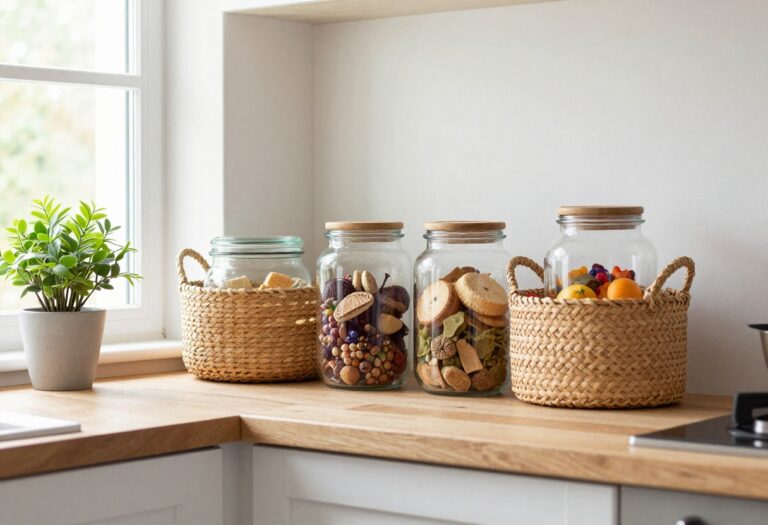
Clear glass jars lined up on a kitchen mantle bring a sense of order and warmth that feels both intentional and effortless. The sight of dried pasta, beans, or colorful spices creates a visual rhythm that’s surprisingly soothing, like a tiny pantry display that doubles as decor. It’s one of those ideas that costs almost nothing if you already have jars, yet it instantly makes the space feel more curated and lived-in.
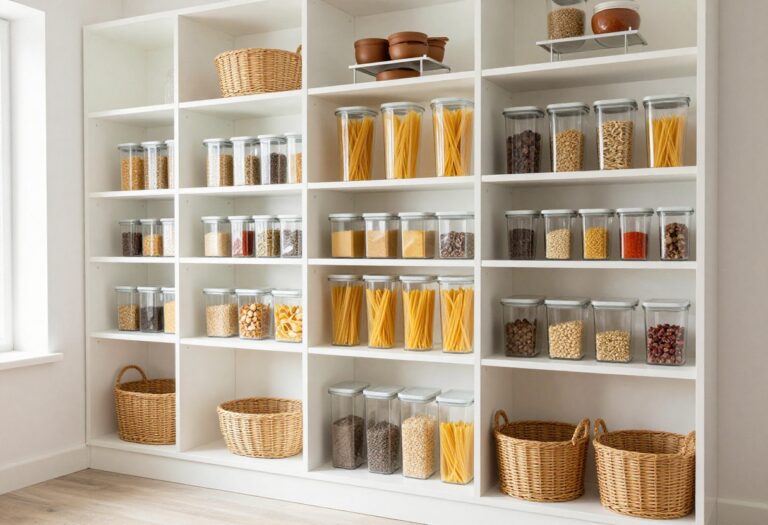
Fill clear glass jars with everyday pantry staples—think spaghetti, lentils, or star anise—and arrange them along the mantle. The transparency of the glass turns functional storage into a decorative feature, while the varied colors and textures add depth. Use matching lids or cork stoppers to keep the look cohesive, and group jars of different heights for visual interest.
This setup works especially well in kitchens where open shelving feels too exposed but closed cabinets feel too hidden; the mantle becomes a happy medium, offering both accessibility and style.
Best Materials
Clear glass jars with airtight lids are ideal—mason jars, apothecary jars, or repurposed pasta sauce jars all work. Cork stoppers or uniform metal lids create a polished, intentional look. Avoid colored or frosted glass if you want the pantry staples to shine.
Layout Tip
Group jars in odd numbers—three or five—and vary the heights by using small risers or stacking a few jars on a wooden tray. Leave a little breathing room between each jar so the mantle doesn’t feel cluttered. A small plant or a cookbook at one end can anchor the arrangement.
Budget-Friendly Swap
Don’t have matching jars? Thrift stores are goldmines for glass containers. Mixing different shapes but keeping the same color lid (like all silver or all cork) creates a unified, collected-over-time look that feels personal and charming.
11. Single Large Statement Piece
Sometimes the most impactful look is the simplest. Instead of arranging a cluster of small objects, place one oversized item front and center on your kitchen mantle. A large ceramic vase, a big wooden bowl, or a framed botanical print instantly becomes the focal point, drawing the eye without clutter.
This minimalist approach feels intentional and uncluttered, perfect for kitchens where you want a calm, breathing space.
This idea is all about restraint and confidence. Choose one piece that has presence—think a tall, sculptural vase in matte black or a wide, shallow bowl in natural wood. The key is scale: it should fill the visual weight of the mantle without overwhelming it.
Position it slightly off-center if your mantle is symmetrical, or dead center for a bold, balanced look. This works especially well in kitchens with clean lines, open shelving, or neutral backsplashes, as the single piece adds character without competing.
Best Materials
- Go for natural textures that feel grounded. Ceramic with a matte finish, unglazed stoneware, or raw wood bring warmth. A large black or white vase works with any color scheme.
- For a softer look, try a woven rattan or seagrass basket—just make sure it's sturdy and structured. Avoid glossy or overly decorative pieces; the goal is simplicity.
Budget-Friendly Swap
- You don't need to spend a lot. Look for oversized vases at thrift stores or discount home goods shops. A large glass apothecary jar filled with dried branches or a single big candle on a wooden stand can have the same effect.
- Even a framed poster or a large cutting board propped against the wall works. The trick is choosing something that reads as intentional, not accidental.
Styling Tip
- Let the piece breathe. Don't crowd it with other decor—maybe one small candle or a single stem on the side, but nothing more. Consider the backdrop: if your mantle is dark, a light piece pops; if it's light, go dark or textured.
- A single piece also makes cleaning easier—no dusting around a dozen knick-knacks.
12. Mirrored Accent to Reflect Light
A small mirror propped on the kitchen mantle works wonders, especially in darker spaces. It catches and bounces light around the room, making the whole cooking zone feel airier and more open. Pair it with a single candle or a tiny plant for a simple, budget-friendly focal point that doesn't try too hard.
A mirror on the mantle is an easy way to add depth and brightness without spending much. It reflects whatever light is available—whether from a window, pendant lights, or under-cabinet fixtures—and visually doubles the space. This trick is especially effective in kitchens with limited natural light or narrow layouts.
Keep the rest of the styling minimal so the mirror remains the star.
Best Placement
Lean the mirror against the back wall of the mantle rather than hanging it. This creates a casual, collected look and lets you easily adjust the angle to catch the best light. A rectangular or arched mirror works well; avoid ornate frames that compete with the kitchen's clean lines.
Budget-Friendly Swap
- You don't need an expensive antique mirror. Thrift stores and discount home stores often have small mirrors for under $20. A simple frame in black, white, or natural wood blends seamlessly with most kitchens.
- If the frame is worn, a coat of spray paint refreshes it instantly.
Finishing Touch
Add a single candle in a neutral holder or a small succulent in a terra-cotta pot in front of the mirror. The reflection multiplies the greenery or glow, creating a cozy vignette. Avoid clutter—one or two items keep the look clean and intentional.
13. Personal Gallery of Family Photos
Tucked between cookbooks and ceramic jars, a handful of small framed photos can turn a kitchen mantle into a storytelling wall. It’s not about filling every inch—just a few carefully chosen shots in black-and-white and color, arranged loosely so they feel like a casual gallery. The trick is keeping the frames consistent in style, like all matte black or all light wood, so the collection looks intentional without feeling staged.
This personal touch instantly warms up the cooking zone, making the kitchen feel more like the heart of the home and less like a showroom.
A kitchen mantle lined with family photos brings a lived-in warmth that no store-bought decor can match. The key is restraint: pick three to five small frames and vary the heights and orientations. Mix black-and-white prints with a few color ones for visual rhythm, and lean them against the wall or each other for a relaxed, unstudied look.
This approach works especially well in kitchens where the mantle is narrow or shallow—small frames won’t crowd the surface. Plus, swapping photos seasonally or after a big trip keeps the display feeling fresh without spending a dime.
Budget-Friendly Swap
Instead of buying new frames, repurpose ones you already own by spray-painting them all the same color—matte black, brushed nickel, or a warm brass tone. This instantly unifies mismatched frames and costs under $10. Thrift stores are goldmines for interesting vintage frames that can be painted to match.
Shelf Styling Tip
Layer the frames in front of a small stack of cookbooks or a wooden cutting board to add depth. Place the tallest frame slightly off-center, then cluster smaller ones around it. Leave a few inches of breathing room between each piece so the mantle doesn’t feel cluttered.
Finishing Touch
Tuck a sprig of eucalyptus or a small potted herb like rosemary next to the frames. The green adds a natural, fresh contrast to the personal photos and ties the display into the kitchen’s cooking theme without overpowering it.
FAQ
What is the best height for a kitchen mantle?
A kitchen mantle should be installed about 4 to 6 inches above the stove or counter, but it really depends on your space. The key is to keep it within easy reach for styling and cleaning. If you have a range hood, the mantle can sit beside it or on an adjacent wall.
Can I use a mantle in a kitchen without a fireplace?
Absolutely. A kitchen mantle doesn't require a fireplace. You can install a floating shelf or a simple wooden ledge above a counter, sink, or even a narrow wall.
It works as a decorative shelf that frames the cooking zone.
How do I keep my kitchen mantle from looking cluttered?
Stick to the rule of three: group items in odd numbers and vary heights. Use a tray or a small runner to define the space. Leave some empty space between objects so the eye can rest.
Regularly edit out items that don't serve a purpose.
What materials work best for a budget-friendly kitchen mantle?
Reclaimed wood, painted MDF, or even a simple metal shelf are great budget options. You can also repurpose an old shelf or a piece of wood from a salvage yard. The finish can be painted or stained to match your kitchen.
How often should I change the decor on my kitchen mantle?
There's no hard rule, but changing it seasonally or every few months keeps the space feeling fresh. If you use functional items like cookbooks or jars, you might only swap out a few accent pieces. The goal is to enjoy the process without stress.
Conclusion
A kitchen mantle is a small canvas that can make a big difference in how your cooking zone feels. With these 13 budget-friendly ideas, you can frame your space with personality and purpose—whether you lean toward rustic, minimalist, or eclectic. The best part is that most of these ideas use items you already own or can find for cheap.
Start with one idea that speaks to you and build from there. Your kitchen mantle doesn't have to be perfect; it just has to feel like you. Happy styling!