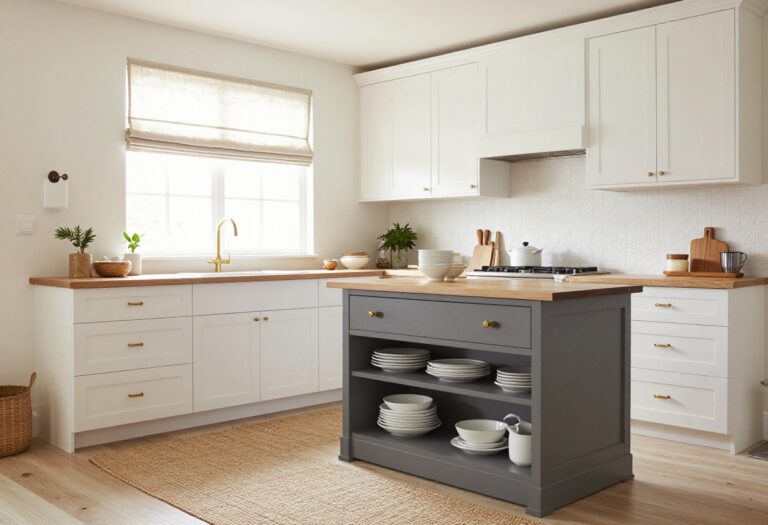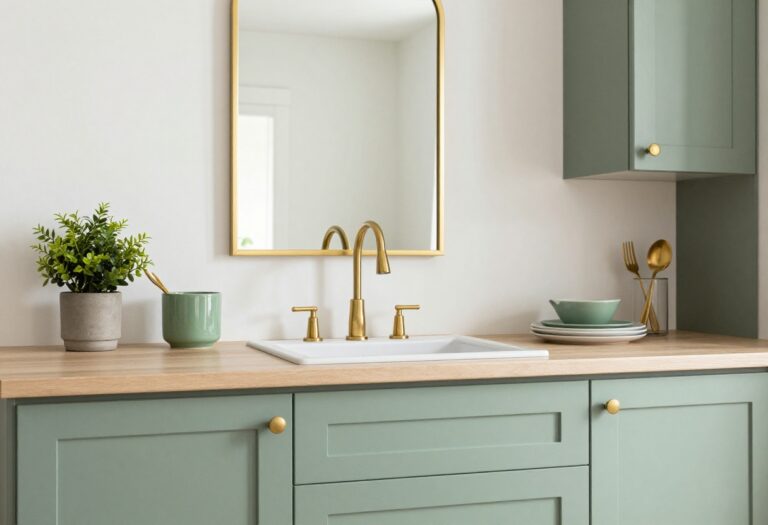
10 White Kitchen Countertop Ideas for a Clean Bright Look
White countertops can make a kitchen feel airy and open, but they don't have to look cold or clinical. The trick is layering in warmth through texture, natural materials, and a few personal touches.
Whether you're remodeling or just refreshing, these ideas help you keep that bright look while making the space feel genuinely lived-in. A white surface is like a blank canvas—it gives you room to play with color, pattern, and contrast without overwhelming the room.
The key is choosing the right shade and finish for your lifestyle. From matte quartz to butcher block accents, there's a version of white that works for every cooking style.
1. Warm White Quartz with Soft Veining
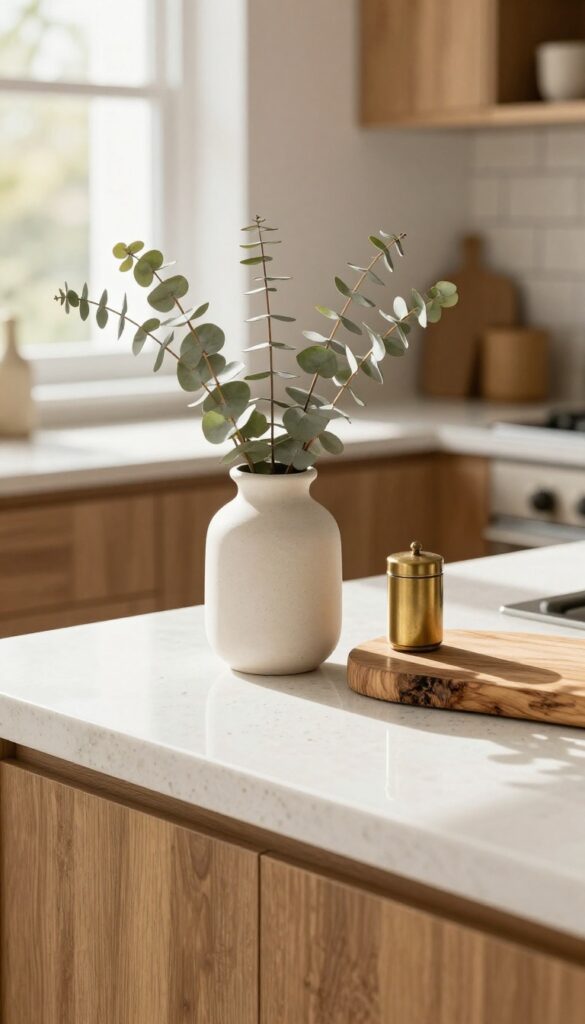
Starting with a warm white quartz countertop is a smart way to keep your kitchen feeling bright without going cold. The key is choosing a slab with subtle gray or beige veining that adds gentle movement and depth. This approach gives you the clean, crisp look you want, but with a lived-in warmth that makes the space feel inviting, not sterile.
A warm white quartz countertop with soft veining strikes the perfect balance between modern and cozy. The warm undertones prevent the kitchen from feeling stark, while the veining adds natural texture that catches the eye without overwhelming the space. This is a practical choice for busy kitchens because quartz is durable, non-porous, and easy to maintain—just wipe it down and it looks good as new.
Pair it with warm wood cabinets or brass hardware to enhance the inviting feel.
Best Colors To Pair
- Stick with warm whites for the countertop, like creamy white or ivory, and pair them with soft greige or beige veining. For cabinets, consider a warm white or light wood tone like oak. Avoid stark white or cool gray cabinets, which can clash with the warm undertones.
- Add warmth with brass or unlacquered brass hardware and a natural stone backsplash in soft beige or cream.
Texture Mix Tip
To keep the look from feeling flat, mix textures throughout the kitchen. The smooth quartz countertop pairs beautifully with a matte tile backsplash, a rough-hewn wood cutting board, and woven bar stools. This contrast adds visual interest and makes the space feel layered and lived-in.
Finishing Touch
Complete the look with open shelving in warm wood tones. Display a few ceramic dishes, a wooden bowl, and a small plant to bring life to the countertop. The soft veining in the quartz will echo the natural elements, tying the whole design together.
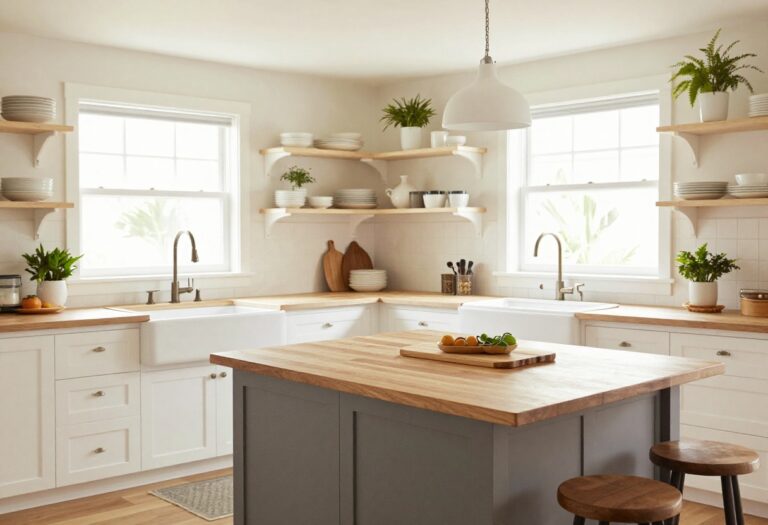
2. Butcher Block Contrast Strip
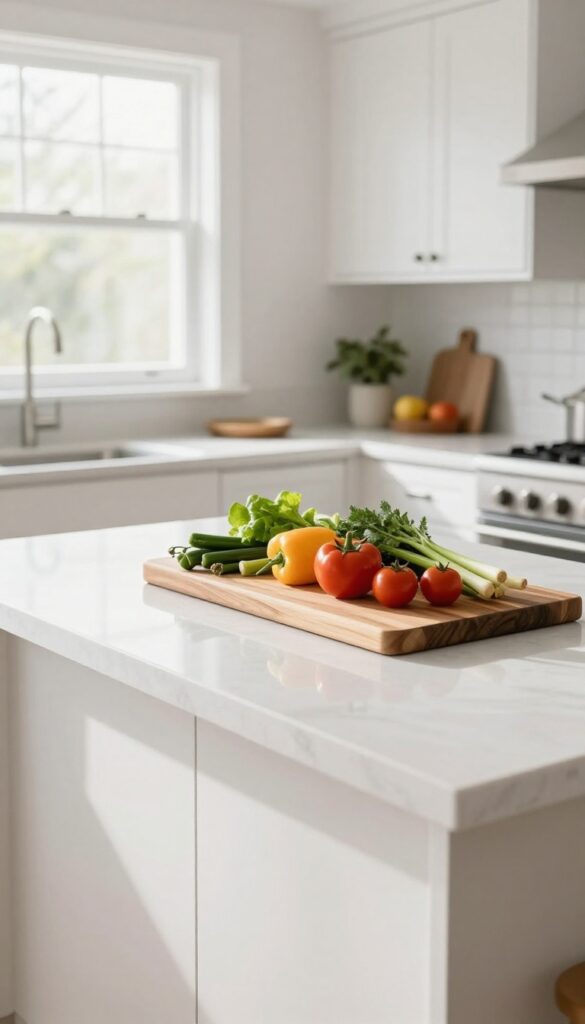
White countertops can sometimes feel a little too sterile, especially in a kitchen that's meant to feel warm and lived-in. That's where a narrow strip of butcher block comes in. By adding wood along one edge or as a built-in cutting board, you break up all that white without losing the bright, airy vibe.
It's a simple tweak that instantly makes the space feel more grounded and inviting.
A butcher block strip is one of those ideas that looks intentional without trying too hard. It softens the crispness of white surfaces and brings in natural texture that feels cozy rather than rustic. Plus, it's genuinely useful—you get a dedicated prep zone that's gentle on knives and easy to replace if it gets worn.
The contrast between smooth white stone or quartz and warm wood grain creates a visual anchor that draws the eye and adds depth.
Best Placement
The most practical spot is along the edge of an island or peninsula, where you can reach it easily while cooking. Another option is a thin strip behind the sink, so you have a durable surface for chopping without cluttering your main counter. If you have a long stretch of counter, consider a butcher block section near the stove for prepping ingredients right where you need them.
Material Pairing
- For the wood, go with hard maple or walnut—they're dense, durable, and have a nice grain that stands out against white. Avoid soft woods like pine that dent easily. Pair it with a matte white quartz or marble-look porcelain for a clean, modern contrast.
- The key is to keep the white surface simple so the wood becomes the star.
Finishing Touch
- To keep the butcher block looking its best, seal it with a food-safe mineral oil or beeswax finish. Reapply every few months, especially near the sink or stove where moisture and heat are factors. A light sanding once a year will smooth out any knife marks and keep the surface feeling fresh.
- This small maintenance step makes the wood last for years and keeps the contrast sharp.
3. Honed Carrara Marble for Timeless Softness
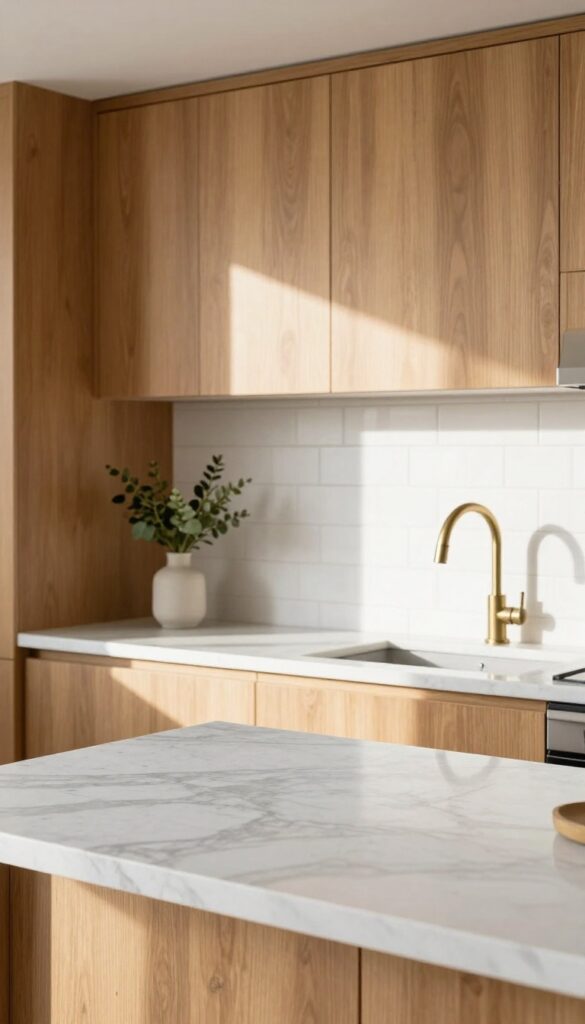
Honed marble brings a quiet elegance to a kitchen without the high-shine formality of polished stone. The matte finish feels almost velvety under your fingers, and it softens the light instead of bouncing it around. Over time, it develops a gentle patina—tiny etch marks and subtle wear that make the surface feel lived-in rather than precious.
That natural aging is exactly what gives honed Carrara its warmth and character, keeping your kitchen bright but never cold.
If you love the look of marble but worry about maintenance, honed Carrara is a forgiving compromise. The matte surface hides fingerprints and water spots better than polished finishes, so your countertops stay looking clean with less fuss. The soft gray veining reads as subtle texture rather than bold drama, which makes it easy to pair with warm wood cabinets, brass fixtures, or even painted lower cabinets in a sage or dusty blue.
This countertop works especially well in kitchens that get heavy daily use—think busy family kitchens or open-plan spaces where you want a calm, grounded feel. Pair it with a simple white subway tile backsplash and unlacquered brass hardware for a look that feels both classic and relaxed.
Best Color Pairings
- Stick with warm whites, soft beiges, and muted earth tones to complement the marble's gentle veining. Avoid stark white cabinets—they can make the stone look flat. Instead, try creamy off-white or light oak for a softer contrast.
- If you want a bolder move, deep navy or charcoal lowers anchor the marble beautifully without overwhelming it.
Texture Mix Tip
Because honed marble has a low-sheen surface, you want to add visual interest through other textures. A matte black faucet, woven seagrass bar stools, and a chunky wooden cutting board all add layers that keep the kitchen from feeling one-dimensional. The contrast between smooth stone and rougher natural fibers is especially pleasing.
Finishing Touch
Seal the marble with a penetrating sealer to protect against stains, but don't expect it to stay pristine forever—that's the point. Embrace a few minor etch marks as part of the stone's story. A simple daily wipe with a soft cloth and mild soap is all the upkeep you need.
4. White Concrete with Subtle Texture
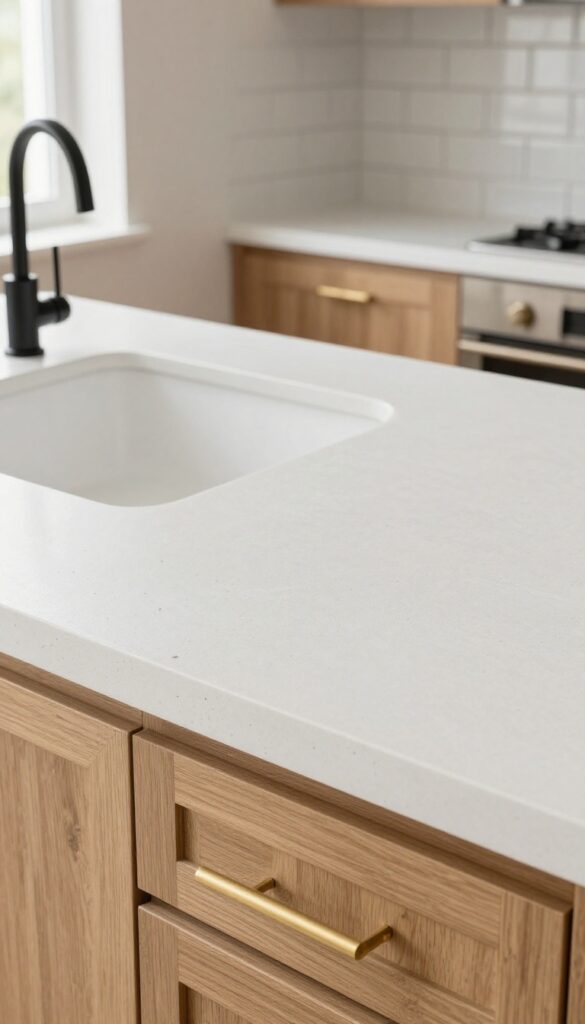
Polished white concrete countertops bring a raw, industrial feel into your kitchen without making it feel cold or unfinished. The subtle texture—tiny pits, faint swirls, and natural variations—keeps the surface from looking too sterile or perfect. It’s a practical choice that hides everyday wear surprisingly well, and the pale color keeps your kitchen bright and airy.
White concrete works beautifully in kitchens that lean modern or farmhouse, but it also fits right into a warm, lived-in space. The key is balancing the coolness of concrete with warm wood cabinets, brass hardware, or soft linen textiles. This countertop doesn’t demand perfection, so small scratches or stains just add character over time.
For a truly cohesive look, carry the same concrete material onto a kitchen island or a small breakfast bar.
Best Colors And Pairings
- Stick with off-white or warm white concrete to avoid a hospital-like feel. Pair it with natural oak or walnut cabinets for warmth, or go with matte black fixtures for a bolder contrast. Avoid pairing with cool gray cabinets—it can feel too stark.
- Instead, bring in warm metals like unlacquered brass or copper for hardware and faucets.
Texture Mix
- The beauty of textured concrete is how it plays with other surfaces. Combine it with a glossy subway tile backsplash for contrast, or use a honed marble look on the island for variety. A matte finish on the concrete keeps the focus on the subtle pits and swirls, so skip high-gloss sealers.
- Add a natural fiber rug or woven bar stools to soften the industrial edge.
Maintenance And Sealing
- Concrete is porous, so sealing is non-negotiable. Use a penetrating sealer that won’t change the look or feel of the surface. Reapply every one to two years depending on use.
- For daily cleaning, stick to a mild soap and water—avoid harsh chemicals that can dull the sealer. A little patina over time is part of the charm, so don’t stress about every mark.
5. Glossy White Tile with Warm Grout
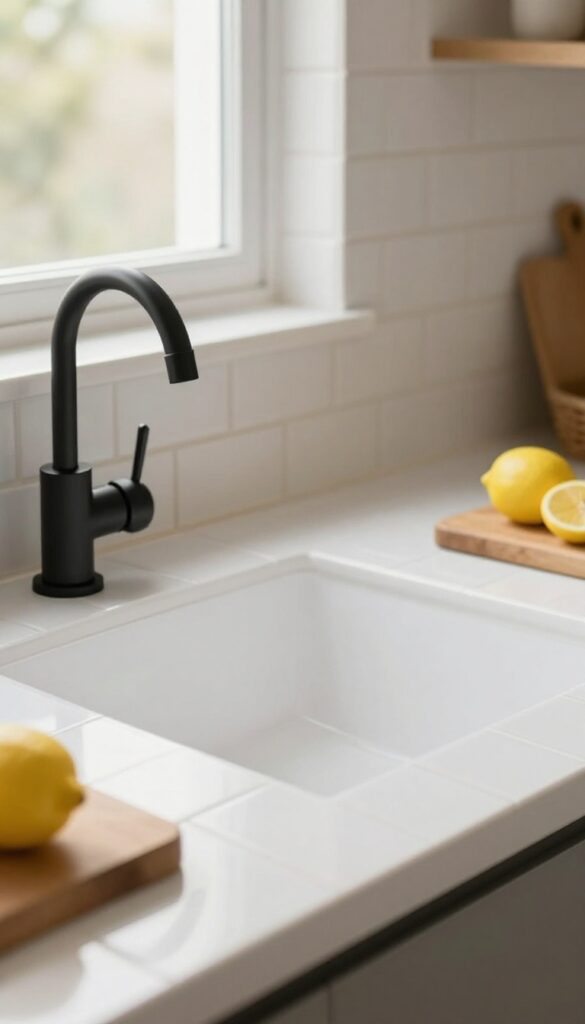
White tile is a classic, but the grout color changes everything. Warm gray or beige grout adds a soft, cozy contrast that keeps the kitchen from feeling cold or sterile. The glossy finish bounces light around, making the space feel bigger and brighter, while the grout brings in that lived-in warmth.
Large-format white subway or hexagon tiles with warm grout are a practical choice that looks high-end without the high price tag. The glossy surface is easy to clean and reflects natural light, helping even small kitchens feel open. The warm grout adds subtle visual interest and hides dirt better than bright white grout, so it stays looking fresh longer.
Best Grout Colors
Stick with warm grays, taupe, or beige for the grout. Avoid stark white or dark charcoal, which can look harsh. A grout color just a few shades darker than the tile gives you that soft, cozy contrast without being too bold.
Layout Tip
For a modern twist, try a herringbone or vertical stack pattern with subway tiles. This adds movement and draws the eye upward, making the ceiling feel higher. Hexagon tiles work great for a more playful, textured look, especially on a backsplash behind the stove.
Finishing Touch
Pair the glossy tile with matte black or brushed brass fixtures and warm wood accents. The mix of shiny tile and matte hardware creates a balanced, inviting kitchen that feels both stylish and lived-in.
6. White Quartzite with Gold Flecks
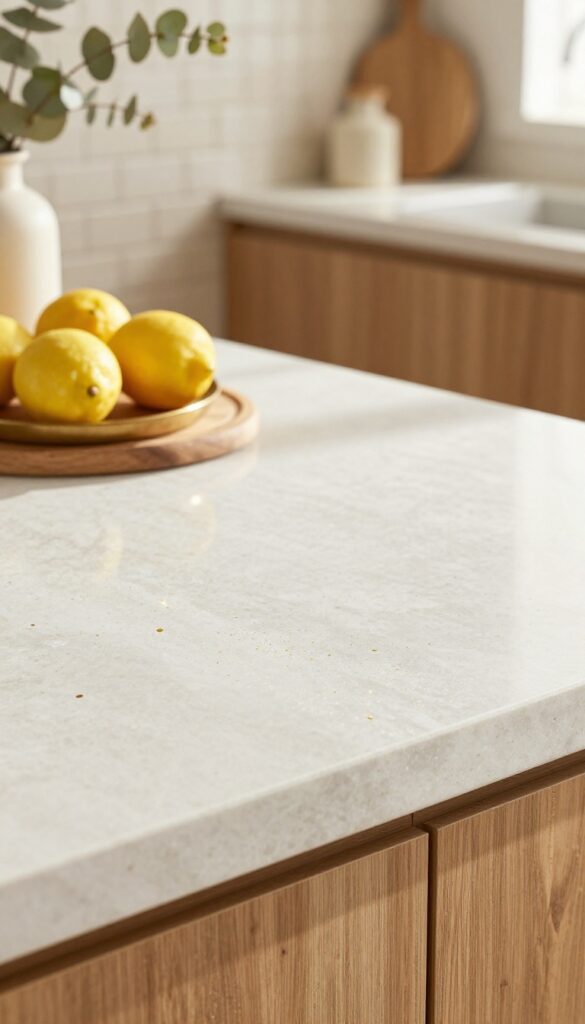
A white countertop doesn't have to feel flat or cold. Quartzite with tiny gold or warm brown flecks brings a subtle richness that catches the light and adds depth without overwhelming the space. It's a practical choice for busy kitchens because quartzite is naturally durable and heat-resistant, so you get both beauty and everyday function.
Quartzite offers the look of marble with more toughness, making it ideal for kitchens that see real use. The gold flecks scattered across the white surface create a warm, speckled effect that pairs beautifully with brass fixtures, wooden cabinets, and soft neutral backsplashes. This countertop works especially well in kitchens with lots of natural light, where the flecks sparkle throughout the day.
For a cohesive look, carry the same warm tones into your hardware and lighting choices.
Best Pairings
This countertop shines alongside warm wood tones like oak or walnut, and it loves brass or unlacquered brass hardware. For a backsplash, consider a simple white subway tile or a soft cream zellige tile to keep the focus on the countertop's subtle shimmer.
Maintenance Tip
Quartzite is less porous than marble, but it still benefits from annual sealing to protect against stains. Use a gentle stone cleaner daily and avoid harsh chemicals. The gold flecks help hide minor wear, so the surface stays looking fresh longer.
Finishing Touch
Add a warm-toned fruit bowl or a wooden cutting board on the counter to echo the gold flecks. A small vase with dried eucalyptus or wheat stems brings in a natural, lived-in feel that complements the stone's organic pattern.
7. Two-Tone Island with Wood Base
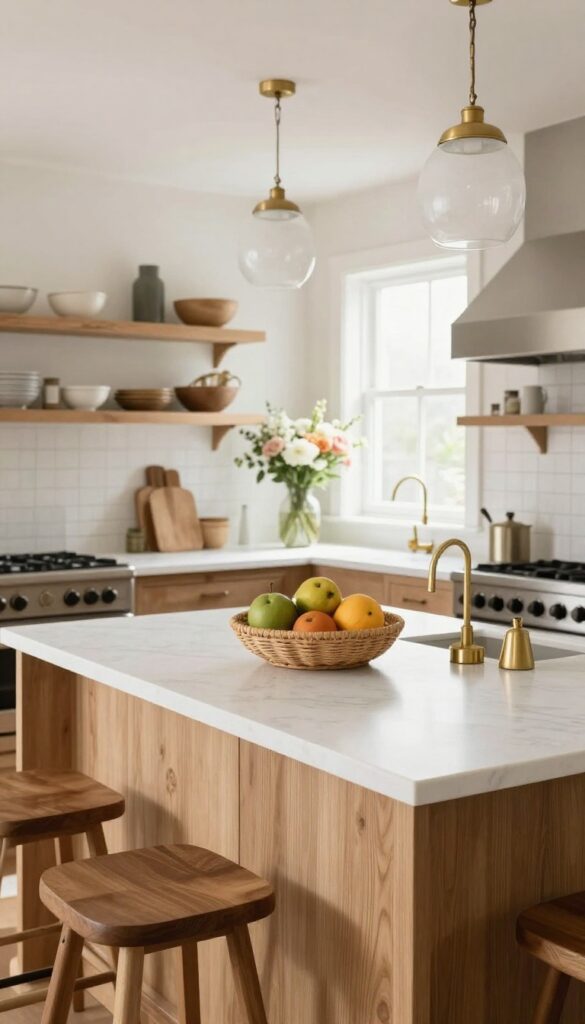
A kitchen that's all white can feel a little sterile, especially if you're aiming for a warm, lived-in vibe. The trick is to break up all that brightness with a single, intentional contrast point. A two-tone island does exactly that: it keeps your perimeter counters crisp and clean while introducing a natural wood base that feels grounded and inviting.
This isn't just a style move—it's a practical one too. The wood surface on the island softens the space where people actually gather, making it feel less like a showroom and more like the heart of your home.
The beauty of this approach is how effortlessly it balances clean and cozy. Your white perimeter counters keep the kitchen feeling airy and spacious, while the wood island adds a layer of warmth that draws you in. It's a contrast that works in almost any kitchen style, from modern farmhouse to transitional.
The wood base also hides daily wear and tear better than an all-white island, so you get both style and durability. Plus, that natural texture plays nicely with other warm elements like brass hardware, woven barstools, or a simple fruit bowl on the counter.
Best Wood Choices
- For a warm but not overwhelming look, go with oak, walnut, or teak. Oak leans a bit more casual and light, while walnut brings a rich, almost furniture-like feel. Teak is a great middle ground—durable and warm without being too dark.
- If your kitchen has a lot of natural light, a lighter wood keeps things bright; in a cozier space, a darker wood adds depth. Stay away from overly red or orange tones unless your kitchen already has those undertones, or the contrast might feel jarring.
Finishing Touch
- Once your island base is wood, think about how you'll transition from the countertop to the base. A waterfall edge in the same wood creates a seamless, sculptural look that's very on-trend. If you prefer a more traditional feel, let the countertop overhang slightly so the wood reads like a piece of furniture.
- Either way, add a few warm metal accents—like brass or bronze barstool legs or a pendant light—to tie the whole look together.
Layout Tip
- This idea works best when the island is a distinct zone, not just an extension of the perimeter. Make sure your island is at least a few inches lower than your white counters to emphasize the separation. If you have a galley or small kitchen, a narrow wood-topped cart on wheels can achieve the same two-tone effect without the commitment.
- Place it where you naturally stand to prep or chat, and you'll instantly create a warm focal point.
8. White Laminate with Rounded Edges
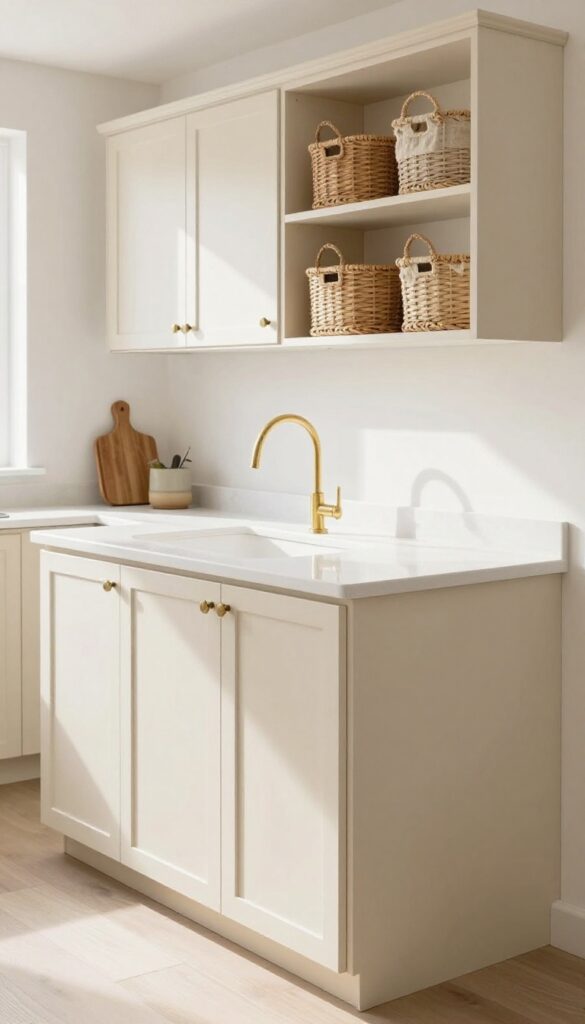
Laminate countertops have come a long way from the shiny, fake-looking surfaces of the past. Today's white laminate can look surprisingly crisp and clean, especially when you choose a matte finish with soft, rounded edges. The rounded profile keeps the look friendly and less formal, which fits perfectly into a warm, lived-in kitchen.
It's a practical choice that doesn't sacrifice style, and it's gentle on the budget too.
White laminate with rounded edges offers a soft, approachable look that feels both modern and inviting. The matte finish reduces glare and hides fingerprints better than glossy surfaces, making it ideal for busy kitchens. The rounded edges soften the overall silhouette, giving the countertop a gentle, almost furniture-like quality.
This style pairs beautifully with warm wood tones, open shelving, and natural textures like woven baskets or linen curtains. It's especially effective in smaller kitchens where you want to keep things light and airy without feeling cold or sterile. The practical side?
Laminate is easy to clean, resistant to stains, and much more affordable than stone or quartz. For a warm, lived-in feel, avoid pairing it with ultra-modern stainless steel or stark white cabinets. Instead, opt for creamy off-white cabinets, brass or matte black hardware, and a butcher block island or wood cutting boards to add warmth.
Best Colors And Pairings
- Stick with a warm white laminate that has a slight cream or ivory undertone to keep the kitchen feeling cozy. Pair it with soft sage green or pale blue lower cabinets for a subtle pop of color. Wood accents—like a walnut butcher block island or floating shelves—add natural warmth and contrast.
- Avoid pairing with cool grays or stark whites, which can make the space feel clinical.
Edge Profile Options
- The rounded edge is key to the friendly look. Ask for a full bullnose or a demi-bullnose profile—both soften the countertop's appearance and make it safer for homes with kids. A square edge would look too sharp and formal.
- If you want a bit more detail, a beveled rounded edge adds a subtle shadow line without losing the soft feel.
Maintenance And Longevity
- Laminate is low-maintenance but not indestructible. Use cutting boards to avoid knife marks, and wipe up spills quickly to prevent water from seeping into seams. Choose a laminate with a matte texture rather than a smooth gloss—it hides minor scratches better and feels more natural.
- With reasonable care, a quality laminate countertop can easily last 10–15 years.
9. Integrated White Sink with Seamless Look
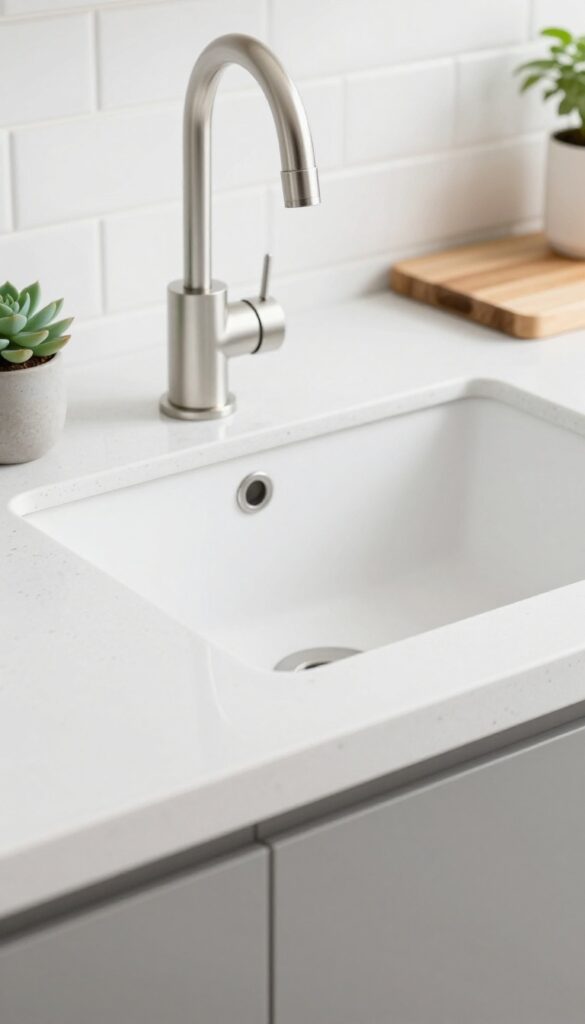
There's something quietly satisfying about a kitchen where the countertop and sink feel like one continuous surface. An integrated white sink, made from the same material as your countertop, creates that seamless effect—no visible seams, no awkward transitions, just a clean sweep of white that makes the whole space feel larger and more intentional. It's a detail that whispers rather than shouts, but once you notice it, you can't unsee the difference.
Pairing a white countertop with an integrated sink is a practical choice that also elevates the overall design. The lack of a rim or joint means crumbs and water have nowhere to hide, making cleanup remarkably easy. This look works beautifully in both modern and transitional kitchens, especially when you want the countertop to be the star without a busy sink breaking the flow.
For a warm, lived-in feel, choose a quartz or solid surface material with subtle flecks or a soft matte finish—it softens the clinical edge that all-white surfaces can sometimes have. The integrated sink also pairs well with under-mount faucets and minimal hardware, keeping the focus on that smooth, uninterrupted line from counter to basin.
Best Materials For A Seamless Sink
- Quartz is a top contender because it's non-porous, durable, and available in a range of whites from creamy to bright. Solid surface materials like Corian also work well for integration, as they can be thermoformed into a single piece with no visible joints. Avoid natural stone like marble for integrated sinks—it's porous and prone to staining near the basin.
- For a warmer look, opt for a quartz with subtle veining or a soft matte finish rather than high-gloss.
Design Tip: Keep The Surrounding Area Minimal
- To let the seamless sink shine, keep the countertop around it clutter-free. A simple soap dispenser and a slim drying mat are enough. Avoid bulky dish racks or multiple bottles near the sink area—they break the visual flow.
- If you need storage, install a shallow drawer under the sink for sponges and scrub brushes, so the surface stays clean and the integrated look remains the focal point.
Finishing Touch: Warm Hardware Contrast
- Balance the cool, clean white of the integrated sink with warm-toned faucets and cabinet hardware. Brushed brass or unlacquered bronze adds a touch of warmth that keeps the kitchen from feeling sterile. A gooseneck faucet with a curved spout echoes the smooth lines of the sink and reinforces the seamless aesthetic.
- This small contrast makes the whole setup feel more inviting and lived-in.
10. White Soapstone with Honed Finish
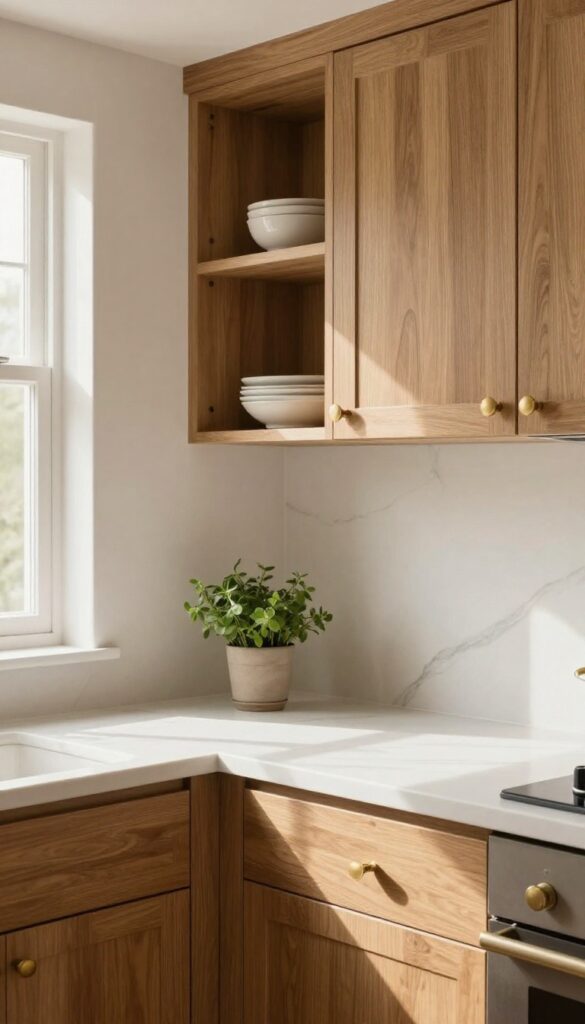
Soapstone often gets pigeonholed as a dark, moody stone, but white varieties exist and they bring a completely different energy. A honed finish keeps the surface matte and soft, so the countertop feels warm and inviting rather than cold or clinical. Over time, soapstone develops a subtle patina that adds character without looking worn out.
For a kitchen that feels clean but not sterile, this is a smart choice.
White soapstone with a honed finish offers a unique blend of durability and warmth. It's naturally non-porous, so you don't have to worry about sealing it, and the honed texture feels smooth and almost silky to the touch. The stone's slight give makes it quieter than granite or quartz when you set down a dish.
This countertop works especially well in kitchens that lean toward a cozy, lived-in aesthetic rather than a sleek, modern look. It pairs beautifully with wood cabinets, open shelving, and soft linen textures.
Best Colors And Pairings
- White soapstone ranges from creamy off-white to pale gray with subtle veining. It looks stunning with warm wood tones like oak or walnut, and it softens the contrast against dark cabinetry. For a cohesive palette, bring in brass or unlacquered bronze hardware and fixtures.
- The matte finish also plays well with matte black or aged nickel accents.
Care And Maintenance Tip
- One of the biggest perks of soapstone is how low-maintenance it is. Unlike marble, it resists stains and etching naturally. You can clean it with mild soap and water.
- If you want to deepen the color or even out the patina, apply a light coat of mineral oil once or twice a year. But honestly, many people love the natural aging process and skip the oil altogether.
Styling For A Lived-in Feel
- To keep the kitchen feeling warm and approachable, style the countertop with everyday items you actually use. A wooden cutting board, a ceramic pitcher with fresh herbs, and a few linen dish towels add softness. Avoid cluttering the surface—let the stone's subtle beauty be the star.
- A simple fruit bowl in a contrasting color, like deep green or terracotta, adds a pop of life.
FAQ
Are white countertops hard to keep clean?
Not really. Most white countertops are sealed or non-porous, so spills wipe up easily. Just wipe down after cooking and use a gentle cleaner to avoid dulling the finish.
What white countertop material is most durable?
Quartz and quartzite are very durable—resistant to scratches, stains, and heat. Laminate is also tough if you avoid direct heat and sharp knives.
How can I make white countertops look warmer?
Add wood accents, warm metals like brass or copper, and soft textiles. A butcher block cutting board or open shelving with warm-toned dishes helps too.
Do white countertops show crumbs and dust?
Yes, but that can actually help you keep the kitchen cleaner since you notice messes right away. A quick daily wipe keeps them looking fresh.
Can I mix white countertops with colored cabinets?
Absolutely. White counters pair beautifully with any cabinet color. For a warm look, try soft sage, navy, or warm wood tones.
Conclusion
White countertops don't have to feel sterile or high-maintenance. With the right material and a few warm accents, they become the perfect backdrop for a kitchen that feels both bright and welcoming. The ideas above show that practicality and style can go hand in hand.
Pick the approach that fits your daily routine and personal taste. Whether you go for honed marble or a simple laminate, the goal is a kitchen that feels clean, open, and truly yours. Happy decorating!