15 Farmhouse Kitchen Hood Ideas That Maximize Storage Without Sacrificing Style
Your kitchen hood doesn't have to be just a functional afterthought. In a farmhouse kitchen, it can become a hardworking centerpiece that pulls double duty.
By thinking about storage from the start, you can turn that empty space above your stove into something genuinely useful.
Whether you're remodeling or just refreshing, these 15 ideas prove that a range hood can hold its own—both in looks and practicality.
1. Open Shelving Flanking the Hood
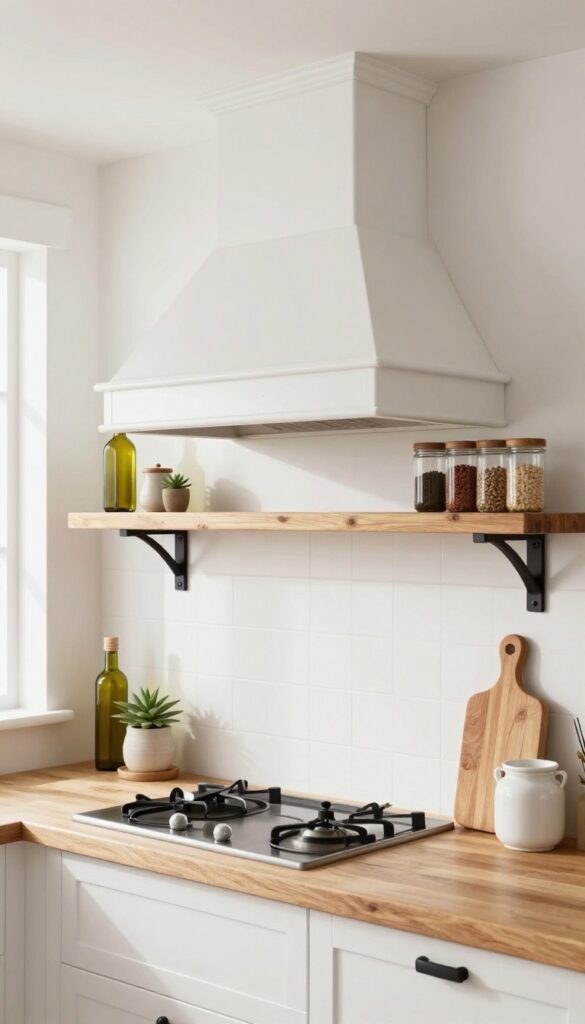
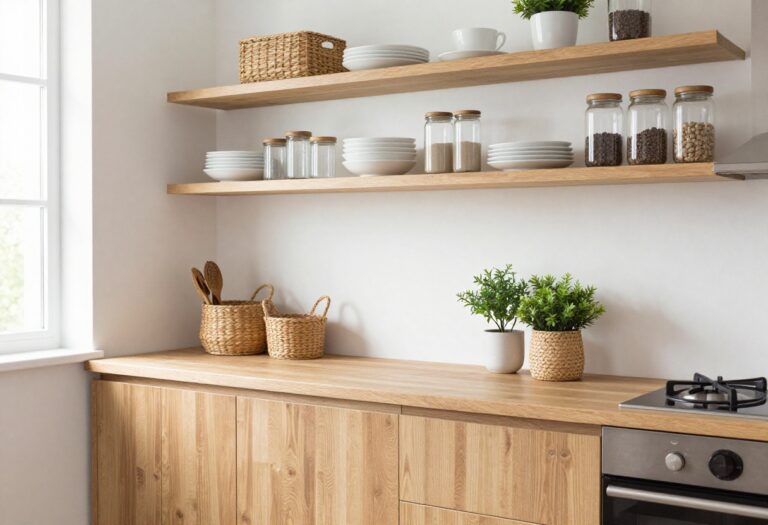
Floating shelves on either side of the range hood turn an often overlooked space into a functional display. They keep your most-used cooking ingredients—olive oil, salt, pepper, and a few spice jars—right where you need them, no cabinet digging required. The open design also breaks up the mass of the hood and adds a breezy, rustic feel that fits farmhouse kitchens perfectly.
Open shelving flanking the hood is a smart storage solution that also becomes a design feature. By keeping everyday essentials within arm's reach, you streamline your cooking workflow while creating a visually light and airy look. The shelves draw the eye upward, making the kitchen feel taller and more open.
Choose sturdy materials like reclaimed wood or thick metal brackets to contrast with the hood's finish. Style them with a mix of functional items and a few decorative touches—like a small plant or a ceramic jar—to keep it from looking cluttered. This idea works especially well in narrow kitchens where upper cabinets might feel too heavy, and it pairs beautifully with a farmhouse apron sink and butcher block counters.
Best Materials
Reclaimed wood shelves add instant warmth and character, while black iron brackets reinforce the farmhouse aesthetic. For a more polished look, go with thick white oak shelves and matte black or brass brackets. If your kitchen leans modern farmhouse, consider floating shelves in a dark walnut stain to ground the space.
Shelf Styling Tip
Group items in odd numbers and vary heights—tall bottles, medium jars, and small bowls. Keep the most-used spices in front and reserve the top shelf for a small plant or a cookbook stand. Leave about 30% of each shelf empty to avoid a crowded feel.
Layout Tip
Install shelves so they are level with the bottom of the hood or slightly below. Leave at least 18 inches between the cooktop and the first shelf to prevent heat damage and allow room for steam to escape. For a balanced look, keep both shelves the same length and distance from the hood.
2. A Pot Rack Built Into the Hood Frame
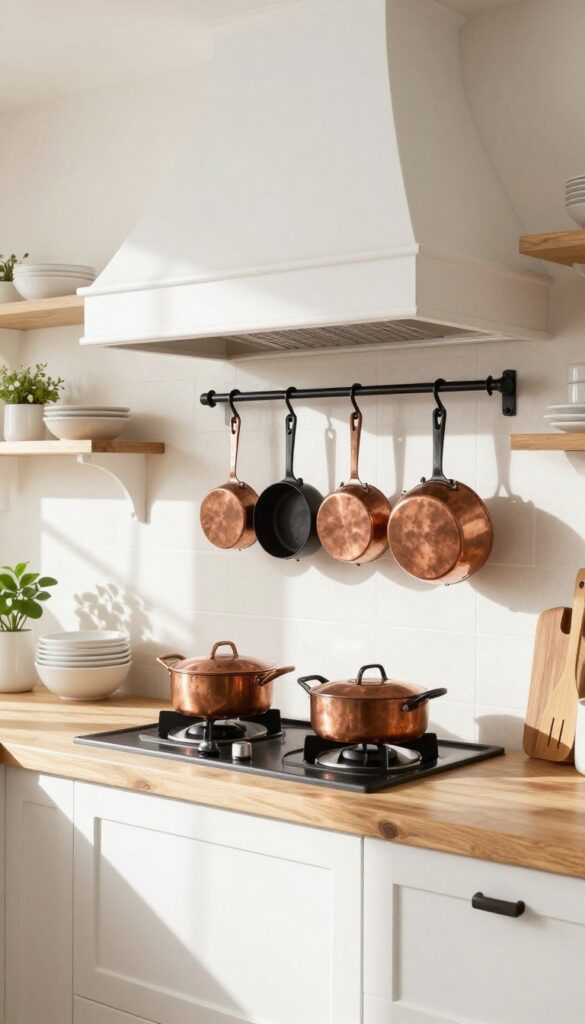
You know that awkward empty space above a range hood? Instead of leaving it bare, turn it into a functional pot rack. By integrating a sturdy metal bar or a wooden peg rail right into the hood's surround, you create instant storage for your most-used cookware.
It keeps pots, pans, and ladles within arm's reach while adding that beloved farmhouse character—think practical meets Pinterest-worthy.
This idea works especially well in open-concept kitchens where every inch counts. The hood becomes a focal point, and the hanging cookware doubles as decor. Choose black wrought iron for a rustic feel or brushed brass for a slightly more refined farmhouse look.
The key is to ensure the bar or rail is securely mounted to support the weight of heavy cast-iron skillets or Dutch ovens. For a cohesive look, match the metal finish to your cabinet hardware or light fixtures.
Best Materials
Go with wrought iron or matte black steel for a classic farmhouse vibe, or opt for oil-rubbed bronze if you want something a little warmer. If your kitchen leans modern farmhouse, brushed nickel or stainless steel can work too. The bar should be at least 1 inch thick to handle the load, and make sure the hooks are sturdy enough for heavy pans.
Storage Tip
- Hang only your most-used pots and pans to keep the area from looking cluttered. Group similar sizes together—small saucepans on one side, larger skillets on the other. Use S-hooks for easy removal, and consider adding a few hooks for utensils or a small herb bundle.
- This keeps the hood area both functional and visually balanced.
Small-space Fix
If your kitchen is tight, a built-in pot rack saves cabinet space and eliminates the need for a separate pot rack that takes up floor or counter area. It also draws the eye upward, making the ceiling feel higher. Just be mindful of clearance—leave at least 18 inches between the bar and the cooktop to avoid heat damage.
3. Deep Crown Molding With Hidden Storage
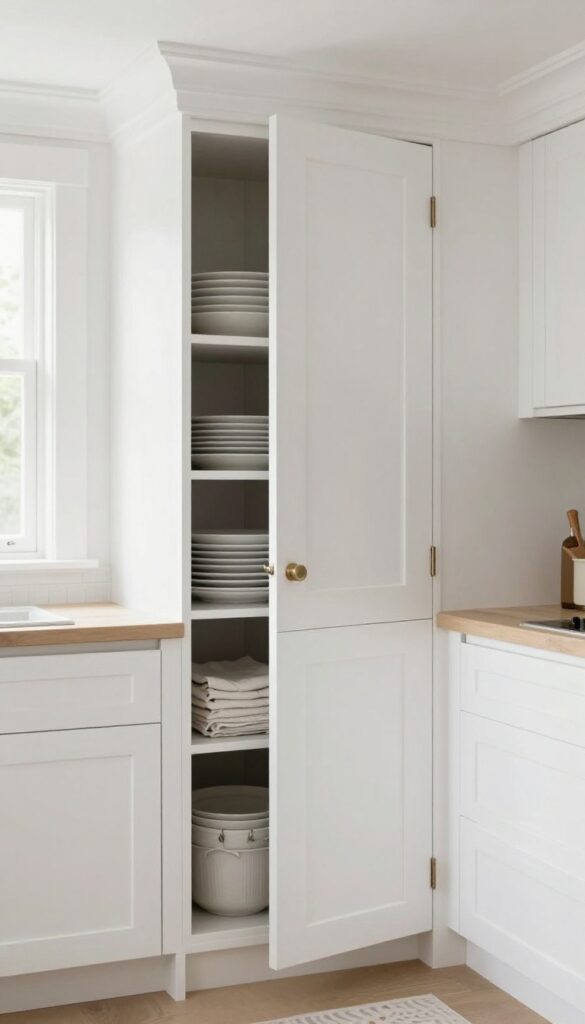
Crown molding does more than just add architectural charm—it can also work overtime for you. By extending the molding above your range hood into a shallow cabinet, you create a discreet storage spot that blends right into the design. This trick is especially useful in farmhouse kitchens where open shelving and clutter can compete for attention.
You get the classic, built-in look without sacrificing a single inch of space.
This idea turns wasted airspace above the hood into a functional nook. The cabinet sits flush with the crown molding, so it reads as a intentional design feature rather than an afterthought. Use it to stow oversized platters, seasonal linens, or holiday serveware that you only pull out a few times a year.
Because it’s tucked up high, it keeps everyday counters clear while adding a custom, furniture-like feel to the kitchen. The molding profile itself can match existing trim for a seamless finish, or you can choose a slightly deeper profile to emphasize the architectural detail.
Best Materials
Stick with solid wood or medium-density fiberboard (MDF) for the cabinet face, then paint it the same color as your hood surround or ceiling. A matte white or soft greige keeps the look airy and farmhouse-friendly. If you want a subtle contrast, try a darker shade on the cabinet door while keeping the molding light—this draws the eye upward without feeling heavy.
Storage Tip
- Install a shallow shelf or two inside the cabinet so you can stack items neatly. Avoid deep cabinets here—they’re hard to reach. Instead, keep the depth to about 8–10 inches, just enough for a stack of plates or a single row of vases.
- Add a small LED strip light inside for easy visibility when you’re grabbing that pie dish for Thanksgiving.
Finishing Touch
Add a magnetic catch or soft-close hinge so the door stays flush and quiet. If you want the cabinet to disappear entirely, use a push-to-open mechanism—no visible hardware. This keeps the focus on the crown molding and the hood itself, while the storage stays a secret.
4. Magnetic Knife Strip on the Hood Side
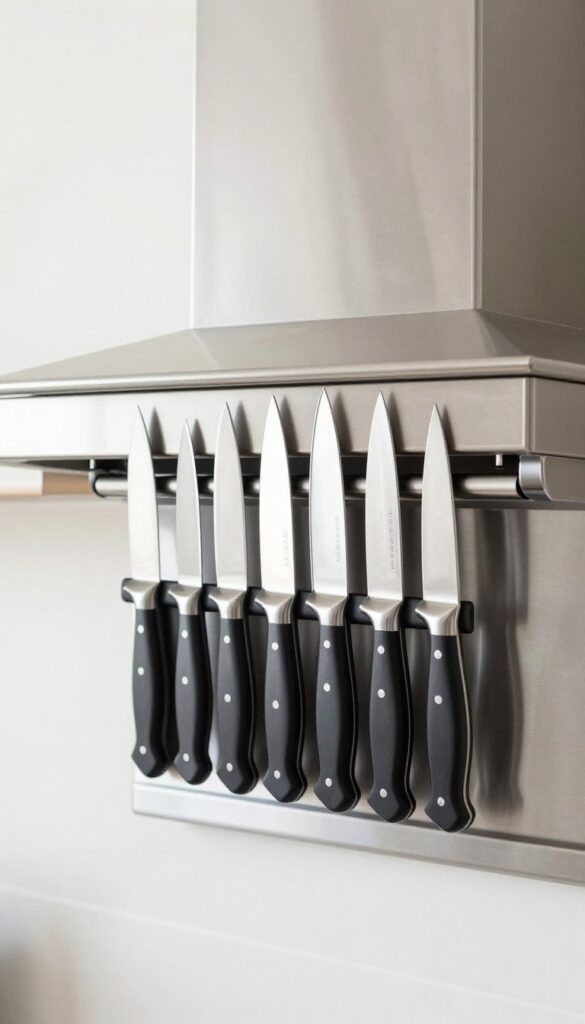
Kitchen clutter often starts with the countertop. Knife blocks take up valuable real estate, and drawers get messy fast. A magnetic strip attached to the side of your range hood solves both problems without sacrificing style.
It keeps blades within arm’s reach while you cook, and because the strip sits flush against the hood, it almost disappears into the metal or wood finish. This is one of those storage-smart moves that feels like a secret weapon in a busy kitchen.
Mounting a magnetic knife strip on the side of your hood is a clever way to free up counter space and keep your most-used tools accessible. The strip works best on stainless steel or painted hoods, but can also be attached to wood or plaster hood sides with strong adhesive or screws. Choose a strip that matches your hood’s finish—brushed nickel for stainless, matte black for dark hoods, or even a wood-toned strip if your hood is paneled.
The visual effect is clean and almost sculptural: knives line up like art, adding a subtle industrial edge. This idea shines in galley kitchens where every inch counts, but it also works in open layouts where you want to keep counters clear for prep and serving.
Best Materials
- For a seamless look, pick a magnetic strip in the same finish as your hood. Stainless steel strips pair perfectly with metal hoods, while matte black or white strips blend into painted surfaces. If your hood is wood, consider a brass or copper strip for warmth.
- Avoid plastic strips—they can look cheap and may not hold heavier knives securely.
Storage Tip
- Position the strip on the side facing your main work area, not the wall. This keeps knives within easy reach while you chop or stir. Leave a few inches of clearance below the strip so you can grab knives without bumping your hand against the hood.
- Test the magnet strength with your heaviest chef’s knife before committing to placement.
Styling Note
- Treat the knives as part of your kitchen’s visual rhythm. Arrange them by size—longest on the outside, shortest in the middle—for a balanced look. If your hood has a side panel, the strip can also double as a place to hang metal measuring spoons or small kitchen shears.
- Just keep it minimal to avoid a cluttered feel.
5. Reclaimed Wood Shelf Above the Hood
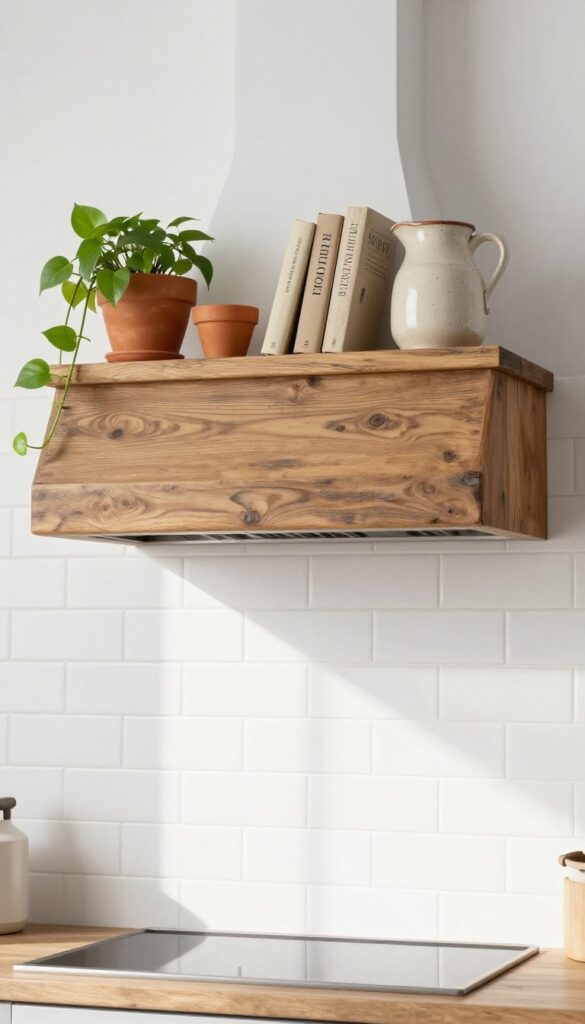
That empty wall above your range hood is prime real estate, especially when you're trying to keep countertops clutter-free. A thick reclaimed wood shelf adds warmth and texture while giving you a spot to stash everyday essentials. It's a smart way to bring farmhouse character into a kitchen without sacrificing an inch of storage.
Mounting a reclaimed wood shelf directly above the hood creates a natural focal point that draws the eye upward, making the kitchen feel taller. The wood's weathered patina and visible grain soften the hard lines of the hood and tile, adding an organic, lived-in feel. This setup works especially well in open-concept kitchens where the shelf becomes part of the sightline from the living area.
Keep the shelf depth around 10–12 inches so it's useful without overwhelming the space. Finish it with a clear matte sealant to protect against grease and steam—easy wipe-downs keep it looking good.
Shelf Styling Tip
Balance function and decor by grouping items in odd numbers. Place a stack of three cookbooks on one end, a small potted herb or trailing pothos in the middle, and a vintage crock or ceramic pitcher on the other. Stick to a neutral palette—warm whites, soft greens, and natural wood tones—to keep the look cohesive and calm.
Storage-smart Detail
- Use the shelf to store items you reach for daily, like cooking oils, salt and pepper mills, or a favorite wooden spoon holder. Add a small wire basket for fruit or garlic cloves. This keeps counters clear and puts everything within arm's reach while cooking.
- Just avoid storing anything that might discolor or warp from heat—keep spices and oils in opaque containers.
Budget-Friendly Swap
If reclaimed wood is out of budget, use new pine boards and distress them yourself with a hammer, chain, or sandpaper. Stain with a weathered gray or warm walnut finish for that farmhouse look. For a quick DIY, buy a pre-made floating shelf in a wood tone that matches your cabinetry or flooring.
6. Hood With a Built-In Spice Rack Insert
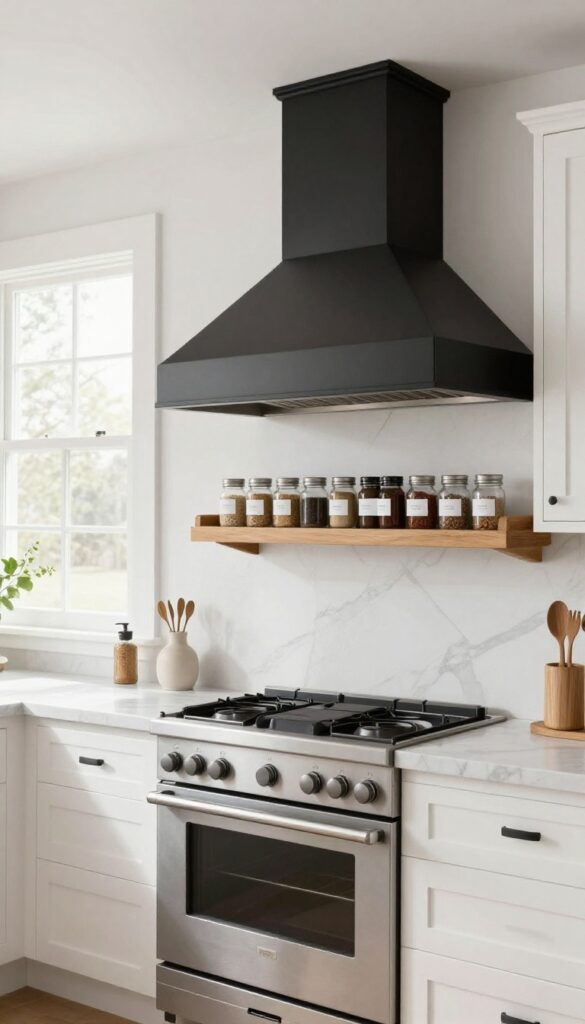
A custom hood with a built-in spice rack is one of those ideas that makes you wonder why it isn’t standard. It tucks your most-used spices right where you need them—above the cooktop—without cluttering the counter or taking up cabinet space. The recessed shelf or pull-out drawer keeps jars organized, visible, and away from direct heat, so your oregano stays fresh and your workflow stays smooth.
It’s a smart, space-aware upgrade that feels custom without screaming for attention.
This hood design blends function with farmhouse charm by adding a dedicated spice storage spot directly into the structure. The recessed shelf works best for shorter jars and daily-use spices, while a pull-out drawer can hold taller bottles and less frequently used ones. Either way, you gain back precious counter and cabinet real estate.
The look stays clean and intentional—spices become part of the decor, not an afterthought. Pair it with a simple metal or wood shelf liner to catch any spills and make cleanup easy.
Best Materials And Finish
Stick with matte black, brushed brass, or stainless steel for the hood body to keep the farmhouse feel grounded. For the spice rack insert, choose a material that contrasts nicely—like warm oak or walnut for a recessed shelf, or a black metal pull-out drawer for a more industrial edge. Avoid glossy finishes that show fingerprints; matte or brushed surfaces hide smudges and look softer against tile backsplashes.
Layout And Storage Tip
Position the spice rack on the side of the hood that faces your prep zone, so you can grab cumin or paprika without reaching across hot burners. Keep the shelf depth at 4 to 5 inches—deep enough for standard spice jars but shallow enough to avoid blocking your view of the cooktop. If using a pull-out drawer, install soft-close slides so it glides quietly and stays put when partially open.
Styling And Finishing Touch
- Arrange spices in uniform jars with clear labels for a cohesive, clutter-free look. Add a small wooden tray or a magnetic strip on the hood’s side for extra storage of metal tins. Keep the area above the spice rack empty or use a single decorative object—like a small ceramic vase or a wooden spoon holder—to avoid visual overload.
- The goal is function that feels intentional, not crowded.
7. Peg Rail Around the Hood Perimeter
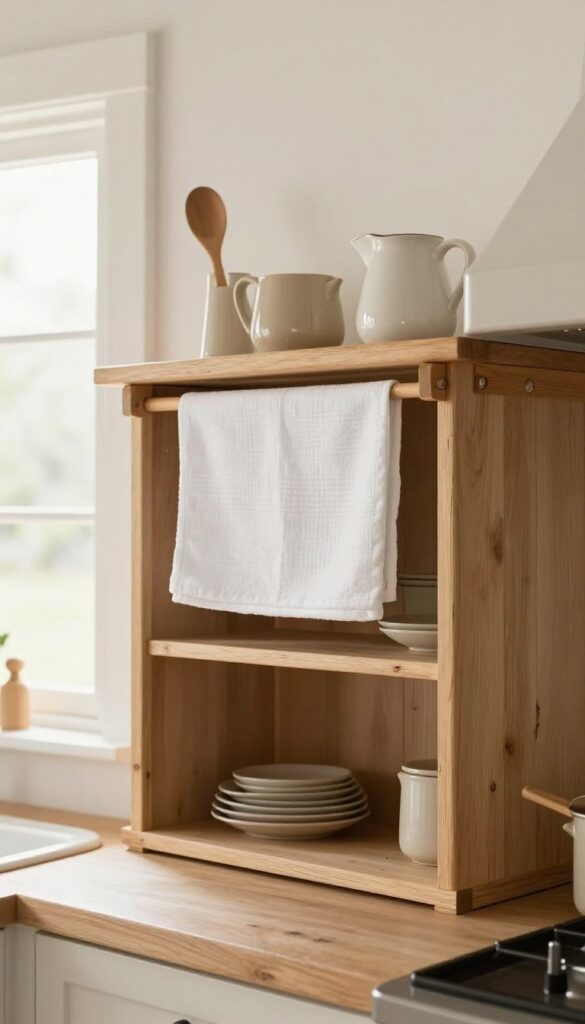
A peg rail wrapped around the hood's outer edge is a clever way to keep everyday tools within arm's reach while adding farmhouse charm. This idea turns an often-overlooked spot into a functional display area, perfect for small kitchens where every inch counts. The warm wood tones soften the hood's bulk and create a cozy, lived-in feel.
Mount a wooden peg rail directly onto the sides or front of your range hood, following its shape for a custom look. Use it to hang measuring cups, dish towels, or small utensils—items you grab often while cooking. This setup keeps countertops clear and adds a decorative touch that feels intentional, not cluttered.
For a cohesive farmhouse aesthetic, choose a rail in the same wood finish as your cabinets or butcher block counters.
Best Materials
Solid wood like oak or pine works best for durability and warmth. A distressed or whitewashed finish complements farmhouse style, while a clear coat keeps it practical for a kitchen environment. Avoid plastic or metal rails if you want that authentic rustic look.
Storage Tip
Hang lightweight items only to avoid straining the hood's structure. Use small S-hooks or leather loops for easy swapping. Rotate seasonal pieces like wooden spoons or herb bundles to keep the display fresh and functional.
Styling Note
Pair the peg rail with open shelving on either side for a balanced, storage-smart kitchen. Keep the rail items sparse—three to five hooks max—so the hood remains the focal point. Add a small trailing plant or a ceramic pitcher for a soft, lived-in touch.
8. Glass-Front Cabinet Over the Hood
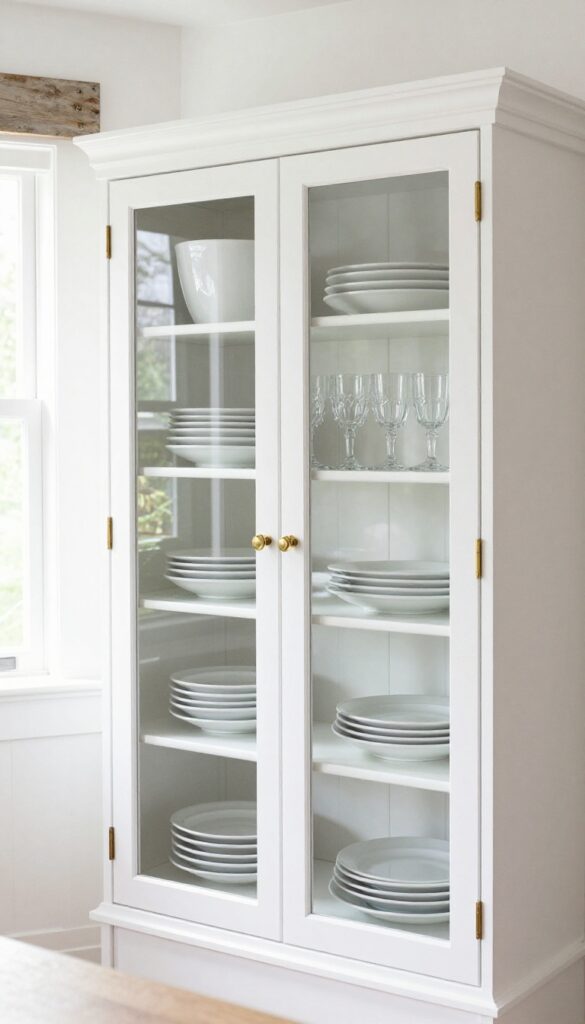
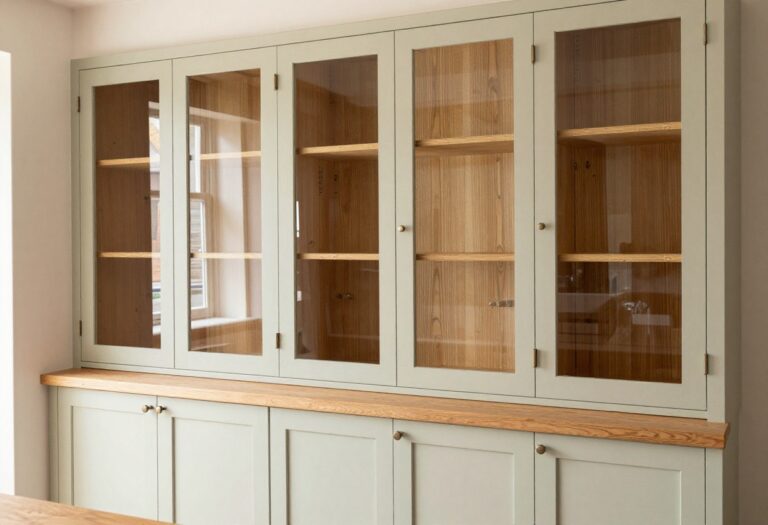
Above the range hood often sits an awkward empty space that’s hard to style. A glass-front cabinet turns that dead zone into a display nook while keeping dishes dust- and grease-free. The transparent door adds visual depth, making the kitchen feel taller and more curated—like a mini hutch built right into the wall.
This idea works especially well in farmhouse kitchens where open shelving is popular but practicality matters. The glass front lets you show off pretty ceramics or glassware without exposing them to constant grease splatters. It’s a smart storage solution that also becomes a focal point.
Choose a cabinet with mullions or a simple frame to match your hood’s style—whether that’s sleek modern or rustic wood. Inside, stick to a cohesive color palette: white ironstone, clear glass, or soft pastels keep the look airy. Add a small LED strip under the cabinet to illuminate your display and create a warm glow above the cooking zone.
Best Colors & Finishes
For a classic farmhouse feel, paint the cabinet the same color as your upper cabinets or go with a soft white to blend in. If you want contrast, try a deep navy or sage green—just make sure the glass front has clean lines so it doesn’t look heavy. Brass or black hardware adds a touch of character without competing with the hood.
Styling Tips For The Display
- Group items in odd numbers and vary heights: a stack of plates, a small vase, and a pitcher. Keep the arrangement simple—too many pieces will look cluttered. Use items you actually reach for, so the cabinet stays functional.
- If you’re worried about grease, stick to glass or ceramic pieces that are easy to wipe down.
Installation & Layout Note
Make sure the cabinet is installed at least 30 inches above the cooktop (check local codes) and that it doesn’t block the hood’s exhaust. A shallow cabinet (around 12 inches deep) works best so it doesn’t protrude too far. If your hood is vented through the wall, you have more flexibility; for ceiling vents, you may need to adjust the cabinet height.
9. Hood With a Fold-Down Drying Rack
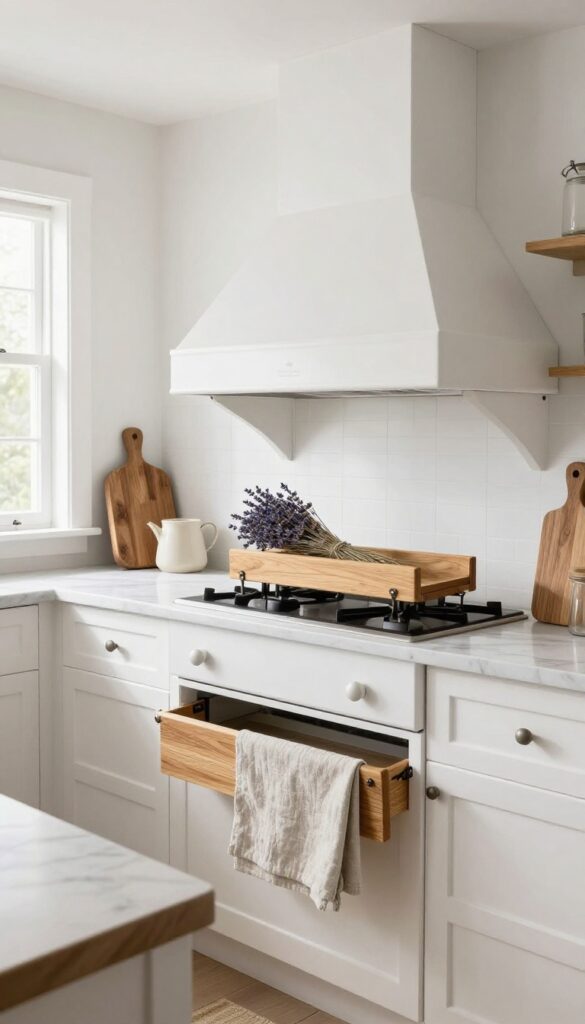
A kitchen hood that doubles as a drying station is the kind of smart detail that makes you wonder why it isn't standard everywhere. By integrating a fold-down rack into the underside or side of the hood, you gain a dedicated spot for drying herbs, delicate dish towels, or even small utensils without sacrificing an inch of counter space. It's a perfect marriage of function and farmhouse charm, especially when the rack is crafted from warm wood or wrought iron.
This idea works best in kitchens where every square inch counts, but it's equally at home in larger spaces that simply value efficiency. The rack folds down when you need it and tucks away when you don't, keeping the visual line of the hood clean and uncluttered. For a cohesive farmhouse look, choose a rack material that complements your hood's finish—think reclaimed oak against a white metal hood, or black iron against a copper or matte black surround.
Best Materials
Go with natural wood like oak or walnut for a warm, rustic feel that softens the metal hood. If you prefer a more industrial edge, wrought iron or black steel adds a sturdy, vintage touch. For easy maintenance, opt for a rack with a clear sealant or powder coating to protect against steam and grease.
Storage Tip
Use the rack primarily for lightweight items—drying herbs, hanging kitchen shears, or draping a clean dish towel. Avoid heavy pots or wet cast iron, as the rack is meant for quick drying, not long-term storage. Place it on the side opposite your main cooking zone to keep it out of the direct splatter zone.
Finishing Touch
Add a small hook or two on the underside of the rack for hanging measuring spoons or a garlic braid. When the rack is folded up, these small extras stay neatly tucked away, adding a subtle layer of farmhouse personality without visual clutter.
10. Baskets on Top of the Hood
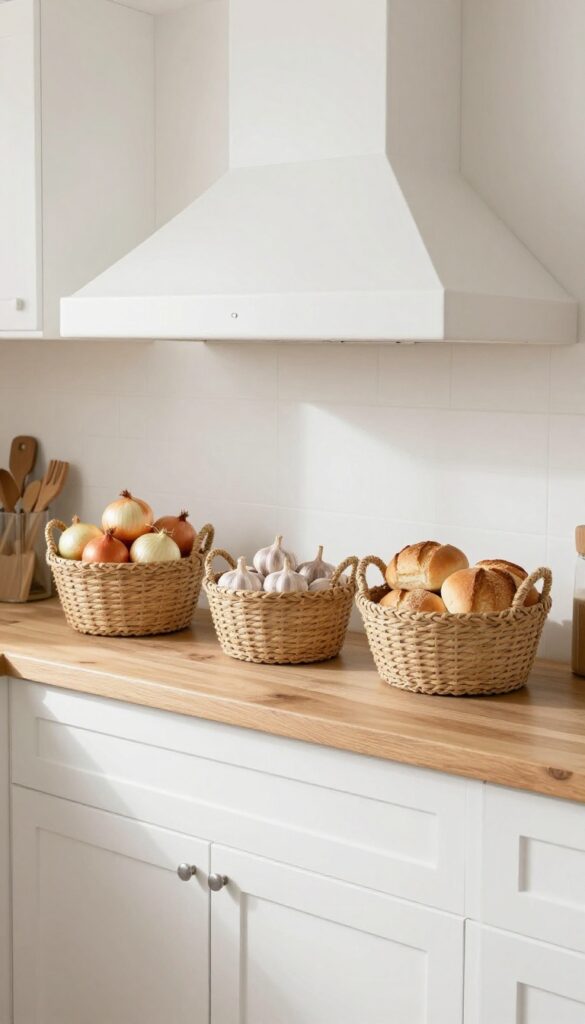
A wide, flat range hood offers prime real estate for storage that’s both functional and decorative. Instead of leaving that surface bare, set a few woven baskets up there to hold kitchen staples you use daily. It turns an often-overlooked spot into a smart, space-saving solution that keeps countertops clutter-free.
Woven baskets bring natural texture and warmth to a kitchen, and placing them on top of the hood makes use of vertical space that usually goes wasted. Choose baskets with sturdy bases and open weaves so you can easily grab onions, garlic, or even bread rolls. The look feels effortlessly farmhouse, especially when the baskets contrast with a white or dark hood.
Keep the arrangement simple—two or three baskets in varying sizes create visual interest without looking crowded. This trick works best on hoods that are at least 6 inches deep and flat across the top. If your hood slopes, look for baskets with flat bottoms that sit securely.
The key is making sure they’re easy to reach and won’t interfere with the hood’s ventilation.
Best Basket Styles
- Stick with natural materials like seagrass, rattan, or water hyacinth for that authentic farmhouse feel. Avoid baskets with tall handles that might block your view or bump into cabinets above. Wide, shallow bowls or rectangular trays work especially well because they hold produce without adding too much height.
- Dark-stained or painted baskets can also work if your kitchen leans more modern rustic.
Storage Tip
- Use the baskets to store produce that doesn’t need refrigeration—think onions, garlic, potatoes, or even apples. Line the bottom with a cloth napkin or paper towel to catch any dirt or moisture. Rotate items regularly so nothing goes bad.
- You can also stash bread, baguettes, or even small kitchen tools like wooden spoons in a taller basket.
Styling The Top
- Keep the arrangement balanced but not too symmetrical. Place the largest basket slightly off-center, then add a smaller one next to it. If you have room, tuck a small potted herb or a sprig of dried lavender between baskets for a soft, lived-in look.
- Just make sure nothing blocks the hood’s controls or vent openings.
11. Side Panels With Hooks for Utensils
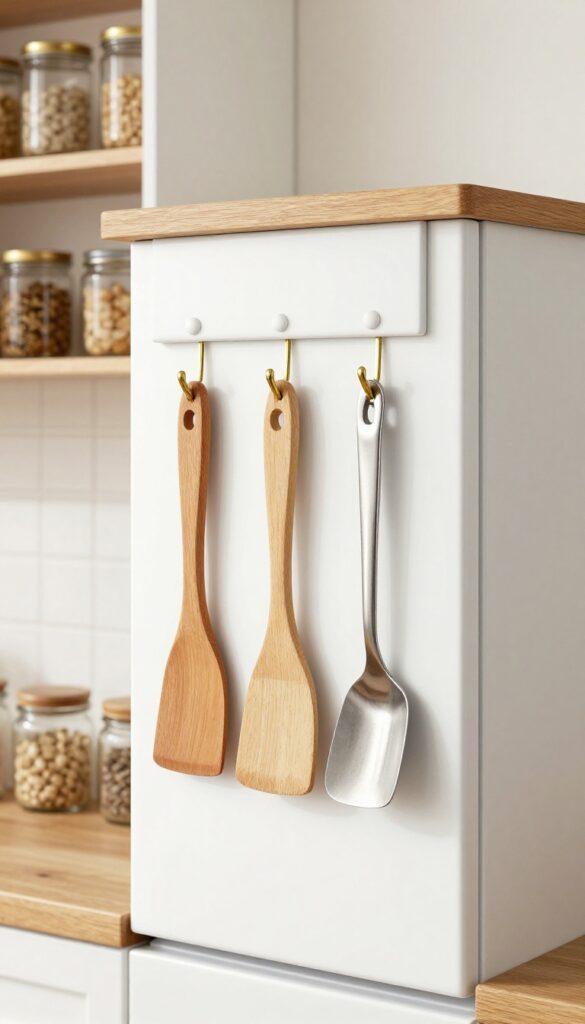
Your kitchen hood doesn't have to be just a workhorse—it can double as a clever storage spot. By adding small hooks to the side panels, you turn an often overlooked surface into a handy home for your most-used cooking tools. It's a simple tweak that keeps spatulas, tongs, and whisks within arm's reach, freeing up drawer space and adding a touch of rustic charm.
This idea works especially well in farmhouse kitchens where open shelving and visible tools are part of the aesthetic. The hooks themselves can be simple cup hooks or small brass ones, blending into the hood's finish. You'll love how convenient it is to grab a whisk mid-stir without rummaging through a drawer.
Plus, it adds a lived-in, functional look that feels intentional.
Best Materials
- Opt for hooks that match your hood's material. For a stainless steel hood, choose brushed nickel or chrome hooks. For a painted or wood hood, go with matte black or antique brass.
- Avoid plastic hooks—they won't hold up to heat or look as polished.
Storage Tip
Place hooks on the side facing your main work area, not the wall. That way, utensils are easy to grab while you're cooking. Stick to lightweight items like silicone spatulas, wooden spoons, and metal tongs to avoid straining the hooks.
Finishing Touch
Keep the look cohesive by choosing utensils in a similar color palette—wood tones, black, or stainless steel. Too many bright plastic handles can feel cluttered. A small grouping of three to five tools looks best, so resist the urge to hang everything.
12. Hood Surround With a Built-In Wine Rack
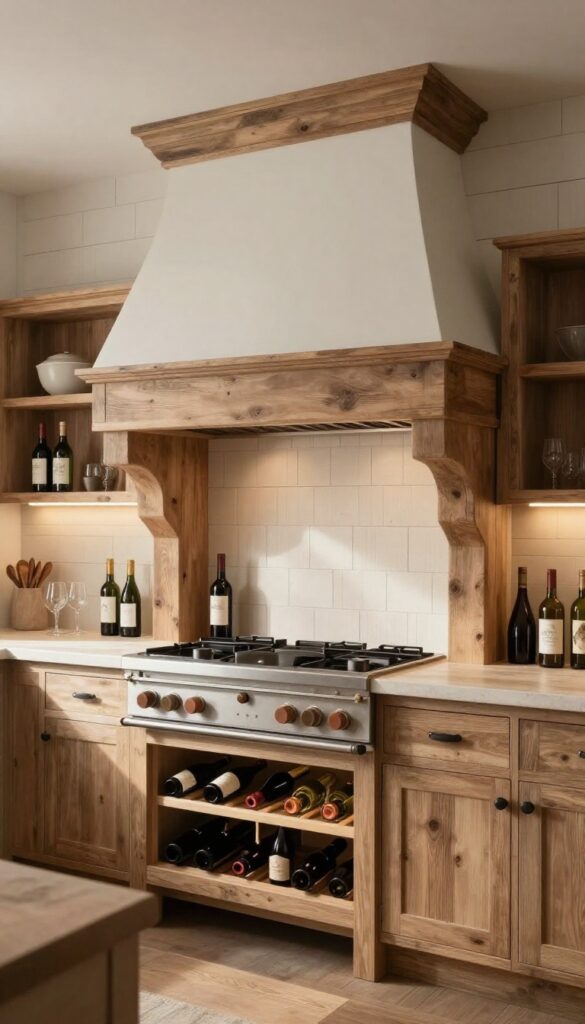
Why let the space around your range hood go to waste? By incorporating a small wine rack into the hood surround, you turn an overlooked area into a functional and eye-catching feature. This idea is perfect for farmhouse kitchens that love a touch of rustic elegance, and it keeps your favorite bottles or stemware within easy reach while cooking.
This storage-smart approach uses the vertical real estate around the hood to hold a few bottles or wine glasses, making it both practical and stylish. The wine rack can be built into the side panels or the top of the surround, depending on your layout. It works especially well in open-concept kitchens where the hood is a focal point, adding a layer of personality without cluttering countertops.
Best Materials
- For a farmhouse feel, choose reclaimed wood or a matte black metal for the wine rack. These materials complement the rustic charm of a farmhouse kitchen while keeping the look intentional. If your hood surround is shiplap or beadboard, a wood rack blends seamlessly.
- For a more modern farmhouse twist, go with iron or steel.
Storage Tip
- Keep the rack shallow—just deep enough for one bottle or a single row of stemware. This prevents the hood area from feeling bulky. Install it on one side only if your hood is off-center, or span the top for a symmetrical look.
- Use stemware hooks underneath a shelf for glasses, and bottle cubbies for wine.
Finishing Touch
Add under-shelf LED strip lighting to highlight the bottles or glasses. This creates a warm glow that makes the wine rack feel like a curated display, not just storage. Choose warm white bulbs to keep the farmhouse ambiance cozy.
13. Chalkboard Panel on the Hood Face
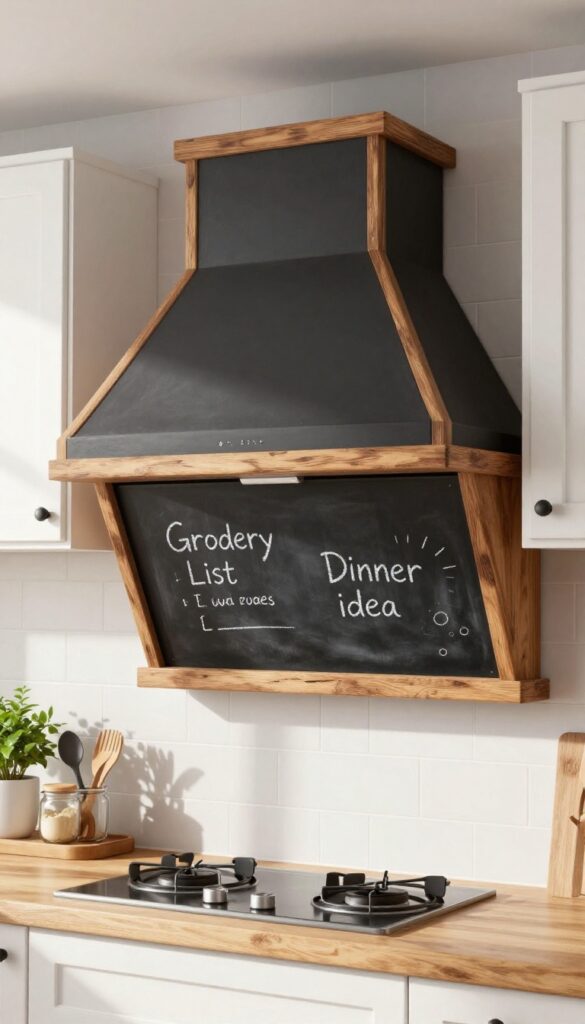
Turning your range hood into a functional message board is one of those ideas that feels both clever and personal. A chalkboard panel on the front face gives you a spot to jot down tonight’s dinner, a grocery list, or a quick note for family members—all without taking up counter space or cluttering the fridge. It’s especially handy in a busy kitchen where you need to keep track of meal plans or reminders right where you cook.
The matte black surface also adds a subtle contrast against lighter cabinetry or backsplash tiles, making the hood stand out in a purposeful way.
A chalkboard hood face works beautifully in farmhouse kitchens that lean rustic or modern. The dark, matte finish grounds the space and gives it a cozy, lived-in feel. You can frame the chalkboard with reclaimed wood or leave it flush with the hood for a sleeker look.
Either way, it turns a purely functional element into a daily tool and a conversation piece. To keep it looking fresh, use liquid chalk markers instead of traditional chalk—they write smoothly, wipe off cleanly, and come in colors that can match your kitchen’s palette.
Best Colors And Finishes
- Stick with classic chalkboard black or dark charcoal for the most contrast and readability. If your kitchen has warm wood tones or cream cabinets, a deep black hood face creates a strong focal point. For a softer look, try a dark green or navy chalkboard paint—still functional but less stark.
- Pair it with a white or light gray backsplash to keep the kitchen feeling open.
Storage Tip
- Mount a small shelf or magnetic strip right below the chalkboard panel to hold chalk, markers, and an eraser. This keeps everything handy without cluttering the counter. You can also attach a tiny clip to hold recipes or a reminder card.
- It’s a smart way to keep the hood area organized and the chalkboard always ready to use.
Finishing Touch
- Add a wooden frame around the chalkboard panel to tie it into farmhouse style. Use reclaimed barn wood or a simple painted trim that matches your cabinets. A frame also protects the edges from chalk dust and gives the hood a built-in, intentional look.
- For extra charm, hang a small piece of twine with a clothespin to hold a weekly menu card.
14. Slim Drawer Below the Hood Trim
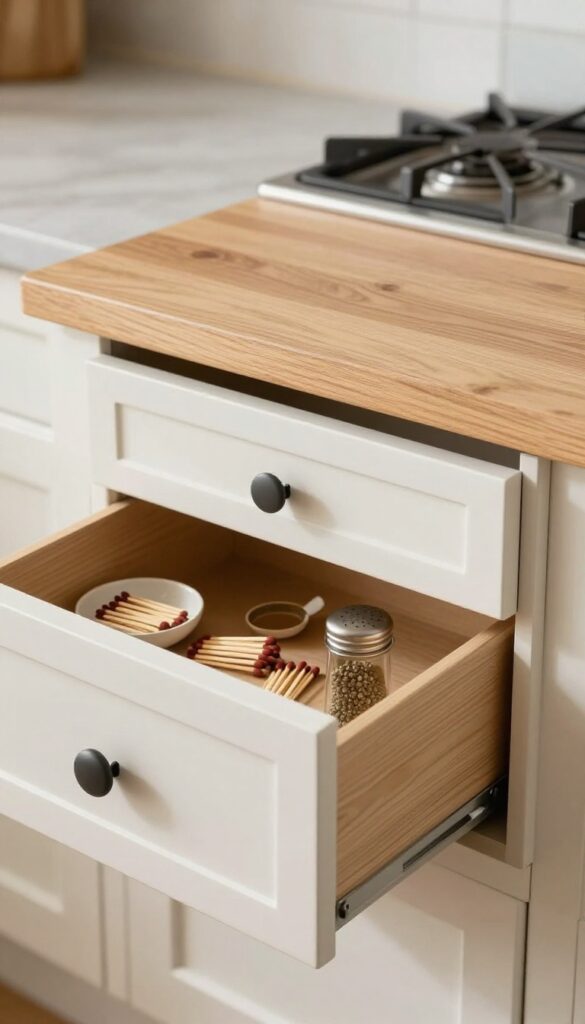
That awkward gap between the bottom of your hood and the cooktop can actually become a clever storage zone. A slim, shallow drawer tucked right under the decorative trim keeps tiny kitchen tools within arm's reach without cluttering your counters. It's one of those details that feels custom and thoughtful, especially in a farmhouse kitchen where every inch of space matters.
Adding a shallow drawer below the hood trim is a smart way to stash small items like matches, trivets, or spice packets that usually end up in a drawer far away. The drawer can be as slim as 2 inches deep, just enough for flat tools and gadgets. It blends seamlessly into the hood's trim, so it doesn't interrupt the farmhouse aesthetic.
This idea works best when the hood has a decorative trim or crown molding that can be extended slightly to house the drawer.
Best Materials
Match the drawer front to your hood material—painted wood for a classic farmhouse look, or same-finish metal for a more industrial vibe. For the drawer box, plywood with a smooth interior is durable and easy to clean. Soft-close slides are a must since the drawer will be used frequently.
Storage Tip
Keep it organized with small dividers or a felt liner. Use the drawer for matches, lighter, trivets, or even a slim spice jar. Avoid heavy items since the drawer is shallow and the hood structure may not support much weight.
Installation Note
This is best planned during a hood installation or renovation. Retrofit options exist but require careful measuring. Work with a carpenter to ensure the drawer slides smoothly without interfering with the hood's ventilation or wiring.
15. Hood With a Hanging Rail for Towels
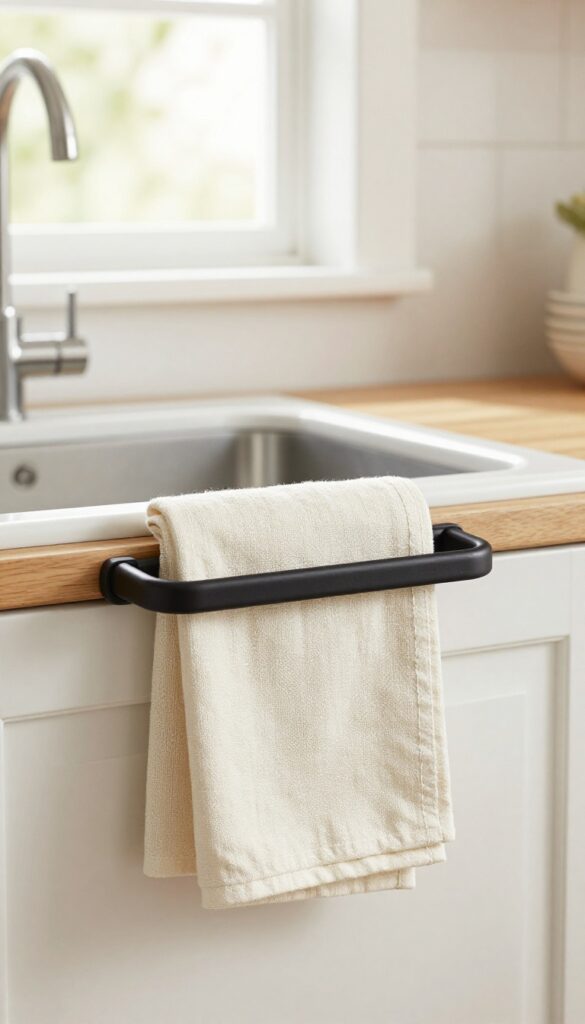
A range hood doesn't have to be just a workhorse—it can pull double duty as a storage spot. Attaching a small towel bar or ring to the side of the hood keeps a dish towel within arm's reach for quick spills and wipedowns, all without eating into precious wall or counter space. It's a small tweak that makes the kitchen feel more organized and efficient, especially in a busy farmhouse-style room where every inch counts.
This idea is all about making the most of vertical real estate. Instead of letting that bare side of the hood go unused, a simple metal bar or ring adds function without clutter. The towel hangs neatly, dries faster thanks to the airflow from the hood, and stays out of the way when you're cooking.
It's a smart, space-saving solution that blends right into the farmhouse aesthetic—especially if you choose a bar in matte black, brushed nickel, or oil-rubbed bronze to match your hardware.
Best Materials
- Go for a bar or ring that complements your hood's finish. Stainless steel, brass, or black iron all work well in farmhouse kitchens. If you want a softer look, a wooden dowel with metal brackets adds warmth.
- Make sure the bar is sturdy enough to hold a damp towel without sagging.
Placement Tip
Mount the bar on the side of the hood that's most accessible from your main work area. Typically that's the side facing the sink or stove. Keep it low enough to grab easily but high enough that the towel doesn't dangle into your cooking zone.
Styling Note
Fold the towel neatly over the bar rather than bunching it up. A crisp, clean line keeps the look intentional. You can also swap towels seasonally—think linen in summer, thicker cotton in winter—to subtly refresh the kitchen's feel.
FAQ
Can I add storage to an existing farmhouse hood?
Yes, many storage additions are DIY-friendly. You can attach magnetic strips, hooks, or small shelves without major construction. Just ensure the hood's surface can support the weight and that you don't block ventilation.
What materials work best for hood storage in a farmhouse kitchen?
Reclaimed wood, wrought iron, and matte black metal complement farmhouse style. For shelves or cabinets, opt for durable, easy-to-clean finishes that can handle heat and grease.
How do I keep stored items clean from grease?
Regular cleaning is key. Use a degreaser on shelves and hooks, and store items in sealed containers if possible. A good range hood with proper ventilation also reduces grease buildup.
Will adding storage affect my hood's performance?
Not if done carefully. Avoid blocking the hood's intake or exhaust. Keep storage at least a few inches away from the cooking surface and ensure airflow isn't restricted.
Are there storage ideas for small farmhouse kitchens?
Absolutely. Slim magnetic strips, small hooks, and narrow shelves work well in tight spaces. Even a tiny pot rack or a single shelf above the hood can make a big difference.
Conclusion
Your farmhouse kitchen hood has more potential than you might think. By weaving in a few smart storage features, you can keep your counters clear and your cooking tools close at hand.
Whether you go for a full built-in or a simple hook, each idea adds both charm and function. Start with one change that fits your space, and let your hood become the hardworking hero your kitchen deserves.