11 Kitchen Wreath Ideas That Add Seasonal Charm Without Cluttering Your Space
Wreaths aren't just for front doors or living rooms. Your kitchen deserves a little seasonal love too, and a well-placed wreath can add warmth and personality without taking up valuable counter or cabinet space.
The trick is choosing designs that work with your kitchen's flow, not against it. Think about spots that are often overlooked: the side of a cabinet, a narrow wall between windows, or even the front of a pantry door.
A wreath in these areas brings color and texture without interfering with your daily cooking routine. And when you pick styles that double as storage or are easy to swap out, you keep things practical.
1. Herb Wreath That Doubles as a Recipe Holder
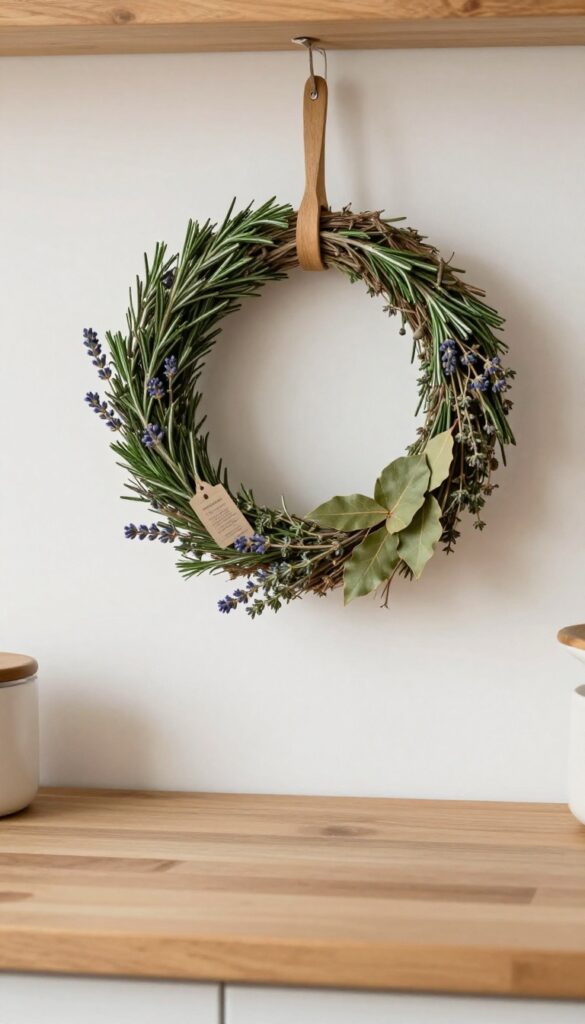
A wreath made from dried herbs brings a subtle, earthy fragrance into your kitchen while adding a touch of rustic charm. But this one does more than just look pretty—it becomes a handy spot to keep recipe cards or small utensils within arm's reach. Hang it near your prep area, and you'll have a functional focal point that saves drawer space and keeps your counters clutter-free.
Dried herb wreaths are surprisingly easy to make or buy, and they work with almost any kitchen style. The key is choosing herbs that dry well and keep their color, like rosemary, thyme, lavender, or bay leaves. Once your wreath is in place, simply tuck recipe cards into the stems or use mini clothespins to clip them on.
You can also hang lightweight kitchen tools like wooden spoons or herb scissors from the wreath for extra storage. This idea is especially smart for small kitchens where every inch counts—it turns an often-empty wall into a multitasking zone.
Best Herbs To Use
- Rosemary holds its shape and color beautifully when dried, while thyme adds delicate texture. Lavender brings a soft purple hue and a calming scent. Bay leaves are sturdy and classic.
- Mix in a few dried flowers like echinacea or statice for visual interest. Avoid herbs that crumble easily, like dill or parsley, unless you're okay with a shorter lifespan.
Placement And Hanging Tip
Hang the wreath near your main food prep area—above a counter, beside the stove, or on a wall adjacent to your cutting board. Use a sturdy hook or ribbon that complements your kitchen hardware. Make sure it's not directly above a heat source or steamy sink, as moisture can cause the herbs to mold or lose color faster.
Styling And Rotation
Pair the wreath with a simple wooden or metal hoop for a clean look. As the herbs fade over a few months, swap them out seasonally—try citrus slices and cinnamon sticks in winter, or wildflowers in spring. This keeps the wreath fresh and your kitchen decor evolving without much effort.
2. Slim Eucalyptus Ring for Narrow Wall Spaces
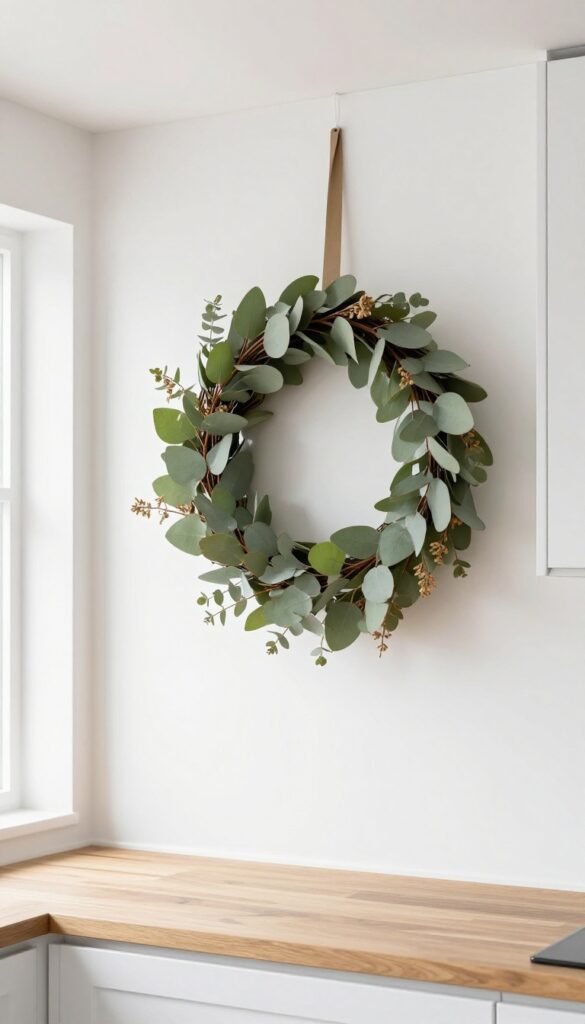
Not every kitchen has sprawling wall space for a grand wreath. That slim gap between your upper cabinets and the ceiling, or the narrow strip beside a window, often goes unnoticed. A thin eucalyptus ring solves that problem without overwhelming the area.
Its muted green adds a fresh, natural touch that feels light and airy, and the best part? It stays beautiful for months with almost no effort.
A slim eucalyptus ring is the perfect solution for those awkward narrow spaces in a kitchen. It brings in greenery without the bulk of a traditional wreath, making it ideal for tight spots. The eucalyptus holds its color well, so you can enjoy it for months.
Plus, its subtle scent adds a gentle freshness to the room. Hang it with a simple ribbon or a clear command hook for a clean look.
Best Placement
Look for vertical gaps like the space between upper cabinets and the ceiling, beside a window, or on a narrow wall between two cabinets. It also works well on the side of a refrigerator or on a slim pantry door. The key is to use spots that usually feel empty or awkward.
Color And Texture
Eucalyptus offers a soft, silvery green that pairs beautifully with white kitchens, warm wood tones, or even bold cabinet colors. For extra texture, choose a ring that mixes seeded eucalyptus with smaller leaves. It adds depth without looking busy.
Maintenance Tip
Eucalyptus dries naturally and holds its shape, so you don't need to water it. Keep it out of direct sunlight to prevent fading, and give it a gentle shake every few weeks to remove dust. If it starts to look tired, a light spritz of water can revive it temporarily.
3. Magnetic Wreath for the Refrigerator Door
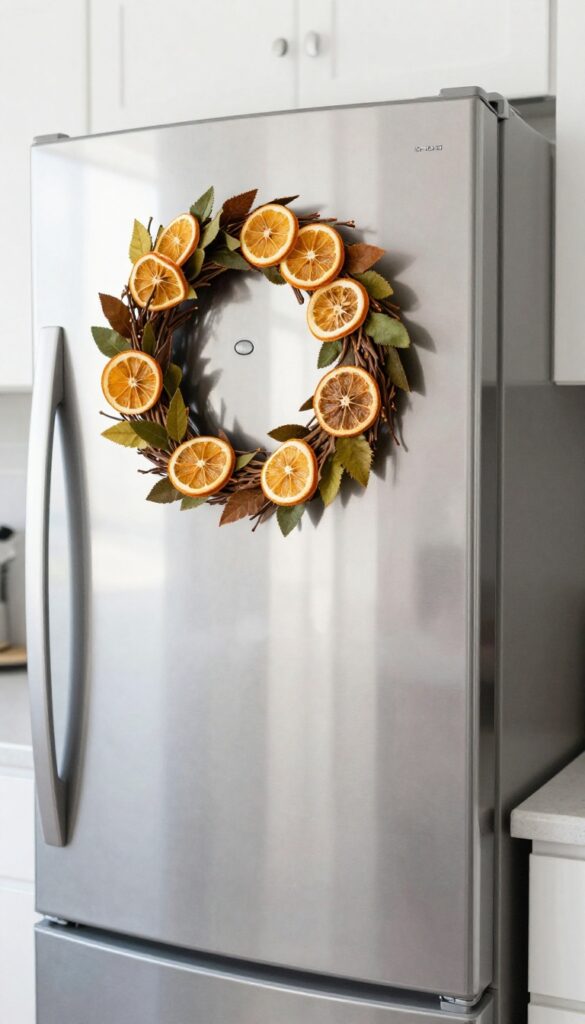
Your refrigerator door is prime real estate for seasonal decor, especially if counter and wall space are tight. A small magnetic wreath brings festive charm to the heart of your kitchen without taking up a single inch of surface area. It's also incredibly easy to swap out or move around whenever the mood strikes.
Skip the wall space and hang a small wreath on your fridge using strong magnets. Use a lightweight base like grapevine or foam, and decorate with mini ornaments or dried citrus. It's a fun, movable accent that frees up wall real estate.
Best Materials
Go with a lightweight base—grapevine, foam, or even a thin wire ring. Heavy materials can pull the magnets off or scratch the fridge. Stick to small, lightweight decorations like mini baubles, dried orange slices, or fabric leaves.
Magnet Hack
Hot-glue strong neodymium magnets to the back of the wreath base. Use at least three magnets spaced evenly for stability. Test the hold before adding decorations, and avoid placing the wreath near the fridge handle where it might get bumped.
Styling Tip
Keep the wreath small—6 to 8 inches in diameter—so it doesn't overwhelm the door. Match the color scheme to your kitchen's palette for a cohesive look. For example, white and silver tones work well in a modern kitchen, while warm reds and greens suit a farmhouse style.
4. Utensil Wreath with Built-In Hooks
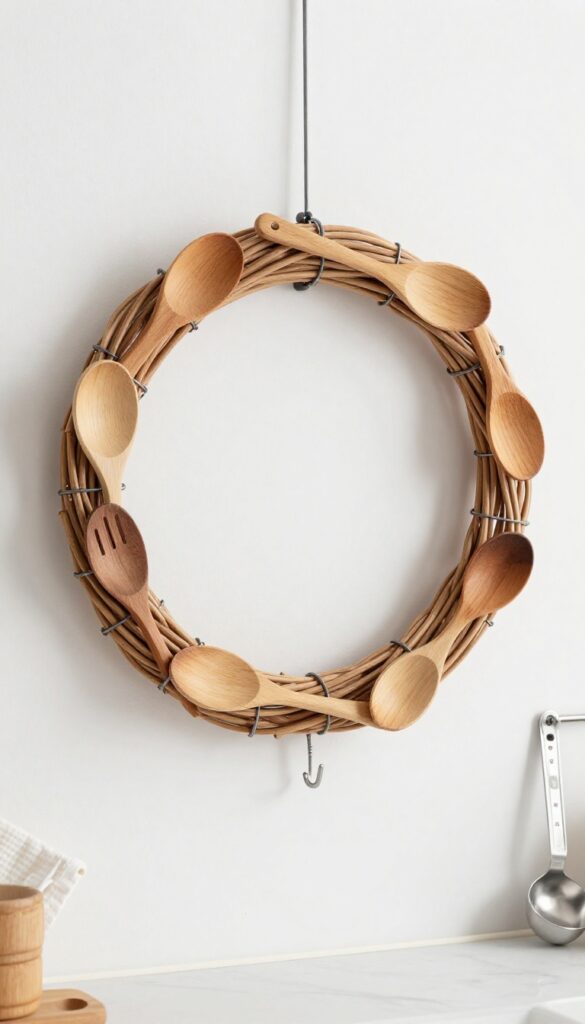
Turn everyday kitchen tools into a storage-savvy wreath that pulls double duty. By arranging wooden spoons or metal spatulas in a circle, you create a sculptural ring that’s both decorative and functional. Add small hooks along the bottom or inside the ring, and suddenly you have a spot to hang measuring spoons, dish towels, or even a small apron.
It’s a clever way to keep often-used tools within arm’s reach while making a statement on a blank wall or door.
A utensil wreath works best in a kitchen where counter space is tight but wall space is available. Hang it near the prep area so you can grab a spatula or towel without digging through drawers. The mix of materials—wood, metal, or silicone—adds texture and visual interest, while the circular shape softens the straight lines of cabinets and countertops.
For a cohesive look, choose utensils in a similar finish, like all stainless steel or all natural wood. If you prefer a pop of color, use utensils with painted handles that match your kitchen’s accent hue.
Best Materials
- Wooden spoons bring warmth and a rustic feel, while metal spatulas offer a sleek, modern look. Silicone tools add a playful splash of color and are heat-resistant, making them practical near the stove. For durability, use a sturdy wire or grapevine wreath form as the base, then attach utensils with hot glue or thin wire.
- If you want the wreath to be fully functional, choose lightweight utensils that won’t pull the hooks loose.
Storage Tip
- Place hooks on the lower half of the wreath so hanging items don’t block the utensils above. Use S-hooks or small cup hooks that can hold dish towels, oven mitts, or measuring cups. To keep the look tidy, limit hanging items to two or three—too many will make the wreath feel cluttered.
- Rotate items seasonally, like swapping in a mini whisk for a ladle, to keep the wreath feeling fresh.
Finishing Touch
Add a ribbon or twine bow at the top to soften the industrial edge and make the wreath feel more like decor. For a cohesive color flow, choose a ribbon that picks up a secondary color from your kitchen, like a soft sage green or warm terracotta. If the wreath hangs on a door, consider a small battery-operated LED light ring behind it to cast a gentle glow in the evening.
5. Mini Wreath Trio on a Cabinet Front
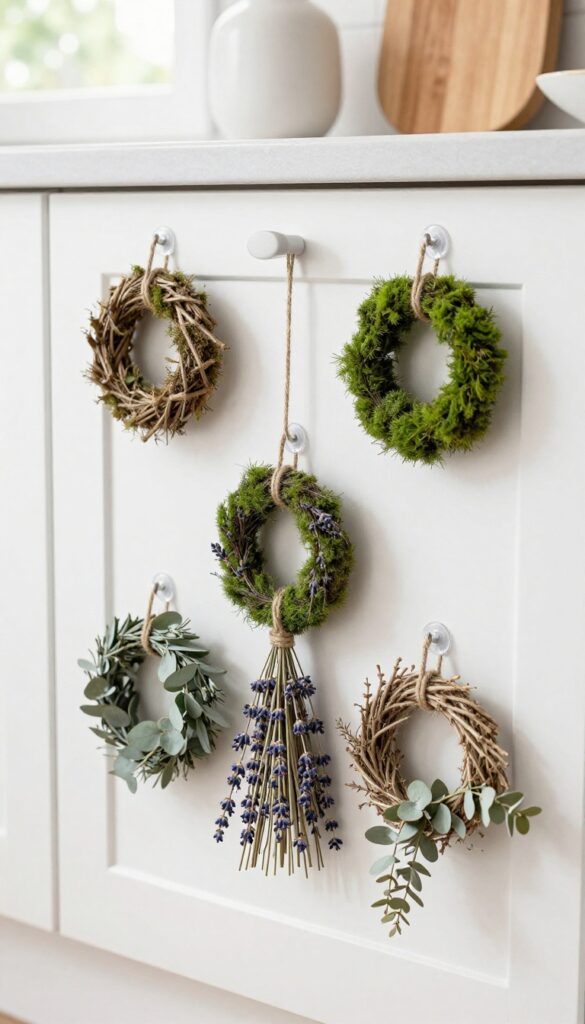
Cabinet fronts are prime real estate for seasonal decor, especially when you work in a vertical line. Three tiny wreaths—each with a different texture like moss, twine, and dried flowers—create a miniature gallery that feels curated, not cluttered. This smart arrangement uses vertical space without blocking access to the cabinet, making it ideal for kitchens where every inch counts.
Instead of one large wreath that might overwhelm a cabinet door, three small ones hung in a row add charm and depth. The varied textures—soft moss, rustic twine, and delicate dried flowers—keep the eye moving and make the display feel intentional. Because they’re small, they won’t bump into handles or get in the way when you open the cabinet.
This idea works especially well on a narrow cabinet next to the range or on a pantry door where you want a seasonal touch without sacrificing function.
Best Materials
- Stick with natural, lightweight materials that won’t strain cabinet hinges. Moss wreaths (about 4–5 inches wide) give a soft, organic feel. Twine or grapevine wreaths add texture and a neutral base.
- Dried flower wreaths in muted tones like lavender, eucalyptus, or wheat bring in color without being too bold. Avoid heavy plastic or metal frames—they can scratch cabinet doors and feel less warm.
Hanging Tip
- Use clear adhesive hooks or small Command strips rated for lightweight items. Place them in a straight vertical line, spacing the wreaths about 2–3 inches apart. Make sure the hooks are centered on the cabinet door so the wreaths hang evenly.
- For a no-drill solution, try mini wreath hangers that loop over the top edge of the door—just check that they don’t interfere with the cabinet seal.
Cabinet Styling Note
- Keep the rest of the cabinet surface clean and simple. A trio of wreaths already draws the eye, so skip adding knickknacks or magnets nearby. If your cabinet has a handle, offset the wreaths slightly to one side so they don’t crowd the hardware.
- This arrangement also works beautifully on a glass-front cabinet—the wreaths will pop against the transparency.
6. Chalkboard Wreath for Weekly Menus
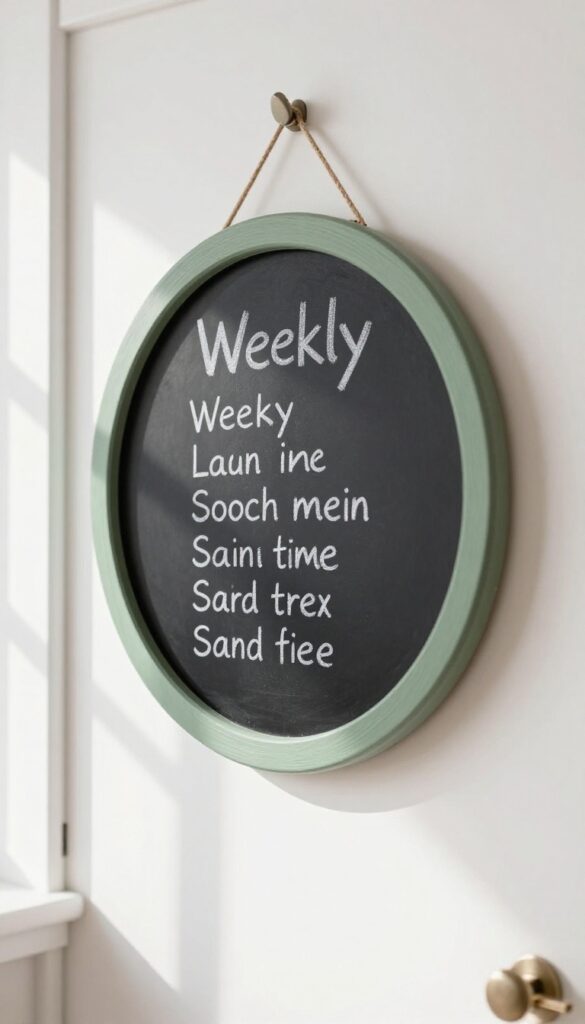
A chalkboard wreath brings together two things every kitchen needs: a dose of charm and a place to keep track of the week. Instead of a standard wreath made of greenery or ribbon, this one uses a circular chalkboard surface that you can write on and erase as often as you like. Hang it on a pantry door or an empty stretch of wall, and suddenly you have both a decorative focal point and a practical planning tool.
It cuts down on those sticky notes that always seem to multiply on the fridge, and it looks intentional instead of messy.
The chalkboard wreath is a clever twist on traditional door decor. Its round shape mimics a classic wreath, but the surface is all function. You can sketch out the week's dinners, jot down a grocery list, or write a seasonal greeting—then wipe it clean and start over.
The frame can be simple wood, ornate metal, or even a grapevine base painted with chalkboard paint. This idea works especially well in kitchens that lean farmhouse, modern rustic, or even minimalist, since the chalkboard surface can be as clean or as busy as you want it to be.
Best Colors And Finishes
- For a cohesive look, match the frame to your kitchen's hardware or cabinet pulls. A black chalkboard with a brass or copper frame adds warmth against white cabinets. If your kitchen has black fixtures, go for a dark wood frame for a more subtle contrast.
- You can also paint the frame in a color that ties into your backsplash or accent wall—think sage green, navy, or even a soft terra-cotta. The chalk itself becomes part of the decor, so use white or pastel chalk for a softer look.
Where To Hang It
- The best spot is a door that gets frequent traffic, like the pantry door or the side of a cabinet. Avoid placing it near the stove or sink where steam and splatters could smudge the chalk. If you have a narrow wall between countertops, that's another great option—just make sure it's at eye level so writing is comfortable.
- For a small kitchen, this wreath can double as a message center, replacing a separate bulletin board or calendar.
Storage-smart Styling Tip
- Keep a small tray or magnetic container nearby with chalk and an eraser. You can attach a tiny hook to the bottom of the wreath frame or place a small shelf underneath. This way, everything stays organized and you never have to hunt for a piece of chalk.
- If you want to go a step further, use chalk markers for a bolder, smudge-free look—just test them first to make sure they erase cleanly from your specific chalkboard surface.
7. Tiered Wreath with Small Storage Baskets
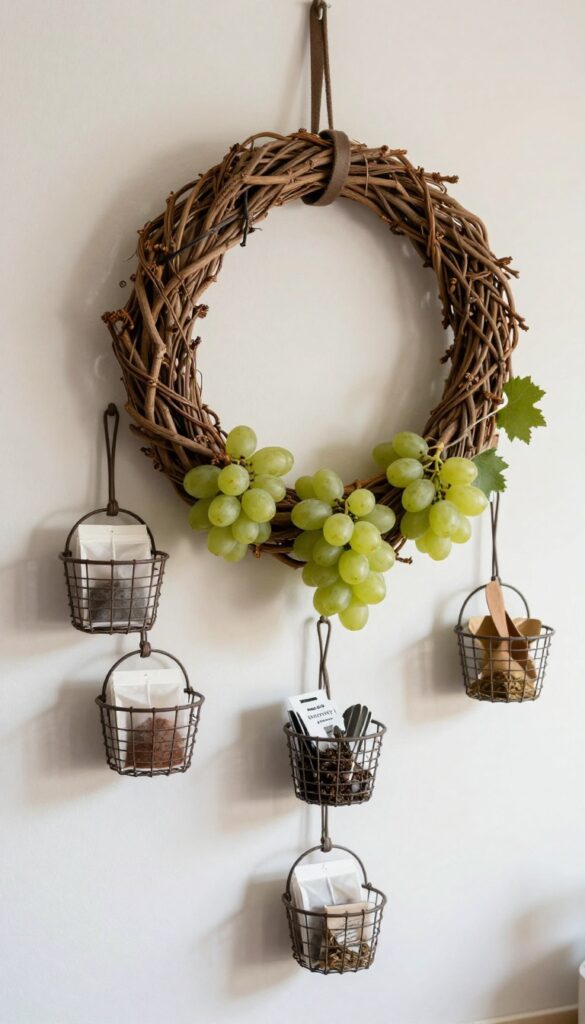
A wreath doesn't have to be purely decorative. This tiered design uses a grapevine base and tiny wire baskets to create a vertical storage spot that's both charming and useful. Hang it near your coffee station or spice rack, and you'll have everyday essentials within easy reach while adding a rustic, layered look to your wall.
Start with a plain grapevine wreath as your foundation. Attach small wire baskets—the kind you'd use for gift wrapping or farmers market finds—at different heights around the wreath using zip ties or floral wire. Space them evenly so the wreath feels balanced, not cluttered.
Fill each basket with lightweight items like tea bags, spice packets, or small kitchen tools. The result is a wreath that works as hard as you do, turning an empty wall into a functional organizer without sacrificing style.
Best Materials
- Grapevine wreaths offer a natural, textured base that pairs well with galvanized or black wire baskets. If you prefer a cleaner look, use a preserved boxwood wreath instead. Stick with baskets that have a flat back so they sit flush against the wreath.
- Avoid heavy ceramics or glass—stick to metal or lightweight wood to keep the wreath manageable.
Storage Tip
Reserve the baskets for items you grab daily: coffee pods, sugar packets, or small measuring spoons. For a cohesive look, line each basket with a small cloth napkin or piece of burlap to hide the wire holes and soften the display. Rotate the contents seasonally—think cinnamon sticks and star anise in fall, fresh herbs in summer.
Small-space Fix
- This wreath shines in tight kitchens where counter space is limited. Hang it on the inside of a pantry door, beside the stove, or above a narrow console table. Keep the overall diameter under 18 inches so it doesn't overwhelm the wall.
- Pair it with a simple ribbon or jute hanger to let the baskets take center stage.
8. Seasonal Swag Over the Sink Window
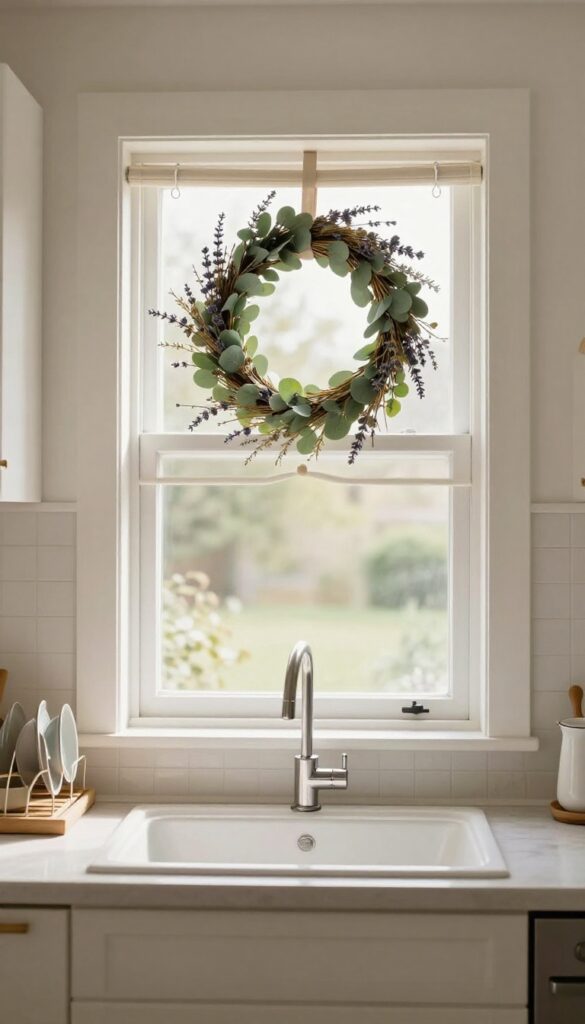
The spot above your kitchen sink window is prime real estate for a little seasonal charm. A swag-style wreath draped across the top adds softness without blocking the view or taking up counter space. It’s a simple way to make dish duty feel less like a chore and more like a moment to enjoy your kitchen’s personality.
Go with faux greenery or dried lavender for a low-maintenance touch that lasts all season.
Draping a swag above the sink draws the eye upward, making the window feel taller and the kitchen more open. It’s a smart storage-friendly move because it uses vertical space that’s otherwise empty. Choose a lightweight swag that won’t block light or window function.
Secure it with small Command hooks on the window frame or a tension rod if you want to swap it out easily. This idea works especially well in kitchens with limited wall space, adding decor without clutter.
Best Materials For Long-lasting Style
- Faux greenery like eucalyptus or boxwood holds its shape and color, even near steam from the sink. Dried lavender or preserved moss adds texture and a subtle scent without needing water. Avoid fresh wreaths here—they’ll dry out faster from heat and humidity.
- A mix of matte and glossy leaves creates depth without looking fake.
Placement And Hanging Tips
Position the swag so it sits just above the window trim, not overlapping the glass too much. Use two clear adhesive hooks on the top corners of the frame, or a thin tension rod inside the window casing if you want to swap seasonally. Keep the ends slightly asymmetrical for a relaxed, natural feel.
Seasonal Swap Ideas
- For fall, try a swag of dried orange slices and cinnamon sticks. Winter calls for frosted pine and white berries. Spring brings soft pastel blooms, and summer works with bright sunflowers or simple cotton stems.
- Store each swag in a labeled bin to make switching effortless.
9. Wreath with Interchangeable Fabric Sleeves
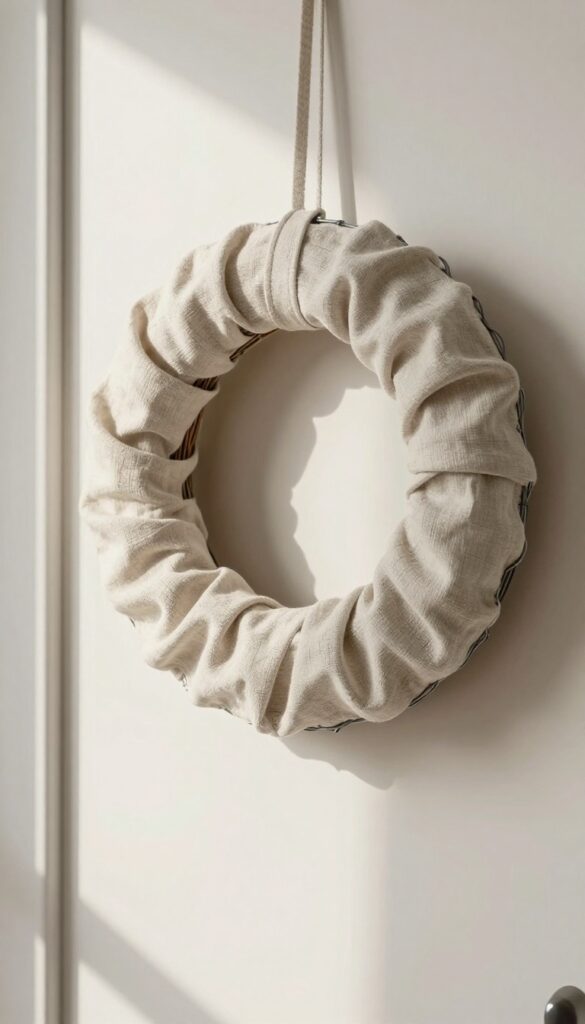
Swap your kitchen wreath with the seasons without storing a bunch of bulky rings. A base wreath with a removable fabric cover lets you change the look in seconds. Just slide off the old sleeve, slip on a new one, and you're done.
The extras fold flat in a drawer, so no closet chaos.
Start with a simple wire or foam wreath form as your base. Then sew or buy fabric sleeves that fit snugly over it. For a no-sew version, cut fabric strips and tie them around the hoop.
Each season gets its own fabric: linen for spring, burlap for fall, plaid for winter. When it's time to switch, just remove the sleeve and store it flat. The wreath form stays on the door or wall, so you're not re-hanging anything.
This system is perfect for small kitchens where storage space is tight. You can even make a set of sleeves for holidays and everyday looks.
Best Fabrics For Long-lasting Sleeves
- Choose fabrics that hold up to sunlight and occasional dust. Cotton canvas, linen, and cotton blends work well. Avoid anything too stretchy or flimsy—it won't keep its shape.
- For a rustic feel, use burlap or osnaburg. If you want a polished look, go with a medium-weight cotton in a solid color or subtle pattern. Pre-wash the fabric to prevent shrinking later.
Storage Tip For Flat Sleeves
- Fold each sleeve neatly and store it in a labeled zip-top bag or a slim folder. Keep them in a kitchen drawer or a small bin in a cabinet. Since they're flat, they take up almost no space.
- You can even tuck them between cookbooks on a shelf. No more wrestling with giant wreath boxes in the attic.
Seasonal Color Flow
- Match your fabric sleeve to the season's palette. Spring: soft pastels like blush, sage, or butter yellow. Summer: bright citrus or nautical navy and white.
- Fall: warm rust, mustard, or deep olive. Winter: classic red and green or icy silver and white. For a cohesive look, tie a small ribbon or add a few faux stems to the sleeve for extra texture.
10. Spice Jar Wreath for Open Shelving
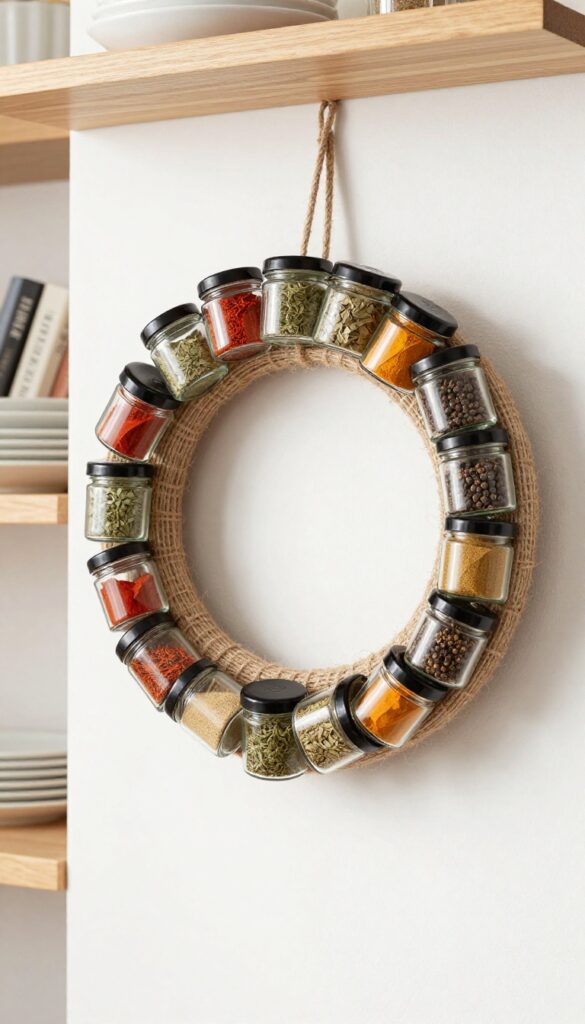
Open shelving in the kitchen is great for displaying pretty dishes and cookbooks, but it can also be a smart spot for spices—if you make them look intentional. A spice jar wreath does exactly that. By gluing small spice jars around a foam wreath form, you create a circular, space-saving organizer that doubles as wall art.
Hang it near your stove or on a blank wall beside your shelves, and you'll have your most-used seasonings visible and within arm's reach. It's a clever way to blend storage with decor, especially in kitchens where counter space is tight.
This wreath isn't just for Christmas—it works year-round as a functional accent. Choose uniform jars (like small apothecary bottles or mini mason jars) for a cohesive look, and fill them with spices you reach for daily, like salt, pepper, oregano, or paprika. The circular shape breaks up the straight lines of open shelving, adding visual interest without clutter.
Plus, it keeps your spices off the counter and neatly displayed, making cooking feel more streamlined.
Best Colors And Materials
- Stick with a neutral or monochrome palette to keep the wreath looking polished. Clear glass jars with black or white lids work well, or you can spray-paint the lids in a single metallic finish like brass or matte black for a cohesive look. The foam wreath form should be covered in a material that complements your kitchen—think jute twine for a rustic vibe, or a thin strip of leather or fabric for a sleeker feel.
- Avoid mixing too many jar shapes; uniformity makes the wreath read as intentional decor rather than a hodgepodge.
Layout And Placement Tip
- Hang the wreath on a wall that's visible from your main cooking area, but not directly in the path of steam or splatter. A spot beside the range hood or on an empty wall near open shelving works perfectly. If your kitchen has a dedicated coffee or tea station, this wreath can also hold spices for chai or cinnamon for oatmeal.
- For a more layered look, pair the wreath with a small floating shelf underneath to catch any drips or extra jars.
Storage-smart Finishing Touch
- To make the wreath even more functional, label the jar lids with a chalk marker or small adhesive labels. That way, you can quickly grab the right spice without squinting. If you cook with a lot of spices, consider making two smaller wreaths instead of one large one—hang them side by side for a balanced display.
- And if you're worried about dust, give the jars a quick wipe with a damp cloth every week or so. It's a low-maintenance way to keep your kitchen both organized and charming.
11. Foldable Wreath That Stores Flat
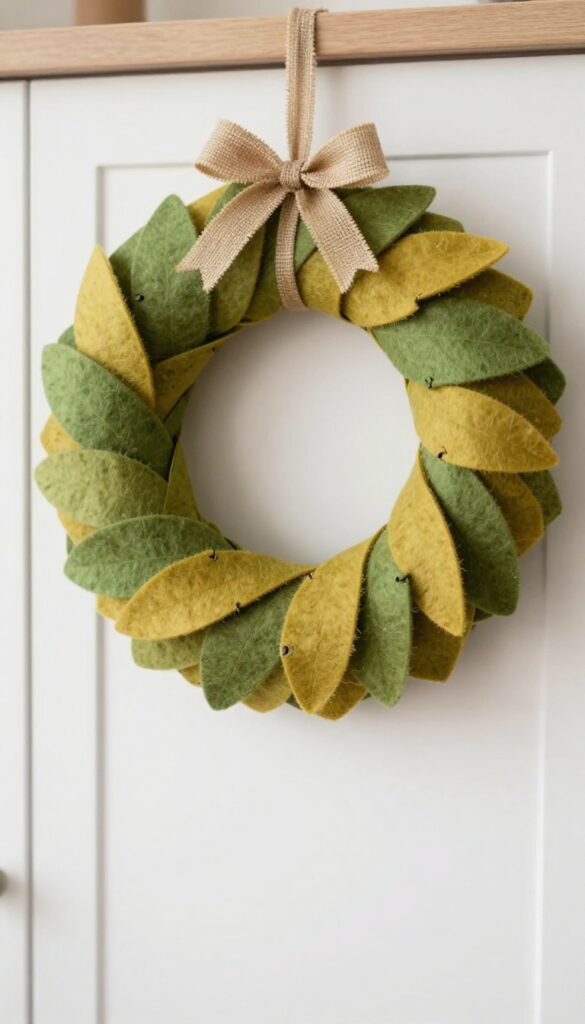
Seasonal wreaths add charm but can be a pain to store. Traditional wire or foam wreaths take up bulky boxes and get crushed or tangled. A foldable wreath solves that problem with hinged sections that collapse flat.
It’s a smart, space-saving solution for small kitchens or anyone who rotates decor frequently.
This wreath is designed with two or three hinged sections that fold together like a book. When open, it forms a full circle or oval. When closed, it stacks flat for easy storage in a drawer or bin.
The base is a flexible material like bendable wire or thin plywood, covered with felt or fabric leaves. You can customize the colors to match your kitchen’s palette—think olive green and mustard for fall, or soft pink and eucalyptus for spring. The hinges are hidden behind the foliage, so the wreath looks seamless when displayed.
Hang it on a cabinet door, above the sink, or on a wall hook. When the season ends, just fold and tuck away.
Best Materials
- Use a lightweight, flexible base like wire or thin plywood. Cover with felt leaves or fabric flowers that won’t shed. Avoid heavy materials like real pinecones or thick wood slices that make folding difficult.
- Felt is ideal because it’s soft, durable, and comes in many colors.
Storage Tip
Store the folded wreath in a flat bin or large envelope. Keep it away from moisture to prevent warping. If you make multiple wreaths for different seasons, label each one so you can grab the right one quickly.
Finishing Touch
Add a small ribbon or hook at the top for hanging. Choose a ribbon that complements the wreath colors—like a burlap bow for rustic kitchens or a satin ribbon for modern ones. The ribbon can also be folded flat with the wreath.
FAQ
Can I hang a wreath in a small kitchen without it feeling cramped?
Absolutely. Choose slim or mini wreaths and place them in vertical spaces like cabinet fronts, the side of a fridge, or above a window. Avoid bulky designs that stick out too far.
What materials work best for a kitchen wreath that won't get damaged by humidity?
Faux greenery, dried herbs, metal, and treated wood hold up well. Avoid fresh flowers or paper elements near the stove or sink where steam and heat can cause wilting or warping.
How do I keep a wreath from taking up counter or storage space?
Use wreaths that double as storage, like those with hooks or pockets. Or choose foldable designs that store flat. Hang them on walls, doors, or the fridge to keep surfaces clear.
Can I use a wreath to organize small kitchen items?
Yes. Wreaths with built-in hooks, baskets, or spice jars can hold utensils, tea bags, or spices. They add decor while keeping essentials handy and off the counter.
How often should I change my kitchen wreath?
Seasonal updates work well—every 3 to 4 months. For a low-maintenance option, choose a neutral design like eucalyptus or herbs that works year-round with small accent swaps.
Conclusion
Your kitchen doesn't need a lot of extra room to feel festive. With a little creativity, a wreath can become a functional part of your space—adding seasonal charm while helping you stay organized.
Whether you hang a mini herb ring on a cabinet or a magnetic wreath on the fridge, these ideas prove that smart decor works harder. Start with one idea that fits your kitchen's layout and your daily habits.