10 Tiny Apartments: Small Open Kitchen and Living Room Ideas for a Weekend Refresh
Living in a tiny apartment with an open kitchen and living room can feel like a design challenge. But with a few smart tweaks, you can make the space feel bigger, cozier, and totally you. The best part?
You don't need a full renovation or a big budget. These ideas are all about weekend-friendly changes that bring warmth and personality.
Think soft textures, clever storage, and layout tricks that make every square foot count. Whether you're renting or own, these tips are easy to pull off and instantly refreshing.
1. Use a Rug to Define Zones
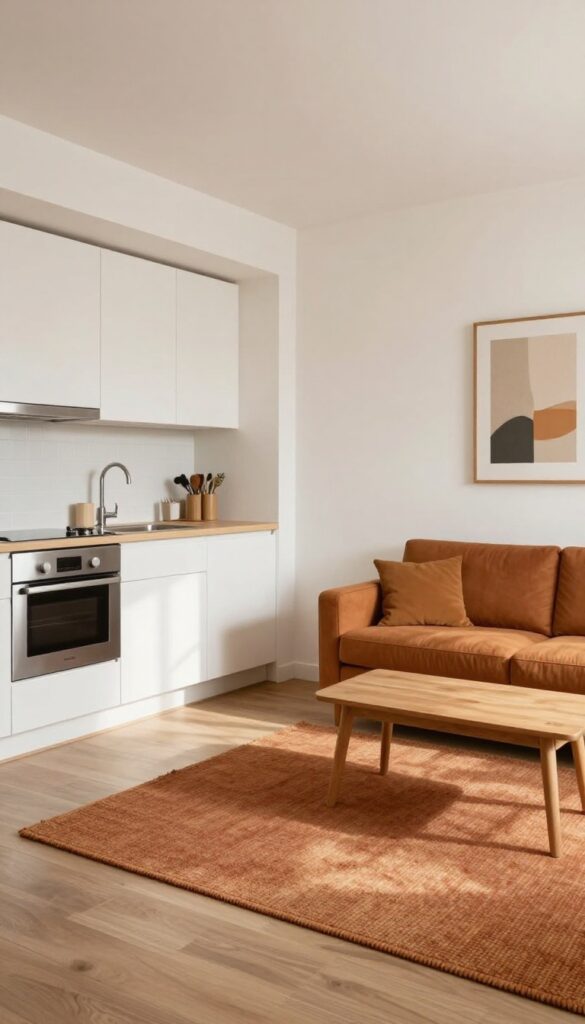
In a tiny apartment where the kitchen and living room share one open space, a rug does more than just soften your steps. It draws a clear visual line between cooking and relaxing, making each area feel intentional. A warm-toned rug, think terracotta, ochre, or soft rust, instantly warms up the living side while letting the kitchen stay crisp and functional.
This is one of those weekend-friendly moves that changes the whole feel of the room without any construction.
A well-placed rug anchors your sofa and coffee table, creating a cozy living room island in the middle of an open floor plan. The kitchen side keeps its hard surfaces, tile or wood, which are easier to clean, while the rug adds softness underfoot. Choose a low-pile or flatweave rug for high-traffic areas so it doesn't trap crumbs or trip you up.
Make sure the rug is large enough to fit at least the front legs of your sofa and a coffee table, this prevents the zone from feeling like a postage stamp. The contrast between the rug's warmth and the kitchen's cooler materials gives the eye a natural pause point.
Best Colors For A Cozy Vibe
Stick with earthy warm tones like burnt orange, dusty rose, or deep mustard. These hues pair beautifully with white or light wood kitchen cabinets and add instant hygge. If your kitchen has cool gray or stainless steel, a warm rug balances the temperature and keeps the living area feeling inviting.
Layout Tip: Rug Placement
Place the rug so it sits entirely in the living zone, not straddling the kitchen floor. A good rule: leave at least 6 inches of bare floor between the rug and the kitchen counter or island. This keeps the kitchen feeling open and easy to clean while the rug defines its own territory.
Texture Mix For Depth
Pair a chunky wool or textured flatweave rug with smooth leather or linen furniture. The contrast in textures adds visual interest without clutter. In a small space, texture is your secret weapon for making the room feel layered and lived-in.
2. Swap Heavy Curtains for Sheer Layers
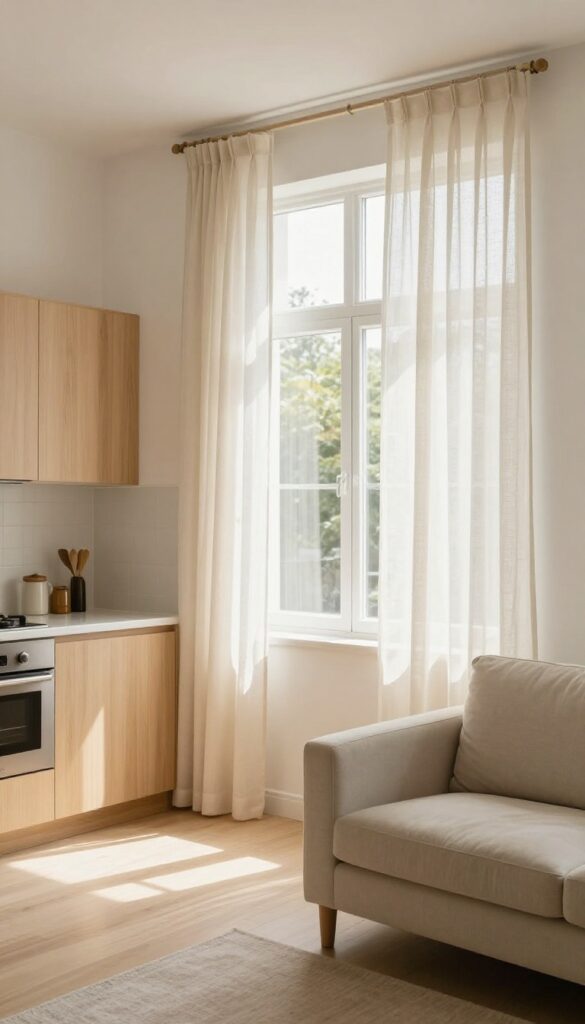
Heavy drapes can make a small apartment feel even more cramped. Swapping them for sheer curtains instantly opens up the space, letting in soft natural light that makes both the kitchen and living area feel larger and more inviting. Layering sheers with blackout shades gives you control over privacy and light without sacrificing that airy vibe.
It's a weekend-friendly swap that costs little but changes the whole mood of your home.
The key is to choose sheers in warm, neutral tones like ivory or light beige to keep the room feeling cozy. Hang them high and wide—close to the ceiling and extending past the window frame—to make the window appear larger and draw the eye upward. Pair with cordless blackout shades that tuck neatly behind the sheers, so during the day you get soft diffused light, and at night you can block out streetlights completely.
This layered approach works especially well in open-plan spaces where you want the kitchen and living areas to feel connected yet distinct. The sheers soften hard edges and add a touch of romance, while the shades provide practical privacy when you need it.
Best Fabrics For A Cozy Feel
- Look for sheers in linen blends or cotton voile—they have a natural texture that feels warm, not cold or synthetic. Avoid stiff polyester sheers that look too formal. A subtle weave or slight slub adds visual interest without overwhelming the space.
- For the blackout layer, choose a matte fabric in a neutral color that blends with your wall, so it disappears behind the sheers.
Hanging Trick For Small Spaces
- Mount the curtain rod as close to the ceiling as possible, ideally 4-6 inches above the window frame. Extend the rod 8-12 inches beyond the window on each side. This makes the window look wider and lets you pull the sheers completely clear of the glass, maximizing light.
- Use lightweight rods and rings so the sheers glide easily.
Finishing Touch
Add a simple tieback in a warm tone like brushed brass or woven leather to hold the sheers open during the day. This creates a soft drape that frames the window beautifully. For extra coziness, layer a chunky knit throw on the sofa in a color that picks up a tone from the sheers.
3. Add a Slim Console Table Behind the Sofa
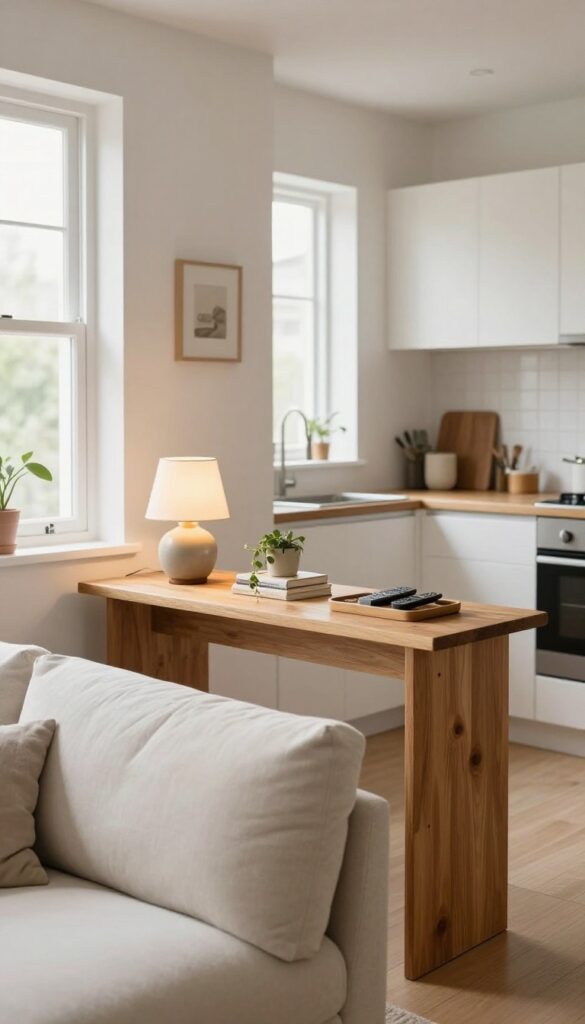
In an open kitchen-living room, the sofa often floats in the middle with no clear boundary. A slim console table tucked behind it does double duty: it defines the living zone without blocking sightlines, and it gives you a handy surface for everyday items. Think of it as a subtle room divider that also holds your morning coffee, a stack of books, or a few decorative objects.
Because it's narrow—usually 12 to 18 inches deep—it won't eat into your floor space, making it ideal for tight layouts.
This trick works especially well in studio apartments where every square foot counts. The console creates a visual separation between the sofa and the kitchen or dining area, making the space feel more organized. Plus, it's a weekend-friendly project: no tools required, just measure and slide it into place.
Style it with a lamp, a tray for remotes, or a small plant to add warmth without clutter.
Best Materials
- For a cozy feel, choose wood with a warm finish like oak or walnut. A metal-framed console with a wooden top keeps it light and airy. If you want extra storage, look for one with a lower shelf or drawers.
- Avoid glass tops—they show every fingerprint and can feel cold in a warm scheme.
Styling Tip
Keep the console surface simple: a table lamp, a small stack of books, and a ceramic vase or a trailing plant. Use a tray to corral remotes, coasters, and keys so it doesn't turn into a dumping ground. The lower shelf can hold baskets for blankets or magazines.
Layout Fix
Make sure the console is slightly shorter than the sofa back so it doesn't visually tower over the seating. Leave a couple of inches of space between the sofa and console for easy cleaning. If your sofa is against a wall, this idea works as a narrow entry table instead.
4. Hang Open Shelving in the Kitchen
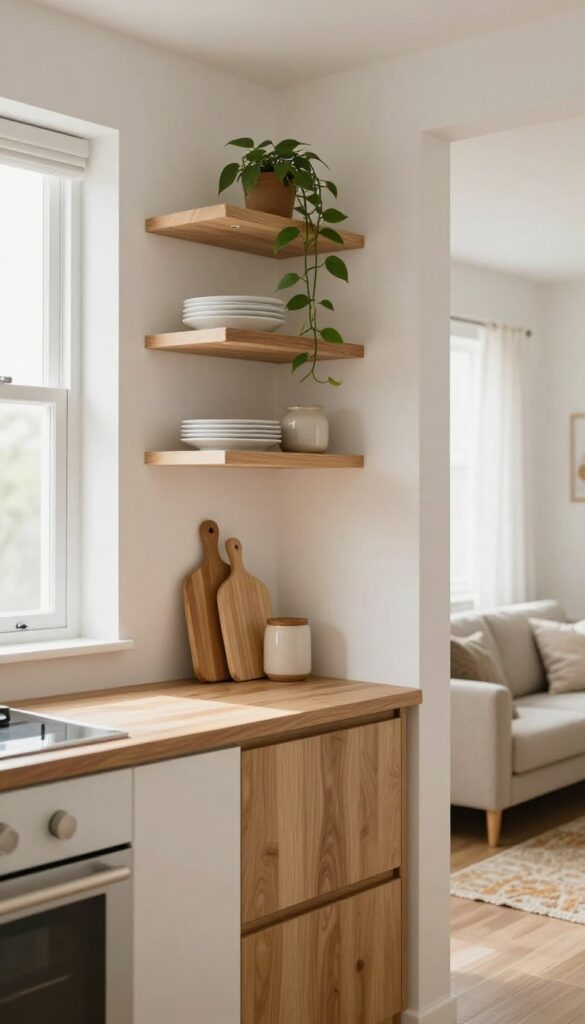
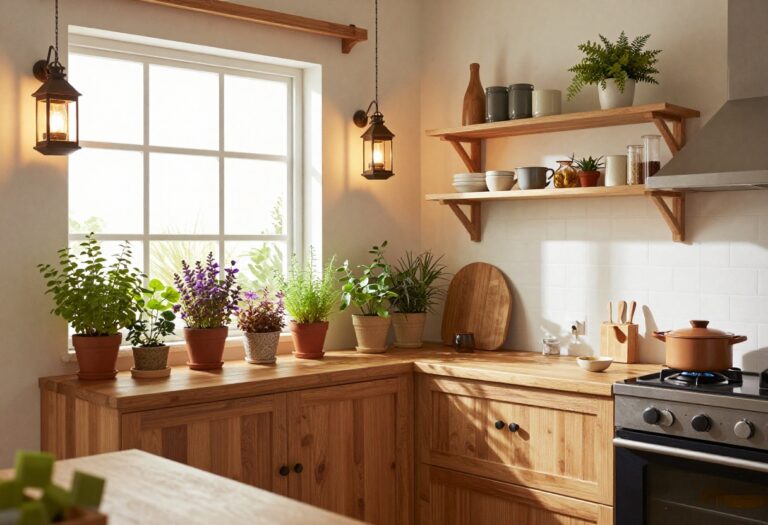
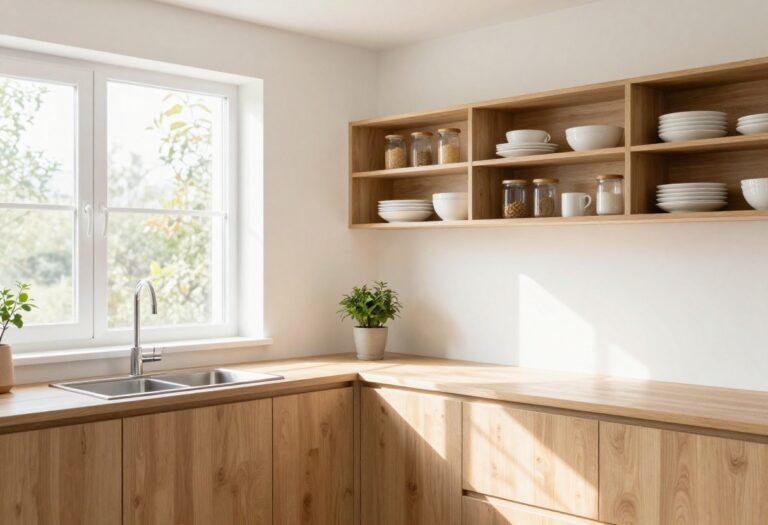
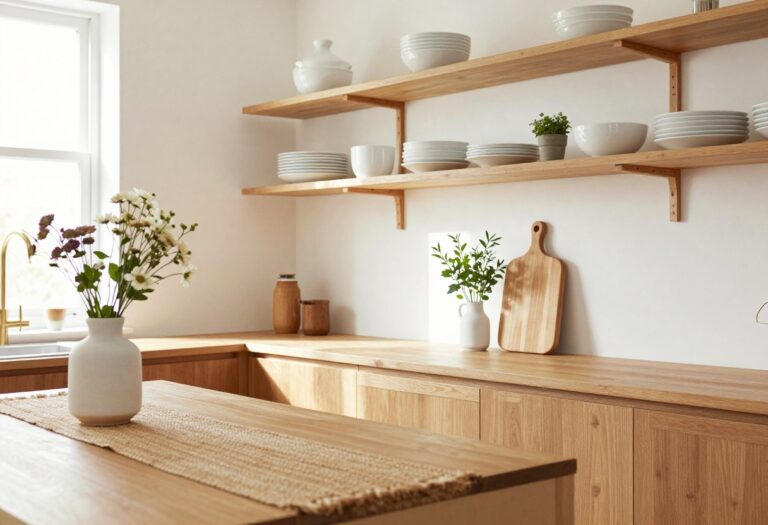
Upper cabinets can make a small kitchen feel boxed in, especially when they stretch all the way to the ceiling. Swapping them out for open shelves instantly lifts the whole room, letting light travel freely and making the space feel bigger. It’s a weekend-friendly swap that adds warmth and personality without a full renovation.
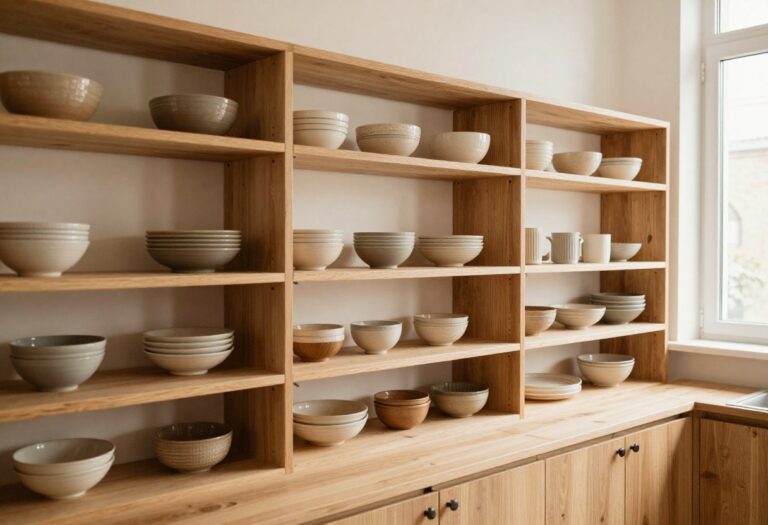
Open shelving works best when you treat it as a styling opportunity, not just storage. Keep everyday dishes within easy reach and layer in a few plants, wooden cutting boards, or ceramic jars for texture. The key is to leave some breathing room between items so the shelves don’t look cluttered.
Stick to a cohesive color palette—white dishes, warm wood tones, and soft greens—to keep the look calm and collected. In a tiny apartment, this approach makes the kitchen feel more like an extension of the living area, blending function with a cozy, lived-in vibe.
Best Materials
Go with solid wood shelves in a warm stain or matte white finish to match the cozy style profile. Floating shelves with hidden brackets keep the look clean and airy. Avoid glass or high-gloss finishes, which can feel cold and reflect clutter.
Shelf Styling Tip
Group items in odd numbers and vary heights. Stack plates on a wooden stand, lean a small cutting board against the wall, and place a trailing pothos plant at one end. Leave about 30% of each shelf empty so the eye can rest.
Small-space Fix
If your kitchen lacks counter space, use the lowest shelf for items you grab daily—like coffee mugs or olive oil. This keeps the counter clear while maintaining an open, airy feel.
5. Choose a Light Color Palette with Warm Accents
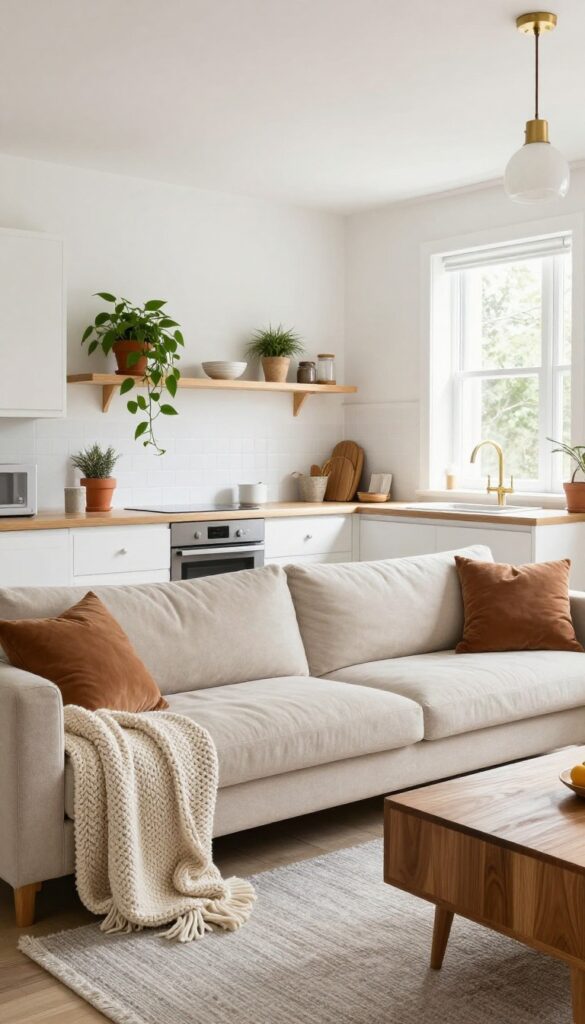
Soft whites, beiges, and light grays instantly open up a small combined kitchen and living room. They bounce natural light around and make the whole space feel airier. But a completely neutral room can feel flat.
That's where warm accents come in—wood tones, terracotta, or brass details add depth and coziness without weighing things down.
This palette is a weekend-refresh dream. You don't need to repaint everything—just swap in a few warm accessories or a wooden cutting board on the counter. The key is balance: keep the base light and layer in warmth through textures and small decor pieces.
The result is a bright, inviting space that feels both open and snug.
Best Colors
Stick to soft white walls (like Swiss Coffee or Alabaster) and light beige or gray for larger furniture. For accents, go with terracotta, rust, or warm mustard in throw pillows, vases, or a small rug. Brass or copper fixtures (faucet, pendant light) add subtle warmth without overpowering.
Texture Mix
Layer in natural textures to keep the space from feeling sterile. A chunky knit throw in cream, a linen sofa, and a jute rug add visual interest. Wooden elements—like a walnut coffee table or open shelves—ground the lightness with organic warmth.
Finishing Touch
Add a single terracotta planter with a trailing pothos on a shelf or counter. The green breaks up the neutrals and ties the warm accents together. It's a small, low-effort addition that makes the whole palette feel intentional.
6. Install a Fold-Down Table for Dining
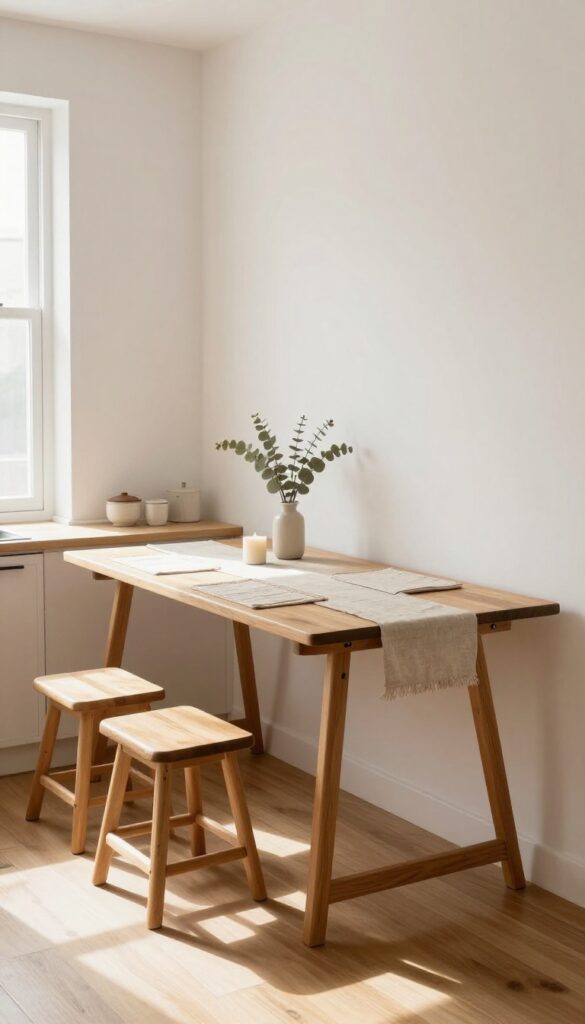
When every square foot counts, a fold-down table is a game-changer. Think of it as a slim ledge that hugs the wall, ready to transform into a dining spot or workspace in seconds. The best part?
It disappears when you're done, leaving your open kitchen and living room feeling airy and uncluttered. This isn't just practical furniture—it's a way to reclaim your floor space without sacrificing style.
A wall-mounted drop-leaf table is the ultimate small-space hack. It gives you a dedicated spot for meals, laptop work, or morning coffee, yet folds flat against the wall when not in use. In an open-plan tiny apartment, this keeps the visual flow uninterrupted and prevents the dining area from feeling like an afterthought.
Choose a warm wood finish to echo the cozy vibe, or go with a painted option that blends into your wall color for a seamless look. Pair it with two slim stools that tuck underneath, and you've got a functional dining nook that feels intentional, not cramped.
Best Materials
- Solid wood like oak or walnut adds warmth and durability, perfect for a cozy style. If you prefer a lighter look, a birch or maple plywood with a natural stain keeps things airy. For a budget-friendly option, a laminate in a wood-look finish works well and is easy to wipe clean.
- Avoid glass tops—they can feel cold and show every fingerprint in a small space.
Style And Styling Tip
Keep the table uncluttered when folded down—a small vase with dried eucalyptus or a single candle is enough. When it's open, use a simple linen runner and two placemats to define the dining zone without adding visual weight. Hang a small pendant light above the table to create a cozy focal point, even when the table is folded.
Space-saving Detail
Install the table at a height that works for both dining and standing desk use—around 30 inches is standard. Leave enough clearance for stools to slide under completely. Consider adding a slim shelf above the table for extra storage: a few cookbooks, a small plant, or everyday dishes keep everything within reach.
7. Use Floor Lamps for Layered Lighting
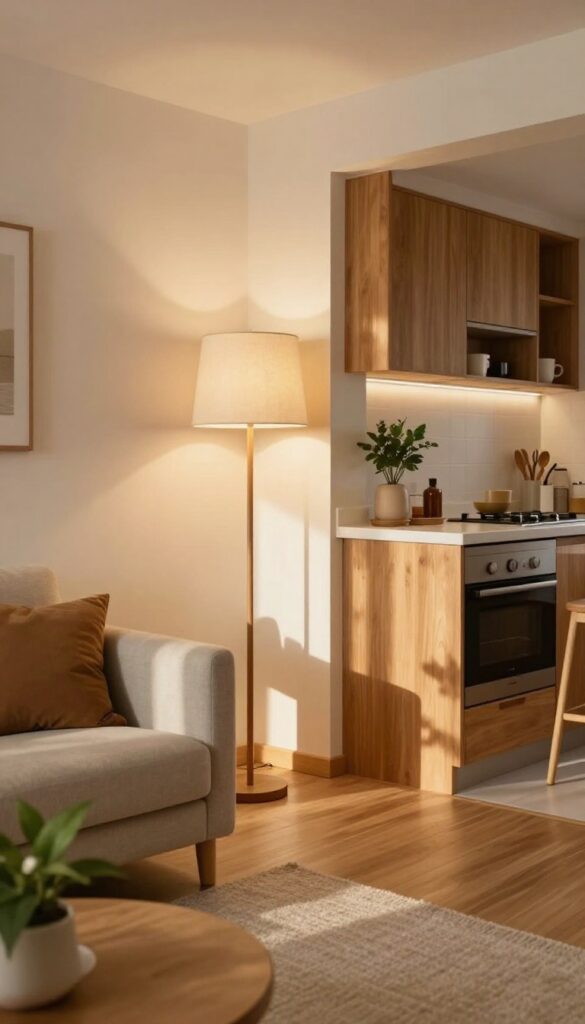
Overhead lights can feel harsh and uninviting, especially in a small open-plan space. Floor lamps offer a softer alternative that lets you control the mood. By placing them in corners or next to furniture, you create pockets of warm light that make the room feel deeper and more intimate.
It's an easy weekend swap that instantly upgrades the atmosphere.
Floor lamps are a simple way to add layered lighting without any wiring or renovation. In a tiny apartment, they help define zones—like a reading nook or a dining spot—while keeping the overall look cohesive. Choose a lamp with a fabric shade to diffuse the light, and always use warm bulbs (2700K–3000K) for that cozy glow.
Position one near the sofa to soften the living area and another by the kitchen counter to bridge the two spaces visually.
Best Placement
- Corners are prime real estate for floor lamps. They draw the eye outward, making the room feel larger. Try placing a tall arc lamp over the dining table or a slim lamp next to the sofa arm.
- Avoid blocking walkways—keep the base tucked against furniture or walls.
Style Tip
Match the lamp's finish to your existing hardware or decor accents. Brass or black metal adds warmth, while wood tones blend with natural textures. A lamp with a dimmer switch gives you even more control over the mood.
Cozy Detail
Layer two floor lamps at different heights for depth. Pair a tall lamp with a shorter one near a chair or plant. This creates a relaxed, lived-in feel that overhead lighting can't achieve.
8. Incorporate a Large Mirror to Reflect Light
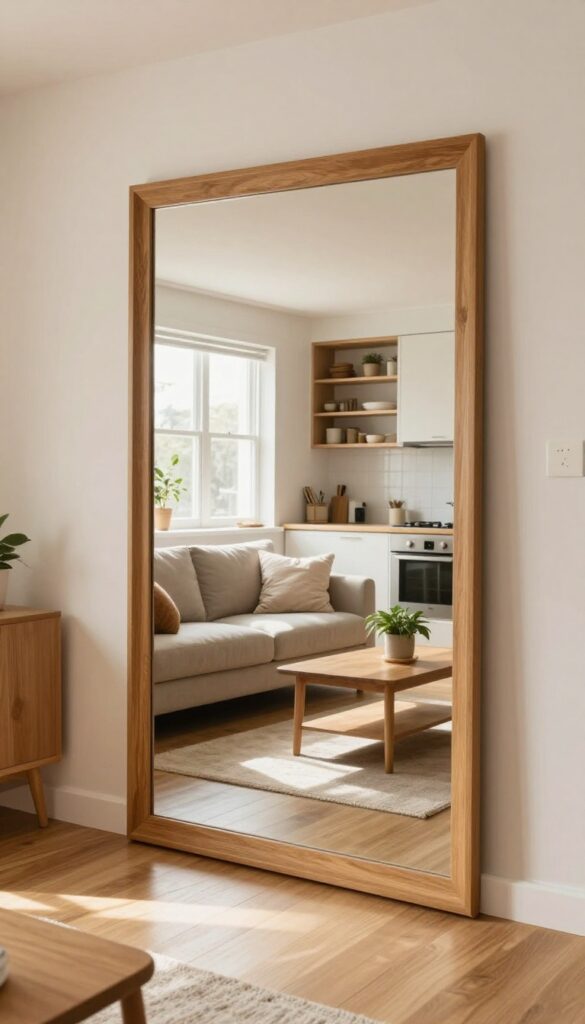
Nothing opens up a cramped open kitchen and living room quite like a well-placed mirror. When you hang a big one opposite a window, it bounces natural light around the entire space, making it feel airier and more expansive. Plus, the reflection tricks your eye into seeing double the square footage—a total game-changer for a tiny apartment.
And the best part? It adds a subtle touch of elegance without requiring any major renovations or spending a lot.
A large mirror is one of the most effective weekend-refresh ideas for small spaces. It instantly amplifies light and depth, making your combined kitchen and living area feel larger and more inviting. Choose a mirror with a warm-toned frame—like oak, walnut, or antique brass—to keep the look cozy and cohesive with your existing decor.
Lean it against the wall for a casual vibe or hang it securely for a more polished feel. Either way, you'll notice the difference the moment sunlight hits it.
Best Placement
Position the mirror directly across from your largest window to maximize light reflection. In an open layout, place it on a wall that faces both the kitchen and living area so it visually extends both zones. Avoid putting it opposite a cluttered corner—you want to reflect something pleasing, like a plant or a cozy seating area.
Frame Material & Color
Stick with natural wood tones or warm metallics to match the warm and cozy style profile. A light oak frame keeps things airy, while a darker walnut adds richness. If your space leans more modern, a slim brass or copper frame brings a subtle glow without feeling cold.
Styling Around The Mirror
Keep the area around the mirror simple so it remains the focal point. A small console table underneath with a stack of books and a ceramic vase works beautifully. Add a soft table lamp or a candle to create a warm glow in the evening, enhancing the cozy atmosphere.
9. Add a Rolling Cart for Extra Storage
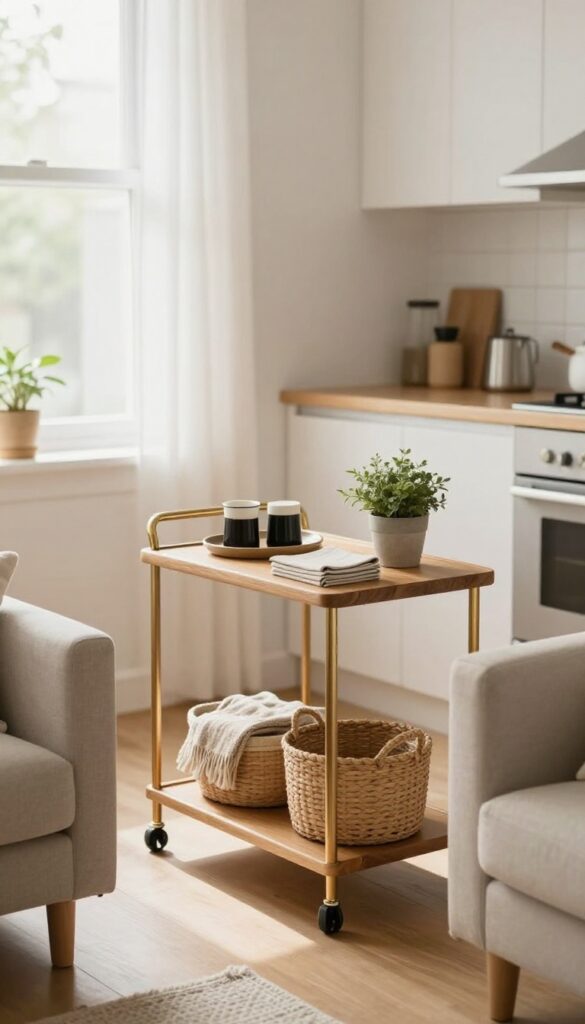
A slim rolling cart is the unsung hero of small-space living. It slides into that awkward gap beside the sofa or tucks neatly next to the kitchen counter, offering instant extra surface area without committing to permanent furniture. The best part?
You can wheel it wherever you need it—by the couch for movie snacks, next to the prep area while cooking, or even into the corner as a mini plant stand. It’s the kind of flexible piece that makes a tiny apartment feel more functional and less cluttered.
A rolling cart brings both storage and mobility to a small open kitchen and living room. Choose one with two or three shelves to hold bar tools, cookbooks, plants, or everyday kitchen gadgets. The slim profile means it won’t block walkways, and the casters let you reposition it in seconds.
For a warm and cozy feel, opt for a wooden cart with brass accents or a metal frame in a soft matte black. Style the top shelf with a small tray for coffee supplies, the middle with a stack of linen napkins, and the bottom with a basket of root vegetables or extra throws. It’s a practical piece that adds character without taking over.
Best Materials For A Cozy Look
- For a warm and cozy style profile, choose a cart made of natural wood like acacia or bamboo. These materials add texture and warmth that metal alone can’t achieve. If you prefer a mixed-material look, a metal frame with wooden shelves strikes the perfect balance.
- Avoid glossy or high-contrast finishes—stick to matte or lightly distressed surfaces that feel lived-in and inviting.
Styling Tip: Layer With Texture
Make the cart feel intentional by layering different textures. Place a small woven basket on the bottom shelf for extra storage, add a ceramic vase with dried eucalyptus on the top, and hang a linen towel from the side rail. This keeps the cart from looking like a utility item and turns it into a decor piece that blends with your sofa and counter.
Small-space Placement Ideas
Tuck the cart between the sofa and the wall for a mobile side table, or slide it next to the kitchen island as a prep station. In a tiny apartment, even a 12-inch gap can accommodate a slim cart. Use it as a bar cart near the dining area or as a plant stand by the window—just roll it out of the way when you need floor space.
10. Bring in Texture with Throw Pillows and Blankets
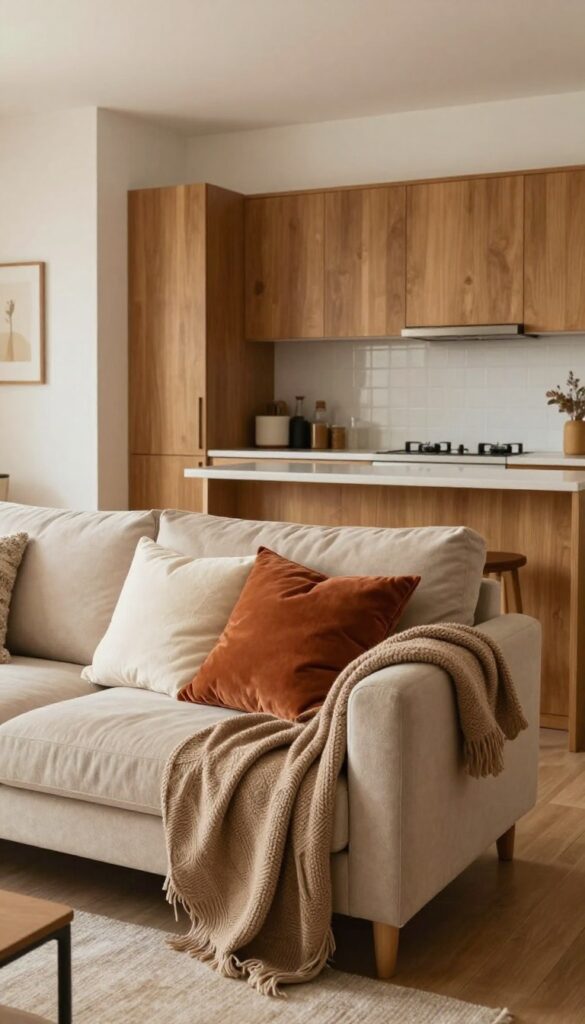
When your living area and kitchen share one open space, softness becomes a secret weapon. Hard surfaces like counters, cabinets, and floors can make the whole room feel a little cold. That’s where pillows and throws come in—they add warmth and personality without taking up any floor space.
The best part? You can swap them out seasonally or whenever you crave a change, making this a perfect weekend-refresh move.
Layer chunky knits, velvet pillows, and a faux fur throw on the sofa. These soft touches make the living area feel instantly more inviting. In a small open plan, texture does double duty: it makes the space look cozy and helps define the living zone without a single wall.
Stick to a warm, cohesive palette—think oatmeal, rust, and deep cream—so the pillows and blankets feel intentional, not random. Drape a throw over the arm of the sofa or fold it at the foot; pile two or three pillows in varying sizes and fabrics. The goal is a relaxed, lived-in look that invites you to curl up.
Best Materials For A Cozy Look
- Focus on natural and tactile materials. Chunky cotton or wool knits add a handcrafted feel. Velvet brings a touch of richness without being fussy.
- Faux fur or shearling throws give that instant snuggle factor. Avoid slippery synthetics—they don’t hold their shape and can look cheap. Mixing at least three different textures (like knit + velvet + faux fur) creates visual depth that reads as intentional and polished.
Color Flow With The Kitchen
- Since the living area sits right next to the kitchen, your pillow and blanket colors should complement the kitchen’s palette. If your cabinets are white or light wood, warm earth tones like terracotta, mustard, and olive green will bridge the two zones. For darker kitchens, go with creamy neutrals and muted blush to keep the space from feeling heavy.
- Avoid matching exactly—aim for colors that harmonize, not match.
Small-space Styling Tip
- In a tiny apartment, too many pillows can overwhelm the seating. Stick to two or three pillows on a loveseat or small sofa, and one throw. Store extra throws in a basket or on a ladder shelf nearby so you can rotate them easily.
- This keeps the look clean while still letting you switch up the texture whenever you want a refresh.
FAQ
How can I make my small open kitchen and living room feel cozy?
Focus on warm textures like rugs, pillows, and curtains. Use soft lighting from floor lamps and add personal touches like plants or artwork. A cohesive color palette also helps the space feel harmonious.
What's the best way to separate the kitchen from the living area?
Use a rug to define the living zone, or place a slim console table behind the sofa. Open shelving can also act as a visual divider without blocking light.
Can I add storage without making the room feel cramped?
Yes! Opt for open shelves, rolling carts, or wall-mounted furniture. Multi-functional pieces like a fold-down table or storage ottoman save space while adding utility.
What colors work best for a tiny open layout?
Light neutrals like white, beige, and soft gray make the space feel larger. Add warmth with wood tones, terracotta, or brass accents to keep it from feeling sterile.
How do I choose the right lighting for a combined kitchen and living room?
Layer different light sources: ambient (floor lamps), task (under-cabinet lights), and accent (table lamps). Use warm bulbs (2700K-3000K) for a cozy glow.
Conclusion
Refreshing your tiny open kitchen and living room doesn't have to be overwhelming. With just a weekend and a few thoughtful changes, you can create a space that feels both spacious and wonderfully warm. Start with one or two ideas that speak to you, and build from there.
Remember, the goal is a home that feels good to live in—not a magazine cover. So go ahead, add that rug, swap those curtains, and let your personality shine through. Your cozy, functional oasis is just a few steps away.