11 Kitchen Door Ideas Modern Rooms Can Use for Style
Kitchen doors do more than just close off cabinets and pantries. They set the tone for the whole room, shaping how light moves and how the space feels. When you choose the right door style, you add personality without a full renovation.
Modern kitchens often lean clean and minimal, but that doesn't mean they have to feel cold. Layering in texture, color, and material through your doors creates warmth and depth.
Think of them as an opportunity to weave in character while keeping things practical. Whether you're updating a few cabinet fronts or planning a full kitchen refresh, the door style you pick matters.
1. Glass-Front Upper Cabinets for an Airy Feel
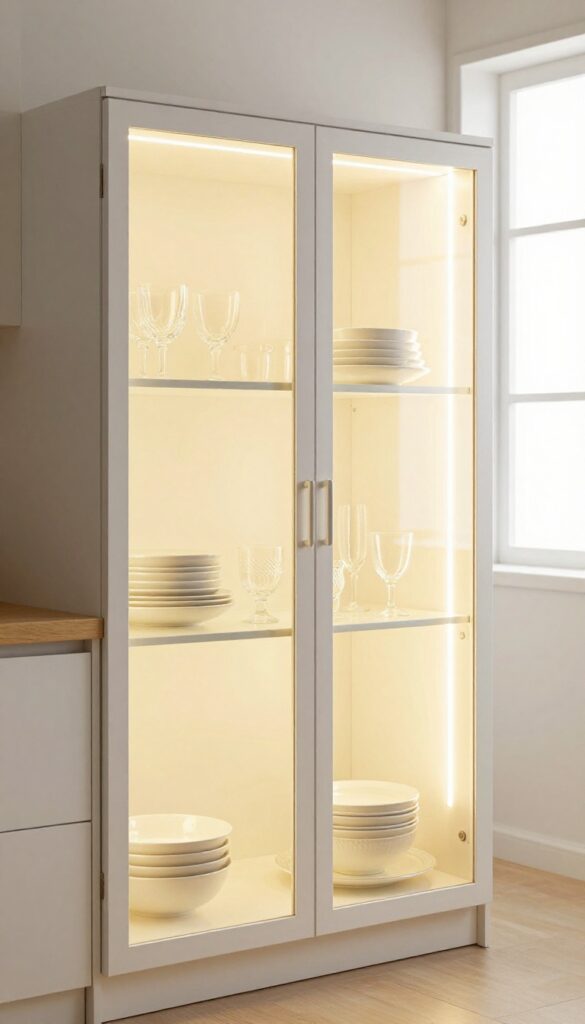
Swapping solid upper doors for glass fronts is one of those kitchen moves that instantly changes the whole vibe. Instead of a wall of wood, you get glimpses of what's inside, which keeps the space feeling open and light. Clear glass works if you love displaying matching dishware, while frosted glass softens the view and hides daily clutter.
Either way, adding small LED strip lights inside the cabinets turns them into a warm focal point when the sun goes down.
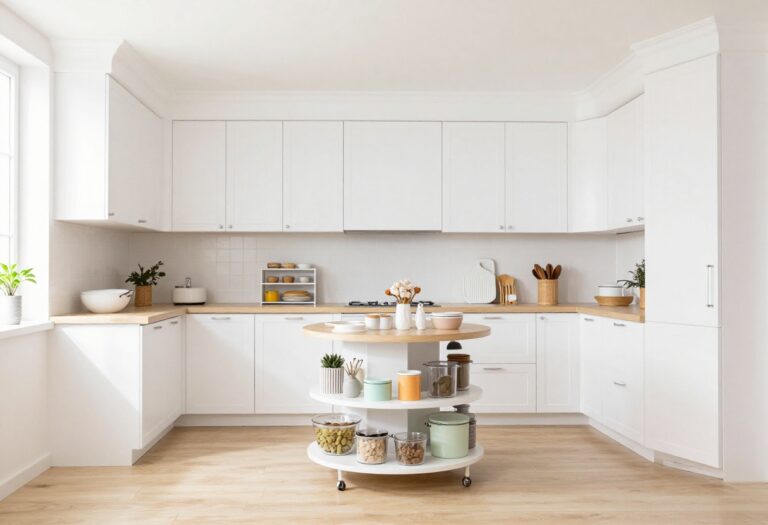
Glass-front cabinets are a classic way to make a kitchen feel larger and more inviting. The transparency breaks up heavy cabinetry and adds visual depth, especially in galley kitchens or spaces without much natural light. To keep the look cohesive, stick with simple glass panels rather than ornate mullions, and consider a slight tint or texture for a softer effect.
Interior lighting is key—warm white LEDs highlight your prettiest pieces and create that cozy glow that makes the room feel lived-in and layered.
Best Glass Choices
Clear glass is perfect for curated dish collections or open shelving lovers, but it requires neat styling. Frosted or ribbed glass offers privacy while still letting light pass through—ideal for busy households that want the airy effect without the pressure to keep everything perfectly arranged. For a vintage touch, seeded glass adds subtle texture that catches the light beautifully.
Lighting Tip
- Install puck lights or linear LED strips along the top edge of each cabinet, pointing downward. Use a dimmer switch to adjust brightness from a soft glow to full illumination. Warm white (2700K–3000K) keeps the look cozy, while cool white can feel too clinical.
- Position lights so they highlight the contents without casting harsh shadows.
Styling Inside
- Treat the inside of your cabinets like a mini display. Stack plates in neat rows, group matching glassware, and add a few small plants or ceramic pieces for visual breaks. Keep everyday items in lower cabinets or behind frosted glass, and save clear glass for your best dinnerware.
- A consistent color palette inside—like all white dishes with wood accents—keeps the view intentional.
2. Sliding Barn Doors for a Rustic Touch
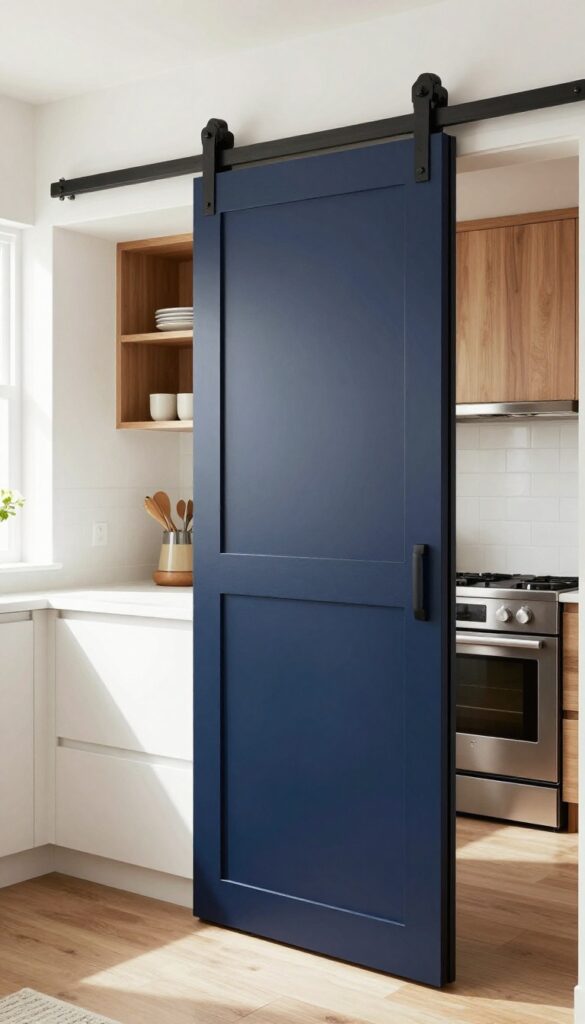
A sliding barn door isn't just for farmhouse living rooms anymore. In a modern kitchen, it brings a surprising warmth that balances out sleek countertops and stainless steel appliances. The key is choosing a style that feels intentional—think clean lines, quality hardware, and a finish that complements your existing palette.
Whether you're hiding a pantry, a mudroom, or a butler's pantry, a sliding barn door adds character without eating up floor space. The motion itself feels satisfying and a little dramatic, like revealing a secret. To keep it from feeling too rustic, opt for a flat-panel door in a painted finish or a warm wood with minimal grain.
Pair it with black or matte black hardware for a modern edge, and consider a soft-close mechanism so it glides quietly. This door becomes a functional piece of art that also solves the problem of a swinging door bumping into cabinets or appliances.
Best Colors And Finishes
White or light gray painted doors keep the look airy and blend seamlessly with most kitchens. For more contrast, try a deep navy or charcoal—it anchors the space and adds a cozy, layered feel. If you prefer wood, choose a warm tone like oak or walnut, but stick to a smooth, modern profile rather than a heavily distressed one.
Hardware Matters
- The rail and rollers are just as important as the door itself. A long, sleek steel track in black or brushed nickel feels contemporary. Avoid ornate or overly decorative hardware—it can tip the look into theme-y territory.
- Go for simple, sturdy pieces that let the door do the talking.
Small-space Tip
In a galley or small kitchen, a sliding barn door can replace a traditional pantry door that would swing into the walkway. Mount the track high enough so the door clears countertops, and use a single door instead of a double to keep the visual weight light.
3. Bold Color on a Single Door Accent
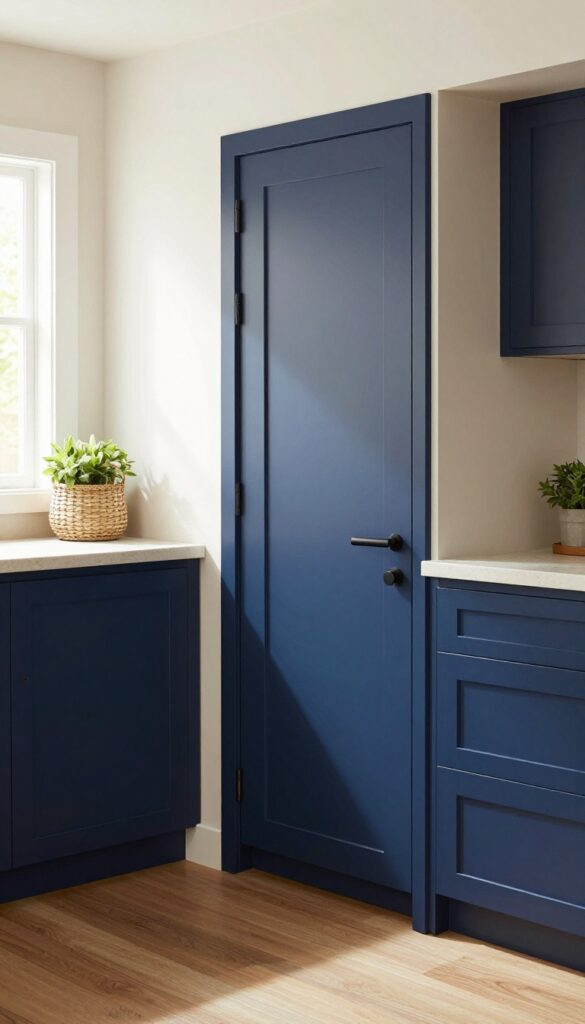
Sometimes the smallest change makes the biggest statement. Painting just one door—a pantry door, a cabinet bank, or even the door to a butler’s pantry—in a deep, saturated hue creates an instant focal point without overwhelming the entire kitchen. It’s a trick that adds personality and depth, especially in rooms where white or wood cabinets dominate.
The key is choosing a color that feels intentional, not random, and letting that single surface carry the drama.
This idea works best when the rest of the kitchen stays relatively neutral. Think creamy walls, natural stone countertops, and warm wood floors. The bold door becomes an anchor, drawing the eye and adding a layer of richness.
It’s also a low-commitment way to test a trendier color—if you decide you want a change, it’s just one door to repaint. For a cozy, layered feel, pair the color with textured accents like a woven basket nearby or a matte black cabinet knob.
Best Colors For The Look
- Navy blue feels classic and grounding, especially in a kitchen with brass or brass-toned hardware. Forest green brings an earthy, sophisticated vibe that pairs beautifully with butcher block or marble. Terracotta adds warmth and a touch of Mediterranean charm, ideal for kitchens with lots of natural light.
- For a moodier take, try charcoal or deep plum—both feel unexpected but refined.
Where To Apply It
A pantry door is the most obvious choice, but don’t overlook a single tall cabinet, a cabinet bank on an island, or the door to a walk-in pantry. In open-concept kitchens, painting the door that leads to a mudroom or laundry room can tie the space together. The key is to pick a door that stands alone—not part of a long run of identical cabinets, so it reads as an accent.
Finishing Touch
Swap out the hardware on that door for something that pops. A matte black or unlacquered brass handle adds contrast and makes the color feel intentional. If the door is flat, consider adding a little texture with a paneled or shaker-style door insert—it catches light differently and makes the color look richer.
4. Reeded Glass for Subtle Texture
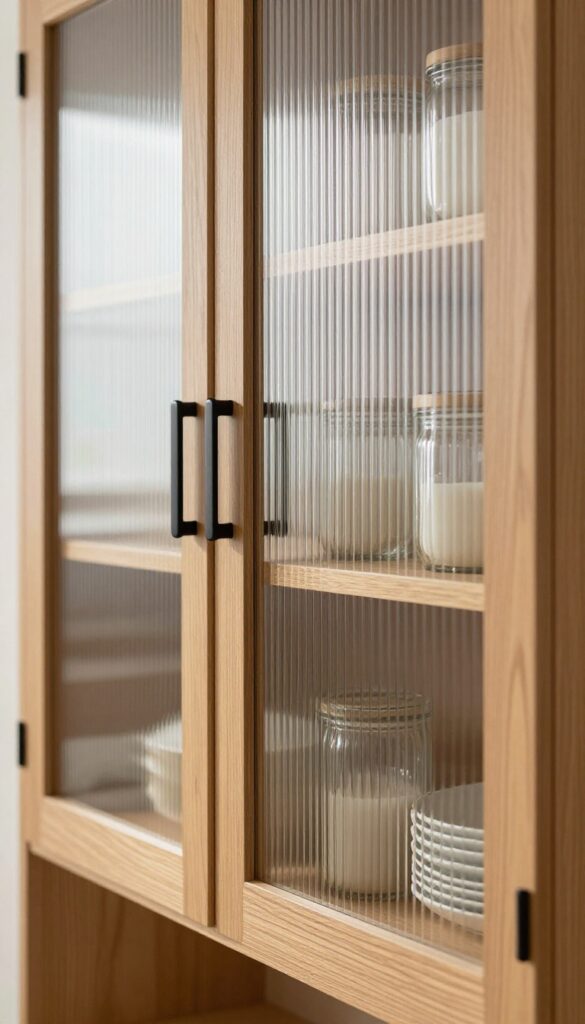
Reeded glass doors strike a perfect balance between openness and privacy. The vertical ridges catch light and cast soft shadows, adding a tactile, layered look that feels both contemporary and soft. In a modern kitchen, they replace solid doors with something airier without sacrificing the ability to hide clutter.
The texture is subtle enough to keep the space calm but present enough to add visual interest.
Reeded glass doors work especially well in kitchens where you want to conceal pantry shelves or appliance garages while still maintaining a light, open feel. The glass diffuses light, so even on darker days, the kitchen doesn't feel closed in. Pair them with matte black or brushed brass hardware for a clean contrast that highlights the glass texture.
The overall effect is polished but approachable—a small detail that makes the room feel thoughtfully designed.
Best Colors And Finishes
- White or light wood frames keep the look airy and modern. For a warmer feel, try oak or walnut frames that echo the reeded texture. Dark frames like charcoal or deep green add drama and make the glass ridges pop.
- Stick to matte finishes to let the glass be the star.
Where To Use Them
Upper cabinets, pantry doors, or a dedicated coffee station are ideal spots. Reeded glass works well on cabinet fronts that are at eye level, where the texture is most visible. Avoid using them on lower cabinets near sinks or stoves where grease and splashes might be harder to clean.
Styling Behind The Glass
- Keep the contents organized and intentional. Use matching glass jars, neatly stacked dishes, or a few cookbooks. The textured glass obscures some mess but still shows color and shape, so a little curation goes a long way.
- Stick to a cohesive color palette for a calm, collected look.
5. Open Shelving with a Door Frame
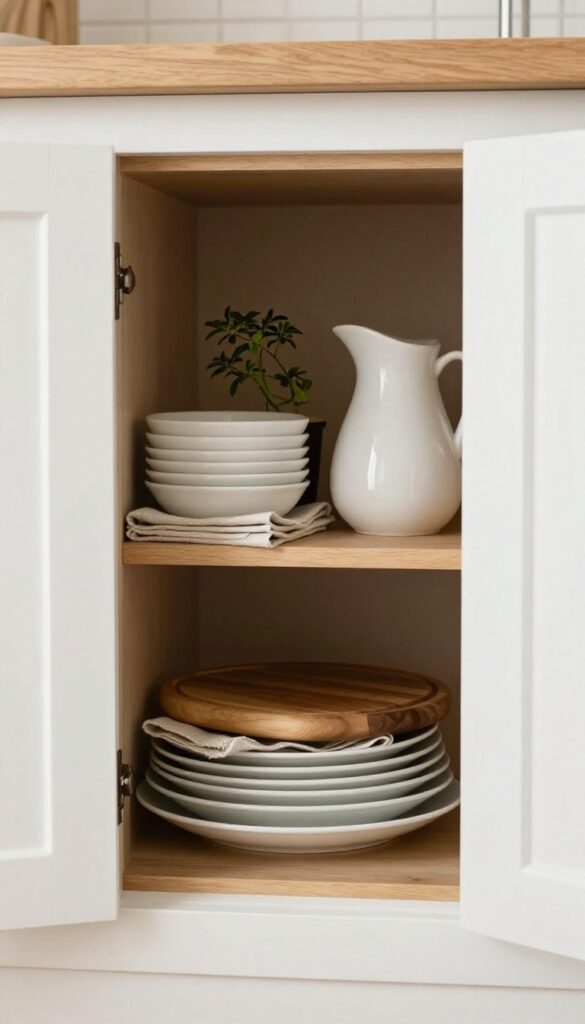
Sometimes the coziest kitchens are the ones that feel a little undone. Removing a cabinet door and replacing it with open shelving inside the same frame keeps the built-in look but adds an airy, lived-in feel. It’s a clever way to break up a run of upper cabinets without a full renovation, and it instantly makes your everyday dishes part of the decor.
The trick is to treat the open cubby like a styled vignette, not a catch-all. Stick to a simple palette—white or cream dishes, a few wooden cutting boards, and maybe a stack of linen napkins. Layer in a small plant or a ceramic pitcher for softness.
Keep the shelves shallow so items don't feel crammed, and edit often so the display stays intentional.
Best Colors
Stick with a neutral or tonal palette to keep the open shelving feeling calm and collected. White dishes, beige linens, and warm wood tones create a soft, layered look. If your kitchen has painted cabinets, match the interior of the cubby to the cabinet color so the frame disappears and the contents stand out.
Shelf Styling Tip
- Group items in odd numbers and vary heights. Start with a stack of plates on one side, a pitcher or vase in the middle, and a small stack of cookbooks on the other. Leave some breathing room between groups so the eye can rest.
- A trailing plant on the top shelf adds a cozy, organic touch.
Small-space Fix
If your kitchen is tight, use this trick on just one upper cabinet near the stove or sink. It keeps essentials like oils, salt, and everyday glasses within reach without opening a door. The open cubby also makes a narrow kitchen feel less closed in.
6. Two-Tone Doors for Visual Depth
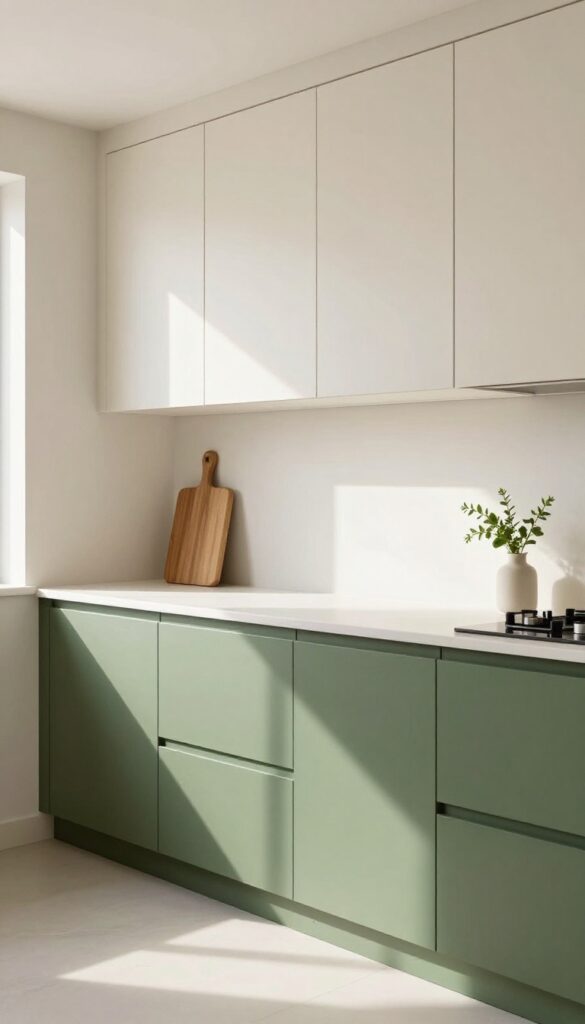
Breaking up your kitchen cabinets with two different colors adds instant depth and keeps the room from feeling flat. The trick is choosing the right balance—light uppers keep the space open and airy, while darker lowers anchor everything down. It’s a simple way to add contrast without going full bold, and it works in both modern and transitional kitchens.
Two-tone cabinetry is one of those ideas that looks high-end but doesn’t have to cost a fortune. You can achieve the look by painting existing cabinets or mixing stock cabinets in different finishes. The key is picking colors that complement each other—think soft white uppers with a deep navy or charcoal base.
This setup naturally draws the eye upward, making the ceiling feel higher, while the darker base hides everyday wear and tear. For a warmer feel, try cream uppers with a sage green lower. The contrast creates a layered, collected look without feeling busy.
Best Color Combos
- Stick with one neutral and one slightly bolder shade. White or off-white uppers paired with navy, forest green, or charcoal are classic and timeless. If you want something softer, try light gray uppers with a warm taupe lower.
- Avoid pairing two very dark colors or two very light ones—the whole point is contrast.
Layout Tip
- Use the darker color on the base cabinets and any island or peninsula. This grounds the space and makes the kitchen feel stable. Keep the upper cabinets light to reflect natural light.
- If you have open shelving, consider painting the shelf brackets in the darker color to tie the look together.
Finishing Touch
Add hardware that bridges the two tones. Brushed brass or matte black knobs and pulls work well because they stand out against both light and dark surfaces. Avoid mixing metal finishes here—keep it consistent for a polished result.
7. Flat-Panel Doors with Warm Wood
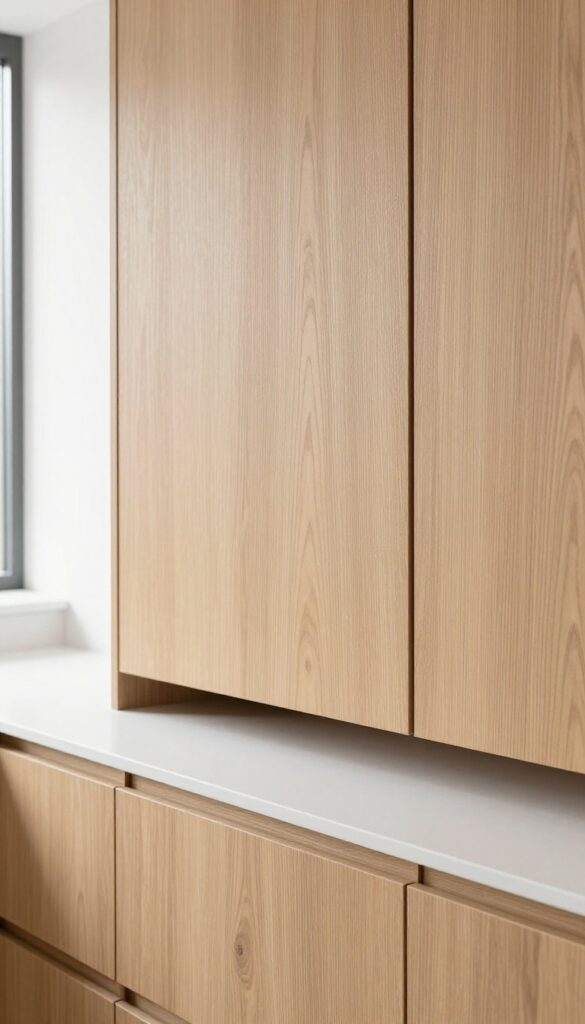
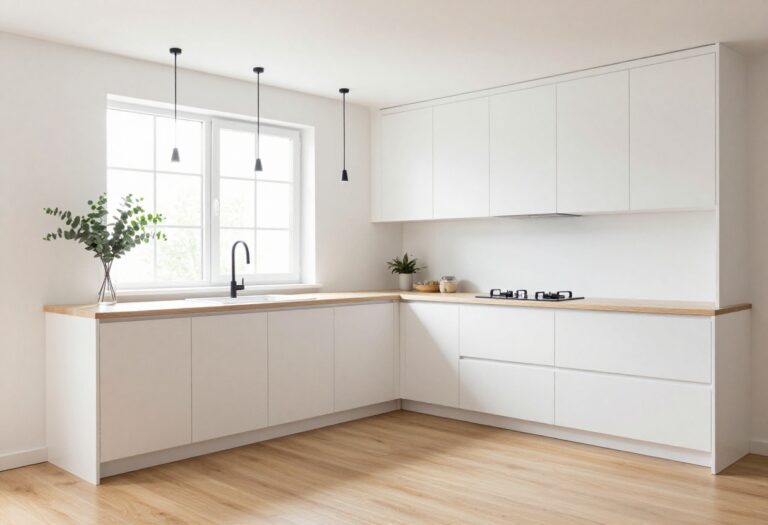
Flat-panel doors are a staple in modern kitchens, but they can sometimes feel a little cold or sterile. The fix? Choose a natural wood veneer like oak or walnut.
The clean, flat surface keeps the look minimal and contemporary, while the visible wood grain brings in organic warmth and texture. It’s a simple swap that makes the space feel cozy without losing that sleek, modern edge.
Flat-panel doors are a staple in modern kitchens, but they can sometimes feel a little cold or sterile. The fix? Choose a natural wood veneer like oak or walnut.
The clean, flat surface keeps the look minimal and contemporary, while the visible wood grain brings in organic warmth and texture. It’s a simple swap that makes the space feel cozy without losing that sleek, modern edge.
Best Wood Tones
Oak offers a lighter, more golden hue that works well with white walls and neutral backsplashes. Walnut brings a richer, darker tone that pairs beautifully with brass or black hardware. For a balanced look, stick with one wood species throughout the kitchen to keep the space cohesive.
Texture Mix
Since the doors are flat, they’re a perfect backdrop for layering other textures. Add a matte ceramic tile backsplash, a woven runner, or linen curtains. The contrast between the smooth wood and rougher or softer materials keeps the kitchen from feeling one-note.
Finishing Touch
Consider a matte or satin finish on the wood to let the grain shine without too much shine. Avoid high-gloss, which can make modern kitchens feel too sleek. A subtle, low-sheen finish feels more natural and inviting.
8. Black Framed Glass for Industrial Edge
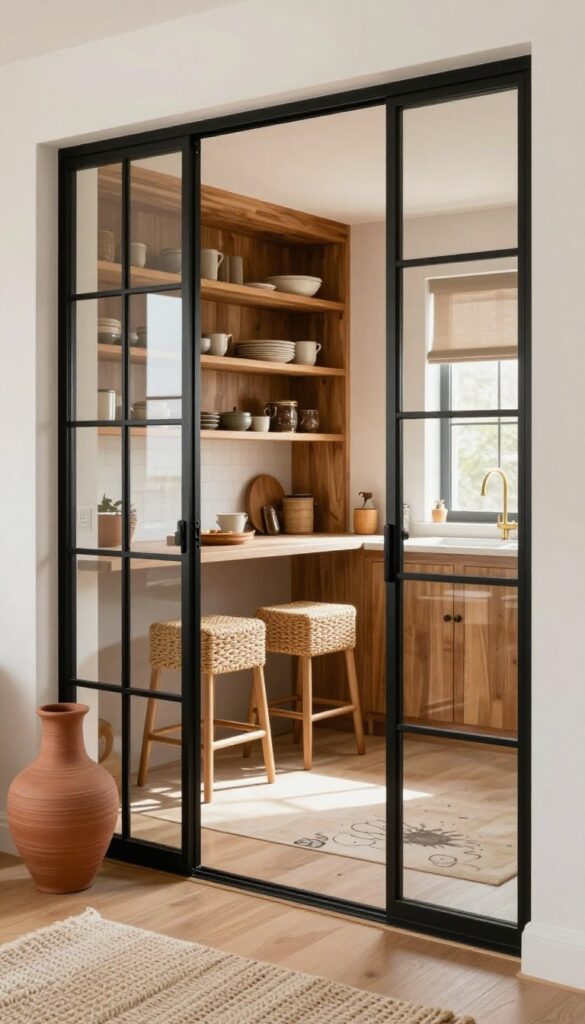
Black metal-framed glass doors are having a moment in modern kitchens, and it's easy to see why. They bring a crisp, industrial edge that feels both bold and refined, especially when paired with warm wood tones or soft linen textures. In an open-plan layout, these doors help define the kitchen without closing it off, letting light flow while adding a graphic architectural detail.
The contrast between the dark frame and the transparent glass creates a visual anchor that draws the eye without overwhelming the space. To keep the look cozy and layered, balance the cool metal with warm elements like oak shelves, woven bar stools, or a chunky knit runner. This door style works beautifully on pantry entries, butler's pantries, or as a partition between the kitchen and dining area.
Best Pairings
Black framed glass doors pair best with warm wood cabinets, brass or matte black hardware, and soft neutral walls. Avoid pairing them with too much cool gray or stainless steel, which can make the space feel sterile. Instead, introduce warmth through wood cutting boards, ceramic canisters, or a terracotta vase on the counter.
Layout Tip
In an open-plan kitchen, use black framed glass doors to separate the kitchen from a home office or dining area. The transparency keeps the sightline open while the frame defines the zone. For a small kitchen, consider sliding barn-style black framed doors to save space and add a rustic industrial touch.
Finishing Touch
Add a soft woven runner in a natural fiber like jute or sisal just outside the door to soften the industrial edge. A small pendant light with a warm bulb overhead can also cast a welcoming glow through the glass, making the kitchen feel inviting even when the doors are closed.
9. Hidden Pantry Door with Wallpaper
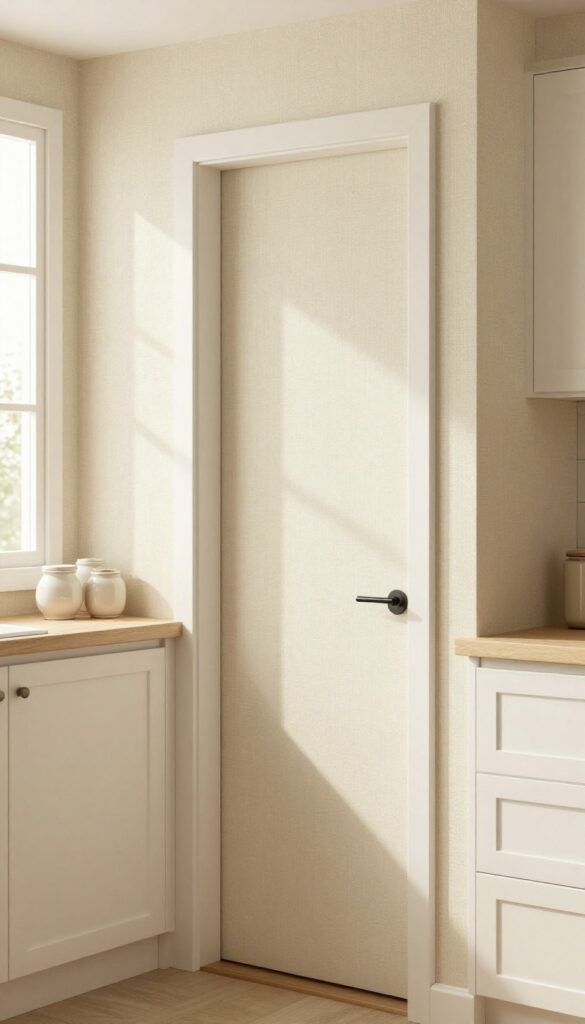
A pantry door doesn’t have to announce itself. When you cover it in the same wallpaper as the surrounding wall, it blends right in, creating a seamless backdrop that feels intentional and calm. The surprise comes when someone opens what looks like a solid wall to reveal shelves of spices and snacks.
It’s a clever trick that adds both function and a little magic to your kitchen.
This idea works best in kitchens where you want to minimize visual clutter. Choose a wallpaper pattern that matches the wall color or has a subtle texture—think grasscloth, a small-scale geometric, or a soft floral. The door should be flush with the wall and have no visible handle; a push-latch or a recessed pull keeps the illusion intact.
The result is a clean, cohesive look that makes your kitchen feel larger and more polished.
Best Wallpaper Choices
- Stick with patterns that read as a wall covering rather than a bold accent. Textured papers like grasscloth or linen-weave vinyl work beautifully because they mimic wall paint from a distance. If you want a pattern, choose one with a small repeat—tiny dots, subtle stripes, or delicate vines—so the door seam is less obvious.
- Avoid large-scale motifs that might highlight the door's edges.
Hardware And Finish Details
- The door should open with a push latch or a slim recessed pull that matches the wall finish. If you use a standard knob, it will break the camouflage. Paint the door frame the same color as the wall, and consider adding a small magnet or soft-close mechanism so the door stays flush.
- For a cozy touch, line the inside of the pantry with a warm wood shelf or a contrasting paint color that feels like a hidden treasure.
Where To Use This Idea
- This trick is perfect for galley kitchens or open-plan spaces where every surface is visible. It also works in small kitchens where a standard pantry door would eat up visual real estate. If your pantry is in a hallway or near the dining area, the hidden door keeps the flow uninterrupted.
- Just make sure the wall is flat and the door is properly aligned—any gap will give away the secret.
10. Beadboard Inserts for Cottage Charm
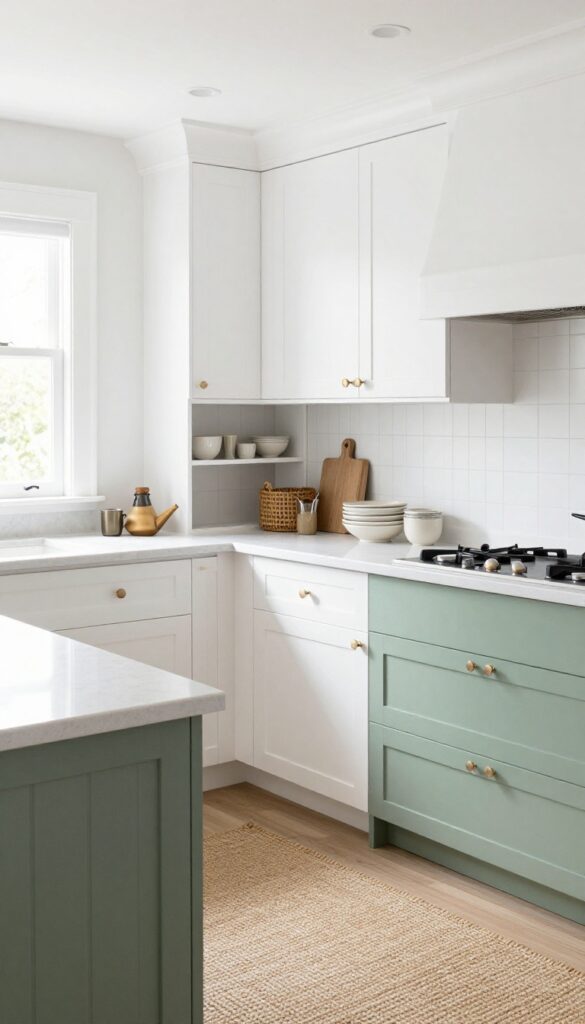
Few things say cozy cottage quite like beadboard. Those vertical grooves add instant texture and a handcrafted feel that warms up even the most modern kitchen. By swapping plain cabinet panels for beadboard inserts, you get a layered, lived-in look without sacrificing clean lines.
Paint them white for a breezy farmhouse vibe or try a soft pastel like sage or buttercream to keep the space light and inviting.
Beadboard inserts are a simple way to dress up flat cabinet doors. The vertical lines draw the eye upward, making the kitchen feel taller and more open. They work especially well on lower cabinets or an island, where the texture can ground the room.
For a cohesive look, carry the beadboard onto a backsplash or a breakfast nook bench. The key is to keep the rest of the kitchen simple—let the beadboard be the star.
Best Colors
White is the classic choice for beadboard, but don't shy away from pale blues, soft greens, or even a muted blush. These colors enhance the cottage feel while keeping the kitchen bright. For a more modern twist, try a darker shade like charcoal on the island beadboard and white on the perimeter cabinets.
Finishing Touch
Add a thin wood trim or a small lip around each beadboard panel to define the shape and prevent a flat look. This detail makes the inserts feel intentional and custom, not like an afterthought. Pair with cup pulls or ceramic knobs in a brushed nickel or matte black finish for a polished contrast.
Texture Mix
Beadboard pairs beautifully with other textures. Combine it with a smooth quartz countertop, a woven jute rug, and open shelving with ceramic dishes. The contrast keeps the kitchen from feeling one-note and adds the cozy, layered effect the cottage style is known for.
11. Mixed Materials: Wood and Metal Combo
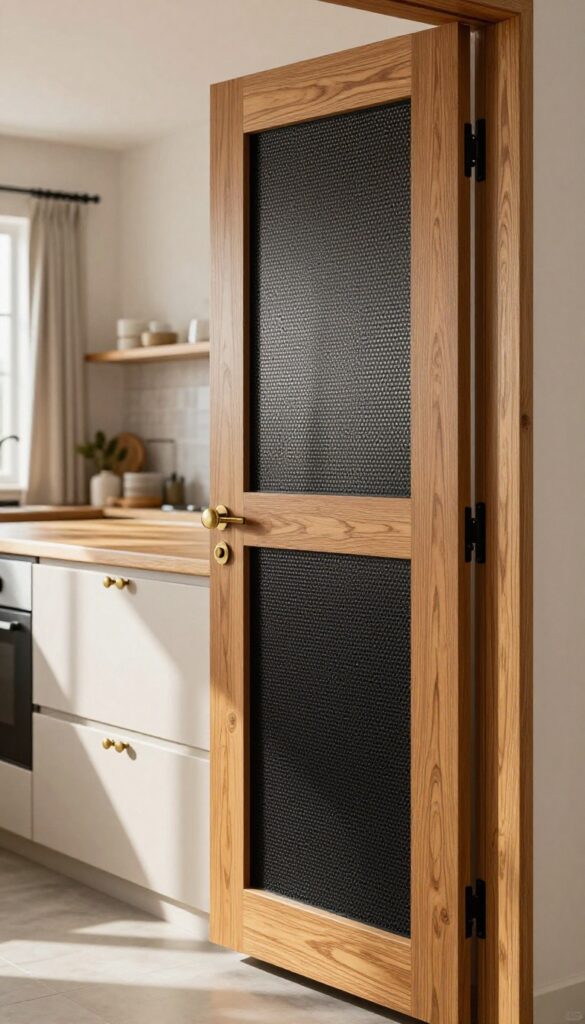
A kitchen door doesn’t have to be all one thing. Mixing wood and metal in a single door design brings together warmth and edge in a way that feels both grounded and modern. Think of a solid wood frame paired with a metal mesh insert—it’s industrial but not cold, rustic but not cabin-like.
This combination adds texture and visual weight without making the space feel busy. It works especially well in kitchens that already have mixed finishes, like stainless steel appliances with butcher block counters or open shelving with brass accents. The key is balance: let the wood be the anchor and the metal be the accent.
Mixed material doors are a smart way to introduce contrast without committing to a full overhaul. A wood frame gives the door substance and warmth, while a metal insert—like black steel mesh, brass grille, or copper sheet—adds a sleek, industrial touch. This combo feels especially right in open-concept kitchens where the door is visible from the living area.
It becomes a design feature rather than just a functional barrier. For a cohesive look, echo the metal finish elsewhere—maybe on cabinet pulls or light fixtures. The wood tone should complement your cabinetry or flooring, not match it exactly.
A lighter wood like ash or oak keeps things airy; walnut or reclaimed wood adds depth.
Best Materials
For the wood frame, go with oak, walnut, or reclaimed barn wood for character. The metal insert can be perforated steel, brass mesh, or even a sheet of copper that will patina over time. Avoid mixing too many metal finishes—stick to one or two that tie into your existing hardware.
Layout Tip
This door style works best as a pantry door or a door leading to a mudroom. In a galley kitchen, a sliding barn door with a metal mesh panel saves space and adds drama. For a standard swing door, keep the metal insert simple—a grid or diamond pattern—to avoid overwhelming the room.
Finishing Touch
Let the door’s hardware echo the metal insert. If you used black mesh, choose black hinges and handles. A small detail like a magnetic catch or a vintage-style latch can reinforce the industrial vibe without looking theme-y.
FAQ
What kitchen door style is most modern?
Flat-panel doors with clean lines are the most modern choice. They work well in minimalist and contemporary kitchens, especially when paired with warm wood or matte finishes.
How can I make my kitchen doors look more expensive?
Opt for solid wood or high-quality veneers, add soft-close hinges, and consider glass inserts or custom hardware. A consistent color palette and thoughtful details elevate the look.
Are glass-front cabinets hard to keep clean?
They do require more upkeep than solid doors, but frosted or reeded glass hides smudges better. Regular wiping and organized interiors make maintenance manageable.
Can I mix different door styles in one kitchen?
Yes, mixing styles can add character. For example, use glass uppers and solid lowers, or combine flat-panel with beadboard. Keep the color or finish consistent for cohesion.
What color kitchen doors are trending for 2025?
Warm neutrals like creamy white, soft gray, and taupe are popular, along with deep greens, navy, and terracotta. Two-tone combinations also remain strong.
Conclusion
Your kitchen doors are a chance to express your style while keeping the space functional and inviting. Whether you lean toward glass fronts, bold color, or natural wood, each choice adds a layer of warmth and personality. Take your time picking what feels right for your home.
A small change like updating cabinet fronts or adding a sliding door can transform the whole room without a major overhaul. Enjoy the process of making your kitchen truly yours.