10 Mexican Kitchen Ideas With Colorful Handmade Spirit
There's something about a kitchen that feels alive with color and texture—it just makes you want to cook, gather, and linger a little longer. Mexican design brings that energy effortlessly, with hand-painted tiles, woven textiles, and earthy clay pieces that feel both festive and grounded. The best part?
You don't need a full renovation to capture the spirit. A few thoughtful swaps over a weekend can transform your space into something vibrant and welcoming.
Whether you're drawn to bold talavera patterns or the warmth of natural wood, these ideas are meant to be achievable and inspiring. Let's walk through ten ways to infuse your kitchen with that handmade, colorful soul.
1. Swap Cabinet Hardware for Hand-Painted Ceramic Knobs
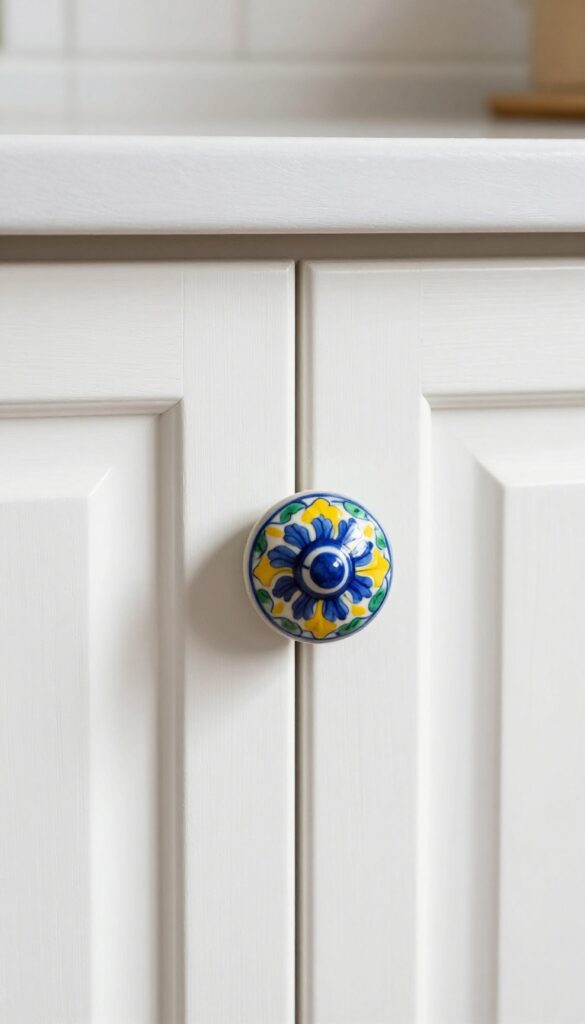
If your kitchen cabinets feel a little plain but you're not ready for a full makeover, this swap is for you. Replacing standard hardware with hand-painted talavera ceramic knobs adds an instant pop of color and folk-art charm. It’s a weekend-friendly upgrade that makes a big visual impact with minimal effort.
Talavera ceramics come from Puebla, Mexico, and are known for their bright patterns and glossy finish. These knobs work beautifully on cabinet doors, drawers, and even pantry fronts. Because they’re small and easy to install, you can change them out in an afternoon—no tools required beyond a screwdriver.
The best part? You get that handmade, artisanal feel without committing to a full backsplash or tile project.
Best Colors And Patterns
- Look for knobs with classic talavera motifs like floral vines, geometric shapes, or sunbursts. Blue and white is the most traditional combo, but you’ll also find versions with yellow, green, orange, or pink accents. If your kitchen has neutral cabinets (white, cream, or light gray), almost any pattern will stand out.
- For darker cabinets, choose knobs with lighter backgrounds or bright contrasting colors to keep them visible.
Where To Use Them
- These knobs aren’t just for upper cabinets. Try them on a kitchen island, a pantry door, or even on drawer fronts near the sink. You can also mix and match—use talavera knobs on the main cabinets and simpler ceramic pulls on drawers to avoid visual clutter.
- If you have open shelving, add a few matching knobs to baskets or canisters for a cohesive look.
Installation And Care
- Standard talavera knobs fit most cabinets with a single screw. Measure your current hardware’s hole spacing to ensure compatibility—most knobs use a single hole, but some pulls may need two. Clean them with a damp cloth and mild soap; avoid abrasive cleaners that could scratch the glaze.
- Over time, the paint stays vibrant as long as you keep them away from direct heat or steam.
2. Layer a Woven Tapestry as a Backsplash Accent
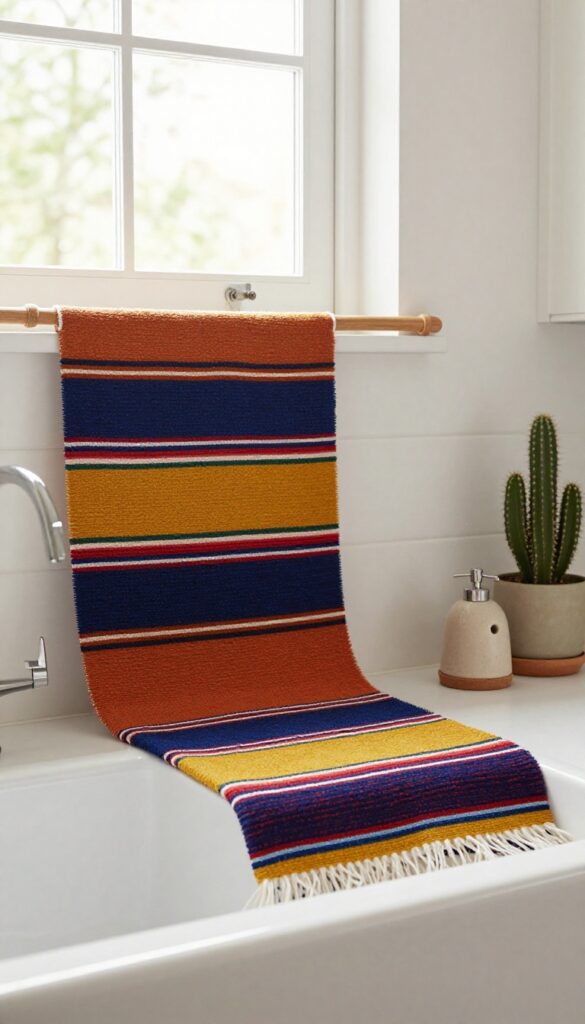
If your kitchen tiles are basic white or you're renting and can't change the backsplash, a woven tapestry is your secret weapon. Hang a lightweight wall hanging or a small serape behind the stove or sink to instantly warm up the space. It's an easy weekend refresh that adds pattern, texture, and a dose of Mexican handicraft without any commitment.
This trick works because textiles soften hard surfaces and bring in color without paint or tile. A serape's bold stripes or a woven piece with geometric motifs can tie together your existing cabinet colors and countertops. Plus, it's totally swap-friendly—change it with the seasons or whenever you crave a new look.
Just make sure to hang it safely away from the stove's heat and splatter zone, or use a clear acrylic splash guard over it for easy cleaning.
Best Colors & Patterns
Stick with warm, earthy tones like terracotta, mustard, and deep indigo to keep the Mexican spirit alive. Stripes, diamonds, or simple geometric patterns work best—they read clearly from across the room and don't compete with other decor. If your kitchen is neutral, a vibrant serape can be the star; if you already have colorful cabinets, choose a more subdued pattern with complementary hues.
Placement & Safety Tip
- The ideal spot is behind the sink or on a blank wall between upper cabinets. Avoid placing it directly behind the stove where grease splatters are heavy. For a practical touch, mount a slim wooden dowel or tension rod inside the window frame or under a cabinet—no drilling required.
- If you want it behind the stove, use a clear acrylic panel over the tapestry to protect it from grease and make wiping easy.
Finishing Touch
Let the tapestry extend a few inches below the countertop line for a layered, intentional look. Pair it with a small potted succulent or a hand-painted jar on the counter below to anchor the arrangement. The contrast of soft textile against hard tile or drywall creates a cozy, collected feel that reads as effortlessly stylish.
3. Display Clay Cookware on Open Shelves
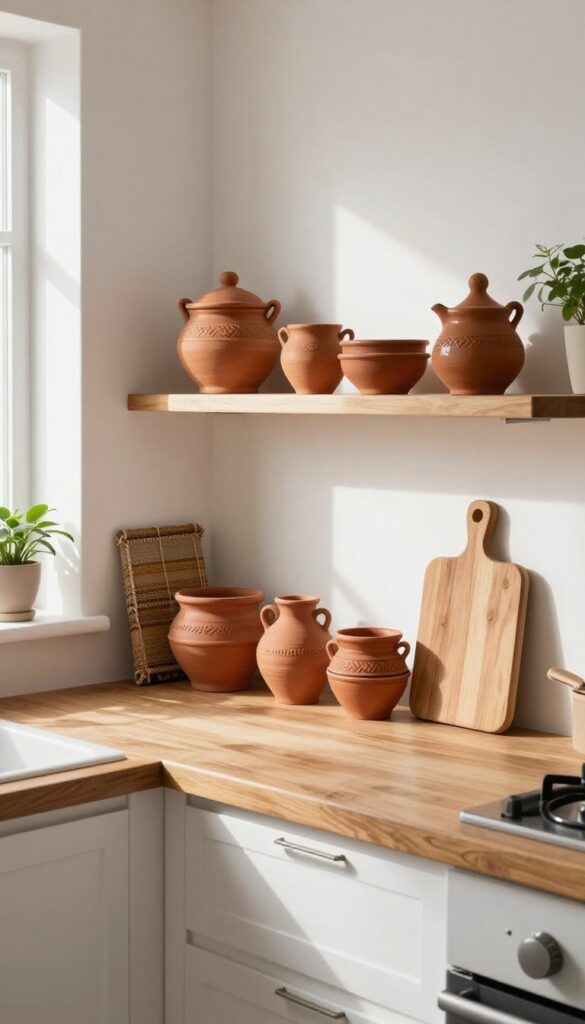
Open shelving gets a whole new personality when you fill it with handmade clay cookware. Cazuelas, molcajetes, and other traditional pieces bring earthy warmth and a sense of history to your kitchen. They look beautiful just sitting there, and they're ready to use whenever you need them.
Skip the mass-produced ceramic sets and let your cookware do the decorating. Clay pots have a naturally rustic, organic feel that softens the hard lines of modern kitchens. Plus, they're incredibly practical—grab a cazuela for a stew or a molcajete for fresh salsa, and your kitchen instantly feels more alive.
Best Colors And Finishes
Stick with natural terracotta, warm browns, and subtle black or cream glazes. These tones blend easily with wood countertops, neutral backsplashes, and green plants. Avoid overly bright or glossy pieces—the beauty is in the matte, handcrafted look.
Shelf Styling Tip
Mix different sizes and shapes for visual interest. Stack two smaller cazuelas on one shelf, then place a large molcajete on the next. Add a few woven textiles or a small wooden cutting board to break up the clay and keep the display from feeling too heavy.
Where It Works Best
This idea shines in kitchens with warm wood tones, white or cream walls, and plenty of natural light. If your kitchen is on the darker side, keep the shelves light and uncluttered so the clay pieces stand out without overwhelming the space.
4. Add a Painted Tile Border Along the Counter
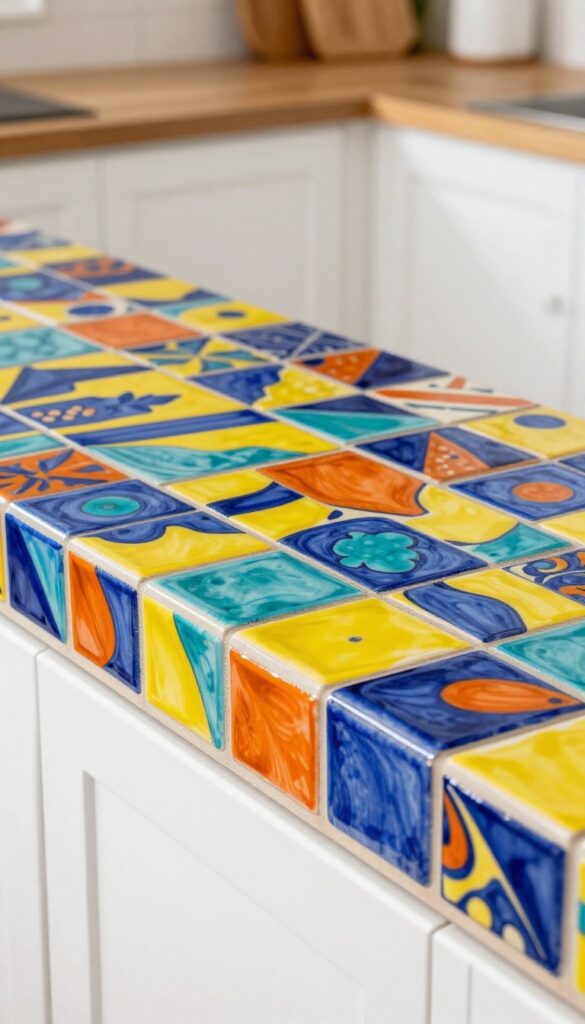
A kitchen backsplash can feel like a big commitment, but a painted tile border is the perfect weekend project. Instead of tiling the whole wall, you just run a strip of talavera tiles along the counter edge or as a backsplash border. It's a small detail that instantly injects color and personality without overwhelming the space.
The best part? You can swap it out later if you want a change.
Talavera tiles are hand-painted, so each tile has slight variations—that's what gives them so much charm. The border trick works especially well in kitchens with white or neutral cabinets, because the colorful tiles become the focal point. You can also use them to outline a window, frame a stove hood, or edge a floating shelf.
The key is to keep the rest of the kitchen simple so the tiles really pop.
Best Colors
Stick with classic talavera shades: cobalt blue, sunny yellow, deep orange, and turquoise. These colors feel authentic and pair beautifully with white, cream, or warm wood tones. If your kitchen has a lot of color already, go for a more muted palette like blue and white only.
Installation Tip
- You don't need a pro for this. Use peel-and-stick talavera tiles or thin-set mortar for a permanent hold. Measure the length you need, cut tiles with a wet saw (or ask the store to cut them), and apply.
- Grout with a matching or neutral color to keep the focus on the tile pattern.
Styling Note
- Let the border be the star. Keep countertops clear of clutter, and choose simple dishware and accessories. A few wooden cutting boards or a ceramic pitcher can complement the tiles without competing.
- The border draws the eye along the counter, making the kitchen feel longer and more cohesive.
5. Hang a Colorful Handwoven Runner on the Island
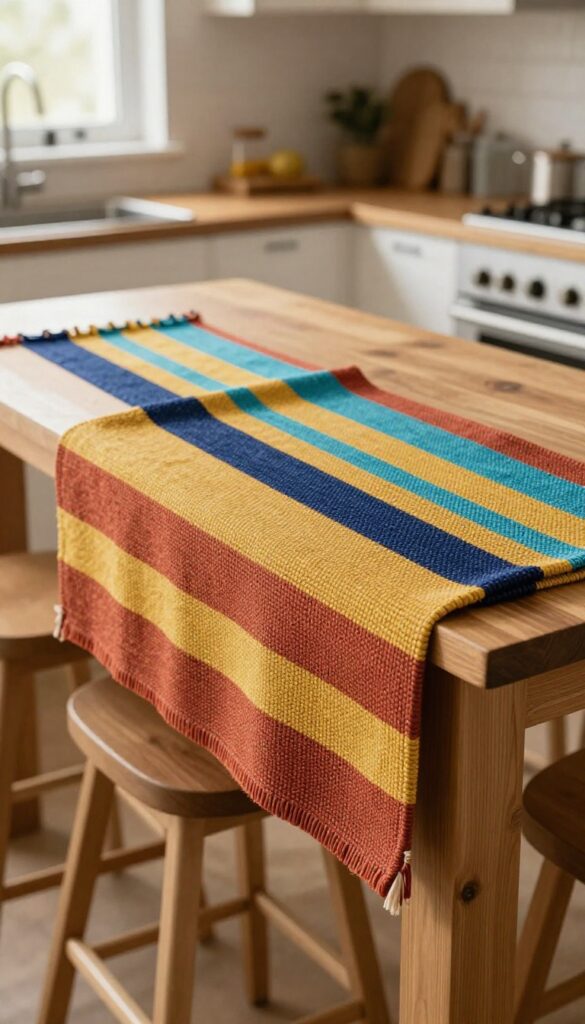
A kitchen island can feel like a big empty block, especially if the countertop is neutral. One of the easiest ways to inject color and personality without a permanent change is to drape a handwoven runner across it. Think stripes, geometric patterns, or subtle ikat designs in warm reds, oranges, and blues.
It softens the hard surfaces, anchors the cooking zone, and makes the whole kitchen feel more lived-in and festive.
This trick works especially well if your island doubles as a breakfast bar or prep station. The runner adds a layer of texture that contrasts nicely with sleek countertops or glossy cabinets. Plus, it's a weekend-refresh friendly swap: take it off for deep cleaning or switch it out seasonally.
Go for a runner that's about 6 to 12 inches shorter than your island on each end so it hangs neatly without dragging. Stick to cotton or wool blends that can handle a bit of kitchen traffic and are easy to toss in the wash.
Best Colors And Patterns
- Stick with traditional Mexican palette staples: terra-cotta red, mustard yellow, deep indigo, and turquoise. Stripes are a classic choice—they add movement without being too busy. If your kitchen leans neutral, a bold zigzag or diamond pattern can become the focal point.
- For a more subtle nod, choose a runner with a natural off-white background and thin colored stripes.
Placement And Styling Tip
- Center the runner lengthwise on the island, leaving equal overhang on both ends. If you have bar stools, make sure the runner doesn't interfere with legroom—tuck it back a few inches from the edge. Layer a small wooden bowl or a cluster of mini succulents on one end for a casual vignette.
- Avoid placing hot pots directly on the runner; use trivets or move it aside when cooking.
Material And Care Note
- Look for handwoven cotton or a cotton-acrylic blend. These are durable, colorfast, and easy to spot-clean. Avoid delicate wool or silk in a kitchen setting.
- Most runners can be machine washed on a gentle cycle and hung to dry. To keep the colors vibrant, wash with like colors and skip the bleach.
6. Incorporate Woven Baskets for Storage and Style
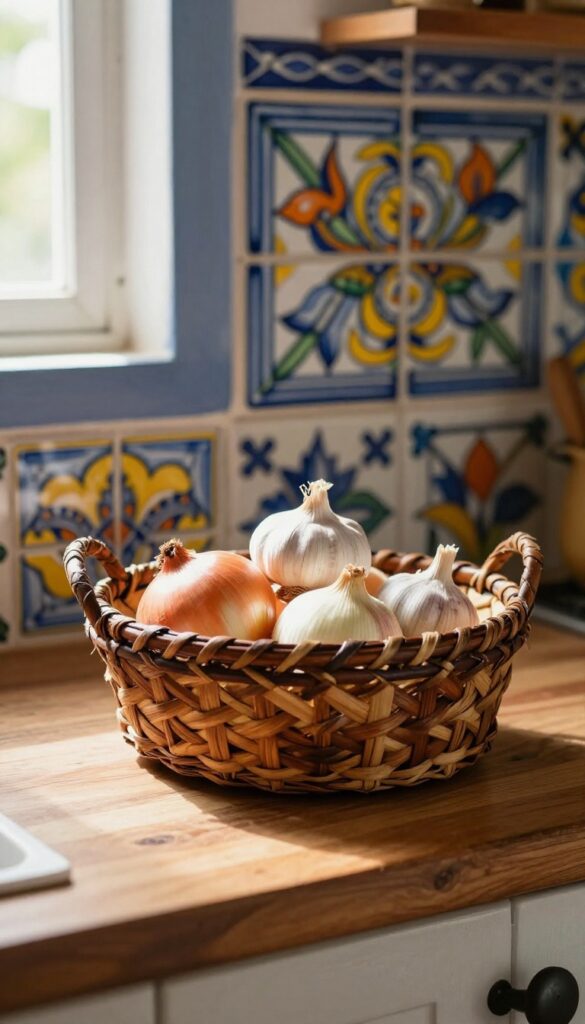
Woven baskets are one of those decor pieces that pull double duty without even trying. In a Mexican-inspired kitchen, they add warmth, texture, and a handcrafted feel that blends perfectly with colorful tiles and rustic wood. Plus, they solve the eternal problem of where to stash onions, garlic, or extra dish towels without cluttering your countertops.
Large woven baskets work wonders for hiding everyday kitchen clutter while adding natural charm. Use them to store produce like potatoes and onions, or tuck away linens, plastic bags, or even small pots. The key is choosing baskets with a tight weave and sturdy handles so they hold up to daily use.
Place one on the floor near the pantry, set another on an open shelf, or group a few under a console table for a layered look that feels collected over time.
Best Materials And Colors
Stick with natural fibers like palm leaf, seagrass, or rattan for an authentic Mexican feel. Darker tones, such as deep brown or black-dyed palm, contrast beautifully with colorful tile backsplashes. Lighter neutral weaves work well if your kitchen leans more modern or has white cabinetry.
Where To Place Them
Floor baskets are perfect for bulky items like root vegetables or extra cookbooks. Countertop baskets should be smaller and used for fruit or frequently used utensils. Hanging baskets save space and keep onions and garlic well-ventilated—just make sure they're securely mounted.
Styling Tip
Mix basket sizes and shapes for visual interest. A tall basket filled with dried branches or pampas grass adds height to a corner, while a low, wide basket under a window can hold firewood or extra throws. Keep the baskets in similar color families to avoid a chaotic look.
7. Install a Bright Painted Backsplash in a Single Color
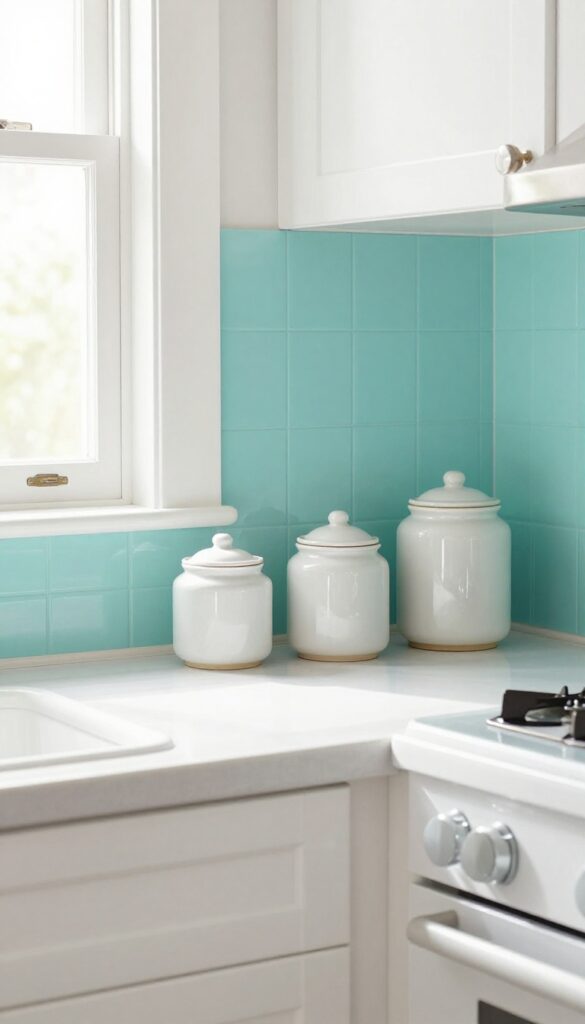
A full tile backsplash can feel like a big commitment, especially if you're renting or just want a quick refresh. But you don't need ceramic or stone to get that vibrant Mexican kitchen look. A single bold color painted directly onto the wall—or over a layer of beadboard—can deliver the same punchy effect for a fraction of the cost and effort.
Think glossy turquoise behind a white stove or warm coral framing a farmhouse sink. It's an instant mood lifter that feels intentional and handmade.
This idea works best on a small section of wall, like the area between countertops and upper cabinets or behind a range. The key is choosing a high-quality, washable paint in a satin or semi-gloss finish so it can handle splashes and grease. Prep the wall properly with a primer, and consider adding a clear polyurethane topcoat for extra durability.
If you want texture without tile, try painting over a sheet of beadboard or shiplap—it adds that rustic Mexican charm while keeping the project weekend-friendly. The single-color approach keeps the look clean and modern, while the vivid hue brings the warmth and energy of Mexican decor into your kitchen.
Best Colors For That Mexican Vibe
- Stick with saturated, sun-drenched shades: turquoise, coral, sunny yellow, or deep terracotta. These colors mimic traditional Talavera tile palettes but feel more streamlined. For a softer take, try a dusty rose or a muted cobalt.
- Test a few swatches on the wall and observe how they change with your kitchen's natural light throughout the day.
Prep And Paint Tips For A Lasting Finish
- Clean the wall thoroughly and sand any glossy areas. Apply a stain-blocking primer, especially if you're covering a dark color. Use a high-quality acrylic latex paint with a satin or semi-gloss sheen—it's easier to wipe down.
- For extra protection, add two coats of water-based polyurethane. Let each coat dry fully before the next.
Where To Stop The Paint
- Keep the painted area contained—behind the stove, sink, or a small prep zone. Avoid painting an entire wall, as it can feel overwhelming. A 4- to 6-inch strip above the counter is enough to make a statement.
- Use painter's tape for crisp edges, and consider adding a thin wooden trim or metal strip as a transition between the painted section and the rest of the wall.
8. Use Hand-Painted Dinnerware as Wall Art
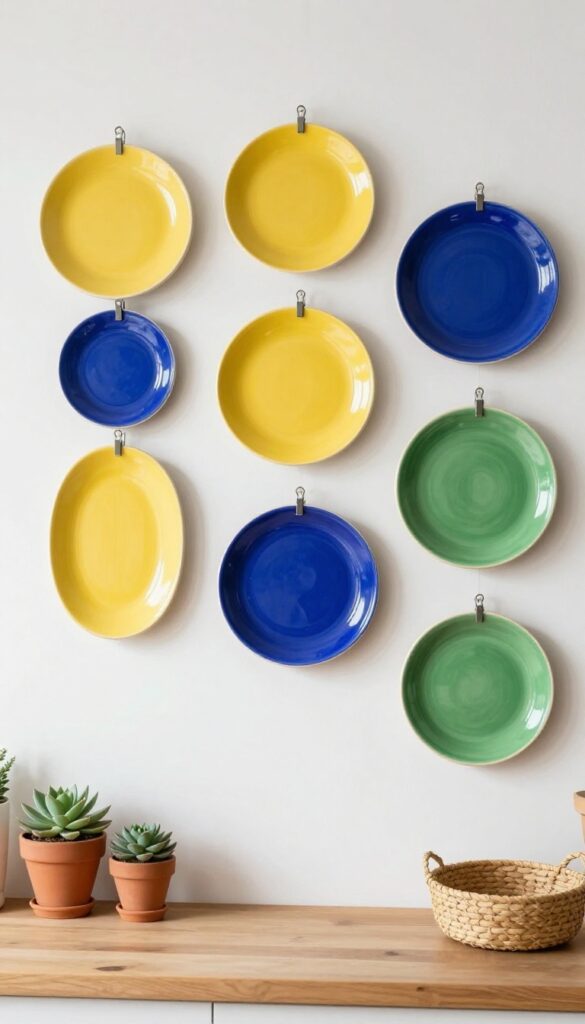
Plates are one of the most underrated wall decor options. They bring color, pattern, and a handmade feel that fits perfectly with a Mexican-inspired kitchen. Plus, they're easy to swap out whenever you want a change—no nails required if you use plate hangers.
Instead of hiding your favorite plates in a cabinet, put them on display. A cluster of hand-painted plates above the stove or along a blank wall becomes an instant focal point. The best part?
You can rearrange them anytime you're in the mood for a weekend refresh. Mix sizes and patterns for an eclectic look, or stick to a single color palette for more cohesion.
Best Colors
Stick to traditional Mexican palette staples like cobalt blue, sunny yellow, terra-cotta, and vibrant green. These colors pop against white or neutral walls and tie into the handmade spirit of the article.
Layout Tip
Before hammering any nails, lay your plates on the floor and play with the arrangement. A loose grid or organic cluster works best. Leave a few inches between plates so each piece can breathe.
Shelf Styling Tip
If drilling into tile feels daunting, prop plates on a narrow shelf or ledge instead. Lean them at slight angles for a casual, collected-over-time vibe. Add a small succulent or a woven basket nearby for texture.
9. Add a Woven Pendant Light or Lampshade
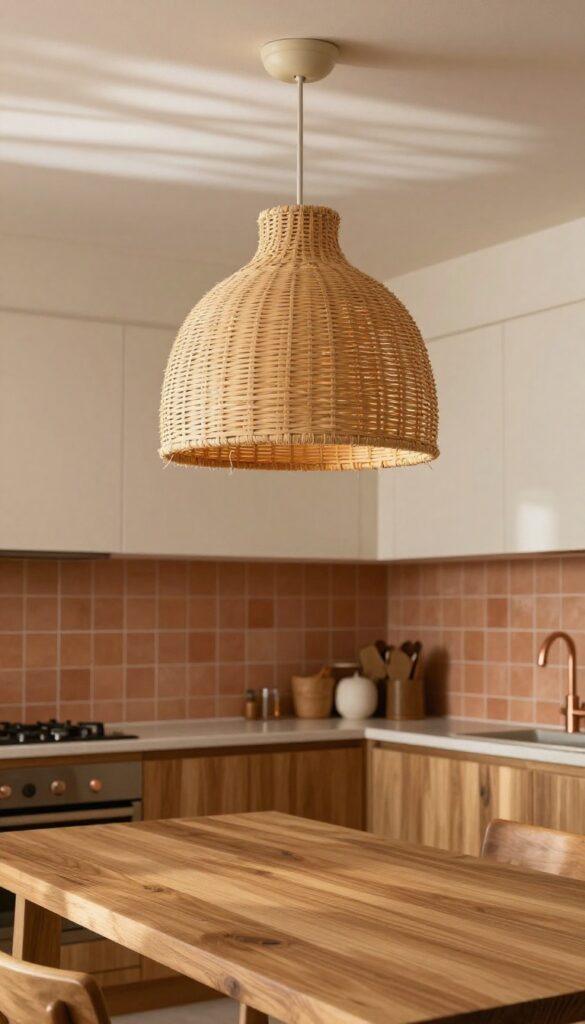
Overhead lighting often gets treated as an afterthought, but it’s one of the fastest ways to shift the entire mood of a kitchen. Swapping a plain flush mount for a woven pendant brings in texture, warmth, and that handcrafted feel without a full renovation. The natural fibers soften the light, casting a warm glow that makes the space feel instantly more inviting.
A woven pendant light does double duty: it’s a sculptural focal point and a source of diffused, flattering light. Choose a palm or ixtle shade in a natural tan or warm honey tone—these complement the earthy colors and handmade spirit of a Mexican-inspired kitchen. Hang it over an island, a dining nook, or even a sink area to draw the eye upward and add visual depth.
The open weave lets light filter through in a soft pattern, creating subtle shadows that add coziness. Best of all, this is a weekend-friendly swap: no rewiring needed if you’re replacing a standard fixture with a pendant kit. Just make sure the shade is sized appropriately—a 12- to 16-inch diameter works well for most kitchen islands, while a larger 20-inch shade can anchor a dining table.
Best Materials And Colors
- Stick with natural materials like palm leaf, ixtle, or seagrass. These fibers have a subtle sheen and texture that synthetic versions can’t replicate. For colors, go with undyed tan, warm beige, or a light caramel.
- Avoid dark brown or black, which can feel heavy in a kitchen. A natural shade will pick up the warm tones of terracotta tiles, wooden cabinets, or copper accents, tying the room together.
Placement And Scale Tip
- Hang the pendant so the bottom sits about 30 to 36 inches above the counter or table. In a kitchen with standard 8-foot ceilings, a 12-inch drop is usually enough. For a more dramatic look, consider a cluster of three smaller woven shades over a long island—just keep them at different heights for visual interest.
- In a small kitchen, one medium pendant centered in the room can make the ceiling feel higher.
Finishing Touch
Pair the woven shade with a warm LED bulb (2700K to 3000K) to enhance the cozy glow. Add a dimmer switch so you can adjust the brightness from task lighting to ambient mood lighting. This small upgrade makes the fixture even more versatile and helps the handcrafted feel last well into the evening.
10. Bring in Potted Herbs in Painted Terracotta Pots
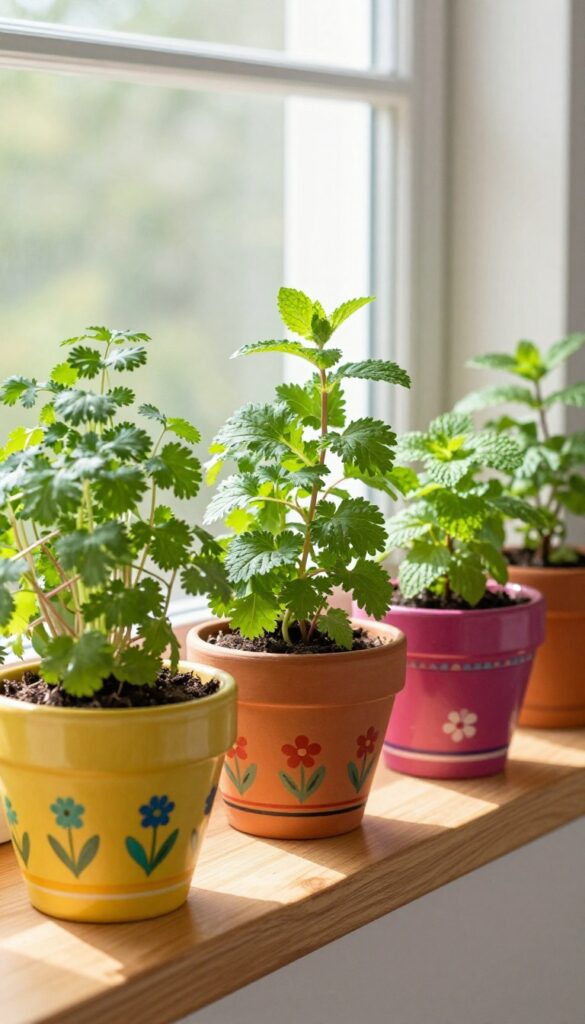
Fresh herbs are a kitchen’s best friend—they smell amazing, taste even better, and instantly make the room feel alive. But plain plastic pots can kill the vibe. Enter hand-painted terracotta: earthy, artisanal, and full of color.
A row of cilantro, mint, and oregano in tiny painted pots turns your windowsill into a mini Mexican market. It’s a weekend project that costs next to nothing and pays off in flavor and style.
This idea is all about blending function with folk art. The terracotta keeps herbs happy (they breathe), while the painted patterns—think bright flowers, geometric bands, or simple dots—add that handmade spirit. Group three or five pots on a tray near the sink or stove.
Water them regularly, snip what you need, and enjoy how the green leaves pop against the painted clay. It’s practical, pretty, and perfectly on theme.
Best Colors
- Stick with warm, sunny tones that complement the herbs: sunny yellow, coral, turquoise, and deep magenta. These colors feel festive against the neutral terracotta base. Avoid dark or muddy shades that hide the hand-painted details.
- White accents between colors keep the look fresh.
Plant Styling Tip
Choose herbs with different leaf textures—cilantro’s feathery fronds, mint’s crinkled edges, oregano’s tiny oval leaves. This variety creates visual interest even before the flowers bloom. Place taller herbs like rosemary in the back and trailing ones like thyme near the front.
Finishing Touch
Set the pots on a small wooden trivet or a colorful woven coaster to catch drips. Add a tiny metal label (or paint the herb name on the pot) for a charming, organized look. A little saucer underneath also protects your countertops.
FAQ
Can I achieve this look on a tight budget?
Absolutely. Many ideas like swapping knobs, adding a runner, or painting a small backsplash cost under $50. Focus on a few high-impact changes.
How do I keep the style from feeling too busy?
Balance bold colors with neutral walls and natural wood. Let one or two colorful pieces stand out, and keep countertops mostly clear.
Where can I find authentic handmade decor?
Check local artisan markets, Etsy shops from Mexican sellers, or stores like MexGrocer. Even big-box stores carry talavera-style items now.
Will these ideas work in a small kitchen?
Yes. Small spaces benefit from focused color and texture. A tile border, a few ceramic knobs, or a small woven basket can make a big difference without overwhelming.
How do I care for hand-painted ceramics?
Most are dishwasher safe, but hand washing is gentler. Avoid abrasive cleaners. Display pieces used for serving, not everyday cooking, to keep them lasting.
Conclusion
Bringing a little Mexican spirit into your kitchen doesn't require a full overhaul or a big budget. It's about choosing pieces that feel handmade, colorful, and full of life—then letting them shine in simple, practical ways.
Whether you start with a single ceramic knob or a whole wall of talavera tiles, each change adds warmth and personality. The beauty of this style is that it's forgiving, joyful, and easy to evolve over time.