15 Brown Kitchen Cabinet Decor Ideas That Add Rich Warmth
Brown kitchen cabinets bring a natural, grounded feel that instantly warms up a room. But if your kitchen is on the smaller side, you might worry about them making the space feel dark or cramped.
The good news is that with the right decor choices, brown cabinets can actually make a compact kitchen feel cozy and inviting without sacrificing style. From clever lighting tricks to smart storage solutions, these 15 ideas are designed to work with brown cabinetry in small spaces.
Each tip focuses on keeping things practical while adding that rich, welcoming vibe brown cabinets are known for.
1. Lighten Up With Open Shelving
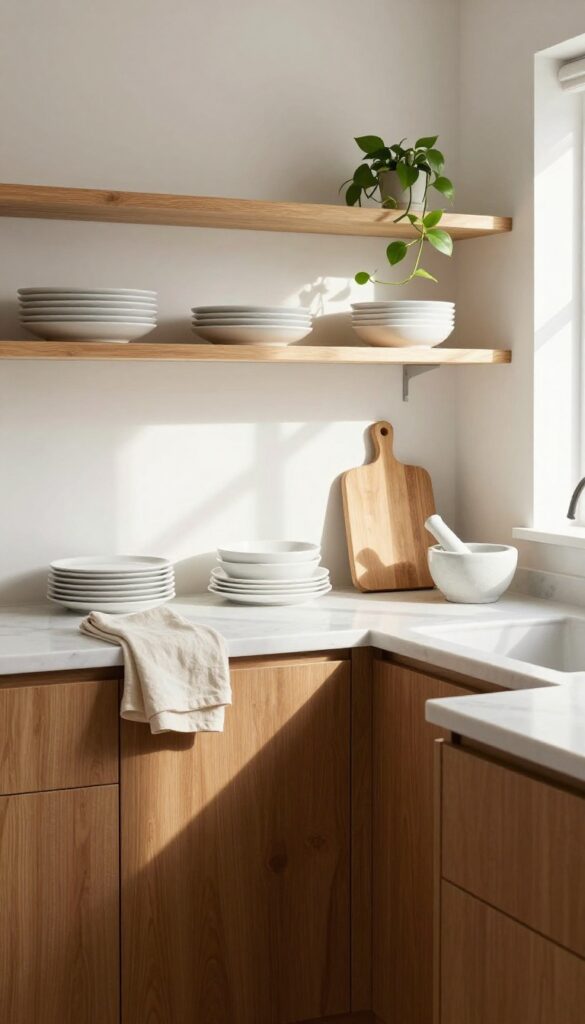
Brown cabinets can feel heavy, especially in a small kitchen. Swapping a few upper doors for open shelves instantly breaks up all that wood and lets the room breathe. The trick is keeping the shelves from looking cluttered—stick with white dishes, light linens, and a few neutral decor pieces to maintain that airy, open feel.
Open shelving is a go-to move for small kitchens because it visually expands the space. Instead of solid brown doors from counter to ceiling, you get little pockets of lightness that draw the eye upward. The contrast between warm brown cabinetry and crisp white or pale neutral items on the shelves creates a balanced, inviting look.
Plus, having everyday dishes within easy reach makes cooking and cleaning feel less like a chore.
Best Colors For A Light Contrast
Stick with white, cream, or soft gray for the bulk of your shelf items. White dinner plates, ceramic bowls, and linen napkins keep the look fresh. Add in a few light wood cutting boards or a pale marble mortar and pestle for subtle texture without darkening the palette.
Small-space Layout Tip
In a galley or L-shaped kitchen, limit open shelving to one wall or a single bank of cabinets. Too many open shelves can start to feel busy. Place them above the sink or prep area where you’ll actually use the items, and keep the shelves shallow—about 10 to 12 inches deep—so they don’t stick out too far.
Finishing Touch: Greenery
A small potted herb or a trailing pothos on the top shelf adds life without cluttering the counter. The green against brown cabinets and white dishes feels fresh and intentional. Just keep it to one or two plants so the shelves stay airy.
2. Add Under-Cabinet Lighting for Depth
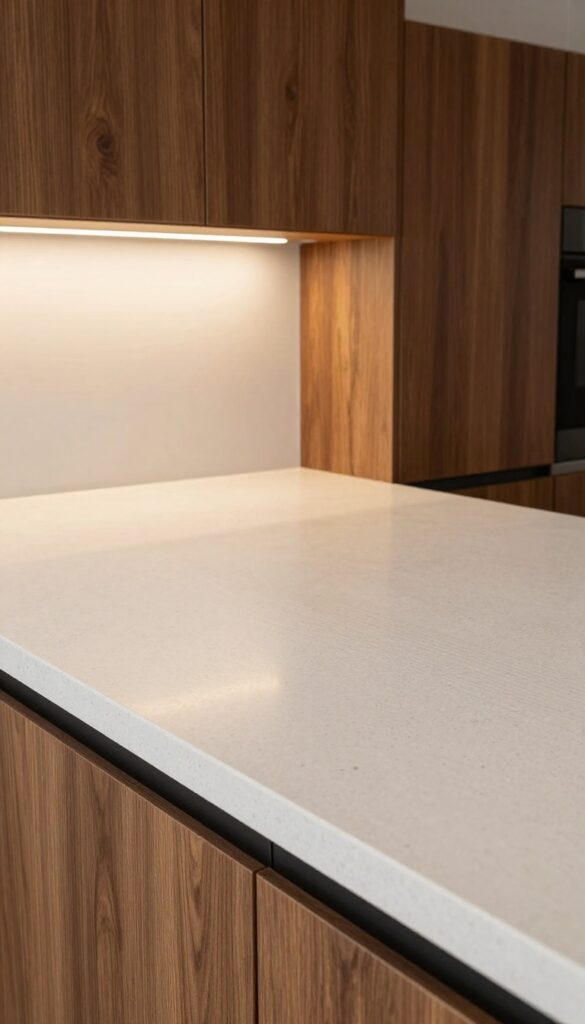
Brown cabinets can feel heavy if the lighting isn't right. Under-cabinet LED strips solve that instantly by washing your countertops in warm light and eliminating dark corners. This small upgrade makes the whole kitchen feel deeper and more polished, especially in tight spaces where every inch counts.
Under-cabinet lighting is one of those upgrades that looks expensive but doesn't have to be. It transforms the way your brown cabinets read, especially at night when overhead lights can cast unflattering shadows. Warm white bulbs (around 2700K to 3000K) are your best bet here—they enhance the rich undertones in the wood without washing it out or making it look orange.
For a small kitchen, this trick visually expands the space by drawing the eye along the countertop line, creating a sense of openness. Installation is straightforward with plug-in strip lights, and you can even get dimmable options to adjust the mood. Pair it with a pale quartz or butcher block counter to reflect the light and keep the whole look airy.
Best Bulb Temperature
Stick with warm white LEDs between 2700K and 3000K. Cool white or daylight bulbs will make brown cabinets look muddy and uninviting. Warm light brings out the natural richness of the wood and keeps the kitchen feeling cozy.
Small-space Installation Tip
Use plug-in LED strip kits with adhesive backing for a no-drill setup. Place them toward the front of the cabinet underside to light the countertop evenly. In a galley kitchen, run strips along both sides to eliminate shadows and make the room feel wider.
Finishing Touch
Add a dimmer switch to control brightness throughout the day. Bright light for meal prep, softer light for evening relaxation. This simple addition lets you tailor the mood without changing the fixtures.
3. Choose a Light Backsplash
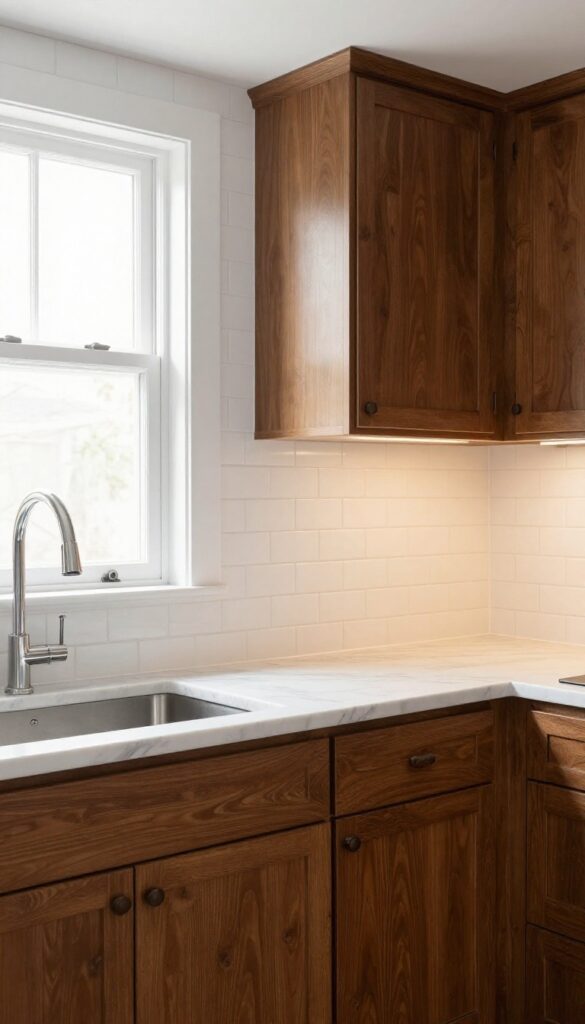
A light backsplash is the perfect counterbalance to rich brown cabinets. White subway tile or pale marble reflects light beautifully, keeping the kitchen from feeling too heavy or closed in. This trick works especially well in smaller kitchens, where every bit of brightness helps the space feel airy and open.
Pairing brown cabinets with a light backsplash creates a crisp, clean contrast that feels both timeless and fresh. The key is to let the backsplash be the star without competing with the cabinetry. White subway tile laid in a classic brick pattern is a foolproof choice, but you can also opt for subtle veining in Carrara marble or a soft arabesque shape for a bit of personality.
The light surface bounces natural and artificial light around the room, making the whole kitchen feel larger and more inviting. Plus, it’s a practical choice—light tiles are easy to clean and keep looking bright with minimal effort.
Best Materials
Glossy ceramic or porcelain subway tile is a budget-friendly workhorse that reflects light well. If you want something with a bit more elegance, honed marble or a marble-look quartz backsplash adds subtle texture without overwhelming the space. For a modern twist, consider zellige tiles with their handcrafted, slightly uneven finish—they catch light in a soft, organic way.
Small-space Fix
In a compact kitchen, extend the light backsplash all the way to the ceiling to draw the eye upward. This creates the illusion of height and makes the room feel less boxy. Pair it with under-cabinet lighting to eliminate shadows and keep the workspace bright and functional.
Finishing Touch
Choose a grout color that blends with the tile—white or off-white—to keep the look seamless and clean. Avoid dark grout, which can create a busy grid that competes with the brown cabinets. A continuous, light surface is what makes this idea so effective.
4. Go for Gold or Brass Hardware
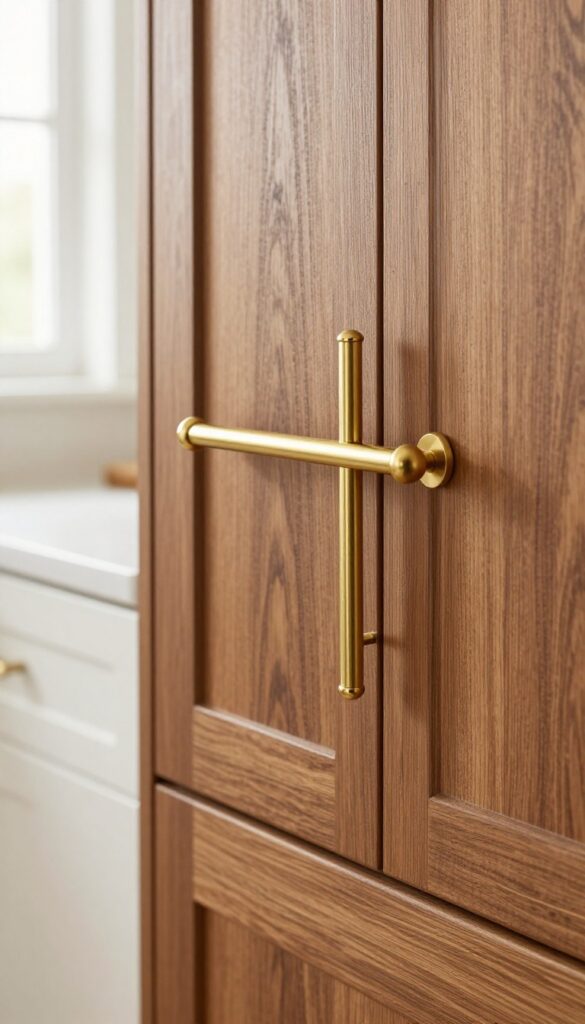
Hardware might seem like a small detail, but it can completely shift the feel of your kitchen. Swapping out standard knobs for brass or gold pulls adds a touch of elegance and draws the eye, making your brown cabinets feel intentional and polished. This is one of the easiest upgrades you can make—no tools required beyond a screwdriver—and it works beautifully in small spaces where every design choice needs to pull its weight.
Brass and gold hardware bring a warm metallic glow that complements the richness of brown cabinets without competing with them. The contrast is subtle but effective, creating a refined look that feels both classic and current. In a compact kitchen, this simple swap can make the space feel more curated and less cluttered, as the shiny pulls act like jewelry for your cabinetry.
Best Finishes To Try
Polished brass gives a bright, traditional feel, while brushed brass or unlacquered brass offers a softer, more lived-in look. For a modern twist, go with matte gold or champagne bronze. These finishes pair especially well with medium to dark brown cabinets, as they pick up the warm undertones in the wood.
Small-space Styling Tip
In a galley or L-shaped kitchen, use longer bar pulls (around 8 to 12 inches) on drawers and smaller knobs on cabinet doors. This creates a cohesive line that visually stretches the space. Stick to one finish throughout for a clean, unbroken look that feels deliberate rather than mismatched.
Budget-Friendly Swap
You don’t need to spend a fortune to get the look. Many affordable brass-tone options are available online or at home improvement stores. For a quick refresh, spray-paint your existing hardware with a metallic gold or brass spray paint designed for metal—just clean and prime first for a lasting finish.
5. Use Glass-Front Cabinet Doors
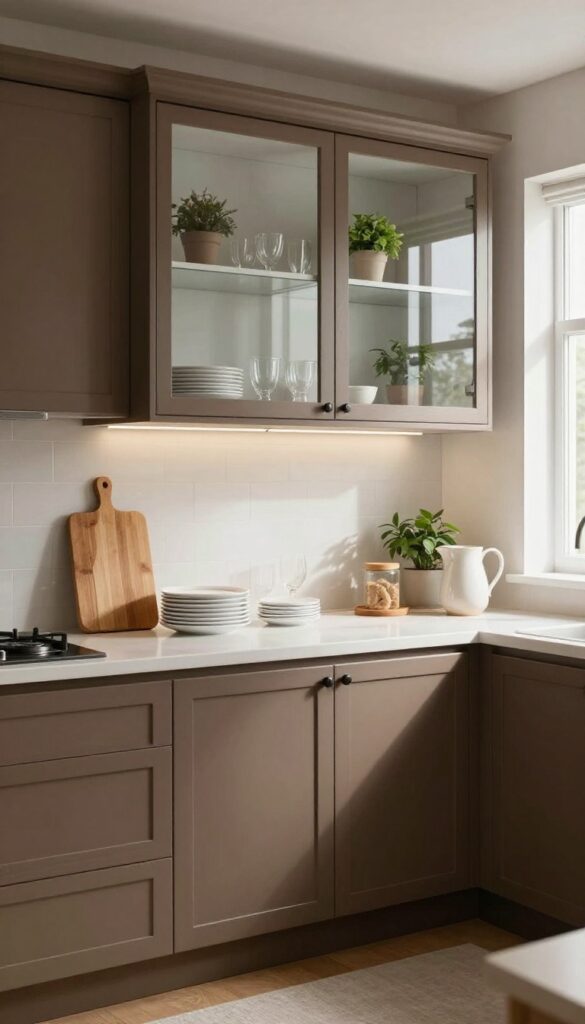
Glass-front doors are a clever way to break up a run of solid brown cabinetry without losing storage. They make the kitchen feel larger by letting your eye travel past the cabinet face, which is especially helpful in a small or galley layout. The key is keeping the interior tidy, so the view feels intentional rather than cluttered.
Swapping out a few solid doors for glass fronts instantly adds depth and lightness to a brown kitchen. The transparency creates a visual pause that keeps the space from feeling too heavy or closed in. Inside, stick to a simple arrangement of matching white dinnerware or clear glassware to maintain a clean, curated look.
This trick works best on upper cabinets near eye level, where the contents become part of the room's decor. For a practical touch, choose textured or frosted glass if you want to hide less organized shelves while still letting light through.
Best Glass Style
Clear glass gives the most open feel, but it demands neatness. If you prefer a softer look, opt for seeded or ribbed glass that obscures contents slightly while still reflecting light. Both options keep the airy effect without requiring museum-level precision.
Cabinet Styling Note
Treat the inside like a display. Stack plates vertically, group similar items together, and leave a little breathing room between objects. Add a small plant or a stack of linen napkins for a finishing touch that feels lived-in but polished.
Small-space Fix
In a tight kitchen, glass-front doors on upper cabinets draw the eye upward, making the ceiling feel higher. Pair them with under-cabinet lighting to highlight the contents and create a warm glow that bounces around the room.
6. Bring in Greenery for Contrast
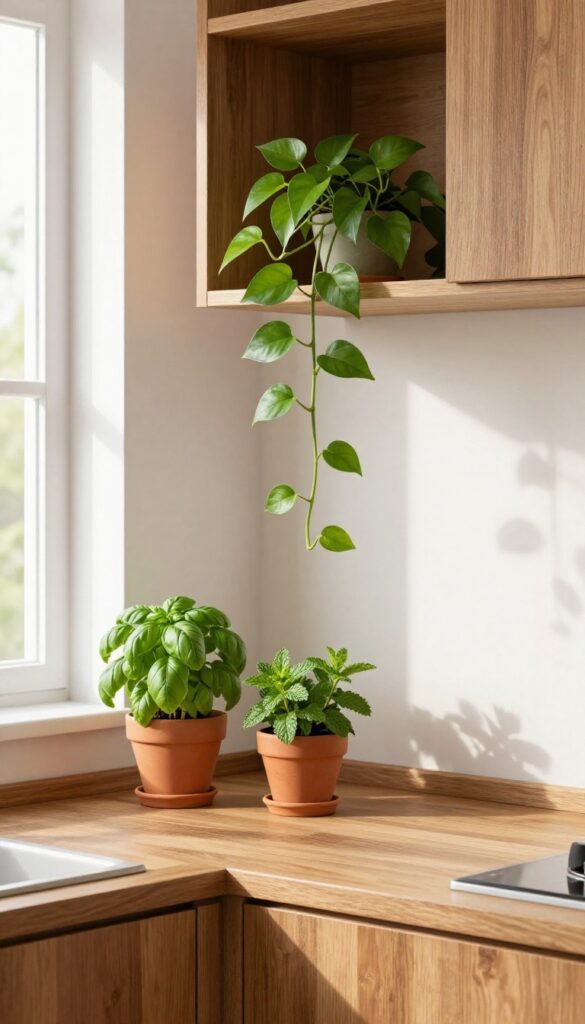
Green leaves against brown cabinets create a natural, lively contrast that instantly wakes up the space. In a small kitchen, this trick adds a pop of color without taking up counter real estate. A few well-placed plants make the whole room feel fresher and more inviting.
Potted herbs on the windowsill or a trailing pothos on an open shelf bring life and texture to brown cabinetry. The green softens the wood’s richness and adds a layer of organic warmth. For small kitchens, stick to compact plants that won’t overwhelm the counters.
Group two or three small pots on a shelf for a curated look, or let a single vine cascade from a high shelf to draw the eye upward. This low-cost update is easy to swap out seasonally and keeps your kitchen feeling connected to nature.
Best Plants For Brown Cabinets
Herbs like basil, mint, and rosemary thrive on sunny counters and double as cooking ingredients. For lower light, pothos, snake plants, and ZZ plants are nearly impossible to kill. Their varied leaf shapes and shades of green create visual interest against the warm brown backdrop.
Small-space Placement Tips
Use wall-mounted planters or magnetic herb pots to save counter space. A slim shelf above the sink can hold a row of small succulents. If your kitchen has a windowsill, line it with tiny terra-cotta pots for a cohesive, earthy look that doesn’t clutter the work area.
Styling The Greenery
- Mix pot materials to add texture—terra cotta, ceramic, and woven baskets all work well. Keep pots simple so the plants stay the focal point. For a cohesive look, repeat the same pot color (like white or matte black) across all your planters.
- Group plants in odd numbers for a naturally pleasing arrangement.
7. Stick to a Neutral Color Palette
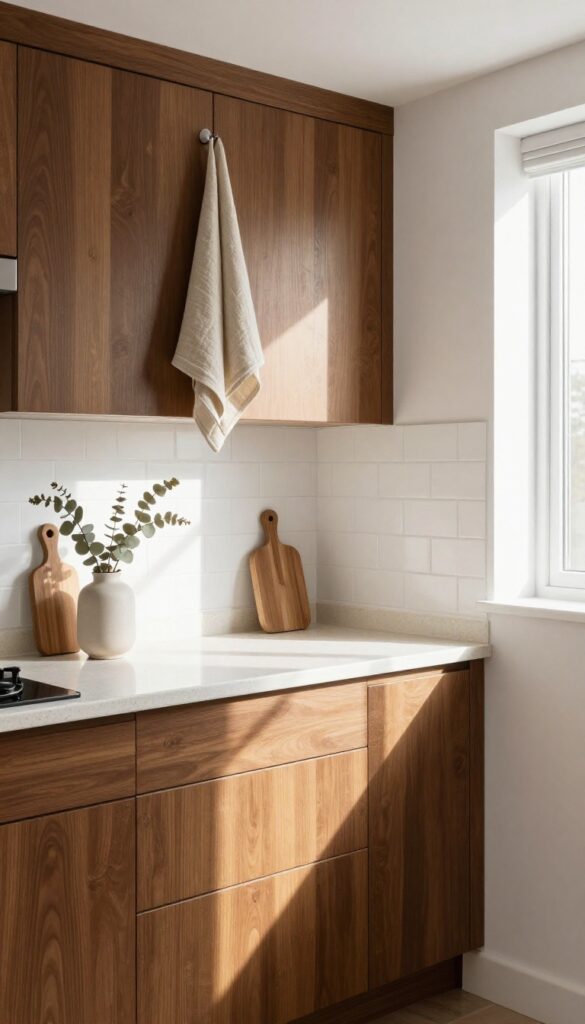
When your cabinets are a rich brown, the rest of the room doesn’t need to compete. A neutral backdrop—think soft whites, warm creams, and gentle beiges—lets the cabinetry take center stage without feeling heavy or dark. This approach is especially smart in a small kitchen, where too many colors can make the space feel cramped and chaotic.
By keeping walls, countertops, and decor in the same tonal family, you create a calm, cohesive look that feels both intentional and airy.
A neutral palette doesn’t mean boring. The key is to layer different textures and subtle variations within the same color range. For example, pair a matte white backsplash with a warm cream countertop and add a few beige linen towels.
The slight shifts in tone add depth without breaking the quiet harmony. In a small kitchen, this trick visually expands the room because there are no harsh color breaks to stop the eye. Plus, neutrals are timeless, so you won’t feel the need to redecorate anytime soon.
Best Colors To Pair With Brown Cabinets
- Stick to whites with warm undertones, like ivory or almond, rather than stark bright white. Creamy off-whites and soft greige (a mix of gray and beige) also work beautifully. Avoid cool grays or blue-tinged whites, as they can clash with the warmth of the brown.
- For countertops, a light quartz or marble-look surface in a soft cream keeps things bright and easy to clean.
Small-space Layout Tip
In a compact kitchen, use the same neutral color on the walls and the backsplash to create a seamless flow. This eliminates visual clutter and makes the cabinets pop without feeling overwhelming. If you have an open shelf, keep the items on it in the same neutral family—white dishes, cream canisters, and beige linens—to maintain the calm vibe.
Finishing Touch For Warmth
Add a natural wood cutting board or a woven basket in a similar brown tone to the cabinets. This brings in texture without introducing a new color, keeping the palette focused. A few leafy greens in a simple white pot also add life while staying within the neutral scheme.
8. Add a Mirror or Reflective Surface
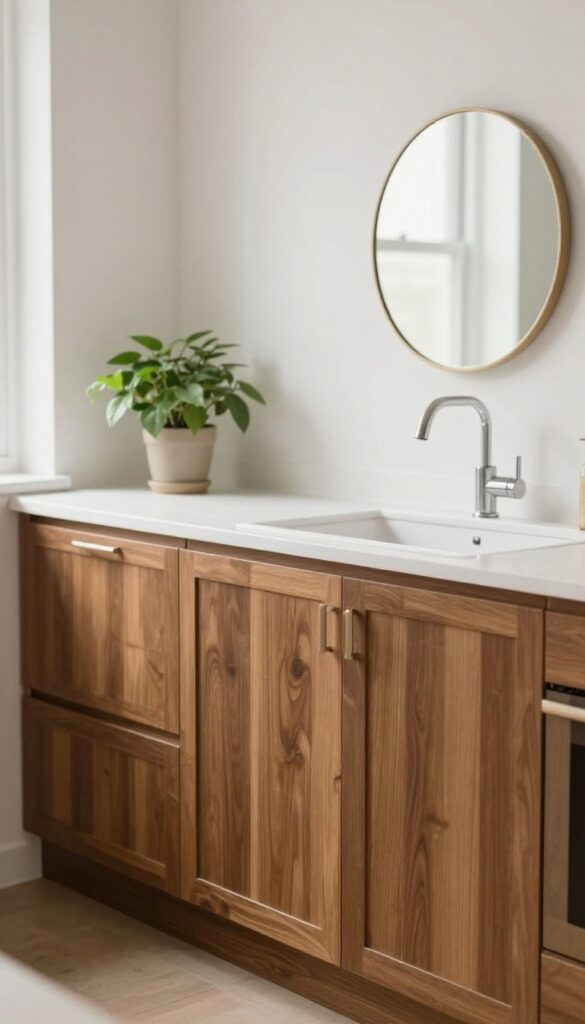
Small kitchens with brown cabinets can sometimes feel a bit closed in, especially if natural light is limited. That’s where mirrors and reflective surfaces come in—they bounce light around and make the whole room feel airier without moving a single cabinet. A well-placed mirror doesn’t just add depth; it becomes a subtle decor piece that catches the eye and softens the wood tones.
Think of it as a quick visual trick that costs next to nothing but changes how the space feels.
Mirrors work especially well in compact kitchens because they create the illusion of a second window or an extended backsplash. A small round mirror leaned against the backsplash behind the sink adds a gentle, unexpected detail. Mirrored trays on the counter are even easier—they reflect the warm brown of the cabinets and any nearby greenery or ceramic pieces.
The key is to keep the reflective item proportional to the space; a tiny mirror in a large kitchen might look lost, while a big one in a tiny galley could feel overwhelming. Stick to medium or small sizes, and let the brown cabinets anchor the look.
Best Placement Spots
- The backsplash area between the counter and upper cabinets is a natural spot for a small mirror. Lean it against the wall or mount it flush for a built-in feel. Another smart spot is on a narrow wall beside the cabinets—like the end of a counter run—where a vertical mirror can visually widen the room.
- Avoid putting mirrors directly across from a cluttered area, since they’ll just double the mess.
Style And Frame Choices
- For brown cabinets, stick with frames that complement the wood tone without competing. Thin black metal frames keep things modern and sleek. Brass or gold frames add warmth and a touch of elegance.
- If your cabinets are more rustic, a natural wood frame in a lighter or darker shade can blend right in. Avoid overly ornate frames in busy patterns—they can make a small kitchen feel cramped.
Small-space Bonus Tip
Pair the mirror with a small plant or a single piece of ceramic decor on a mirrored tray. The reflection doubles the visual impact of that one item, making the counter feel curated rather than cluttered. This combo works especially well on a corner counter or near a window where natural light can hit the mirror and bounce around the room.
9. Install Floating Shelves in Corners
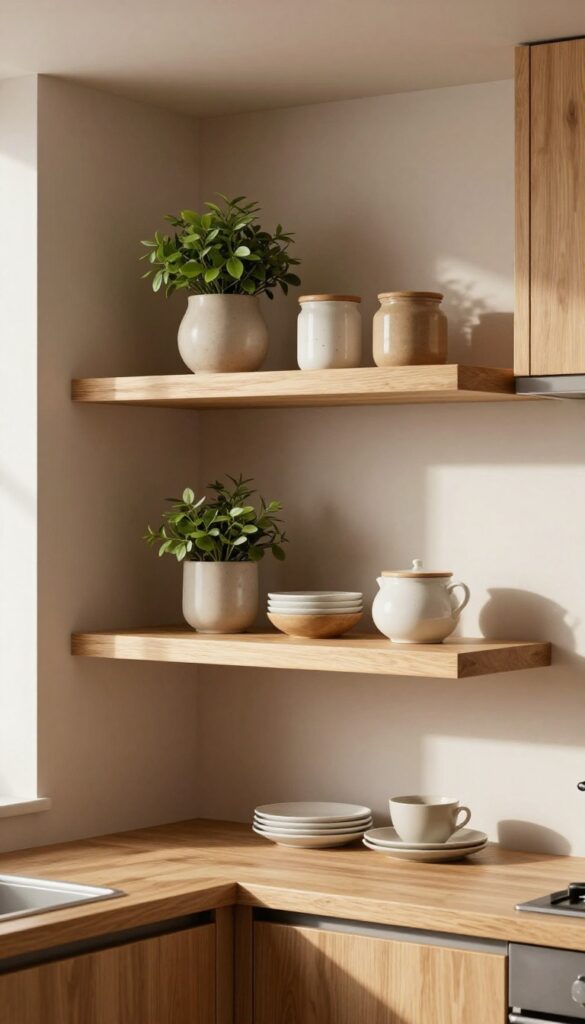
Corners often get overlooked in kitchen design, but they’re prime real estate for adding both storage and visual interest. Floating shelves tucked into an empty corner break up the monotony of cabinets and draw the eye upward, making the whole space feel taller and more open. For brown cabinets, this trick works especially well because the shelves can either blend in or contrast, depending on the look you want.
Floating shelves in corners are a small-space superhero. They turn dead zones into functional display areas for spices, small jars, or a few decorative pieces. The key is to keep them shallow so they don’t stick out too far, and to style them with a mix of everyday essentials and personal touches.
Since brown cabinets already bring warmth, you can play with shelf materials like light wood, black metal, or even glass to keep the look fresh and intentional.
Best Materials
Stick with natural wood in a lighter tone than your cabinets—like oak or birch—to create contrast without clashing. If your cabinets are a deep espresso, try white or matte black shelves for a modern edge. For a seamless look, match the shelf wood to your cabinet stain, but go a shade lighter to keep the corner from feeling heavy.
Layout Tip
Install two or three shelves starting about 12 inches above the counter, with 10 to 12 inches between each. This leaves room for taller items like oil bottles or a small plant. Angle the shelves slightly inward if the corner is tight, or use a corner shelf bracket to maximize the depth.
Styling Idea
Group items in odd numbers—three small jars or a stack of plates with a single plant. Add a small hook underneath for hanging mugs or measuring spoons. Keep the color palette neutral with pops of green from herbs or a trailing pothos to tie back to the warmth of the brown cabinets.
10. Use a Light-Colored Rug or Runner
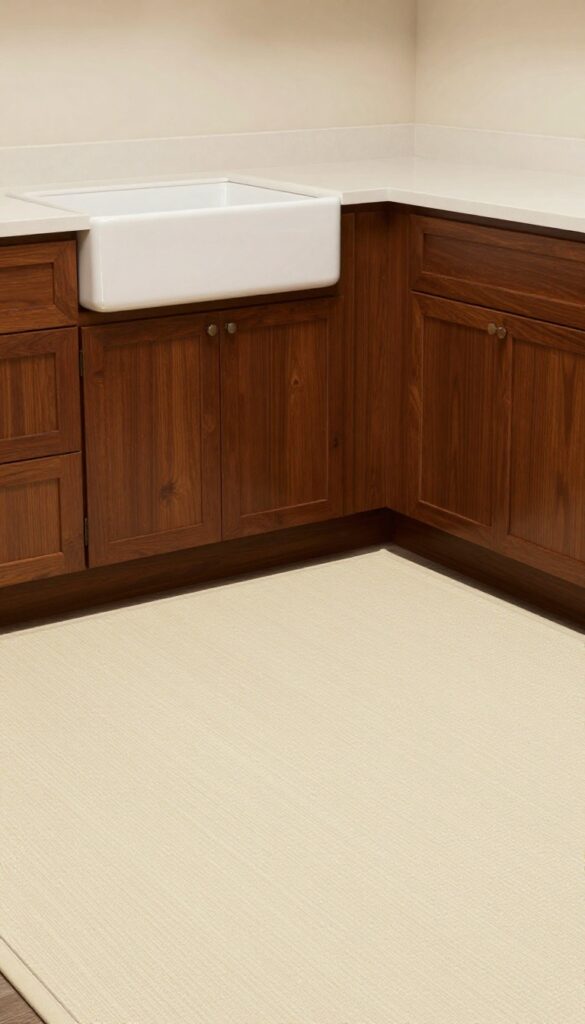
A pale rug in front of the sink or stove adds softness and lightens the floor area. In a small kitchen, dark cabinets can make the floor feel heavier, but a light runner breaks that up and draws the eye forward. Choose a washable material for practicality—because let’s be real, kitchens get messy.
Layering a light rug over a dark floor or against brown cabinets creates contrast that makes the whole kitchen feel airier. It’s a simple swap that doesn’t require painting or renovation, and it instantly adds a cozy, lived-in touch. For small spaces, a runner that extends the length of the cabinet run can visually elongate the room.
Best Colors And Patterns
Stick with off-white, cream, soft beige, or pale gray to keep the look bright. A subtle stripe or geometric pattern hides dirt better than a solid light color, but avoid anything too busy that competes with the cabinetry. If your brown cabinets have warm undertones, go for a cream or ivory rug; if they’re cooler, a light gray works well.
Material Matters For Kitchens
- Washable rugs are a game-changer for kitchens. Look for flat-weave cotton, polypropylene, or indoor-outdoor blends that can handle spills and frequent cleaning. Avoid thick shag or high-pile rugs near cooking zones—they trap crumbs and are harder to keep clean.
- A low-profile runner also won’t trip you up when carrying hot pots.
Placement Tips For Small Kitchens
- In a galley or small L-shaped kitchen, place a runner in front of the sink and stove—the two busiest spots. If you have a kitchen island, a small rug in front of the sink area works too. Make sure the rug doesn’t extend under cabinets or block cabinet doors when open.
- A 2×3 or 2×4 foot runner is usually the sweet spot.
11. Opt for Open Base Cabinetry
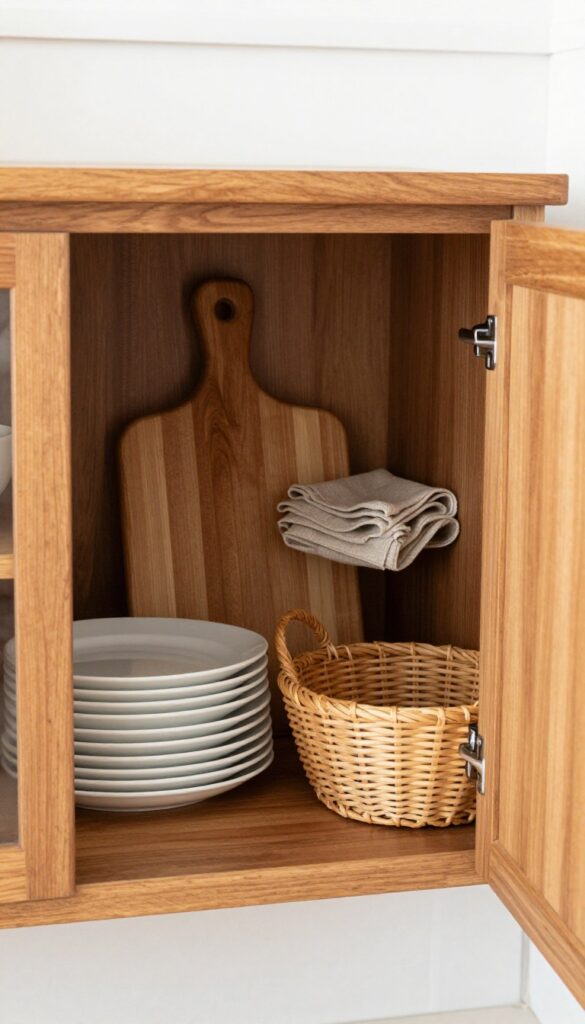
Removing doors from a lower cabinet might feel like a bold move, but in a small kitchen, it can actually make the space feel bigger. Without solid doors blocking the view, your eye travels deeper into the room, reducing that boxed-in feeling. Plus, open base cabinets force you to be intentional about what you store—baskets, cookware, or everyday dishes—turning a functional area into a design feature.
Open base cabinetry works especially well in brown kitchens because the warm wood tones of the cabinets contrast beautifully with the textures of woven baskets, ceramic pots, or copper pans. The key is to keep it organized but not too precious. Think practical: a stack of white dinner plates, a few linen napkins, and a wooden cutting board leaning against the back wall.
This setup adds warmth and visual interest without cluttering the countertop. For a cohesive look, choose baskets that match the undertone of your brown cabinets—warm rattan for honey oak, darker seagrass for espresso.
Best Baskets To Use
Rattan or seagrass baskets are natural choices that echo the earthy feel of brown cabinets. For a more modern edge, try black wire bins or matte ceramic canisters. Mix shapes and heights to keep the shelf from looking flat.
Small-space Styling Tip
In a galley or L-shaped kitchen, open base cabinets can make the room feel more open. Stick to just one lower cabinet to avoid visual chaos. Use it for items you reach for daily, like pots, pans, or mixing bowls.
Finishing Touch
Add a slim LED strip under the open cabinet to highlight the contents. Warm white light makes brown cabinets glow and gives the open storage a curated, gallery-like feel.
12. Hang a Statement Pendant Light
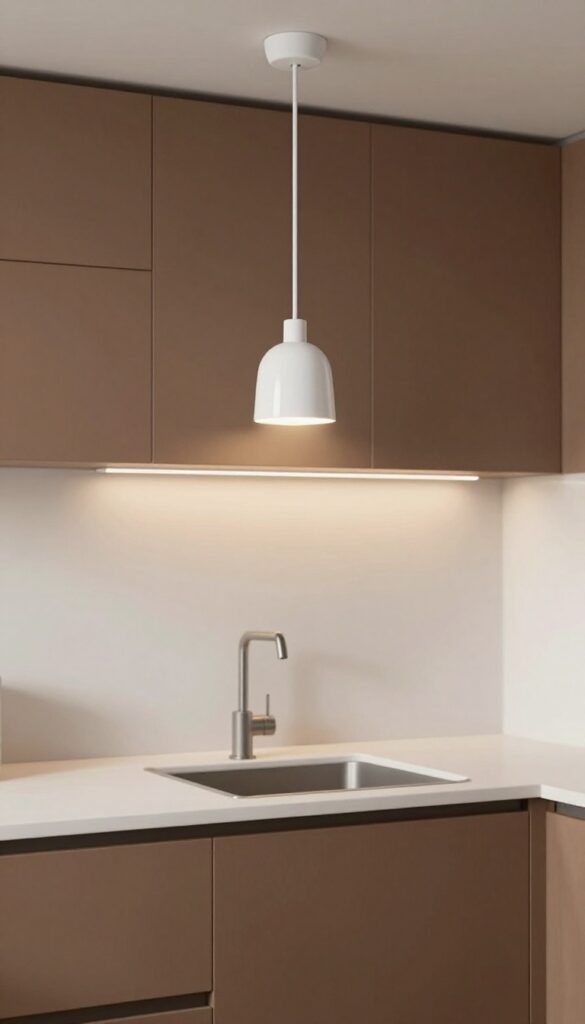
A single pendant light or small chandelier above the sink or island does more than just illuminate your workspace. It draws the eye upward, adding vertical interest and breaking up the heavy visual weight of brown cabinetry. For small kitchens, this trick is especially effective because it makes the ceiling feel higher and the room less boxed in.
Choose a light-colored shade to keep things airy, and you’ll instantly balance the richness of the wood tones.
In a kitchen with brown cabinets, lighting is your secret weapon against a dark or closed-in feel. A statement pendant acts like jewelry for the room—it adds personality without taking up counter or floor space. Go for a woven rattan shade, a white glass globe, or a simple metal cone in a warm brass finish.
The key is contrast: light and bright overhead against the darker cabinetry below. This setup works especially well over a sink or a small island, where the pendant becomes a focal point. For a practical touch, install it on a dimmer so you can adjust the mood from bright task lighting to a soft glow for evening cooking or casual meals.
Best Shade Colors
Stick with white, cream, beige, or soft pastel shades to keep the light bouncing around the room. Dark or opaque shades will absorb light and make the space feel smaller. A pale linen drum shade or a clear glass pendant with a warm bulb are both great choices that let light flow freely.
Placement Tip
Hang the pendant so the bottom is 30 to 36 inches above the counter or sink. In a small kitchen, avoid going too low—you want to maintain an open feel. Centering it over the main work area gives you both focused light and a clean visual anchor.
Small-space Fix
If your kitchen is tight on square footage, skip the multi-light fixture and go for a single, medium-sized pendant. It provides enough drama without overwhelming the room. Pair it with under-cabinet task lighting to keep countertops bright and functional.
13. Display Light-Colored Ceramics
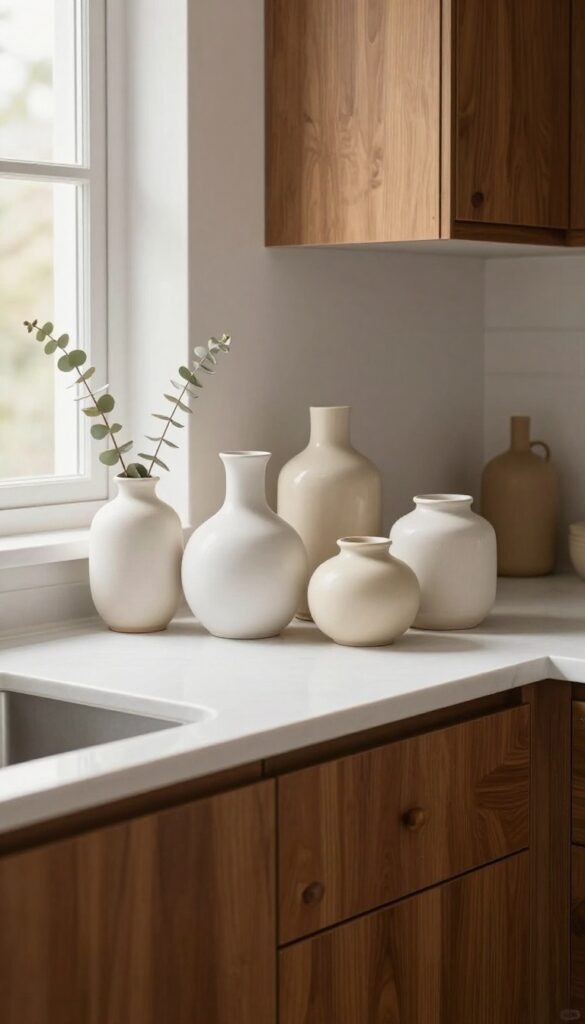
White or cream ceramic pieces act like little breaths of fresh air against brown cabinetry. They soften the visual weight of dark wood without introducing busy patterns or extra clutter. A few well-chosen jars, vases, or pitchers grouped on the counter create a calm, intentional focal point that feels both practical and polished.
The trick is to keep the collection simple—think three or four pieces with similar shapes or finishes. Avoid mixing too many colors or textures, as the goal is contrast without chaos. This approach works especially well in small kitchens where every surface counts, since the light tones reflect more light and make the space feel airier.
Best Shapes For The Look
Stick with rounded or softly tapered forms like bud vases, ginger jars, or small pitchers. These shapes feel organic and inviting, balancing the straight lines of cabinetry. Avoid overly angular or modern pieces unless your kitchen leans minimalist.
Placement Tip
Group ceramics near a window or under a light source to maximize their reflective quality. A small cluster next to the sink or coffee station draws the eye naturally. Keep the arrangement low so it doesn't block the view of the counter or backsplash.
Finishing Touch
Add a single dried stem or a few sprigs of eucalyptus to one vase for a subtle organic element. This keeps the display from feeling too staged and ties it into the kitchen's natural warmth.
14. Use Vertical Stripes in Textiles
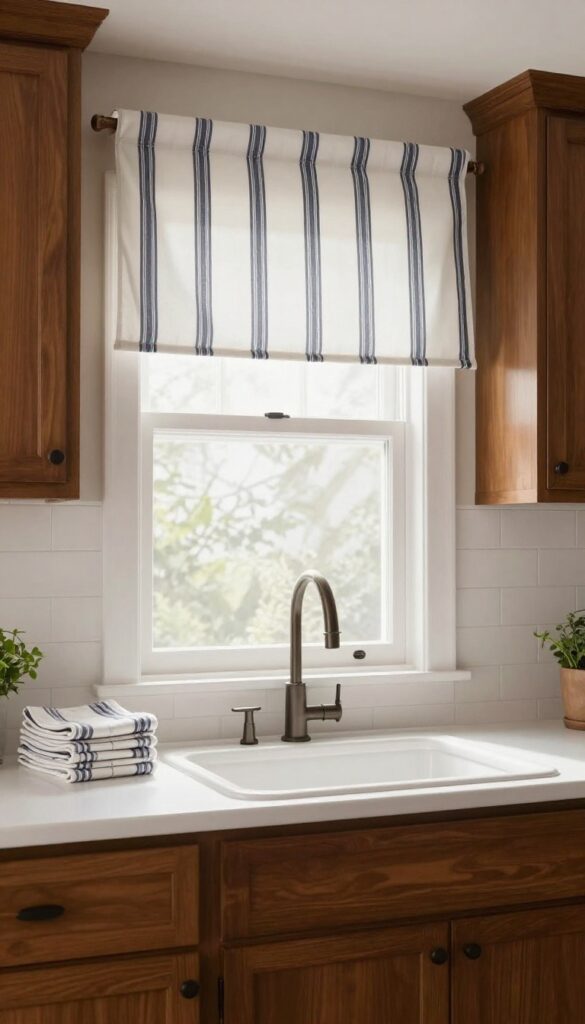
Vertical stripes are a classic trick for making a room feel taller, and they work especially well in a kitchen with brown cabinets. The contrast between the dark cabinetry and a bright striped textile draws the eye upward, creating the illusion of higher ceilings. This is a simple, low-cost way to add visual interest without overwhelming the space.
In a kitchen with brown cabinets, vertical stripes can break up the solid color and add a sense of movement. Choose dish towels, a window valance, or even a small rug with crisp vertical lines in white and a soft accent color like sage green or pale blue. The stripes should be thin to medium width—too wide and they can feel heavy; too narrow and they might look busy.
Hang a valance just above the window frame to maximize the height effect, and fold towels so the stripes run vertically when draped over the oven handle or a towel bar.
Best Colors For Stripes
- Stick with light backgrounds for maximum contrast. White or cream with navy, charcoal, or a muted earth tone works beautifully against brown cabinets. If your cabinets are a lighter brown, try black and white stripes for a bold, graphic look.
- For a softer feel, use pale pink or dusty blue stripes on a white base.
Where To Add Stripes
- The most impactful spots are windows and countertops. A valance with vertical stripes above the sink instantly draws the eye up. Dish towels folded and hung on the oven handle or a towel bar add a subtle stripe effect.
- You can also use a striped runner in front of the sink or a striped fabric on a small chair cushion if you have a breakfast nook.
Small-space Styling Tip
In a compact kitchen, keep the stripe pattern confined to one or two textiles to avoid clutter. Pair striped towels with solid-colored accessories to let the pattern stand out. Avoid mixing stripes with other busy patterns in the same area—let the stripes do the work of adding height and structure.
15. Keep Countertops Clutter-Free
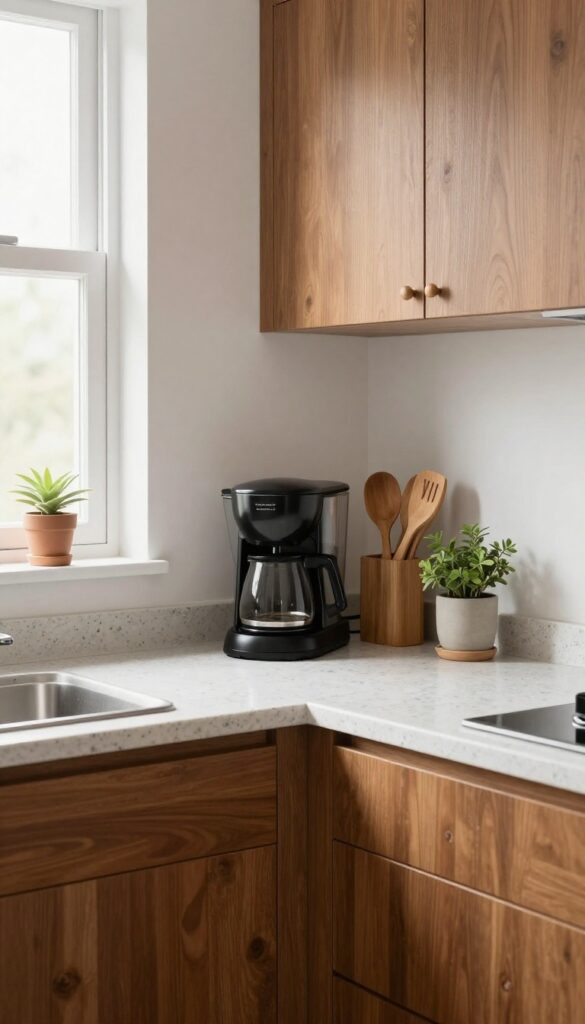
With rich brown cabinets already making a statement, your countertops don’t need much to shine. A clutter-free surface lets the cabinetry take center stage and keeps the kitchen feeling open and airy—especially important in a small space. The goal is to leave out only the essentials you use daily, like a coffee maker or a knife block, and stow everything else neatly behind closed doors.
Limiting countertop items to a few purposeful pieces creates a calm, organized look that complements the warmth of brown cabinets. Start by editing down to what you truly reach for every day—maybe a sleek toaster, a wooden utensil crock, and a small plant. Then invest in drawer organizers and cabinet storage solutions to hide pantry items, small appliances, and cooking tools.
The result is a kitchen that feels both practical and stylish, with brown cabinets as the star.
Storage Tip
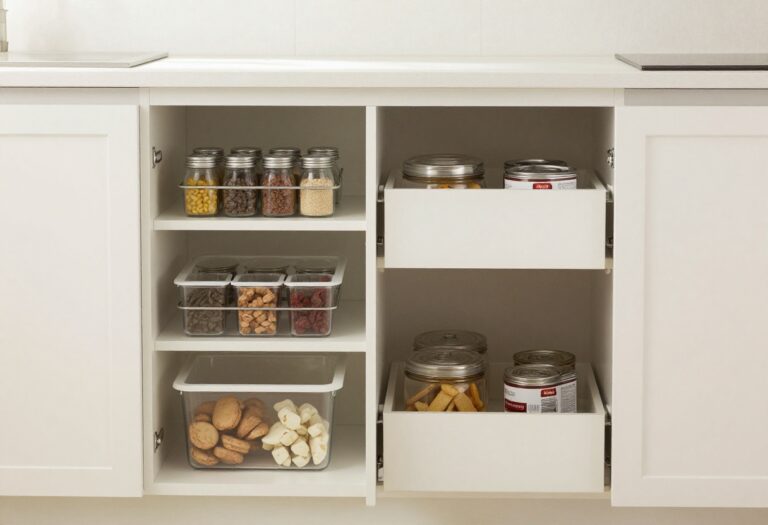
Use vertical dividers in deep drawers for cutting boards and baking sheets, and install pull-out shelves in lower cabinets to make pots and pans easy to grab. A pegboard inside a cabinet door can hold measuring spoons and small tools, freeing up drawer space.
Small-space Fix
In a compact kitchen, mount a magnetic knife strip on the wall or inside a cabinet door to keep knives off the counter. A hanging pot rack over an island or near the stove also clears cabinet space and adds a rustic touch that pairs well with brown cabinetry.
Finishing Touch
Choose a single decorative item—like a ceramic fruit bowl or a marble mortar and pestle—to add personality without clutter. Keep the color palette neutral or light to contrast with the brown cabinets, such as white, cream, or soft beige.
FAQ
Do brown cabinets make a small kitchen look darker?
Not necessarily. With proper lighting, light countertops, and reflective surfaces, brown cabinets can actually add warmth without making the space feel dark.
What color backsplash goes best with brown cabinets?
White, cream, or pale gray backsplashes work well. They create contrast and keep the kitchen feeling bright and open.
Should I paint my brown cabinets to make the room feel bigger?
Painting isn't always necessary. Instead, try open shelving, glass fronts, or better lighting to achieve a more spacious look while keeping the warmth.
What hardware finish works with brown cabinets?
Brass, gold, or brushed nickel are great choices. They add a subtle shine that complements the brown without clashing.
Can I mix brown cabinets with other wood tones?
Yes, but stick to lighter wood tones for contrast. Avoid mixing too many dark woods to prevent a heavy feel.
Conclusion
Brown cabinets don't have to overwhelm a small kitchen. With a few thoughtful decor choices, you can turn them into a cozy, stylish focal point that feels both warm and spacious.
From lighting tricks to smart storage, these ideas prove that practicality and beauty can go hand in hand. Try a couple of these tips and watch your kitchen transform into a space you'll love spending time in.