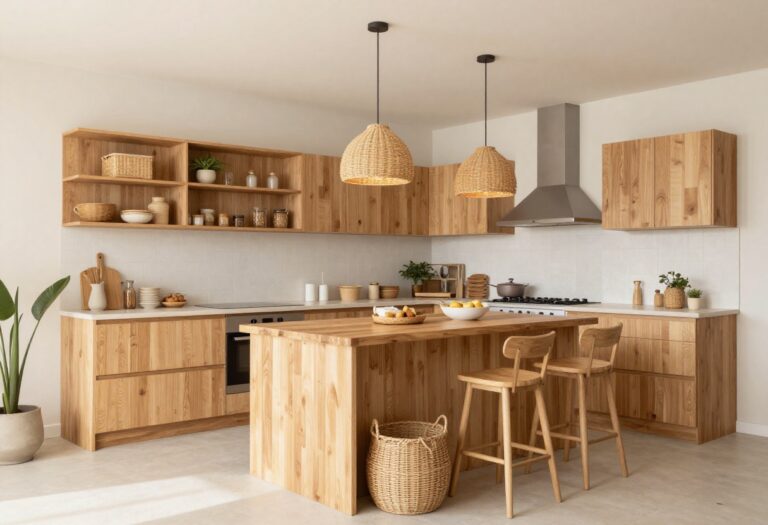
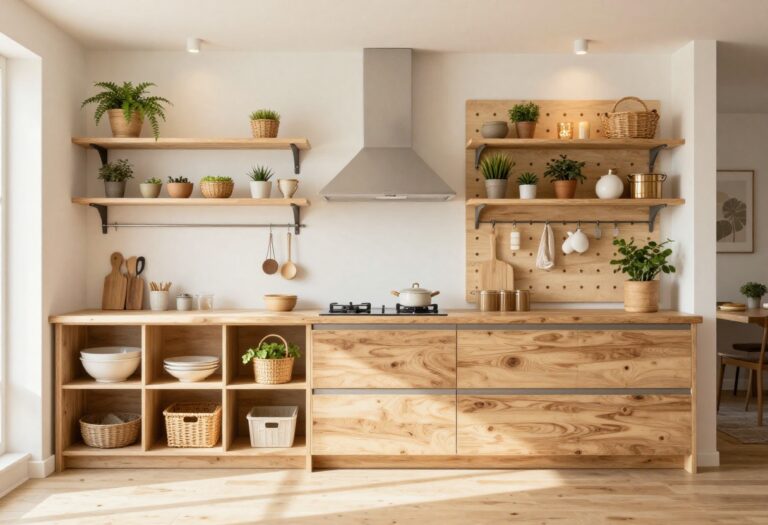
13 White and Wood Kitchen Ideas With Calm Natural Warmth
White and wood kitchens have a way of feeling both fresh and grounded. The combination brings in light while keeping things warm—no cold, sterile vibes here. If you're looking to refresh your space without a full renovation, these ideas are for you.
Each one is designed to be weekend-friendly, meaning you can tackle them in a day or two. No need for major construction or a huge budget. Just simple, smart swaps that make a big difference.
From adding open shelving to swapping out hardware, these 13 ideas will help you create a kitchen that feels calm, natural, and full of warmth. Let's dive in.
1. Open Shelving With White Dishes and Wood Accents
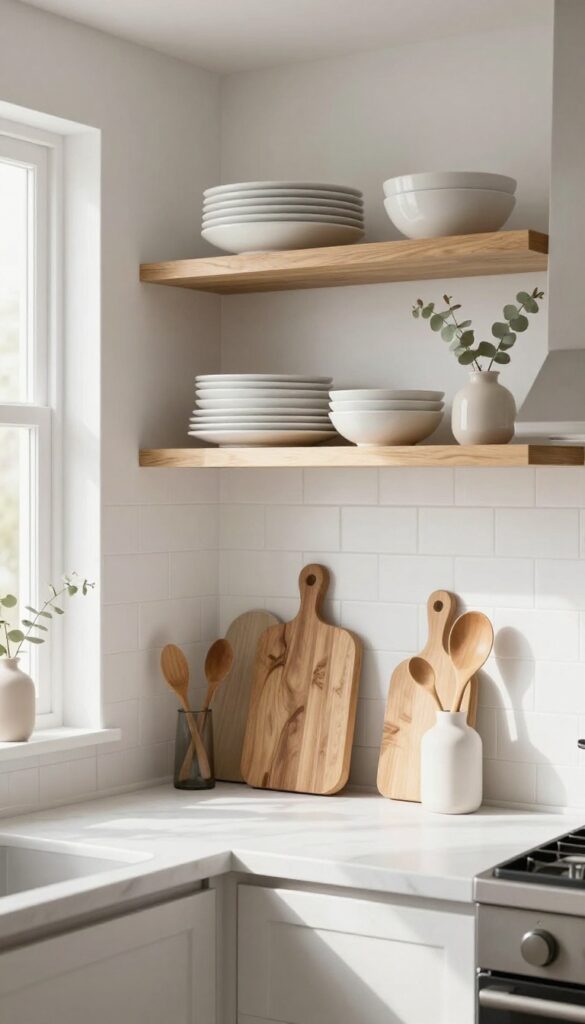
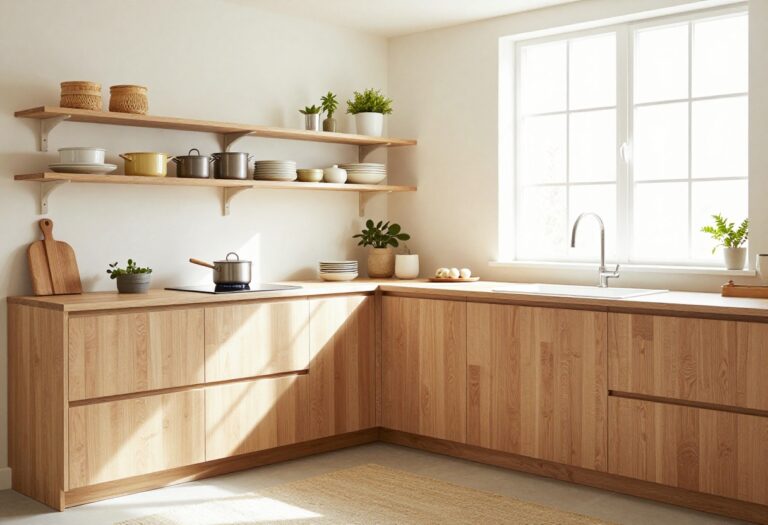
If your kitchen feels a little boxed in by bulky upper cabinets, swapping them for open shelves can change the whole energy of the room. Light wood shelves keep things warm and natural, while neatly stacked white dinnerware adds a crisp, clean contrast. The result is an airy, uncluttered look that still feels lived in and welcoming.
This idea works especially well in smaller kitchens or galley layouts where every inch of visual space counts. By removing solid cabinet doors, you open up the wall and create a sense of depth. The key is to keep the shelves from looking cluttered—stick to a simple palette of white dishes, wooden cutting boards, and a few ceramic pieces in neutral tones.
This setup also makes grabbing a plate or bowl effortless, which is a nice bonus during busy mornings.
Best Materials
Go for solid wood shelves in a warm tone like oak, walnut, or teak. Avoid overly glossy finishes—matte or satin looks more natural and forgiving. For the dishes, plain white stoneware or porcelain works best; it stays timeless and doesn't compete with the wood.
Shelf Styling Tip
Mix in a few wooden accessories like a small bowl, a cutting board, or a wooden spoon holder. Layer items at different heights using stackable plates or a small vase. Leave some breathing room between groups so the eye can rest.
Small-space Fix
If your kitchen is tight, install shelves that are shallower than standard cabinets—about 10 to 12 inches deep. This prevents them from overwhelming the room and keeps everything within easy reach.
2. Butcher Block Countertops on White Cabinets
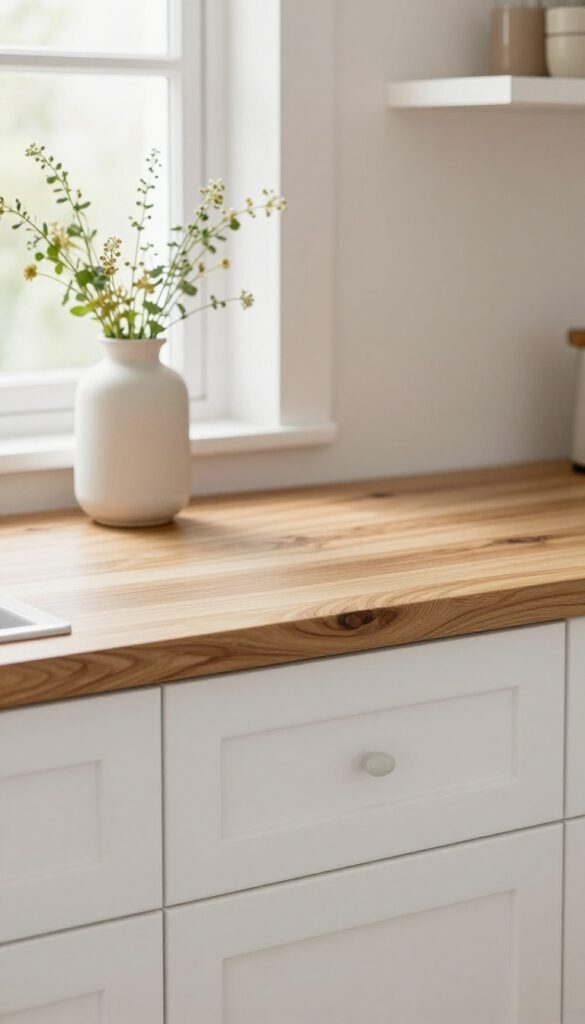
Butcher block brings instant warmth. Pair it with crisp white shaker cabinets for a classic look. The wood grain adds natural contrast without overwhelming the space.
This combo feels grounded and inviting, perfect for a weekend refresh that doesn't require a full remodel.
Butcher block countertops are a budget-friendly way to introduce natural warmth into a white kitchen. The light wood tones keep the space feeling airy while adding texture that softens the clean lines of white cabinets. This pairing works especially well in smaller kitchens where dark countertops might feel heavy.
The key is choosing the right wood species and finish to complement your cabinet style.
Best Wood Choices
Maple and birch are popular for their light, even grain that doesn't overpower white cabinets. If you want more warmth, consider walnut or cherry for deeper tones. Avoid open-grain woods like oak, which can show stains more easily.
Finishing Touch
Seal the butcher block with a food-safe mineral oil or beeswax finish to protect against moisture and stains. Reapply every few months to maintain the warm glow. For a low-maintenance option, choose a pre-finished butcher block with a durable polyurethane coating.
Small-space Fix
In a galley kitchen, use butcher block on a narrow peninsula or island to create a warm focal point without taking up too much visual space. Pair with open shelving in the same wood tone to tie the look together.
3. Wooden Floating Shelves Above a White Backsplash
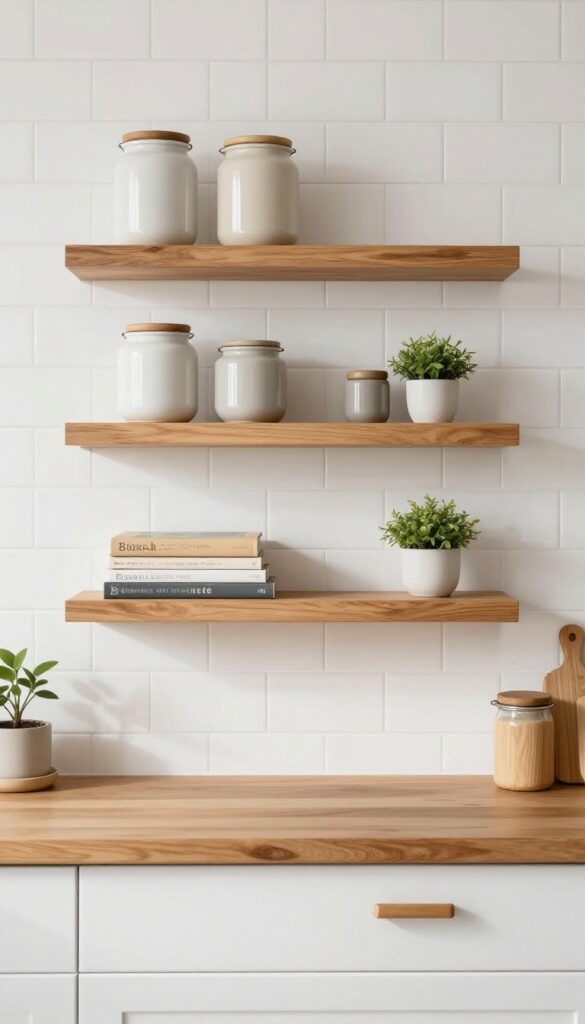
A white subway tile backsplash is a classic choice, but it can feel a little one-note if you leave the wall bare above it. Floating shelves in a warm wood finish break up all that white and instantly add character. They're also a weekend-friendly project that makes your kitchen feel styled without a full renovation.
Install floating shelves in a warm oak or walnut finish above a white subway tile backsplash. Use them for jars, plants, or cookbooks. The wood brings natural warmth that softens the crisp white, and the open storage keeps everyday items within easy reach.
It's a simple swap that makes the whole kitchen feel more personal and inviting.
Best Wood Tones
Stick with medium to warm woods like oak, walnut, or teak. Avoid cool gray or bleached finishes—they'll blend into the white instead of standing out. The goal is a gentle contrast that feels natural, not jarring.
Shelf Styling Tip
Mix practical items like ceramic jars and a small plant with a few decorative pieces, like a wooden cutting board leaning against the backsplash. Keep the arrangement balanced but not too symmetrical—alternate heights and textures for a relaxed, lived-in look.
Installation Note
Floating shelves need to be anchored into studs or use heavy-duty drywall anchors, especially if you're storing cookbooks or heavy jars. Measure twice, drill once, and use a level to keep everything straight. It's a straightforward weekend project that pays off immediately.
4. White Kitchen Island With a Wood Top
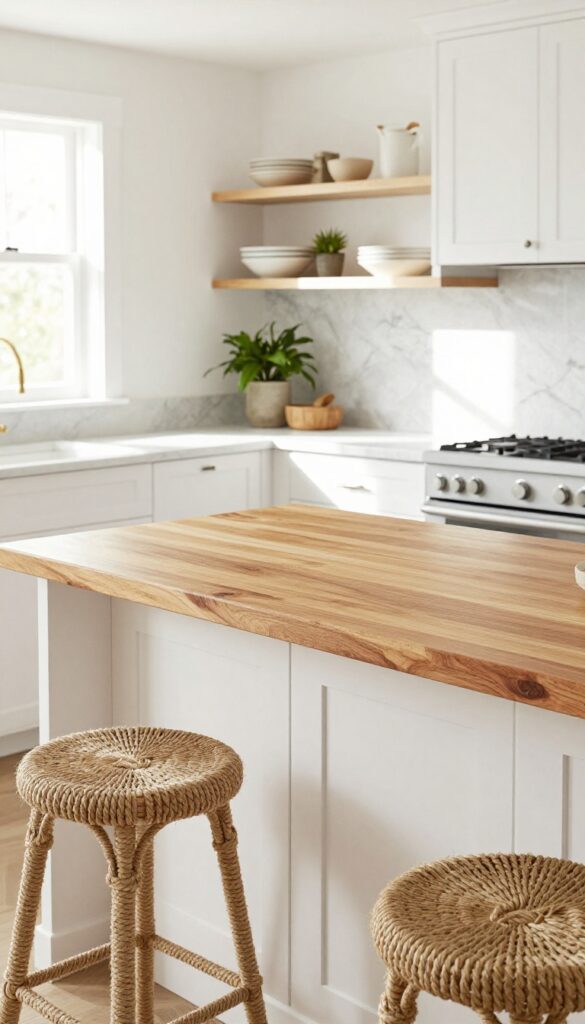
A white kitchen island with a wood top is one of those ideas that just works. The white base keeps things light and airy, while the thick wood surface brings in warmth and texture. It’s like having a built-in anchor that feels both practical and inviting.
Whether you use it for chopping veggies or pulling up a couple of stools for a quick breakfast, this combo makes the kitchen feel grounded without weighing it down.
The contrast between crisp white and natural wood creates a natural focal point that doesn’t try too hard. It’s a weekend-refresh kind of upgrade because you can often just replace the countertop or add a butcher block slab to an existing island. The wood top also softens all the hard surfaces in a kitchen, making the space feel cozier and more lived-in.
Plus, it’s forgiving—scratches and patina just add character over time.
Best Wood Choices
- Butcher block is the most popular pick because it’s affordable and easy to install. Walnut adds rich warmth, while oak stays lighter and more neutral. If you want durability, go for a hardwood with a matte finish that can handle daily use.
- Teak or acacia are great if you love a bit of natural grain variation.
Layout Tip
Make sure your island has enough overhang for seating—at least 12 inches for comfortable legroom. If you’re using the island mainly for prep, keep the wood top seamless and leave the ends clear. For a small kitchen, a slim island on casters can give you the same look with flexibility.
Finishing Touch
Add a couple of low-profile stools in a natural material like rope or leather to tie the wood top into the rest of the room. A simple pendant light above the island with a warm bulb will highlight the wood grain and make the whole setup feel intentional.
5. Wood-Framed Bar Stools Around a White Island
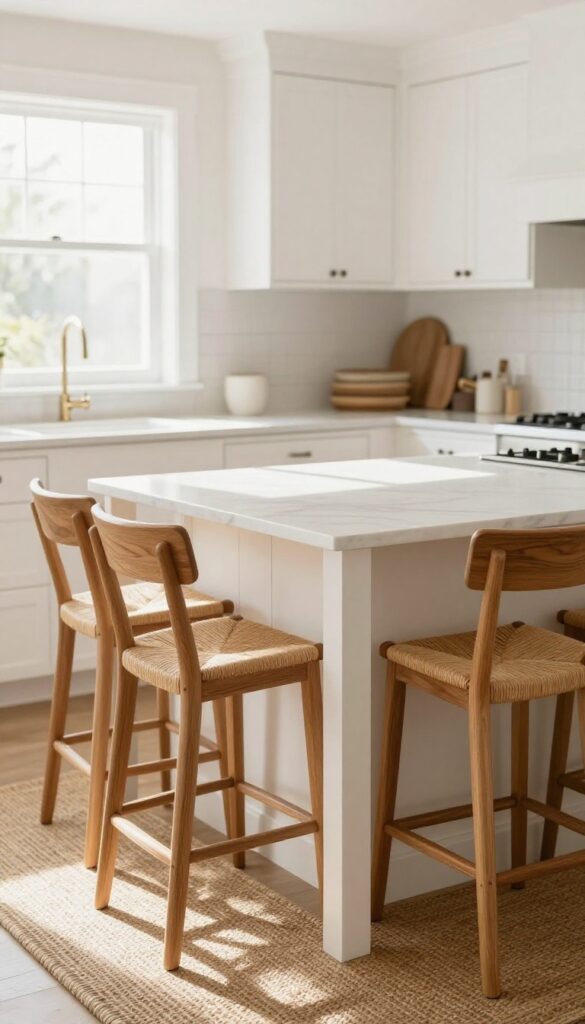
A white kitchen island is a classic anchor, but sometimes it can feel a bit one-note. Wood-framed bar stools are the perfect way to inject warmth without cluttering the space. They bring in natural texture and a casual vibe that makes the kitchen feel more like a gathering spot than just a workspace.
Plus, they’re easy to swap out if you ever want to change the look.
Bar stools with wooden frames and simple white or natural seats tie the wood theme in without adding bulk. They’re ideal for a cozy breakfast corner or a spot where the family tends to hang out while you cook. The contrast between the crisp white island and the warm wood legs creates visual interest without being loud.
For a weekend-refresh friendly update, you can even paint existing stools or swap the seat cushions for a quick change.
Best Materials
- Look for stools with solid wood frames like oak, walnut, or acacia. These woods have natural grain that adds character. For the seat, choose a white painted wood, a natural wood tone, or a woven seagrass material.
- Avoid heavy upholstery that can feel too formal or hard to clean in a kitchen.
Layout Tip
Leave about 10-12 inches between each stool for comfortable seating. If your island has an overhang, make sure the stools slide fully under when not in use. This keeps the kitchen feeling open and uncluttered, especially in smaller spaces.
Finishing Touch
Add a small woven rug or a runner under the island to anchor the seating area. Choose a natural fiber like jute or sisal to complement the wood tones. This softens the space and defines the breakfast zone without adding visual weight.
6. White Cabinets With Wooden Pulls and Knobs
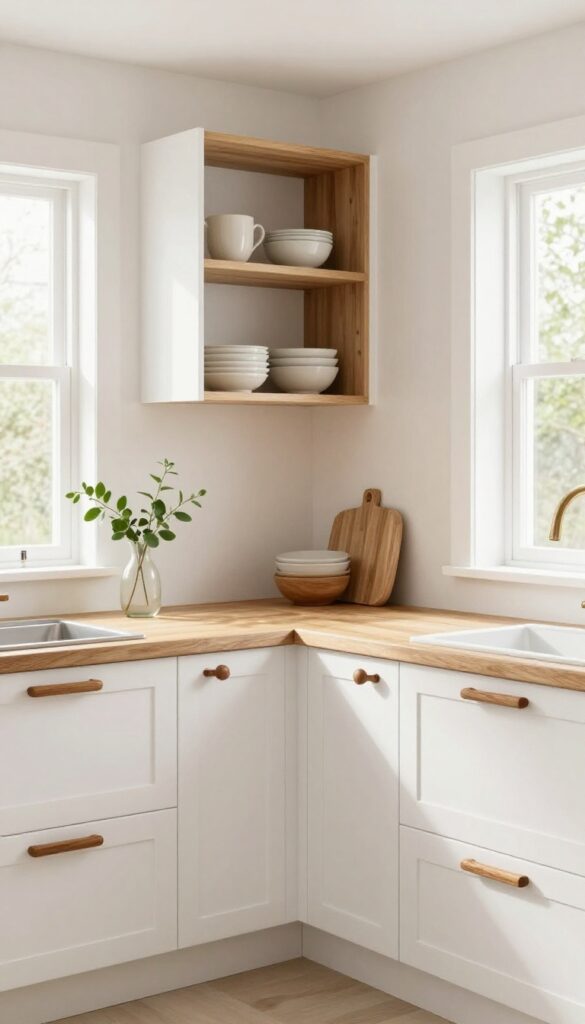
Metal hardware is standard in most kitchens, but swapping it for wooden pulls or knobs is a quick weekend swap that instantly warms up the space. The natural grain and soft brown tones create a subtle contrast against crisp white cabinets, making the whole room feel more grounded. It's a small detail that ties the white-and-wood palette together without overwhelming the look.
If your white cabinets feel a little too sterile or builder-basic, wooden hardware is the easiest fix. You don't need to replace the cabinets or even paint them—just unscrew the old handles and screw in wooden ones. The result is a kitchen that feels more organic and collected, like it evolved over time rather than came out of a box.
This swap works especially well in kitchens with other wood elements like butcher block counters, open shelving, or a wooden dining table nearby. It creates a visual echo that makes the whole room feel intentional. For a cohesive look, choose pulls or knobs in a wood tone that matches or complements your existing wood finishes.
If your kitchen has mixed wood tones, go with a neutral mid-tone like walnut or oak that bridges the gap.
Best Wood Choices
Walnut adds rich warmth, oak feels classic and durable, and bamboo is a budget-friendly sustainable option. For a lighter, Scandinavian vibe, try beech or birch. The key is to pick a wood that either matches your other wooden elements or provides a pleasing contrast—like dark walnut knobs against pale oak shelves.
Finishing Touch
To keep the hardware looking fresh, apply a light coat of furniture wax or mineral oil every few months. This prevents drying and cracking, especially near the sink where moisture is high. Also, consider mixing wood knobs on drawers with wood bar pulls on cabinets for extra texture and visual interest.
7. A Wooden Accent Wall Behind White Open Shelving
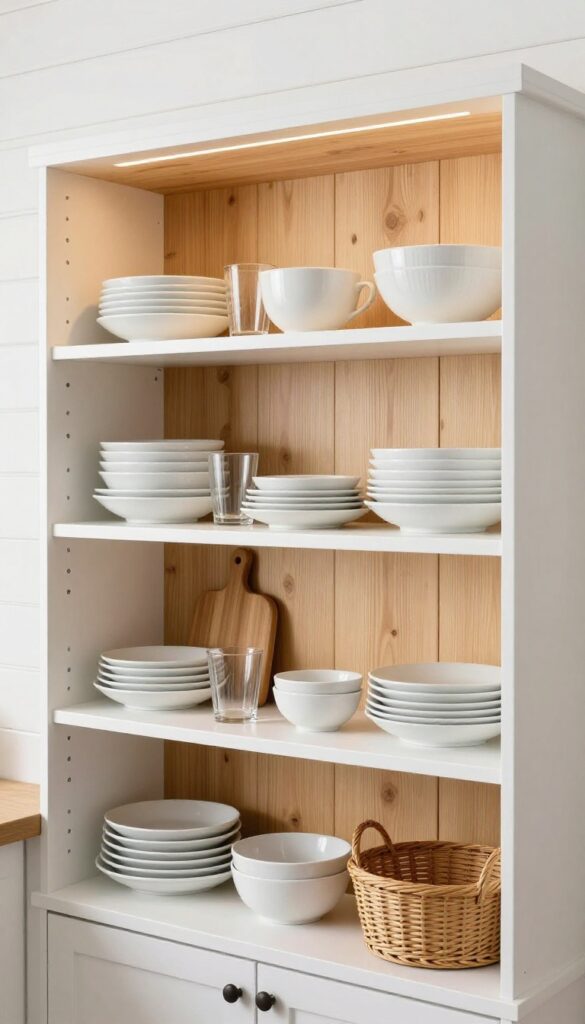
Open shelving already brings an airy, collected feel to a kitchen. But when you add a warm wood backdrop behind those shelves, the whole look shifts from simple to striking. A shiplap or reclaimed wood wall adds texture and depth without making the space feel busy, and it gives your white dishes and glassware a soft, natural stage to shine against.
This idea is perfect for a weekend refresh because it doesn't require a full renovation. You can install a shiplap wall in a day, or even use peel-and-stick wood planks for a renter-friendly version. The key is choosing a light wood tone—think whitewashed oak, pale pine, or a soft driftwood stain—so the wall stays calm and doesn't overwhelm the shelves.
The contrast between the white dishes and the wood grain creates a layered, collected look that feels warm and inviting.
Best Wood Choices
- Shiplap is a classic pick for a clean, cottage-like feel. For more texture, go with reclaimed wood planks in varied widths. If you want a smooth, modern finish, try tongue-and-groove panels painted in a light natural stain.
- Whatever you choose, keep the finish matte to avoid glare and let the grain show through.
Shelf Styling Tip
Stick to a mostly white dish collection with a few warm wood or woven accents—like a wooden cutting board or a rattan basket—to tie the shelf styling back to the wall. Leave some negative space so the wood wall isn't completely hidden. Group items in odd numbers and vary heights for a relaxed, curated look.
Lighting Note
Add under-shelf lighting to highlight the wood texture and make the dishes glow. Warm LED strips (2700K–3000K) will enhance the natural warmth of the wood and keep the kitchen feeling cozy, especially in the evening.
8. White and Wood Layered Lighting
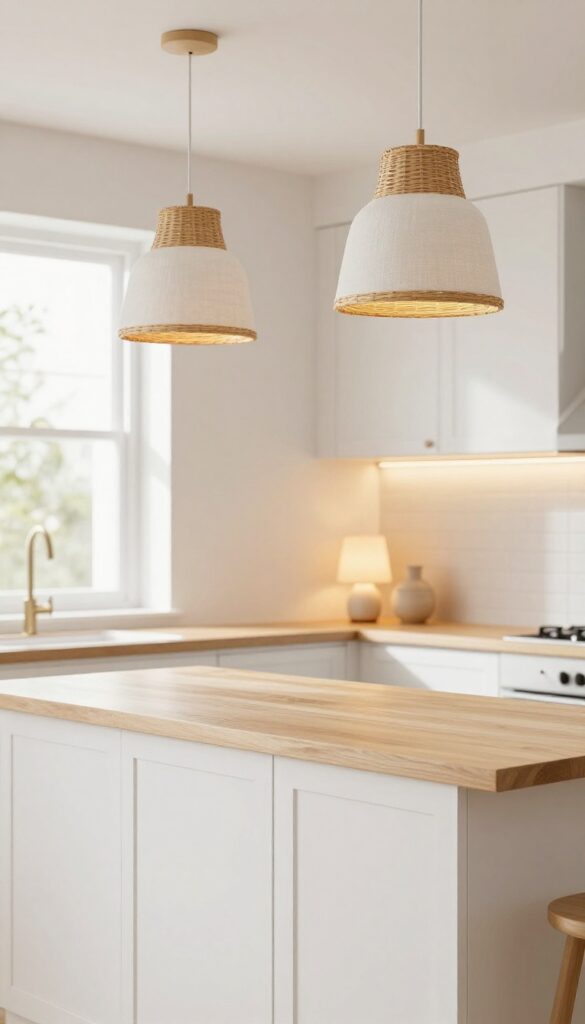
Lighting can make or break a kitchen’s atmosphere. In a white and wood space, the right mix of fixtures adds warmth without clutter. Layering different light sources—pendants, under-cabinet strips, and maybe a small accent lamp—creates depth and makes the room feel both cozy and practical.
It’s one of those weekend-friendly updates that instantly changes how the kitchen looks and feels, especially during evenings when you want a softer glow.
Start with a statement pendant or two over the island or dining area. Choose ones with wood accents or natural rattan details paired with white or cream shades—this ties into the cabinet and counter tones. Then add under-cabinet lighting in a warm LED color temperature (around 2700K–3000K) to highlight wood countertops or backsplash tiles.
The combination prevents harsh shadows and makes the space feel inviting. For a finishing touch, consider a small table lamp on a counter or shelf for a lived-in, relaxed vibe. This layered approach is easy to install and adjust, perfect for a weekend refresh.
Best Fixture Styles
- Look for pendants with a natural wood finish on the stem or canopy and a white fabric or glass shade. Drum shades or simple globes work well. For under-cabinet lights, slim LED strips that can be dimmed are ideal—they’re easy to stick on and don’t require hardwiring.
- A small ceramic or wood-base lamp adds a cozy accent on a counter or open shelf.
Lighting Tip
Use dimmers on all layers so you can adjust brightness throughout the day. Warm light (2700K–3000K) keeps the wood tones looking rich and avoids a sterile feel. Position pendants so they don’t block sightlines, and aim under-cabinet lights slightly toward the backsplash to reduce glare.
Small-space Fix
In a galley or small kitchen, skip bulky pendants and use flush-mount wood-and-white fixtures. Under-cabinet lights become the main task lighting, and a single small lamp on a counter adds warmth without taking up floor space. This keeps the room feeling open and airy.
9. Wooden Cutting Boards as Wall Decor
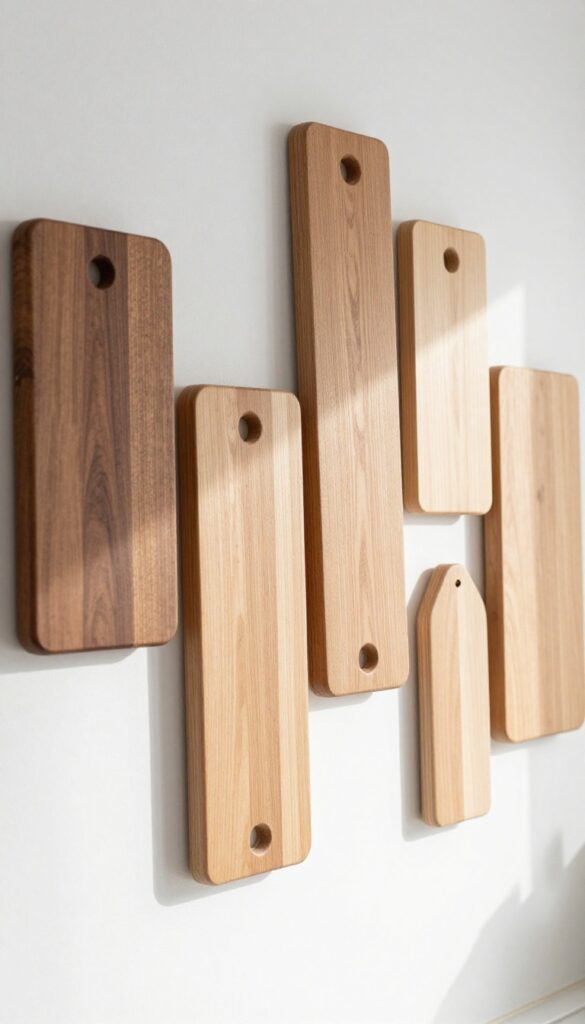
Here's an idea that's equal parts practical and pretty: turn your collection of wooden cutting boards into wall art. If you've got a blank white wall in your kitchen, this is one of the easiest ways to add warmth without spending much. It works because wood brings in that natural texture that makes a white kitchen feel cozy, not sterile.
Plus, you're not buying decor you'll never use—these boards can still come down for cheese platters or chopping veggies.
Start by gathering a few cutting boards in different sizes and wood tones—think light maple, rich walnut, and maybe a reclaimed piece for contrast. Arrange them on the wall before hanging to find a layout you like. A cluster of three to five boards works well, either stacked vertically, in a grid, or scattered asymmetrically.
Use sturdy picture hangers or small nails, and make sure the boards are secure. This idea is especially great for small kitchens where wall space is limited but you want to avoid a cluttered look. The boards add visual interest and a tactile, handcrafted feel that fits perfectly with a relaxed, weekend-refresh vibe.
Best Wood Tones To Mix
- For a cohesive but layered look, stick with two or three wood tones that share an undertone. Pair a pale beech board with a medium acacia and a dark walnut for contrast. If your kitchen has warm white cabinets, lean toward honey or amber tones.
- For a cooler white, go with ash or limed oak. The goal is to create depth without clashing.
Hanging And Styling Tips
- Before you hammer anything, lay the boards on the floor and play with the arrangement. Overlap them slightly or leave a few inches between each. Use a level to keep things straight, but don't stress over perfection—slight variations in spacing feel more organic.
- You can also hang a single large board as a statement piece, then layer smaller ones around it. Make sure the boards are clean and dry before hanging, and consider sealing them with food-safe mineral oil to keep the wood looking fresh.
Small-space Fix
- If your kitchen is tight on wall space, try hanging a single cutting board near the stove or sink. It becomes a functional art piece that you can grab in a second. Or use a narrow strip of wall between cabinets to hang a slim board vertically.
- This works especially well in galley kitchens where every inch counts.
10. White Farmhouse Sink With a Wooden Faucet Handle
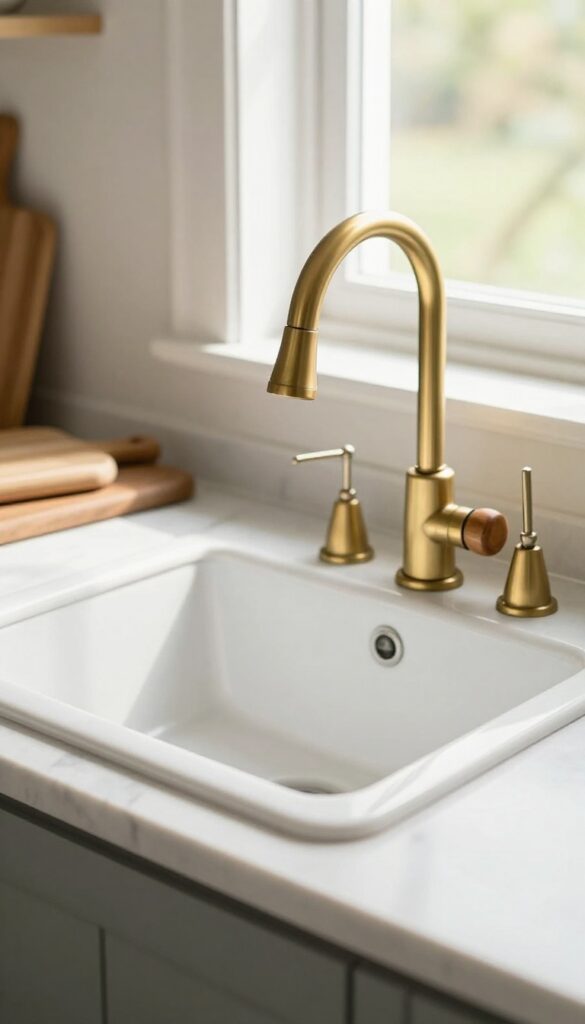
A white apron-front sink is practically a rite of passage for farmhouse-style kitchens. But you can keep it from feeling too expected by pairing it with a faucet that has a wooden lever or handle. That one small swap adds just enough natural warmth to balance all that bright white porcelain, without committing to full-on wood counters or cabinets.
It's a subtle, weekend-friendly tweak that makes the sink area feel intentional and grounded.
The charm of this idea is in the contrast. The sink's crisp, clean lines feel classic and timeless, while the wooden handle introduces an organic texture that softens the look. It's especially effective in kitchens with white or light-colored countertops, because the wood becomes a focal point without competing.
Plus, it's a super easy swap—you can replace just the faucet without touching the sink or counters, making it perfect for a weekend refresh.
Best Materials
Look for a faucet with a solid brass or stainless steel body and a real wood handle—teak, walnut, or oak work beautifully. Avoid plastic wood-look handles, since they won't age as nicely and can feel cheap. The wood should be sealed to withstand moisture, but a matte finish feels more natural than glossy.
Finishing Touch
Carry the wood accent to other small details nearby. A wooden soap dispenser, a cutting board that leans against the backsplash, or a small wooden tray next to the sink tie the look together. Keep it to just two or three wood touches so the sink handle stays the star.
Where It Fits Best
This combo shines in kitchens that already have some white cabinetry or light walls. It works in both modern farmhouse and transitional spaces. If your kitchen leans more industrial, a matte black faucet with a dark wood handle can bridge the two styles nicely.
11. Wooden Ceiling Beams Over a White Kitchen
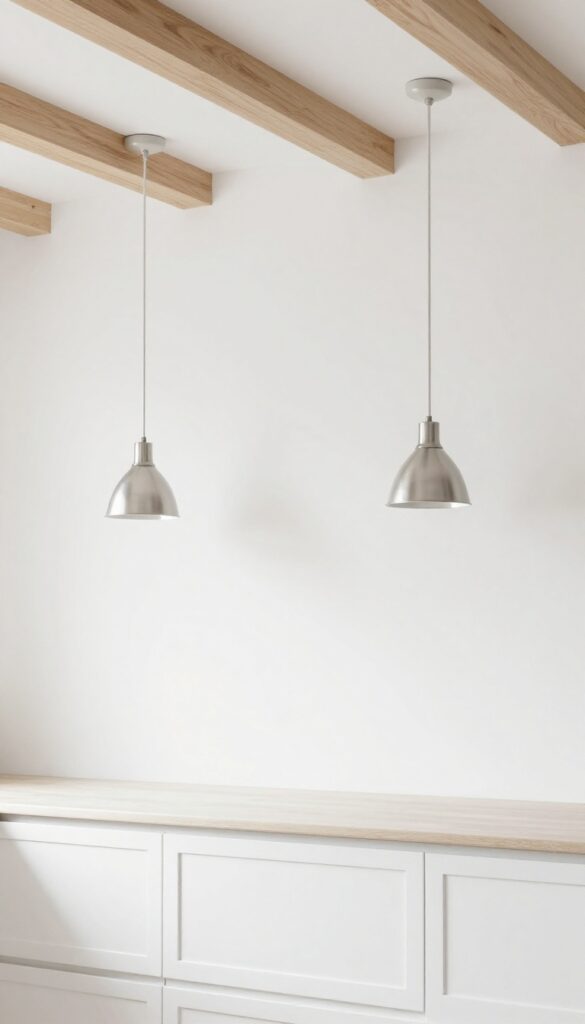
High ceilings are a gift, but they can sometimes leave a kitchen feeling a little cavernous. The trick is to bring the eye back down without closing the room in. Faux wood beams in a light stain do exactly that—they add warmth and structure while keeping the airy feel intact.
Paired with crisp white walls, the effect is calm, grounded, and surprisingly easy to pull off.
This idea works best in kitchens with ceilings nine feet or higher. The beams don't have to be structural—hollow faux beams are lightweight and can be installed over a weekend. Go for a light oak or ash stain to keep things soft, and space them evenly for a clean, intentional look.
The contrast between the white ceiling and the warm wood creates a subtle grid that adds character without overwhelming the space.
Best Materials
- Stick with faux wood beams made from polyurethane or lightweight wood composites. They're affordable, easy to cut, and come pre-stained or ready to paint. Real wood is heavier and more expensive, but if you love the grain, go for it.
- Just make sure the stain is light—dark beams can shrink the room visually.
Layout Tip
Run the beams perpendicular to the longest wall to make the kitchen feel wider. If your kitchen has an island, align a beam directly above it for a natural focal point. Keep the spacing between beams consistent—usually three to four feet apart—so the pattern looks intentional.
Finishing Touch
Add a couple of pendant lights that hang just below the beams to tie the look together. Choose simple metal or glass fixtures in brushed nickel or matte black to keep the focus on the wood. The lights will also help define the island or dining area below.
12. White Cabinets With a Wooden Range Hood Cover
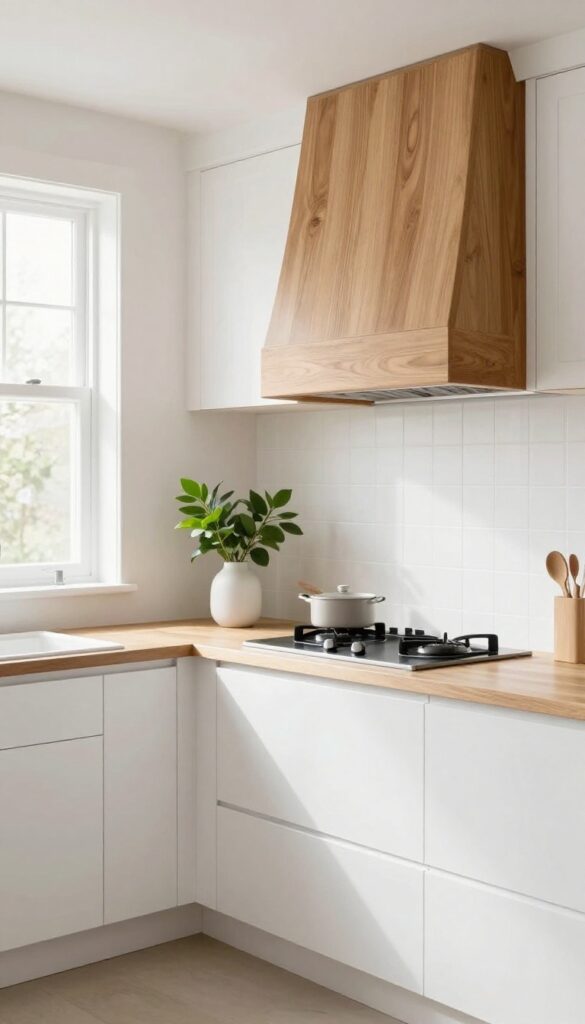
Your range hood doesn't have to blend into the wall or disappear behind a stainless steel box. Wrapping it in wood turns it into a warm focal point that draws the eye up and adds texture to all those clean white cabinets. It's one of those details that feels custom without requiring a full renovation—just a weekend project if you're handy, or a quick upgrade with a carpenter.
The contrast between crisp white cabinetry and natural wood grain creates exactly the kind of calm, grounded warmth this whole look is about.
The trick to making this work is choosing a wood tone that ties into something else in the kitchen—your countertops, open shelving, or even your dining table. That connection keeps the hood from feeling random. White perimeter cabinets keep the space bright and airy, while the wood hood adds a sculptural, organic element.
It's especially effective in kitchens with high ceilings or a large range, where a standard metal hood might feel too small or cold. Finish the look with simple hardware and let the wood be the star.
Best Wood Choices
- Oak, walnut, and teak are popular because they have strong grain patterns that stand out against white. If your kitchen has warm undertones, go with a honey-toned oak. For a more modern, moody vibe, walnut adds richness without feeling heavy.
- You can also paint or stain the wood to match your existing shelves or butcher block counters.
Installation Tip
- If you're doing this as a weekend refresh, consider a wood veneer that wraps around an existing metal hood insert. That way you get the look without rewiring or moving ductwork. Just measure carefully and use construction adhesive.
- For a built-in feel, have a carpenter box in the hood with solid wood panels.
Styling The Surroundings
Keep the area around the hood uncluttered so the wood detail stays prominent. A couple of open shelves on either side with a few ceramic pieces or plants can frame it nicely. Avoid adding too many competing textures nearby—let the wood hood do the heavy lifting.
13. Natural Wood Window Trim and White Walls
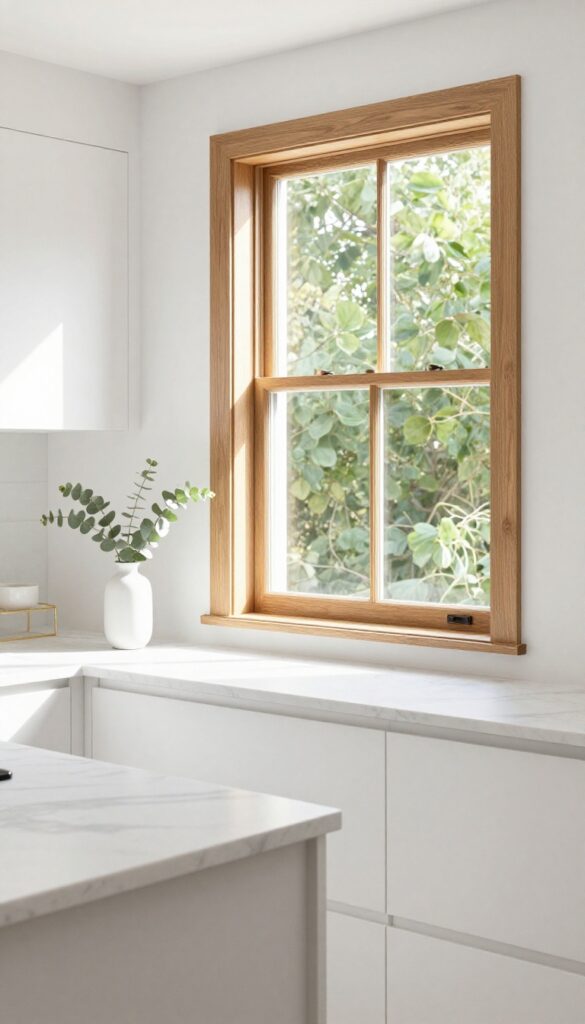
One of the easiest ways to bring warmth into a white kitchen is through the window trim. Leaving it in natural wood—or adding new wood casing—creates a soft, organic frame around the view. Against crisp white walls, the wood pops just enough to catch your eye without stealing the show.
It’s a small detail that makes the whole room feel more grounded and connected to the outdoors.
This idea works especially well in kitchens with large windows or multiple windows grouped together. The natural wood trim acts like a picture frame for the greenery or sky outside, making the view feel intentional. It also adds a layer of texture that balances out sleek cabinets or stone countertops.
The look is simple, but it has a quiet impact that makes the kitchen feel both fresh and cozy.
Best Wood Tones
Stick with medium wood tones like oak, walnut, or maple for a natural look that doesn’t feel too rustic or too modern. Lighter woods like ash or birch keep the space airy, while darker walnut adds contrast and depth. Avoid overly orange or yellow stains, which can clash with the clean white walls.
Budget-Friendly Swap
If you’re on a weekend refresh budget, you don’t need to replace the entire window frame. Try adding wood trim around the inside edge of the window casing or installing a simple wood sill. Even a thin strip of wood along the top or bottom can create that warm accent without a full remodel.
Finishing Touch
To keep the wood looking fresh, use a matte or satin finish that seals the grain without adding too much shine. Pair the trim with white window treatments—like sheer linen curtains or simple roller shades—to let the wood stand out while still softening the light.
FAQ
How do I keep a white and wood kitchen from feeling too cold?
Focus on warm wood tones like oak, walnut, or teak. Add soft lighting and natural textures like linen or rattan. Avoid stark white by choosing warm white paint with a hint of cream.
What wood finish works best with white cabinets?
Medium to light wood finishes like birch, maple, or oak are versatile. They contrast nicely without being too dark. For a bolder look, walnut adds richness.
Can I mix different wood tones in a white kitchen?
Yes, but keep it intentional. Stick to two or three tones that share a similar undertone (warm or cool). Use one as the main and others as accents to avoid a busy look.
What's the easiest weekend update for a white and wood kitchen?
Swap out hardware for wooden knobs or pulls. It takes an afternoon and instantly adds warmth. Another quick win is adding a wooden cutting board or shelf.
How do I add wood without a renovation?
Use removable peel-and-stick wood panels on an island or backsplash. Add wood accessories like bowls, trays, or a fruit basket. Even a wooden rug or mat can bring in warmth.
Conclusion
White and wood kitchens don't have to be complicated. With a few thoughtful touches, you can create a space that feels calm, warm, and inviting. Whether you start with open shelving or swap out hardware, each small change adds up.
The best part?
You don't need a full remodel to make it happen. Pick one or two ideas from this list and give them a try this weekend. Your kitchen will thank you.