15 Kitchen Cabinet Door Ideas That Change the Whole Room
Kitchen cabinets take up a lot of visual real estate. Swap out a few doors or give them a refresh, and suddenly the whole room feels different. The best part?
You don't need a full renovation to make an impact. Small changes—like new hardware, a coat of paint, or a different door style—can shift the entire mood.
These 15 ideas lean into a cozy, layered look that still feels smart and space-aware. Whether you rent or own, there's something here that fits your kitchen without overwhelming it.
1. Glass-Front Upper Cabinets for an Airy Feel
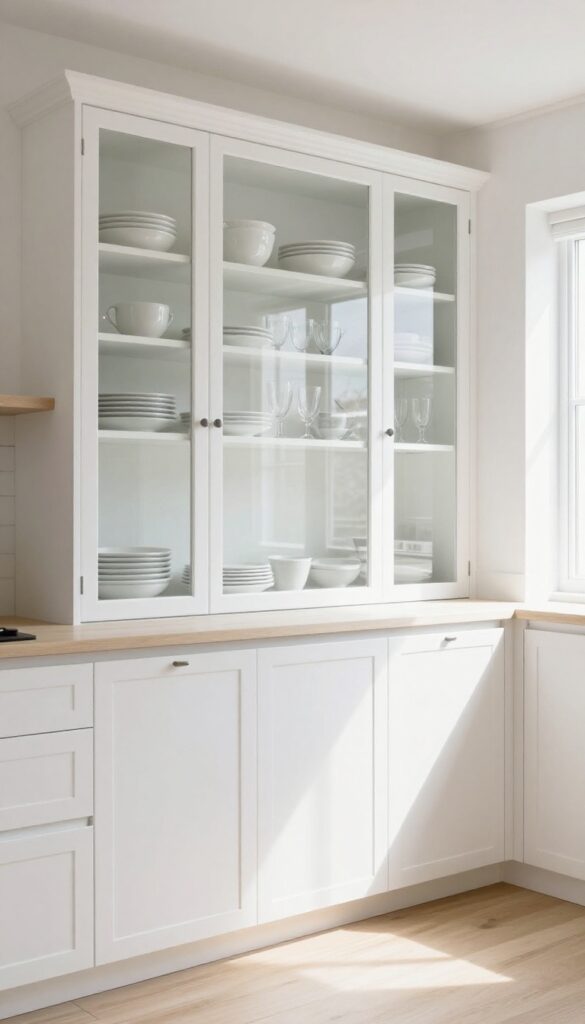
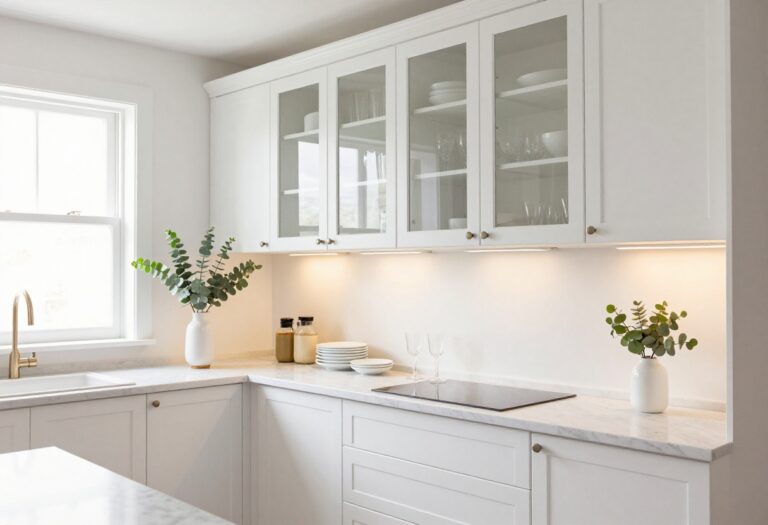
Replacing solid upper cabinet doors with glass fronts is one of those kitchen changes that instantly makes the room feel bigger and brighter. Clear glass turns your everyday dishes into a curated display, while frosted or textured glass keeps the look light without showing every mug. It's a smart swap that adds visual depth and a touch of openness, especially in smaller kitchens where every inch of perceived space counts.
Glass-front cabinets work best when you treat them as a styling opportunity rather than just a storage solution. Think of them as a built-in showcase for your prettiest ceramics, glassware, or even a collection of cookbooks. The key is to keep things intentional—group similar items, use neutral tones, and leave a little breathing room so the shelf doesn't look crowded.
If you're worried about clutter, frosted glass is your friend: it hides the mess while still letting light pass through. This idea fits especially well in kitchens that get good natural light, as the glass will reflect and bounce that brightness around the room.
Best Glass Types For The Look
- Clear glass is the go-to for a true display effect, but it does require some upkeep since every fingerprint and dust speck shows. Frosted glass offers a softer, more forgiving look that still feels open. For something in between, try ribbed or seeded glass—it adds texture and obscures contents slightly while keeping a vintage charm.
- If you want a warmer feel, opt for glass with a slight tint, like a pale amber or gray, which can tie into other metallic or wood tones in the kitchen.
Styling Inside The Cabinets
- Treat the inside of glass-front cabinets like a mini shelf display. Stick to a cohesive color palette—white, cream, or soft pastels keep things airy, while darker hues add drama. Use matching dinnerware sets or stack plates and bowls in neat rows.
- Add a few accent pieces like a small plant, a ceramic pitcher, or a stack of linen napkins to break up the uniformity. Avoid overstuffing; leave about 20% empty space so the eye can rest. Lighting inside the cabinet (like puck lights or LED strips) makes the display pop even more, especially in the evening.
Where To Use Glass Doors
- Glass fronts work best on upper cabinets since they're at eye level and can really open up the room. Reserve solid doors for lower cabinets where you store pots, pans, and less visually appealing items. If your kitchen has a pass-through or open shelving nearby, glass-front cabinets help tie the look together without making the space feel cluttered.
- For a cohesive flow, repeat the glass style on a few key cabinets rather than all of them—like the ones flanking the range or above the sink.
2. Two-Tone Cabinets for Depth and Contrast
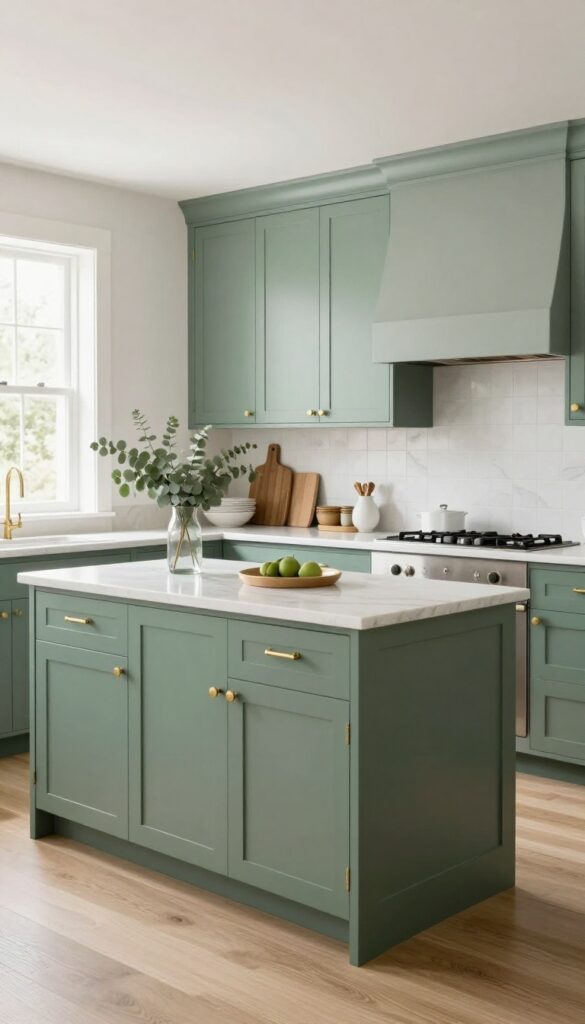
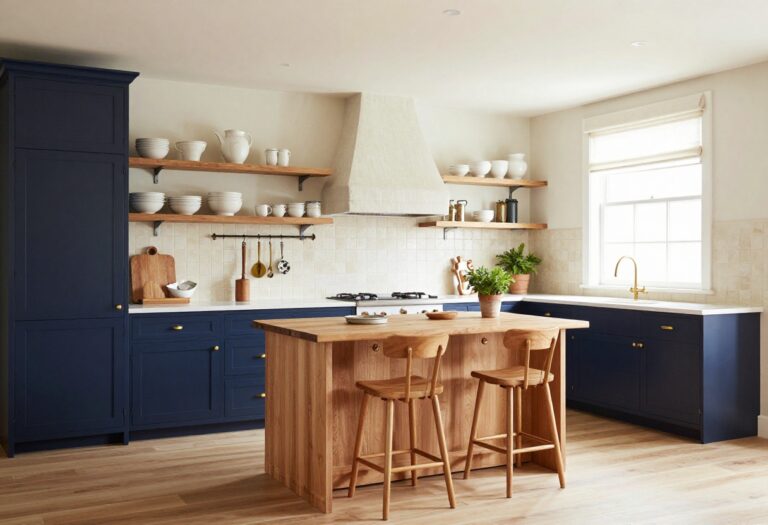
You don't have to commit to one color for your kitchen cabinets. Two-tone cabinetry is a smart way to break up a large kitchen and add visual interest without overwhelming the space. By using a lighter shade on top and a deeper one on bottom, you create a grounded, layered look that feels both intentional and cozy.
This approach works especially well in kitchens with an island or open shelving, where the contrast can really shine. The lighter uppers keep the room airy and bright, while the darker lowers anchor the space and hide everyday wear and tear. It's a practical choice that also delivers serious style points.
Best Color Combos
Soft cream or light wood on top pairs beautifully with sage green, navy, or charcoal on the bottom. For a warmer feel, try a warm white upper with a deep terracotta or olive lower. Stick to two tones that share an undertone—warm with warm, cool with cool—to keep the look cohesive.
Layout Tip
Use the darker color on lower cabinets that get the most use—it hides fingerprints and splashes better. If you have a kitchen island, paint it the same dark shade as the lowers to create a visual anchor. This draws the eye and makes the island feel like a purposeful centerpiece.
Finishing Touch
Add hardware that bridges both colors. Brushed brass or matte black knobs and pulls work with almost any two-tone scheme. A simple bar pull on the dark lowers and a smaller knob on the light uppers can subtly reinforce the contrast without competing with the paint.
3. Beaded Inset Doors for Classic Texture
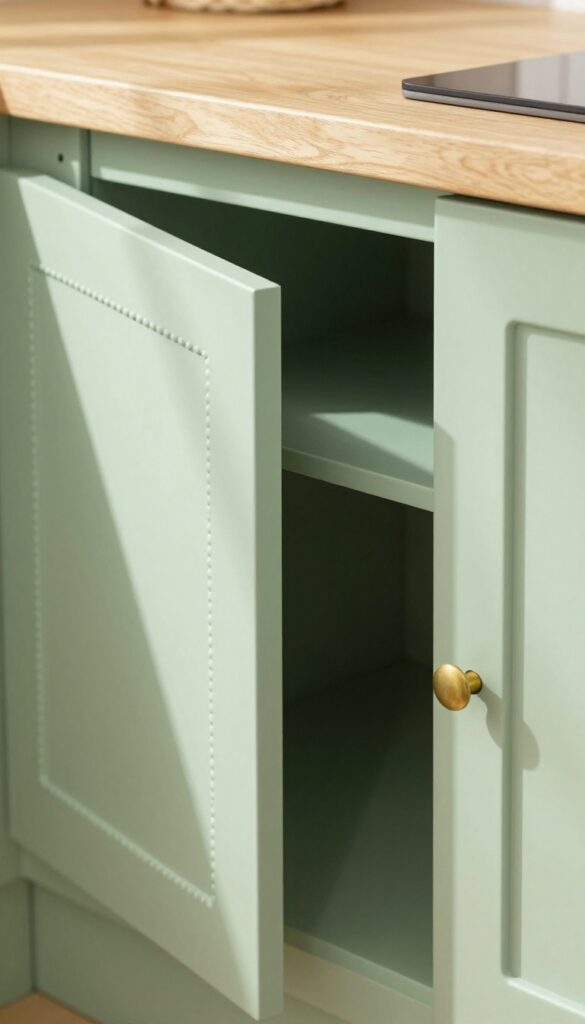
Beaded inset doors have a way of making a kitchen feel grounded and thoughtfully made. The subtle grooves along the frame catch light softly, creating shadow lines that add depth without overwhelming the space. They bring a handcrafted feel that works beautifully in both traditional kitchens and more transitional spaces looking for a touch of character.
These doors are all about texture that doesn't shout. The beaded detail—a small decorative groove cut into the inset frame—adds a layer of visual interest that feels intentional and refined. Because the bead is part of the door construction rather than an applied trim, it integrates seamlessly into the cabinet face.
This makes them a smart choice for kitchens where you want detail without busyness. They pair especially well with shaker-style cabinets or flat-panel doors for a layered look that still feels clean. In a cozy kitchen, the soft shadows from the beads can make the room feel warmer and more inviting, especially when combined with warm wood tones or soft paint colors.
Best Colors
- Beaded inset doors shine in soft, muted hues that let the shadow lines stand out. Think creamy whites, pale greiges, or soft sage greens. For a bolder look, deep navy or charcoal can make the beaded detail pop dramatically, especially with brass or matte black hardware.
- Avoid very glossy finishes, as they can flatten the texture—stick with matte or satin sheens.
Texture Mix
To keep the kitchen from feeling too one-note, balance the beaded doors with smoother surfaces elsewhere. A quartz or soapstone countertop, a sleek tile backsplash, or open shelving with simple glassware all provide contrast. The goal is to let the cabinet texture be the star without competing elements.
Small-space Fix
In a compact kitchen, beaded inset doors can make the room feel more substantial without taking up visual space. Paint them in a light color to keep the space airy, and consider using them only on upper cabinets to avoid overwhelming the room. The subtle grooves add interest without making the kitchen feel busy.
4. Open Shelving on a Few Upper Doors
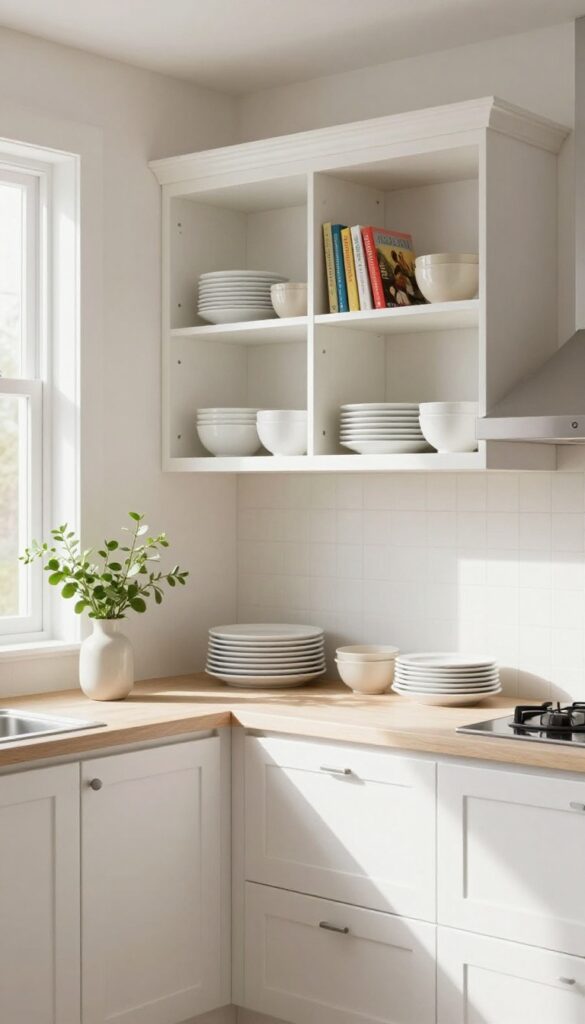
Not every cabinet door needs to stay closed. By removing the doors from a couple of upper cabinets and adding simple shelves, you create a spot to show off your favorite dishes or cookbooks. It breaks up the monotony of rows of solid fronts and gives the kitchen a collected, lived-in feel.
This works especially well in smaller kitchens where you want to avoid feeling closed in, but it also adds warmth to larger spaces that might feel too uniform.
The idea is to pick two or three upper cabinets—preferably ones that are easy to reach—and swap the doors for open shelving. You can either remove the entire cabinet box and install floating shelves, or keep the box and add a shelf inside with the doors off. Either way, you get a spot to display everyday items you actually use.
Think white dinner plates stacked neatly, a few ceramic mixing bowls, or a row of cookbooks with colorful spines. The key is to keep it functional but styled, so it looks intentional rather than cluttered. This approach softens the kitchen's look, making it feel more like a lived-in room and less like a showroom.
Best Cabinets To Convert
- Choose cabinets that are not your primary storage for rarely used items. Ideal candidates are ones above the counter but not directly over the stove or sink, where grease and steam can be an issue. Also avoid converting cabinets that hold messy or mismatched items—open shelving works best when what you store there is visually cohesive.
- A good rule: pick a cabinet that's centered or slightly off-center, so the open shelves become a natural focal point.
Shelf Styling Tip
- Keep the styling simple and practical. Start with a stack of plates or bowls, then add a few cookbooks standing upright or leaning. A small plant or a wooden cutting board can add texture.
- Avoid overcrowding; leave some breathing room between items. The goal is to make it look like you use these things daily, not like a museum display. Stick to a limited color palette—neutrals with one accent color—to keep the look calm and cohesive.
Finishing Touch
Add under-shelf lighting to highlight what you've displayed. A slim LED strip or puck lights mounted under the shelf above will cast a warm glow on your dishes and make the whole kitchen feel cozier. It's a small detail that elevates the look from simple to thoughtfully designed.
5. Slab Doors With Warm Wood Grain
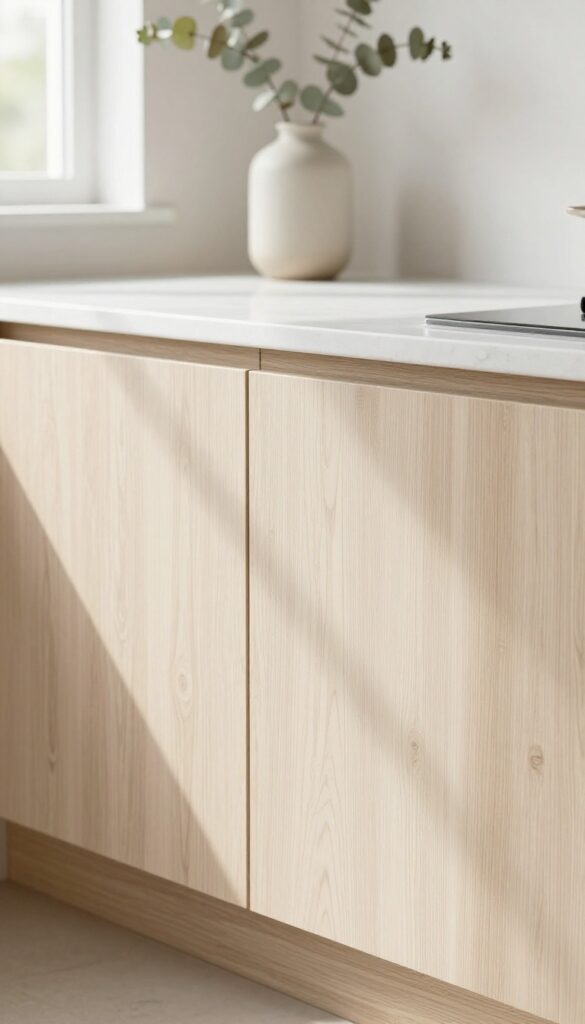
Flat slab doors in natural oak or walnut keep things minimal but warm. The wood grain adds texture, and the clean lines feel modern without being cold. They're a smart choice if you want a kitchen that feels calm and grounded, not stark or trendy.
Slab doors are essentially flat panels with no framing or raised details. When made from warm-toned wood like oak or walnut, they bring in a natural element that softens the modern look. The grain becomes the main visual interest, so you don't need extra hardware or embellishments.
This style works especially well in kitchens with lots of natural light, where the wood can glow. For a cozy feel, pair them with matte black or brass pulls, or go handle-free for a sleeker silhouette.
Best Wood Choices
Oak has a pronounced grain that adds texture, while walnut offers a richer, darker tone. White oak is a popular mid-tone that reads warm but not yellow. Avoid woods with heavy red undertones if you want a more neutral look.
Finishing Touch
A matte or satin finish keeps the wood looking natural and touchable. Glossy finishes can make slab doors feel too sleek and cold. Consider a wire-brushed or hand-scraped texture for extra depth.
Styling Tip
Keep countertops simple—quartz in a warm white or light concrete lets the wood take center stage. Add open shelving with a few ceramic pieces to echo the natural vibe.
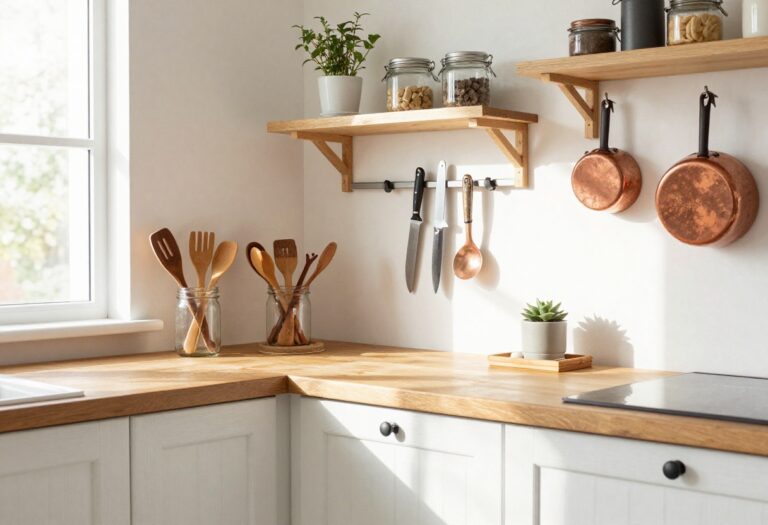
6. Mixed Materials: Wood and Metal Accents
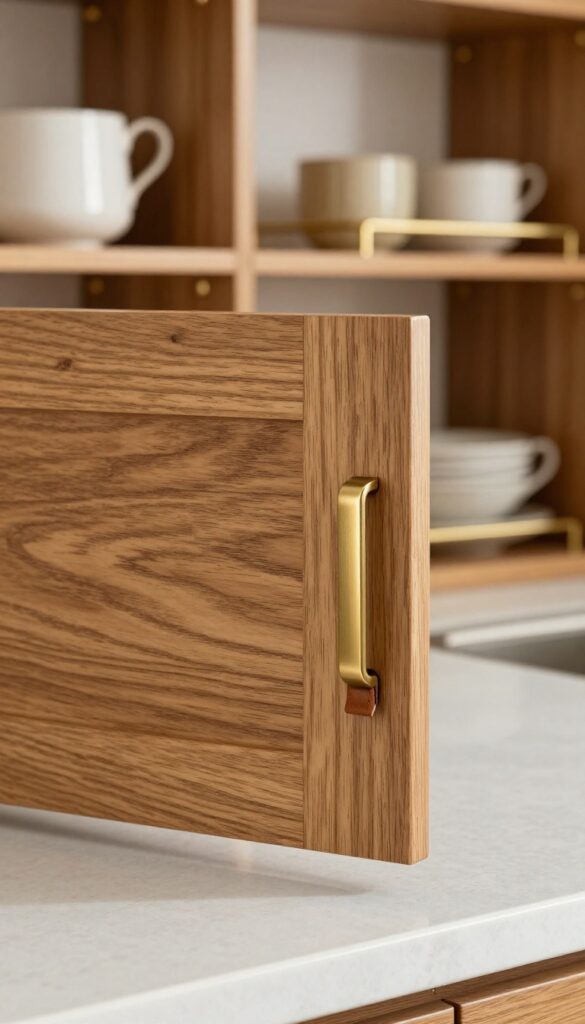
Combining warm wood with cool metal creates a look that feels both intentional and collected. The contrast adds depth without overwhelming the space, making it perfect for kitchens that want a cozy industrial vibe. Think of it as a way to bring texture and personality to your cabinets without a full overhaul.
This approach works especially well in open-plan kitchens where you want the cabinetry to feel like furniture rather than just storage. The wood warms up the metal, while the metal keeps the wood from feeling too rustic. It's a balanced, layered look that reads as curated and lived-in.
Best Materials
Opt for solid wood fronts—oak, walnut, or maple—paired with brass, bronze, or black metal mesh inserts. The wood should have visible grain for texture, while the metal can be brushed or matte to avoid glare. Avoid high-gloss finishes; they compete with the natural feel.
Texture Mix
- Let the metal accents be the star on just a few doors—upper cabinets or a single section—rather than every door. This keeps the look from feeling busy. Pair with open shelving in matching metal for a cohesive flow.
- The key is contrast: smooth metal against textured wood, open mesh against solid panels.
Finishing Touch
Add small leather pulls or knobs to the wood doors to tie the mixed materials together. This softens the industrial edge and adds another layer of warmth. Keep countertops simple—butcher block or matte quartz—so the cabinets remain the focal point.
7. Chalkboard or Magnetic Paint on a Single Door
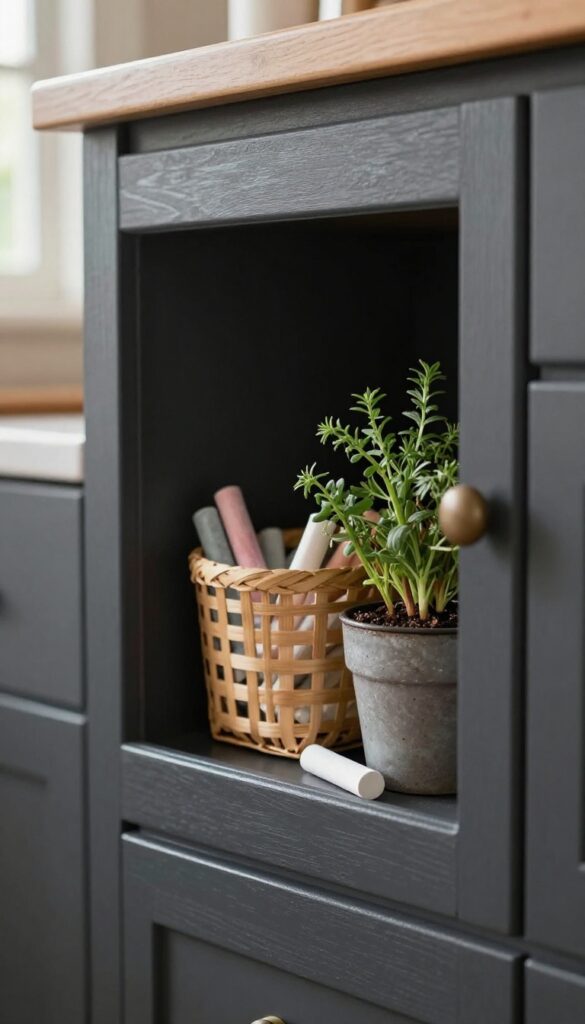
One cabinet door can pull double duty when you give it a functional finish. Chalkboard paint turns a plain surface into a spot for grocery lists, meal plans, or doodles. Magnetic paint lets you pin photos, reminders, or even small spice tins.
It’s a small change that adds personality and purpose without taking up counter space.
Pick one cabinet door in a high-traffic area—near the coffee station or the pantry. The rest of the kitchen stays cohesive, but that single door becomes a focal point. Use a dark charcoal chalkboard for a moody look, or go with a warm gray that blends with your cabinets.
Magnetic paint works best under a layer of regular paint, so you can match your existing color. Add a small tray for chalk or magnets below the door to keep it tidy.
Best Placement
Choose a door that’s easy to reach but not in the way of daily cooking. A cabinet next to the fridge or near the entry to the kitchen works well. Avoid doors that get splashed often—keep it away from the sink or stove.
Styling Tip
Keep the look layered by pairing the chalkboard with a small shelf above or a basket of chalk and erasers. For magnetic doors, use matching frames or clips for a cohesive feel. A few fresh herbs in magnetic pots add a cozy touch.
Finishing Touch
Seal chalkboard paint with a light sanding and a coat of chalk before first use. For magnetic paint, test the strength—some need two coats to hold heavier items. A thin wooden frame around the door makes it look intentional, not like a DIY afterthought.
8. Reeded Glass for Soft Privacy
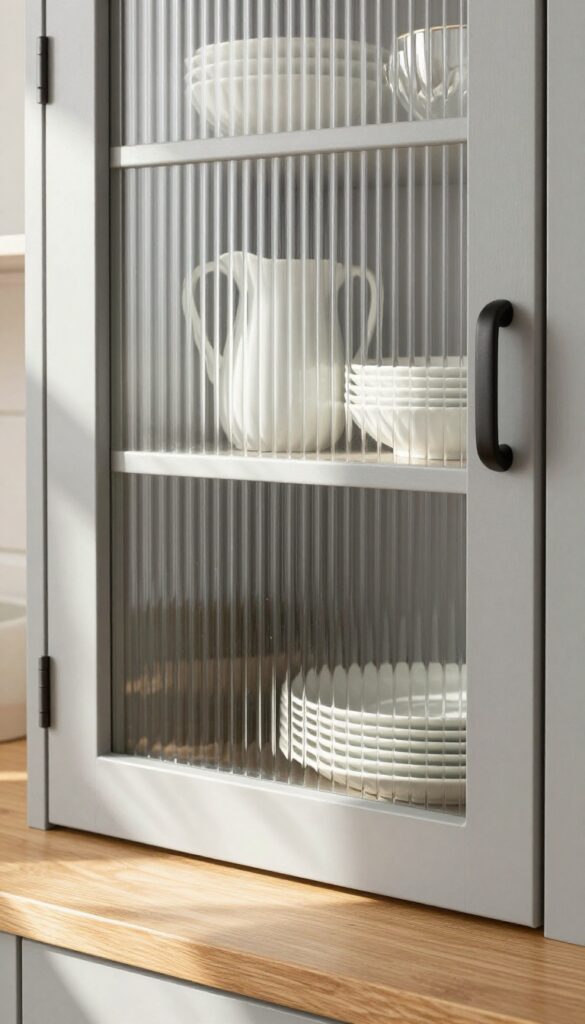
Reeded glass cabinet doors are having a moment, and it's easy to see why. The vertical ridges catch light beautifully, creating a soft, diffused glow that hides everyday clutter without making your kitchen feel closed off. It's a smart choice if you want an airy, open look but aren't ready to commit to clear glass and perfectly organized shelves.
The ribbed texture adds a subtle layer of visual interest that feels both modern and warm. Because the glass obscures contents, you can store mismatched dishes or pantry staples without stressing over symmetry. Plus, those vertical lines draw the eye upward, making your ceilings feel taller—a simple trick that pays off in smaller kitchens.
Pair reeded glass with warm wood tones or matte black hardware to keep the look grounded and cozy.
Best Materials
- Reeded glass works beautifully with a variety of cabinet materials. For a classic look, choose shaker-style doors in white or soft gray with reeded inserts. If you prefer something more modern, go for flat-panel doors in a rich walnut or deep navy—the texture of the glass adds just enough contrast.
- Avoid high-gloss finishes, as they can compete with the glass's subtle shimmer.
Lighting Tip
To make the most of reeded glass, install under-cabinet lighting or small LED strips inside the cabinets. The light will filter through the grooves, casting a gentle pattern on your countertops and backsplash. It's an easy way to add warmth and depth, especially in the evening when you want the kitchen to feel inviting.
Styling Inside
Since the glass hides some mess but not all, keep the inside of your cabinets tidy. Stick to a simple color palette—white dishes, clear glassware, and natural wood cutting boards look great behind reeded glass. Avoid overcrowding; a little breathing room makes the texture stand out more.
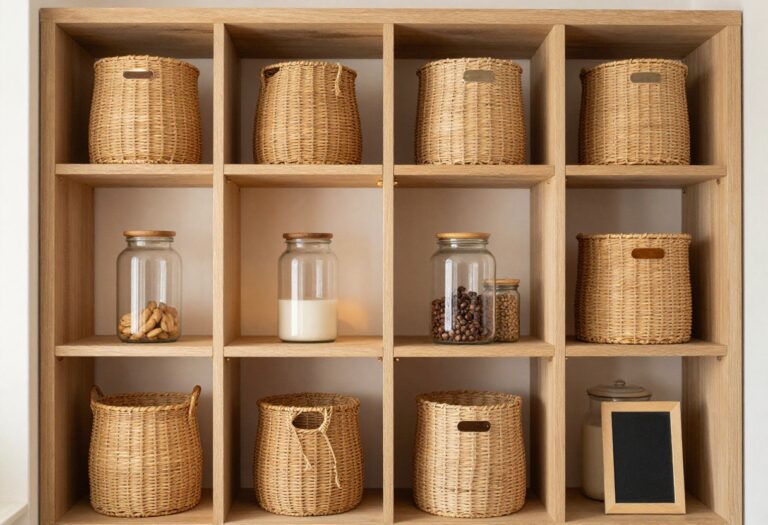
9. Basket-Weave or Woven Inserts
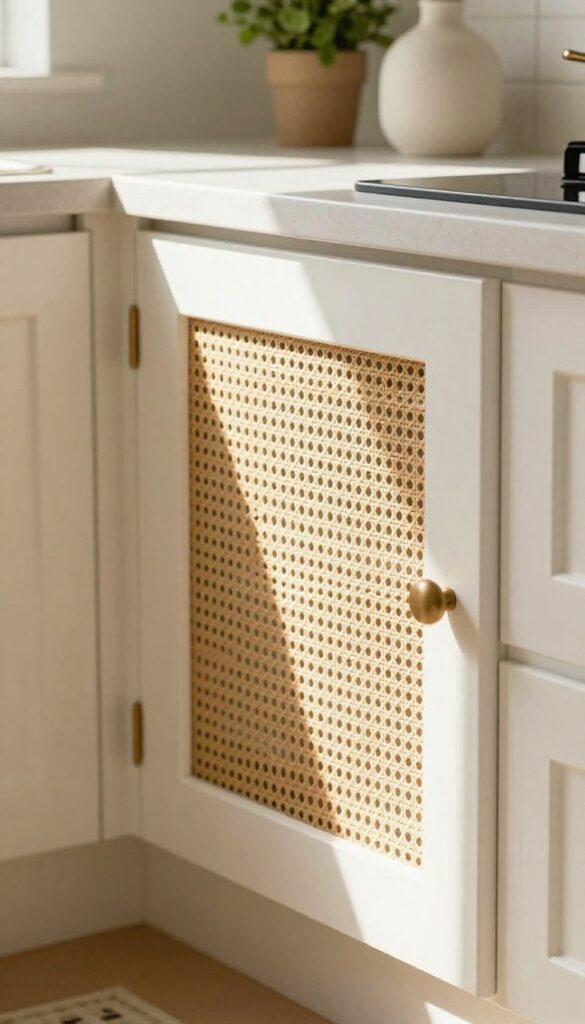
Solid cabinet doors can sometimes feel a bit flat, especially in a kitchen that leans neutral. Swapping a few panels for woven rattan or seagrass instantly adds texture and warmth without overwhelming the space. The natural weave softens the room, making it feel more layered and lived-in—perfect for kitchens that need a cozy, boho touch without going full farmhouse.
Basket-weave inserts are a simple swap that brings organic texture to your cabinetry. They work especially well on upper cabinets or a single focal section like a pantry door. The woven material catches light differently throughout the day, adding subtle visual interest.
Pair with warm wood tones or creamy whites to let the texture shine. For a cohesive look, carry the same weave into light fixtures or barstools.
Best Materials
- Rattan and seagrass are the top choices for durability and natural appeal. Rattan is more flexible and takes stain well, while seagrass offers a tighter, more uniform weave. Both hold up in kitchens if kept away from direct moisture—avoid placing them right next to the sink or stove.
- For a budget-friendly option, try flat weave seagrass panels that can be cut to size.
Color Flow
- Stick with neutral cabinet colors like warm white, soft gray, or light wood to let the weave stand out. If your kitchen has darker cabinets, choose a lighter rattan to create contrast. The goal is to add texture, not clash.
- A soft sage green cabinet with natural rattan inserts is a particularly charming combo that feels both fresh and grounded.
Finishing Touch
- Keep the rest of the hardware simple—matte black or brass pulls work well without competing with the weave. Add a few open shelves with woven baskets or a jute rug to echo the texture. A small potted plant nearby reinforces the natural vibe.
- The woven inserts should feel like a deliberate design choice, not an afterthought.
10. Color-Blocked Lower Cabinets
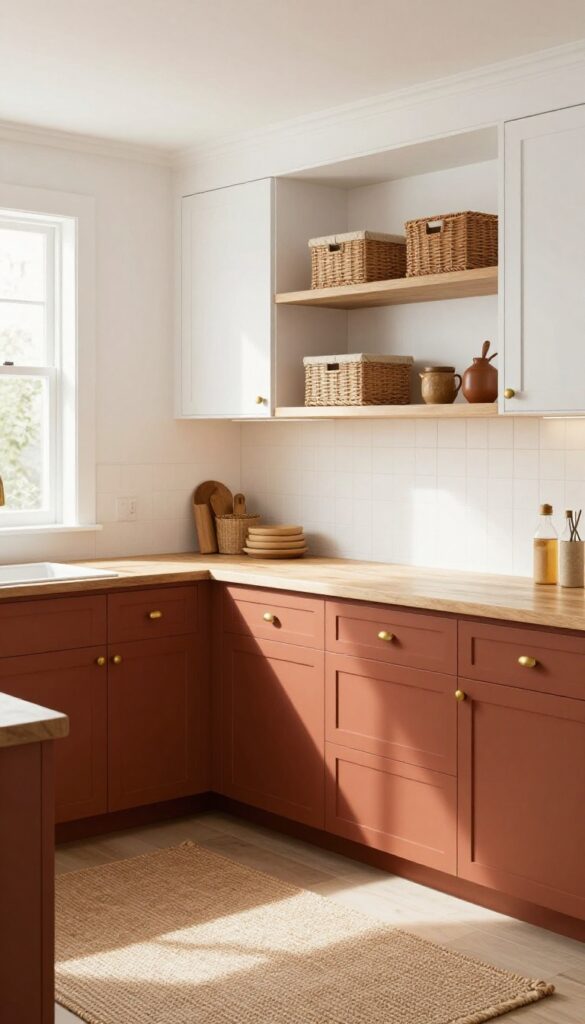
Painting just the bottom cabinets a bold but cozy color like terracotta or deep olive adds instant warmth and personality. It’s a clever way to introduce color without overwhelming the room—keeping the upper cabinets light maintains an airy feel while the darker base grounds the space. This approach works especially well in kitchens with open shelving or a breakfast bar, where the color contrast becomes a natural focal point.
Color-blocking your lower cabinets is a strategic move for small or galley kitchens where you want to make a statement without closing in the room. The darker shade on the bottom visually anchors the space, while the light uppers reflect light and keep things feeling open. It’s also a great way to transition from a busy countertop to a calm upper half.
Pair with warm brass or matte black hardware to tie the look together.
Best Colors
Terracotta, deep olive, navy, and charcoal are top picks for a cozy yet bold lower cabinet. These shades work well with warm wood tones, white subway tile, and natural stone countertops. For a softer take, try a muted sage or dusty rose.
Texture Mix
Balance the painted lower cabinets with natural textures like a butcher block countertop, woven baskets on open shelves, or a sisal runner. This prevents the color from feeling flat and adds the layered, lived-in look that makes a kitchen feel inviting.
Finishing Touch
Add under-cabinet lighting to highlight the contrast between the dark lowers and light uppers. It also makes the lower cabinets feel less heavy and more intentional, especially in the evening when the kitchen becomes a cozy hub.
11. Frameless Cabinets for a Seamless Look
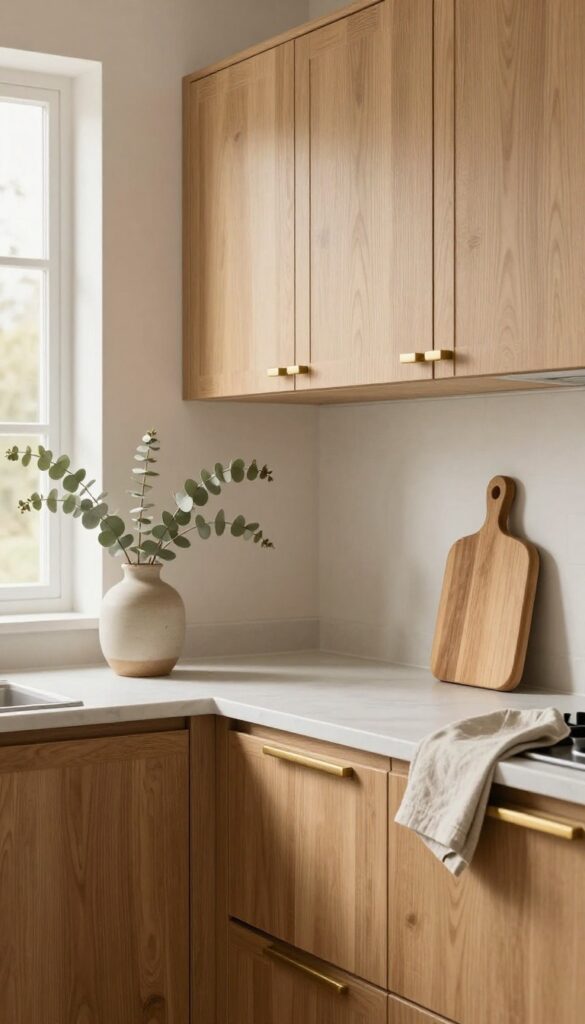
Frameless cabinets are a quiet game-changer in kitchen design. Instead of the traditional face frame, these cabinets have doors that attach directly to the box, creating a clean, uninterrupted surface. The result is a sleek, modern look that feels almost architectural.
In a cozy kitchen, this simplicity can be surprisingly warm—especially when you let the materials and hardware do the talking.
Frameless cabinets, also known as European-style cabinets, ditch the face frame for full-overlay doors that cover the entire cabinet box. This gives your kitchen a smooth, continuous surface that feels both spacious and intentional. The lack of visible gaps makes small kitchens feel larger, and the minimalist look pairs beautifully with soft-close hinges and discreet pulls.
For a layered, cozy feel, opt for warm wood tones or matte finishes instead of high-gloss. The clean lines let texture and color shine, so you can add warmth through natural wood, soft lighting, and tactile hardware like brushed brass or leather pulls.
Best Materials For Warmth
- To keep frameless cabinets from feeling cold or sterile, choose materials with natural warmth. Thermofoil in a matte woodgrain finish offers durability and a soft look. Real wood veneers like oak or walnut add organic texture, while painted MDF in a warm off-white or sage green keeps things cozy.
- Avoid high-gloss laminates—they reflect too much light and can feel clinical.
Hardware That Adds Character
- Since frameless cabinets have a flat surface, hardware becomes a key design element. Go for slim bar pulls in unlacquered brass, leather tabs, or recessed finger pulls for an ultra-minimal look. Mixing metals is fine—just keep the finish consistent within the same zone.
- For a budget-friendly swap, try ceramic knobs or wooden handles to introduce a handcrafted feel.
Small-space Layout Tip
Frameless cabinets are ideal for tight kitchens because they maximize interior storage—no face frame means you gain a few extra inches of shelf depth. Use full-extension drawers and pull-out shelves to make every inch count. Pair with open shelving on one wall to break up the solid fronts and add visual breathing room.
12. Decorative Molding and Corbels
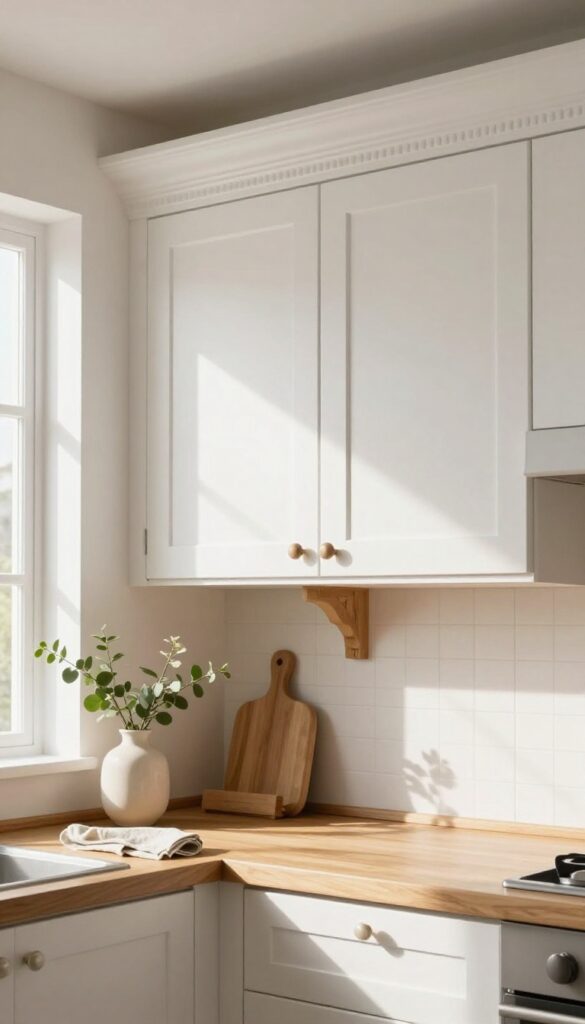
Crown molding isn't just for living rooms. Adding a strip of decorative molding or small corbels under your upper cabinets gives the kitchen a built-in, furniture-like feel that instantly makes the space look more intentional. It's one of those details that catches the eye without shouting, and it works especially well in kitchens that want to feel cozy and layered rather than stark and modern.
The best part? It's a relatively small addition that makes a big visual impact.
Think of crown molding as the jewelry for your cabinets. It adds a finished, polished look that draws the eye upward and makes the ceiling feel higher. Corbels, those small curved or carved brackets, add a touch of old-world charm and can make standard cabinets look like custom pieces.
Together or separately, these architectural details bring warmth and character to the kitchen, making it feel more like a lived-in room rather than just a workspace.
Best Materials
- For a seamless look, choose molding and corbels that match your cabinet material. Painted wood is a classic choice—white or soft gray molding blends beautifully with most cabinet colors. If you have stained wood cabinets, opt for matching wood tones or go slightly darker for contrast.
- Polyurethane or resin corbels are lightweight and easy to install, and they come in many decorative styles. They're also moisture-resistant, which is a plus in the kitchen.
Placement Tip
- Install crown molding along the top edge of upper cabinets, but also consider adding a smaller strip at the bottom for a truly custom look. Corbels work best at the ends of cabinets or under open shelving. Place them about 12 to 18 inches apart for balanced support.
- If your cabinets don't reach the ceiling, fill the gap with a soffit or extra molding to create a seamless built-in appearance.
Cozy Detail
- To enhance the cozy, layered feel, paint the molding the same color as your cabinets for a subtle, integrated look. Or, for more contrast, use a slightly darker shade to define the lines. Add under-cabinet lighting to highlight the molding and cast soft shadows that emphasize the architectural detail.
- A warm white light (2700K to 3000K) works best to keep the space inviting.
13. Pull-Out Pantry Doors With Slim Profile
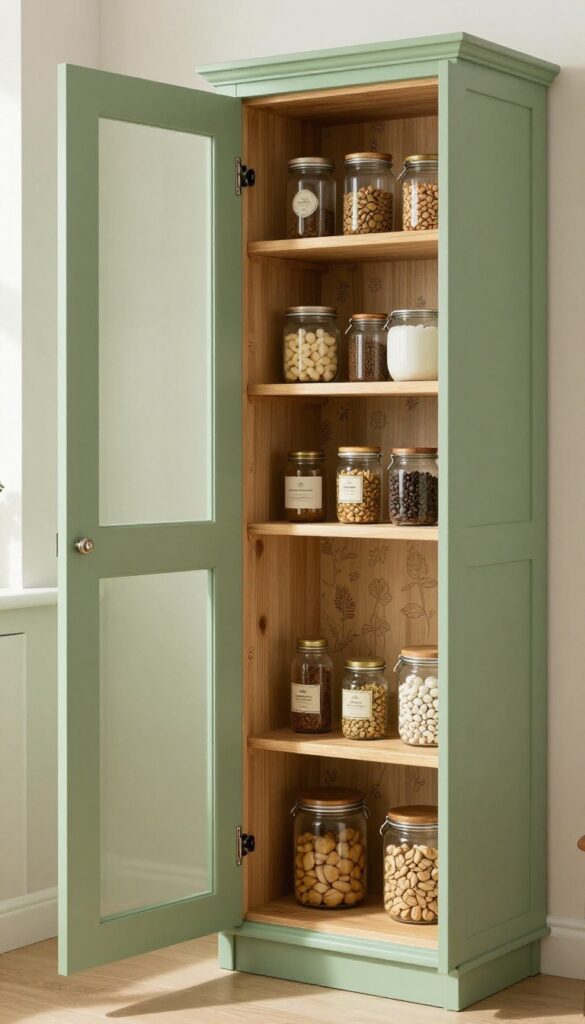
That narrow cabinet next to the fridge? The one that always turns into a black hole of mismatched spices and forgotten cans? It's prime real estate for a pull-out pantry door.
By attaching tall, slim shelves to the inside of the door, you turn dead space into a visible, accessible storage wall. The effect is both tidy and surprisingly spacious—everything you need is right there, no digging required.
The beauty of this idea is how it works with the room's flow. When closed, the cabinet door looks like any other—clean, seamless, and calm. But open it, and you've got a neatly organized pantry that feels custom-built.
The slim shelves keep jars, cans, and boxes visible at a glance, so you're not buying duplicate cumin every other month. It's a small change that makes daily cooking feel smoother and more intentional.
Best Materials
Go with solid wood or plywood for the shelves—they hold weight without sagging. For the door, match your existing cabinet style, but consider a matte finish in a warm neutral like cream, sage, or soft gray. It keeps the kitchen feeling layered and cozy, not sterile.
Storage Tip
Use adjustable shelf brackets so you can customize heights for cereal boxes, oil bottles, and spice jars. Add a small lip or rail to each shelf to prevent items from sliding off when you swing the door open. It's a tiny detail that makes the whole setup feel polished and practical.
Cozy Detail
Line the inside of the cabinet door with a peel-and-stick wallpaper in a subtle pattern—like a small-scale geometric or a soft floral. It adds a surprise pop of personality every time you open the pantry, making even the most utilitarian moment feel a little special.
14. Mirrored Cabinet Doors for Light Reflection
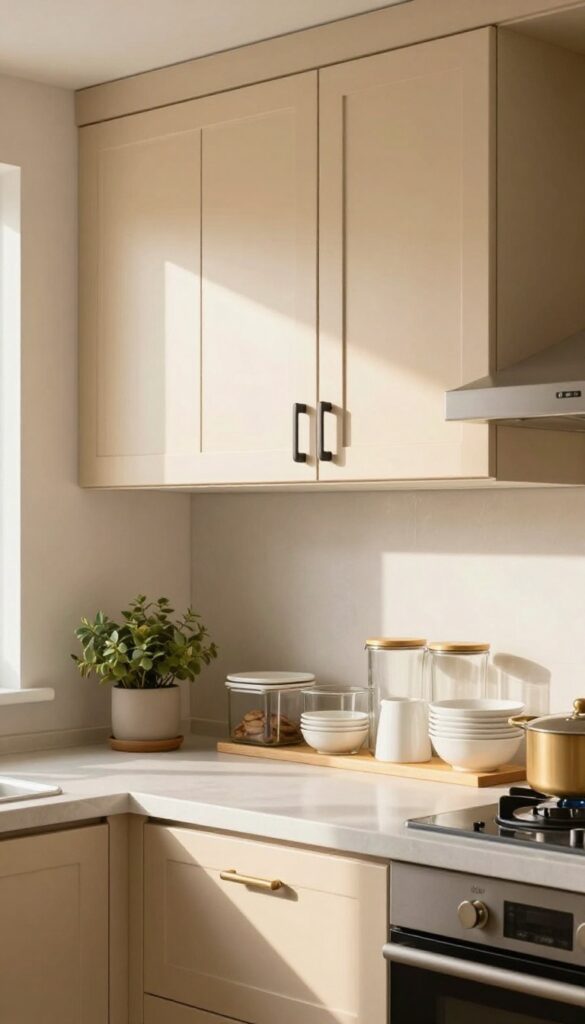
A few mirrored cabinet doors can completely shift the energy of a dark or cramped kitchen. Instead of adding more lamps or fighting with shadows, you let the room bounce light around on its own. It’s a subtle trick that makes the space feel airier and more open without losing any storage or counter space.
Mirrored panels work best on upper cabinets, especially those placed across from a window or near a light-colored backsplash. They catch whatever natural light is available and send it back into the room, softening dark corners and making the whole kitchen feel brighter. The effect is especially noticeable in galley kitchens or windowless layouts where every ray counts.
Choose a soft, warm-toned mirror finish rather than a stark silver one to keep the look cozy. Pair them with matte black or brushed brass hardware for a smart, layered feel that doesn’t tip into cold or sterile.
Best Placement
Install mirrored doors on upper cabinets only—lower doors will show too much floor clutter and lose the light-bouncing effect. Focus on the cabinets that face the main light source or sit opposite a window. If your kitchen has a breakfast bar or peninsula, mirrored doors above it can double the sense of space.
Finishing Touch
Keep the cabinet interiors tidy since the mirror will reflect whatever is inside. Use matching glass containers or simple white dishes to create a clean, intentional look. Add a small plant or a stack of linen napkins on an open shelf nearby to soften the reflective surface with a bit of texture.
Cozy Detail
To keep the room from feeling too sleek, balance the mirrors with warm wood elements—a butcher block countertop, open wooden shelving, or a woven runner. This mix of reflective and natural materials creates a cozy, layered feel that still feels smart and space-aware.
15. Handmade or Custom Knobs and Pulls
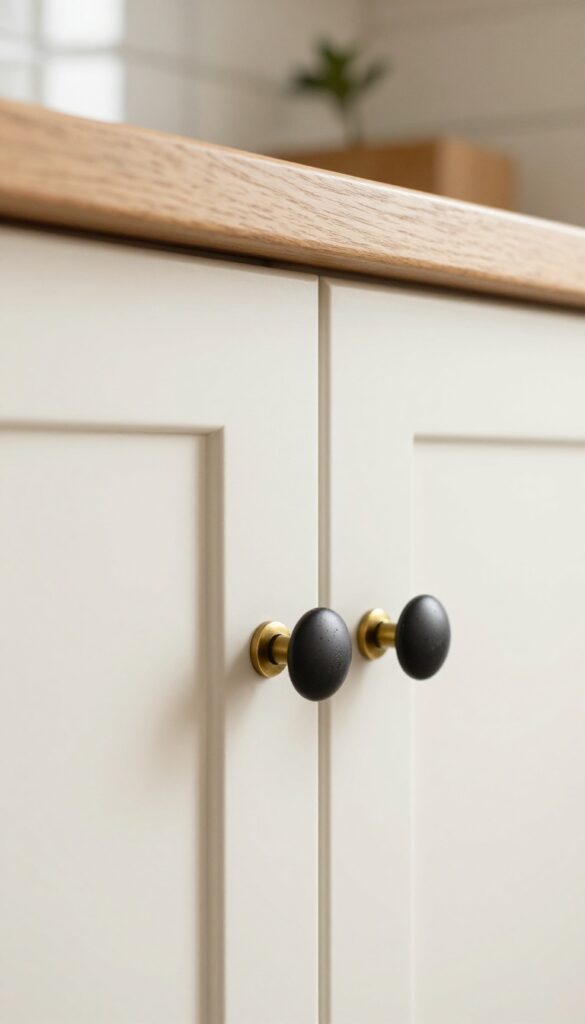
Sometimes the smallest swap makes the biggest difference. Standard hardware is fine, but it doesn't tell a story. Swapping in artisan knobs or custom pulls gives your cabinets instant personality—like a favorite vintage find or a handmade gift that feels just right.
This idea works especially well in cozy, layered kitchens where every detail adds warmth.
Think of hardware as the jewelry for your cabinets. A matte black brass cup pull on a creamy white shaker cabinet feels classic but not boring. A leather tab pull on a natural wood cabinet adds texture and a soft, organic touch.
Ceramic knobs with a speckled glaze bring in a handcrafted feel that makes the whole kitchen feel more collected. The key is mixing finishes and materials thoughtfully—maybe brass knobs on upper cabinets and black pulls on lower ones. This small change ties the room together without a full renovation.
Best Materials For A Cozy Look
- For a warm, layered feel, lean into natural materials. Unlacquered brass develops a patina over time, adding character. Leather pulls feel soft and inviting, especially in earthy tones like cognac or olive.
- Ceramic knobs with a matte or slightly irregular glaze bring an artisanal touch. Avoid shiny chrome or polished nickel if you're going for cozy—they read cooler and more modern.
Where To Mix And Match
- A smart way to layer hardware is by cabinet type. Use larger, more substantial pulls on drawers and lower cabinets where they get more use. Save smaller, decorative knobs for upper cabinets or glass-front doors.
- This creates visual rhythm and makes the kitchen feel intentional. In a small kitchen, sticking to one finish but varying the shape keeps things cohesive without feeling busy.
Finishing Touch: Backplates
Don't forget backplates—they add a finished, furniture-like look. A simple brass or black backplate behind a ceramic knob makes the hardware feel more substantial and protects the cabinet paint. It's a small detail that elevates the whole kitchen, especially on flat-front cabinets that need a bit of visual weight.
FAQ
Can I change cabinet doors without replacing the whole cabinet?
Yes, you can replace just the doors and drawer fronts. This is called a refacing project and is much more affordable than a full cabinet replacement.
What cabinet door style is easiest to clean?
Slab doors with a smooth finish are easiest to wipe down. Avoid heavy molding or glass if you want minimal upkeep.
How do I choose between painted and stained cabinets?
Painted cabinets offer more color options and hide wood grain, while stained cabinets highlight natural texture. For a cozy look, painted in warm tones or stained in medium wood both work well.
Are glass-front cabinets practical for everyday use?
They can be if you keep dishes organized and styled. Use frosted or reeded glass to hide some mess while still letting light through.
What hardware finish works best for a cozy kitchen?
Brass, bronze, or matte black add warmth. Avoid shiny chrome if you want a softer, more layered feel.
Conclusion
Updating your kitchen cabinet doors is one of the most effective ways to change the whole room without a major overhaul. Whether you go for glass fronts, two-tone paint, or woven inserts, each idea adds its own layer of warmth and personality.
Pick the one that feels right for your space and start small—you might be surprised how much a single door swap can shift the energy.