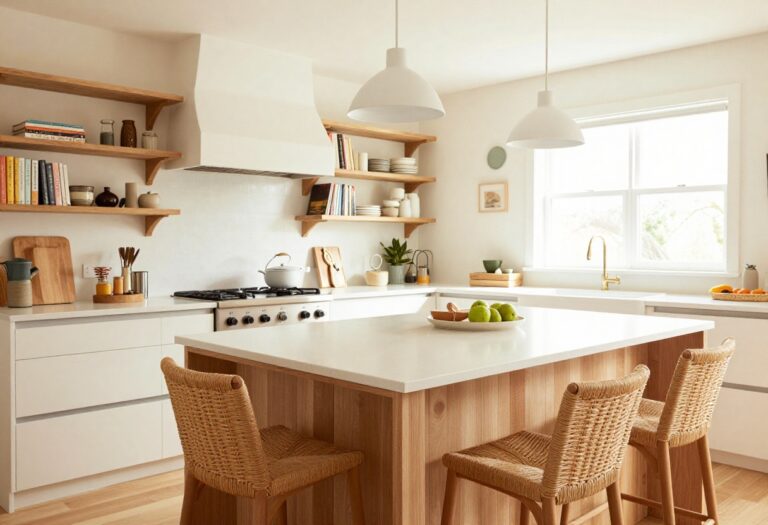
11 Black and White Kitchen Ideas Modern Homes Can Try
Black and white kitchens often get labeled as cold or stark, but that doesn't have to be the case. With the right mix of textures, warm woods, and soft lighting, this classic palette can feel incredibly inviting.
The secret is layering—adding depth through materials like marble, rattan, and matte finishes so the space doesn't fall flat.
Whether you're planning a full remodel or just refreshing a few details, these ideas will help you create a kitchen that's both modern and cozy.
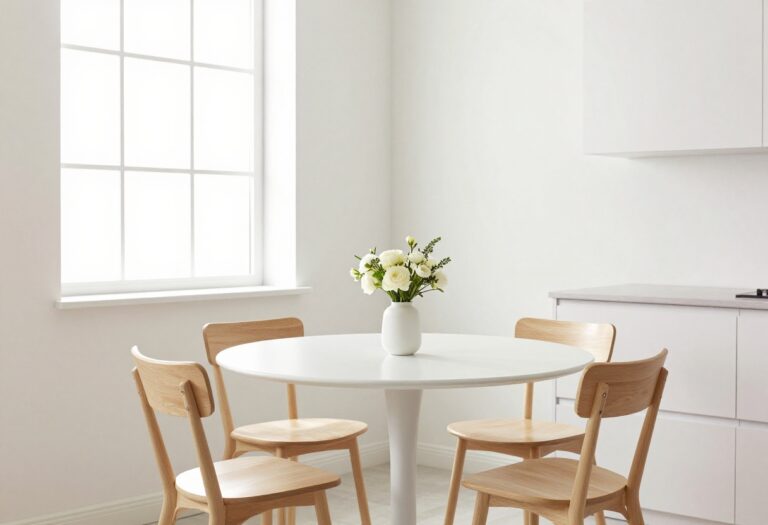
1. Warm Up With Wood Accents
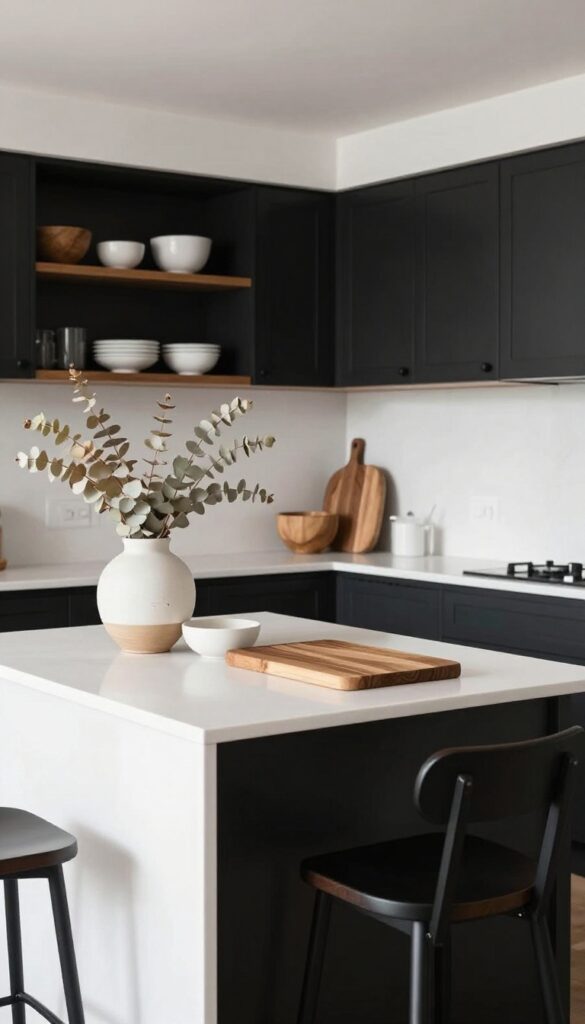
Black and white kitchens can sometimes feel a little stark or cold, especially in open-plan homes. That's where wood comes in. Adding natural wood accents is one of the easiest ways to soften the high contrast and bring a layer of warmth that makes the space feel lived-in and inviting.
Think of it as the cozy sweater your kitchen needs.
Wood works like a neutral bridge between black and white, adding organic texture without competing with the palette. Whether you go for a few open shelves, a butcher block island top, or simple bar stools, the grain and warmth of the wood create a relaxed, grounded feel. It's a small shift that makes a big difference in how the room feels day to day.
Best Woods For A Black And White Kitchen
- Stick with medium-toned woods like oak, walnut, or teak. They offer enough warmth to soften the black and white without looking too rustic or too formal. Avoid very pale or very dark woods—blonde woods can wash out, while ebony can get lost against black cabinetry.
- A natural oak shelf or a walnut butcher block counter hits that sweet spot.
Where To Add Wood
- Open shelving is a popular choice because it breaks up a wall of white or black cabinets and lets you display dishes or cookbooks. Butcher block countertops on an island or a peninsula add warmth right at the center of the action. Bar stools with wood seats and black metal legs tie the look together.
- Even a single wood cutting board left out on the counter can help.
Finishing Touch
- Repeat the wood tone in at least two places so it feels intentional. If you have wood open shelves, add a wood stool or a wood-framed mirror nearby. This creates a visual rhythm that makes the warmth feel designed, not accidental.
- A small potted plant on a wood shelf also reinforces the natural, cozy vibe.
2. Go Matte for a Soft Finish
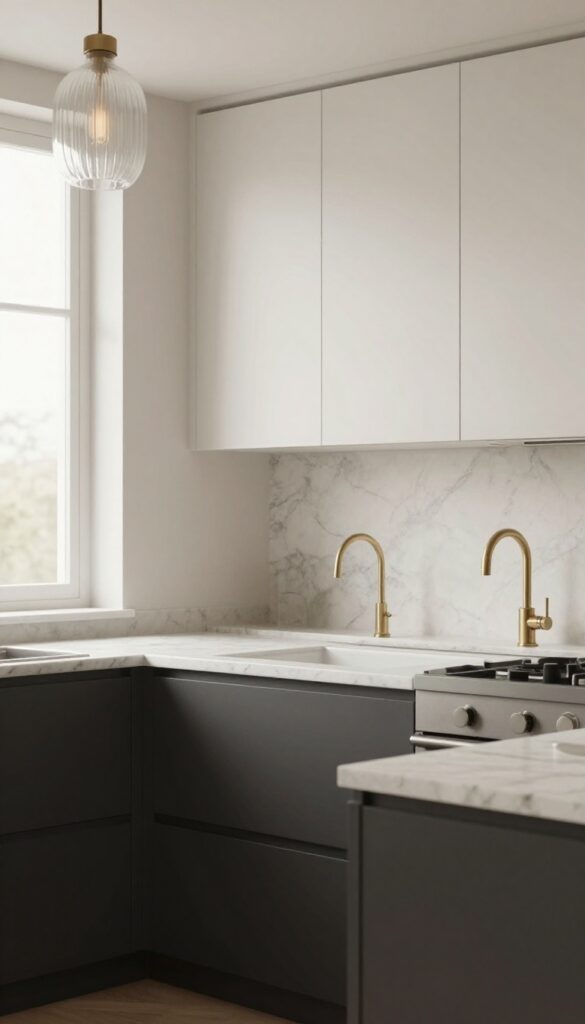
Glossy cabinets look sleek in photos, but they can feel a bit harsh in real life. Every smudge, fingerprint, and light reflection is on full display, which can make a kitchen feel busier than it needs to be. Matte finishes flip that script entirely.
Whether you go for black or white, the soft, non-reflective surface cuts glare and brings a calm, grounded energy to the space. It’s the kind of finish that feels good to touch and easy to live with—especially if you’re after a cozy, layered kitchen.
Matte finishes work beautifully in both modern and transitional kitchens. They absorb light rather than bounce it around, which helps the room feel more intimate and less clinical. Pairing matte black lower cabinets with matte white uppers creates a subtle contrast that’s sophisticated without being stark.
Or go all-in on one color for a seamless, monolithic look. The key is to balance the softness with a few glossy or textured accents—like a polished brass faucet or a ribbed glass pendant—so the space doesn’t fall flat.
Best Colors And Combos
Matte black is a natural choice for a moody, cocooning feel, but don’t overlook matte charcoal, slate, or even deep navy. For white, opt for a warm matte white with a hint of cream or greige to keep it from feeling cold. A two-tone approach—matte black on the island and matte white on perimeter cabinets—adds depth and defines zones without overwhelming the room.
Texture Mix
Since matte surfaces are low-shine, you need other textures to create visual interest. Pair matte cabinets with a honed marble or quartz countertop, a textured backsplash like zellige tile or handcrafted ceramic, and natural wood open shelving. The mix keeps the kitchen from looking flat and gives it that collected, layered feel.
Styling Tip
- Matte finishes show less grime, but they can still look dusty over time. Use a microfiber cloth and a gentle cleaner to keep them fresh. Add warmth with woven barstools, a jute runner, or a few ceramic canisters on the counter.
- These soft, natural elements play nicely with the matte cabinetry and reinforce the cozy vibe.
3. Layer Textures With a Patterned Backsplash
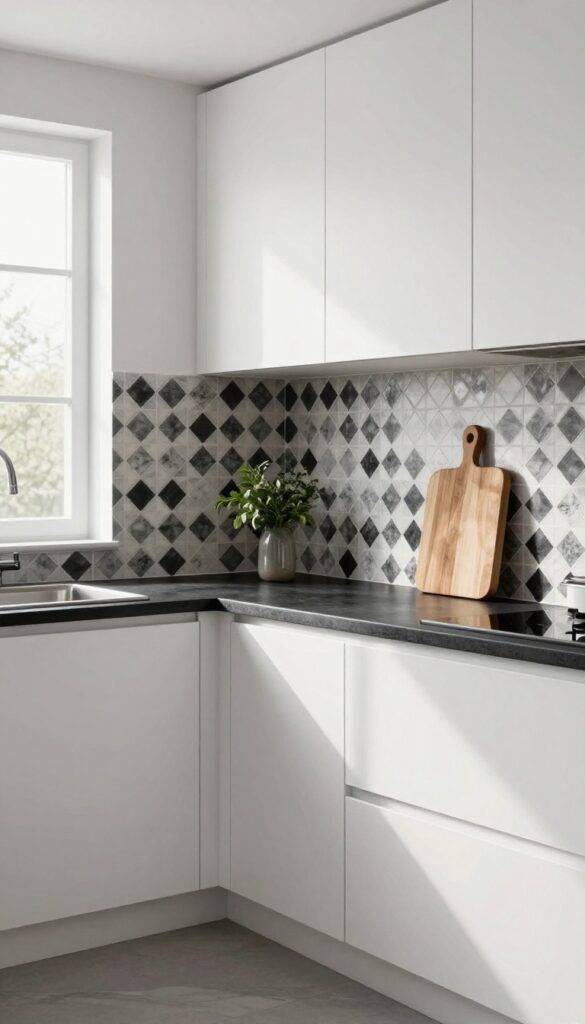
A black and white kitchen doesn't have to feel flat or one-note. The trick to keeping it warm and inviting is piling on texture, and the backsplash is the perfect place to start. A patterned or textured tile adds depth and movement, making the whole kitchen feel layered and lived-in without adding a single color.
Instead of plain white subway tile, go for something with a little more personality. Herringbone patterns, zellige tiles with their subtle unevenness, or a geometric print all bring visual interest while staying firmly in the monochrome camp. The texture catches the light differently throughout the day, giving your kitchen a dynamic feel that changes as the sun moves.
Plus, it's a relatively low-commitment way to make a big impact — swap out the backsplash and the whole room feels refreshed.
Best Tile Choices
Zellige tiles are a favorite for a reason: their handcrafted look adds warmth and slight variation in shade, which keeps an all-white kitchen from feeling sterile. For a more graphic vibe, try a geometric tile in matte black and white — think diamonds or hexagons. Subway tile laid in a herringbone pattern is another classic that gives you texture without going too bold.
Grout Color Matters
Don't overlook the grout. White grout with white tiles keeps things seamless and airy, while dark grout makes the pattern pop and adds contrast. If you're going for cozy, a medium gray grout can soften the look and hide dirt better than pure white.
Finishing Touch
- Pair your textured backsplash with simple, unfussy cabinets and countertops. Let the backsplash be the star. Add open shelving with a few ceramic pieces in black or white to echo the tile's texture, and keep the rest of the kitchen streamlined.
- A warm wood cutting board or a woven basket can also help balance the coolness of tile.
4. Bring in Natural Fibers
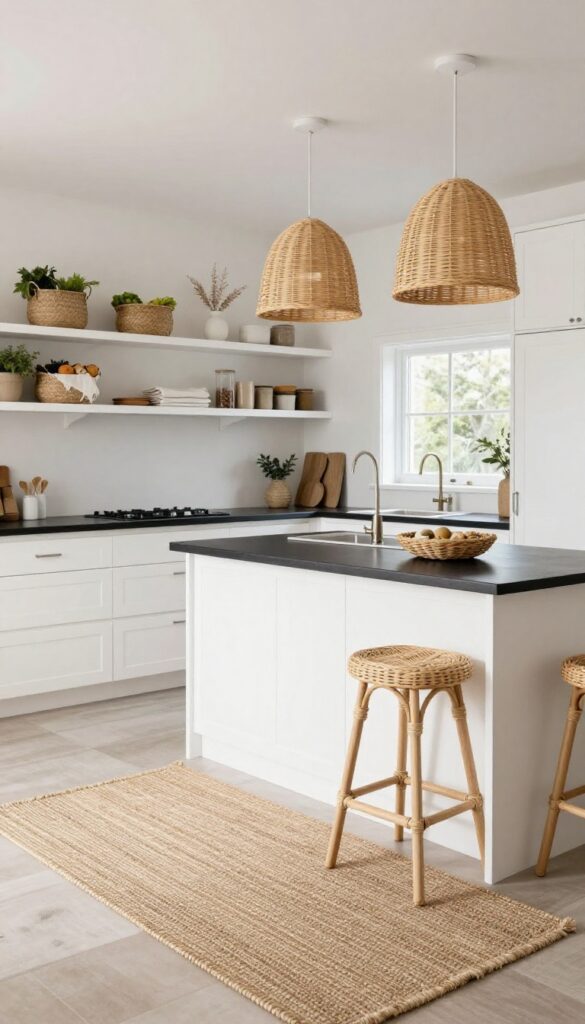
A black-and-white kitchen can sometimes feel a little stark if everything is glossy and hard. That’s where natural fibers come in—they soften the look and add warmth without straying from the monochrome palette. Woven textures like jute, rattan, and seagrass bring an organic, grounded feel that makes the space more inviting and lived-in.
Think of natural fibers as the cozy sweater your kitchen didn’t know it needed. A jute rug underfoot adds warmth and a subtle earthy tone that pairs beautifully with white cabinets and black countertops. Rattan pendant lights hanging above an island introduce a soft, sculptural element that breaks up all the straight lines.
Woven baskets on open shelves or tucked under a console provide practical storage while contributing texture and visual interest. These pieces don’t compete with the black-and-white scheme—they complement it by adding depth and a relaxed, layered vibe.
Best Materials
Stick with natural, un-dyed materials to keep the look cohesive. Jute, sisal, seagrass, rattan, bamboo, and abaca all work beautifully. Avoid synthetic versions that look too shiny or uniform—the charm is in the irregular, handcrafted feel.
Where To Place Them
- Layer a jute runner along a galley kitchen or place a round seagrass rug under a breakfast table. Hang a rattan pendant over the sink or island. Use woven baskets on open shelving for storing produce, linens, or utensils.
- A single rattan barstool at the counter adds a subtle accent.
Styling Tip
Pair natural fibers with matte black hardware and unlacquered brass for an earthy, collected look. Keep the rest of the surfaces clean and uncluttered so the texture stands out. A few potted herbs in terra-cotta pots on a windowsill reinforce the natural, cozy mood.
5. Use Open Shelving for a Curated Look
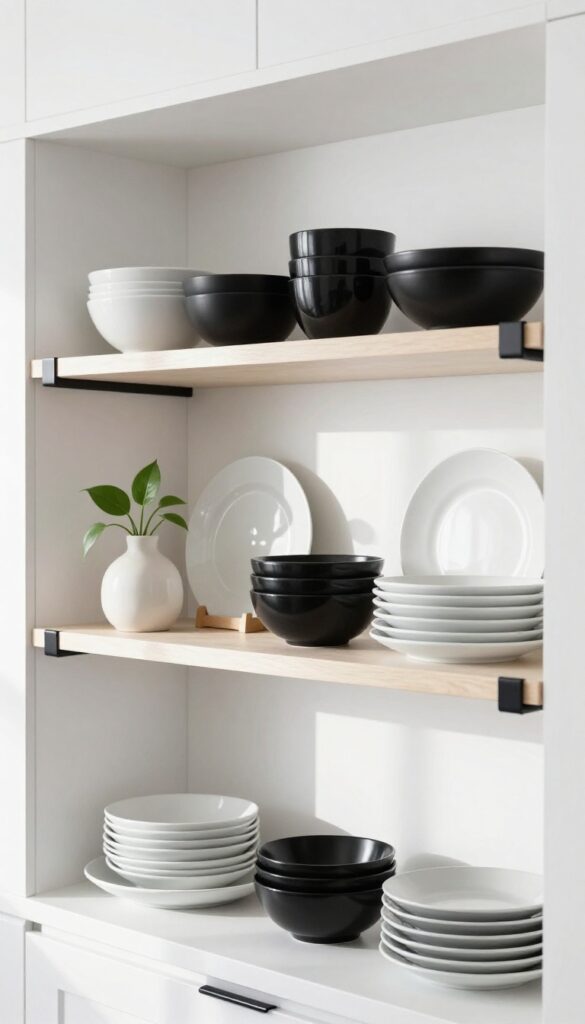
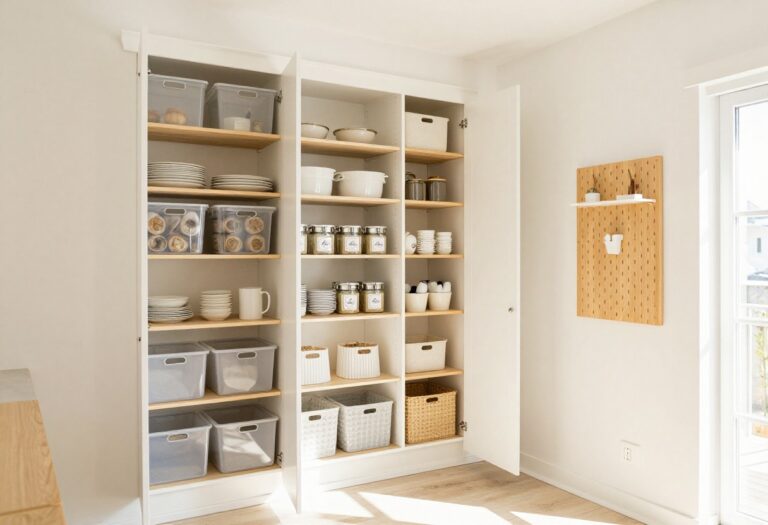
Open shelving is one of those ideas that instantly makes a kitchen feel more personal. Instead of hiding everything behind cabinet doors, you get to put your favorite pieces on display. In a black and white kitchen, open shelves break up all that solid cabinetry and add a layer of warmth and texture.
It’s not just about storage—it’s about creating a little gallery of everyday objects that feel curated but not stiff.
The key to making open shelving work is balance. You don’t want it to look cluttered or messy, but you also don’t want it to feel like a museum display. Aim for a mix of functional items like white dinner plates and black bowls, along with a few decorative touches like a small plant or a ceramic vase.
The white dishes keep things light and airy, while the black ceramics anchor the look and tie into the kitchen’s color scheme. A trailing pothos or a simple succulent adds a soft, organic feel that prevents the shelves from feeling too hard or minimal.
Shelf Styling Tip
Group items in odd numbers and vary the heights. Stack a few plates on a wooden stand, lean a cutting board against the back, and place a small black pitcher next to it. Leave some breathing room between groupings so the eye can rest.
Best Materials
Natural wood shelves are a great choice here because they warm up the black and white palette. If you prefer something sleeker, matte black metal brackets with white or light wood shelves work too. Avoid high-gloss finishes—they can feel too cold for a cozy layered look.
Finishing Touch
Add a small task light underneath one of the shelves. A slim LED strip or a puck light not only helps you see what you’re grabbing but also casts a warm glow that makes the whole display feel intentional and inviting.
6. Mix Metals for Depth
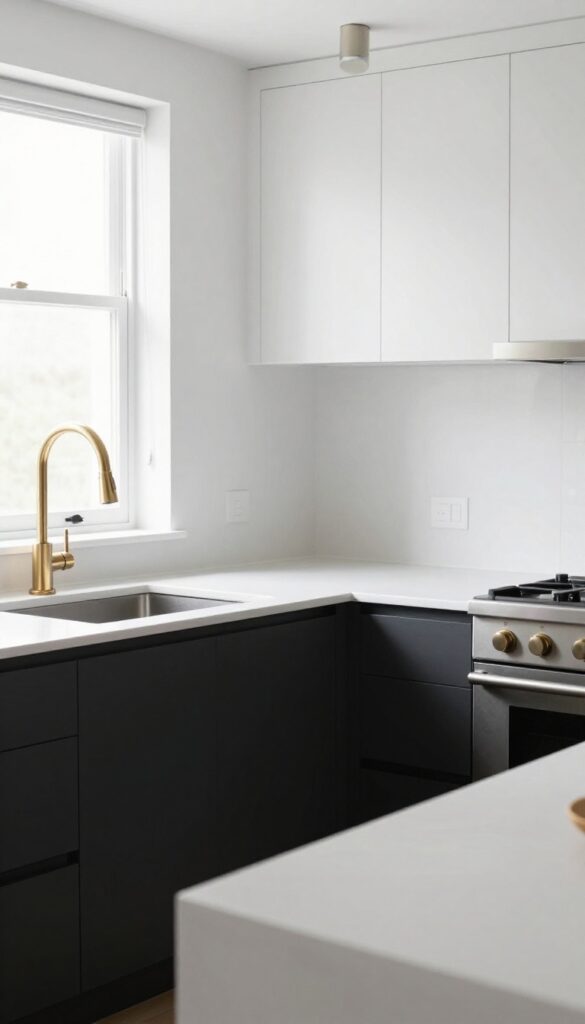
Black and white kitchens can sometimes feel a little flat if everything matches too perfectly. Throwing in a mix of metal finishes is one of the easiest ways to add warmth and personality without cluttering your counters. Think brass faucets paired with matte black cabinet pulls, or chrome pendant lights hanging above a stainless steel range.
That slight tension between finishes keeps the eye moving and makes the space feel collected rather than staged.
The trick is to choose one dominant metal and use the others as accents. In a black and white kitchen, matte black hardware often takes the lead because it ties into the dark cabinetry or island. From there, you can layer in warm brass or gold for faucets and light fixtures, and maybe a few chrome bar stools for a cool, reflective pop.
This approach keeps the look intentional rather than chaotic. It also softens the high contrast of the black and white palette, giving the room a cozy, layered feel that still reads modern.
Best Metal Combos
- Stick to two or three finishes max. A classic pairing is matte black cabinet pulls with a polished brass faucet—the warmth of the brass offsets the starkness of the black and white. Another favorite is brushed nickel hardware with a matte black sink and chrome pendant lights.
- The key is to repeat each finish at least twice so the mix feels purposeful.
Where To Add Each Finish
Use your dominant finish on the largest surfaces: cabinet pulls, drawer handles, and appliance fronts. Reserve accent finishes for smaller, eye-level details like faucets, light fixtures, and pot fillers. If you have open shelving, mix metal finishes on the items you display—brass canisters, black utensils, chrome mixing bowls—to echo the hardware and create a cohesive look.
Cozy Detail: Soften With Texture
Metal can feel cold, so balance it with warm textures. A woven runner, linen dish towels, or a wooden cutting board on the counter will soften the shine. In a black and white kitchen, that textural contrast is what makes the metal mixing feel inviting rather than industrial.
7. Add a Touch of Greenery
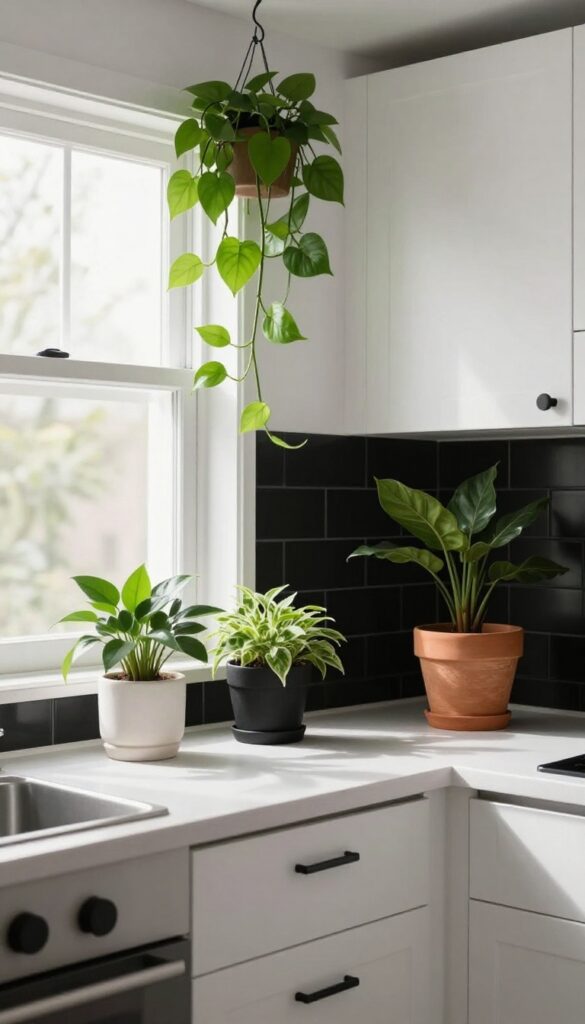
A black-and-white kitchen can feel a little stark if you don't soften it up. That's where plants come in. A few well-placed pots of greenery instantly warm up the space and make it feel lived-in, not like a showroom.
Plus, they add that cozy, layered look we're going for without cluttering your counters.
Plants are the easiest way to inject life into a monochrome kitchen. They break up all that contrast and bring a natural, organic element that balances the hard edges of cabinets and tile. Whether you go for a tall fiddle leaf fig in the corner or a row of tiny succulents on the windowsill, the green pops beautifully against black and white.
It's an affordable, low-commitment way to refresh the room whenever you want.
Best Plant Choices
- For a relaxed, low-maintenance vibe, stick with plants that thrive in kitchen conditions. Pothos and snake plants are nearly impossible to kill and look great trailing from open shelves or sitting on the counter. If you have a sunny spot, herbs like basil, rosemary, or mint are both pretty and practical.
- A fiddle leaf fig or monstera adds height and drama without overwhelming the space.
Styling Tip
- Vary the pot colors and textures to keep it interesting. White ceramic pots keep things clean and airy, while black matte or terracotta pots add warmth. Mix in a woven basket or two for extra texture.
- Group plants in odd numbers—three small pots on a shelf or one tall plant next to a cluster of smaller ones feels more natural.
Placement Ideas
- Think beyond the countertop. Hang a trailing pothos from a ceiling hook near the window, or place a small succulent on the windowsill above the sink. A tall plant like a fiddle leaf fig looks great in an empty corner next to the fridge or island.
- Just make sure each plant gets the light it needs—kitchens can be tricky with varying brightness.
8. Choose a Statement Light Fixture
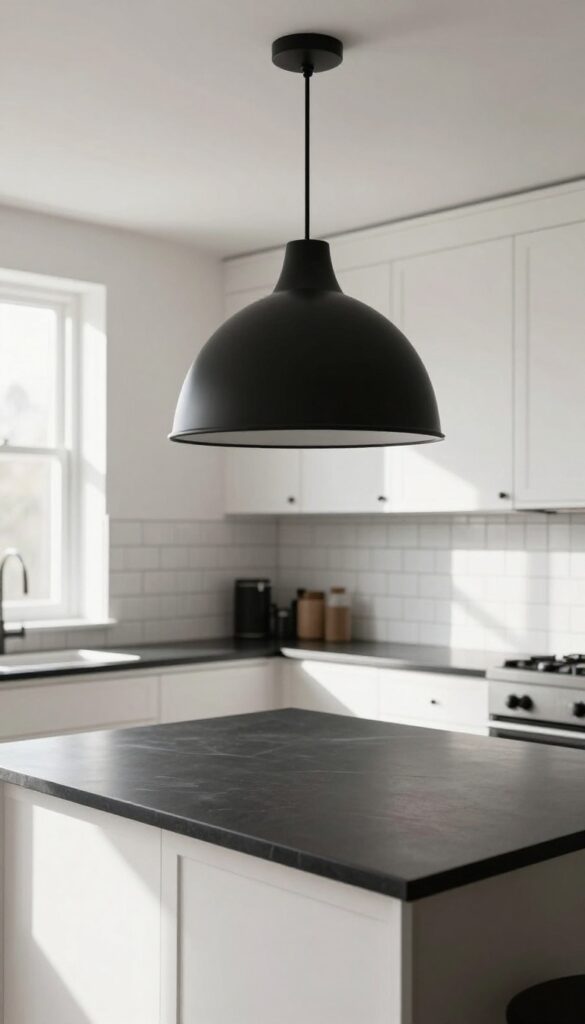
Lighting is the jewelry of a kitchen, and in a black-and-white scheme, it has the power to tie everything together. A single standout pendant can break up the monochrome palette with texture and shape, making the room feel intentional and layered. Think of it as the finishing touch that gives the space personality—whether you lean modern, rustic, or somewhere in between.
A statement light fixture does more than illuminate your countertops. It draws the eye upward, adds visual weight, and creates a natural anchor for the room. In a black-and-white kitchen, a pendant in either extreme shade (or a mix of both) can either blend in or pop, depending on the effect you want.
Go for a dome, globe, or woven shade to introduce an organic element that softens the hard edges of cabinetry and tile. The key is choosing a shape that feels deliberate—not just another cookie-cutter fixture. Hang it low over an island or dining table to define the zone and make the space feel cozy and intentional.
Best Shapes For Impact
- Dome pendants bring a sculptural, almost architectural feel—perfect for a modern kitchen. Globes feel softer and more approachable, especially in a matte black finish. Woven shades (like rattan or rope) add warmth and texture, which is a great counterbalance to sleek countertops and glossy cabinets.
- Whichever shape you pick, make sure it's scaled to your island or table: too small and it gets lost, too big and it overwhelms.
Placement And Height
- Hang a single pendant 30 to 36 inches above the counter or table surface for the sweet spot between function and style. If you have a longer island, consider a linear suspension or two smaller pendants spaced evenly. The goal is to create a visual anchor without blocking sightlines across the room.
- In a kitchen with low ceilings, a flush-mount or semi-flush fixture can still deliver impact without feeling cramped.
Styling The Rest Of The Room
- Let the light fixture inspire the rest of your finishes. If you choose a black dome, echo that dark tone in hardware or bar stools. For a white globe, balance it with white countertops or open shelving.
- Woven shades pair beautifully with natural wood accents or a jute rug. The fixture doesn't have to match everything—it just needs to feel like it belongs in the same conversation.
9. Incorporate Marble or Quartz
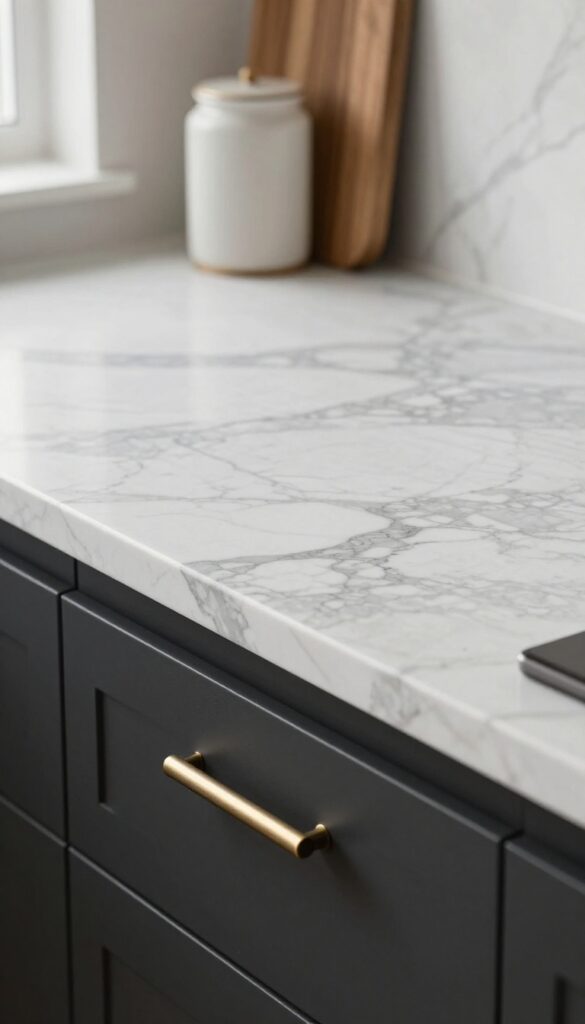
Marble and quartz are like the quiet power players of a black and white kitchen. They bring a soft, organic feel that keeps the contrast from feeling too harsh. The subtle veining adds movement and a touch of luxury without screaming for attention.
It's an easy way to layer in texture and make the space feel more curated and less like a stark checkerboard.
Marble countertops or a quartz backsplash with gentle veining can transform a black and white kitchen from flat to fabulous. The natural patterns break up the solid blocks of color, adding depth and a sense of calm. Plus, they reflect light beautifully, making the room feel brighter and more open.
This idea works especially well in kitchens with lots of natural light, but even in darker spaces, the subtle shimmer of quartz can lift the mood.
Best Materials
- For a truly elegant look, go with Carrara marble or a quartz that mimics its soft gray veins. If you want something more durable and low-maintenance, quartz is your friend. It's non-porous and stain-resistant, perfect for busy kitchens.
- Look for slabs with subtle, wispy veining rather than bold, dramatic patterns to keep the feel relaxed and layered.
Texture Mix
- Pair your marble or quartz with matte black cabinets and brushed brass hardware for a cozy, collected vibe. The smooth, cool stone contrasts nicely with warm metals and soft matte finishes. Add a wooden cutting board or a few ceramic canisters to bring in natural texture.
- This mix keeps the kitchen from feeling too clinical and gives it that lived-in, welcoming feel.
Finishing Touch
- Don't stop at the countertops. A marble backsplash that extends all the way to the range hood creates a seamless, elegant focal point. Or, use a quartz slab as a waterfall edge on an island for a modern touch that still feels soft.
- Keep the surrounding walls white to let the stone really shine, and add under-cabinet lighting to highlight those beautiful veins.
10. Play With Scale in Tile Patterns
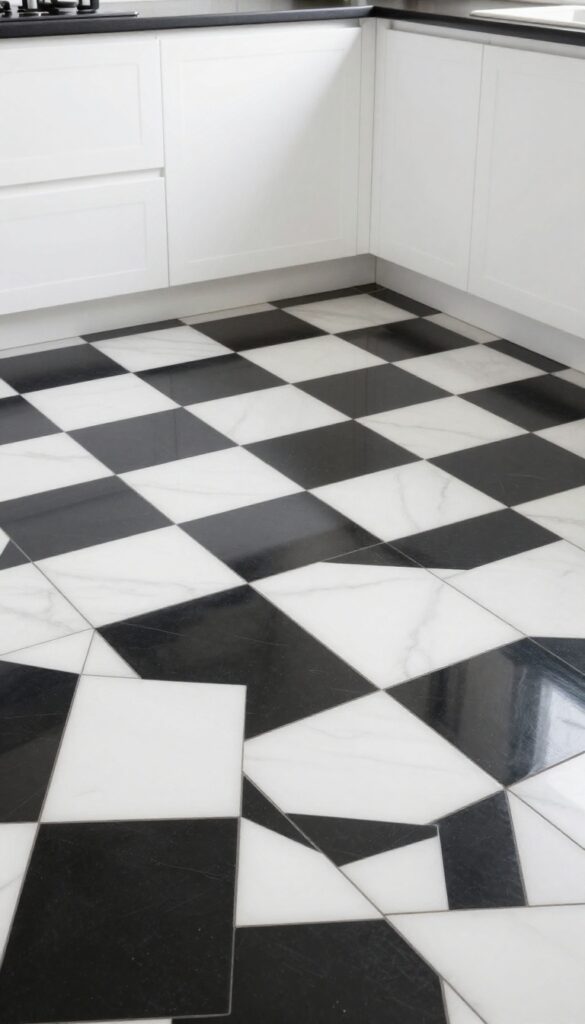
Black and white doesn’t have to mean flat or boring. By mixing different tile sizes and patterns, you add depth and movement without introducing a single new color. Large-format floor tiles make a small kitchen feel bigger, while a checkerboard backsplash brings playful energy to a compact cooking zone.
The contrast between big and small creates visual rhythm that keeps the eye moving.
Scaling tiles up or down is one of the easiest ways to add personality to a black-and-white kitchen. A standard subway tile feels classic, but enlarging it to a jumbo size instantly modernizes the look. On the floor, 24-inch square tiles in glossy black and white create a dramatic checkerboard that anchors the room.
To keep it from feeling too busy, use the large pattern on the floor and keep countertops and cabinets simple. This approach works especially well in galley kitchens or open-plan spaces where the floor is a major visual element.
Best Colors
Stick to true black and crisp white for maximum contrast. If you want a softer look, choose off-white and charcoal gray. Avoid adding any third color so the scale effect remains the star.
Small-space Fix
In a tiny kitchen, use large-format tiles on the floor to make the room feel bigger. Then add a small checkerboard pattern on the backsplash for a playful pop. The contrast in scale keeps the space interesting without overwhelming it.
Finishing Touch
Use black grout with white tiles and white grout with black tiles to make the pattern pop. For a more cohesive look, match the grout color to the darker tile so the pattern feels intentional and grounded.
11. Add Cozy Textiles
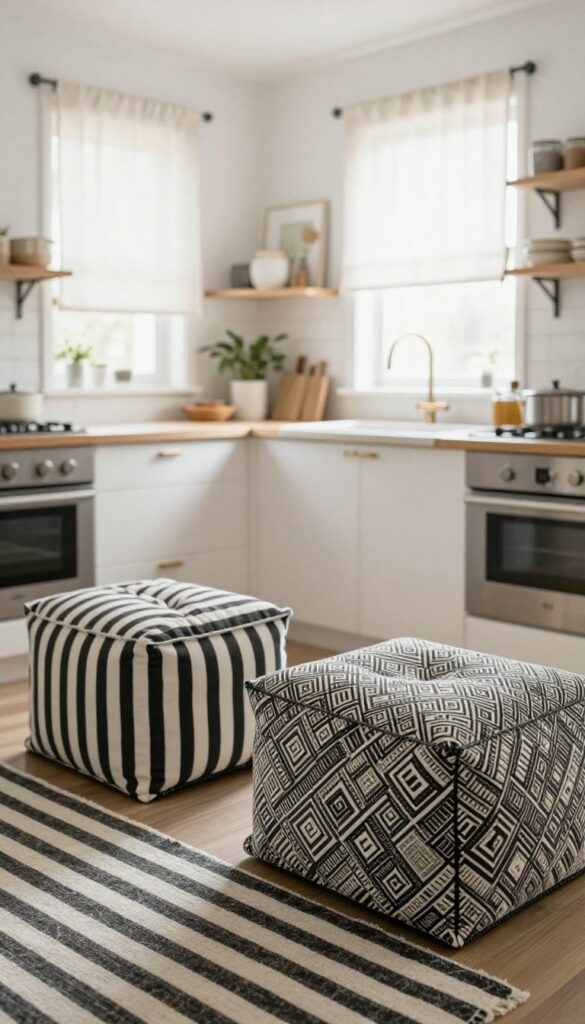
A black and white kitchen can feel a little stark if you don’t soften it up. That’s where textiles come in. A few well-chosen fabrics add warmth, texture, and that lived-in feel that makes a kitchen inviting rather than clinical.
Think beyond the usual dish towels. A striped runner down the center of a galley kitchen or in front of the sink instantly breaks up all those hard surfaces. Linen curtains in a warm off-white or soft gray filter light beautifully and add movement.
Cushioned seat pads on bar stools or dining chairs bring comfort and a pop of pattern—try ticking stripes, subtle plaids, or even a black-and-white geometric print. The key is to layer these pieces so the room feels collected, not decorated all at once. Stick with natural fibers like cotton, linen, and wool for a relaxed, organic look that balances the crispness of black and white.
Best Fabrics For A Cozy Kitchen
Cotton and linen are your go-tos for runners and curtains because they’re breathable and easy to wash. Wool or cotton-blend cushions hold up to daily use and add a softness that synthetic fabrics just can’t match. Avoid anything too shiny or stiff—you want fabrics that feel good to touch.
Where To Add Textiles
Focus on high-touch areas: the kitchen island or dining table gets a runner, windows get simple curtain panels, and seating gets cushions. If you have open shelving, consider stacking a few linen napkins or a folded tablecloth on a lower shelf for an extra layer of softness.
Pattern And Color Flow
Stick with stripes, checks, or subtle geometric patterns that echo the black-and-white palette. A runner with thin black stripes on a white background keeps the look graphic but not loud. If you want a hint of another color, go with a warm neutral like oatmeal, beige, or taupe to keep the cozy vibe intact.
FAQ
How do I make a black and white kitchen feel warm?
Incorporate natural materials like wood, rattan, and linen. Add warm lighting with dimmers, and use matte finishes instead of high-gloss to soften the look.
What colors go well with a black and white kitchen?
Neutral tones like beige, taupe, and gray blend seamlessly. For a pop, consider muted greens or blush, but keep them subtle to maintain the monochrome feel.
Can I mix black and white with other patterns?
Absolutely. Stick to patterns that include black, white, or gray—like stripes, checks, or geometric tiles. Keep the scale varied to avoid visual chaos.
What type of lighting works best in a black and white kitchen?
Warm white bulbs (2700K–3000K) are ideal. Combine overhead pendants with under-cabinet lighting and a dimmer switch to create a cozy ambiance.
Is a black and white kitchen hard to maintain?
Not if you choose the right finishes. Matte surfaces show fewer fingerprints, and darker countertops hide stains better. Regular wiping keeps it looking fresh.
Conclusion
A black and white kitchen doesn't have to feel stark or boring. By layering textures, mixing materials, and adding personal touches, you can create a space that's both modern and welcoming. Start with one or two ideas from this list and build from there—small changes can make a big difference.
Remember, the goal is a kitchen that feels like home, not a showroom. So have fun with it, and let your style shine through.