13 Green Wall Kitchen Ideas That Make Small Spaces Feel Fresh and Open
Green is having a moment in kitchen design, and for good reason. It brings nature indoors, adds warmth, and surprisingly, makes small kitchens feel bigger.
Whether you rent or own, a green wall can transform your cooking space without a full renovation. The trick is choosing the right shade and pairing it with smart decor choices.
From soft sage to deep emerald, these 13 ideas show how to use green walls to create a kitchen that feels fresh, open, and totally you. No square footage required.
1. Sage Green Backsplash That Blends With White Cabinets
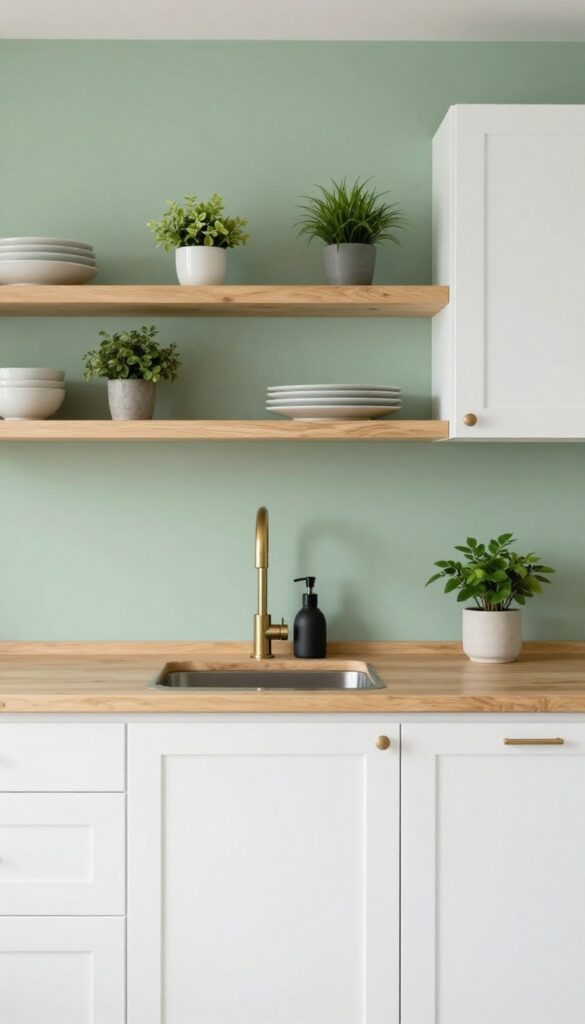
A soft sage green backsplash does more than just add color—it creates a visual bridge between your countertops and white upper cabinets. In a small kitchen, this trick makes the walls feel taller and the space more open, since the eye travels upward without a harsh break. The muted green also brings a natural, calming quality that pairs beautifully with wood shelves and brass accents.
Painting the backsplash area in sage green is an affordable way to refresh your kitchen without a full renovation. Use a high-quality, scrubbable paint in a satin or semi-gloss finish for easy cleaning. The color works especially well with white shaker cabinets and butcher-block counters, giving the room a cozy yet airy feel.
To keep the look intentional, extend the green from the countertop to just under the upper cabinets, and add open shelving in a light wood tone to break up the color. Finish with a few ceramic dishes or small plants on the shelves for a lived-in, styled look.
Best Colors
Stick with soft, gray-toned sage greens like Sherwin-Williams 'Sage' or Benjamin Moore 'Pale Oak'. Avoid anything too yellow or bright, as those can clash with white cabinets. For a warmer feel, choose a sage with a hint of olive undertone.
Small-space Fix
In a galley or L-shaped kitchen, paint the backsplash the same color as the walls to blur the line between counter and cabinet. This visual continuity makes the room feel larger and less cluttered.
Finishing Touch
Add a slim brass or black faucet to anchor the green and white palette. A matte black soap dispenser or a small wooden cutting board on the counter reinforces the natural, grounded vibe.
2. Emerald Accent Wall Behind Open Shelving
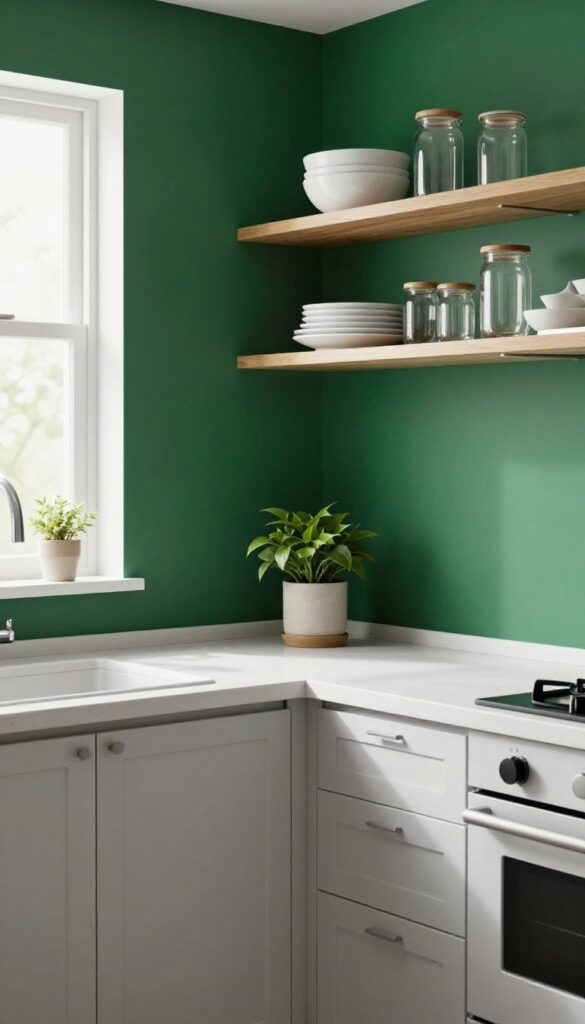
A single wall painted in deep emerald can transform your kitchen without overwhelming it. Choose the wall behind your stove or sink—the area that naturally draws the eye—and let the rich green become a bold focal point. Keep surrounding cabinets and countertops light to balance the drama, and install open shelves in pale wood to keep the look airy and open.
This idea works especially well in small kitchens because the dark color adds depth and personality without taking up physical space. The contrast between the emerald wall and light surroundings makes the room feel larger and more intentional. Open shelves in light wood prevent the wall from feeling heavy, and they offer easy access to everyday dishes or stylish cookbooks.
Perfect for renters: you can paint the wall back to white before moving out, making this a low-commitment way to test a bold color.
Best Paint Finishes
For a kitchen wall, choose a satin or semi-gloss finish. These are easier to clean than matte and hold up well against splatters and steam. A slight sheen also catches light, making the emerald look even richer.
Shelf Styling Tip
Stick to light wood shelves—oak or birch work beautifully—and keep the items on them simple. White ceramics, clear glass jars, and a few small plants will pop against the green without creating visual clutter.
Small-space Fix
If your kitchen is narrow, paint only the wall behind the stove or sink. This creates a clear focal point without making the room feel closed in. Leave the other walls white or light gray to keep the space open.
3. Two-Tone Green and Cream for Depth
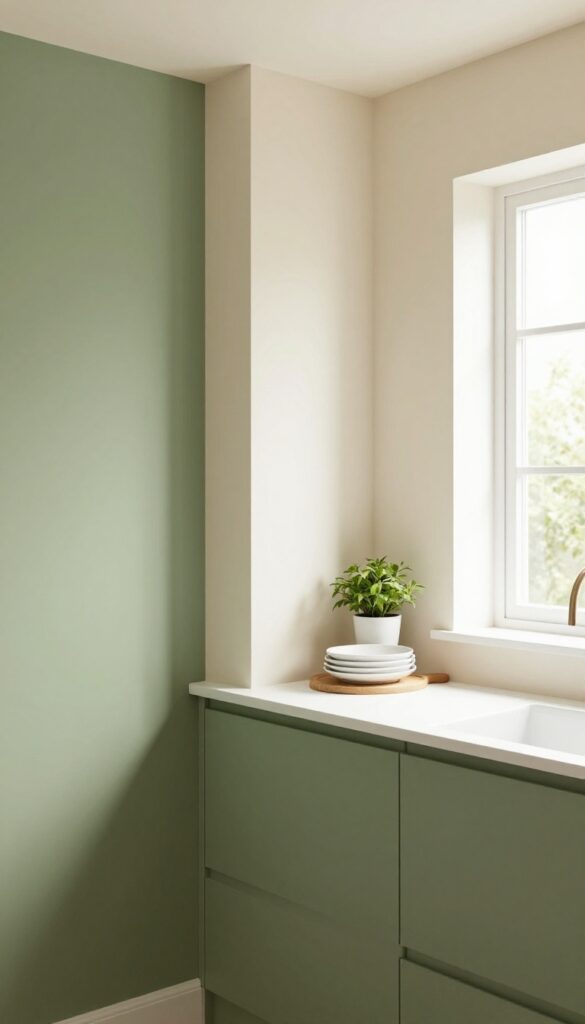
A two-tone wall treatment is one of those tricks that instantly adds character, especially in a compact kitchen. By painting the lower half in a muted olive and the upper half in cream or off-white, you create a natural sense of depth that tricks the eye into seeing more space. The contrast also draws attention upward, making the ceiling feel higher and the room more balanced—without a single renovation.
This classic approach works beautifully in small kitchens because it breaks up the wall visually, preventing the space from feeling like a box. The darker lower half grounds the room and hides scuffs better than all-white walls, while the light upper half keeps things airy. It's a smart, budget-friendly way to add personality without overwhelming a tight footprint.
Best Color Combos
Stick with earthy olive greens like Sherwin-Williams 'Rosemary' or Behr 'Green Tea Leaf' for the lower half. Pair them with a warm cream such as Benjamin Moore 'White Dove' or 'Swiss Coffee' above. The warmth in the cream keeps the look soft, while the olive adds just enough color to feel intentional.
Small-space Fix
- In a tiny kitchen, keep the two-tone line at chair-rail height—about 36 inches from the floor. This creates a horizontal line that visually widens the room. For an even taller feel, raise the line to 48 inches.
- Use a crisp transition with painter's tape and a level for a clean, professional edge.
Finishing Touch
Add a simple shelf or a narrow strip of beadboard along the dividing line to give the two-tone look a built-in feel. Paint the trim in the same cream as the upper wall to keep the line seamless. It adds a touch of texture and makes the color break look intentional, not accidental.
4. Mint Green on Upper Cabinets Only
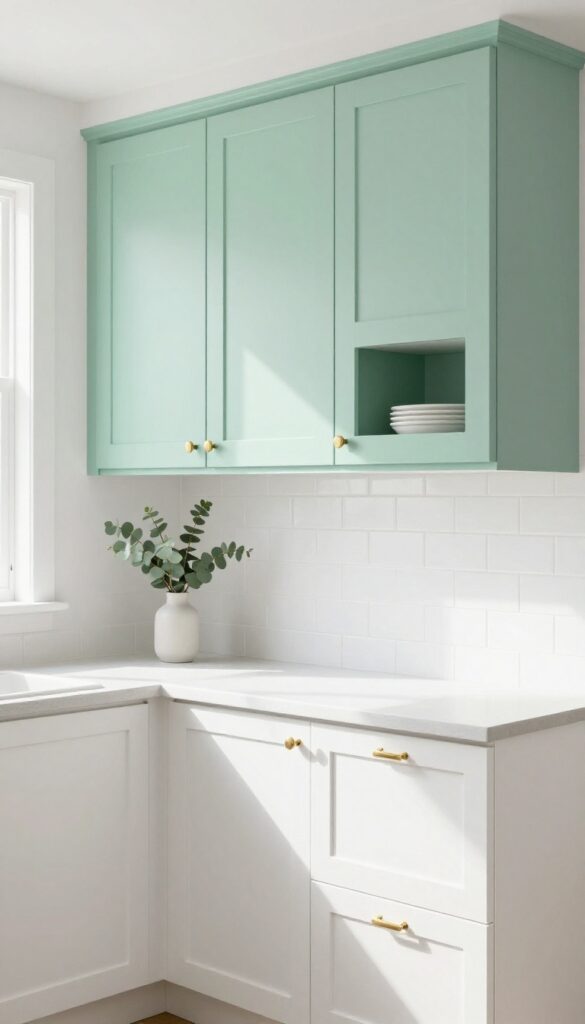
Painting just the upper cabinets in a refreshing mint green is a clever way to test the green trend without overwhelming the room. It draws the eye upward, making the kitchen feel taller and more open, while the lower cabinets in white or natural wood keep the space grounded and airy. This half-and-half approach is especially smart for small kitchens where a full wall of color might feel too heavy.
This low-commitment idea lets you enjoy a pop of color while maintaining a light, spacious feel. The mint green sits above eye level, so it reads more like an accent than a major statement. Pair it with open shelving on one side to break up the color and add visual interest.
It's a perfect middle ground for anyone who wants to embrace the green kitchen trend but isn't ready to go all in.
Best Color Combo
Mint green pairs beautifully with crisp white, soft gray, or warm wood tones. For a fresh, modern look, use a clean white like Swiss Coffee on the lowers and a matte mint green on the uppers. If you prefer a bit more warmth, opt for natural oak or walnut lowers—the contrast adds depth without clutter.
Small-space Fix
In a galley or compact kitchen, this trick visually lifts the ceiling. Keep the countertops clutter-free and use a light backsplash, like white subway tile or a soft marble look, to maintain an open feel. The mint green acts as a subtle focal point that doesn't crowd the room.
Finishing Touch
Add brass or matte black hardware on the uppers to complement the mint green. A simple, unlacquered brass pull or knob adds a touch of elegance without competing with the color. On the lowers, keep hardware minimal or match it to the uppers for a cohesive look.
5. Green Wall With Brass Fixtures and Warm Wood
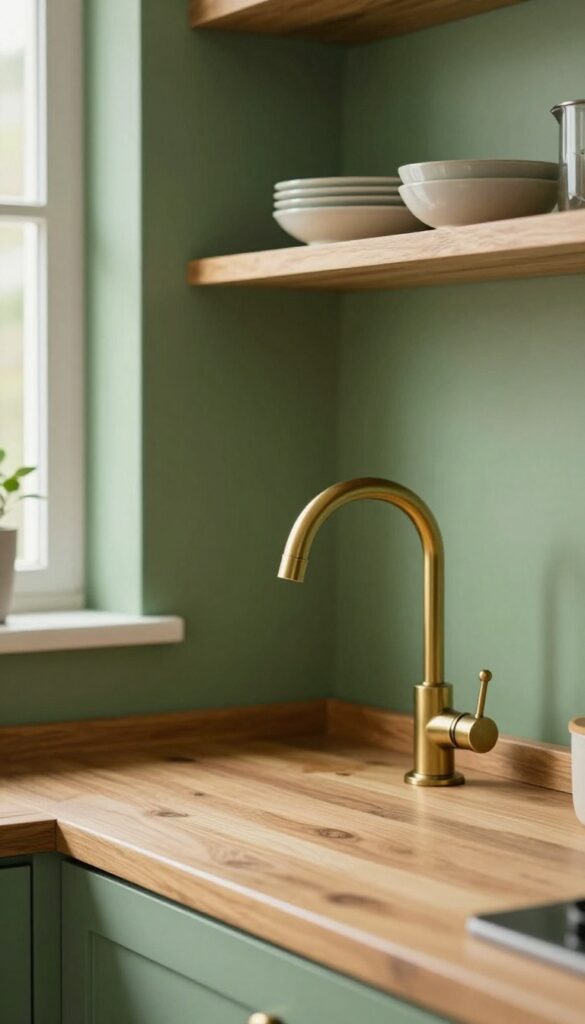
In a small kitchen, every surface needs to pull its weight. A medium-toned green wall—think forest or pine—brings depth without overwhelming the room. Pair it with brass fixtures and warm wooden countertops, and you get a space that feels cozy, intentional, and anything but cramped.
The metal and wood add texture that keeps the green from falling flat, while the warm tones create a lived-in vibe that makes a compact kitchen feel like the heart of the home.
This combination works especially well in galley or L-shaped layouts where the green wall becomes a focal point. The brass adds a touch of elegance without being flashy, and the wood brings natural warmth that balances the coolness of the green. For a small space, stick to open shelving in warm wood to keep the visual weight light, and let the brass fixtures—like a gooseneck faucet or cabinet pulls—serve as subtle accents.
The result is a kitchen that feels both stylish and welcoming, proving that green doesn't have to be bold to make a statement.
Best Colors And Finishes
- Stick with a green that has enough saturation to read clearly in small doses—forest, pine, or even a muted olive. Pair it with unlacquered brass that will develop a gentle patina over time, adding character. For the wood, choose warm-toned options like butcher block or acacia that have visible grain.
- Avoid cool-toned woods like ash or maple, which can clash with the green's warmth.
Small-space Layout Tip
- Use the green on just one wall or lower cabinets to avoid closing in the room. Keep upper cabinets in a light neutral or skip them entirely for open shelving in warm wood. This keeps the eye moving upward and makes the kitchen feel larger.
- A brass faucet and pendant light above the sink draw attention to the green wall without overwhelming it.
Texture Mix
Add a matte green finish on cabinets or walls, then layer in a brushed brass faucet and a wood cutting board or countertop. A woven rug or linen curtains can soften the look further. The contrast between the smooth painted surface, the metallic gleam, and the natural wood grain adds depth that makes the small kitchen feel rich and layered.
6. Vertical Green Stripes to Raise the Ceiling
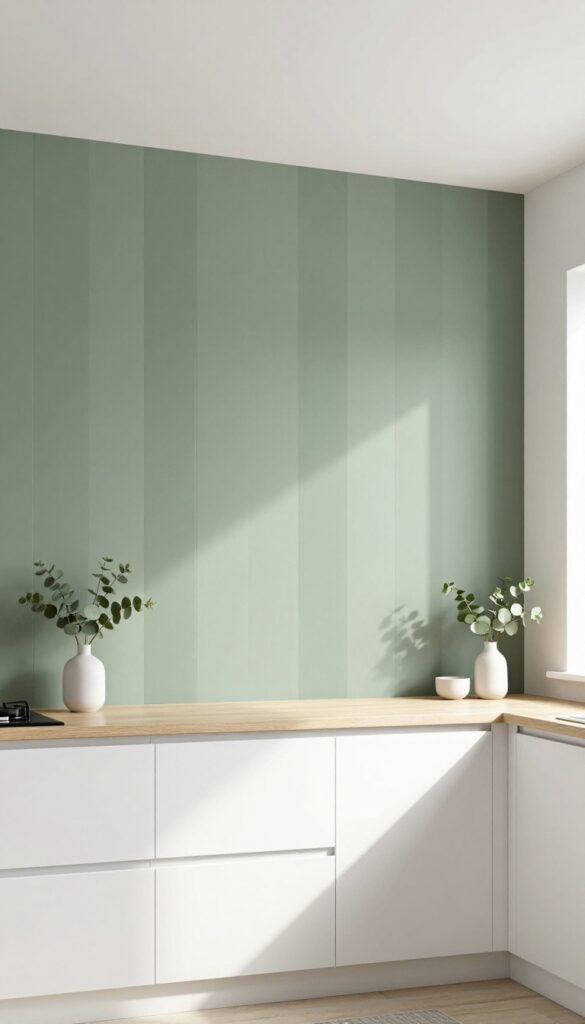
If your kitchen feels a little boxy or the ceiling seems lower than you'd like, vertical stripes are a classic trick that really works. Instead of a bold wallpaper, try painting narrow stripes in two shades of green—like a soft sage and a deeper olive—on one accent wall. The upward lines draw the eye up, making the room feel taller and more open.
It's a subtle, elegant effect that adds personality without going overboard.
This idea is perfect for small kitchens or galley layouts where every inch of visual height counts. The key is keeping the stripes narrow (4–6 inches wide) and the colors closely related so the effect feels intentional, not chaotic. The rest of the kitchen should stay light and simple to let the striped wall shine.
Pair with white or light wood cabinets, open shelving, and minimal countertop decor to keep the space airy. The stripe wall becomes a focal point that adds depth and a custom, designer look without a full renovation.
Best Colors
- Choose two greens that are different enough to create contrast but still harmonious. A light sage green paired with a muted olive works beautifully. You want the lighter shade to be noticeably lighter, but both should have similar undertones—either both warm or both cool.
- Test the colors on a small area first to see how they look in your kitchen's lighting. Avoid very dark greens for the darker stripe unless your kitchen gets tons of natural light, as heavy colors can make the space feel smaller.
Small-space Fix
- In a tiny kitchen, limit the stripes to just one wall—preferably the one opposite the main entry or the wall behind the stove. This keeps the effect from overwhelming the room. If your kitchen has a low ceiling, carry the stripes all the way up to the ceiling line without a border or crown molding interruption.
- This unbroken vertical line maximizes the height illusion.
Finishing Touch
To reinforce the vertical feel, hang a long, narrow mirror or a set of three small vertical art pieces on the striped wall. This echoes the stripes and adds another layer of visual lift. Keep hardware and fixtures minimal—think slim bar pulls and a simple flush-mount light—so nothing competes with the stripe pattern.
7. Green Wall With a Large Mirror for Light
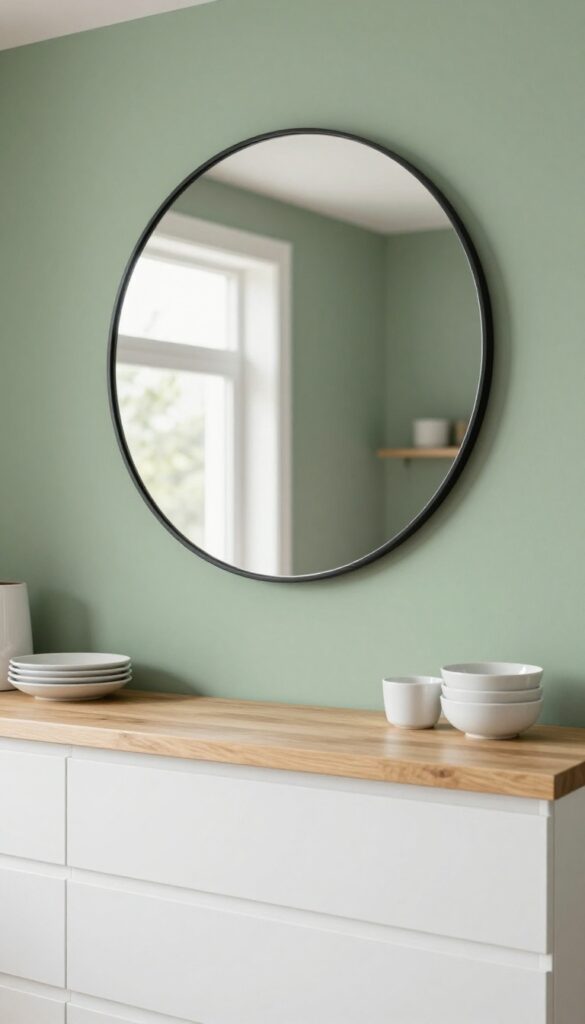
A green accent wall can do wonders for a small kitchen, but pairing it with a large mirror takes the effect to another level. The mirror bounces natural light around the room, making the space feel airy and open while the green backdrop adds depth and a touch of nature. It's a smart trick for renters or anyone who wants a big visual upgrade without knocking down walls.
Hang a large mirror on a green accent wall to bounce natural light around the kitchen. The green provides a lush backdrop, while the mirror makes the space feel twice as big. Choose a simple frame in black or brass to keep the focus on the color and light.
Best Green Shades
For a small kitchen, stick with mid-tone greens like sage, olive, or eucalyptus. These shades reflect enough light to keep the room bright without feeling too dark. Deep emerald can work if you have great natural light, but test a sample first to make sure it doesn't swallow the space.
Mirror Placement
Position the mirror directly across from a window to maximize light reflection. If that's not possible, angle it toward a light source or a bright white wall. A round or arched mirror softens the hard lines of cabinets and counters, adding a gentle curve that feels intentional.
Small-space Styling
- Keep the rest of the kitchen minimal to let the green wall and mirror shine. Open shelving with a few white dishes or glass jars works well. Avoid cluttering the wall with extra decor—the mirror is the statement.
- A simple pendant light or under-cabinet lighting will help the green glow in the evening.
8. Olive Green With Black and White Tile Floor
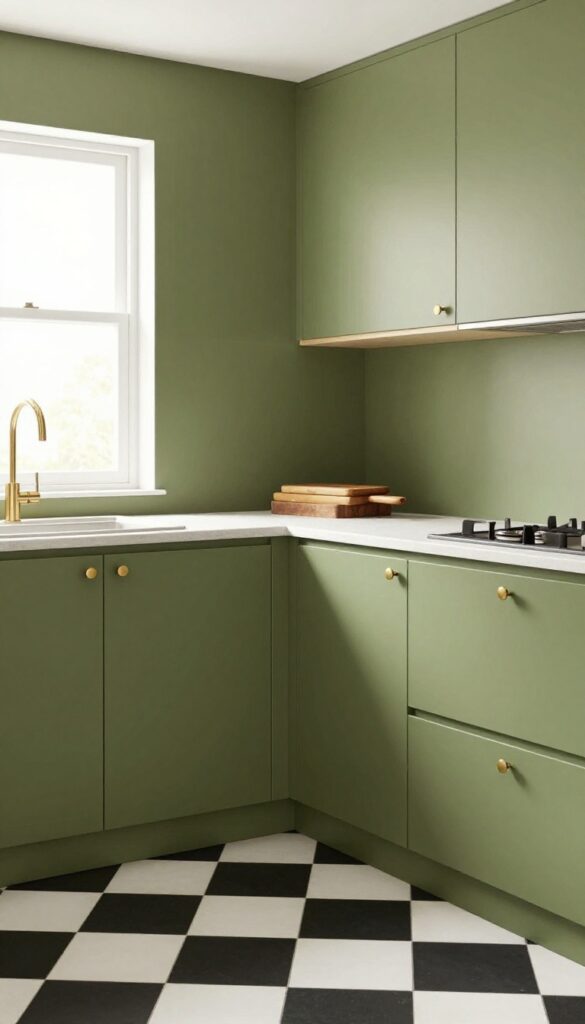
Olive green walls bring a grounded, earthy warmth that feels both inviting and refined. When you pair that soft green with a black-and-white tile floor, the contrast instantly adds structure and visual energy. This combination works especially well in smaller kitchens, where the floor becomes a major design statement and the olive walls keep the space from feeling cold or sterile.
The key to pulling off this look is balance. Olive green is a muted, versatile shade that doesn't overwhelm, while the high-contrast floor adds personality without competing. In a galley kitchen, the long sightline makes the floor pattern a focal point, so the olive walls provide a calm backdrop that lets the tile shine.
This idea is perfect for renters or homeowners who want a bold floor but a softer wall color.
Best Tile Patterns
Checkerboard is the classic choice, but don't be afraid to try a geometric pattern like a diamond or hexagon layout. A small-scale pattern can make a narrow kitchen feel wider, while larger tiles keep the look more modern. Stick to matte finishes to avoid a slippery feel underfoot.
Small-space Fix
In a galley kitchen, run the tile floor lengthwise to elongate the room visually. Use a light grout to keep the pattern crisp and prevent the floor from feeling too heavy. Pair with open shelving in a similar olive tone to maintain an airy, uncluttered vibe.
Finishing Touch
Add warm brass or copper hardware on cabinet pulls and faucets to tie the olive and black-and-white together. A few wooden cutting boards or a woven runner can soften the contrast and add texture. Keep countertops simple—white quartz or butcher block works beautifully.
9. Green Wall With Floating Shelves and Greenery
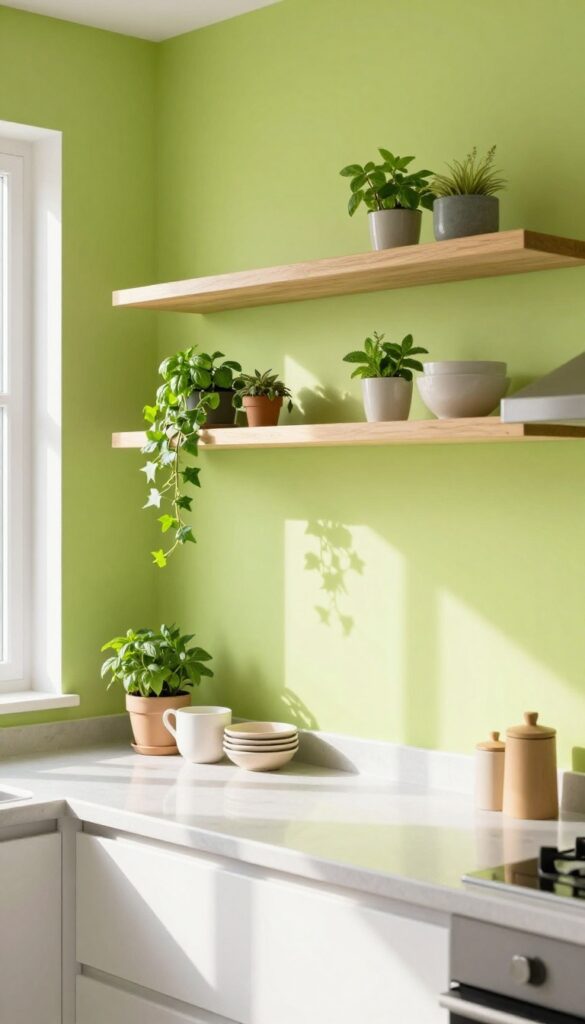
A single wall painted in a punchy lime or chartreuse can transform a tiny kitchen without overwhelming it. By adding floating shelves loaded with potted herbs and small plants, you create a living wall that feels fresh, functional, and full of personality. This idea works especially well in compact spaces where every inch matters—the shelves keep essentials within reach while the greenery softens the bold color.
The key is to let the wall color pop without competing with the rest of the room. Stick to one accent wall, ideally behind the sink or prep area, so the green becomes a backdrop for daily tasks. Floating shelves in a light wood or matte black keep the look clean and modern.
Arrange pots in a mix of sizes and leaf shapes—trailing ivy, upright basil, and bushy mint create visual rhythm. The herbs double as a mini kitchen garden, making cooking more convenient and adding a living texture that changes with the seasons.
Best Colors
Lime green and chartreuse are top picks because they read as energetic but still natural. For a softer take, try a muted sage or olive with warm undertones. Avoid neon shades that can feel harsh in a small kitchen—stick to greens with a bit of yellow or gray for a more grounded look.
Small-space Fix
Use floating shelves that are narrow enough to leave breathing room above the counter. Install them at staggered heights to create visual interest and accommodate taller plants. This setup keeps the countertop clear and draws the eye upward, making the kitchen feel larger.
Plant Styling Tip
Mix trailing plants like pothos or string of pearls with upright herbs like rosemary or thyme. Add a few small succulents for contrast. Group pots in odd numbers and vary the pot materials—terra cotta, ceramic, and matte glazed finishes add texture without clutter.
10. Dark Green Wainscoting for Character
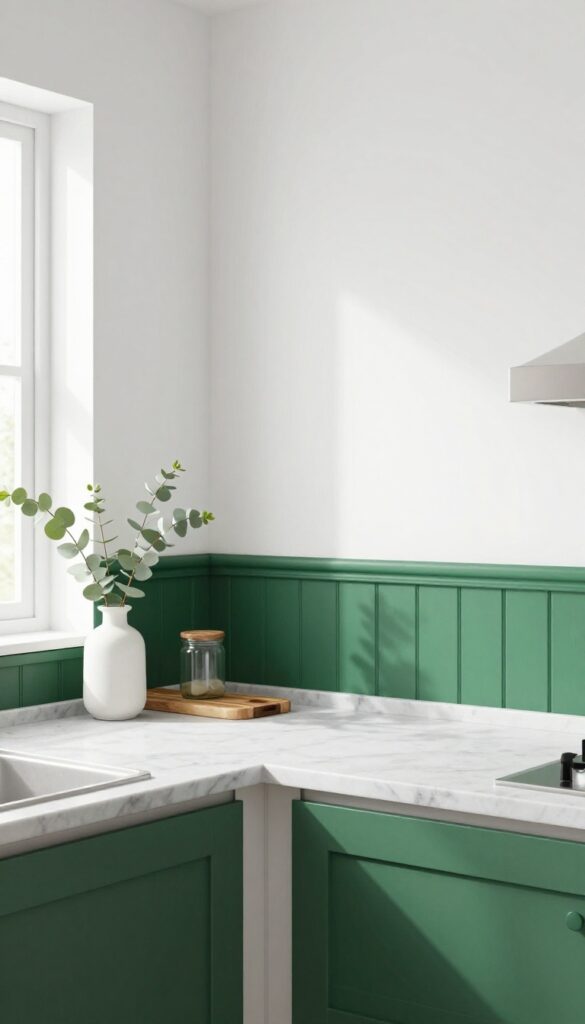
Wainscoting isn't just for formal dining rooms. In a small kitchen, it adds instant architectural interest and a sense of permanence. Painting the lower half a deep hunter green gives the room weight and coziness, while keeping the upper walls light prevents it from feeling closed in.
This is a classic look that feels custom without requiring a full renovation.
The key is contrast. The dark green wainscoting grounds the space, making it feel anchored and intentional. Pair it with white or cream upper walls to keep the room bright and airy.
This treatment works especially well in galley or L-shaped kitchens where you want to define zones without adding bulk. It's also a great way to hide scuffs and wear on lower walls, which is a practical bonus in a busy kitchen.
Best Colors
- Stick with deep, moody greens like hunter, forest, or olive. Avoid anything too bright or yellow-based, as those can feel dated. For the upper walls, a warm white or pale cream creates a soft transition.
- If you want a bit more contrast, try a very light greige or even a soft sage on top.
Small-space Fix
In a tiny kitchen, use beadboard or tongue-and-groove panels for the wainscoting. The vertical lines draw the eye upward, making the ceiling feel higher. Keep the wainscoting height at about one-third to halfway up the wall—too high can make the room feel squat.
Finishing Touch
Add a slim chair rail or a simple ledge where the wainscoting meets the upper wall. This creates a clean line and gives you a spot to lean small art, a vase, or a few spice jars. It's a detail that makes the whole look feel polished and intentional.
11. Green Wall With Glass-Front Cabinets
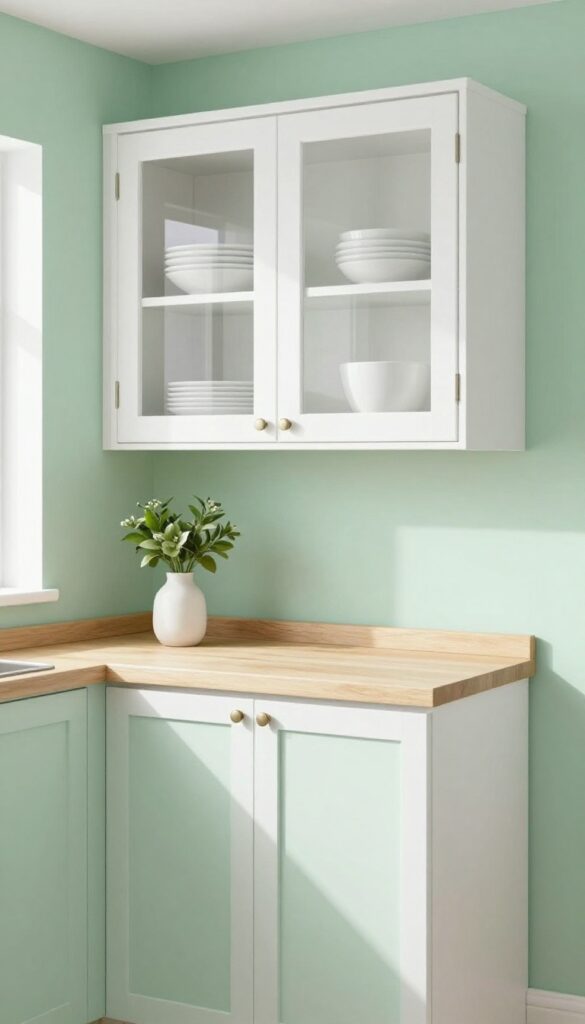
A soft seafoam green wall can make a small kitchen feel bigger and brighter, especially when paired with glass-front upper cabinets. The glass panels reflect light around the room, while the green hue adds a calm, coastal vibe without overwhelming the space. This combination is perfect for tight footprints where every design choice needs to earn its keep.
Paint your kitchen walls a gentle seafoam green to create a serene backdrop that doesn't compete with your cabinets. Glass-front upper cabinets let you display your prettiest dishes while the green wall peeks through, adding depth and a subtle pop of color. The reflective glass surfaces bounce natural and artificial light, making the kitchen feel more open and airy.
To keep the look cohesive, choose cabinet frames in a light wood or crisp white, and avoid busy dishware patterns that might clutter the view. This setup works especially well in galley kitchens or small L-shaped layouts where every square inch counts.
Best Colors
- Stick with soft, muted greens like seafoam, sage, or pale mint. These shades keep the room light and prevent the wall from feeling heavy. Pair with white or light gray cabinets to maintain an airy feel.
- Avoid dark greens, which can shrink the space visually.
Small-space Fix
In a tight kitchen, glass-front cabinets can make the room feel less boxed in. Use them only on upper cabinets to keep the lower half grounded. If you're worried about clutter, arrange dishes in neat stacks or use matching sets to create a uniform look.
Finishing Touch
Add under-cabinet lighting to highlight the dishes and cast a warm glow on the green wall. LED strip lights in a warm white temperature (2700K-3000K) will enhance the seafoam tone without washing it out.
12. Green and Terracotta Color Blocking
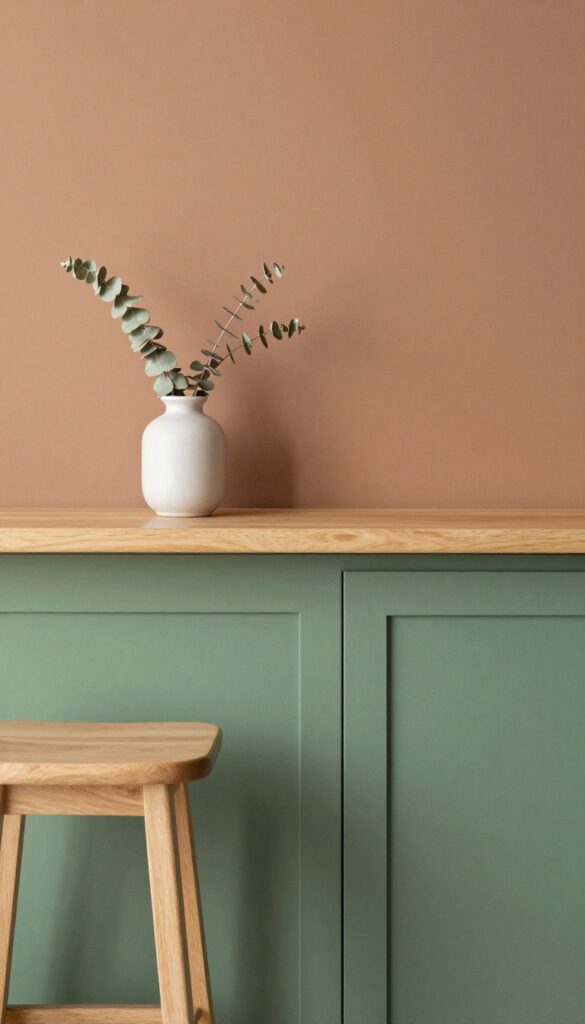
Color blocking is one of those trends that looks way more complicated than it actually is. By painting one wall with two distinct colors—say, a deep green on the bottom and a warm terracotta on top—you instantly create a custom, artistic focal point. The contrast between cool and warm tones keeps the eye moving without feeling chaotic, and the horizontal line adds a subtle architectural detail that makes a small kitchen feel taller or wider, depending on where you place it.
This is a bold look that still feels grounded and natural, thanks to the earthy palette.
For renters or anyone hesitant to commit to a full wall of color, this is a low-risk, high-impact project. You only need two paint samples, a roll of painter's tape, and a steady hand. The key is choosing a green with enough depth—like sage, olive, or forest—and a terracotta that leans warm but not too orange.
The line can be placed at chair-rail height (around 36 inches) or higher if you want to emphasize ceiling height. Either way, the result is a kitchen that feels curated and intentional, not overly themed.
Best Colors
Stick with muted, earthy versions of both colors. A dusty sage green (like Sherwin-Williams 'Rosemary') pairs beautifully with a faded terracotta (like Farrow & Ball 'Red Earth'). Avoid anything too bright or primary—you want the look to feel sophisticated, not like a children's playroom.
Small-space Fix
In a narrow kitchen, paint the lower half green and the upper half terracotta. The darker green anchors the room visually, while the lighter terracotta keeps the upper portion airy. This trick makes the ceiling feel higher and the space less boxy.
Finishing Touch
Add a thin white or wood trim strip along the paint line to hide any imperfections and give the wall a built-in chair-rail look. It's a small detail that makes the DIY feel polished and permanent.
13. Green Wall With Minimalist White Shelving
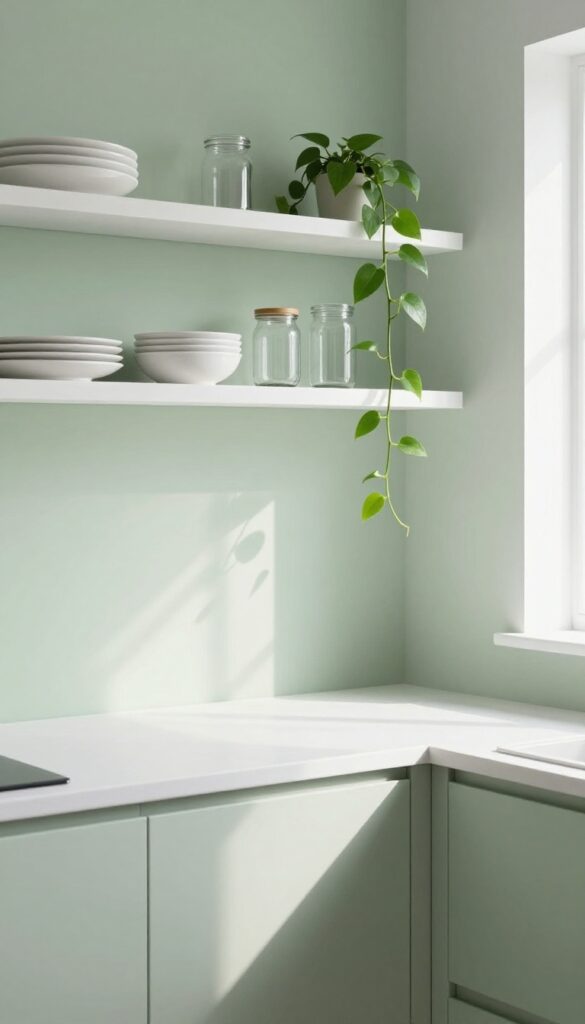
A pale sage or celadon green wall instantly calms a kitchen, especially when paired with crisp white shelves that seem to float. This combination leans into the serenity of nature while keeping the space feeling open and airy. For small kitchens, it's a smart trick—the monochromatic green backdrop recedes visually, and the white shelving disappears, making the room feel larger than it is.
Painting every wall in a soft green creates a cocooning effect that feels both fresh and grounded. White open shelving and decor items—plates, jars, linens—keep the look clean and uncluttered. The key is to limit color variation so the eye isn't distracted; let the green be the star and white the supporting player.
This approach works beautifully in galley kitchens or breakfast nooks where you want to maximize the sense of space.
Best Colors
Stick with pale, muted greens like sage, celadon, or sea salt. Avoid anything too yellow or too blue—you want a neutral green that reads as a soft backdrop. Test samples on the wall and observe them in different light before committing.
Shelf Styling Tip
- Keep shelves sparse and purposeful. Group white ceramics, clear glass jars, and a single trailing plant like pothos. Leave plenty of negative space so the shelves don't feel crowded.
- This maintains the minimalist, airy vibe.
Small-space Fix
In a tiny kitchen, extend the green paint to the ceiling to blur the lines between wall and ceiling. This makes the room feel taller and more cohesive. Use the same white for trim and window frames to keep the look seamless.
FAQ
What shade of green is best for a small kitchen?
Light to medium greens like sage, mint, or seafoam work best because they reflect light and make the space feel larger. Darker greens like emerald or forest can work as accent walls, but should be balanced with plenty of light and white or neutral elements.
Can I paint my kitchen green if I rent?
Yes, but check your lease first. Many landlords allow painting if you return the walls to their original color before moving out. Stick to lighter shades that are easy to cover, or use temporary options like peel-and-stick wallpaper or a large green backsplash panel.
How do I make a green kitchen feel bigger?
Pair green walls with plenty of natural light, mirrors, and reflective surfaces like glass or glossy tiles. Keep cabinets and countertops light-colored, and avoid clutter. Vertical stripes or two-tone walls can also create the illusion of height.
What colors go well with green kitchen walls?
White, cream, beige, and light wood are classic pairings. For a bolder look, try brass, gold, or black fixtures. Terracotta, blush, and navy also complement green nicely.
Stick to two or three colors to keep the space cohesive.
Do I need to paint all walls green, or just one?
One accent wall is often enough to make an impact without overwhelming a small kitchen. If you want a more immersive look, paint all walls in a light green. For a balanced approach, try a two-tone design with green on the lower half and white above.
Conclusion
Green walls are one of the easiest ways to breathe new life into a small kitchen. Whether you go bold with emerald or subtle with sage, the right shade can make your space feel fresh, open, and uniquely yours. Start with one wall, add a few thoughtful touches, and watch your kitchen transform.
Remember, the best decor ideas are the ones that make you smile every time you walk in. So grab a paintbrush and give your kitchen the green it deserves.