15 Kitchen Island Seating Ideas for Casual Dining Spots
Kitchen islands have become the heart of the home, especially for casual meals and morning coffee. But finding the right seating can feel tricky when you want a look that's both airy and practical.
The key is choosing pieces that feel light in style and smart with space, so your island stays inviting without overwhelming the room.
Whether you're working with a compact corner or a sprawling layout, these 15 ideas will help you create a spot that's easy to live in and lovely to look at.
1. Slim Backless Stools for a Streamlined Look
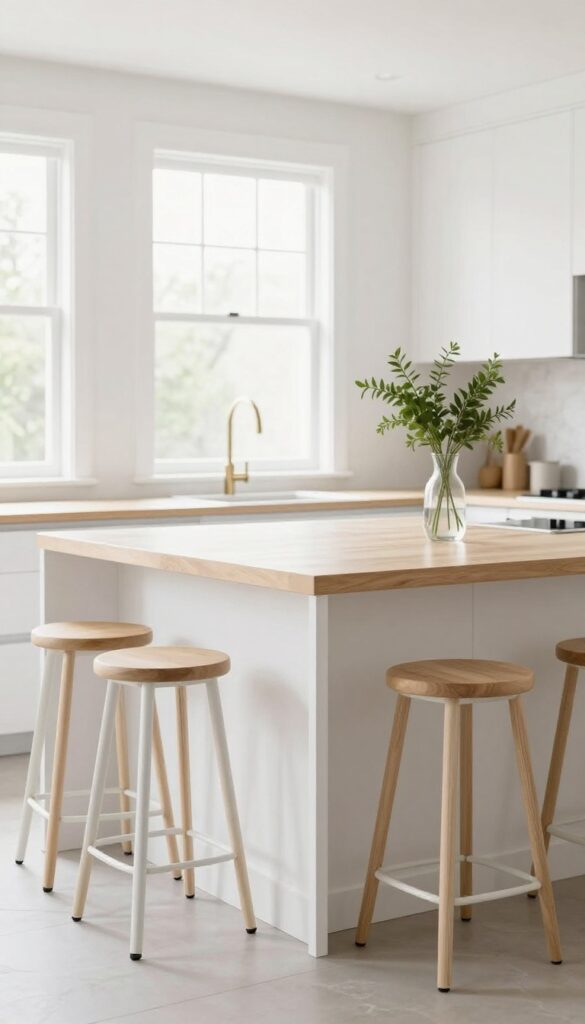
Backless stools are the ultimate space-savers when you want to keep your kitchen island looking open and uncluttered. Without a backrest, these seats slide completely under the counter, so the room feels bigger and sightlines stay clear. The trick is choosing slim frames in pale finishes—think light wood or matte white metal—to reinforce that breezy, airy vibe without adding visual weight.
Backless stools bring a clean, minimal feel to any kitchen island, especially in smaller spaces where every inch counts. They're easy to tuck away when not in use, making the room feel more spacious and less crowded. For a light and airy look, stick with slender profiles and pale tones that blend into the overall palette rather than competing with it.
Best Materials
Look for stools made from light oak, beech, or birch wood for warmth without heaviness. Metal frames in brushed brass or chrome add a touch of shine while keeping the silhouette thin. Avoid bulky upholstery or dark finishes that can make the stools feel visually heavy.
Color Flow
Pale finishes like whitewashed wood, soft gray, or natural linen tones help the stools recede into the background. If your island is a light color, choose stools in a slightly different pale shade to add subtle contrast without breaking the airy feel. A matte clear lacquer over light wood keeps the look fresh and modern.
Small-space Fix
Measure the overhang of your counter—backless stools need at least 12 inches of clearance for comfortable legroom. For tight kitchens, opt for stools with a narrow seat width (around 16 inches) so you can fit more seating without crowding the island. Stools with a footrest bar add comfort without adding bulk.
2. Upholstered Counter Stools with Light Fabrics
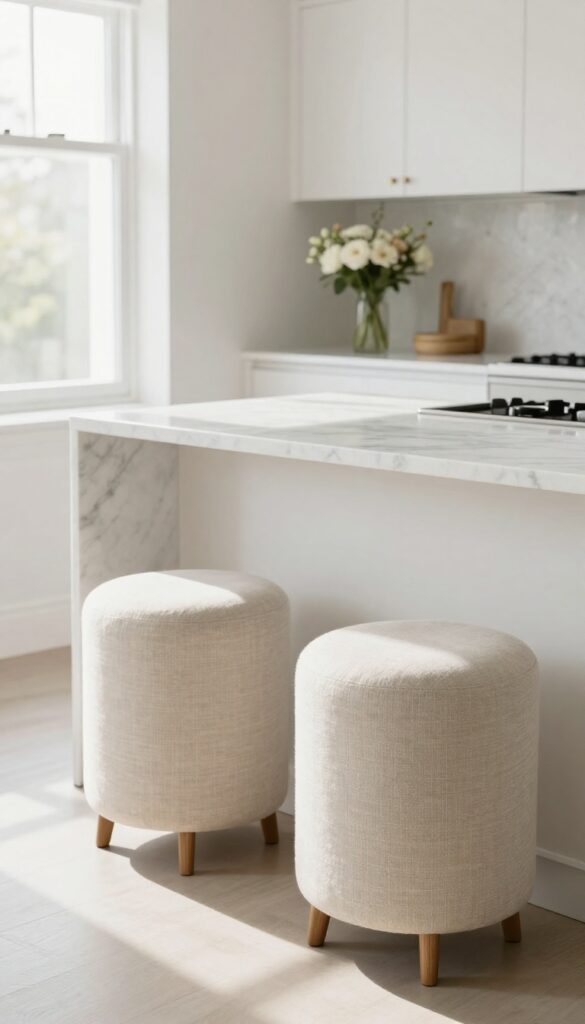
A padded seat in linen or cotton adds comfort without visual weight. Stick to soft whites, beiges, or pale blues to maintain a breezy, relaxed feel. These stools soften the look of a kitchen island, making it feel more like a cozy dining nook than a work zone.
Upholstered counter stools in light fabrics bring a layer of softness that wood or metal alone can't achieve. The key is choosing breathable materials like linen or cotton that keep the look airy. Pale hues—think creamy white, warm beige, or dusty blue—prevent the stools from feeling bulky.
They blend into the kitchen's palette while adding a subtle texture that invites you to sit and stay a while. This works especially well in kitchens with hard surfaces like quartz or tile, balancing the room's overall feel.
Best Colors
Stick to soft neutrals: off-white, light beige, or pale gray. For a hint of color, try a muted sage or powder blue. These tones keep the space feeling open and calm, especially in smaller kitchens.
Material Matters
Choose performance fabrics that resist stains and wear. A tight-weave linen or cotton blend is durable yet breathable. Avoid heavy velvet or dark upholstery that can make the stools look too formal or heavy.
Small-space Fix
In a compact kitchen, opt for stools with slim legs and low backs. The light fabric will keep them from visually crowding the island. Pair with a narrow overhang so the stools tuck neatly underneath when not in use.
3. Mixed Materials: Wood and Metal Combos
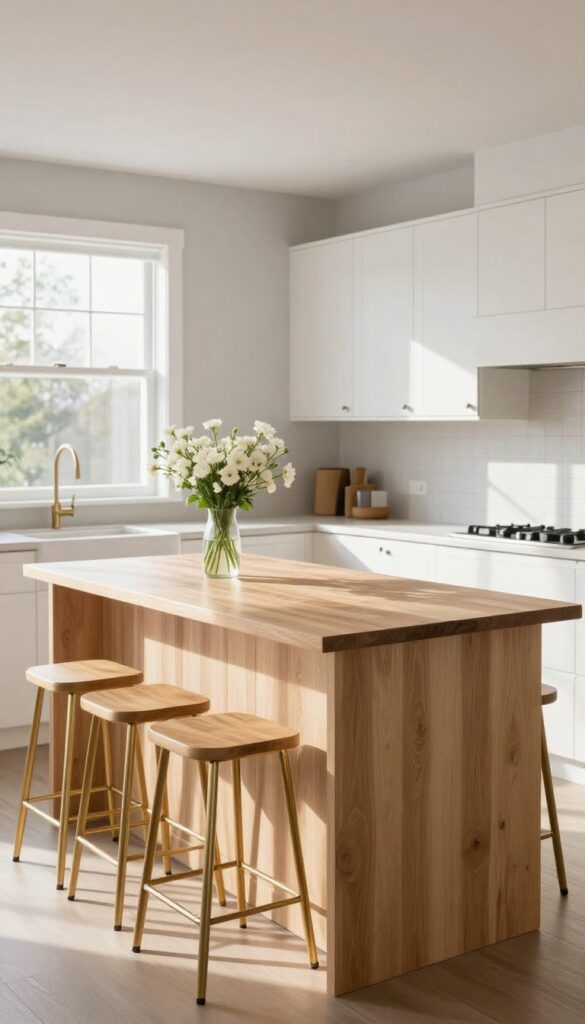
A kitchen island that mixes wood and metal feels like it belongs in a real home—not a showroom. The warmth of wood balances the coolness of metal, creating a look that's intentional without trying too hard. This combo works especially well in light, airy kitchens where you want a bit of contrast without darkening the space.
Think a slim metal base with a wooden seat: it keeps the silhouette clean and the visual weight low, so your kitchen still feels open and breezy.
Pairing warm wood with slender metal is a smart way to add texture and interest to your kitchen island seating. The key is to keep the metal base light in color—like brushed brass, matte chrome, or pale steel—so it doesn't overwhelm the room. Wood choices like ash, oak, or even bamboo in a light stain keep the look airy.
This combination feels especially fresh in kitchens with white or light gray cabinetry, where the wood adds a natural touch and the metal adds a subtle industrial edge. For a cohesive look, repeat the metal finish in your hardware or light fixtures.
Best Materials To Mix
- For the wood, stick with light or medium tones like white oak, beech, or maple. Avoid dark woods like walnut if you're going for an airy feel—they can make the island feel heavy. For the metal, choose finishes that feel delicate: brushed brass, matte nickel, or powder-coated steel in white or pale gray.
- The thinner the metal base, the more the wood seat stands out.
Small-space Fix
In a compact kitchen, use backless stools with a slim metal frame and a narrow wooden seat. They slide under the counter easily and don't block sightlines. A light wood top with a white or chrome base keeps the area from feeling crowded.
Finishing Touch
Add a cushion in a soft neutral like linen or cotton canvas to tie the wood and metal together. A pale beige or cream cushion warms up the metal and makes the seat more comfortable without adding visual clutter.
4. Low-Back Stools for Subtle Support
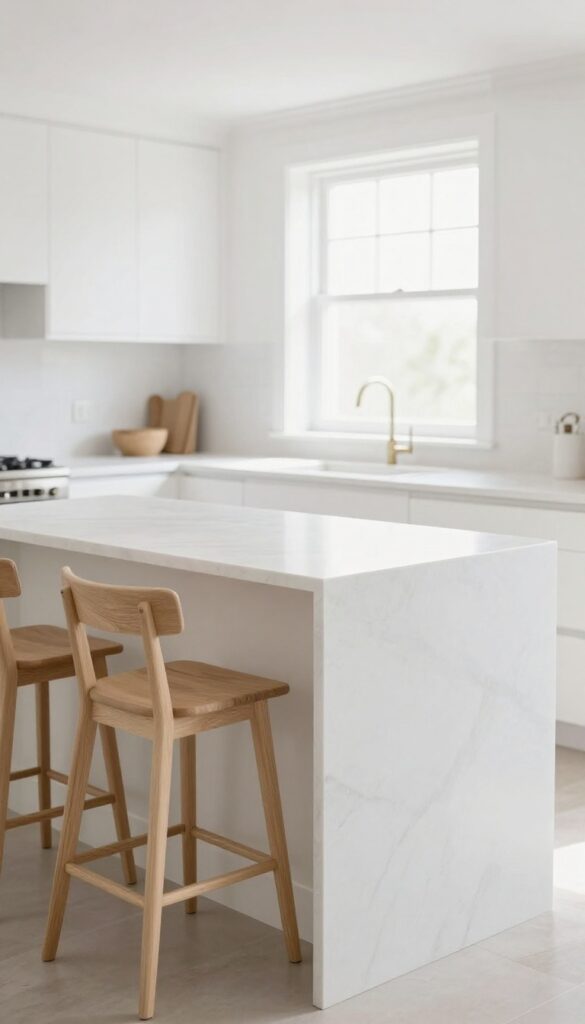
A low back on a kitchen stool is one of those details you don't notice until you sit down. It catches your lower back just enough to make perching feel more comfortable, but it never blocks the view across the island. That balance makes low-back stools an easy choice for kitchens where sightlines matter—like open layouts or islands that double as prep space.
Curved or slatted designs keep the silhouette light, so the stools feel like part of the room's airy rhythm rather than a heavy addition.
The beauty of a low-back stool is how it supports without imposing. The backrest usually hits right at the lumbar area, so you get a gentle brace while still being able to swivel or lean into the counter. This style works especially well in kitchens where the island is a central hub—you can chat with someone at the stove or keep an eye on kids without craning your neck around a tall back.
For a light and airy feel, choose back designs that have open slats, a gentle curve, or a slim metal frame. These shapes let light pass through and keep the stool from feeling bulky. Pair them with a counter stool height that leaves a 10- to 12-inch gap between the seat and the underside of the counter, so the whole setup feels proportional and uncluttered.
Best Materials For An Open Look
- Wood and metal are your go-to materials here. Light oak or ash in a natural finish keeps the stool airy and warm, while a slim black or brass metal frame adds a touch of modern elegance without weight. Avoid thick upholstered backs—they defeat the purpose.
- Instead, try a wooden slatted back or a single curved metal bar. The seat can have a thin cushion or be fully wooden; just keep the profile lean.
Placement And Spacing Tip
- For a seamless look, leave at least 6 inches between each stool and 12 inches from the end of the island. If your island has an overhang, make sure the stools tuck fully under when not in use. Low backs make this easier because they don't jut out as much.
- This keeps the kitchen feeling open even when all stools are in place.
Finishing Touch
- Add a small lumbar pillow in a textured fabric like linen or chunky knit for extra coziness. Stick to neutral tones—cream, taupe, or soft gray—to maintain the airy vibe. The pillow adds a layer of comfort without making the stool feel heavy.
- It's a simple swap that makes the seating more inviting for longer meals.
5. Swivel Seats for Easy Conversation
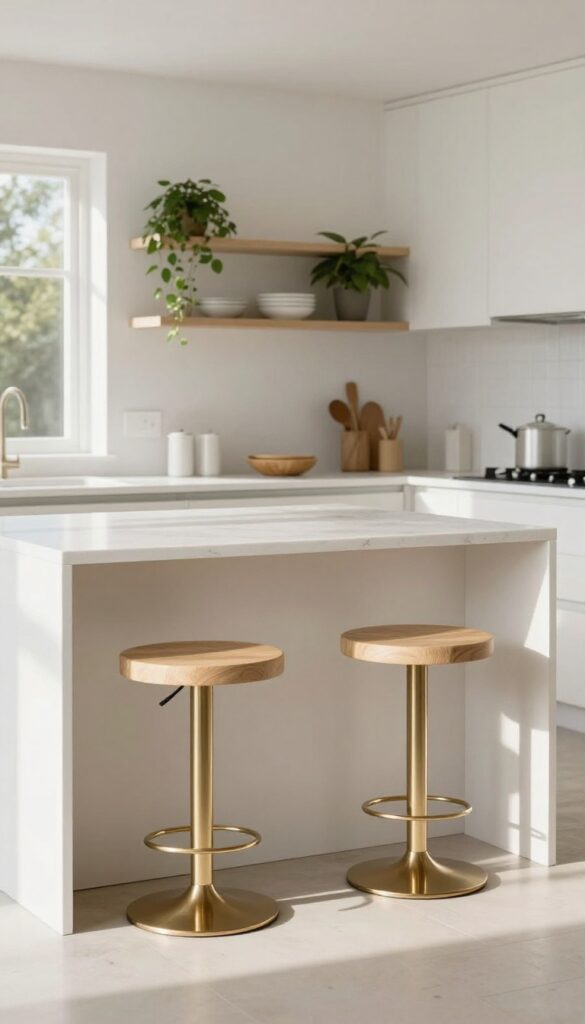
A kitchen island that pulls double duty as a casual dining spot works best when the seating feels effortless. Swivel stools let guests turn toward the action without scooting their chair across the floor. It's a small detail that makes a big difference in how the space flows—especially when you're hosting or have kids zipping around.
Swivel stools bring a dynamic energy to the island, allowing everyone to pivot from counter to conversation in one smooth motion. The key is choosing a streamlined base and a compact seat so the mechanism doesn't add visual bulk. Look for designs with a simple metal or wood swivel plate and a seat that's just wide enough to be comfortable.
This way, the stools feel like natural extensions of the island rather than clunky add-ons. In a light and airy kitchen, opt for slim profiles in pale wood or matte white to keep the look uncluttered.
Best Materials
- For a smart, space-aware look, stick with materials that feel light. A slim metal base in brushed brass or matte black adds just enough contrast without weighing down the room. Pair it with a seat in pale oak or a soft neutral upholstery—think linen or a performance fabric that's easy to wipe clean.
- Avoid heavy leather or thick padding, which can make the stools feel too substantial for a compact island.
Layout Tip
Swivel stools work best when there's a little breathing room around the island. Leave at least 36 inches between the island edge and the nearest wall or counter so the stools can rotate freely without bumping into anything. If your island is on the smaller side, stick with two stools instead of four to keep the swivel motion easy and the area feeling open.
Finishing Touch
Add a soft floor mat or a small rug under the island to anchor the seating zone. Choose a low-pile option in a light tone—like a natural jute or a pale striped cotton—that won't interfere with the stools' movement. It also helps define the dining spot without adding visual clutter, keeping the whole setup feeling airy and intentional.
6. Bench Seating on One Side
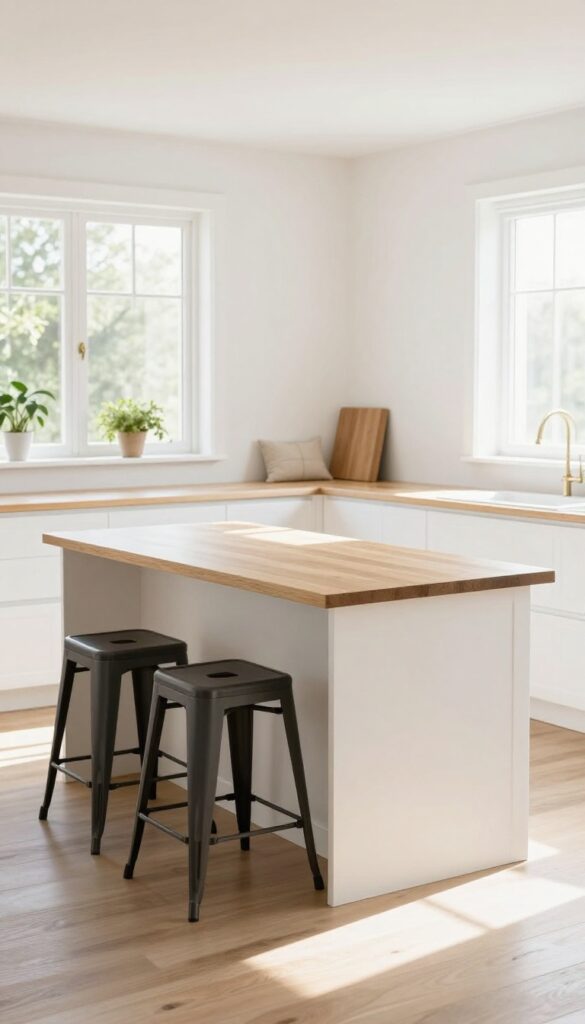
A slim bench tucked along one side of the island instantly brings a relaxed, café-like vibe to your kitchen. Unlike individual chairs, a bench can be pushed fully under the counter when not in use, which is a game-changer for tight spaces. It also creates a more communal feel—perfect for quick breakfasts or kids doing homework while you cook.
The beauty of bench seating lies in its simplicity and space-saving design. Choose a bench with a low back or go completely backless for a sleeker silhouette that slides easily under the island. Pair it with a couple of stools on the opposite side for flexibility, or keep the entire island bench-only for a cohesive look.
The key is to leave enough overhang (at least 12 inches) so knees fit comfortably. For a light and airy feel, go with a wooden bench in a pale oak or whitewashed finish, and add thin cushions in a soft linen or cotton. This setup works especially well in narrow kitchens where every inch counts, and it instantly makes the island feel like a cozy diner counter.
Best Materials
- For a smart, space-aware look, opt for lightweight materials that won't visually weigh down the room. A bench with a slim metal frame in matte black or brass feels modern and doesn't block light. If you prefer warmth, a solid wood bench with a light stain or painted white keeps things airy.
- Avoid bulky upholstered benches—they eat up visual space and are harder to tuck away.
Layout Tip
- Measure your island's overhang carefully before buying a bench. You want the bench to slide completely underneath when not in use, so the seat height should be about 2-3 inches lower than the counter overhang. Leave at least 6 inches of knee clearance between the bench seat and the underside of the counter.
- If your island is against a wall, bench seating on the open side works best.
Cozy Detail
- Add a few toss pillows in complementary neutral tones to soften the bench and make it more inviting. Stick to two or three pillows maximum—any more can look cluttered. Choose washable covers in cotton or linen for easy maintenance.
- A small lumbar pillow at each end adds a touch of comfort without overwhelming the streamlined look.
7. Clear Acrylic Stools for an Invisible Effect
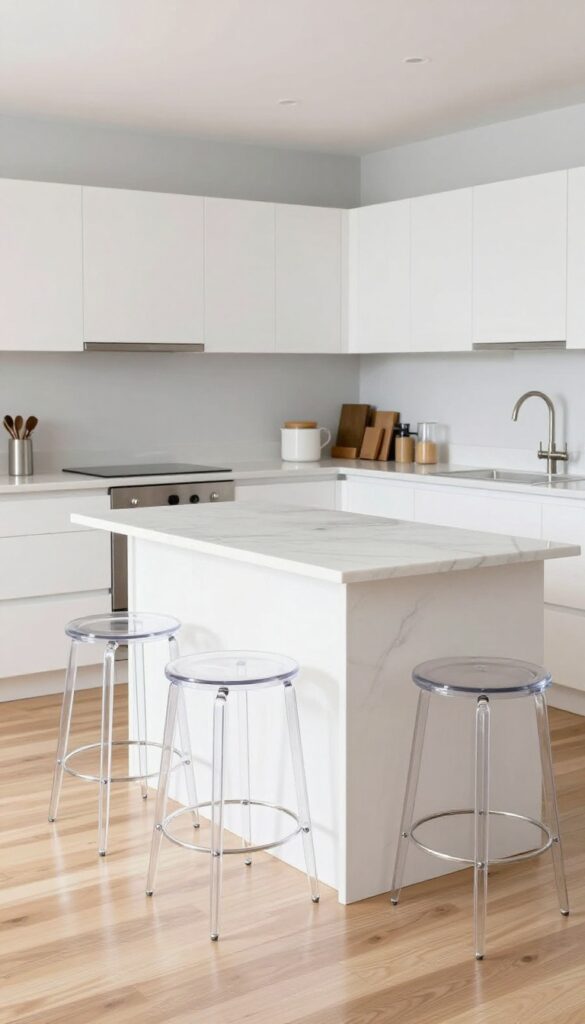
Acrylic stools are the ninjas of kitchen seating—they show up without making a visual splash. In a small kitchen or at an island with a striking base, these transparent seats let the architecture shine while giving you a spot to sit. The light and airy angle fits perfectly here: instead of adding another solid color or heavy material, you get functional seating that feels like it's barely there.
The magic of acrylic stools lies in their ability to disappear. They work especially well in kitchens where you want to keep the focus on a beautiful waterfall edge, a marble slab, or a colorful painted base. Because they don't compete visually, they also make the space feel larger and less cluttered—a huge win for compact layouts.
Plus, the glossy surface catches light and adds a subtle modern touch without screaming for attention.
Best Colors
Clear acrylic is the obvious choice, but don't overlook tinted options like smoky gray or pale amber. These add a whisper of color while still maintaining that transparent, space-saving effect. For a cohesive look, match the tint to your hardware or pendant lights.
Small-space Fix
In a tight kitchen, acrylic stools can be pushed completely under the island when not in use. Look for designs with slim, tapered legs or a single pedestal base to maximize foot room. Bonus: they're easy to wipe down, so no worries about spills staining the surface.
Finishing Touch
Pair acrylic stools with a light, neutral rug or a glossy floor finish to enhance the airy feel. Add a single textured cushion in a soft linen or bouclé for comfort without sacrificing the invisible effect. Keep the rest of the decor minimal to let the stools do their disappearing act.
8. Woven Seats for Natural Texture
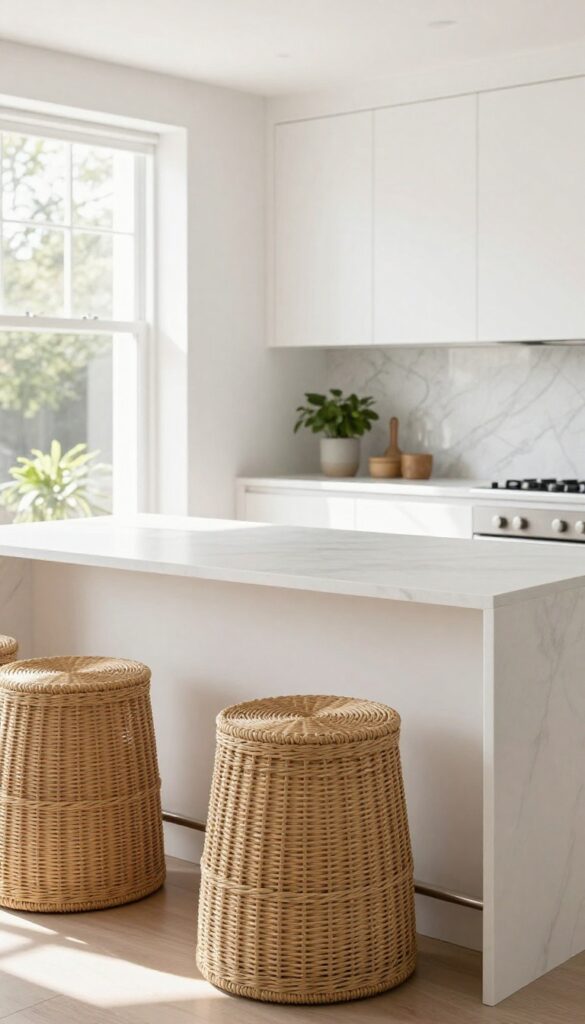
Rope or rattan seats bring a soft, organic feel to your kitchen island without weighing down the space. They add warmth and texture in a light, airy way—perfect for keeping the room open and breezy. Paired with a simple metal frame, the look stays clean and uncluttered, letting the natural materials shine.
Woven seating is an easy way to introduce texture and warmth into a light, airy kitchen. The key is to keep the rest of the island simple—think a slim metal base or a sleek white countertop—so the seats become the focal point. These chairs work especially well in kitchens with lots of natural light, where the woven fibers catch the sun and cast soft shadows.
For a cohesive look, choose a neutral palette: natural rattan, warm beige, or soft cream. If you're worried about durability, look for synthetic rattan or resin wicker that can handle daily use and wipe clean easily. The overall effect is relaxed but intentional, adding a touch of coastal or boho charm without going overboard.
Best Materials
Natural rattan and rope are classic choices, but synthetic versions offer better durability for busy kitchens. Look for UV-stabilized resin wicker if your island gets direct sunlight, or choose marine-grade rope for a coastal vibe that resists moisture. Both options keep the look light and organic while standing up to everyday wear.
Styling Tip
Balance the woven texture with smooth, sleek surfaces elsewhere. A white marble or quartz countertop, minimalist pendant lights, and simple bar stools with metal legs create a nice contrast. Add a single plant or a ceramic vase on the counter to tie the natural elements together without cluttering the space.
Small-space Fix
In a compact kitchen, choose backless woven stools or slim chairs that tuck neatly under the island. This keeps the visual weight low and the floor space open. A light-colored woven seat also helps the area feel larger and more airy than darker, heavier materials would.
9. Foldable or Stackable Stools for Flexibility
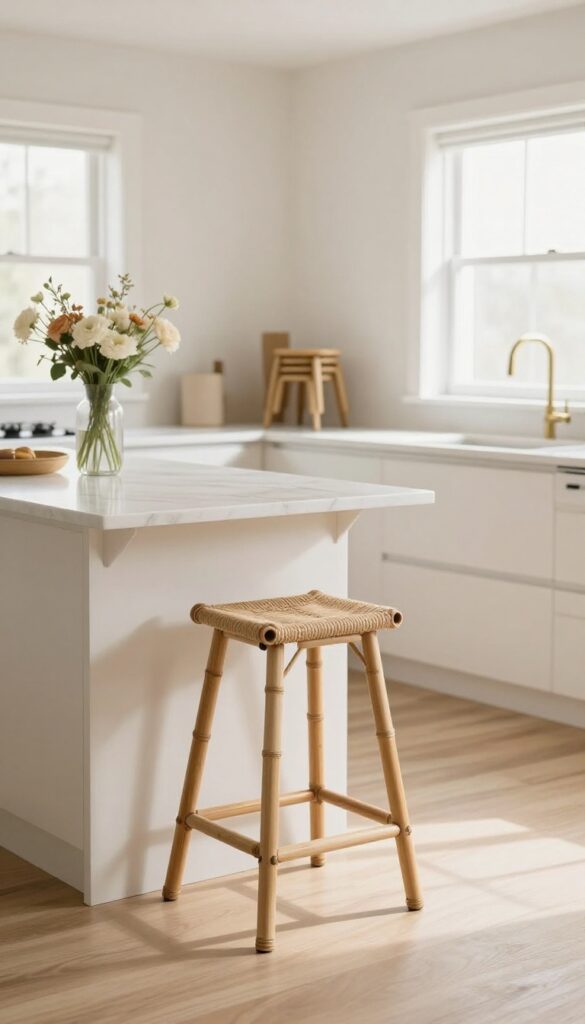
Not every kitchen has the luxury of a sprawling island with permanent seating. When square footage is at a premium, the smartest move is to choose stools that can disappear when you need floor space back. Foldable or stackable designs let you host a quick breakfast or a casual dinner without committing to a full-time seating arrangement.
The trick is finding options that look intentional, not like afterthoughts.
The beauty of flexible seating is that it adapts to your day. Morning coffee for one? Pull out a single stool.
Evening gathering with friends? Unfold a few more. When not in use, they tuck away neatly into a closet, a corner, or even a wall-mounted rack.
Look for stools with clean lines and a finish that complements your island's material—think light wood, matte black, or brushed brass. The goal is to have seating that feels like a deliberate design choice, not a compromise.
Best Materials For Lightness
- Since these stools are meant to be moved often, weight matters. Opt for lightweight materials like plywood, bamboo, or aluminum. A slim metal frame with a fabric or rope seat adds texture without bulk.
- Avoid heavy oak or thick upholstery that makes folding or stacking a chore.
Storage Tip: Keep Them Accessible
- Think about where you'll store them when not in use. A narrow gap between the island and a wall can hold a stack of stools. Or install a simple hook system under a nearby cabinet to hang folded stools.
- The easier it is to grab them, the more you'll actually use them.
Styling Note: Mix And Match
Don't be afraid to use a mix of colors or finishes if you're stacking multiple stools. A set of two natural wood and two black stools can add visual interest. Just keep the silhouette consistent so the mix feels curated, not chaotic.
10. Stools with a Footrest for Added Comfort
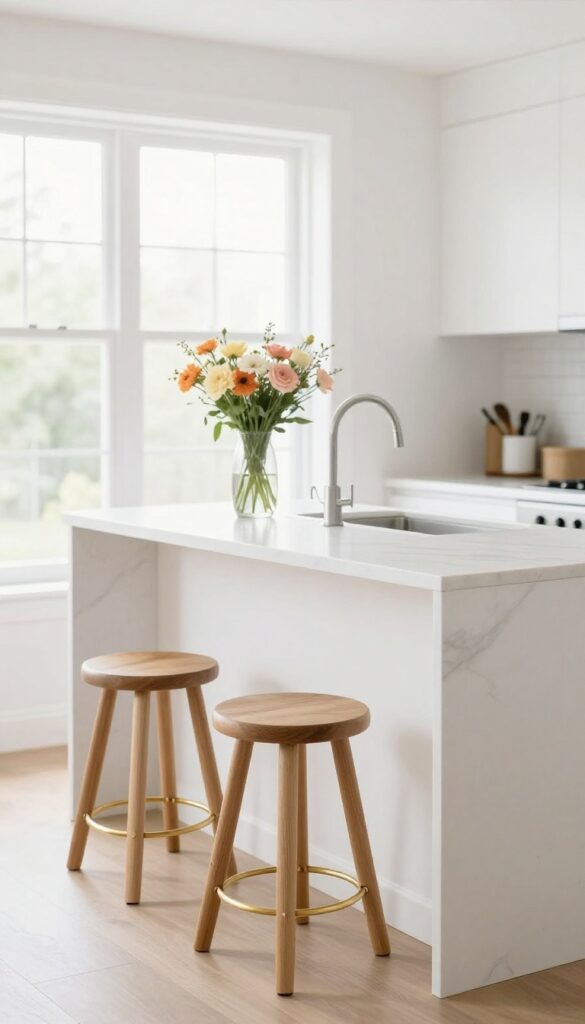
If you've ever perched on a tall stool without a place to rest your feet, you know the feeling—your legs dangle, your back starts to ache, and suddenly that quick coffee turns into a fidgety session. A footrest changes everything. It lets you settle in properly, whether you're lingering over breakfast or helping kids with homework.
The best part? You can get the comfort without the visual weight. A slim metal ring that matches the stool's frame keeps the look clean and airy, perfect for kitchens that want to feel open and uncluttered.
A footrest on kitchen stools is one of those small details that make a big difference in everyday use. It supports your posture, reduces fatigue, and makes the seating area feel more inviting. For a light and airy kitchen, choose stools with a minimal footrest—think a thin metal ring or a single bar that blends into the design.
Avoid chunky wooden rails or bulky wraps that add visual clutter. The goal is to keep the silhouette sleek while adding that practical touch. This idea works especially well in kitchens where the island doubles as a casual dining spot or homework station.
Best Materials
- Go for materials that feel light and match your kitchen's vibe. Brushed brass or matte black metal rings add a subtle contrast without overpowering the space. For a more seamless look, choose a footrest in the same finish as the stool legs.
- Avoid thick upholstered footrests—they add bulk and collect dust. A slim metal ring is easy to clean and keeps the stool looking airy.
Small-space Fix
- In a compact kitchen, a footrest can double as a visual anchor without eating up floor space. Look for stools with a footrest that sits close to the legs so it doesn't stick out. This keeps the area under the island clear and makes the room feel larger.
- Pair with a slim countertop overhang to maximize legroom.
Finishing Touch
Add a soft rug under the island to define the dining zone and cushion the floor. Choose a low-pile or flatweave rug in a light neutral tone to keep the look cohesive. The rug also helps absorb sound and makes the space feel more intimate.
11. Two-Tone Stools That Echo the Island
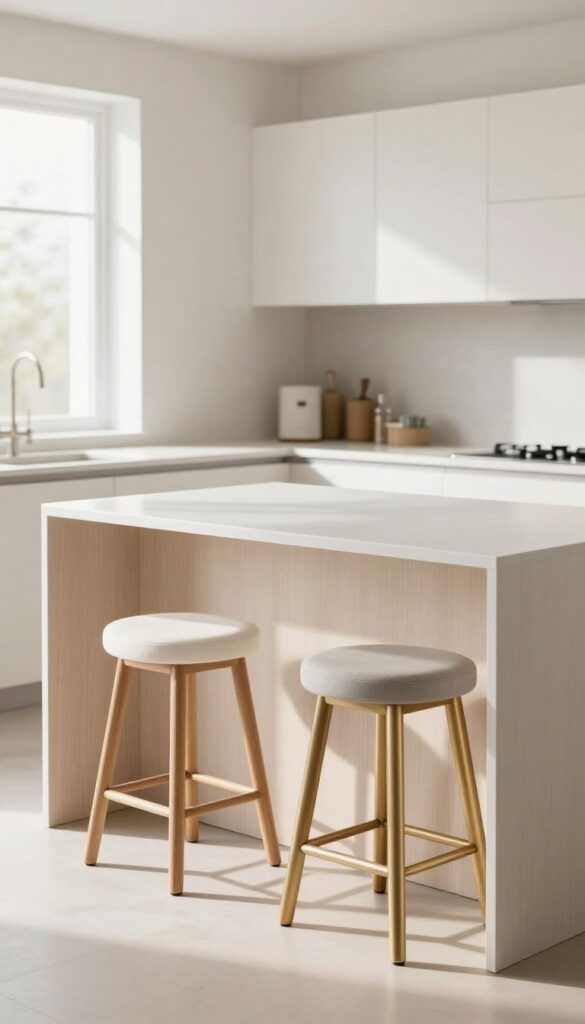
A two-tone stool is a subtle way to pull your kitchen’s color story together without being matchy-matchy. Think a white seat with warm wooden legs, or a navy cushion on brushed brass legs. This trick works especially well when the island itself has a two-tone finish or a contrasting base.
The stools become visual anchors that echo the island’s personality while keeping the overall look light and airy.
Two-tone stools bring a smart, space-aware feel to a kitchen because they break up visual weight. A solid dark stool can feel heavy in a bright room, but a two-tone version keeps things balanced. The lighter top blends with the counter or tabletop, while the darker or contrasting base adds just enough definition.
This approach also lets you introduce a pop of color or natural texture without overwhelming the space. For a light and airy kitchen, stick with pale seats—white, cream, or soft gray—paired with legs in a natural wood tone or a light metal like brushed brass or matte black. The contrast should feel intentional, not random.
If your island has a butcher-block top or wood paneling on one side, echo that wood tone in the stool legs. If your hardware is brass, let the stool legs pick up that same finish. The result is a cohesive, curated look that feels effortless.
Best Color Combos
- For a light and airy kitchen, start with a white or off-white seat. Pair it with legs in a warm oak, light walnut, or pale ash. If you want a touch of contrast, go with matte black legs—they ground the stool without making it feel heavy.
- For a softer look, try a pale gray seat with brushed brass legs. The key is to choose one color from the seat and one from the base that already appear elsewhere in the room, like in the backsplash, hardware, or flooring.
Material Pairing
- Mix materials to add depth. A fabric or faux leather seat feels softer and more inviting, while wooden or metal legs keep the stool sturdy and sleek. For a smart, space-aware kitchen, avoid overly bulky materials.
- Slim metal legs with a thin upholstered seat work well in tight spots. If you prefer a more traditional look, go with a fully wooden stool painted in two tones—like a white seat and a navy base—to keep the silhouette clean.
Small-space Fix
- In a compact kitchen, two-tone stools can make the area feel larger. A light-colored seat blends with the island top, creating a seamless look, while the darker legs visually recede. Choose stools with open backs or no backs to keep sightlines clear.
- If you need storage, look for stools with a slight shelf or hook on the base, but keep the design minimal to avoid clutter.
12. Minimalist Saddle Seats
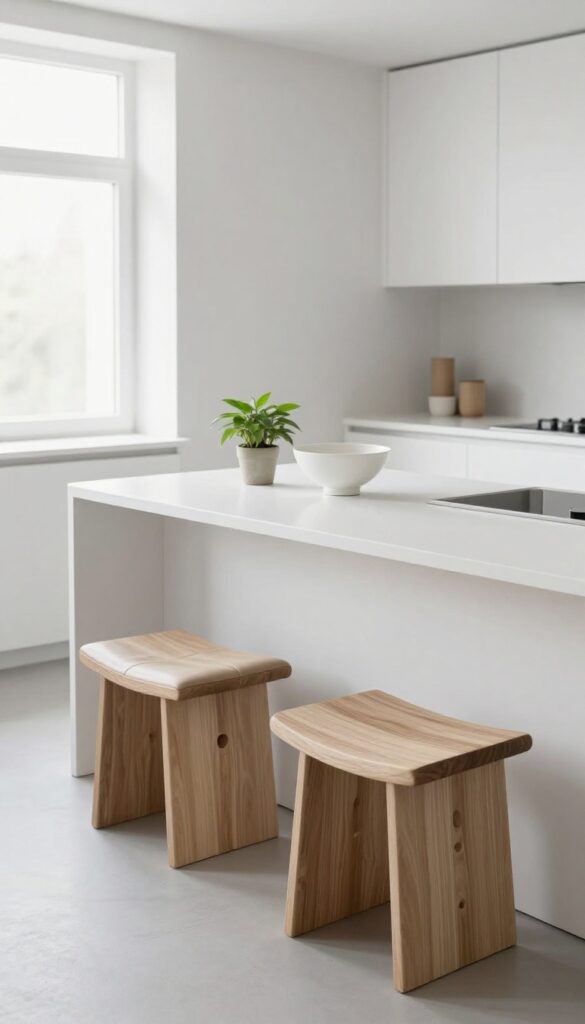
Saddle-shaped seats bring a sculptural, almost furniture-like quality to a kitchen island without adding visual weight. Their slim profiles keep the space feeling open and airy, which is exactly what a light-and-bright kitchen needs. These seats work best when you want a modern, uncluttered look that still feels intentional and warm.
Saddle seats are a smart choice for kitchens where every inch counts. They tuck neatly under the counter when not in use, freeing up floor space and keeping the room from feeling cramped. The curved shape also makes them surprisingly comfortable for quick meals or morning coffee, even without a backrest.
For a cohesive look, pair them with a slim countertop overhang and keep the rest of the island free of bulky accessories.
Best Materials
Look for saddle seats in light-toned wood like ash or birch to keep the look airy. For a more contemporary edge, try a matte white or pale gray molded plastic version. Avoid dark or heavy materials that could make the seats feel bulky.
Placement Tip
Space saddle seats about 6 inches apart so they don't look crowded. On a smaller island, stick to two seats centered on one side. This keeps the layout balanced and leaves room for food prep or serving.
Styling Detail
Add a thin leather or wool cushion in a neutral tone for extra comfort without losing the minimalist feel. A single small plant or a sleek fruit bowl on the island can soften the look without cluttering it.
13. Stools with a Low Profile for Under-Island Storage
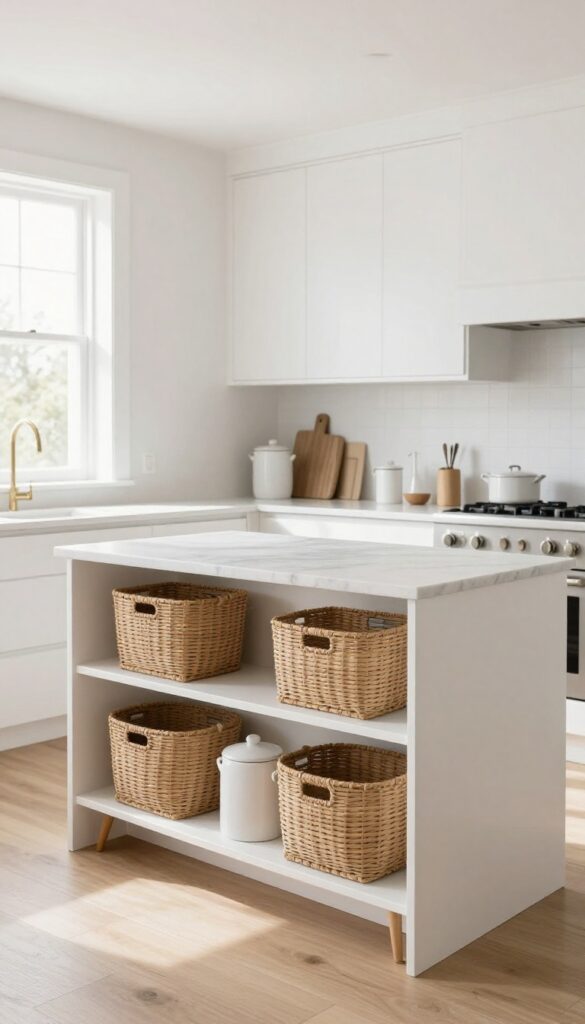
An island with open shelving or cabinets underneath is a dream for stashing cookbooks, baskets, or everyday dishes. But if your stools don't slide all the way in, that storage becomes a cluttered eyesore. Low-profile seating keeps the look streamlined and makes grabbing a plate or a towel effortless.
It's a smart, space-aware move that keeps your kitchen feeling light and airy.
When your island doubles as storage, every inch counts. Taller stools or those with wide bases can block access to cabinets or create visual chaos. Instead, look for backless stools or slim counter stools with a seat height that tucks neatly under the overhang.
This way, your island's lower shelves stay fully functional and the whole setup feels intentional rather than cramped. A low profile also helps the seating disappear when not in use, which is a huge plus in smaller kitchens or open-plan layouts.
Best Materials
Wooden stools with a natural finish keep things warm and organic, while metal frames in matte black or brushed brass add a touch of modern lightness. For a truly airy feel, choose stools with slim legs and an open back—think spindles or a simple curved seat. Avoid chunky upholstery that adds visual bulk and makes sliding under the island a hassle.
Styling Tip
- Use the storage beneath your island to display items that match your stool's vibe. If your stools are light wood, stack woven baskets or white ceramic canisters below. For metal stools, try a row of cookbooks with neutral spines or a few glass jars.
- This creates a cohesive look where the seating and storage feel like part of the same smart design.
Small-space Fix
- In a narrow kitchen, low-profile stools are a lifesaver. They let you pull them out just enough to sit, then push them back flush with the island. This keeps walkways clear and the room feeling open.
- Pair with a slim island shelf for extra storage without adding depth.
14. Bar Stools with a Single Central Post
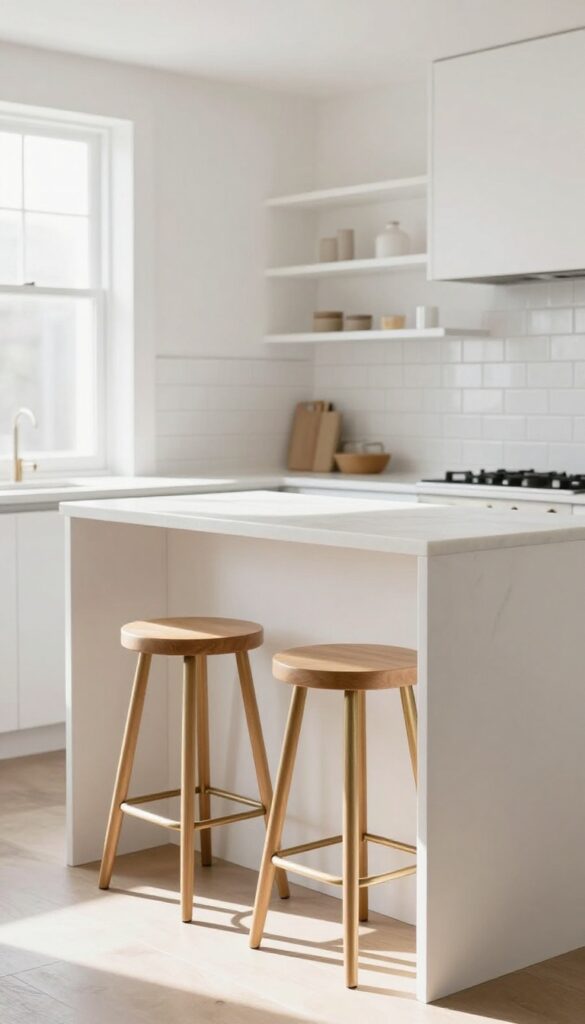
When you're working with a compact kitchen island, every inch of visual space counts. Bar stools with a single central post instead of four legs create a cleaner, more open look that keeps the seating area from feeling crowded. The slim, tapered post in a light finish—like brushed brass or pale oak—adds a touch of refinement without adding bulk.
It's a smart choice for anyone who wants the island to feel airy and uncluttered, even with several stools lined up.
A central post design takes up less visual space than four legs, making the seating area feel more open. Look for a slim, tapered post in a light finish. This style works especially well in kitchens where you want to maintain a light and airy atmosphere.
The single post allows light to flow underneath and around the stool, so the island doesn't feel boxed in. Plus, it's easier to clean around—no awkward dusting between legs.
Best Colors
- Stick with light, neutral tones to keep the airy vibe. White oak, pale ash, or a soft ivory finish on the post and seat blend seamlessly with a bright kitchen. If you want a subtle contrast, go for a brushed brass or matte black post—but keep the seat light.
- Avoid dark, heavy colors that could visually weigh down the space.
Layout Tip
For a small island, limit yourself to two or three stools. Leave at least 6 to 8 inches between each stool so the single posts don't feel cramped. Center the stools evenly along the island's overhang, and make sure the post doesn't interfere with knee space—opt for a stool with a footring that's set high enough to allow comfortable legroom.
Small-space Fix
If your island doubles as a prep area, choose stools that tuck completely under the countertop when not in use. A central post design often allows for a lower seat height that slides neatly beneath the overhang. This keeps the kitchen looking spacious and clutter-free when the stools aren't needed.
15. Cushioned Stools with Removable Covers
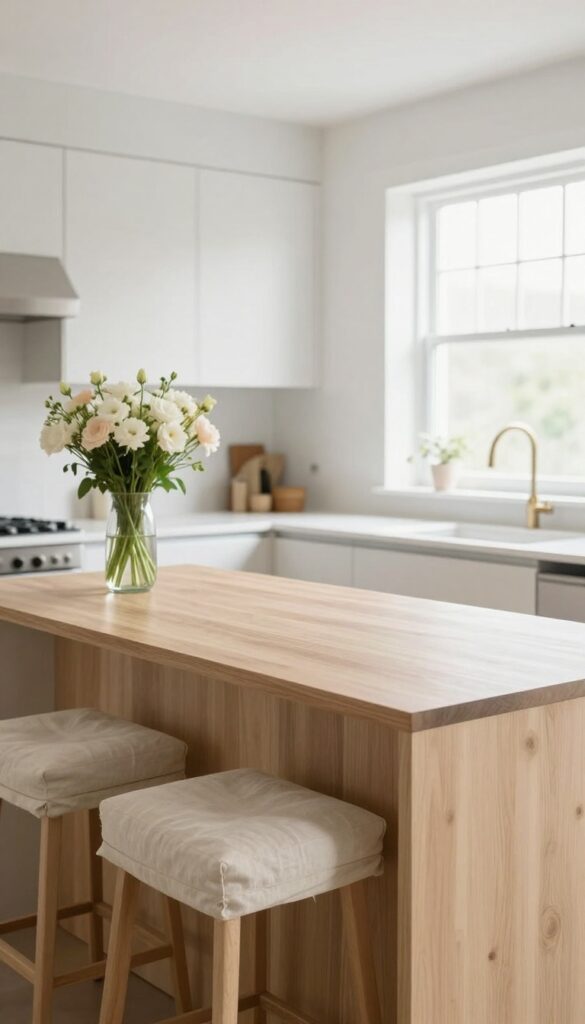
Soft seating at the kitchen island makes casual meals feel more inviting, but keeping fabric clean can be a challenge. Cushioned stools with removable covers solve that problem while adding a cozy, lived-in feel. The key is choosing washable fabrics and light, airy colors that keep the space looking fresh.
Removable cushion covers let you toss them in the wash whenever spills happen, which is pretty much daily in a busy kitchen. Look for stools with zippered or snap-off covers in cotton, linen, or performance fabrics that resist stains. Light shades like cream, pale gray, or soft blush keep the look open and breezy, while simple patterns like stripes or subtle checks add visual interest without overwhelming the space.
Pair them with a light wood or white metal stool base to maintain that airy vibe.
Best Fabrics For Everyday Use
Performance fabrics like Crypton or Sunbrella are stain-resistant and easy to clean, but natural fibers like cotton and linen also work well when treated with a stain guard. Avoid velvet or heavy textured weaves that trap crumbs and show wear quickly. A medium-weight cotton-linen blend hits the sweet spot between durability and softness.
Color And Pattern Tips
- Stick with light neutrals or pastel tones to keep the kitchen feeling spacious. If you want a pattern, go for something small-scale like ticking stripes or a delicate floral. Avoid large, bold prints that can make a small island feel cluttered.
- You can always swap out covers seasonally for a quick refresh.
Styling The Rest Of The Island
- Balance the soft stools with a clean, uncluttered island top. A simple fruit bowl, a small vase of fresh flowers, or a stack of light-colored cookbooks works well. Keep counter stools pushed in when not in use to maintain an open floor plan.
- Add a natural fiber runner on the floor beneath the stools to define the dining zone without adding visual weight.
FAQ
How many stools should I put at a kitchen island?
A good rule is one stool per 24 to 30 inches of counter length. Leave at least 6 inches between each stool for elbow room, and make sure there's enough overhang (usually 12 to 15 inches) for comfortable leg space.
What is the best height for kitchen island seating?
Standard counter height is 36 inches, so stools with a seat height of 24 to 26 inches work well. For a bar-height island (42 inches), look for stools around 30 inches tall. Always measure your island before buying.
Can I mix different stool styles at the same island?
Absolutely. Mixing styles adds personality, but keep a common element like color, material, or shape to tie them together. For example, pair backless stools with a few low-back ones in the same finish.
How do I make a small kitchen island feel less crowded?
Choose stools with slim profiles, open backs, or transparent materials. Stick to lighter colors and avoid bulky armrests. You can also limit seating to just two stools on one side to keep the space open.
What flooring works best under kitchen island seating?
Durable, easy-to-clean flooring like tile, luxury vinyl, or hardwood with a protective finish is ideal. Add a low-profile rug or mat under the seating area to define the zone and protect the floor from scuffs.
Conclusion
Choosing the right seating for your kitchen island is all about balancing style with everyday function. By focusing on light materials, smart proportions, and a relaxed color palette, you can create a casual dining spot that feels open and inviting.
Remember, the best ideas are the ones that fit your space and your life. Let these 15 options inspire you to build a kitchen island seating area that's both beautiful and beautifully practical.