13 Brick Kitchen Ideas With Warm Textured Character
Brick has a way of making a kitchen feel grounded and lived-in without trying too hard. It brings texture, warmth, and a subtle industrial edge that pairs beautifully with clean modern lines.
The trick is using it in ways that feel intentional—not like you just left a wall unfinished. Whether you go for exposed brick, brick veneer, or brick-look tile, the material adds instant character.
And because it works with so many styles—from Scandinavian to farmhouse to urban loft—it's easy to make it your own. Here are 13 brick kitchen ideas that keep things modern and clean while wrapping the space in that cozy, textured feel we all want.
1. A Single Brick Accent Wall Behind the Dining Area
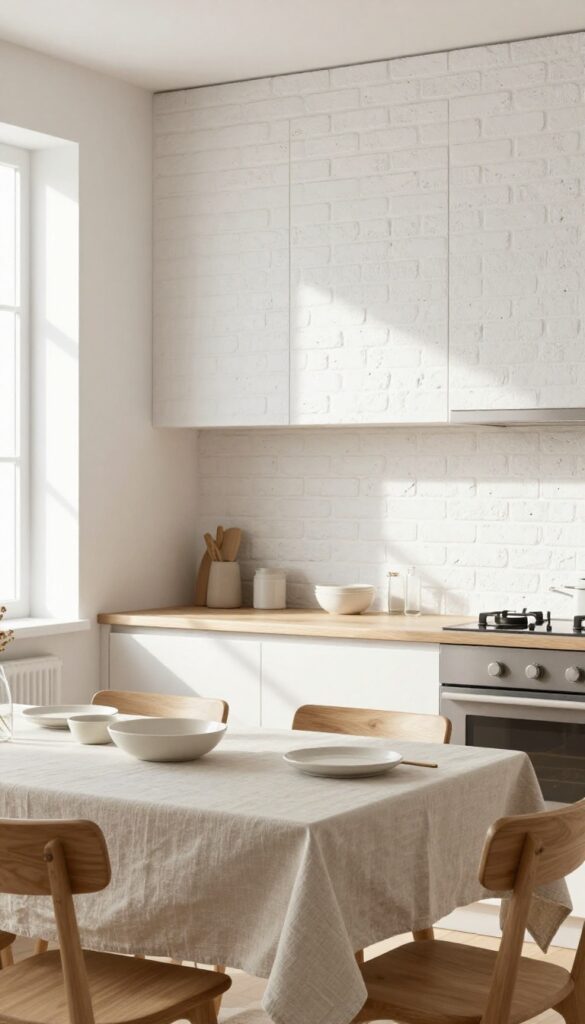
Not every brick kitchen needs to be floor-to-ceiling. One wall—just the one behind your dining table or breakfast nook—can bring all the warmth and texture you want without overwhelming the space. The trick is to keep it light: a coat of white paint or a whitewash softens the brick's natural roughness, so it reads as a gentle backdrop rather than a heavy feature.
The result feels both modern and inviting, like a cozy corner that still breathes.
This approach works especially well in open-plan kitchens where you want to define the dining zone without building a physical divider. The brick wall acts as a visual anchor, drawing the eye to the table and making the area feel intentionally designed. Because the brick is painted or whitewashed in a neutral tone, it complements almost any decor style—from Scandinavian minimalism to industrial chic.
It's also surprisingly low-maintenance: a sealed brick wall is easy to wipe down, and any imperfections in the brick add to the charm rather than detracting from it.
Best Colors
Stick with soft whites, warm greiges, or pale taupes to keep the room airy. A pure bright white can feel too stark against the brick's texture, so consider an off-white with a hint of warmth—like Benjamin Moore's White Dove or Sherwin-Williams' Alabaster. If you prefer a touch of color, a very light blush or sage can still feel clean while adding a subtle personality.
Texture Mix
Balance the brick's rough surface with smooth, soft elements. A linen tablecloth, a velvet bench, or a sleek wood tabletop creates a pleasing contrast. Add a simple pendant light with a matte metal finish above the table—the light will play across the brick's uneven surface, highlighting its depth without making the room feel busy.
Finishing Touch
- Keep the wall itself uncluttered. Let the brick be the star. If you want to hang art, choose a single large piece with a simple frame rather than a gallery wall.
- Or lean a tall mirror against the wall to bounce light around the room. A small shelf with a trailing plant can soften the edge, but avoid overcrowding.
2. Brick Backsplash With White Grout
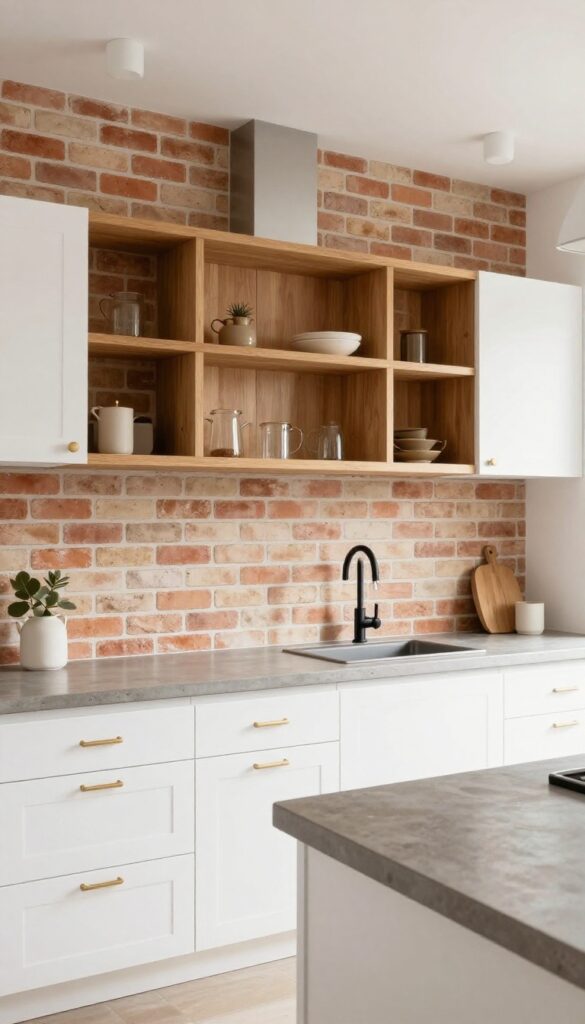
Thin brick tiles paired with bright white grout deliver a crisp, graphic look that feels both modern and inviting. The contrast sharpens every brick edge, making the texture pop without overwhelming the space. It’s a smart way to add warmth while keeping the kitchen feeling open and airy.
This backsplash style works especially well in kitchens with white or light-colored cabinetry. The white grout lines create a clean grid that organizes the visual chaos of natural brick, giving it a tailored, intentional feel. You get all the cozy character of brick without the heavy, dark vibe that sometimes comes with it.
For a cohesive look, carry the same thin brick tile up to the bottom of upper cabinets or extend it all the way to the ceiling for a dramatic focal point. The key is keeping the grout lines consistent and the tile spacing even—this is where the modern polish comes from. Pair it with warm wood accents, brass hardware, and soft pendant lighting to balance the cool white lines with inviting texture.
Best Colors
Stick with neutral brick tones—soft terracotta, pale beige, or warm gray. These shades read natural but don’t compete with the white grout. Avoid dark red bricks, which can feel too rustic against the crisp white lines.
Texture Mix
Balance the rough brick surface with smooth countertops like quartz or polished concrete. Add a matte black faucet or brushed nickel fixtures to bridge the modern and warm elements seamlessly.
Finishing Touch
Seal the grout with a stain-resistant sealer to keep it bright and easy to clean. A weekly wipe-down with mild soap and water is all it takes to maintain that fresh, graphic contrast.
3. Open Shelving on a Brick Wall
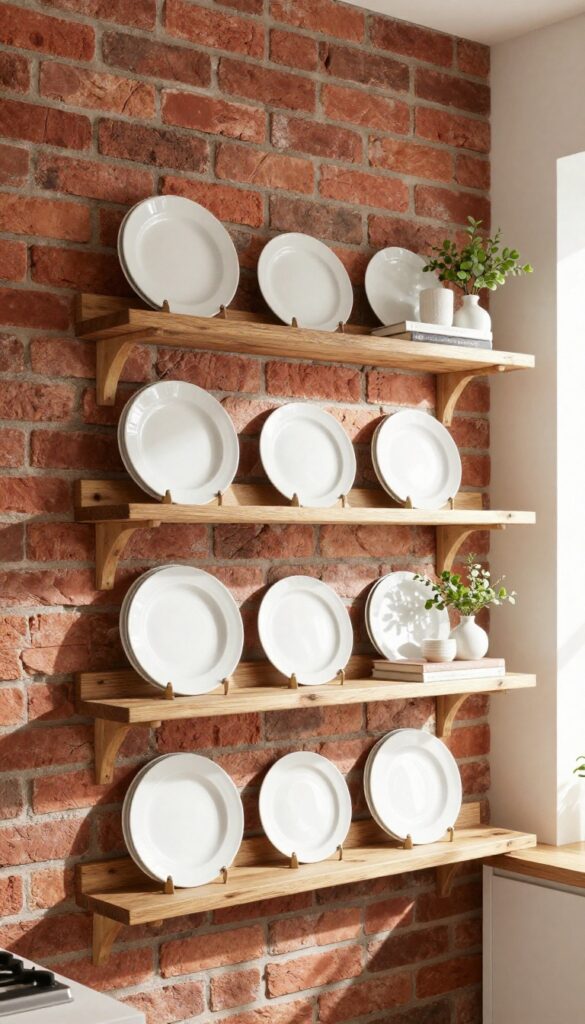
Nothing brings warmth and character to a kitchen quite like open shelving mounted directly onto a brick wall. The contrast between the rough, textured brick and the clean lines of floating wood or metal shelves creates a look that feels curated but not fussy. It’s a practical way to display your everyday dishes, cookbooks, and favorite glassware while keeping the space open and airy.
Open shelving on a brick wall is a perfect match for modern kitchens that still want a cozy, lived-in feel. The brick adds depth and a natural warmth that painted drywall just can’t replicate. By keeping the shelves simple—think thick reclaimed wood or slim black metal—you let the brick be the star.
This setup works especially well in galley kitchens or small spaces where upper cabinets might feel too heavy. Plus, it forces you to keep only what you love on display, which naturally cuts down on clutter.
Best Materials For Shelves
- For a warm and cozy look, go with solid wood shelves like oak, walnut, or reclaimed barn wood. The natural grain and slight imperfections add to the charm. If your style leans more modern, opt for black powder-coated metal shelves with a slim profile.
- They pop beautifully against red or white brick. Avoid glass or glossy finishes—they can feel too cold next to the raw brick texture.
Shelf Styling Tip
- Stick to a mix of functional and decorative items. Stack white dinner plates on one shelf, lean a few cookbooks on another, and add small plants or ceramic vases for softness. Keep the color palette simple—neutrals with a few earthy accents—so the brick remains the focal point.
- Leave some breathing room between items to avoid a cluttered look.
Lighting Note
- Under-shelf lighting can make a huge difference. Install warm LED strip lights beneath the shelves to highlight the brick texture and illuminate your dishes. It adds a soft glow that makes the kitchen feel inviting in the evening.
- If you can’t hardwire, battery-operated puck lights work great and are easy to install.
4. Brick Kitchen Island Base
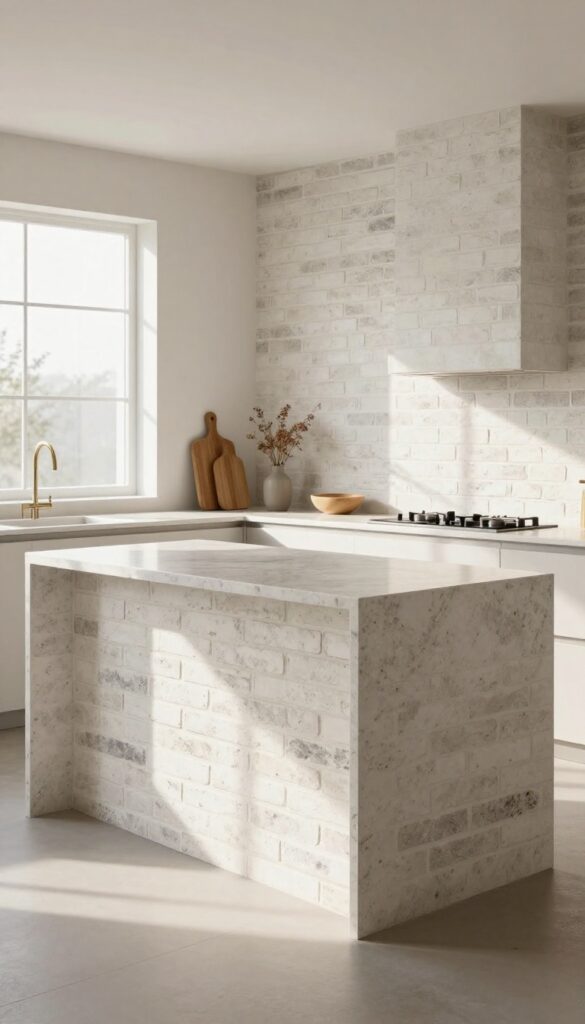
A kitchen island wrapped in brick veneer instantly becomes the heart of the room. The textured base adds warmth and weight, while a light quartz or butcher block countertop keeps the look from feeling too heavy. This pairing strikes that perfect balance between rough and smooth, making the island feel both grounded and inviting.
It works especially well in open layouts where the island serves as a visual anchor.
Wrapping the base of your kitchen island in brick veneer is a straightforward way to introduce texture without overwhelming the space. The key is choosing the right brick—thin brick tiles or reclaimed brick slices work best for a clean installation. Pair the brick base with a light countertop material like white quartz, warm butcher block, or even a pale concrete to keep the overall feel airy.
This combo creates a natural focal point that draws the eye without competing with other elements. For a modern edge, consider a brick with a slightly whitewashed finish or a gray tone instead of traditional red. The contrast between the rough brick and smooth countertop adds visual interest and a tactile quality that makes the island more than just a workspace.
Plus, the brick base is durable and easy to clean with a simple sealant.
Best Brick Styles
- Thin brick veneer comes in a range of colors and finishes. For a warm, cozy feel, go with classic red or earthy brown tones. If you want a more modern look, choose a whitewashed or gray brick that blends with a neutral palette.
- Reclaimed brick adds character with its weathered edges and varied hues, but new thin brick is easier to install and maintain.
Countertop Pairing
- Light quartz or butcher block are the top choices here. Quartz keeps the island feeling clean and contemporary, while butcher block adds warmth that complements the brick. Avoid dark or busy countertops—they can make the base look heavy.
- A waterfall edge on the countertop can also soften the transition from brick to surface.
Finishing Touch
Seal the brick with a matte sealer to protect against stains and grease, especially near the stove. Add under-island lighting to highlight the texture in the evening. A simple wooden cutting board or a few ceramic accessories on the countertop tie the rough and smooth elements together.
5. Whitewashed Brick for a Softer Look
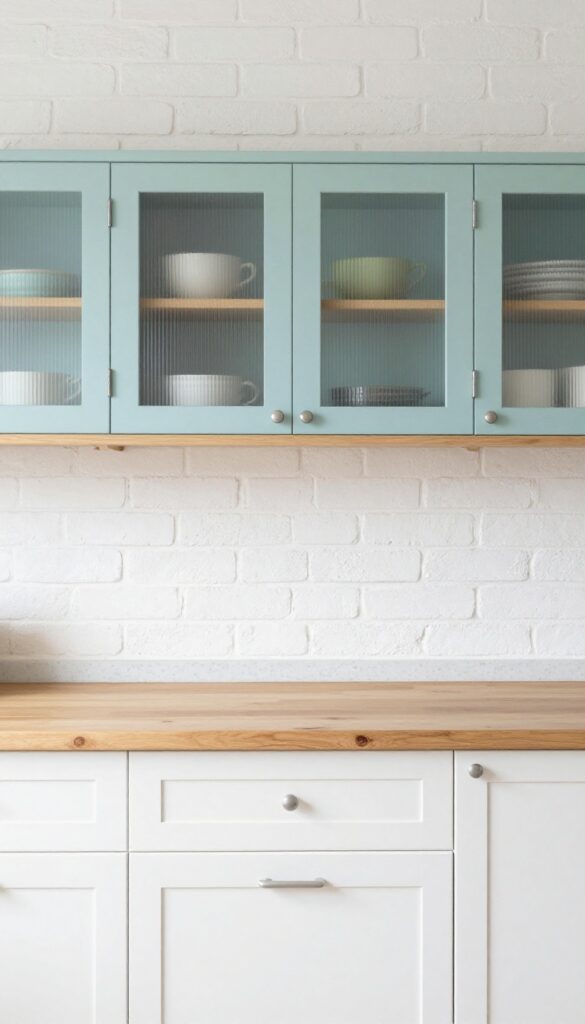
Whitewashing brick is like giving it a gentle filter—it softens the bold orange and red tones while keeping all that lovely texture. The result feels airy and coastal, almost like a breezy beach cottage. For kitchens that want warmth without the weight of dark, heavy brick, this is a perfect middle ground.
Whitewashing works best on real brick, but you can also achieve the look with brick veneer or even a faux finish. The key is to dilute white paint with water and apply it sparingly, letting the natural variations show through. It’s an easy weekend project that instantly transforms a kitchen from rustic to relaxed.
Best Colors To Pair
Stick with soft neutrals like warm white, beige, or light gray for cabinets and countertops. Pale blue or sage green accents pick up the coastal vibe without competing with the brick. Avoid stark white or cool grays—they can make the whitewash feel flat.
Texture Mix
Balance the brick’s subtle roughness with smooth surfaces. Think quartz countertops, glossy subway tile backsplash, or sleek stainless steel appliances. Add natural wood open shelving or a butcher block island to keep the warmth alive.
Lighting Tip
Whitewashed brick loves natural light, so keep windows uncovered or use sheer curtains. For artificial lighting, go with warm LED bulbs (2700K–3000K) in pendant lights or under-cabinet fixtures to enhance the creamy tones without washing them out.
6. Brick Archway or Alcove
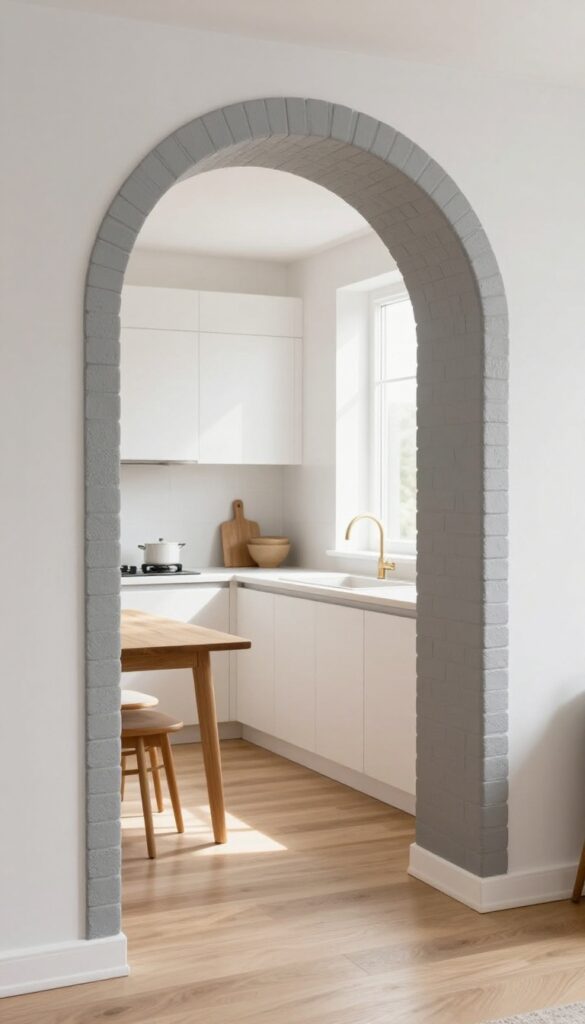
A brick archway or alcove can instantly give your kitchen a sense of history and warmth, even in a modern home. Instead of a plain doorframe, imagine walking through a soft brick arch that gently separates the kitchen from the living area. It defines the space without closing it off, adding architectural interest that feels deliberate and cozy.
This idea works especially well in open floor plans where you want to create distinct zones without building walls. The brick adds texture and a handcrafted feel, making the kitchen feel grounded and inviting.
A brick archway or alcove is a subtle but powerful way to introduce brick into your kitchen. It frames a doorway or creates a small nook, giving the room a sense of structure and character. In open layouts, it helps define the kitchen zone while keeping the flow open.
The brick can be left exposed for a rustic look or painted to match your palette for a cleaner feel. This feature doesn't take up extra square footage but adds significant visual weight, making the kitchen feel more established and lived-in.
Best Colors
- For a modern and clean look, stick with neutral brick tones like warm gray, soft white, or pale beige. If you want contrast, a deep charcoal brick can be striking against white cabinets. Avoid red or orange bricks if you're aiming for a sleek, contemporary feel—they tend to read more rustic.
- Instead, choose bricks with a smooth finish and subtle color variation.
Layout Tip
Place the brick archway leading from the kitchen into a dining nook or living area. This creates a natural transition and makes the kitchen feel like its own defined space. If you have a blank wall, consider a shallow alcove with brick backing—perfect for a coffee station or a small shelf with plants.
Finishing Touch
- Keep the arch or alcove simple. Avoid adding heavy trim or molding—the brick should be the star. A single pendant light hanging in the alcove or a small sconce on the wall nearby will highlight the texture and create a warm glow.
- Add a wooden stool or a small rug to soften the look.
7. Brick and Warm Wood Pairing
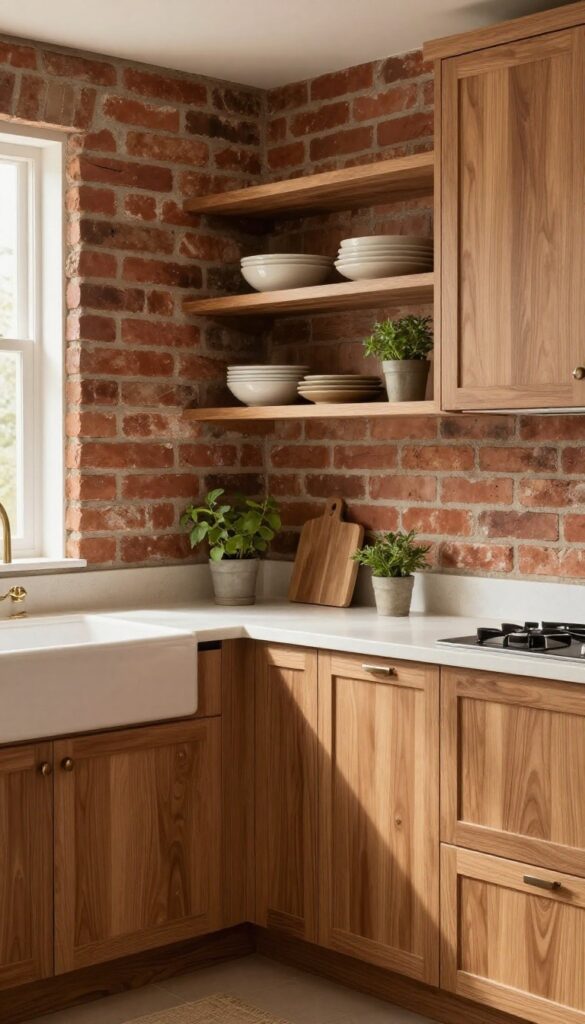
There’s something naturally grounding about brick and wood together. The rough, earthy texture of exposed brick balances beautifully with the smooth grain of warm wood cabinetry or open shelving. It’s a combination that feels both modern and timeless, with a cozy, organic warmth that makes a kitchen instantly inviting.
Think of it as a visual hug—the brick adds depth and character, while the wood softens the look and ties everything together.
Pairing brick with warm wood creates a kitchen that feels layered, lived-in, and effortlessly stylish. The key is to let both materials shine without competing. A brick accent wall behind a range or sink becomes the star, while wood cabinetry or floating shelves in honey, walnut, or oak tones add a natural counterpoint.
This duo works especially well in open-plan spaces, where the warmth helps define the kitchen zone without closing it off. To keep the look modern and clean, stick with simple, flat-panel wood cabinets or slim open shelves rather than ornate styles. The contrast between rough brick and smooth wood is what makes this pairing sing.
Best Colors
- Stick with warm, earthy tones to enhance the cozy vibe. Think creamy whites, soft beiges, and warm grays for walls and countertops. Avoid cool grays or stark whites, which can clash with the warmth of the brick and wood.
- For a bolder look, deep olive or navy on lower cabinets can add richness without losing the organic feel.
Texture Mix
- The magic is in the contrast. Keep brick raw or whitewashed for a softer texture, and choose wood with visible grain—like oak or walnut—for warmth. Add a few matte black or brass fixtures to bridge the two materials.
- A woven rug or linen curtains can soften the space further, making it feel even more welcoming.
Layout Tip
- Use the brick wall as a focal point behind a major work zone, like the stove or sink. Then, flank it with open wood shelving on one or both sides. This creates a balanced, symmetrical look that feels intentional.
- If your kitchen is narrow, keep the brick wall on one side only to avoid overwhelming the space.
8. Painted Brick in a Soft Neutral
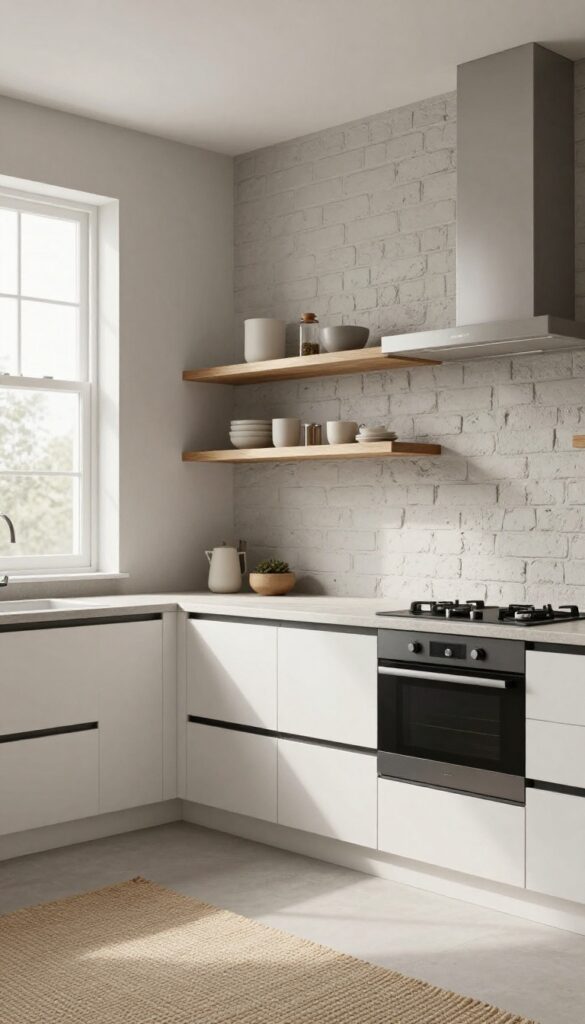
Not every brick wall needs to stay raw and earthy. Painting brick in a soft neutral—think greige, warm white, or pale taupe—lets you keep all that lovely texture while dialing down the rustic vibe. The result is a surface that feels modern and clean, yet still cozy and inviting.
It’s a smart move if your kitchen already has brick but you want it to play nicely with sleek cabinetry and stone countertops.
A painted brick wall becomes a subtle backdrop rather than a bold statement. The texture adds visual interest without competing with other finishes, so your kitchen feels layered but not busy. This works especially well in open-plan spaces where you want the brick to connect with the living area without shouting.
Pair it with matte black hardware and warm wood accents to keep the room from feeling too sterile.
Best Colors To Try
Stick with soft, warm neutrals that have a hint of gray or beige. Popular picks include Sherwin-Williams Repose Gray (a true greige), Benjamin Moore White Dove (a warm white), and Farrow & Ball Elephant’s Breath (a pale taupe with depth). Avoid stark whites or cool grays—they can make the brick look flat and lose the cozy feel.
Finishing Touch
Once painted, seal the brick with a matte or satin finish to protect it from kitchen grease and splashes. A low-sheen clear coat keeps the texture visible while making the surface wipeable. This is especially important behind a stove or sink area where messes happen often.
Texture Mix
Balance the smooth painted brick with other textures. Add open shelving with natural wood, a woven rug, or linen curtains. The contrast keeps the room from feeling too flat and reinforces that warm, layered look.
9. Brick Surround for a Range or Hood
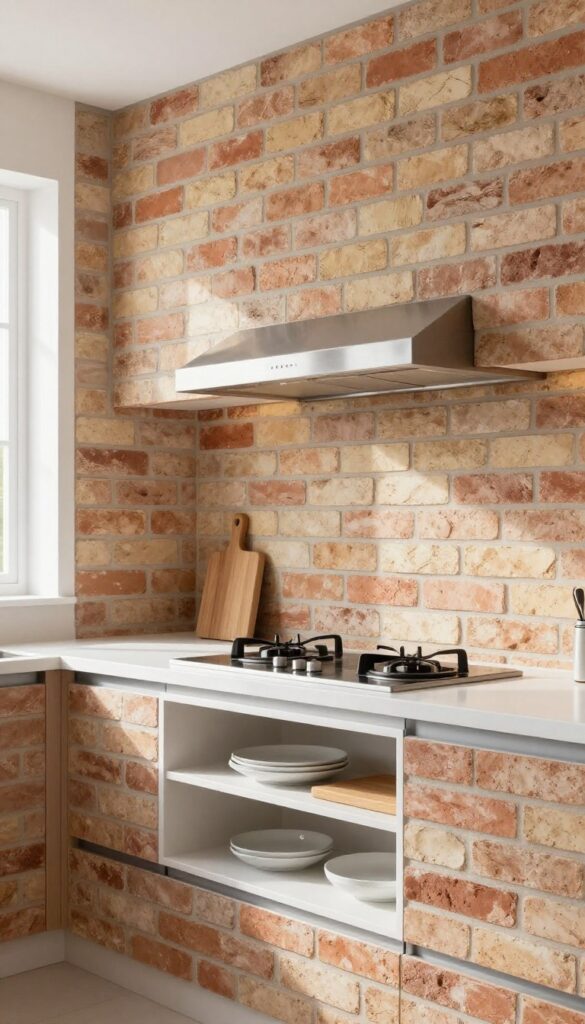
Your stove or range hood is already a natural gathering point in the kitchen. Wrapping it in brick instantly turns that functional zone into a standout feature. The material handles heat beautifully, so it's not just about looks—it's a smart, durable choice that adds warmth and texture without overwhelming the space.
A brick surround around your range or hood creates an instant focal point that feels both intentional and lived-in. The contrast between the rough brick surface and sleek modern appliances keeps the kitchen from feeling too cold or too rustic. It works especially well in open layouts where the range is visible from the living area, tying the whole room together with a cozy, grounded feel.
Best Colors
Stick with warm, earthy brick tones like terracotta, soft red, or sandy beige to keep the kitchen feeling inviting. If your style leans more modern, consider whitewashed or limewashed brick for a lighter, airier look that still adds texture. Avoid dark, cool grays or blacks—they can make the space feel heavy and less warm.
Texture Mix
Pair the brick with smooth surfaces to balance the roughness. A polished quartz or marble countertop next to the brick surround creates a beautiful contrast. Add open shelving with simple white dishes or a few warm wood cutting boards to soften the look and keep it from feeling too industrial.
Finishing Touch
Install under-cabinet lighting or a small pendant light above the range to highlight the brick texture in the evening. The play of light and shadow across the uneven surface adds depth and makes the surround feel like a deliberate design choice rather than an afterthought.
10. Thin Brick Veneer on a Partial Wall
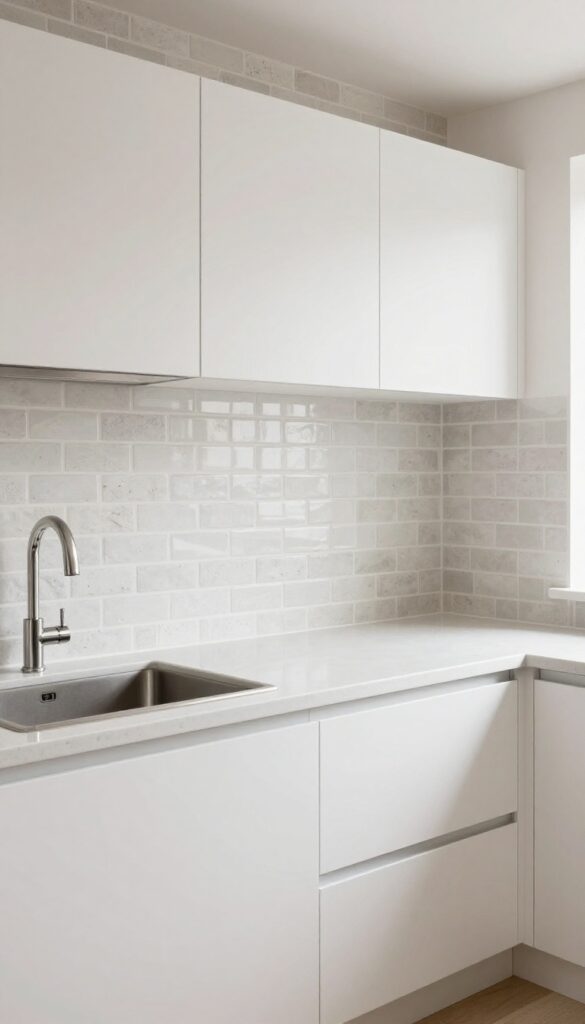
Not every kitchen needs a full brick wall to feel warm and textured. Applying thin brick veneer to just the lower half of a wall—like a wainscot—gives you that cozy, grounded look without overwhelming the space. It’s a smart way to add character where it counts: right at eye level and below, where your hands and furniture naturally interact with the surface.
The clean line where the brick stops keeps the room feeling modern and intentional, not like a construction project gone rogue.
This partial-wall approach works beautifully in kitchens that want a touch of rustic warmth but still lean clean and contemporary. The brick acts as a visual anchor, especially behind a stove or sink, and it’s surprisingly easy to maintain when sealed properly. Because you’re only covering a portion of the wall, you save on materials and labor while still making a strong style statement.
Pair it with sleek countertops and simple cabinetry to let the texture shine without competing.
Best Colors
Stick with neutral brick tones—soft whites, pale grays, or warm beiges—to keep the look airy and modern. If you want more contrast, a charcoal or deep taupe veneer can add drama while still feeling grounded. Avoid overly red or orange bricks, which can tip the balance toward rustic when you’re aiming for clean.
Texture Mix
Balance the brick’s rough surface with smooth materials nearby. Think quartz countertops, glossy subway tile backsplash above the brick, or sleek stainless steel appliances. The contrast keeps the eye moving and prevents the space from feeling too heavy or busy.
Finishing Touch
Seal the brick veneer with a matte sealer to protect against kitchen splatters and make cleaning easier. A matte finish preserves the natural look while adding a subtle sheen that catches light. Then, add a floating shelf at the brick’s top edge to create a clean transition and a spot for small plants or everyday dishes.
11. Brick Floor Tiles for a Rugged Base
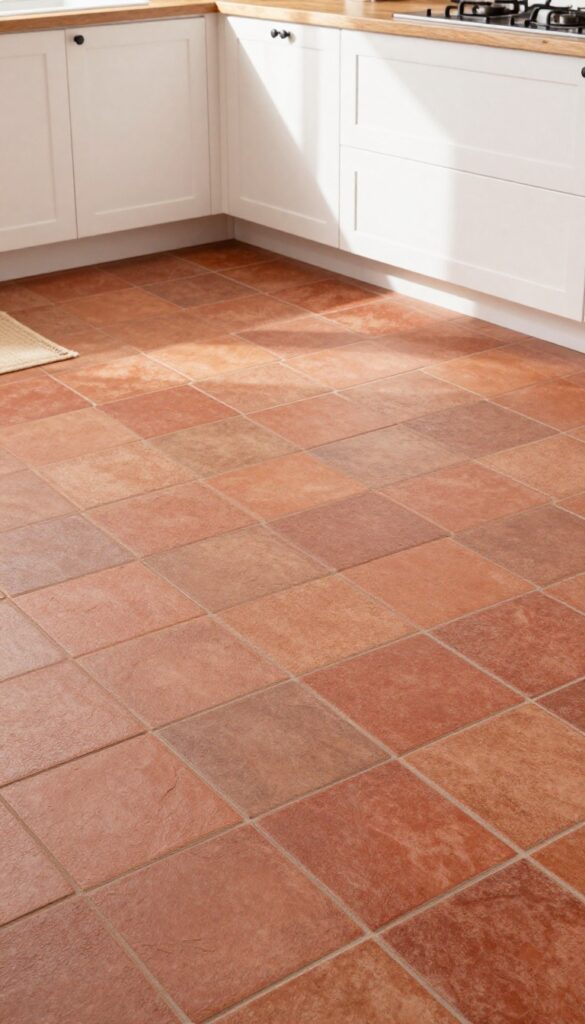
Kitchen floors take a beating—spills, dropped utensils, heavy foot traffic. While real brick can be porous and tough to clean, brick-look porcelain tiles offer the same warm, textured look without the maintenance headache. They ground the room with a rugged, earthy feel that pairs beautifully with modern cabinetry and soft textiles.
Underfoot, they add a subtle warmth that makes the kitchen feel more inviting, especially in open-plan spaces.
Brick-look porcelain floor tiles deliver the charm of aged brick while being durable and easy to wipe down. They work especially well in kitchens with white or light-colored cabinets, where the rich terracotta tones create a cozy contrast. For a cleaner look, choose tiles with a matte finish and slight color variation—think faded reds, browns, and soft grays.
Pair them with warm wood accents, like open shelving or a butcher block island, to reinforce the cozy vibe. A simple flat-weave rug in a neutral tone can soften the space and define the dining area.
Best Color Pairings
Stick with earthy tones to complement the brick. Creamy whites, warm grays, and soft sage greens keep the look modern and clean. Avoid cool blues or stark whites, which can clash with the warm undertones of the tile.
Layout Tip
Lay the tiles in a running bond pattern (like traditional brickwork) to emphasize the linear texture. For a more contemporary feel, try a herringbone or basketweave layout—just keep the grout lines thin and match the grout color to the tile for a seamless look.
Maintenance Note
Seal the grout lines annually to prevent staining, and use a pH-neutral cleaner to keep the tiles looking fresh. A quick daily sweep and occasional damp mop are all it takes to maintain that rugged charm.
12. Brick and Matte Black Fixtures
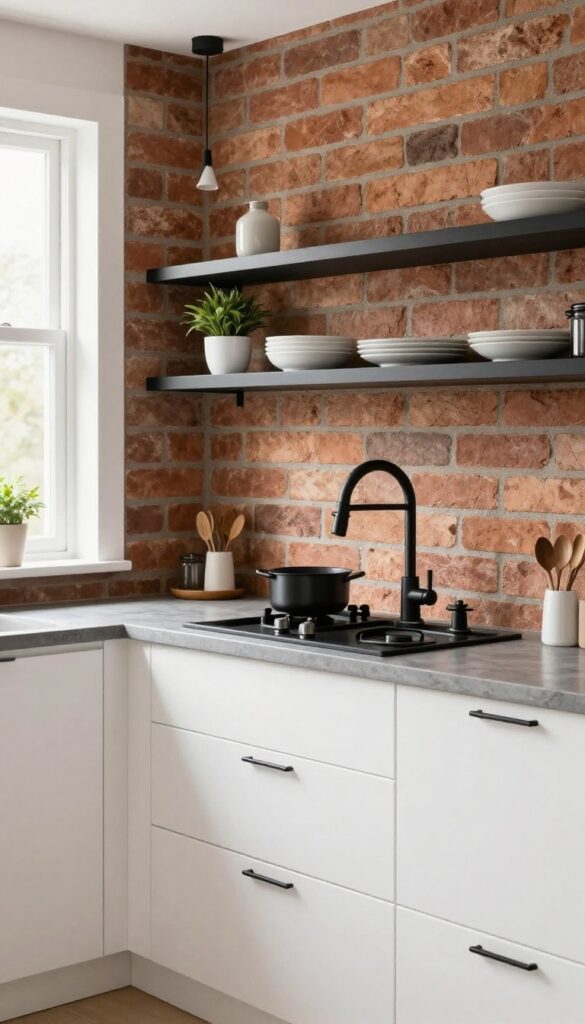
Matte black fixtures bring a sleek, grounded energy that balances the natural warmth of brick. Instead of shiny chrome or brushed nickel, the dark, matte finish absorbs light and creates a quiet contrast that feels both modern and inviting. It’s a look that works especially well in open-concept kitchens where you want a cohesive, intentional design without going full industrial.
The key is letting the brick be the star while the matte black elements act as a refined supporting cast. Choose a matte black faucet with clean lines, black cabinet pulls, and simple black pendant lights. The brick can be a full wall or just a backsplash—either way, the dark fixtures will pop without feeling harsh.
This pairing keeps the space from feeling too cold or too rustic, landing right in that sweet spot of warm and contemporary.
Best Colors To Pair
Stick with neutral tones for cabinets and countertops—white, warm gray, or soft beige work beautifully. The black fixtures and brick will provide enough contrast, so you don’t need bold colors competing for attention. If you want a subtle accent, try a deep navy or sage green on an island or lower cabinets.
Finishing Touch
Add a few open shelves in the same matte black finish to tie the look together. Use them to display simple white dishes or a few plants—the black frames will echo the fixtures and keep the brick from feeling too heavy. A black-framed mirror or black bar stools can extend the theme into adjacent spaces.
13. Brick Backsplash Extending to the Ceiling
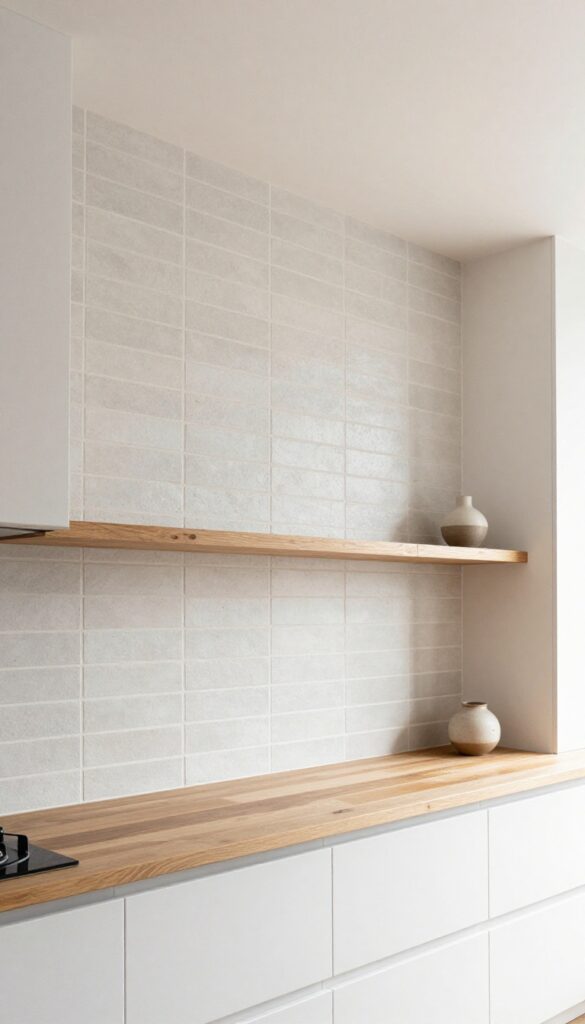
A brick backsplash that climbs all the way to the ceiling instantly changes the whole feel of a kitchen. Instead of stopping at the bottom of the upper cabinets, the brick continues upward, framing open shelving or a stove hood. The vertical line draws your eye up, making the ceiling seem higher and the room more spacious.
It’s a clean, modern take on a classic material, but the warm texture keeps it from feeling cold or sterile.
This idea works best behind a range or stove, where the brick becomes a dramatic focal point. Use thin brick tiles in a neutral tone—like pale gray or soft white—to keep the look light and airy. Pair it with simple open shelves in a matching wood tone for a cohesive feel.
The brick should be the star, so keep surrounding surfaces minimal and clutter-free.
Best Colors
Stick with light, warm neutrals such as off-white, cream, or pale gray brick. These shades reflect light and keep the kitchen feeling open. Avoid dark bricks if you want to maximize the height illusion—they can absorb light and make the space feel smaller.
Layout Tip
Run the brick from the countertop all the way to the ceiling, even if your upper cabinets don’t go that high. The uninterrupted vertical line is what creates the dramatic height effect. If you have a stove hood, let the brick wrap behind it for a seamless look.
Finishing Touch
Add a slim floating shelf at the top of the brick line to define the edge and provide a spot for a few small plants or ceramic pieces. This breaks up the expanse of brick and adds a soft, lived-in detail.
FAQ
Is brick in the kitchen hard to clean?
Sealed brick is easy to wipe down. For backsplashes, use a mild soap and water solution. Avoid harsh chemicals that can damage the sealant.
Can I add brick to a small kitchen?
Yes. Use light-colored brick or whitewash to keep the space open. A partial wall or thin veneer adds texture without closing the room in.
What's the difference between real brick and brick veneer?
Real brick is heavier and requires structural support. Veneer is a thin layer that mimics brick and can be applied to existing walls, making it easier and cheaper.
Does brick work with modern cabinets?
Absolutely. Brick adds warmth to sleek, flat-front cabinets. Stick to neutral brick tones and keep lines clean for a balanced modern look.
How do I seal brick in a kitchen?
Use a penetrating sealer designed for masonry. Apply it after installation and reapply every few years to protect against stains and moisture.
Conclusion
Brick doesn't have to mean rustic or heavy. Used thoughtfully, it brings a layer of texture that makes a modern kitchen feel inviting and lived-in. Whether you go for a full accent wall or a subtle backsplash, the key is letting the brick breathe—keep the surrounding elements clean and simple.
Start small if you're unsure. A brick island base or a painted accent wall can test the waters without a full commitment. Either way, you'll add warmth and character that feels anything but ordinary.