10 Small House Kitchen Ideas That Keep Rooms Feeling Open
A small kitchen doesn't have to feel cramped or closed in. With the right design choices, you can create a space that feels open, bright, and welcoming. The key is balancing function with a light, airy aesthetic—without sacrificing warmth.
Think of your kitchen as a room that breathes. Every element, from cabinet color to countertop material, plays a part in how spacious it feels. You don't need a major renovation to make a difference; small tweaks can transform the entire vibe.
In this article, we'll walk through ten ideas that help small kitchens feel larger while keeping them cozy and inviting. These are real-world solutions you can actually use, whether you're renting or renovating.
1. Stick to a Light and Neutral Color Palette
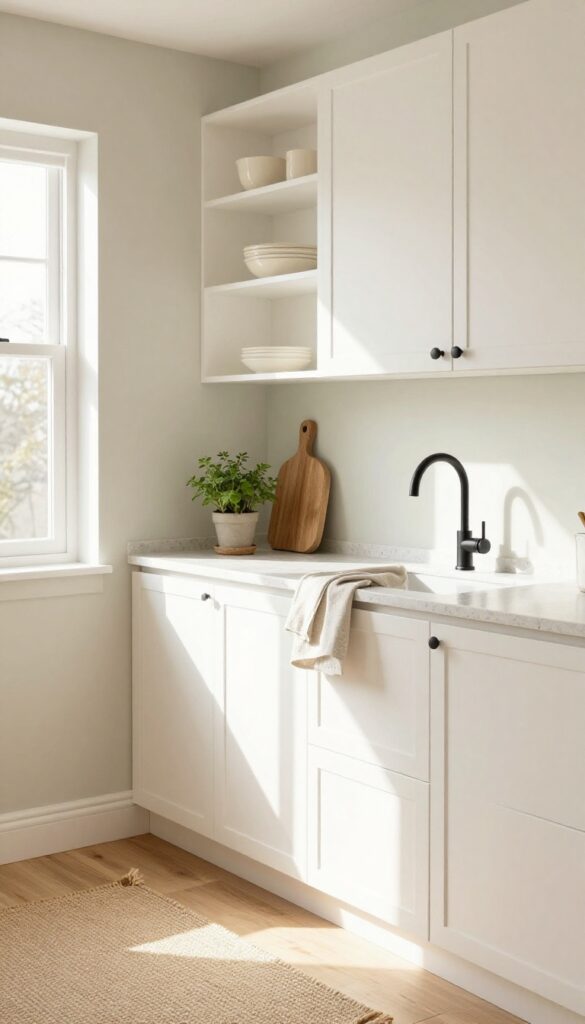
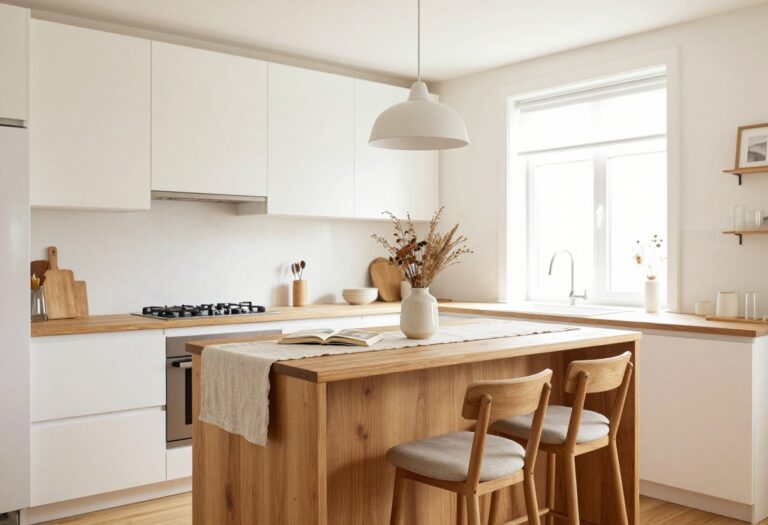
There’s a reason light and neutral kitchens never go out of style—especially when space is tight. Soft whites, warm creams, and pale grays bounce natural light around the room, making walls feel like they’re stepping back instead of closing in. The trick is to keep those neutrals warm enough so the kitchen feels inviting, not clinical.
A few touches of wood or matte black hardware add just enough contrast to keep things interesting without weighing the room down.
When your kitchen is small, color is one of your most powerful tools. Light walls, cabinets, and countertops create a seamless, airy backdrop that tricks the eye into seeing more square footage. Warm undertones—think creamy white instead of stark bright white—prevent the space from feeling cold or sterile.
From there, you can layer in personality with natural textures and subtle dark accents that add depth without clutter.
Best Colors To Use
Start with a base of warm white or soft cream for cabinets and walls. Pale greige (a blend of gray and beige) is another excellent choice—it reads neutral but has enough warmth to feel cozy. For countertops, consider a light quartz or butcher block in a honey tone to keep things bright but grounded.
Texture Mix
To keep a neutral palette from falling flat, mix in different textures. A matte finish on cabinets pairs beautifully with a honed stone countertop or a woven jute rug. Add a few open shelves with ceramic dishes or wooden cutting boards for visual interest that stays within the light-and-bright scheme.
Finishing Touch
Swap out standard hardware for matte black or brushed brass pulls. These small dark accents create just enough contrast to define the space without overwhelming it. A single black faucet or a set of black cabinet knobs can make the whole kitchen feel more intentional and polished.
2. Use Open Shelving to Create Visual Breathing Room
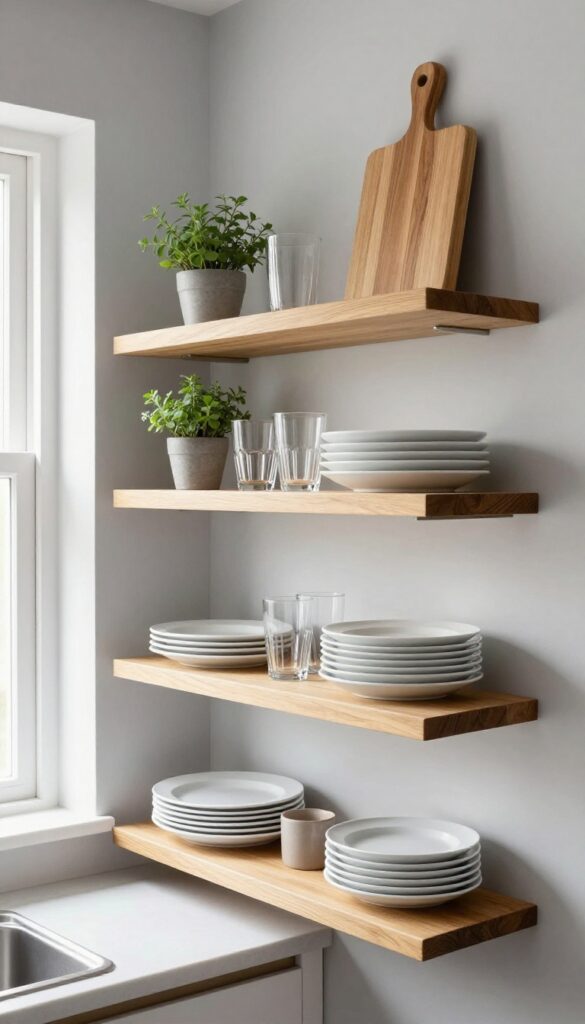
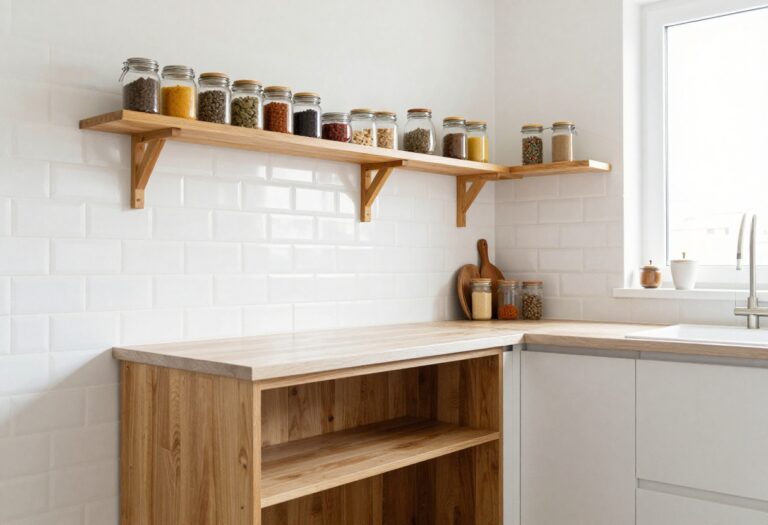
Upper cabinets can sometimes make a small kitchen feel like it's closing in on you. That's where open shelving steps in to change the whole vibe. By removing those bulky boxes overhead, you instantly free up visual space and let the room breathe.
It's a simple swap that makes your kitchen feel larger and more inviting, especially when you keep the shelves light and minimal.
Open shelving isn't just about storage—it's about creating an airy, open atmosphere. When you display everyday dishes and glassware, they become part of the decor rather than hidden clutter. The key is to keep things organized and intentional.
Stick to a cohesive color palette, like whites, soft grays, or warm woods, to maintain that light and airy feel. Avoid overcrowding; leave some breathing room between items so the eye can rest. This approach works beautifully in galley kitchens or L-shaped layouts where wall space is prime real estate.
Shelf Styling Tip
- Group similar items together—like a stack of white plates next to a set of clear glasses—to create rhythm. Add a few natural elements, such as a small potted herb or a wooden cutting board, to soften the look. Keep the front of each shelf relatively sparse, with taller items toward the back.
- This layering trick adds depth without visual clutter.
Best Materials
- For a warm and cozy feel, choose floating shelves in natural wood like oak or walnut. If you prefer a more modern look, go with white or light gray painted shelves. Metal brackets in black or brass can add a subtle industrial touch.
- The goal is to complement your cabinetry and countertops, not compete with them.
Small-space Fix
In a tiny kitchen, consider open shelving on just one wall or above a prep area. This keeps the room from feeling too exposed while still opening up sightlines. Use the shelves for items you reach for daily—like coffee mugs or olive oil—so they're both beautiful and functional.
3. Install Glass-Front Cabinet Doors
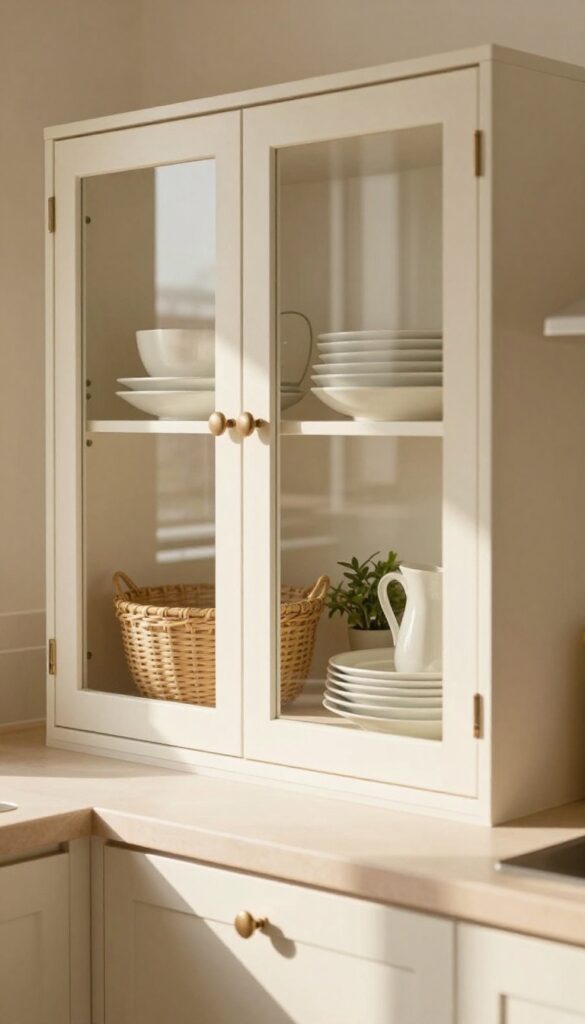
Swapping solid cabinet doors for glass-front ones is one of the smartest ways to keep a small kitchen feeling open without losing storage. The transparency tricks your eye into seeing more depth, making the whole room breathe. Plus, it gives you a chance to style your shelves like a mini gallery—think white dishes, woven baskets, and a few green plants peeking through.
Glass-front cabinets break up solid surfaces and let the eye travel deeper into the kitchen. Use clear glass for a seamless look or frosted glass to hide mess. Light-colored items inside keep the effect airy.
This swap works especially well on upper cabinets, where you can display your prettiest pieces while keeping everyday clutter below counter level.
Best Glass Type
Clear glass makes the space feel larger and more open, but it does require neat styling inside. If you'd rather not worry about perfectly aligned mugs, go with frosted or ribbed glass—it softens the view while still letting light pass through. Textured glass also adds a warm, cozy touch that fits the style profile.
Styling Tip
- Keep the inside of glass-front cabinets intentionally simple. Stick to a cohesive color palette—white, cream, pale green, or light wood tones. Stack plates neatly, group similar items, and leave a little breathing room between pieces.
- A few small plants or a ceramic pitcher can break up the repetition without looking busy.
Budget-Friendly Swap
If replacing all your cabinet doors isn't in the budget, try swapping just the doors on a few upper cabinets. You can also have a local carpenter cut glass panels into existing doors. Another option: remove the doors entirely from one or two cabinets and add glass shelves for an open-shelf feel with a cleaner look.
4. Choose a Compact or Slim-Profile Range Hood
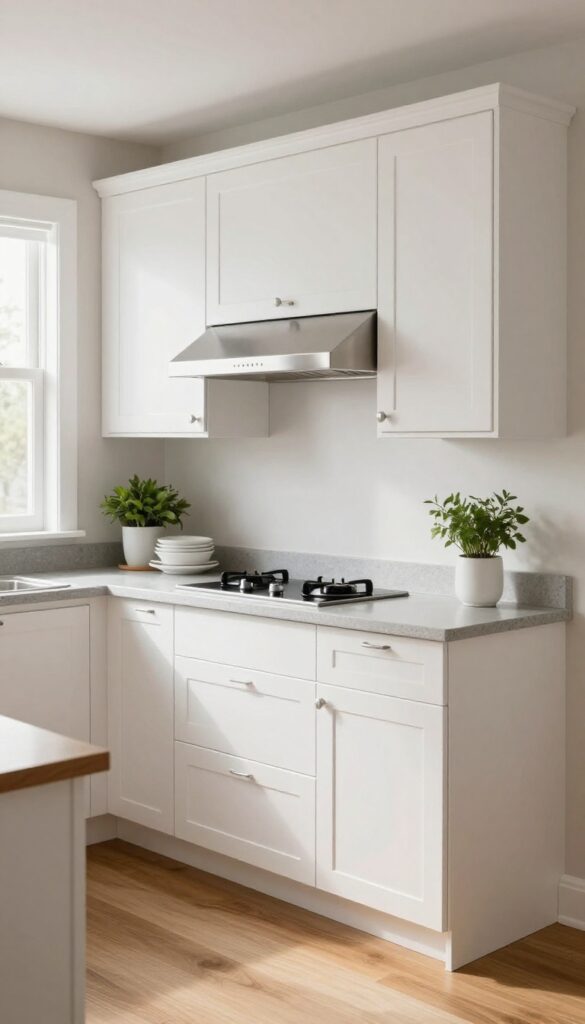
A bulky range hood can easily dominate a small kitchen, making the whole space feel top-heavy and cramped. Swapping it for a slim, under-cabinet model or a sleek chimney style in a light finish keeps the visual line clean and unobstructed. This simple switch lets the eye travel freely across the room, reinforcing that open, airy vibe without sacrificing function.
In a compact kitchen, every inch of visual space matters. A large, boxy hood draws attention upward and can make ceilings feel lower. By choosing a low-profile or streamlined design, you maintain a light, cohesive look that supports the overall airy atmosphere.
Look for models with a matte white, brushed silver, or soft gray finish to blend seamlessly with cabinetry and walls. Beyond aesthetics, these hoods often include efficient ventilation systems that handle smoke and odors without the bulk, making them a practical choice for everyday cooking.
Best Placement And Fit
- For maximum effect, mount an under-cabinet hood flush with the bottom of your upper cabinets. This creates a seamless line and avoids any awkward gaps. If you prefer a chimney style, choose one with a telescoping flue that can be adjusted to your ceiling height, ensuring it doesn't extend too far into the room.
- Measure carefully before purchasing—most slim models are 24 to 30 inches wide, but custom sizes are available for tight spaces.
Material And Finish Tips
- Stick with light, reflective materials like stainless steel with a brushed or satin finish, or opt for a painted hood that matches your cabinets. Glossy finishes bounce light around, adding to the sense of openness. Avoid dark or matte black hoods in a small kitchen, as they tend to absorb light and feel heavier.
- A white or light gray hood is the safest bet for keeping the space bright and welcoming.
Small-space Styling Trick
Pair your slim hood with open shelving or glass-front cabinets on either side to maintain visual flow. This prevents the hood from feeling isolated and helps distribute visual weight evenly. You can also install a narrow floating shelf above the hood for a few small plants or a jar of utensils, drawing the eye upward in a balanced way.
5. Add a Large Mirror or Reflective Backsplash
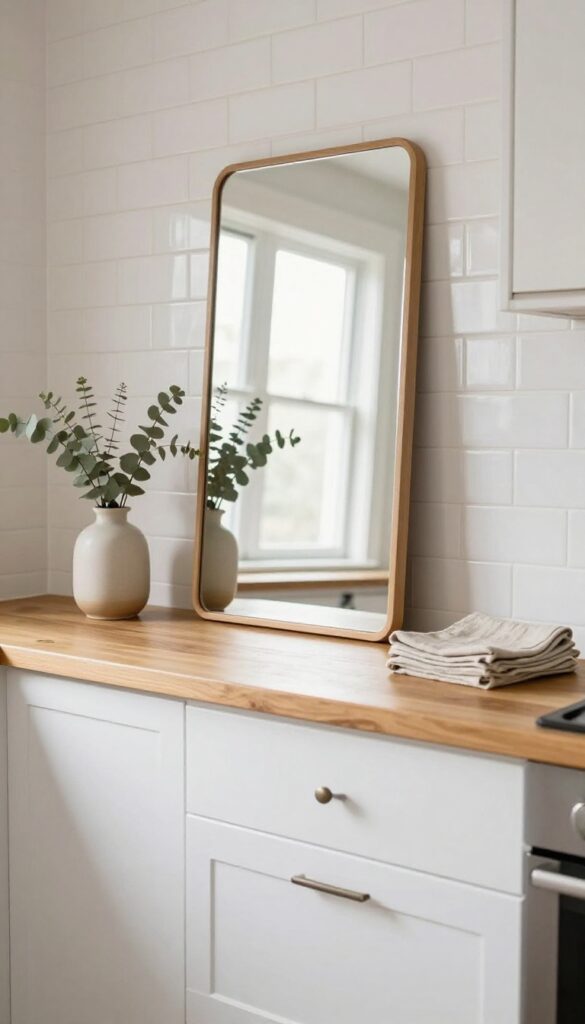
Light bouncing off a mirror instantly makes a small kitchen feel bigger and brighter. It's a simple trick that creates depth without taking up any floor space. Whether you go for a mirrored backsplash or a large leaning mirror, the effect is airy and open.
The key is placing it where it can reflect natural light or a pretty view, doubling the visual space. This approach works beautifully in galley kitchens or any room that feels a bit cramped. Plus, it adds a subtle glam factor without being over the top.
Reflective surfaces are a small kitchen's best friend. They catch and scatter light, making the room feel larger and more inviting. A large mirror propped on a counter or hung on a wall can become a focal point while visually expanding the area.
For a more integrated look, consider a mirrored backsplash behind the stove or sink. It's easy to clean and adds a sleek, modern touch. If you prefer a warmer vibe, metallic tiles or glossy subway tile offer similar reflective benefits with added texture.
The trick is to keep the surrounding decor simple so the reflection doesn't feel busy. Pair with warm wood accents and soft lighting to maintain that cozy, welcoming feel.
Best Placement For Maximum Impact
- Position your mirror or reflective backsplash across from a window to capture natural light. In a narrow kitchen, placing a large mirror at the end of the counter creates the illusion of a longer, more open space. Avoid placing it directly opposite a cluttered area, as it will double the visual noise.
- Instead, aim for a clean, styled vignette—like a simple vase or a stack of cookbooks—to reflect something pleasant.
Material Choices For Warmth
- While mirrored surfaces can feel cold, you can warm them up with the right materials. Choose a mirror with a brass or wood frame to add coziness. For backsplashes, opt for metallic tiles in warm tones like copper, rose gold, or bronze.
- Glossy white subway tile also works well—it reflects light without the starkness of a full mirror. Pair these with wooden open shelves or a butcher block countertop to balance the shine.
Styling Around The Reflection
- Keep the area around your reflective surface minimal to avoid a chaotic reflection. A few carefully chosen items—like a ceramic pitcher, a small plant, or a single piece of art—will look intentional. Use soft, warm lighting from pendant lights or under-cabinet fixtures to enhance the glow.
- This creates a layered, inviting space that feels both open and snug.
6. Maximize Vertical Storage with Tall Cabinets
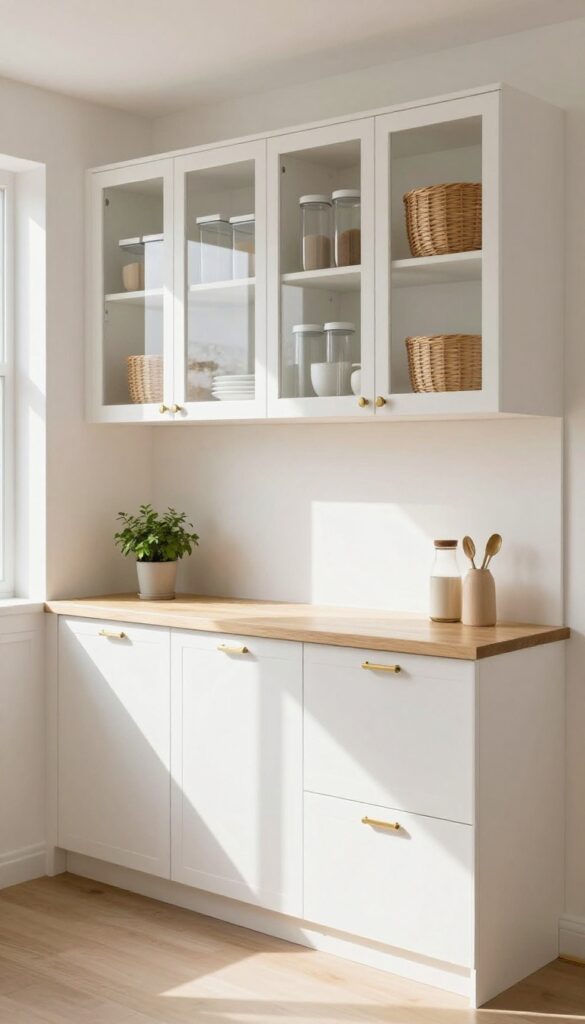
When floor space is tight, the only way to go is up. Tall cabinets draw the eye upward, making the ceiling feel higher and the room more expansive. They're not just for pantries—think of them as vertical storage powerhouses that keep clutter off your counters and out of sight.
Plus, the clean lines of floor-to-ceiling cabinetry create a streamlined look that feels both polished and practical.
Tall cabinets are a game-changer in a small kitchen. By extending storage to the ceiling, you gain valuable space for items you don't use daily, like large serving platters, small appliances, or bulk pantry goods. The vertical lines also trick the eye into perceiving more height, which is exactly what a compact kitchen needs.
To keep the look light and airy, opt for cabinets in a soft white or pale wood tone, and consider glass-front doors on the upper sections to break up the mass. Inside, use matching baskets or clear containers to maintain order and create a cohesive visual flow.
Best Materials And Finishes
For a warm and cozy feel, choose matte wood finishes like oak or birch, or go for a painted cabinet in a creamy off-white. Avoid high-gloss surfaces that can feel cold and stark. Pair with brushed brass or matte black hardware for a subtle contrast that adds character without overwhelming the space.
Storage Tip: Keep It Organized
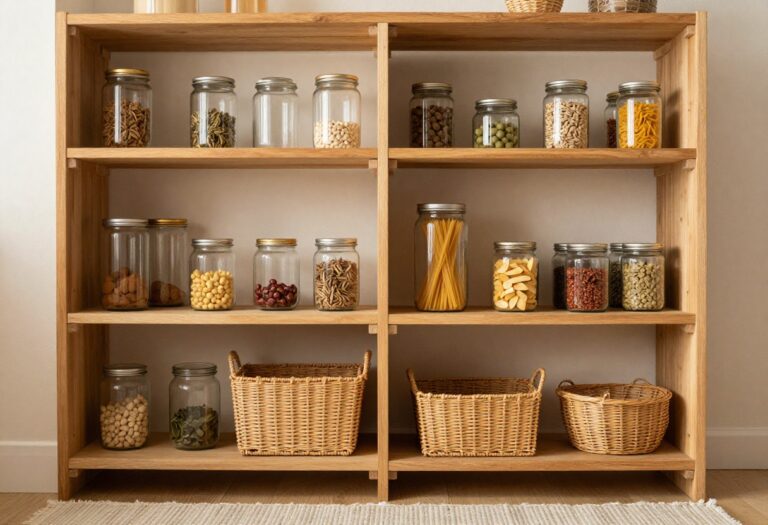
- The top shelves can become a black hole if you're not careful. Use uniform woven baskets or clear acrylic bins to corral similar items. Label them if you're extra organized.
- This not only keeps things tidy but also makes it easy to grab what you need without pulling everything out.
Layout Tip: Go Floor-to-ceiling
- Install tall cabinets that reach all the way to the ceiling to avoid awkward gaps that collect dust. If your ceiling is standard height (8 feet), stock cabinets work well. For higher ceilings, consider custom cabinetry or adding crown molding to bridge the gap.
- This creates a built-in, seamless look that feels intentional and polished.
7. Choose a Slim, Pedestal-Style Table or Island
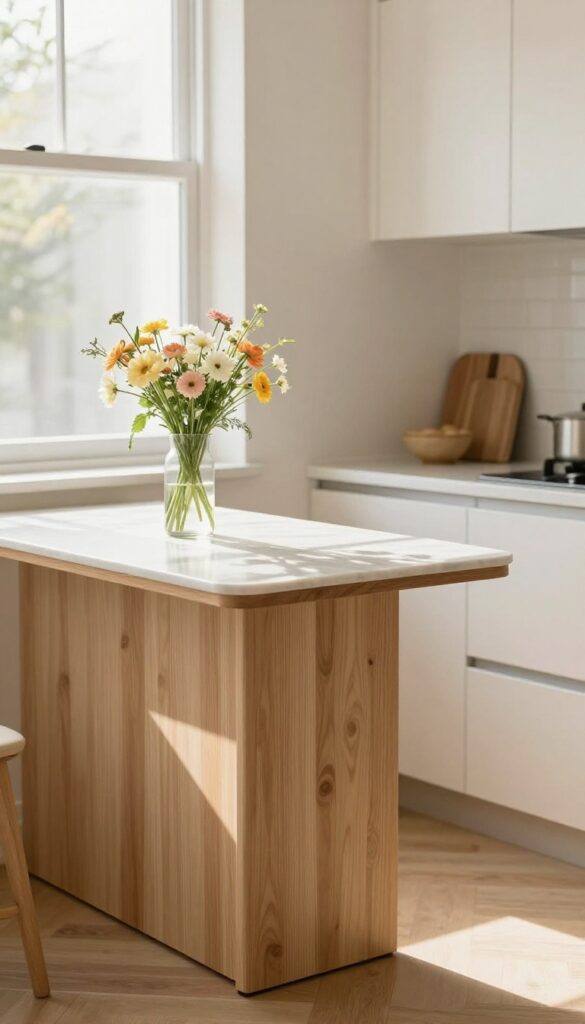
A bulky island can overwhelm a small kitchen, eating up precious floor space and making the room feel cramped. Swapping it out for a slim pedestal table or a narrow cart gives you extra prep space without the visual weight. The open base lets light and sightlines flow freely, keeping the kitchen airy and easy to move around in.
A light wood or white finish blends seamlessly into the room, adding function without dominating the layout.
Instead of a bulky island, use a slim pedestal table or a narrow cart for extra prep space. This keeps the floor open and allows easy movement. A light wood or white finish blends in without dominating.
Best Materials
Stick with light woods like birch or maple, or go for a white-painted finish to keep the piece feeling airy. A marble or quartz top adds a touch of elegance without the heaviness of a full island. For a warmer look, a butcher block top on a slim pedestal base brings in natural texture that feels cozy and inviting.
Layout Tip
Position the table or cart where it won't block the main work triangle. A spot near a window or along an open wall works well, leaving the center of the kitchen clear for traffic. If you choose a cart, consider one with locking wheels so you can move it out of the way when you need extra floor space for cooking or cleaning.
Styling Note
Keep the surface clutter-free to maintain that open feel. A small vase of fresh flowers, a wooden cutting board, or a single cookbook can add personality without visual noise. Add a couple of slim stools in a light neutral tone if you want a casual dining spot, but make sure they tuck completely under when not in use.
8. Let Natural Light In with Minimal Window Treatments
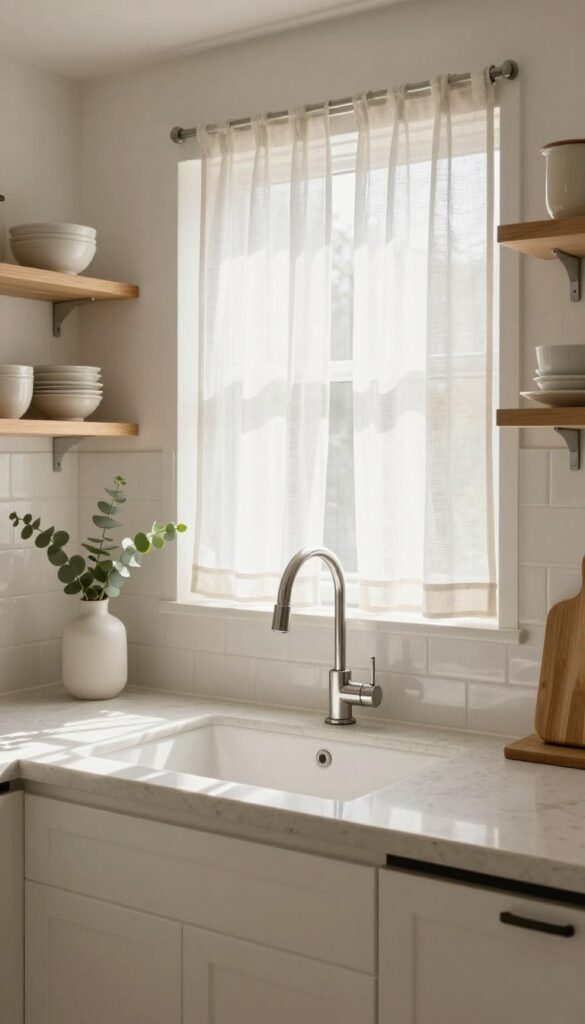
In a small kitchen, every ray of light counts. Heavy drapes or fussy valances can block precious daylight and make the room feel cramped. The solution is refreshingly simple: strip back your window coverings to let the sunshine pour in.
Sheer shades, bamboo blinds, or even bare windows create an airy, open look that visually expands the space. This approach not only brightens your kitchen but also connects it to the outdoors, making the whole room feel larger and more inviting.
When you choose minimal window treatments, you're prioritizing light over layers. The goal is to soften the incoming sunlight without blocking it. Sheer white shades diffuse harsh rays while maintaining privacy, and their clean lines keep the kitchen looking uncluttered.
Bamboo blinds add natural texture and warmth, complementing a cozy, earthy palette. If your kitchen faces a private yard or a scenic view, consider leaving windows completely uncovered. The uninterrupted sightline draws the eye outward, tricking the brain into perceiving more square footage.
Even a small window above the sink can become a focal point when framed by simple, light-filtering treatments. Pair this look with pale wall colors and reflective surfaces like glossy tiles or stainless steel to amplify the brightness. The result is a kitchen that feels open, calm, and effortlessly spacious.
Best Materials For A Light-filled Look
- Choose materials that enhance light rather than absorb it. Linen or cotton sheers in off-white or cream are classic options—they soften sunlight while keeping the room airy. For a more textural feel, go with natural bamboo or woven wood shades.
- These add warmth and a subtle organic touch, perfect for a cozy kitchen. Avoid dark or heavy fabrics like velvet or thick polyester, which can weigh down the space. If you need privacy, opt for top-down-bottom-up shades that let you adjust coverage while still letting in light from above.
Small-space Fix: Bare Windows For Maximum Openness
- If your kitchen doesn't face a busy street or close neighbor, try leaving windows completely bare. This is the ultimate way to erase visual barriers and make the room feel twice as big. The key is to keep the window itself clean and the sill uncluttered—maybe add a single small plant or a simple candle.
- To maintain privacy at night, install frosted film or switch to sheer curtains that you can draw closed. Bare windows work especially well in kitchens with a view of greenery or sky, as they bring the outdoors in.
Finishing Touch: Light-reflecting Accents
- Enhance the effect of your minimal window treatments by adding reflective surfaces nearby. A mirrored backsplash, glossy subway tile, or polished metal pendant lights will bounce daylight around the room. Keep countertops clear of bulky appliances so light can travel freely.
- Even a few glass-front cabinets can help distribute brightness. The combination of sheer window coverings and reflective finishes creates a luminous, spacious kitchen that feels both warm and open.
9. Use Consistent Flooring to Unify the Space
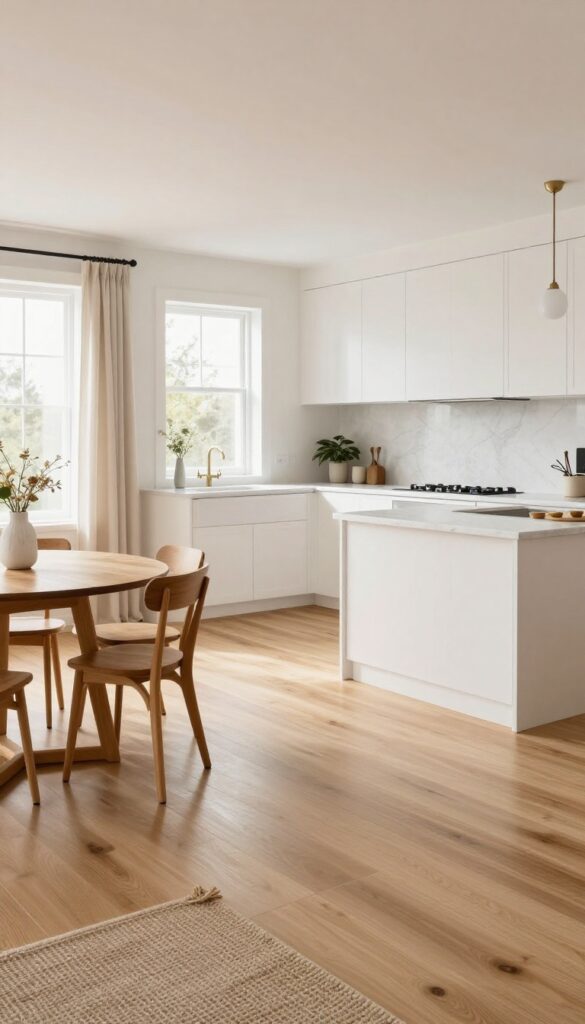
One of the sneakiest tricks for making a small kitchen feel bigger is to run the same flooring throughout. When your kitchen floor abruptly changes to a different material at the doorway, it visually chops the room into smaller chunks. But when the same planks or tiles flow seamlessly into the dining area or living room, your eye reads the whole space as one continuous, open area.
Choose a light-colored flooring material—think pale wood, creamy tile, or luxury vinyl planks in a soft oak or whitewashed finish. The lighter the floor, the more it reflects natural light, which instantly makes the kitchen feel airier. Avoid busy patterns like large checkerboards or high-contrast stripes, because they break up the visual flow and can make a small room feel busy and cramped.
Instead, go for wide planks or large-format tiles laid in a straight pattern to keep the sightlines clean and uninterrupted.
Best Materials
For a warm and cozy feel, luxury vinyl planks in a light wood tone are a practical choice—they're waterproof, comfortable underfoot, and mimic real wood beautifully. Porcelain tile that looks like natural stone is another solid option, especially if you want something durable and easy to clean. If you prefer real wood, choose a light species like white oak or ash, and stick with a matte finish to avoid glare and keep the look soft.
Layout Tip
To make the continuous flooring trick work best, remove any threshold strips between rooms. A seamless transition from kitchen to adjacent space is key. If you have a small galley kitchen that opens into a dining nook, running the same wide planks lengthwise through both areas will visually elongate the entire floor plan.
Finishing Touch
Add a soft, low-pile runner in a neutral tone along the kitchen's work zone. It defines the cooking area without breaking the floor's visual continuity. Choose a runner in a warm beige or soft cream to complement the light flooring and keep the overall look cohesive.
10. Add Warmth with Textured Natural Materials
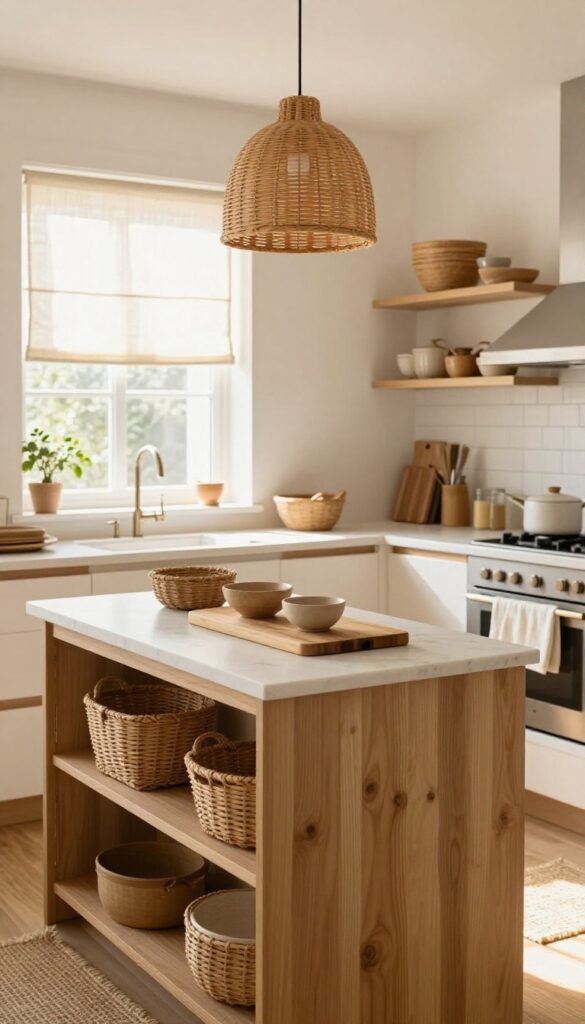
An all-white kitchen can feel a little sterile, especially in a small space where every surface is within arm’s reach. The trick is to layer in natural textures that soften the look and make the room feel lived-in. Wood, woven fibers, and linen add warmth without eating up square footage—they bring the cozy factor while keeping the airy vibe intact.
Texture is your secret weapon against a cold, minimalist kitchen. Start with a few wood cutting boards propped against the backsplash or a large wooden bowl on the counter. Woven baskets tucked on open shelves or under the sink hold produce or linens while adding visual interest.
A jute or sisal rug underfoot anchors the space and feels great on bare feet. Linen dish towels draped over the oven handle or hung on a simple hook bring softness. The key is to mix materials—combine smooth ceramics with rough wood, or pair sleek marble with a chunky knit runner.
These touches make the kitchen feel collected and intentional, not cluttered.
Best Materials To Layer
- Stick with natural, matte finishes that absorb light rather than reflect it. Think unfinished wood, rattan, bamboo, linen, cotton, and jute. Avoid glossy or synthetic textures that can feel cold or cheap.
- A single woven pendant light or a set of wooden stools can transform the room’s personality.
Where To Place Textures
Focus on high-touch zones: the countertop, the island front, the window area, and the floor. A small jute rug in front of the sink, a linen shade on the window, and a wooden fruit bowl on the counter create a cohesive warm layer. Keep the placement intentional—one or two textured items per zone is plenty.
Small-space Styling Tip
- In a tiny kitchen, use textures that pull double duty. A wooden cutting board is both prep surface and decor. A woven basket stores onions and adds warmth.
- A linen towel dries dishes and softens the room. This way, every textured piece earns its spot without adding visual weight.
FAQ
What is the best color for a small kitchen to make it look bigger?
Light, neutral colors like white, cream, soft gray, or pale beige work best. They reflect light and make walls seem farther away. Warm undertones keep the space cozy.
Can open shelving work in a small kitchen without looking messy?
Yes, as long as you keep items organized and minimal. Stick to a cohesive color palette for dishes and use baskets for smaller items. Edit regularly to avoid clutter.
How can I add storage to a small kitchen without making it feel cramped?
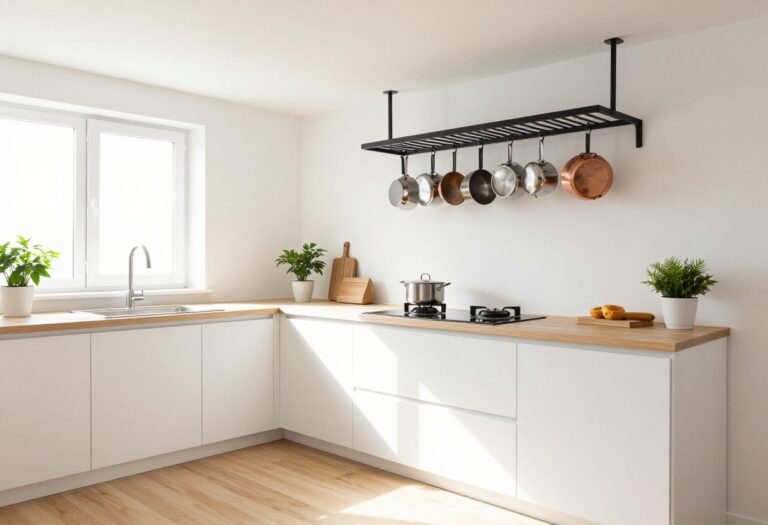
Use vertical space with tall cabinets or shelves. Install hooks for pots and utensils. Choose furniture with built-in storage, like a slim island with drawers.
What type of flooring is best for a small kitchen?
Light-colored flooring that continues into adjacent rooms creates a seamless look. Options like wide-plank wood, large-format tile, or luxury vinyl in neutral tones work well.
How do I make a small kitchen feel warm and inviting?
Incorporate natural textures like wood, rattan, or linen. Add warm lighting with under-cabinet fixtures or a pendant light. Use soft textiles like a runner or curtains in warm tones.
Conclusion
Making a small kitchen feel open is all about smart choices—light colors, reflective surfaces, and thoughtful storage. Each idea here helps create a sense of space without losing the cozy, lived-in feel that makes a kitchen the heart of the home. Start with one or two changes that resonate with your style, and build from there.
Even small shifts can make your kitchen feel brighter, bigger, and more inviting. Happy decorating!