11 Southwest Kitchen Ideas With Earthy Desert Warmth
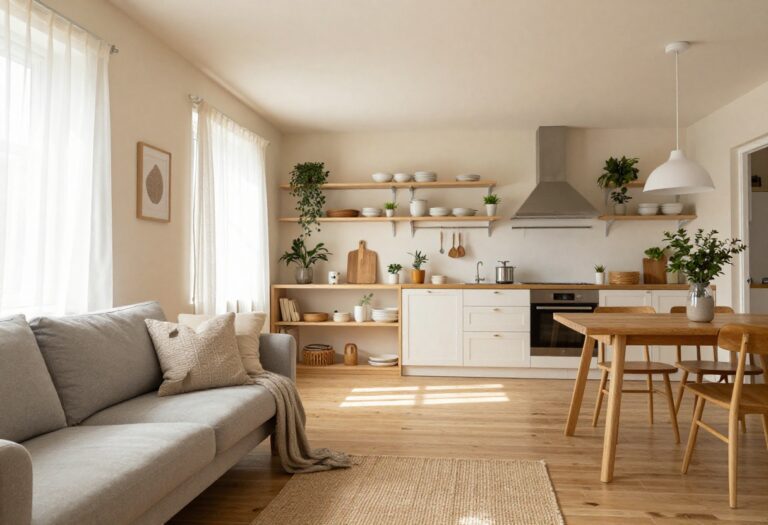
Southwest style doesn't have to feel heavy or dark. With the right mix of warm earth tones and plenty of natural light, you can create a kitchen that feels both grounded and breezy.
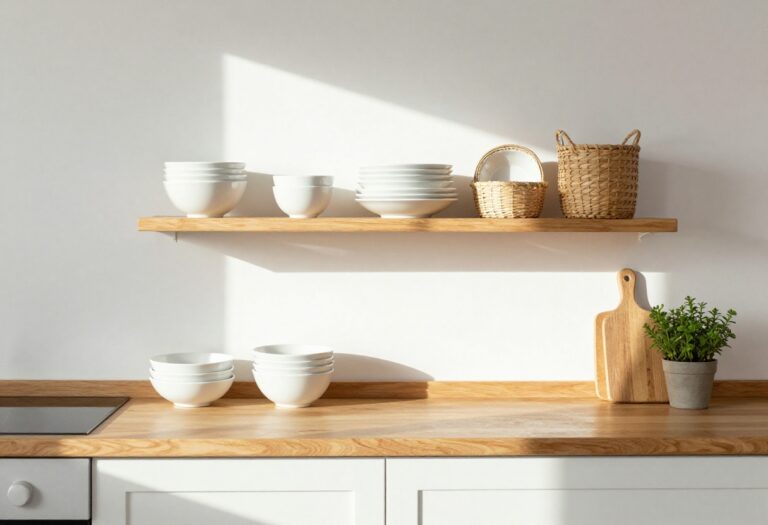
Think sunbaked clay, soft linens, and open shelving that lets the desert palette breathe.
These 11 ideas will help you bring that balance into your own home, one thoughtful detail at a time.
1. Sandy Beige Cabinets With Matte Black Hardware
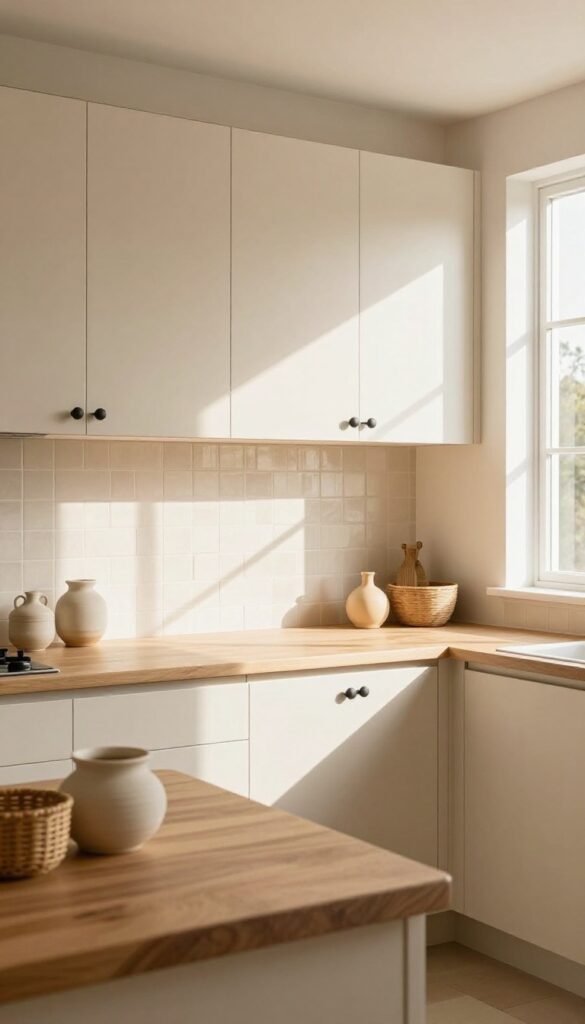
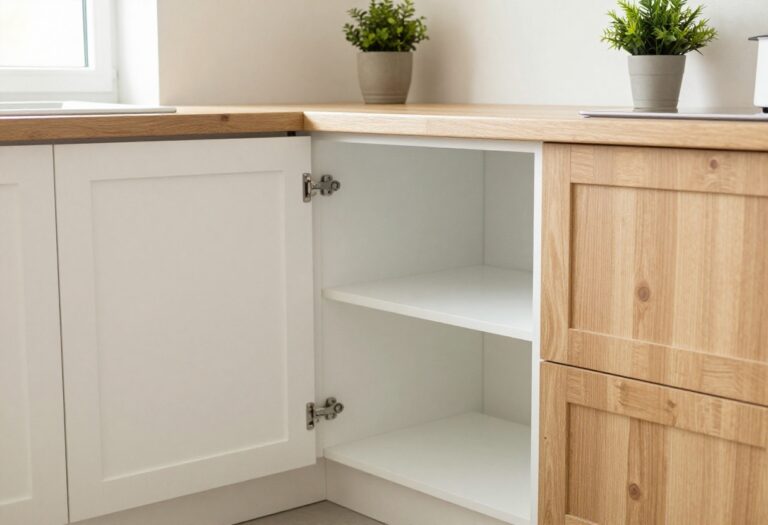
White kitchens are beautiful, but they can feel a little cold or sterile. Sandy beige cabinets bring in warmth without going too dark or heavy. The color reads like sunbaked clay—soft, natural, and easy to live with.
Matte black hardware adds just enough contrast to keep the look from feeling flat or washed out. It’s a pairing that feels both grounded and refined, like a desert landscape at golden hour.
This cabinet color works especially well in kitchens that get plenty of natural light. The beige stays airy and open, while the black hardware prevents it from feeling too bland. It’s an easy way to introduce earthy tones without committing to a full terracotta or adobe palette.
Plus, sandy beige is forgiving—it hides fingerprints and smudges better than white or dark wood. The overall effect is calm, collected, and subtly Southwestern.
Best Color Pairings
Sandy beige plays nicely with warm whites, soft creams, and pale terracotta. For a bolder contrast, try a deep navy or sage green on an island or lower cabinets. Keep the backsplash light—a creamy zellige tile or simple white subway tile keeps the focus on the cabinets.
Hardware Style Tip
- Matte black works best in simple, clean shapes. Think flat bar pulls, round knobs, or slim T-bars. Avoid overly ornate or shiny finishes—they’ll clash with the relaxed, organic vibe.
- Mixing pull styles (long pulls on drawers, knobs on doors) adds a custom look without extra cost.
Finishing Touch
Warm wood open shelving or a butcher block countertop in a honey oak tone ties the whole look together. Add a few ceramic vessels or woven baskets in natural fibers to reinforce the earthy feel. A single trailing plant on a high shelf brings in life and softens the geometry.
2. Terracotta Backsplash Tiles in a Herringbone Pattern
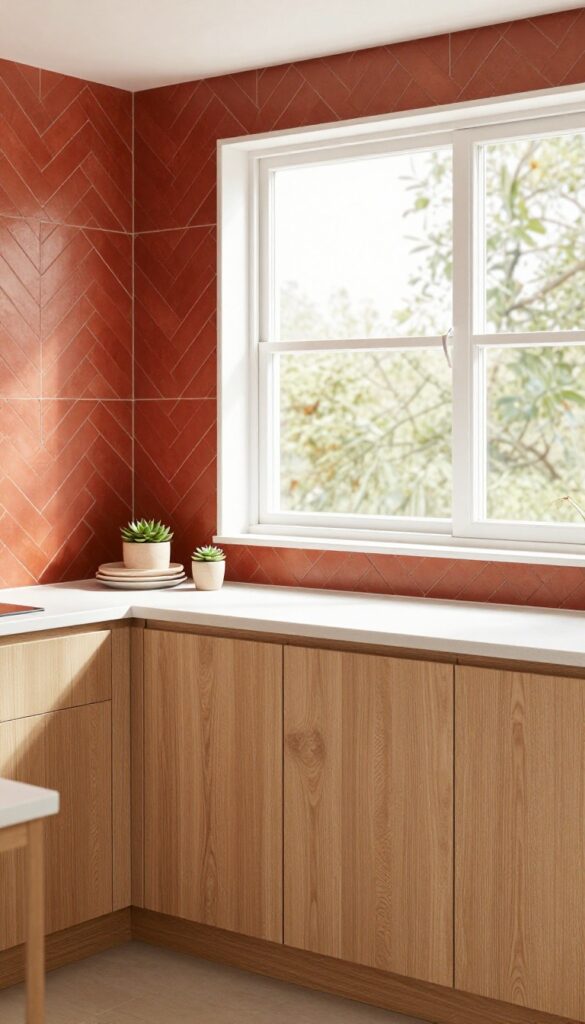
Nothing says desert warmth quite like terracotta. These clay tiles bring a rich, earthy red-orange hue that instantly makes a kitchen feel grounded and inviting. By arranging them in a herringbone pattern, you add movement and texture without overwhelming the space—perfect for keeping things light and airy.
Pair them with cream countertops and natural wood accents, and you've got a look that's both cozy and fresh.
Terracotta backsplash tiles are a standout choice for infusing your kitchen with desert-inspired warmth. The herringbone layout adds a dynamic, almost woven quality that catches the eye without feeling busy. This pattern works especially well in kitchens that get plenty of natural light, as the angled tiles play with shadows and highlights throughout the day.
The result is a backsplash that feels like a subtle piece of art—earthy, elegant, and totally approachable.
Best Colors To Pair
- Stick with soft, neutral tones to let the terracotta shine. Creamy whites, warm beiges, and pale greys on countertops and cabinets create a gentle contrast. Natural wood—think oak or walnut—adds another layer of warmth without competing.
- Avoid cool grays or stark whites; they can make the terracotta feel harsh rather than inviting.
Layout And Installation Tip
- For a clean finish, extend the herringbone pattern from countertop to just below the upper cabinets. If your kitchen has a range hood, consider continuing the tile behind it for a seamless look. Use a warm-toned grout—like a sandy beige—to blend with the tiles and keep the pattern cohesive.
- A matte sealant will protect the clay while preserving its natural, porous feel.
Finishing Touch
Balance the rich tile with light, open shelving on one side. Display a few cream-colored dishes or simple glass jars to keep the look airy. Add a small succulent or a wooden cutting board on the counter to echo the desert theme without cluttering the space.
3. Open Shelving With Woven Baskets and Clay Pots
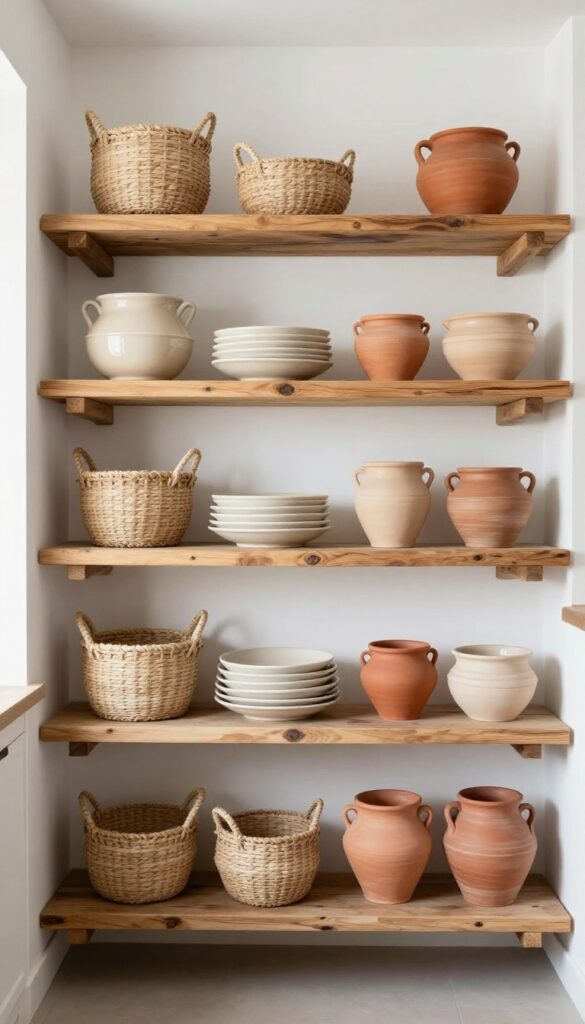
Upper cabinets can make a kitchen feel closed in, especially in a smaller space. Swapping them out for open shelves made of reclaimed wood instantly opens up the room and brings in that earthy desert warmth. The key is styling them with purpose—woven baskets for hidden storage and a few clay pots or ceramic dishes for display.
This keeps the kitchen feeling light, airy, and connected to the landscape outside.
Open shelving is a practical way to store everyday items while showing off a few curated pieces. The reclaimed wood adds texture and a rustic touch, while woven baskets introduce natural fiber and warmth. Clay pots and ceramic dishes in earthy tones like terracotta, sand, and cream tie the look together.
This setup works especially well in kitchens with neutral walls and plenty of natural light. Keep the shelves from feeling cluttered by limiting the number of items and leaving some breathing room between pieces.
Best Materials
- Reclaimed wood with visible grain and knots gives the shelves character. For baskets, choose handwoven seagrass or water hyacinth in natural or slightly darker tones. Clay pots should be unglazed or have a matte finish to keep the look organic.
- Ceramic dishes with simple, handcrafted shapes work well for daily use.
Shelf Styling Tip
- Group items in odd numbers and vary heights. Place a large clay pot on one end, a stack of bowls in the middle, and a small basket on the other. Leave some empty space to avoid a crowded look.
- Use baskets for items you want to hide, like snacks or linens, and keep frequently used dishes within easy reach.
Lighting Note
Install under-shelf lighting to highlight the texture of the wood and the shapes of the pots. Warm LED strips or small puck lights create a soft glow that makes the shelves feel like a display. This also helps the kitchen feel brighter and more open in the evening.
4. A Light Wood Island With a Chunky Edge
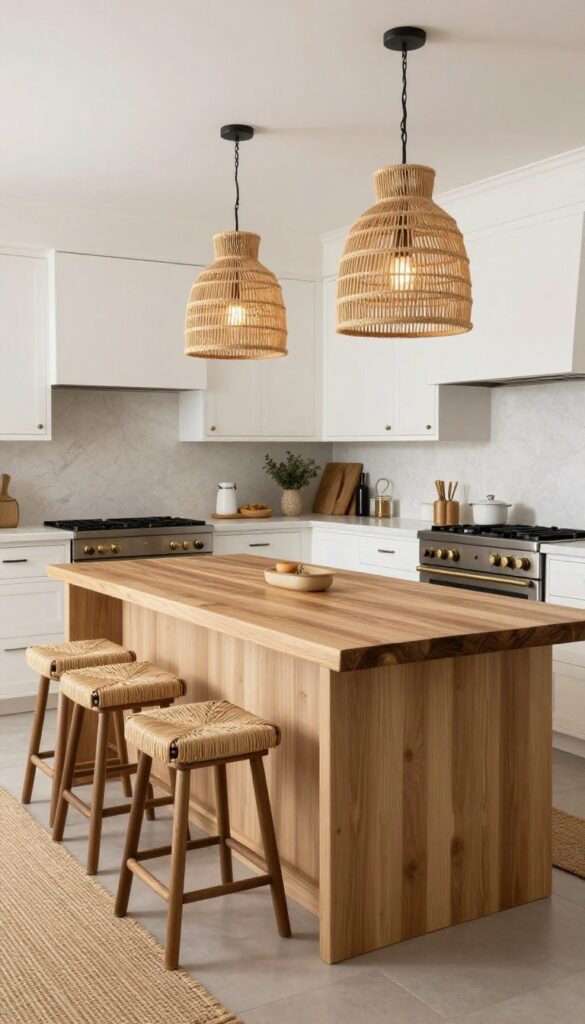
An island is often the hardest-working spot in a kitchen, but that doesn't mean it can't also be beautiful. A light oak or ash island with a chunky, live-edge design brings in natural texture without weighing the room down. The pale wood keeps things airy while the organic silhouette softens all those straight cabinet lines.
Anchor the room with a light oak or ash island. Choose a chunky, live-edge design to emphasize natural texture. The pale wood adds warmth without darkening the space, and the organic shape softens the kitchen's geometry.
Best Colors
Stick with pale, warm neutrals for the island base—think creamy white, soft beige, or a light sage green. These let the wood top shine without competing. For the surrounding cabinetry, go even lighter or match the island's base tone for a seamless look.
Texture Mix
Pair the smooth, chunky wood with matte black or brushed brass hardware and a honed stone countertop on the perimeter. Add woven bar stools or a sisal rug beneath to reinforce the earthy, relaxed vibe.
Finishing Touch
Hang a pair of oversized pendant lights in a natural material like rattan or bamboo above the island. The soft, diffused light will highlight the wood's grain and make the whole space feel warm and inviting.
5. Creamy White Countertops With Subtle Veining
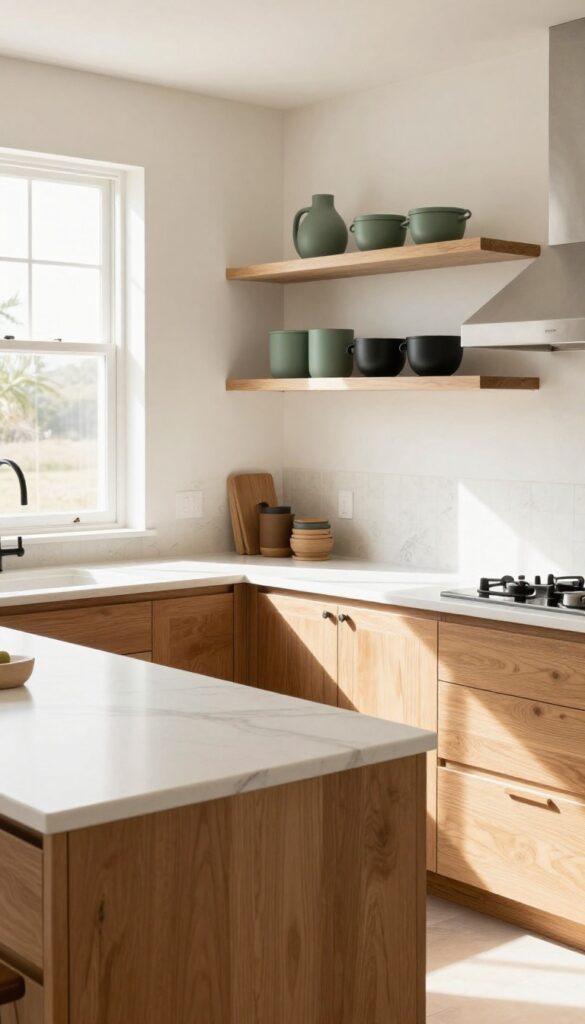
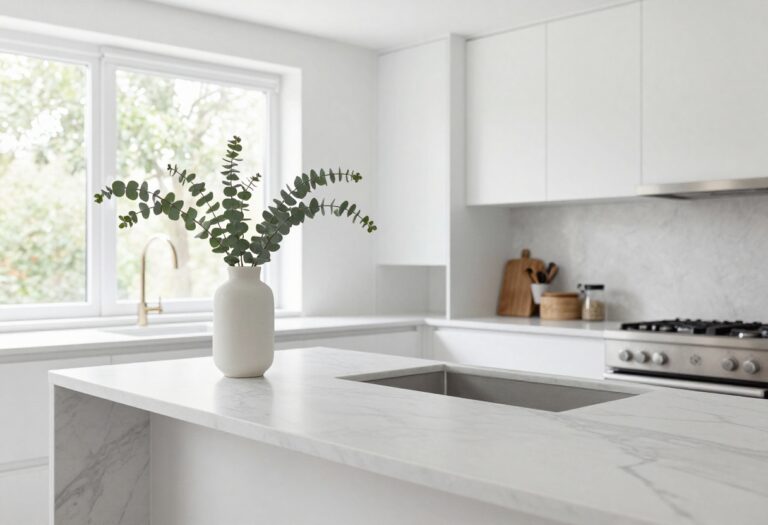
A creamy white countertop with soft gray or taupe veins brings a clean, airy feel to a Southwest kitchen without washing out the warmth. Think of it as a neutral canvas that lets your wood cabinets, terracotta tiles, and woven textures take center stage. Quartz or marble in this finish mimics the natural stone formations you'd find in the desert, but keeps the space bright and open—perfect for balancing earthy elements without going too dark or heavy.
Pair these countertops with warm wood or matte black fixtures to keep the look grounded. The subtle veining adds just enough visual interest to feel intentional, not sterile. This countertop choice works especially well in kitchens with lots of natural light, where the creamy tone reflects sunlight and makes the room feel larger.
For a cohesive desert palette, bring in sage green or dusty rose accents through backsplash tiles or open shelving.
Best Materials
Quartz is the most practical choice for busy kitchens—it's durable, non-porous, and requires minimal upkeep. Marble offers a more authentic veining pattern but needs sealing and gentle care. If you love the look but want something budget-friendly, consider quartzite or a high-quality porcelain slab that mimics natural stone.
Color Pairing Tips
- Stick with warm whites that have a hint of cream or beige to complement Southwestern tones. Avoid stark white, which can feel cold. Pair with taupe, sand, or light gray veining.
- For contrast, use dark wood cabinets or matte black hardware—this keeps the kitchen from feeling one-note.
Finishing Touch
Add a subtle edge detail like a beveled or eased edge to keep the countertop from looking too blocky. A waterfall edge on an island can extend the creamy stone to the floor, creating a seamless sculptural look that anchors the space.
6. A Statement Range Hood in Textured Plaster
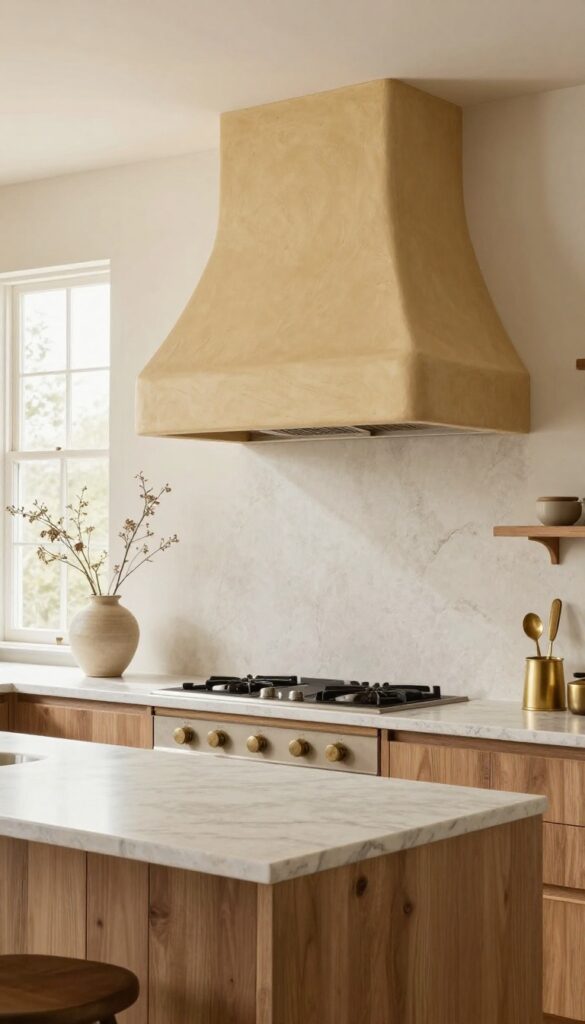
Let your range hood do more than just ventilate. A plaster hood in a warm sand or soft adobe finish becomes a sculptural focal point that anchors the whole kitchen. The matte, slightly uneven surface catches light softly, adding depth and a handcrafted feel that fits right in with earthy, Southwest-inspired spaces.
Plaster range hoods bring a natural, organic texture that contrasts beautifully with smooth countertops and simple tile. The finish feels warm and inviting, not cold or industrial. It pairs especially well with wood accents, open shelving, and neutral backsplashes.
Because plaster is applied by hand, each hood has subtle variations that make it feel one-of-a-kind. This idea works best in kitchens with good ventilation, as plaster can be sensitive to moisture and grease—but with proper sealing, it holds up beautifully.
Best Colors And Finishes
- Stick with earthy tones like warm sand, soft adobe, or pale terracotta. These colors keep the look light and airy while still feeling grounded. A matte finish is key—it hides imperfections and enhances the natural texture.
- Avoid glossy or overly smooth finishes, which can look too modern and clash with the rustic charm.
Texture Mix
- Pair the plaster hood with contrasting textures to make it pop. Think smooth quartz countertops, rough-hewn wood shelves, and matte black or brushed brass fixtures. The combination of soft plaster, sleek stone, and warm wood creates a layered, inviting look.
- Add a simple ceramic vase or a few dried branches on the counter to tie it all together.
Small-space Fix
- In a compact kitchen, a plaster hood can feel heavy if it's too large. Opt for a streamlined, chimney-style hood that extends just a few inches above the cooktop. Keep the surrounding cabinets light—white or pale wood—so the hood remains a focal point without overwhelming the room.
- Open shelving on either side helps balance the visual weight.
7. Woven Pendant Lights Over the Island
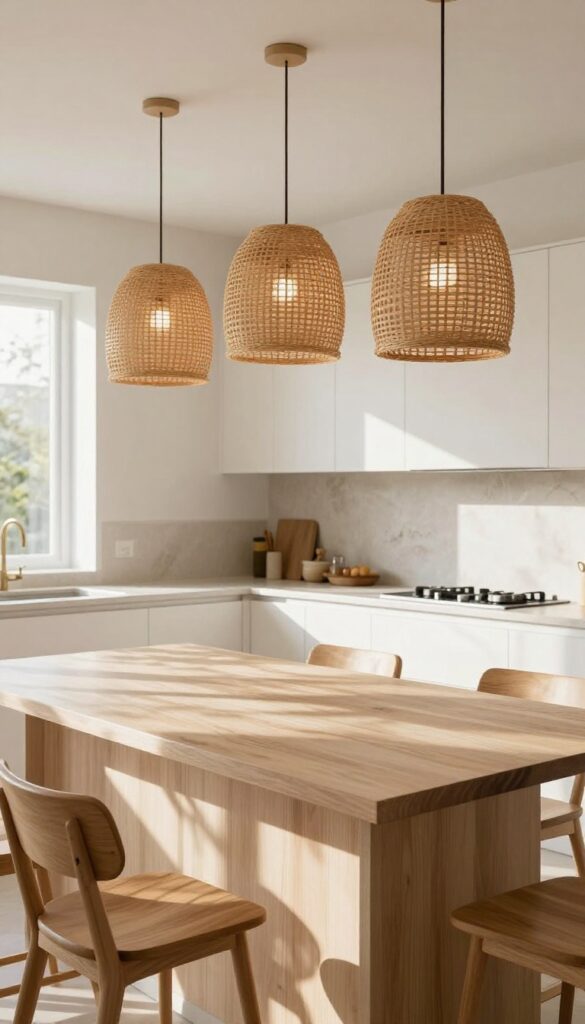
Kitchen islands are natural gathering spots, but the lighting above them often gets overlooked. Swap a standard fixture for two or three woven pendants in natural rattan or abaca, and the whole space softens. Their open weave filters light beautifully, casting soft, dappled shadows that mimic desert sunlight filtering through a mesquite tree.
The texture adds warmth without weighing down the visual line, keeping the kitchen feeling light and airy.
Hanging woven pendants above your kitchen island is one of the easiest ways to bring earthy desert warmth into the room. The natural fibers catch the light and create a gentle, organic glow that feels both relaxed and intentional. Because the shades are open, they don't block sightlines or make the space feel cramped—perfect for open-concept kitchens where you want the eye to travel freely.
Choose pendants in a similar tone to your cabinetry or countertops for a cohesive look, or let them stand out as a contrasting texture against smooth surfaces.
Best Materials
- Stick with natural fibers like rattan, abaca, or seagrass. These materials have a warm, honeyed tone that complements white, cream, or light wood kitchens. Avoid synthetic versions—they often look too shiny or uniform and lose the organic feel.
- For a slightly more refined look, choose tightly woven abaca; for a more casual, boho vibe, go with chunky rattan.
Lighting Tip
Install each pendant on a dimmer switch so you can adjust the brightness throughout the day. At full power, they provide task lighting for meal prep; dimmed, they create a cozy, ambient glow for dinner or conversation. Space the pendants evenly over the island—about 30 to 36 inches apart—and hang them 30 to 36 inches above the countertop for the best light distribution.
Styling Note
Keep the rest of the kitchen’s lighting simple to let the pendants shine. Pair them with under-cabinet task lights and maybe a single flush-mount fixture in the ceiling for general illumination. Avoid adding too many competing textures nearby—let the woven shades be the main tactile element.
8. A Rug Made of Natural Jute or Sisal
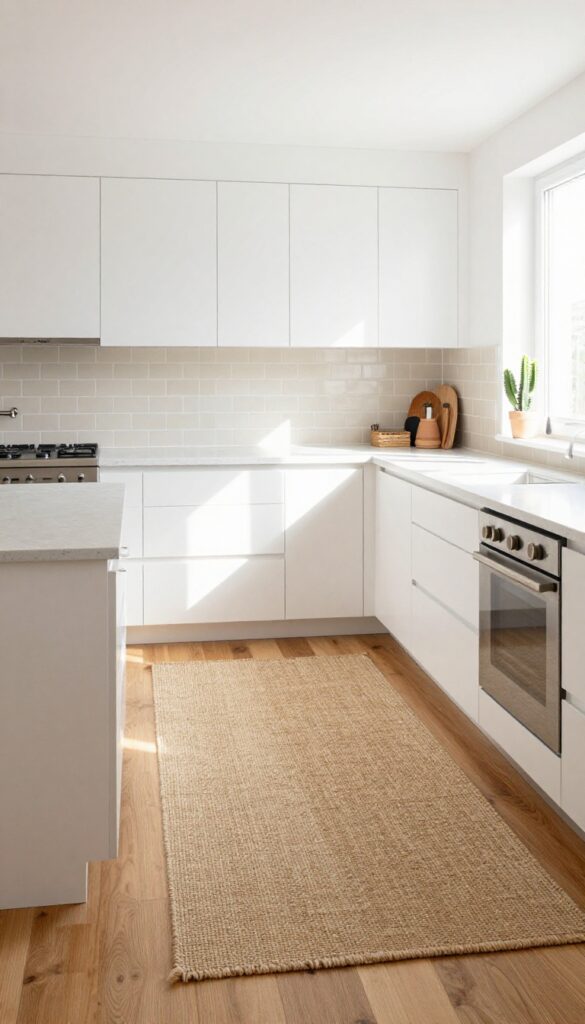
A natural fiber runner does more than protect your floors—it anchors the whole kitchen with its earthy, organic feel. Jute and sisal bring a subtle texture that softens hard surfaces like tile or wood without competing with other patterns. In a light and airy kitchen, this neutral layer adds warmth underfoot while keeping the space feeling open and uncluttered.
Lay down a large jute or sisal runner in the kitchen. Its neutral, coarse texture grounds the space and adds warmth underfoot. It's durable enough for high-traffic areas and complements the earthy palette perfectly.
Best Placement
Position the runner in front of the sink and stove—the two busiest spots. A 2×3 foot or 2×5 foot size works well for most galley or L-shaped kitchens. Leave at least 6 inches of bare floor on each side to keep the room from feeling cramped.
Texture Mix
Pair the rough weave with smooth surfaces like quartz countertops or glazed tile backsplashes. The contrast makes the rug stand out as a deliberate design choice rather than an afterthought. Add a flat-weave cotton rug in a warm neutral tone nearby to soften the transition.
Care Tip
Vacuum weekly and spot-clean spills immediately with a mild soap and water solution. Avoid steam cleaning, which can shrink natural fibers. Place a non-slip pad underneath to keep the rug flat and safe on hard floors.
9. Sage Green Accents Through Bar Stools or Textiles
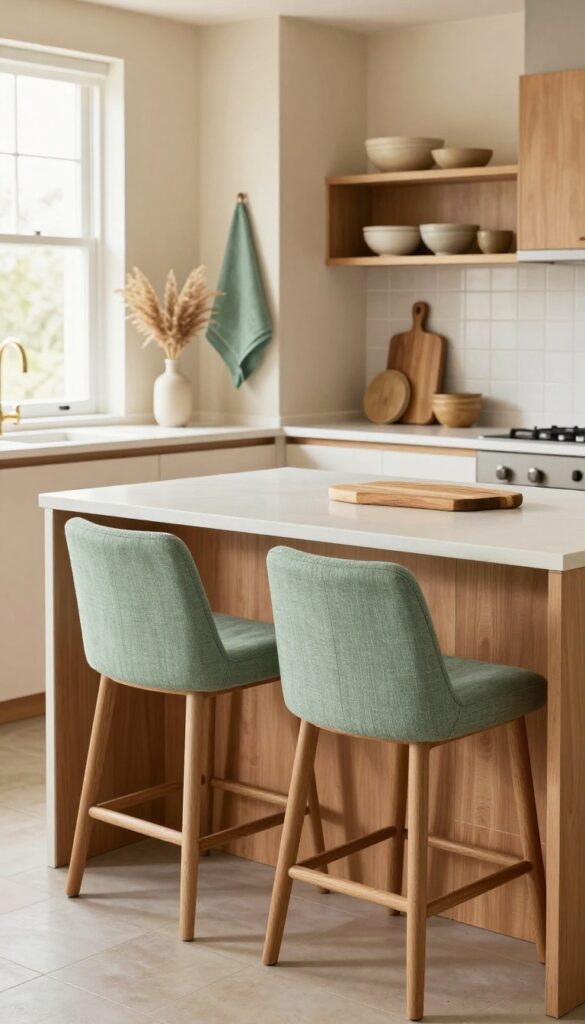
After layering in all that warm terracotta and sandy beige, your kitchen might start feeling a little one-note. That is where sage green comes in. This soft, cool-toned green acts like a visual reset button—it brings in the calm, earthy energy of desert plants like sagebrush without stealing the spotlight from your warmer pieces.
The best part? You do not need to paint a single wall. A few well-placed accents are all it takes to make the whole palette feel more balanced and intentional.
Sage green works especially well in a kitchen because it sits right between warm and cool on the color wheel. It complements the reddish undertones of terracotta and the creamy warmth of beige without clashing. Plus, it adds a subtle layer of depth that keeps the room from looking flat.
Whether you go for a pair of upholstered bar stools, a set of linen dish towels, or a narrow runner, these touches of sage green will tie the whole desert-inspired look together without making it feel theme-y.
Best Colors To Pair With Sage Green
- Stick with warm neutrals like sandy beige, creamy white, and soft terracotta as your base. Sage green works beautifully against natural wood tones—think oak, walnut, or cane. If you want a little contrast, add touches of warm brass or matte black in your hardware or light fixtures.
- Avoid pairing sage green with other cool tones like gray or blue, because that can make the kitchen feel cold and disconnected from the desert warmth you are building.
Texture Mix Tip
- To keep the sage green accents feeling organic, choose materials with texture. Linen dish towels, a chunky woven runner, or bar stools upholstered in a textured fabric like cotton canvas or bouclé will add visual interest. Avoid shiny or overly smooth finishes—matte and natural textures reinforce the earthy, relaxed vibe.
- If you use sage green in a rug, go for a flatweave or a low-pile wool blend so it feels grounded, not fussy.
Small-space Fix
- In a smaller kitchen, use sage green in smaller doses so it does not overwhelm the space. Swap out your regular dish towels for sage green ones, add a ceramic utensil holder in that shade, or hang a single sage green apron on a hook. These tiny touches still create that balancing effect without taking up precious visual real estate.
- For bar stools, choose a slim, backless style in sage green upholstery—they will tuck neatly under the counter and keep the room feeling open.
10. A Corner Banquette With Cushions in Natural Linen
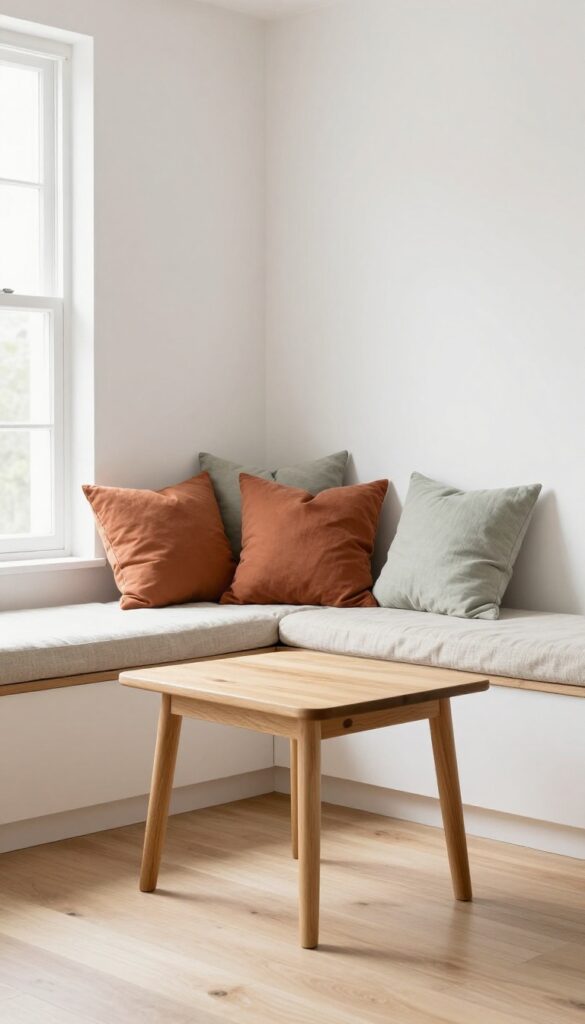
A built-in corner banquette wrapped in natural linen cushions turns an unused corner into the coziest spot in the kitchen. The soft, unbleached fabric keeps things light and airy, while the wooden table adds just enough earthy warmth. It's the kind of nook that makes you want to linger over coffee or flip through a magazine on a slow morning.
Tucking a banquette into a corner instantly creates a dedicated breakfast area without eating up too much floor space. The key is choosing cushions in natural linen—its subtle texture and neutral tone keep the look relaxed and breathable. Pair it with a simple wooden table (oak or ash works beautifully) and let the rest of the kitchen stay open and uncluttered.
This setup works especially well in kitchens with a window nearby, so you can enjoy natural light while you sip your morning tea.
Best Materials
Stick with natural, unbleached linen for the cushions—it's soft, durable, and gets better with age. For the table, go with a light wood like oak or ash to keep the airy feel. A bench seat in solid wood or a simple built-in frame painted white or light beige will blend seamlessly.
Layout Tip
Position the banquette in a corner that's not in the main walkway. If you have a window, place the table so you face it—this makes the nook feel more like a retreat. Keep the table small (around 30–36 inches wide) so it doesn't overwhelm the space.
Cozy Detail
Add a few throw pillows in warm terracotta or soft sage to introduce subtle color. A small pendant light overhead with a woven shade completes the look and casts a gentle glow during evening meals.
11. Copper or Brass Faucet and Fixtures
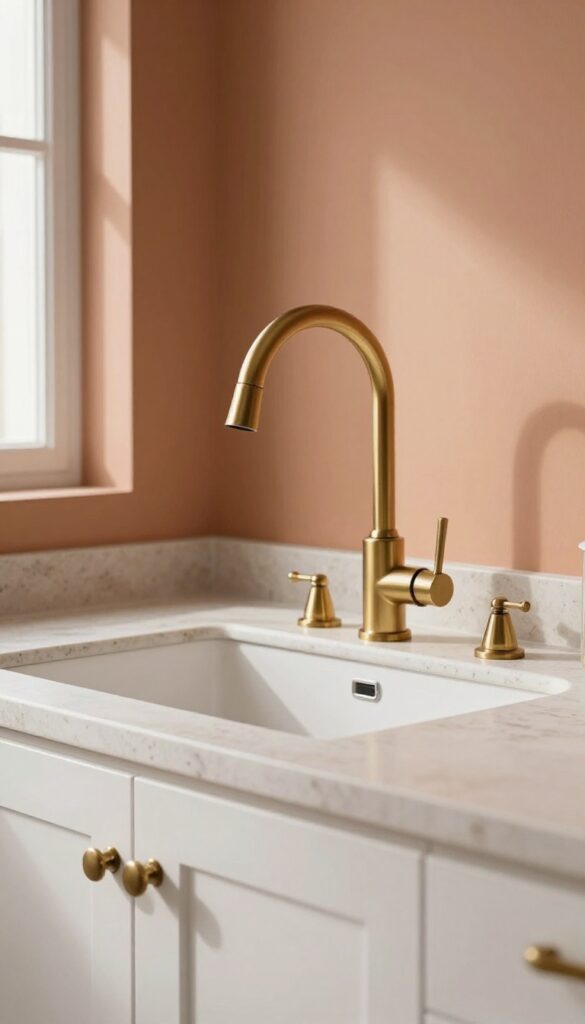
Warm metal finishes like unlacquered brass and copper bring a subtle glow to southwest kitchens. They catch the light in a way that feels both earthy and refined, echoing the mineral tones of the desert landscape. Over time, these metals develop a natural patina that adds character and tells a story—perfect for a space that should feel lived-in and welcoming.
Swapping out standard chrome or stainless steel for warm metals is one of the easiest ways to infuse desert warmth into your kitchen. The key is choosing unlacquered brass or solid copper, which will age gracefully and develop a unique finish. Pair these fixtures with light, airy cabinetry and natural stone countertops to keep the overall look clean and bright.
The warm glow of the metal will pop against soft whites, warm grays, or pale terracotta walls, tying the whole room together without overwhelming it.
Best Finishes To Choose
Unlacquered brass is the top pick for a true southwest feel—it starts shiny and gradually mellows into a rich, warm patina. Polished copper offers a similar effect with a slightly pinker undertone. Avoid lacquered or coated versions if you want that natural aging process; the whole point is letting the metal develop its own character over time.
Where To Use Them
- The kitchen faucet is the obvious star, but don't stop there. Cabinet knobs and pulls, a pot filler, or even a gooseneck faucet at the prep sink can carry the theme. For a cohesive look, match the finish on your light fixtures or add a brass soap dispenser.
- Just keep it to one or two metal tones in the room to avoid a cluttered feel.
Finishing Touch
To let the warm metal shine, keep surrounding surfaces simple. A matte white or soft beige backsplash, light oak open shelving, and a neutral quartz countertop create a clean backdrop. Add a few copper or brass accessories—like a small vase or a fruit bowl—to echo the finish without going overboard.
FAQ
How do I keep a Southwest kitchen from feeling too dark?
Focus on light, airy base colors like sandy beige, creamy white, and pale wood. Use warm accents sparingly—terracotta tiles on one wall, a few clay pots. Maximize natural light with sheer window treatments or no curtains at all.
Can I mix Southwest style with modern appliances?
Absolutely. Stainless steel or matte black appliances blend seamlessly with earthy textures. The key is balancing sleek surfaces with organic materials like wood, woven fibers, and plaster to keep the warmth intact.
What colors work best for a light and airy Southwest kitchen?
Stick with a base of warm whites, soft beiges, and light greiges. Add warmth with terracotta, clay, and muted sage green. Avoid deep browns or heavy reds that can darken the space.
Are open shelves practical in a Southwest kitchen?
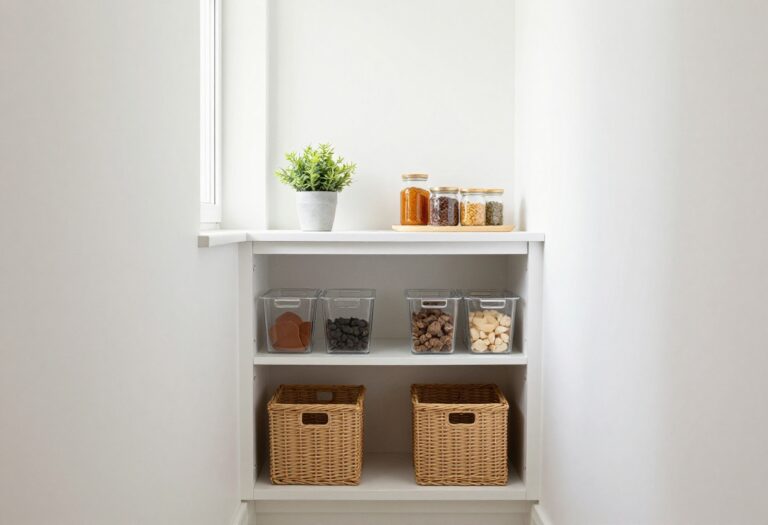
Yes, if you stick to everyday items you use often. Use woven baskets to hide less attractive supplies. Keep the shelves clutter-free by rotating decor seasonally—a few clay pots, wooden bowls, or simple ceramics.
What type of flooring suits this style?
Light wood planks, saltillo tiles in a neutral tone, or large-format porcelain tiles that mimic natural stone work well. Avoid dark floors that can make the room feel smaller. Add a jute rug for extra warmth.
Conclusion
Bringing Southwest warmth into your kitchen doesn't mean going full rustic or heavy. By choosing light, airy foundations and layering in earthy textures and subtle desert colors, you can create a space that feels both grounded and refreshing.
Each idea here is meant to be mixed and matched, so pick the ones that resonate with your home and lifestyle. The result is a kitchen that feels like a calm, sunlit retreat—even in the middle of a busy day.