11 Kitchen Radiator Ideas That Blend Heat and Style
Radiators often get treated like necessary eyesores, but they don't have to be. With a little thought, that metal box can become a design feature that adds character and warmth—literally and visually. Whether you're updating a small galley kitchen or a spacious open-plan room, these ideas will help you turn your radiator into a stylish asset.
Think of your radiator as a blank canvas. It can be painted, covered, styled, or even replaced with something more elegant. The key is to work with its shape and placement, not against it.
From built-in benches to colorful accents, there's a solution for every taste and budget. Ready to give your kitchen radiator a makeover?
1. Sleek Slatted Radiator Cover with a Wood Shelf
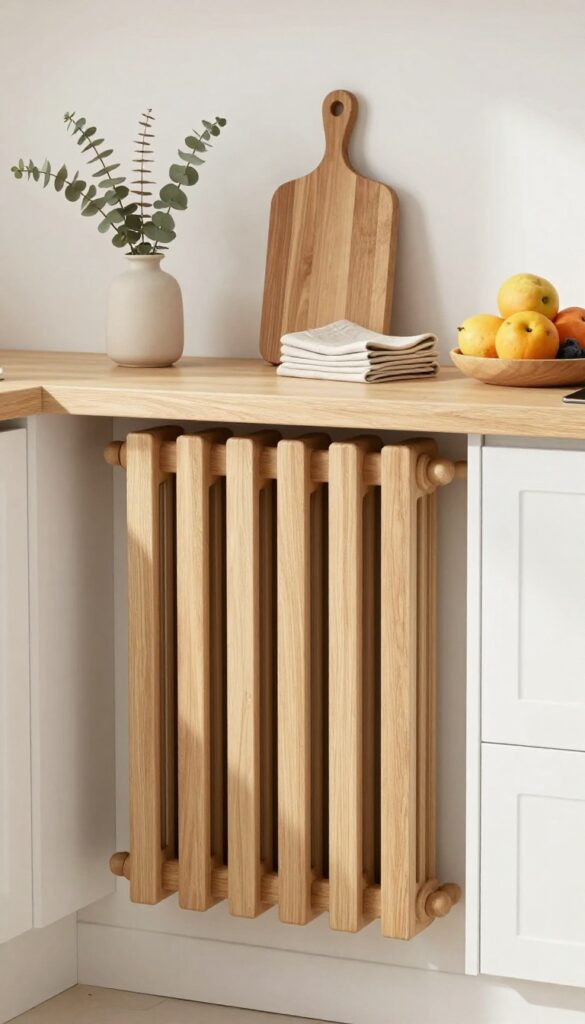
Radiators don’t have to be an eyesore in your kitchen. A slatted wood cover does double duty—it hides the clunky metal while adding warmth and texture. The real win is the flat top, which becomes an instant shelf for your favorite cookbooks, a small plant, or a pretty bowl of fruit.
It’s the kind of smart swap that makes your kitchen feel more intentional and cozy, without losing any heat output.
This idea works especially well in kitchens where wall space is limited but you still want a touch of natural material. The slatted design allows warm air to circulate freely, so your room stays toasty while the cover keeps the radiator out of sight. Choose a wood tone that complements your cabinetry or countertops—think oak for a classic look or walnut for something richer.
The shelf on top becomes a staging area for daily essentials, keeping them within arm’s reach but off the counters. Style it with a mix of practical and pretty: a wooden cutting board leaned against the wall, a small ceramic vase with dried eucalyptus, and a stack of linen napkins. The result is a kitchen that feels both lived-in and thoughtfully arranged.
Best Materials
- Opt for solid wood like pine, oak, or birch for durability and a natural grain that ages well. If your kitchen leans modern, painted MDF in a matte finish can work too—just make sure it’s heat-resistant. Slats should be spaced about half an inch apart to let heat escape freely.
- Avoid dark stains in small kitchens; lighter woods keep the space airy.
Shelf Styling Tip
- Treat the top like a mini vignette. Start with a neutral base—a wooden tray or a woven placemat—then layer in one functional item (like a salt cellar or a small plant) and one decorative piece (a ceramic bud vase or a stack of books). Keep it sparse to avoid clutter.
- Rotate seasonally: citrus in winter, fresh herbs in summer.
Small-space Fix
- In a galley kitchen, a slatted cover with a shelf can replace a bulky cart or wall shelf. Measure the radiator first, then have the cover custom-built to fit snugly. Add a few hooks underneath the shelf for hanging mugs or small utensils—just keep them away from the heat source.
- This turns an awkward corner into a functional zone.
2. Radiator Bench with Cushioned Seat
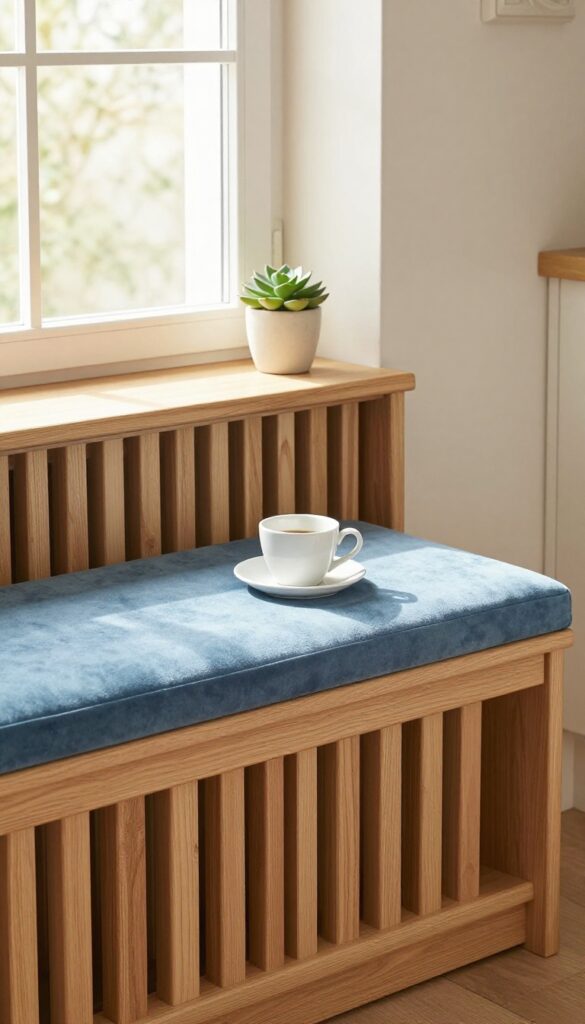
A low radiator doesn't have to be an eyesore or a space waster. By building a simple bench over it, you instantly add a cozy perch that makes your kitchen feel more lived-in and inviting. The cushion softens the look and turns that awkward spot into a place where someone can sit and chat while you cook.
It's a smart, space-aware move that blends heat and style without sacrificing an inch.
This idea works best with radiators that sit low against the wall, typically under a window or along a blank stretch of wall. The bench should be custom-built or assembled from modular units to fit snugly over the radiator, leaving enough clearance for heat to circulate. A slatted or perforated front panel allows warm air to flow into the room while hiding the radiator's hardware.
The cushioned seat adds comfort and color, making the bench a natural gathering spot for quick meals or morning coffee. Choose a durable, stain-resistant fabric like outdoor-grade canvas or performance velvet to withstand kitchen spills and daily use. For a cohesive look, match the bench's wood finish to your cabinetry or countertops, and pick a cushion color that ties into your existing palette—think warm neutrals, soft blues, or earthy greens.
This setup not only maximizes every square foot but also brings a relaxed, breakfast-nook vibe to even the smallest kitchen.
Best Materials
Go with solid wood or high-quality plywood for the bench frame—oak, birch, or poplar work well and can be painted or stained. The cushion should have a removable cover for easy cleaning; look for fabrics with a high rub count (over 30,000) and water-repellent backing. If the radiator gets very hot, use a heat-resistant foam or add a thin layer of insulation between the bench and the radiator.
Layout Tip
Place the bench under a window to create a mini breakfast nook, or along a wall opposite the kitchen island for extra seating. Leave at least 4 inches of space between the back of the bench and the radiator to allow heat to rise. If the bench is in a high-traffic area, consider a narrower depth (around 14–16 inches) so it doesn't block the walkway.
Finishing Touch
Add a few throw pillows in complementary patterns to make the bench feel more like furniture and less like a utility hack. A small tray on the seat can hold a plant, a stack of cookbooks, or a cup of tea when not in use. For extra storage, build the bench with a hinged top or incorporate open cubbies underneath for baskets or cookware.
3. Painted Radiator in a Bold Accent Color
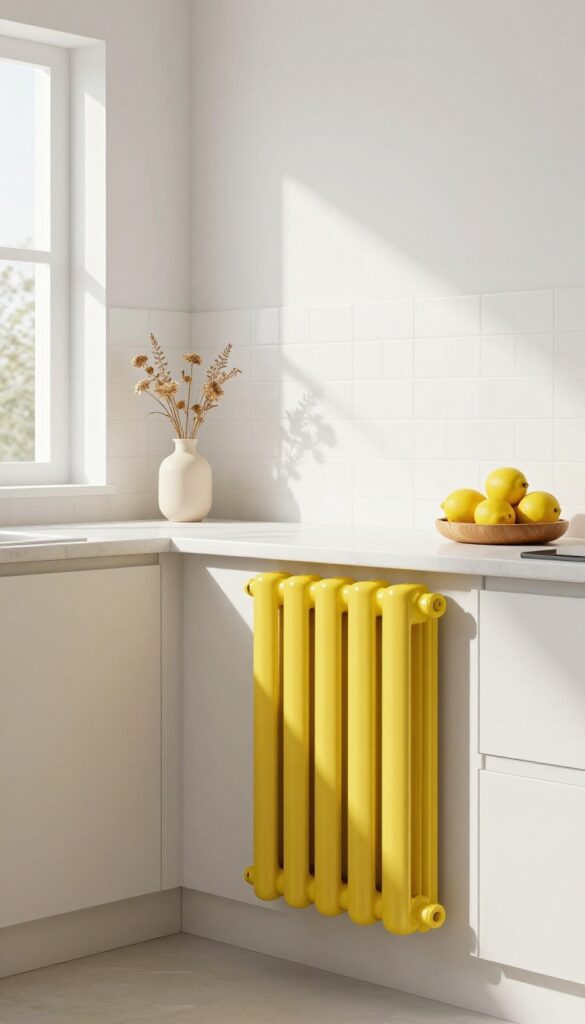
Radiators often get treated like furniture that needs to blend into the background, but a splash of color can turn yours into a statement piece. By choosing a heat-resistant paint in a bold shade like deep navy, mustard yellow, or forest green, you create an unexpected focal point that adds personality to your kitchen. It's a low-lift, high-impact update that makes the radiator feel intentional rather than an afterthought.
A painted radiator works especially well in kitchens with neutral cabinetry or white walls, where the bold color can pop without competing. The key is to use a paint specifically formulated for high heat—standard wall paint will peel and discolor. Once painted, the radiator becomes part of the room's color story, tying into accessories like tea towels, canisters, or even a vase of dried flowers on top.
For a cohesive look, echo the radiator's hue in small doses elsewhere, like a fruit bowl or bar stools.
Best Colors For The Job
- Think about the mood you want to create. Deep navy or charcoal reads sophisticated and grounds the space, while mustard yellow or burnt orange adds warmth and energy. Forest green feels earthy and pairs beautifully with brass or copper accents.
- If you're unsure, test a few swatches on paper and hold them next to your countertops and backsplash to see what harmonizes.
Prep And Paint Tips
- Start by cleaning the radiator thoroughly to remove dust and grease. Lightly sand any glossy areas, then apply a primer designed for metal and high heat. Use a small roller for the front and a brush for the nooks and crannies.
- Two thin coats are better than one thick one—this prevents drips and ensures even coverage. Let each coat dry completely before adding the next.
Styling Around It
- Once your radiator is painted, treat it like a shelf. A slim wooden board across the top can hold a few cookbooks, a small plant, or a ceramic pitcher. Just keep items a few inches away from the heat source.
- If the radiator sits under a window, let the bold color frame the view—it draws the eye upward and makes the room feel taller.
4. Radiator Cover with Built-in Bookshelves
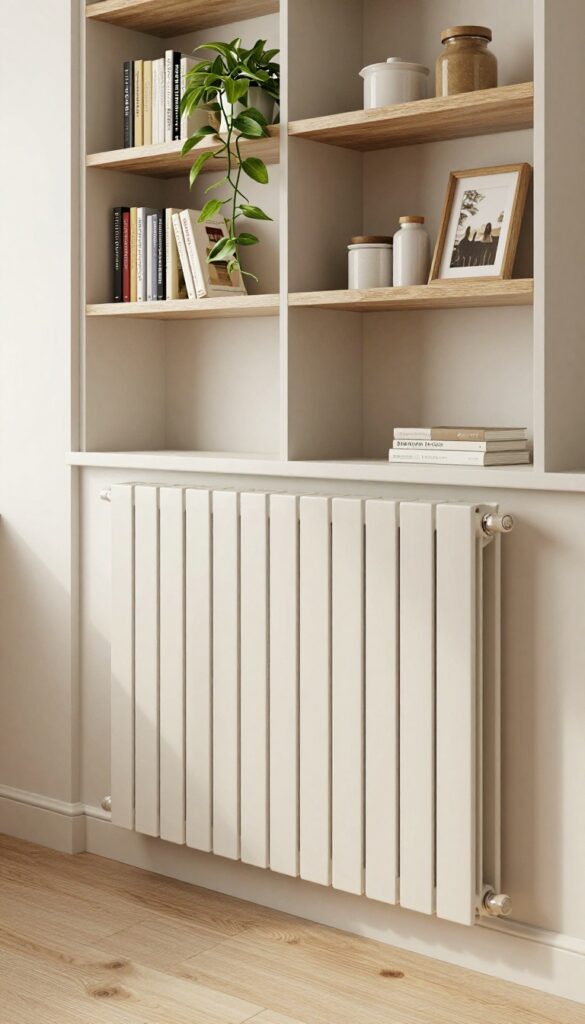
That stretch of wall above your radiator often goes unnoticed, but it's prime real estate for extra storage. By extending the radiator cover into a floor-to-ceiling shelving unit, you can turn an unused corner into a cozy mini library. Cookbooks, spice jars, and small decorative objects sit neatly on open shelves while warm air flows through slatted panels—no wasted space, no blocked heat.
This idea works best in kitchens where wall space is tight but you still want a lived-in, collected feel. The combination of wood shelves and a painted radiator cover creates a built-in look that feels intentional, not makeshift. Choose a warm wood tone like oak or walnut to soften the kitchen's hard surfaces, and paint the cover the same color as your walls for a seamless blend.
Keep the shelves shallow—about 8 to 10 inches deep—so they don't overwhelm the radiator or crowd the room. Style them with a mix of vertical cookbooks, small plants, and ceramic jars to keep the look airy and practical.
Layout Tip
Position the shelving unit directly above a low-profile radiator to maintain clearance. Leave at least 4 inches between the bottom shelf and the top of the radiator cover for proper airflow. If your radiator is tall, consider a two-tier cover with a slatted front and a solid top that doubles as a narrow counter for a coffee station.
Shelf Styling Tip
Avoid overcrowding. Group items in odd numbers and vary heights—stack a few cookbooks horizontally, lean a framed photo, and add a trailing plant like pothos. Use small baskets or ceramic canisters to hide clutter like tea bags or recipe cards.
Best Materials
Opt for MDF or plywood with a veneer for the shelves—they're stable and resist warping from heat. Paint the radiator cover with high-heat paint in a matte finish to match your trim. For a warmer look, use solid wood shelves with visible grain and metal brackets.
5. Vintage-Style Radiator with Ornate Details
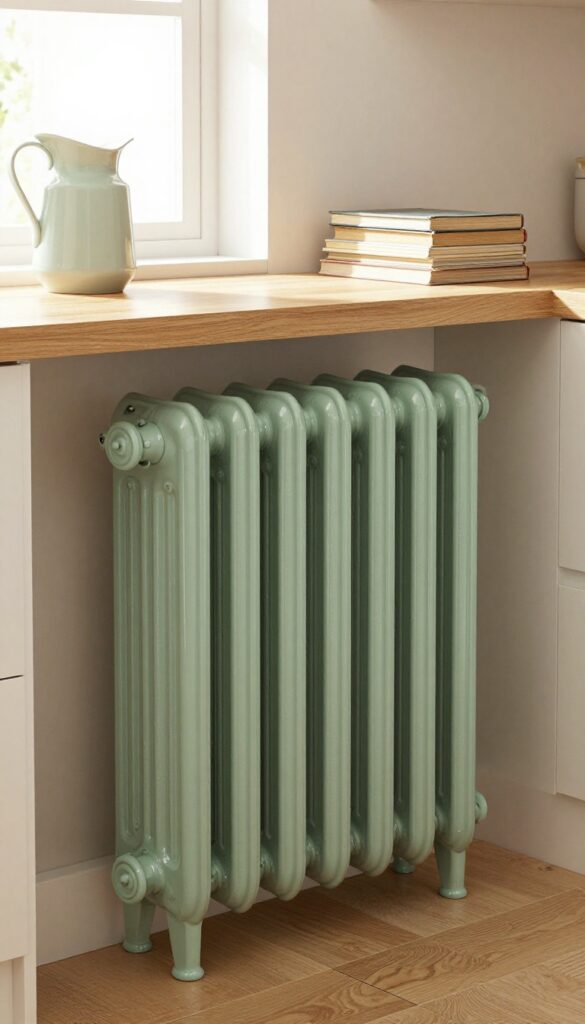
A cast-iron radiator with intricate scrollwork does more than just warm a room—it anchors the space with old-world character. In a farmhouse or traditional kitchen, this vintage piece becomes an unexpected focal point, blending practicality with charm. The ornate details catch the eye, making the radiator feel like functional art rather than an afterthought.
Swap a modern radiator for a vintage cast-iron model with intricate scrollwork. It adds old-world charm and becomes a conversation piece, especially in a farmhouse or traditional kitchen. The key is to let the radiator stand out—paint it in a soft, muted tone that complements your cabinetry, and keep the surrounding decor simple so the details shine.
Pair it with natural materials like wood countertops and woven textures to enhance the warm, lived-in feel.
Best Colors
Opt for antique whites, warm grays, or muted sage greens to let the scrollwork pop without overwhelming the room. A glossy finish can add a subtle sheen that highlights the curves and crevices.
Placement Tip
Position the radiator under a window or along a blank wall where it can be appreciated. Avoid crowding it with furniture—let it breathe so the ornate details become a natural focal point.
Styling Detail
Add a small wooden shelf above the radiator for displaying a few vintage kitchen items, like a ceramic pitcher or a stack of old cookbooks. This ties the radiator into the room's decor without making it feel cluttered.
6. Radiator Cover as a Window Seat
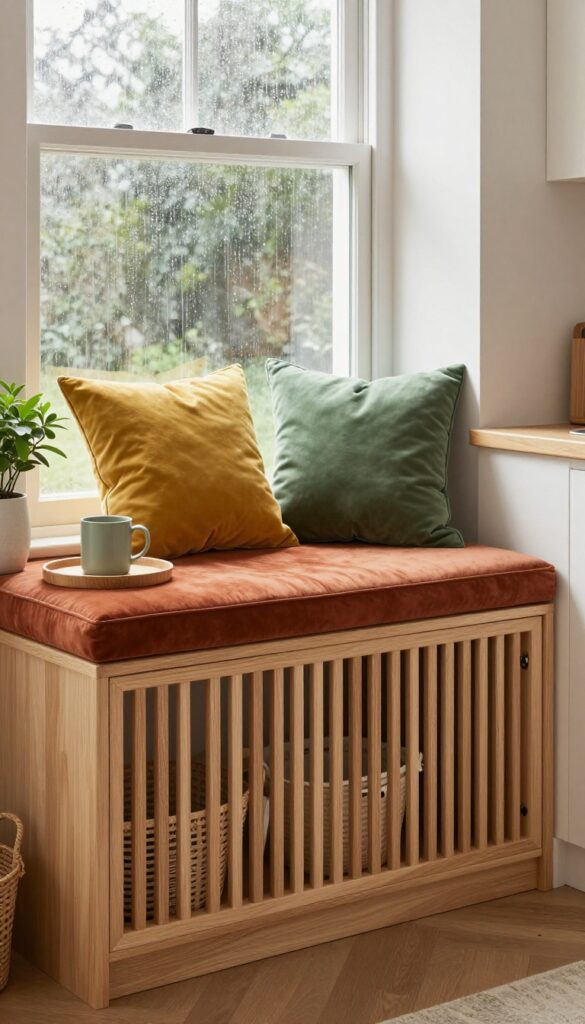
A radiator under a window doesn't have to be an eyesore or a heat-blocking obstacle. By building a custom cover that doubles as a window seat, you turn that spot into one of the coziest corners in your kitchen. The warmth rises naturally through the slatted front or top, so you stay toasty while enjoying a cup of tea or watching the rain.
It's a smart, space-saving solution that adds both function and charm.
This idea works best if your radiator sits below a standard-height window, leaving enough room for a seat depth of at least 12 to 16 inches. The cover should have a slatted or grille front to allow heat to circulate, with a solid wooden top that can support a cushion. Choose a cushion that's easy to wipe clean—indoor-outdoor fabric or performance velvet works well in a kitchen.
Add a couple of throw pillows in warm tones like rust, mustard, or soft green to tie into the room's palette. The seat can also double as extra storage if you build a hinged top or add baskets underneath for cookbooks or linens.
Best Materials
- Go with plywood or MDF for the frame, painted to match your trim or cabinetry. A solid wood top, like oak or poplar, adds durability and a warm feel. For the heat vents, use a metal grille or a wooden slat design with gaps no smaller than 1 inch to ensure good airflow.
- Avoid particleboard near heat sources, as it can warp over time.
Cozy Details
Layer a thick seat cushion in a washable fabric, and add a lumbar pillow for back support. A small tray on the seat can hold a mug or a plant, making the spot feel intentional. Underneath, tuck a woven basket for storing extra dish towels or kitchen gadgets—it keeps the area tidy and adds texture.
Layout Tip
If your window is in a breakfast nook or near the dining table, align the seat height with standard chair height (about 18 inches) so it can pull double duty as extra seating for meals. Leave at least 6 inches of clearance between the seat and the radiator to prevent overheating and allow air to flow freely.
7. Minimalist Metal Radiator Cover with Clean Lines
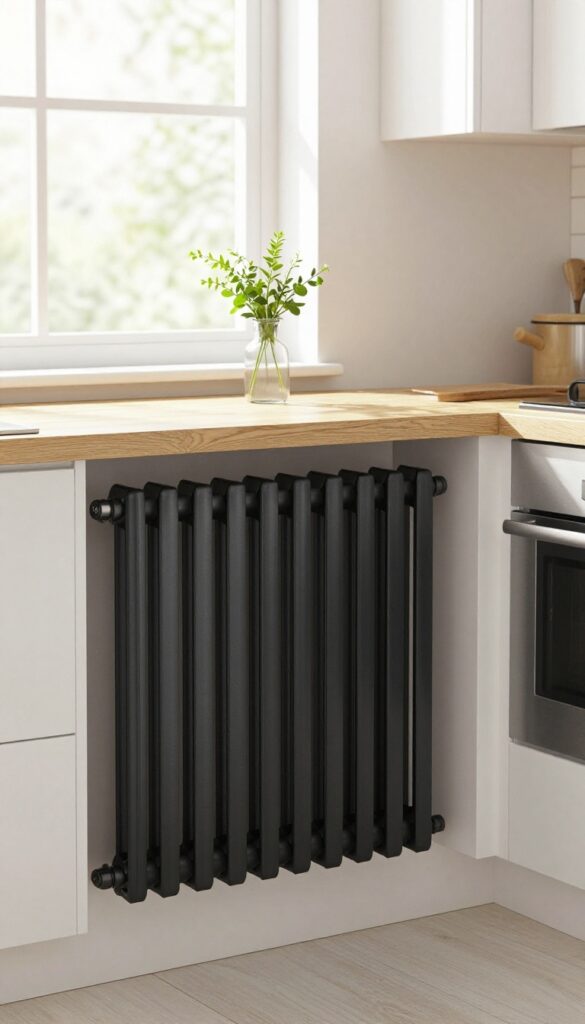
A metal radiator cover is a smart choice when you want something that almost disappears into the room. The clean lines and simple grid or perforated pattern let heat flow freely while keeping the look sleek and uncluttered. In a busy kitchen, this kind of cover feels like a breath of fresh air—it doesn't compete with your cabinets or countertops, and it helps the whole space feel more open and airy.
For a modern kitchen, choose a sleek metal cover with a simple grid or perforated pattern. It blends into the background while allowing maximum heat flow, perfect for minimalist spaces. The key is to pick a finish that works with your existing hardware—matte black for a bold contrast, brushed steel for a seamless look, or white to keep things light.
Because it's metal, it's also easy to wipe down, which is a huge plus in a kitchen where grease and dust can settle.
Best Colors And Finishes
Stick with neutral tones like matte black, brushed aluminum, or powder-coated white. These finishes feel intentional and modern, and they pair well with stainless steel appliances or wooden cabinets. If you want a warmer vibe, go for a bronze or copper tone—it adds a subtle richness without overwhelming the room.
Placement And Flow
Position the cover so it doesn't block traffic near the sink or stove. A low-profile cover works well under a window, where it can double as a narrow shelf for a few herbs or a small vase. Keep the top clear or use it for lightweight decor only—heavy items can restrict heat and defeat the purpose.
Finishing Touch
Add a slim wooden cutting board or a ceramic dish on top to soften the metal's coolness. A small plant or a stack of linen napkins can also make the cover feel like part of the kitchen's natural flow, not an afterthought.
8. Radiator with a Marble or Stone Top
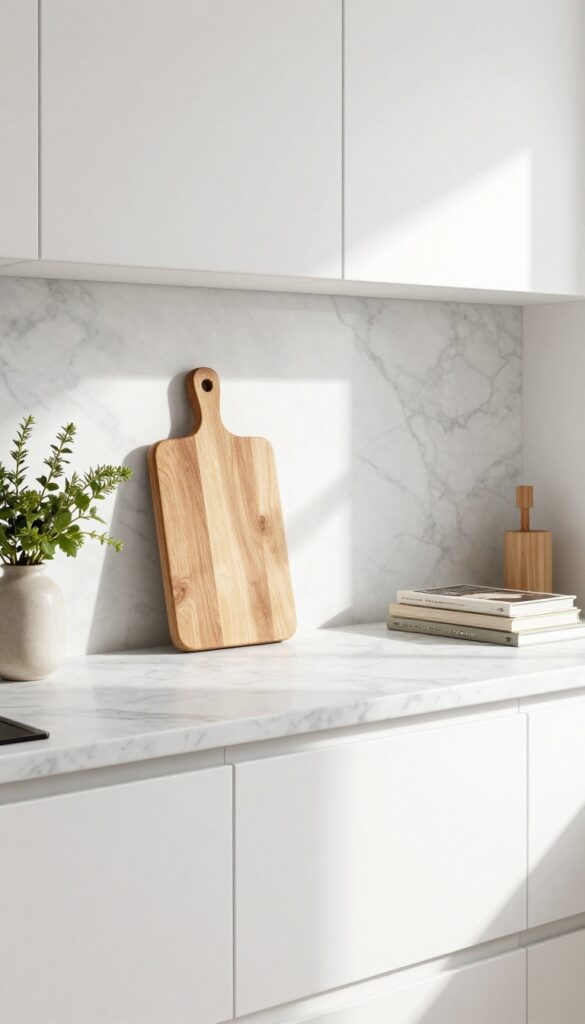
A radiator doesn't have to be an eyesore. Topping it with a slab of marble or quartz instantly turns it into a chic, heat-resistant surface that pulls double duty. In a kitchen, where every inch counts, this smart swap gives you a spot to set down a hot pan, rest a serving platter, or display a few pretty jars.
The natural stone adds a touch of luxury without feeling fussy, and it ties in beautifully with countertops or backsplash materials.
This idea works best with a radiator cover that sits flush with the slab, creating a seamless look. Choose a stone that complements your kitchen's palette—white marble for a bright, airy feel, or dark quartz for a grounded, modern contrast. The heat from the radiator won't damage the stone, so you can use it worry-free.
Style it simply: a wooden cutting board, a small vase with fresh herbs, or a stack of cookbooks. Keep it uncluttered to let the stone shine.
Best Stone Choices
Marble offers timeless elegance with its veining, but it's porous and may require sealing. Quartz is more durable and non-porous, making it a practical choice for a busy kitchen. For a budget-friendly option, consider a large slate or soapstone tile—both are heat-resistant and add a rustic touch.
Installation Tip
Measure your radiator cover carefully and have the stone cut to size with a slight overhang (about 1 inch) for a finished look. Use a heat-resistant adhesive to secure it, or simply let the weight of the slab hold it in place if it's heavy enough. Leave a small gap at the back for heat to escape.
Styling Idea
Treat the stone top like a mini counter. Add a small tray to corral everyday items like salt and pepper grinders, or a ceramic spoon rest. A low vase with eucalyptus or a single orchid adds a fresh, lived-in feel without taking up too much space.
9. Radiator Cover with Integrated Plant Shelf
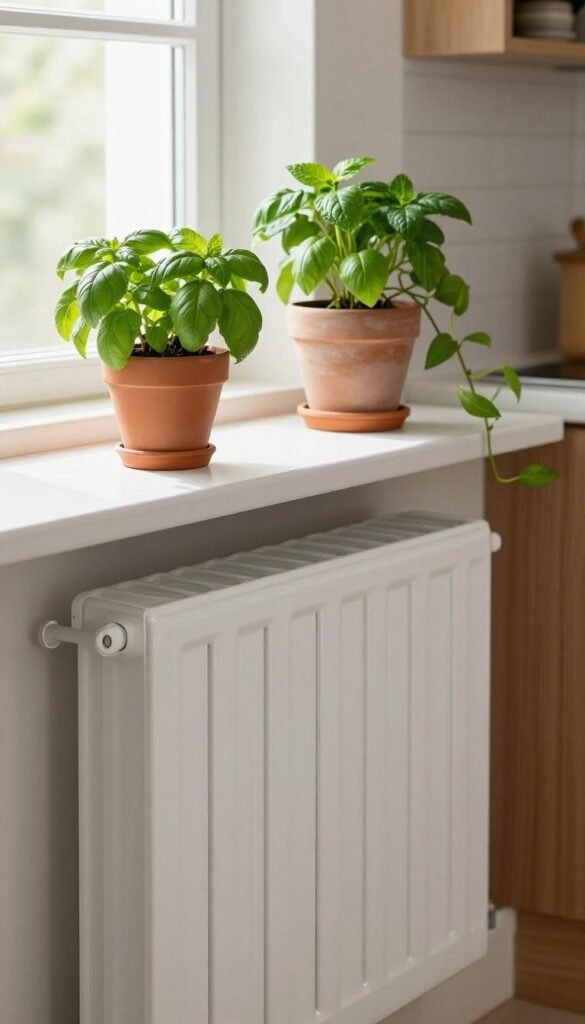
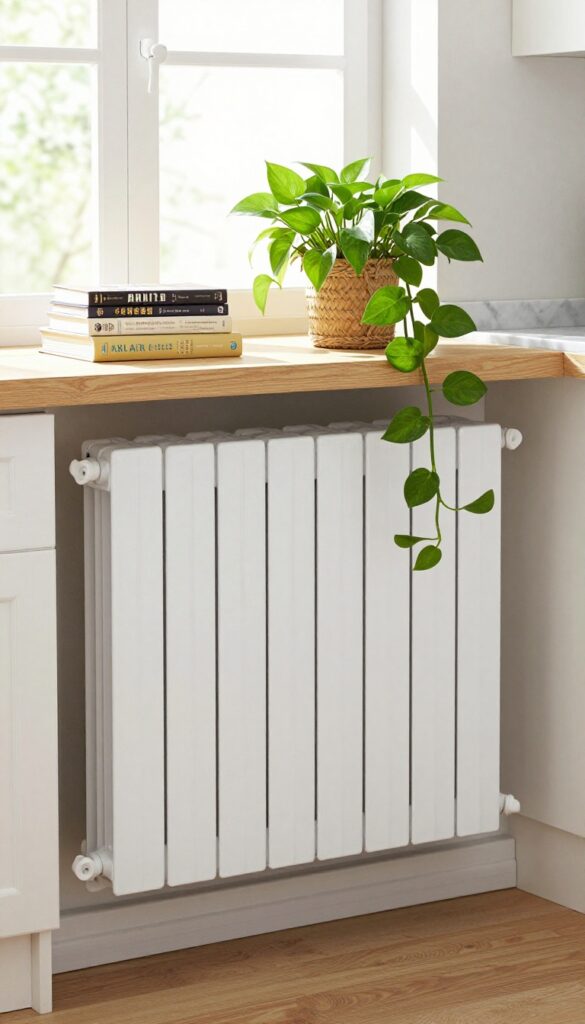
Your radiator doesn’t have to be just a heat source—it can double as a mini greenhouse. By adding a narrow shelf above a radiator cover, you create a warm, cozy spot for herbs or trailing plants. The gentle heat from below encourages growth, while the greenery softens the radiator’s industrial look.
It’s a smart, space-aware move that makes your kitchen feel more alive and lived-in.
This idea works especially well in smaller kitchens where every inch counts. The shelf doesn’t need to be deep—just wide enough to hold a few small pots. Choose plants that love warmth, like basil, mint, or pothos, and arrange them in simple terracotta or ceramic pots for a natural, relaxed vibe.
The contrast between the sleek radiator cover and the lush leaves adds texture and warmth to the room. Plus, having fresh herbs right above the radiator means they’re easy to snip while cooking. It’s a practical, stylish way to blend heat and greenery without taking up counter space.
Best Materials
- Go for a radiator cover made from solid wood or MDF with a clean, painted finish. White or light gray keeps the look airy, while a warm wood tone adds coziness. The shelf should be the same material or a matching metal bracket for a seamless look.
- Avoid plastic covers—they can warp from the heat and don’t have the same warm feel.
Plant Styling Tip
Mix upright herbs like rosemary with trailing plants like creeping Jenny or string of pearls. Use pots with drainage trays to catch any water, and rotate the plants every few weeks so they grow evenly. Group them in odd numbers (three or five) for a natural, unforced arrangement.
Small-space Fix
If your radiator is under a window, the shelf can double as a narrow windowsill for extra plants. In a tiny kitchen, consider a fold-down shelf that tucks away when not in use. This keeps the area flexible and prevents the radiator from feeling crowded.
10. Radiator as a Towel Warmer in the Kitchen
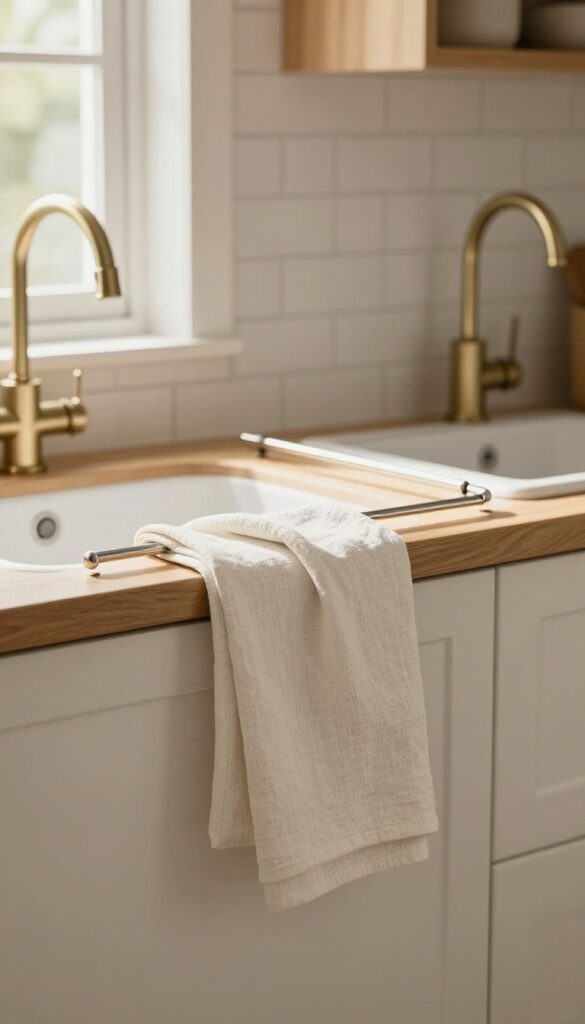
Imagine grabbing a warm, toasty dish towel right when you need it—sounds like a small luxury, doesn't it? A heated towel rail near the sink or prep area does exactly that, turning an ordinary radiator into a hardworking helper. It's a simple swap that adds a spa-like touch to your kitchen while keeping damp cloths and oven mitts dry and ready.
The best part? It doesn't take up much space, so even a compact kitchen can benefit from this cozy upgrade.
Mount a slim heated towel rail on an empty wall beside the sink or across from the stove. Choose a rail that matches your kitchen's finish—chrome for a sleek look, matte black for modern contrast, or brass for a warm vintage feel. The rail keeps dish towels, aprons, and oven mitts within easy reach while adding a subtle design element.
Plus, the gentle heat helps prevent musty smells, making your kitchen feel fresher and more inviting.
Best Placement
Position the towel rail close to the sink or prep zone so you can grab a towel without crossing the room. If your kitchen has an island, consider mounting a small rail on the end for easy access. For galley kitchens, a vertical rail fits neatly between cabinets and the countertop.
Style Pairing
To keep the look cohesive, choose a towel rail that echoes your kitchen's hardware—match the finish to your faucet, cabinet pulls, or light fixtures. For a warm, lived-in feel, pair a brass rail with wooden countertops and soft linen towels. In a modern space, a matte black rail against white subway tile creates crisp contrast.
Budget-Friendly Swap
If a full heated towel rail isn't in the budget, look for a wall-mounted towel bar that sits above a standard radiator. The rising heat will still warm your towels, giving you similar function without the expense. Or, try a compact plug-in model that works in any spot with an outlet.
11. Radiator Cover with Hidden Storage Bins
When your kitchen radiator takes up valuable wall space, why not make it work double duty? A custom cover with pull-out bins or baskets tucked underneath turns an eyesore into a smart storage hub. This idea is perfect for renters or homeowners who want to hide bulky items like table linens, pet food bags, or extra dish towels without losing access to the heat source.
The beauty of this setup is that it feels intentional, not makeshift. The cover itself can match your cabinetry or countertops, while the bins add a layer of texture with woven baskets or sleek metal tins. It’s a warm, lived-in look that keeps daily necessities close at hand but out of sight.
Plus, the pull-out design means you can still adjust the radiator valve or clean underneath without hassle.
Best Materials
Go with a wood or MDF cover painted to match your kitchen trim for a seamless look. For the bins, choose natural seagrass baskets for a cozy vibe or galvanized metal bins for a more industrial edge. Avoid plastic bins, which can warp near heat and look cheap.
Storage Tip
Use the bins to corral items you grab often but don’t want on display: reusable grocery bags, kitchen linens, or even root vegetables like potatoes and onions. Label each bin with chalkboard tags so everyone knows where things go.
Layout Tip
If your radiator sits beneath a window, build the cover to double as a narrow shelf above the bins. It’s the perfect spot for a trailing plant or a row of cookbooks, adding vertical interest without blocking the heat flow.
FAQ
Can I paint my kitchen radiator any color?
Yes, but use heat-resistant paint designed for radiators. Choose a color that complements your kitchen palette—bold shades work well as accents, while neutrals blend in.
Will a radiator cover block the heat?
A well-designed cover with slats or perforations allows heat to circulate freely. Avoid solid tops that extend too far over the radiator, and leave space for airflow.
What materials are best for a radiator cover?
Wood, MDF, metal, and stone are common choices. Wood adds warmth, metal suits modern spaces, and stone offers durability. Ensure materials are heat-resistant and properly sealed.
How do I clean behind a radiator cover?
Choose a cover that is removable or has a hinged front for easy access. Use a vacuum with a crevice tool or a long-handled duster to reach behind.
Can I install a radiator cover myself?
Yes, many covers are DIY-friendly with basic tools. Measure your radiator carefully and follow manufacturer instructions. For custom builds, consider hiring a carpenter.
Conclusion
Your kitchen radiator doesn't have to be an afterthought. With a little creativity, it can become a functional and stylish part of your home. Whether you choose a simple paint job, a custom cover, or a vintage replacement, each idea brings warmth and personality to your space.
Remember, the best solutions are the ones that fit your lifestyle and kitchen layout. Take your time, measure twice, and let your radiator shine as a design feature that truly works for you.