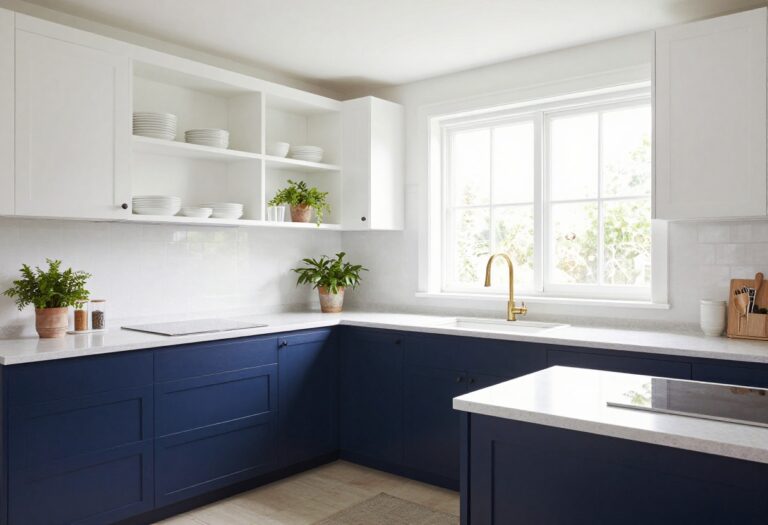
15 Grey and Black Kitchen Ideas for Bold Modern Contrast
Grey and black kitchens often get labeled as cold or dramatic, but they don't have to be. With the right mix of textures, warm accents, and thoughtful lighting, this color duo can feel surprisingly cozy and inviting. Think of it as a neutral backdrop that lets personality shine through without overwhelming the space.
The key is balance. Too much black can feel heavy, while too much grey might fall flat.
But when you layer in natural materials, soft fabrics, and a few personal touches, the result is a kitchen that feels both modern and lived-in. Whether you're planning a full remodel or just refreshing a few details, these ideas will help you create a space that's bold yet welcoming.
1. Matte Black Cabinets with Warm Wood Accents
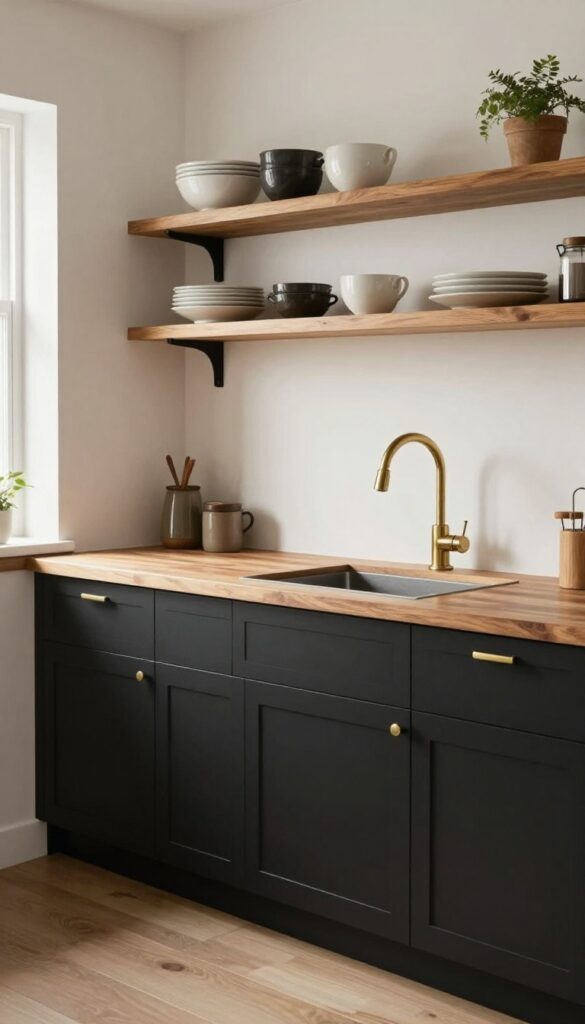
Matte black cabinets are a bold choice, but they can feel a little cold or intimidating if you're not careful. The key to making them work in a real home is balancing all that darkness with something soft and natural. That's where warm wood comes in.
A butcher block countertop, open shelving, or even a wooden hood vent can keep the look from feeling too severe. The contrast is what makes it special—the black grounds the room, and the wood breathes life into it.
This kitchen idea pairs matte black lower cabinets with a warm wood butcher block countertop. The dark finish anchors the space, while the wood adds natural warmth and texture. Brushed brass handles or a brass faucet provide a subtle glow that ties the two together.
It's a look that feels both modern and inviting, perfect for anyone who wants a dramatic kitchen that still feels like home.
Best Materials
- For the cabinets, go with a true matte finish—avoid anything too shiny or textured. Wood countertops in walnut or oak bring the right warmth. If you want to mix materials, consider a wood range hood or floating shelves to echo the countertop.
- Brushed brass hardware is the ideal accent; it picks up the warm tones in the wood without competing with the black.
Layout Tip
This look works best in an open-plan kitchen where the dark base cabinets can anchor the room. If your kitchen is on the smaller side, keep the upper cabinets light—white or pale wood—to maintain an airy feel. The contrast between dark lowers and light uppers also helps define the space visually.
Finishing Touch
Add a few open shelves in the same warm wood above the countertop. Display everyday dishes or a few cookbooks to soften the black and make the kitchen feel lived-in. A small potted herb or a wooden cutting board left out completes the cozy, practical vibe.
2. Charcoal Grey Island with a Live-Edge Wood Top
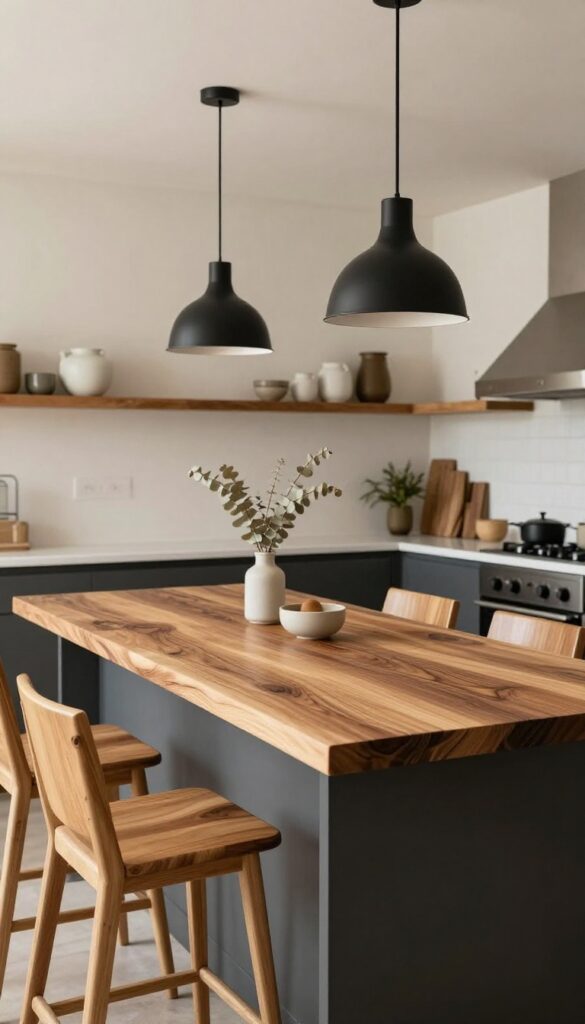
A kitchen island in deep charcoal grey instantly grounds the space, but pairing it with a live-edge wood top adds warmth and an organic touch. The contrast between the sleek painted base and the natural wood slab creates a balanced focal point that feels both modern and inviting. Light oak bar stools keep the look airy and prevent the dark tones from overwhelming the room.
This idea works best in open-plan kitchens where the island can anchor the layout without competing with other elements. The live-edge top introduces a sculptural, one-of-a-kind element that softens the clean lines of grey cabinetry. To keep the space practical, choose a wood with a durable finish that can handle daily use, and consider adding a few open shelves or a pot rack above to break up the vertical space.
Best Wood Pairings
Walnut or oak are top choices for the live-edge top. Walnut brings a rich, dark tone that complements the charcoal without blending in, while oak offers a lighter, more rustic feel. Both take well to matte sealants that protect against spills and scratches.
Lighting Tip
Hang a pair of black or brass pendant lights above the island to draw the eye upward and highlight the wood grain. Adjustable fixtures let you control the brightness, making the space feel cozy during dinner prep or bright for cooking.
Finishing Touch
Add a few warm-toned accessories like a ceramic fruit bowl or a wooden cutting board to echo the live-edge top. A small vase with dried eucalyptus or pampas grass brings in texture without cluttering the surface.
3. Soft Grey Upper Cabinets, Black Lower Cabinets
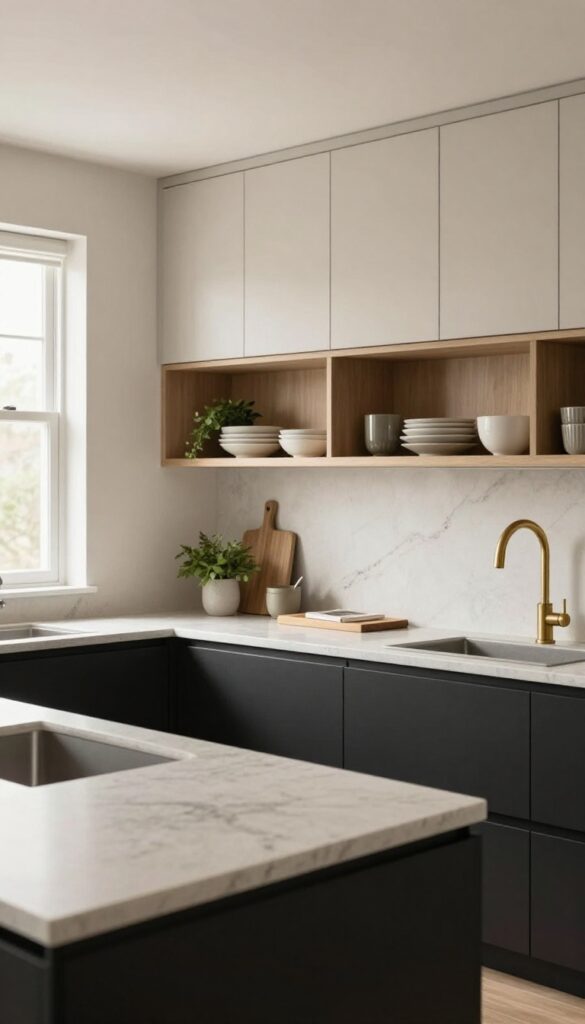
Two-tone cabinetry is a clever way to balance contrast without overwhelming the room. By keeping the upper cabinets a soft grey, the space stays airy and bright, while black lowers anchor the kitchen with depth and weight. This setup works especially well in kitchens that get moderate natural light — the grey reflects what’s available, and the black adds a grounded, intentional feel.
It’s a practical choice that feels both polished and approachable, especially when you add a strip of open shelving between the two tones to break up the transition and create a natural display zone.
The beauty of this combination is how it plays with light and shadow. Soft grey uppers feel calm and neutral, never competing with your backsplash or countertops. Black lowers, on the other hand, hide daily wear and tear surprisingly well — fingerprints, splashes, and smudges are less noticeable than on white or light wood.
This makes the kitchen feel lived-in without looking messy. The open shelving in between serves as a visual pause, letting you show off everyday dishes, a few plants, or cookbooks that add warmth and personality. It’s a setup that feels intentional, not accidental.
Best Grey And Black Pairings
- Not all greys are created equal. For a warm, lived-in feel, lean toward a greige (grey-beige) or a warm-toned grey with a hint of taupe. Cool greys can feel stark next to black, so test samples in your actual lighting.
- Pair with black that has a slight sheen — satin or semi-gloss — to catch light and keep the lower cabinets from looking flat. Matte black works too, but it shows dust more easily. If you want extra warmth, choose black with a subtle brown undertone, like espresso, which softens the contrast.
Open Shelving As A Transition
- Floating shelves between the upper and lower cabinets create a natural break that prevents the two colors from clashing. Install them at eye level, about 12 to 18 inches above the counter, and keep the depth shallow — 10 to 12 inches is plenty. Use the shelves to display items that bring in texture: wooden cutting boards, ceramic bowls, or small potted herbs.
- Avoid overcrowding; leave some breathing room so the shelves feel curated, not cluttered. This also makes the kitchen feel more open and less boxed in.
Finishing Touch: Hardware And Backsplash
- Hardware is where you can add personality. Brushed brass or unlacquered brass knobs and pulls warm up the grey-black combo instantly, giving it a collected-over-time vibe. If brass isn’t your style, matte black hardware on the lowers and a brushed nickel on the uppers can subtly differentiate the two zones.
- For the backsplash, stick with something light and reflective — white subway tile, zellige, or a soft marble-look porcelain. A glossy finish bounces light around, keeping the grey uppers feeling bright and the whole kitchen from feeling heavy.
4. Black Slate Backsplash with Warm Under-Cabinet Lighting
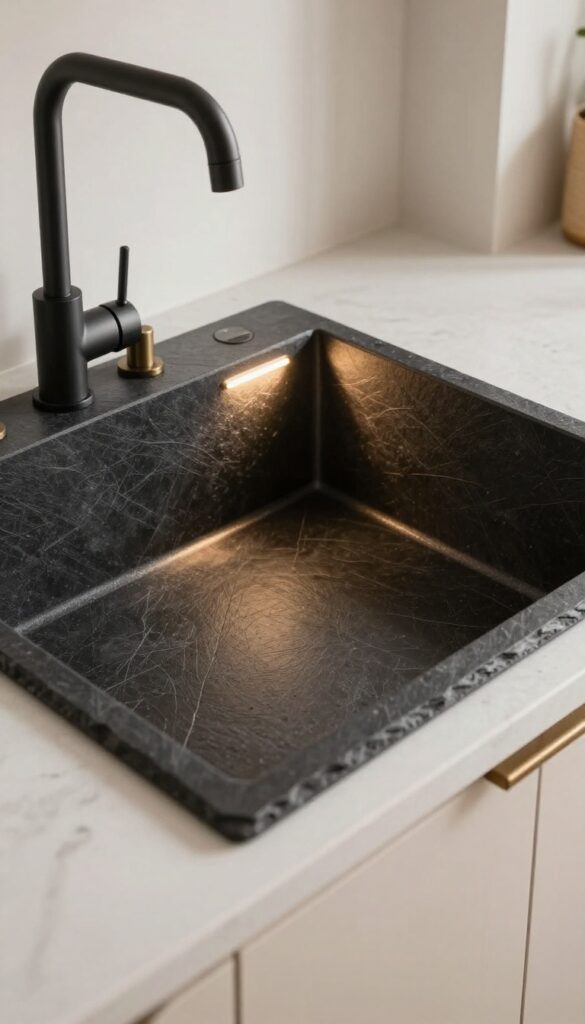
A black slate backsplash instantly adds texture and depth to a grey kitchen. The natural cleft surface catches light differently throughout the day, so the wall never looks flat. Pair it with warm under-cabinet LED strips to soften the contrast and make the space feel cozy rather than cold.
This combination works especially well in open-plan kitchens where the backsplash becomes a visual anchor.
The key is choosing slate tiles with subtle variation—some lighter veining or a honed finish keeps it from feeling too dark. Warm lighting (around 2700K) brings out the brown and charcoal undertones in the stone, creating a lived-in glow. For a practical touch, seal the slate to make cleaning easier, and install dimmable lights so you can adjust the mood from bright task lighting to a soft evening ambiance.
Best Colors
Stick with warm greys and soft whites for the surrounding cabinets and walls. A pale warm white like Swiss Coffee or a light greige keeps the space airy while letting the slate take center stage. Avoid cool blues or stark whites—they can clash with the warm lighting and make the slate look flat.
Lighting Tip
Install LED strips along the bottom of upper cabinets, but also consider a narrow strip under the countertop edge to wash light down the backsplash. Use a diffuser channel to avoid harsh spots. Dimmable switches give you control: bright for cooking, dim for a relaxed dinner.
Texture Mix
- Balance the rough slate with smooth surfaces. Pair it with polished quartz countertops and sleek cabinet fronts. Add a matte black faucet and brushed brass hardware for warmth.
- A woven runner or wooden cutting boards on the counter soften the look further.
5. Grey Concrete Countertops with Black Veining
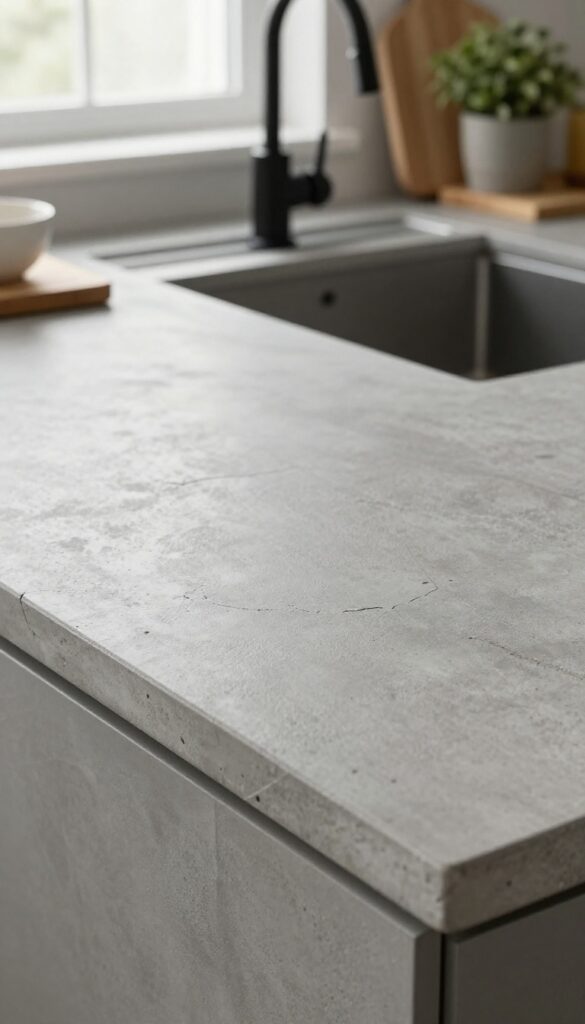
Concrete countertops have a reputation for feeling cold and industrial, but a warm grey tone with subtle black veining changes the whole mood. The natural variations in the concrete add depth, while the dark veins create a soft, organic pattern that feels more like natural stone than a harsh slab. When sealed properly, these countertops become surprisingly practical for daily cooking and cleanup, and they pair beautifully with black faucets and fixtures for a cohesive, lived-in look.
Concrete countertops in a soft grey with subtle black veining offer an industrial yet warm look. Seal them well for durability, and pair with black faucets and fixtures for a cohesive feel. The key is choosing a grey that leans slightly warm—think mushroom or dove grey—so the kitchen doesn't feel sterile.
The black veining should be sparse and organic, not too heavy, to keep the surface looking natural and inviting.
Best Color Pairings
- Stick with warm greys like greige or warm taupe for the concrete base. These tones prevent the countertops from looking too cold. For cabinets, consider soft white or light wood tones to balance the weight of the concrete.
- Black hardware and fixtures will tie everything together without overwhelming the space.
Durability And Sealing
- Concrete needs a high-quality sealer to resist stains and moisture. Look for a penetrating sealer that won't change the color or sheen. Reapply every year or two, depending on use.
- Avoid harsh cleaners; a mild soap and water routine keeps the surface looking fresh.
Finishing Touch
Add warmth with natural wood cutting boards, woven baskets, and a few potted herbs. The contrast between the smooth concrete and organic textures makes the kitchen feel both stylish and lived-in. A black faucet with a gooseneck design adds a modern touch without being too flashy.
6. Black Open Shelving with Greenery and Ceramics
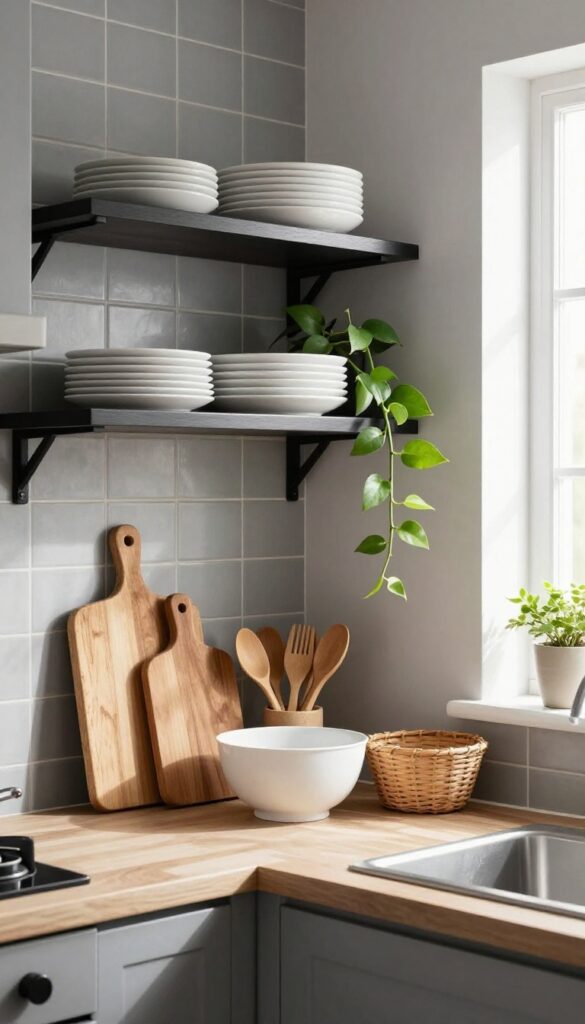
Swapping bulky upper cabinets for black metal open shelves instantly opens up a kitchen and makes it feel more spacious. The dark frames create a strong visual anchor against grey walls or backsplashes, while the items you display—white ceramics, wooden cutting boards, and trailing plants—soften the look and add warmth. It’s a practical swap that keeps everyday dishes and glasses within easy reach, and it gives you a chance to show off your personality through curated styling.
Open shelving is a great way to break up solid cabinetry and introduce an airy, collected feel. Black metal shelves contrast beautifully with grey tones, and the combination of white, wood, and green keeps the palette balanced and inviting. Plus, having your most-used items out in the open encourages you to stay organized and makes the kitchen feel lived-in rather than sterile.
Shelf Styling Tip
Group items in odd numbers and vary heights for visual interest. Stack a few white dinner plates on a wooden stand, lean a cutting board against the wall, and let a pothos or ivy trail over the edge of the shelf. Keep heavier pieces like mixing bowls on lower shelves and lighter glassware above.
Best Materials
- Stick with natural textures to warm up the black metal. White stoneware or porcelain ceramics reflect light and keep the look crisp. Unfinished wood cutting boards and woven baskets add organic contrast.
- For greenery, choose low-maintenance trailing plants like pothos, string of pearls, or philodendron—they soften the hard lines and thrive in kitchen light.
Layout Tip
Install shelves at a height that works for your reach—typically 18 to 24 inches above the counter. Leave enough space between shelves for taller items like pitchers or vases. If you have a small kitchen, consider a single long shelf instead of multiple short ones to create a continuous horizontal line that makes the room feel wider.
7. Charcoal Grey Walls with White Trim and Black Hardware
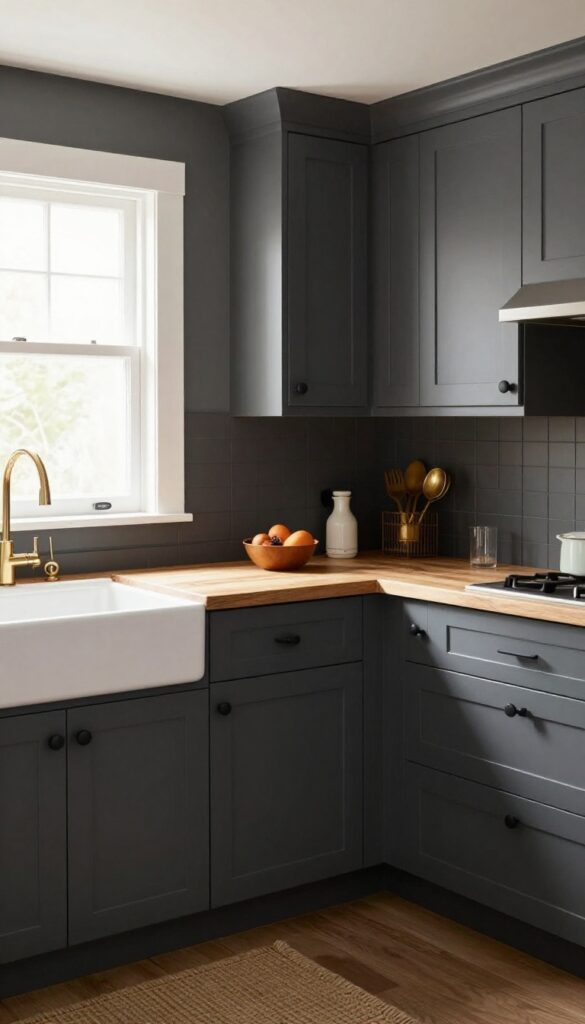
Deep charcoal grey walls bring a cozy, grounded feel to a kitchen without sucking the light out of the room—especially when you pair them with bright white trim. The contrast is crisp but not harsh, and it gives the space a tailored, lived-in look. Black hardware, like cabinet pulls and a farmhouse sink, adds just enough edge to keep things interesting without going full dark mode.
This idea works because it balances drama with warmth. The charcoal reads as a neutral, not a statement, so it won't feel dated in a few years. White trim frames the walls beautifully, making the grey feel intentional rather than accidental.
Black hardware is the finishing touch that pulls the whole look together—think matte black knobs, a bridge faucet, and a deep apron-front sink. The result is a kitchen that feels both modern and welcoming, with plenty of contrast to keep the eye moving.
Best Colors
- Stick with a true charcoal that has warm undertones—like Benjamin Moore's Kendall Charcoal or Sherwin-Williams' Tricorn Black at 75% strength. Pure black can feel too harsh, so a softened charcoal keeps the room approachable. White trim should be a clean, bright white (not cream) to maximize contrast.
- For the ceiling, keep it white to bounce light around.
Finishing Touch
Add warmth with natural wood accents—a butcher block countertop, open shelving in oak, or a wooden cutting board left out on the counter. The wood softens the grey and black palette and prevents the kitchen from feeling too cool or industrial. A few warm-toned accessories, like brass utensils or a woven runner, also help.
Lighting Tip
Since charcoal walls absorb light, plan for layered lighting. Pendant lights with warm bulbs over the island, under-cabinet task lighting, and a few small lamps on the counter create a cozy glow. Avoid cool white bulbs—they'll make the grey look flat and uninviting.
8. Black and White Marble Backsplash with Grey Grout
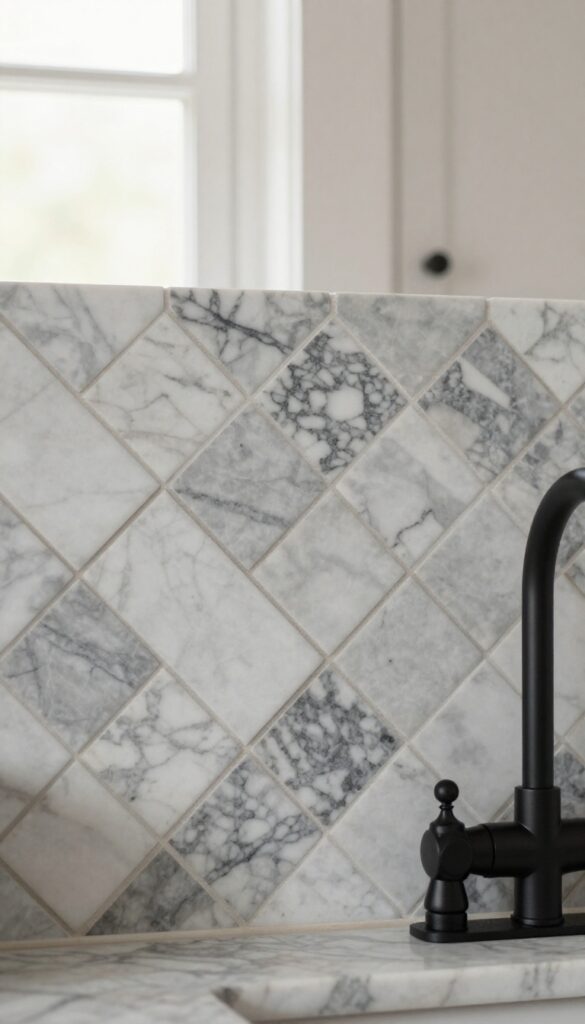
Marble has a way of making any kitchen feel more refined, but the classic black and white combo can sometimes read as a little cold. That's where the grout comes in. By choosing a warm grey instead of bright white, you dial down the contrast just enough to keep things feeling approachable and lived-in.
The result is a backsplash that still delivers that bold graphic punch but doesn't feel like it belongs in a showroom.
This idea works especially well in kitchens where you want a strong visual element without going full-on dark or stark white. The black and white marble subway tiles create a rhythmic pattern that draws the eye, while the grey grout adds a subtle layer of softness. It's a small detail that makes a big difference in how the whole space feels.
Pair it with matte black fixtures—like a gooseneck faucet and cabinet pulls—to tie the look together without adding shine that competes with the marble.
Best Tile Layout
A classic herringbone pattern gives the marble tiles a dynamic, almost woven look that feels custom without being too busy. If herringbone feels like too much, a simple stacked layout keeps the focus on the marble veining and the grey grout lines. For a more traditional feel, try a subway pattern with a 50% offset—it's timeless and lets the grout color really stand out.
Grout Color Tip
- Warm grey grout is the secret weapon here. It bridges the gap between the black and white tiles, making the overall look feel cohesive and less harsh. Avoid cool greys that lean blue—they can make the marble feel sterile.
- Instead, go for a greige (grey-beige) tone that has a hint of warmth. Test a small area first to see how it reads with your specific marble.
Finishing Touch
- Matte black fixtures are the natural partner for this backsplash. A matte black faucet with clean lines and black cabinet hardware will echo the dark veins in the marble without competing. Add a black soap dispenser or a simple black pot filler if you have the budget.
- Keep the countertop light—white quartz or a subtle grey marble—to let the backsplash stay the star.
9. Grey Herringbone Floor with Black Cabinets
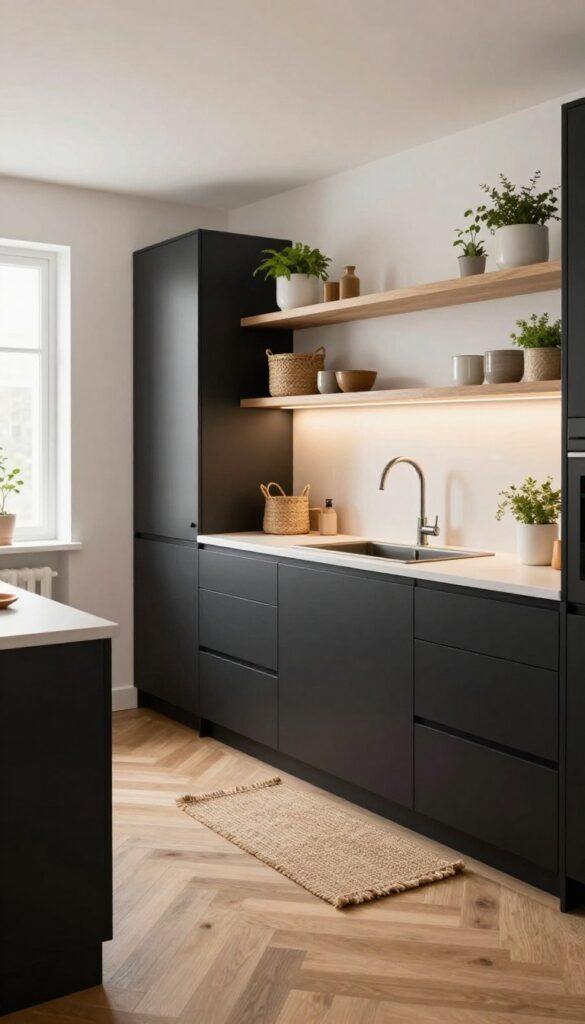
A grey herringbone wood floor brings movement and warmth underfoot, instantly elevating the kitchen's personality. Paired with black cabinets above, the contrast feels intentional and grounded rather than harsh. This combination works especially well in open-plan spaces where the floor can flow into adjacent living areas, creating a cohesive look that's both stylish and inviting.
The grey herringbone pattern adds visual texture and a sense of craftsmanship that plain floors lack. Black cabinets anchor the room, while the lighter grey tones keep it from feeling too dark. To soften the contrast and bring in a lived-in feel, add a jute runner and woven baskets for texture.
This setup is practical for busy kitchens—the dark cabinets hide smudges, and the herringbone pattern disguises daily wear and tear.
Best Materials
Engineered oak in a grey wash is durable and works with underfloor heating. For a budget-friendly option, consider luxury vinyl planks in a herringbone pattern—they're waterproof and easy to install. Pair with matte black cabinets for a soft, modern finish that doesn't show fingerprints.
Texture Mix
Balance the hard surfaces with natural textures: a chunky jute runner along the sink area, woven seagrass baskets on open shelves, and a few ceramic pots for herbs. These elements break up the dark and light contrast, making the space feel warm and collected over time.
Lighting Tip
Warm under-cabinet lighting is key here—it highlights the herringbone pattern and prevents black cabinets from swallowing light. Go for LED strips with a color temperature around 2700K to keep the mood cozy. Pendant lights with a brass or wood accent can add another layer of warmth.
10. Black Range Hood as a Statement Piece
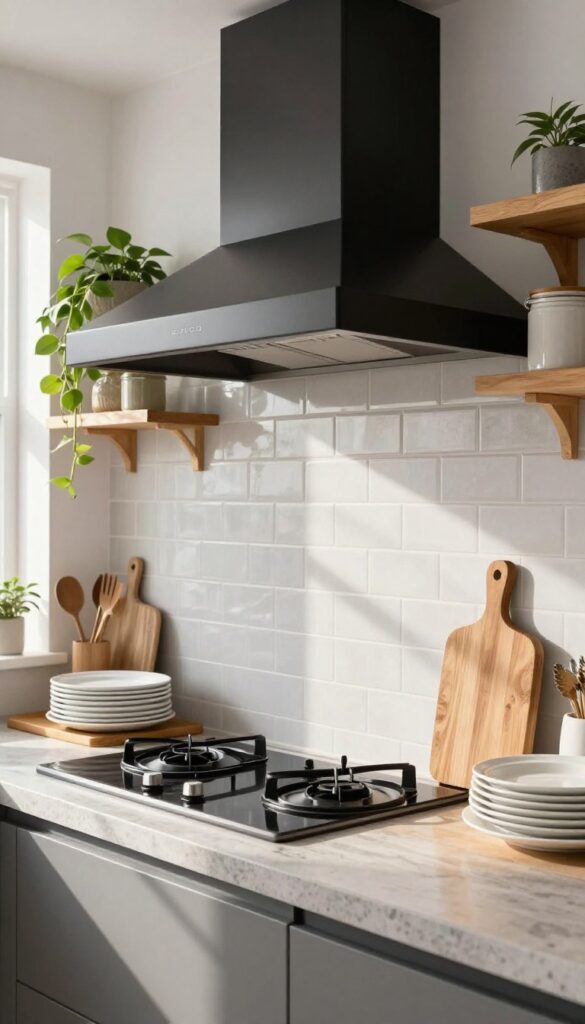
In a grey and black kitchen, the range hood doesn't have to blend into the background. Making it a focal point with a bold black metal canopy adds drama and purpose. A sculptural shape draws the eye upward, while light grey tile and warm wood shelves keep the look grounded and inviting.
This is one of those ideas that feels both daring and completely livable.
A black range hood instantly becomes the centerpiece of your cooking zone. Go for a canopy style with clean lines or a slight curve for extra character. The contrast against a light grey subway tile backsplash is crisp and modern.
To keep it from feeling too cold, add open shelving in a natural wood tone on either side. The warmth of the wood balances the dark metal and makes the whole setup feel approachable. This works especially well in open-concept kitchens where the hood is visible from the living area.
It's a practical choice too—black metal hides grease splatters better than lighter finishes.
Best Materials
- Stick with matte black stainless steel or powder-coated metal for durability and easy cleaning. Avoid glossy finishes that show fingerprints. Pair with a textured light grey tile—like handcrafted subway or herringbone—to add depth.
- For shelves, go with reclaimed wood or warm oak to soften the industrial edge.
Shelf Styling Tip
- Keep the shelves around the hood simple but functional. Stack a few white dinner plates, a wooden cutting board, and a small plant or jar of utensils. Don't overcrowd—leave breathing room so the hood remains the star.
- A single trailing plant like pothos adds a soft, lived-in feel.
Lighting Note
If your range hood doesn't have built-in lighting, add under-cabinet lights in warm white to highlight the tile and wood. This prevents the dark hood from casting a shadow over your cooking surface and keeps the space feeling bright and welcoming.
11. Warm Grey Backsplash with Black Grout
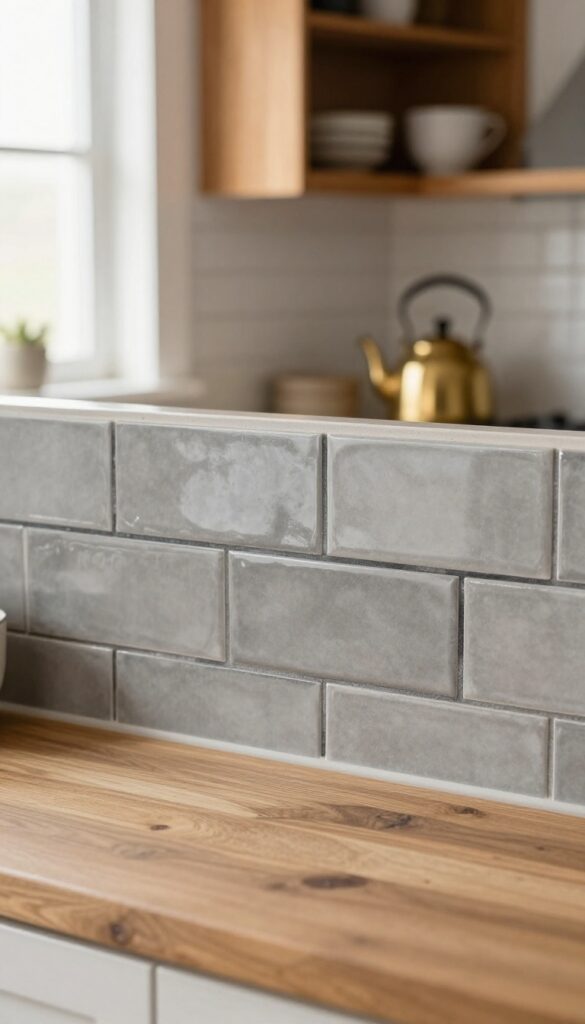
A backsplash is one of those spots where you can make a big impact without a full renovation. Warm grey tiles with black grout create a look that is both structured and inviting. The dark lines give the pattern definition, while the warm undertones keep the kitchen from feeling cold or industrial.
It is a practical choice that works with black appliances, stainless steel, or even brass fixtures.
This backsplash idea leans into contrast without going overboard. The warm grey softens the overall look, making the kitchen feel lived-in rather than stark. Black grout adds a graphic element that draws the eye and highlights the tile shape, whether you choose subway, hexagon, or large-format rectangles.
It is a simple way to add character to a neutral kitchen.
Best Tile Shapes
Large-format rectangular tiles (like 4×12 or 6×24 inches) work especially well because the black grout lines create a strong horizontal or vertical pattern. Subway tiles with a beveled edge add a subtle play of light. Avoid very small mosaic tiles, as too many grout lines can feel busy.
Grout Application Tip
Black grout can be tricky to apply because it stains porous tiles. Use a penetrating sealer on the tiles before grouting, or choose porcelain tiles that are less absorbent. Wipe off excess grout quickly to avoid a hazy film on the tile surface.
Finishing Touch
Pair this backsplash with warm wood open shelving or a butcher block countertop. The natural wood tones balance the coolness of the black grout and keep the kitchen feeling cozy. Add a few brass or copper accents for a touch of warmth.
12. Black Pantry Door with Brass Hardware
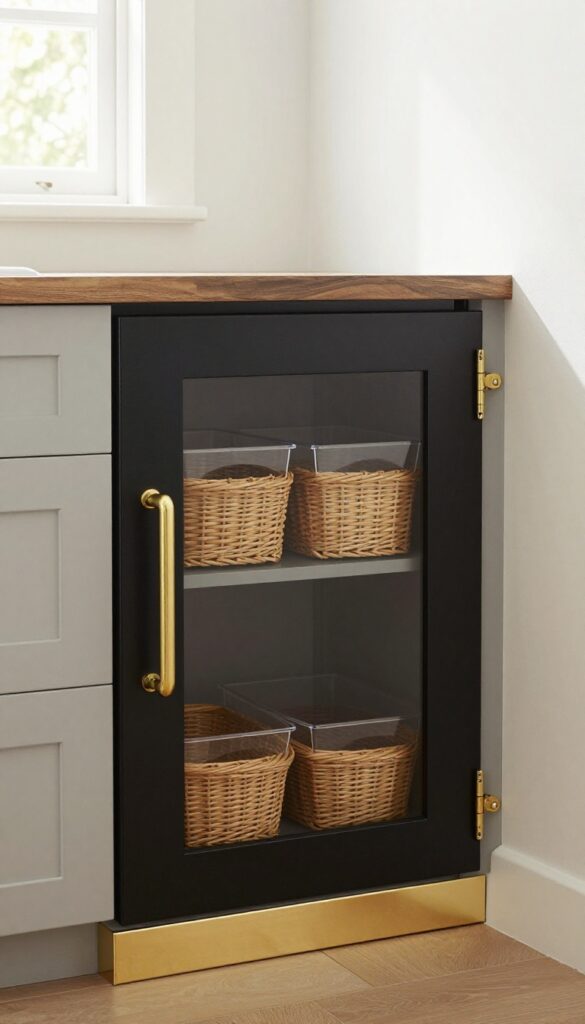
That pantry door doesn't have to blend into the wall. Painting it matte black and swapping in brass hardware turns it into a bold statement piece that instantly adds character to your kitchen. It's a small change with a big visual payoff, especially against grey cabinets or neutral walls.
A black pantry door with brass hardware feels both intentional and inviting. The dark color grounds the space, while the warm brass adds a touch of elegance. Inside, keep things practical with open bins or baskets that add a pop of color when the door is open.
This idea works best in kitchens with good natural light or under-cabinet lighting to make the contrast pop.
Best Colors
Matte black for the door, unlacquered brass for the handle and hinges. The brass will develop a patina over time, adding to the lived-in feel. Pair with warm white or light grey walls for contrast.
Finishing Touch
Add a magnetic backplate or a small brass kick plate at the bottom to protect the paint from scuffs. It's a practical detail that also looks polished.
Storage Tip
Use woven baskets or clear acrylic bins inside the pantry. They keep things organized and add a soft texture that balances the bold door.
13. Grey and Black Patterned Tile Floor
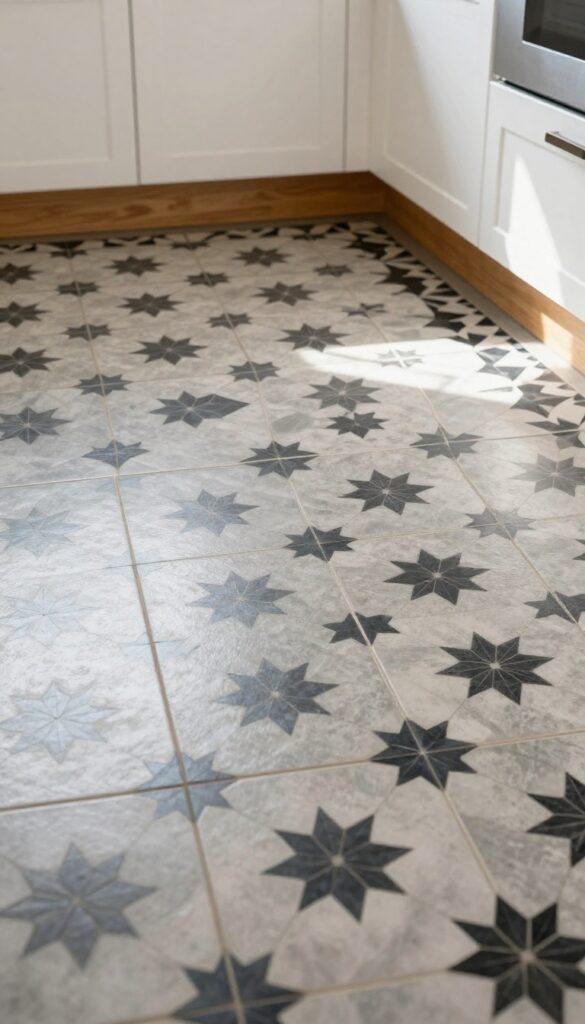
Floors often get treated as an afterthought in kitchen design, but they can actually become the star of the show. A geometric or Moroccan-inspired tile in grey and black adds instant personality underfoot without overwhelming the space. The key is letting the floor do the talking—keep your walls and cabinets neutral so the pattern stays the hero, not a competitor.
Patterned tile floors bring texture and visual interest to a kitchen that might otherwise feel too monochrome. The contrast between light grey and deep black creates a dynamic base that anchors the room. Plus, the busy pattern is surprisingly forgiving—it hides crumbs, spills, and daily wear better than a solid color ever could.
Use a dark grout to tie the design together and make maintenance even easier.
Best Pattern Choices
- For a timeless look, go with a classic Moroccan star or encaustic-style tile in grey and black. If you prefer something more modern, a large-scale geometric hexagon or herringbone pattern adds contemporary flair. Avoid tiny mosaic tiles—they can feel busy and make the floor look cluttered.
- Stick to medium or large tiles so the pattern reads clearly.
Color Flow Tip
Pull one of the lighter grey tones from your tile and use it on your lower cabinets or island. This creates a visual bridge between the floor and the rest of the kitchen. If your cabinets are white or warm wood, add a few black accessories—like bar stools or pendant lights—to echo the floor's dark accents and keep the whole room feeling intentional.
Practical Maintenance
- Dark grout is non-negotiable here. It hides dirt, resists staining, and makes the pattern pop without constant scrubbing. Seal the tile properly after installation, and you'll have a floor that stays beautiful with just regular sweeping and occasional mopping.
- For high-traffic areas, consider a matte finish tile—it's less slippery and shows fewer scuffs.
14. Black Window Frames with Grey Roman Shades
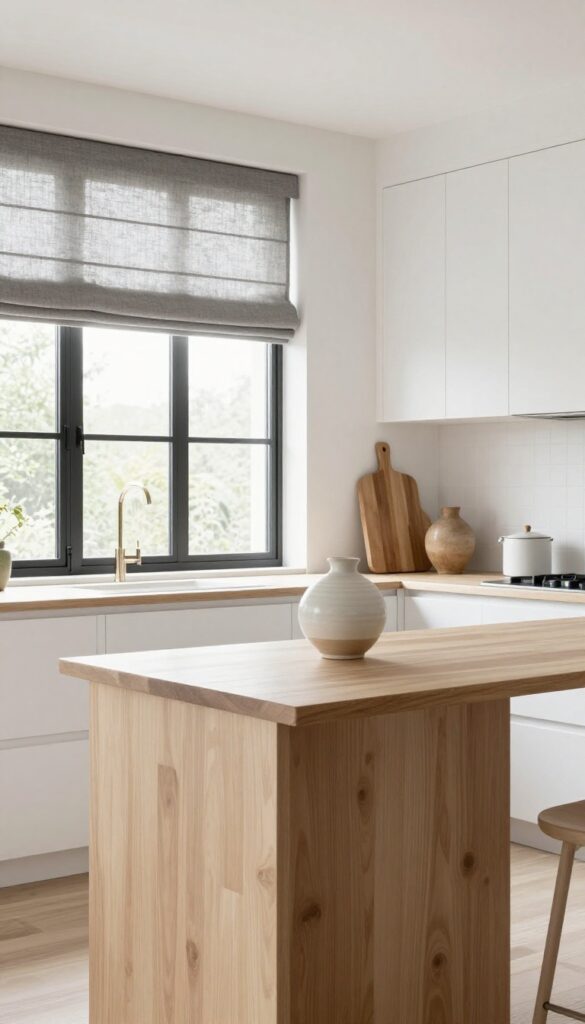
Windows often get overlooked when planning a kitchen makeover, but they’re prime real estate for adding contrast. Painting or replacing window frames with black creates a crisp, architectural line that instantly modernizes the space. Paired with soft grey Roman shades in a linen weave, the look balances boldness with warmth—perfect for a kitchen that feels both current and inviting.
The shades filter harsh sunlight into a gentle glow, making the room feel airy without being stark.
This idea works especially well in kitchens with neutral cabinetry, like white, cream, or light grey, because the black frames become a deliberate design feature rather than an afterthought. The grey shades add texture and softness, preventing the black from feeling too severe. For a cohesive look, echo the black elsewhere—think cabinet hardware, light fixtures, or bar stools.
The linen material also helps absorb sound, making the kitchen feel quieter and cozier.
Best Color Pairings
Stick with warm greys—like greige or charcoal with a brown undertone—to keep the space inviting. Pair with white or light wood cabinetry for a classic contrast, or go bold with deep navy lower cabinets for a moody, dramatic vibe. Avoid cool, blue-based greys if you want a lived-in feel.
Fabric And Texture Tips
Choose a linen blend with a slight slub for natural texture. Lined shades add privacy and light control, while unlined keep things airy. For a practical touch, opt for a light-filtering lining that still lets in soft daylight without fading floors or fabrics.
Finishing Touch
Mount the roman shades just above the window frame to make ceilings look taller. Add a simple black curtain rod with minimalist finials to tie the window treatment into the frame color. A small potted herb on the sill brings in life and softness.
15. Mixed Metal Finishes: Black, Brass, and Chrome
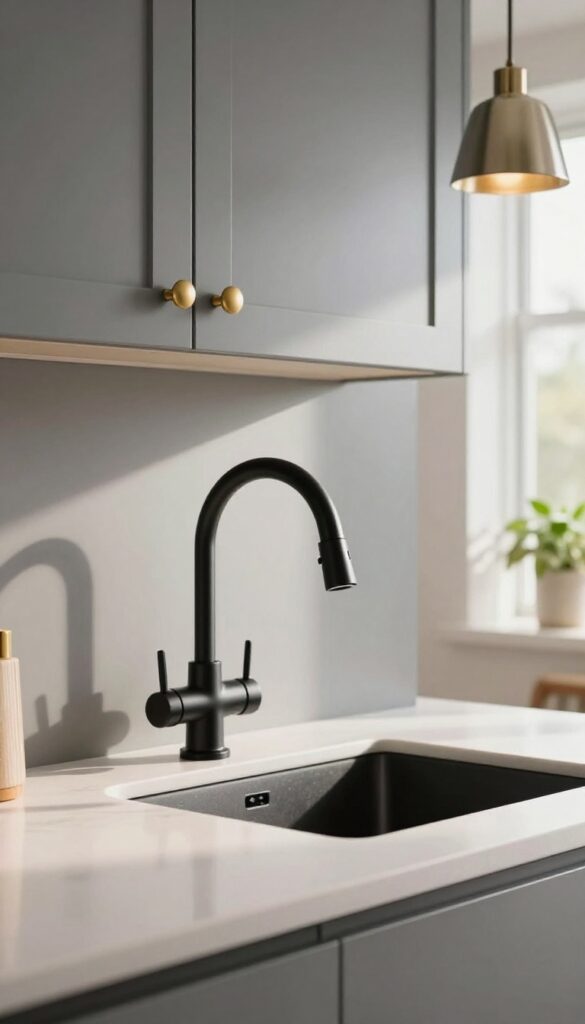
Who says you have to stick to one metal finish? Mixing black fixtures with brass and chrome adds depth and personality to a grey kitchen. It feels collected over time, not staged.
The trick is balance—repeat each finish at least twice so the look feels intentional, not accidental. A black faucet, brass cabinet pulls, and a chrome pendant light create a warm, lived-in contrast against matte grey cabinets.
Mixing metals is a surefire way to add character and warmth to a grey and black kitchen. Instead of matching everything, choose two or three finishes that complement each other. Black provides a bold anchor, brass brings warmth, and chrome adds a sleek, reflective touch.
The key is repetition: use each finish at least twice in the space to create a cohesive, curated look. For example, pair a black faucet with black cabinet hardware, brass pendants with brass bar stools, and chrome appliances with chrome sink accessories. This approach avoids a chaotic jumble and instead feels thoughtfully layered.
The contrast of warm brass against cool grey and black creates a welcoming atmosphere that feels both modern and lived-in. Plus, mixed metals are forgiving—they hide fingerprints and wear better than a single high-polish finish.
Best Finishes To Combine
- Stick to three finishes max to keep the look intentional. Black matte or oil-rubbed bronze works well as the dominant finish. Brass (unlacquered or satin) adds warmth, while chrome or stainless steel brings a clean, reflective element.
- Avoid mixing warm and cool tones of the same metal—like brass and gold—as they can clash. Instead, let each finish have a distinct role: black for structural elements (faucet, cabinet hardware), brass for accent touches (lighting, drawer pulls), and chrome for functional items (sink, pot filler).
Where To Place Each Metal
- Distribute finishes evenly across the kitchen to avoid visual weight in one spot. Use black on the main workhorse items: the faucet, cabinet handles, and range hood. Introduce brass on lighting fixtures, bar stools, or open shelving brackets.
- Chrome works well on the sink, refrigerator, and small appliances like a toaster or kettle. Repeat each finish in at least two locations—for example, brass on pendants and cabinet knobs, chrome on the sink and faucet sprayer, black on cabinet pulls and the pot filler.
Finishing Touch: Accessories
- Carry the mixed metal theme into your accessories for a polished look. Choose a black soap dispenser, brass salt and pepper mills, and a chrome fruit bowl. A black cutting board propped against the backsplash, brass canisters on the counter, and chrome bar tools hanging on a rail tie everything together.
- This repetition reinforces the design without overwhelming the space.
FAQ
Does a grey and black kitchen feel cold?
Not if you add warm elements like wood, brass, and soft textiles. The key is balancing the cool tones with natural materials and warm lighting to create a cozy, inviting atmosphere.
What color countertops go best with black cabinets?
Light grey, white, or warm wood countertops work beautifully. They provide contrast and prevent the space from feeling too dark. Marble or quartz with subtle veining adds elegance.
How can I make a small grey and black kitchen feel larger?
Use lighter grey on upper cabinets or walls, and reserve black for accents or lower cabinets. Add reflective surfaces like a mirrored backsplash or glossy tiles, and maximize natural light with sheer window treatments.
What type of lighting works best in a dark kitchen?
Layer lighting with under-cabinet LEDs, pendant lights over the island, and recessed ceiling lights. Choose warm bulbs (2700K-3000K) to soften the dark tones and create a welcoming glow.
Can I add color to a grey and black kitchen?
Absolutely. Small pops of color through accessories like a red kettle, yellow fruit bowl, or green plants add life without disrupting the monochrome scheme. Textiles like tea towels and rugs are easy swaps.
Conclusion
Grey and black kitchens don't have to feel stark or uninviting. By layering in warm textures, natural materials, and thoughtful lighting, you can create a space that's both bold and cozy. The best part?
Many of these ideas are simple updates that make a big impact without a full renovation. Whether you start with a new backsplash or swap out hardware, each change brings you closer to a kitchen that feels uniquely yours. Embrace the contrast, but don't forget to add the warmth that makes a house a home.