11 Grey and Yellow Kitchen Ideas for Cheerful Contrast
Grey and yellow might sound like an unexpected duo, but in a small kitchen, they create a cheerful contrast that feels both fresh and grounded.
Grey brings calm stability, while yellow adds a pop of energy—perfect for making a compact space feel lively without overwhelming it.
Whether you're planning a full renovation or just a quick refresh, these 11 ideas will help you strike that balance with style.
1. Soft Grey Cabinets with a Yellow Backsplash
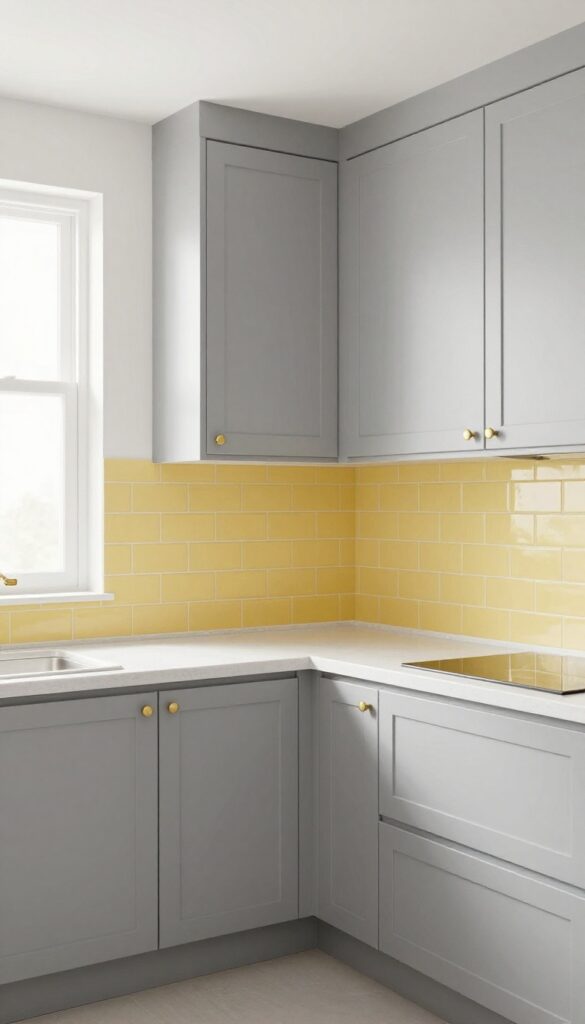
Matte grey cabinets bring a calm, grounded feel to a kitchen, but they can sometimes lean a bit serious. That's where a sunny yellow backsplash steps in. The contrast is instant and cheerful—like a little burst of morning light that stays all day.
This combo works especially well in smaller kitchens because the yellow draws the eye upward, making the ceiling feel higher and the whole room more open.
Pairing matte grey cabinets with a yellow tile backsplash creates a balanced, uplifting look. The grey provides a neutral anchor, while the yellow adds energy without overwhelming the space. For a small kitchen, this trick is gold: the bright backsplash becomes the focal point, pulling attention away from cramped counters and making the room feel taller and airier.
Stick to soft, warm yellows—like butter or marigold—to keep the vibe cozy rather than electric. Finish with brass or matte black hardware to tie the two tones together.
Best Colors And Materials
- Opt for a soft, warm grey with a hint of beige undertone (like greige) to keep the look inviting. For the backsplash, choose glossy subway tiles in a sunny yellow—gloss reflects light and amplifies the airy feel. If you prefer texture, handmade zellige tiles in yellow add a handcrafted touch.
- Avoid cool greys and neon yellows; they can clash and feel harsh.
Small-space Layout Tip
In a galley or L-shaped kitchen, run the yellow backsplash from counter to upper cabinets only—not all the way to the ceiling. This keeps the yellow concentrated at eye level, where it does the most visual lifting. Pair with open shelving in the same grey to break up the tile and add storage that feels intentional, not cluttered.
Finishing Touch
Add a few yellow accents elsewhere—like a ceramic pitcher on the counter or a tea towel—to echo the backsplash without overdoing it. Keep the countertops light (white quartz or butcher block) and let the grey cabinets and yellow tile do the talking. A simple brass faucet pulls the whole look together.
2. Yellow Accent Wall Behind Open Shelving
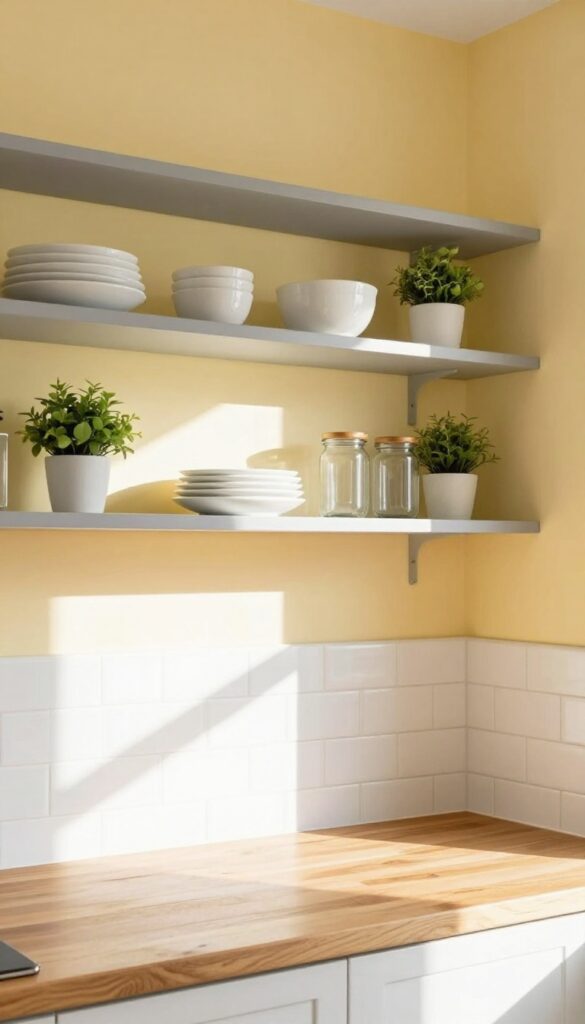
A soft butter yellow wall instantly warms up a kitchen without overwhelming it. When you pair that sunny backdrop with open shelving in a warm grey tone, the contrast feels intentional and cheerful. This setup works especially well in smaller kitchens because the open shelves keep the space visually light, while the yellow adds a pop of personality that draws the eye and makes the room feel bigger.
Paint just one wall—the one where you plan to install open shelves—in a muted butter yellow. Choose a warm grey for the shelves themselves, like a greige or a soft charcoal, to ground the yellow without making it feel too sweet. Style the shelves with white dishes, a few clear glass jars, and small green plants.
The white and green keep the look airy and uncluttered, while the yellow wall peeks through and ties everything together. This idea is perfect for a galley kitchen or a breakfast bar area where you want a focal point that doesn't take up floor space.
Best Colors
Stick with a soft butter yellow (think Benjamin Moore's Hawthorne Yellow or Sherwin-Williams' Buttercup) for the wall. For the shelves, a warm grey like Sherwin-Williams' Repose Gray or a slightly darker greige works well. Avoid bright lemon yellows or cool greys, as they can clash and feel harsh.
Small-space Fix
In a tiny kitchen, limit the yellow to one wall and keep the shelves shallow—no deeper than 10 inches. This prevents the shelves from protruding too far and making the room feel cramped. Use the shelves for everyday items you actually use, so the space stays functional and not just decorative.
Shelf Styling Tip
Group items in odd numbers and vary heights. Stack a few white plates on a small wooden stand, lean a cutting board against the wall, and place a trailing pothos plant at one end. The green leaves soften the yellow and add a natural, organic feel.
3. Grey Marble Countertops with Yellow Bar Stools
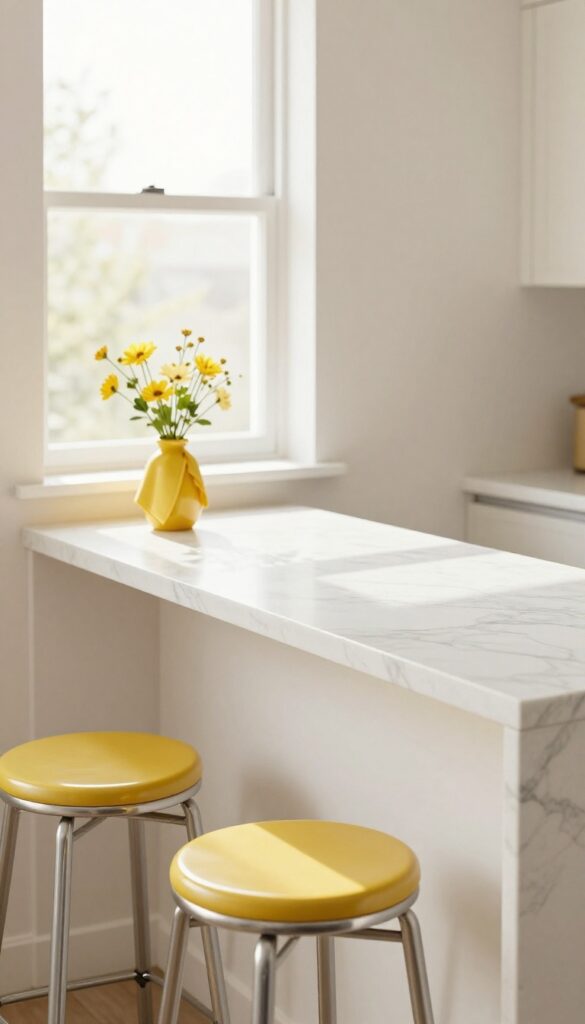
There’s something effortlessly chic about grey marble countertops. They bring a sense of calm and luxury to a kitchen without feeling cold or sterile. Now add a few yellow bar stools into the mix, and suddenly the whole space lights up with energy.
The contrast is playful but polished—perfect for a kitchen that needs a little personality without going over the top. In a small kitchen, this combo works especially well because the stools can be tucked away when not in use, keeping the floor plan open and airy.
Start with a light grey marble or a marble-look quartz countertop on your island or peninsula. The subtle veining adds visual interest without competing with the bold yellow stools. Go for a bright, sunny yellow—think lemon or marigold—on the stools to create a focal point that draws the eye.
If your kitchen has a breakfast bar or an overhang, this is the perfect spot to place them. The stools should be simple in design, like a slim metal frame with a yellow seat, so they don’t overwhelm the space. For a cohesive look, repeat the yellow in small doses elsewhere—maybe a yellow tea towel, a vase, or a few yellow dishes on open shelving.
This keeps the color from feeling isolated and ties the whole room together.
Best Materials
- For the countertops, real marble is stunning but high-maintenance. A marble-look quartz is a more practical choice—it gives you the same elegant veining without the etching or staining worries. For the stools, look for a sturdy metal frame (black or brushed brass works well) with a molded plastic or upholstered seat in yellow.
- A glossy finish on the seat adds a modern touch and is easy to wipe clean.
Small-space Fix
- In a compact kitchen, choose backless or low-back stools that can slide completely under the counter when not in use. This keeps the walkway clear and makes the room feel larger. If your island has a solid base, consider a slim, cantilevered overhang that allows stools to tuck in flush.
- Measure the height carefully—counter-height stools (24–26 inches) are ideal for standard 36-inch counters.
Finishing Touch
Add a small yellow accent on the counter itself, like a ceramic fruit bowl or a yellow canister for utensils. This bridges the gap between the countertops and the stools, making the color scheme feel intentional. A low-hanging pendant light with a yellow or brass shade above the island can also echo the cheerful tone.
4. Yellow Range Hood as a Statement Piece
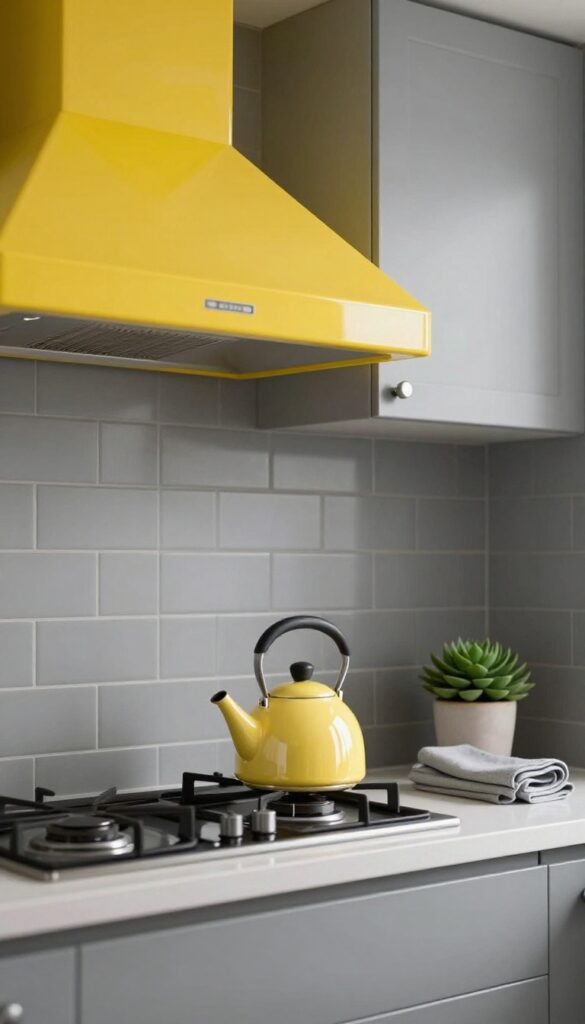
In a small kitchen, every surface counts—so why not make your range hood work harder? A yellow range hood instantly draws the eye upward, creating a vertical focal point that makes the ceiling feel higher and the room more spacious. Against soft grey walls or cabinets, the pop of sunny yellow adds energy without overwhelming the space.
It's a simple swap that delivers big personality, especially in apartments or galley kitchens where square footage is tight.
Swapping a standard stainless steel or white range hood for a bright yellow one is one of the easiest ways to inject color into a grey kitchen without cluttering counters or walls. The key is choosing the right shade: a buttery yellow keeps things warm and approachable, while a high-gloss lemon yellow feels more modern and punchy. Pair it with matte grey finishes to let the hood stand out, and keep surrounding decor minimal so the color doesn't compete.
This idea works especially well in small spaces because it uses vertical real estate—no extra floor or counter space needed. For a cohesive look, echo the yellow in small accents like a tea kettle, dish towels, or a fruit bowl on the island.
Best Color Pairings
Stick with warm greiges or cool greys to let the yellow pop. A light grey like Benjamin Moore's Classic Gray keeps the kitchen airy, while a darker charcoal like Sherwin-Williams' Peppercorn adds drama that makes the yellow hood glow. Avoid adding other bold colors nearby—let the yellow be the star.
Small-space Styling Tip
In a compact kitchen, choose a slim, wall-mounted range hood rather than a bulky island version. The streamlined shape won't eat into visual space, and the yellow color will naturally draw the eye upward, making the room feel taller. Keep upper cabinets light or open to maintain an uncluttered look.
Finishing Touch
Add a single open shelf above the range hood in the same yellow hue or a matching grey. Style it with a few white dishes or a small plant to create a cohesive vignette that ties the whole kitchen together without adding visual weight.
5. Two-Tone Grey and Yellow Cabinetry
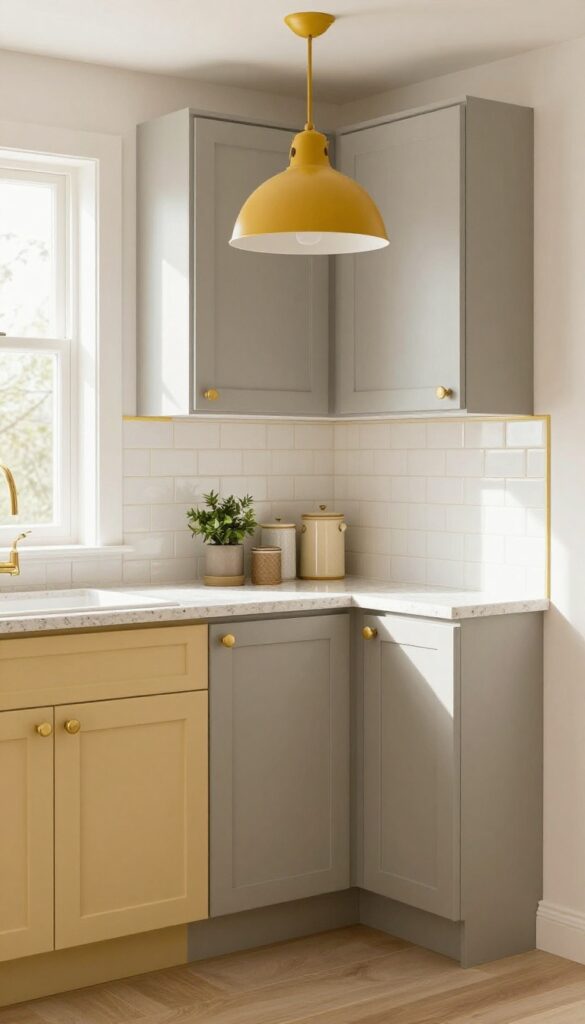
Breaking up your cabinetry with two colors is a clever way to add depth without overwhelming a small kitchen. Grey on the lower cabinets grounds the space, while yellow on the uppers lifts the eye and makes the room feel airier. Swap the placement if you prefer a heavier visual base—either way, the contrast creates a natural focal point that feels intentional and fresh.
This approach works especially well in galley or L-shaped kitchens where you want to avoid a boxed-in feeling. The horizontal separation draws the eye across the room, making narrow layouts appear wider. Stick with a soft, warm grey like dove or greige to keep the look inviting, and pair it with a muted mustard or butter yellow so the contrast feels sophisticated, not jarring.
For a cohesive finish, use the same hardware on both colors—brass or matte black knobs tie the two tones together seamlessly.
Best Color Combos
Opt for a warm grey with yellow undertones (like Sherwin-Williams Repose Gray) and a creamy yellow (such as Farrow & Ball Babouche). Avoid cool greys that can clash with yellow's warmth. If you want more drama, try charcoal grey lower cabinets with a pale lemon upper.
Small-space Fix
In a narrow kitchen, place the lighter yellow on upper cabinets to keep the ceiling feeling high. Use open shelving on one side to break up the color block and add visual breathing room. This trick prevents the two-tone look from feeling too heavy in tight quarters.
Finishing Touch
Carry the yellow into small accents like a backsplash tile trim or a pendant light shade. Repeat the grey on your island or a rolling cart to create a balanced color story that flows naturally around the room.
6. Grey Subway Tile with Yellow Grout

Subway tile is a kitchen classic, but it doesn't have to look like every other renovation from 2015. By swapping standard white grout for a cheerful yellow, you can give this timeless material a fresh, custom feel. The result is a backsplash that feels both clean and playful—perfect for small kitchens that need a subtle personality boost without overwhelming the space.
The magic of this idea lies in its restraint. Grey subway tile keeps the background neutral and light-reflective, while the yellow grout adds just enough color to make the wall feel intentional. In a small kitchen, this trick draws the eye without closing the room in.
The yellow lines create a subtle grid pattern that feels graphic and modern, not loud. It's a simple swap that makes a big difference—and it's surprisingly easy to achieve with standard tile and a colored grout additive.
Best Tile And Grout Pairings
- Stick with a matte or satin-finish grey tile in a classic 3×6 or 4×8 size. Glossy tiles can make the yellow grout look too shiny, so a softer finish keeps the look balanced. For the grout, use a pre-mixed yellow grout or add a colorant to white grout.
- A warm butter yellow works best—avoid neon or mustard tones that might clash with the grey. Test a small area first, since grout color can darken slightly as it dries.
Small-space Styling Tip
In a compact kitchen, carry the tile from counter to upper cabinet only, rather than going all the way to the ceiling. This keeps the yellow grout lines at eye level, where they make the most impact. Pair with open shelving in a light wood tone to echo the warmth of the yellow, and use white or pale grey upper cabinets to keep the space feeling airy.
Finishing Touch
Add a few yellow accents on the counter—like a ceramic canister, a small vase, or a tea towel—to echo the grout color and tie the scheme together. Avoid going overboard; the grout is the star, so let it shine. A single yellow utensil crock or a fruit bowl with lemons is enough to complete the look without competing.
7. Yellow Pendant Lights Over a Grey Island
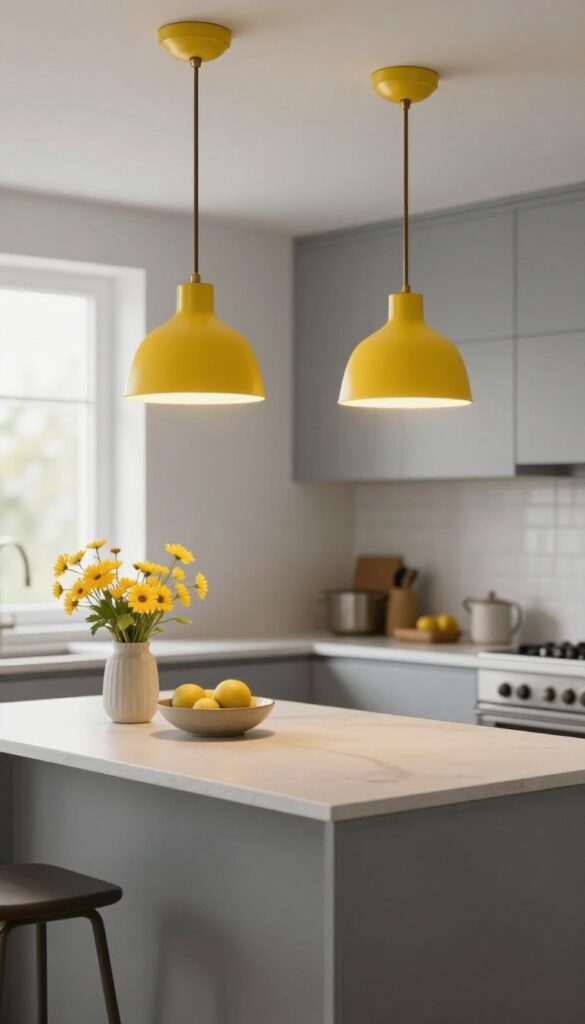
A grey kitchen island is a solid, grounding element, but it can feel a little flat without the right lighting. Hanging two or three yellow pendant lights above it instantly changes the energy. The warm glow and cheerful color brighten the workspace while the grey keeps everything anchored.
It's a simple swap that makes a small kitchen feel more open and inviting.
In a small kitchen, every design choice needs to earn its keep. Yellow pendant lights do double duty: they provide task lighting for the island and inject a dose of optimism. The contrast between the cool grey base and the sunny yellow above creates a natural focal point without taking up any floor space.
For a cohesive look, choose pendants with a matte or brushed metal finish—brass or black works well with grey. Keep the island clutter-free to let the lights shine, literally and figuratively.
Small-space Fix
If your kitchen is tight on square footage, use two smaller pendants instead of three larger ones. This prevents the lights from overwhelming the island or making the ceiling feel lower. Hang them about 30 to 36 inches above the countertop for the best balance of light and visual breathing room.
Best Colors
Stick with a muted or warm yellow—think butter, mustard, or honey. Neon or lemon yellow can feel jarring against grey. Pair the pendants with warm white bulbs (2700K to 3000K) to keep the glow soft and cozy, not harsh.
Finishing Touch
Add a few yellow accents on the island itself, like a ceramic fruit bowl or a small vase of fresh flowers. This ties the pendants into the rest of the space and makes the color feel intentional rather than random.
8. Grey Backsplash with Yellow Accents in Decor
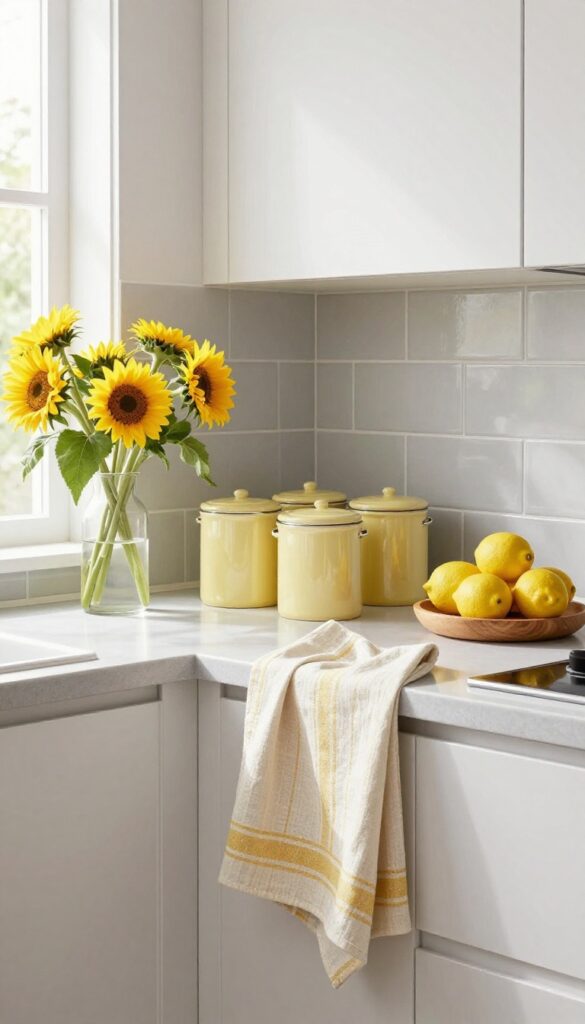
A grey backsplash is a safe, neutral choice, but it doesn't have to be boring. By layering in yellow through small, swapable decor pieces, you get a kitchen that feels cheerful without committing to a permanent color splash. This approach works especially well in small kitchens where bold patterns can feel overwhelming—here, the grey keeps things calm while the yellow adds just the right pop of energy.
The beauty of this idea is its flexibility. You can change the yellow accents with the seasons or your mood without any renovation. A soft grey tile—like a classic subway or a textured stone-look—creates a serene backdrop.
Then, bring in yellow through items you already use: a ceramic canister set, a linen tea towel, a bright fruit bowl, or even a small vase of sunflowers. The contrast is subtle but effective, making the space feel both grounded and lively.
Best Colors
Stick to a cool or warm grey that complements your countertops—think a light dove grey or a slightly warmer greige. For yellow, opt for a soft butter or mustard tone rather than a neon or lemon; these feel more sophisticated and age well with decor changes.
Small-space Fix
In a compact kitchen, avoid cluttering the counter. Choose two or three yellow accents maximum—like a tea towel on the oven handle, a small canister near the stove, and a fruit bowl on the island. This keeps the look intentional and airy, not busy.
Shelf Styling Tip
If you have open shelving, use yellow sparingly. Stack a few yellow-toned dinner plates or a small yellow cookbook between neutral items. This draws the eye without overwhelming the grey backdrop, and it's easy to swap out when you want a new look.
9. Yellow Window Frame or Trim
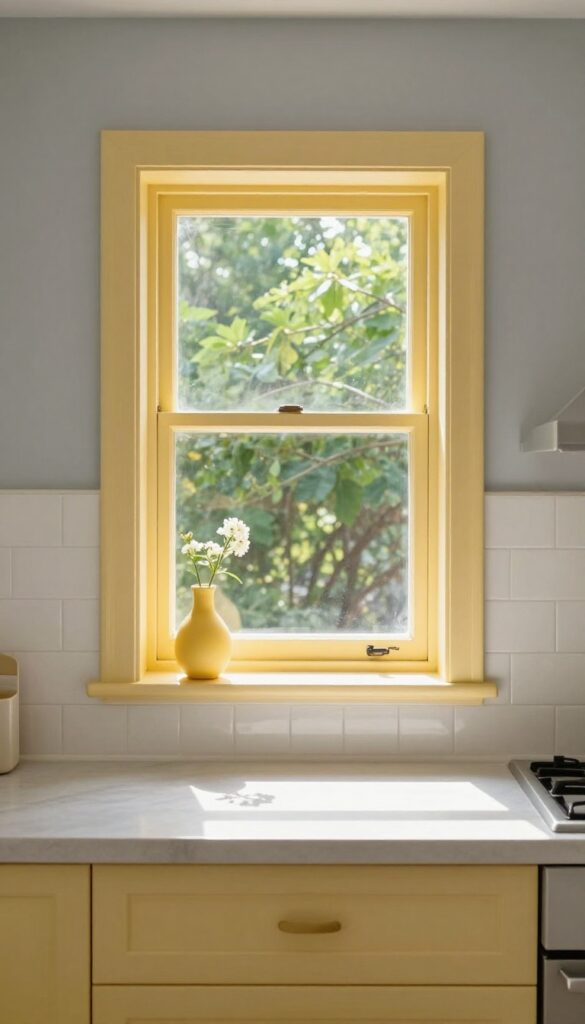
A pop of yellow on window frames or interior trim is one of the easiest ways to bring sunshine into a grey kitchen without overwhelming the space. It draws your eye to the window, making the room feel larger and more connected to the outdoors. In a small kitchen, this trick adds a cheerful focal point that doesn't take up any floor or counter space.
Painting just the window frame or a strip of trim a warm butter yellow creates a subtle but effective contrast against grey walls. It frames the view like a piece of art and adds a sunny detail that feels fresh and inviting. For renters, consider removable peel-and-stick trim or a temporary film to achieve the look without permanent changes.
Best Colors
Stick with muted yellows like daffodil, honey, or pale marigold to keep the look clean and modern. Avoid neon or overly bright shades that can feel jarring against cool grey. A soft, warm yellow works best with both light and dark grey tones.
Small-space Fix
In a compact kitchen, use yellow on the window frame only, not the entire trim. This keeps the color as an accent without making the room feel busy. Pair with white or light grey walls to maximize the airy effect.
Finishing Touch
Add a simple yellow vase or a small potted plant on the windowsill to echo the trim color and tie the look together. This creates a cohesive, curated feel without extra effort.
10. Grey Flooring with a Yellow Runner
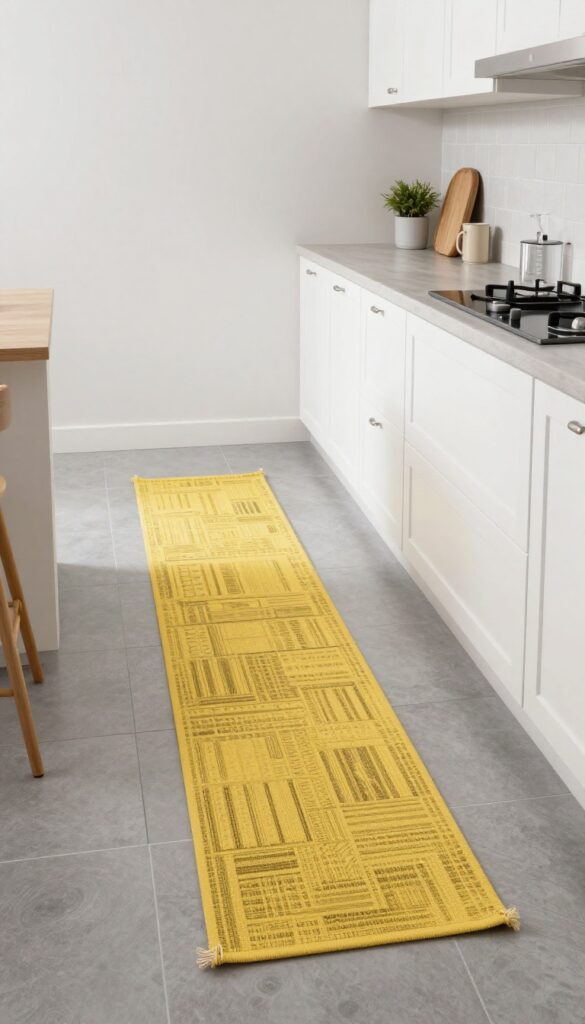
Grey floors are a practical choice for busy kitchens—they hide crumbs and spills surprisingly well. But they can feel a little cold on their own. That's where a yellow runner comes in.
It adds a soft, warm layer underfoot and instantly makes the space feel more inviting. In an open-plan layout, the runner also helps define the kitchen zone without building a single wall.
Start with a neutral grey floor—tiles or vinyl planks work great, especially in a small kitchen where you want durability and easy cleaning. Then choose a yellow runner with a subtle pattern, like a faded geometric or a soft stripe. The pattern adds visual interest without overwhelming the room.
Make sure the runner is long enough to span the main work area, so it anchors the space and guides the eye through the kitchen. This combo keeps the floor practical while bringing in that cheerful yellow contrast you're after.
Best Materials
For the flooring, porcelain grey tiles are stain-resistant and handle moisture well. If you prefer something softer underfoot, luxury vinyl planks in a grey wood-look offer warmth and are budget-friendly. For the runner, choose a low-pile or flatweave wool or polypropylene rug—it's easier to clean in a kitchen and won't trap crumbs.
Small-space Fix
In a narrow kitchen, align the runner with the cabinetry run to create a visual pathway. This tricks the eye into seeing more length. If your kitchen is square, place the runner perpendicular to the sink or island to break up the floor area and add a sense of width.
Pattern Pairing
Keep the runner pattern simple if your countertops or backsplash are busy. A solid yellow with a subtle border works well. If your kitchen is mostly neutral, go for a bolder Moroccan or kilim pattern—it adds texture and becomes a focal point without clashing.
11. Yellow and Grey Patterned Roman Shade

A window treatment can completely shift the energy of a kitchen, and a Roman shade in a yellow-and-grey geometric pattern does exactly that. It softens the hard lines of cabinets and countertops while adding a playful pop of color that feels intentional, not overwhelming. In a small kitchen, this is a smart move because it brings the color scheme together without taking up any floor or counter space.
The geometric pattern creates visual interest and a sense of movement, which is especially nice in a compact kitchen where you want the eye to travel around the room. The yellow adds warmth and cheer, while the grey keeps it grounded and modern. Because it's a shade, you can adjust the light easily—let in full sun when you need brightness, or lower it for a softer glow during meals.
It's an affordable, renter-friendly way to make a big impact without painting or tiling.
Pattern And Scale Tips
For a small kitchen, choose a pattern that's medium-scale—not too tiny (which can look busy) and not too large (which can feel overwhelming). A diamond, stripe, or herringbone motif in yellow and grey works beautifully. If your kitchen has a lot of solid surfaces, a busier pattern adds life; if there's already pattern elsewhere (like backsplash tile), go with a simpler geometric repeat.
Placement And Light Control
Hang the shade as close to the ceiling as possible to make the window feel taller and the room larger. For a kitchen that gets direct sun, choose a shade with a light-filtering or room-darkening liner—this also helps with energy efficiency. If privacy isn't a concern, a semi-sheer fabric lets in soft, diffused light that makes the yellow glow nicely.
Coordinate With The Rest Of The Room
Pull one of the grey tones from the pattern into your countertop accessories or bar stools, and use a soft yellow in a fruit bowl or small vase. This ties the shade into the rest of the kitchen without matching everything exactly. A few brass or gold accents (like a faucet or cabinet pulls) will complement the warmth of the yellow and add a touch of elegance.
FAQ
What shade of grey works best with yellow in a small kitchen?
Light to medium greys like dove grey or warm greige work best. They keep the space bright and let the yellow stand out without feeling harsh.
Can I use grey and yellow in a kitchen with no natural light?
Absolutely. Stick to pale greys and soft buttery yellows, and add good task lighting. Glossy finishes on tiles or cabinets can also help reflect light.
How do I prevent yellow from overwhelming a small kitchen?
Use yellow as an accent rather than a main color. Limit it to one or two elements like a backsplash, stools, or decor, and let grey be the dominant neutral.
What other colors pair well with grey and yellow?
White keeps things crisp, while natural wood tones add warmth. Small touches of green from plants or a hint of navy can also complement the palette nicely.
Is grey and yellow a trendy or timeless combination?
It's a classic pairing that feels current without being faddy. Grey is a timeless neutral, and yellow brings a cheerful lift that never goes out of style.
Conclusion
Grey and yellow bring a lively yet balanced energy to any small kitchen. Whether you go bold with a yellow hood or subtle with a patterned shade, these ideas prove that contrast can feel cohesive and cheerful.
Start with one element that speaks to you, and let the rest follow naturally.