11 Minimalist Kitchen Organization Ideas That Feel Warm and Lived-In
A minimalist kitchen doesn't have to feel cold or sterile. With the right approach, you can keep surfaces clear and cabinets tidy while still making the space feel warm and inviting. It's all about choosing storage solutions that blend practicality with a touch of personality.
Think open shelving with a few favorite dishes, baskets that add texture, and countertops that hold just what you need. The goal isn't perfection—it's a kitchen that works for real life, where a coffee mug left out feels intentional, not messy.
These 11 ideas will help you organize your kitchen in a way that feels clean, calm, and genuinely lived-in. No rigid rules, just smart choices that make everyday cooking and gathering easier.
1. Open Shelving with a Curated Mix
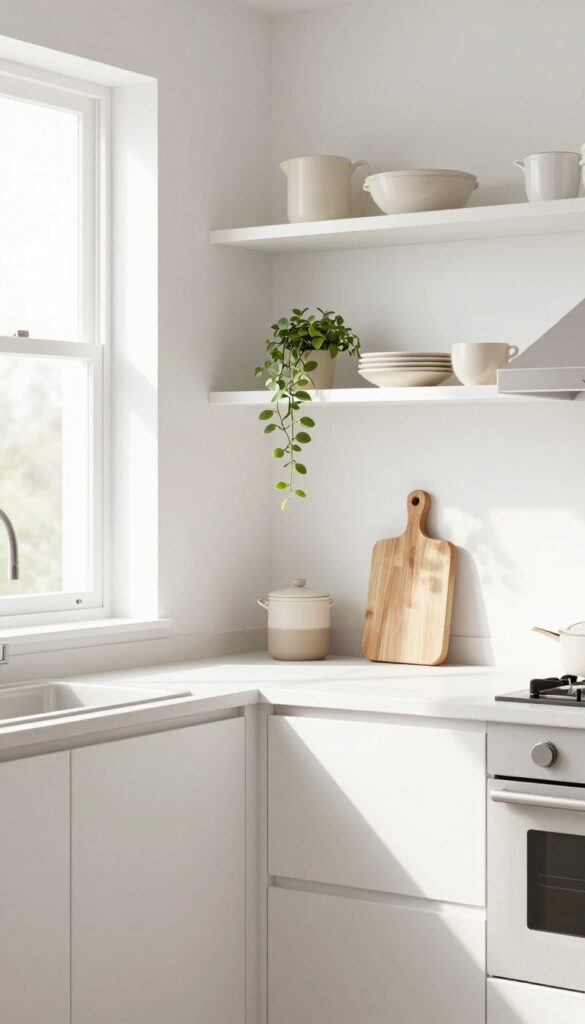
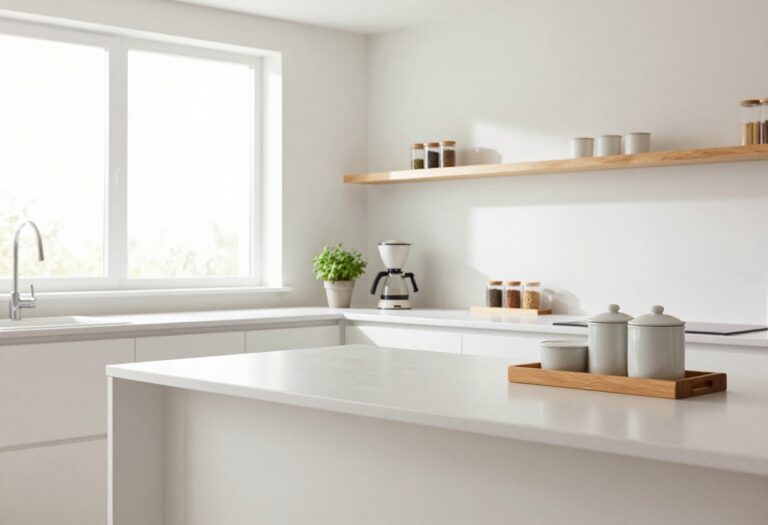
Swapping upper cabinets for open shelves instantly makes a kitchen feel more spacious and airy. The trick is to keep the display intentional—think everyday dishes in soft neutrals, a small trailing plant, and a wooden cutting board for warmth. This isn't about showing off fancy collections; it's about having your most-used items within easy reach while adding a layer of texture that feels both practical and personal.
Why It Works
Open shelving forces you to edit down to the essentials, which naturally reduces clutter. The visual lightness helps a small kitchen feel bigger, and the warmth of wood and greenery keeps it from looking sterile or cold.
Best For
This idea works well in smaller kitchens where upper cabinets can feel overwhelming, or in any kitchen where you want a more relaxed, lived-in vibe. It's also great for renters who can install floating shelves without a major renovation.
Styling Tip
Stick to a simple color palette—white, beige, and warm wood tones. Group items in odd numbers (three plates, one bowl, one plant) and leave some empty space on each shelf. A single ceramic pitcher or a stack of linen napkins adds softness without visual noise.
2. Glass Jars for Pantry Staples
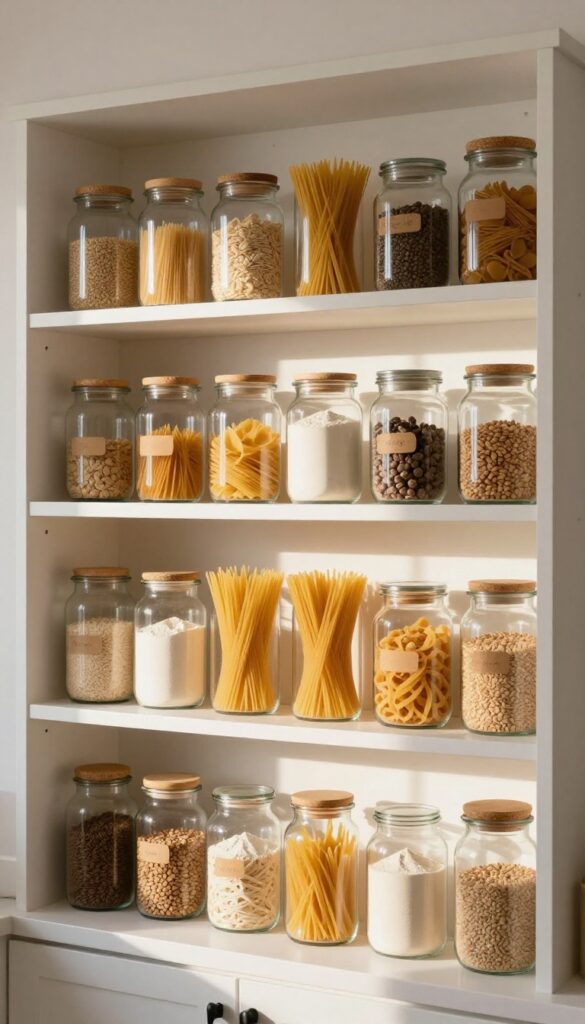
There's a reason glass jars have become a staple in minimalist kitchens. They bring a sense of order without feeling sterile or cold. When you swap out cardboard boxes and plastic bags for clear glass, your pantry instantly feels more intentional—like a cozy little market aisle you get to walk through every day.
The warm, lived-in angle comes from choosing jars with slightly different shapes or a soft amber tint, so it doesn't look like a science lab.
Why It Works
Glass jars seal in freshness and let you see exactly how much pasta or flour you have left. No more digging to the back of a cabinet to find half-empty bags. Plus, the uniform look reduces visual clutter, making your kitchen feel calmer and more spacious.
Best For
This idea works well in any kitchen, but it's especially great for open shelving or glass-front cabinets where the contents are on display. It also helps small pantries stay organized because you can stack jars neatly and grab what you need without rummaging.
Styling Tip
Mix in a few jars with cork or bamboo lids for texture, and use simple chalk labels or a label maker for a clean finish. Keep similar items together—like all baking supplies on one shelf—and leave a little breathing room between jars so the shelf doesn't look cramped.
3. A Single Tray for Countertop Essentials
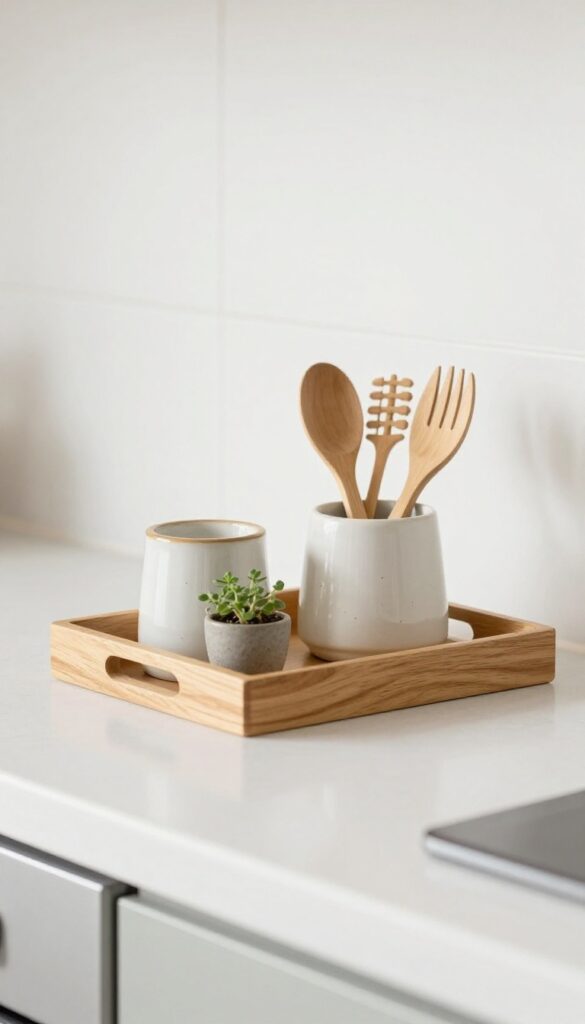
A countertop can quickly turn into a landing pad for everything from olive oil to mail. The trick is to give those everyday items a designated home without making the space feel cluttered. A simple tray—wooden, ceramic, or even a sleek metal one—gathers your most-used tools into one intentional spot.
It creates a visual boundary that keeps things tidy while still feeling warm and welcoming, especially when you choose a natural material that adds texture.
Why It Works
A tray corrals the chaos by defining a specific zone. Instead of items spreading across the entire counter, they stay contained in one small area, which instantly makes the kitchen look more organized. It also makes cleaning easier—just lift the tray and wipe down the surface beneath.
Best For
This idea is perfect for kitchens with limited counter space or for anyone who wants to keep daily essentials like oil, salt, pepper, and a small utensil holder within arm's reach. It works especially well on islands, near the stove, or next to the coffee station.
Styling Tip
- Choose a tray with a slight lip to prevent items from sliding off. For a warm, lived-in feel, go with a wooden tray and pair it with a ceramic salt cellar and a small potted herb. Keep the arrangement loose—don't overcrowd it.
- Leave a little breathing room around each item so it still feels airy.
4. Drawer Dividers for Utensils and Gadgets
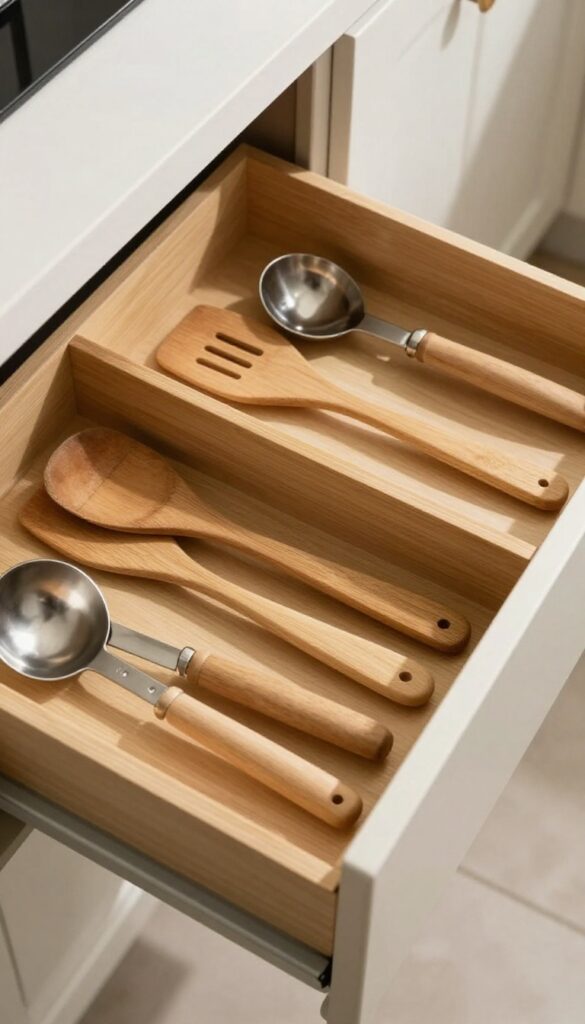
Let’s talk about the inside of your drawers. You know the one—where spatulas and measuring spoons tangle into a metal knot every time you open it. Adjustable bamboo or metal dividers change that entirely.
They bring a calm, structured feel to your kitchen without making it look sterile. The warm wood tones of bamboo keep things cozy, while a soft neutral palette in the drawer itself maintains that clean, minimalist look. Suddenly, every tool has its own spot, and cooking feels less like a scavenger hunt.
Why It Works
- Dividers stop the chaos before it starts. Instead of rummaging through a pile of utensils, you see exactly where the peeler lives and grab it in one motion. That small win adds up over a busy week, making meal prep smoother and less frustrating.
- Plus, the visual order of neatly separated slots feels satisfying every time you open the drawer.
Best For
Deep drawers that tend to become a black hole of kitchen tools. If you have a junk drawer that you avoid opening, this is the fix. It’s also perfect for anyone who cooks often and wants to speed up their workflow—no more digging for the garlic press when you’re mid-recipe.
Styling Tip
- Stick to one material for the dividers, like bamboo or matte metal, to keep the look cohesive. Line the drawer with a soft neutral liner or a subtle pattern that complements your countertops. Group utensils by function: all spatulas together, measuring tools in their own section, and peelers or zesters in a smaller compartment.
- It’s practical but also pretty to look at.
5. Baskets on Top of Cabinets
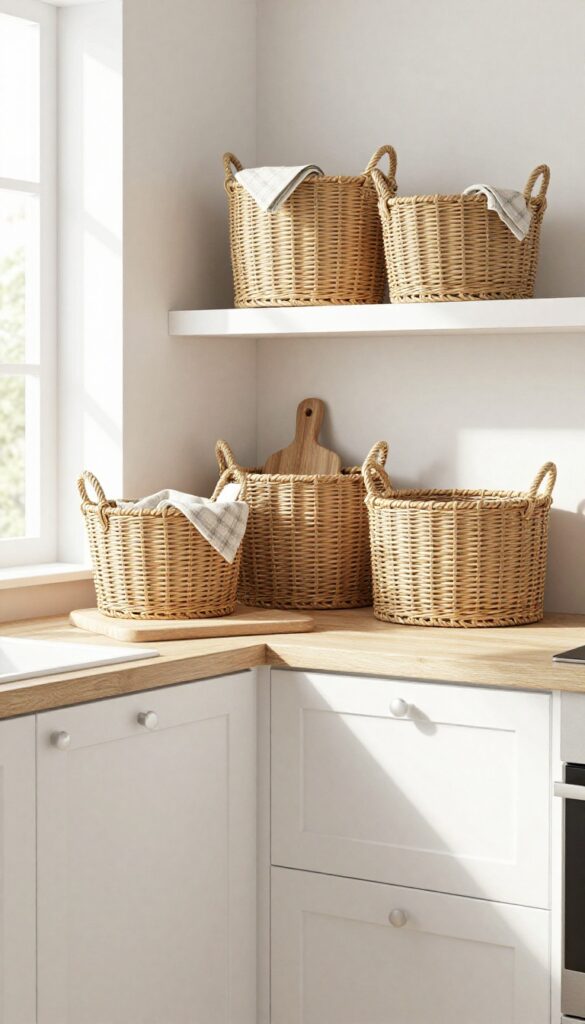
That empty space above your cabinets often becomes a dusty landing zone for random items. Instead of letting it collect clutter, place a few woven baskets up there to store things you don't reach for every day. The baskets hide the mess while adding warmth and texture, making the whole kitchen feel more layered and lived-in.
Why It Works
Baskets create a cohesive look by corralling odd-shaped items like serving platters or extra linens into one visual unit. The natural textures soften the hard lines of cabinets and countertops, giving the kitchen a collected-over-time feel without any real effort.
Best For
This trick works best in kitchens with standard ceiling height where the gap above cabinets is visible but not huge. It's also great for rental kitchens where you can't modify the cabinets but want to add character and hide the things you don't use daily.
Styling Tip
Stick with one basket material—like seagrass or water hyacinth—to keep the look intentional. Mix two or three sizes and arrange them asymmetrically so it doesn't feel too staged. Leave a little breathing room between baskets so the space still feels light.
6. A Magnetic Knife Strip on the Wall
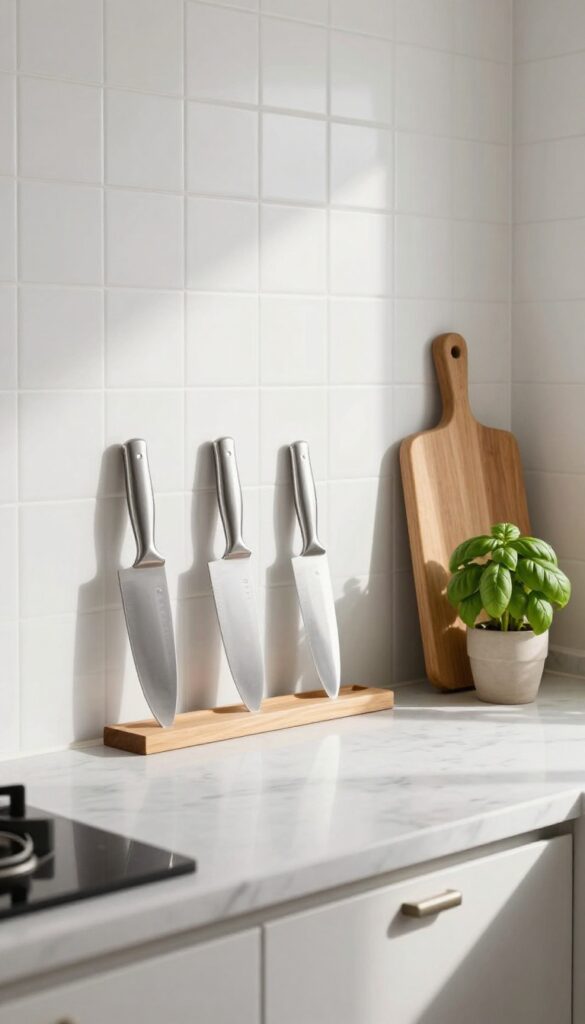
Drawers cluttered with bulky knife blocks or loose blades can make meal prep feel more chaotic than calming. A magnetic knife strip mounted on the wall changes that by putting your most-used tools right where you need them—within arm's reach of the cutting board. The key is choosing a slim, wooden-backed strip that adds warmth rather than an industrial vibe, so the kitchen still feels inviting and lived-in.
Why It Works
It frees up precious drawer and counter space while keeping knives organized and visible. The magnetic hold is strong enough for heavy chef's knives, and the vertical storage prevents blades from dulling against other utensils.
Best For
Any kitchen where drawer space is tight or you want to keep knives easily accessible. It works especially well in galley kitchens or small apartments where every inch counts.
Styling Tip
Mount the strip on a stretch of wall between the counter and upper cabinets, ideally near your main prep area. Pair it with a wooden cutting board and a small potted herb to soften the look.
7. Under-Sink Bins for Cleaning Supplies
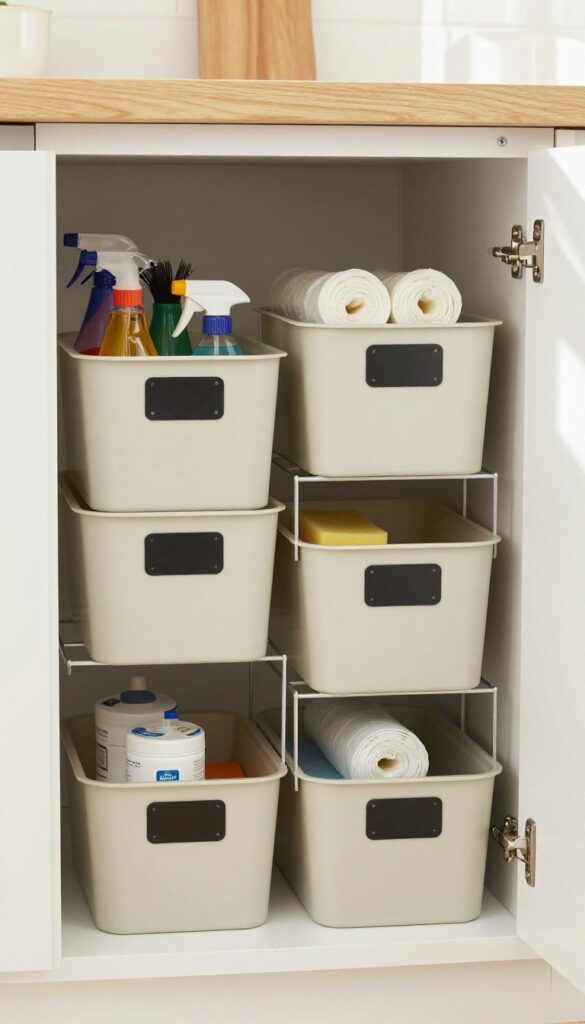
That cabinet under the sink can quickly become a dark, cluttered abyss where bottles topple over and trash bags get lost. But with a few stackable bins or a pull-out organizer, it transforms into a tidy command center for your cleaning routine. Group like items—sponges, sprays, trash bags—so you can grab what you need without digging.
A small caddy for daily cleaners keeps everything neat and within easy reach, making the space feel calm and intentional.
Why It Works
Stackable bins maximize vertical space that often goes unused, and grouping items by category cuts down on search time. A pull-out organizer lets you see everything at a glance, so you're not rummaging around in the dark. This system keeps the area functional and clutter-free, which makes cleaning feel less like a chore.
Best For
This idea is perfect for any kitchen, but it's especially helpful in small kitchens where every inch of storage counts. It also works great for households with multiple cleaners or for anyone who wants to streamline their under-sink area without a major renovation.
Styling Tip
Choose bins in a neutral tone like white, beige, or soft gray to keep the look cohesive. For a warmer feel, opt for natural rattan or bamboo bins that add texture. Label each bin with a simple tag or chalkboard sticker so everyone in the family knows where things go.
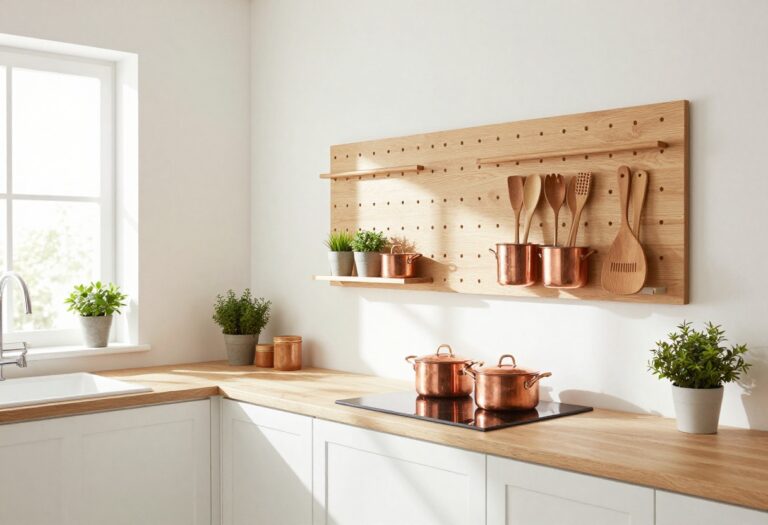
8. A Pegboard for Pots and Pans
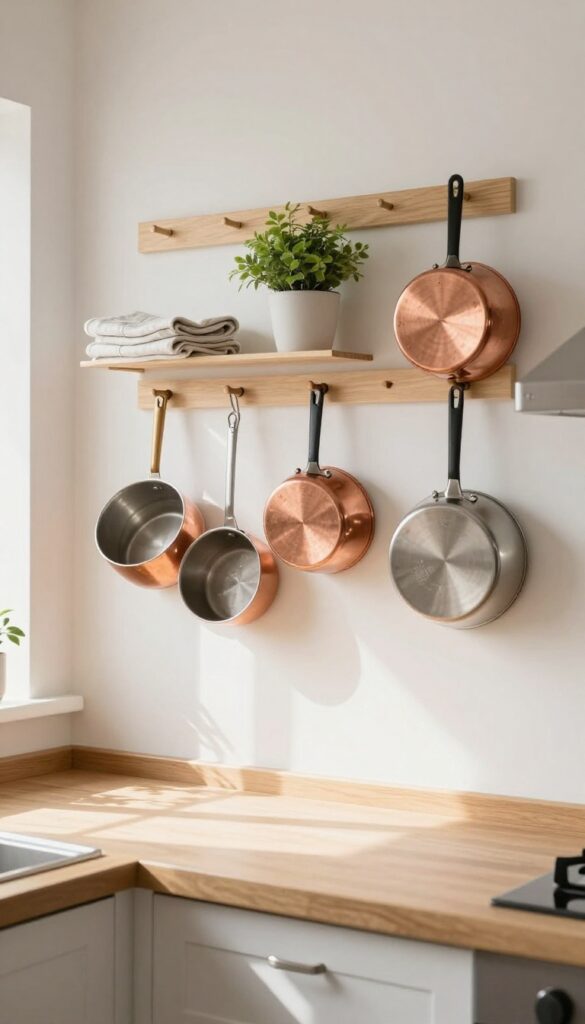
Pots and pans can be the hardest items to store neatly. They're bulky, awkward, and tend to clatter around in cabinets. A pegboard offers a simple solution that turns this everyday challenge into a design feature.
Mounted on a blank wall or inside a cabinet door, it keeps everything visible and within reach while adding a warm, lived-in feel to your kitchen.
Why It Works
Pegboards are endlessly customizable. You can arrange hooks, shelves, and bins exactly where you need them, and rearrange as your cookware collection changes. By hanging heavy items, you free up cabinet space and create an airy, open look that makes the kitchen feel larger and more organized.
Best For
This idea works well in small to medium kitchens where cabinet space is tight. It's also great for renters who can't make permanent changes—most pegboards mount with just a few screws and can be patched easily when you move out.
Styling Tip
Choose a wooden pegboard or paint a metal one in a warm tone like sage green or terracotta to keep the look soft and inviting. Mix in a few small plants or a pretty dish towel to break up the metal and add texture.
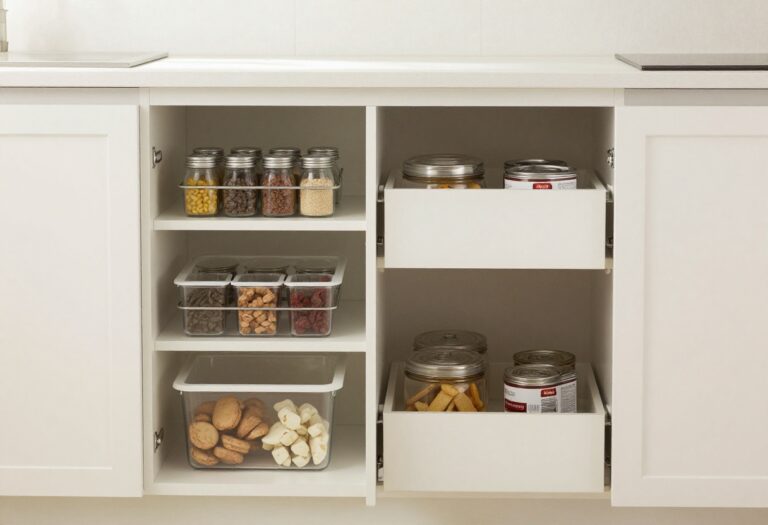
9. Lazy Susans for Corner Cabinets
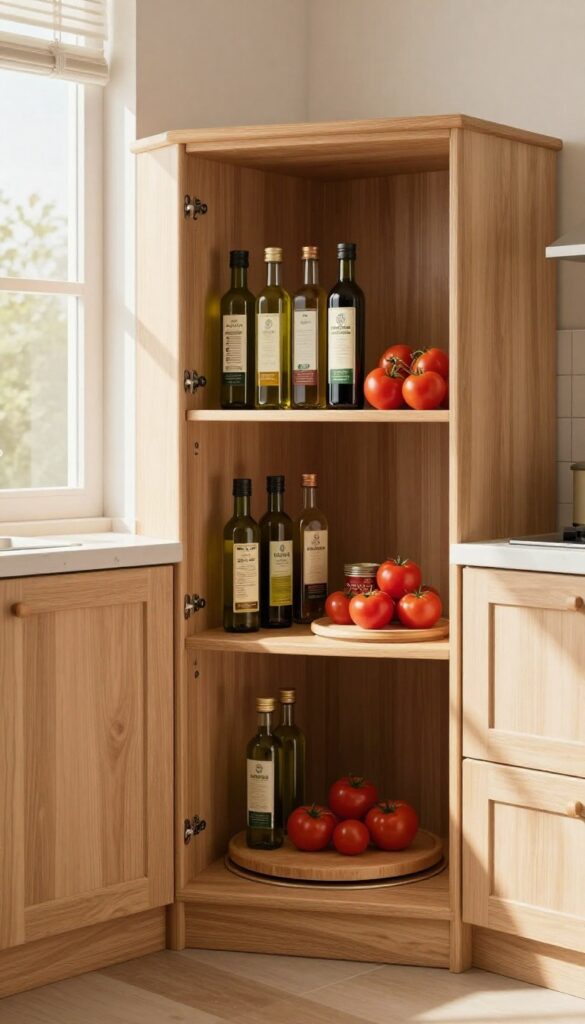
Corner cabinets are the black holes of the kitchen—things go in, and they never come out. A lazy Susan changes that by bringing everything into easy reach. Spin it once, and suddenly that bottle of sesame oil or can of diced tomatoes is right in front of you.
It's a small fix that makes a big difference in how you use your space every day.
Why It Works
A lazy Susan eliminates the need to dig into dark corners or unstack precariously balanced items. By rotating the tray, you can see and grab what you need without moving anything else. It turns wasted space into functional storage that actually works with your routine.
Best For
Deep corner base cabinets or tall pantry shelves where items tend to get lost. It's also great for upper corner cabinets that are hard to reach. If you have a blind corner cabinet, a half-moon lazy Susan is a smart fit.
Styling Tip
Choose a wooden lazy Susan for a warm, lived-in feel that blends with butcher-block counters or open shelving. Clear acrylic keeps the look airy and modern. Group similar items together—oils and vinegars on one side, canned goods on the other—so the spin reveals a tidy, curated view.
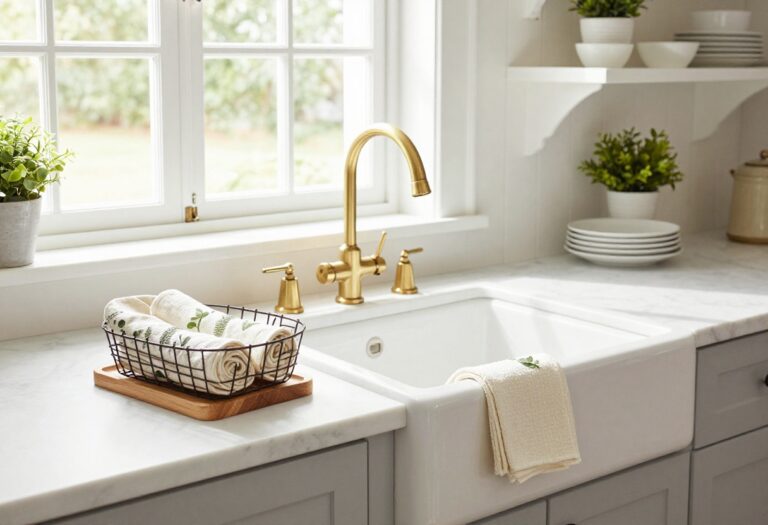
10. A Small Basket for Produce on the Counter
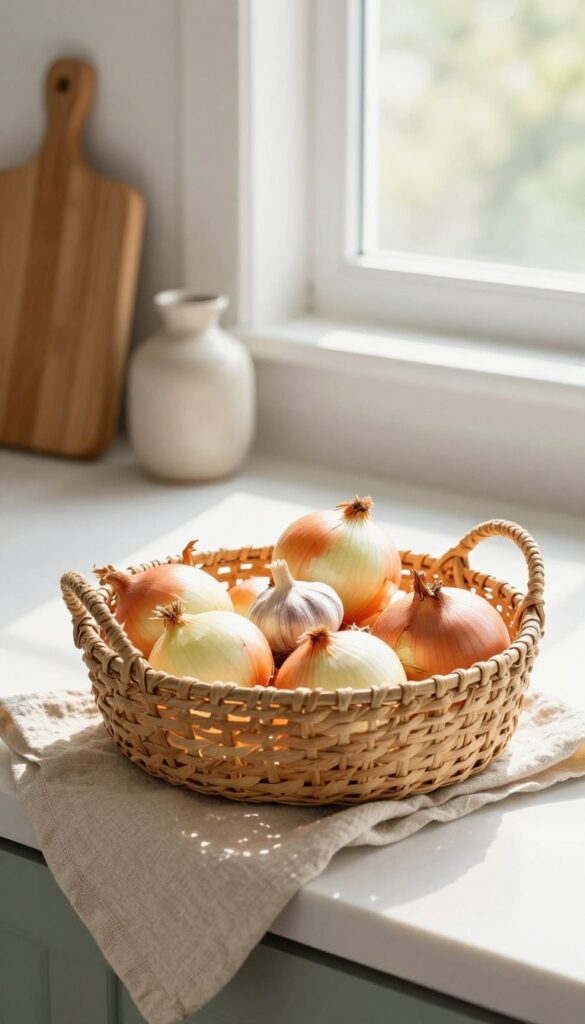
A shallow basket filled with onions, garlic, or apples adds instant warmth to your kitchen counter. It’s a small touch that makes the space feel lived-in and inviting, while also keeping those everyday ingredients within easy reach. Plus, it cuts down on fridge clutter, so your produce stays fresh and visible.
Why It Works
This idea works because it combines function with natural decor. The basket introduces texture—whether woven seagrass, wire, or wood—and the produce adds color. It turns a practical necessity into a styling moment without any extra effort.
Best For
Best for kitchens where you cook often and want quick access to staples like onions, garlic, or citrus. It also suits anyone who wants to reduce fridge overload and bring a bit of market-fresh charm to their countertop.
Styling Tip
Choose a basket with an open weave or slatted sides for airflow, which helps produce last longer. Keep it to one or two types of produce to avoid a cluttered look. A simple linen cloth underneath can catch any dirt and add a soft layer.
11. Hanging Mugs Under Shelves
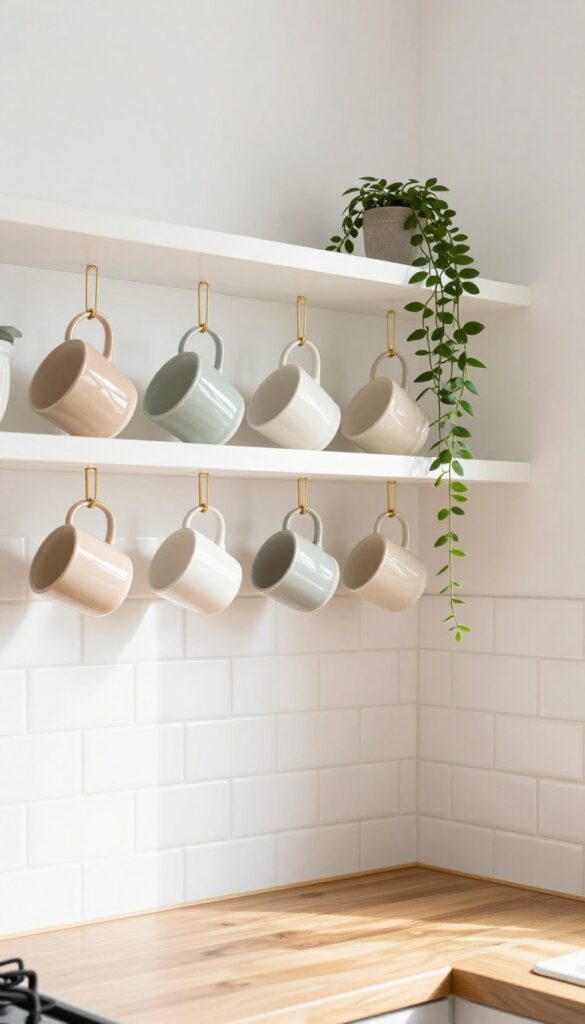
There’s something quietly satisfying about glancing up and seeing your favorite mugs lined up like little soldiers. By installing simple mug hooks under an upper shelf or cabinet, you turn everyday drinkware into a living display. The warm, lived-in feel comes from the mix of shapes and colors—each mug tells a story, whether it’s a thrifted find or a handmade gift.
It’s practical, yes, but it also adds a layer of personality that makes the kitchen feel truly yours.
Why It Works
Mug hooks reclaim valuable shelf space while keeping your most-used cups within easy reach. The visual rhythm of hanging mugs breaks up the monotony of closed cabinets and adds a casual, curated look. Plus, it encourages you to rotate mugs seasonally or by mood, keeping the kitchen feeling fresh without any extra storage bins.
Best For
This idea shines in kitchens with limited upper cabinet space or open shelving. It’s especially great for renters (hooks are easy to remove) and for anyone who loves collecting unique mugs but hates the clutter. If you have a coffee or tea station, hanging mugs right above it creates a dedicated, charming zone.
Styling Tip
Stick to a cohesive color palette—think warm whites, soft earth tones, and a few muted accent colors—so the mugs feel intentional rather than chaotic. Arrange them by height or handle direction for a tidy look. Add a small trailing plant on the shelf above to soften the edges and bring in a touch of nature.
FAQ
How do I keep my minimalist kitchen from feeling too bare?
Add warmth with natural materials like wood, woven baskets, and linen towels. A few personal touches—a plant, a colorful dish towel, or a favorite cookbook—keep it inviting without clutter.
What's the best way to start organizing a minimalist kitchen?
Start by clearing countertops of everything you don't use daily. Then group similar items and find a designated home for each. Focus on one area at a time, like a single drawer or shelf.
Can I still have a minimalist kitchen with a lot of cookware?
Yes. Use closed cabinets for less-used items and open storage for daily essentials. A pegboard or hanging pot rack can keep cookware accessible without taking up counter space.
How often should I declutter my kitchen to maintain minimalism?
A quick seasonal review works well. Every few months, go through cabinets and drawers to donate or discard items you haven't used. This keeps your kitchen from accumulating extras.
What are some affordable minimalist kitchen organization tools?
Bamboo drawer dividers, glass jars from thrift stores, and simple wire baskets are budget-friendly. You can also repurpose items like mason jars or small trays you already own.
Conclusion
A minimalist kitchen doesn't have to mean sacrificing comfort or personality. By choosing organization ideas that are both practical and warm, you create a space that feels clean without being cold. The key is to keep only what you need and love, and to let a few personal touches shine through.
Start with one or two of these ideas and see how they change your daily routine. Small changes can make a big difference in how your kitchen looks and feels—making it a place you genuinely enjoy spending time in.