11 Ways Navy Blue Cabinets Make Your Kitchen Look Elegant (Weekend Refresh Friendly)
Navy blue cabinets bring instant depth and sophistication to a kitchen, but they can feel a bit serious if you don't balance them right.
The trick is to layer in warmth through textures, metals, and soft touches that keep the space cozy rather than cold.
Whether you're planning a full refresh or just a weekend update, these 11 ideas will help your navy cabinets shine with an elegant, lived-in feel.
1. Warm Brass Hardware That Feels Like Jewelry
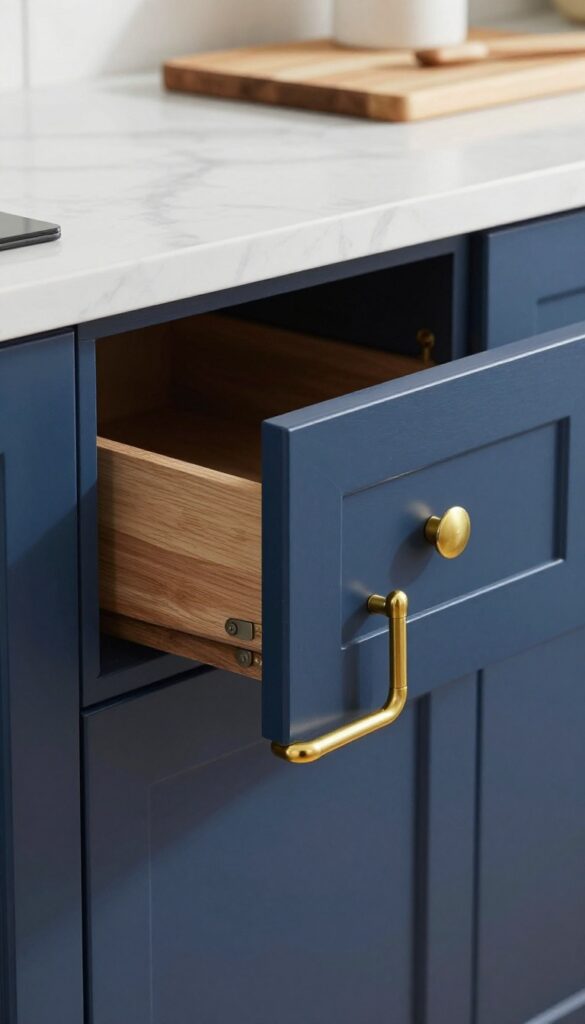
Navy cabinets already bring a sense of depth and richness to a kitchen. But the hardware you choose can either blend in or become a standout detail that elevates the whole look. Swapping out standard knobs and pulls for warm brass finishes is one of the easiest weekend changes you can make, and it instantly adds a jewelry-like touch to your cabinetry.
Unlacquered brass or aged brass hardware brings a warm golden glow that contrasts beautifully with deep navy. Over time, unlacquered brass develops a natural patina, giving your kitchen a lived-in, collected feel without any extra effort on your part. This small swap makes a big visual impact, turning ordinary cabinets into something that feels intentional and polished.
Best Finishes To Look For
Stick with unlacquered brass, aged brass, or oil-rubbed bronze with warm undertones. Avoid polished chrome or nickel, which lean cool and can clash with the warmth you're going for. Unlacquered brass starts bright and mellows over time, while aged brass comes pre-darkened for an instant antique look.
Where To Use Them
Focus on the most visible cabinets first: upper cabinet pulls, drawer fronts on the island, and any glass-front doors. Mixing shapes adds interest—try cup pulls for drawers and bar pulls for doors. Keep the finish consistent across all hardware for a cohesive, curated feel.
Styling Tip
Let your hardware be the star by keeping countertops and backsplash relatively simple. A white marble or quartz countertop with a subtle veining lets the brass shine. Add a few warm wood cutting boards or a brass faucet to tie the look together without overwhelming the space.
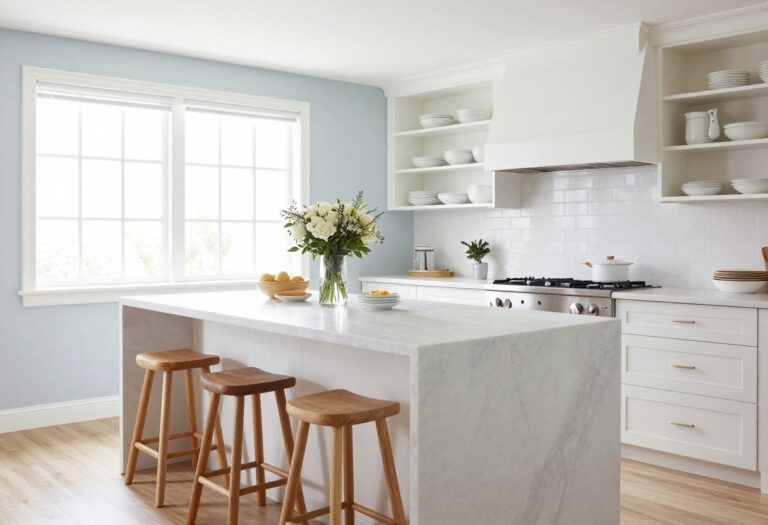
2. Open Shelving With Creamy White Ceramics
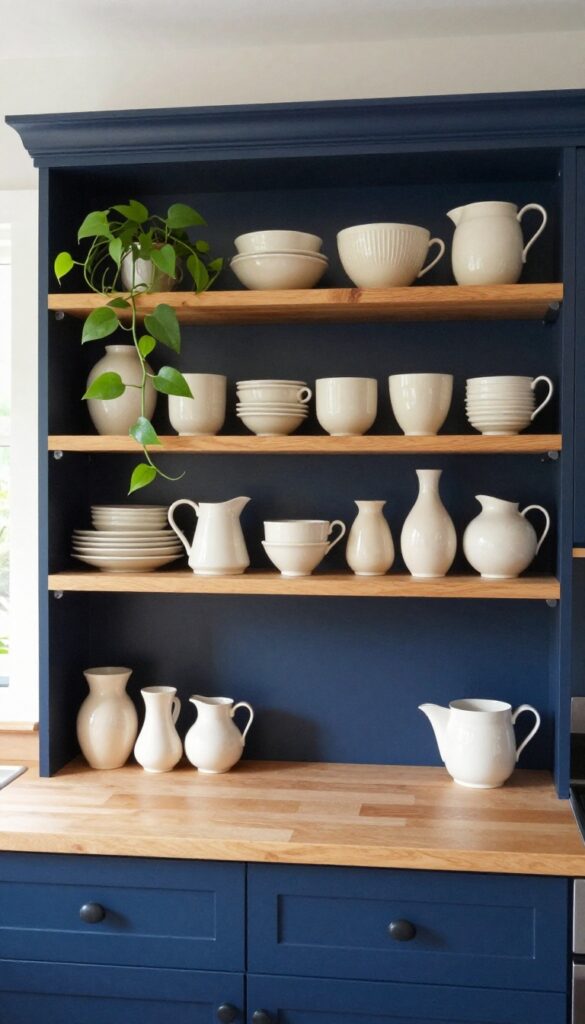
Navy cabinets bring a lot of presence to a kitchen, but they can also make the room feel a bit heavy if everything else is dark. That's where open shelving comes in. A couple of floating shelves in a warm wood tone break up the navy and add an inviting, lived-in feel.
The trick is to style them with creamy white ceramics—plates, pitchers, and vases that catch the light and keep the space from feeling too serious.
This idea is perfect for a weekend refresh because you don't need to renovate or paint anything. Just install two or three shelves on an empty wall or flanking the range hood, then gather your white ceramic pieces from around the house or a thrift store. The contrast between the dark cabinets and the light, organic shapes of the ceramics creates a soft, airy balance that makes the whole kitchen feel more open.
Plus, it gives you a chance to display your favorite pieces instead of hiding them behind cabinet doors.
Best Colors
- Stick with creamy whites and off-whites rather than stark bright white. Think shades like warm ivory, buttermilk, or soft eggshell. These tones complement the navy without competing with it.
- If you want a hint of contrast, add one or two pieces in a muted sage or terra-cotta, but keep the majority light to maintain that breezy feel.
Shelf Styling Tip
- Group ceramics in odd numbers—three plates leaning against the wall, two small pitchers, and one taller vase. Vary the heights and shapes so the display feels curated but not cluttered. Leave some negative space on each shelf so the eye can rest.
- A small trailing plant like pothos draped over the edge adds softness and a touch of green.
Budget-Friendly Swap
- If you don't have a collection of white ceramics, hit up a thrift store or discount home goods shop. You can often find plain white plates and bowls for a few dollars each. Mix in a couple of vintage finds for character.
- No need to buy a full matching set—mismatched whites actually look more intentional and collected over time.
3. A Butcher Block Island for Warmth
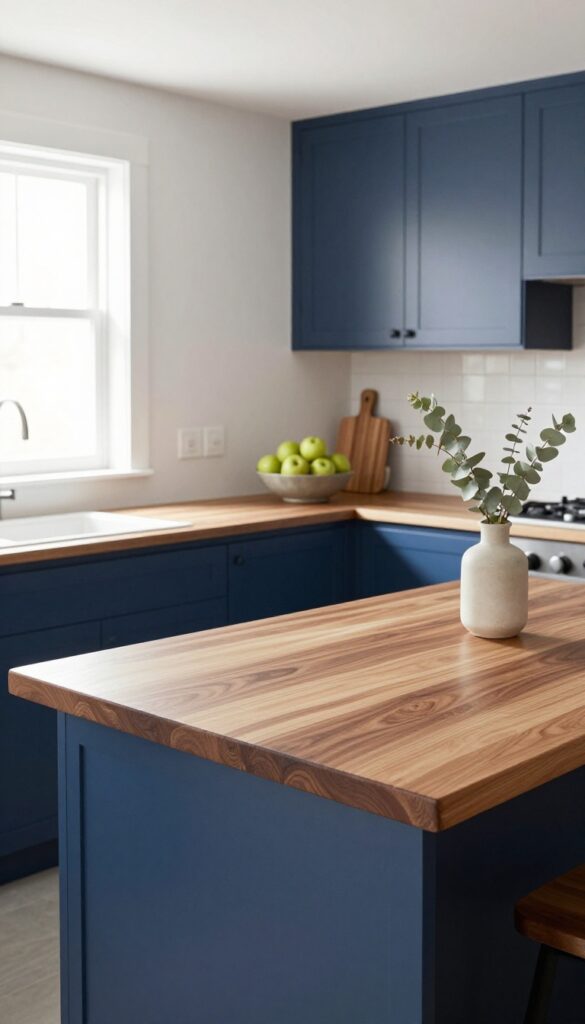
Navy cabinets can feel a little serious on their own. That’s where a butcher block island top comes in—it adds a layer of natural warmth that softens the bold blue and makes the whole kitchen feel more inviting. Walnut or acacia bring rich grain patterns that contrast beautifully with painted cabinetry.
If your perimeter cabinets are navy, a butcher block island top in walnut or acacia brings natural warmth. The wood grain softens the bold color and gives you a practical work surface that ages beautifully.
Best Wood Choices
Walnut has a deep, chocolatey tone that pairs elegantly with navy, while acacia offers a lighter, more honeyed look with striking grain variation. Both are durable enough for heavy chopping and develop a lovely patina over time. Avoid pale woods like maple or birch—they can look washed out next to dark blue.
Finishing Touch
Seal the butcher block with a food-safe mineral oil or a matte polyurethane. Reapply every few months to keep the wood hydrated and protected. For a quick refresh, sand lightly and re-oil once a year.
Styling The Island
Keep the island top relatively clear to show off the wood grain. Add a small wooden cutting board, a ceramic fruit bowl, or a simple vase with dried eucalyptus. Avoid cluttering it with too many appliances—let the warmth of the butcher block be the star.
4. Layered Lighting With Brass and Glass
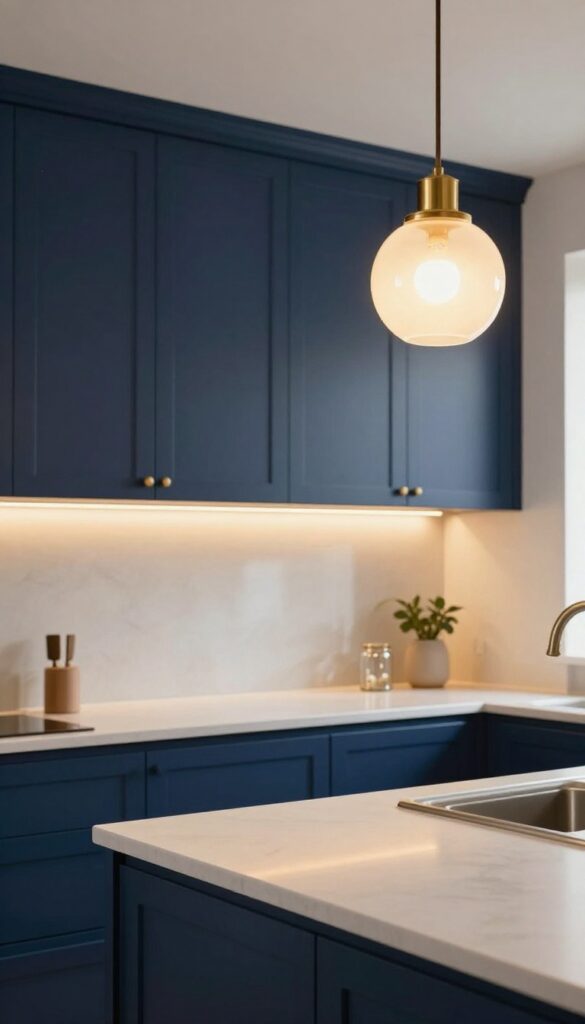
Lighting can make or break the mood in a navy kitchen. Without the right glow, those deep cabinets can feel heavy or cave-like. The trick is layering—mixing different light sources at different heights to create warmth and dimension.
Brass and glass are your best friends here, adding soft reflection and a touch of vintage charm.
Start with a statement brass pendant over the island. Choose a fixture with an open or glass shade so light filters down and bounces off the navy finish. Then add under-cabinet lighting in a warm 2700-3000K LED strip—this eliminates shadows on your countertops and makes prep areas feel inviting.
Finally, place a small glass sconce or mini pendant near the sink, where you often need focused light for washing up. The combination keeps the room from feeling flat, and the warm tones make the navy look rich and cozy, not cold or dark.
Best Bulb Temperature
Stick with 2700-3000K bulbs for all layers. Cooler light (4000K+) will make navy look dull and clinical. Warm light brings out the blue's depth and adds a golden glow that pairs beautifully with brass fixtures.
Placement Tips
Hang the island pendant about 30-36 inches above the countertop. For under-cabinet lights, install them toward the front edge of the cabinets so they illuminate the backsplash and counter, not the floor. The sink light should be at eye level or slightly above, angled to avoid casting shadows on your hands.
Budget-Friendly Swap
If brass pendants are out of reach, try spray-painting an inexpensive metal fixture with a brass finish. You can also use plug-in under-cabinet lights and a small glass table lamp on the counter near the sink for a similar layered effect without hardwiring.
5. Textured Backsplash in Soft Neutral Tones
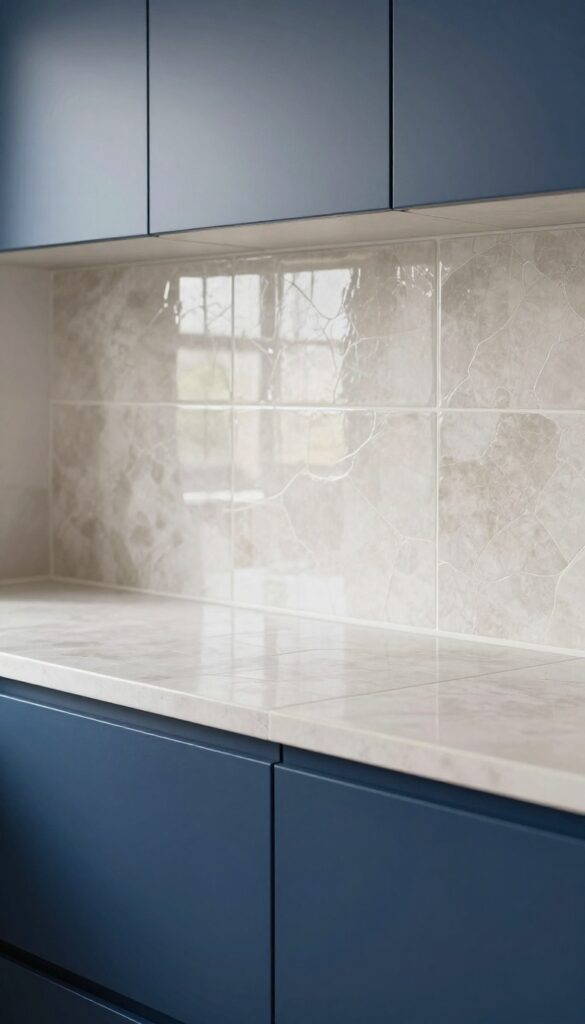
Navy cabinets are a bold choice, so the backsplash is your chance to soften the look. A textured tile in cream or warm gray adds depth without competing for attention. The irregular surface catches light differently throughout the day, making the whole kitchen feel more dynamic and grounded.
Zellige tiles, handcrafted subway tiles, or a subtle herringbone pattern all bring a handmade feel that pairs beautifully with navy. The soft neutral tones keep the space warm and inviting, while the texture adds visual interest that flat tiles just can't match. This is an easy weekend-friendly swap if you're replacing an existing backsplash, and it instantly makes the cabinets feel more intentional.
Best Tile Choices
Zellige tiles are a top pick for their glossy, irregular finish. Handcrafted subway tiles offer a similar look with a more uniform shape. For a classic twist, try a herringbone pattern in cream or warm gray — it adds movement without overwhelming the navy.
Grout Color Matters
Use a grout that blends with the tile to keep the focus on the texture. A soft white or light gray grout will let the tile's surface shine, while a darker grout might create too much contrast and distract from the cabinets.
Finishing Touch
Extend the backsplash to the underside of the upper cabinets or even to the ceiling for a seamless look. This creates a continuous backdrop that makes the kitchen feel taller and more polished.
6. Natural Wood Accents Through Stools and Cutting Boards
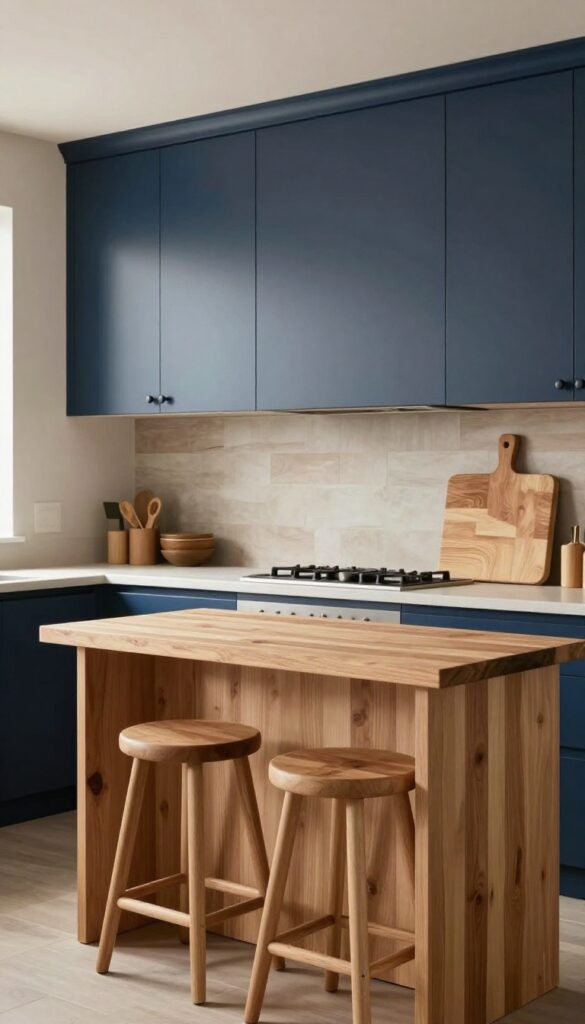
Navy cabinets bring a certain formality to a kitchen, but a few natural wood touches can soften that edge and make the space feel welcoming. Wood tones—whether from bar stools, a butcher block cart, or simple cutting boards—add warmth and texture that break up the deep blue without competing with it. The contrast feels intentional and grounded, like the kitchen has layers of personality rather than a single polished look.
The key is choosing wood finishes that complement your navy without matching your floors or other wood tones exactly. Warm oak or walnut works beautifully against navy, while lighter woods like ash or maple keep the look airy. You don't need a full renovation—just a few well-placed pieces can shift the whole mood of the room.
A couple of wooden bar stools pulled up to an island, a butcher block cart on casters, or a few large cutting boards propped against the backsplash do the trick. These elements feel casual and lived-in, which balances the sleekness of navy cabinets. Plus, they're easy to swap out if you want to change the vibe later.
For a weekend refresh, try adding a wooden fruit bowl or a set of wooden canisters on the counter. The organic texture instantly makes the navy feel richer and less flat.
Best Wood Tones To Pair With Navy
- Warm medium woods like walnut, cherry, or teal add richness without going too dark. If your navy has green undertones, lean into oak or hickory for a natural contrast. Avoid overly red woods like mahogany—they can clash with the coolness of navy.
- For a budget-friendly option, try unfinished or lightly stained pine; it brings a rustic charm that feels approachable.
Where To Place Wood Accents
- Start with the island or peninsula—bar stools are an obvious choice because they're eye-level and get noticed. A butcher block cart on wheels adds both storage and a prep surface; position it near the stove or sink for easy access. For a quick styling trick, lean a large wooden cutting board against the backsplash behind the faucet.
- It adds depth and breaks up the tile or stone visually.
Styling Tip: Mix Textures
Pair your wood accents with soft textiles like linen dish towels, a wool runner, or a woven basket for a layered look. The combination of smooth wood, soft fabric, and glossy navy cabinets creates a balanced, inviting space. Keep the wood pieces unvarnished or matte-finished to maintain that natural, warm feel.
7. Soft Roman Shade in Linen or Cotton
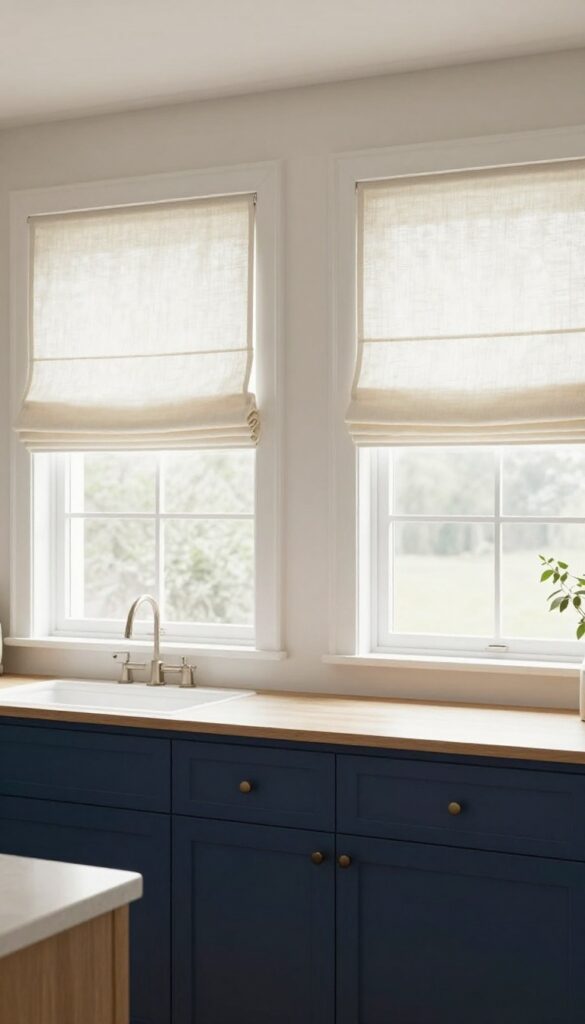
Windows in the kitchen often get overlooked when it comes to soft furnishings. But adding a roman shade in a warm natural linen or a subtle stripe instantly brings texture and softness to the room. It balances the hard lines of navy cabinets and makes the space feel more like a lived-in room than a showroom.
Plus, it's an easy weekend swap that doesn't require any major renovation.
A roman shade in linen or cotton is the perfect way to introduce softness without overwhelming the kitchen. The natural fabric adds warmth and pairs beautifully with navy cabinetry, especially when you choose a shade in cream, oatmeal, or a muted stripe. Hang it above the sink or a window near the dining area to create a cozy focal point.
The soft folds of the shade contrast with the crisp cabinet fronts, making the whole kitchen feel more inviting. For a cohesive look, match the shade's tone to your countertops or backsplash. And because it's a simple window treatment, you can swap it out seasonally or whenever you want a refresh.
Best Colors
Stick with warm neutrals like cream, ivory, or light beige to keep the space airy. A subtle stripe in navy and white can echo your cabinets without competing. Avoid dark colors that might make the window area feel heavy.
Fabric Choice
Linen or cotton are ideal for kitchens because they're breathable and easy to clean. Look for a fabric with a bit of texture, like a slub linen, to add visual interest. If you want light control, choose a lined roman shade.
Installation Tip
Mount the shade inside the window frame for a clean, built-in look, or outside the frame to make the window appear larger. Either way, ensure the shade sits above the sink or counter to avoid moisture damage.
8. A Statement Range Hood in Brass or Copper
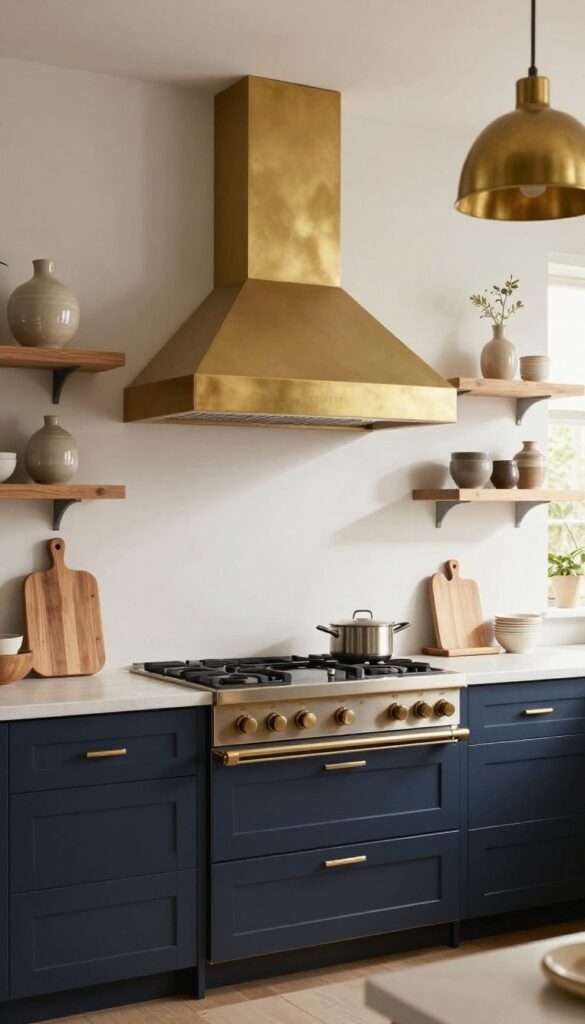
Range hoods are usually an afterthought, but they don't have to be. Swapping yours for a brass or copper version instantly draws the eye upward and adds a warm, custom touch that makes navy cabinets feel even more intentional. It’s a weekend-friendly upgrade if you’re handy with wiring, or a straightforward job for a pro.
A metal range hood acts like jewelry for your kitchen. Against deep navy, brass or copper brings a rich glow that softens the bold cabinetry and keeps the room from feeling too dark or formal. The contrast is striking but cozy—exactly what you want in a warm, lived-in space.
Best Materials And Finishes
Solid brass or copper develops a natural patina over time, which adds character. If you prefer low maintenance, look for brushed brass or antique copper finishes that resist fingerprints. Avoid high-gloss lacquered metals—they feel too shiny and cold next to navy’s depth.
Shape And Size Tips
A rectangular or tapered chimney hood works well in most kitchens. For a more dramatic look, try a curved or bell-shaped hood. Make sure it’s at least as wide as your cooktop—ideally a few inches wider—to capture steam and grease effectively while making the hood feel proportional.
Cozy Styling Around The Hood
Soften the metal with warm wood floating shelves on either side. Add a small ceramic vase or a wooden cutting board to echo the natural tones. A pendant light with a brass or copper finish overhead ties the whole look together without competing for attention.
9. Woven Baskets for Open Storage
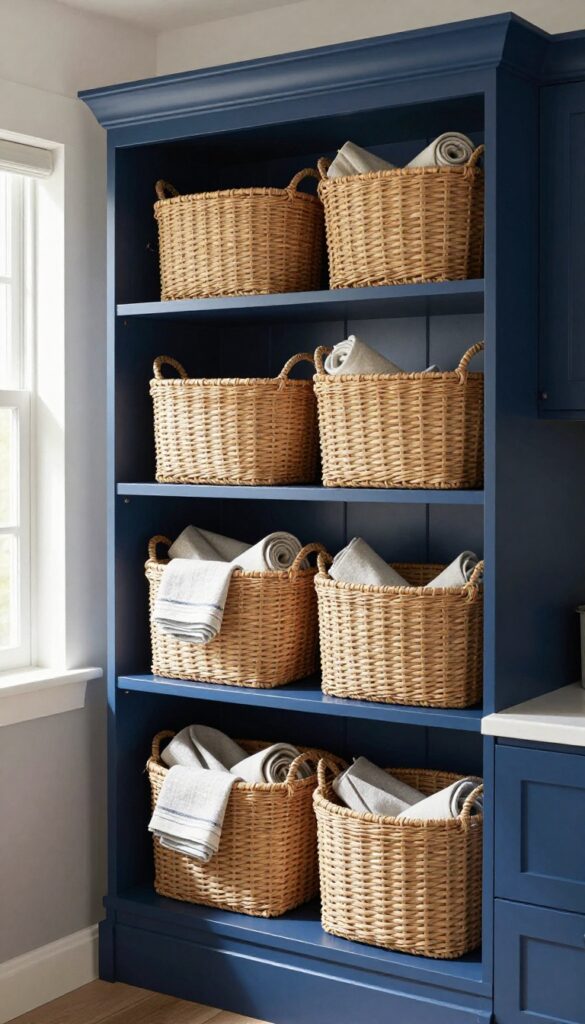
Those empty spots on top of cabinets or on open shelves can feel like wasted real estate. Instead of letting them gather dust, try placing large woven baskets up there. The natural texture softens the sleek look of navy cabinets, making the whole kitchen feel more grounded and lived-in.
It’s an easy, weekend-friendly tweak that adds warmth without any renovation.
Woven baskets are a simple way to introduce organic texture into a kitchen with navy cabinets. The contrast between the smooth, dark cabinetry and the rough, natural fibers creates visual interest that feels curated but not fussy. Use them to store linens, extra pantry items, or even seasonal decor—out of sight but still accessible.
This approach keeps your counters clutter-free while adding a cozy, collected vibe that balances the formality of navy.
Best Basket Materials
- Stick with natural materials like seagrass, rattan, or water hyacinth. These fibers bring warmth and a subtle golden hue that pops against navy. Avoid overly dark or painted baskets, as they can blend in and lose the texture contrast.
- A mix of weaves—tight on some, open on others—adds depth without looking busy.
Placement Tips
For a balanced look, group baskets in odd numbers—three on top of cabinets or two on an open shelf. Keep them slightly varied in size and shape, but within the same color family. If your cabinets go to the ceiling, use baskets on open shelving instead; they’ll still soften the dark tones and make the space feel more approachable.
Styling Inside The Baskets
- What you store inside matters too. Roll linen napkins or dish towels and arrange them vertically so they’re easy to grab. For pantry items, use clear containers inside the baskets so you can see what’s there without digging.
- This keeps the look tidy and functional—no rummaging required.
10. Fresh Greenery in Ceramic Pots
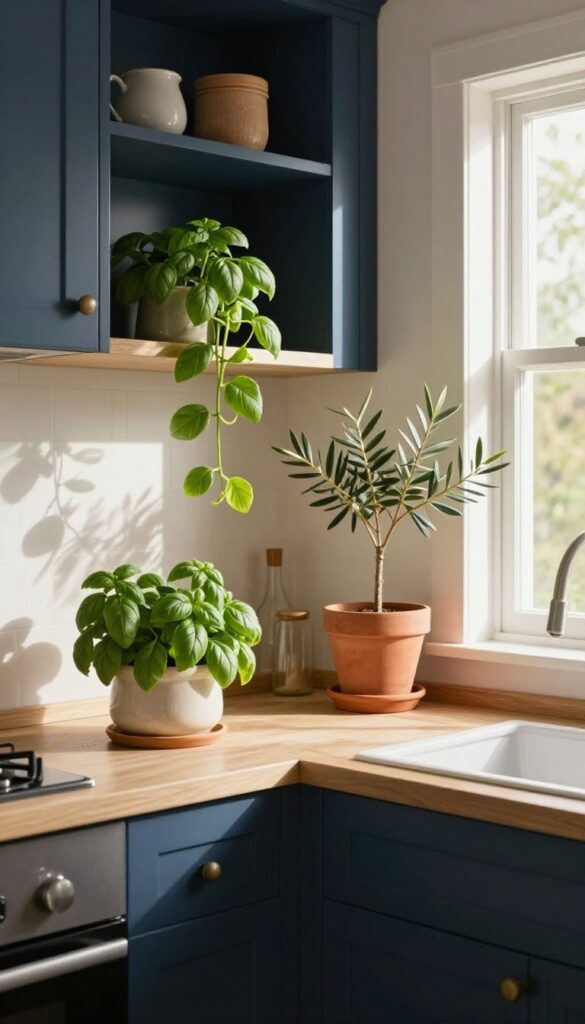
Navy cabinets bring a lot of richness to a kitchen, but they can sometimes feel a bit heavy. That's where plants come in. A few ceramic pots filled with herbs, a trailing pothos, or a small olive tree soften the deep blue and instantly make the space feel more alive.
It's an easy weekend refresh that adds warmth without any major changes.
Greenery is one of the simplest ways to balance the boldness of navy cabinets. The contrast between the dark cabinetry and bright green leaves creates a natural focal point that feels intentional, not accidental. Plus, plants bring a sense of calm and freshness that makes the kitchen more inviting for everyday cooking and gathering.
Best Plant Choices
- Stick with low-maintenance options that thrive in kitchen conditions. Herbs like basil, rosemary, and mint are practical and pretty. For a trailing look, pothos or philodendron work well on open shelves or the edge of a counter.
- A small olive tree or fiddle leaf fig can add height and drama in a corner.
Pot Selection & Placement
Choose ceramic pots in warm earthy tones like terracotta, cream, or soft blush to complement the navy without competing. Group two or three pots of varying heights together on a windowsill or counter for visual interest. Keep them near a sink or window where they'll get natural light and be easy to water.
Styling Tip
Use a simple wooden tray or a small woven basket to corral multiple pots. This keeps the look tidy and adds a layer of texture. If counter space is tight, install a floating shelf above the sink or near the window to display plants without sacrificing workspace.
11. A Vintage-Style Runner in Warm Tones
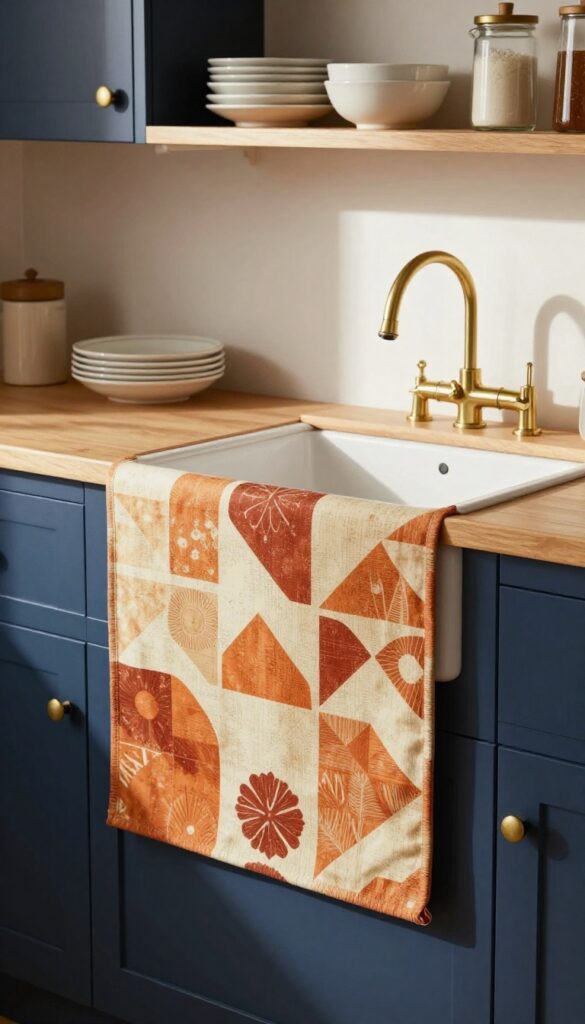
Adding a rug to your kitchen might feel unexpected, but a vintage-style runner in warm tones does more than you'd think. It softens the hard surfaces, breaks up the navy cabinetry, and brings a cozy, lived-in feel that makes the space inviting. Think of it as the grounding element that ties the whole look together without trying too hard.
A wool or cotton runner with a pattern in red, rust, or cream creates a beautiful contrast against navy cabinets. It anchors the cooking zone, adds warmth underfoot, and introduces a layer of texture that balances the boldness of the navy. Plus, it's an easy weekend refresh that instantly changes the room's mood.
Best Colors And Patterns
Stick with warm, earthy tones like terracotta, burnt orange, or soft cream. A geometric or floral pattern with a faded, vintage look works best. Avoid anything too bright or modern—you want the runner to feel like it's been there for years, complementing the navy without competing.
Placement And Size
Lay the runner in front of the sink or stove, or along a long galley aisle. Make sure it's long enough to extend past the work area but not so long that it bunches under cabinets. A 2×3 or 2×4 foot runner is usually perfect for standard kitchen layouts.
Practical Tip
Choose a flat-weave or low-pile rug that's easy to clean—kitchens see spills and crumbs. Look for washable options or ones made from durable wool. A rug pad underneath keeps it from sliding and adds extra cushioning for your feet.
FAQ
Do navy blue cabinets make a kitchen look smaller?
Not necessarily. Navy can make a kitchen feel cozy and intimate, especially when paired with good lighting and light countertops. To avoid a cramped look, use open shelving, reflective surfaces like glass or metal, and keep the ceiling bright.
What countertop colors go best with navy cabinets?
Warm whites, cream, and light gray are classic choices that keep the space bright. Butcher block or wood counters also work beautifully for a warmer, more rustic feel. Avoid dark countertops that can make the kitchen feel too heavy.
Can I mix navy cabinets with other cabinet colors?
Absolutely. Navy lower cabinets with white or light wood upper cabinets is a popular two-tone look. You can also do an island in navy with perimeter cabinets in a lighter shade for contrast.
What hardware finish works best with navy cabinets?
Brass, gold, and copper are top choices because they add warmth and elegance. Chrome and nickel can work but may feel cooler. Black hardware is also an option for a more modern, dramatic look.
How can I warm up a kitchen with navy cabinets on a budget?
Focus on textiles and accessories. Add a warm-toned rug, linen curtains, wooden cutting boards, and brass or copper accents. Even swapping out hardware or adding a few plants can make a big difference without a major renovation.
Conclusion
Navy blue cabinets don't have to feel cold or overly formal. With the right mix of warm metals, natural textures, and soft lighting, your kitchen can feel both elegant and inviting.
The best part is that many of these updates are simple weekend projects that make a lasting impact. Start with one or two ideas that speak to your style, and let your kitchen evolve naturally into a space that feels truly yours.