11 Small Kitchen Flooring Ideas That Handle Daily Mess
Your kitchen floor takes a beating. From dropped spoons to splattered sauce, it sees it all. And if you're working with a small space, every square inch matters—especially when it comes to choosing a floor that can keep up with your daily routine without looking worn out.
The good news? You don't have to sacrifice style for durability.
Whether you love the warmth of wood or the practicality of tile, there are plenty of options that handle mess like a champ and still make your kitchen feel inviting. Let's walk through 11 small kitchen flooring ideas that balance beauty and brawn, so you can spend less time worrying about stains and more time enjoying your space.
1. Luxury Vinyl Plank That Looks Like Real Wood
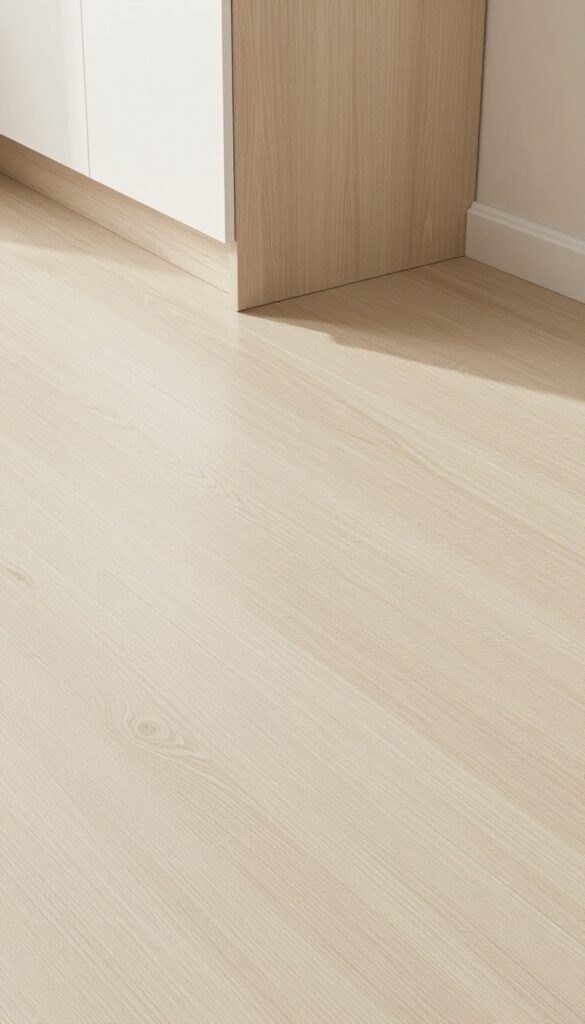
Hardwood floors in a kitchen? Gorgeous, but risky. One spilled glass of red wine or a dropped pot, and you're looking at stains or scratches.
Luxury vinyl plank gives you that same warm, natural wood look without the stress. It's waterproof, durable, and surprisingly soft underfoot, which matters when you're standing at the stove for a while. For a small kitchen that sees daily cooking and cleaning, it's a smart, stylish swap that won't make you cringe every time a spill happens.
Luxury vinyl plank (LVP) has come a long way from the fake-looking linoleum of the past. Today's options mimic real oak, hickory, or walnut with convincing grain patterns and slight texture. The best part?
You can install it yourself if you're handy, since most planks click together like a puzzle. In a small kitchen, LVP also helps the space feel larger when you choose wide planks and lay them in a continuous direction. Pair it with a light-colored grout if you go with a tile-look vinyl, or keep it seamless for a cleaner line.
Either way, you get the warmth of wood with the practicality of modern materials.
Best Colors For Small Kitchens
Stick with light to medium wood tones like white oak, ash, or blonde maple. These shades reflect natural light and keep the room from feeling cramped. Dark walnut or espresso can work if your kitchen gets plenty of sunlight, but go for a matte finish to avoid showing every speck of dust.
Storage-smart Layout Tip
Because LVP is waterproof, you can extend it right under your cabinets and appliances without worrying about moisture damage. This creates a seamless look that makes a small kitchen feel bigger. Use that continuous floor to your advantage by adding a slim rolling cart or a narrow shelf along the wall—no need for a rug to protect the floor, so you save space and keep the visual flow.
Finishing Touch
Add a soft, washable runner in a contrasting color to define the cooking zone. Choose one with a low pile so it doesn't trip you up. This adds a cozy layer without hiding the beautiful vinyl underneath.
2. Porcelain Tile With a Wood-Look Finish
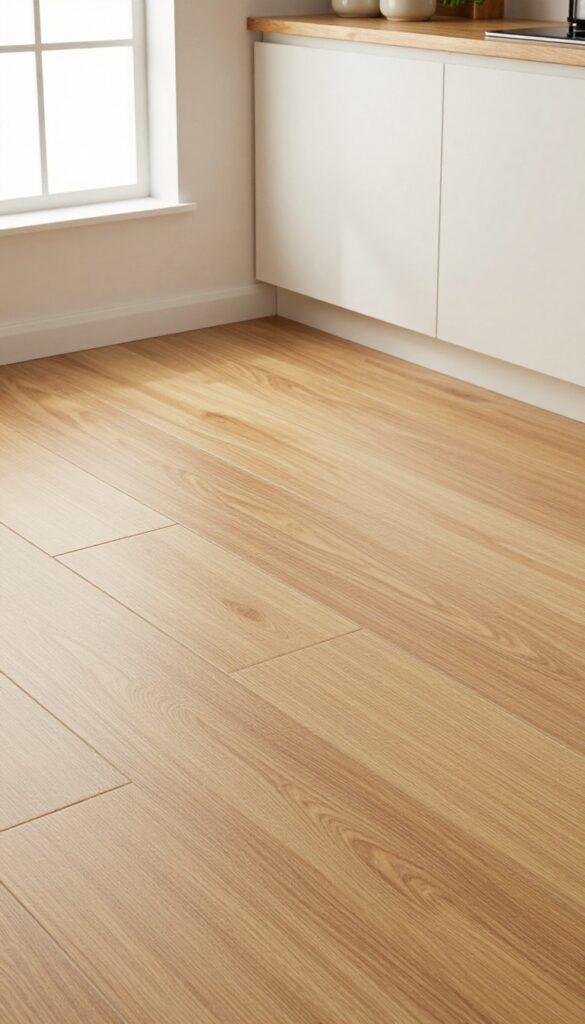
Wood floors in a kitchen look gorgeous, but they can be high-maintenance when spills and crumbs are part of daily life. Porcelain tile with a wood-look finish gives you that warm, natural aesthetic without the worry. It mimics real wood grain so closely that guests might not even notice the difference—until they see how easily it cleans up.
This flooring option is a workhorse for busy kitchens. It resists moisture, stains, and heat, so you can drop a pan or spill a glass of red wine without panicking. Plus, it stays cool underfoot, which is a blessing in warmer climates.
The wide range of colors and plank sizes means you can match any kitchen style, from farmhouse to modern.
Best Colors For A Cohesive Look
Stick with warm honey or oak tones if your cabinets are white or cream—it keeps the space airy but grounded. For darker cabinets, a gray-washed wood-look tile adds contrast without feeling heavy. Avoid overly busy grain patterns in small kitchens; a subtle, linear grain makes the room feel larger.
Layout Tip For Visual Flow
Lay the planks in a staggered pattern, like traditional hardwood, to create a sense of movement. In a galley kitchen, running the tiles lengthwise can make the space appear longer. For a square kitchen, a diagonal layout adds a bit of dynamism and can make the room feel less boxy.
Storage-smart Styling
Because porcelain tile is so durable, you can use heavy-duty rolling carts or metal shelving without worrying about scratches. Place a slim rolling cart under an island overhang or against a wall for extra prep space and storage. The tile’s hardness also means you can install floor-to-ceiling pantry cabinets without worrying about dents.
3. Sheet Vinyl With a Patterned Design
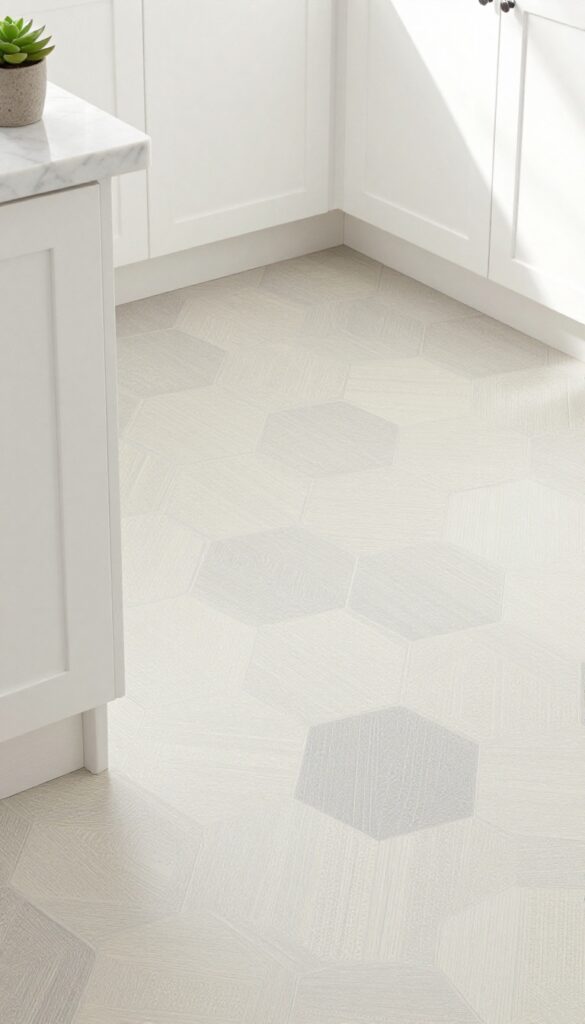
If you want the look of tile or wood without the high cost or complicated installation, sheet vinyl is a surprisingly stylish option. It comes in large rolls, which means fewer seams and less chance for dirt to hide. A geometric or floral pattern can add visual interest without overwhelming a small floor plan, making the kitchen feel bigger and more intentional.
Sheet vinyl has come a long way from the boring linoleum of the past. Today’s patterns are crisp, modern, and often mimic natural materials like stone or wood. Because it’s waterproof and easy to clean, it’s a practical choice for busy kitchens.
The key is choosing a pattern that complements your cabinets and countertops without competing. A small-scale geometric print, for example, can add texture without making the space feel busy. And since sheet vinyl is softer underfoot than tile, it’s more comfortable for standing while cooking.
Best Patterns For Small Kitchens
- Stick with patterns that have a light background and subtle contrast. Think soft gray hexagons, pale cream diamonds, or muted floral motifs. Avoid large, bold prints that can overwhelm a compact space.
- A pattern with a bit of movement, like a flowing vine or scattered dots, can add charm without feeling chaotic.
Storage-smart Styling Tip
- Use the floor pattern to define zones. For instance, place a patterned vinyl in the cooking area and a solid color in the dining nook. This visual separation helps organize the layout without needing walls.
- Plus, it makes the kitchen feel larger by breaking up the space intentionally.
Finishing Touch: Rug Pairing
Lay down a natural fiber rug, like jute or sisal, in front of the sink or stove. The texture contrasts nicely with the smooth vinyl, and it catches drips and splashes. Choose a rug that picks up one of the accent colors in your vinyl pattern for a pulled-together look.
4. Cork Flooring for Comfort and Quiet
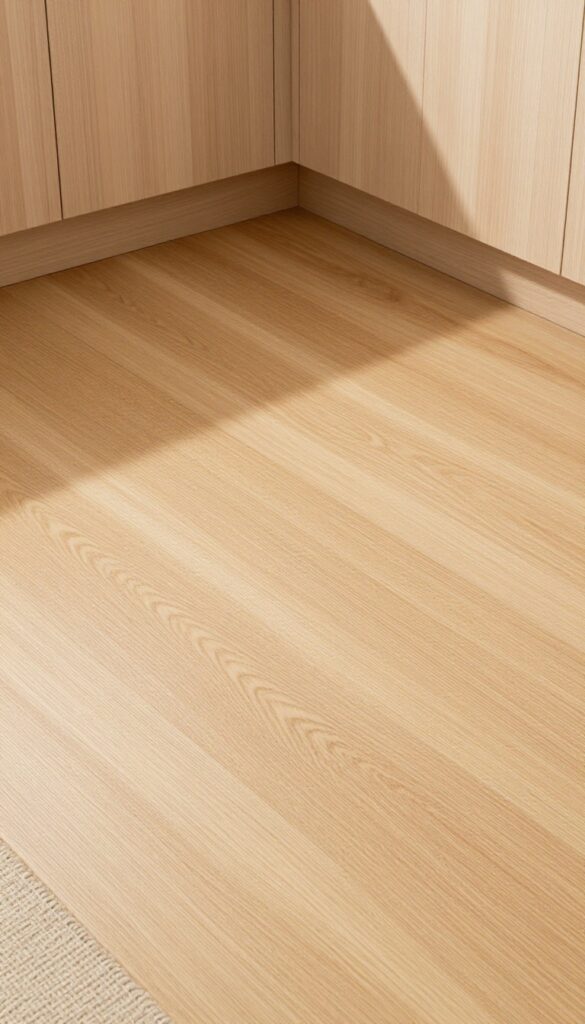
Cork flooring brings a warmth that tile or luxury vinyl just can't match. It's soft underfoot, naturally antimicrobial, and great at absorbing sound—ideal for small kitchens that open into living areas. Plus, cork is harvested from tree bark without harming the tree, so it's a renewable choice that feels good both under your feet and for the planet.
Cork flooring is a smart pick for small kitchens that see a lot of action. Its natural cushioning makes standing at the counter much more comfortable, and it's surprisingly durable when sealed properly. The warm, earthy tones create a cozy vibe that makes a compact space feel inviting rather than cramped.
And because cork absorbs sound, you won't hear every clatter and footstep as loudly—great if your kitchen flows into a dining or living area.
Best Colors And Patterns
Cork comes in a range of warm neutrals—tan, caramel, and light brown—that work well with both light and dark cabinetry. For a more modern look, choose a cork tile with a subtle grain pattern or a darker stain. You can also find cork planks that mimic hardwood, giving you the look of wood with the comfort of cork.
Small-space Layout Tip
In a tiny kitchen, lay cork planks in the same direction as the longest wall to make the room feel larger. If your kitchen is square, try a diagonal pattern for a bit of visual interest. And don't forget to leave a small expansion gap around the edges—cork expands and contracts with humidity.
Storage-smart Finishing Touch
Pair cork floors with open shelving in a matching warm wood tone to create a cohesive, storage-friendly look. The soft flooring also means you can skip a rug in front of the sink—one less thing to clean. Just add a slim floor mat for extra cushioning where you stand most.
5. Ceramic Tile in a Herringbone Pattern
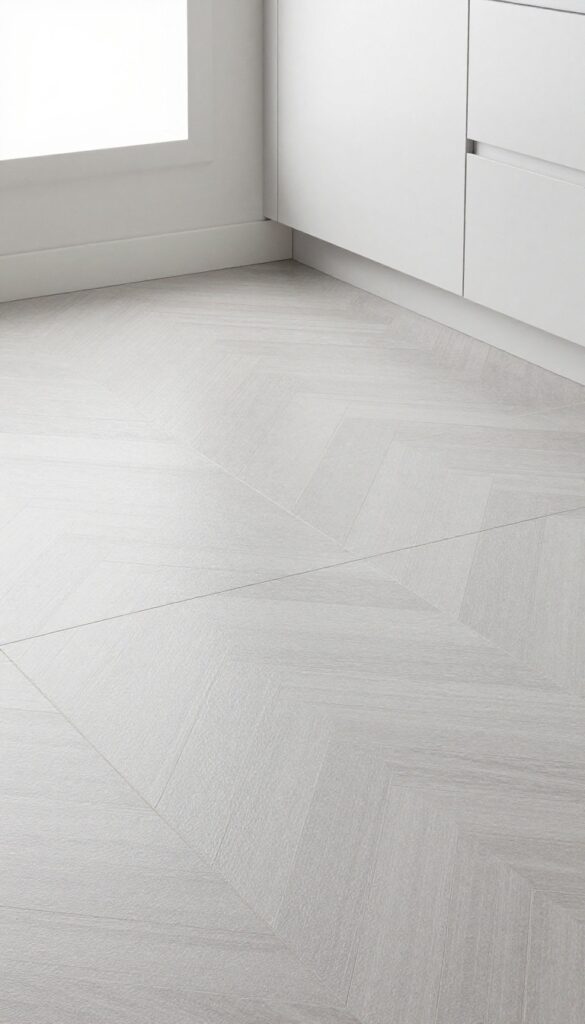
Herringbone is one of those patterns that instantly adds character. The V-shaped layout draws the eye forward, making a compact kitchen feel longer and more open. Ceramic tile is a practical choice here—it's waterproof, easy to wipe down, and comes in so many colors and finishes that you can match any style from farmhouse to modern.
A herringbone floor brings movement and a handcrafted feel to a small kitchen. The pattern tricks the eye into seeing more width, which is a huge bonus in tight spaces. Ceramic tile handles spills and heavy foot traffic without showing wear, and grout lines add grip for safety.
Keep the rest of the kitchen simple to let the floor shine—think flat-front cabinets and minimal countertop clutter.
Best Colors And Finishes
Stick with medium-toned neutrals like warm gray, beige, or soft taupe to keep the space airy. Glossy tiles reflect light and brighten the room, while matte finishes hide dirt and feel more rustic. For a bolder look, try a deep navy or charcoal herringbone with light grout for contrast.
Layout And Scale Tip
Use rectangular tiles (like 3×6 or 4×8 inches) for a classic herringbone. In a very small kitchen, smaller tiles keep the pattern from overwhelming the space. Lay the herringbone on a 45-degree angle to maximize the elongating effect.
Storage-friendly Pairing
Since the floor makes a statement, keep storage streamlined. Open shelving in a matching wood tone or white upper cabinets prevent visual clutter. A slim rolling cart or magnetic knife strip adds function without competing with the pattern.
6. Concrete With a Polished Sealer
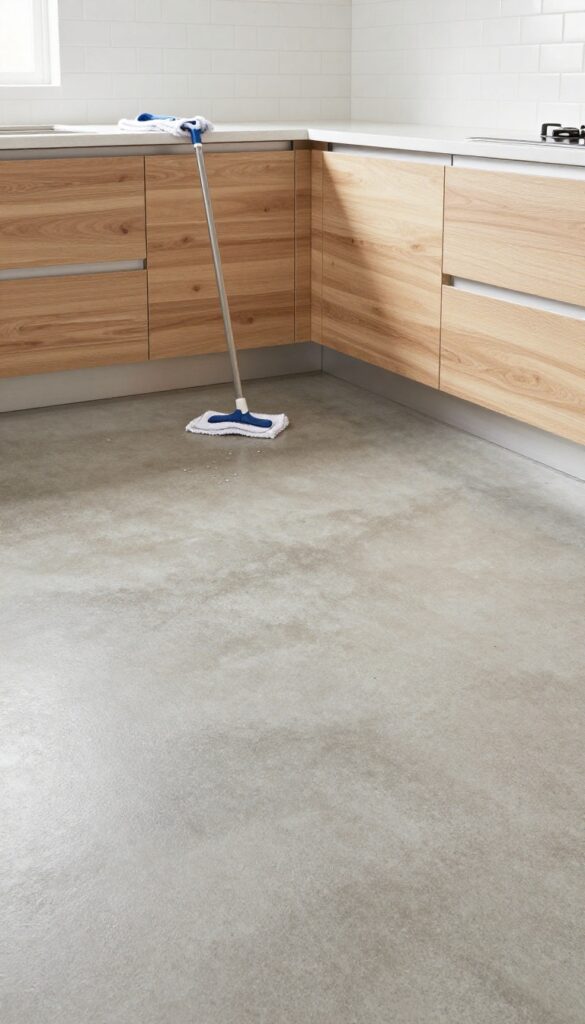
Concrete floors might sound cold or industrial, but a polished sealer changes everything. The surface becomes smooth, slightly glossy, and surprisingly warm underfoot — especially if you add radiant heating underneath. It’s one of those rare finishes that looks intentional and high-end without screaming for attention.
For a small kitchen that sees heavy traffic and the occasional spill, polished concrete is practically a superhero. It resists stains, scratches, and moisture when sealed correctly, and it cleans up with just a damp mop. Plus, the subtle mottling and natural variations in the concrete hide dirt and crumbs better than you’d expect.
Polished concrete gives your kitchen a sleek, modern foundation that pairs well with almost any cabinet style. The key is choosing the right sealer — a penetrating sealer with a matte finish keeps things looking natural, while a topical sealer adds more shine and protection. Either way, the floor becomes a low-maintenance workhorse.
Because concrete is poured in place, you can even integrate a slight slope toward a floor drain if you’re really serious about easy cleanup. But for most homes, a flat, sealed surface is plenty. The neutral gray tones also make it easy to swap out rugs or change cabinet hardware down the road without clashing.
Best Colors And Finishes
- Stick with medium to dark gray tones — they hide dust and stains better than light gray or white. You can also add an integral color pigment during the pour for a more uniform look, or go with a classic concrete gray for that raw, earthy feel. For the sealer, a satin finish strikes the right balance between easy cleaning and a natural matte look.
- Avoid high-gloss unless you want a dance-floor vibe; it shows every footprint.
Radiant Heating Compatibility
- Concrete is a natural thermal mass, so pairing it with in-floor radiant heating is a match made in comfort heaven. The heat radiates evenly across the entire floor, warming up the whole kitchen without the need for bulky radiators. Just make sure the concrete slab is insulated underneath so the heat goes up into the room, not down into the ground.
- This setup works especially well in small kitchens where every inch of wall space matters.
Storage-friendly Styling Tip
- Because polished concrete is so neutral, you can go bold with storage solutions. Open shelving in dark metal or warm wood pops beautifully against the gray floor. Consider adding a slim rolling cart in a contrasting color — like mustard yellow or deep teal — for extra prep space and storage.
- The cart can double as a movable island, and the concrete floor makes it easy to roll around without worrying about scratches.
7. Engineered Hardwood With a Strong Top Coat
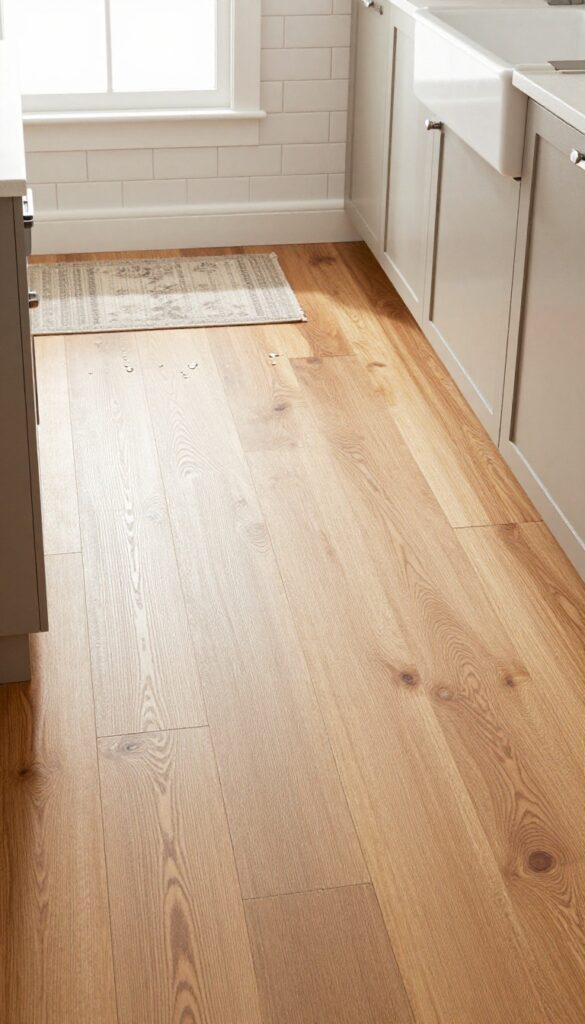
Engineered hardwood brings the warmth of real wood to your kitchen without the warping worries. It’s built to handle humidity better than solid planks, making it a smart choice for busy cooking spaces. Plus, with a thick wear layer and a tough aluminum oxide finish, it stands up to spills, scratches, and daily foot traffic without losing its good looks.
The key is choosing a product with a substantial top layer—at least 2mm—so it can be sanded and refinished if needed down the road. The aluminum oxide coating adds an invisible shield that keeps the surface looking fresh even after years of use. For a relaxed, lived-in vibe, go with a wire-brushed texture; it hides minor scuffs and adds a subtle handcrafted feel.
Stick with medium-toned oak or hickory to balance durability and style, and pair it with a soft, washable runner in a neutral pattern to catch drips near the sink.
Best Colors For A Small Kitchen
Light to medium browns work best in compact kitchens—they brighten the space and hide dust between cleanings. Whitewashed or gray-toned oak is another option if you want a more modern, airy look. Avoid very dark stains; they show every crumb and water spot.
Layout Tip: Direction Matters
Install the planks parallel to the longest wall or the main traffic flow. This visually extends the room and makes it feel larger. In a narrow galley kitchen, running the boards lengthwise creates a longer, more open sightline.
Finishing Touch: Rug Pairing
Layer a low-pile wool or cotton rug in front of the sink and stove. Choose a pattern that picks up the wood’s undertones—like a muted blue or terracotta geometric design. It adds softness underfoot and protects the floor from splashes.
8. Natural Stone Tile Like Slate or Travertine
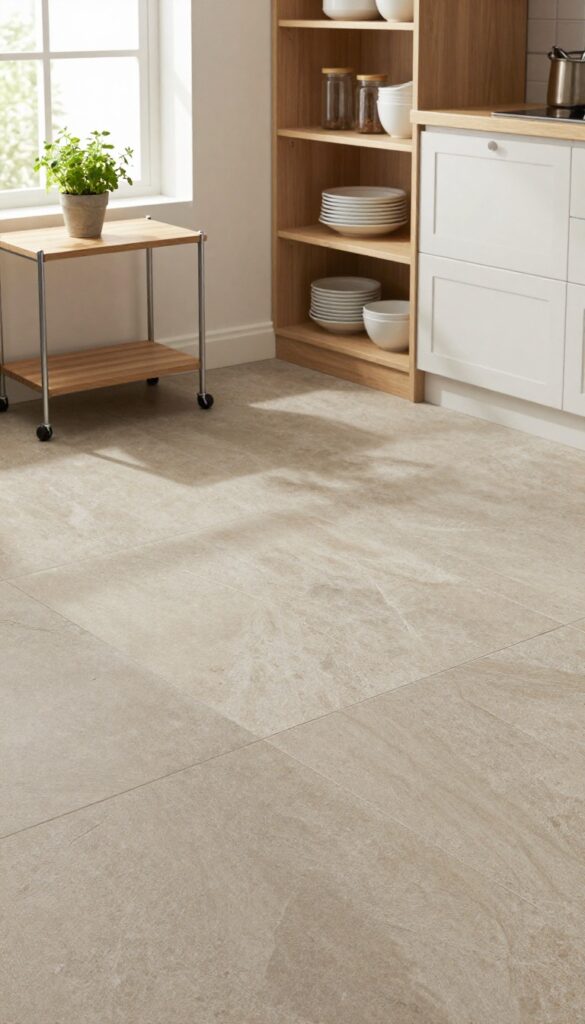
Stone tiles bring a grounded, organic feel that instantly makes a small kitchen feel more substantial. Slate’s dark, moody tones or travertine’s warm, creamy hues add texture and depth without overwhelming the space. They’re tough enough to handle dropped pots and muddy boots, but they do need a little TLC to stay looking their best.
Natural stone tile is a classic choice for small kitchens because it adds character and durability. The unique veining and color variations in each tile ensure no two floors look exactly alike, giving your kitchen a one-of-a-kind feel. Just keep in mind that stone is porous, so sealing is non-negotiable to prevent stains from spills like red wine or olive oil.
Best Colors And Finishes
Stick with earthy neutrals like charcoal, beige, or taupe to keep the space feeling open. Honed finishes are your best bet—they have a matte surface that hides dust and crumbs way better than polished stone. Plus, the soft sheen won’t show every footprint, which is a lifesaver in a busy kitchen.
Storage-smart Layout Tip
Because stone tile can feel heavy, balance it with light-colored cabinetry and open shelving. Use vertical storage like wall-mounted racks or magnetic strips to keep countertops clear—this prevents the floor from feeling cluttered. A slim rolling cart in a metal finish adds contrast and extra prep space without competing with the stone.
Maintenance And Longevity
Seal your stone tiles every year or two, especially in high-traffic areas. Clean with a pH-neutral stone cleaner to avoid dulling the finish. If you’re worried about slips, choose a tile with a slightly textured surface—slate is naturally slip-resistant, making it a smart pick for a kitchen that sees a lot of action.
9. Linoleum for a Retro Yet Eco-Friendly Vibe
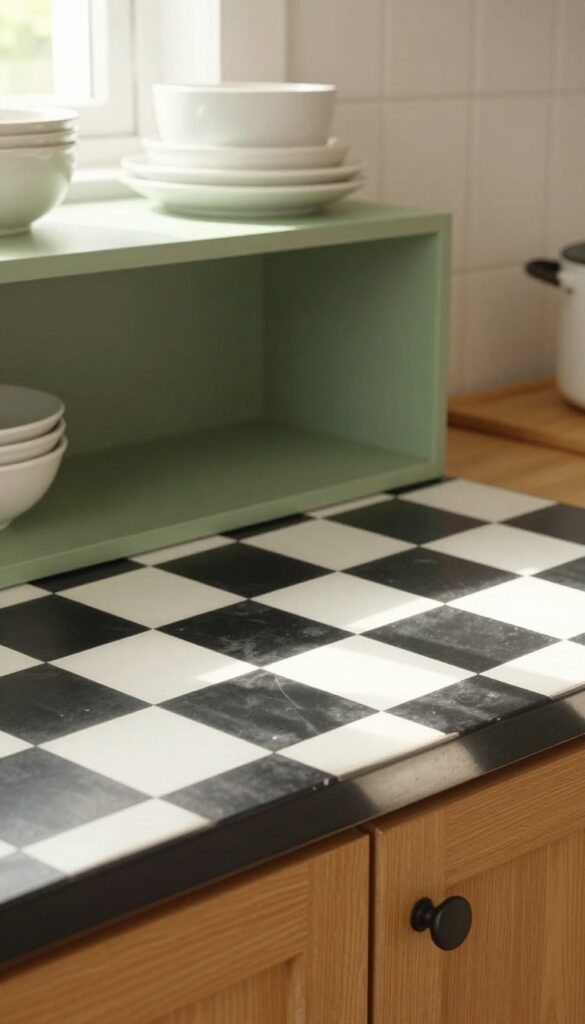
Linoleum is making a serious comeback, and for good reason. It’s one of the most sustainable flooring options out there, made from natural materials like linseed oil, cork dust, and wood flour. Plus, it naturally resists bacteria, which is a huge win in a kitchen that sees daily messes.
The best part? It comes in punchy retro colors and patterns that instantly give your small kitchen personality without feeling overwhelming.
Linoleum isn’t your grandma’s old kitchen floor—it’s been updated with modern durability and style. It’s resilient underfoot, soft enough to stand on for long cooking sessions, and develops a lovely patina over time that adds character. Because it’s antimicrobial, it’s a smart choice for busy families or anyone who cooks a lot.
And since it’s eco-friendly, you can feel good about your choice while enjoying a floor that’s both practical and charming.
Best Colors And Patterns
Think bold checkerboard in black and white for a classic diner feel, or go for a warm terracotta or mustard yellow to add a pop of color. Small kitchens can handle strong hues because the floor becomes a focal point. If you prefer something subtler, choose a speckled pattern that hides crumbs and spills between cleanings.
Storage-smart Layout Tip
Since linoleum comes in sheets or tiles, you can easily cut it to fit around tight corners or under cabinets. Use a continuous sheet to make the space feel larger, or lay tiles in a diagonal pattern to visually widen a narrow galley kitchen. Pair with open shelving in a matching retro color to tie the whole look together.
Finishing Touch
Add a low-pile wool rug in a complementary neutral tone near the sink or prep area. It breaks up the bold floor pattern and adds warmth underfoot. Choose a washable rug for easy maintenance—because even the most durable floor needs a little backup.
10. Large-Format Porcelain Slabs
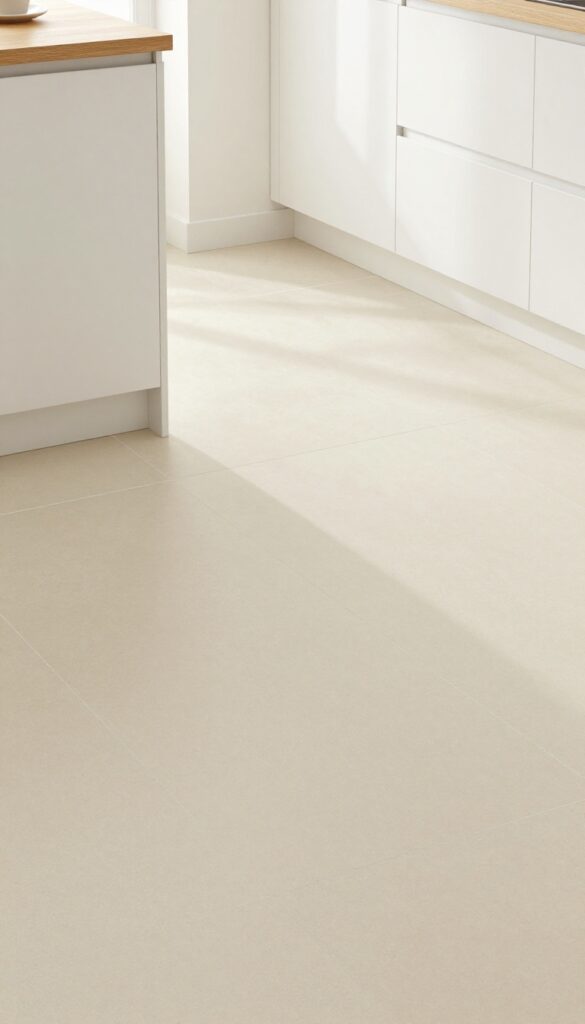
Think about how much easier life would be with fewer grout lines to scrub. That’s exactly what large-format porcelain slabs bring to a small kitchen. These oversized tiles (think 24×48 inches or bigger) cover more ground with fewer seams, so your floor looks almost seamless.
The visual continuity tricks the eye into seeing more space, which is a huge win for a compact layout. Plus, porcelain is tough as nails and barely absorbs moisture, making it a dream for busy kitchens.
Large-format porcelain slabs are a practical upgrade that also looks incredibly polished. The minimal grout lines mean less scrubbing and fewer places for crumbs and spills to hide. And because the slabs are so wide, they create a sleek, modern foundation that makes your kitchen feel bigger and more open.
They work beautifully with both contemporary and transitional styles, especially when you choose a neutral tone or a subtle stone look.
Best Colors And Finishes
Stick with light grays, warm beiges, or soft whites to keep the space airy. A matte or satin finish hides smudges better than high-gloss and feels more grounded underfoot. If you want a bit of texture, look for slabs with a subtle wood-grain or concrete effect—they add visual interest without overwhelming the room.
Layout Tip
Go for a straight or staggered layout rather than a diagonal pattern. Straight lines make the floor look cleaner and more expansive, especially in a narrow galley kitchen. If your kitchen has an L-shape, consider running the slabs parallel to the longest wall to stretch the space visually.
Storage-smart Pairing
Since the floor is so low-maintenance, you can use that saved cleaning time to organize your cabinets. Pair the slabs with open shelving or a pegboard wall to keep everyday items accessible. The seamless floor also lets you roll out a slim cart or a rolling island without catching on grout lines—perfect for adding extra prep space.
11. Rubber Flooring for High-Traffic Areas
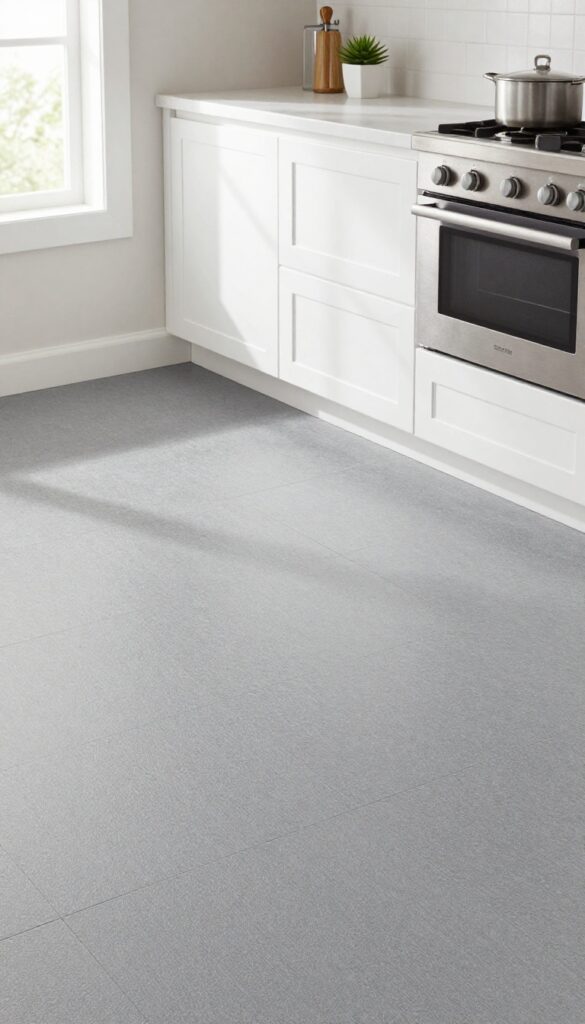
Rubber flooring might sound like something you'd only find in a gym or a commercial kitchen, but it's actually a surprisingly stylish and practical choice for a busy home kitchen. It's soft underfoot, which makes a huge difference when you're standing at the stove or sink for a while, and it's naturally slip-resistant—perfect for a space where spills happen. Plus, with modern designs that mimic stone, wood, or even terrazzo, it can look just as polished as more traditional materials.
Rubber flooring is a workhorse material that handles everything from dropped pots to muddy boots without showing wear. It comes in tiles or sheets, so you can create custom patterns or keep it simple. The key is to choose a color and texture that feels intentional—think charcoal tiles with a subtle grain, or a warm speckled beige that hides crumbs.
Because it's so durable, it's especially great for kitchen-dining combos where foot traffic is constant.
Best Colors And Patterns
Stick with matte finishes and muted tones like slate gray, warm taupe, or deep navy to avoid a gym-like vibe. Some brands offer rubber tiles with a faux wood grain or a flecked pattern that adds visual interest without being busy. For a small kitchen, lighter shades help the space feel bigger, but a dark rubber floor can anchor the room nicely if your cabinets are white or light.
Installation And Maintenance
- Rubber tiles are DIY-friendly—they often click together or stick with adhesive, so you can install them over a weekend. They're also easy to clean: just sweep or vacuum, then mop with a mild cleaner. Avoid harsh chemicals or wax, which can dull the surface.
- One thing to note: rubber can have a slight smell when new, but it fades within a few days.
Styling Tip
Pair rubber flooring with warm wood cabinets or open shelving to soften its industrial edge. Add a low-pile wool rug in a complementary color near the sink or dining area for extra coziness. Because rubber absorbs sound, it also helps reduce kitchen noise—a bonus in open-plan homes.
FAQ
What is the most durable flooring for a small kitchen?
Porcelain tile and polished concrete are among the most durable options, resisting scratches, stains, and moisture. Luxury vinyl plank is also highly durable and more comfortable underfoot.
Can I use hardwood flooring in a small kitchen?
Yes, but engineered hardwood with a strong protective finish is better than solid wood. It handles humidity changes better and resists warping from spills.
How do I make a small kitchen floor look bigger?
Use large-format tiles or planks, choose light colors, and lay flooring diagonally or in a herringbone pattern. Minimizing grout lines also helps create a seamless look.
Is vinyl flooring good for kitchens?
Absolutely. Luxury vinyl plank and sheet vinyl are waterproof, easy to clean, and come in many styles. They're a budget-friendly choice that handles daily mess well.
What flooring is best for a kitchen with pets?
Luxury vinyl plank, porcelain tile, and concrete are all scratch-resistant and easy to clean. Avoid soft woods or unsealed stone that can absorb accidents.
Conclusion
Choosing the right flooring for a small kitchen doesn't have to be a compromise. With so many durable and stylish options available, you can find a surface that handles spills, stains, and heavy foot traffic while still looking exactly how you want.
Whether you lean toward the warmth of cork or the sleekness of polished concrete, each of these ideas brings something unique to the table. Take your time, consider your daily habits, and pick a floor that makes your kitchen feel both beautiful and resilient.