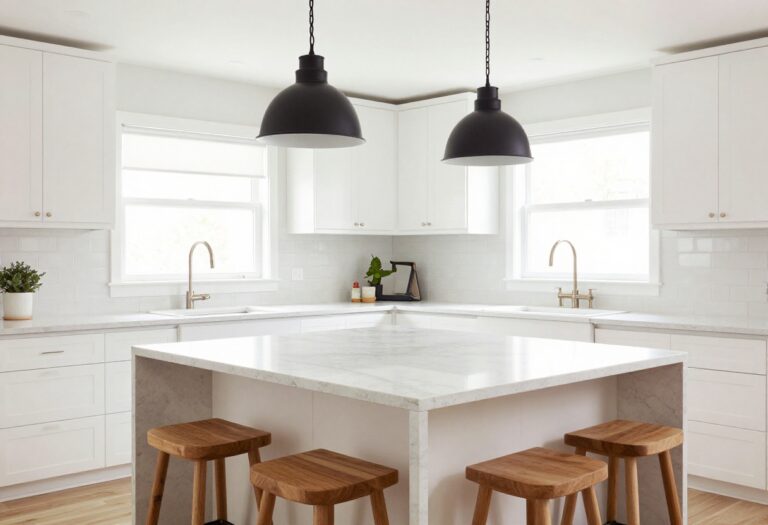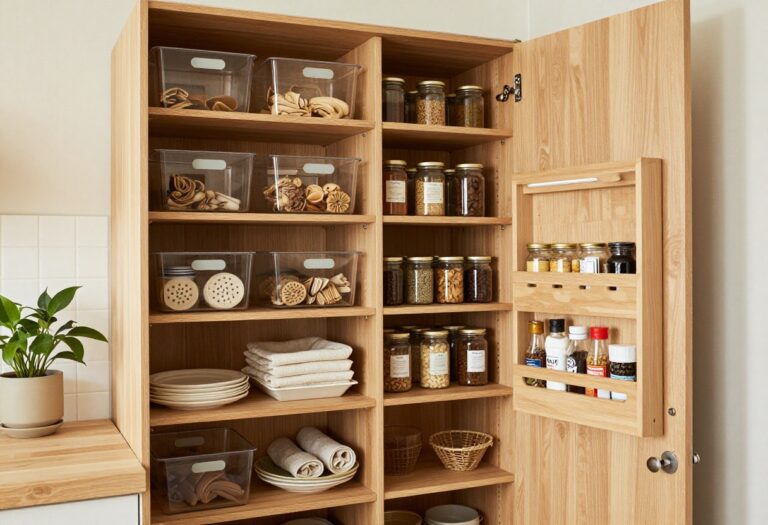
11 Small Basement Kitchen Ideas for Extra Cooking Space
Basements often get overlooked when it comes to kitchen planning, but that extra square footage downstairs can be a game-changer. Whether you need a second cooking area for big family meals or a simple setup for late-night snacks, a basement kitchen doesn't have to feel dark or cramped.
With the right approach, you can turn that lower level into a warm, layered space that's just as inviting as your main kitchen.
Let's walk through 11 ideas that balance style and function, keeping things cozy and practical.
1. Open Shelving to Keep Things Airy
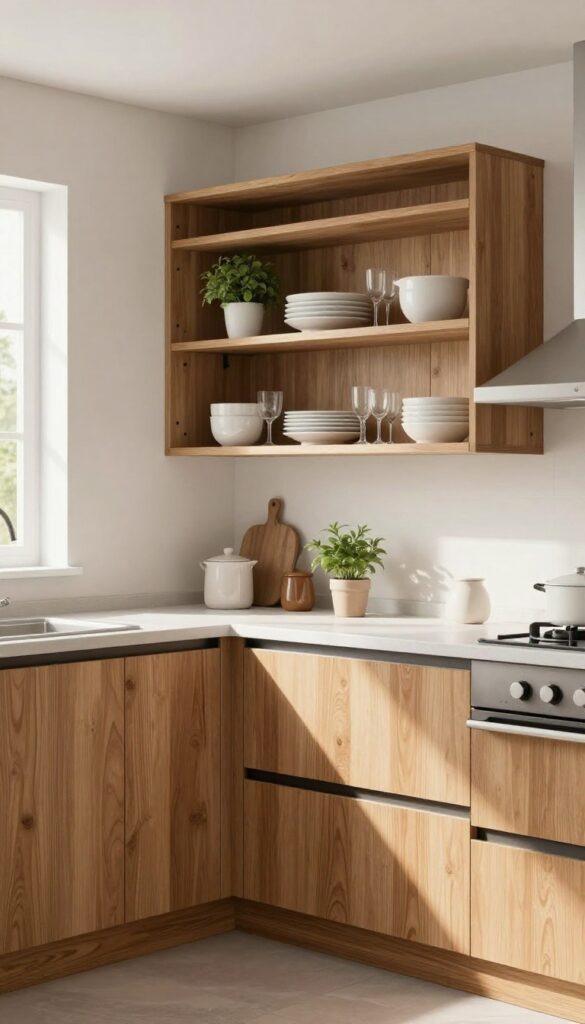
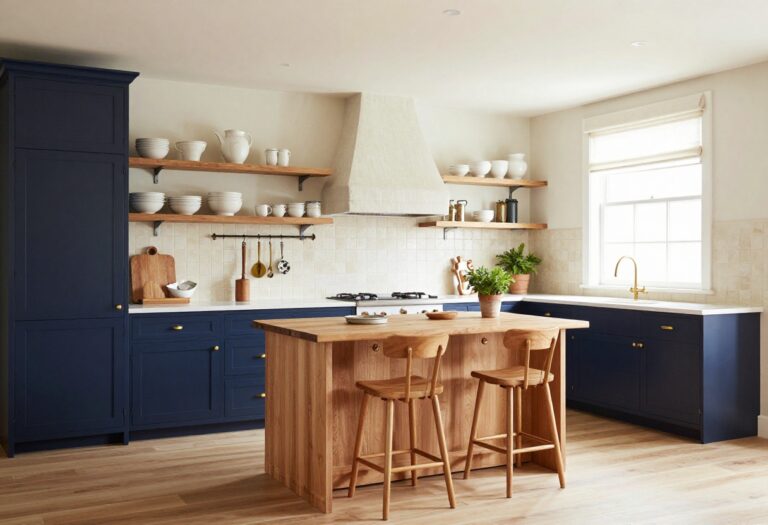
Basements tend to feel a little closed in, so the last thing you want is a row of bulky cabinets making the space even heavier. Swapping upper cabinets for open shelves instantly lightens the visual weight and makes the room feel bigger than it actually is. Plus, it gives you a chance to show off your favorite dishes and glassware instead of hiding them behind doors.
Open shelving is a smart move for small basement kitchens because it keeps the layout feeling open and breezy. Without cabinet doors blocking the view, your eye travels all the way to the back wall, which makes the room seem more spacious. Warm wood shelves add a cozy touch, while black metal brackets bring a bit of industrial edge—both work well in a basement setting.
Keep everyday dishes and glasses within easy reach on the lower shelves, and use the top shelves for less-used items or decorative pieces like small plants and ceramic jars. Just remember to keep things tidy since everything is on display; a quick edit now and then keeps the look intentional rather than cluttered.
Best Materials For The Look
- Reclaimed wood shelves add warmth and character, which is perfect for counteracting the cool, dark feel of a basement. If you prefer a cleaner look, go with solid white oak or birch plywood with a natural finish. Black metal brackets are a classic choice that pairs well with almost any style, from farmhouse to modern.
- For a softer vibe, try brass or matte black brackets with a slight curve.
Shelf Styling Tip
- Layer your shelves with a mix of functional and decorative items. Stack plates and bowls on one side, then add a small plant, a wooden cutting board, and a few cookbooks on the other. Keep the color palette cohesive—stick to whites, woods, and a single accent color like sage green or mustard yellow.
- This keeps the shelves from looking chaotic and makes the whole kitchen feel more put together.
Small-space Fix
If your basement kitchen has low ceilings, mount the shelves a few inches higher than standard to draw the eye upward. This tricks the brain into thinking the room is taller. Also, avoid overcrowding the shelves—leave about 20% empty space so the shelves feel curated rather than stuffed.
2. A Rolling Island for Flexible Prep Space
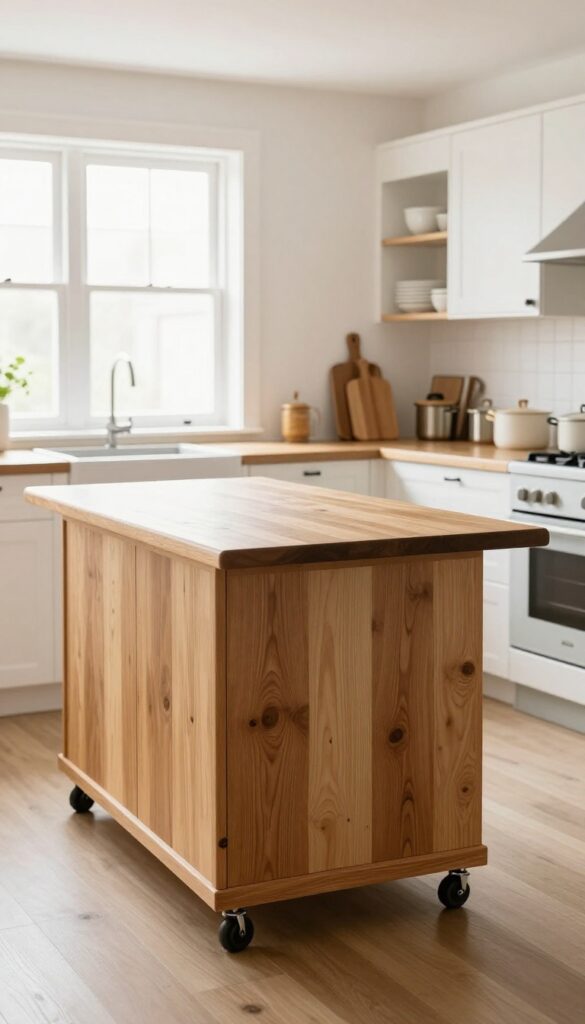
In a small basement kitchen, every inch counts, and a stationary island can feel like a luxury you don't have room for. That's where a rolling island comes in—it gives you that extra counter space when you're prepping a big meal and rolls out of the way when you need to move around. Plus, it adds a warm, furniture-like feel that keeps the space from looking too utilitarian.
A compact island on casters gives you extra counter space when you need it and tucks away when you don't. Top it with butcher block for a warm, workable surface that's gentle on knives and adds a natural texture to the room. Choose a size that fits your layout—something around 24 to 36 inches wide works well for most basements.
The casters should lock in place for stability while you're using it, and the lower shelf or drawers can hold pots, pans, or pantry staples. This idea is especially helpful if your basement kitchen has limited permanent counters or if you occasionally need to clear the floor for other activities.
Best Materials
Butcher block is the top choice for the countertop because it's durable, warm, and easy to sand down if it gets scratched. For the base, go with solid wood or a sturdy birch plywood painted in a light, reflective color like creamy white or soft sage. Avoid dark finishes that can make the island feel heavy in a low-ceilinged basement.
Layout Tip
Place the island where it won't block the main work triangle—usually between the sink, stove, and fridge. In a basement kitchen, that might mean positioning it parallel to the main counter or at the end of a galley. Leave at least 36 inches of clearance on all sides so you can move around comfortably.
Storage Trick
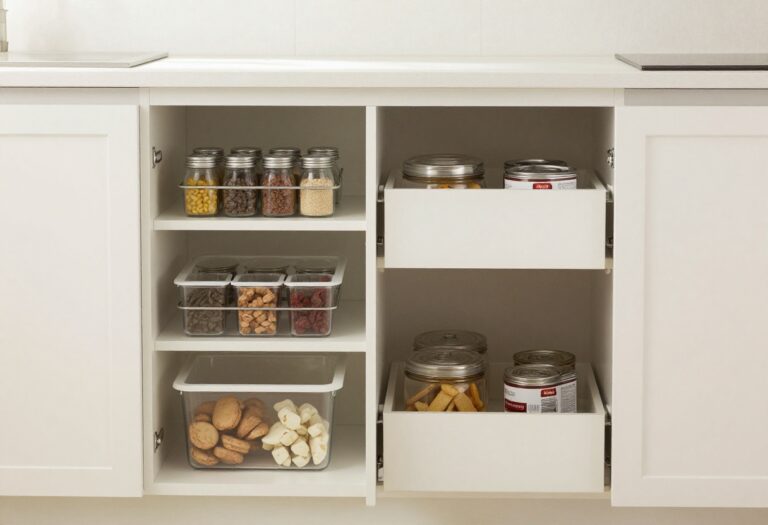
Maximize the island's storage by adding a lower shelf for baskets or a set of shallow drawers for utensils and linens. If you have room, hang a towel bar or small hooks on one end for dish towels or oven mitts. This keeps everything within arm's reach without cluttering the counter.
3. Layered Lighting with Pendants and Under-Cabinet Strips

Basements are notorious for being dark and gloomy, but the right lighting can flip that script entirely. Instead of relying on a single overhead fixture, try layering different light sources to create depth and warmth. Pendant lights over an island or prep area add a stylish focal point, while under-cabinet LED strips eliminate shadows on your countertops.
The trick is choosing warm bulbs (around 2700K) to keep the space feeling cozy rather than clinical. This combo makes even a small basement kitchen feel inviting and functional.
Layered lighting is a game-changer for basement kitchens where natural light is scarce. By mixing pendant lights with under-cabinet strips, you can brighten work areas without washing the room in harsh overhead light. The pendants add personality—choose glass or metal shades that fit your style—while the strips provide task lighting that makes chopping and cooking easier.
Warm bulbs are key here; they cast a soft, golden glow that makes the space feel like a cozy den rather than a dark cave. This approach also helps define zones: pendants mark the island or dining area, and under-cabinet lights keep counters clutter-free and functional.
Pendant Placement And Style
- Hang pendants about 30 to 36 inches above your counter or island so they provide ample light without blocking your view. For a small space, choose slim or mini pendants in a finish that complements your hardware—like brushed brass or matte black. If your ceiling is low, go for flush-mount or semi-flush pendants to avoid a cramped feel.
- Cluster two or three smaller pendants for a dramatic effect, or use a single larger one to keep it simple.
Under-cabinet Strip Installation
- LED strips are easy to install with adhesive backing or clips, and they come in various lengths to fit your cabinets. Place them near the front edge of the upper cabinets to light the countertop without shining directly in your eyes. Hardwired options look cleaner, but plug-in strips are a renter-friendly alternative.
- For a seamless look, hide the wires inside a channel or run them along the cabinet backs.
Cozy Glow With Dimmers
- Adding dimmer switches to both the pendants and under-cabinet strips lets you adjust the mood throughout the day. Crank them up for meal prep, then dim them low for a relaxed dinner or evening hangout. This flexibility makes your basement kitchen feel more like a living space than a utility room.
- Pair with warm-toned paint or wood accents to enhance the cozy vibe.
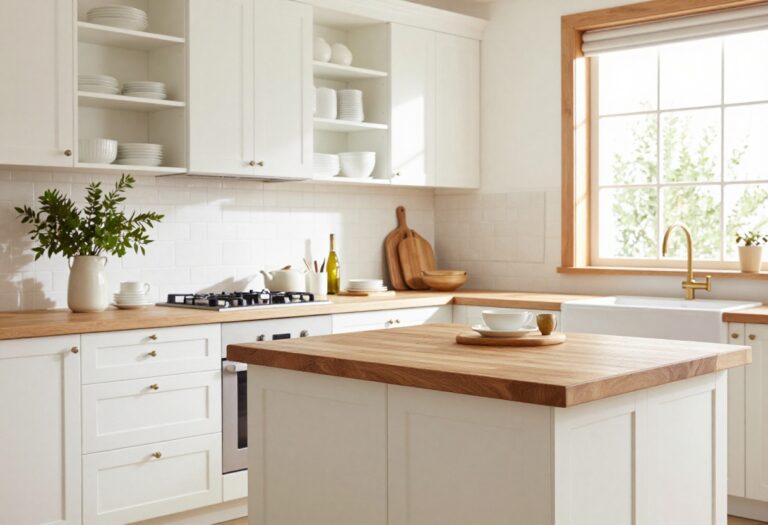
4. Light-Colored Cabinets to Brighten the Room
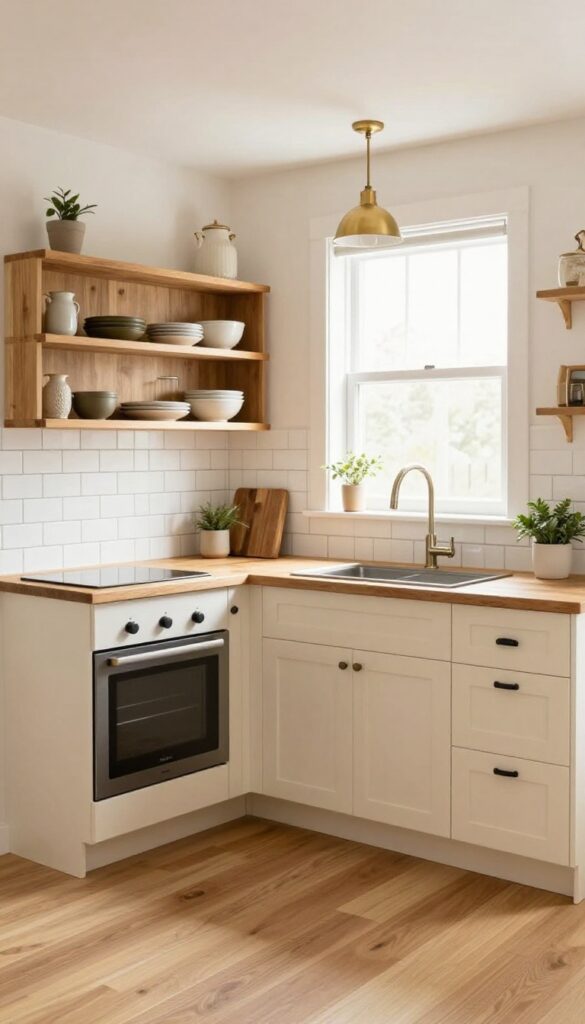
Basements tend to be naturally dim, so leaning into dark cabinetry can sometimes make the space feel like a cave. That’s where light-colored cabinets come in. White, cream, or pale gray finishes bounce whatever light you have—whether it’s from a tiny window or well-placed fixtures—around the room, instantly opening things up.
It’s a simple swap that makes your basement kitchen feel airier and more inviting, not to mention easier to keep tidy since dust and smudges show less on lighter surfaces.
When you’re working with a basement kitchen, every bit of brightness counts. Light cabinets act like reflectors, making the ceiling feel higher and the walls less closed in. Plus, they pair beautifully with almost any countertop material—butcher block, quartz, or even laminate—so you don’t have to overhaul everything at once.
To keep the look from feeling too sterile, add warmth with natural wood open shelving or a patterned tile backsplash. And don’t underestimate the power of hardware: matte black or brass knobs and pulls add just enough contrast to keep the space interesting without overwhelming it.
Best Shades And Finishes
- Stick with true white, warm cream, or soft dove gray for the most light-reflecting effect. Avoid stark cool whites if your basement lacks natural light—they can feel clinical. Instead, go for a slightly warm undertone, like ivory or greige.
- For finishes, semi-gloss or satin work well because they catch light without showing every fingerprint. If you’re worried about glare, a matte lacquer finish still reflects some light but in a softer, more diffused way.
Hardware That Pops
- Since your cabinets are light, the hardware becomes a focal point. Matte black is a classic choice—it grounds the cabinets and adds a modern edge. Brass or brushed gold brings warmth and a hint of luxury, especially against cream or white.
- For a more industrial vibe, go with unlacquered brass or aged bronze. Keep the pulls slim and streamlined so they don’t visually clutter the cabinet fronts.
Styling The Countertops
- With light uppers, you can play with darker countertops for contrast—think soapstone, dark quartz, or even concrete. Or keep things airy with white marble or quartz and add visual interest through texture, like a leathered finish. A butcher block island or peninsula adds warmth and breaks up all the light surfaces.
- Just make sure your countertop edges are simple—no ornate profiles—to maintain the clean, open feel.
5. A Small Prep Sink with a Gooseneck Faucet
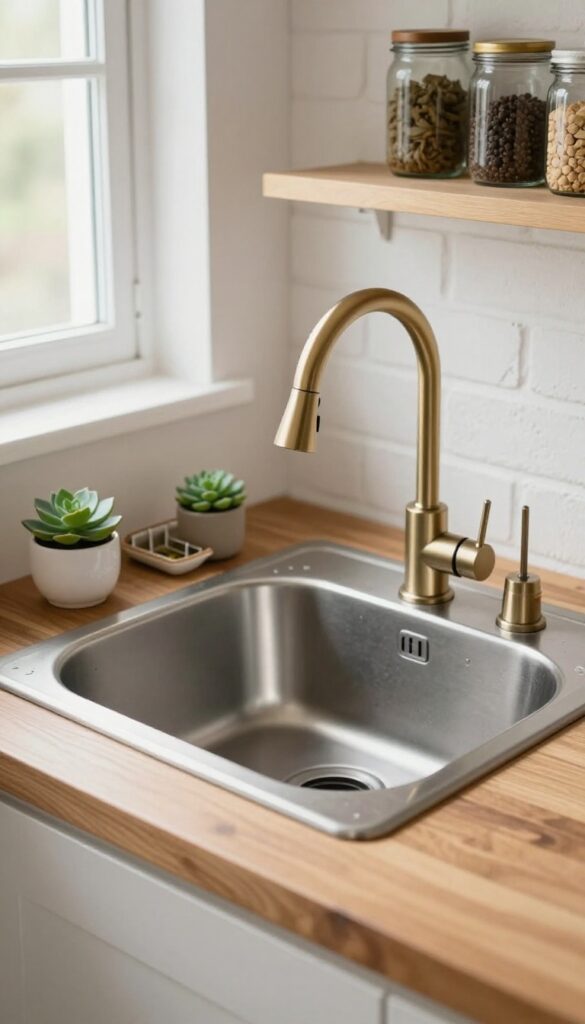
Even the tiniest basement kitchen can feel complete with a compact prep sink tucked into the counter. A gooseneck faucet adds a graceful silhouette and makes washing produce or filling tall pots surprisingly easy. It’s one of those small upgrades that instantly makes the space feel intentional and layered—like a real kitchen, not just a makeshift corner.
A prep sink doesn’t need to be deep or wide to be useful. In a basement kitchen, where every inch counts, a 12- to 15-inch round or square sink can handle rinsing vegetables, washing hands, or filling a kettle. Pair it with a high-arc gooseneck faucet in brushed brass, matte black, or polished nickel to create a subtle focal point.
The faucet’s curve draws the eye upward, making the counter feel larger and more polished. Keep the surrounding counter clear except for a small dish rack or a single plant to maintain that clean, layered look.
Best Materials
- Stainless steel is the no-fuss choice for a basement sink—it’s durable, easy to clean, and affordable. For a warmer feel, consider a fireclay or copper basin in a small round shape. Pair with a solid brass or stainless steel gooseneck faucet; avoid plastic fixtures that can look cheap and wear quickly.
- A matte black faucet adds modern contrast against light counters, while brushed gold brings a cozy, vintage touch.
Layout Tip
- Place the sink near the edge of the counter closest to your main work area, so you can easily reach it while chopping or prepping. If you have a window above, center the sink under it for a natural focal point. Leave at least 6 inches of counter space on one side for a cutting board or drying rack.
- A shallow sink (around 5 inches deep) works best for tight spaces and prevents splashing.
Cozy Detail
Add warmth with a small wooden cutting board that sits partially over the sink, giving you extra prep space and hiding the basin when not in use. Tuck a tiny vase with fresh herbs or a single flower next to the faucet. A soft, patterned dish towel hanging from the faucet neck or a nearby hook introduces texture and makes the sink area feel lived-in and inviting.
6. Use a Pegboard Wall for Tool Storage
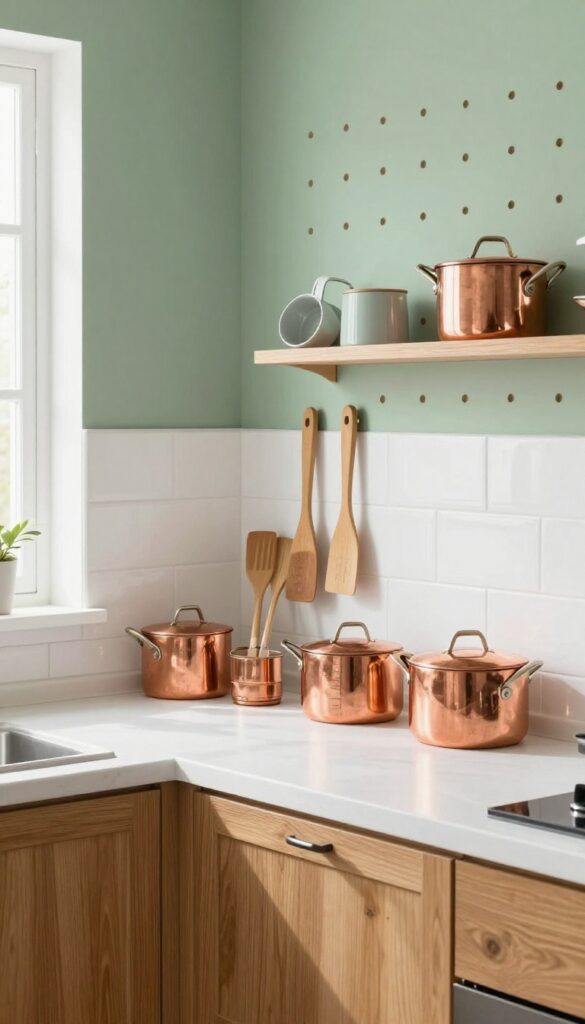
Pegboards aren't just for garages—they're a game-changer in a tiny basement kitchen. Mount one above your counter and suddenly every pot, spatula, and measuring cup has a home within arm's reach. The best part?
You can paint it a cheerful color like sage green or mustard yellow to inject personality without taking up any floor space. It's practical, yes, but it also adds that cozy, layered look you're after.
A pegboard wall turns blank wall space into functional art. In a small basement kitchen, where every inch counts, this setup keeps your countertops clear and your tools visible. Plus, it's endlessly customizable—move hooks around as your needs change.
The key is to choose a color that complements your cabinets and adds warmth. Sage green feels earthy and calm, while mustard yellow brings a playful pop. Either way, you'll wonder why you didn't do this sooner.
Best Colors For A Cozy Vibe
- Stick with warm, inviting hues that make the space feel intentional. Sage green pairs beautifully with wood tones and white subway tile. Mustard yellow adds a retro touch that works well with black or brass accents.
- If you prefer something neutral, a soft terracotta or dusty blue can still feel cozy without shouting for attention.
Layout Tip: Zone Your Tools
- Group items by how often you use them. Hang everyday pots and pans near the stove, utensils by the prep area, and measuring cups or spices near the counter. Use a mix of hooks, shelves, and small baskets to keep things organized.
- This way, your pegboard feels curated, not chaotic.
Finishing Touch: Add A Shelf Above
Mount a narrow floating shelf right above the pegboard to store cookbooks, a small plant, or a jar of wooden spoons. It breaks up the vertical space and gives you room to display a few pretty items. Just keep it lightweight so the whole setup feels airy, not heavy.
7. Add a Banquette for Casual Dining
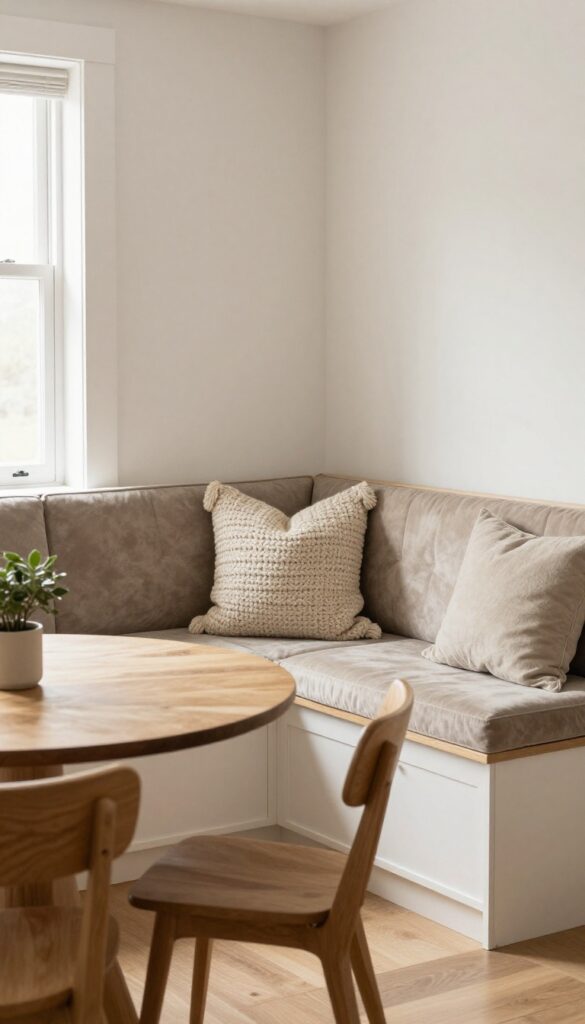
Tucking a banquette into a basement corner instantly makes the space feel like a cozy hideaway. A built-in bench with storage underneath saves precious floor space and creates a natural nook for quick meals. Pair it with a small round table and a couple of chairs, and you've got a dining spot that doesn't eat up your entire basement.
A banquette is a smart solution for small basement kitchens because it uses corner space efficiently. The bench can double as extra storage for cookbooks, table linens, or pantry overflow. Choose a round table to soften the layout and make it easier to move around.
Add cushions and pillows in warm textures to make the nook inviting.
Layout Tip
Position the banquette against a wall or in a corner to maximize floor space. Leave enough room for a small round table (30–36 inches in diameter) so you can slide in and out easily. If your basement has low ceilings, keep the bench back low to maintain an open feel.
Cozy Detail
Layer the bench with a washable cushion in a durable fabric like performance velvet or outdoor-grade cotton. Add a couple of throw pillows in contrasting textures—think chunky knit or linen—to make the nook feel extra snug.
Storage Bonus
Build the bench with hinged lids or pull-out drawers to stash rarely used items. Use the space underneath for storing bulky pots, small appliances, or extra pantry goods. This keeps your basement kitchen clutter-free without sacrificing style.
8. Incorporate Warm Textures with Rugs and Curtains
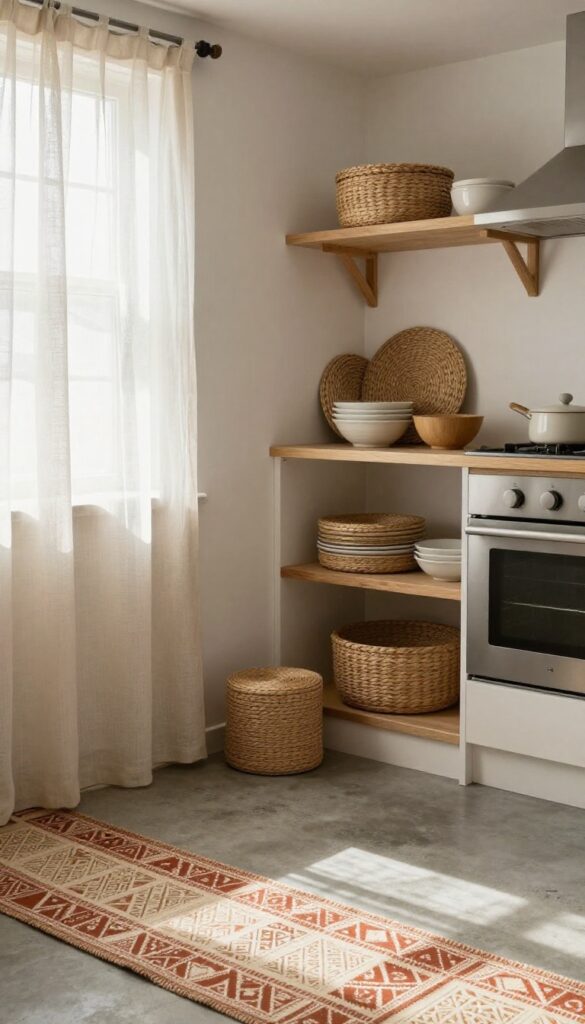
Basements tend to lean cold and hard—concrete floors, exposed pipes, maybe a bit of drywall. But a few soft textiles can flip the whole mood. A patterned runner or a set of woven placemats instantly brings warmth underfoot, while a linen curtain (even if your window is small) adds that cozy, lived-in layer.
Think of it as dressing your basement kitchen in a soft cardigan—it just feels better.
Textiles are your secret weapon against the basement chill. A runner down the center of the kitchen defines the walkway and absorbs sound, making the space feel quieter and more intimate. Choose a pattern that ties into your overall color scheme—maybe a geometric print in warm terracotta or a subtle stripe in cream and navy.
For the window, a simple linen curtain in a soft neutral filters harsh light and adds gentle movement. If you don't have a window, hang a textile wall hanging or a fabric panel to mimic that softness. Even a few placemats on open shelving can break up hard surfaces and make the room feel curated.
The key is to layer textures—cotton, wool, jute—without going overboard. Stick to two or three textile touches so the space stays intentional, not cluttered.
Best Materials For A Cozy Basement Kitchen
- Stick with natural fibers that add warmth without trapping moisture. Jute or sisal runners are durable and bring earthy texture. Cotton or linen curtains breathe well and soften light.
- For placemats, go with woven seagrass or chunky cotton—they're easy to wipe clean and add visual depth. Avoid synthetic shag rugs in basements; they can trap dampness and feel grimy over time. Instead, choose flat-weave wool or cotton blends that dry quickly and handle foot traffic.
Rug Pairing Tips For Small Spaces
- In a tight basement kitchen, a runner is often smarter than a large area rug. Measure your main walkway and pick a runner that leaves at least 6 inches of floor visible on each side. If your kitchen has an island or peninsula, place a smaller rug (like a 2×3) in front of the sink or prep area.
- Match the rug's color to your countertops or cabinetry to create flow. For example, a charcoal runner with subtle white flecks works well with white cabinets and concrete floors.
Finishing Touch: Curtains Without A Window
- No window? No problem. Hang a decorative curtain panel on a small rod above a counter or next to a shelving unit.
- It creates the illusion of a window and adds softness. Choose a linen or cotton panel in a light color—cream, pale gray, or soft blush—and let it puddle slightly for a relaxed look. You can also use a tension rod inside a shallow alcove or above a sink to frame the space.
- This trick instantly warms up a windowless corner.
9. Install a Mini Fridge and Beverage Station
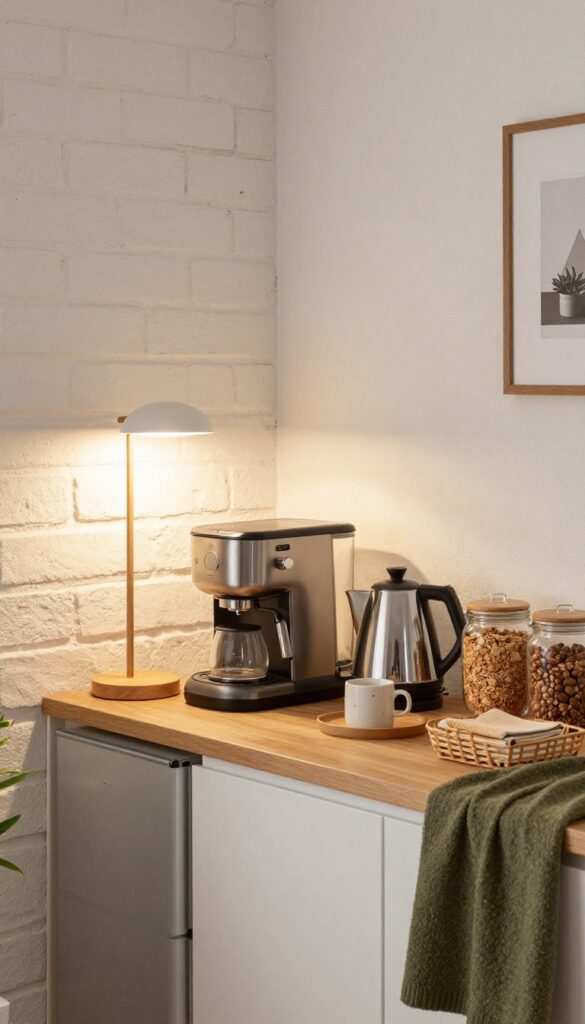
A basement kitchen doesn’t have to be a full culinary setup to be incredibly useful. Carving out a corner for a mini fridge and a few beverage-making essentials turns that extra space into a go-to spot for drinks, snacks, and quick bites—without competing with your main kitchen. It’s the kind of cozy, layered setup that makes the basement feel like a real extension of your home, not just a storage afterthought.
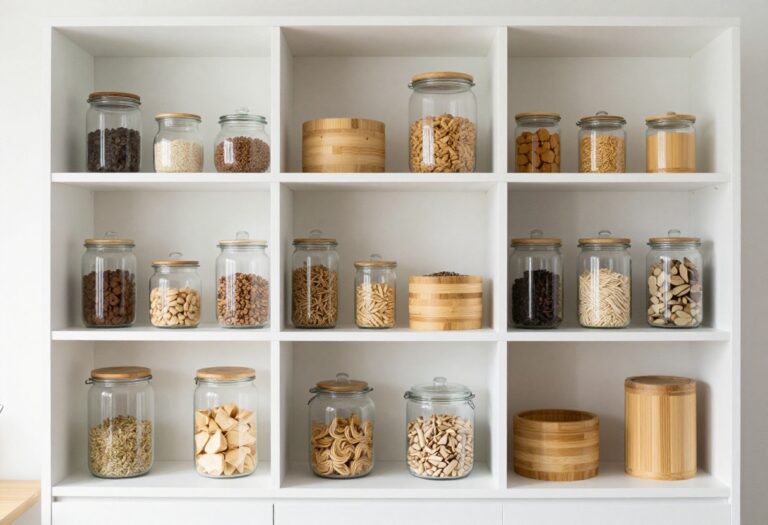
Think of this as your personal café nook. A compact fridge keeps sodas, water, and maybe some cheese or yogurt chilled, while a countertop coffee maker or electric kettle handles hot drinks. A few glass jars filled with granola bars, nuts, or popcorn add a touch of pantry-style convenience.
The key is to keep it simple and inviting—this isn’t a second full kitchen, but a handy, low-lift spot that makes grabbing a drink or a snack feel effortless. Layer in a small tray for mugs, a basket for napkins, and maybe a tiny plant or a framed print to make the corner feel intentional and warm.
Layout Tip
Choose a corner with easy access to a power outlet, ideally near a wall where you can place a slim console table or a narrow countertop. If floor space is tight, consider a rolling cart that holds the fridge below and a prep surface above. Keep the coffee maker and jars within arm’s reach so the station feels efficient and clutter-free.
Cozy Detail
Add a small rug underfoot to define the zone and soften the basement floor. A warm-toned runner or a round wool mat in a muted rust or olive green anchors the area and adds that layered, lived-in feel. Tuck a low-wattage table lamp or a string of warm fairy lights nearby for a gentle glow that makes the station feel like a retreat.
Storage Tip
Use wall-mounted shelves above the mini fridge to store mugs, a few bottles, or decorative canisters. This keeps the counter clear and draws the eye upward, making the corner feel taller and more intentional. Stick to a cohesive color palette—white, wood, and soft neutrals—to keep the look calm and cohesive.
10. Use a Sliding Barn Door to Hide the Kitchen When Not in Use
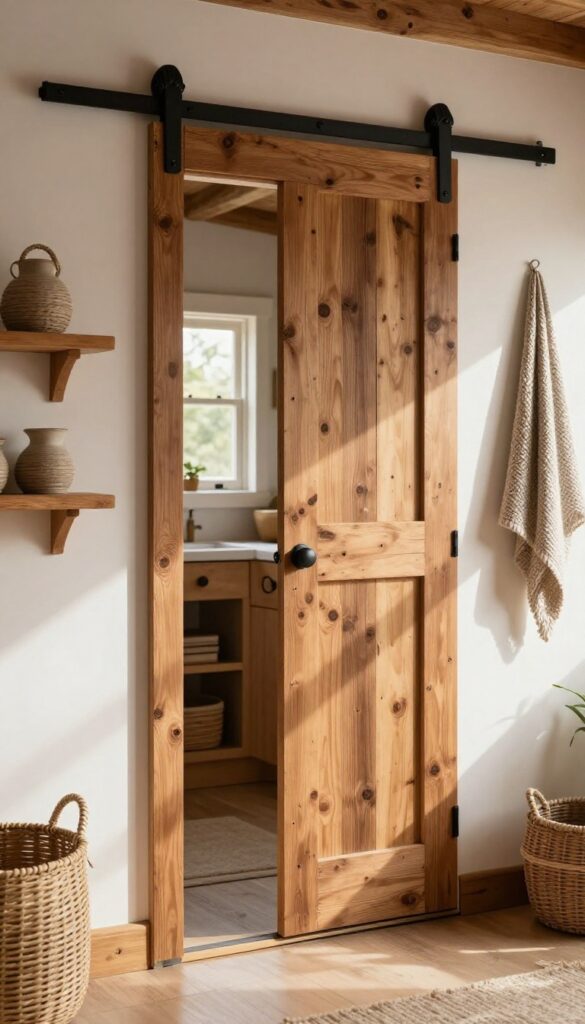
Basement kitchens often share space with a family room, home gym, or laundry area. While having extra cooking space is great, the sight of dirty dishes or cluttered counters can ruin the cozy vibe of your rec room. A sliding barn door offers a simple solution: slide it closed and the kitchen disappears, leaving your basement looking neat and intentional.
The best part? It adds instant rustic warmth, especially if you choose reclaimed wood with visible grain and knots.
A sliding barn door is more than just a partition—it's a design statement. When your basement kitchen is open, the door acts as a textured backdrop; when closed, it becomes a feature wall. This idea works especially well in basements with low ceilings because the door's horizontal motion doesn't eat up floor space like a swinging door would.
Plus, the natural wood tones help counteract the often cool, dark feel of basements, making the whole area feel cozier and more layered.
Best Materials
- Reclaimed wood is the top choice here—it brings character and a sense of history that fits perfectly with a cozy, layered look. If reclaimed isn't available, look for new wood with a distressed finish or a warm stain. Avoid glossy or painted doors, as they can feel too formal for a basement setting.
- The goal is something that feels like it's been there for years.
Hardware And Installation
- Choose a heavy-duty barn door track that can support the weight of solid wood. A matte black or oil-rubbed bronze rail adds a nice contrast against lighter woods. Make sure the door overlaps the kitchen opening by at least a few inches on each side so no mess peeks through.
- If your basement has a drop ceiling, you might need to mount the track to the ceiling joists above—check with a contractor if you're unsure.
Styling The Surrounding Area
- To make the door feel intentional, style the wall it slides against. Hang a small sconce or a piece of art near the door's resting spot. On the kitchen side, keep the countertops relatively clear so the door can slide fully open.
- A soft runner rug on the basement side can help define the transition between the two spaces.
11. Bring in Greenery with Low-Light Plants
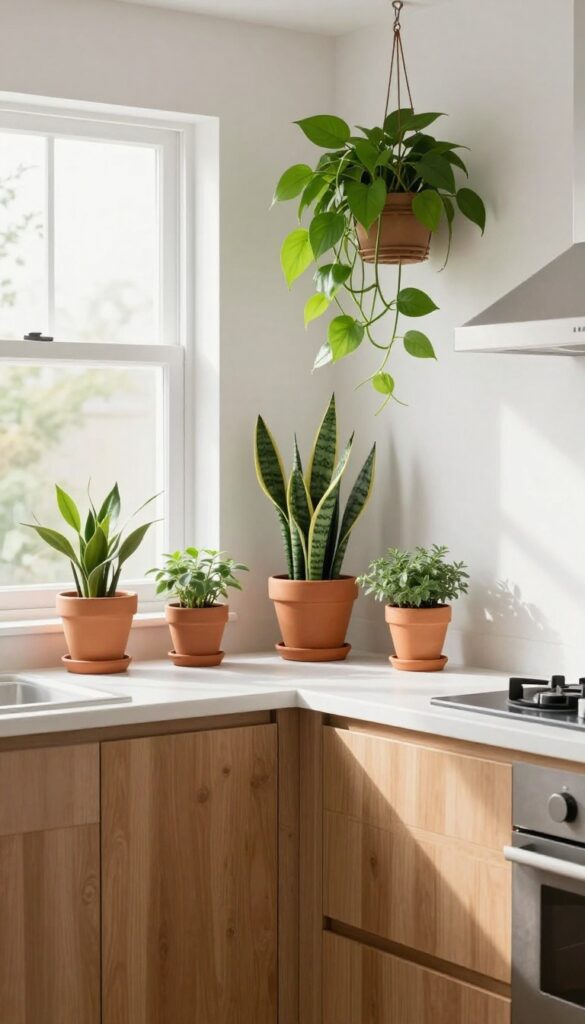
A basement kitchen doesn't have to feel like a cave. Adding a few low-light plants instantly breathes life into the space, making it feel fresher and more inviting. Snake plants, pothos, and ZZ plants are practically indestructible and thrive in the dim conditions typical of a basement.
They also help purify the air, which is a nice bonus when you're cooking in a smaller, enclosed area.
Plants are an easy, affordable way to soften the industrial feel of a basement kitchen. They add organic shapes and a pop of green that contrasts beautifully with cabinets and countertops. Plus, they're low-maintenance, so you don't need a green thumb to keep them happy.
Tuck a few small pots on the counter, or go vertical with a hanging planter near the ceiling to save precious counter space. The key is to choose varieties that genuinely don't need much light, so you won't be disappointed when they thrive.
Best Plant Choices
- Stick with the classics: snake plant, pothos, ZZ plant, and philodendron. These tolerate low light and irregular watering, making them perfect for a busy kitchen. If you want a trailing plant, pothos is your best bet—it looks great on a high shelf or in a hanging planter.
- For a taller accent, a snake plant adds vertical interest without taking up much floor space.
Placement Tips
- Since natural light is limited, put plants where they'll get whatever ambient light exists—near a window if you have one, or under a skylight. Avoid dark corners unless you add a small grow light. Grouping plants together can also create a mini jungle effect that feels lush and intentional.
- Use the countertop, open shelves, or a narrow console table against the wall.
Styling And Pots
- Choose pots that complement your kitchen's style. For a cozy, layered look, mix textures like terracotta, ceramic, and woven baskets. White or neutral pots keep things clean and airy, while darker pots ground the space.
- A simple hanging planter with a trailing pothos near the ceiling draws the eye up and makes the ceiling feel higher.
FAQ
Do I need a permit to add a basement kitchen?
Yes, most areas require permits for adding plumbing, electrical, or structural changes. Check with your local building department before starting any work.
How can I make a basement kitchen feel less dark?
Use light paint colors, add multiple light sources (overhead, under-cabinet, and task lighting), and incorporate mirrors or glossy finishes to bounce light around.
What's the best flooring for a basement kitchen?
Luxury vinyl plank or tile is ideal because it's waterproof and durable. Avoid solid hardwood, which can warp in humid conditions.
Can I install a stove in a basement kitchen?
Yes, but you'll need proper ventilation, such as a range hood that vents outside. Check local codes for gas or electric stove requirements.
How much does it cost to finish a small basement kitchen?
Costs vary widely, but a basic setup with cabinets, countertops, a sink, and a mini fridge can range from $3,000 to $10,000 depending on materials and labor.
Conclusion
A basement kitchen doesn't have to feel like an afterthought. With a few intentional choices—like warm lighting, open storage, and cozy textures—you can create a space that's both practical and inviting. Whether you're prepping a big holiday meal or just making a midnight snack, these ideas help your lower level shine.
Start with one or two changes and build from there. Your basement has more potential than you think.