13 Kitchen Bar Table Ideas Small Spaces Can Fit Well
Small kitchens often miss out on the casual dining charm a bar table brings. But with the right approach, even the tiniest footprint can host a cozy spot for morning coffee or quick meals. The secret lies in choosing pieces that feel intentional, not cramped.
A bar table doesn't have to dominate the room. When you layer in warm textures, soft lighting, and a few personal touches, it becomes a natural extension of your kitchen. Think of it as a small anchor for daily life, not an afterthought.
These 13 ideas focus on making your kitchen bar table feel inviting and practical. Each one leans into a cozy, layered look that fits snugly into small spaces without sacrificing style.
1. Slim Wall-Mounted Drop-Leaf Table
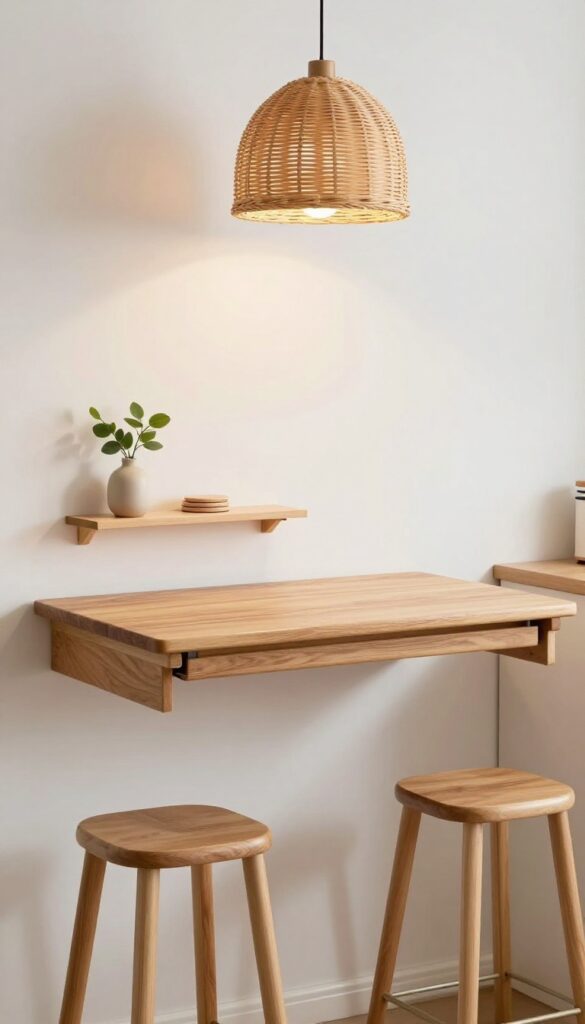
When your kitchen is short on square footage but you still want a spot to sit for coffee or a quick meal, a drop-leaf table attached to the wall is a game-changer. It folds flat when not in use, so you reclaim floor space instantly. Pair it with two slim stools and a small pendant light overhead, and you have a cozy dining nook that feels intentional—not cramped.
A drop-leaf table attached to the wall folds away when not in use, freeing up floor space. Add two slim stools and a small pendant light overhead to create a dedicated dining nook that disappears when you need room to move.
Best Materials
Go with a warm wood like oak or walnut for the tabletop to bring in natural texture. For the stools, choose a lighter wood or even acrylic to keep the visual weight low. The pendant light can be a simple glass globe or a woven rattan shade to add a soft, cozy glow.
Layout Tip
Install the table at a height that works for standard counter stools (about 26 inches). Leave at least 36 inches of clearance in front so you can pull out the stools and sit comfortably. When folded, the table should sit flush against the wall—no awkward protrusions.
Cozy Detail
Add a small shelf just above the table for a plant, a stack of coasters, or a tiny vase. It makes the nook feel styled even when the table is folded down. Choose a warm white paint for the wall behind to reflect light and keep the area airy.
2. Round Pedestal Table in a Corner
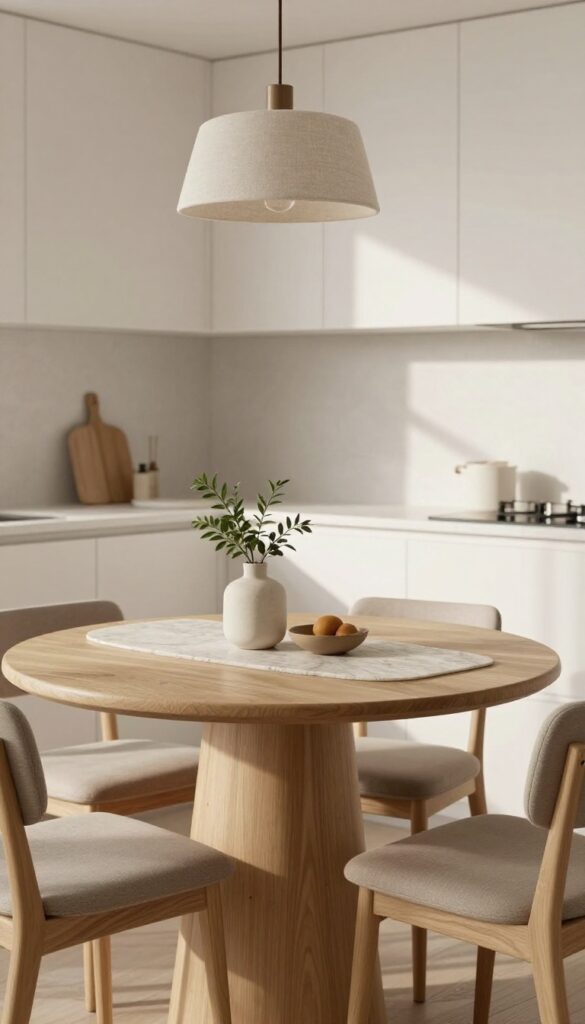
That corner where cabinets meet can feel like dead space, but a round pedestal table changes everything. Its single central support tucks neatly into the angle, leaving no awkward legs to trip over—perfect for tight kitchens. The soft curve softens the room's geometry, making the area feel intentional rather than leftover.
A round pedestal base tucks neatly into a corner, leaving no awkward legs to trip over. Pair it with a single cushioned chair or a small bench, and top with a textured runner and a low vase for soft visual weight. The compact footprint keeps the floor plan open while still offering a spot for morning coffee or a quick meal.
Best Colors
Stick with a light wood or white pedestal base to keep the corner from feeling heavy. A marble or faux-stone top adds a touch of elegance without overwhelming the space. For the chair, choose a warm neutral like taupe or blush to keep the look cohesive.
Layout Tip
Position the table so it sits about 6 inches from both walls—this leaves enough room for a chair to slide in without scraping the wall. If the corner is near a window, angle the table slightly to catch natural light and make the nook feel airier.
Finishing Touch
Hang a small pendant light directly above the table to define the zone. Go for a drum shade in linen or a sleek metal cone—something that draws the eye down without taking up visual space. Add a single framed photo or a small plant on the table to complete the vignette.
3. Butcher Block Counter Extension
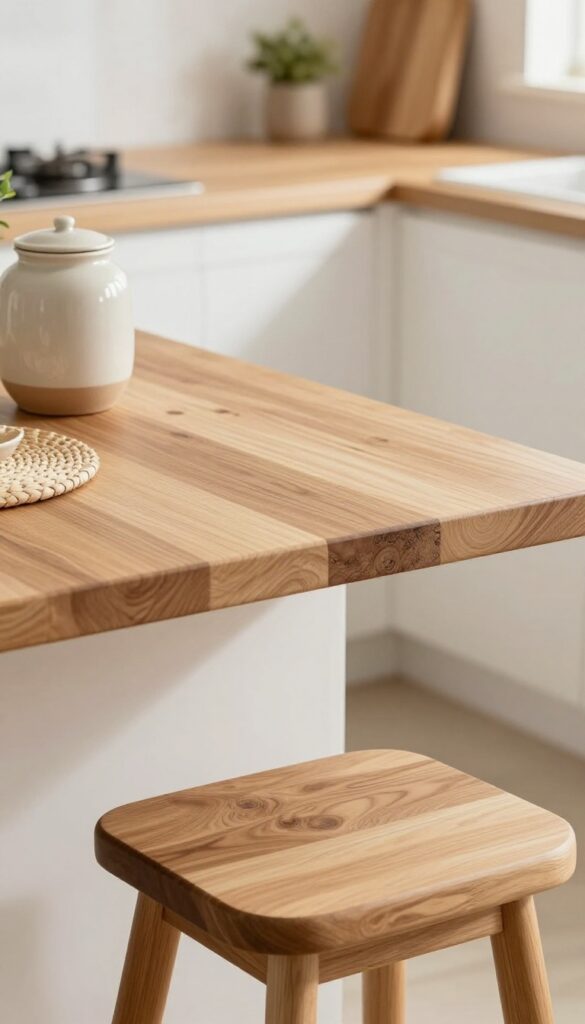
A butcher block overhang turns a standard counter into a cozy bar spot without taking up extra floor space. The warm wood surface invites you to pull up a stool, while the layered styling—think a ceramic jar and a well-worn cutting board—makes the corner feel intentional and lived-in. It’s a simple upgrade that adds both function and texture to a small kitchen.
Extending your existing counter with a butcher block overhang is one of the smartest ways to carve out a bar area in a tight kitchen. The wood brings warmth and a natural, cozy feel, while the overhang creates a clear zone for quick meals or morning coffee. Choose stools that slide completely underneath so the space stays open when not in use.
Layer in a few essentials: a thick cutting board, a ceramic jar for utensils, and maybe a small plant. The result is a spot that feels both practical and inviting, without cluttering the room.
Best Materials
- Go for a solid butcher block in a warm wood like oak or walnut. It’s durable enough for food prep and develops a nice patina over time. Pair it with counter stools in a lighter wood or metal finish to keep the look airy.
- A ceramic jar in a neutral tone adds contrast without competing with the wood.
Layout Tip
The overhang should extend at least 12 inches so there’s comfortable legroom. If your counter is against a wall, make sure the stools fit flush when pushed in. This keeps the walkway clear and the kitchen feeling spacious.
Finishing Touch
Add a small woven runner or placemat on the butcher block to define the eating area. A warm-toned pendant light above the overhang will make the space feel even cozier, especially in the evening.
4. Slim Console Table Behind a Sofa
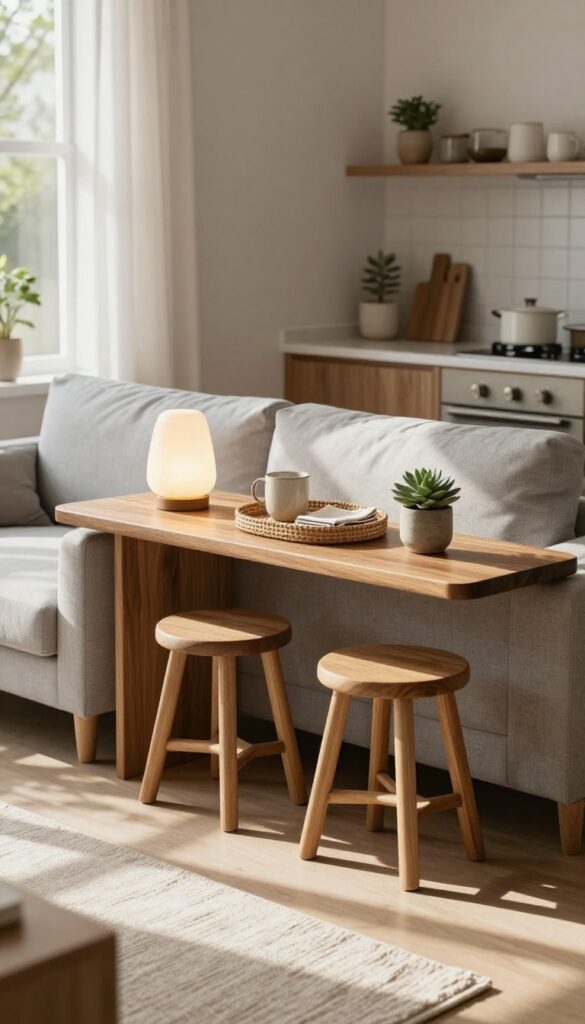
In an open-plan layout, the space behind the sofa often goes unused. Turning it into a slim kitchen bar table is a clever way to add function without sacrificing square footage. A narrow console table fits neatly against the sofa back, creating a casual dining spot that feels intentional and cozy.
This setup works best in a living area that flows into the kitchen. Choose a console table that's about the same length as your sofa for a balanced look. Style it with a small table lamp for warmth, a tray holding everyday utensils, and two low stools that slide underneath when not in use.
The result is a multifunctional surface that's perfect for morning coffee or quick meals, all while keeping the room open and uncluttered.
Best Materials
Opt for a slim console table in warm wood like oak or walnut to add texture and soften the transition between living and dining zones. A matte black or white lacquered finish works well in modern spaces. For the stools, choose a material that complements the table—wood seats with metal legs keep the look light and airy.
Styling Tips
Keep the console surface visually balanced: place the lamp at one end, the tray in the middle, and a small plant or stack of books at the other end. Use a tray that's easy to lift and move, so the table can double as a serving area. A soft runner or placemats can add a layer of coziness without cluttering the narrow surface.
Small-space Fix
If your sofa is against a wall, pull it forward a few inches to create room for the console. This trick works even in tight spaces, as long as there's at least 12 inches of clearance. Choose stools that are low-profile and tuck completely under the table to maintain a clean sightline.
5. Fold-Down Table with Open Shelving
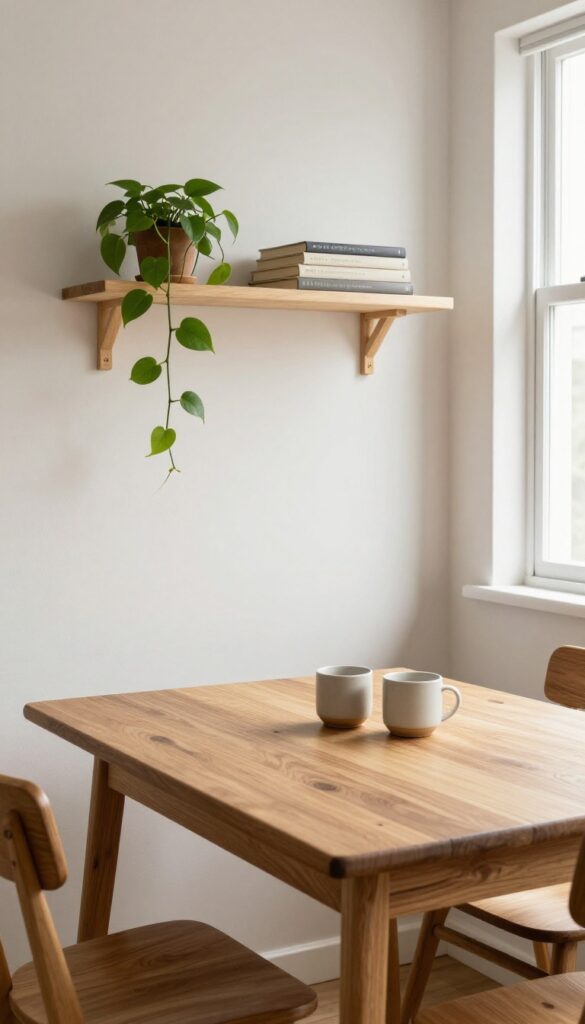
A fold-down table is a small kitchen’s best friend when you need a dining surface but can’t spare the floor space. Pair it with open shelves above, and you get a compact workstation that doubles as a mini display area. The whole setup feels intentional and cozy, especially when the shelves hold a few well-chosen items like cookbooks, a small plant, and ceramic mugs.
When the table is folded up, the wall looks clean and uncluttered—perfect for tight layouts.
This idea works best in a narrow kitchen or a breakfast nook where every inch counts. The table itself can be as simple as a hinged wooden slab that flips down when needed. Above it, floating shelves in a matching wood tone or a contrasting black metal create a layered look.
Style the shelves sparingly: a stack of neutral cookbooks, a trailing pothos, and a set of matte mugs. The key is to keep the display airy so it doesn't overwhelm the wall. When the table is down, it feels like a built-in desk or dining spot.
When it's up, the shelves become the focal point, and the room breathes.
Best Materials
- A warm wood like oak or walnut adds natural texture and blends with most kitchen styles. For a more industrial edge, go with a dark metal frame and a butcher-block top. The shelves should be sturdy enough for daily use—solid wood with hidden brackets keeps the look clean.
- If your kitchen leans modern, try a glossy white tabletop with slim black shelves for contrast.
Shelf Styling Tip
- Limit each shelf to three or four items to avoid visual clutter. Group similar heights together: a stack of plates on one side, a small vase on the other. Add a tiny framed print or a wooden cutting board for warmth.
- Leave some negative space so the shelves don't feel packed. The goal is to make the wall feel like a curated gallery, not a storage rack.
Small-space Fix
- If your kitchen is extra tight, choose a table that folds completely flat against the wall and is narrow enough to leave a walkway when down. Mount it at counter height so it can double as extra prep space. Add a single bar stool that tucks away under the table when not in use.
- This way, you get a dining spot without sacrificing floor area.
6. Vintage Cart as a Mobile Bar
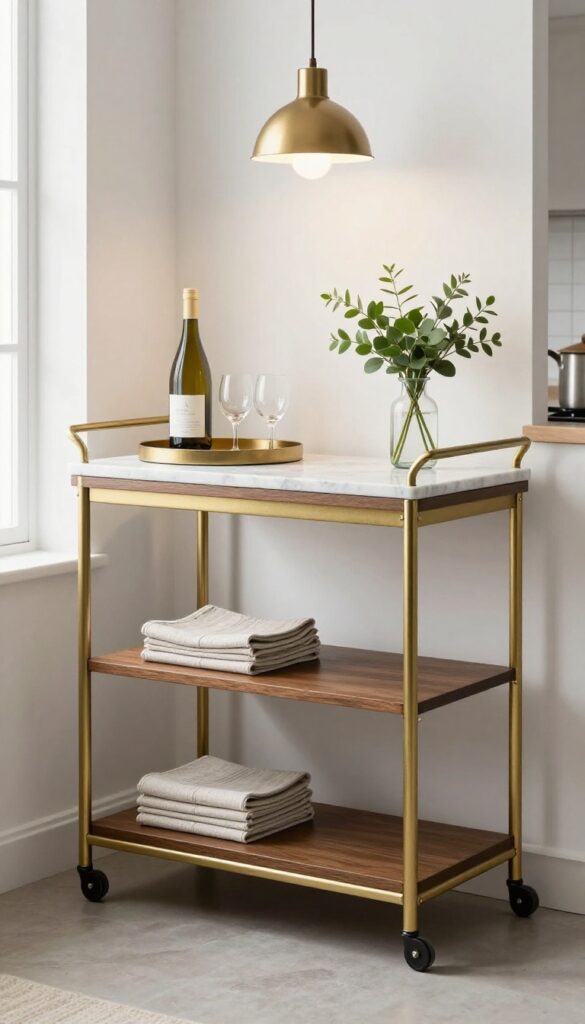
A vintage rolling cart is one of those pieces that seems to shape-shift to fit whatever your kitchen needs. One minute it's a coffee station, the next it's holding wine glasses and a cheese board during a dinner party. The best part?
You can tuck it into a corner when you're not using it, then wheel it right next to the table when guests arrive. It brings that cozy, layered feel because it's always ready to serve—literally.
The charm of a vintage cart lies in its patina and personality. Look for one with turned legs, a lower shelf, and maybe a little brass or wood detail. Top it with a marble slab or a thick wooden cutting board to create a sturdy surface.
Hang a small pendant light above the cart's usual spot to anchor it, so even when the cart is moved, the lighting still defines the area. This setup works especially well in galley kitchens or against a blank wall where you need a pop of character.
Best Materials
- Go for a cart with a metal frame—brass or wrought iron—paired with wood shelves. The contrast feels collected over time. If you find one with a marble or butcher-block top, even better.
- These materials add texture and warmth without feeling too precious.
Styling Tip
- Layer the cart with a mix of glassware, a small plant, and a stack of linen napkins. Keep a tray on the top shelf to corral bottles and a small vase. The lower shelf can hold cookbooks or a basket of extra linens.
- This way, every shelf feels intentional but not cluttered.
Lighting Fix
A single pendant light with a warm bulb hung directly above the cart's parking spot creates a focal point. Even when the cart rolls away, the light still marks that zone, making the kitchen feel layered and cozy.
7. Window-Sill Bar with a Narrow Shelf
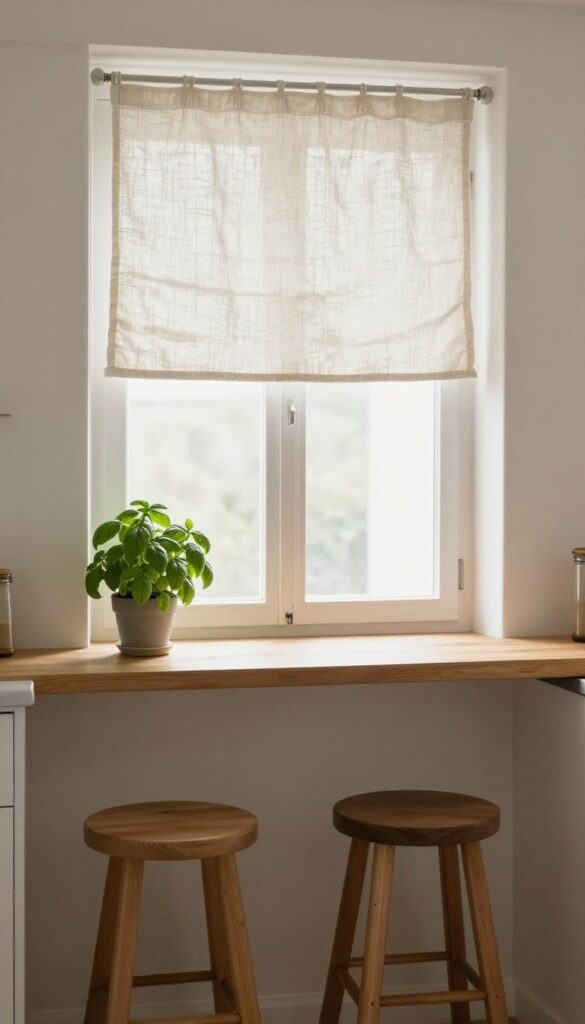
A deep windowsill is prime real estate that often goes unused. By extending it with a narrow wooden shelf at bar height, you create an instant breakfast bar that feels airy and intentional. The natural light becomes your main decor element, making even the smallest kitchen feel open and inviting.
Add a couple of backless stools, a small herb pot, and a linen curtain, and you've got a cozy nook that blends function with soft texture.
This idea works best in kitchens where the window overlooks a pleasant view or a quiet street. The shelf should be just wide enough to hold a coffee cup and a plate—no need for deep counter space. Backless stools tuck neatly underneath when not in use, keeping the floor plan open.
The linen curtain adds a soft, lived-in feel without blocking too much light. A small pot of basil or mint on the sill brings in a touch of green that ties the whole look together.
Best Materials
Go for a solid wood shelf with a natural or whitewashed finish to keep things warm and light. Avoid dark or glossy materials that might compete with the window's brightness. A simple bracket system keeps the shelf floating and unobtrusive.
Small-space Fix
If your windowsill is shallow, opt for a shelf that extends just 10–12 inches. That's enough for a slim breakfast setup without eating into walkway space. Pair with stools that have a small footprint—metal or wood frames work best.
Cozy Detail
Hang a single linen curtain panel from a slim rod above the window. Let it puddle slightly on the sill for a relaxed, lived-in look. Add a small ceramic vase with a single stem for an extra layer of softness.
8. L-Shaped Counter with a Built-In Table
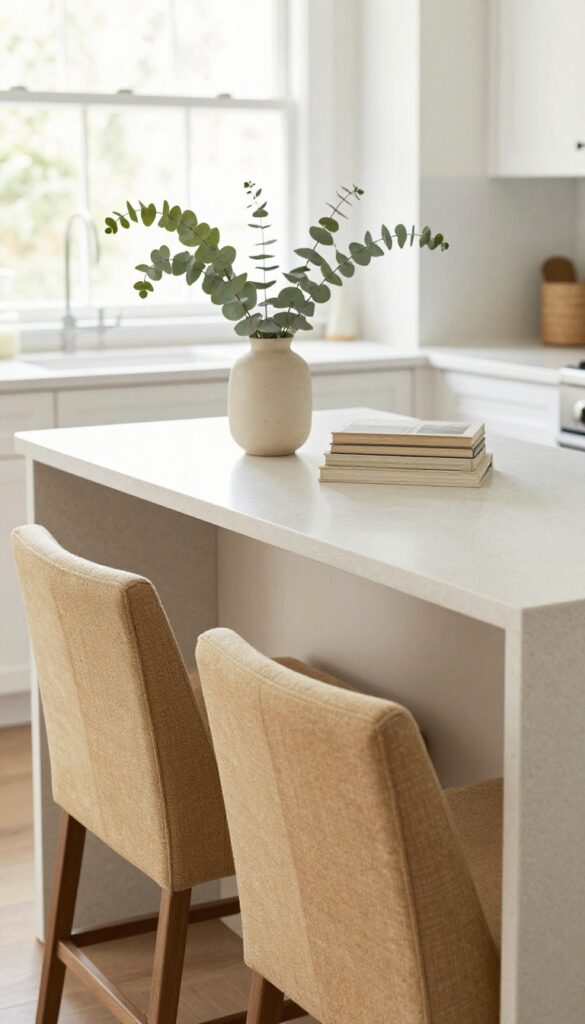
An L-shaped layout already works wonders in a small kitchen, but adding a built-in table at the end of the counter takes it to another level. The extension creates a natural spot for quick meals or morning coffee without needing a separate dining area. Using the same countertop material across both surfaces keeps the look cohesive and intentional, so the table feels like part of the original design rather than an afterthought.
A couple of upholstered stools in a warm neutral tone, like taupe or oatmeal, add softness and make the space feel inviting.
This idea is perfect for galley kitchens or open-plan layouts where every inch counts. The built-in table can double as extra prep space when you're cooking, and it's easy to style with a small vase or a stack of cookbooks. To keep the cozy vibe, choose stools with a padded seat and a slightly curved back—they'll look more like furniture than kitchen seating.
The key is to match the counter height so the table aligns seamlessly, creating a continuous surface that visually expands the room.
Best Materials
Quartz or butcher block are top choices for the counter and table because they're durable and easy to clean. A light-toned quartz keeps the space airy, while warm wood adds texture and a homey feel. If you go with butcher block, seal it well to protect against spills.
Layout Tip
Position the table on the side of the L that faces the main traffic flow. This way, it won't block movement and will feel like a natural extension of the counter. Leave at least 36 inches of clearance behind the stools so people can sit and stand comfortably.
Cozy Detail
Add a small pendant light directly above the table to define the eating area and create a warm glow. Choose a fabric or rattan shade for extra texture. A slim console or open shelf underneath the table can hold a few baskets for extra storage.
9. High-Low Combo with a Breakfast Bar
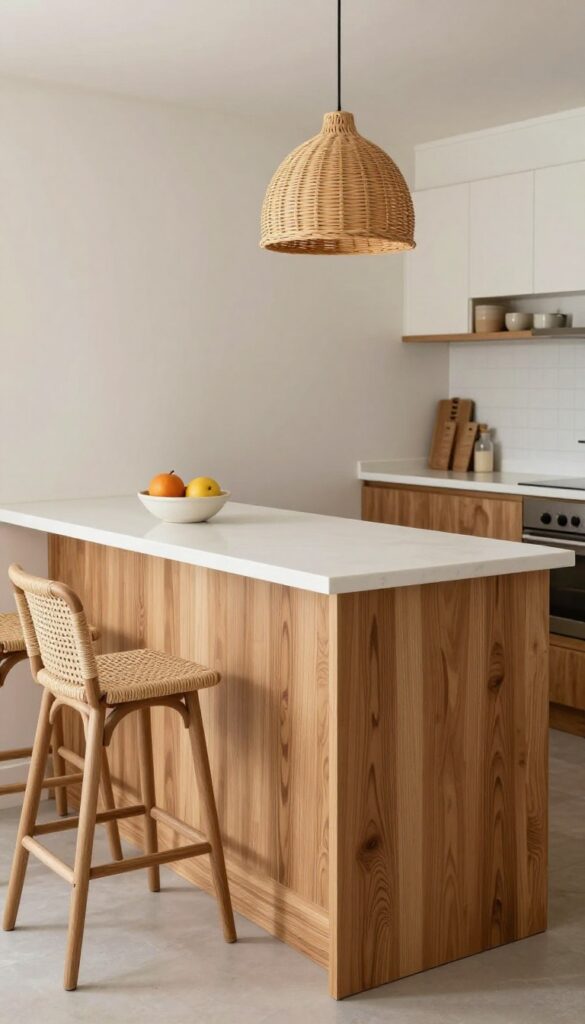
A breakfast bar that mixes heights adds instant personality to a small kitchen. The lower counter stays dedicated to food prep, while the raised section becomes a casual spot for coffee or a quick bite. It’s a clever way to define zones without adding walls, and the layered look makes the whole space feel intentional.
The high-low combo works best when you keep the materials cohesive. A warm butcher block on the lower level pairs nicely with a white quartz top on the raised bar. Add a woven runner along the lower counter for texture, and set a small fruit bowl on the high side to anchor the scene.
The contrast in heights draws the eye and makes the kitchen feel larger than it is.
Best Materials
Stick with two complementary surfaces. Wood on the lower counter brings warmth, while a lighter stone or solid surface on the raised bar keeps things airy. Avoid matching them exactly—the difference is what creates the layered, cozy feel.
Layout Tip
Position the raised bar on the side facing the dining area or living room. That way, the lower prep counter stays tucked toward the cooking zone. It creates a natural flow and keeps the breakfast bar feeling like a separate, inviting spot.
Finishing Touch
Hang a single low pendant light over the raised bar. Choose a woven shade or a warm metal finish to tie into the runner and fruit bowl. It pulls the whole high-low concept together and makes the bar feel like a real destination.
10. Floating Shelf with Folding Stools
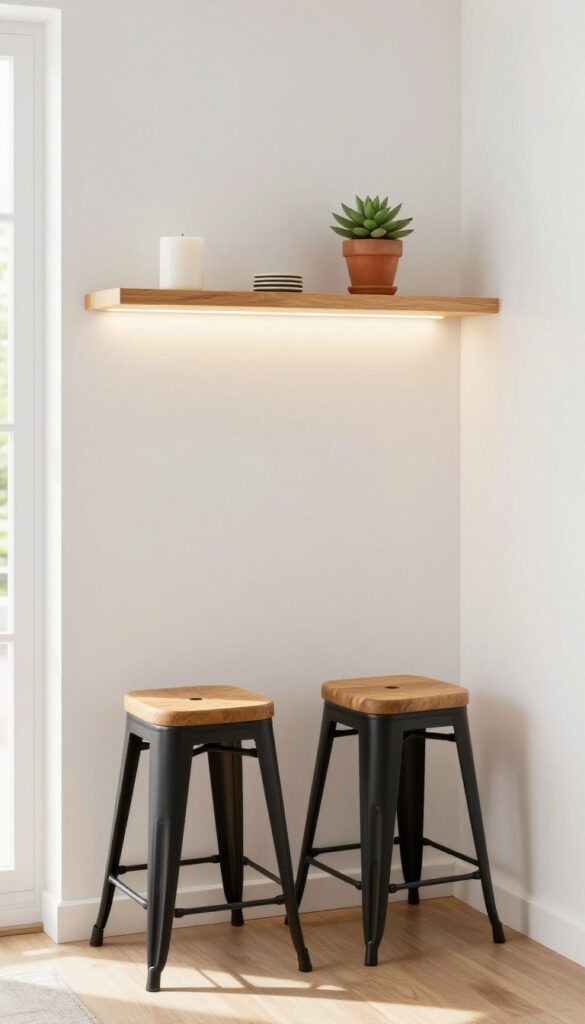
A floating shelf at bar height is one of those clever tricks that turns a bare wall into a functional spot without eating up floor space. The key is pairing it with folding stools that tuck away flat when not in use. This setup feels intentional and cozy, not makeshift, especially when you keep the shelf styling minimal—a single candle, a small plant, and a coaster set are all you need.
The whole thing can disappear in seconds, making it perfect for tiny kitchens where every inch counts.
Mount a sturdy floating shelf at bar height and pair it with folding stools that store flat. Keep the shelf decor minimal—a single candle, a small plant, and a coaster set. The whole setup can be packed away in seconds.
Best Materials
Go with a solid wood shelf in a warm tone like oak or walnut to add natural texture. For the stools, choose a slim metal frame with a wooden seat—black or brass finishes work well. The contrast between the warm wood and cool metal keeps the look layered but clean.
Small-space Fix
Mount the shelf at least 42 inches from the floor so it aligns with standard bar height. Leave enough wall space below for the stools to fold flat and lean against the wall without sticking out. A narrow shelf depth (10–12 inches) is plenty for two stools and a few decor pieces.
Cozy Detail
Add a small, low-profile LED strip under the shelf to cast a warm glow on the stools and floor. This soft lighting makes the nook feel inviting even when the stools are stored, turning a functional spot into a cozy vignette.
11. Repurposed Desk as a Kitchen Bar
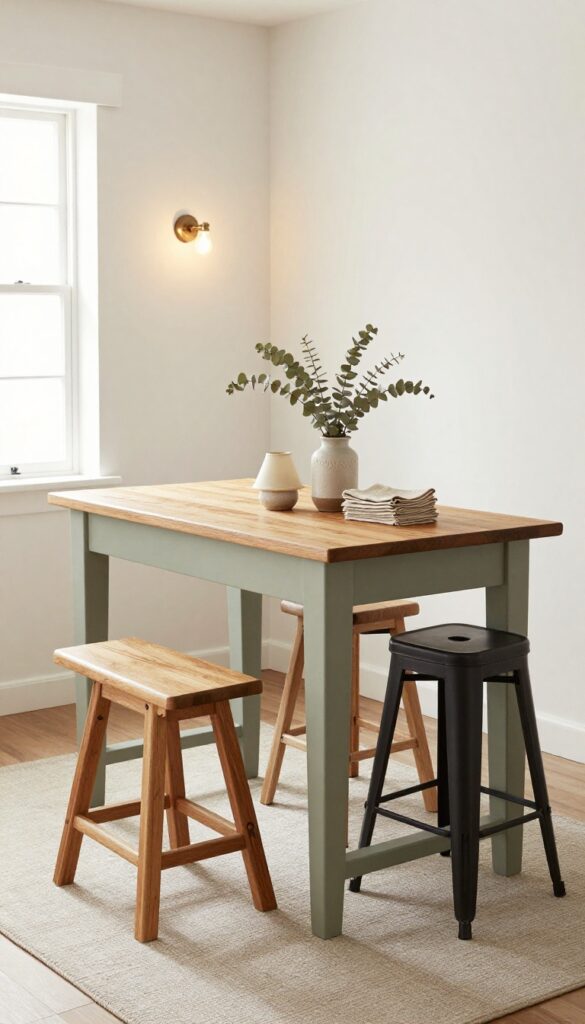
A slim wooden desk from a thrift store can become a charming bar table. Sand it down and add a coat of warm paint or leave it natural. Pair with mismatched stools and a small table lamp for a collected-over-time feel.
This idea brings a cozy, layered look to small kitchens without sacrificing function.
Instead of a standard bar table, a repurposed desk adds character and a sense of history to your kitchen. Its narrow profile fits snugly against a wall or under a window, making it ideal for tight spaces. The desk's built-in drawers or cubbies offer bonus storage for napkins, utensils, or cookbooks.
Style it with a mix of vintage and modern accents to keep the look curated, not cluttered.
Best Colors
Stick with warm neutrals like creamy white, soft sage, or muted navy for the desk. If you prefer natural wood, choose oak or pine and seal it with a matte finish. These tones blend seamlessly with cozy kitchens and let your decor pop.
Layout Tip
Place the desk against a wall with enough clearance for two stools. Keep the area around it open to avoid a cramped feel. A small table lamp or wall sconce above creates a cozy dining nook.
Finishing Touch
Add a textured runner or a small rug underneath to define the space. Layer in a ceramic vase with dried flowers or a stack of linen napkins for that collected-over-time charm.
12. Under-Cabinet Pull-Out Table
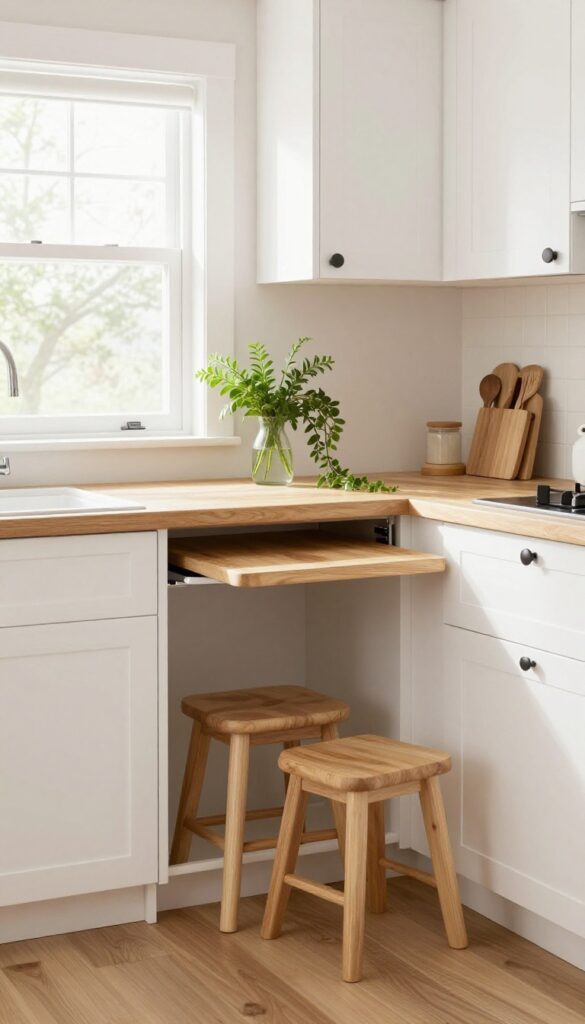
In a galley kitchen, every inch of floor space counts. That's where an under-cabinet pull-out table becomes a game-changer. It slides out when you need extra prep space or a spot for a quick breakfast, then tucks away completely, leaving your kitchen feeling open and uncluttered.
The best part? It adds function without sacrificing style.
This clever solution works especially well in narrow kitchens where a traditional table would block traffic. Mount a sturdy pull-out board beneath your upper cabinets, at a height that works as a counter or dining surface. When not in use, it disappears, so your kitchen stays sleek and spacious.
Pair it with nesting stools that stack neatly beside it, and you've got a flexible dining spot that doesn't crowd the room.
Best Materials
Go for a pull-out table in butcher block or a warm wood tone to add natural texture. Butcher block feels cozy and practical, and it matches well with most cabinet finishes. For a more modern look, choose a white laminate or a matte black surface that blends with your cabinetry.
Layout Tip
Install the pull-out table on the side of the kitchen opposite the stove or sink, so it doesn't interfere with cooking. Make sure there's enough clearance for stools to slide under when the table is extended. A depth of about 18 to 24 inches works well for dining, while 12 inches is fine for extra prep space.
Cozy Detail
Add a small vase with fresh herbs or a single trailing plant on the table when it's tucked away. It brings life to the kitchen without taking up space. When you pull it out, just move the decor aside—it's an easy way to keep the area feeling layered and intentional.
13. Bar Table with a Bench on One Side
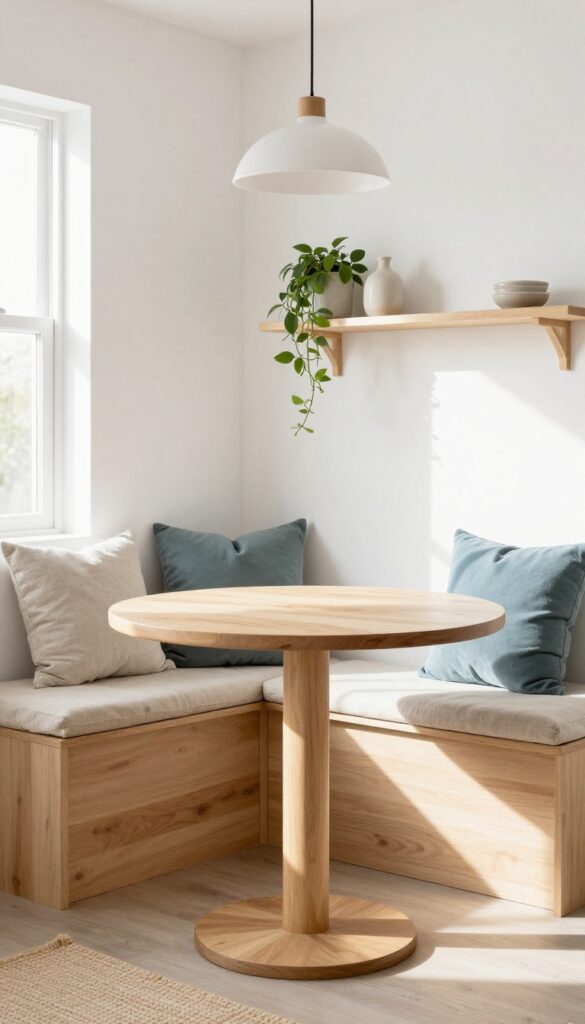
A bench pushed against the wall is a genius space-saver for a small kitchen. It tucks away neatly, leaving more floor space open than individual chairs would. Pair it with a compact round or square bar table, and you’ve got a cozy dining nook that feels intentional, not cramped.
The bench also invites a layered look—add a cushioned seat and a couple of throw pillows for instant comfort and visual warmth.
This setup works best when the bench is slim and the table is small enough to fit the room without overwhelming it. A wall-mounted shelf just above the bench holds a few decor pieces like a small plant or a ceramic vase, drawing the eye upward and making the area feel taller. The overall effect is clean, inviting, and perfectly scaled for tight spaces.
Best Materials
Stick with light wood for the bench and table to keep the space airy. A white or pale oak finish reflects light and blends easily with most kitchen styles. For the bench cushion, choose a washable fabric in a soft neutral or a muted warm tone—think linen or cotton in beige, sage, or dusty blue.
Layout Tip
Place the table slightly off-center from the bench so there’s room to slide in and out easily. A round table works especially well here because it eliminates sharp corners and makes the nook feel more open. Leave at least 24 inches between the table edge and any opposite wall or counter for comfortable movement.
Cozy Detail
Add a small woven runner or placemats on the table to introduce texture. A single pendant light or a small table lamp on a nearby counter can create a warm glow over the dining area. Keep the bench pillows plush but not oversized—two slim lumbar pillows are enough to make the spot feel inviting without cluttering the space.
FAQ
What is the ideal height for a kitchen bar table in a small space?
For a comfortable bar-height setup, aim for a table surface 40 to 42 inches high. Pair it with stools that have a seat height of 28 to 30 inches. This leaves enough legroom and works well with standard counter heights.
How much clearance do I need around a small bar table?
Leave at least 36 inches of clearance around the table for easy movement. In tighter spots, 30 inches can work if stools tuck fully under. Measure your space before buying to avoid a cramped feel.
Can I use a bar table in a kitchen without a dedicated dining area?
Absolutely. A bar table can double as a prep station, a spot for quick meals, or even a home office corner. Choose a design that folds or tucks away to keep the kitchen flexible.
What materials work best for a small kitchen bar table?
Lightweight materials like wood, metal, or glass help a small space feel airy. Warm wood adds coziness, while metal or glass keeps things visually open. Avoid heavy, dark pieces that can overwhelm the room.
How can I make a small bar table feel cozy without clutter?
Layer in soft textures like a linen runner, a small woven placemat, or a cushioned stool. Add a warm-toned lamp or a tiny vase with fresh herbs. Keep surfaces mostly clear, letting a few intentional pieces create the cozy vibe.
Conclusion
A kitchen bar table can transform a small space into a warm, functional hub without demanding much square footage. The key is choosing a style that fits your layout and layering in textures that make it feel lived-in and inviting.
Whether you go for a fold-down design or a repurposed desk, each idea here proves that cozy and compact go hand in hand. Pick the one that speaks to your kitchen's personality, and enjoy a little spot that's all yours.