13 Oak Cabinet Kitchen Ideas That Feel Fresh Again
Oak cabinets have a reputation for feeling dated, but they don't have to. With the right styling, those warm wood tones can become the heart of a kitchen that feels cozy and current.
The trick is to lean into the warmth rather than fight it. Whether you're working with honey oak or a darker stain, these 13 ideas will help you see your cabinets in a whole new light.
No full renovation required—just smart, achievable tweaks that make a big difference.
1. Paint the Walls a Soft Sage Green
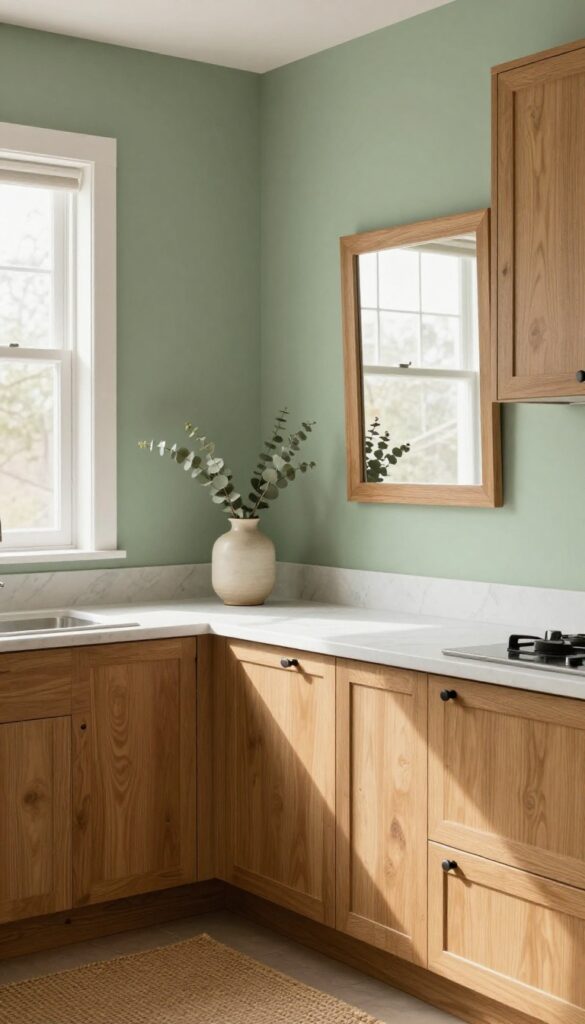
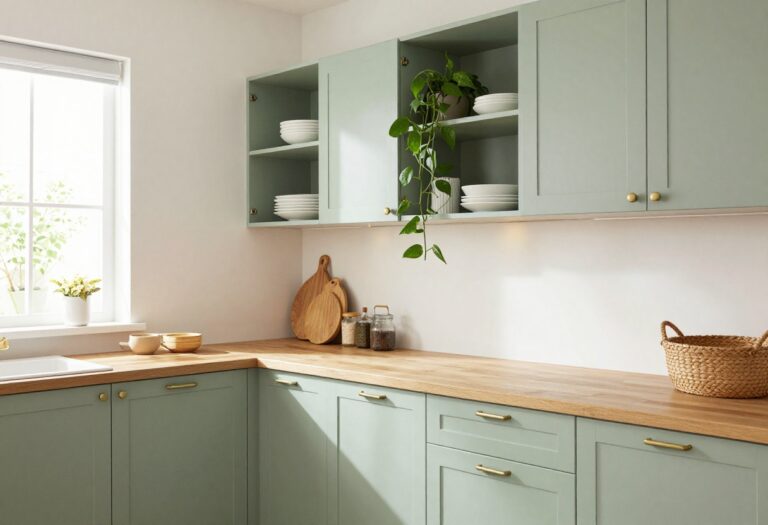
Sage green has a way of making oak cabinets feel grounded and fresh. Instead of fighting the warm undertones, this soft, muted green embraces them, creating a kitchen that feels calm and collected. It’s the kind of backdrop that makes the wood grain stand out without screaming for attention.
A matte finish on the walls adds to the cozy, lived-in vibe—perfect for a space where you actually cook and hang out.
Pairing sage green walls with oak cabinets is one of those moves that looks intentional and effortless. The green tones neutralize any orange or yellow in the wood, so the cabinets feel rich rather than dated. It’s a look that works especially well in kitchens with good natural light, but even in darker spaces, the effect is warm and inviting.
Keep the trim white or off-white to frame the color and let the oak shine.
Best Colors
Stick with sage greens that have a bit of gray in them—think Sherwin-Williams Retreat or Behr Sage Garden. Avoid anything too bright or yellow-based, which can clash with the oak. White trim and warm brass or matte black hardware tie it all together nicely.
Texture Mix
Balance the soft matte walls with natural textures like a woven jute rug, linen curtains, or a butcher block countertop. These elements add depth and keep the room from feeling flat. A few ceramic or stone accessories on open shelves can reinforce the earthy feel.
Finishing Touch
Hang a simple wood-framed mirror or a set of botanical prints on the sage wall. The mirror bounces light around, making the kitchen feel bigger, while the prints echo the green palette without adding clutter.
2. Swap Out Hardware for Matte Black
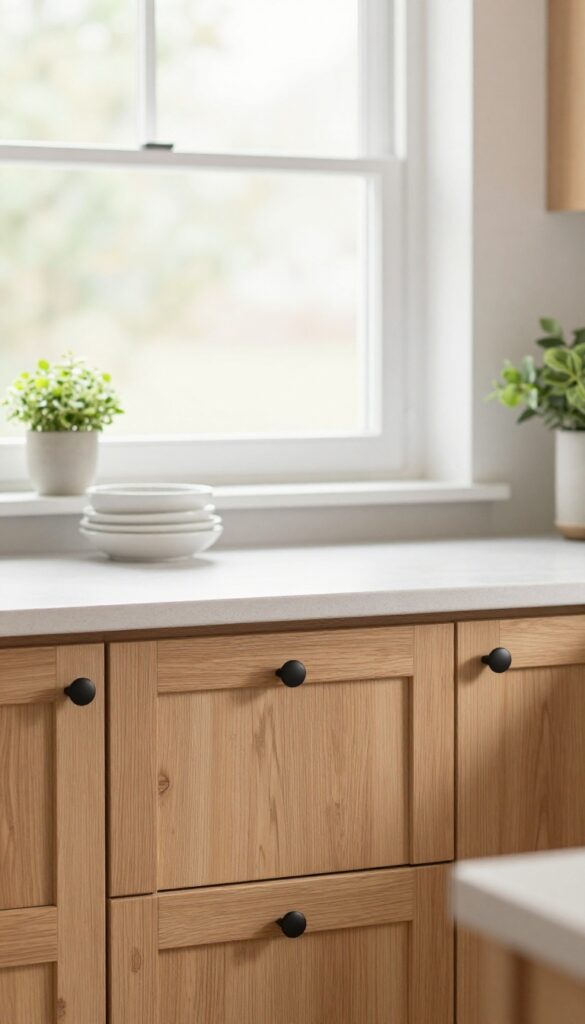
Hardware is the jewelry of your kitchen, and swapping out old brass or chrome for matte black is one of the quickest ways to give oak cabinets a fresh, modern feel. The dark finish adds contrast without fighting the wood's natural warmth, so your cabinets stay cozy but look intentional and current. It's a small change that makes a big visual impact—and it won't break the bank.
Matte black pulls and knobs create a crisp, grounded look against oak's golden tones. Unlike shiny metals that can feel dated or too flashy, matte black absorbs light and lets the wood grain take center stage. This works especially well in kitchens with warm undertones, where you want a bit of edge without losing that lived-in feel.
Plus, black hardware hides fingerprints and smudges better than polished finishes, so it stays looking clean with minimal effort.
Best Hardware Styles
- For a streamlined look, go with long, slim bar pulls on drawers and simple round knobs on cabinet doors. The clean lines keep the focus on the contrast rather than the hardware itself. Avoid overly ornate shapes—they can clash with oak's natural texture.
- Stick to matte black finishes with a slight texture, like powder-coated metal, which resists chipping and feels nice to the touch.
Mixing Metals
- Matte black plays well with other metals, so don't feel like you have to swap everything at once. If your faucet or light fixtures are stainless steel or brass, black hardware can actually tie the room together by adding a unifying dark note. Just keep the proportions balanced—too many competing finishes can feel busy.
- A good rule is to limit yourself to two metal finishes in the whole kitchen.
Finishing Touch
Once the new hardware is on, step back and check the overall balance. If the cabinets feel too dark or heavy, consider adding a few open shelves with light-colored dishes or a bright ceramic vase to lift the space. The black hardware will anchor those lighter elements, creating a polished, collected look that feels both stylish and lived-in.
3. Add Open Shelving in a Contrasting Tone
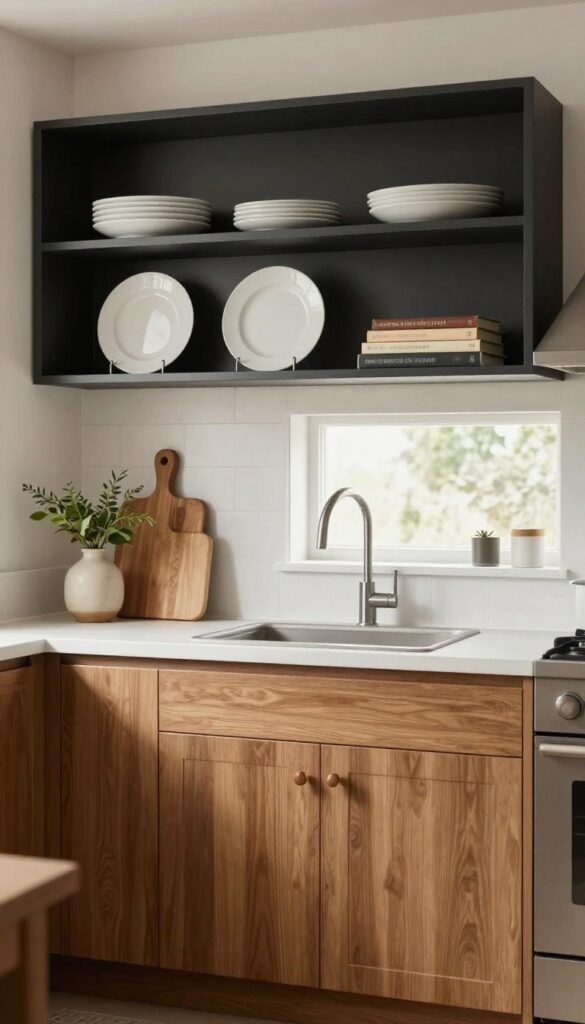
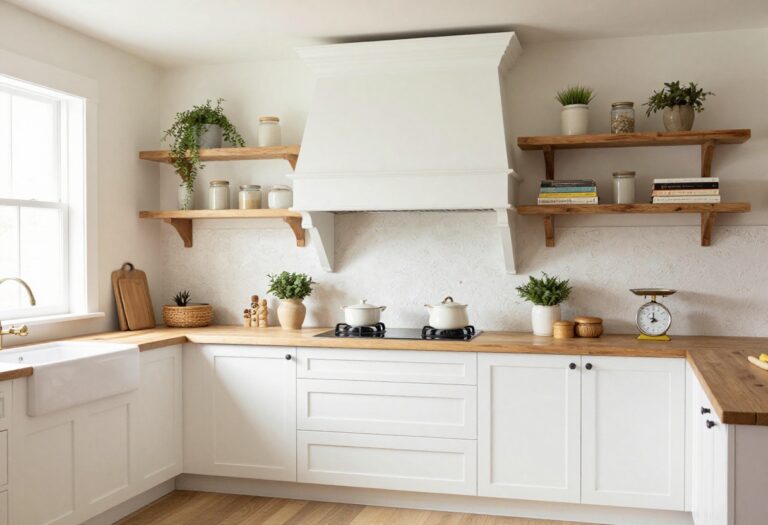
Oak cabinets are warm and sturdy, but a full wall of them can feel heavy. By swapping a few upper doors for open shelves in a deep charcoal or creamy white, you break up the wood and add visual breathing room. The contrast draws the eye upward and gives the kitchen a collected, lived-in feel without losing storage.
Replacing upper cabinet doors with open shelves is a weekend-friendly change that instantly modernizes oak cabinets. The key is choosing a finish that stands out—like matte charcoal, warm black, or off-white—so the shelves become a deliberate design feature rather than an afterthought. This trick works especially well on a single wall or above a sink, where you can display everyday dishes, cookbooks, or plants.
The open storage keeps essentials within reach while the contrasting color prevents the oak from feeling monotonous. For a cohesive look, paint the shelf brackets to match and keep the items on display simple and intentional.
Best Colors For Contrast
Deep charcoal or navy creates a sophisticated contrast against medium-toned oak, while creamy white or soft sage keeps the look airy and approachable. Avoid bright or cool tones—they can clash with oak's warm undertones. Test a few paint samples on the wall before committing, and consider matching the shelf color to your existing trim or hardware for a pulled-together feel.
Shelf Styling Tip
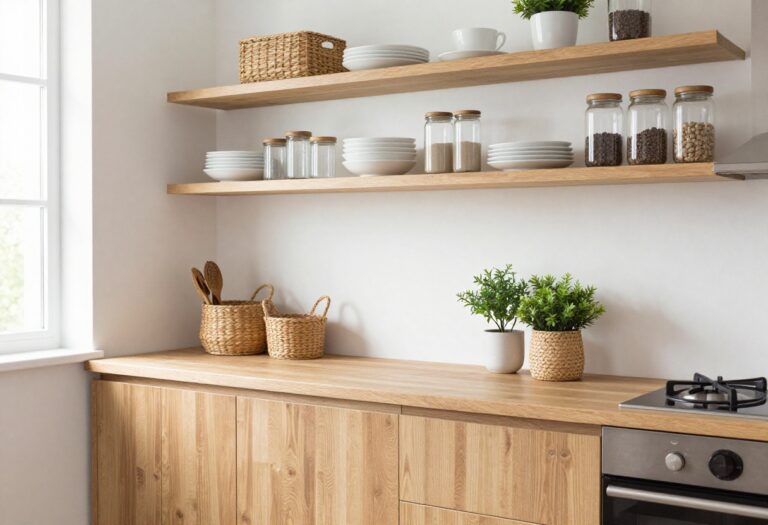
- Keep the display balanced but not too precious. Stack a few white plates, lean a cutting board, and add a small plant or ceramic vase. Mix in a cookbook or two for height.
- The goal is to look natural and uncluttered—like you actually use these things. Leave some negative space so the shelves don't feel crowded, and rotate items seasonally to keep the look fresh.
Layout And Placement
- Focus the open shelving on one section of the kitchen—above the prep area, coffee station, or sink. Avoid placing them over the stove, where grease and heat can be an issue. If you're hesitant about losing cabinet space, start with just two shelves and see how it feels.
- You can always add more later.
4. Install Under-Cabinet Lighting
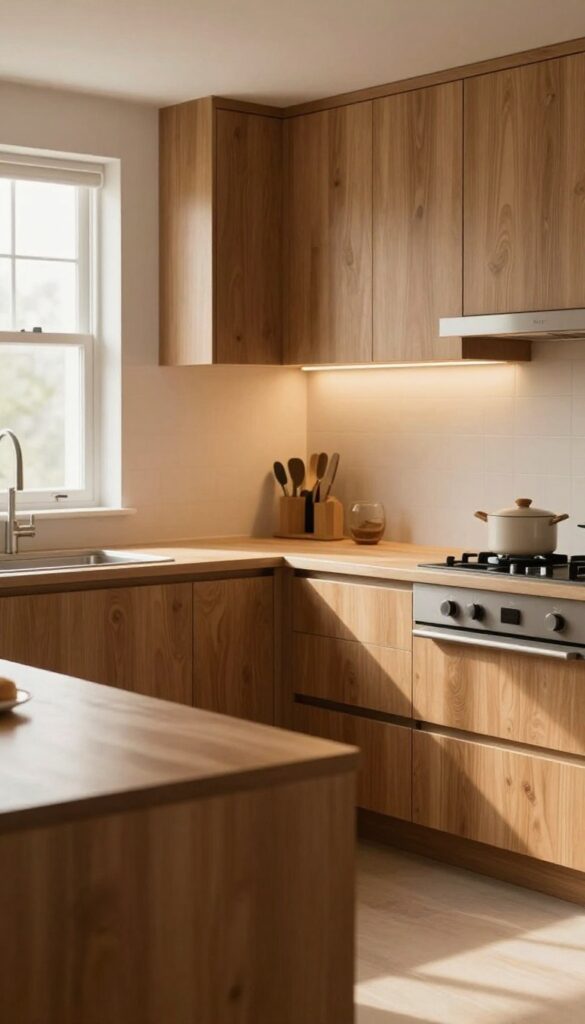
Good lighting can make or break a kitchen, especially one with oak cabinets. Under-cabinet lighting does more than just help you see what you're chopping—it casts a warm glow that brings out the natural grain of the wood. This small upgrade instantly makes your kitchen feel more polished and inviting, without a major renovation.
Warm LED strips under the cabinets highlight the oak grain and make the space feel inviting. It's a small change with a big impact on ambiance. The soft light eliminates harsh shadows on countertops, making meal prep safer and more pleasant.
Plus, it creates a cozy, lived-in atmosphere that's perfect for both cooking and casual entertaining.
Best Color Temperature
Stick with warm white LEDs in the 2700K to 3000K range. Cooler temperatures can make oak cabinets look orange or dated, while warm light enhances the wood's natural honey tones and creates a welcoming glow.
Installation Tip
Hardwired strips offer the cleanest look, but plug-in options are great for renters or quick upgrades. Place the strips near the front edge of the cabinet to illuminate the countertop without casting shadows on the backsplash.
Finishing Touch
Use a dimmer switch to adjust brightness throughout the day. Bright light for cooking, dim for dinner parties—this flexibility makes the kitchen feel both practical and stylish.
5. Use a Neutral Backsplash with Texture
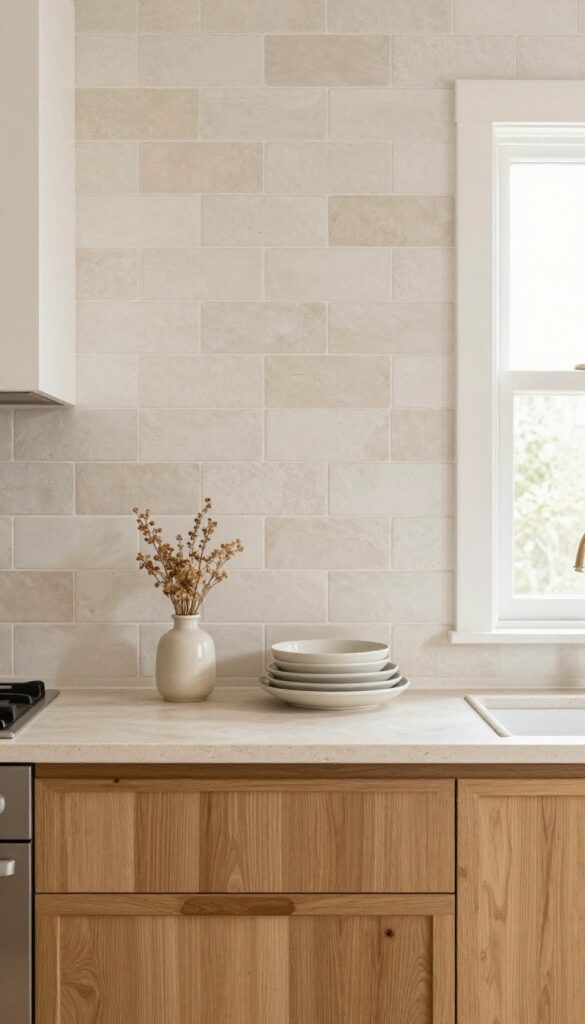
Oak cabinets have a warm, natural presence that can feel heavy if the surrounding surfaces stay too flat. A neutral backsplash with visible texture breaks up that solid feel without introducing a competing color. Think handmade subway tiles with uneven edges or zellige tiles that catch the light differently from every angle.
The result is a kitchen that feels layered and lived in, not sterile or overly designed.
A textured neutral backsplash works because it adds visual interest without stealing attention from the oak cabinetry. Off-white, beige, or soft greige tiles keep the palette calm, while the subtle shadows and highlights from the tile surface create depth. This approach is especially effective in kitchens with limited natural light, where a glossy or highly patterned backsplash might feel too busy.
The texture does the work, so the color stays quiet.
Best Tile Choices
- Zellige tiles are a top pick because their handcrafted look brings organic variation in color and gloss. Handmade subway tiles are another strong option—they have a slight rippled surface that reads as soft and artisanal. Avoid overly uniform tiles; the whole point is the irregularity.
- Stick to matte or satin finishes to keep the look grounded and warm.
Grout Matters
Use a grout color that closely matches the tile, like a warm ivory or light sand. Contrasting grout lines would break up the texture and make the wall feel busy. A tight grout line (1/16 inch or smaller) helps the surface read as one continuous textured plane rather than a grid.
Styling Tip
- Let the backsplash be the backdrop. Keep countertops relatively clear or use simple ceramic canisters and a wooden cutting board. Avoid adding a second strong pattern nearby—let the tile's texture be the star.
- A single open shelf with a few white dishes or a small plant can echo the organic feel without competing.
6. Bring in Natural Stone Countertops
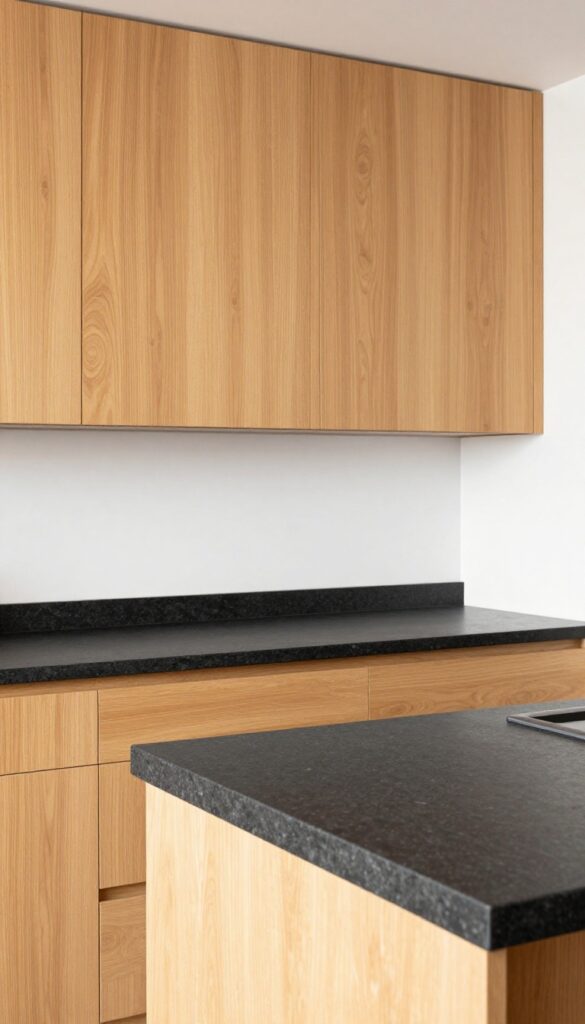
Dark stone countertops create a grounded, earthy anchor for oak cabinets. Soapstone and leathered granite, with their matte finishes and subtle movement, add depth without competing with the wood. The contrast feels intentional and sophisticated, not stark.
Pairing oak cabinets with natural stone in deep charcoal, black, or dark green tones brings out the warmth in the wood while adding a layer of texture. The matte surface softens the look, making the kitchen feel both refined and lived-in. This combination works especially well in kitchens with lots of natural light, where the stone’s variation can really shine.
For a cohesive look, carry the same stone onto a backsplash or a small island top.
Best Stone Choices
Soapstone is a classic pick—it’s naturally dark, soft to the touch, and develops a patina over time that adds character. Leathered granite offers more durability and a subtle texture that hides fingerprints and water spots. Both options feel substantial and age gracefully.
Finishing Touch
Go for a matte or honed finish instead of polished. The low sheen keeps the focus on the stone’s natural pattern and pairs better with oak’s grain. A slight bevel on the edge adds a custom touch without being fussy.
7. Style with Warm Metals
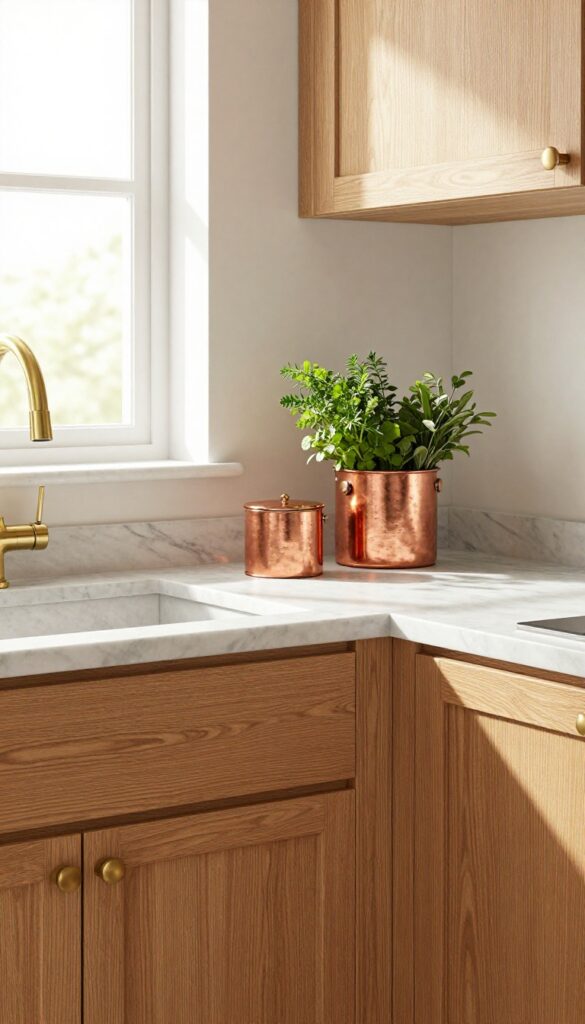
Brass and copper have a way of making oak cabinets feel intentional rather than dated. The warm undertones in these metals pick up the golden hues in the wood, creating a cohesive look that doesn't feel overly matched. It's a subtle way to add polish without losing the relaxed, lived-in vibe that makes a kitchen feel like home.
Think of warm metals as the jewelry for your kitchen. A brass faucet instantly becomes a focal point at the sink, while copper canisters on the counter add a soft glow. Pendant lights in brushed brass or aged copper draw the eye up and break up the expanse of oak.
The trick is to keep the finishes consistent—stick to one or two warm tones so the space feels curated, not chaotic. You don't need to overhaul everything; even swapping out cabinet hardware for brass knobs can make a surprising difference.
Best Finishes
Unlacquered brass develops a natural patina over time, which pairs beautifully with oak's evolving character. Polished nickel is another option if you want something slightly cooler but still warm. Avoid bright, shiny gold—it can look too formal against the casual warmth of oak.
Where To Start
If you're new to mixing metals, begin with one statement piece—like a brass faucet or a copper range hood. Then add smaller accents like a soap dispenser, cabinet pulls, or a fruit bowl. This keeps the look intentional without overwhelming the space.
Lighting Tip
Pendant lights in warm metal tones work especially well over an island or breakfast bar. Choose a shape that contrasts with the cabinet doors—for example, a dome or globe shape against shaker-style cabinets—to add visual interest.
8. Add a Patterned Runner
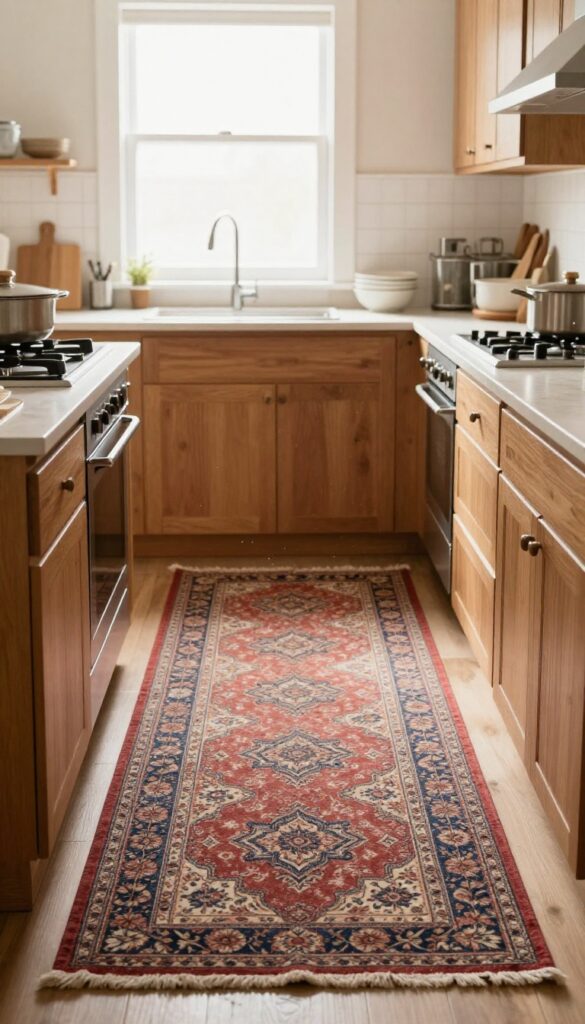
A vintage-style runner in warm reds, blues, or greens adds personality and softens the floor. It also defines the kitchen's main walkway, making the space feel more intentional and inviting. With oak cabinets as the backdrop, a patterned runner brings in color and texture without overwhelming the room.
A runner is one of the easiest ways to introduce pattern and warmth into a kitchen with oak cabinets. The key is choosing a design that feels lived-in and welcoming—think faded florals, geometric motifs, or classic Persian-inspired patterns in earthy tones. Not only does it protect high-traffic areas, but it also anchors the space and creates a visual path through the kitchen.
Pair it with simple, solid-colored accessories to let the runner shine.
Best Colors For Oak Cabinets
Warm reds, deep blues, and muted greens work beautifully with oak's golden undertones. A runner with a cream or beige background keeps things light, while darker borders add definition. Avoid cool grays or stark whites, which can clash with the wood's warmth.
Size And Placement Tips
Measure your main walkway and choose a runner that leaves at least 4–6 inches of exposed floor on each side. Center it in front of the sink or stove for maximum impact. In a galley kitchen, a long runner makes the space feel wider and more cohesive.
Material And Maintenance
Opt for low-pile wool or a flatweave cotton blend—they're durable, easy to clean, and won't trap crumbs. A non-slip pad underneath is essential for safety. Spot-clean spills immediately, and vacuum regularly to keep it looking fresh.
9. Incorporate Greenery
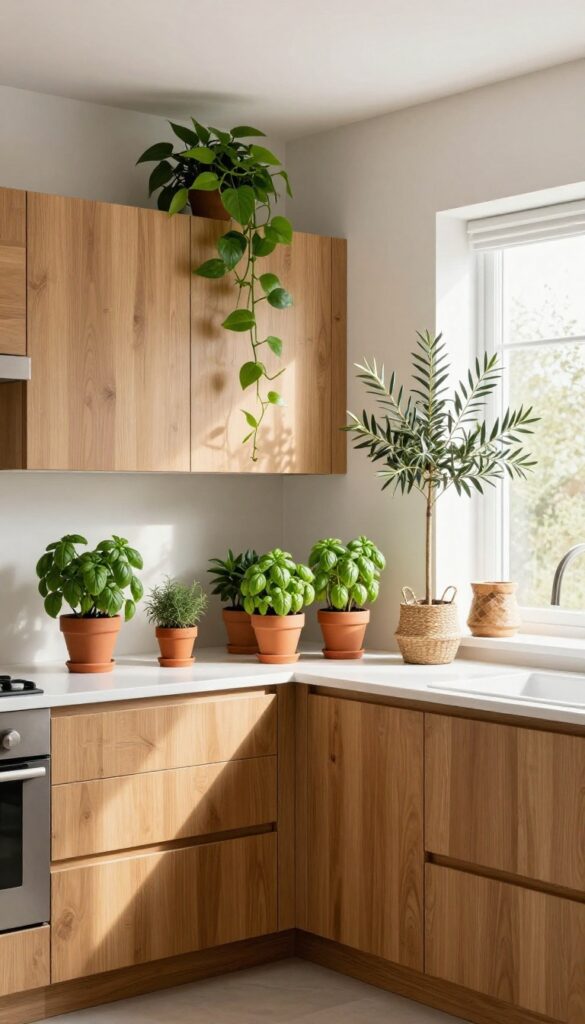
Potted herbs on the counter, a trailing pothos on top of the cabinets, or a small olive tree in the corner—greenery instantly makes a kitchen feel more alive. Oak cabinets, with their warm wood tones, create the perfect backdrop for leafy plants. The contrast between natural wood and vibrant green is both fresh and grounding, giving the space a relaxed, lived-in energy that feels anything but staged.
Adding plants to an oak kitchen is one of the easiest ways to soften the look and bring in a pop of color without painting or renovating. The key is to choose plants that thrive in kitchen conditions—bright indirect light near a window or low-light spots on open shelving. Group a few small pots together on a windowsill for a mini herb garden, or let a cascading plant drape over the edge of a cabinet to draw the eye upward.
Even one statement plant, like a fiddle leaf fig or a tall olive tree, can anchor an empty corner and make the whole room feel more intentional.
Best Plant Choices
Herbs like basil, rosemary, and mint are practical and pretty—they love sunny kitchen windows and smell amazing. For low-light spots, go with a pothos, snake plant, or ZZ plant. A small olive tree or a rubber plant works well in brighter corners and adds height without taking up counter space.
Styling Tip
- Mix pot materials to keep it interesting. Terra-cotta pots warm up the oak tones, while white ceramic or woven baskets add texture. Place plants at different heights—use a small stool or a wall-mounted shelf to create layers.
- Just make sure the pots have drainage or use cachepots to protect your oak surfaces from water rings.
Where To Put Them
The most natural spots are near the sink (humidity helps), on open shelving, or on top of upper cabinets if you have the ceiling height. A small herb garden on the counter near the stove makes cooking easier and looks beautiful. Avoid crowding the prep area—leave enough clear counter space for chopping and cooking.
10. Paint the Island a Bold Color
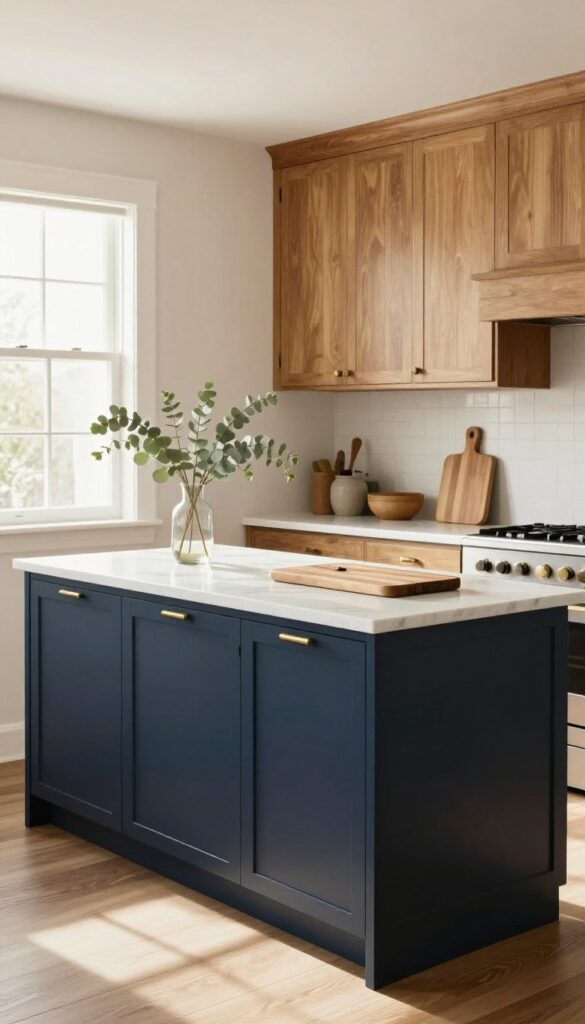
An oak kitchen can feel warm and inviting, but sometimes it needs a little jolt of personality. That's where your island comes in. Painting it a deep, saturated hue—think navy, forest green, or even black—instantly creates a focal point that breaks up all that wood without overwhelming the room.
It's a practical move too: a bold island anchors the space and gives you a chance to inject color without a full commitment.
If your oak cabinets feel a bit monotonous, a painted island is the perfect antidote. It draws the eye and adds depth, making the kitchen feel more layered and intentional. Plus, it's a relatively low-risk project—you can always repaint if you change your mind.
The key is to choose a color that complements the warm tones of oak without clashing. Navy and forest green are classic choices that feel sophisticated, while black adds a dramatic, modern edge. For a softer look, try a deep olive or charcoal.
Pair the painted island with contrasting hardware—brass or matte black—to really make it pop.
Best Colors For Oak
- Stick with colors that have enough depth to stand up to the oak's warmth. Navy blue is a timeless favorite—it's dark enough to contrast but still feels cozy. Forest green brings a natural, earthy vibe that works beautifully with wood tones.
- Black is bold and modern, especially with white countertops. Avoid pastels or brights, which can clash with the orange undertones in oak.
Finishing Touch
Once the island is painted, add open shelving on the side facing the room. Stack a few white dishes, a wooden cutting board, and a small plant. This breaks up the painted surface and ties back to the oak cabinets, creating a cohesive look that's both practical and stylish.
11. Use Woven Textures
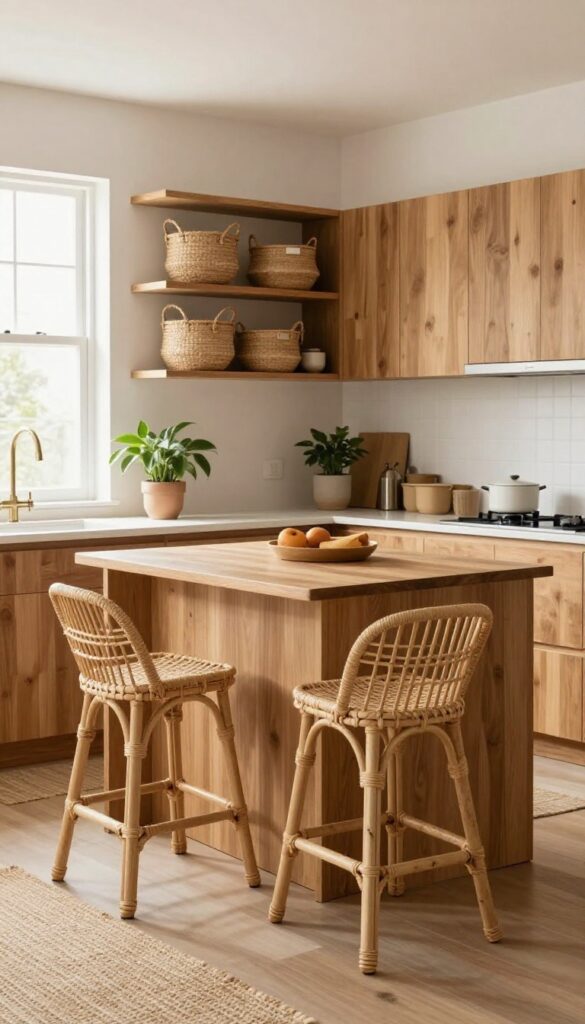
Natural woven textures bring a soft, organic feel to oak cabinets, balancing their sturdy wood grain with something lighter and more casual. Think basket storage on open shelves, rattan bar stools pulled up to an island, or a seagrass rug underfoot. These materials add warmth and make the kitchen feel collected and lived-in, not overly designed.
Woven textures are an easy way to soften the look of oak cabinets without changing the cabinets themselves. The contrast between smooth wood and rough, natural fibers creates visual interest and a relaxed, inviting atmosphere. Plus, these pieces are practical—baskets hide clutter, rugs define zones, and stools add seating.
Best Materials
Stick with natural fibers like rattan, seagrass, jute, and bamboo. They have a warm, earthy tone that complements oak's honey or amber undertones. Avoid synthetic weaves that look too shiny or uniform—they won't give you that collected-over-time feel.
Where To Add Them
- Start with one or two statement pieces. A pair of rattan bar stools at the island instantly adds texture and a casual vibe. A seagrass or jute runner in front of the sink or stove brings softness underfoot and ties the room together.
- Use woven baskets on top of cabinets or on open shelving for stylish storage.
Styling Tip
- Layer different weaves for depth. For example, pair a chunky jute rug with a rattan pendant light and a few seagrass baskets. Keep the color palette neutral—cream, tan, and soft brown—to let the textures shine.
- Add a few green plants to reinforce the natural, organic feel.
12. Display Ceramic and Wood Accessories
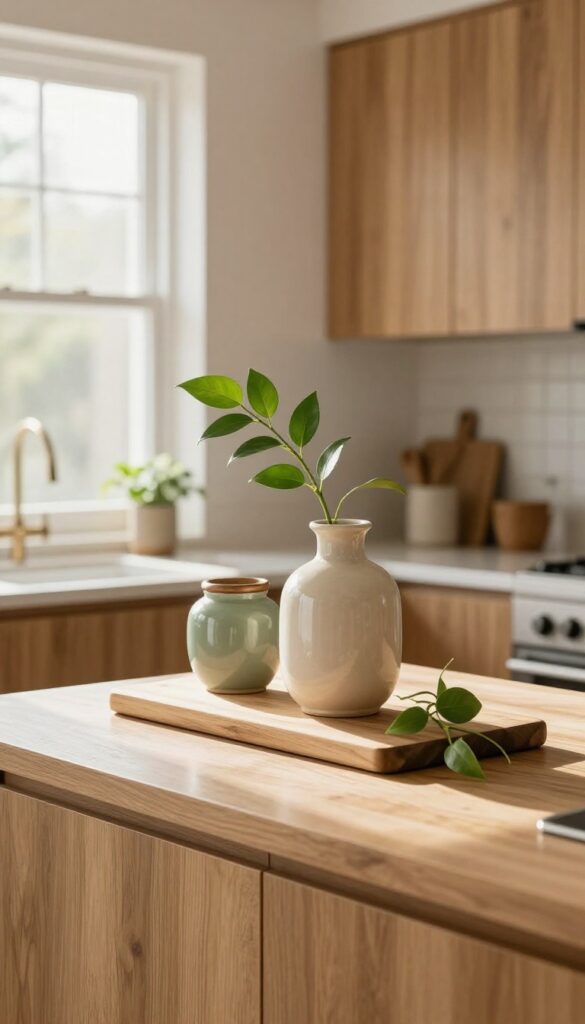
Countertops are prime real estate for adding personality, and the right accessories can make your oak cabinets feel intentional rather than dated. A mix of ceramic vases, wooden cutting boards, and stoneware pieces brings in natural textures that echo the warmth of the wood. This layered approach keeps the kitchen from looking too uniform while still feeling cohesive and grounded.
The trick is to balance materials so the eye moves naturally across the counter. Start with a large wooden cutting board as a base—it adds instant warmth and a practical surface for prep. Then add a ceramic vase in a soft, earthy tone like cream or sage green.
Finish with a stoneware jar or two for utensils or cooking tools. The combination feels collected over time, not staged.
Best Colors
Stick with neutral, earthy tones that complement oak's natural undertones. Cream, beige, soft terracotta, sage green, and warm grey all work beautifully. Avoid stark white or cool grays that can clash with the wood's warmth.
Texture Mix
Pair smooth glazed ceramics with matte stoneware and raw wood. The contrast keeps the display interesting without being busy. A ribbed vase or a textured cutting board adds just enough visual variety.
Finishing Touch
Add a small trailing plant, like pothos or ivy, near the grouping. The soft greenery breaks up the hard surfaces and ties the natural materials together. Keep it low-maintenance so it stays fresh without extra effort.
13. Update the Window Treatments
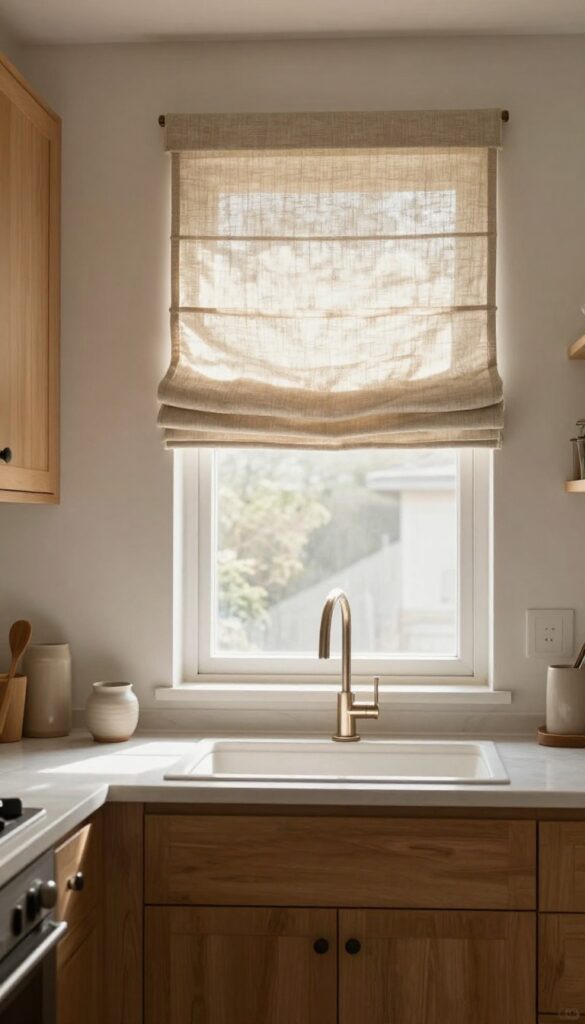
Windows in a kitchen with oak cabinets often get plain blinds or nothing at all, but swapping in soft roman shades changes the whole mood. A warm neutral linen or cotton fabric filters the light beautifully and adds a layer of softness that balances the wood's natural grain. It's a small swap that makes the room feel more finished and inviting without overwhelming the space.
Roman shades are a practical choice for kitchens because they sit neatly against the window when raised and provide a clean, tailored look when lowered. Choose a fabric in a warm neutral like oatmeal, sand, or soft taupe to complement the oak tones without competing. The texture of linen or cotton adds visual interest, and the soft folds create a cozy, lived-in feel that aligns with a warm and practical kitchen style.
Best Fabric Choices
- Linen and cotton are top picks for a natural, breathable look that softens the light. Linen offers a relaxed, slightly rumpled texture, while cotton provides a crisper finish. Both come in warm neutrals that work with oak cabinets—think cream, beige, or light stone.
- Avoid heavy or shiny fabrics that can feel formal or out of place in a kitchen.
Installation Tip
Mount the shades inside the window frame for a built-in look that keeps the sightline clean. If your window is shallow, an outside mount works too and can even make the window appear larger. Either way, make sure the shades sit high enough to clear the counter or sink when fully raised.
Styling Detail
Pair the roman shades with a simple curtain rod and tie-backs in a matching neutral for an extra layer of softness. Keep the hardware minimal—brass or matte black finishes complement oak cabinets nicely. If you have a window above the sink, consider a single shade that spans the whole width for a seamless, uncluttered look.
FAQ
Can I paint oak cabinets without sanding?
Yes, but proper prep is key. Use a degreaser, then a bonding primer designed for laminate or wood. Light sanding helps adhesion, but you can skip it with the right primer.
What color hardware looks best with oak cabinets?
Matte black, brushed brass, and oil-rubbed bronze all work well. They provide contrast without clashing. Avoid shiny gold or silver tones.
How do I make honey oak cabinets look modern?
Focus on contrast: dark countertops, light walls, and black hardware. Add modern lighting and remove any dated decorative details like scalloped valances.
Should I replace or reface oak cabinets?
If the boxes are solid and you like the layout, refacing or painting is more cost-effective. Replace only if the structure is damaged or you want a completely different layout.
What backsplash goes best with oak cabinets?
Neutral, textured tiles like white subway, zellige, or stacked stone. Avoid busy patterns or bright colors that compete with the wood grain.
Conclusion
Oak cabinets don't have to be a design dilemma. With a few thoughtful updates, they can become the warm, welcoming foundation of a kitchen you love spending time in. The key is to work with the wood, not against it.
Start with one or two ideas that feel right for your space, and build from there. Small changes add up, and before you know it, your kitchen will feel fresh again—without losing its soul.