13 Black and Blue Bedroom Ideas with Bold Modern Style
A bedroom that leans too dark can swallow the whole room, and a blue that skews wrong turns cold fast. Black and blue together fix that problem when you balance depth with contrast, texture, and a little light. Get the mix right and the space feels bold instead of heavy.
You do not need a designer or a full remodel to pull this off. A single accent wall, a swapped headboard, or layered bedding can shift the mood in a weekend.
The trick is picking shades that talk to each other and letting black do the grounding work. Below are 13 black and blue bedroom ideas built for modern style.
1. Navy Blue Accent Wall with Black Furniture
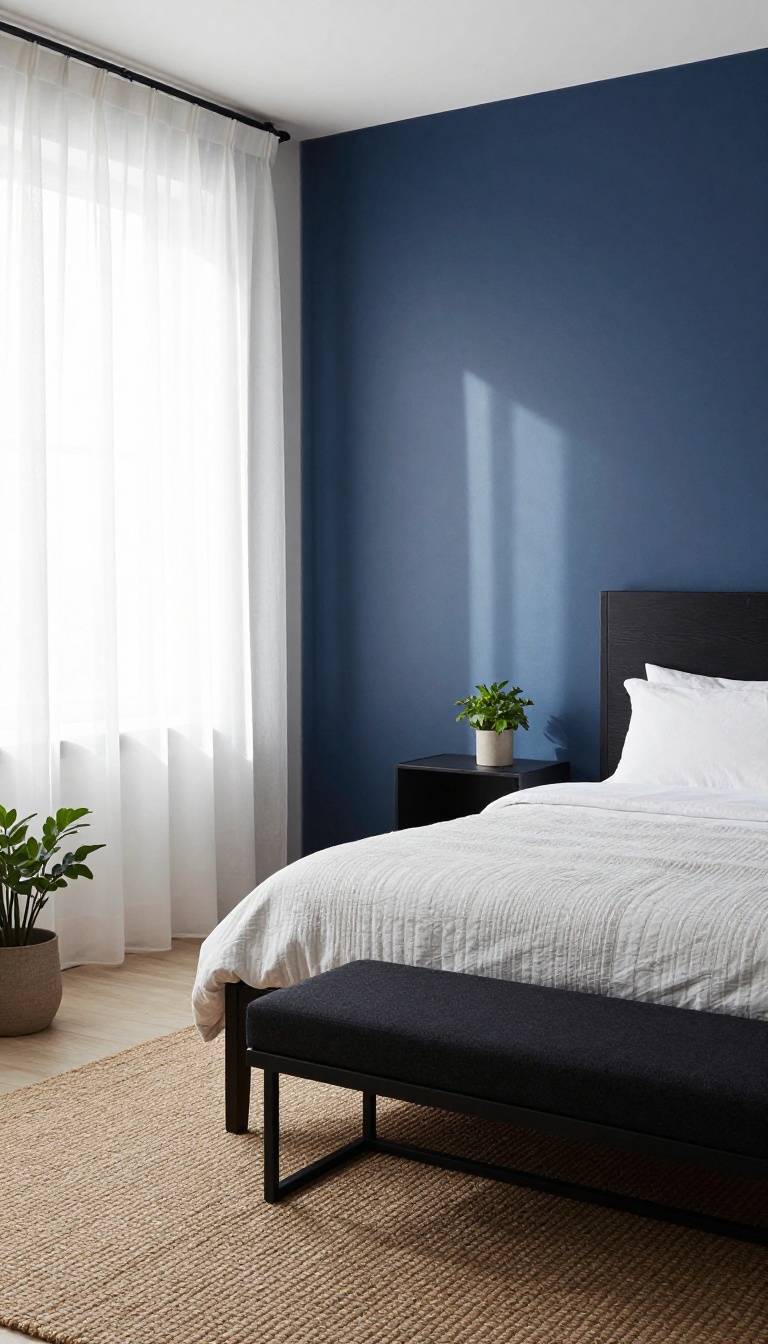
Navy blue and black can feel like a lot when you first picture it. But when you commit to one navy wall and let black furniture do the rest, the contrast becomes the anchor instead of the noise. It's a simple formula: one deep blue plane, black pieces that sit against it, and enough light and texture to keep the room from closing in.
The magic here is restraint. You're not painting every wall navy or filling the room with black. You're choosing one wall—usually the one behind the bed—and letting it carry the color weight.
Black furniture then reads as intentional and crisp rather than heavy, because the navy gives it something to push against. This setup works in bedrooms of almost any size, but it's especially good in smaller rooms where you want drama without a full commitment. The single accent wall keeps the other three walls light or neutral, so the room still breathes.
And because black is already a grounding color, you don't need much of it to make an impact.
Pick The Right Navy
Not all navies behave the same on a wall. A navy with a hint of gray or green feels softer and more modern, while a pure, saturated navy can look almost black in low light. Test a few swatches on the actual wall and check them morning, afternoon, and night.
You want a blue that still reads as blue when the lamps are on, not a flat black.
Balance With Black Furniture
Stick to two or three black pieces max—a bed frame, a nightstand, maybe a dresser. More than that and the room starts to feel like a showroom. Mix finishes: matte black wood, black metal, or a black upholstered headboard all work, but keep the shapes clean and modern so the contrast stays sharp.
Add Light And Texture
A dark accent wall needs help from lighting and fabric. Warm bulbs in black or brass sconces, a light-colored rug, and bedding with some texture—linen, waffle weave, or a chunky knit throw—keep the room from feeling like a cave. A mirror or a piece of art with a light frame on the navy wall also bounces light around.
2. Black and Blue Geometric Wallpaper
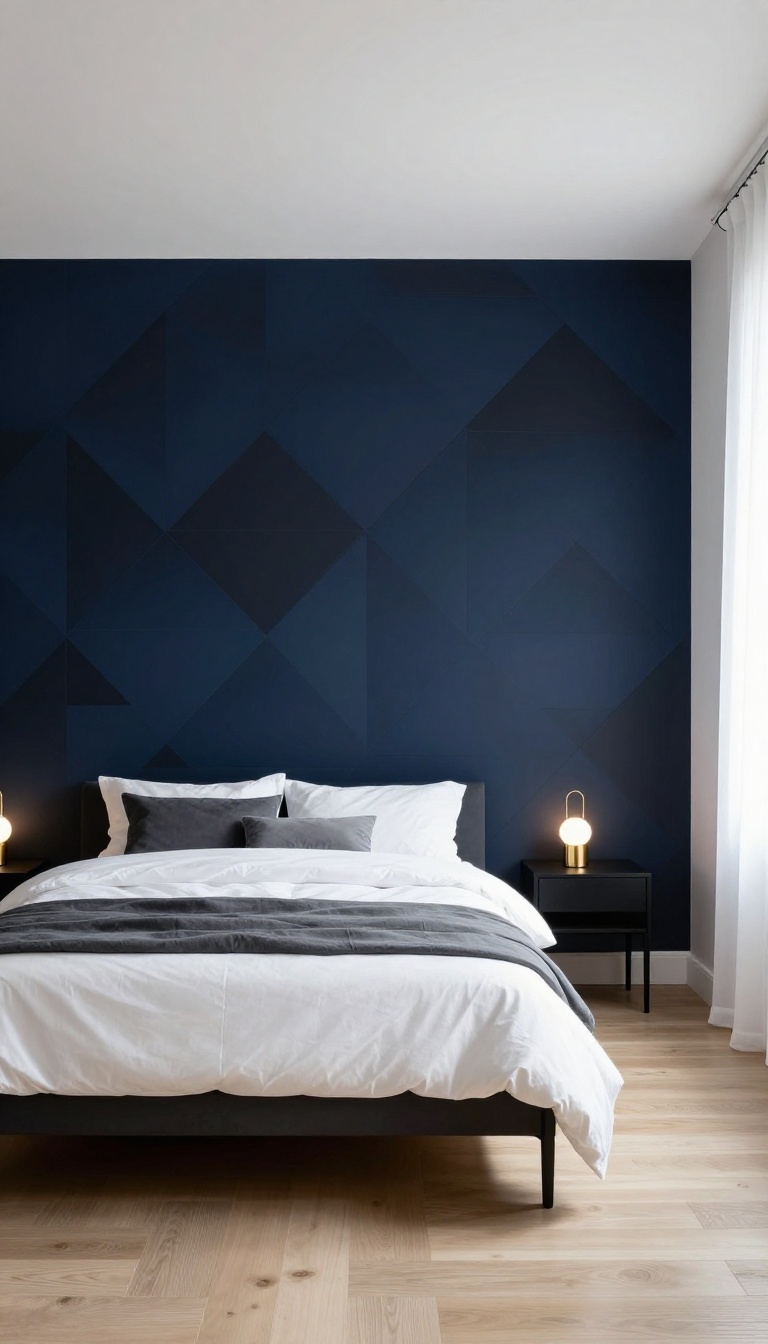
Geometric wallpaper does something paint alone cannot. It adds pattern and depth to a wall while giving your eye a place to land, and black-and-blue designs pull that off without turning the room into a cave. It also quietly hides scuffs, uneven drywall, and old patch jobs.
The pattern carries the visual weight, so the rest of the room can breathe. You get a modern focal point the moment you walk in, and you barely have to move a piece of furniture to make it work.
Pick A Pattern That Fits Your Space
Small repeating shapes like hexagons, triangles, or thin grid lines read as texture from across the room and keep a compact bedroom from feeling busy. Larger, bolder motifs like oversized chevrons or interlocking diamonds suit bigger walls where you want the pattern to be the star. Scale matters more than the exact design.
A pattern that looks subtle on a sample square can turn loud once it covers an entire wall, so tape up a printed test panel and live with it for a day before you commit.
Choose Your Blues Carefully
Navy, slate, and deep teal sit comfortably next to black because they share that same grounded, moody feel. Brighter blues like cobalt or electric blue create more contrast and a sharper, more graphic look. If you want the room to stay calm, keep the blue and black close in value so the pattern reads as one rich texture.
If you want drama, push the blue lighter and let it pop against the black lines.
Where To Hang It
The wall behind the bed is the obvious choice, and it works because that surface stays mostly clear. You get the full pattern without furniture breaking it up. A single accent wall keeps things controlled.
Covering every wall in the same bold print can overwhelm a bedroom fast, so let one wall do the talking and keep the others solid.
Pair It With The Right Extras
Solid bedding in charcoal, cream, or a soft gray keeps the wallpaper from competing for attention. Add black metal light fixtures or a simple black frame to tie the pattern into the rest of the room. Skip busy artwork on the wallpapered wall.
The pattern is already the art, and a clean, empty stretch around it makes the whole thing feel intentional.
3. Layered Blue Bedding with Black Throw Pillows
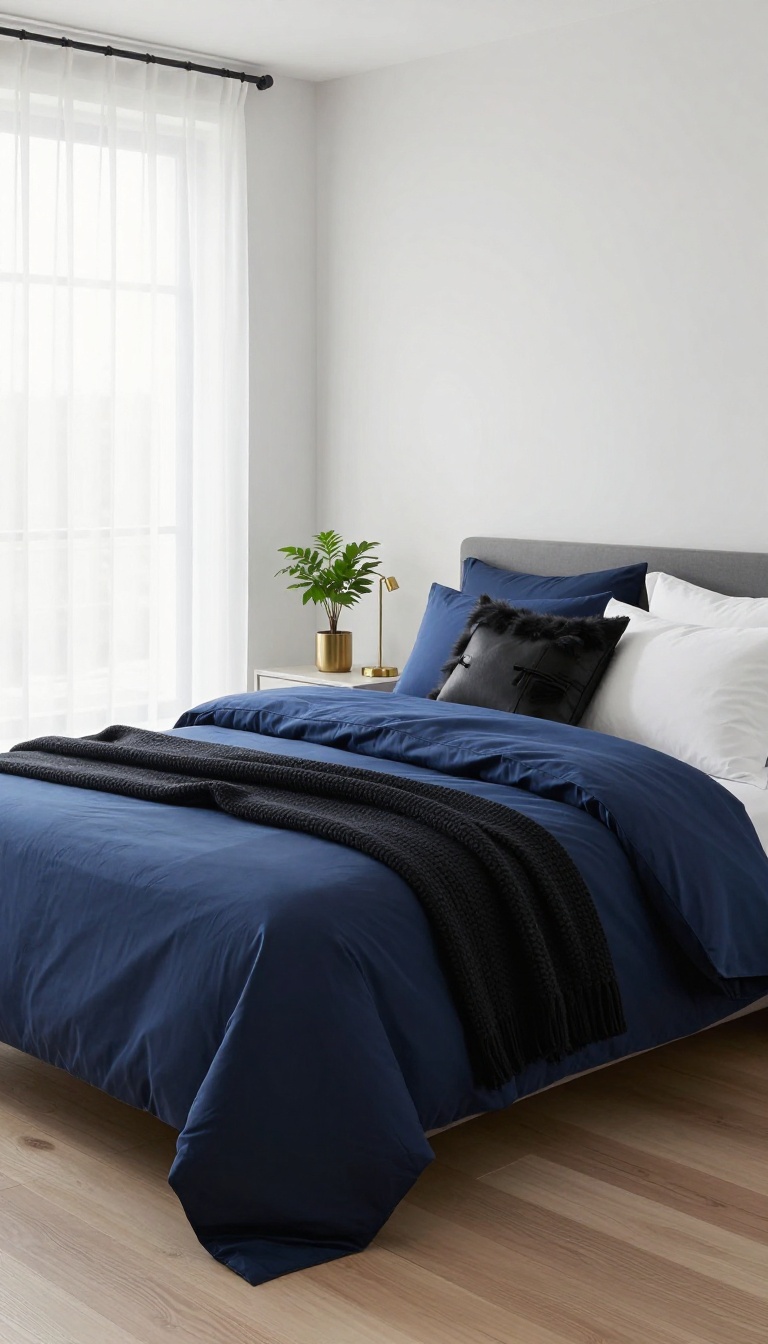
Layering bedding is the easiest way to get a designer look without committing to a full bedroom overhaul. Start with a blue base—sheets and a duvet—then add black throw pillows and a blanket on top. The result is a cozy, textured bed that feels intentional, not flat.
This approach works because it builds depth from the bottom up. You get the calm of blue and the edge of black, all in one spot. Plus, you can swap pieces out whenever you want a refresh.
A bed is the focal point of any bedroom, so it makes sense to start your black and blue theme there. Layering lets you mix shades and textures without painting a single wall. It's also forgiving—if one piece doesn't work, you just change it.
The key is to think in threes: a blue base, a black accent, and a neutral or metallic touch to keep it from feeling too heavy. That formula gives you contrast and balance every time.
Build From The Bottom Up
Begin with blue sheets in a shade you love—navy, cobalt, or even a soft denim. Add a duvet in a slightly different blue to create subtle variation. Then fold a black blanket at the foot of the bed for a grounded finish.
This bottom-up layering keeps the look cohesive and prevents the black from overwhelming the space.
Mix Textures For Depth
Stick to one color family and you risk a flat look. Mix a crisp cotton duvet with a chunky knit throw or a velvet pillow. Black throw pillows in leather or faux fur add tactile contrast.
The mix of smooth and rough keeps the bed interesting from every angle.
Keep It Easy To Change
One of the best things about layered bedding is how simple it is to update. Swap the black pillows for white in summer, or change the blue duvet for a lighter shade. You get a whole new vibe without buying a new bed.
Store extra pillows and throws in a basket nearby for quick switches.
4. Black Bed Frame with Blue Upholstered Headboard
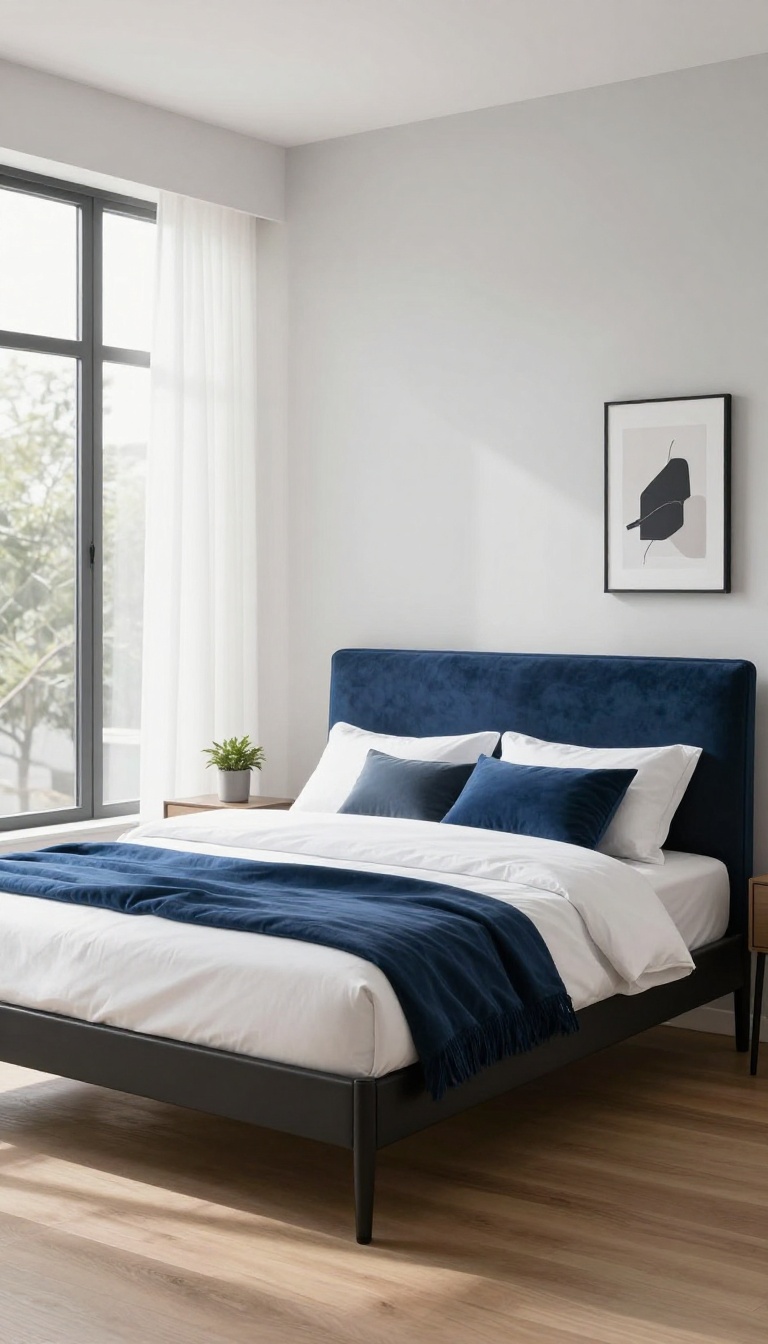
A black bed frame paired with a blue upholstered headboard is a match made in modern design heaven. The black frame brings a sleek, sturdy presence, while the blue headboard adds a soft, inviting touch. Together, they create a bedroom that feels both bold and balanced.
This combo works because it plays with contrast. Hard metal or wood meets plush fabric, and dark neutral meets rich color. The result is a bed that anchors the room without making it feel heavy.
You can tailor the look to your style by choosing the right shades and textures. Whether you go for a deep navy or a bright cobalt, the pairing always delivers a contemporary edge.
The key to nailing this look is all in the details. Start with a bed frame that has clean lines—think matte black metal or a low-profile wooden frame. Then, choose a headboard upholstered in a blue fabric that speaks to you.
Velvet and linen are both great options, each offering a different texture and sheen. When selecting your blue, consider the mood you want. Darker blues like navy or midnight create a cozy, dramatic feel, while lighter blues like sky or powder bring a fresh, airy vibe.
The black frame grounds the color, so even bright blues stay sophisticated. Don't forget about the rest of the room. Keep the walls neutral to let the bed stand out, or add subtle blue accents in art or throw pillows to tie everything together.
The goal is to let the bed be the star while maintaining a cohesive look.
Choosing The Right Blue
The shade of blue you pick sets the tone for the entire room. Navy and indigo feel rich and moody, perfect for a cozy retreat. If you want something more energetic, go for a vibrant cobalt or teal.
Just make sure the blue complements the black frame—cooler blues tend to work best with black's starkness.
Mixing Textures For Balance
Texture is what keeps this pairing from feeling flat. A velvet headboard adds a luxurious sheen and softness, while a black metal frame provides a cool, hard contrast. If you prefer a wood frame, choose a matte finish to let the upholstery shine.
You can also layer in different fabrics with your bedding—think crisp cotton sheets and a chunky knit throw.
Styling Around The Bed
Once your bed is set, style the rest of the room to support the look. Keep nightstands simple and dark to echo the frame, or go with light wood for a softer contrast. Add a rug in a neutral tone to balance the boldness, and choose lighting that highlights the headboard's color.
A couple of blue accent pillows or a throw blanket can tie everything together without overwhelming the space.
5. Blue Nightstands with Black Hardware
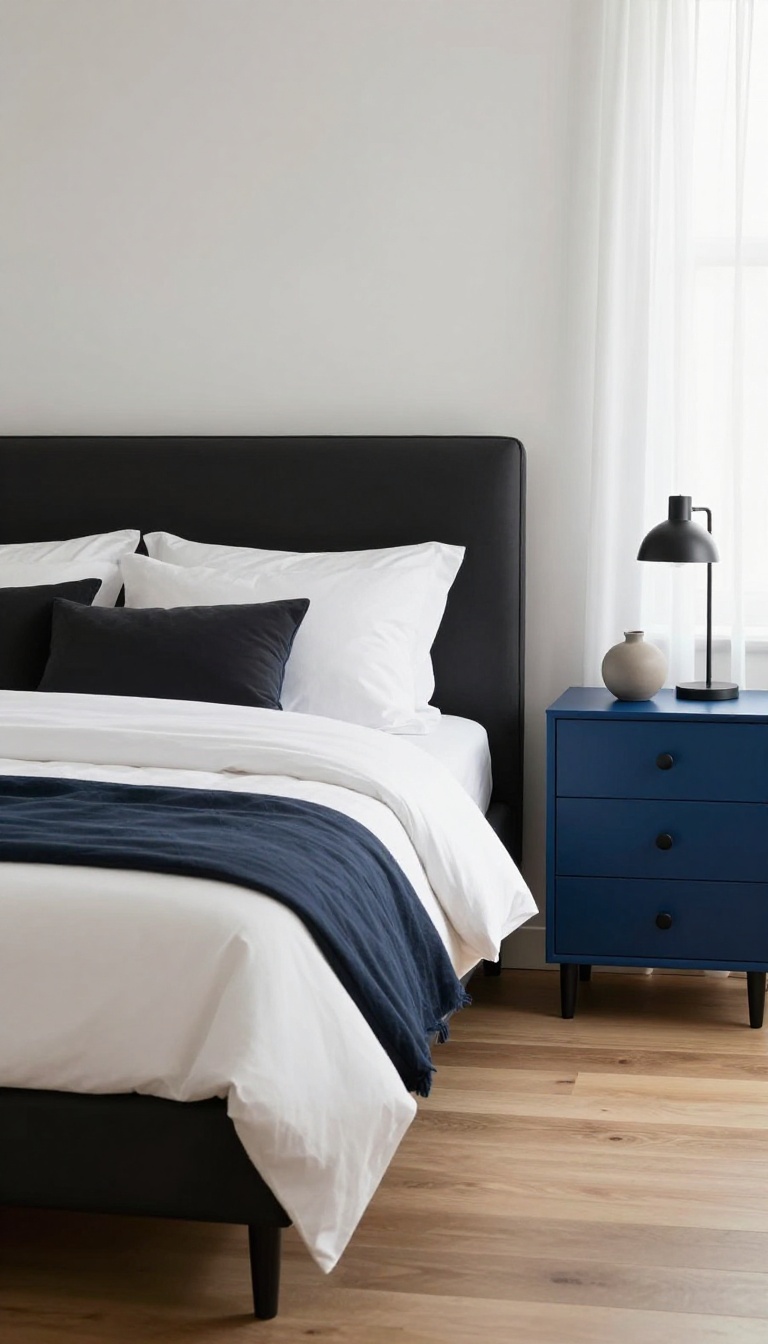
Nightstands are small enough to experiment with, but they sit right next to your bed, so they carry a lot of visual weight. Painting them blue and swapping the knobs for black hardware is a low-risk way to lock your black and blue scheme into place. You get a custom pair that looks intentional, not like a lucky thrift find.
Best of all, this project works on almost any nightstand. Old wood, laminate, even a curbside freebie can turn into something that looks like it belongs in a modern boutique hotel. All you need is a little prep, the right blue, and a set of black knobs.
The nightstand is one of the few pieces in a bedroom you actually touch every day. That makes it a smart place to invest a little effort. When the drawers pull open with a smooth black knob against a deep blue front, the whole corner feels considered.
You also get flexibility. If you already have black and blue bedding or a black bed frame, matching nightstands tie everything together without adding another big-ticket item to your shopping list. ### Pick a Blue That Plays Nice with Black Not every blue works next to black hardware. Pale pastels can look washed out, and bright turquoise can fight the black for attention.
Go for shades with some depth: navy, indigo, slate blue, or a dusty teal. These read as rich rather than loud, and they let the black knobs pop. If your walls are light, a darker blue nightstand adds a nice anchor.
If your walls are already dark, choose a mid-tone blue so the nightstand does not disappear into the background. Test a swatch against your bedding and your black accents before you commit to a full can. ### Prep Matters More Than Paint A lot of DIY paint jobs fail because people skip the prep. Sand glossy surfaces lightly so the paint has something to grip.
Wipe everything down with a degreaser, then let it dry completely. If you are painting laminate or metal, use a bonding primer made for slick surfaces. For a smooth, factory-like finish, use a foam roller for flat areas and a brush for corners and details.
Two or three thin coats beat one thick coat every time. Let each coat dry fully before adding the next. A topcoat of clear polycrylic in satin or matte will protect the finish from water rings and late-night coffee spills. ### Swap the Hardware for Instant Impact Hardware is where the black comes in, and it is the easiest part of the whole project.
Measure the distance between the screw holes on your existing knobs or pulls before you shop. Standard spacing is usually 3 inches or 3. 75 inches, but older furniture can be odd.
If you cannot find hardware that fits, wood filler and a drill can solve the problem, or you can choose knobs that cover the old holes. Matte black is the safe modern choice. Blackened brass adds warmth.
If you want a little shine, go with polished black nickel. Buy one extra knob as a backup, because stripping a screw hole is a real thing that happens. ### Style the Top Without Cluttering It Once the nightstand is done, keep the top simple so the color and hardware stay the star. A small black lamp, a stack of two or three books, and a tiny plant or a ceramic dish is plenty.
Skip the pile of random chargers and receipts. If you have a pair of nightstands, style them slightly differently for a collected look, or keep them symmetrical for a clean, hotel-style feel. Either way, the blue and black combo will make the whole bed area look more pulled together.
Pick A Blue That Plays Nice With Black
Not every blue works next to black hardware. Pale pastels can look washed out, and bright turquoise can fight the black for attention. Go for shades with some depth: navy, indigo, slate blue, or a dusty teal.
These read as rich rather than loud, and they let the black knobs pop. If your walls are light, a darker blue nightstand adds a nice anchor. If your walls are already dark, choose a mid-tone blue so the nightstand does not disappear into the background.
Test a swatch against your bedding and your black accents before you commit to a full can.
Prep Matters More Than Paint
A lot of DIY paint jobs fail because people skip the prep. Sand glossy surfaces lightly so the paint has something to grip. Wipe everything down with a degreaser, then let it dry completely.
If you are painting laminate or metal, use a bonding primer made for slick surfaces. For a smooth, factory-like finish, use a foam roller for flat areas and a brush for corners and details. Two or three thin coats beat one thick coat every time.
Let each coat dry fully before adding the next. A topcoat of clear polycrylic in satin or matte will protect the finish from water rings and late-night coffee spills.
Swap The Hardware For Instant Impact
Hardware is where the black comes in, and it is the easiest part of the whole project. Measure the distance between the screw holes on your existing knobs or pulls before you shop. Standard spacing is usually 3 inches or 3.
75 inches, but older furniture can be odd. If you cannot find hardware that fits, wood filler and a drill can solve the problem, or you can choose knobs that cover the old holes. Matte black is the safe modern choice.
Blackened brass adds warmth. If you want a little shine, go with polished black nickel. Buy one extra knob as a backup, because stripping a screw hole is a real thing that happens.
Style The Top Without Cluttering It
Once the nightstand is done, keep the top simple so the color and hardware stay the star. A small black lamp, a stack of two or three books, and a tiny plant or a ceramic dish is plenty. Skip the pile of random chargers and receipts.
If you have a pair of nightstands, style them slightly differently for a collected look, or keep them symmetrical for a clean, hotel-style feel. Either way, the blue and black combo will make the whole bed area look more pulled together.
6. Black and Blue Abstract Art Above the Bed
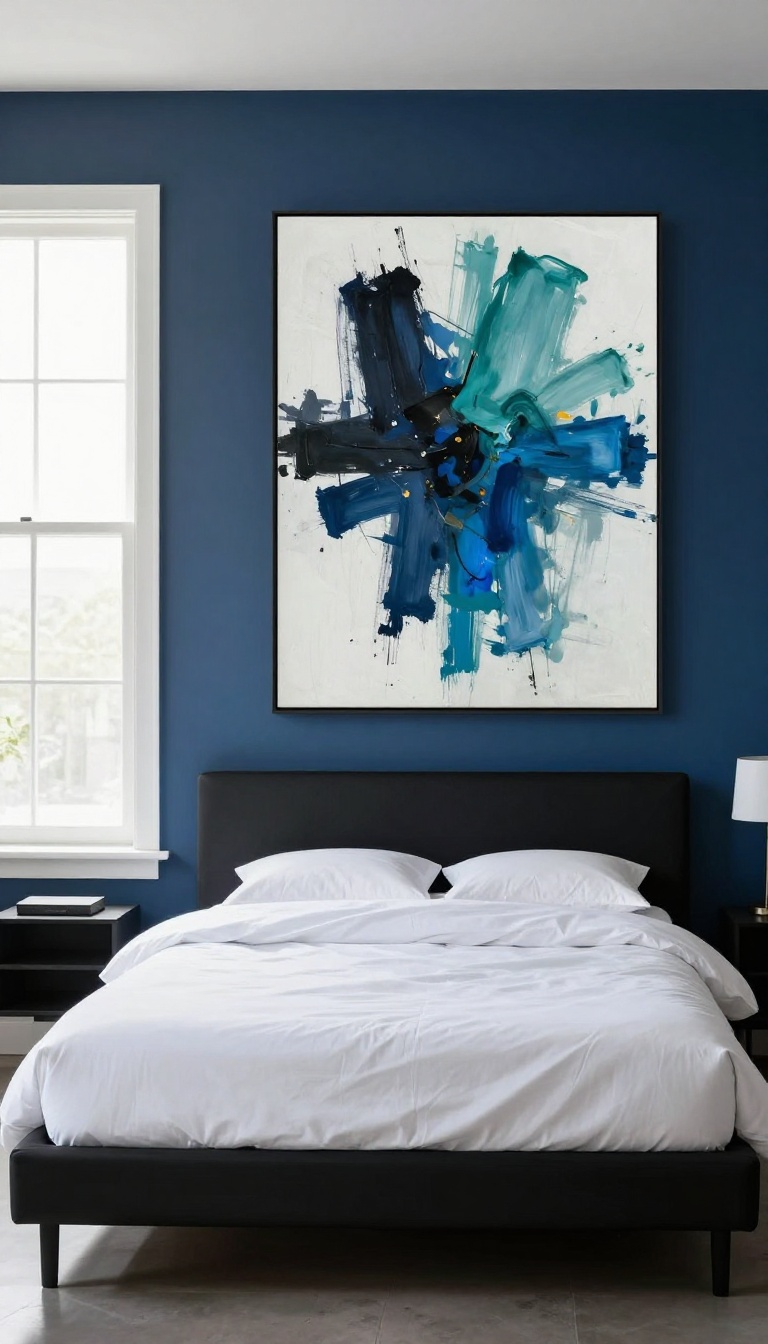
A large abstract canvas above the bed does more than fill wall space. It becomes the visual anchor that ties your black and blue palette together, especially when the artwork itself mixes both colors in loose, painterly strokes. The right piece adds movement and personality without overwhelming the room.
Abstract art works here because it doesn't compete with your furniture or bedding. Instead, it echoes the colors you've already used, creating a cohesive look that feels intentional. You're not matching prints to pillows; you're pulling the whole scheme into one focal point.
Scale matters more than you might think. A piece that's too small will float on the wall and make the bed feel disconnected. Go big—aim for a canvas that spans at least two-thirds the width of your headboard.
That proportion keeps the art and bed visually linked.
Choosing The Right Abstract Style
Look for pieces with bold, sweeping brushstrokes or geometric blocks in black, navy, cobalt, or teal. Soft watercolor washes can work too, but they may feel too delicate against strong black furniture. If your room already has a lot of pattern, stick with a simpler composition so the art doesn't fight for attention.
Hanging Height And Placement
Center the art above the bed, leaving about 6 to 10 inches between the bottom of the frame and the top of your headboard. That gap keeps the art connected to the bed without crowding it. If you have a tall headboard, go a bit higher so the piece doesn't get lost.
Framing And Finishing Touches
A thin black frame reinforces the color scheme and gives the canvas a polished edge. For a softer look, try a floating frame in natural wood or a frameless canvas with painted edges. Either way, keep the hardware hidden and the artwork clean—no glare from glass if you can avoid it.
7. Blue Area Rug on Dark Floors
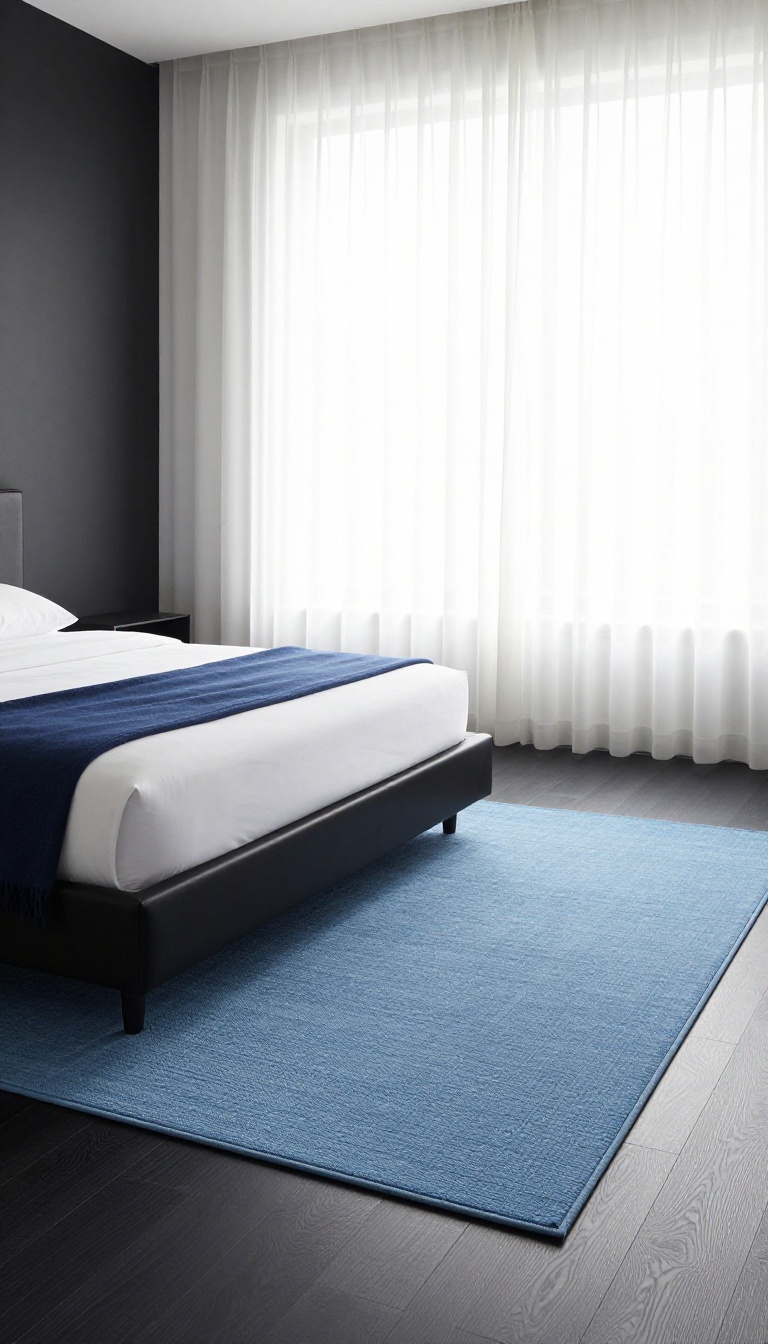
Dark floors bring drama, but they can also make a room feel like a cave. A blue area rug fixes that by adding a soft landing underfoot and a shot of color right where you need it. It is one of the quickest ways to warm up a black-and-blue bedroom without touching the walls.
The rug does more than look good. It defines the sleeping zone, absorbs sound, and gives bare feet a reason to leave the bed in the morning. In a black-and-blue scheme, the rug is your chance to introduce pattern or texture that ties the whole room together.
Pick A Blue That Pops
On dark floors, mid-tone blues like cobalt or teal show up best. Navy can disappear into the floor if it is too close in value, so test a swatch under your actual lighting. If you want contrast, go brighter; if you want calm, stay deep but add a lighter border.
Size It Right
A rug that is too small makes the bed look like it is floating. Aim for at least two feet of rug on each side of the bed, and extend it past the foot. In a tight room, a runner along the side works, but a full-size rug always feels more intentional.
Mix Textures For Depth
Flat-weave rugs keep things modern, while shag or tufted styles add coziness. If your floors are glossy, a matte rug balances the shine. Layer a smaller blue rug over a larger neutral one if you want extra dimension without committing to a single pattern.
8. Black Curtains with Blue Sheer Panels
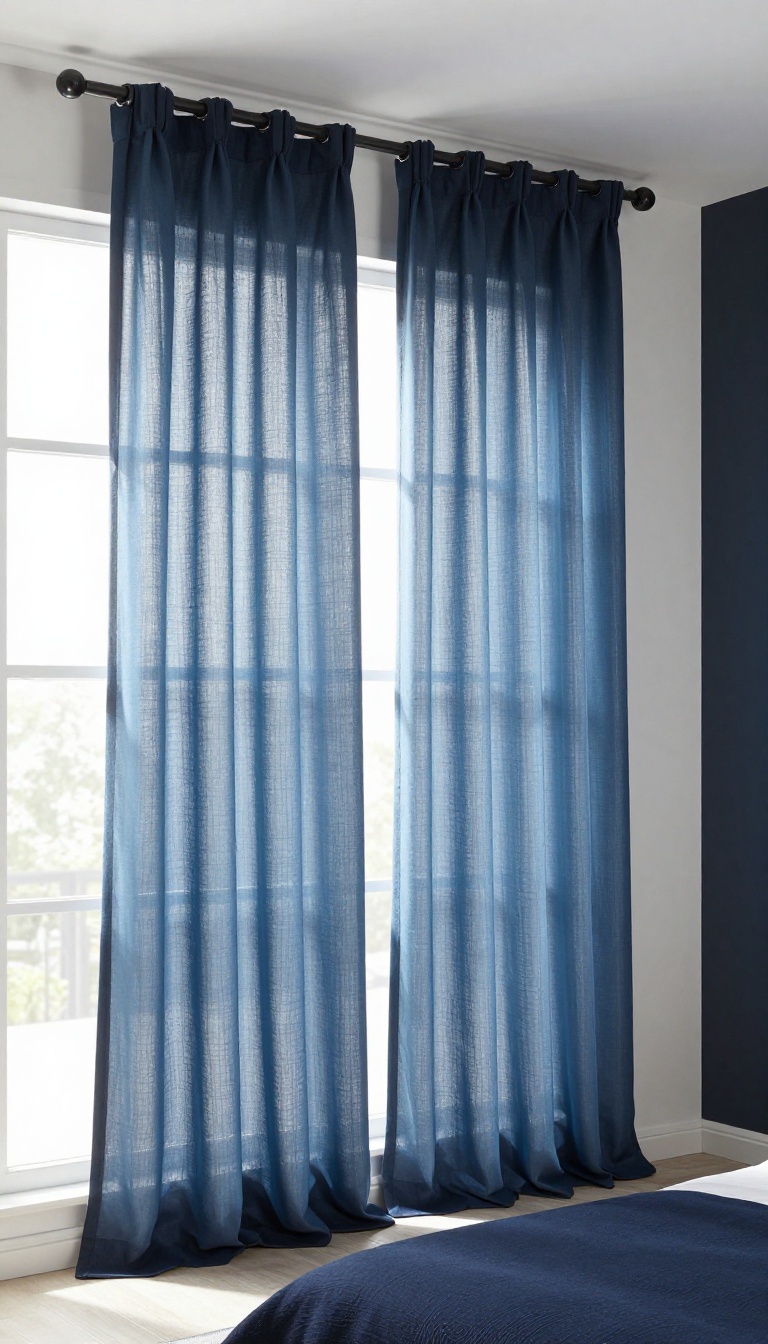
Windows are often an afterthought in a black and blue bedroom, but they can make or break the whole look. Black curtains with blue sheer panels solve two problems at once: they give you serious light control and they soften the hard edges that dark colors can create. It’s a simple swap that adds depth, texture, and a touch of romance without a major renovation.
The magic here is in the layers. Blackout black curtains do the heavy lifting—blocking light, insulating the room, and anchoring the window with a bold, modern statement. Blue sheers hang in front or behind, catching the light and adding a gentle wash of color.
Together, they create a dynamic push-pull that keeps the room from feeling flat.
Why This Combo Works
Black curtains alone can feel heavy or cave-like. Blue sheers lighten the visual weight and introduce a soft glow, especially during the day. The contrast between opaque black and translucent blue adds depth, while the sheers diffuse harsh sunlight into a calm, even wash.
It’s practical drama—function meets style.
Picking The Right Blues
Stick with sheers in shades that complement your existing blue accents. Navy or indigo sheers feel moody and cohesive, while powder blue or icy aqua add a breezy contrast. If your walls are dark, go lighter with the sheers to keep the window from disappearing.
For a monochromatic look, match the sheers to your bedding or rug.
Hanging And Styling Tips
Hang the rod high and wide—close to the ceiling and extending past the window frame—to make the room feel taller and the window larger. Use double rods or a track system to layer the curtains cleanly. Let the sheers puddle slightly or break just at the floor for a relaxed, romantic touch.
Keep the black curtains pulled back during the day to show off the blue.
9. Blue LED Strip Lights Behind Black Headboard
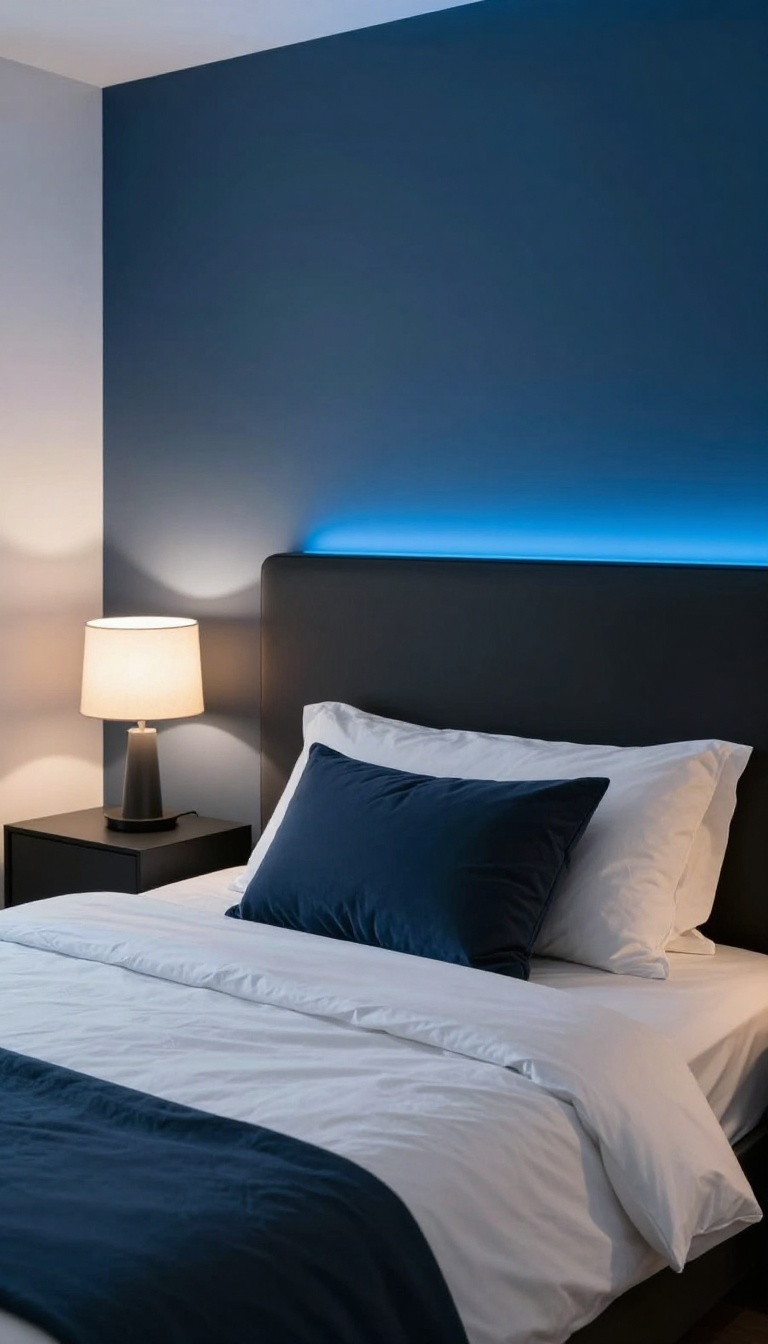
Blue LED strip lights tucked behind a black headboard create a floating effect that instantly modernizes the bed. The glow washes up the wall and spills softly around the edges, turning a plain black panel into a statement piece. It’s a simple upgrade that makes the whole room feel intentional rather than just dark.
The best part is how flexible this setup is. You can dial the blue from a deep ocean tone to a bright electric cyan, and you can dim it way down for a nightlight or crank it up when you want that futuristic vibe. Because the lights sit behind the headboard, you never see the strips themselves—just the glow.
That keeps the look clean and high-end, even on a budget.
Pick The Right Led Strip
Not all LED strips are created equal. Look for one with adjustable color and brightness, ideally controlled by a remote or app. A strip with a high LED density will give you a smoother, more even glow without visible dots.
Also check that the adhesive backing is strong or plan to use mounting clips, because heat and gravity can loosen cheap strips over time.
Mounting Without The Mess
You want the strip hidden but still able to cast light on the wall. Run it along the back edge of the headboard, a few inches in from the sides. If your headboard sits flush against the wall, attach the strip to the wall itself just behind the top edge.
Use cable clips to keep the power cord tidy and route it down behind the bed frame so it disappears.
Layering The Glow
Blue LEDs look best when they’re not the only light source. Add a warm bedside lamp or two so the room doesn’t feel like a sci-fi movie set all the time. During the day, the strips are off and the black headboard still anchors the room.
At night, the blue glow becomes a mood booster that makes the black feel intentional and cozy.
10. Black and Blue Gallery Wall
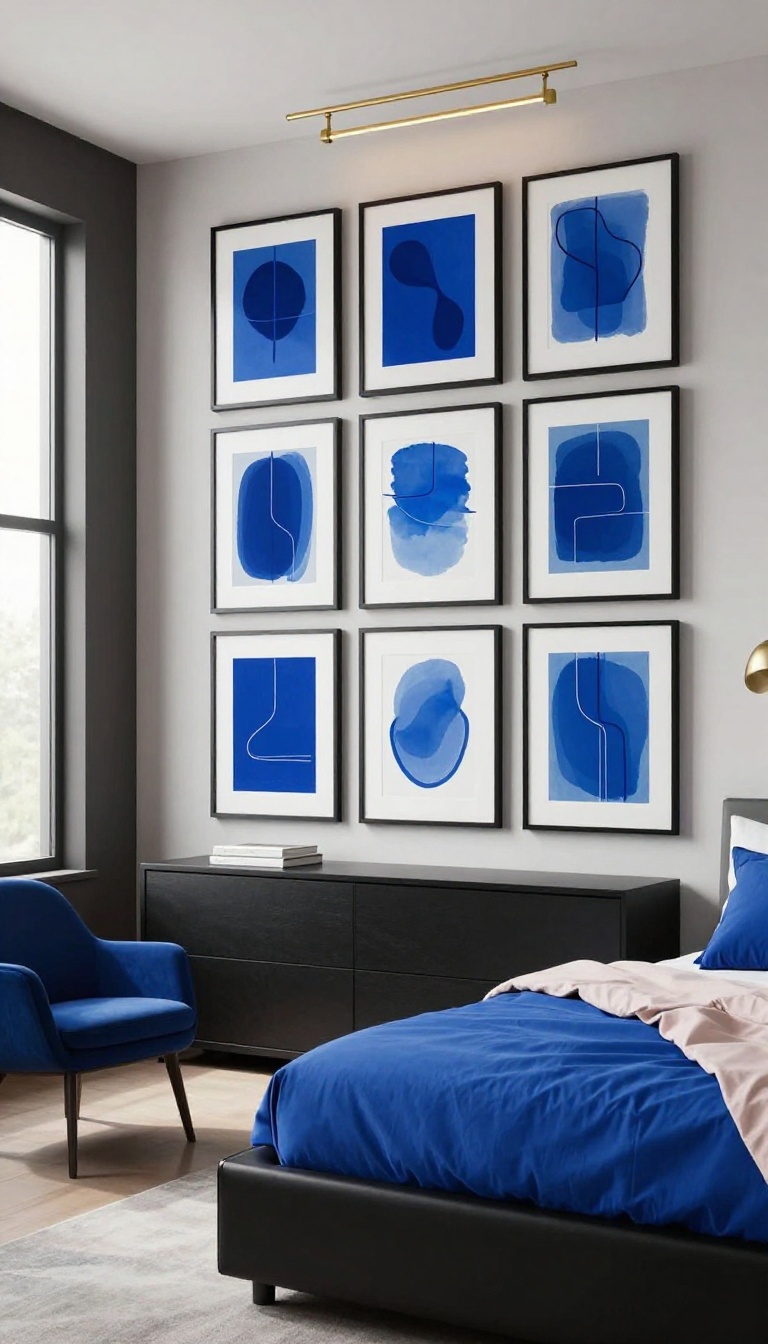
A gallery wall gives your bedroom a personal, curated feel that a single piece of art can't match. When you pair black frames with blue-toned prints, you get a cohesive look that ties the whole black and blue theme together. It's a flexible idea too—you can start small and add pieces over time.
The key is to treat the wall as one composition, not a random collection. Black frames create a strong, modern border around each piece, while blue prints—whether abstract, landscape, or typography—bring in the color without overwhelming the room. Hang them above a dresser, beside a reading chair, or even around a window to fill an awkward space.
Choosing Blue Prints That Work Together
Stick to two or three shades of blue across your prints to keep things cohesive. Mix deep navy with soft powder blue, or go monochrome with different tints of the same hue. Abstract watercolors, vintage maps, and minimalist line art all look great in black frames.
Frame Layout And Spacing
Lay your frames out on the floor first to find a layout you like. Keep about two to three inches between frames for a tight, gallery-style look. A symmetrical grid feels more formal, while an organic cluster feels relaxed and modern.
Lighting And Placement Tips
Add a picture light or a slim wall sconce above the gallery to make the blue tones pop at night. Avoid hanging art where direct sunlight will fade the prints. If you're renting, use damage-free hanging strips to keep your deposit safe.
11. Blue Ceiling with Black Trim
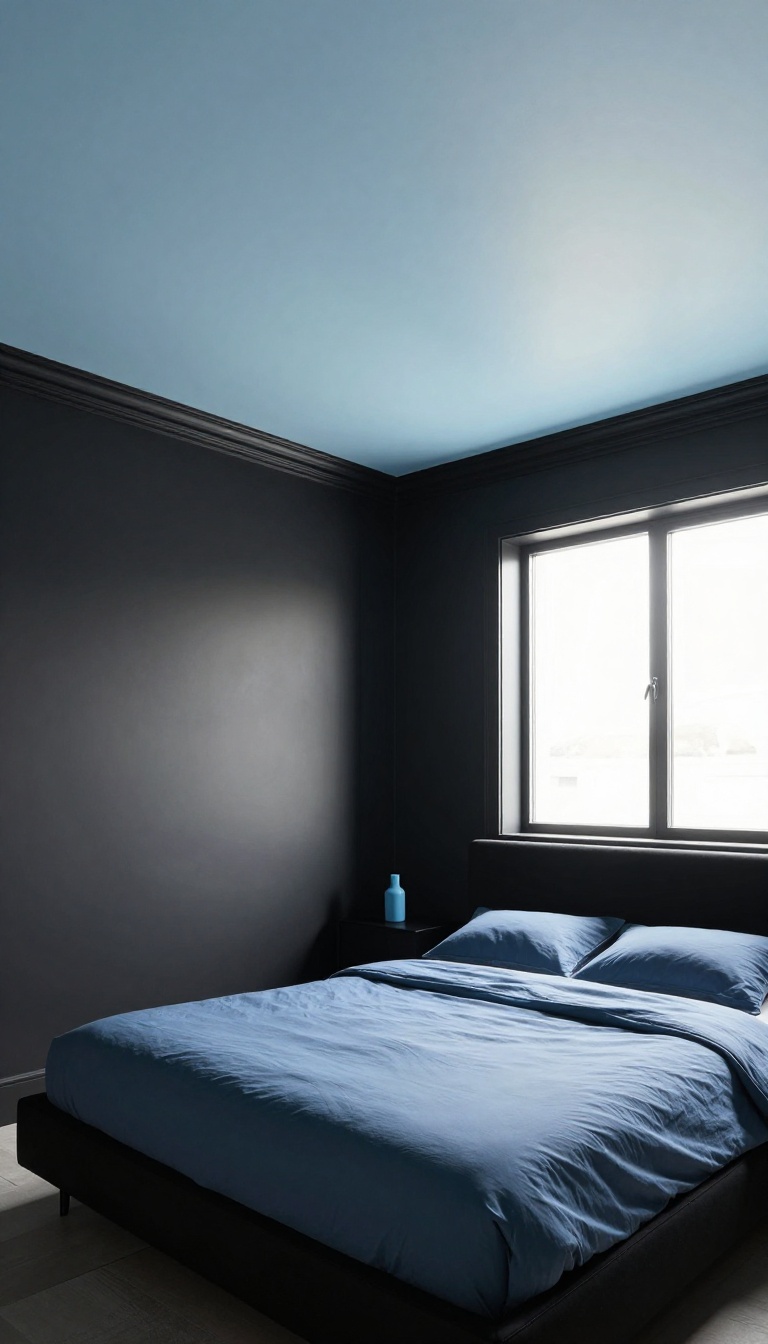
Most people paint the ceiling white and forget it exists. Flip that habit and the whole room changes. A soft blue ceiling with black trim draws the eye upward, adds height, and gives your black and blue bedroom a detail nobody expects.
The ceiling is the one surface you never really look at, which is exactly why it works as a surprise. Paint it a pale, dusty blue and frame it with black crown molding, and suddenly the room has a fifth wall worth noticing. The black trim sharpens the blue so it reads as intentional, not like a mistake you meant to fix later.
This move also solves a common problem. Dark walls can make a room feel low and heavy. A light blue ceiling lifts that weight and bounces a little brightness back down.
The black trim adds just enough contrast to keep the whole thing modern.
Pick The Right Blue
Stay light and slightly gray. Soft sky blue, powder blue, or a muted blue-gray all work because they reflect light instead of soaking it up. A saturated navy overhead will feel like a storm cloud, so save the deep blues for walls or bedding.
Test a sample on a small patch and check it at night with your lamps on.
Make The Trim Count
Black crown molding does the heavy lifting here. Go with a clean, medium-width profile so it reads as a deliberate frame, not a thin pencil line. Paint the trim in a matte or satin black to match your other black accents.
If crown molding is not an option, a painted black border along the ceiling edge can give you a similar effect.
Tie It To The Rest Of The Room
Repeat the black somewhere below so the ceiling does not feel random. Black curtain rods, a black bed frame, or black bedside lamps will connect the top of the room to the bottom. Keep the walls a lighter blue or a soft neutral so the ceiling stays the star.
Add warm bulbs in your fixtures to balance the cool tones.
12. Black and Blue DIY Bench at the Foot of the Bed

A bench at the foot of the bed adds function and polish, but store-bought options often cost more than they're worth. Building or upcycling one yourself lets you control the color, size, and cushion fabric to match your black and blue scheme exactly. It's a weekend project that delivers a custom look for a fraction of the price.
Start with a sturdy base. A simple wooden frame or a repurposed piece like an old coffee table works well. Sand it smooth, then paint it matte black for a modern finish.
For the cushion, choose a blue fabric that complements your bedding—navy velvet, cobalt linen, or even a bold royal blue. Cut foam to size and wrap it with batting before upholstering. Attach the cushion to the bench with heavy-duty Velcro or staples.
The result is a functional seat that ties the bed area together and adds a layer of texture and color.
Choosing The Right Bench Size
Measure the width of your bed and aim for a bench that's slightly narrower. You want it to sit comfortably at the foot without blocking walkways. A depth of 15 to 18 inches gives you usable seating without taking over the room.
If space is tight, consider a narrow bench or even a pair of small stools that can tuck under when not in use.
Paint And Cushion Pairings That Pop
Matte black paint is a safe bet, but you can also try a satin finish for a subtle sheen. For the cushion, pick a blue that repeats a shade from your bedding or artwork. Navy and black create a moody, sophisticated vibe, while brighter blues add a lively contrast.
If you want extra visual interest, add piping or buttons in a contrasting color like white or silver.
Upcycling An Old Piece
Check thrift stores or your garage for a piece with good bones—a sturdy coffee table, a luggage rack, or even a wooden crate. Give it a thorough cleaning, then sand and prime before painting. If the top isn't flat, add a piece of plywood cut to size.
This approach saves money and keeps a usable item out of the landfill, which makes the finished piece feel even better.
13. Blue Wall Panels with Black Accents
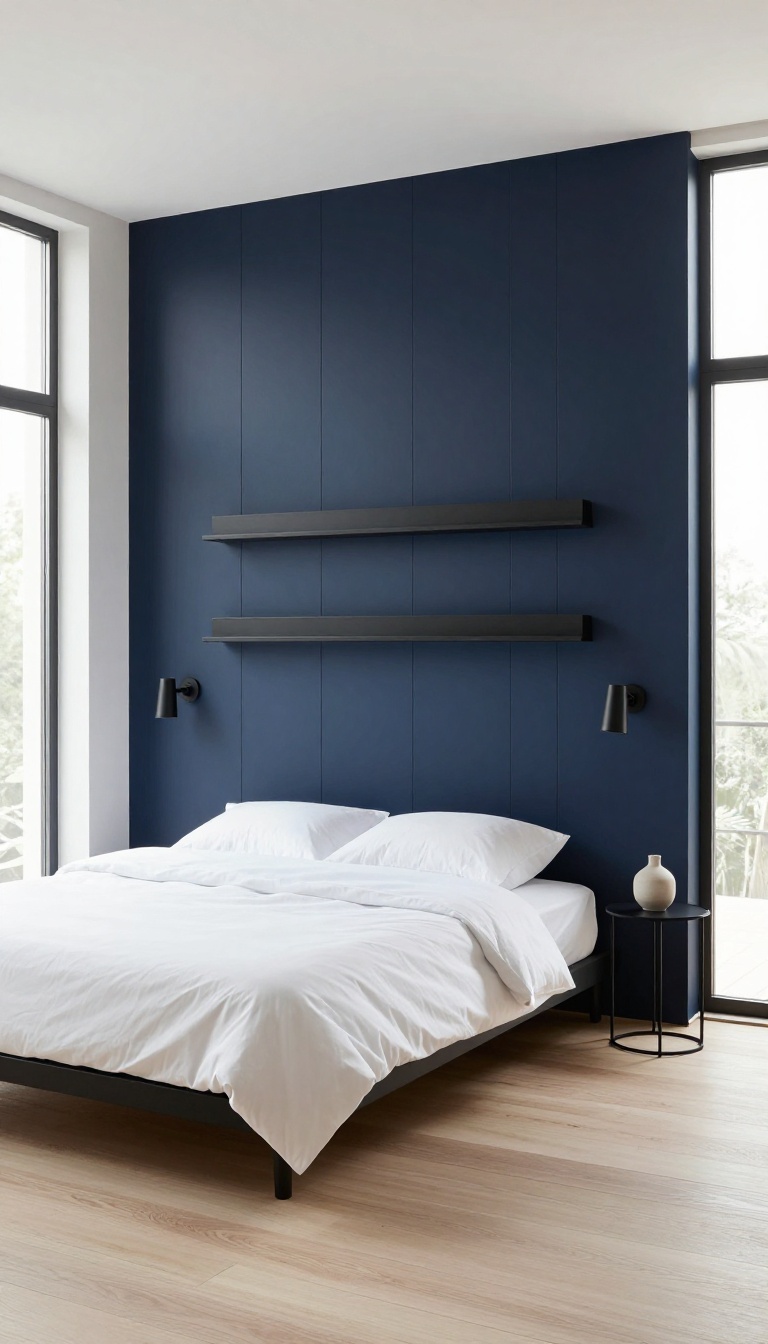
Wall panels add instant architecture to a plain bedroom, and when they're blue, they bring depth without the commitment of a full paint job. Pair them with black shelves or sconces and you get a tailored, high-end look that reads custom even on a budget. The panels do the heavy lifting, while black accents sharpen the edges and keep the blue from feeling too soft.
It's a simple formula that works in rentals and forever homes alike.
Blue wall panels come in a range of styles, from slim vertical slats to large geometric squares, so you can dial the drama up or down. The key is to choose a blue that complements your existing bedding and then let black hardware or furniture create contrast. This combo feels intentional and polished without requiring a designer's eye.
You can install panels yourself with adhesive or basic tools, which keeps costs down. Black accents can be as small as a set of floating shelves or as bold as a pair of matte sconces flanking the bed. Either way, the result is a bedroom that looks like it was styled by a pro.
Pick Your Panel Style
Vertical slats draw the eye upward and make ceilings feel taller, which is great for small rooms. Geometric or grid panels add a modern, architectural vibe that pairs beautifully with black metal accents. If you want something subtler, go for flat, large-format panels in a deep navy or slate blue.
Renters can use peel-and-stick panels that remove cleanly, while DIYers might prefer MDF panels painted to match. Just make sure the panel color is consistent across the wall for a seamless look.
Choose Black Accents That Pop
Black shelves, sconces, or even a black headboard create sharp contrast against blue panels. Floating shelves in matte black are an easy win—they're affordable and add display space for books or plants. Wall sconces with black metal shades bring both light and style, especially if they're adjustable.
Avoid glossy black finishes if you want a more subdued feel; matte or satin black blends better with the panel texture. Also, keep the number of black accents balanced—too many can make the room feel heavy.
Installation Tips For A Flawless Finish
Start by measuring your wall and planning the panel layout on paper or with painter's tape. If you're using adhesive, clean the wall first and press firmly for a strong bond. For a more permanent look, nail or screw panels into studs and fill the holes before painting.
Leave a small gap between panels and the ceiling or floor for a floating effect. And always check that shelves or sconces are level before securing them—crooked accents ruin the tailored look.
Budget-friendly Sources And Hacks
You don't need custom millwork to get this look. Stores like IKEA, Home Depot, and even Amazon sell panel kits that are easy on the wallet. For a DIY version, buy MDF boards and cut them to size, then paint them in your chosen blue.
Black accents can come from thrift stores or discount retailers—spray paint a cheap shelf or sconce in matte black for a uniform finish. This approach keeps the project under a few hundred dollars while still looking expensive.
FAQ
Is black and blue a good color combination for a bedroom?
Yes, black and blue can work beautifully in a bedroom. The key is balancing the dark tones with lighter elements and textures so the room feels cozy, not cave-like.
What shade of blue goes best with black in a bedroom?
Navy, teal, and dusty blue are popular choices. Navy offers a classic look, teal adds vibrancy, and dusty blue keeps things soft and relaxing.
How can I keep a black and blue bedroom from feeling too dark?
Add plenty of lighting, use mirrors to reflect light, and incorporate lighter accents like white or cream in bedding, curtains, or rugs. Metallic finishes can also help brighten the space.
Can I use black and blue in a small bedroom?
Absolutely. In small rooms, use black sparingly as an accent and let blue dominate. Light blue walls with black furniture or decor can make the space feel larger while still stylish.
What are some easy DIY projects for a black and blue bedroom?
Try painting a nightstand blue with black hardware, creating a gallery wall with black frames and blue art, or adding blue LED strip lights behind a black headboard. These are budget-friendly and impactful.
Conclusion
Black and blue can feel risky until you see it working in a real room. Start with the idea that solves your biggest problem, whether that is a dark wall, a small footprint, or a bed that needs a stronger anchor. Paint one wall, swap the bedding, or add a single navy piece and live with it for a week.
From there, layer in lighting, metal accents, and texture at your own pace. The contrast gets easier to balance once the base is set.