10 Very Tiny Bedroom Ideas That Maximize Every Corner
You have maybe eight feet of wall space, a door that barely clears the bed, and a closet that swallows everything the moment you open it. That is the reality of a very tiny bedroom, and it does not have to feel like a penalty box. The fix is not one dramatic renovation.
It is a stack of small moves that each buy back a little breathing room. A floating bed frame clears the floor underneath.
A storage headboard eats the wall instead of the square footage. Over-the-door racks, slim carts, and tall narrow chests all work the same way, tucking function into spots you already own but never use.
1. Float Your Bed to Free Up Floor Space
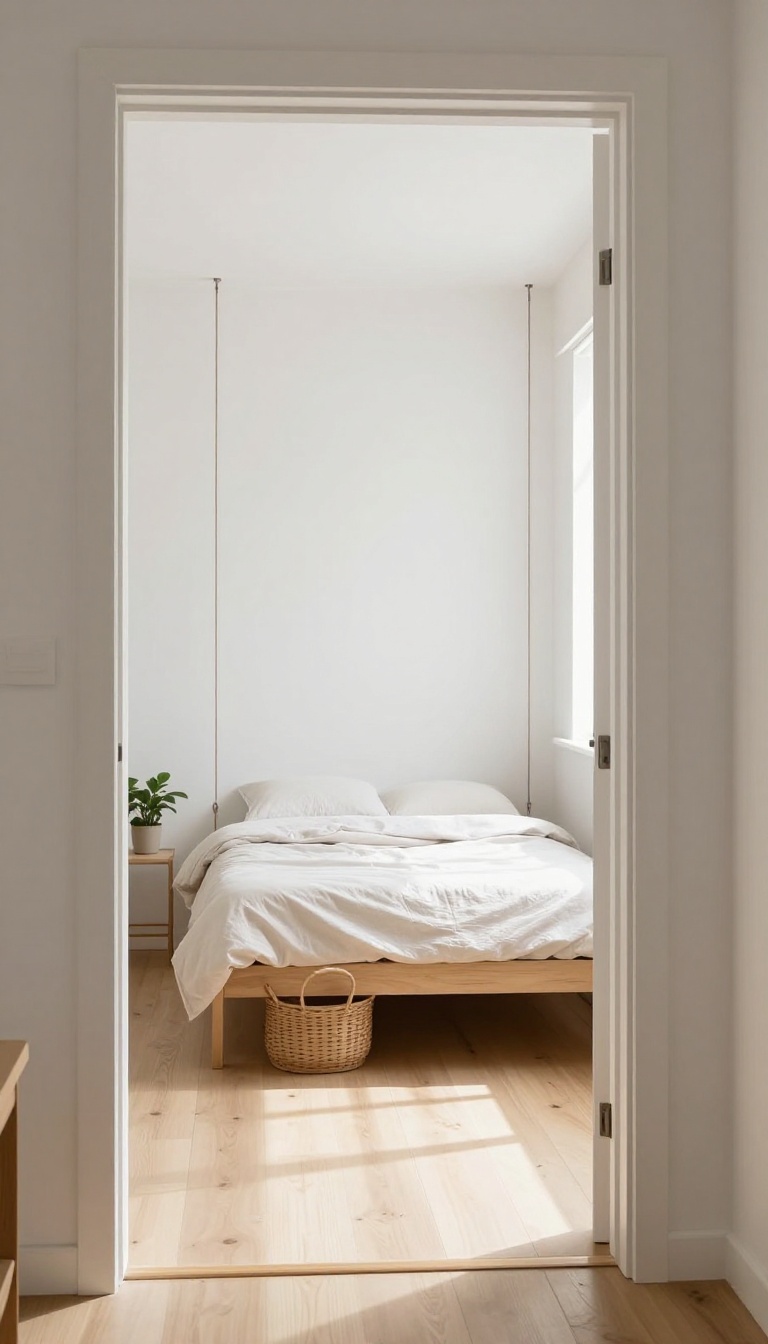
Floor space is the first thing to disappear in a tiny bedroom, and the bed is usually the culprit. It sits there like a boulder, blocking the eye and swallowing every inch beneath it. Lift that bed off the ground and the whole room reads bigger, even if the measurements never change.
A wall-mounted frame or a platform with open legs keeps the floor visible from the doorway. That visible strip of floor is what your brain uses to judge size, so showing more of it makes the room feel wider. You also gain a spot for baskets, slippers, or a folded blanket that used to live on a chair.
Floating a bed sounds like a design stunt, but it is really just a trade. You give up the solid box under the mattress and get back the floor you never actually used. In a room that is eight by nine feet, that trade can change how you move through the space every single day.
Wall-mounted Frames Vs. Open-leg Platforms
A wall-mounted frame bolts into studs and holds the mattress with brackets, leaving the entire footprint clear. It looks dramatic and works well when you have a solid wall and a partner to help with the install. An open-leg platform is the easier route.
Four slim metal or wood legs lift the bed just enough to let light and sightlines pass underneath, and you can assemble it in an afternoon with basic tools. Both options do the same job: they stop the bed from reading as a solid block.
What To Actually Store Under There
Once the floor shows, you will be tempted to fill it with everything you own. Resist that. Keep the space light so the floating effect survives.
Woven baskets for off-season clothes, a slim rolling bin for shoes, or a single stack of folded linens all work because they stay low and visually quiet. Skip anything tall enough to touch the mattress. If the underside looks cluttered, the room will feel smaller than it did before you started.
Getting The Height Right
Most people mount the bed too low out of habit. Aim for at least ten to twelve inches of clearance so a vacuum, a basket, or a pair of slippers can slide under without a fight. Higher than that and you start to feel like you are climbing into a bunk.
Test the height with a temporary stack of books before you drill anything. Sit on the edge, swing your legs, and see if getting up feels natural. Comfort matters more than the perfect photo.
2. Turn the Headboard Wall into a Storage Wall
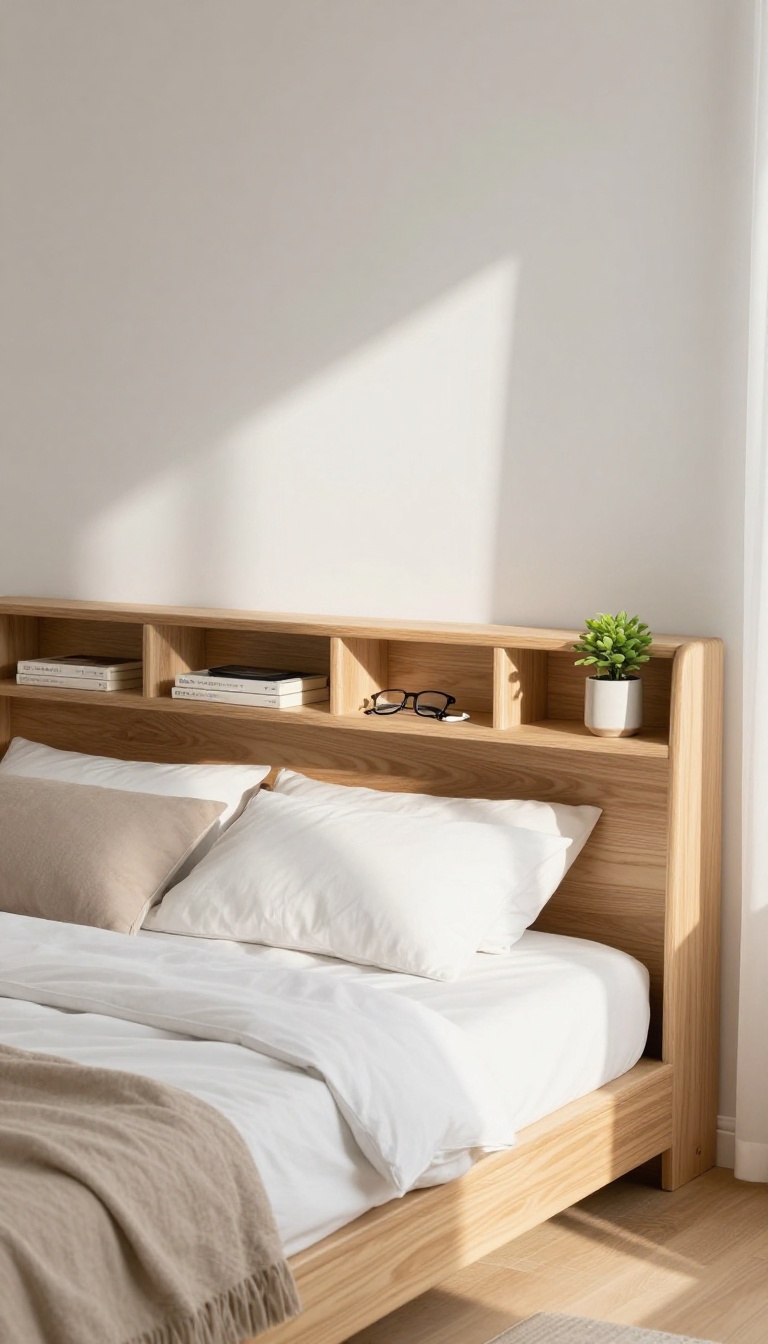
The wall behind your bed is prime real estate that usually holds nothing but a headboard and a few dust bunnies. In a tiny bedroom, that vertical strip can replace an entire nightstand and then some. A headboard with built-in shelves, cubbies, or a slim ledge keeps your book, glasses, phone, and charger right where you need them.
You stop reaching for a side table that never fit anyway.
Think of the headboard wall as a shallow storage unit that happens to sit behind your pillows. Instead of a flat panel, you install a headboard with open shelves or recessed cubbies. The depth only needs to be three or four inches, so it barely eats into the room.
You gain a spot for nightly essentials without losing an inch of floor space. This approach works because it uses the one direction tiny bedrooms always have: up. You are not adding furniture; you are upgrading a piece you already need.
The result feels intentional and custom, not like a workaround.
Pick The Right Depth
Aim for shelves that are three to five inches deep. Anything deeper starts to feel like a bulky cabinet and can crowd your pillow space. Measure your thickest item, usually a hardcover book or a water bottle, and add an inch.
That is your target depth.
Choose Your Storage Style
Open cubbies keep things visible and easy to grab. A slim ledge works if you only need a phone and a pair of glasses. If you want to hide clutter, go for a headboard with small closed compartments or a flip-down panel.
Pick based on how much you actually keep by the bed, not how much you wish you did.
Wire It For Charging
Add a built-in USB port or a small power strip mounted to the back of the headboard. That way your charger lives in the storage wall instead of dangling to the floor. A simple cable clip keeps the cord from tangling with your pillows.
Install It Without Wrecking The Wall
If you rent, look for a freestanding headboard with shelves that leans against the wall. For a permanent fix, anchor a wall-mounted unit into studs for safety. Either way, keep the top shelf below eye level when you sit up so it does not feel like it is looming over you.
3. Use Over-the-Door Organizers for Everyday Clutter
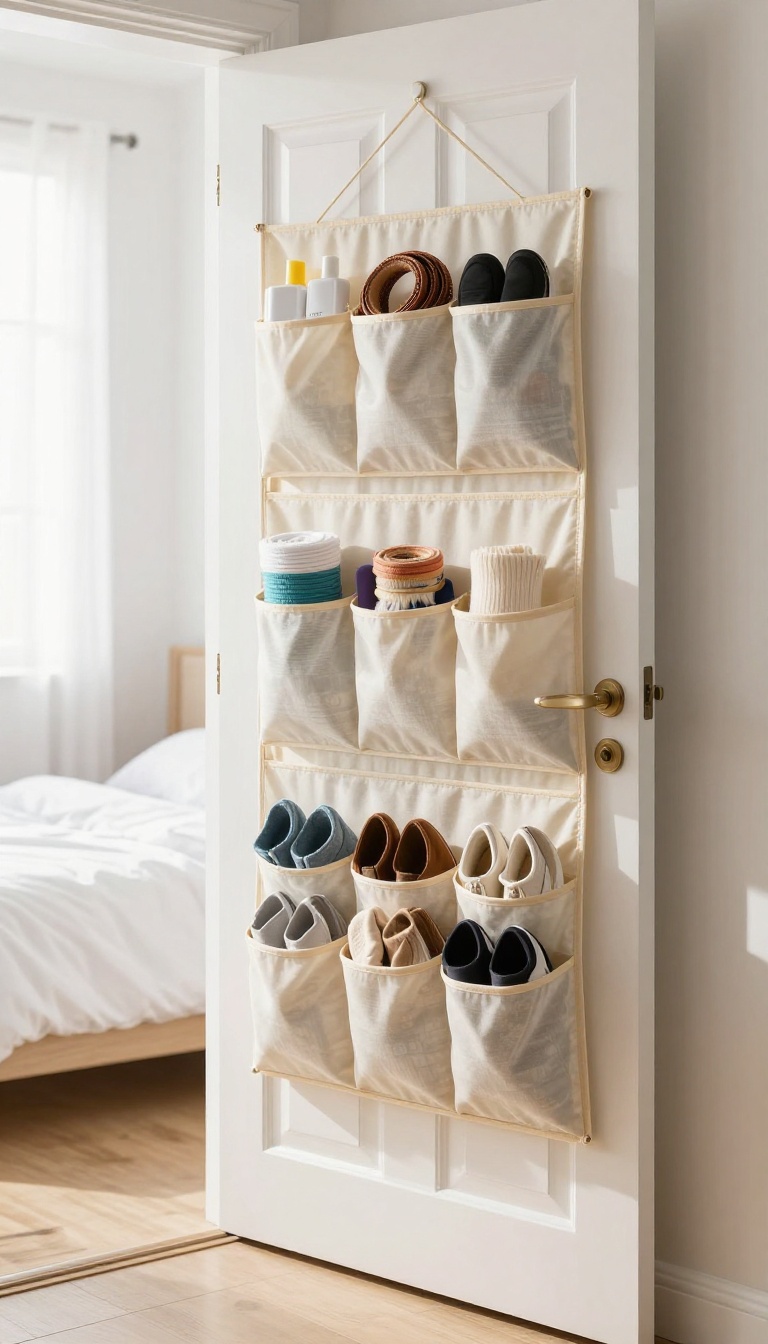
Your bedroom door is a blank canvas that most people ignore. It swings open and shut a hundred times a day, and the back of it stays empty while your floor collects shoes, bags, and random accessories. An over-the-door organizer turns that wasted vertical strip into instant storage.
It costs less than a pizza night, installs in seconds, and disappears when you move out. The best part is how much surface mess it prevents. Instead of dumping your keys, scarf, and sneakers on the nightstand or the floor, you drop them into dedicated pockets.
Everything has a home, and your floor stays clear. This is one of the cheapest, fastest wins in a tiny bedroom.
Over-the-door organizers come in a few styles, but they all work the same way: hooks or straps go over the top of the door, and a fabric or mesh panel hangs down the back. You get rows of pockets in various sizes. Some are clear plastic, some are canvas, and some are designed specifically for shoes.
The whole thing takes up zero floor space and maybe an inch of depth when the door is closed. The real magic is that you stop using your floor as a staging area. Shoes go in the bottom pockets.
Socks, belts, and hair accessories go in the middle. Chargers, lotions, and small electronics go up top. You can even use one for cleaning supplies or craft items if your bedroom doubles as a workspace.
The organizer keeps everything visible and reachable without adding a single piece of furniture.
Pick The Right Organizer For Your Stuff
Shoe organizers have wider, deeper pockets and usually hold six to twelve pairs. They are perfect if your floor is a graveyard of sneakers and flats. If you need to store smaller items, look for a pocket organizer with clear vinyl windows so you can see what is inside without digging.
For toiletries or makeup, a hanging cosmetic organizer with multiple zippered sections keeps bottles upright and leak-free. Measure your door height and width before buying. Most standard doors fit universal organizers, but a quick check saves a return trip.
Install It Without Damaging The Door
Most over-the-door organizers use simple metal hooks that fit over the top edge of the door. They do not require screws or adhesive, so renters can use them without losing a deposit. If your door is too thick or has a tight frame, look for adjustable straps or over-the-door brackets that fit different door widths.
For extra stability, add a small piece of felt or foam tape where the hooks meet the door to prevent scratches and rattling. You can also hang the organizer on a closet door if your bedroom door is already crowded.
Keep It Tidy And Functional
An over-the-door organizer only works if you actually use it. Assign each pocket a category and stick to it. Once a week, do a quick purge: toss expired toiletries, move out-of-season items to a bin, and return stray socks to the laundry.
If the organizer starts bulging, you have too much stuff in it. Rotate items based on the season or your current routine. In a tiny bedroom, this little hanging rack can replace a shoe rack, a nightstand drawer, and a bathroom caddy all at once.
4. Choose a Corner Desk That Doubles as a Vanity
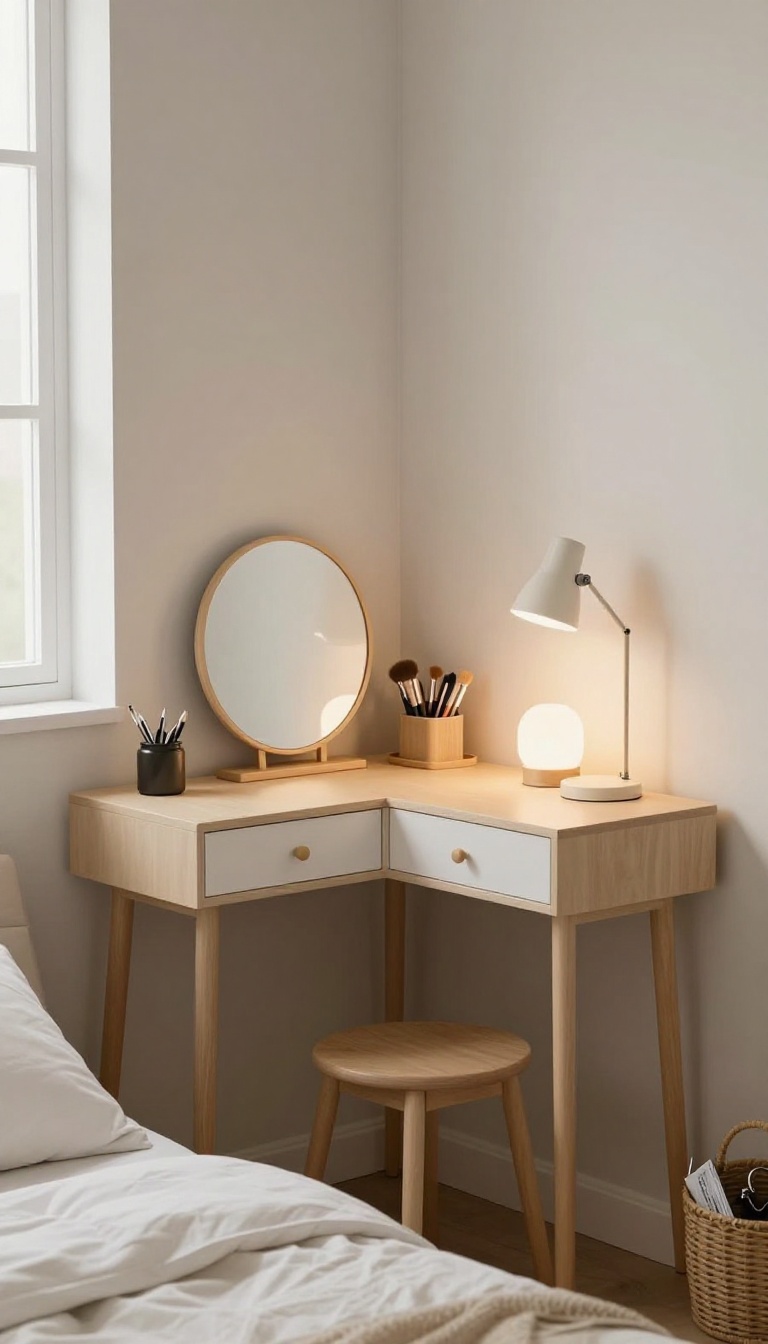
A corner desk is one of those rare pieces that actually earns its footprint. It slides into the dead zone where two walls meet, a spot that usually collects dust and stray socks. The real magic happens when you stop thinking of it as just a desk.
Add a mirror and a drawer, and suddenly it's a work spot, a makeup station, and a drop zone for keys and mail.
Most tiny bedrooms can't fit a separate desk and vanity. A corner desk solves that by using space that's otherwise wasted. The key is picking the right one and setting it up so it shifts roles without a lot of shuffling.
Pick The Right Corner Desk
Look for a corner desk with a triangular or L-shaped top that hugs the walls. A model with a built-in drawer or two keeps small items out of sight. If you can, choose one with a slim profile—depth around 18 to 20 inches is plenty.
That leaves room to pull out a stool without blocking the bed.
Make It Work As A Vanity
Mount a mirror on the wall above the desk, or lean a lightweight one against the wall. A small tray or cup corrals makeup brushes and pens. When you need to work, slide the tray into a drawer and you're back to a clean surface.
A clip-on light or a small lamp gives you good lighting for both tasks.
Keep It Clutter-free
The downside of a multi-use surface is that it attracts clutter. Use a drawer for office supplies and a small bin or basket for keys and mail. At the end of the day, spend two minutes putting things back.
That tiny habit keeps the desk ready for whatever you need next.
5. Hang Curtains High and Wide to Fake a Bigger Window
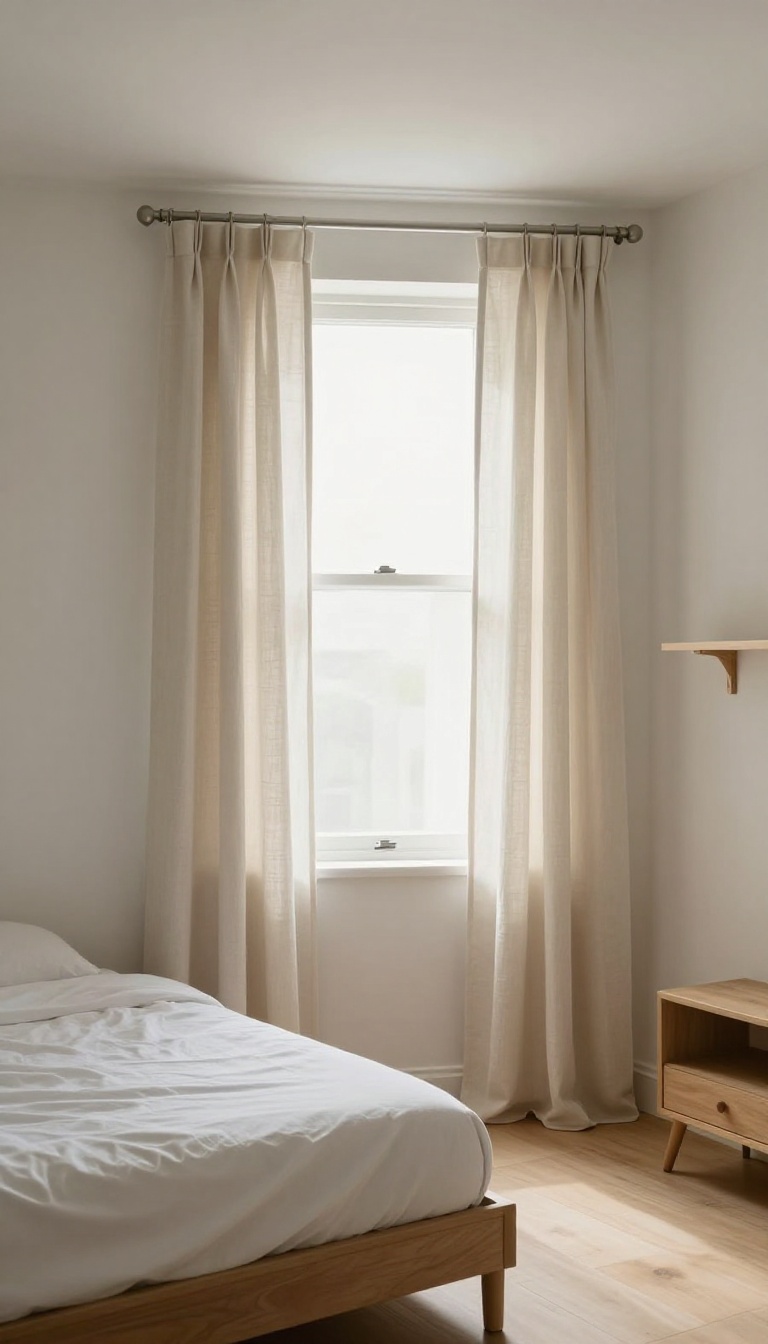
Curtains are the cheapest architectural trick in the book. Mount the rod a few inches below the ceiling and run it several inches past each side of the window frame, and suddenly the window looks like it belongs in a much larger room. Nothing structural changes.
Your eye just follows the fabric up and out instead of stopping at the trim. Most people hang curtains right at the window, which boxes the whole wall in. Move the rod up and out, and the wall reads taller.
The room reads wider. It is a five-minute change with a permanent payoff.
The trick works because curtains do not just cover a window. They define how big that window appears to be. When fabric starts at the ceiling and spills past the frame, your brain assumes the glass behind it is just as generous.
A tiny bedroom cannot afford visual dead zones. Every inch of wall you free up with height and width makes the rest of the room feel less compressed. That is why this move pairs so well with a low bed, a slim nightstand, or a wall-mounted shelf.
Pick The Right Rod Length
Measure your window, then add at least six to ten inches on each side. If the wall allows it, go wider. The rod should feel like it belongs to the wall, not the window.
A simple extendable rod works fine here. Skip the heavy decorative finials if space is tight, since they eat into your extra width. A clean, low-profile rod keeps the illusion intact.
Mount Near The Ceiling
Aim for two to four inches below the ceiling, or as high as your rod hardware allows. This pulls the eye up before it ever lands on the window itself. If you have crown molding, mount just under it.
The goal is to make the wall above the window disappear into the curtain, not to leave a strip of bare paint that shrinks the whole thing.
Choose Curtains That Reach The Floor
Floor-length curtains sell the height better than any other length. They create one long vertical line from ceiling to floor, and vertical lines always make a room feel taller. If you are worried about clutter, go with a light, solid color or a subtle texture.
Busy patterns can make a small room feel loud, but a soft neutral keeps things calm and open.
Let The Fabric Bunch, Not Stretch
Buy curtains that are at least one and a half to two times the width of your rod. When they hang with soft folds, they look intentional and generous. Stretched-flat curtains look thin and cheap, and they make the window look smaller.
A little extra fabric is the difference between a hotel window and a dorm window.
6. Slide a Slim Cart into the Gap Beside the Bed
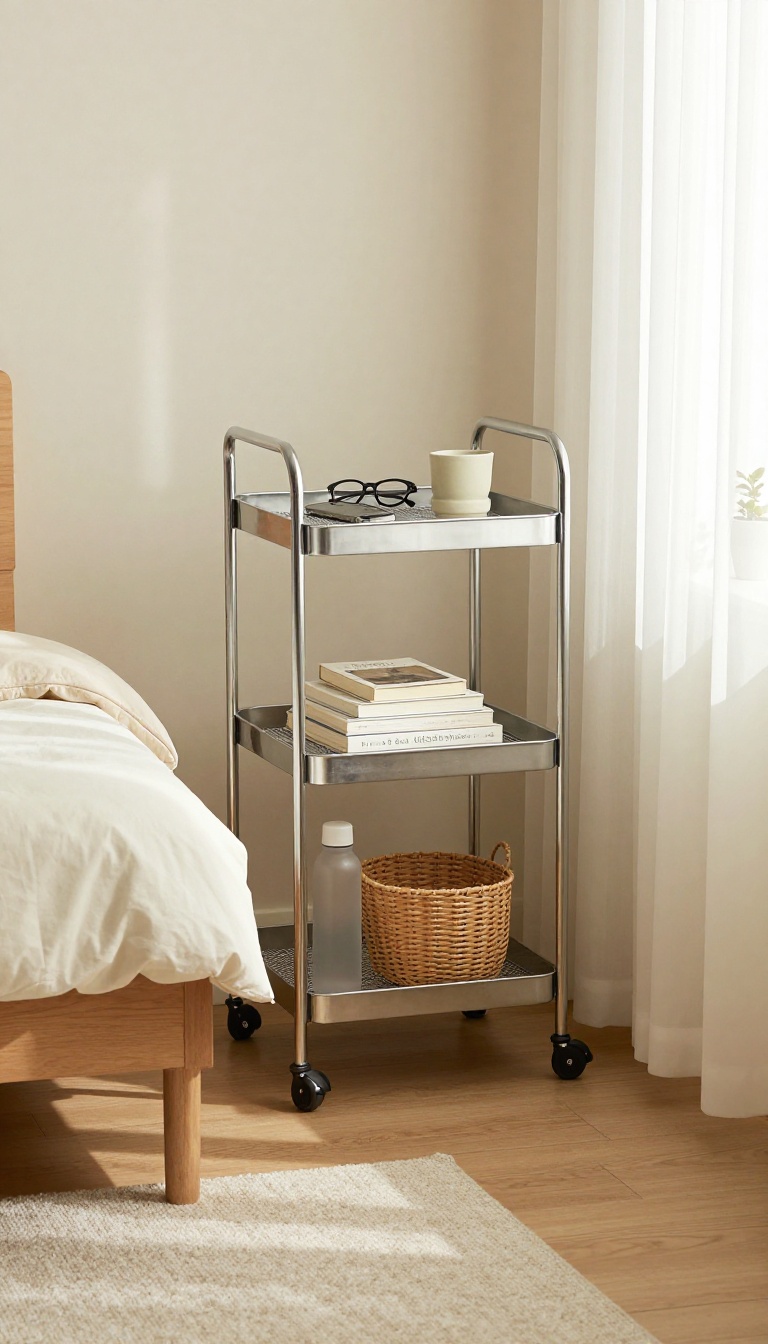
That awkward strip between the mattress and the wall is too narrow for a nightstand, but it is not wasted space. A slim rolling cart, usually six to ten inches wide, slips right in and gives you a place for the stuff that normally ends up on the floor. It moves when you need it and disappears when you do not.
Most tiny bedrooms have at least one gap that a traditional nightstand cannot fit into. Maybe it is the space between the bed and a closet door, or the sliver of wall next to the headboard. A rolling cart turns that dead zone into real storage without adding bulk.
You get a surface for your phone, a shelf for a book, and a spot for a glass of water, all in a footprint that barely registers.
Pick The Right Cart
Look for a three-tier metal or plastic cart with locking casters. Measure the gap first, then subtract an inch so the cart rolls freely. Mesh sides keep small items from falling out, and a handle on top makes it easy to pull out.
Skip anything wider than ten inches, or it will feel like a roadblock instead of a helper.
What To Keep On It
Treat the top tier like a mini nightstand: phone, glasses, a small lamp if you have an outlet nearby. The middle tier holds books, a journal, or a tablet. The bottom tier is perfect for a water bottle, meds, or a small basket for chargers and cords.
Keep it light so you can roll it out without knocking things over.
Roll It Out When You Need More Room
The real magic is that the cart is not stuck in one spot. Pull it into the middle of the room when you need extra surface area for folding laundry or setting down a snack. Push it back into the gap when you are done.
It gives you a temporary table without permanently shrinking your floor space.
7. Go Vertical with Wall Hooks and Pegboards
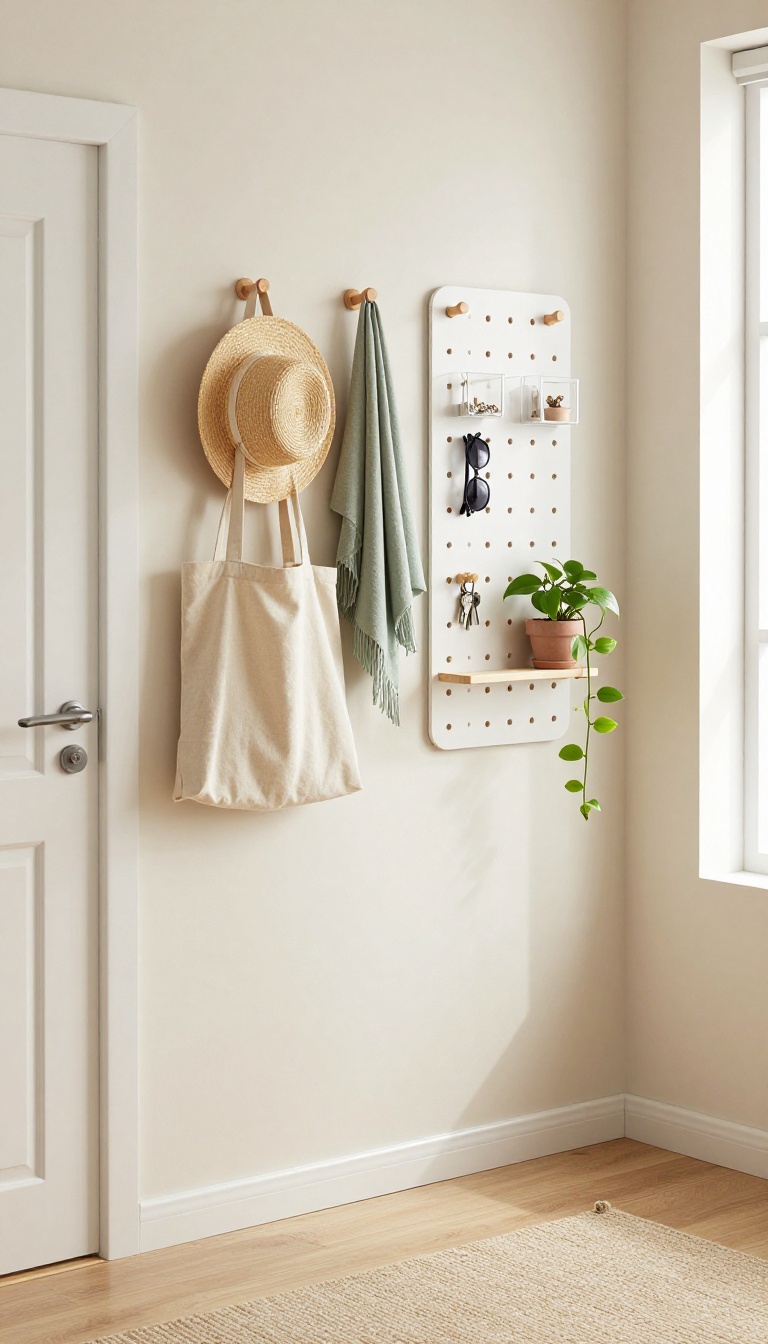
Floor space runs out fast in a tiny bedroom, but the walls stay mostly empty. Hooks and pegboards put that vertical square footage to work without adding a single piece of furniture. Everything stays visible, off the ground, and within arm's reach, which quietly makes the whole room feel calmer.
A row of hooks costs almost nothing and installs in minutes. A pegboard takes a little more planning, but it holds more and lets you rearrange things whenever your needs change. Together they turn a blank wall into a working storage system that never crowds the floor.
Start With A Simple Hook Row
Mount a strip of hooks on the wall beside the door or above a dresser. Bags, hats, scarves, and tomorrow's outfit all hang there instead of landing on a chair. Keep the row to five or six hooks so it reads as intentional rather than cluttered.
Pegboards Hold The Small Stuff
A pegboard panel is perfect for jewelry, hair accessories, sunglasses, and keys. Small bins and cups clip right onto the pegs, so nothing rolls away. Paint it the same color as the wall if you want it to blend in, or go bold if you want it to double as art.
Make Room For One Living Thing
A tiny trailing plant in a lightweight pot can hang from a hook or sit on a small pegboard shelf. It softens all the straight lines and adds a bit of life without eating surface space. Just check that the hook is rated for the weight once the soil is watered.
Keep The System Working
Once a week, pull down anything you have not used and put it somewhere else. Vertical storage only stays useful when it does not turn into a display of old receipts and dead batteries. A quick reset keeps the wall doing its job.
8. Pick a Bed with Drawers or Lift-Up Storage
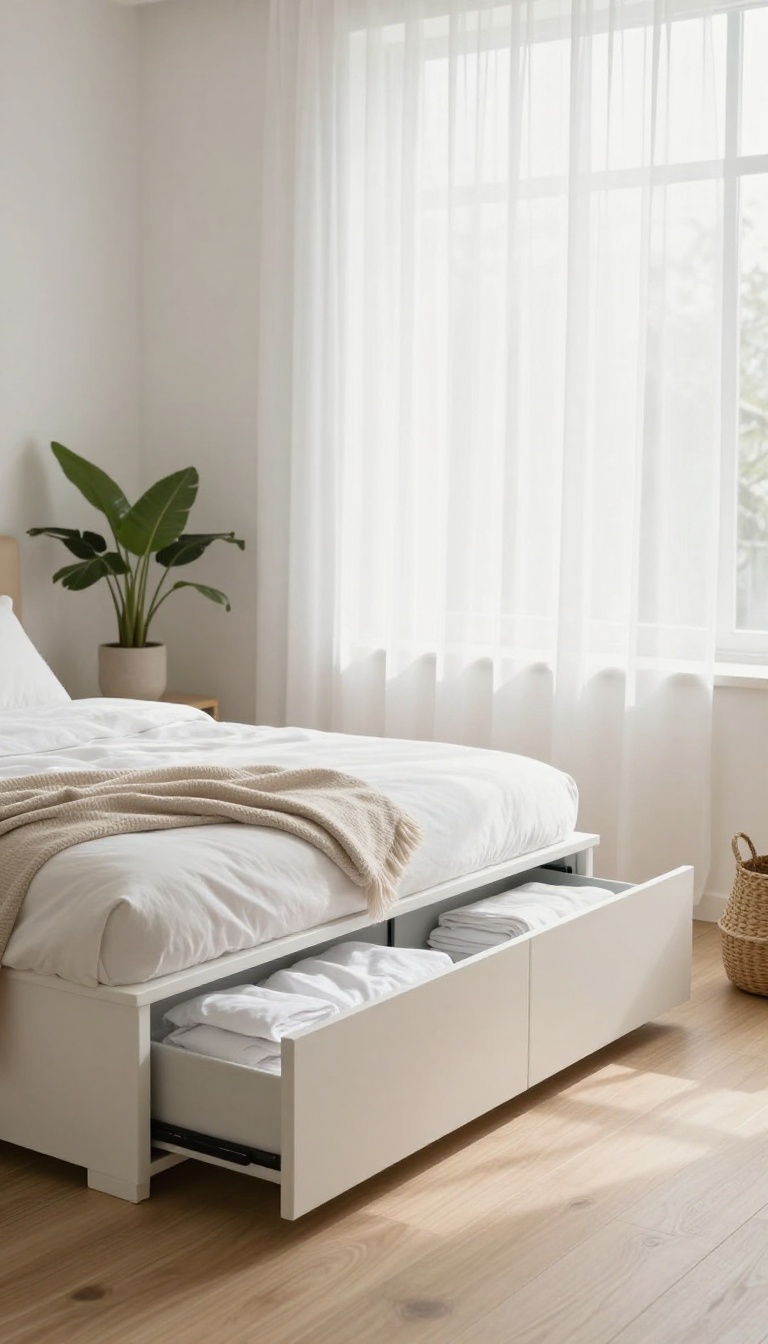
Your bed takes up more floor space than anything else in the room. So why let all that square footage go to waste? A bed with built-in drawers or a lift-up mattress base turns that dead zone into a hidden storage powerhouse.
You get a whole closet's worth of space without adding a single piece of furniture. Off-season clothes, extra bedding, luggage—all of it disappears under the mattress. The room stays visually calm because the clutter is out of sight.
When you're short on square footage, every inch counts. The area under your bed is prime real estate, but most people just let dust bunnies claim it. Switching to a storage bed changes that equation fast.
You have two main styles to choose from: drawers that pull out from the side or foot of the bed, and a lift-up base where the entire mattress platform hinges upward. Both give you easy access to a surprising amount of room. The best choice depends on how your bed sits in the room and what you need to stash.
Drawer Beds: Easy Access, No Heavy Lifting
Drawer beds work like a dresser built into your bed frame. You pull a handle, and a deep drawer slides out with clothes, shoes, or books. They're perfect for daily items you need to grab quickly.
Just make sure you have clearance to open the drawers. If your bed is wedged between two walls, only the foot-end drawers will be usable. Measure your space before you buy.
Lift-up Beds: Maximum Volume, Minimal Effort
A lift-up bed uses gas struts to raise the mattress and platform, revealing a cavernous storage area underneath. You can fit suitcases, winter coats, and bulky bedding in one go. The mechanism does the heavy lifting for you.
These beds are ideal if you need to store things you don't use every day. Just double-check the weight limit and make sure the struts are strong enough for your mattress.
What To Store (and What To Avoid)
Under-bed storage is best for items you don't need often: off-season clothes, extra pillows, holiday decorations, and empty luggage. Use vacuum-sealed bags or shallow bins to keep everything organized and dust-free. Avoid storing anything that needs airflow or is sensitive to humidity, like electronics or important documents.
Also, skip heavy items in drawer beds if the drawers feel flimsy—you don't want to warp the tracks.
9. Swap a Bulky Dresser for a Tall, Narrow Chest
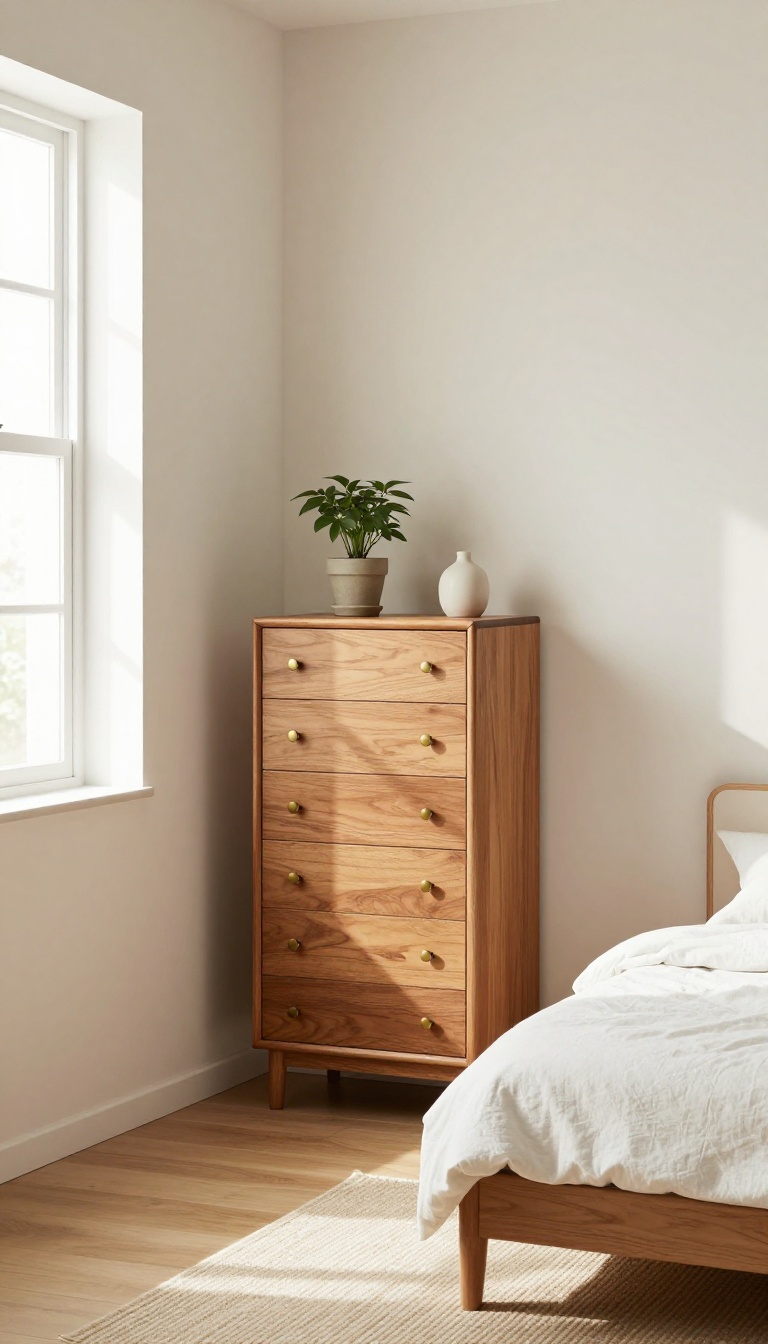
A wide dresser feels like a reasonable choice until you try to walk past it in a room that is barely wider than your bed. Suddenly, every trip to the window means turning sideways. A tall, narrow chest flips that problem on its head.
It uses vertical space instead of floor space, so you keep the storage without sacrificing your ability to move.
The math here is simple. A standard six-drawer dresser can run 60 inches wide and 18 inches deep, which eats up a serious chunk of a small room. A tall chest with the same drawer count might only be 24 to 30 inches wide.
That difference is often the exact amount of floor you need to open a closet door, pull out a desk chair, or just stand up without banging your knee. You are not losing storage capacity either. Tall chests stack drawers from floor to eye level, so the total cubic feet of space can be nearly identical.
You just rearrange it upward. The trade-off is that you might need a small step stool for the top drawer, but that is a minor inconvenience compared to a room that feels like a hallway. Placement matters more than the piece itself.
Tuck a tall chest into a corner where two walls meet, or slide it against a narrow strip of wall between the door and the bed. Because it is deep but not wide, it often fits in spots where a dresser would block traffic entirely. Just make sure you leave enough clearance to open the drawers fully.
If you are shopping, look for chests that are at least 40 inches tall and no wider than 30 inches. Five to seven drawers is the sweet spot for a single person or a couple in a tiny room. Avoid anything with a deep top drawer that forces you to reach awkwardly.
Smooth-glide drawers and a sturdy frame matter more than fancy details when space is tight.
Why Width Matters More Than Depth
In a tiny bedroom, the enemy is not depth. It is width. A deep piece can sit against a wall and barely intrude on your walking path.
A wide piece juts out into the room and creates a bottleneck. A tall chest is usually deeper than it is wide, which means it hugs the wall and leaves the center of the room open. Think of it like a bookshelf.
You would never put a wide, low bookshelf in a narrow hallway, but a tall skinny one works fine. The same logic applies to bedroom storage. You want furniture that grows up, not out.
Where To Put It So It Disappears
The best spot for a tall chest is often the one you have been ignoring. That sliver of wall behind the door? Perfect.
The corner next to the head of the bed? Also great. You can even place it at the foot of the bed if you leave at least 24 inches of walking space.
Measure twice before you buy. Use painter's tape to mark the footprint on your floor. Then walk around it for a day.
If you can open your closet, dress, and leave the room without cursing, you have found the right spot.
What To Look For In A Small-space Chest
Not all tall chests are created equal. Some are wobbly, some have drawers that stick, and some are so deep you cannot reach the back. Look for a chest that is at least 40 inches tall but no more than 30 inches wide.
Five to seven drawers will hold a surprising amount of clothes. Check the drawer glides. Metal glides last longer than plastic ones.
Also, consider a chest with a mix of drawer sizes. A shallow top drawer is great for socks and underwear, while deeper lower drawers handle jeans and sweaters. If you can, buy in person so you can test the feel.
10. Use Mirrors and Light Colors to Bounce Light Around
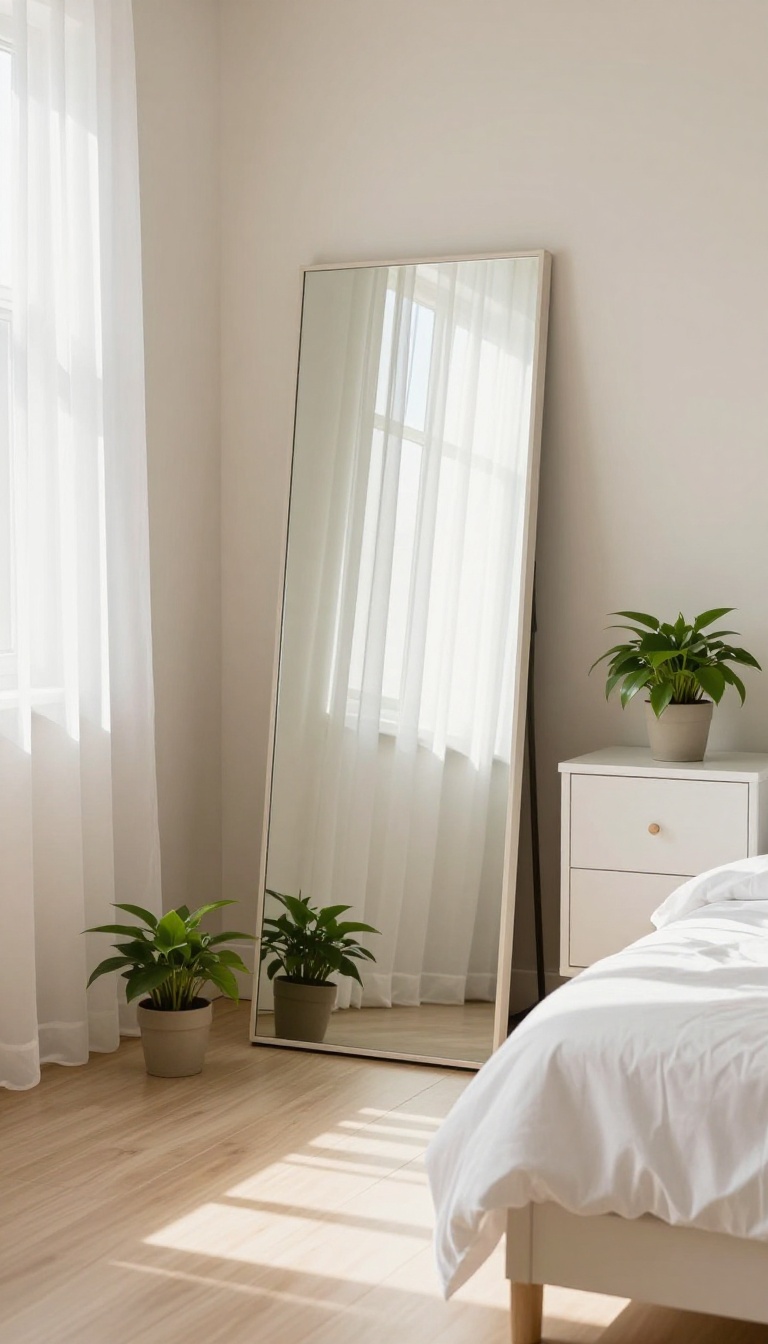
A tiny bedroom can feel twice as big with one well-placed mirror and a lighter color palette. The trick is to bounce natural light around the room instead of letting it die in a dark corner. You are not just decorating; you are redirecting the light you already have.
Mirrors are not just for checking your outfit. In a small bedroom, they act like a second window. Place a large mirror directly across from your main light source, usually a window, and it will reflect daylight back into the room.
That reflection makes the space feel deeper and brighter without adding a single square foot.
Pick The Right Mirror Size And Spot
A mirror that is too small will just look like a decoration. Go big, at least two-thirds the width of your bed, and hang it opposite the window. If you cannot hang it, lean a full-length mirror against the wall and secure it.
The goal is to catch light and throw it across the room.
Choose Light Colors That Reflect, Not Absorb
Dark walls and heavy bedding soak up light. Swap them for whites, soft grays, pale blues, or warm creams. These colors bounce light around and make the room feel open.
Keep your bedding in the same light family so the whole space reads as one airy unit.
Use Sheers And Glossy Finishes
Heavy curtains block the light you need. Switch to sheer curtains that let daylight filter through. And when you pick furniture or picture frames, go for glossy or satin finishes.
They reflect light in small sparkles that add up to a brighter room.
FAQ
What is the best layout for a very tiny bedroom?
Push the bed into a corner or against the longest wall, then use vertical storage above and beside it. Keep a clear path to the door and window so the room does not feel blocked.
How can I add storage without making the room feel smaller?
Choose storage that goes up, not out. Wall shelves, over-door organizers, and under-bed drawers add space without taking up floor area.
Do mirrors really make a small bedroom look bigger?
Yes, when placed opposite a light source. A mirror reflects daylight and creates the illusion of depth, which makes the room feel larger and brighter.
What furniture should I avoid in a tiny bedroom?
Skip oversized headboards, wide dressers, and bulky nightstands. Look for slim, multifunctional pieces that serve more than one purpose.
How do I keep a tiny bedroom from feeling cluttered?
Use closed storage for everyday items and keep surfaces mostly clear. A few well-placed baskets and hooks go a long way toward keeping things tidy.
Conclusion
Tiny bedrooms rarely get fixed by one big move. They get fixed by a few small ones stacked together, like a bed that finally leaves the floor open or a shelf that swallows the clutter you keep tripping over. Pick the ideas that match your actual room, not the ones that look best in photos.
Start with whatever annoys you most each night, whether that is zero floor space, a dark corner, or nowhere to set your phone. Try it for a week, then layer in the next fix.