13 Small Spare Bedroom Ideas That Make Every Inch Count
A spare bedroom has a way of becoming the junk drawer of the house. Boxes pile up, the ironing board moves in, and suddenly the room has no real job. That changes fast once every piece of furniture earns its footprint.
The trick is not squeezing in more stuff. It is choosing pieces that pull double duty, like a bed that folds into the wall or a desk that tucks away when guests arrive. Vertical space does a lot of quiet lifting too.
Below are 13 small spare bedroom ideas that make every inch count. Some take an afternoon, others a weekend, and you can mix and match without gutting the room.
1. Choose a Murphy Bed That Disappears
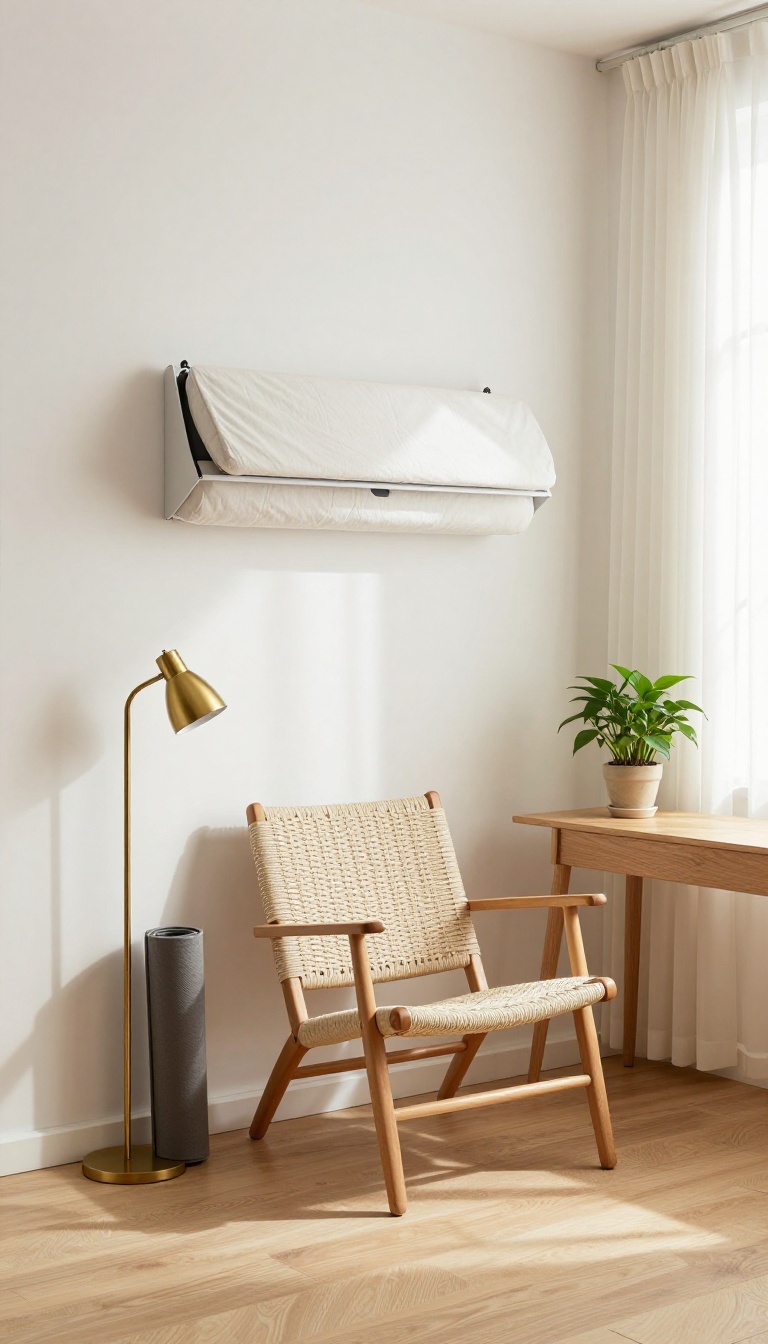
A Murphy bed is the original space-saving trick, and it still works better than almost anything else. The whole point is simple: the bed exists when you need it and vanishes when you don't. That single move can turn a cramped spare room into a real, usable space.
When the bed folds up, you get your floor back. That means room for a reading chair, a yoga mat, or a proper desk. Guests still get a real mattress, not a lumpy sofa.
The key is picking a mechanism you can actually operate without a wrestling match. Modern wall beds use piston lifts or spring systems that glide up with one hand. Look for one with a locking position so it stays put when open.
And don't forget the mattress—most Murphy beds need a specific thickness, usually 8 to 12 inches. A memory foam or latex mattress works well because it bends without breaking down. Installation can be DIY if you're handy, but a pro ensures it's anchored safely.
Once it's up, the room instantly reads as a den, office, or hobby space. That flexibility is why this idea tops the list.
Pick The Right Mechanism
Manual spring lifts are affordable and reliable. Piston systems feel smoother but cost more. If you'll open it daily, spend up on a quality mechanism.
Cheap ones wear out and get heavy fast.
Mattress Matters
A thick pillow-top won't fold properly. Stick to a mattress that's 8 to 10 inches thick and flexible. Memory foam is a safe bet.
Check the bed's spec sheet before you buy.
Install It Right
Murphy beds must anchor into studs or a solid wall. If you're not confident, hire a pro. A wobbly bed is dangerous.
Also, leave clearance for the bed to swing down—usually about 7 feet.
2. Go Vertical with Wall Shelves
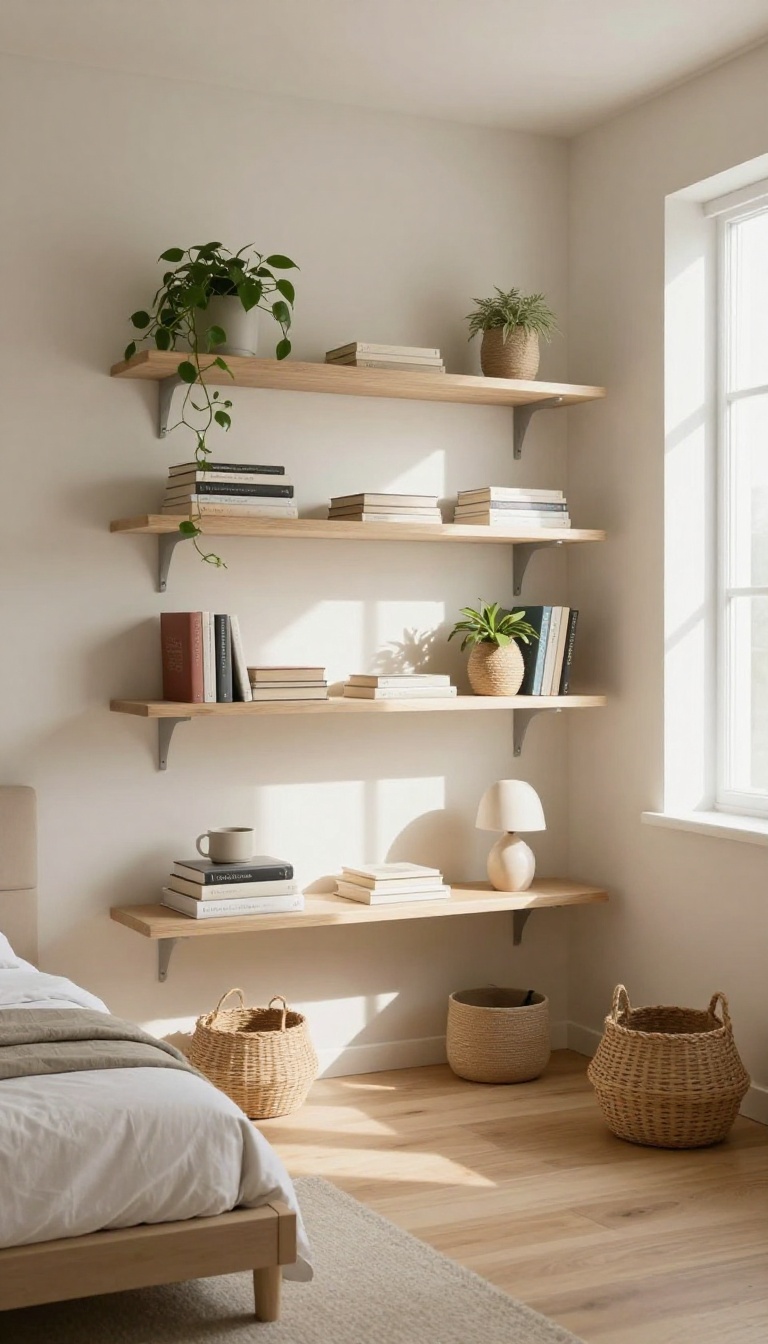
Floor space disappears fast in a small spare bedroom, but your walls are sitting there doing nothing. Wall shelves let you store books, decor, and everyday essentials without stealing an inch from the floor. Stack them from baseboard to ceiling and the room instantly feels taller and more open.
The trick is to think of your wall as a blank canvas, not just a backdrop. Floating shelves keep things light and airy, while a tall bookcase adds serious storage and a bit of architectural interest. Either way, you're using height that most people ignore.
When you arrange shelves from floor to ceiling, your eye travels upward. That vertical pull makes a low ceiling feel higher and a narrow room feel less cramped. It's a simple optical trick that costs nothing extra.
Floating Vs. Bookcase
Floating shelves look clean and modern, and they don't block sightlines. They're perfect for displaying a few books, a plant, and a small lamp. A tall bookcase holds more, but choose a shallow depth so it doesn't jut into the room.
Both options keep the floor clear for a bed, desk, or chair.
Stagger For Style
Don't line up every shelf like a ladder. Stagger them at different heights and widths to create a custom look. Mix horizontal and vertical placements to break up the wall and add visual interest.
This also lets you work around outlets, light switches, and awkward corners.
Style Without Clutter
A shelf crammed with stuff looks messy and defeats the purpose. Group items in odd numbers, vary heights, and leave some empty space. Use baskets or bins to hide small clutter, and keep the top shelf sparse so the room feels open.
Rotate decor seasonally to keep it fresh.
3. Pick a Daybed with Built-in Storage
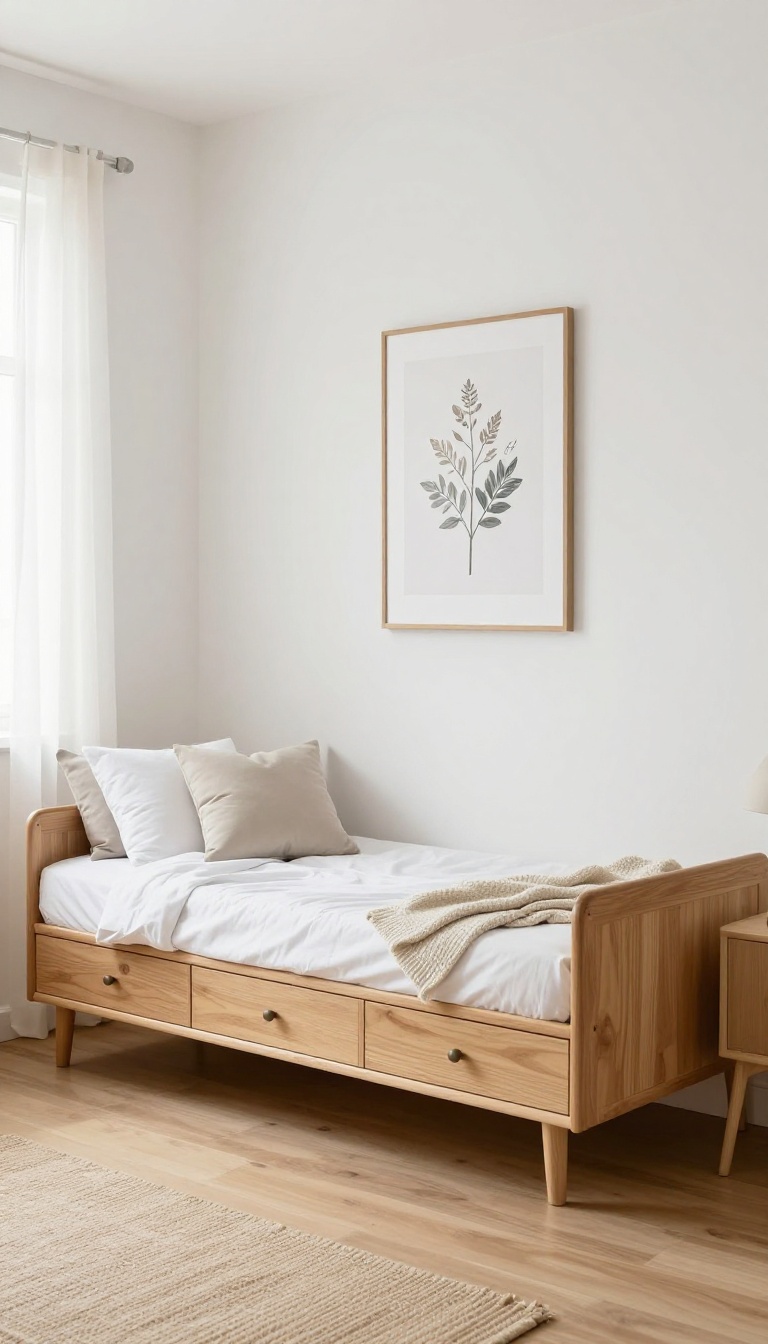
A daybed with drawers underneath pulls off a neat trick. It looks like a sofa during the day, then turns into a bed when someone stays over. For a small spare room, that kind of flexibility keeps the space from feeling like a dead zone.
The storage part is what makes it a real workhorse. You get three or four deep drawers right under the mattress, which is prime real estate you'd otherwise waste. Blankets, extra pillows, off-season clothes, even board games can disappear into those drawers.
The room stays tidy because there's no pile of stuff sitting in the corner. Daybeds come in a few styles, so you can match the room's vibe without much effort. A metal frame with pull-out trundle works for a casual guest room.
A wooden daybed with paneled drawers feels a bit more polished. Either way, you're getting two functions from one footprint. Just measure your space before you buy.
Daybeds are usually twin-sized, so they fit where a full bed won't. Leave enough room to open the drawers fully, and you're set.
Why It Beats A Regular Bed
A standard bed takes up the same floor space whether anyone's using it or not. A daybed earns its keep all day long because it doubles as seating. That means you can read, work on a laptop, or chat with a guest without perching on the edge of a mattress.
Drawer Details That Matter
Look for drawers that slide smoothly and feel sturdy. Particleboard bottoms can sag over time, so solid wood or metal glides are worth the upgrade. Also check the drawer depth—deeper drawers hold bulky items like comforters, while shallow ones work for shoes and books.
Styling It So It Doesn't Look Like A Bed
Treat the daybed like a sofa. Add a couple of throw pillows against the back, drape a soft blanket over one side, and keep the bedding simple. A fitted coverlet in a neutral color helps it read as seating, not sleepover central.
4. Use a Fold-Down Desk for Work and Hobbies
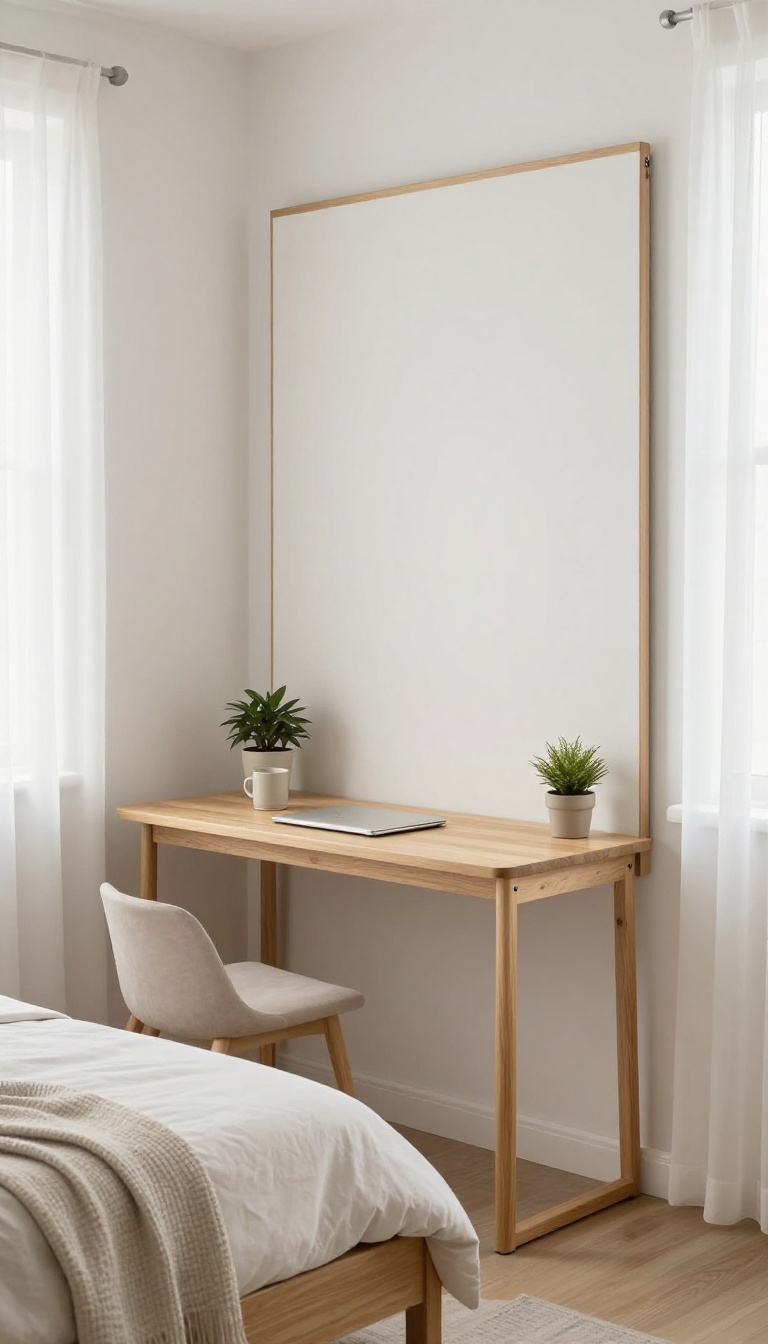
A fold-down desk mounts to the wall and swings or flips out only when you need it. The rest of the time it lies flat against the wall, leaving the floor completely open. That makes it a smart pick for a spare room that has to pull double duty as an office and a guest space.
You get a real work surface for laptops, sewing machines, or art projects without committing permanent square footage. When friends stay over, the desk disappears and the room feels like a bedroom again. It is one of the few pieces of furniture that truly earns its keep by getting out of the way.
How To Mount It Right
Find the studs before you drill. A fold-down desk carries real weight when it is open, so it needs to bite into solid wood, not just drywall. Use a stud finder and mark your bracket holes with a pencil.
If your studs are spaced awkwardly, a French cleat or a wide mounting board can bridge the gap. Most kits include hardware, but swapping in heavier screws is cheap insurance. Level the desk before you tighten everything down, or your coffee mug will slide all day.
Pick The Right Size And Style
Measure the wall space between your bed and the closet, then subtract a few inches on each side. A 30- to 36-inch wide desk fits most laptops and a notebook. Go wider only if you truly need room for a monitor plus a sewing machine.
Ladder-style desks with fold-out legs look light and airy. Box-style desks with a flip-down front hide your keyboard and papers inside when closed. Choose a finish that matches your trim or bed frame so it reads as built-in, not bolted on.
Make It Comfortable For Real Work
A fold-down desk is only as good as the chair you pair with it. A simple folding chair tucks into the closet when guests arrive. If you work for hours, though, a proper task chair with a slim profile is worth the floor space.
Add a clip-on lamp or a wall sconce above the desk so you are not working in your own shadow. A small floating shelf a few inches higher holds pens, chargers, and a plant. Keep the shelf shallow so it does not crowd the desk when it is folded up.
Keep It Clutter-free
The whole point is that the desk vanishes, so do not let it become a permanent dumping ground. Use a small basket or drawer insert for loose items, and clear the surface before you fold it down each day. If you share the room with guests, leave a note or a small tray for their phone and glasses.
A clean fold-down desk signals that the room is ready for whatever comes next. That tiny ritual keeps the space flexible and calm.
5. Hang Curtains High and Wide
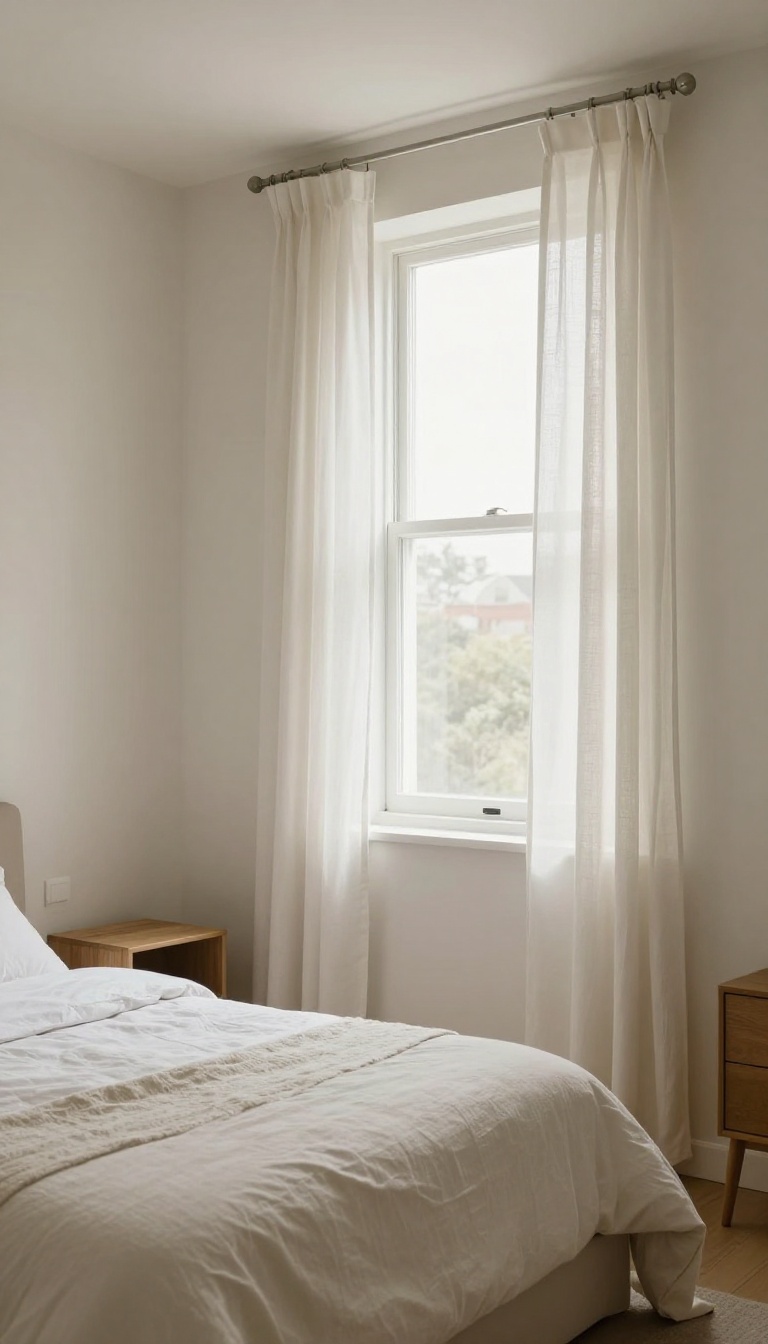
Curtains are one of those things most people install on autopilot. You buy a rod, screw it into the trim above the window, and call it done. That habit quietly shrinks a small room.
Move the rod up near the ceiling and push it out past the window frame on both sides. The window suddenly reads bigger, and the wall above it stops looking chopped off. It is a ten-minute change with a payoff that feels almost unfair.
The reason this works comes down to how your eye reads a room. A curtain hung tight to the window frames the opening as a small rectangle. A curtain hung high and wide frames the whole wall as the window, and your brain fills in the extra height and width.
In a spare bedroom, that matters because you rarely have room for big architectural moves. You cannot vault the ceiling or knock out a wall. But you can absolutely fake a taller, wider window, and the room will feel less cramped the second you walk in.
There is a practical bonus too. Curtains that run floor to ceiling and wall to wall cover more of the wall, which hides awkward trim, mismatched paint, or a radiator you would rather not look at.
How High Is High Enough
Aim for the rod to sit two to four inches below the ceiling, or right at the ceiling line if your trim allows it. Any higher and you risk crowding the ceiling; any lower and you lose the effect. If you have crown molding, mount the brackets just under it so the rod reads as part of the architecture.
In a room with low ceilings, going all the way to the ceiling is almost always the better call.
How Far Past The Frame
Extend the rod six to ten inches beyond each side of the window frame. That extra width lets the curtains stack clear of the glass when they are open, so you get maximum light during the day. On a narrow wall, you can push it even wider, sometimes nearly to the corners.
Just leave enough room for the finials and brackets to sit comfortably.
Pick The Right Curtain Length
Floor-length curtains do the most for a small room. A hem that just kisses the floor, or breaks by half an inch, keeps the line clean and vertical. Skip the sill-length look here.
Short curtains cut the wall in half and undo the height you just created. If you are worried about a bed or nightstand crowding the hem, choose a slightly fuller panel instead of a shorter one.
Rod And Fabric Details That Help
A simple metal or wood rod with small finials keeps the focus on the window, not the hardware. Bulkier decorative rods can eat into the openness you are trying to create. For fabric, go with something that hangs in soft, straight folds.
Lightweight linen blends and medium-weight cottons drape well without looking stiff. A subtle pattern or a tone close to your wall color will make the room feel larger than a high-contrast print will.
6. Opt for a Light, Airy Color Palette
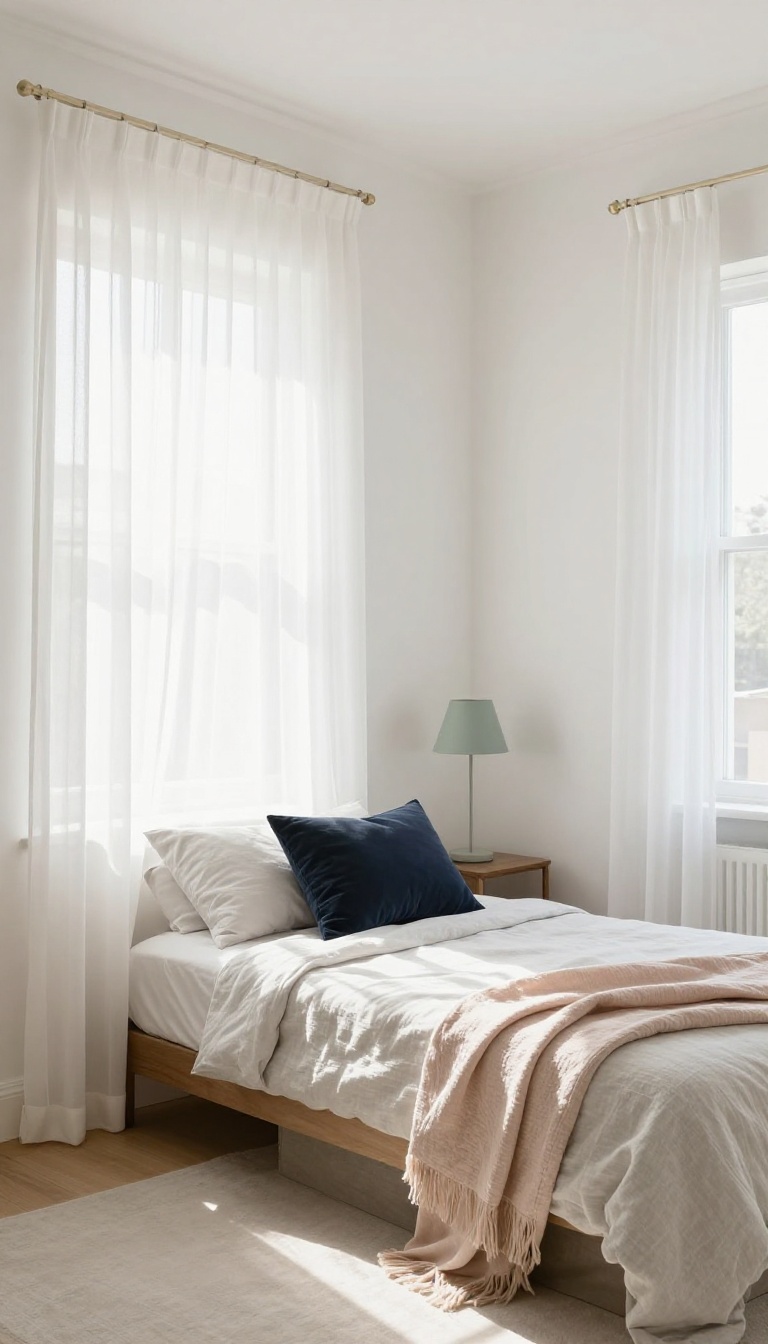
Paint is the cheapest square footage you'll ever gain. In a small spare bedroom, a light, airy palette does more than look pretty—it bounces daylight around the room and tricks the eye into seeing more space. Soft neutrals and pastels on walls and bedding reflect light instead of swallowing it, so even a north-facing box feels brighter.
You don't need to go all-white, though. A few darker accents keep the room from feeling like a hospital ward.
The goal is simple: make the walls recede and the light do the heavy lifting. Start with the biggest surfaces—walls, ceiling, and large bedding—in shades that reflect light rather than absorb it. Then add contrast in small doses where it counts, like a dark wood nightstand or a deep-toned throw pillow.
That balance keeps the room feeling open without turning it into a bland white cube.
Pick The Right Light Neutrals
Not all neutrals are equal. Warm whites, soft greiges, and pale taupes tend to feel cozy without going yellow, while cool grays can turn chilly in a room with little natural light. Test a few swatches on the wall and check them at different times of day.
The one that stays bright at noon and still looks soft at night is your winner.
Use Pastels As Your Accent
Pastels work like a gentle dose of color that never overwhelms. A pale blue ceiling, blush curtains, or sage green bedding adds personality while keeping the room feeling light. Stick to one or two pastel shades and repeat them in small ways—a lampshade, a framed print, a folded blanket.
That repetition makes the palette feel intentional instead of random.
Add Contrast In Small Doses
An all-light room can start to feel flat. Bring in darker tones through low-commitment pieces: a charcoal reading lamp, a black metal bed frame, or a navy lumbar pillow. Keep those dark accents under about ten percent of the room's visible surface.
That's enough to anchor the space without shrinking it.
Coordinate Bedding And Walls
If your walls are soft white, choose bedding in a slightly deeper tone of the same family—cream, oatmeal, or pale sand. That subtle contrast adds depth without visual noise. A lightweight duvet in a light color also keeps the bed from looking like a heavy block in the middle of the room.
7. Add a Mirror to Double the Light
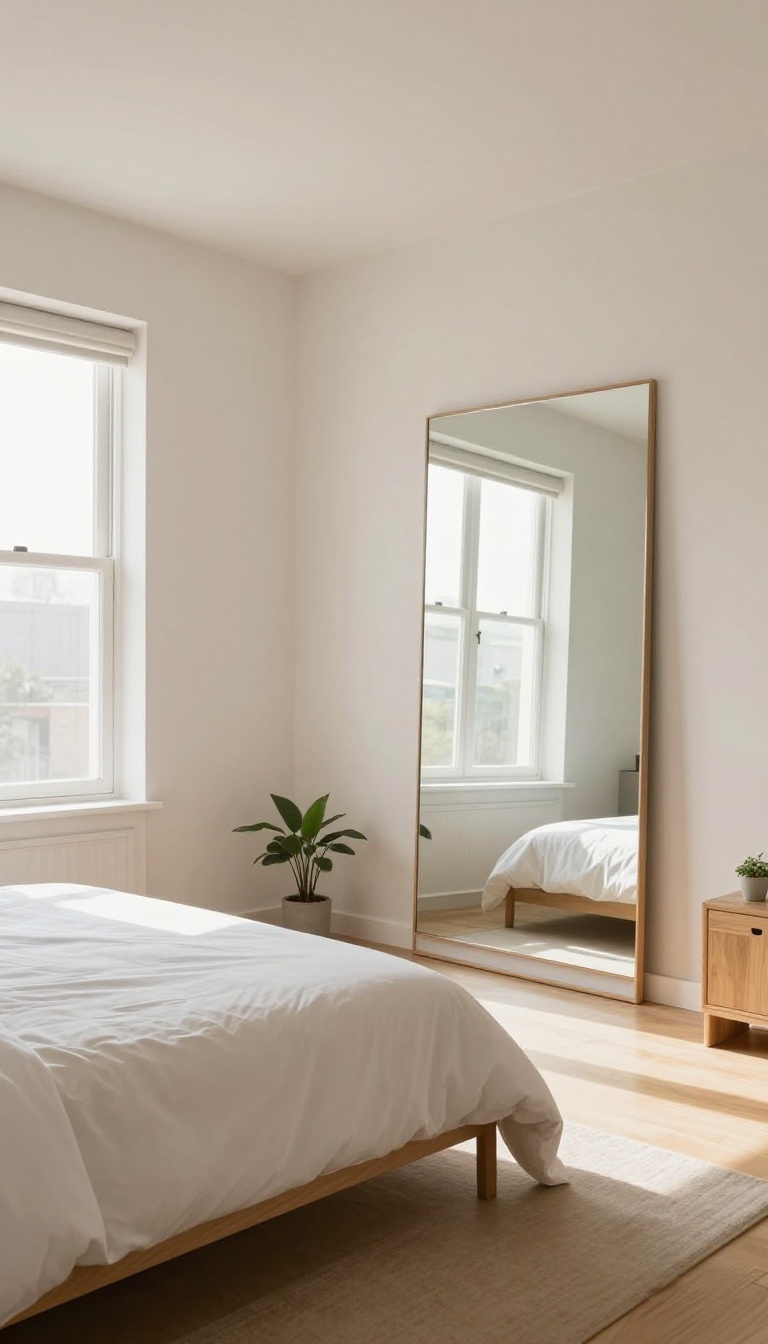
Mirrors are the quiet workhorses of small rooms. They don't take up floor space, they don't need to be plugged in, and they can make a cramped spare bedroom feel twice as open without moving a single wall. The trick is placement.
Put a mirror in the wrong spot and it just reflects a blank wall. Put it in the right spot and it bounces daylight all over the room, brightening corners that never see the sun.
The best spot for a mirror is directly across from a window. That way, natural light hits the glass, bounces back into the room, and spreads across the ceiling and walls. Suddenly the room feels bigger and warmer, even on a gray day.
You don't need a fancy framed mirror, either. A simple full-length mirror leaning against the wall or a large rectangular one mounted opposite the window will do the job. Just make sure it's big enough to catch a good chunk of the light.
If you can't put it opposite a window, aim for a spot where it reflects something interesting, like a piece of art or a plant. That adds depth and makes the room feel less like a box.
Pick The Right Size
A tiny mirror won't do much for a small room. Go as large as the wall allows without overwhelming the space. A mirror that's at least two-thirds the width of the wall it's on tends to work well.
If you're leaning it, make sure it's tall enough to reflect the window and some of the ceiling. That's where the light-bouncing magic happens.
Lean, Mount, Or Hang
Leaning a mirror is the easiest option and looks relaxed. Just secure it to the wall with a safety strap so it doesn't tip. Mounting it flush works if you want a cleaner look, and hanging it like a piece of art gives you more flexibility with height.
Whichever you choose, keep the center of the mirror around eye level so it reflects the most light.
Keep It Clean And Clear
A dusty mirror loses its shine fast. Wipe it down with a microfiber cloth and glass cleaner once a week. Also, avoid placing it where it reflects clutter.
If it's showing a pile of laundry or a messy desk, it'll make the room feel more chaotic, not less. Point it toward something calm and bright instead.
8. Choose Multi-Functional Furniture
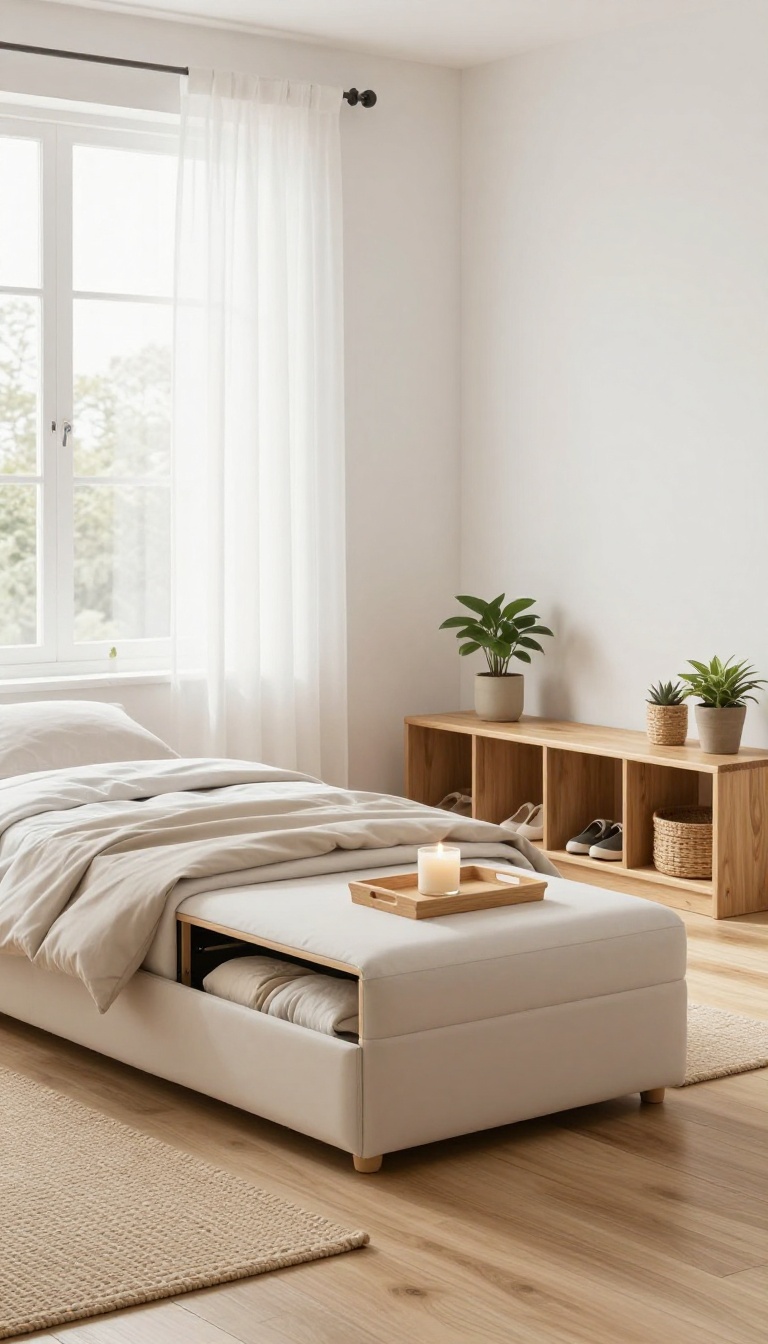
Every piece you bring into a small spare bedroom should justify its footprint. The easiest way to do that is to pick furniture that handles two jobs at once. An ottoman that opens for storage or a bench with shoe compartments keeps the room flexible and cuts down on clutter.
Multi-functional furniture is the quiet hero of small spaces. It lets you store things without adding another cabinet, and it keeps the room ready for guests, hobbies, or work. The trick is to look for pieces that pull double duty without looking like they belong in a dorm room.
When you shop, think about what the room actually does. If it doubles as an office, a desk with drawers saves you from buying a separate filing cabinet. If it is mostly a guest room, a bed with built-in storage means you can skip the dresser.
Every dual-purpose piece frees up floor space and makes the room feel less crowded. You do not need to spend a fortune. Plenty of affordable options exist, from storage ottomans to nesting tables.
The goal is to make each item earn its spot, so the room stays useful instead of becoming a catch-all.
Storage Ottomans That Pull Their Weight
An ottoman that lifts open gives you a spot to sit and a place to stash extra blankets or pillows. Look for one with a sturdy lid and a washable cover. It works as a footrest, a side table with a tray on top, or a quick seat when friends drop by.
Benches With Built-in Bins
A bench with shoe compartments or cubbies is perfect for a spare room that also serves as an entryway or mudroom. You can sit to tie your shoes and keep clutter off the floor. Choose one with a cushioned top for comfort and open bins for easy access.
Desks That Double As Vanities
A slim desk with a flip-up mirror or a pull-out drawer can work as a workspace during the day and a vanity at night. Look for models with cable management and a shallow depth so they do not eat up walking space. This keeps the room functional without a dedicated makeup table.
Beds With Hidden Drawers
A platform bed with drawers underneath is a classic small-room move. You get sleep space plus storage for off-season clothes or extra linens. Just make sure the drawers pull out easily and do not scrape the floor.
9. Use a Room Divider for Zoning
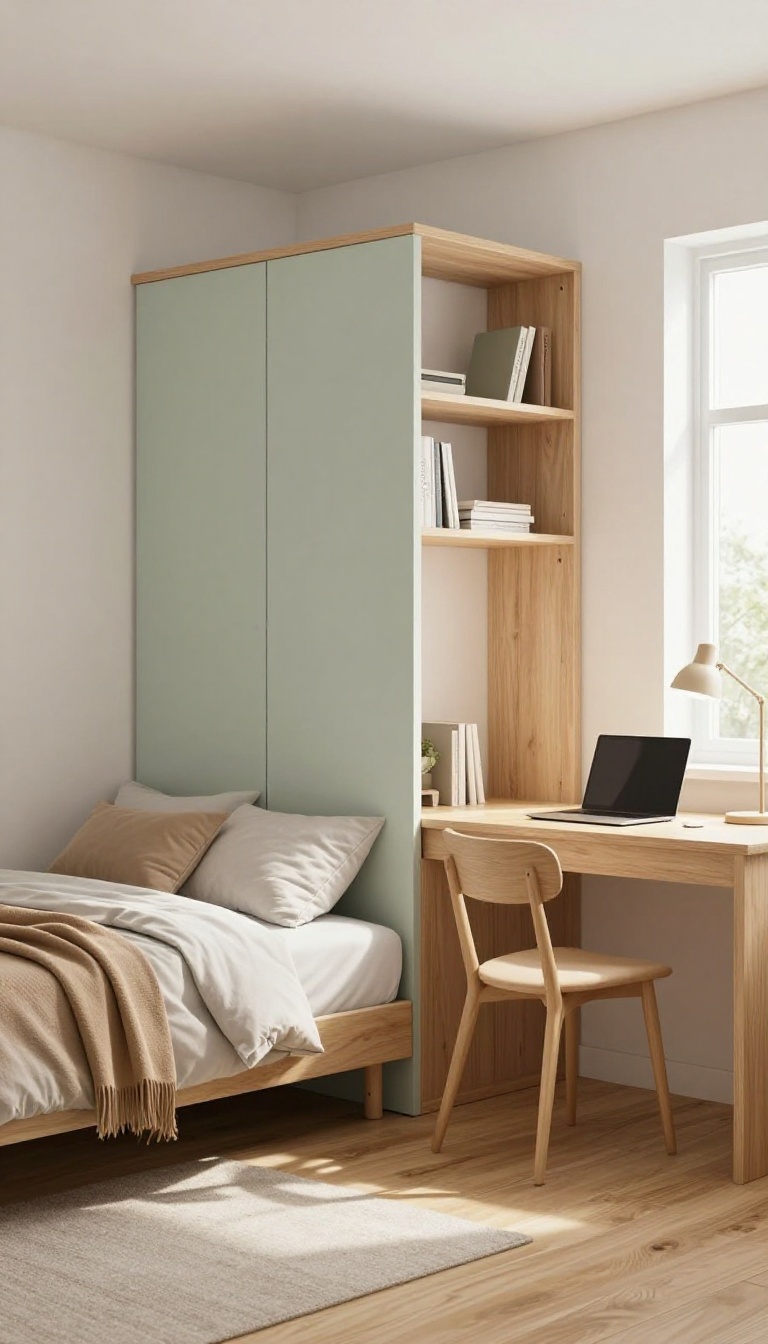
A spare bedroom often has to wear two hats: guest room and office, or craft room and storage zone. Without some kind of visual break, those roles blur together and the room feels chaotic. A room divider gives you a simple way to carve out separate areas without calling a contractor.
It also adds a layer of privacy when someone is sleeping on one side and you're typing away on the other.
You don't need a permanent wall to make a room feel divided. A folding screen or a slim shelving unit can do the job in minutes, and you can move it whenever your needs change. The key is picking a divider that matches your space and your daily routine.
Think about how you'll use each zone. If you work from home, you might want the desk tucked behind the divider so you're not staring at a bed all day. If guests visit often, the sleeping area should feel cozy and tucked away.
A divider helps both zones feel intentional instead of like one big catch-all room.
Folding Screens: Instant Flexibility
A three- or four-panel folding screen is the easiest option. It's lightweight, affordable, and you can fold it up when you need the full room. Choose a height that blocks the view of a bed or desk without making the space feel closed in.
Fabric screens soften sound a bit, while wooden or metal ones offer more structure.
Shelving Units As Dividers
An open shelving unit works double duty: it separates zones and gives you storage. Place it perpendicular to a wall to create a clear boundary. Keep the shelves styled neatly, since both sides will be visible.
Low units keep sightlines open, while tall ones add more privacy.
Placement Tips That Actually Work
Don't just drop a divider in the middle of the room. Line it up with a window edge or a change in flooring to make the split feel natural. Leave enough walking space on both sides so you're not squeezing past.
If the room is really tight, a ceiling-mounted track with a curtain can save floor space.
10. Install Under-Bed Storage Bins
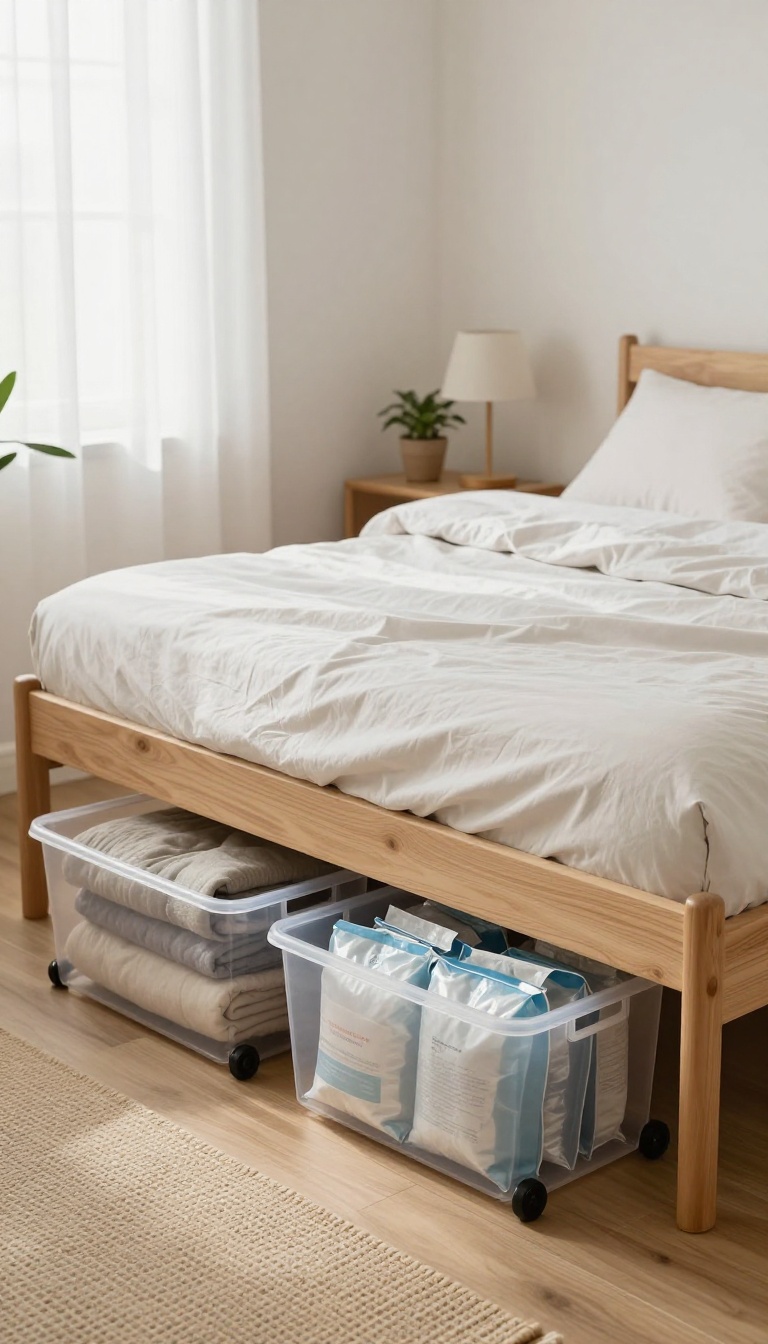
The space beneath a bed is often wasted, especially in a small spare room where every square foot counts. Rolling bins and vacuum-sealed bags slide right under, turning that dark gap into usable storage without adding a single piece of furniture. It's a simple upgrade that keeps clutter out of sight and off your floor.
Under-bed storage works because it uses volume you already have. You're not rearranging the room or buying a bigger dresser; you're just claiming the empty air below the mattress. That makes it one of the easiest wins in a small spare bedroom.
Pick The Right Containers
Rolling bins with wheels are the easiest to pull out, even on carpet. Look for low-profile options that fit your bed height, usually 6 to 9 inches. Clear plastic lets you see what's inside without opening every lid.
For soft items like off-season clothes or extra linens, vacuum-sealed bags flatten everything to a fraction of their size. Just don't overstuff them, or they won't slide under smoothly.
What To Store Down There
Think seasonal: winter coats, heavy blankets, or holiday decorations. Spare bedding and towels also work well if you keep them in labeled bins. Paperwork and tax documents can go in a flat, waterproof container.
Avoid anything you need weekly. Under-bed storage is for things you access a few times a year, not your everyday socks.
Keep It Organized And Accessible
Label each bin on the side that faces out, so you can read it without pulling everything out. If your bed has a skirt or frame, leave a little gap so bins don't get stuck. A quick vacuum or dusting every few months keeps the area from getting musty.
For beds without a frame, a simple bed riser can lift things up just enough to create clearance. That small tweak opens up a surprising amount of room.
11. Swap a Closet Door for a Curtain
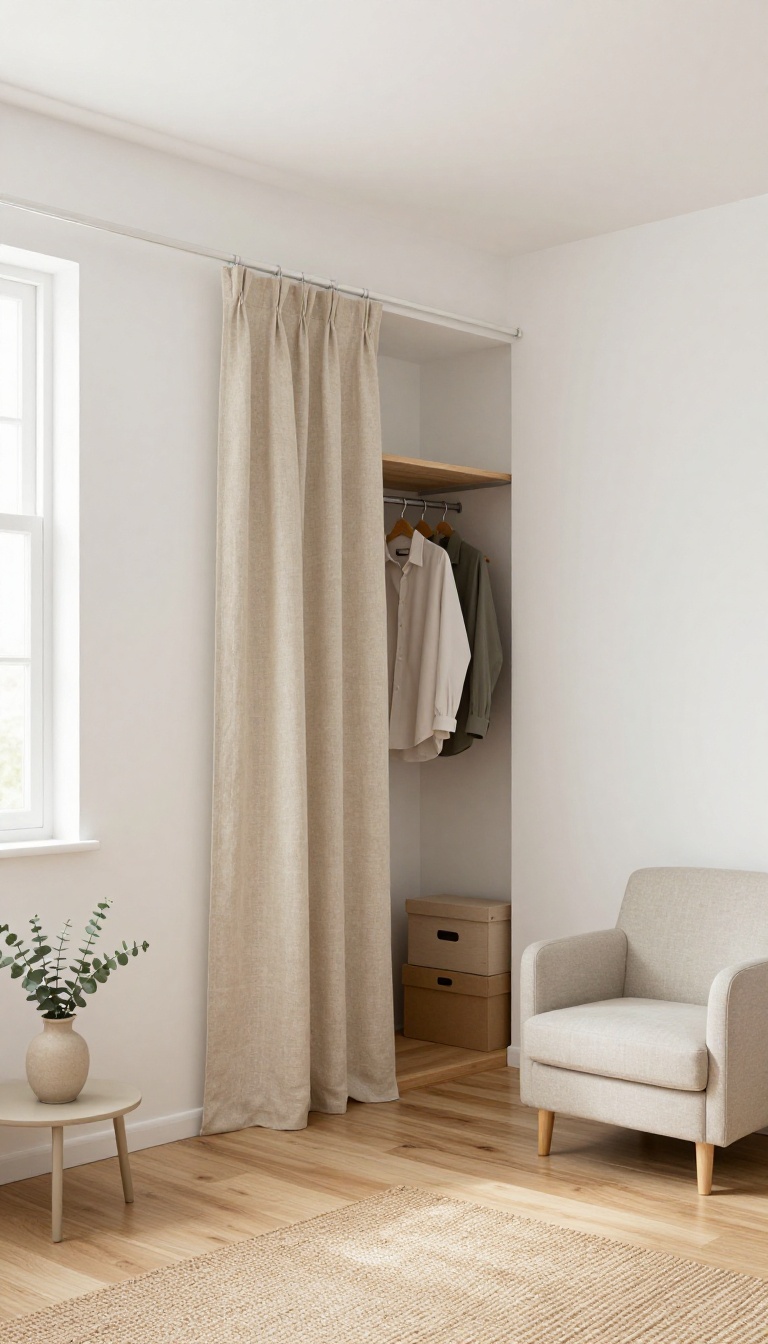
Closet doors are space hogs in a small spare bedroom. A swinging door needs a clear arc to open, and that arc eats floor space you could use for a chair, a luggage rack, or just breathing room. Swap the door for a fabric curtain and you reclaim that zone instantly.
It's a renter-friendly change that takes minutes and adds softness to a room that might feel boxy. The curtain also hides clutter without the bulk of a door, so the whole wall reads calmer.
A curtain slides along a track or rod, so it never blocks your path. That means you can place furniture closer to the closet without playing door Tetris. The fabric also absorbs sound and softens light, which helps a tiny room feel less like a storage closet.
And when you want to change the look, you just swap the curtain instead of repainting or rehanging a door. It's one of those tiny moves that changes how the whole room functions.
Pick The Right Rod Or Track
A ceiling-mounted track gives you the cleanest look and the smoothest glide. If you rent, a tension rod inside the frame works without drilling, but it can sag with heavy fabric. For a standard closet opening, a simple curtain rod with brackets is the easiest DIY route.
Just make sure the rod extends past the opening by a few inches on each side so the curtain can stack clear of the clothes.
Choose A Fabric That Holds Up
Light cotton and linen look nice but show wrinkles and let light through. A mid-weight canvas or a lined curtain blocks the mess inside and hangs straight. If you want to hide shelves and boxes, go with a darker color or a subtle pattern.
Avoid stiff fabrics that bunch up; you want something that folds softly when you push it aside.
Hang It High And Wide
Mount the rod close to the ceiling and wider than the opening. That draws the eye up and makes the closet feel like part of the wall, not a hole. Let the curtain puddle just slightly or hover an inch above the floor.
This trick makes the room feel taller and more intentional, even if the closet itself is a mess.
12. Add a Slim Console or Floating Nightstand
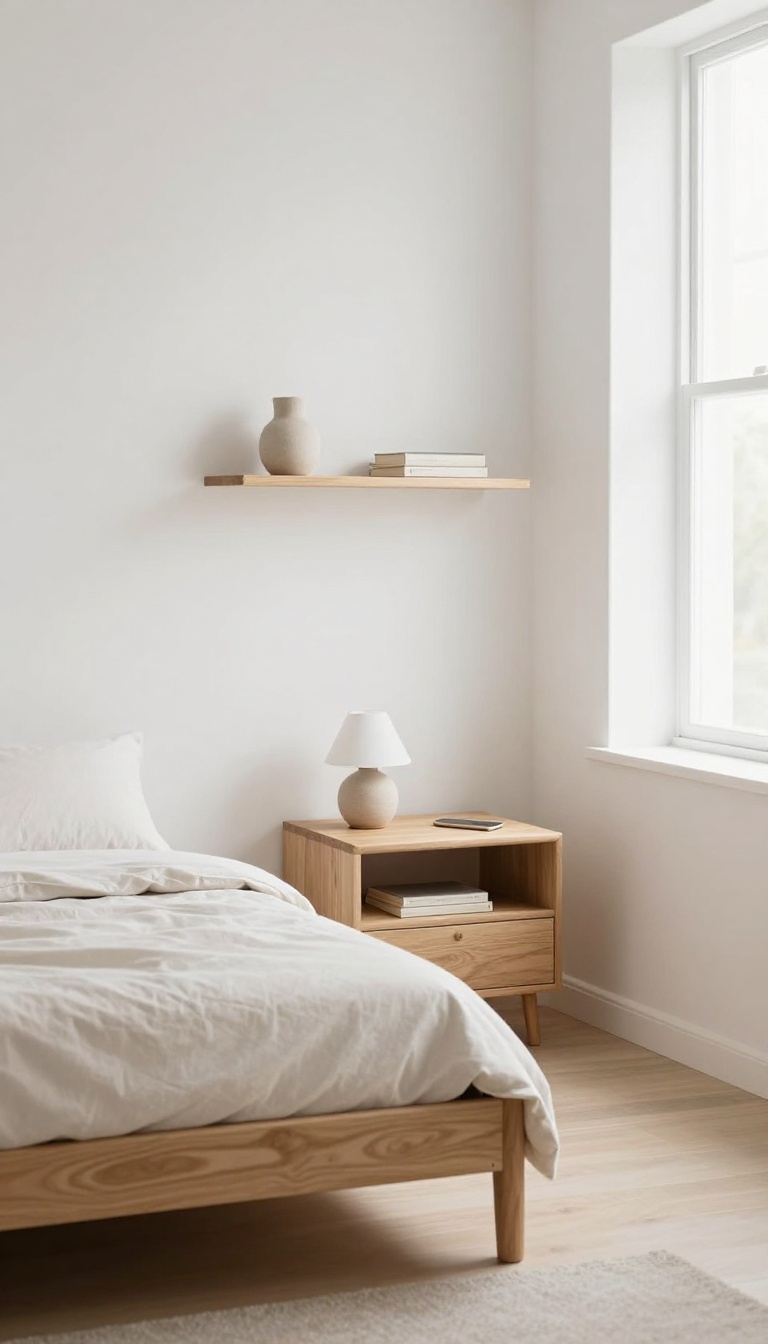
A full-size nightstand can swallow a foot of floor space in a small spare bedroom. Swap it for a slim console or a wall-mounted shelf, and you get the same bedtime surface without the bulk. It is one of the easiest upgrades because you only need a few inches of wall.
The goal is simple: hold a lamp, a book, and a phone, then get out of the way. A narrow console table, often just 12 to 14 inches deep, slides against the wall beside the bed. A floating nightstand does the same job while leaving the floor completely open.
Both options keep sightlines low and make the room feel less crowded. You do not need to match the bed perfectly. A simple wood shelf or a metal console can look intentional and modern.
Just make sure the top sits close to mattress height so reaching for a glass of water at night still feels natural.
Pick The Right Depth
Measure the space between the bed and the wall before you buy anything. A console that is 12 inches deep fits most tight spots, while 14 inches gives you a bit more room for a lamp base. If the gap is smaller than 10 inches, go with a floating shelf instead.
It mounts directly to the wall and takes up zero floor space.
Mount It At The Right Height
For a floating nightstand, aim for the top of the shelf to sit level with or just below the mattress. That puts your alarm clock, book, and phone within easy reach when you are lying down. Most people install them 24 to 26 inches from the floor, but check your own mattress height first.
A level that is too high feels awkward, and one that is too low is hard to use.
Keep The Surface Clear
A slim console or floating shelf only works if you treat it like a landing strip, not a storage unit. Add a small lamp, a single book, and a charging cable, then stop. If you need more storage, look for a console with a lower shelf or a slim drawer.
That gives you a spot for extra linens or a sleep mask without adding clutter on top.
13. Layer Lighting for Flexibility
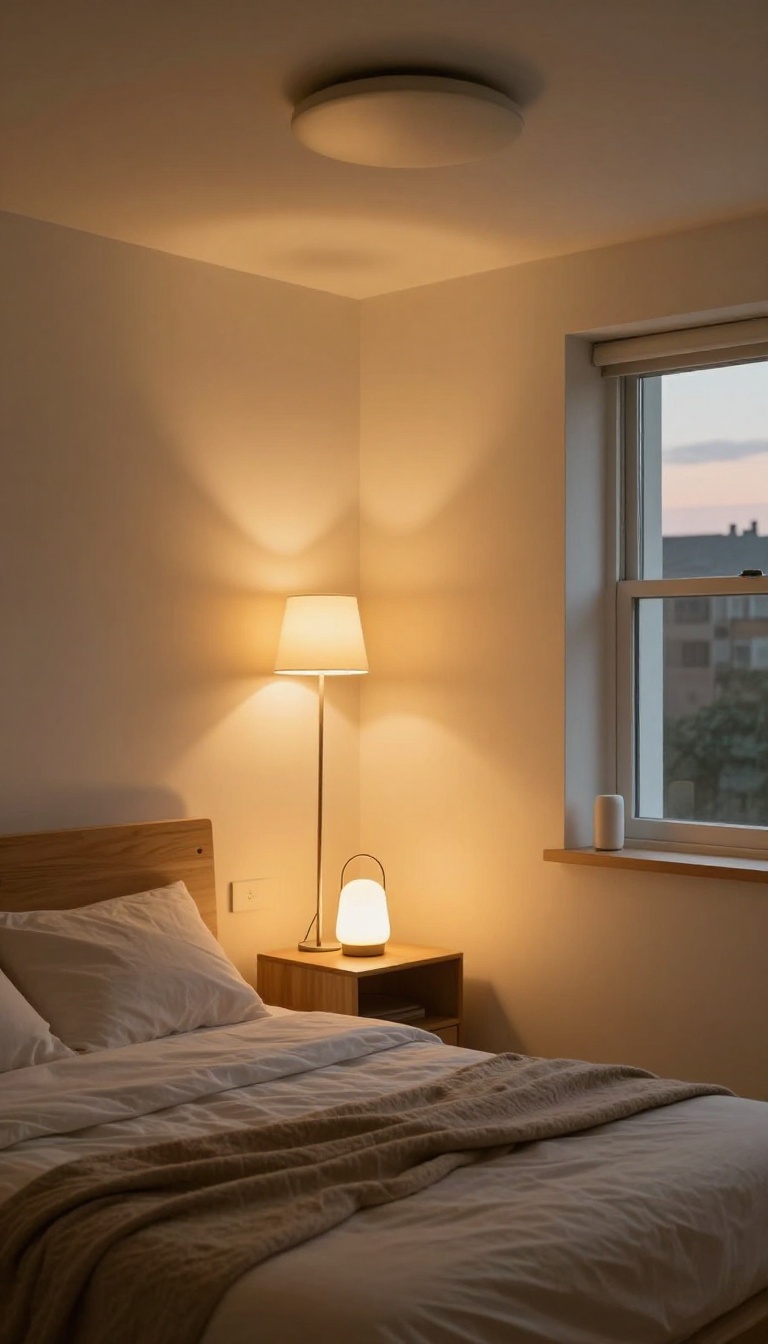
One ceiling light in a spare bedroom forces the room into a single mood. It's either harsh and bright or dim and gloomy, with nothing in between. Layering your lighting fixes that by giving you separate controls for overhead, task, and ambient glow.
You can flip between them depending on whether you're working, hosting a guest, or just passing through.
The goal isn't to install a fancy system. It's to have options. A small room with three light sources can feel like three different rooms, and none of them require an electrician if you choose plug-in fixtures.
Start With A Dimmable Overhead
Swap your existing bulb for a dimmable LED and add a dimmer switch if the wiring allows. If it doesn't, a smart bulb you control from your phone works just as well. That one change lets you go from bright cleaning light to soft evening glow without touching anything else.
Add Plug-in Sconces
Wall sconces free up nightstand space and cast light exactly where you need it. Plug-in versions run a cord down the wall, which you can hide with a simple cord cover. Mount one on each side of the bed for reading, or put a single sconce above a desk to light your work without glaring across the room.
Use A Small Floor Lamp For Ambient Light
A slim floor lamp tucked in a corner adds warmth without eating floor space. Look for one with a narrow base and a shade that directs light upward. Pair it with a smart plug so it comes on automatically at dusk, giving the room a lived-in feel even when no one's there.
Keep A Portable Task Light Handy
A rechargeable table lamp or clip-on book light can move wherever you need it. Use it on the desk for crafts, on the nightstand for late reading, or on a shelf for a soft accent. Since it's portable, it never becomes clutter, and it works during a power outage too.
FAQ
What's the best bed for a small spare bedroom?
A Murphy bed or daybed with storage is ideal because it frees up floor space when not in use. If you have room for a permanent bed, choose one with built-in drawers underneath.
How can I make a small spare bedroom feel bigger?
Use light colors, hang curtains high, add a large mirror, and keep clutter to a minimum. Vertical storage and multi-functional furniture also help maximize the sense of space.
Can I turn a small spare bedroom into a home office?
Yes, with a fold-down desk or a slim console table. You can also use a daybed that doubles as seating so the room still works for guests.
What are some budget-friendly small bedroom ideas?
Try under-bed storage bins, a curtain instead of a closet door, and plug-in wall sconces. These changes are inexpensive and renter-friendly.
How do I style a small spare bedroom without making it cluttered?
Stick to a cohesive color palette, choose furniture with clean lines, and use closed storage to hide everyday items. Keep surfaces clear and add just a few decorative accents.
Conclusion
You do not need to try all thirteen ideas in a small spare bedroom. Pick the one that fixes your biggest annoyance first, whether that is a bed that eats the whole floor or a corner that collects junk. Live with it for a week before adding anything else.
Start with the layout or storage move that makes the room easier to use, then layer in lighting, color, and decor once the basics work. Small rooms reward patience, and a few smart choices usually beat a rushed overhaul.