15 Cheap Pantry Organization Ideas for Small Spaces That Feel Warm and Lived-In
A small pantry can feel like a puzzle you never quite solve. Between the cramped shelves and the avalanche of cans, it's easy to let chaos take over.
But here's the good news: you don't need a big budget or a massive remodel to turn things around. With a little creativity and a few inexpensive tweaks, your tiny pantry can become one of the coziest, most functional spots in your home.
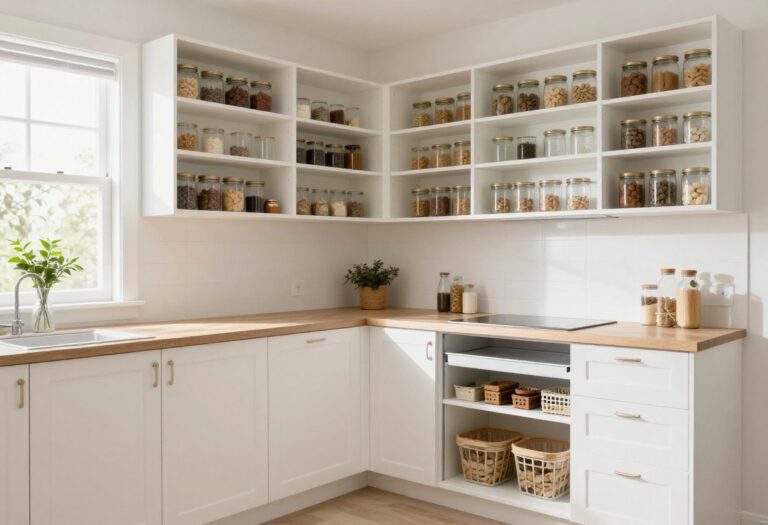
These 15 ideas focus on making the most of every inch while keeping that warm, lived-in feel you love.
1. Clear-Out and Categorize Before You Buy Anything
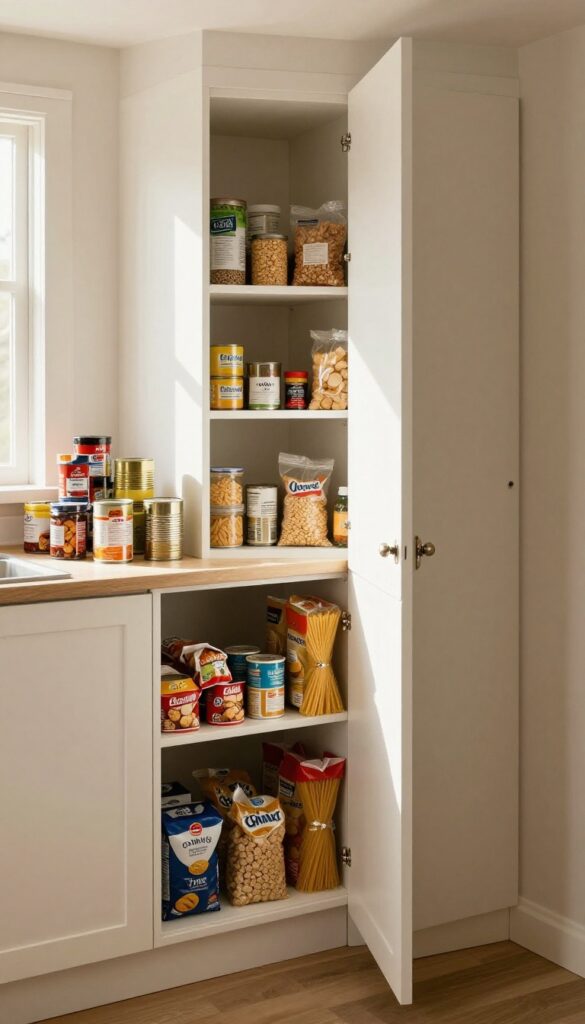
Before you even think about bins or baskets, take everything out of your pantry. Yes, everything. Pile it on the counter or table and sort by type—canned goods together, pasta and grains in another group, snacks in their own pile.
This simple step costs nothing but a little time, and it instantly shows you what you actually have. You might find three half-used bags of rice or a stash of spices you forgot about. Knowing your inventory means you won't waste money on organizers for things you don't own, and you'll see exactly what storage solutions will help the most.
Why It Works
Starting with a clean slate prevents buying mismatched or unnecessary containers. By grouping similar items, you can assess quantities and identify which categories need better containment. This method also highlights duplicates and expired goods, so you can purge before organizing, saving space and money.
Best For
Anyone who feels overwhelmed by a cluttered pantry or has bought organizers in the past that didn't fit. It's especially useful for small pantries where every inch counts and you need to maximize efficiency without overspending.
Styling Tip
As you categorize, keep an eye on color and packaging. Grouping similar-looking cans or jars creates a visual rhythm even before you add bins. If you have open bags of pasta or rice, consider transferring them to uniform clear containers later—but for now, just focus on the sorting.
2. Repurpose Takeout Containers as Clear Bins
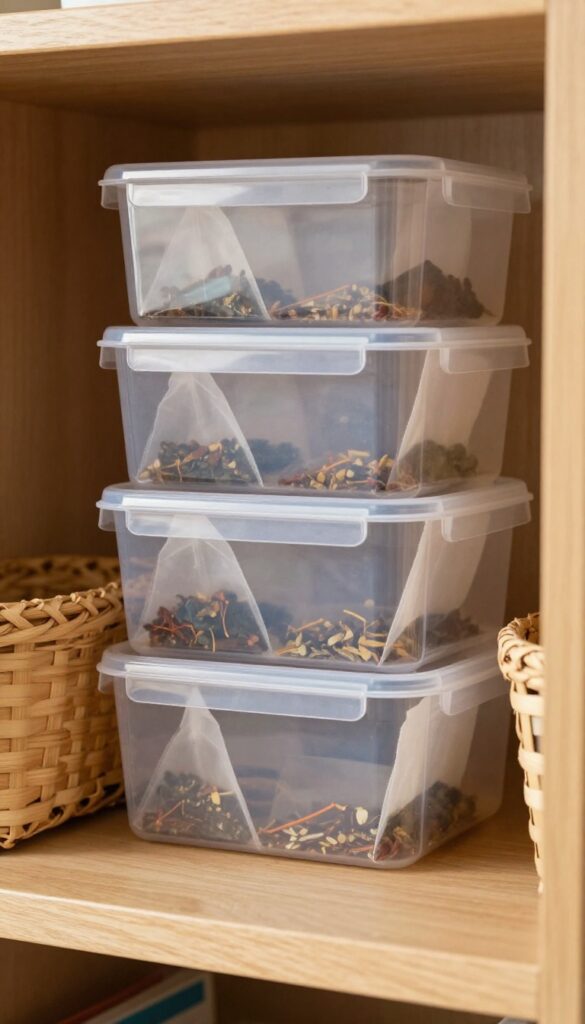
That stack of plastic containers from your favorite Chinese spot isn't just for leftovers—it's a free storage solution waiting to happen. After a good wash, these sturdy little tubs become see-through bins that keep small pantry items visible and organized. They stack neatly, fit into tight spots, and add a casual, resourceful vibe to your shelves.
Why It Works
Clear containers let you spot exactly what you need without rummaging. Since they're identical, they create a uniform look that feels intentional, not makeshift. Plus, they're practically indestructible and cost nothing, so you can grab a few more next time you order takeout.
Best For
Corralling small, loose items like single-serve coffee packets, tea bags, spice envelopes, or sauce packets. Also great for organizing baking odds and ends like sprinkles, food coloring, or vanilla extract bottles.
Styling Tip
Remove any labels and wash thoroughly to avoid sticky residue. For a warmer look, group three or four containers on a wooden shelf or inside a basket. Mix them with a few woven bins to keep the space from feeling too plastic-heavy.
3. Use Tension Rods for Vertical Spray Bottle Storage
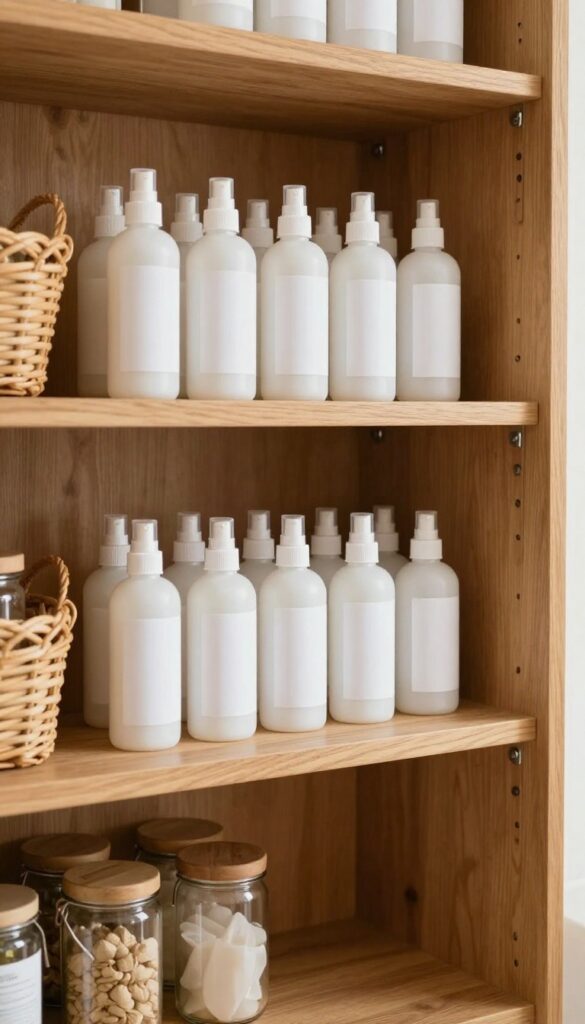
That narrow gap between two shelves often goes completely unused, but it's perfect for a clever hack. A tension rod turns that empty space into a handy spot to hang spray bottles upside down. It keeps cleaning supplies within easy reach and frees up floor space for other pantry items.
Why It Works
Spray bottles are bulky and tend to topple over on shelves. Hanging them upside down not only saves floor space but also keeps the nozzle ready to use—no more digging through cluttered cabinets. The tension rod is adjustable, so it fits most standard pantry shelves without any tools.
Best For
Small pantries with deep shelves where you have a few inches of vertical space between shelves. It's also great for under-sink areas in kitchens or bathrooms where you store cleaning sprays.
Styling Tip
Choose a tension rod with a non-slip surface or rubber ends to keep it securely in place. For a cohesive look, use matching spray bottles with clean labels. If your pantry has warm wood tones, a brushed nickel rod adds a subtle contrast without feeling cold.
4. DIY Shelf Risers from Cereal Boxes
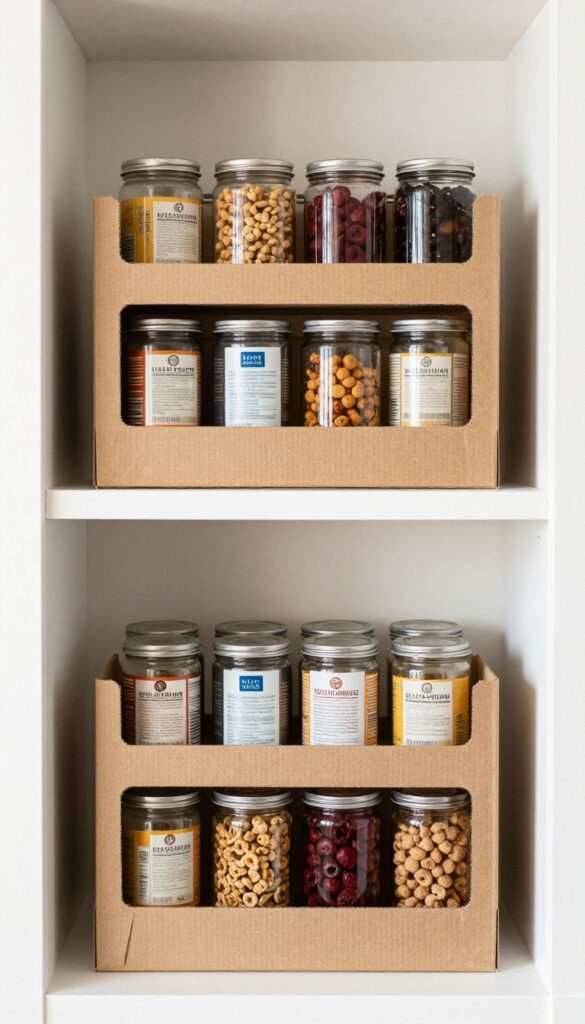
There's something deeply satisfying about opening a pantry and seeing every can and jar lined up like little soldiers, each one visible without having to play a game of Tetris. Those tiered risers you see in fancy organizational stores can cost a surprising amount, but you can make your own for free using empty cereal boxes. It's one of those projects that feels almost too simple to work, yet once you try it, you'll wonder why you didn't do it sooner.
The warm, lived-in look comes from the paper you choose—opt for a kraft brown or a soft patterned contact paper that blends with your shelves rather than screaming for attention.
Why It Works
These risers elevate items in the back row so nothing gets hidden or forgotten. By reusing materials you already have, you save money while reducing waste. The uniform covering ties everything together visually, making even a mismatched collection of cans look intentional and tidy.
Best For
This idea shines in deep pantry shelves where cans and jars tend to stack two or three deep. It's also perfect for renters who want a non-permanent solution that can be swapped out or removed without damage.
Styling Tip
Cover the boxes with a warm-toned contact paper—think a soft beige, light wood grain, or a subtle linen texture. Group items by color or label direction for an extra polished look. If your pantry has open shelving, use the same paper on all risers for a cohesive, custom feel.
5. Add a Magnetic Strip for Spice Jars
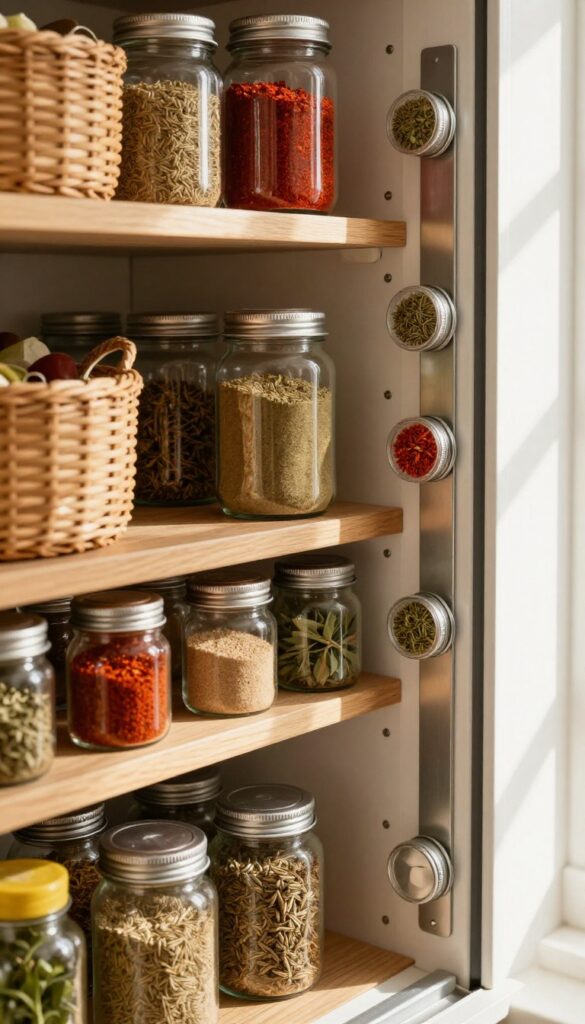
That empty strip of wall inside your pantry door or beside a cabinet is just begging to be useful. A magnetic strip, the kind you'd normally use for knives, becomes a clever home for your most-used spices. Stick small metal tins or jars onto it, and suddenly your cumin, paprika, and oregano are within easy reach instead of buried on a shelf.
The look is a little industrial but also warm—think cozy kitchen with a hint of modern practicality.
Why It Works
It turns wasted vertical space into instant storage, freeing up shelf room for bulkier items. The magnetic hold keeps jars visible and organized, so you can grab exactly what you need without rummaging.
Best For
Small pantries where every inch counts, especially if you cook with spices often and want them front and center. It's also great for renters since the strip is easy to remove without damaging walls.
Styling Tip
Use uniform metal tins with clear lids for a cohesive look, or mix in a few vintage-style jars with handwritten labels. Keep the strip near your prep area so the spices feel like part of your cooking rhythm, not just storage.
6. Hang a Shoe Organizer on the Back of the Door
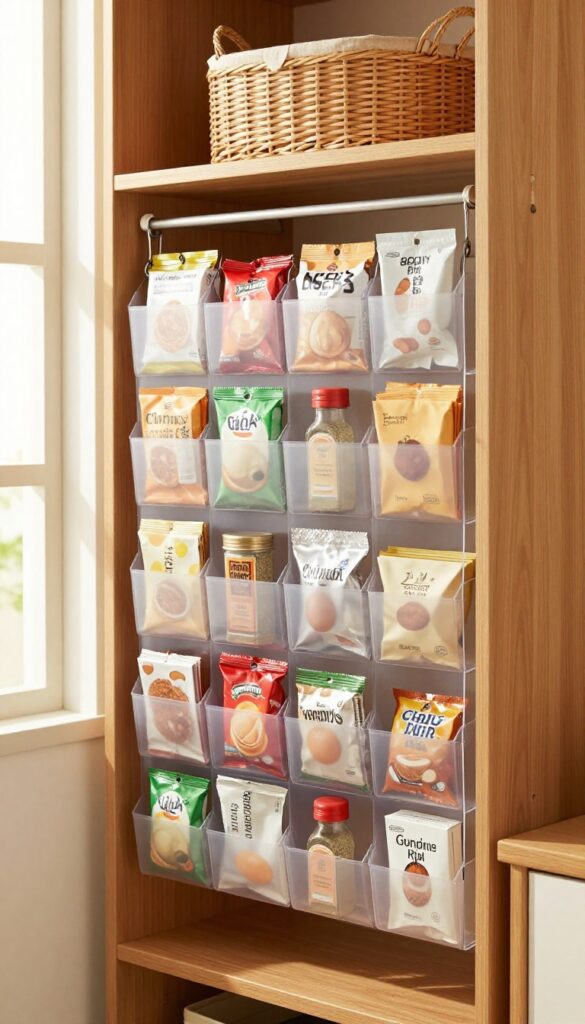
That clear over-the-door shoe organizer you might have used in a dorm room? It can work magic in a small pantry too. Instead of shoes, each pocket becomes a home for snack packs, seasoning envelopes, or tiny bottles.
The see-through design means you can grab exactly what you need without rummaging. It gives the door a purpose and keeps the shelves from getting cluttered.
Why It Works
The pockets create instant compartments for small, loose items that otherwise get lost. It uses vertical space that's often ignored, freeing up shelf room for bigger staples. Plus, the clear material makes everything visible at a glance, so you don't buy duplicates.
Best For
This is ideal for renters or anyone who can't install permanent shelves. It's also great for storing lightweight items like tea bags, instant oatmeal packets, or spice pouches. Avoid heavy jars or cans that could pull the organizer down.
Styling Tip
Choose a clear organizer with reinforced stitching and sturdy hooks. Arrange items by category—snacks on top, baking packets in the middle, and seasoning mixes at the bottom. To keep it feeling warm and lived-in, add a small woven basket on a nearby shelf for a soft texture contrast.
7. Label Everything with Chalkboard Stickers
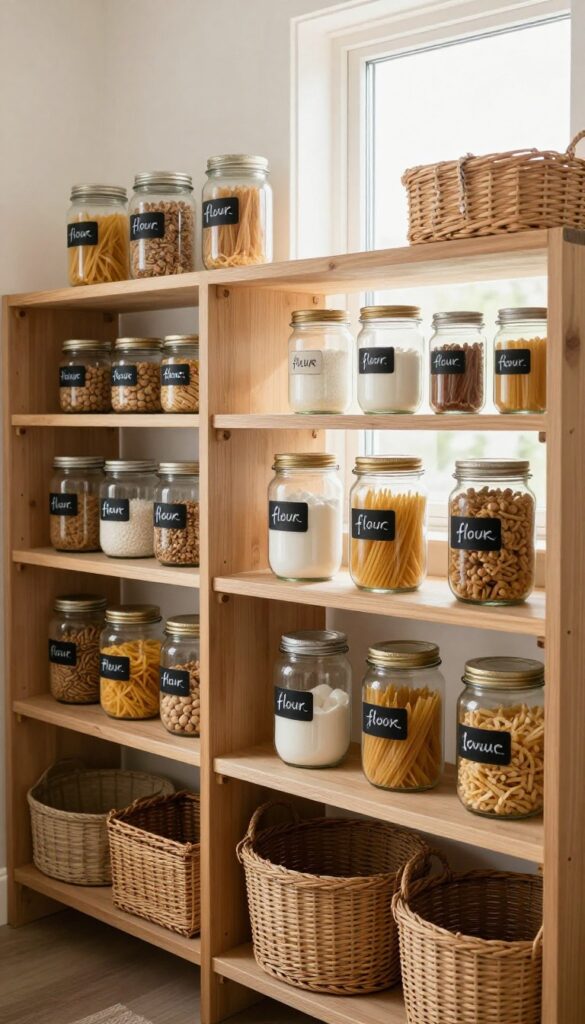
There’s something about a neatly labeled jar that instantly makes a pantry feel more intentional. Chalkboard stickers give you that cozy café vibe without locking you into a permanent system. You can jot down “flour” today and switch to “pasta” next month, all while keeping the shelves looking cohesive and warm.
Why It Works
Chalkboard labels are cheap, removable, and endlessly customizable. They turn mismatched containers into a unified set, reduce the time you spend hunting for ingredients, and add a handmade touch that makes the space feel lived-in rather than sterile.
Best For
This works beautifully for open shelving or glass-front cabinets where the labels become part of the decor. It’s also ideal for renters who can’t paint or install permanent fixtures, since the stickers come off cleanly.
Styling Tip
Stick to a single chalk pen color—white or cream keeps things soft—and write in a consistent style. Pair the labels with woven baskets and wood tones to reinforce that warm, cozy feel throughout the pantry.
8. Use Baskets from the Dollar Store for Bulk Items
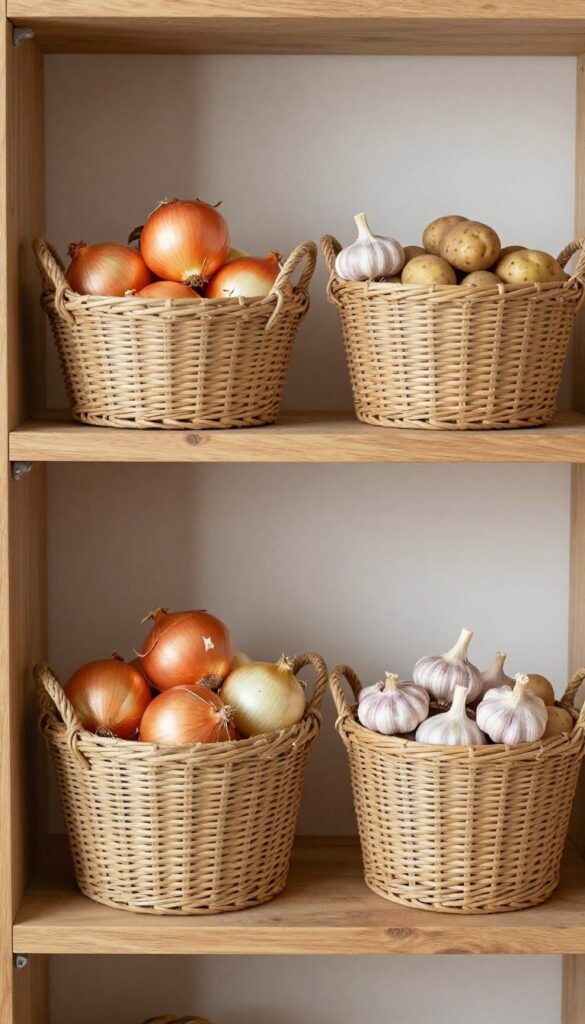
There's something about a row of woven baskets that instantly makes a pantry feel more grounded and lived-in. Dollar store baskets are an easy, budget-friendly way to store onions, potatoes, and garlic while adding natural texture. Grouping similar baskets creates a cohesive look that feels intentional, not thrown together.
Why It Works
Baskets allow air to circulate around produce, which helps it stay fresh longer. They also corral loose items into one tidy spot, preventing them from rolling around the shelf. The natural materials soften the hard edges of a pantry, making the space feel warmer and more inviting.
Best For
This idea is perfect for small pantries that need to store bulk produce without taking up too much visual space. It works especially well in kitchens with a rustic, farmhouse, or cozy aesthetic, but can adapt to any style with the right basket choice.
Styling Tip
Stick to one or two basket materials—like all seagrass or all wire—to keep the look cohesive. Place the baskets on a low shelf so they're easy to grab, and label each one with a simple tag for extra charm.
9. Install a Small Pegboard on an Empty Wall
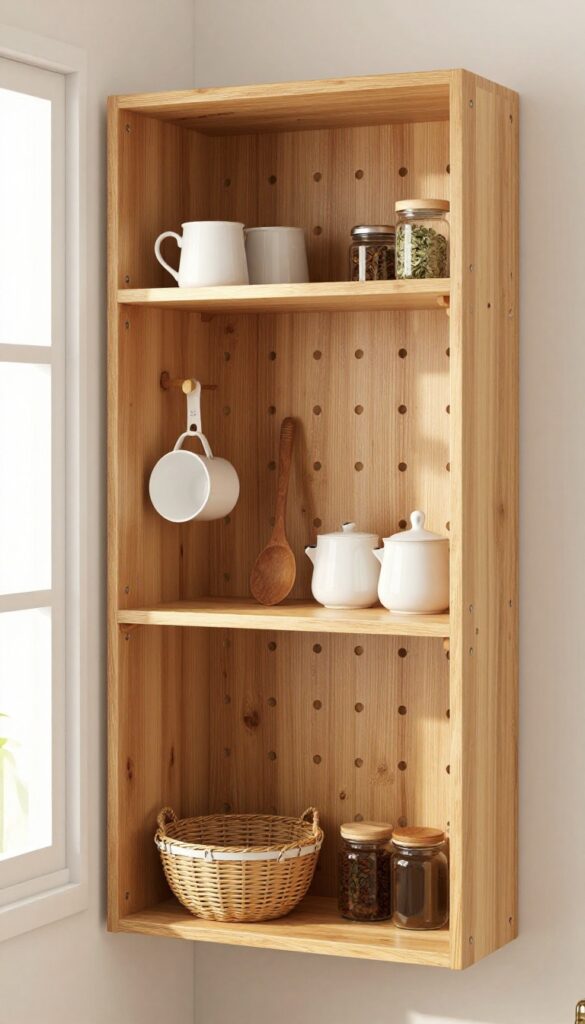
A blank wall in your pantry can feel like wasted space, but a mini pegboard changes everything. It adds a warm, workshop-inspired look while giving you a spot to hang measuring cups, scissors, or lightweight jars. The best part is how it turns an empty surface into a functional, charming storage zone without taking up any floor or shelf room.
Why It Works
Pegboards are endlessly customizable, so you can rearrange hooks and shelves as your needs change. They keep everyday tools visible and within reach, cutting down on rummaging through drawers or cabinets. Plus, the wood or warm-toned metal options blend right into a cozy, lived-in kitchen vibe.
Best For
This works great for small pantries with one empty wall, especially narrow spaces between shelves or beside a door. It's also perfect for renters since pegboards are easy to install and remove with minimal damage.
Styling Tip
Choose a wooden pegboard or paint it a soft neutral like cream or sage to keep the look warm. Hang a mix of small hooks and a tiny shelf, then group items by color—think white measuring cups, wooden spoons, and a small jar of dried herbs for a cozy, intentional feel.
10. Stack Cans with a DIY Can Rack from Cardboard Tubes
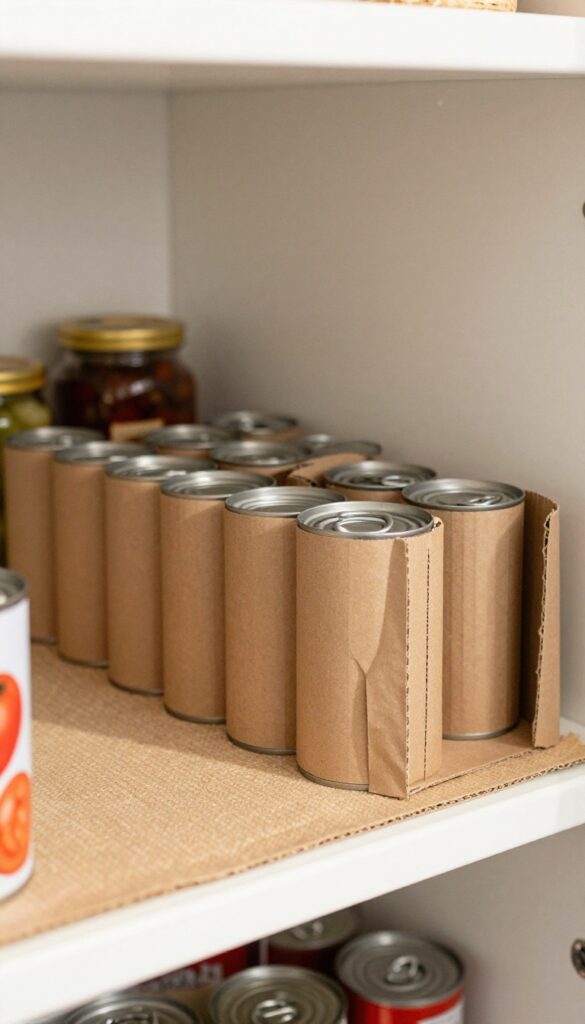
There's something so satisfying about opening a pantry and seeing cans lined up like little soldiers. But keeping them from rolling around or getting buried can be a constant battle. A DIY can rack made from empty toilet paper or paper towel rolls solves that problem without costing a cent.
Glue a few tubes together, place them on a shelf, and your cans will roll forward as you grab one. It’s clever, resourceful, and gives your pantry that cozy, lived-in feel where everything has its place.
Why It Works
- This hack uses materials you already have, so it’s completely free. The tubes create individual channels that keep cans from tipping over or getting lost in the back. Gravity does the work, pulling the next can forward as soon as you take one.
- It’s a simple, low-effort way to bring order to a chaotic shelf.
Best For
Small pantries or cabinets where canned goods tend to pile up. It’s ideal for standard-sized cans like tomatoes, beans, or broth. If you have a mix of can sizes, group similar ones together in separate tube rows to keep things neat.
Styling Tip
For a warmer look, wrap the cardboard tubes in brown kraft paper or a soft neutral fabric before gluing. This adds texture and keeps the rack from looking too crafty. Place it on a shelf lined with a natural fiber mat or a piece of linen for extra coziness.
11. Use a Lazy Susan for Corner Shelves
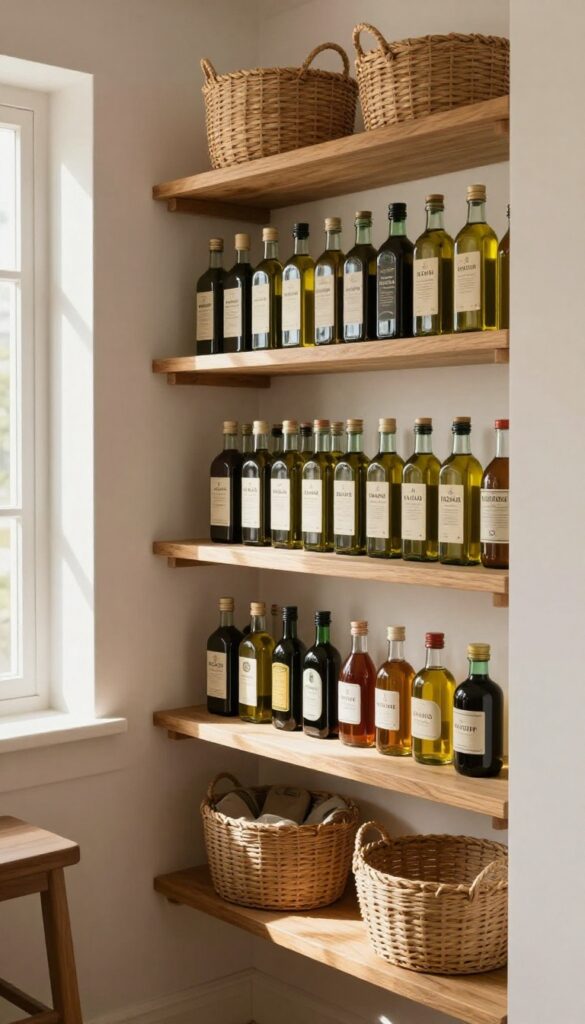
Corner shelves in a small pantry often become a black hole where jars and bottles go to die. You know the struggle—reaching into the dark abyss, knocking over a bottle of soy sauce, and giving up entirely. A simple lazy Susan, maybe one you picked up at a thrift store for a couple of bucks, changes everything.
Give it a spin, and suddenly those deep shelves are completely accessible. It feels like a small luxury, but it costs almost nothing and brings a sense of calm to a chaotic corner.
Why It Works
A lazy Susan rotates, so every item stored on it is within easy reach. No more digging or pulling everything out to find what you need. It makes use of dead space and keeps bottles and cans organized in a way that feels effortless.
Best For
This works wonders for corner cabinets or deep shelves where items tend to get lost. It's especially handy for storing oils, vinegars, condiments, and small jars of spices or sauces.
Styling Tip
Choose a wooden lazy Susan for a warm, lived-in feel, or go with a clear acrylic one to keep things visually light. Group similar items together—all oils on one side, vinegars on the other—and use small trays or risers on top for extra layers.
12. Hang Mesh Bags for Produce and Snacks
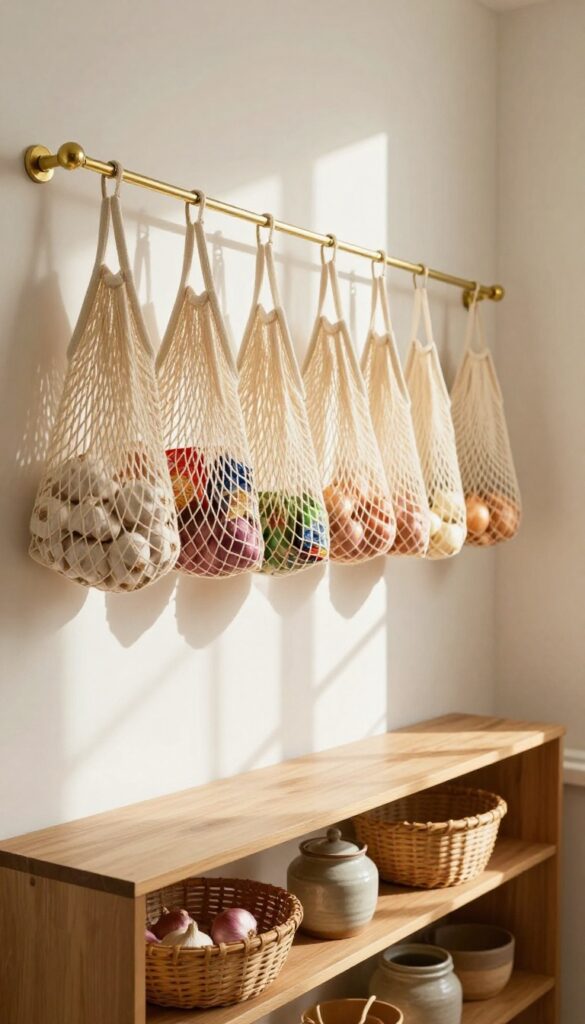
There's something quietly charming about a row of mesh bags hanging in a pantry. They feel casual and unpretentious, like a nod to old-fashioned market days. Clip a few onto hooks or a tension rod, and suddenly your garlic, shallots, and snack packets are both organized and on display.
The open weave keeps air circulating, so produce stays fresher longer, and the see-through material makes it easy to grab what you need without rummaging. It's a low-lift way to add texture and a slightly rustic, lived-in feel to your shelves.
Why It Works
Mesh bags are lightweight and take up almost no space, making them perfect for small pantries where every inch counts. They let you store items vertically, freeing up shelf space for bulkier goods. Plus, the breathable fabric helps prevent moisture buildup, so onions and garlic don't spoil as quickly.
Best For
This idea works especially well for lightweight produce like garlic, shallots, small onions, or even lemons. It's also great for packaged snacks such as granola bars, nuts, or trail mix, keeping them visible and easy to grab on the go.
Styling Tip
Choose natural cotton or linen mesh bags in neutral tones like cream, beige, or soft gray to keep the look warm and cohesive. Hang them from a slim tension rod inside a cabinet or on a wall-mounted hook rail. For a cohesive farmhouse vibe, pair with wooden crates or woven baskets on the shelves below.
13. Repurpose Wine Racks for Water Bottles or Cans
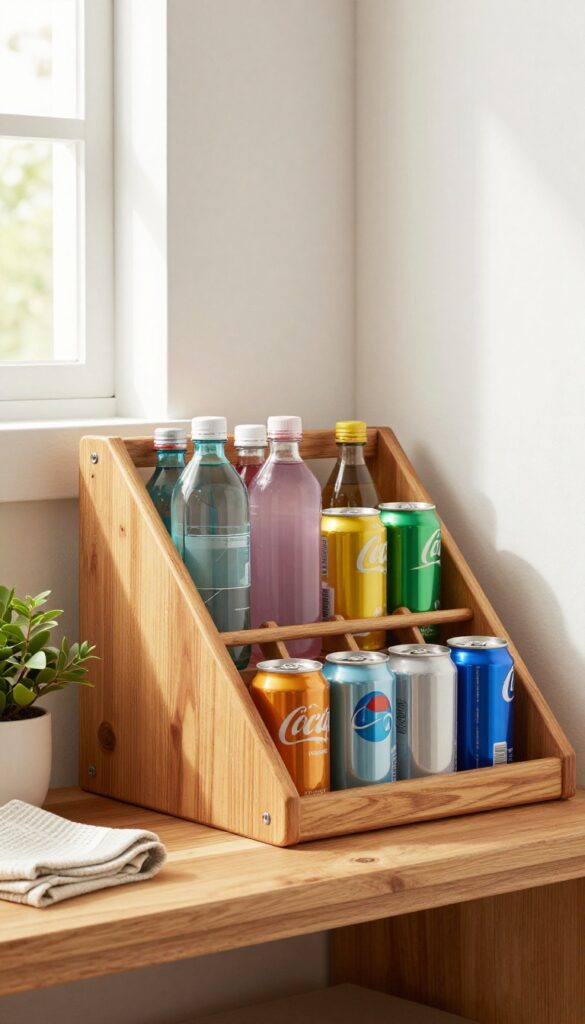
A thrifted wine rack might not be the first thing that comes to mind for pantry storage, but it's one of those clever finds that just works. The angled slots are perfect for holding water bottles, soda cans, or even rolled kitchen towels, keeping them from rolling around. Plus, the natural wood or black metal adds a cozy, lived-in feel that fits right in with a warm kitchen.
Why It Works
Wine racks are designed to hold bottles securely, so they naturally keep cylindrical items upright and easy to grab. No more cans clattering every time you open the door. And since you can pick one up for under $5 at a thrift store, it's an incredibly budget-friendly fix.
Best For
This works great for small pantries where you need to maximize vertical space on a shelf or countertop. It's also ideal if you buy bottled water or soda in bulk and want a neat display instead of a messy stack.
Styling Tip
Look for a wooden rack with a warm stain or a matte black metal one to match your pantry's vibe. Place it on a lower shelf so it's easy to reach, or set it on the counter near the fridge for quick access. If the rack has extra space, tuck a small plant or a tea towel on top for a layered look.
14. Use Binder Clips to Seal and Organize Bags
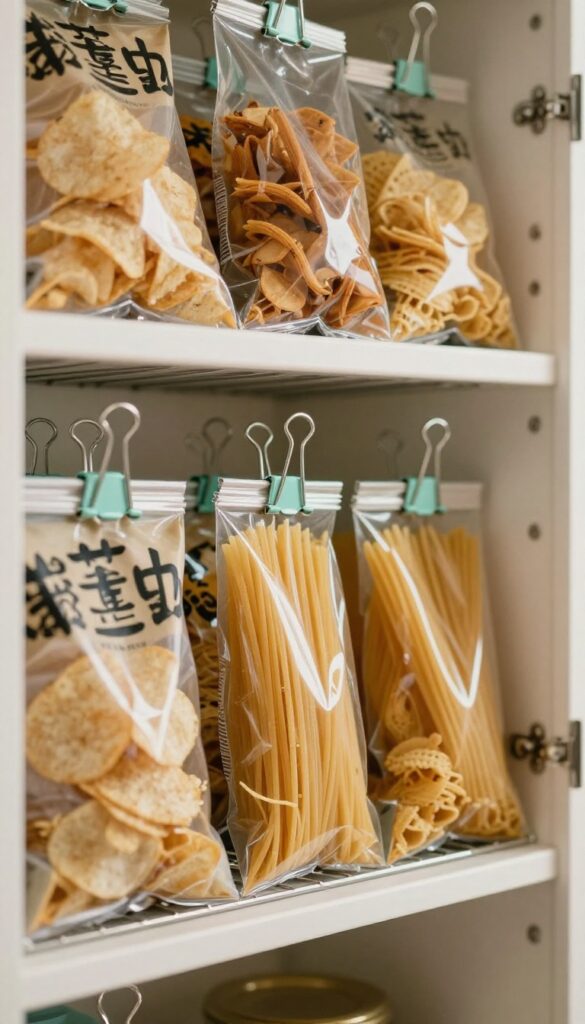
Binder clips aren't just for the office—they're a surprisingly handy tool for the pantry. Clip them onto opened bags of chips, pasta, or frozen veggies to keep the contents fresh. Then, attach the clips to a small hook or wire rack, and suddenly those bags hang neatly, saving precious shelf space.
It's a simple trick that feels clever and satisfying, especially in a cozy, lived-in kitchen where every inch counts.
Why It Works
Binder clips create a tight seal that keeps air out and food fresh, while the hanging method frees up shelf space. It's a low-cost, zero-waste solution that turns messy bags into an organized system.
Best For
Small pantries or cabinets where bags tend to pile up and get lost. It's ideal for snacks, pasta, rice, and frozen vegetables that come in resealable bags.
Styling Tip
Use matching binder clips in a soft color like mint or blush to add a subtle, cohesive look. Hang them from a simple wire rack or a row of cup hooks installed under a shelf for a clean, intentional display.
15. Add a Small Rug or Mat for Warmth
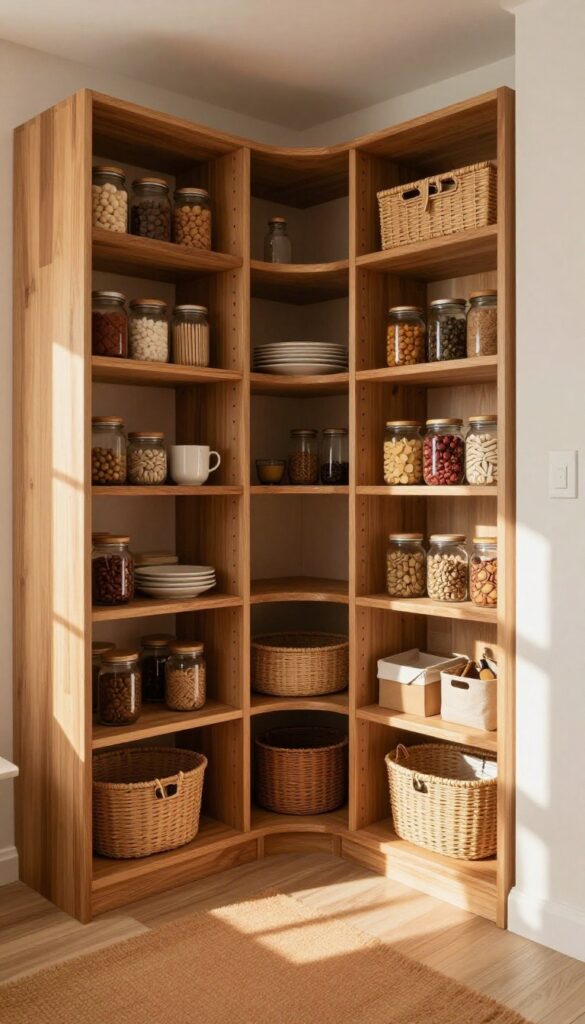
A soft rug underfoot can transform a cramped pantry from purely functional to genuinely inviting. Even a tiny runner or a washable mat in a warm tone like terracotta, mustard, or deep rust adds a layer of comfort and makes the space feel more intentional. It’s a quick, low-cost way to bring in color and texture without a full renovation.
Why It Works
A rug or mat softens hard floors, reduces noise from dropped cans or jars, and defines the pantry as a distinct room rather than just a closet. The warmth underfoot also makes standing there while grabbing ingredients feel cozier—especially in small spaces where every detail counts.
Best For
This idea works best for walk-in pantries or larger reach-in closets where you have floor space to spare. It’s also great for pantry areas in basements or laundry rooms where the floor might feel cold or uninviting.
Styling Tip
Choose a low-pile, washable rug or a rubber-backed mat to handle spills and crumbs. Stick to warm earth tones like terracotta, mustard, or deep rust to align with the cozy, lived-in vibe. If your pantry is narrow, a long runner that fits the length of the floor can make the space feel wider.
FAQ
What are the cheapest ways to organize a small pantry?
Start by decluttering and repurposing items you already own, like takeout containers, cereal boxes, and binder clips. Use tension rods, shoe organizers, and dollar store baskets for under $10 each.
How do I keep my small pantry from looking cluttered?
Group similar items together in clear bins or labeled baskets. Stick to a cohesive color palette for containers (like all white or natural wood) and use vertical storage to free up shelf space.
Can I organize a pantry without buying anything?
Absolutely. Empty everything, categorize, and use cardboard boxes, glass jars from pasta sauce, and repurposed containers. Label with masking tape and marker for a no-cost solution.
What should I store on the pantry door?
Use an over-the-door shoe organizer for snacks, spice packets, or small bottles. You can also hang a magnetic strip for spice jars or a small pegboard for lightweight tools.
How do I make a small pantry feel cozy?
Add warm lighting (a small battery-operated puck light), a soft rug, and natural textures like woven baskets or wood shelves. Keep colors warm and avoid harsh fluorescent bulbs.
Conclusion
Organizing a small pantry on a budget is all about seeing everyday objects in a new light. With a few clever tweaks and a little patience, you can create a space that feels both efficient and inviting. The best part?
You don't have to spend a lot to make a big difference. Start with one or two ideas that speak to you, and let your pantry evolve into a cozy, functional part of your home. After all, a warm kitchen starts with a pantry that works for you.