13 Fresh Green Tile Shower Ideas with Timeless Visual Appeal
Green tile in the shower is having a serious moment, and it's easy to see why. It brings a slice of nature indoors, creating a calm, spa-like vibe that never goes out of style.
Whether you're planning a full remodel or just swapping out a few tiles, green offers a versatile palette that works with almost any design aesthetic. From deep, moody emeralds to soft, airy sages, there's a shade of green to match every personality and space.
The key is finding the right tone and texture to complement your bathroom's natural light and fixtures. With so many options, it can feel overwhelming, but that's where these ideas come in.
1. Deep Emerald Glossy Subway Tiles for a Luxe Spa Vibe
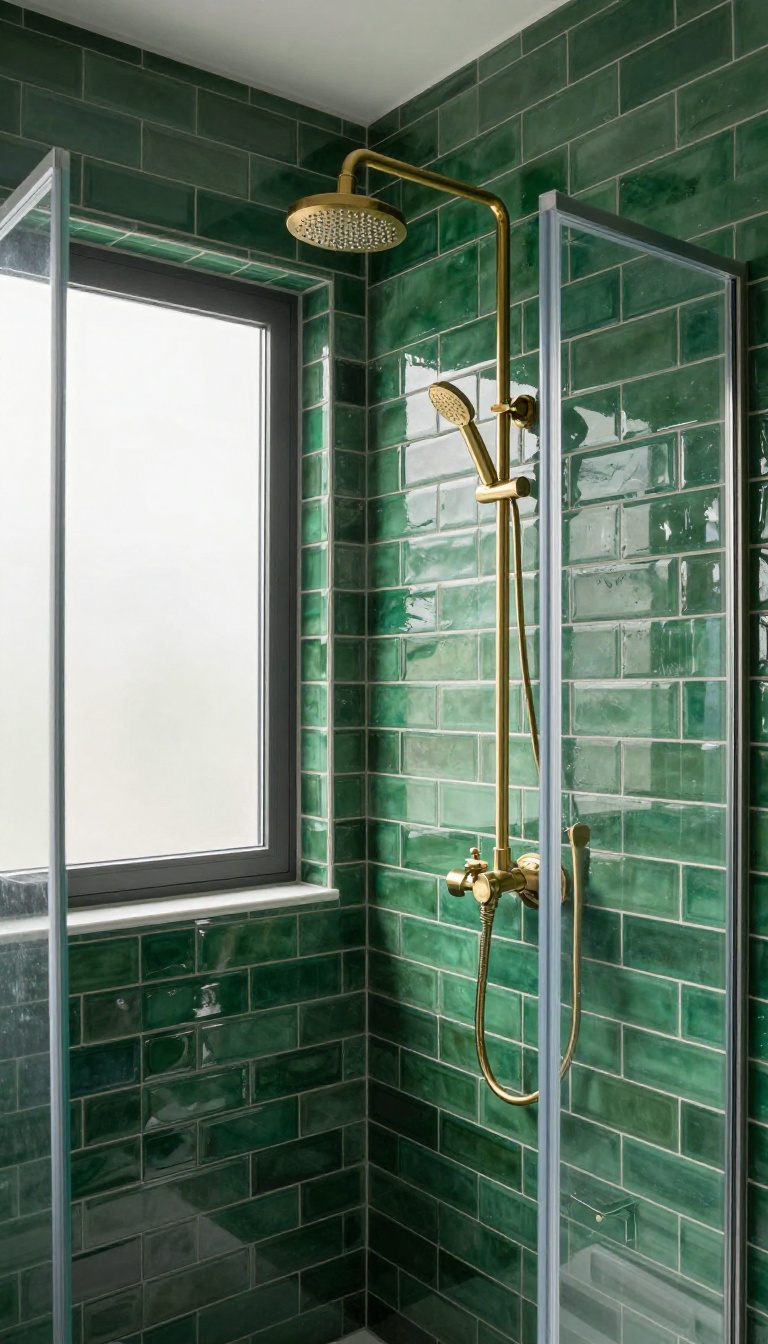
There's something about a glossy emerald tile that instantly elevates a shower from everyday to extraordinary. The deep, jewel-toned green catches the light in a way that feels both rich and calming, like stepping into a high-end hotel spa. If you're drawn to moody, sophisticated spaces, this is the look for you.
Glossy emerald subway tiles are a bold choice that pays off in spades. The reflective surface bounces light around the shower, making the space feel brighter and more open, even though the color is dark. This balance is what makes the look so appealing—it's dramatic without being cave-like.
Plus, the classic subway shape keeps it timeless, so you won't be stuck with a trend that fades in a few years.
Why Glossy Finishes Work So Well
The glossy finish is key here. It adds a layer of depth that matte tiles just can't match. Light dances across the surface, creating subtle highlights and shadows that make the tile look almost liquid.
This effect not only brightens the space but also makes the shower feel more luxurious and inviting. If you're worried about dark colors making the room feel small, the gloss helps counteract that by reflecting whatever light you have.
Pairing With Fixtures And Grout
To let the emerald shine, keep your fixtures simple and metallic. Brushed brass or gold adds a warm, upscale touch, while chrome or nickel keeps things cool and modern. For grout, choose a contrasting shade like white or light gray to highlight the subway pattern, or go with a matching dark grout for a seamless, monochromatic look.
Both work, but the contrast tends to make the tile pop more.
Lighting Tips To Enhance The Vibe
Lighting can make or break this design. Aim for layered lighting: a overhead fixture for general brightness, plus a shower light or niche lighting to create a soft glow. If you have a window, great—natural light will amplify the glossy effect.
Avoid harsh, direct lighting that creates glare; instead, opt for diffused or indirect light to keep the spa-like mood intact.
2. Sage Green Matte Tiles with White Grout for a Soft, Airy Look
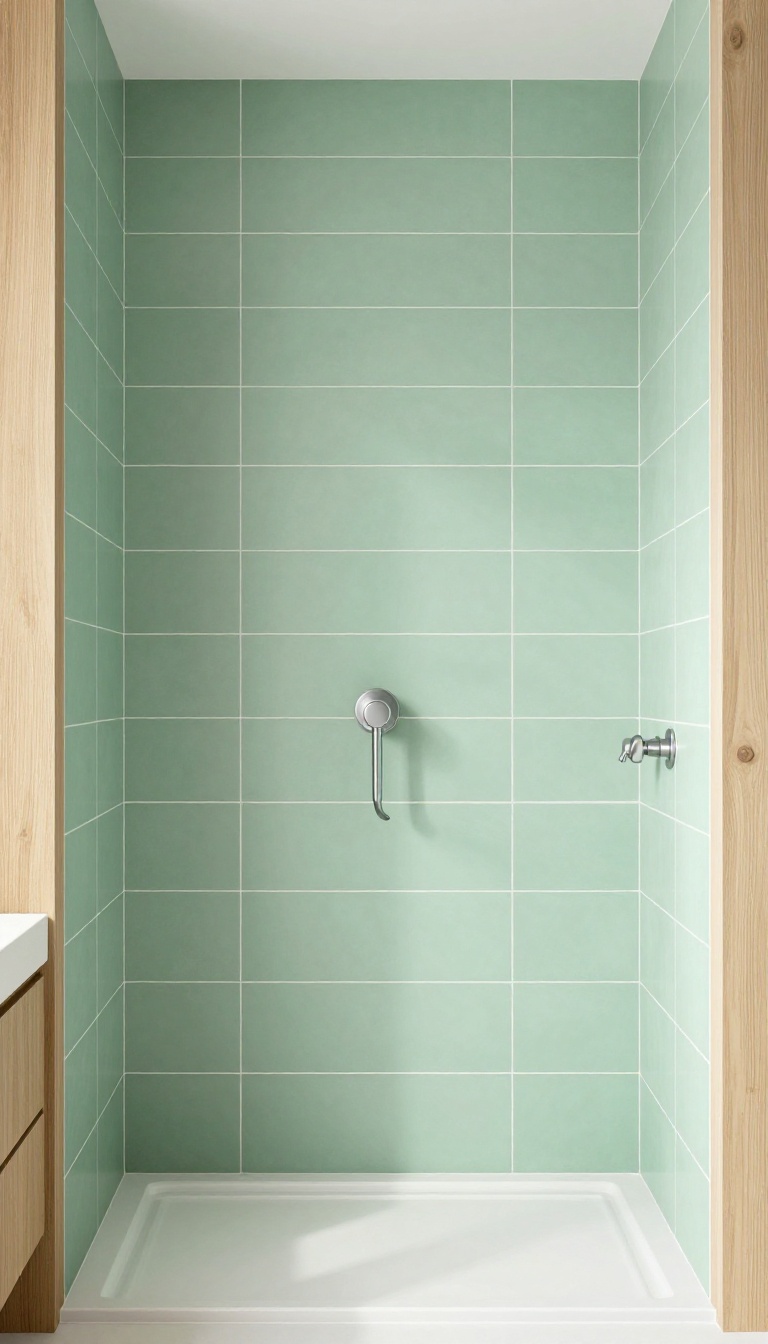
Sage green matte tiles bring a calm, organic feel to any shower, and pairing them with white grout makes the space feel even lighter. The soft, muted tone of sage doesn’t overwhelm, so it works beautifully in smaller bathrooms where you want to avoid a heavy look. White grout adds crisp contrast that highlights the tile shape while keeping the overall vibe fresh and clean.
This combination is all about balance. The matte finish absorbs light instead of reflecting it, which softens the entire space and makes it feel more intimate. White grout acts like a subtle frame, drawing the eye to the tile pattern without adding visual noise.
Together, they create a backdrop that feels both modern and timeless, and it pairs effortlessly with natural wood accents, brushed nickel fixtures, or even black matte hardware for a touch of drama.
Why Matte Over Glossy?
Matte tiles have a low-sheen finish that feels more grounded and less reflective than glossy options. This helps hide water spots and soap scum, which is a practical bonus for a shower. The soft texture also adds a tactile quality that makes the space feel more inviting, like a natural stone spa rather than a polished showroom.
Grout Color Matters More Than You Think
White grout is the obvious choice for a clean, airy look, but it does require a bit more upkeep to keep it bright. If you want a similar effect with less maintenance, consider a warm off-white or a light gray grout that still feels fresh but hides dirt better. Whichever you pick, make sure the grout lines are consistent in width to keep the pattern looking crisp and intentional.
Styling Around The Sage
Sage green is incredibly versatile, so you can dress it up or down. Pair it with light oak or teak accessories for a natural, organic feel, or go with matte black fixtures for a more modern contrast. White towels and a simple glass shelf keep the focus on the tile, while a few green plants can echo the earthy vibe without making the space feel cluttered.
3. Vertical Stacked Green Tile Pattern to Make Ceilings Feel Higher
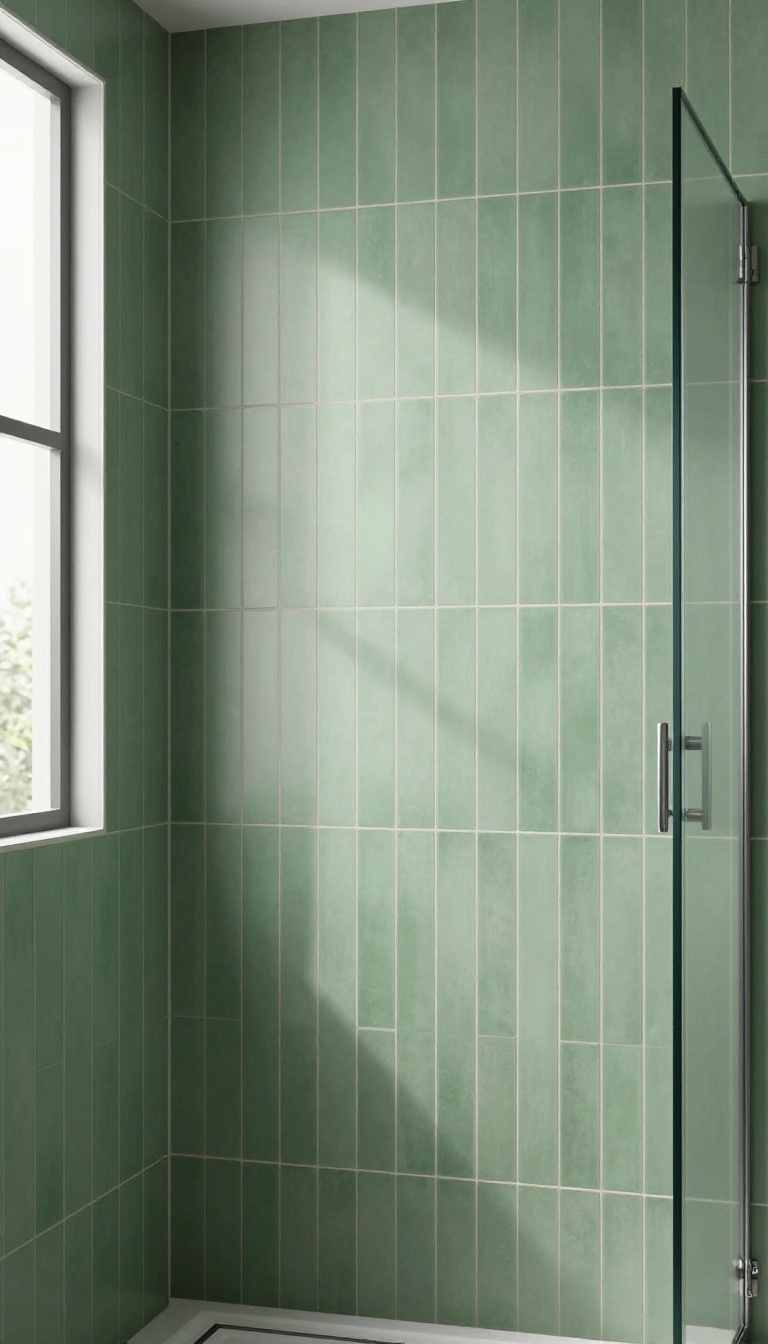
If your shower feels a bit cramped or the ceiling seems to hover a little too close, the tile layout can come to the rescue. A vertical stack pattern—where rectangular tiles are installed with their longer side running up and down—creates a strong line that pulls the eye upward. It's a simple optical trick that adds a sense of height and openness without changing a single wall.
The vertical stack pattern is a favorite among designers for its ability to make a space feel taller. By placing tiles in a grid with the long edge vertical, the eye naturally follows the lines upward, giving the illusion of a higher ceiling. This is especially effective in showers with lower ceilings or in bathrooms that feel boxy.
Plus, the clean, linear look brings a modern, tailored feel that pairs beautifully with the organic vibe of green tile.
Why Vertical Stack Works For Small Showers
In a compact shower, every inch counts. Vertical stacking not only draws the eye up but also minimizes the visual interruption of horizontal grout lines. This creates a smoother, more continuous surface that feels less busy.
Choose a green tile with a subtle texture or a matte finish to keep the focus on the vertical lines. Pair it with a lighter grout to enhance the effect, or go with a matching grout for a seamless look.
Best Green Tile Shapes And Sizes For This Pattern
For a true vertical stack, rectangular tiles work best—think subway tiles, planks, or large-format rectangles. A 3×6 or 4×12 subway tile is a classic choice, but for a more dramatic effect, try longer planks like 3×12 or 6×24. Larger tiles mean fewer grout lines, which amplifies the heightening effect.
If you want a more subtle look, opt for a smaller rectangle with a thinner profile. The key is to keep the vertical orientation consistent, so the lines run unbroken from floor to ceiling.
Pairing Vertical Green Tile With Lighting And Fixtures
Lighting can make or break the vertical effect. Position a shower light or a wall sconce to cast light upward, reinforcing the vertical lines. Also, consider the fixtures: a rain showerhead mounted on the ceiling works beautifully with the upward flow, while a handheld showerhead on a vertical slide bar echoes the pattern.
For hardware, choose finishes that complement the green—brushed brass or matte black add warmth and contrast, while chrome or nickel keep things cool and crisp.
4. Herringbone Green Tile Accent Wall Behind the Shower Bench
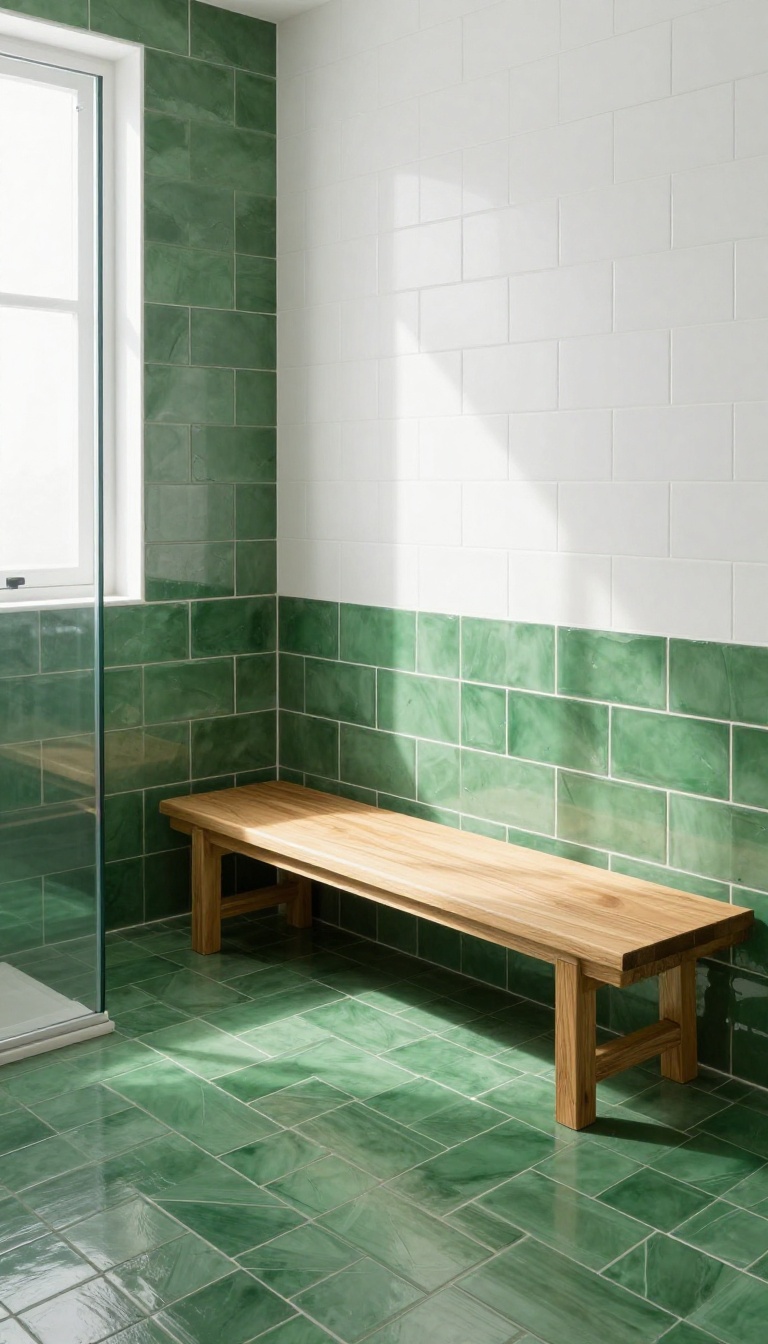
A herringbone pattern in green tile creates visual interest and texture, especially when placed behind a shower bench. This accent wall becomes a focal point, adding a touch of elegance without overwhelming the space. The classic fishbone layout brings a sense of movement that draws the eye, making the shower feel more dynamic and thoughtfully designed.
The herringbone pattern is a timeless choice that adds sophistication to any surface. When applied to a green tile accent wall behind a shower bench, it transforms a functional area into a design statement. The pattern works beautifully with various green shades, from deep emerald to soft sage, and can be paired with different grout colors to enhance the effect.
Why Herringbone Works So Well
Herringbone naturally guides the eye along the wall, creating a sense of depth and movement. The angled lines break up the flatness of a large surface, making the shower feel more spacious and inviting. Plus, the pattern adds texture without needing additional materials, keeping the look cohesive and elegant.
Choosing The Right Green And Grout
For a bold look, opt for a rich emerald or forest green with a contrasting white or light gray grout to make the pattern pop. If you prefer a softer, more serene vibe, sage or mint green tiles with a matching or slightly darker grout can create a subtle, seamless effect. The grout color can dramatically change the overall appearance, so test a few options before committing.
Placement And Scale Tips
The accent wall behind the bench is ideal because it's often the first thing you see when entering the shower. To maximize impact, extend the herringbone from the bench up to the ceiling or along the full wall. If you're working with a smaller space, consider using larger tiles to keep the pattern from feeling too busy.
Balance is key—let the accent wall shine while keeping the rest of the shower simple.
5. Mosaic Green Tile Niche with Brass Fixtures for a Vintage Touch
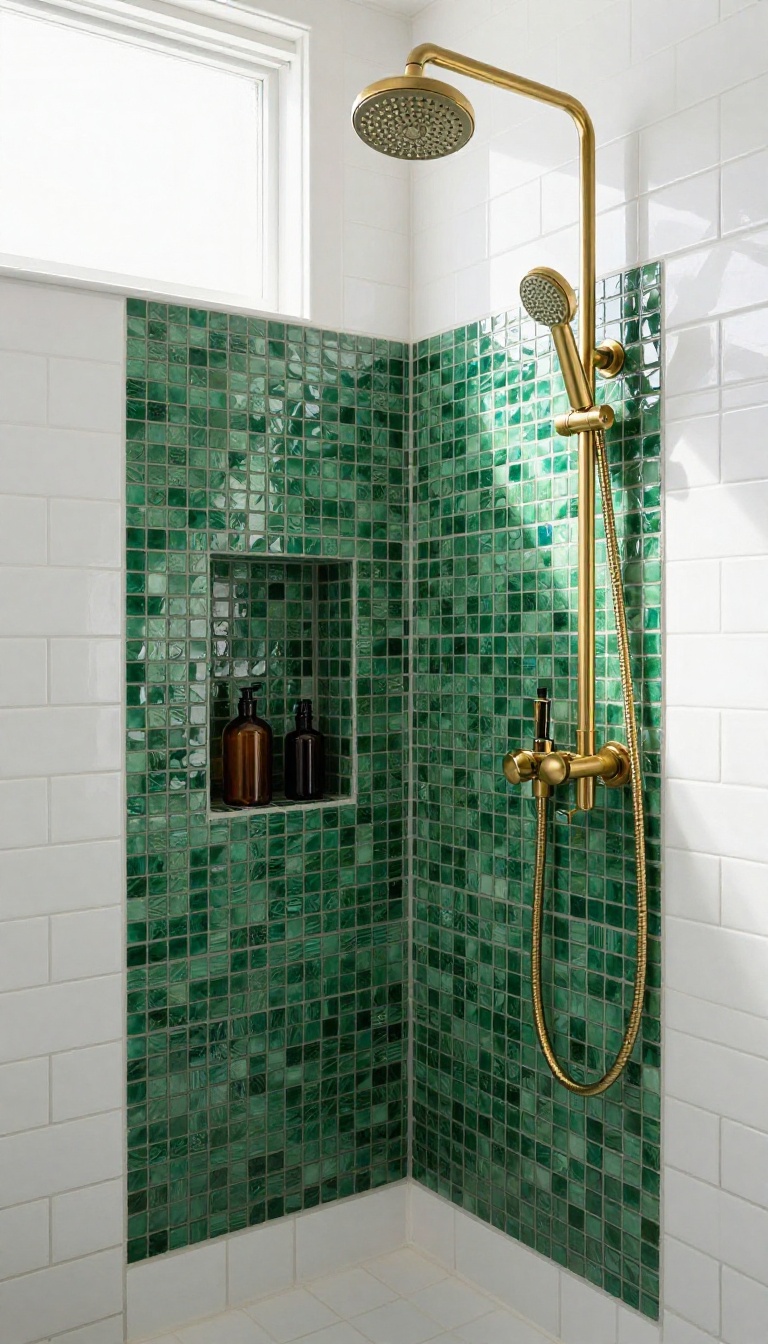
A shower niche is more than just a spot for your shampoo—it's a chance to add a little personality. Wrapping that recess in mosaic green tile instantly turns a practical feature into a design focal point. Pair it with brass fixtures, and you've got a look that feels both collected and intentional.
Mosaic tiles come in a range of greens, from deep forest to soft sage, and their small size makes them perfect for curving around the niche's edges. The high-gloss finish of most mosaics catches the light and adds depth, making the niche pop against larger-format wall tiles. Brass fixtures—think faucets, showerheads, and even the niche's trim—warm up the space and echo the vintage vibe.
The combination works because the cool green balances the warm metal, creating a harmonious contrast that's easy on the eyes.
Choosing The Right Mosaic Tile
Not all mosaic tiles are created equal. For a vintage feel, look for glass or ceramic mosaics with an irregular, handmade quality. Subway-style mosaics in a brick pattern offer a classic look, while hexagon mosaics add a playful touch.
Stick to shades like emerald, olive, or sage, and avoid anything too neon or pastel. Also, consider the grout color—a contrasting white or cream grout will highlight the mosaic pattern, while a matching grout creates a more seamless, modern look.
Pairing Brass Fixtures With Green
Brass comes in many finishes, from polished to antique. For a true vintage feel, opt for an antique or unlacquered brass that will develop a patina over time. The warm undertones of brass complement the coolness of green, making both stand out.
If you're worried about overdoing it, use brass for the showerhead, faucet, and niche trim, and keep other hardware like towel bars in a neutral finish. This way, the eye is drawn to the niche and fixtures without feeling cluttered.
Placement And Lighting Tips
Position the niche at a comfortable height, usually around chest level, so it's easy to reach. If possible, place it on a wall that gets natural light, as the mosaic will sparkle and shift color throughout the day. In darker bathrooms, add a small recessed light above the niche to highlight the tile and brass.
A niche that's too low or hidden in a corner won't have the same impact, so think about sightlines when planning the layout.
6. Large-Format Green Porcelain Tiles for a Seamless, Modern Look
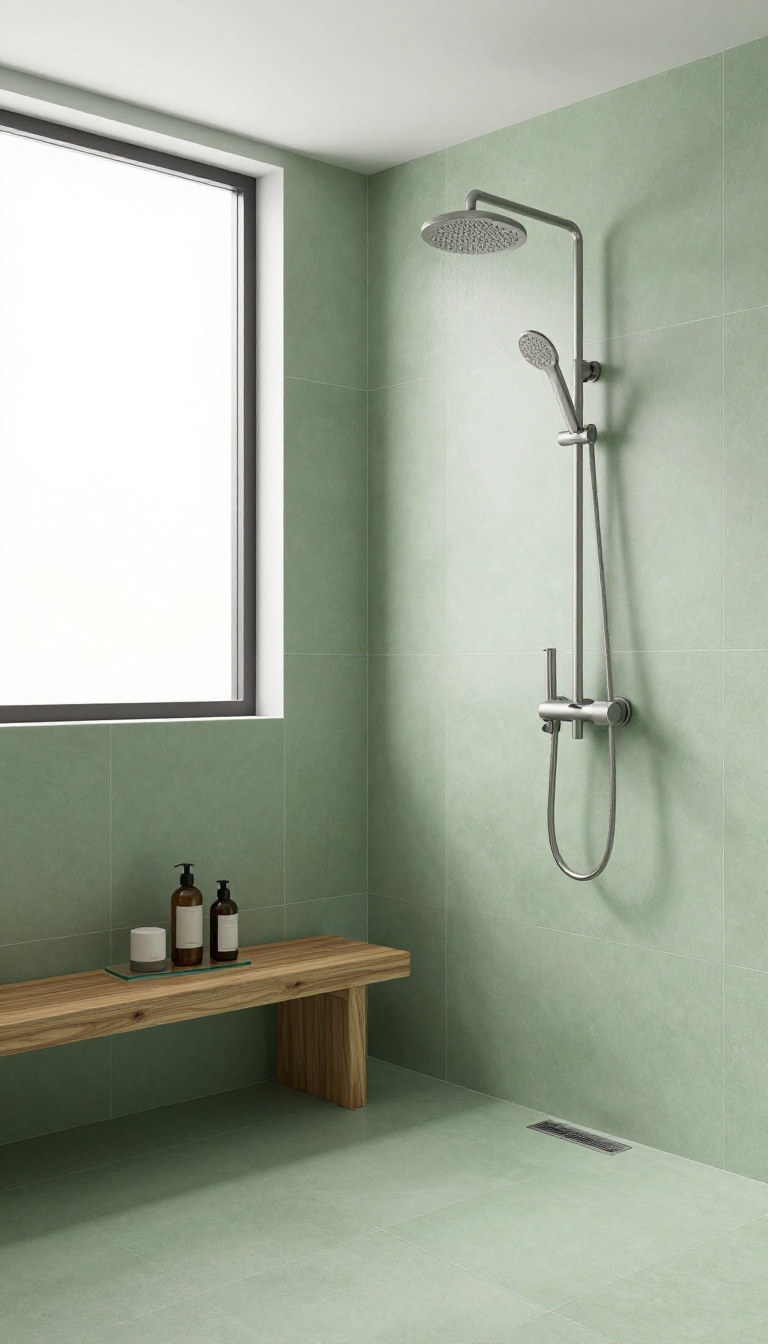
If you're tired of scrubbing grout lines, large-format tiles are a game-changer. These big slabs of green porcelain create a smooth, uninterrupted surface that feels both contemporary and calming. The fewer grout joints, the more your shower looks like a single, sculpted piece of stone.
Large-format tiles (think 12×24 inches or larger) are a smart choice for anyone who wants a minimalist aesthetic without sacrificing durability. The green porcelain comes in a range of shades, from deep forest to soft sage, so you can match your bathroom's vibe. Plus, the reduced grout lines mean less maintenance and a cleaner look over time.
Why Fewer Grout Lines Matter
Grout is a magnet for soap scum and mildew, especially in a shower. With large tiles, you have fewer seams to clean, which saves you time and keeps your bathroom looking fresher. It also creates a more seamless visual, making the space feel larger and less busy.
Choosing The Right Finish
Porcelain tiles come in matte, satin, or glossy finishes. For a modern, low-maintenance option, a matte or satin finish hides water spots and fingerprints better than high-gloss. If you want a bit of drama, a polished finish can reflect light and make the green pop, but be ready to wipe it down more often.
Pairing With Fixtures And Accents
These large tiles work beautifully with brushed nickel or matte black fixtures for a contemporary edge. Add a teak bench or a simple glass shelf to break up the green and introduce natural warmth. Keep accessories minimal to let the tile shine.
7. Green Subway Tile with Dark Grout for a Bold, Graphic Contrast
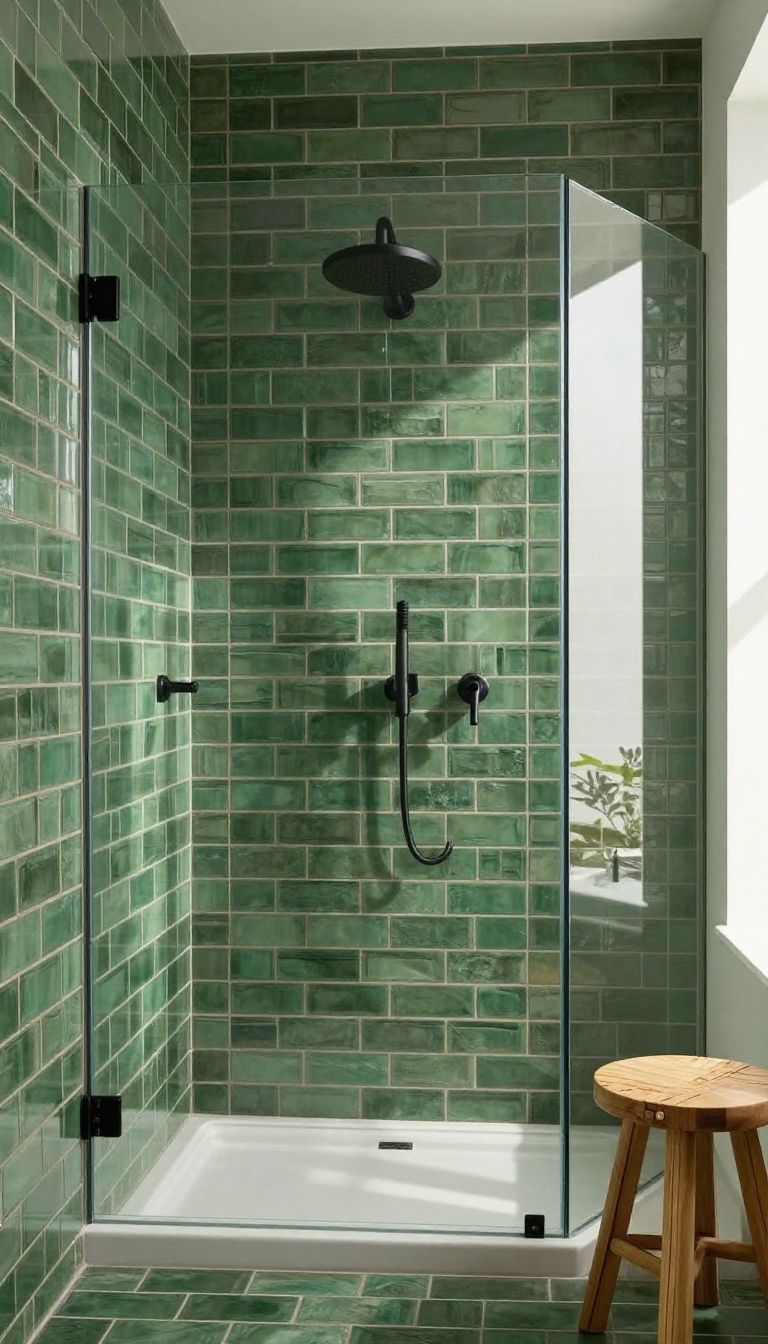
Subway tile is a classic choice, but pairing it with dark grout changes the whole vibe. Instead of blending in, the tiles stand out with sharp, defined lines that add a modern, graphic edge. This combo works especially well in contemporary bathrooms, giving the shower a crisp, tailored look that feels both bold and timeless.
The dark grout creates a grid-like pattern that highlights each tile, making the green shade pop even more. It’s a simple swap—just choose a charcoal or espresso grout instead of white—but the effect is dramatic. This approach suits both deep emerald and muted sage tones, adding depth without overwhelming the space.
Choosing The Right Green Shade
For a high-contrast look, go with a mid-tone green like moss or olive. These shades balance the dark grout without becoming too heavy. If you prefer a softer feel, pick a pale sage, but keep the grout line thin to maintain the graphic effect.
Darker greens, like forest or hunter, work well in larger showers with plenty of light.
Grout Color Options And Maintenance
Charcoal and dark gray are popular choices, but you can also try black or deep brown for a warmer feel. Keep in mind that dark grout shows less dirt and staining, making it easier to maintain. Just be sure to seal it properly to prevent moisture issues.
Styling Around The Contrast
Let the tile be the star by keeping fixtures and accessories simple. Matte black or brushed nickel hardware complements the graphic look without competing. Add a wooden stool or bamboo mat to introduce warmth, and use warm lighting to soften the contrast.
8. Textured Green Tile with a Natural Stone Finish for Organic Warmth
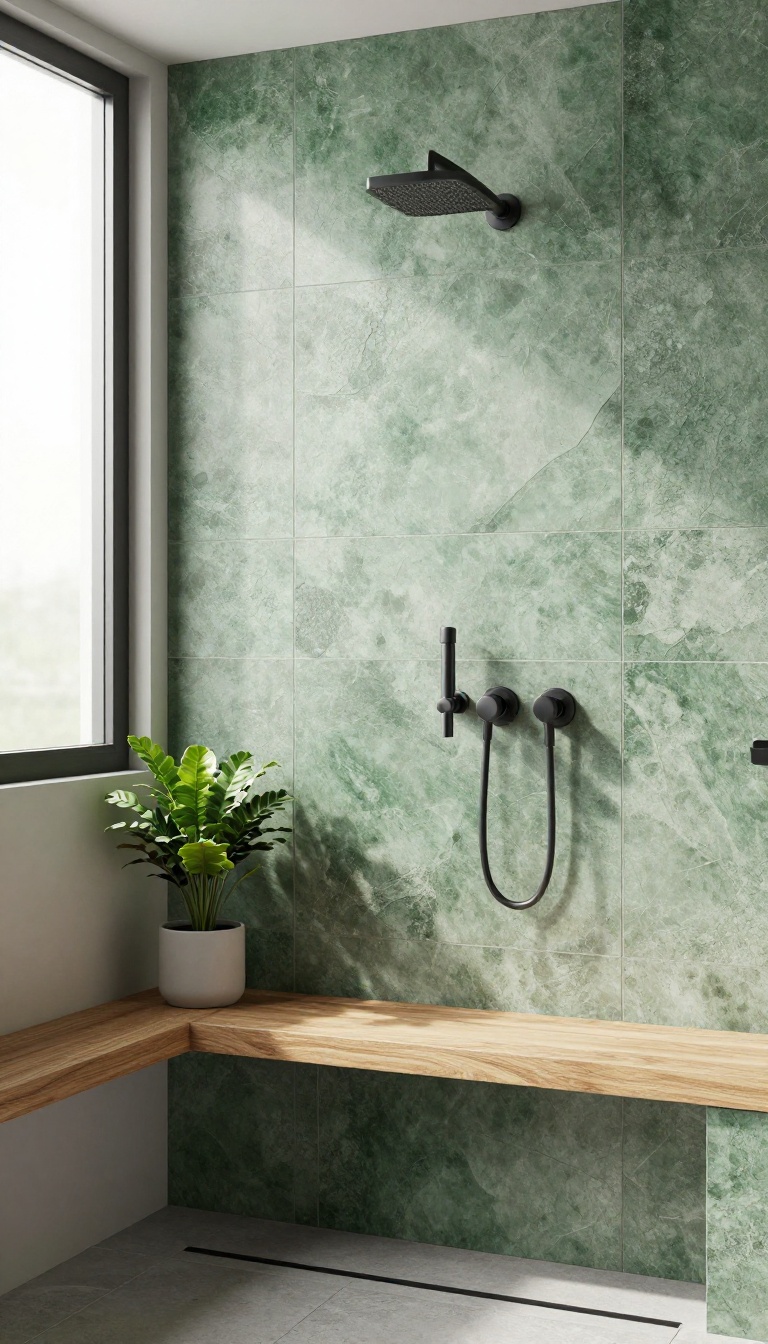
Some green tiles are smooth and glossy, but the ones that really bring a shower to life are the ones you can feel. Textured green tiles that mimic natural stone add a layer of depth and warmth that flat surfaces just can't match. The subtle irregularities in the surface catch the light in different ways, creating a dynamic, organic look that feels both grounded and luxurious.
When you run your hand along a natural stone finish, it feels like you're touching something ancient and solid. That tactile quality transforms a shower from a purely functional space into a sensory retreat. The earthy tones of the green, combined with the stone-like texture, evoke a sense of calm and connection to nature.
It's a design choice that doesn't shout, but whispers comfort and sophistication.
Why Texture Matters In A Shower
Texture isn't just about looks—it's about how the space feels. A textured tile adds grip underfoot, which is a practical bonus for a wet area. But more importantly, it breaks up the monotony of flat surfaces and adds a layer of visual interest that keeps the eye moving.
The subtle shadows and highlights created by the uneven surface give the shower depth, making it feel larger and more inviting.
Pairing With Natural Elements
To really lean into the organic warmth, pair these tiles with other natural materials. Think warm wood accents for a bench or shelf, matte black or bronze fixtures, and plenty of greenery—real or faux. The combination of stone-textured green tile with wood and metal creates a harmonious, spa-like atmosphere.
You can also add a rainfall showerhead to enhance the natural, earthy vibe.
Maintenance And Practicality
One concern with textured tiles is cleaning, but modern manufacturing has made them easier to care for than you might think. Look for tiles with a sealed surface that resists moisture and staining. Regular wiping with a squeegee after each shower will keep them looking fresh.
And because the texture is subtle, it won't trap grime like deeper, rougher surfaces might. So you get the beauty of natural stone without the high maintenance.
9. Green and White Checkerboard Tile Floor for a Playful Retro Vibe
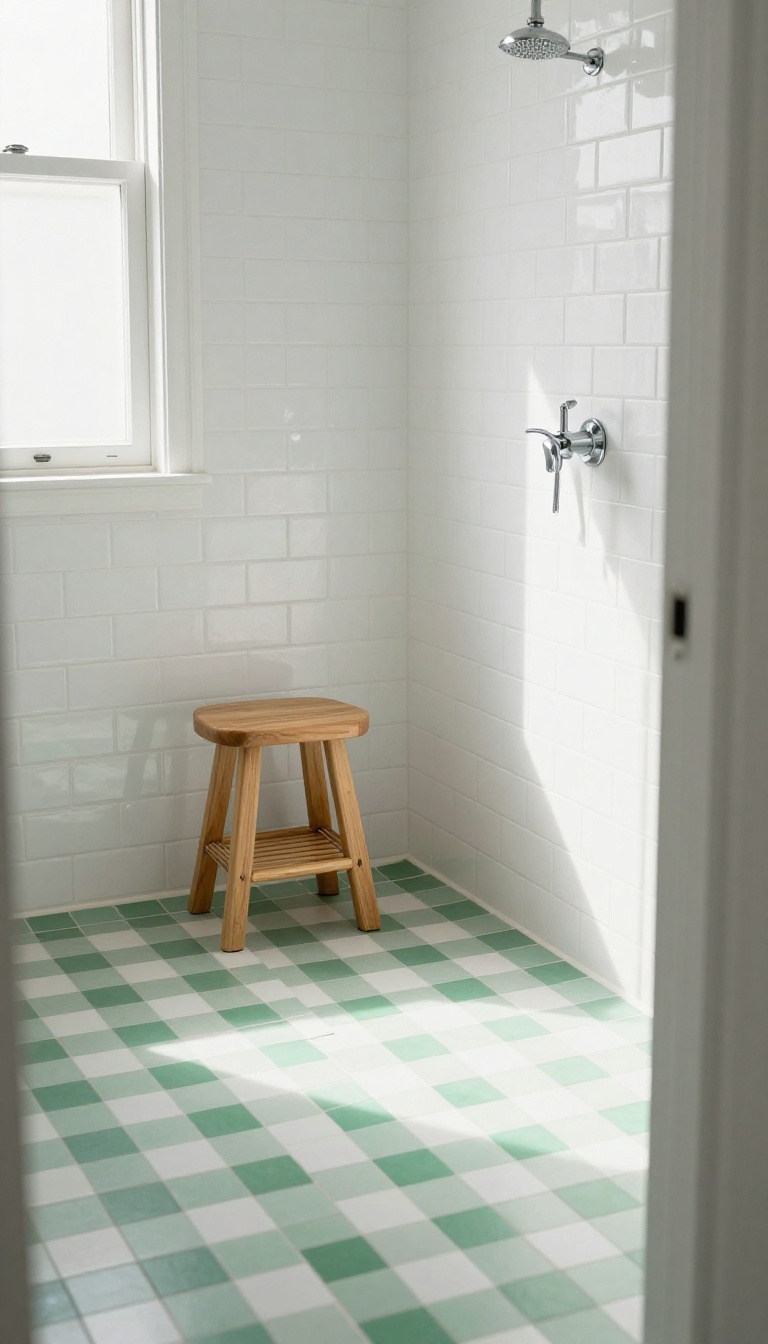
A checkerboard floor is a bold move, but when done in green and white, it feels fresh and fun rather than overwhelming. This pattern instantly adds a retro diner or vintage bathhouse charm, making your shower feel like a happy place to start the day. The best part?
You get the color payoff without covering every wall in green.
Pairing a green and white checkerboard floor with simple white wall tiles creates a balanced look that's both playful and timeless. The pattern draws the eye down, making the shower feel grounded and intentional. Plus, the high-contrast design helps hide soap scum and water spots better than solid dark tiles.
Choosing The Right Green
The shade of green you pick sets the mood. A soft sage keeps things airy and subtle, while a deep emerald adds drama and richness. For a truly retro feel, go with a mint green or a 1950s-inspired pale green.
Lighter greens make the space feel bigger, darker greens add coziness.
Tile Size And Layout
Classic 2-inch or 4-inch square tiles are the go-to for checkerboard patterns, but you can also use larger formats for a modern twist. A diagonal layout adds extra visual interest, while a straight grid feels more traditional. Just make sure the grout lines are clean and even to keep the pattern crisp.
Pairing With Walls And Fixtures
White subway tile is a natural partner for this floor, keeping the look clean and classic. For a bit more personality, try a soft cream or off-white wall tile. Black or brushed nickel fixtures add a nice contrast, while chrome keeps things shiny and retro.
Add a wooden stool or bamboo mat to warm up the space.
10. Forest Green Hexagon Tiles for a Geometric Twist
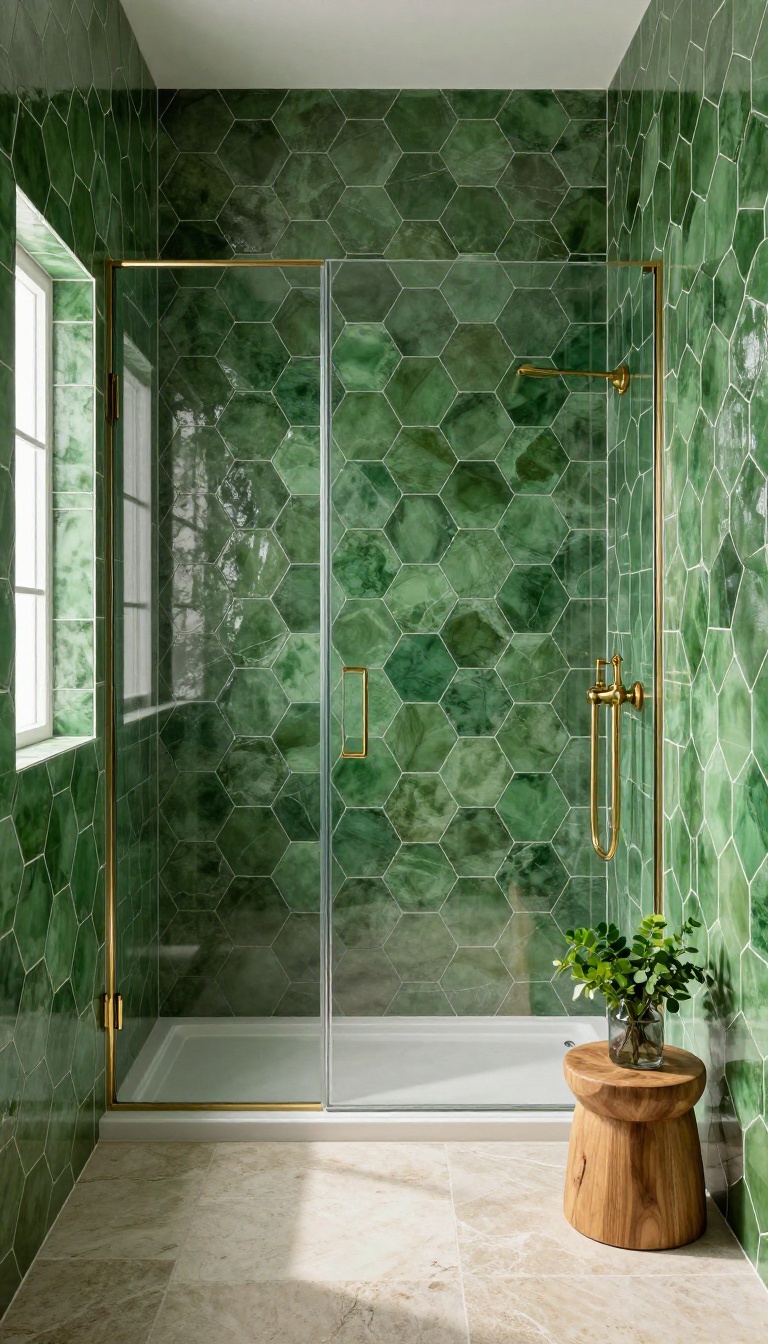
Hexagon tiles have a way of making any surface feel more dynamic, and when they're forest green, they bring a fresh, organic energy to the shower. The six-sided shape breaks up the monotony of standard square tiles, adding a subtle pattern that catches the eye without overwhelming the space. It's a simple swap that can completely change the personality of your bathroom.
Forest green hexagon tiles are a fantastic choice if you want to add depth and texture to your shower walls or floor. The deep, rich hue feels luxurious and grounded, while the geometric shape introduces a modern, almost honeycomb-like rhythm. Whether you use them as a full wall treatment or as an accent strip, they create a focal point that feels both intentional and stylish.
Why Hexagons Work In A Shower
Hexagon tiles naturally draw the eye because of their repeating, interlocking pattern. The shape adds visual interest without being too busy, especially when the grout lines are kept thin. In a shower, where surfaces are often plain and smooth, hexagons provide a tactile and visual break that makes the space feel more curated.
Plus, the forest green shade is dark enough to hide soap scum and water spots better than lighter tiles, which is a practical bonus.
Pairing With Grout And Fixtures
The grout color you choose can dramatically alter the look. White or light gray grout will make the hexagon pattern pop, emphasizing the geometric shapes. For a more seamless, modern look, opt for a grout that matches the tile color, like a deep green or charcoal.
When it comes to fixtures, brushed brass or matte black hardware complements forest green beautifully, adding warmth and contrast. Chrome also works if you prefer a cleaner, more traditional feel.
Where To Use Them
You don't have to cover the entire shower in hexagons to make an impact. Consider using them on a single accent wall behind the shower bench or in the niche to create a focal point. Another idea is to use them on the shower floor, which adds grip and visual interest underfoot.
If you're feeling bold, a full hexagon wall can be stunning, especially when paired with simpler, larger tiles on the other walls to balance the pattern.
11. Green Tile Wainscoting with Glass Panels for a Classic, Open Feel
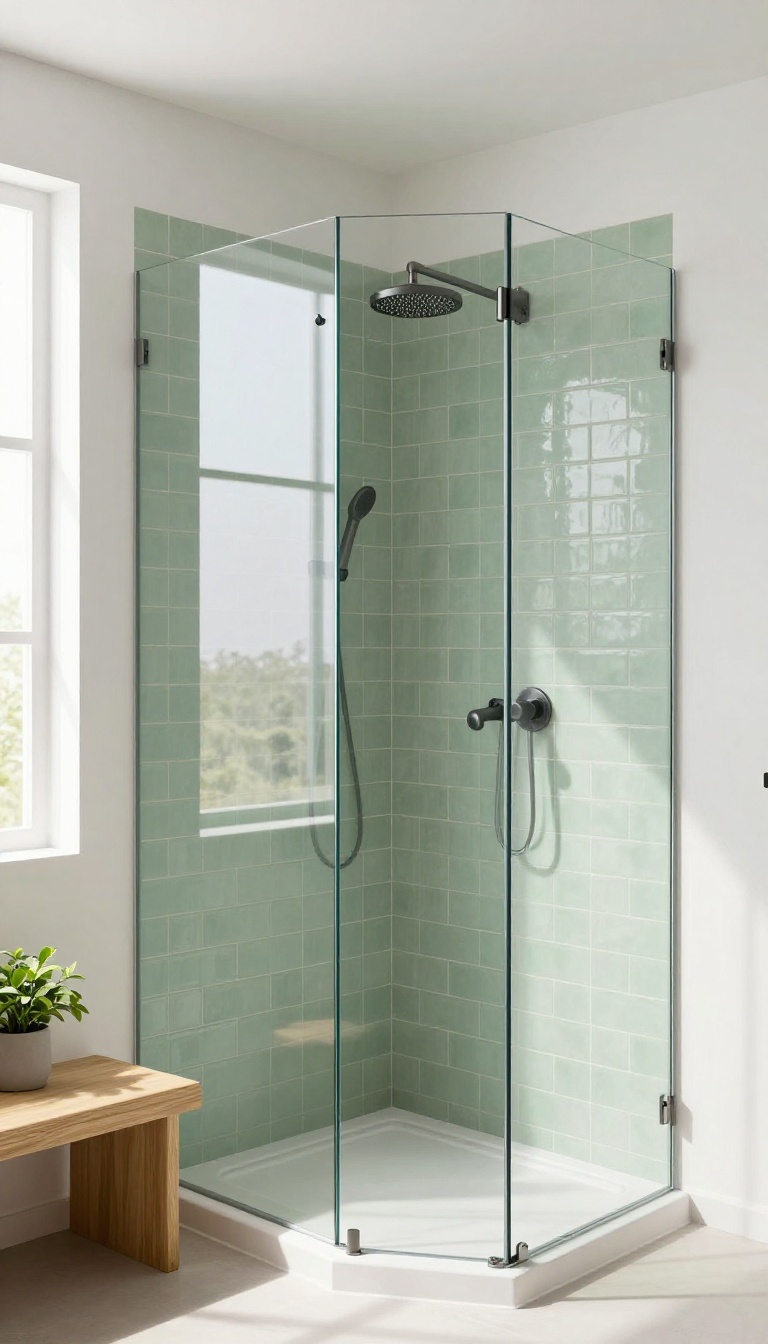
Wainscoting isn't just for dining rooms. In the shower, a band of green tile on the lower walls topped with clear glass panels creates a look that's both classic and refreshingly open. The glass lets light travel freely, so the space feels larger and airier, while the tile anchors the design with a grounded, natural hue.
It's a smart way to introduce green without overwhelming the senses.
This approach works especially well in bathrooms with good natural light or where you want to maintain a sense of openness. The glass panels above the tile act as a protective barrier while keeping the visual line clean and uninterrupted. You can choose a glossy green tile to reflect light or a matte finish for a softer, more muted effect.
Pair it with brushed nickel or matte black fixtures to complement the green without competing for attention.
Choosing The Right Green
The shade of green you pick sets the entire mood. For a calm, spa-like feel, go with a soft sage or a muted olive. If you prefer something more dramatic, a deep emerald or forest green adds richness and depth.
Lighter greens work well in compact showers because they don't absorb as much light. Darker greens can make a large shower feel cozier and more intimate.
Glass Panel Options
Clear glass is the obvious choice to maintain that open look, but you can also consider frosted or textured glass for a bit more privacy while still letting light pass through. Frameless panels offer a sleek, modern appearance, while framed panels add a touch of traditional detail. Think about how much water you need to contain and choose a panel height that works with your shower layout.
Styling The Transition
The line where tile meets glass is a design opportunity. A slim metal trim in chrome, brass, or black creates a crisp, finished edge. Alternatively, you can let the tile end naturally and run a bead of clear silicone to seal the seam.
For a more integrated look, extend the tile a few inches above the glass line or add a narrow shelf at the transition point for shampoo bottles.
12. Ombre Green Tile Gradient for a Custom, Artistic Statement
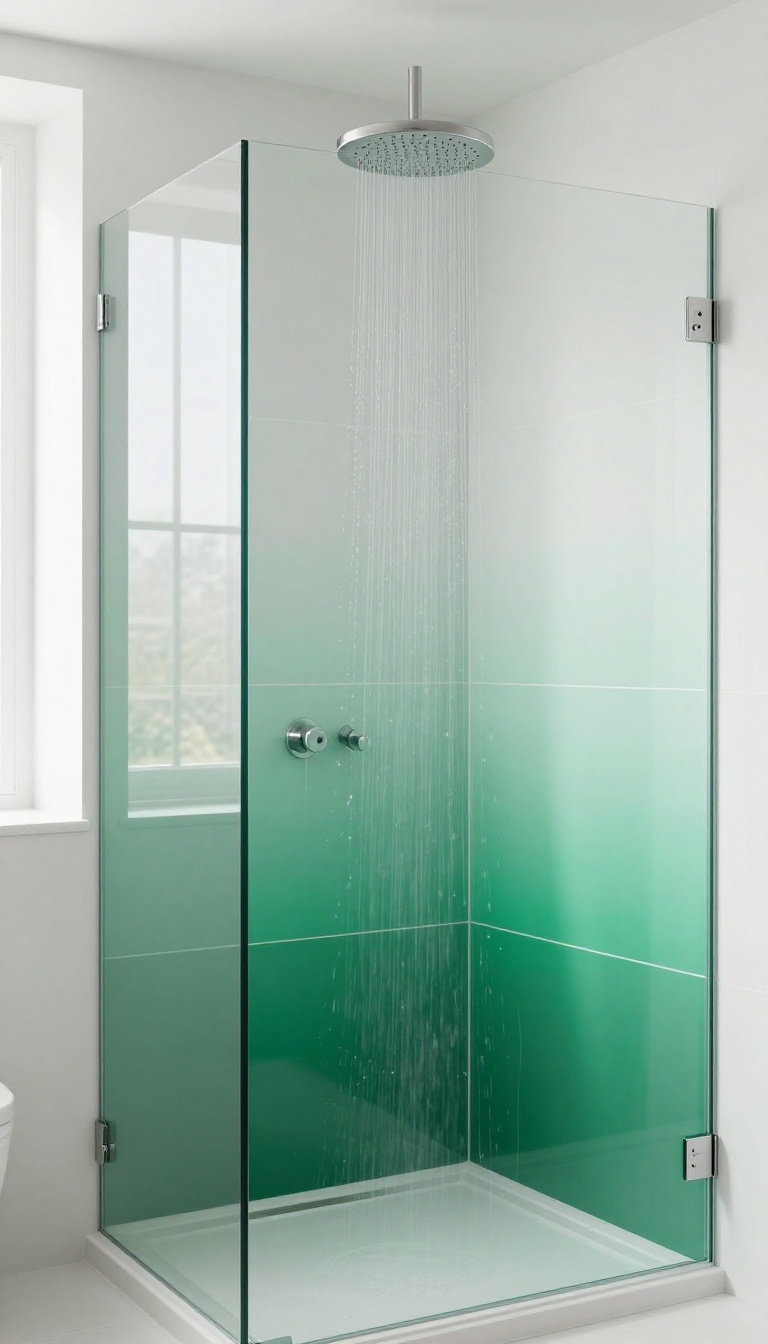
An ombre gradient is a bold way to make your shower feel like a piece of art. By blending shades of green from deep to light, you create a custom look that’s both eye-catching and calming. It’s a technique that works in any size bathroom, adding depth and movement without overwhelming the space.
The ombre effect is all about smooth transitions. You can go from dark emerald at the bottom to soft mint at the top, or reverse it for a lighter feel. The key is choosing tiles in the same finish—matte, gloss, or textured—so the gradient looks intentional.
You’ll need to plan the layout carefully, arranging tiles in a sequence that feels natural. This is a project where a little extra time upfront pays off with a stunning result.
Picking The Right Shades
Start with a base color and then pick lighter and darker versions of it. For example, use a deep forest green, a mid-tone sage, and a pale seafoam. Stick to three to five shades to keep the transition smooth.
If you’re unsure, order samples and lay them out in natural light to see how they work together.
Placement Ideas
You can use the gradient on one accent wall, the entire shower, or just the floor. A vertical gradient from floor to ceiling makes the room feel taller, while a horizontal gradient adds width. For a subtle touch, try the gradient only in the niche or on a bench.
Grout And Finish Choices
Choose a grout color that blends with the tiles, like a soft gray or white, to keep the focus on the gradient. A glossy finish will reflect light and make the colors pop, while matte gives a more muted, natural vibe. Consider the overall style of your bathroom—glossy works well in modern spaces, matte fits rustic or traditional designs.
13. Green Penny Tile Floor with Neutral Walls for Subtle Texture
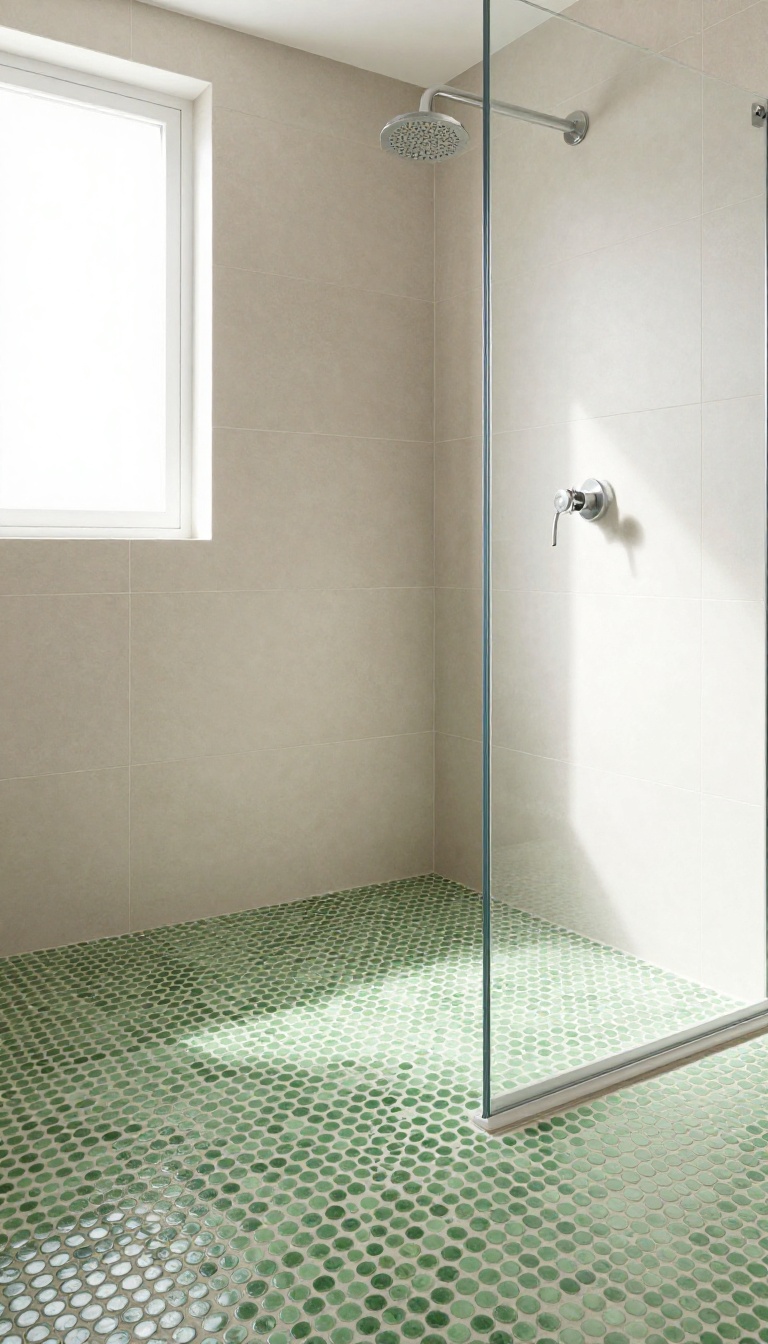
Penny tiles are a classic choice that brings a playful yet refined texture to any floor. When you choose a green penny tile, you get a subtle wash of color that doesn't demand all the attention. Pair it with neutral wall tiles, and you've got a shower that feels balanced, calm, and quietly stylish.
The beauty of a green penny tile floor lies in its ability to add visual interest without overwhelming the space. The small, round tiles create a gentle texture that catches light and adds depth, while the green hue introduces a natural, earthy tone. Neutral walls—think soft white, warm beige, or light gray—let the floor shine without competing for attention.
This combination works especially well in smaller bathrooms, where a bold floor could feel heavy, but a subtle texture keeps things airy and open.
Why Penny Tiles Work So Well In Showers
Penny tiles have been around for over a century, and they're still a favorite because they're practical and pretty. Their small size means they conform easily to curves and corners, making them perfect for shower floors that need a little flexibility. Plus, the many grout lines provide excellent traction, so you don't have to worry about slipping.
And because they're so small, they create a dense, mosaic-like surface that feels luxurious underfoot.
Choosing The Right Shade Of Green
Not all green penny tiles are created equal. For a subtle look, go with a sage or mint green—these shades are soft and calming, and they blend effortlessly with neutral walls. If you want a bit more depth, a deep emerald or forest green can add richness without being overpowering, especially if you keep the walls light.
Consider the lighting in your bathroom: natural light brings out the vibrancy of green, while artificial light might mute it, so test a few samples in your space before committing.
Pairing With Neutral Walls For A Cohesive Look
Neutral walls are the perfect backdrop for a green penny tile floor. White subway tiles are a classic choice that keeps the look fresh and clean, while beige or greige walls add warmth and softness. You can also play with textures—like a matte finish on the walls versus a glossy penny tile—to add dimension without adding color.
The key is to let the floor be the star, so keep the walls simple and let the green do the talking.
FAQ
What are the best green tile colors for a small shower?
For small showers, lighter shades like sage or mint green work best as they reflect light and make the space feel larger. Avoid very dark greens, which can make the area feel cramped.
How do I clean green tile in the shower?
Use a mild, pH-neutral cleaner and a soft sponge or cloth. Avoid abrasive scrubbers that can scratch the tile surface. Regular wiping after each use helps prevent soap scum and hard water stains.
Can I mix green tile with other colors?
Absolutely. Green pairs beautifully with white, cream, brass, gold, and even wood tones. For a bolder look, consider contrasting with black or navy accents.
What grout color goes best with green tile?
White grout creates a crisp, clean look, while dark grout adds contrast and definition. For a seamless appearance, choose a grout that matches the tile color.
Is green tile a good investment for resale?
Yes, green tile is a timeless choice that appeals to many buyers. It adds a touch of nature and sophistication, making your bathroom stand out in a positive way.
Conclusion
Green tile showers offer a perfect blend of freshness and timelessness, making them a smart choice for any bathroom. Whether you prefer a bold emerald statement or a subtle sage backdrop, these ideas prove that green is anything but ordinary. Take your time exploring the options and think about what fits your style and space best.
With the right tile, your shower can become a daily retreat that feels both modern and enduring. Happy renovating!