13 Easy Blue Tile Shower Ideas for a Fresh Decorative Update
A blue tile shower can turn an ordinary bathroom into a calming oasis. The right shade of blue—from soft powder to deep navy—sets the tone for your entire space.
And the best part? You don't need a full renovation to make a big impact.
Swapping out your shower tile is one of the most effective ways to refresh the look and feel of your bathroom. Whether you're a DIY enthusiast or planning a professional update, these 13 easy blue tile ideas will help you create a shower that feels both fresh and timeless.
1. Classic Blue Subway Tile with White Grout
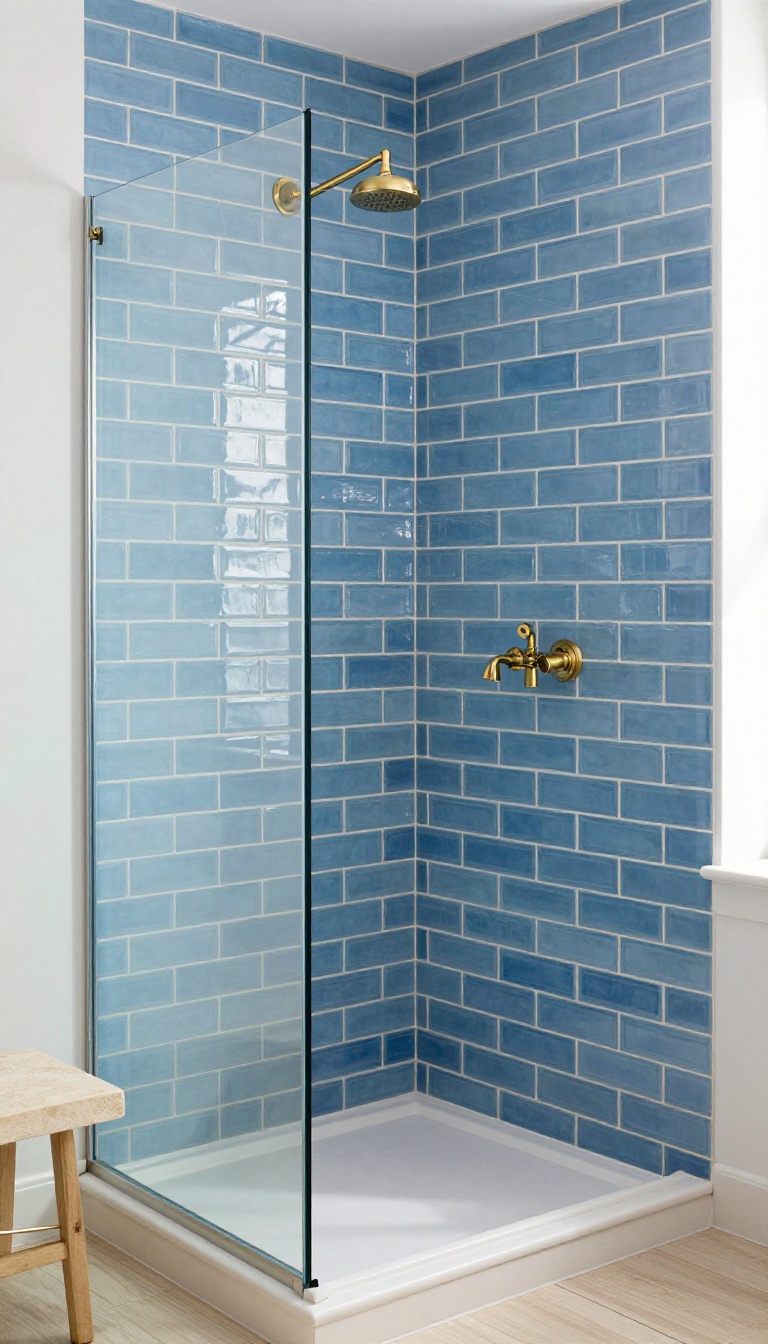
Subway tile has been a bathroom staple for over a century, and for good reason. It’s simple, versatile, and never goes out of style. When you pair it with a soft blue glaze and bright white grout, you get a shower that feels both timeless and refreshingly clean.
The crisp contrast between the blue tiles and white grout lines makes the color pop while keeping the overall look light and airy. This combination works well in both small and large showers, and it’s an easy way to introduce color without overwhelming the space. Plus, the classic layout means you can mix in other design elements—like brass fixtures or natural stone accents—without worrying about clashing.
Why White Grout Works So Well
White grout brightens the entire shower by reflecting light, which is especially helpful in bathrooms without a lot of natural light. It also creates a clean, crisp grid that makes the blue tiles stand out. The key is to use a high-quality, stain-resistant grout and seal it properly to keep it looking fresh for years.
Choosing The Right Shade Of Blue
Not all blues are created equal. A pale sky blue feels light and spa-like, while a deeper navy adds drama and sophistication. For a classic look, stick with a mid-tone blue that isn’t too bright or too dark.
You can always test a few samples in your shower’s lighting to see how they change throughout the day.
Layout Options To Consider
The traditional brick pattern is a safe bet, but you can also try a herringbone or vertical stack for a modern twist. A vertical layout can make the ceiling feel higher, while herringbone adds visual interest. Whichever you choose, the white grout will keep the design cohesive and easy on the eyes.
2. Navy Blue Hexagon Tile for a Modern Twist
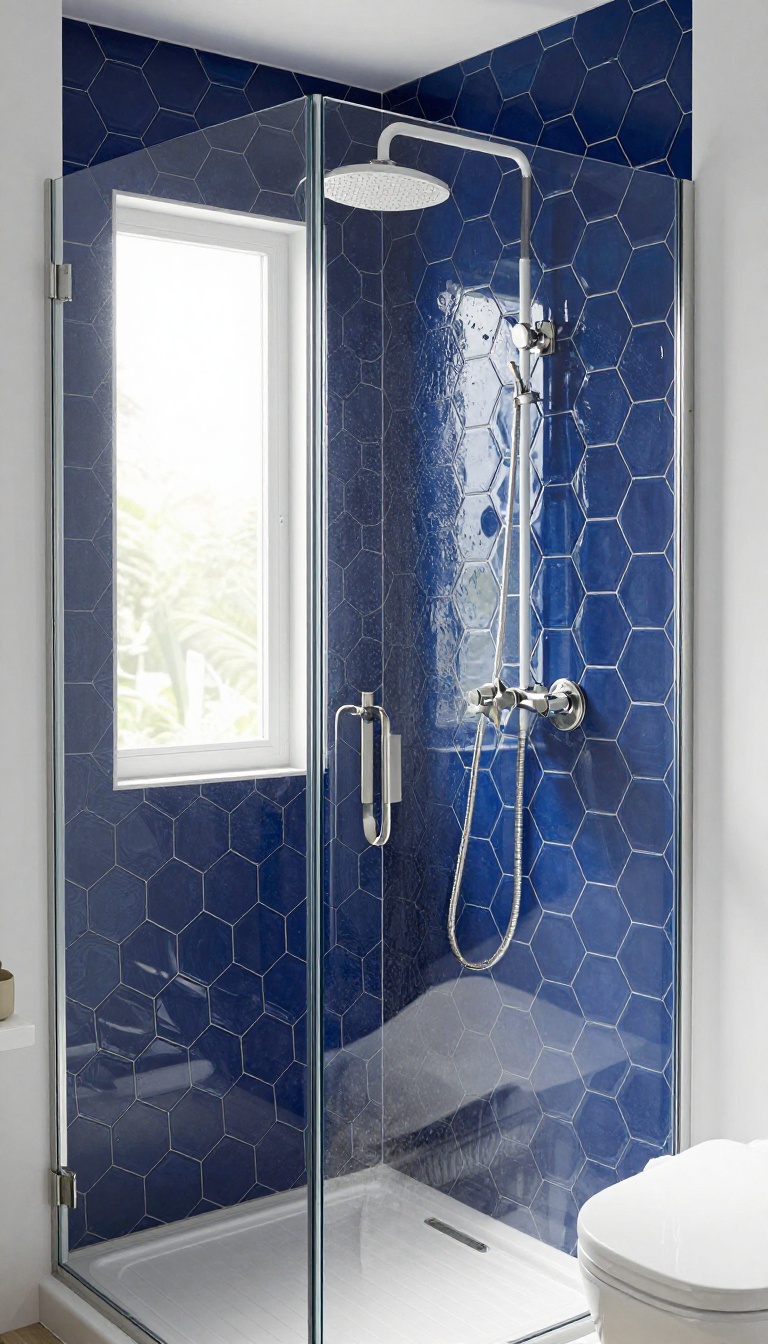
If you're drawn to bold, contemporary design, navy blue hexagon tiles deliver a striking geometric look. The deep, saturated color adds drama while the six-sided shape keeps things playful and modern. It's a combination that feels both fresh and timeless.
Navy hexagon tile instantly upgrades a shower with its rich color and dynamic pattern. The dark hue hides soap scum and water spots better than lighter shades, making it a practical choice for busy bathrooms. Plus, the small tile size creates lots of grout lines, which add texture and grip underfoot.
Balance The Dark Hue With Bright Accents
To keep the space from feeling too dark, pair navy hex tile with white grout and light-colored fixtures. A white showerhead, brushed nickel or chrome faucet, and a glass shower door help reflect light and open up the area. You can also add a light-colored shower curtain or a white bench for extra contrast.
Mix Hexagon Sizes For Extra Visual Interest
Instead of using one size throughout, try combining larger and smaller hexagon tiles in the same navy shade. This creates a subtle mosaic effect that adds depth without overwhelming the eye. It's a simple way to make your shower feel custom-designed.
Make It A Feature Wall
If you're not ready to commit to navy on every wall, use it on just one accent wall—the one behind the shower fixtures, for example. Keep the other walls in a light neutral like white or soft gray. This draws the eye to the tile and gives the shower a focal point that feels intentional.
3. Sky Blue Mosaic Accent Strip
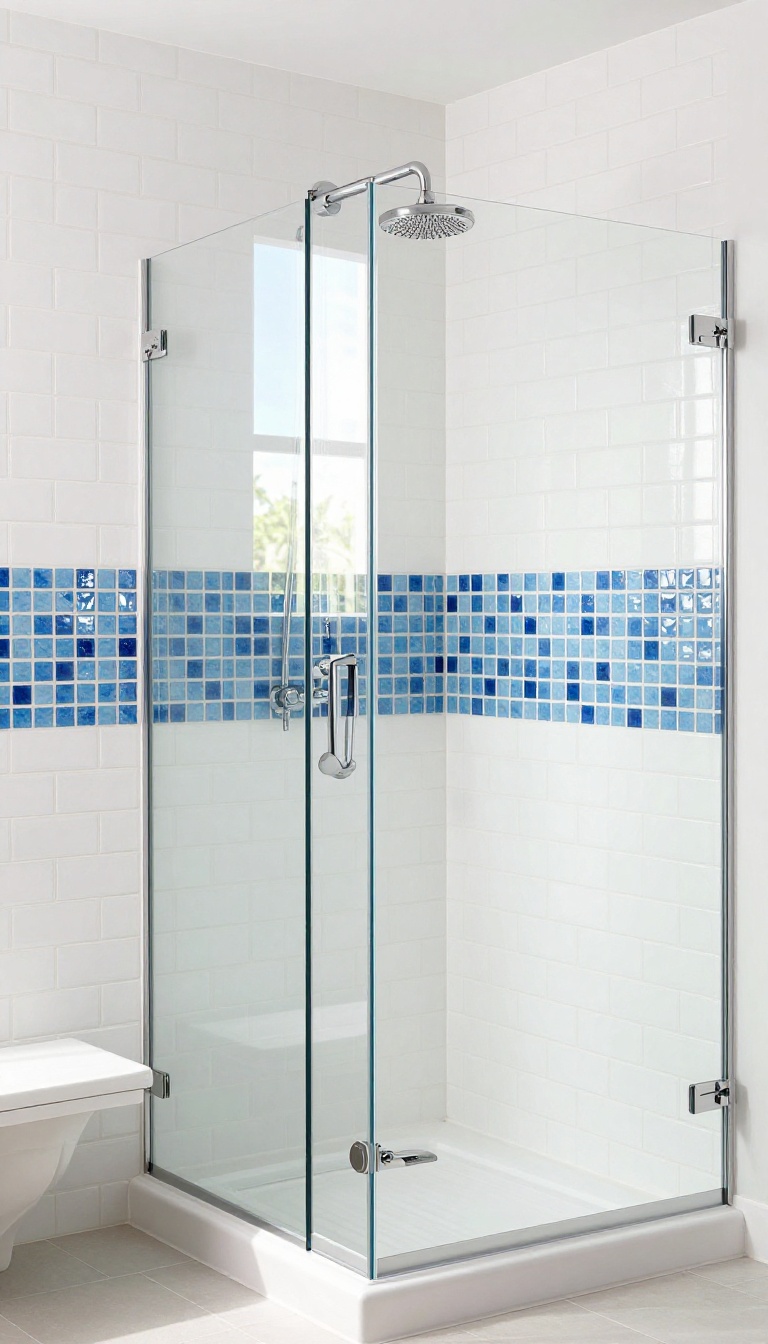
A sky blue mosaic accent strip is one of those small details that quietly elevates a shower. It doesn't shout for attention, but it adds just enough color to make the space feel intentional and fresh. The trick is placement: a single horizontal line at eye level or slightly above can break up large expanses of neutral tile without demanding a full redesign.
This idea works beautifully with white, gray, or beige subway tile. The mosaic strip acts like a piece of jewelry for your shower—small, polished, and surprisingly impactful. Because the strip is narrow, you can splurge on a higher-end glass or stone mosaic without blowing your budget.
And installation is straightforward enough for a confident DIYer, especially if you're already tiling the surrounding area.
Why A Thin Strip Works
A thin mosaic strip doesn't compete with the main tile. Instead, it creates a visual anchor that draws the eye horizontally, making the shower feel wider. It's also a forgiving project: if your tiles are slightly uneven, the busy pattern of the mosaic helps hide minor imperfections.
Plus, you can easily change the look later by swapping out the strip alone, which is much simpler than retiling the whole shower.
Placement Ideas
The most common spot is right at shoulder height, but you can also run the strip at the top of the shower wall, just below the ceiling, for a subtle crown effect. Another option is to place it at the midpoint of the wall, especially if you have a niche or bench to align with. For a more playful look, try two thin strips—one near the top and one near the bottom—to frame the shower without overwhelming it.
Mosaic Material Options
Glass mosaics are the most popular choice because they reflect light and add a hint of shimmer. Stone mosaics, like travertine or slate, give a more organic feel. If you want a matte finish, porcelain mosaics are durable and easy to clean.
Whichever material you pick, make sure the color is a true sky blue—not too pale, not too turquoise—so it reads as fresh and airy.
4. Blue Herringbone Pattern for Visual Interest
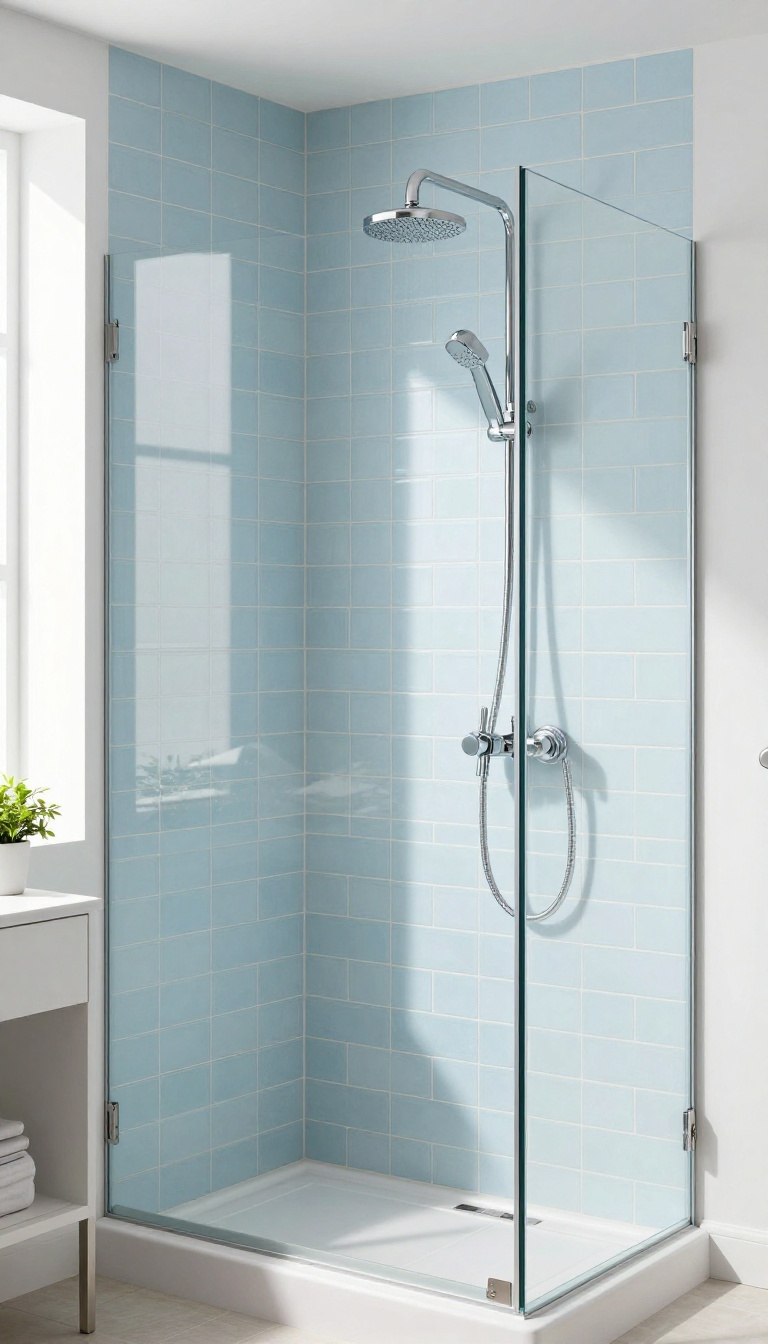
Herringbone is a classic pattern that instantly adds texture and movement to any surface. When done in blue, it brings a fresh, dynamic energy to your shower without overwhelming the space. The key is choosing the right shade and scale to keep the look balanced and inviting.
Herringbone layout in blue tiles adds texture and movement. Use a lighter blue to keep the pattern from feeling too heavy. The zigzag lines draw the eye upward, making the shower feel taller and more spacious.
This pattern works beautifully as a full wall feature or as an accent behind the fixtures.
Choosing The Right Shade
Lighter blues like powder, sky, or soft periwinkle keep the herringbone pattern airy and bright. They reflect light well, making a small bathroom feel larger. Deeper blues like navy or cobalt can be striking but might feel heavy if used on every wall.
Use them sparingly, perhaps on one accent wall or as a border.
Scale And Tile Size
Smaller tiles create a more intricate, detailed pattern, while larger tiles give a cleaner, more modern look. For a classic herringbone, rectangular tiles in a 2×6 or 3×6 size work well. If you want a bolder statement, consider larger format tiles.
Just remember that smaller tiles mean more grout lines, which can affect maintenance.
Grout Color Matters
The grout color can dramatically change the look of your herringbone pattern. White or light gray grout keeps the pattern subtle and seamless. Darker grout, like charcoal, makes the herringbone stand out more and adds contrast.
Choose a grout that complements your tiles and the overall bathroom style.
Where To Use Herringbone
You can use herringbone on the main shower wall, the floor, or as an accent strip. A full herringbone wall is a stunning focal point. For a more subtle approach, add a herringbone band at the midpoint or behind the shower bench.
Mixing it with solid tiles in a complementary blue can create a custom look.
5. Ombre Blue Tile Transition
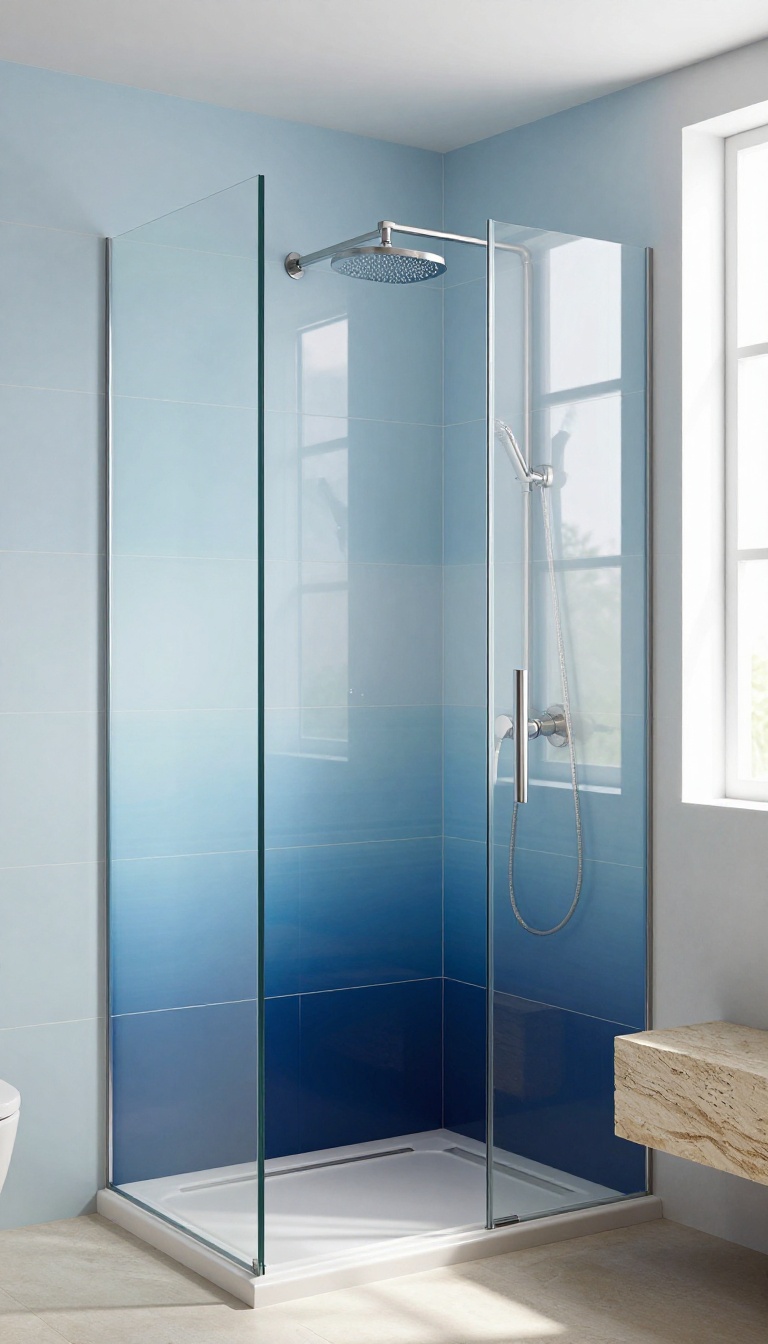
An ombre effect in your shower is like wearing a sunset on your walls—except cooler and more calming. By blending shades of blue from light to dark, you create a gradient that feels both custom and artistic. This technique works beautifully in showers of any size, adding depth and a sense of movement without overwhelming the space.
The key to a successful ombre is choosing the right tiles and planning the transition carefully. Start with the lightest shade at the top and gradually deepen the color as you move down. This mimics natural light and makes the ceiling feel higher.
You can also reverse it, with the darkest shade at the top for a moody, cocooning effect. Either way, the gradient draws the eye and makes the shower feel like a feature, not just a functional space.
Choosing Your Blue Palette
Pick a palette of three to five shades that share the same undertone—cool blues with hints of gray or green work well together. For a seamless transition, choose tiles in the same finish and size, so the only variation is color. Glossy tiles reflect light and enhance the gradient, while matte finishes soften it.
Consider using large-format tiles for a smoother blend, or small mosaics for a more pixelated, artistic effect.
Placement And Layout Tips
For a classic ombre, install the lightest tiles at the top and gradually darken them as you reach the floor. You can create a horizontal band effect, or go for a diagonal or vertical gradient for a more dynamic look. If you're worried about the transition feeling abrupt, use an extra shade in the middle to ease the change.
Plan the layout on a dry run before setting any tiles, so you can adjust the placement of each shade for the most natural flow.
Pairing With Fixtures And Accents
Keep the rest of the shower simple to let the ombre shine. White or chrome fixtures blend seamlessly, while black or brushed nickel add contrast. A clear glass shower door lets the gradient be the star.
Add a natural wood stool or a few green plants to bring warmth and balance the cool blues. Avoid adding other bold patterns—the ombre is already a statement.
6. Blue Penny Tile Floor with White Walls
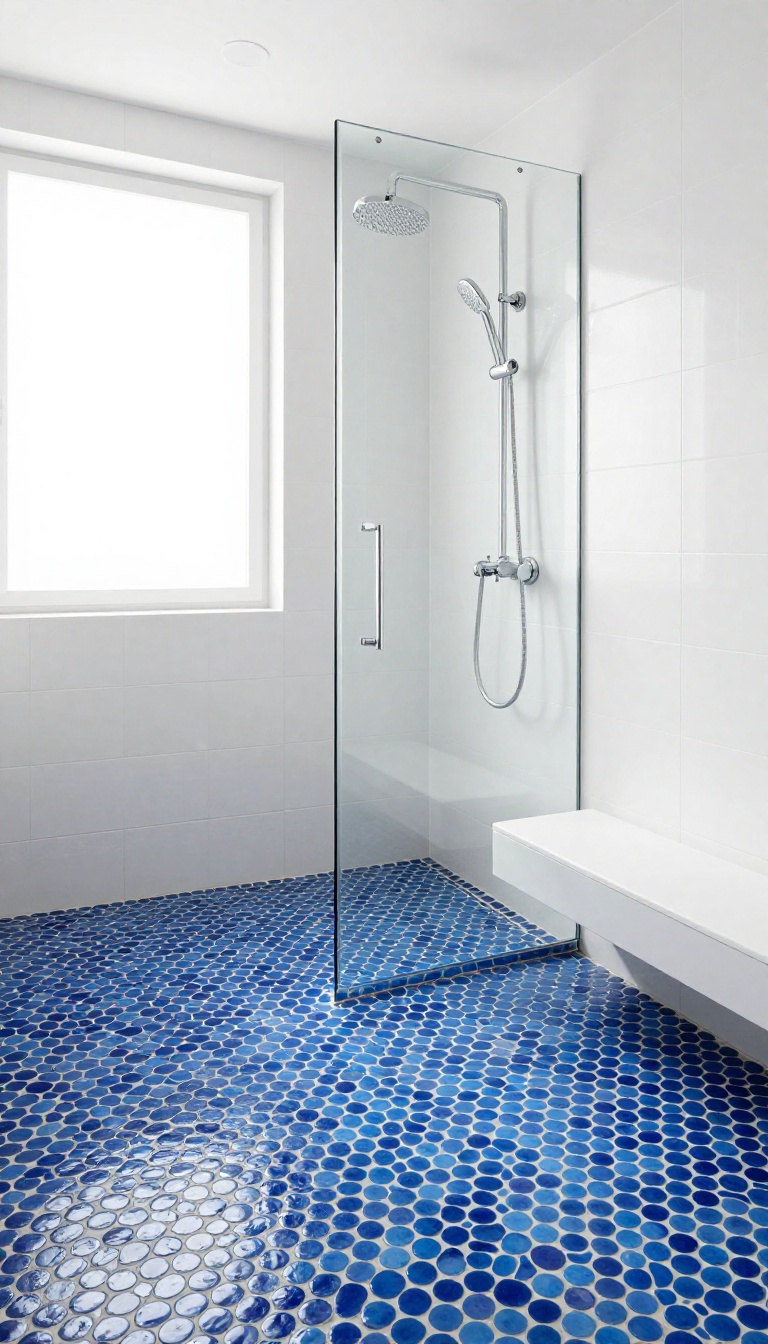
Sometimes the smallest tiles make the biggest splash. Penny tiles bring a retro charm that feels both playful and polished, especially when you let them own the floor. Pairing that blue mosaic with crisp white walls keeps the eye grounded and the room airy.
This combination works because it gives you a bold focal point without overwhelming the space. The white walls reflect light, making the shower feel larger, while the blue floor adds a pop of color that anchors the design. It's a look that suits everything from modern farmhouse to coastal cottage.
Why Penny Tiles Work So Well
Penny tiles are round and small, which means they conform to curves and corners easily. That makes them perfect for shower floors, where you need flexibility and slip resistance. The grout lines create a textured surface that feels great underfoot, and the blue hue hides soap scum better than white.
Choosing The Right Shade Of Blue
From soft powder blue to deep navy, the shade you pick sets the mood. Lighter blues keep things airy and bright, while darker navy adds drama and depth. Consider the rest of your bathroom—if you have white fixtures, a mid-tone blue offers a nice contrast without going too dark.
Grout Color Matters
The grout you choose can change the whole look. White grout keeps the pattern crisp and clean, while gray or blue-toned grout blends for a more seamless appearance. Dark grout hides dirt better but can make the floor feel heavier.
Test a few options to see what complements your tile best.
7. Large-Format Blue Porcelain Slabs
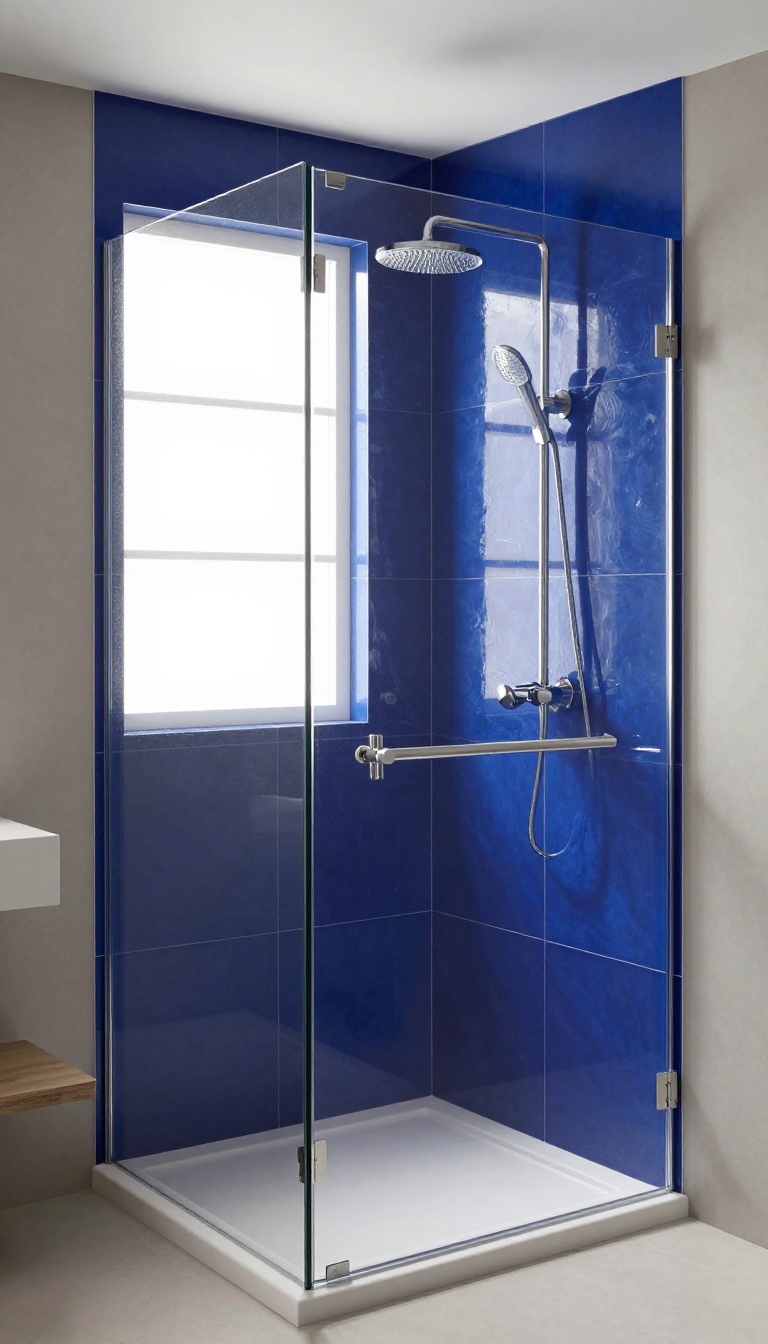
If you crave a shower that feels both expansive and serene, large-format blue porcelain slabs are a game-changer. These oversized tiles, often measuring 24×48 inches or larger, minimize grout lines to create a smooth, continuous surface that visually enlarges the space. The result is a sleek, minimalist aesthetic that feels more like a spa retreat than a standard bathroom.
Large-format slabs are not just about looks; they're also incredibly practical. Fewer grout lines mean less maintenance and fewer places for mold and mildew to hide. Plus, the sheer size of these tiles speeds up installation, covering more wall area in less time.
Whether you choose a soft powder blue for an airy feel or a deep navy for drama, slabs bring a touch of modern luxury that's hard to beat.
Why Choose Large Slabs?
The main draw of large-format tiles is their ability to create a seamless, uninterrupted surface. This is especially beneficial in smaller showers, where grout lines can visually break up the space and make it feel cramped. With slabs, the eye travels smoothly across the wall, giving the illusion of more room.
Additionally, the minimal grout lines are a breeze to clean—just a quick wipe and you're done.
Design Ideas With Slabs
One popular approach is to use the same blue slab on all shower walls for a monochromatic look. To add interest without breaking the seamless vibe, consider a contrasting niche or bench in a lighter or darker shade. Another option is to pair blue slabs with white or light gray grout for a subtle grid effect, or go with a matching grout to make the slabs appear even more monolithic.
Installation Tips
Because large slabs are heavy and rigid, they require a perfectly flat and level substrate. Use a high-quality thin-set mortar and a notched trowel to ensure full coverage. It's also wise to have a helper during installation, as handling these big pieces alone can be tricky.
For the best results, hire a professional who has experience with large-format tiles—it's worth the investment to get that flawless finish.
8. Blue and White Checkerboard Pattern
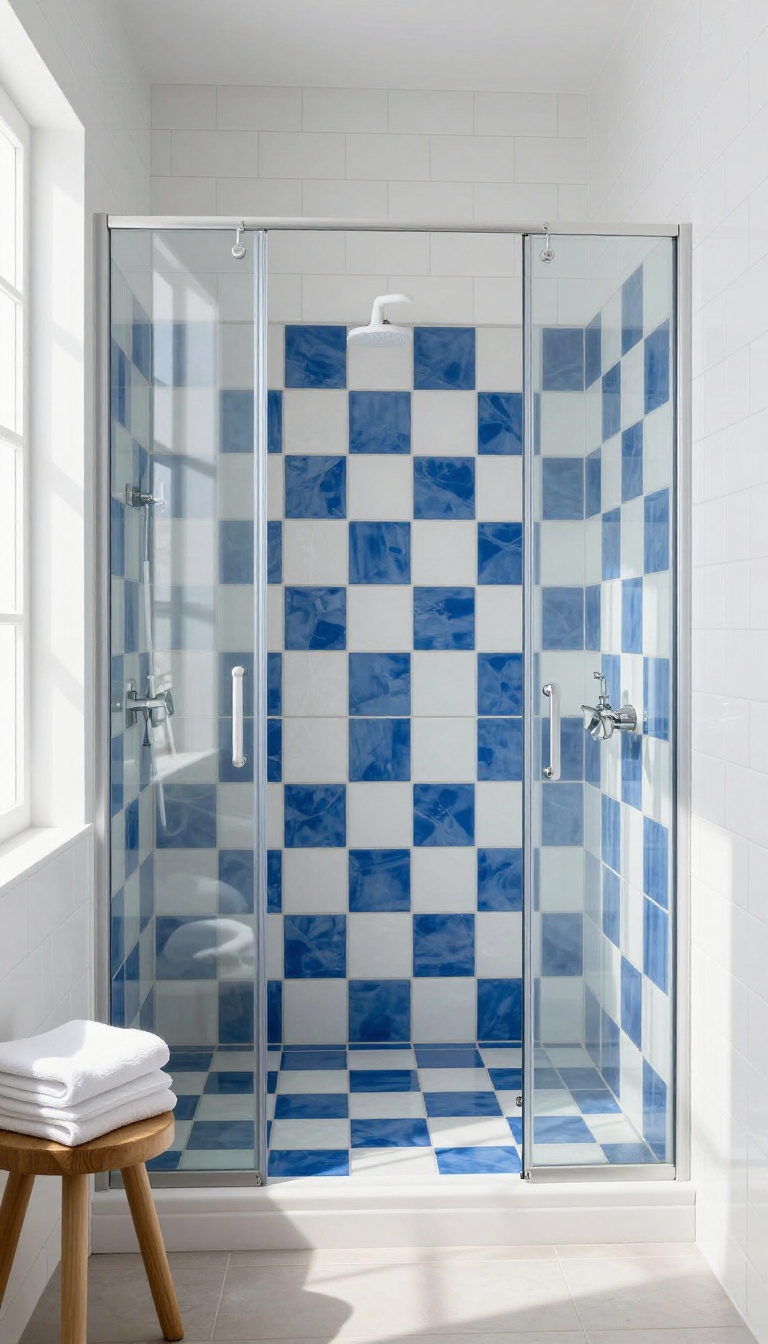
Checkerboard tiles have a way of making a bathroom feel playful and polished at the same time. When you swap the classic black and white for blue and white, you get a fresh twist that still nods to vintage charm. It’s a look that suits both classic and cottage-style bathrooms, and it’s surprisingly easy to pull off.
The blue and white checkerboard pattern is all about balance. The crisp white squares keep the space feeling bright, while the blue adds a calm, coastal vibe. You can use this pattern on the shower floor, the walls, or even as a border.
It’s a bold choice, but it doesn’t have to be overwhelming—you can scale the tile size to fit your space and style.
Choosing The Right Shade Of Blue
The shade of blue you pick sets the whole mood. A soft powder blue feels airy and gentle, perfect for a cottage bathroom. A deeper navy adds drama and pairs beautifully with white fixtures.
For a more playful look, try a bright cobalt or a teal-leaning blue. The key is to think about the overall vibe you want—calm and serene or bold and energetic.
Tile Size And Layout
Checkerboard patterns work with any tile size, but the scale changes the feel. Small mosaic tiles create a busy, intricate look that’s great for a floor or an accent wall. Larger tiles, like 8×8 or 12×12, make a bolder statement and can make a small shower feel more open.
You can also lay the checkerboard on a diagonal for a more dynamic effect.
Pairing With Other Elements
To keep the checkerboard from feeling too busy, balance it with simple fixtures and accessories. White or chrome hardware lets the tile shine. A glass shower door keeps the pattern visible without blocking light.
Add some natural textures, like a wooden stool or a woven basket, to soften the look and bring in warmth.
9. Blue Subway Tile with Dark Grout
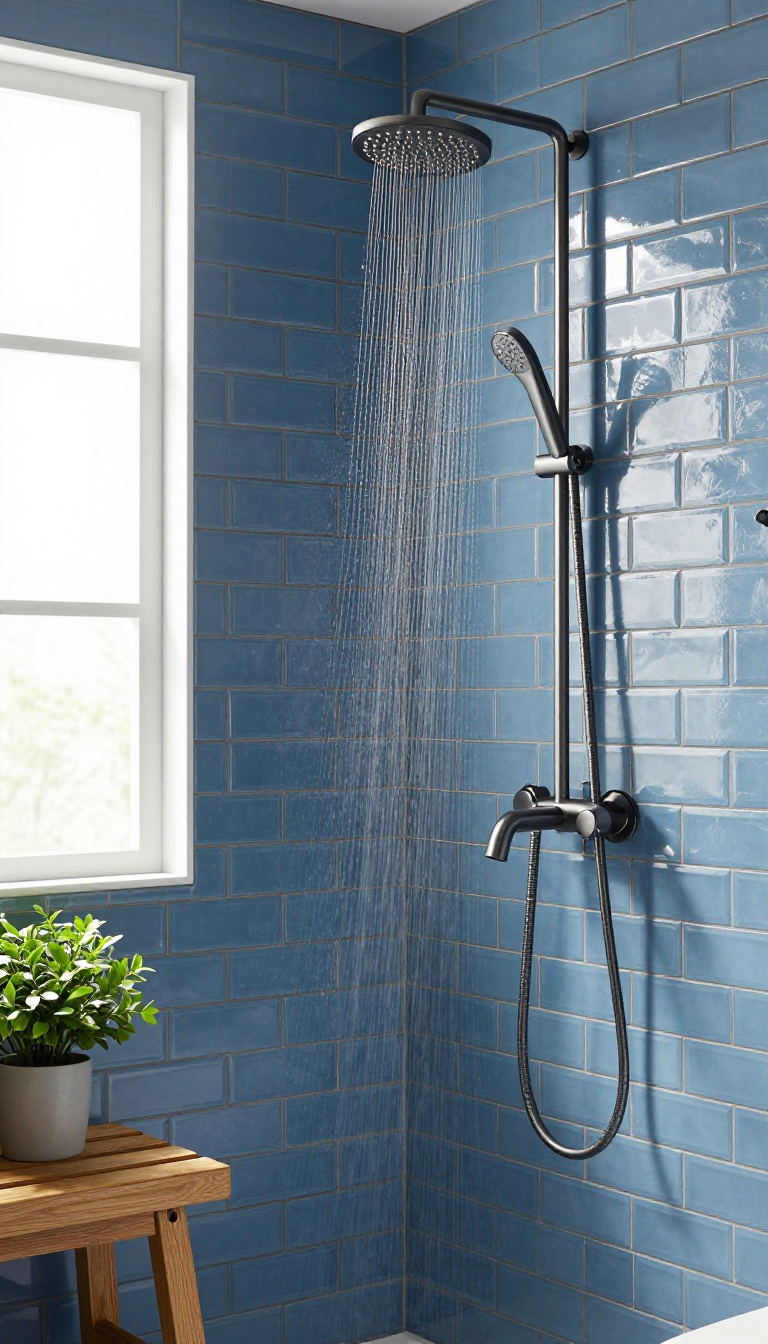
Pairing classic blue subway tile with dark grout is a surefire way to inject some personality into your shower. The deep contrast makes each tile pop, giving the wall a crisp, almost graphic quality. It's a simple twist on a timeless look that feels both current and grounded.
The dark grout does more than just hold the tiles in place—it becomes a design element in its own right. It adds definition and depth, turning a flat surface into something with texture and rhythm. Whether you use a charcoal, slate, or even a deep navy grout, the effect is striking without being overwhelming.
Why Dark Grout Works
Dark grout creates a strong, graphic outline around each tile. This makes the pattern more visible and adds a modern, tailored feel. It also hides dirt and soap scum better than light grout, which is a practical bonus for a shower.
Choosing The Right Blue
Lighter blues like sky or periwinkle look fresh and airy with dark grout, while mid-tone blues like cobalt or denim offer a bolder contrast. Deep navy tiles with dark grout can feel moody and luxurious, but make sure you have enough lighting to keep it from feeling too dark.
Grout Width And Finish
A standard 1/8-inch grout line gives a clean, precise look. For a more rustic or handcrafted feel, go slightly wider. Matte grout tends to look more subtle, while glossy grout adds a bit of shine.
Choose a finish that complements your tile's texture.
Pairing With Fixtures And Accents
Dark grout pairs beautifully with brushed nickel or matte black fixtures. Add warm wood accents or a teak bench to soften the look. Keep the rest of the bathroom simple so the tile remains the star.
10. Blue Glass Tile for a Sparkling Finish
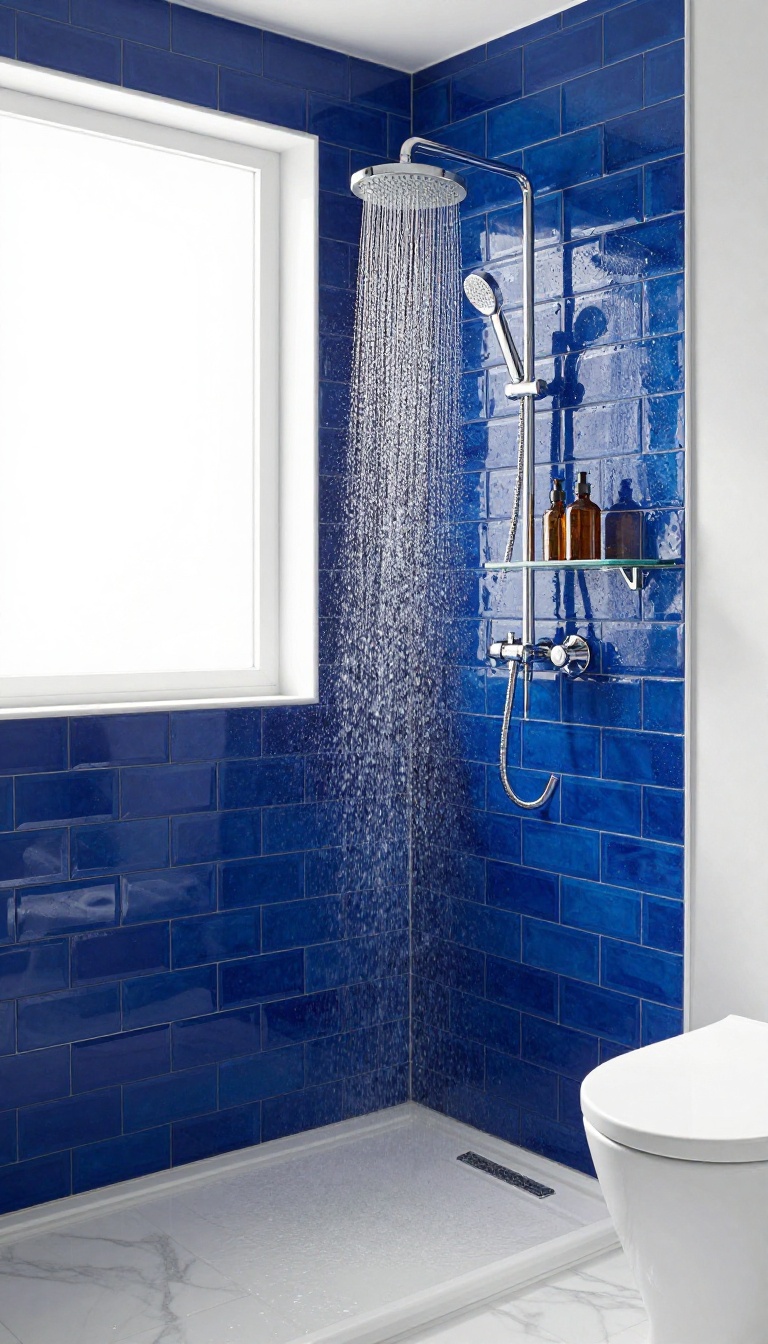
Glass tiles in shades of blue bring a luminous quality to your shower that other materials just can't match. They catch the light and bounce it around, making the space feel brighter and more open. Whether you cover a full wall or just a small niche, glass adds a touch of elegance that's hard to beat.
Using blue glass tile is a straightforward way to upgrade your shower's look without a complete overhaul. The reflective surface works well with both natural and artificial light, and it pairs beautifully with chrome or brushed nickel fixtures. You can go bold with a full glass wall or keep it subtle with a glass accent strip—either way, the effect is striking.
Full Wall Impact
Covering an entire wall in blue glass tile creates a stunning focal point. The glossy finish makes the wall feel like a sheet of water, especially in shades like aqua or sapphire. To keep it from feeling too cold, mix in some matte tiles or use a warm-toned grout.
Accent Niche
If a full wall feels like too much, a glass tile niche is a perfect compromise. Use it to highlight your shampoo bottles or a bar of soap. The niche becomes a little jewel box within the shower, adding depth and a pop of color without overwhelming the space.
Mixing With Other Tiles
Glass tiles also work well when combined with ceramic or porcelain. For example, you could use blue glass as a decorative band in the middle of a white subway tile wall. This adds visual interest and a hint of luxury while keeping the overall look cohesive.
11. Blue Basketweave Tile for Texture
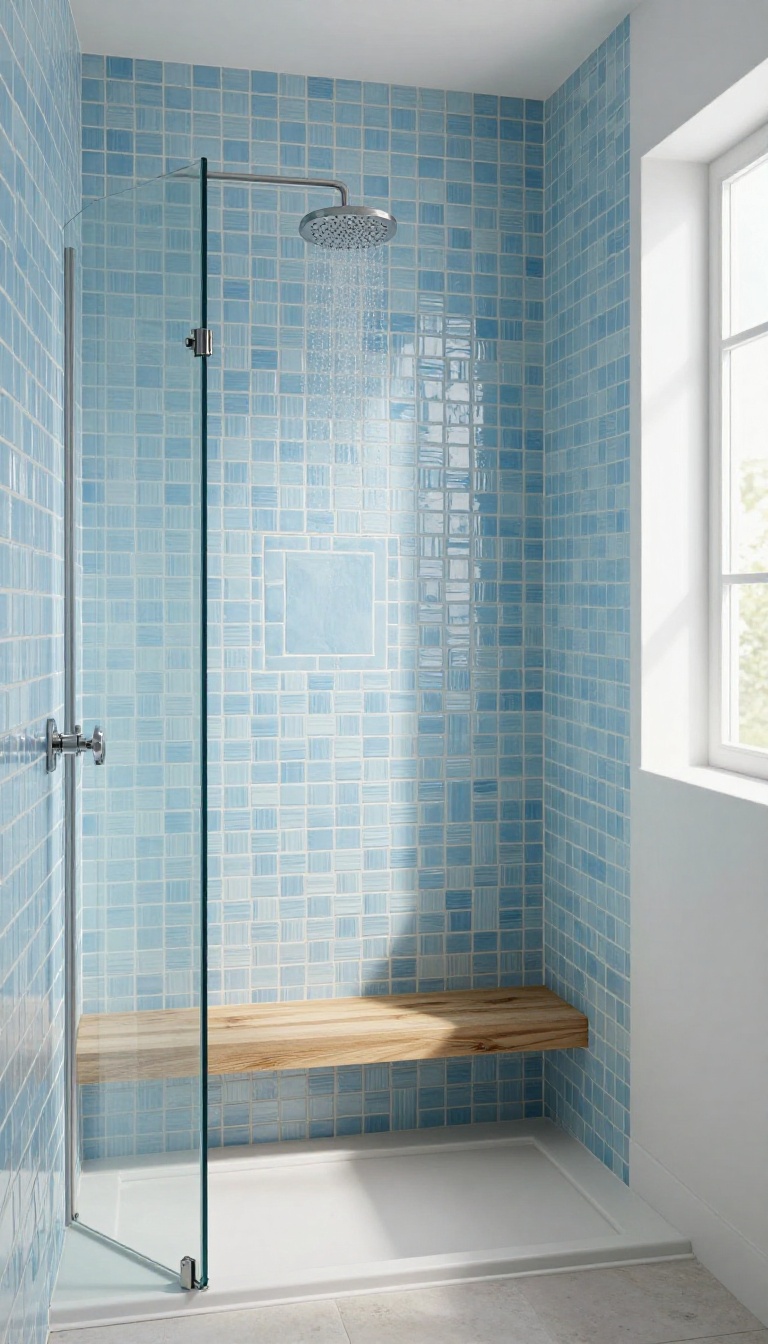
Basketweave tile brings a woven, dimensional look that feels both classic and current. In blue, it adds a soft, tactile quality that plain tiles can't match. This pattern works beautifully in showers, whether you're going for a cottage feel or something more modern.
The basketweave pattern is made up of small rectangular tiles arranged in a woven pattern, often with a square tile in the center. When done in blue, it adds a subtle, textured look that catches the light and draws the eye. It's a versatile choice that pairs well with white grout for a crisp, clean look, or with a matching blue grout for a more seamless appearance.
Why Basketweave Works In Showers
Basketweave tiles are naturally slip-resistant because of their textured surface, making them a safe choice for wet areas. The pattern also helps to hide water spots and soap scum, so your shower stays looking fresh longer. And because the tiles are small, they conform well to curved surfaces, making them ideal for niches, benches, or even shower floors.
Color And Grout Combinations
For a traditional look, pair a soft sky blue basketweave with white grout. The white lines emphasize the woven pattern and keep the overall feel light and airy. If you want something more dramatic, go with a deep navy basketweave and a contrasting white or light gray grout.
This creates a bold, graphic look that still feels sophisticated.
Where To Use Basketweave
You can use basketweave tile on the main shower wall, but it also looks great as an accent strip or on the shower floor. A full wall of basketweave can be visually busy, so consider mixing it with larger solid tiles. For example, use basketweave on the back wall and a coordinating solid tile on the side walls.
Or, create a decorative band at eye level to add interest without overwhelming the space.
12. Blue Tile Niche with Contrasting Frame
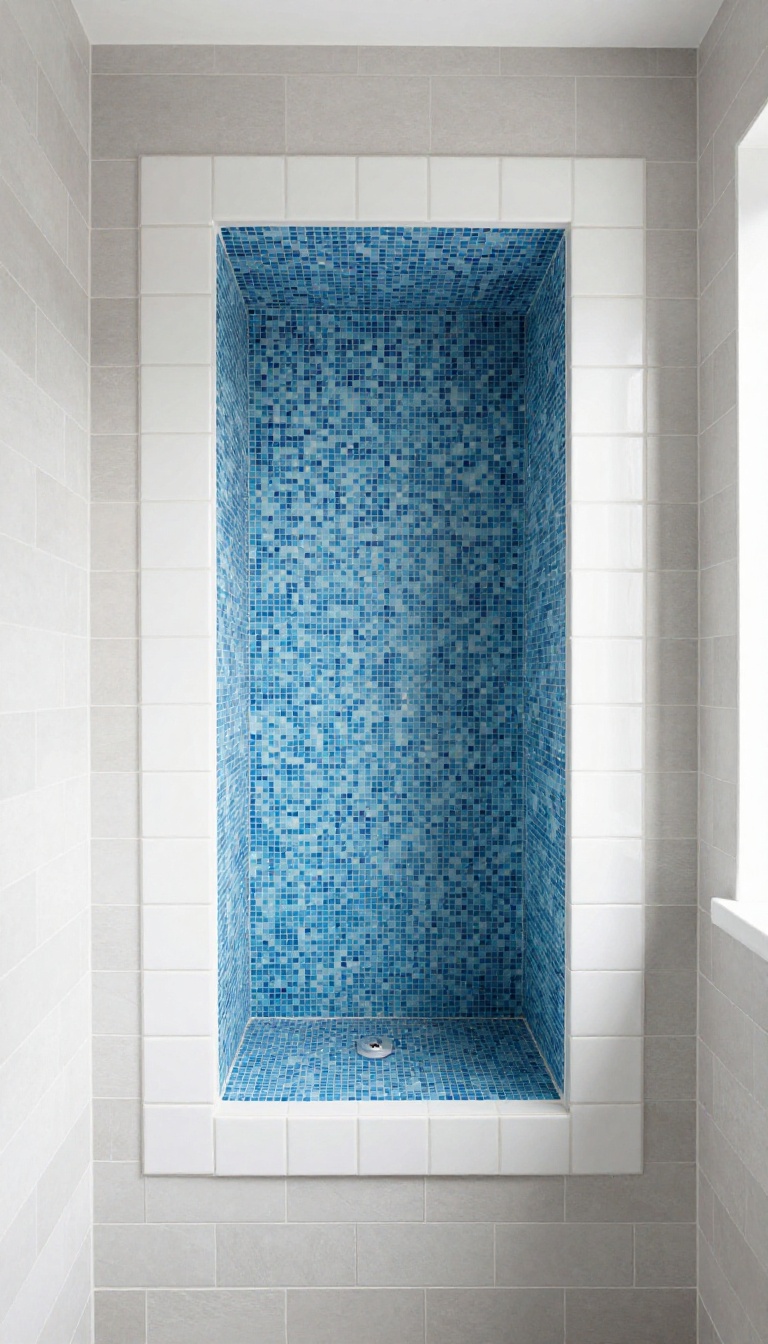
A shower niche is more than just a spot for your shampoo—it’s a chance to add a little visual interest. Wrapping that recessed shelf in blue tile and framing it with a contrasting color like crisp white or soft gray turns a practical feature into a design statement. This idea works especially well if you’re keeping the rest of the shower neutral, because the niche becomes the unexpected focal point that draws the eye without overwhelming the space.
The key to this look is choosing the right contrast. White or off-white frames keep things airy and bright, while a darker gray or charcoal frame adds depth and a more grounded feel. You can also play with the thickness of the frame—a thin border looks delicate and modern, while a wider frame makes the niche feel more substantial.
The blue tile inside can be the same as your main shower tile for a cohesive look, or you can go a shade darker or lighter to create a subtle shift that still feels intentional. Another way to make this idea pop is by using a different tile shape inside the niche. For example, if your shower walls are rectangular subway tiles, try a small hexagon or penny tile in blue for the niche interior.
The contrast in shape adds an extra layer of detail that makes the niche feel custom-designed. And because the frame ties it all together, the mix of shapes won’t feel chaotic—it’ll feel curated. Don’t forget about the practical side.
A niche with a contrasting frame can also help define the storage area, making it easier to spot your bottles and toiletries. Plus, the visual separation means you can experiment with bolder blue shades inside without worrying about them clashing with the rest of the bathroom. It’s a low-commitment way to test a more saturated color if you’re not ready to commit to an all-blue shower.
Choosing The Right Frame Color
The frame color you pick sets the whole mood. White or light gray frames keep things bright and breezy, which works well in smaller bathrooms or showers with limited natural light. If you’re after a more dramatic, modern look, a dark charcoal or even black frame adds a crisp, graphic edge.
For a softer, more organic feel, consider a warm beige or greige that complements the blue without competing for attention.
Play With Tile Shapes And Sizes
Mixing tile shapes is an easy way to elevate the niche without extra cost. Pair rectangular subway tile on the walls with a hexagonal or arabesque pattern inside the niche. The contrast in shape draws the eye and adds texture.
If you prefer a more uniform look, stick with the same shape but switch up the size—like large-format tiles on the wall and smaller mosaics inside the niche.
Installation Tips For A Clean Finish
To get that crisp, professional look, make sure the niche is properly waterproofed before tiling. Use a tile edge trim or bullnose pieces to create a clean transition between the frame and the surrounding wall. If you’re working with a contractor, ask them to center the niche between the studs and align it with your grout lines.
A well-planned niche not only looks better but also prevents future moisture issues.
13. Blue Moroccan-Inspired Tile Pattern
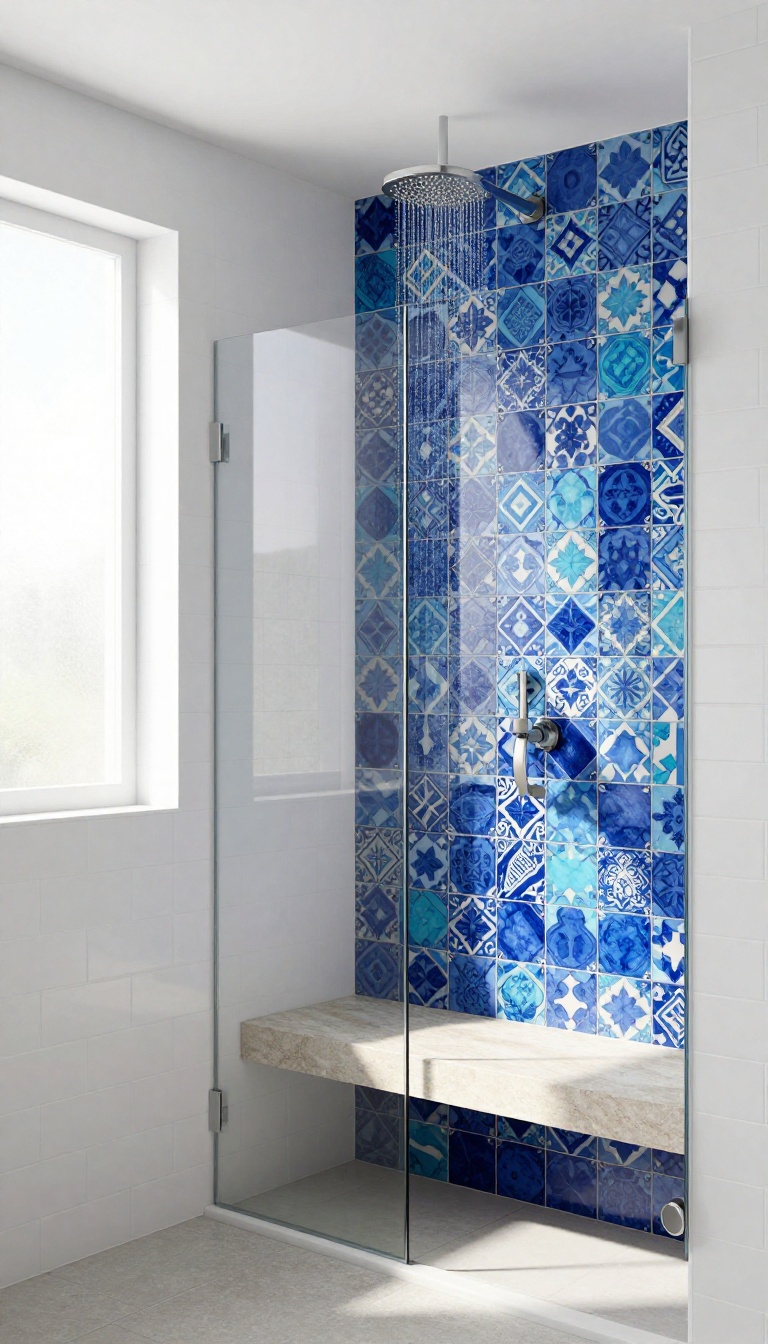
Moroccan tile patterns are having a major moment, and it's easy to see why. The intricate geometric designs bring a sense of artistry and history to any space. In a shower, these tiles create a stunning focal point that feels both exotic and inviting.
A blue Moroccan-inspired tile pattern is a bold yet tasteful way to add character to your shower. The combination of deep blues, crisp whites, and occasional accents of turquoise or cobalt creates a rich, layered look that mimics traditional zellige tiles. This style works beautifully as a full-wall feature or as an accent strip behind the shower bench or niche.
Why Blue Moroccan Tiles Work In A Shower
The high-contrast pattern draws the eye and makes the shower feel like a piece of art. The blue tones evoke a sense of calm and serenity, which is perfect for a bathroom. Plus, the intricate design helps hide water spots and soap scum better than plain tiles.
How To Incorporate The Pattern
You don't have to tile every surface. Use Moroccan tiles on one accent wall or in a horizontal band around the shower. Pair them with simple white or light gray tiles for the rest of the shower to keep the space from feeling overwhelming.
This approach is budget-friendly and easier to install.
Grout And Finish Tips
Choose a grout color that complements the tiles, like a soft white or light gray, to let the pattern shine. For a more traditional look, opt for a slightly darker grout to make the shapes pop. Ensure the tiles are sealed properly, especially if you're using natural stone, to protect them from moisture.
FAQ
What is the best blue tile for a small shower?
For a small shower, choose lighter blue tiles like sky blue or soft powder blue. Large-format tiles also help reduce grout lines, making the space feel bigger.
How do I clean blue tile in the shower?
Use a mild, non-abrasive cleaner and a soft sponge. Avoid harsh chemicals that can damage the tile or grout. Regular wiping after use helps prevent soap scum buildup.
Can I mix blue tiles with other colors?
Absolutely! Blue pairs beautifully with white, gray, and even warm wood tones. Use complementary colors in fixtures, towels, or accessories to tie the look together.
What grout color goes best with blue tile?
White grout creates a crisp, classic look, while dark grout adds contrast and a modern edge. For a seamless look, choose a grout that matches the tile color.
Is blue tile in the shower a good investment?
Yes, blue tile is a timeless choice that adds value and appeal. It's versatile and can easily be updated with different accessories to match changing trends.
Conclusion
Blue tile showers offer endless possibilities for creating a fresh, inviting bathroom. Whether you prefer subtle accents or bold statements, there's an idea here to match your style and budget. Start small with an accent strip or go all in with a full blue mosaic.
The key is to choose a shade and pattern that makes you smile every time you step in. With these 13 ideas, you're well on your way to a shower that feels both new and uniquely yours.