
10 Green Comforter Bedroom Ideas for a Calm Cozy Look
A green comforter can instantly make a bedroom feel calmer, but picking the right shade and styling it well takes a little thought. The wrong green can look cold or washed out, especially in rooms with limited natural light. That's why it helps to have a few reliable approaches on hand.
This list covers ten green comforter ideas that actually work in real bedrooms. Each one focuses on a specific shade, texture, or styling trick you can use right away. Whether you rent or own, you'll find options that fit your space and budget.
You don't need a full redesign to get that cozy, grounded look. A few smart swaps and layered textures can do most of the heavy lifting.
1. Sage Green Comforter with Warm Wood Tones
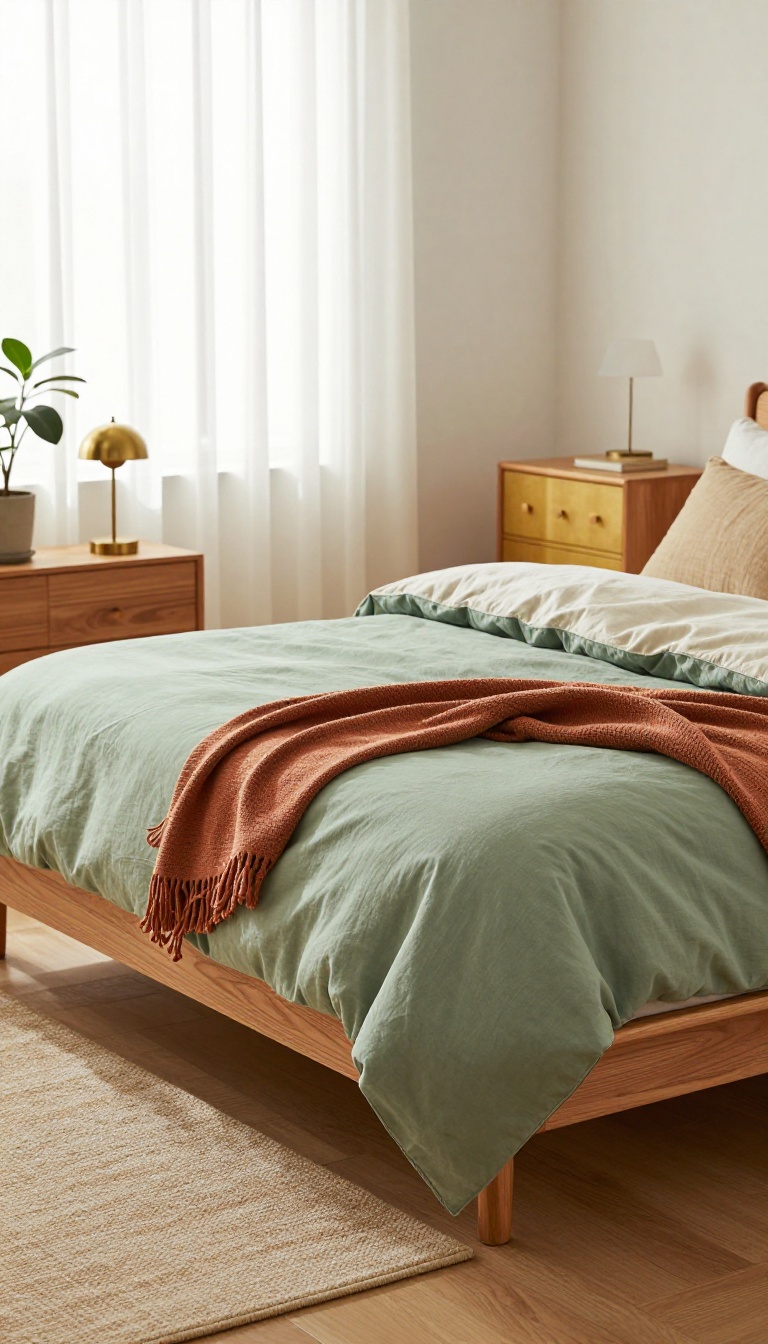
Sage green has a soft, muted quality that feels like a walk through a quiet forest. When you pair it with warm wood tones, the whole room warms up without losing that calm, earthy vibe. The trick is getting the wood and the green to complement each other instead of clashing.
Start by looking at the wood pieces you already have—bed frame, nightstand, dresser. Most woods fall somewhere on a spectrum from cool ash to warm honey oak. Sage green leans cool, so it plays nicest with woods that have a golden or reddish undertone.
That contrast keeps the room from feeling flat. If your furniture is very dark or very light, you can still make it work with the right accents.
Match Your Wood Undertones
Hold a fabric swatch of your sage comforter next to your wood furniture in natural light. If the wood looks orange or red next to the green, that's a good sign—it means warmth is coming through. If the wood looks gray or ashy, the combo might feel a bit cold.
In that case, add a warm-toned rug or a few brass accents to bridge the gap. You can also swap out a cool-toned wood piece for something warmer if it's in the budget.
Pick Accent Colors That Play Nice
Cream, oatmeal, and soft terracotta are safe bets with sage and wood. They keep the palette light and natural. For a bit more depth, try muted navy or charcoal in small doses—like a throw blanket or lampshade.
Avoid bright, saturated colors like hot pink or electric blue; they fight the calm mood. A little black can work as a grounding accent, but keep it minimal.
Layer For Softness
A sage comforter alone can look a bit plain. Add a textured throw at the foot of the bed—think chunky knit or waffle weave in a lighter shade like ivory. Then pile on two or three pillows in different sizes: a couple of solid sage shams, one patterned lumbar pillow with a subtle wood-tone print, and maybe a small accent pillow in a warm neutral.
This layering makes the bed look inviting without feeling cluttered.
2. Olive Green Bedding for a Moody, Cozy Vibe
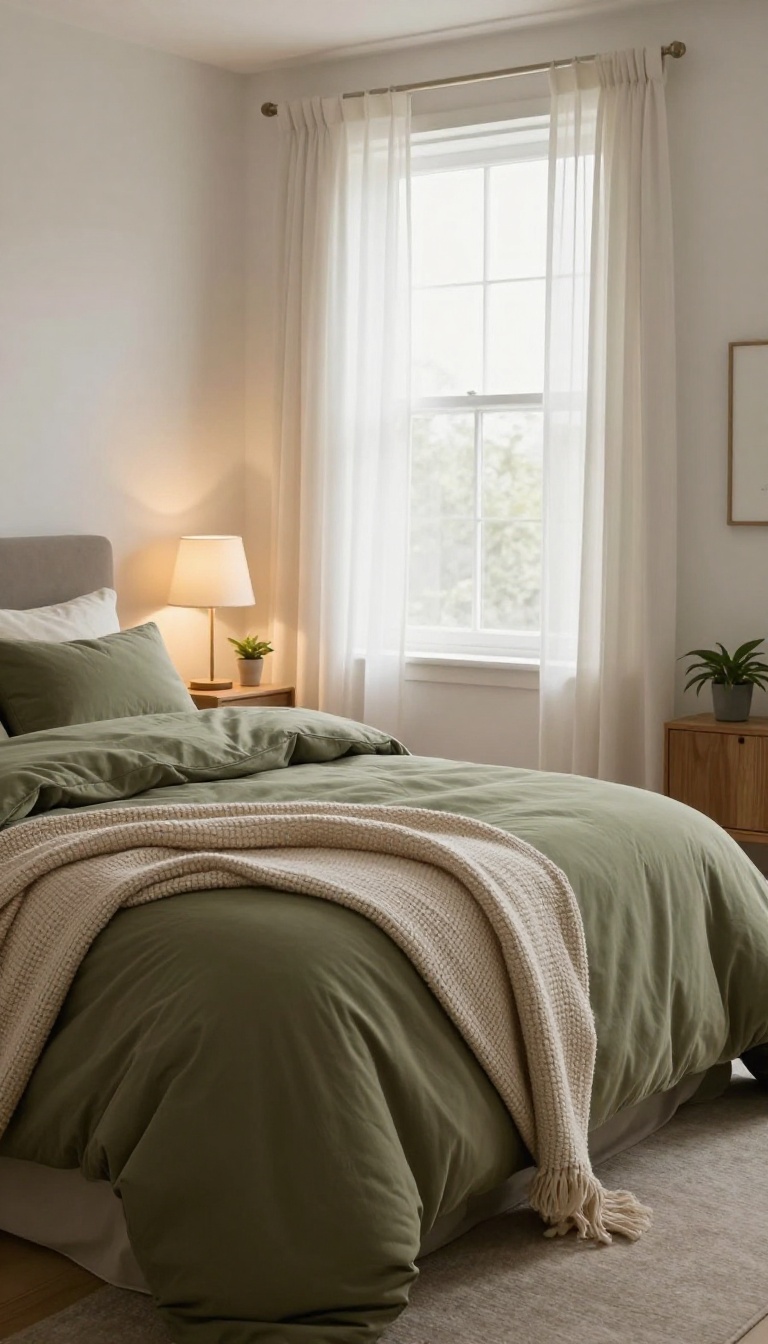
Olive green has a depth that lighter greens just can't match. It leans earthy and slightly dramatic, which makes it perfect for a bedroom that feels like a quiet retreat. The trick is keeping it from turning too dark or heavy.
You can use olive as your main bedding color and still keep the room feeling warm and inviting. It just takes a little attention to lighting, wall tones, and the textures you layer on top. Get those three things right, and olive becomes one of the coziest choices you can make.
Olive green sits somewhere between moss and army green, with a muted, brownish undertone that gives it a natural, grounded feel. That undertone is what makes it moody without feeling cold. It works especially well in bedrooms because it doesn't demand attention the way a bright emerald or teal might.
Instead, it settles into the space and lets other elements breathe. One thing to keep in mind: olive absorbs light. In a room with big windows and lots of sun, that's not a problem.
In a darker room, you'll want to be more intentional about how you brighten things up. The good news is that olive pairs beautifully with warm whites, creams, and even soft blush tones, so you have plenty of options to lighten the mood. A duvet or comforter set in olive is an easy starting point.
From there, you build outward with pillows, throws, and lighting. The goal is a layered look that feels collected over time, not perfectly matched.
Pair It With Warm, Not Cool, Lighting
Cool white bulbs will make olive green look flat and almost gray. Switch to warm white bulbs (around 2700K) and you'll see the green come alive with a soft, golden glow. A bedside lamp with a linen or woven shade works especially well here because it diffuses the light and adds texture.
If you have overhead lighting, put it on a dimmer. Olive green looks best when the light is low and layered, not blasting from above. Candles or a small salt lamp can also add a warm flicker that makes the whole room feel cozier.
Choose Wall Colors That Support The Green
You don't have to paint your walls to make olive bedding work, but if you're up for it, warm neutrals are your best friend. Think oatmeal, greige, or a soft mushroom tone. These colors let the olive stand out without competing with it.
If you want more contrast, a deep charcoal or navy wall can look stunning with olive bedding, especially in a larger room. Just be sure to add plenty of lighter textiles so the space doesn't feel like a cave. And if you're renting, a warm white wall is always a safe bet.
Layer In Chunky Knits And Textured Throws
Olive green is a smooth, solid color, so it needs texture to keep things interesting. A chunky knit throw draped across the foot of the bed adds instant coziness and breaks up the flat expanse of bedding. Look for cream, camel, or rust tones to warm things up.
You can also mix in different fabrics: a linen duvet cover, a cotton quilt, and velvet or boucle pillows. The contrast in texture makes the olive feel richer and more intentional. Just don't go overboard—three or four different textures is usually plenty.
3. Emerald Green Comforter as a Bold Statement
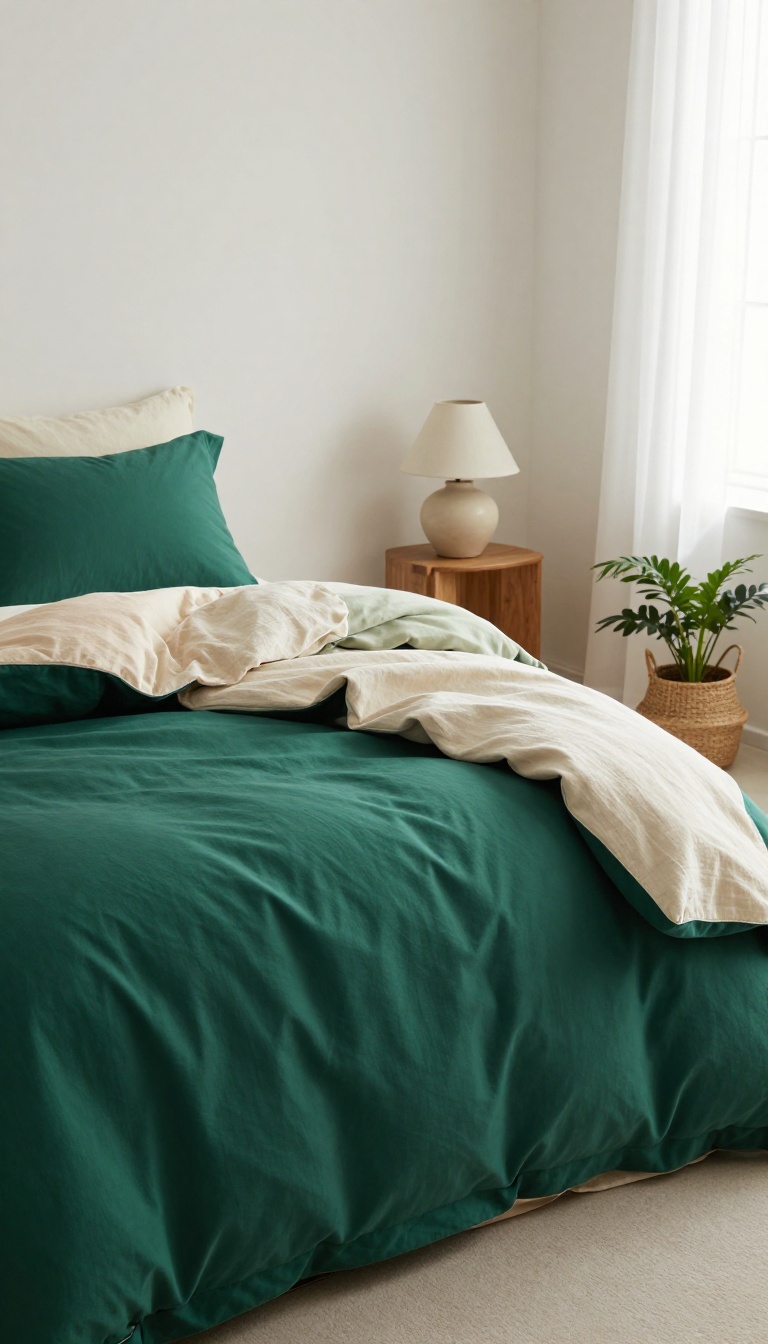
Emerald green doesn't whisper—it speaks up. But that's exactly why it works as a focal point in a calm bedroom. The trick is letting the comforter take center stage while everything else stays quiet.
You don't need to be a maximalist to pull this off. A few neutral layers and simple textures keep the look grounded. The result feels luxurious without tipping into chaotic.
Emerald sits at the intersection of jewel tone and earthy green. It has enough blue in it to feel cool and sophisticated, but enough yellow to stay warm and inviting. That balance makes it surprisingly easy to live with.
The key is contrast. When your comforter is this saturated, your sheets, shams, and throw blankets should stay soft and understated. Think oatmeal, cream, or pale gray.
That way the emerald gets room to breathe.
Pair With Warm Neutrals, Not Stark White
Bright white sheets can make emerald look harsh and cold. Instead, reach for warm off-whites like ivory, flax, or soft beige. These tones soften the green and create a cozy, lived-in feel.
A cream linen duvet folded at the foot of the bed adds texture without competing.
Keep Accessories Minimal And Matte
Shiny metallics and busy patterns fight with emerald. Choose matte finishes instead—ceramic lamps, wooden nightstands, or a simple woven basket. One or two small accents in brass or black can add depth, but stop there.
Less really is more here.
Layer In One Extra Green For Cohesion
A single emerald comforter can feel isolated. Add one more green element—like a small potted plant, a framed botanical print, or a muted sage throw pillow. It ties the room together without making the bed look like a color explosion.
4. Mint Green Comforter for a Fresh, Airy Feel
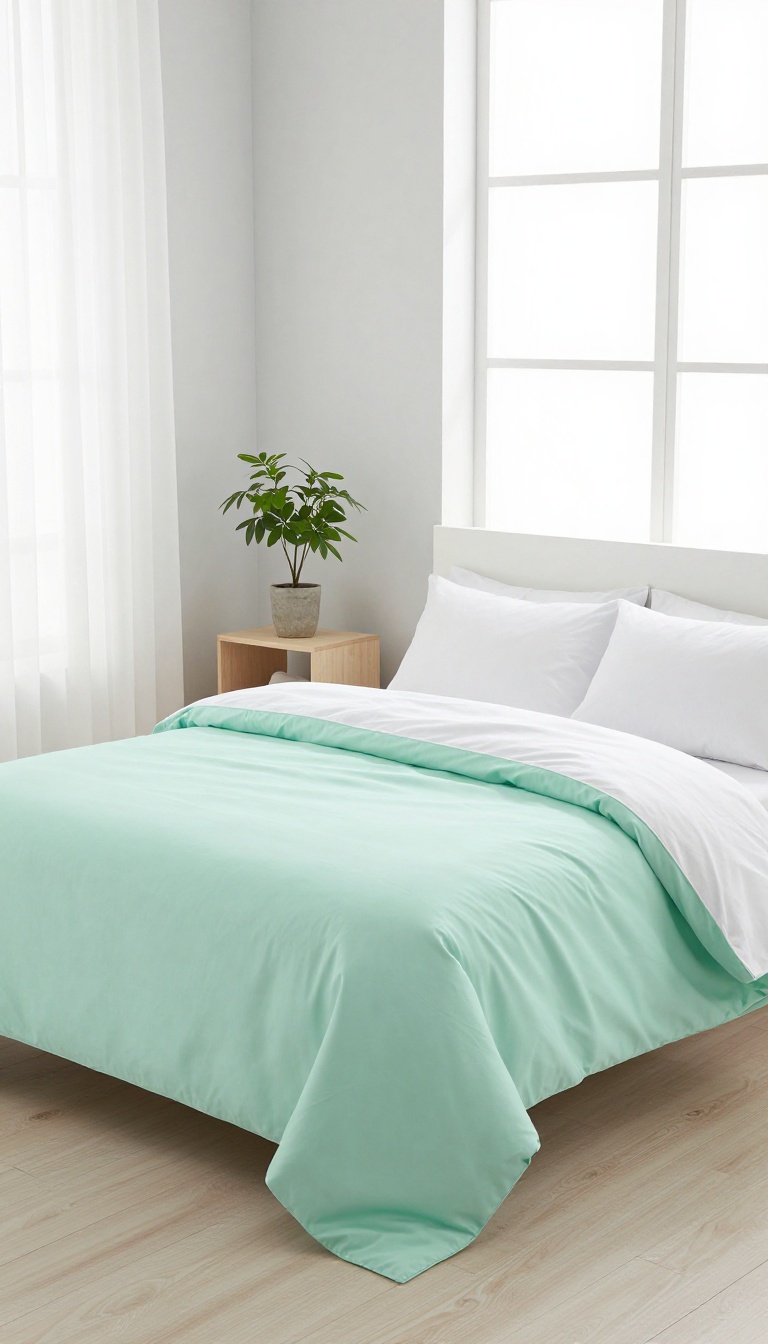
Mint green brings a light, crisp quality that makes any bedroom feel more open. It works especially well in small spaces or rooms that don't get much natural light, because it reflects what light there is instead of absorbing it. The trick is to keep the rest of the room from competing with that airy vibe.
You don't need to strip the room down to nothing, though. A few smart pairings and the right textures will keep it feeling cozy instead of clinical. Here's how to style a mint green comforter so it feels fresh, not flat.
Mint green sits right between green and blue on the color wheel, which is why it reads as cool and clean rather than earthy. That makes it a natural fit for bedrooms that need a little lift. But if you're not careful, it can tip into feeling cold or washed out.
The fix is all in what you pair it with. Start with your walls and floors. If they're already light, mint will blend right in.
If they're darker, mint becomes a bright focal point. Either way, you want the comforter to feel intentional, not accidental. ## Pair It with White for Maximum Freshness White and mint are a classic combo for a reason. White bedding, white curtains, or a white headboard will make the mint pop without overwhelming the room.
Try a white duvet cover under a mint comforter for a layered look that feels light but still cozy. If all-white feels too stark, add a white throw blanket at the foot of the bed. It breaks up the color without adding visual weight. ## Use Light Gray as a Soft Neutral Light gray is another safe bet.
It's cooler than beige, so it won't fight the mint's undertones. A gray upholstered headboard or a gray area rug grounds the space without making it feel heavy. You can also mix in gray and white patterned pillows.
A subtle geometric or stripe pattern adds interest while keeping the palette calm. ## Hang Sheer Curtains to Let Light In Sheer curtains are your best friend in a low-light bedroom. They filter sunlight without blocking it, which keeps the room feeling bright and open. White or very light gray sheers work best with mint.
If you need more privacy, layer sheers with blackout curtains you can pull closed at night. Just keep the blackout panels light-colored so they don't kill the airy mood during the day. ## Add Texture to Avoid a Flat Look Mint can feel one-dimensional if everything in the room is smooth. Bring in a chunky knit throw, a woven basket, or a textured rug.
These small touches add depth without changing the color story. A wooden nightstand or a rattan pendant light also warms things up. Natural materials balance the coolness of mint and make the room feel lived-in.
Pair It With White For Maximum Freshness
White and mint are a classic combo for a reason. White bedding, white curtains, or a white headboard will make the mint pop without overwhelming the room. Try a white duvet cover under a mint comforter for a layered look that feels light but still cozy.
If all-white feels too stark, add a white throw blanket at the foot of the bed. It breaks up the color without adding visual weight.
Use Light Gray As A Soft Neutral
Light gray is another safe bet. It's cooler than beige, so it won't fight the mint's undertones. A gray upholstered headboard or a gray area rug grounds the space without making it feel heavy.
You can also mix in gray and white patterned pillows. A subtle geometric or stripe pattern adds interest while keeping the palette calm.
Hang Sheer Curtains To Let Light In
Sheer curtains are your best friend in a low-light bedroom. They filter sunlight without blocking it, which keeps the room feeling bright and open. White or very light gray sheers work best with mint.
If you need more privacy, layer sheers with blackout curtains you can pull closed at night. Just keep the blackout panels light-colored so they don't kill the airy mood during the day.
Add Texture To Avoid A Flat Look
Mint can feel one-dimensional if everything in the room is smooth. Bring in a chunky knit throw, a woven basket, or a textured rug. These small touches add depth without changing the color story.
A wooden nightstand or a rattan pendant light also warms things up. Natural materials balance the coolness of mint and make the room feel lived-in.
5. Layering a Green Comforter with Neutral Textures
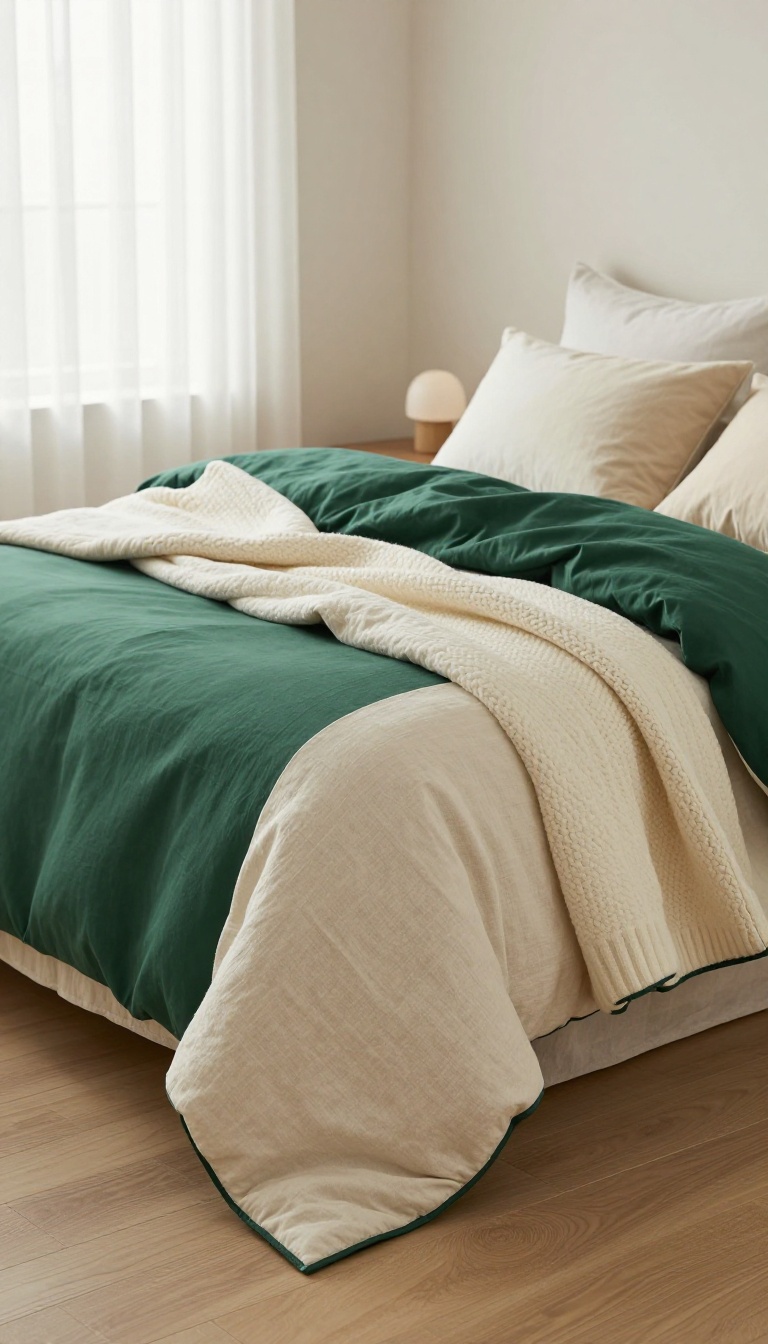
A green comforter on its own can feel a little flat. Layering it with neutral textures adds depth, warmth, and that lived-in coziness you want in a bedroom. The trick is mixing fabrics that contrast in feel but not in color.
Think soft linen against nubby cotton, or a chunky knit next to smooth sateen. These combinations keep the green as the star while the neutrals do the supporting work.
Start by choosing a base layer that feels good against your skin. A linen duvet cover in oatmeal or natural works beautifully under a green comforter. It adds a relaxed, slightly rumpled look that feels effortless.
Then fold the green comforter at the foot of the bed or use it as the main cover. This creates a clear color block without overwhelming the room. Next, add a middle layer like a cotton quilt or coverlet in cream or soft white.
Drape it across the bed at an angle for a casual, styled feel. Finally, top with textured pillows and a throw blanket. A chunky knit throw in ivory or a woven cotton blanket in sand keeps the palette neutral while adding tactile interest.
The goal is to build layers that invite you to sink in, not to create a perfectly matched set.
Best Neutral Textures To Pair With Green
Linen brings a breezy, natural texture that softens the intensity of deeper greens. Cotton is versatile and easy to care for, making it great for everyday use. Chunky knits add warmth and a cozy factor that works especially well in winter.
Woven textures like waffle or ribbed fabrics create subtle pattern without introducing new colors. Stick to two or three textures max to keep the bed looking curated, not cluttered.
How To Layer Without Bulk
Start with a fitted sheet and a lightweight duvet or quilt as your base. Add the green comforter folded at the foot or as the top layer. If you use a comforter as the main cover, skip heavy quilts underneath.
Instead, use a thin cotton blanket for extra warmth. Fold and tuck loosely so the bed looks inviting, not stiff. A single chunky throw draped over one corner adds texture without adding weight.
Color Combos That Keep It Calm
Cream, oatmeal, and soft white are foolproof neutrals that let green shine. Warm beige or sand adds a subtle earthy tone that feels grounded. For a cooler look, try light gray or pale taupe.
Avoid stark white if you want a cozier vibe—it can feel a bit clinical. Keep your metals consistent too: warm brass or wood tones pair well with earthy greens, while silver or nickel suits cooler greens like mint or emerald.
6. Green Comforter with Botanical or Leaf Prints
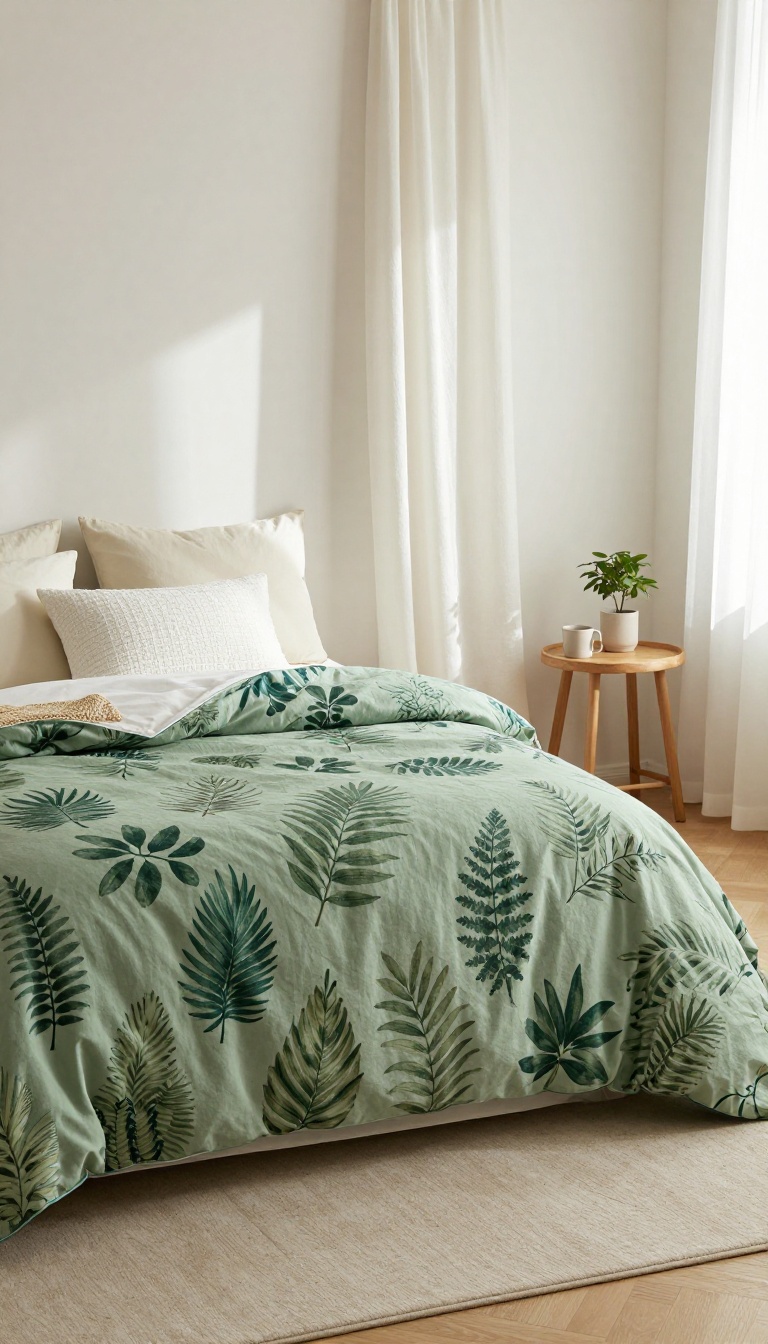
A green comforter with a botanical or leaf print can add a touch of nature to your bedroom without overwhelming the calm vibe. The key is to choose prints that are subtle and scale appropriately to your room size. In this section, we'll cover how to pick the right print scale, coordinate colors, and avoid a busy look.
Botanical prints come in all shapes and sizes, from delicate fern fronds to bold tropical leaves. The right choice depends on the overall feel you want to create. A small, repeating pattern feels more traditional and can work in almost any space, while a large-scale print makes a statement and feels more modern.
Think about the size of your room: in a small bedroom, a smaller print won't overwhelm, while a large room can handle bigger motifs. Also, consider the color palette of the print. You want the greens to complement your comforter's base color, not clash.
A tonal print—where the leaves are just a shade or two different from the background—is an easy way to keep things calm and cohesive.
Choosing The Right Print Scale
The scale of the print matters more than you might think. A tiny, dense pattern can look like texture from a distance, which is great for a subtle effect. A larger print becomes a focal point, so you'll want to balance it with simpler surrounding decor.
If your comforter has a big, bold leaf print, keep pillows and throws solid or lightly textured. If the print is small, you can layer in other patterns, like a striped throw, as long as the colors tie together.
Coordinating Colors Without Clashing
Stick to two or three shades of green within the print itself, plus maybe a neutral like white or cream. This keeps the look harmonious. If your comforter's background is a light sage, look for prints with darker green leaves.
If the background is deep emerald, lighter green or even white leaves will pop nicely. Avoid introducing too many other colors—a hint of blue or yellow in the print is fine, but keep it minimal.
Avoiding A Busy Look
Botanical prints can quickly become overwhelming if you pair them with too many other patterns or colors. To keep things calm, let the comforter be the star. Use solid-colored sheets and a simple bed skirt.
If you want to add a throw blanket, choose one in a solid color that matches one of the greens in the print. Keep wall art and accessories minimal—maybe a single framed botanical print or a plain mirror. The goal is to let the comforter's pattern breathe.
7. Pairing Green Bedding with Warm Metallic Accents
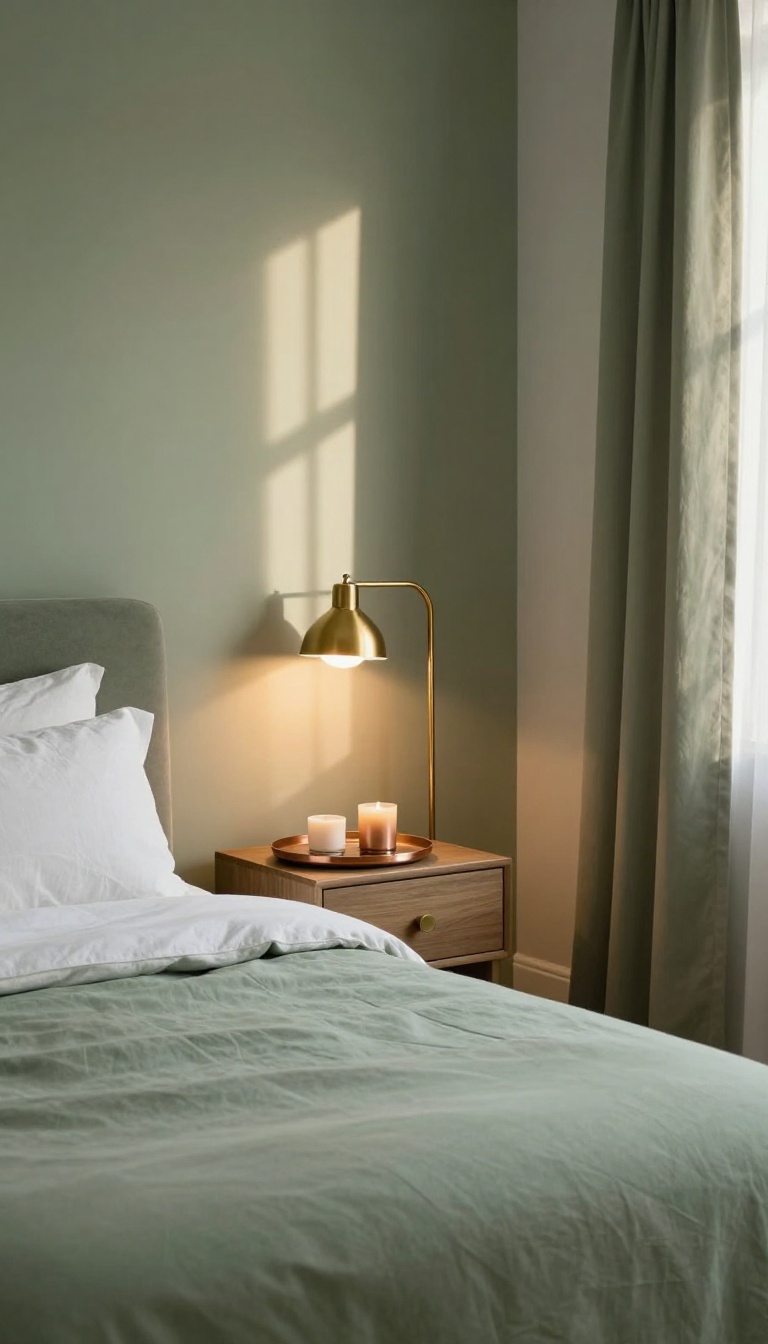
Green bedding already brings a calm, grounded feel to a bedroom. Adding a few warm metallic touches—brass, gold, or copper—can make that green look richer and more inviting without turning the room into a showroom. The trick is to use them sparingly so they feel like a gentle glow, not a flashy statement.
Metallics work best when they echo the green rather than compete with it. A single brass lamp or a set of copper drawer pulls can be enough to warm up the whole space. Think of them as seasoning: a little goes a long way.
Below are a few simple ways to mix in these accents while keeping the cozy, relaxed vibe you want.
Start With A Single Statement Piece
Pick one metallic item to be the star. A brass floor lamp next to the bed or a gold-framed mirror above the headboard adds instant warmth. Keep everything else in the room quiet so that piece can shine.
If you're unsure, go with a warm brass or antique gold. They blend beautifully with olive, sage, and emerald greens. Copper also works, but it leans a bit more rustic—great for earthy, bohemian bedrooms.
Layer In Small Metallic Touches
You don't need big pieces to make an impact. Swap your nightstand knobs for brushed brass ones. Add a copper tray to hold your jewelry or a candle.
Even a gold picture frame on the wall can tie the green and metallics together. These small details catch the light and add a subtle shimmer. They also let you test the look before committing to larger purchases.
Try one or two first and see how they feel in the room.
Balance Warm And Cool Tones
Green is a cool color, so warm metallics create a natural contrast. But you still want balance. If your green comforter is very cool (like mint or seafoam), stick with warmer golds and brass.
If your green is deeper and warmer (like olive or forest), you can mix in copper or even a touch of bronze. Avoid mixing too many metallic finishes in one space. Two at most—like brass and copper—keeps things cohesive.
Three or more can start to look messy.
Keep The Overall Look Cozy, Not Flashy
Metallics reflect light, so they can quickly make a room feel cold if overdone. Balance them with soft textures: a chunky knit throw, velvet pillows, or a linen duvet. These fabrics absorb light and keep the space feeling warm and lived-in.
Also, consider the finish. Matte or brushed metallics are more subdued than high-shine ones. They add elegance without screaming for attention.
That's the sweet spot for a calm, cozy bedroom.
8. Green Comforter in a Minimalist Bedroom Setup
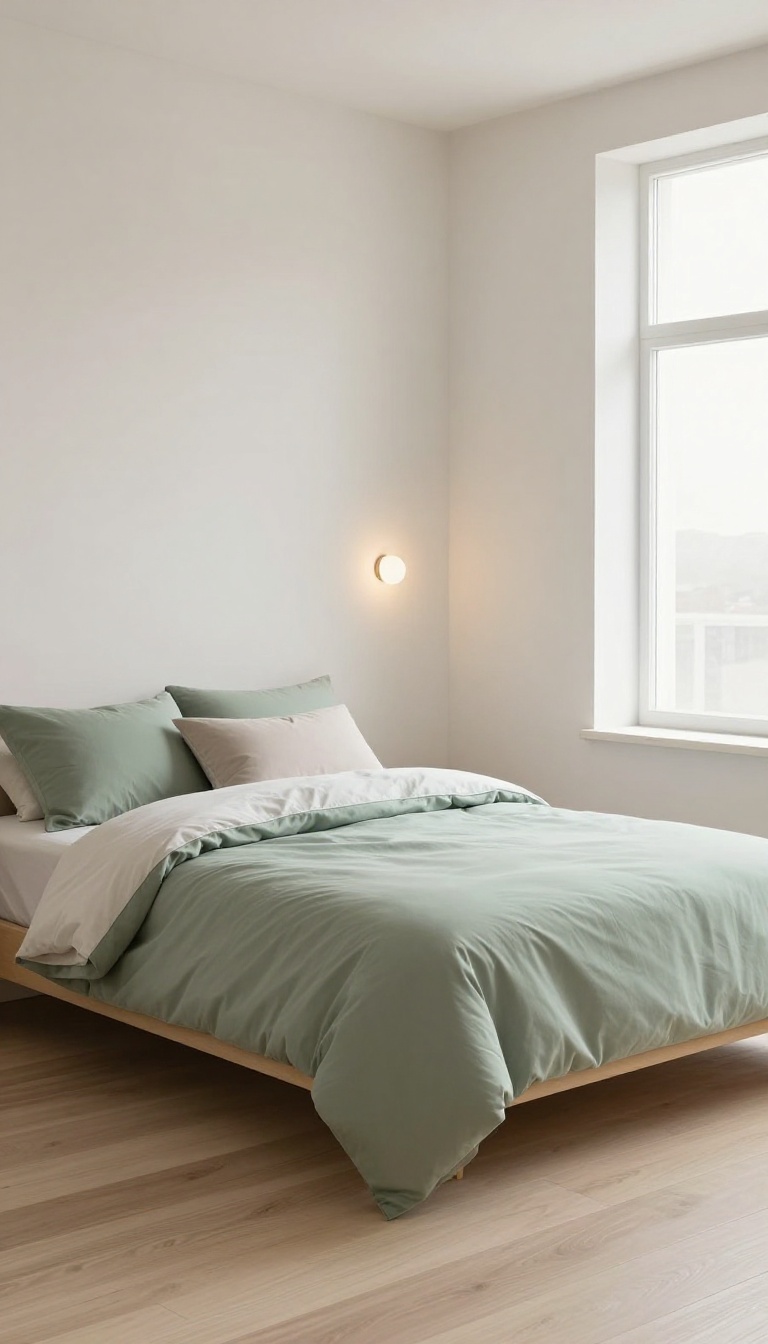
Minimalist bedrooms rely on a few strong elements to carry the whole room. A green comforter fits that role perfectly because it adds color and softness without visual clutter. The key is to let the comforter do the talking while everything else stays quiet.
This approach works especially well in small spaces or rooms where you want a calm, uncluttered feel. You won't need much—just a clean backdrop, a few well-chosen pieces, and a green comforter that feels intentional. The result is a bedroom that looks pulled together without trying too hard.
Minimalism isn't about having nothing. It's about having only what matters. In a bedroom, that means a bed that feels inviting, a color palette that soothes, and zero distractions.
A green comforter can be the centerpiece that makes the whole room feel finished. Start by clearing the noise. Remove extra pillows, throw blankets, and decorative items that don't serve a purpose.
Then choose a green comforter in a shade that feels right for your light. Soft sage or muted olive work well in most minimalist setups because they blend with neutral walls and wood tones. Keep the bed low and simple.
A platform bed frame or a basic upholstered base keeps the focus on the comforter. Add one or two pillows in the same green or a lighter neutral. That's it.
The empty space around the bed becomes part of the design. Lighting should be soft and indirect. A single wall sconce or a floor lamp with a warm bulb is enough.
Avoid overhead lights that make the room feel harsh. The goal is a quiet, restful atmosphere where the green comforter feels like a natural part of the calm.
Choose A Calm Green Shade
Not all greens work in a minimalist room. Bright emerald or lime can feel too loud and fight the simplicity. Go for sage, olive, or a soft forest green that reads as neutral.
These shades add depth without demanding attention. Test the color against your walls in daylight to make sure it doesn't turn cold or gray.
Keep The Bed Low And Clean
A tall, ornate bed frame adds visual weight that works against minimalism. Stick with a low platform bed or a simple metal frame. Tuck the comforter in neatly or let it drape evenly.
Avoid lots of layers—one comforter and maybe a lightweight throw is plenty. The bed should look like a single, calm shape.
Limit Accessories To One Or Two
Minimalist bedrooms don't need stacks of pillows or busy artwork. One or two accent pillows in a matching or lighter tone are enough. A single piece of art above the bed or a small plant on a nightstand can add life without clutter.
If you're unsure, take something away. Less really is more here.
Use Negative Space As A Design Tool
Empty walls and open floor space aren't wasted—they're part of the look. Leave at least one wall bare or nearly bare. Keep nightstands simple and clear.
The space around the bed lets the green comforter stand out and makes the room feel larger and more peaceful. Resist the urge to fill every corner.
9. Seasonal Swaps for a Green Comforter Bedroom
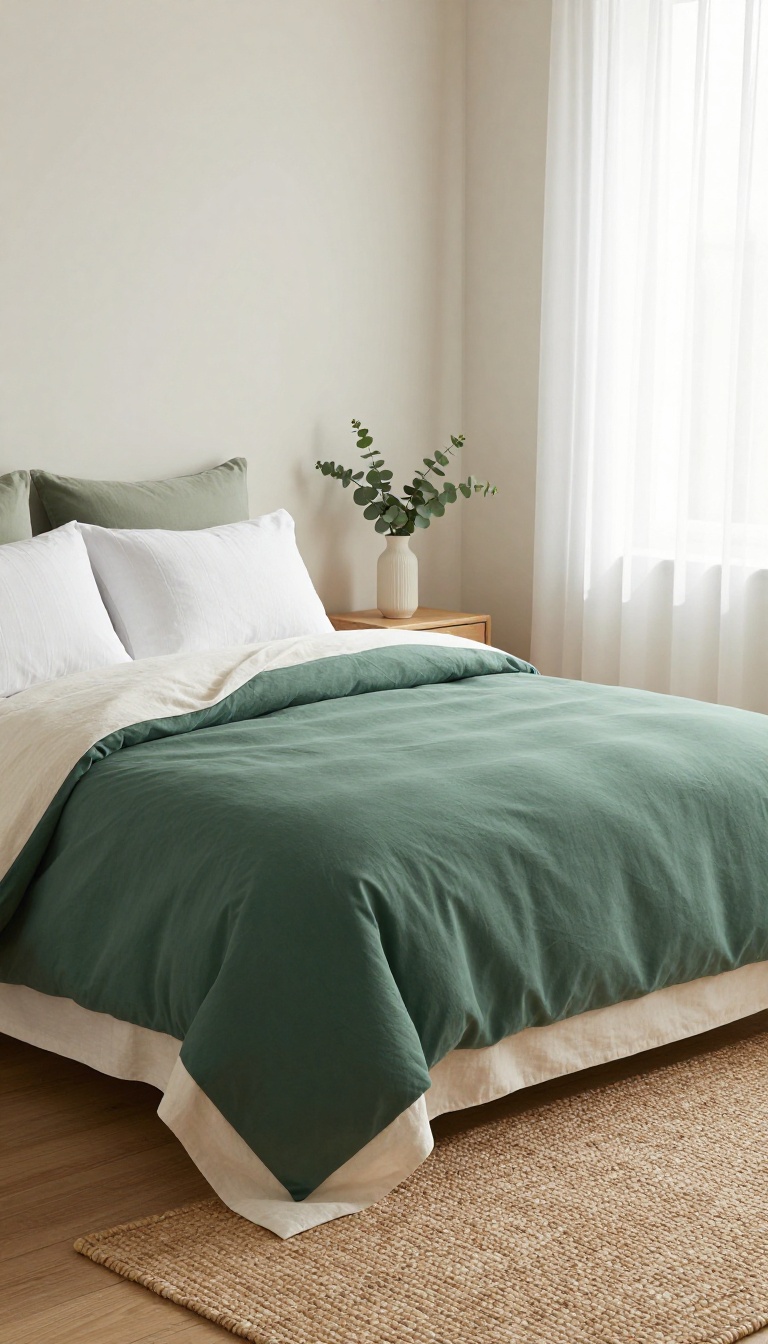
A green comforter doesn't have to stay exactly the same all year. In fact, rotating a few accents is one of the easiest ways to keep the room feeling fresh without buying new bedding. The comforter stays put while the layers around it change with the weather.
Summer calls for lighter textures and cooler tones that let the green breathe. Winter invites heavier knits, warmer neutrals, and extra coziness you can sink into. The trick is knowing which pieces to swap and when, so the bed always feels intentional rather than stale.
Seasonal swapping isn't about redecorating from scratch every few months. It's about small, deliberate changes that shift the mood while keeping your green comforter as the anchor. A throw blanket, a set of pillowcases, or a different rug can do more than you'd expect.
Think of your green comforter as the base layer of an outfit. In summer, you add a light linen shirt. In winter, you pull on a chunky sweater.
The base stays the same, but the overall feel changes completely. That same logic works for your bed.
Lighten Up For Warmer Months
When temperatures rise, heavy layers start to feel suffocating. Swap your winter throw for a lightweight cotton or linen blanket in a soft cream, pale sage, or warm white. These lighter fabrics let air move and keep the bed from feeling weighed down.
Pillowcases are another easy switch. Trade dark green or velvet shams for crisp white or light striped covers. The contrast keeps the green comforter from feeling too heavy in July.
You can also fold the comforter at the foot of the bed and use a simple cotton quilt as the main cover. A sheer curtain or a lighter area rug can reinforce the airy vibe. Even small changes like removing a thick duvet insert make a difference.
The goal is to let the green feel cool and refreshing rather than dense.
Layer Heavier Textures For Cold Weather
Once the temperature drops, you want the bed to feel like a nest. Add a chunky knit throw in oatmeal, charcoal, or deep forest green. Drape it across the foot of the bed or fold it neatly at the side.
The texture adds warmth without changing the comforter itself. Flannel or velvet pillow covers in muted rust, mustard, or burgundy bring seasonal color without clashing with green. A faux fur or sherpa blanket layered over the comforter makes the bed look inviting and feels cozy on cold nights.
You can also add a quilted coverlet underneath for extra insulation. Don't forget the floors. A thicker wool or shag rug in a neutral tone makes the whole room feel warmer.
If you have hardwood floors, this small swap can change the entire mood of the space.
Transitional Tricks For Spring And Fall
Spring and fall are tricky because the weather can't make up its mind. Stick with medium-weight layers you can easily remove or add. A cotton waffle blanket in a soft taupe or light gray works for both seasons.
Swap out one or two pillow covers instead of the whole set. A single mustard or blush pillow can hint at the season without committing to a full overhaul. You can also change your throw blanket from a heavy knit to a lighter woven one.
This is a good time to rotate your green comforter's position. Fold it at the foot of the bed and use a lighter quilt on top, or keep it as the main layer and add a thin throw. Small adjustments keep the room from feeling stuck in one season.
Storage And Rotation Tips
Keep off-season items organized so swapping is quick and painless. Use under-bed storage bins or vacuum-sealed bags for bulky blankets and duvet inserts. Label them clearly so you're not digging through everything when the weather changes.
Store clean items only. Dirt and oils can attract pests or cause stains over time. A cedar block or lavender sachet in each bin keeps things smelling fresh.
When you rotate, give each piece a quick shake and air it out before putting it on the bed. A dedicated shelf or basket in the closet for current-season throws and pillow covers makes the process even easier. The less friction there is, the more likely you'll actually do the swap.
10. DIY and Budget-Friendly Green Comforter Ideas

A calm green bedroom doesn't have to drain your wallet. With a little creativity and some smart shopping, you can achieve a cozy, stylish look for less. This section shares practical DIY and budget-friendly ideas to get that green comforter vibe without spending a fortune.
From thrifted treasures to easy dye jobs, these tips make green bedding accessible to everyone. You'll find ways to layer, customize, and repurpose items you might already own. Let's dive into how you can create a serene green retreat on a budget.
Green comforters can be pricey, especially in trendy shades or organic fabrics. But you don't need to buy new to get the look. Thrift stores, online marketplaces, and even your own linen closet can hold hidden gems.
A little elbow grease and imagination go a long way. Start by checking local thrift shops or apps like Facebook Marketplace and eBay. You might find a high-quality comforter in a shade of green that works for your space.
Even if it's not perfect, you can often dye or overdye it to get the color you want. Dyeing is easier than it sounds and can transform a faded or off-color comforter into a custom piece. Layering is another budget-friendly strategy.
Use what you have: a neutral duvet, a green throw blanket, or even a flat sheet in a complementary green tone. Mixing textures and shades creates depth without a big investment. And don't overlook the power of pillowcases and shams—they're cheaper to swap out than a whole comforter and can shift the color story instantly.
Finally, consider DIY projects like sewing a simple duvet cover from affordable fabric or adding trim to a plain comforter. These small touches make a big impact. With a bit of effort, you can achieve a custom, calm green bedroom for a fraction of the retail price.
Thrifted And Secondhand Finds
Thrift stores and online resale sites are goldmines for budget bedding. Look for comforters in good condition, even if the color isn't perfect. A gentle wash and a bit of dye can revive them.
Check for stains or wear, but don't shy away from minor flaws—they're often fixable. Set alerts on apps for keywords like 'green comforter' or 'sage duvet' to snag deals quickly.
Dyeing Techniques For A Custom Color
Dyeing a comforter is a fun way to get the exact green you want. Rit Dye or similar brands work well on cotton and synthetic blends. Start with a lighter comforter and choose a dye color like sage, olive, or emerald.
Follow the package instructions, and use a large bucket or washing machine for even coverage. Test on a small area first. The result is a one-of-a-kind piece that fits your palette perfectly.
Affordable Layering Tricks
Layering lets you build a green look without buying a new comforter. Use a white or cream duvet as a base, then add a green quilt or throw at the foot of the bed. Mix in green pillowcases or a scarf draped over a lampshade.
Shop your home for items in similar tones. This approach adds warmth and texture while keeping costs low.
Diy Duvet Covers And Embellishments
Sewing a duvet cover is simpler than it sounds—just two flat sheets or a length of fabric, sewn on three sides with an opening for the insert. Choose a green fabric that matches your style. Add trim, tassels, or embroidery for a custom touch.
If sewing isn't your thing, use fabric glue or iron-on hem tape for no-sew options. These DIY touches make your bedding unique and budget-friendly.
FAQ
What shade of green is best for a calm bedroom?
Sage, olive, and muted mint are generally the most calming because they have gray or earthy undertones. Bright emerald can work too if you balance it with neutrals.
How do I keep a green comforter from looking cold?
Add warm textures like wood, brass, or chunky knits. Also, choose greens with yellow or gray undertones rather than blue-based greens.
Can I use a green comforter in a small bedroom?
Yes, lighter greens like mint or sage work well in small spaces because they reflect light and feel airy. Avoid very dark greens if the room lacks natural light.
What colors go with a green comforter?
Neutrals like white, cream, beige, and gray are safe bets. For a bit more contrast, try blush pink, mustard yellow, or warm brown.
How often should I wash a green comforter?
Wash it every 2-3 months, or more often if you have pets or allergies. Always check the care label, as some fabrics require dry cleaning.
Conclusion
Green bedding works best when you treat it as a base, not a finished room. Pick the idea that solves your real problem, whether that is a bed that looks flat, a wall that feels cold, or a corner with nowhere to land. Live with it for a week before adding anything else.
Then layer in the next piece, like warmer bulbs, a textured throw, or one wood tone that ties it together. You do not need all ten. A calm, cozy bedroom comes from a few steady moves, not a rushed overhaul.