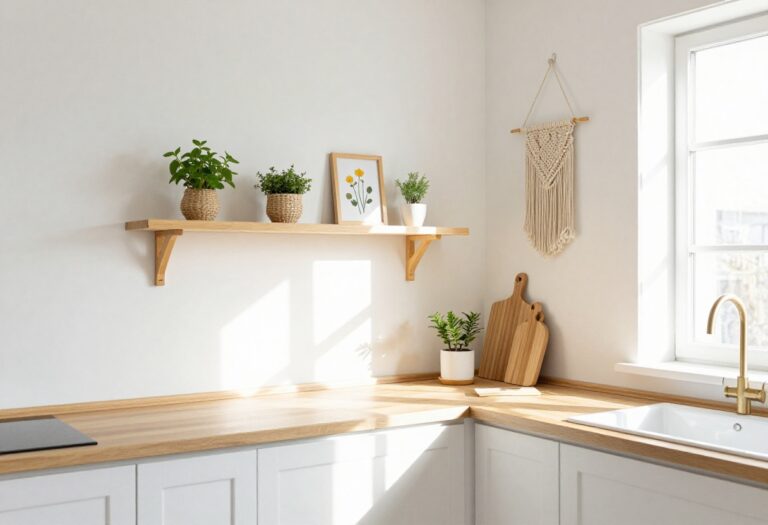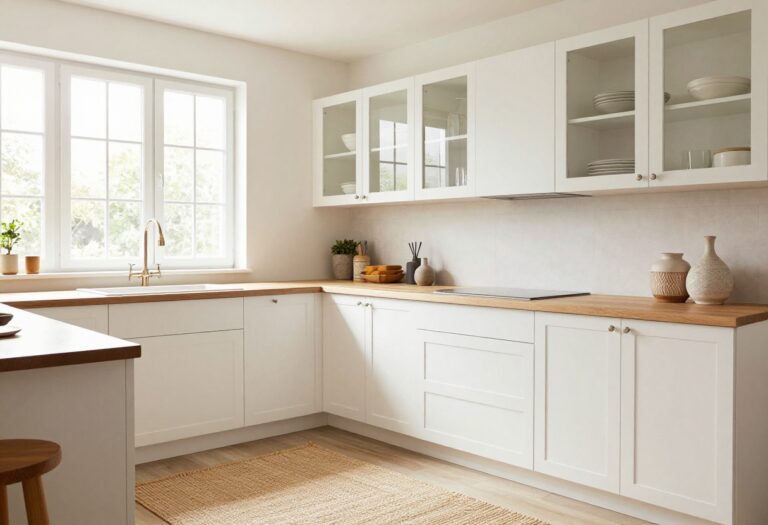
13 Kitchen Wall Decor Ideas Farmhouse Style Homes Love
Farmhouse kitchens are all about comfort and character. The walls offer a perfect canvas to layer in that cozy, lived-in feel without overwhelming the space.
Whether you're starting from scratch or just refreshing a few spots, these 13 ideas will help you create a kitchen that feels both stylish and welcoming.
From salvaged wood to simple greenery, each suggestion keeps the farmhouse spirit alive while staying practical for real life.
1. Open Shelving with Mixed Textures
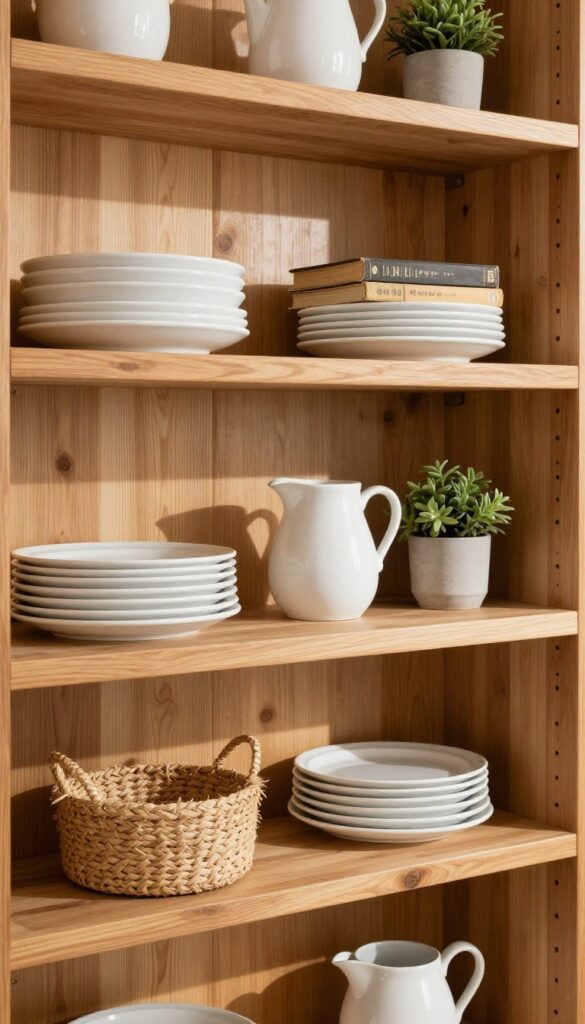
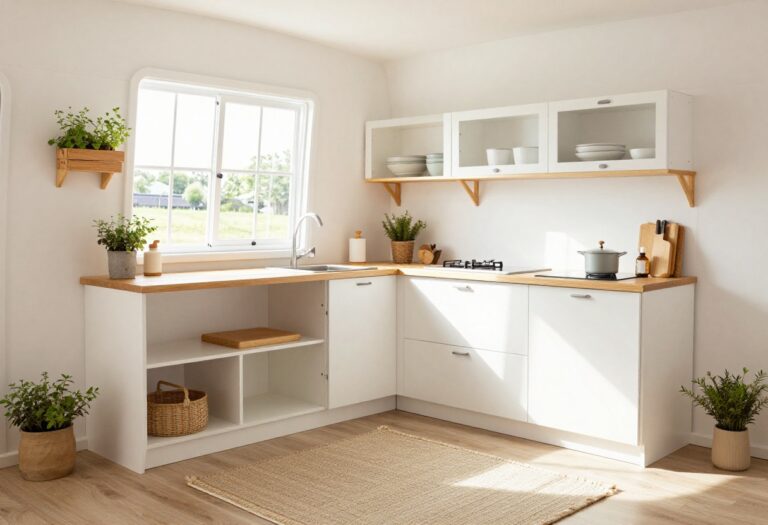
Floating wood shelves bring instant farmhouse warmth to any kitchen. By layering white dishes, woven baskets, and a few well-loved cookbooks, you create a display that feels curated but not fussy. The mix of natural wood grain, glossy ceramic, and soft basket weaves adds depth without overwhelming the space.
It's an easy way to swap out decor seasonally or just show off your favorite pieces.
Open shelving is a go-to for farmhouse kitchens because it keeps things airy while letting your personality shine. The trick is balancing function with style—you want it to look good, but you also need it to work for daily life. Stick with a neutral palette so the textures do the heavy lifting.
White dishes pop against wood, and baskets hide less camera-ready items like measuring cups or snack bags. Tuck in a small plant or a ceramic pitcher for a finishing touch that feels lived-in.
Best Materials
Go with solid wood shelves in a warm stain like oak or walnut. For the dishes, choose matte white stoneware or ceramic—it feels cozy and hides chips better than glossy porcelain. Woven baskets in seagrass or water hyacinth add organic texture and are sturdy enough for heavy items.
Shelf Styling Tip
Group items in odd numbers and vary heights. Stack plates on a small wooden stand, lean a cookbook against a tall vase, and nestle a basket beside them. Leave a little breathing room between groups so the shelf doesn't look cluttered.
Layout Tip
Install shelves about 18 inches above the counter so there's room for both decor and daily use. Keep frequently accessed items like coffee mugs on lower shelves, and reserve top shelves for pretty bowls or jars you don't reach for every day.
2. Vintage Sign or Painted Board
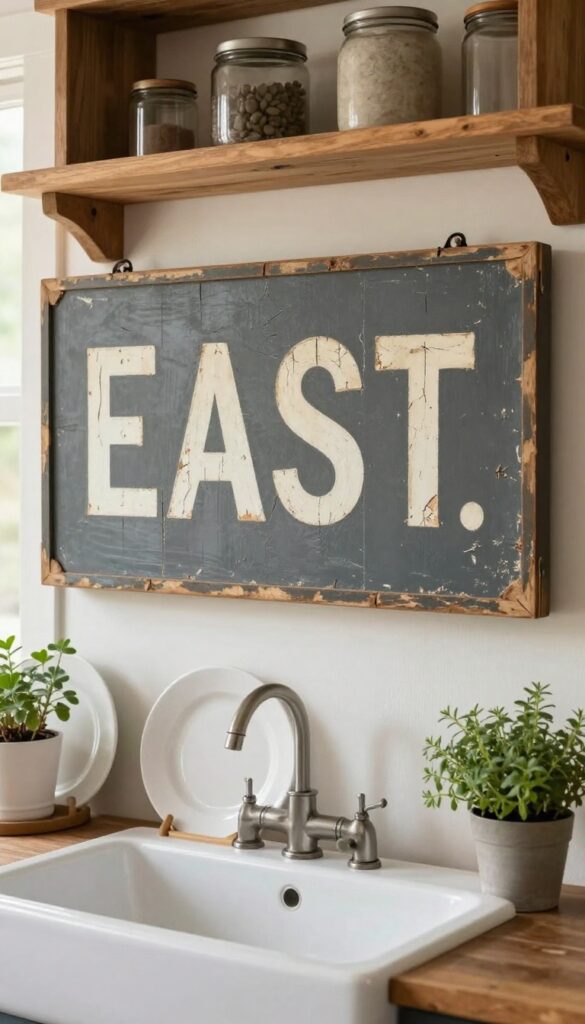
Nothing says farmhouse like a worn-in sign that looks like it’s been hanging for decades. A large vintage-inspired board with a single word—'EAT,' 'FARMHOUSE,' or even 'BAKE'—creates an instant focal point above a stove or sink. The charm comes from the distressed finish, which adds texture and a sense of history without trying too hard.
It’s a simple, affordable way to bring personality to blank wall space.
A vintage sign works best when it feels authentic, not store-bought new. Look for one with chipped paint, faded lettering, or a slightly uneven shape. The size matters: go big enough to fill the wall without overwhelming it.
A 24-by-36-inch board is a good starting point for most standard kitchen walls. Hang it at eye level, and let it anchor a small gallery of other rustic accents like a wire basket or a wooden cutting board.
Best Colors And Finishes
- Stick with a neutral palette that feels warm and lived-in. Creamy white lettering on a dark gray or black background gives high contrast without being harsh. Alternatively, a soft sage green board with white letters adds a subtle pop of color.
- The finish should be matte and slightly rough to the touch—avoid anything glossy or shiny. A light sanding over the edges and corners will mimic natural wear.
Placement And Styling Tip
- Hang the sign on a wall that gets a bit of natural light, so the texture and paint wear are visible. Above a window or next to open shelving works well. Pair it with a simple shelf underneath holding a stack of white plates or a small plant.
- Keep the surrounding decor minimal—too many competing signs will dilute the impact.
Diy Or Buy?
- If you’re handy, you can make your own sign with a scrap piece of wood, chalk paint, and a stencil. Sand the edges, paint the base, apply the stencil, then distress with sandpaper. For a quicker route, many home decor stores sell pre-made signs that already look aged.
- Just avoid anything that looks too perfect or mass-produced—the charm is in the imperfections.
3. Galvanized Metal Accents
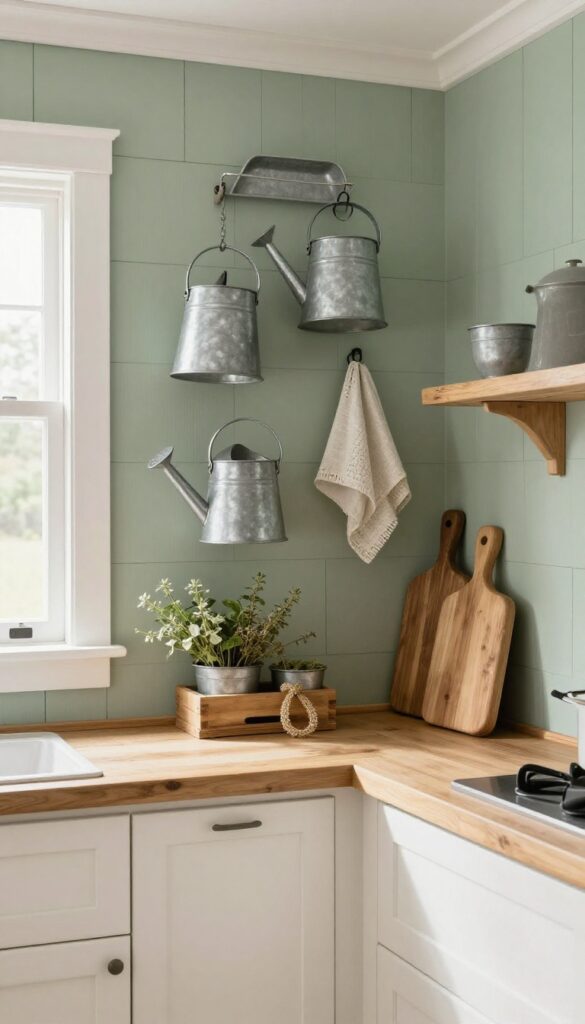
Galvanized metal brings a quiet, unpolished charm that feels right at home in a farmhouse kitchen. The soft silver-gray patina catches light gently and pairs beautifully with natural wood, white cabinetry, and woven textures. It adds just enough industrial edge without making the space feel cold or stark.
Hang a collection of galvanized metal trays, buckets, or small planters on a wall. Their silvery patina complements wood tones and adds an industrial farmhouse touch. Group them in an odd-numbered cluster or line them along a narrow wall for a subtle, textural display.
Mix in a few dried herbs or a small cutting board to keep the look warm and lived-in.
Best Colors
Stick with soft neutrals—creamy whites, warm grays, and muted beige—to let the metal shine. Avoid bright or cool tones that can clash with the silvery finish. A backdrop of sage green or dusty blue also works well, adding a hint of color without overpowering the metal.
Texture Mix
Pair galvanized metal with rougher textures like reclaimed wood, burlap, or linen. The contrast keeps the display from feeling too slick. A wooden shelf beneath the metal pieces can anchor the grouping and add warmth.
Wall Decor Tip
Use a mix of sizes and shapes—trays, small buckets, and a mini watering can—arranged asymmetrically. Leave a few inches of breathing room between each piece. For a cohesive look, stick to one metal finish throughout the collection.
4. Herb Garden Wall Display
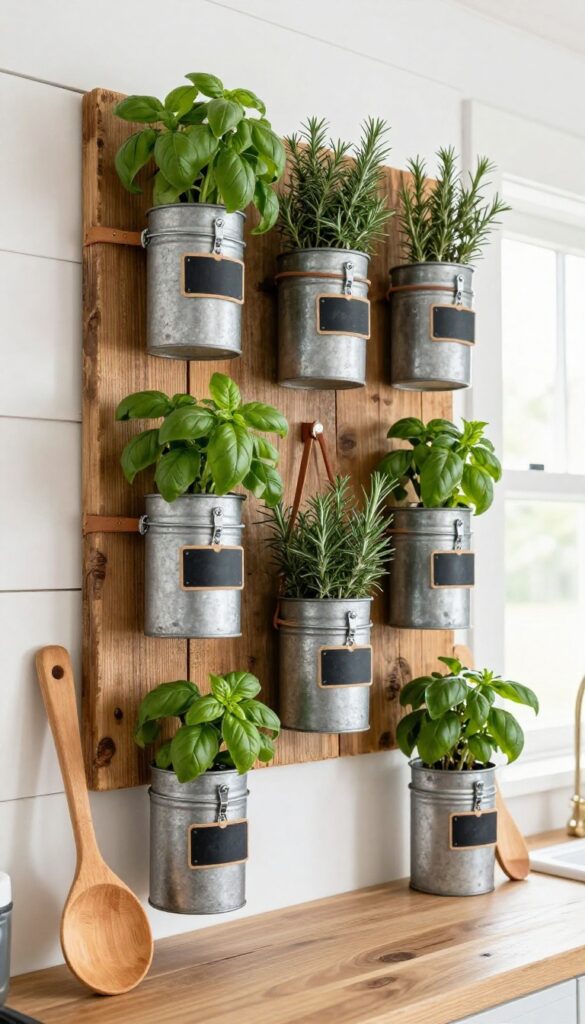
A wall-mounted herb garden is one of those ideas that feels both practical and charming at the same time. Instead of hiding your herbs in a windowsill or letting them take over the counter, you can turn them into a living piece of art. The mix of green leaves against a rustic wooden board instantly adds warmth and life to the kitchen, making it feel more like a cozy farmhouse than a sterile cooking space.
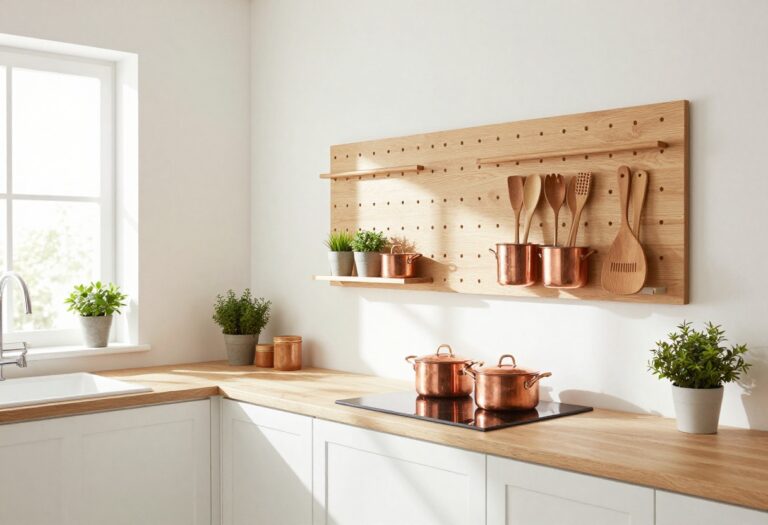
Mount small mason jars or metal tins on a wooden board and plant fresh herbs like basil and rosemary. It's functional decor that brings greenery and fragrance right into the kitchen.
Best Materials
Go with a reclaimed wood board for that lived-in farmhouse feel. Attach metal clips or leather straps to hold each jar, and use galvanized metal tins for a more industrial touch. The contrast between the raw wood and the bright green herbs is what makes this display pop.
Plant Styling Tip
Choose herbs that you actually cook with—rosemary, thyme, basil, and mint are all great options. Place the board near a window where the herbs can get enough light, but not so close that they get scorched. Water them sparingly; overwatering is the quickest way to kill a wall garden.
Finishing Touch
Add small chalkboard labels to each jar so you know which herb is which. It’s a tiny detail that makes the whole setup feel intentional and polished. You can also hang a small wooden spoon or a set of measuring spoons next to the board for extra farmhouse flair.
5. Farmhouse Clock with Character
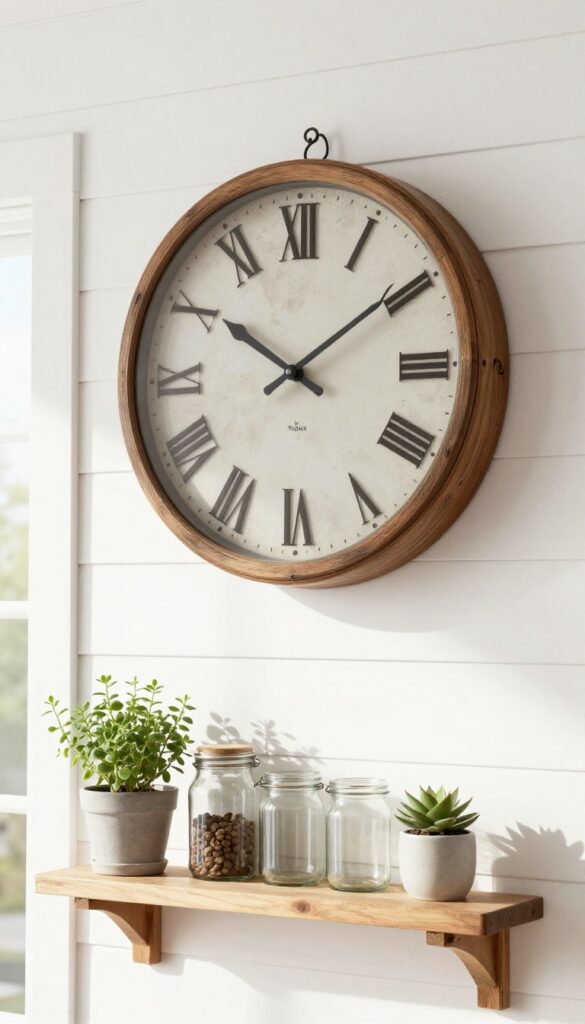
A large wall clock does more than tell time—it anchors the whole room. In a farmhouse kitchen, a clock with a rustic wood frame and Roman numerals becomes a natural focal point. Look for one with a slightly distressed face and visible grain; that worn-in feel is what makes it feel like it’s been part of the home for decades.
A farmhouse clock brings both function and personality to your kitchen wall. The key is choosing one that looks like it has a story—maybe a few scuffs on the frame or a patina that suggests years of ticking. Hang it above a window, centered over a farmhouse sink, or on a blank wall between cabinets.
It should feel substantial, not dainty. Pair it with open shelving or a small collection of vintage jars to complete the look.
Best Materials
- Go for solid wood frames—reclaimed pine, oak, or even a weathered MDF with a wood veneer. The face should be metal or painted wood with clear Roman numerals. Avoid plastic or overly shiny finishes.
- A matte or satin seal keeps the rustic feel intact.
Placement Tips
Hang the clock at eye level, roughly 60 inches from the floor. In a kitchen, it works well above a doorway, on a large empty wall, or as part of a gallery arrangement. Make sure it’s visible from the main work areas—you want to glance up and catch the time without straining.
Finishing Touch
Let the clock stand alone rather than crowding it with too many other wall pieces. A single, oversized clock makes a stronger statement than a cluster of small decor. If you do add nearby items, keep them simple—a small framed botanical print or a single floating shelf with a potted herb.
6. Wreath Made from Natural Materials
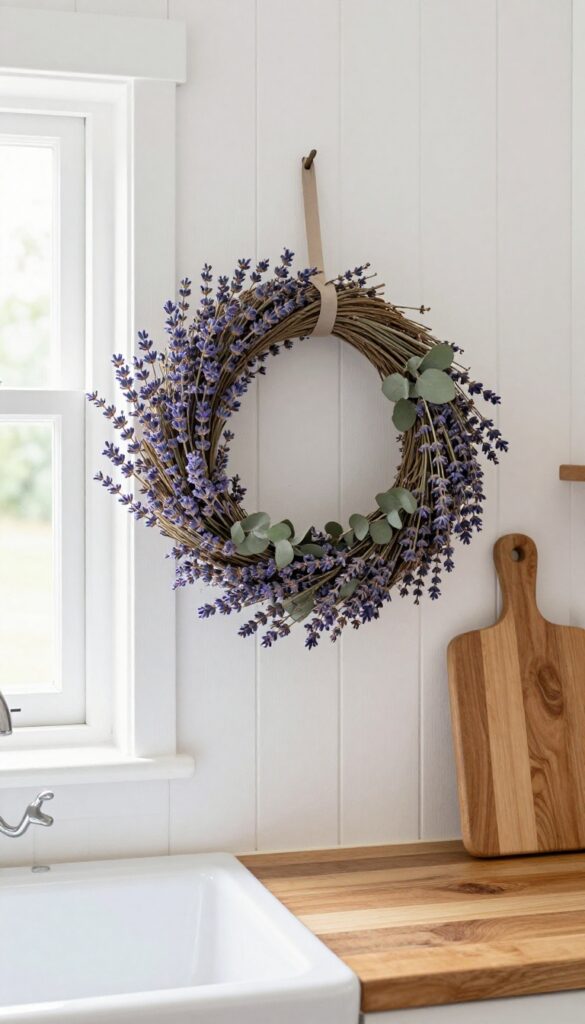
A wreath isn't just for your front door. Hung above the sink or stove, a simple ring of dried lavender, eucalyptus, or grapevine brings a soft, organic touch to your kitchen. It's an easy way to add texture and a hint of nature without sacrificing any counter space.
Farmhouse kitchens thrive on natural elements, and a wreath made from dried botanicals fits right in. The key is keeping it simple—no giant bows or plastic flowers. Let the materials speak for themselves.
Dried lavender adds a subtle purple hue and a calming scent, while eucalyptus brings a muted green that pairs beautifully with white cabinets or butcher block counters. Grapevine wreaths offer a rustic, earthy look that works year-round. Hang one on a small nail or command hook above the sink, or lean it against a backsplash for a casual feel.
It's an affordable swap that instantly makes the space feel more lived-in and welcoming.
Best Materials To Use
- Stick with natural, dried elements that hold up well indoors. Lavender keeps its color and fragrance for months. Eucalyptus dries into a lovely sage tone.
- Grapevine is sturdy and can be left plain or tucked with a few sprigs of dried baby's breath. Avoid fresh greenery—it will wilt over the stove's heat.
Where To Hang It
The spot above the kitchen sink is ideal because it's a natural focal point and stays out of the way. Over the stove works too, but keep the wreath small and away from direct heat or steam. A window with a farmhouse-style curtain also makes a charming backdrop for a wreath.
Finishing Touch
Tie a thin strip of burlap or a simple leather cord to the top for hanging. Let the wreath overlap slightly with a nearby shelf or cabinet for a layered look. If you want a seasonal touch, tuck a few cinnamon sticks or dried orange slices into the grapevine in fall.
7. Chalkboard Wall or Panel
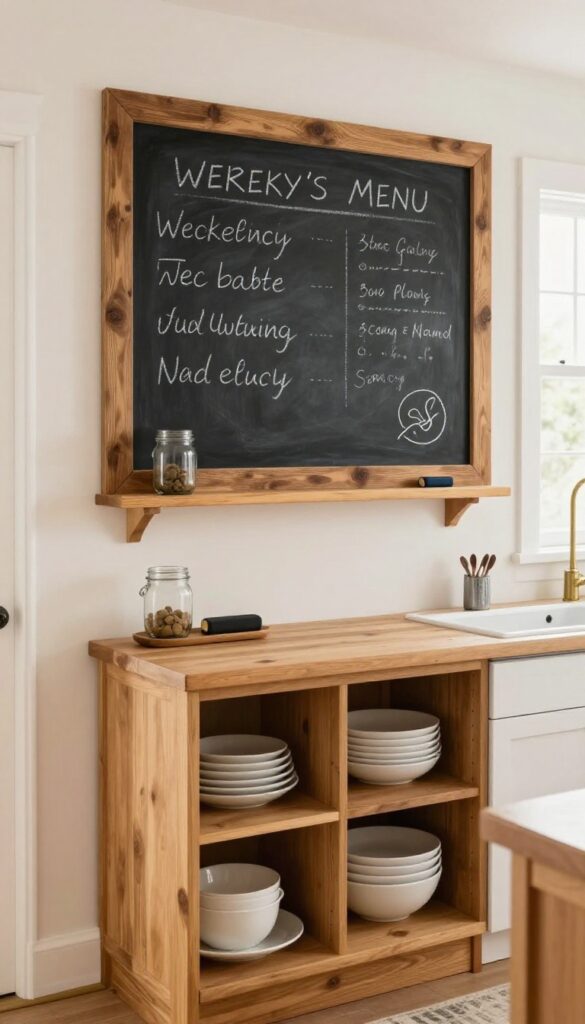
A chalkboard wall is the perfect blend of function and farmhouse charm. It gives you a place to jot down grocery lists, meal plans, or sweet notes to family members, all while adding a casual, lived-in feel. The best part?
It’s incredibly easy to create and can be as temporary or permanent as you like.
Whether you paint a whole section of wall or hang a large framed chalkboard, this idea instantly makes your kitchen feel more homey. The matte black surface contrasts beautifully with light countertops and open shelving, and it invites daily interaction. You can keep it practical with a weekly menu or let it become a rotating gallery of doodles and reminders.
Either way, it adds personality without cluttering your walls.
Best Placement
The ideal spot is near the kitchen entrance or beside the fridge, where it’s easy to see and use. If you have a narrow wall between cabinets, that’s a perfect candidate. For renters, a large framed chalkboard leaned against the backsplash works just as well and can move with you.
Styling Tip
Keep the look clean by framing the chalkboard area with a simple wooden frame—reclaimed barn wood adds instant farmhouse cred. Add a small shelf underneath to hold chalk and an eraser in a mason jar. For a softer vibe, use chalk markers instead of traditional chalk; they write smoothly and don’t create dust.
Color And Texture
Chalkboard paint comes in more than just black—try a deep charcoal or even a muted green for a twist. Pair it with warm wood tones and creamy whites to keep the space from feeling too dark. The matte texture plays nicely with glossy subway tile or stainless steel appliances.
8. Gallery Wall of Farmhouse Prints
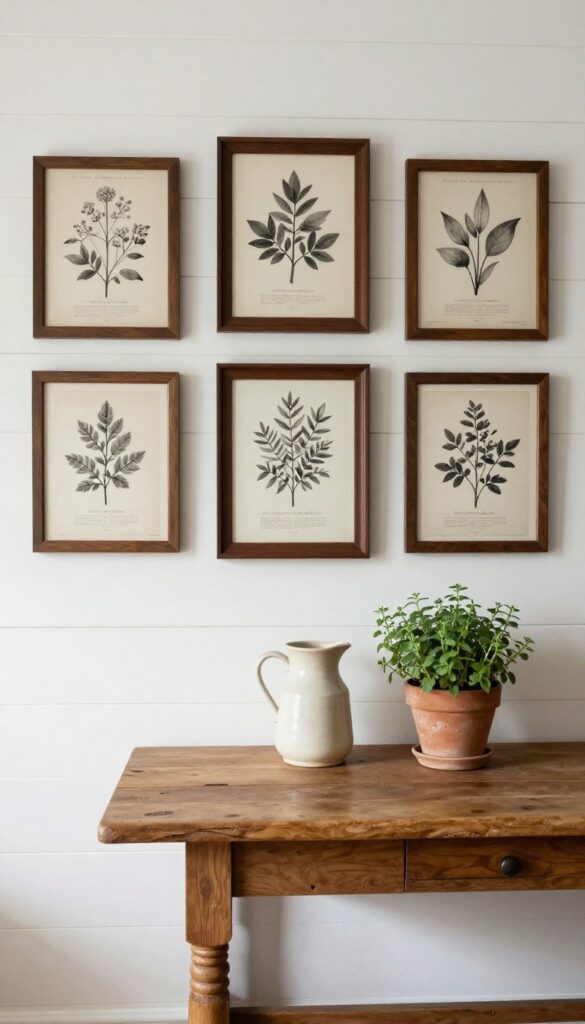
A gallery wall is one of those ideas that sounds like a big project but actually comes together faster than you think. In a farmhouse kitchen, the key is choosing prints that feel timeless and a little bit nostalgic—think black-and-white botanical illustrations, vintage food advertisements, or simple line drawings of herbs and produce. Grouping them in matching wood frames creates a unified look that feels curated, not chaotic.
This kind of wall decor adds personality without overwhelming the space, and it works especially well on a blank wall near a dining nook or above a buffet.
Start by selecting 5 to 7 prints that share a similar color palette—black, white, and maybe a soft sepia tone. Look for vintage-style fruit crate labels, old-fashioned recipe cards, or botanical sketches. The frames should all be the same style and finish; dark walnut or rustic oak both work beautifully.
Arrange them on the floor first to figure out the layout before hammering any nails. A grid arrangement feels clean and modern, while a more organic cluster feels relaxed and collected over time. Leave about 2 to 3 inches between each frame for breathing room.
Once hung, the gallery wall becomes a natural focal point that draws the eye and sparks conversation.
Best Colors For A Cohesive Look
Stick to black-and-white or sepia-toned prints for a farmhouse feel. If you want a subtle pop of color, choose prints with muted greens or soft blues that echo the kitchen's existing palette. The frames should be a consistent wood tone—avoid mixing dark and light woods unless you're going for an intentionally eclectic vibe.
Layout Tip For A Small Space
In a narrow kitchen or above a small counter, use a vertical column of three frames instead of a wide grid. This draws the eye upward and makes the ceiling feel higher. Keep the frames small—8×10 or 11×14—so they don't overpower the wall.
Finishing Touch For Warmth
Add a small shelf beneath the gallery wall to hold a couple of vintage kitchen items, like a ceramic pitcher or a wooden rolling pin. This grounds the arrangement and ties it into the lived-in farmhouse aesthetic.
9. Repurposed Window Frame
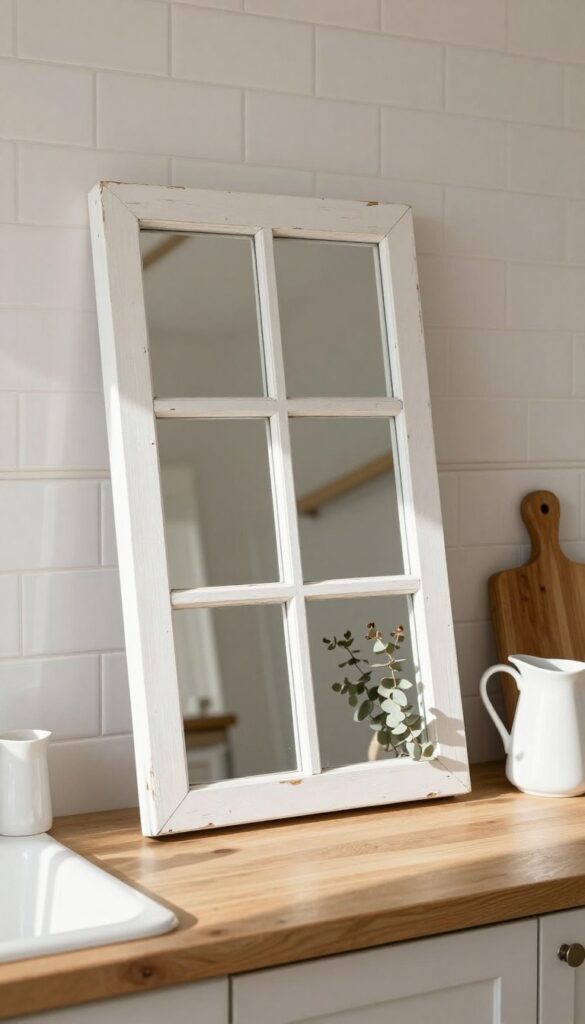
There’s something about an old window frame that instantly adds character to a kitchen. Maybe it’s the chipped paint, the wavy glass, or the way it feels like a little piece of history. Leaning one against the backsplash or hanging it flat on the wall gives you instant architectural interest without a full renovation.
The divided panes create a natural grid that draws the eye, and you can leave the glass as is for a rustic look or add a mirror behind each pane to bounce light around.
This idea works especially well in farmhouse kitchens where you want that collected-over-time feel. A window frame with peeling white or sage green paint blends right in with open shelving and apron-front sinks. If your kitchen feels a bit flat, this one piece can add depth and a story.
You can even hang small hooks on the frame to hold kitchen towels or lightweight utensils for extra function.
Best Placement
- For maximum impact, lean the frame against the backsplash behind the stove or sink. It fills that empty vertical space without needing to drill into tile. If you have a blank wall, hang it centered over a small console table or butcher block cart.
- Just make sure it’s secure—use sturdy picture hooks or French cleats for heavier frames.
Finishing Touch
To make the window frame feel intentional, add a simple wreath or a cluster of dried herbs to one of the panes. A small eucalyptus bundle or lavender sprig tucked into the corner brings in texture and a soft scent. Keep the rest of the frame clean so the architectural lines stay the star.
10. Wooden Cutting Board Display
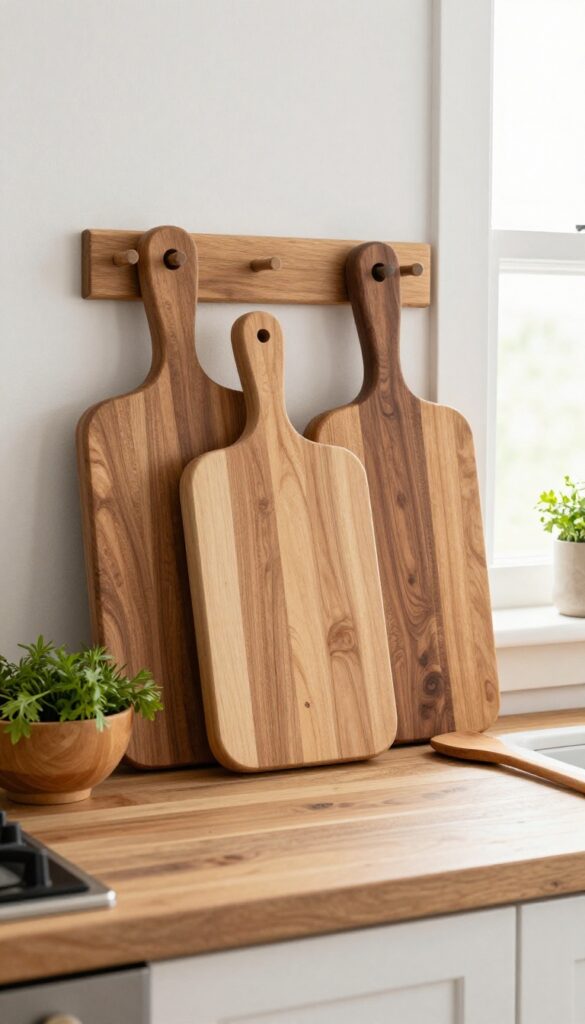
There’s something about a collection of wooden cutting boards that instantly makes a kitchen feel warm and lived-in. Instead of hiding them in a drawer, show them off. Lean a few against the backsplash or hang them on a simple wall rack.
The natural wood tones add texture and soften the harder surfaces of tile and countertops. Plus, having them out means they’re always ready to grab for chopping or serving.
A wooden cutting board display is more than just storage—it’s a chance to layer in warmth and character. Choose boards in a mix of sizes and wood types, like acacia, walnut, and maple, for visual variety. Arrange them on a dedicated wall rack or simply prop them against the backsplash behind the stove.
The key is to keep the arrangement casual and slightly imperfect, so it feels natural, not staged. This idea works especially well in farmhouse kitchens where natural materials and practical charm are celebrated.
Best Wood Choices
Stick with woods that have visible grain and warm undertones. Walnut adds richness, acacia brings a honey hue, and maple keeps things light. Avoid overly processed or painted boards—the natural finish is what gives the display its cozy, farmhouse feel.
Wall Rack Vs. Counter Lean
- A wall-mounted rack saves counter space and creates a focal point. Look for a simple iron or wood rack with slots for each board. If you prefer a more relaxed look, lean boards of varying heights against the backsplash.
- This works best when the boards are thick enough to stand on their own.
Finishing Touch
Add a small bowl of fresh herbs or a wooden utensil crock nearby to tie the display together. The mix of textures—smooth wood, rough ceramic, soft herbs—keeps the area from feeling flat. Just be sure to rotate the boards occasionally so they wear evenly.
11. Beadboard or Shiplap Accent Wall
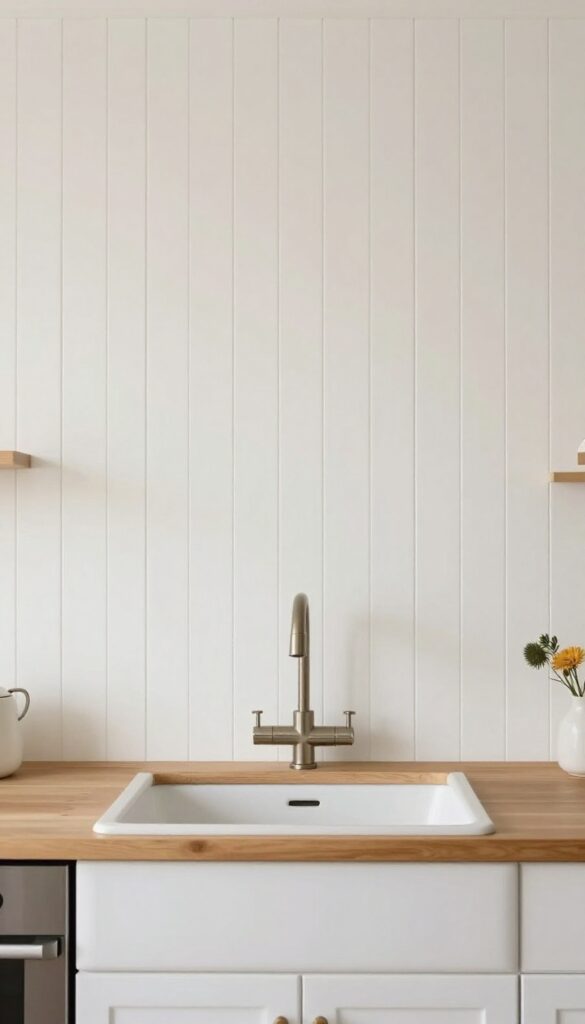
Nothing says farmhouse quite like the texture of beadboard or shiplap. Adding an accent wall with these classic materials instantly brings warmth and character to your kitchen. Whether you go full height or wainscot height, the subtle grooves create visual interest without overwhelming the space.
Paint it a soft white or warm gray to keep the look light and inviting—perfect for a lived-in farmhouse feel.
A beadboard or shiplap accent wall is a timeless way to add farmhouse charm without a full renovation. The key is choosing the right material and finish to match your kitchen’s existing style. Beadboard offers a more traditional, cottage-like feel with its narrow vertical grooves, while shiplap provides wider planks for a cleaner, more modern farmhouse look.
Both work beautifully as a backdrop for open shelving, a farmhouse sink, or a simple piece of art. For a warm, lived-in vibe, consider painting the wall in a soft off-white like Benjamin Moore’s White Dove or a gentle gray like Sherwin-Williams’ Agreeable Gray. The texture catches light softly, making the space feel cozy and curated.
Best Materials
- Real wood beadboard or MDF shiplap are both great choices. Real wood offers authentic grain and durability, while MDF is more budget-friendly and resists moisture better in a kitchen. For a DIY-friendly option, try peel-and-stick shiplap panels—they’re easy to install and come in various finishes.
- If you want a true farmhouse look, opt for primed MDF boards that you can paint yourself.
Installation Tips
- Decide whether you want full-height panels (floor to ceiling) or a wainscot (about halfway up). Full height makes the room feel taller and more dramatic, while wainscot adds a cozy, traditional feel and leaves room for a different wall color above. For a seamless look, install the boards horizontally for shiplap or vertically for beadboard.
- Use a level and adhesive plus nails for a secure fit.
Styling The Wall
- Once your accent wall is up, keep the styling simple to let the texture shine. Hang a single large mirror or a piece of farmhouse-inspired art. Floating shelves with a few plants, cookbooks, or ceramic pitchers add warmth without clutter.
- Avoid overcrowding—the wall itself is the star. A small pendant light or sconce can highlight the texture beautifully.
12. Hanging Dried Flowers or Herbs
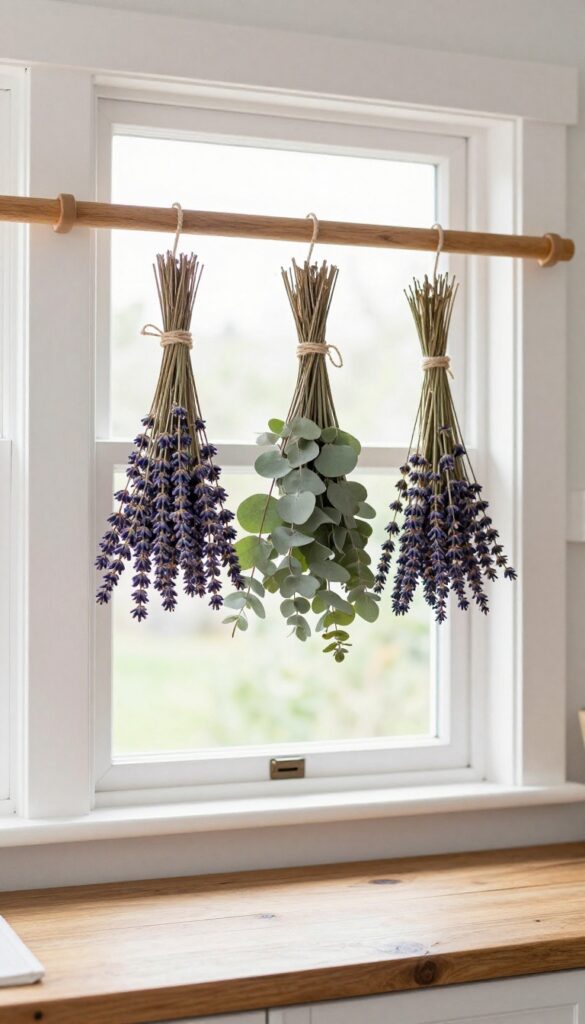
There’s something quietly charming about dried flowers or herbs hanging from a wooden rod or a set of hooks. They bring a soft, organic texture to the kitchen and fill the space with a subtle, natural fragrance. This idea works especially well in farmhouse kitchens, where a little bit of rustic charm goes a long way.
Whether you choose lavender, eucalyptus, or even dried chili peppers, the effect is both decorative and functional.
Hanging dried botanicals is an easy way to add warmth and a lived-in feel to your kitchen walls. The key is to keep the arrangement loose and natural—tight bundles can look too formal. A simple wooden dowel or an old curtain rod works perfectly as a hanger.
For a cohesive look, match the dried flowers to your kitchen’s color palette: soft purples and greens for a neutral space, or warm reds and oranges for a more rustic vibe. This decor idea also doubles as a natural air freshener, making your kitchen smell wonderful without any artificial sprays.
Best Botanicals To Use
- Lavender, eucalyptus, and baby’s breath are popular choices because they dry well and hold their color. For a more rustic farmhouse look, try dried wheat, oat stalks, or even small bundles of cinnamon sticks. If you want a pop of color, dried chili peppers or bright yellow yarrow add a fun, unexpected twist.
- Just make sure the plants are fully dried before hanging to prevent mold.
Hanging Hardware And Placement
- Use a simple wooden rod with hooks or a piece of twine stretched between two nails. Place the rod above a window, along a bare wall, or even above the sink for a focal point. Keep the bundles at different lengths for visual interest.
- If you’re short on wall space, hang them from a ceiling-mounted rack or a pot rack over an island.
Styling And Maintenance
- Group three to five bundles together for a fuller look, or space them out for a more minimalist feel. Replace the dried botanicals every few months, as they can gather dust and lose their scent. To refresh the fragrance, gently crush a few leaves or buds every now and then.
- This decor idea is budget-friendly and easy to switch out with the seasons.
13. Magnetic Spice Jar Rack
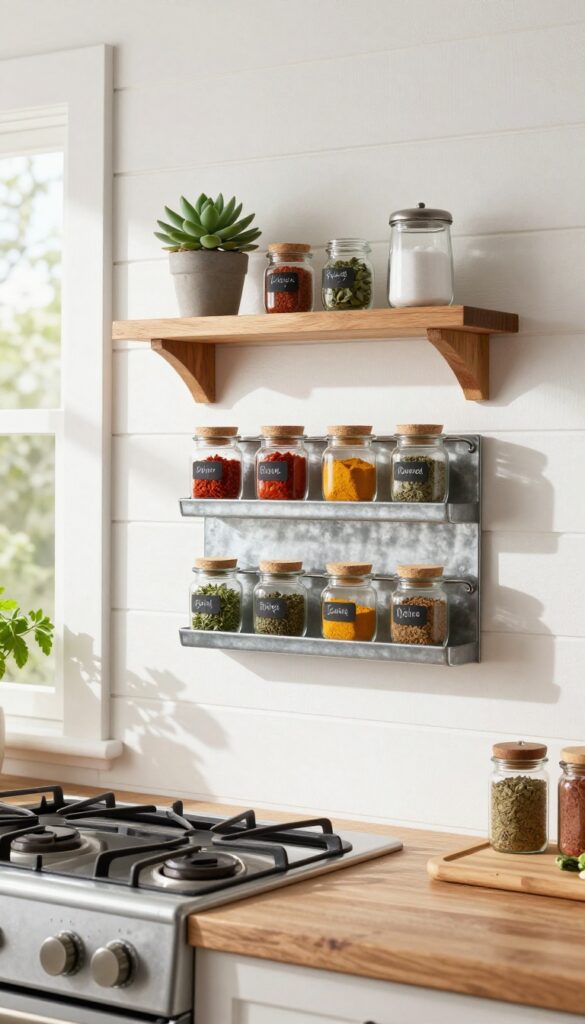
If your kitchen countertops are constantly cluttered with spice bottles, this idea will change your life. A magnetic spice rack turns an empty wall into a functional, eye-catching display. It’s the kind of solution that makes you wonder why you didn’t try it sooner—especially when you’re cooking and can grab exactly what you need at a glance.
Start by choosing a metal strip or a small magnetic board that fits your wall space. Mount it near your stove or prep area for easy access. Then, fill small glass or tin jars with your most-used spices.
Label each one with chalk markers or adhesive labels for a clean, uniform look. The jars stick right to the metal, creating a floating effect that saves drawer space and adds a touch of farmhouse charm. This setup works beautifully in narrow gaps, above a backsplash, or even inside a cabinet door for a hidden surprise.
Best Materials
For a warm farmhouse feel, choose a galvanized steel strip or a rustic iron board. Pair it with glass jars with cork lids or tin tins with chalk labels. The contrast of raw metal and soft spices creates a lived-in look that feels both practical and personal.
Layout Tip
Mount the strip at eye level, about 12 to 18 inches above your counter. Arrange jars in a single row or staggered pattern for visual interest. Leave a little space between each jar so they’re easy to grab and replace.
Finishing Touch
Add a small wooden shelf just above the rack to hold a tiny plant or a salt cellar. This softens the industrial edge and ties the whole display into your kitchen’s overall style.
FAQ
What is the easiest farmhouse wall decor idea for a small kitchen?
A small kitchen benefits from open shelving or a magnetic spice rack. Both use vertical space without crowding counters, and they add farmhouse charm instantly.
Can I mix farmhouse wall decor with modern appliances?
Absolutely. Farmhouse elements like wood, metal, and neutral tones blend well with stainless steel or modern finishes. The contrast creates a balanced, eclectic look.
How do I keep farmhouse decor from looking cluttered?
Stick to a cohesive color palette—whites, grays, and natural wood. Choose a few statement pieces rather than many small items, and leave some wall space empty.
What colors work best for farmhouse kitchen walls?
Soft whites, warm beiges, light grays, and muted blues or greens are popular. These colors create a calm backdrop that lets decor stand out without competing.
Is farmhouse wall decor expensive to achieve?
Not at all. Many ideas use repurposed items like old window frames or DIY projects like chalkboard paint. Thrift stores and flea markets are great sources for affordable finds.
Conclusion
Farmhouse kitchen wall decor is all about layering pieces that feel personal and practical. Whether you go for a single statement sign or a full gallery wall, the key is to choose items that make you smile every time you walk in.
Start with one or two ideas that resonate with your space, and let the rest come together naturally over time.