11 Pottery Barn Bedroom Ideas for a Cozy Classic Look
A bedroom can go from forgettable to genuinely restful with a few deliberate swaps. Pottery Barn has built a reputation for cozy, classic rooms that feel collected rather than decorated, and the formula is easier to copy than you might think. It starts with a calm foundation and builds outward.
You do not need to replace everything at once. Soften the palette, layer the bedding, and let natural textures do the heavy lifting.
Add warm light and a few vintage pieces, and the room starts to feel lived-in instead of showroom-perfect. The eleven ideas below walk through that process step by step.
1. Start with a Neutral Base Palette
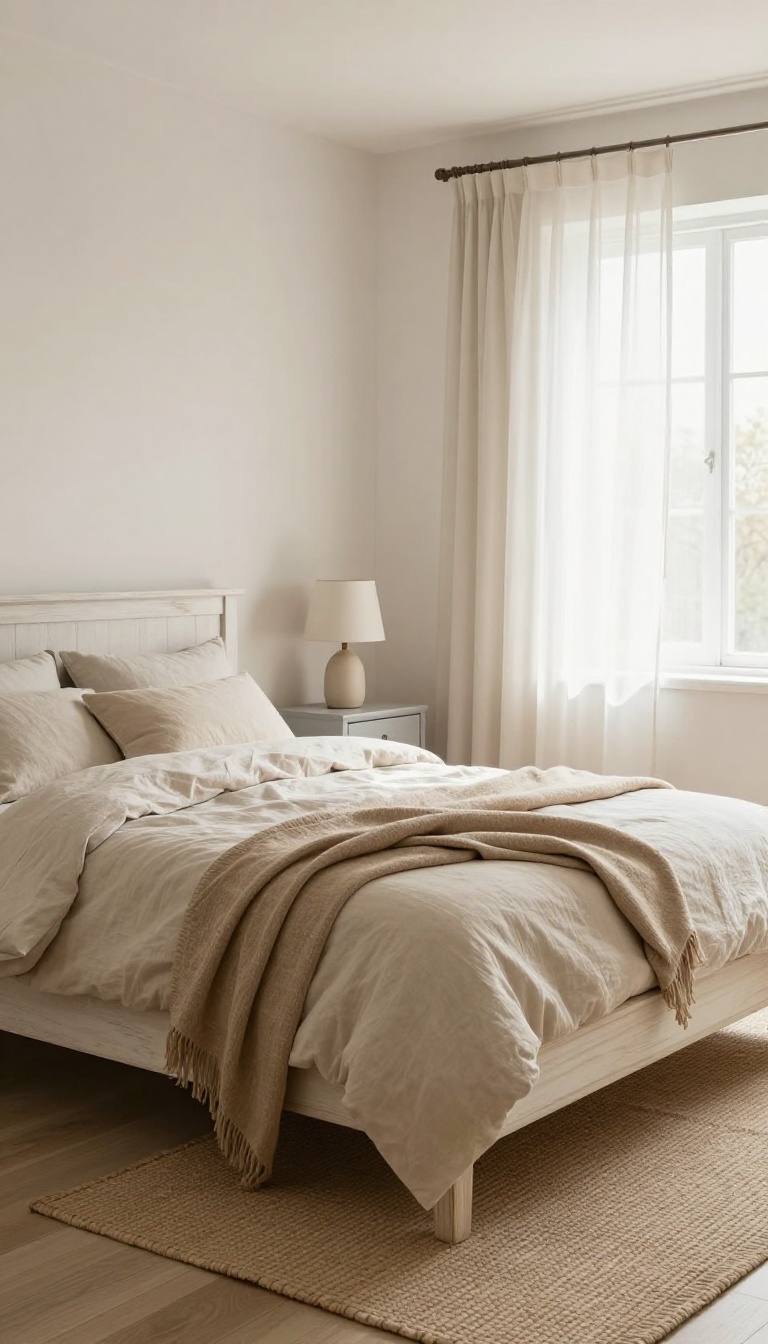
The quickest way to make a bedroom feel like a Pottery Barn catalog is to strip away color chaos. Warm whites, soft beiges, and gentle grays on your walls and large furniture create a calm, timeless backdrop. That neutral foundation lets every texture and accent you add later stand out instead of competing for attention.
You do not need to paint every surface the same shade. The goal is a cohesive range of light, earthy tones that feel like they belong together. Think of it as setting a stage where the real stars—linens, wood, and lighting—can shine.
Start with the biggest surfaces first: walls, then major furniture pieces like a bed frame or dresser. Once those are neutral, you can layer in warmth through fabrics and accessories without the room feeling busy. This approach also makes it easy to swap out accents seasonally without repainting.
Pick Your Warm Neutral
Warm whites have a hint of yellow or cream, while soft beiges lean slightly pink or tan. Gentle grays with a touch of brown feel cozier than cool, blue-based grays. Test a few samples on your wall at different times of day to see how the light changes them.
Pottery Barn often uses shades like ivory, oatmeal, and greige. These colors reflect light softly and make a room feel open yet grounded. Avoid stark white unless you want a crisper, more modern look.
Apply It To Big Pieces
Your bed frame, nightstands, and dresser are the largest visual blocks in the room. Choose a neutral finish like whitewashed wood, natural oak, or a painted soft gray. This keeps the room from feeling heavy and allows smaller decor to pop.
If you already have dark furniture, you can still work with it. Balance it with light walls and bedding so the overall effect stays airy. The key is contrast without clutter.
Keep The Ceiling And Trim Simple
Paint your ceiling the same warm white as your walls, or go one shade lighter. Trim in a soft white ties everything together without drawing attention. This creates a seamless envelope that feels larger and more serene.
Skip bold accent walls for now. You can always add a subtle wallpaper or a painted arch later, but a neutral base gives you a timeless starting point that works with any seasonal change.
2. Layer Bedding Like a Stylist
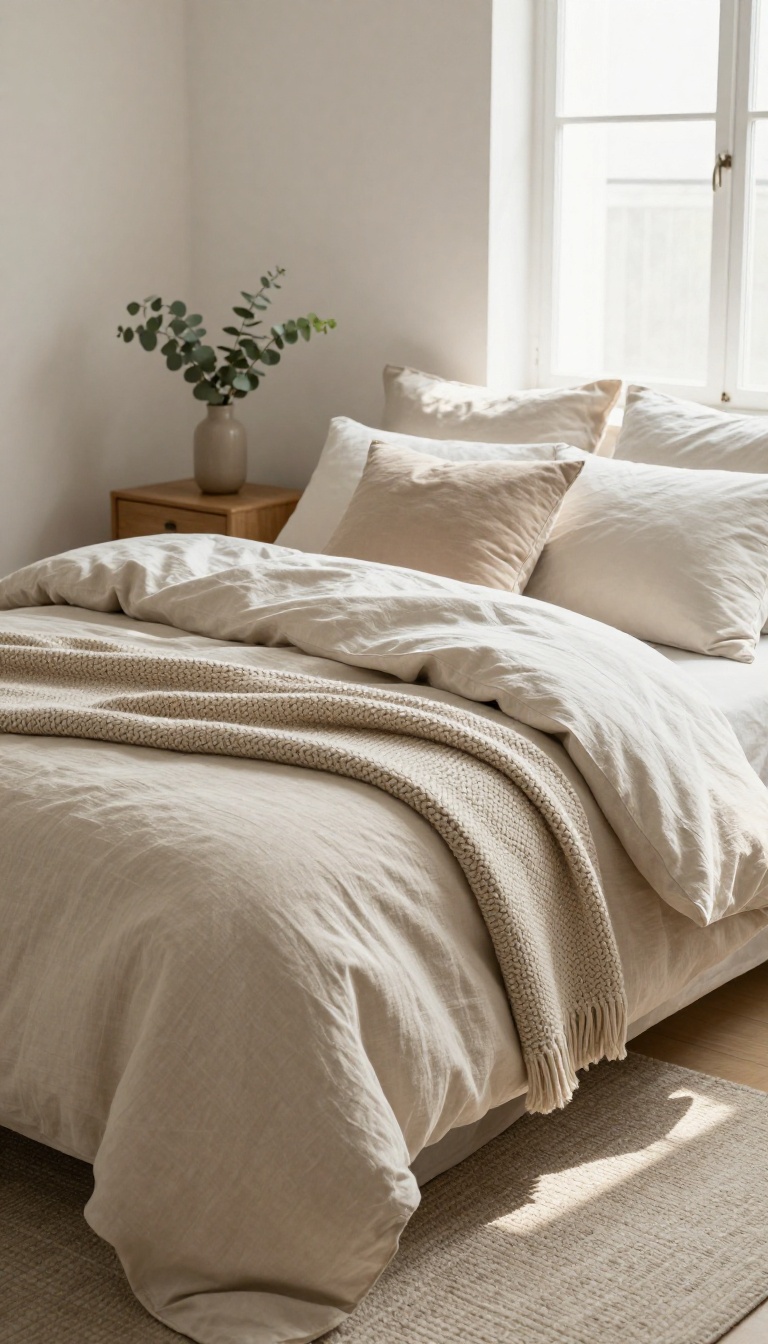
A bed that looks like it belongs in a Pottery Barn catalog doesn't happen by accident. It's built in layers, starting with the sheets and ending with something you want to curl up in. The trick is mixing weights and weaves so the bed feels as good as it looks.
Start with a foundation of linen sheets. Linen breathes, softens with every wash, and has a relaxed, slightly rumpled texture that feels effortless. Pottery Barn's Belgian flax linen is a classic for a reason.
It's not stiff or shiny, and it pairs well with almost any duvet you put on top. Next, add a washed cotton duvet. This is your mid-layer, the one that gives the bed its bulk and softness.
Washed cotton has a lived-in feel right out of the package, so you don't have to wait months for it to break in. Choose a duvet cover in a neutral tone like oatmeal, fog, or soft white. It should feel calm, not loud.
Finally, drape a chunky knit throw across the foot of the bed. This is the layer that adds visual weight and invites you to sit down. A throw in a slightly darker or warmer tone than your duvet creates contrast without breaking the palette.
Fold it in thirds and lay it across the bottom third of the bed, letting it hang slightly on one side. The goal is depth. Each layer should feel distinct but connected, like they belong together.
When you mix a smooth linen, a soft cotton, and a textured knit, the bed becomes the centerpiece of the room without trying too hard.
Mix Weights For Comfort
A heavy duvet with a lightweight linen sheet underneath gives you options. You can kick off the duvet on warm nights or pull it up when it's cold. A chunky throw adds extra warmth at the foot without overwhelming the bed.
The mix of weights also looks more interesting than a single matching set.
Play With Textures, Not Patterns
You don't need bold prints to make a bed look styled. Instead, let the textures do the talking. Linen has a natural slub, washed cotton is smooth and soft, and a knit throw is nubby and tactile.
When you keep the colors neutral, the textures become the star. It's a subtle approach that feels classic and cozy.
Fold, Don't Tuck
For a relaxed look, skip the tight hospital corners. Let the linen sheets show at the top, fold the duvet back a third of the way, and lay the throw loosely across the foot. This creates a bed that looks inviting, not rigid.
It's the difference between a hotel room and a home.
3. Add a Slipcovered or Upholstered Headboard
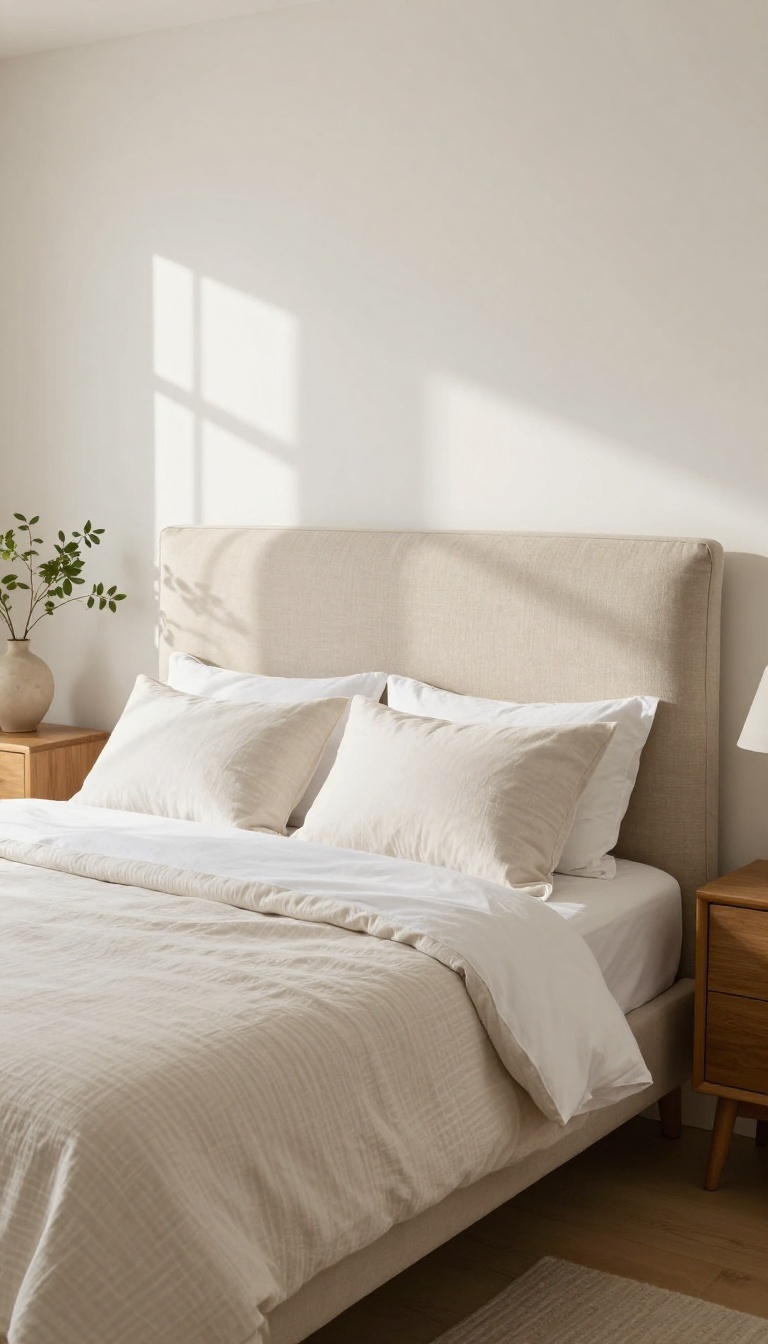
A fabric headboard changes the entire mood of a bed. It softens the hard lines of a wooden frame and adds a layer of texture that makes the room feel instantly more inviting. Pottery Barn leans on this trick constantly, and for good reason: it works with almost any style of bedding and never feels trendy.
The right fabric headboard can turn a basic mattress-and-frame setup into something that looks intentional and collected. You do not need a custom piece to get the look. Slipcovered and upholstered options come in a range of prices, and even a simple DIY version can deliver the same cozy effect.
The key is choosing a fabric and silhouette that feel classic rather than fussy.
Start by thinking about the shape you want. A tall, slightly curved headboard reads traditional and elegant, while a clean rectangular one feels more modern farmhouse. Both work in a Pottery Barn-style room, so pick the one that matches the rest of your furniture.
If your bed frame is low, a taller headboard adds height and presence without overwhelming the space. Fabric matters as much as shape. Linen and cotton are the go-to choices because they look relaxed and get softer over time.
A linen blend resists wrinkles better, which is helpful if you do not want to steam it constantly. For a subtle pattern, try a thin stripe or a small check in a neutral color. It adds visual interest without breaking the calm palette.
Slipcovered headboards are especially practical. You can remove and wash the cover, which is a lifesaver in homes with pets or kids. They also let you swap the fabric seasonally if you like a lighter look in summer and something heavier in winter.
Just make sure the slipcover fits snugly so it does not look saggy. If you are handy, a DIY upholstered headboard is a weekend project. You need a plywood base, batting, fabric, and a staple gun.
Cut the shape, wrap the batting, then pull the fabric tight and staple it on the back. Attach it to the wall or the bed frame with heavy-duty brackets. The result looks custom for a fraction of the cost.
When styling, keep the bedding simple so the headboard stands out. A white duvet and a couple of textured pillows are enough. If you want a pop of color, add it through a throw blanket or a lumbar pillow instead of busy sheets.
That way the headboard stays the star.
Pick A Shape That Fits Your Room
A curved headboard softens a boxy room, while a straight top adds structure to a space with lots of angles. Measure your wall space first so you do not end up with something that crowds the nightstands. If you have a low ceiling, a shorter headboard keeps the room from feeling top-heavy.
Choose A Fabric That Ages Well
Linen, cotton, and performance weaves are all solid picks. Performance fabrics resist stains and fading, which is great for sunny rooms. Stick to neutrals like oatmeal, fog, or soft white, and let the texture do the talking.
A subtle stripe in the same color family adds a quiet pattern without stealing attention.
Go Diy Or Slipcovered For Flexibility
Slipcovered headboards are easy to clean and swap, making them a smart choice for busy households. If you want a custom look on a budget, a DIY upholstered version gives you full control over the fabric and size. Either way, you get the cozy, classic feel without committing to a permanent upholstery job.
4. Mix in Vintage and Antique Finds
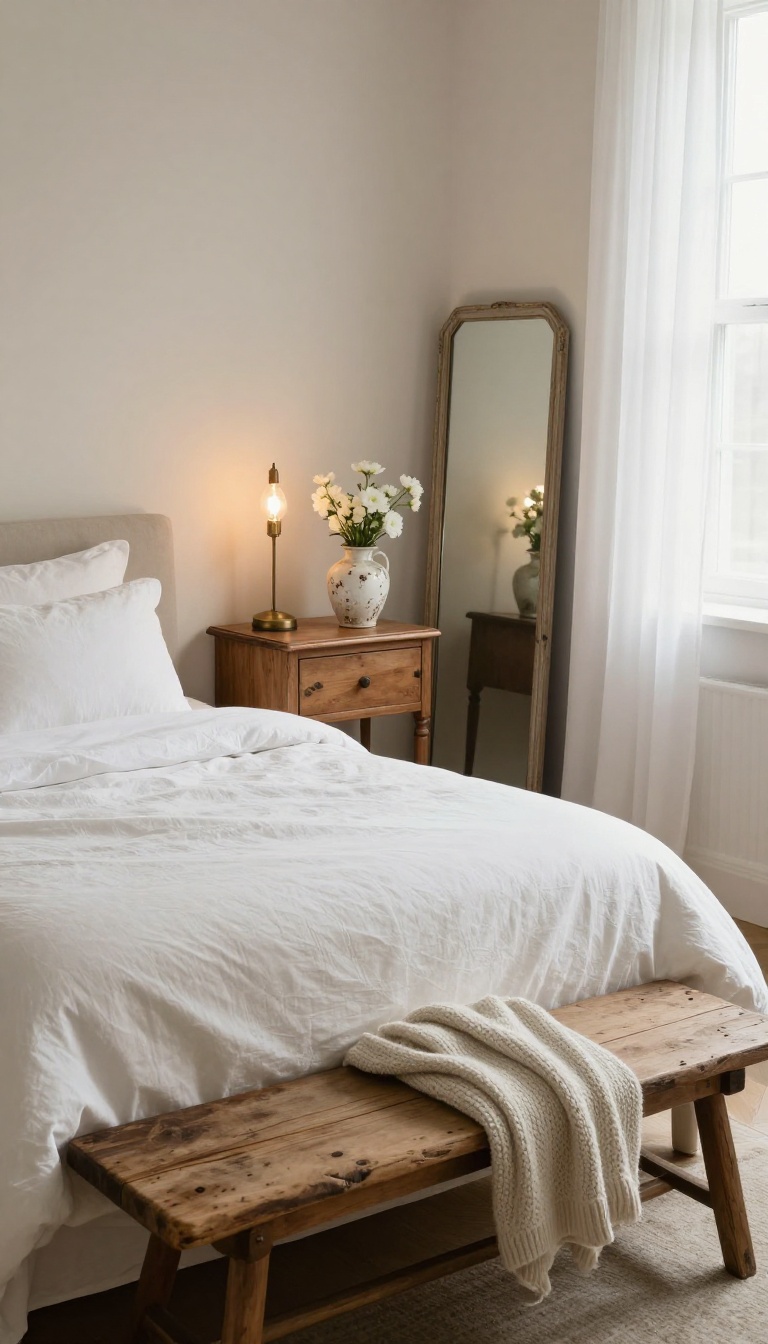
A brand-new bedroom set can look great, but it rarely feels like it has a story. That's where vintage and antique pieces come in. They add warmth, texture, and a sense of history that keeps a room from feeling too perfect or too matchy.
The trick is to mix them in deliberately, not randomly. One or two well-chosen old pieces can anchor the space and make everything else feel more collected. You're not aiming for a flea market explosion—just a few character-rich accents that soften the newness.
Start with a single piece that catches your eye. A vintage nightstand with a worn edge or an old wooden bench at the foot of the bed instantly adds depth. These pieces don't need to be precious—they just need to feel real.
Then look for a distressed mirror or an antique dresser that can serve as a focal point. The key is balance: if your bed and bedding are crisp and new, the vintage piece provides contrast. If your room is already heavy on antiques, keep the rest simple.
Finally, don't overlook small details. An old brass lamp, a weathered picture frame, or a chipped ceramic vase can do more for the vibe than a whole new furniture set. They're affordable, easy to swap, and they make the room feel personal.
Where To Find Them
Local flea markets, estate sales, and online marketplaces are goldmines for vintage nightstands and benches. Thrift stores often have hidden gems, especially in furniture sections. If you're short on time, antique shops curate their inventory, but you'll pay a bit more.
Don't ignore hand-me-downs from family—they come with built-in history.
How To Style Them
Place a vintage nightstand next to your bed and top it with a modern lamp and a small stack of books. An old wooden bench works best with a simple cushion or a folded throw. A distressed mirror should hang where it catches light and reflects something interesting, like a plant or a piece of art.
Keep the surrounding area uncluttered so the piece can breathe.
Mixing Old And New
The goal is contrast, not competition. Pair a rustic antique with clean-lined Pottery Barn bedding, or set a weathered bench against a smooth upholstered headboard. Stick to a consistent color palette—neutrals, warm woods, and soft metallics—so the mix feels intentional.
If something feels off, remove one piece and try again.
5. Use Warm, Ambient Lighting
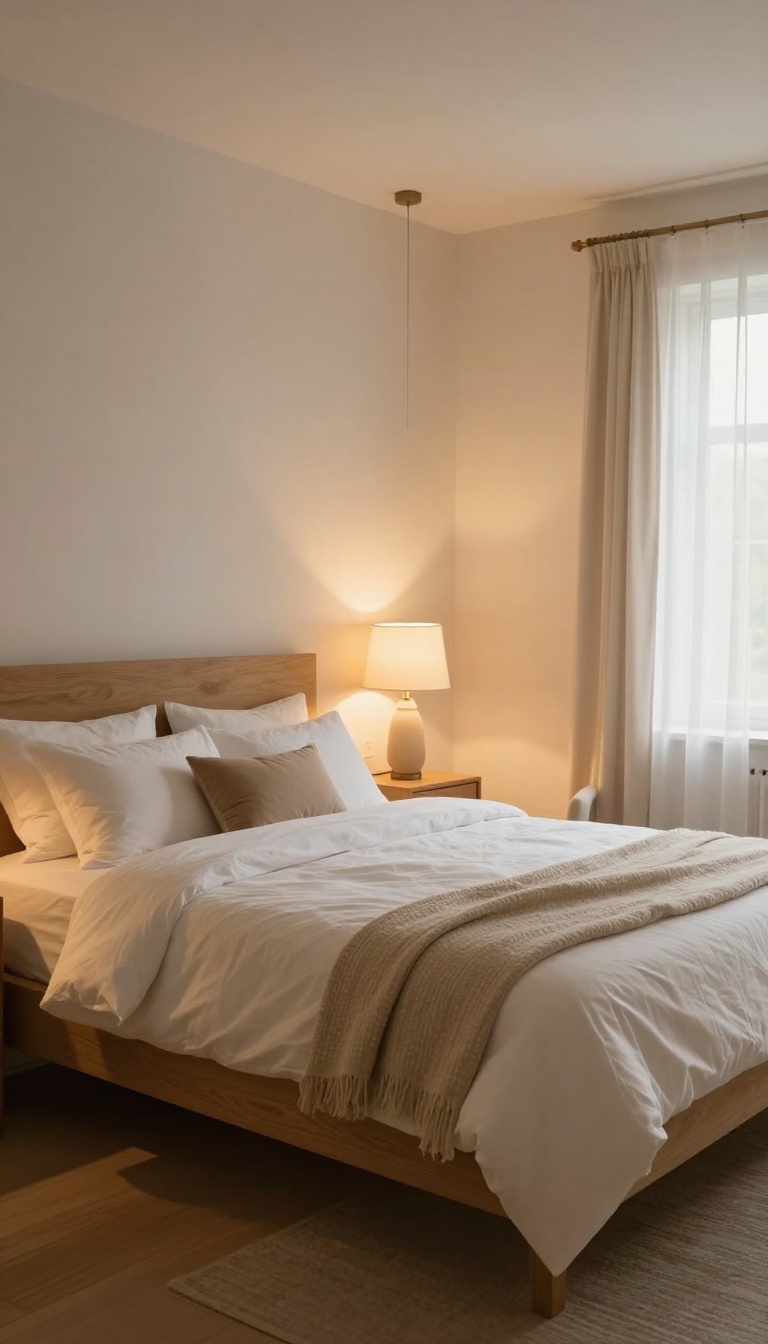
Lighting can make or break the cozy factor in a bedroom. Harsh overheads wash out textures and make even the softest bedding look flat. Swap them for warm, layered light and the whole room relaxes.
Pottery Barn rooms almost always rely on a mix of table lamps, floor lamps, and dimmers to create that golden, inviting glow. The goal is simple: no single bright source, just soft pools of light that feel like late afternoon.
Start by ditching the ceiling fixture as your main light. Instead, use it only for cleaning or finding lost socks. Your everyday light should come from three or four smaller sources at different heights.
That’s the trick behind that warm, collected look. Warm bulbs are non-negotiable. Look for 2700K temperature, which gives off a soft yellow-white glow.
Anything higher (4000K or above) turns cool and clinical. Pair warm bulbs with dimmers so you can drop the brightness in the evening without losing the cozy feel.
Choose The Right Bulbs
Bulb temperature matters more than wattage. A 2700K LED bulb mimics the warm light of an incandescent without the heat. Avoid daylight bulbs (5000K) in bedrooms—they kill the mood instantly.
If you want a slightly warmer feel, try 2400K for table lamps. Just keep it consistent across all your fixtures so the room doesn’t look patchy.
Layer Your Light Sources
A single lamp on a nightstand isn’t enough. Add a floor lamp behind a reading chair, a small chandelier or pendant over the bed, and maybe a pair of wall sconces. Each source should be dimmable.
When you turn them all on low, the room glows instead of glares. Pottery Barn often uses linen shades because they diffuse light softly and add texture.
Use Dimmers And Smart Bulbs
Dimmers are the easiest upgrade. Install a dimmer switch on your main light or use smart bulbs you can control from your phone. Being able to fade the lights down as you get ready for bed makes the room feel intentional.
Start at 50% in the evening and drop to 20% for reading. It’s a small change that makes a big difference.
6. Choose Natural Fiber Rugs and Textiles
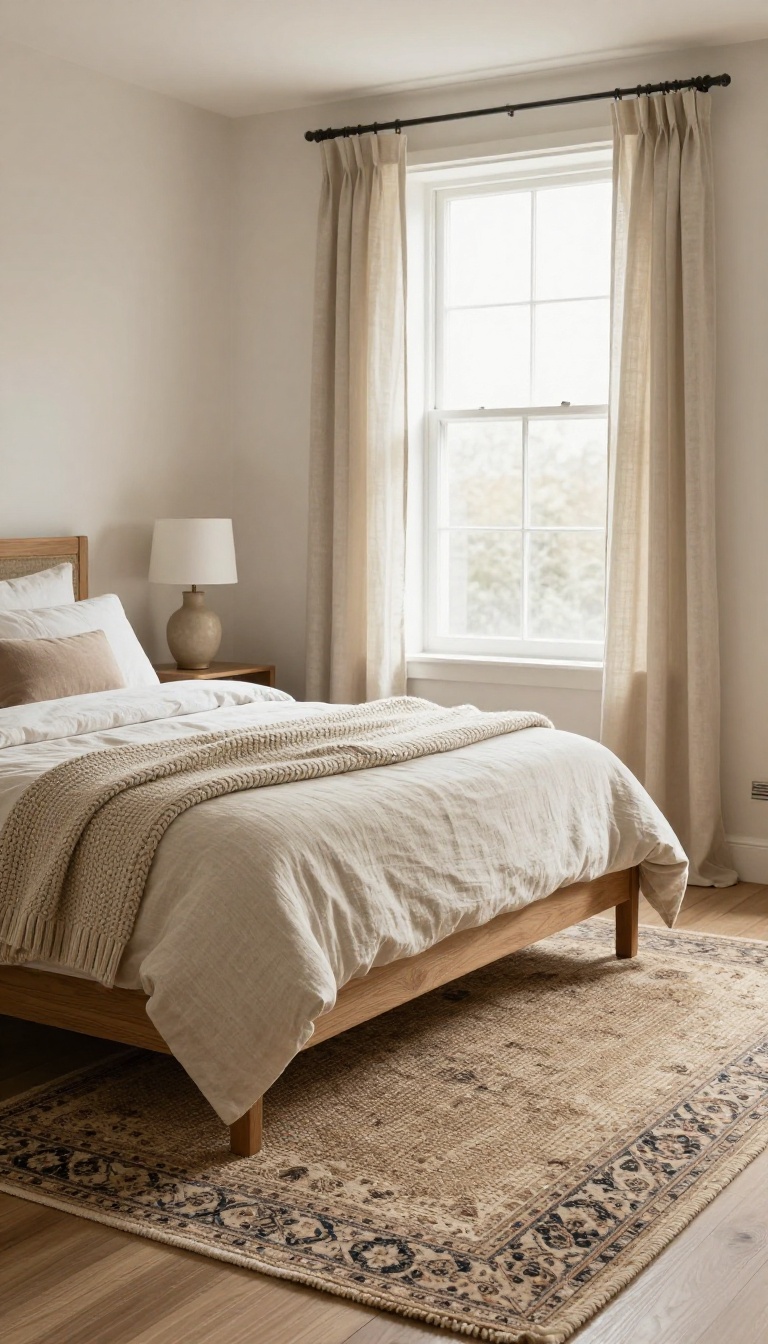
Rugs and textiles are the easiest way to add warmth and texture to a bedroom without changing the furniture. Natural fibers like jute, sisal, and wool bring an earthy, organic feel that pairs perfectly with Pottery Barn's classic style. They also ground the space and make it feel more inviting.
Start with a large natural fiber rug as your base. It should be big enough to sit under the bed and extend out on the sides. This creates a soft landing for your feet and anchors the room.
Then, layer a smaller vintage or patterned rug on top for extra coziness and a collected look. The mix of textures adds depth and visual interest.
Pick The Right Size And Material
For a queen or king bed, choose a rug that's at least 8×10 feet. Jute and sisal are durable and affordable, while wool feels softer underfoot. If you want a plusher feel, go with a wool rug or add a rug pad underneath.
Layer For Warmth And Style
A smaller rug layered on top of the natural fiber one adds warmth and personality. Look for a vintage Persian or Turkish rug in faded colors. It doesn't have to be perfect—a little wear adds character.
This layering trick is a signature Pottery Barn move.
Add Textiles That Match
Carry the natural theme to your bedding and curtains. Linen, cotton, and chunky knits in neutral tones keep the look cohesive. A woven blanket at the foot of the bed or linen curtains will soften the room and tie everything together.
7. Incorporate Wood Tones and Woven Accents
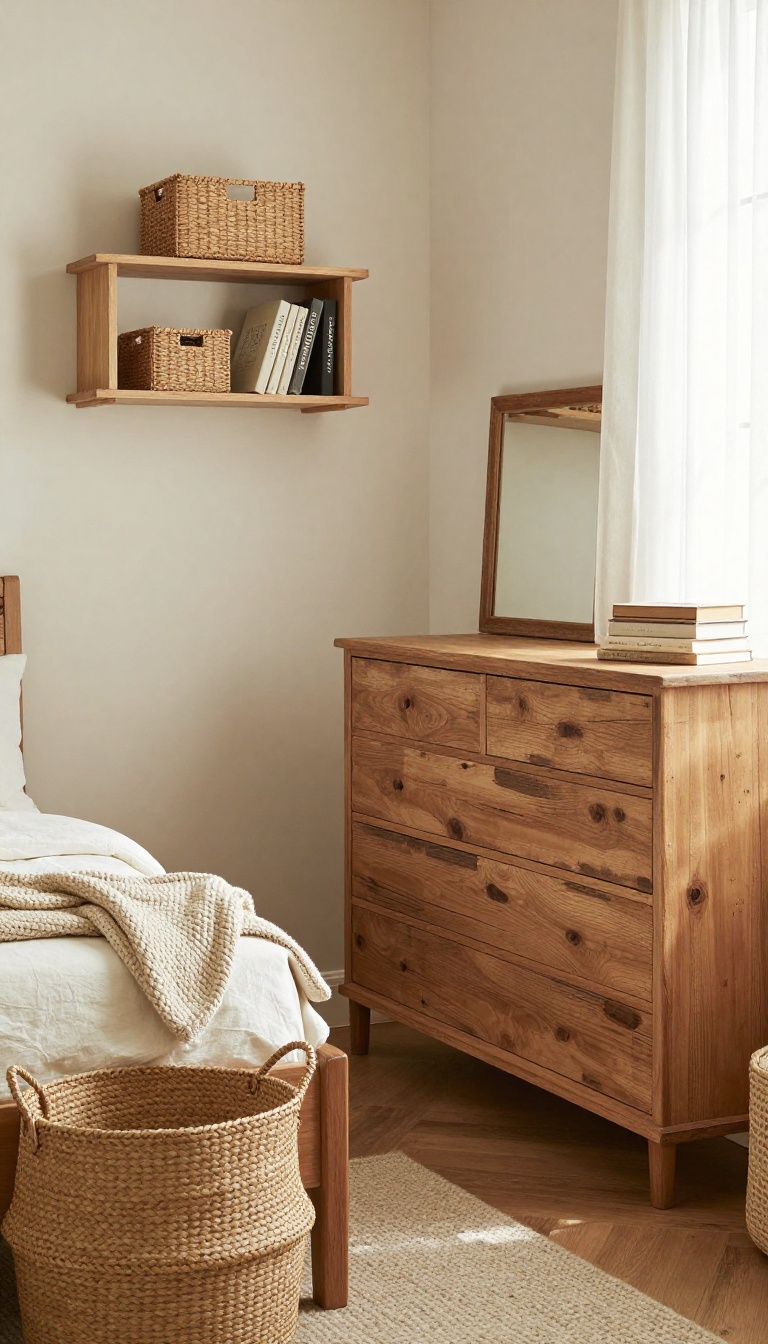
Wood and woven materials do something no glossy finish can. They add a quiet, organic layer that makes a bedroom feel settled and warm. Pottery Barn leans on these textures constantly, and you can borrow the same trick without a full redesign.
A single reclaimed piece or a well-placed basket often does more than a whole new furniture set.
Natural textures break up the smooth surfaces in a bedroom. Think about how much in your room is painted, upholstered, or factory-finished. Wood grain and woven fibers introduce variation that your eye reads as comfort.
They also age well, so the room keeps looking better instead of dated. The best part is you can start small. You do not need to swap your whole bedroom set.
One or two natural pieces can shift the entire mood.
Start With A Reclaimed Wood Dresser
A dresser is the easiest place to introduce wood tone because it is a large, visible piece. Look for reclaimed or distressed finishes that show a little grain and character. Pottery Barn's reclaimed wood pieces work because they feel found rather than manufactured.
Place it opposite the bed so the texture becomes part of the view. If you already have a painted dresser, you can still add a wood-framed mirror above it for a similar effect.
Add Baskets For Blankets And Clutter
Woven baskets are the quiet workhorses of a cozy bedroom. A large seagrass or rattan basket beside the bed holds extra blankets and looks intentional instead of messy. Smaller baskets on a shelf can corral books, chargers, or jewelry.
Choose a mix of sizes and weaves so it feels collected, not matching. The texture softens hard edges and adds a handcrafted note without much effort.
Try A Rattan Or Woven Chair
If you have a corner that feels empty, a rattan or woven accent chair fills it with warmth. These chairs are lightweight, so you can move them around as the room changes. A woven seat paired with a linen cushion keeps the look classic rather than beachy.
It gives you a spot to sit while getting dressed or just to drape a throw. That single piece can make the whole room feel more relaxed.
Mix Wood Tones Without Overthinking It
You do not need every wood piece to match. In fact, a little variation looks more collected. Pair a darker wood bed frame with a lighter woven side table, or set a warm oak nightstand next to a painted wall.
Keep the undertones similar, warm with warm, and the mix will feel intentional. The goal is a room that looks gathered over time, not bought in one afternoon.
8. Style Open Shelves and Nightstands Simply
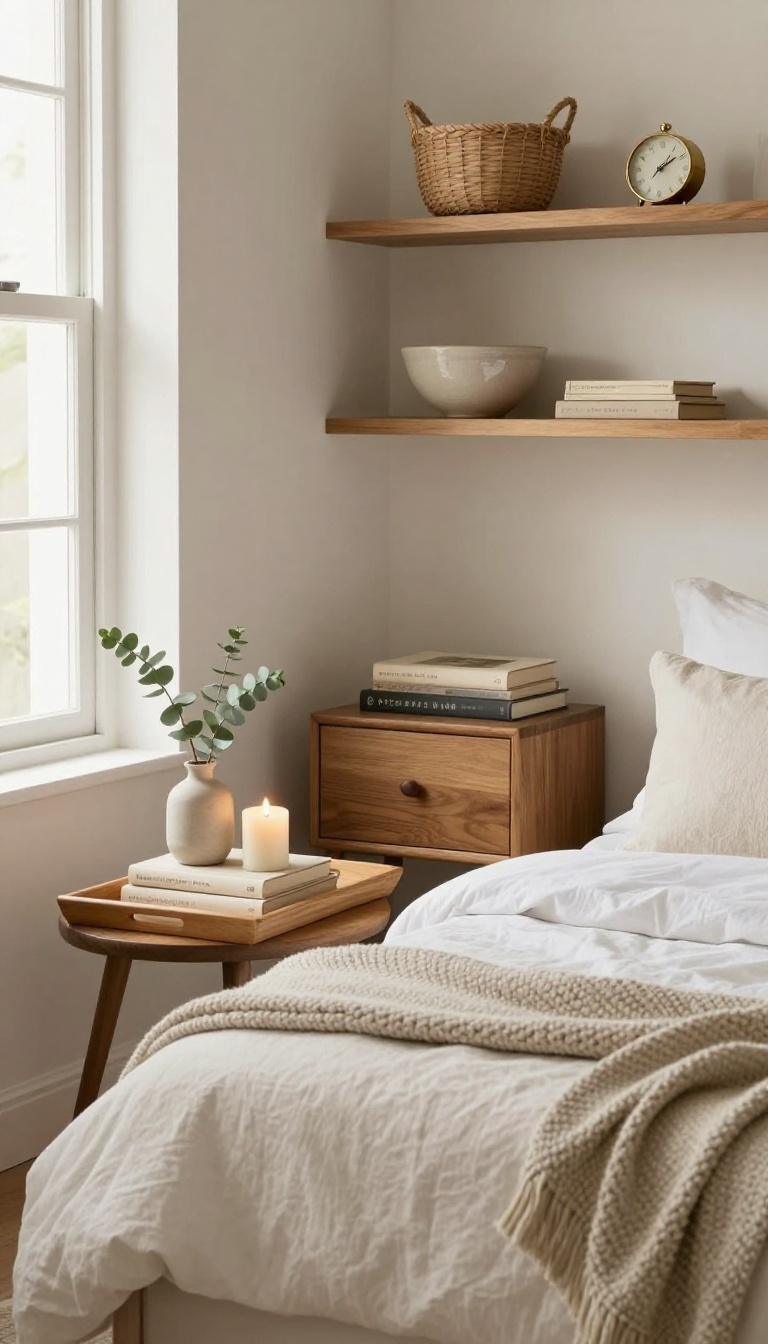
Open shelves and nightstands are prime spots for clutter to pile up. In a Pottery Barn bedroom, they stay calm and curated, not crowded. The goal is simple: a few intentional pieces that feel collected, not chaotic.
Think of these surfaces as small vignettes. You want just enough to add interest without overwhelming the eye. A little breathing room goes a long way.
The trick is to treat each shelf and nightstand like a mini display. You are not storing everything you own there; you are showing off a few favorites. That means editing down to the essentials and letting negative space do its job.
Start by clearing everything off. Wipe the surface clean, then add items back one at a time. If something does not earn its spot, it goes in a drawer or a closet.
This simple reset makes it easier to see what actually works. Once you have a clean slate, group items in odd numbers. Three or five pieces usually look more natural than two or four.
Mix heights and textures so the arrangement feels dynamic, not flat. Finally, step back and check the balance. If one side feels heavy, swap an item or remove something.
The goal is a relaxed, effortless look, not perfect symmetry.
Corral With Trays And Boxes
Trays and small boxes are your best friends for keeping things tidy. A wooden tray on a nightstand can hold a book, a candle, and a small vase all in one spot. It defines the group and makes it look intentional.
On open shelves, use woven baskets or ceramic bowls to contain smaller items like remotes, chargers, or reading glasses. This keeps the shelf from looking like a catch-all. Plus, it adds texture and warmth.
Choose Pieces That Earn Their Place
Not everything needs to be functional, but it should add something. A stack of two or three books with pretty spines works. So does a small vase with a single stem or a simple candle.
Avoid overcrowding. Leave at least a few inches of empty space between groups. That emptiness is what makes the curated look feel calm instead of cluttered.
Keep It Flexible
Your shelves and nightstands do not have to stay the same forever. Swap out a candle for a small plant, or rotate books with the seasons. A little change keeps the space feeling fresh.
The key is to maintain the same simple approach: a few items, grouped with care, with room to breathe. That way, even when you switch things up, the look stays cohesive.
9. Add a Cozy Reading Nook
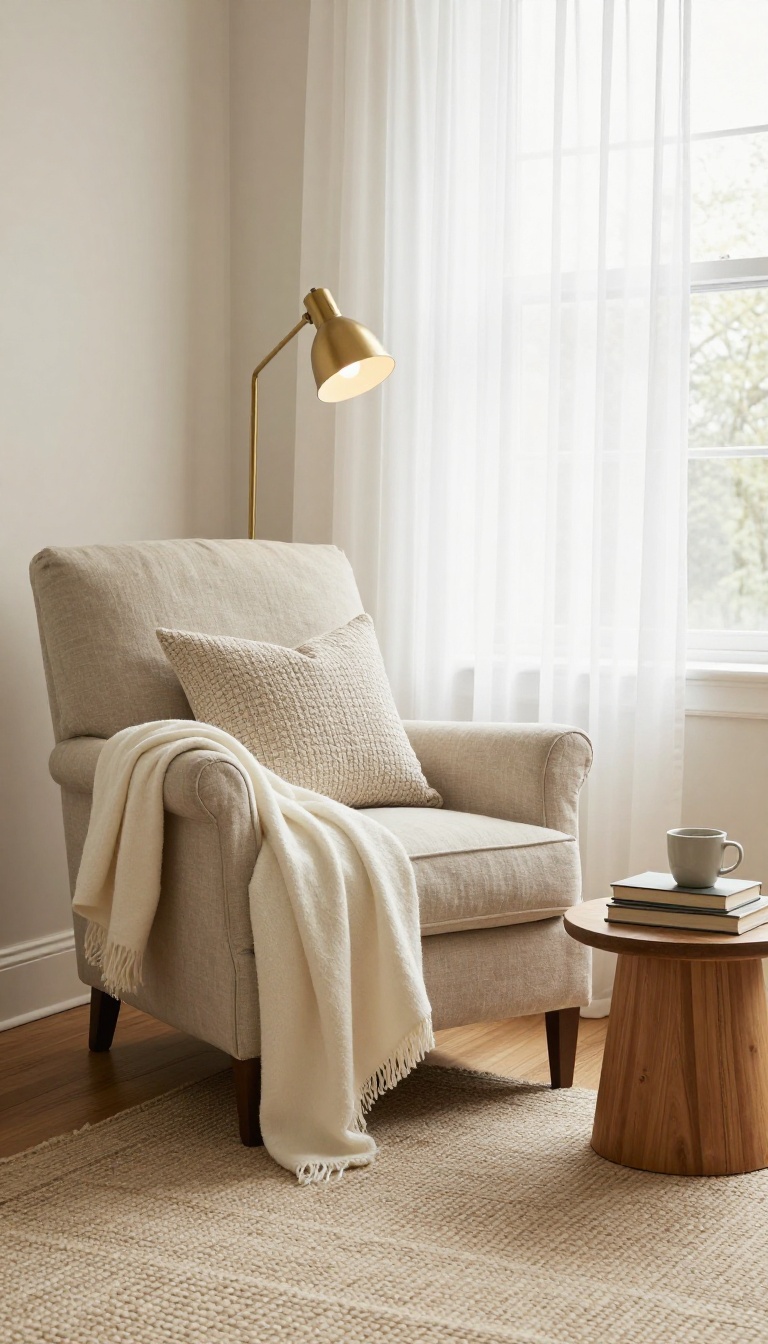
A bedroom should do more than just hold a bed. If you have a spare corner, even a small one, turning it into a reading nook adds both function and that cozy, classic Pottery Barn feel. It becomes a spot to unwind with a book, sip your morning coffee, or just enjoy a quiet moment away from screens.
The best nooks are simple: a comfortable chair, a small table, and good light. You do not need a lot of space, just a little intention. A soft throw and a pillow make it hard to leave, which is exactly the point.
Start by finding a corner that gets decent natural light or has an outlet nearby for a lamp. You want the nook to feel like its own little world, even if it is just three feet from your bed. Once you have the spot, build it in layers: seating first, then lighting, then the small comforts that make it inviting.
Keep the color palette in line with the rest of the bedroom so it feels like a natural extension, not an afterthought. A neutral armchair with a woven or linen slipcover works well, and you can add pattern through the pillow and throw. The goal is a corner that looks like it has always been there, quietly waiting for you.
Pick The Right Chair
Comfort matters more than style here, but you can have both. A classic wingback or a deep-seated armchair with a slightly reclined back works beautifully. Look for upholstery in a soft neutral like oatmeal, fog gray, or warm ivory so it blends with your existing bedding.
If the chair swivels, even better—it lets you turn toward the window or the room without moving furniture.
Light It Softly
Overhead lights are the enemy of a cozy nook. Use a floor lamp with a fabric shade to cast a warm, diffused glow. Place it just behind or beside the chair so the light falls over your shoulder and onto the page.
A dimmable bulb or a smart plug lets you adjust the mood from bright enough to read to soft enough to relax.
Add The Finishing Touches
A small side table gives you a place for a mug, a stack of books, or a small vase. Keep it round to soften the corner and avoid sharp edges. Drape a chunky knit throw over the back of the chair and add one or two pillows—a solid linen and a patterned one mix well.
A small tray on the table keeps things tidy and looks intentional.
10. Hang Curtains High and Wide
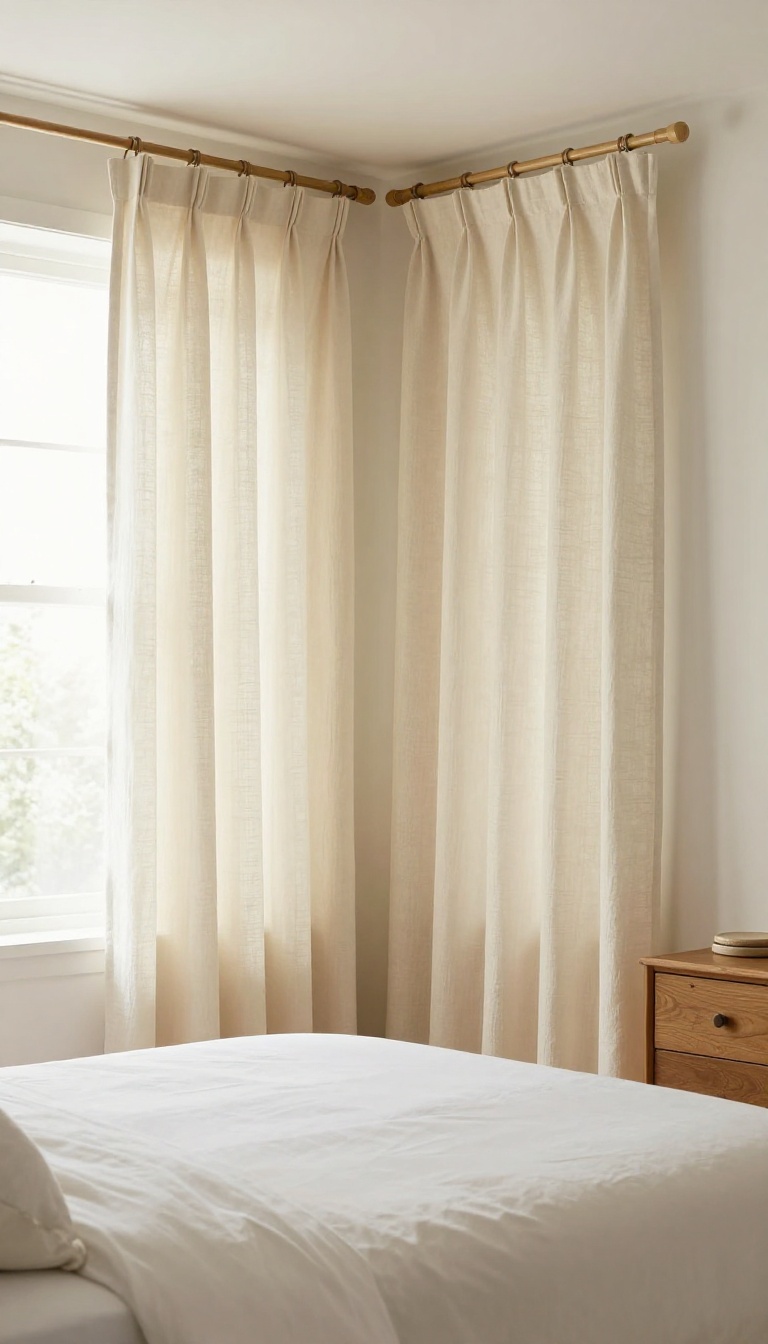
Curtains are one of those details that quietly change everything. Hang them high and wide, and suddenly the whole room feels taller, brighter, and more elegant. It's a simple trick that designers use all the time, and it works in any bedroom.
Most people hang curtains just above the window frame, which can make a room feel short and boxy. Instead, mount the rod as close to the ceiling as possible and extend it several inches past each side of the window. This draws the eye upward and outward, creating an illusion of height and space.
The result is a more open, airy feel that instantly upgrades the room.
Pick The Right Rod And Hardware
A sturdy rod and brackets are key, especially for heavier fabrics. Choose a style that matches your room's vibe—simple metal for a modern look, or wood for a classic touch. Make sure the brackets are installed securely into studs or with proper anchors.
The rod should be long enough to extend 6 to 10 inches beyond the window on each side.
Choose Flowing Fabrics
Linen and cotton are ideal because they drape beautifully and feel relaxed. Avoid stiff or shiny fabrics that can look formal or cheap. Neutral colors like white, cream, or soft gray keep the look calm and versatile.
If you want a bit of pattern, go with a subtle stripe or texture that won't overwhelm the space.
Get The Length Just Right
For a polished look, curtains should just touch the floor or break slightly. Too short, and they look awkward; too long, and they puddle and collect dust. Measure from the rod to the floor, then add a couple of inches for the hem.
If you're unsure, opt for a slight break—it's more forgiving and still looks intentional.
11. Finish with Personal Touches
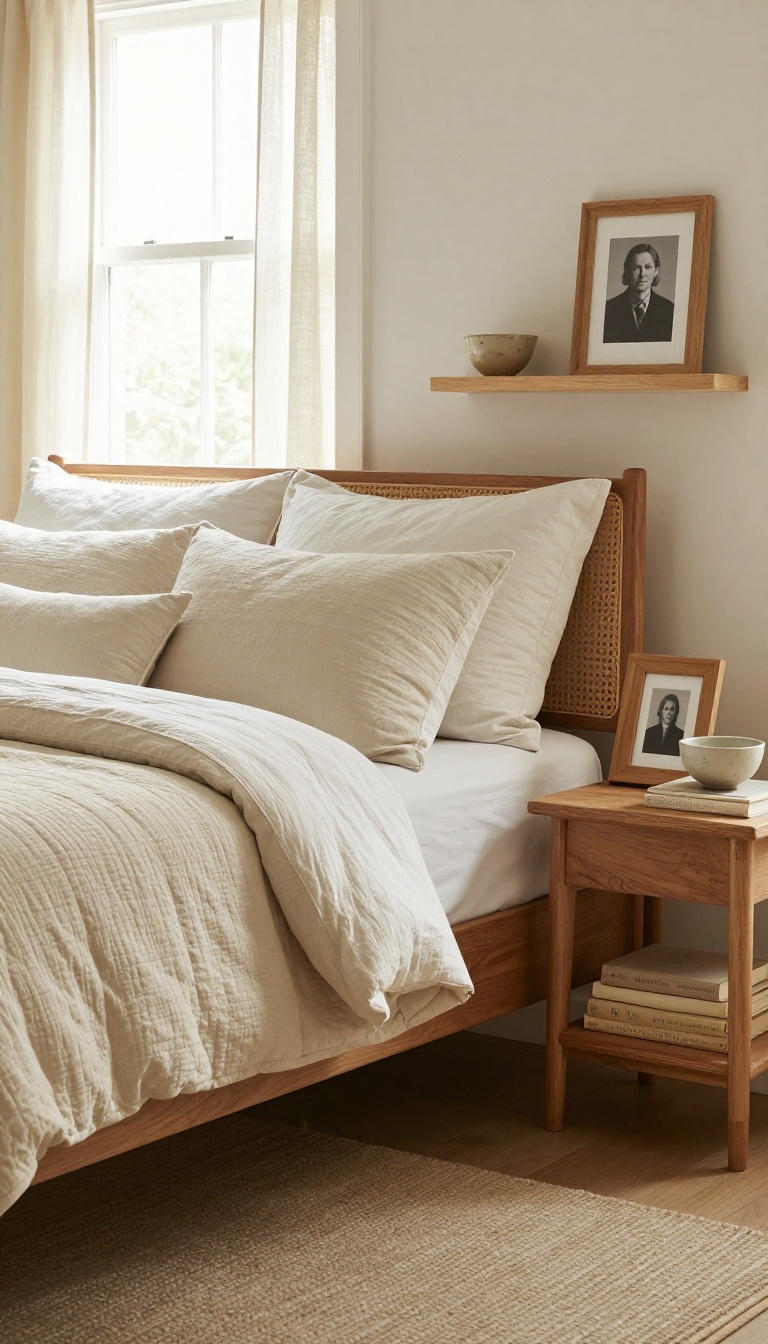
A room can follow every design rule and still feel like a hotel suite if nothing in it tells your story. Personal touches are what turn a well-styled bedroom into a space that actually belongs to you. They do not need to be big or expensive, just honest.
Think about the small things you already love. A framed photo from a trip, a ceramic bowl you picked up at a market, or a stack of books you have read more than once. These are the details that make a room feel lived-in and warm.
The trick is to place them with intention so they add character without creating clutter. A few well-chosen pieces will do more than a shelf full of random objects.
Personal touches work best when they feel effortless. You are not staging a museum; you are adding evidence of a real life. The goal is to keep the classic Pottery Barn look while letting your own personality show through.
Start with pieces that already mean something to you. Then find a spot where they can be seen and enjoyed every day. A nightstand, a dresser top, or a small wall shelf are all fair game.
Keep the palette and materials consistent with the rest of the room so your additions blend in rather than stick out. A wooden frame, a neutral ceramic, or a linen-bound book will always feel at home in a cozy classic space.
Show What You Love
A framed photo is one of the easiest personal touches to add. Choose a simple wood or metal frame that matches your other accents, and place it on a nightstand or dresser where you will see it often. It could be a favorite vacation snapshot, a black-and-white portrait, or a candid moment with family.
A ceramic piece works the same way. A handmade vase, a small bowl, or a sculptural object adds texture and a hint of color without shouting. If it has a story behind it, even better.
The point is to display things that make you smile when you walk into the room.
Style A Small Stack
Books are one of the most versatile personal touches because they add height, color, and meaning all at once. Stack three or four well-loved books on a nightstand or dresser, and top them with a small object like a candle or a tiny plant. Keep the stack neat but not rigid.
You can also mix in a favorite magazine or a travel guide. Just avoid overloading the surface. A small, curated stack feels intentional, while a tall, messy pile feels like clutter.
Aim for balance with the other items in the room.
Keep It Balanced
Personal touches should enhance the room, not overwhelm it. If you add a photo, a ceramic, and a book stack to the same surface, make sure they vary in height and texture. Group them in a triangle shape for a natural look.
Rotate your pieces every few months so the room stays fresh. You do not need to buy anything new; just swap items from other rooms or store a few away for later. This keeps the space feeling curated and prevents visual fatigue.
Let It Evolve
Your personal touches will change over time, and that is exactly how it should be. A new hobby, a trip, or a gift can all inspire a small update. The classic foundation you built with the other ten ideas stays the same, so you can swap accessories without redoing the whole room.
Pay attention to how the room feels as you add things. If a piece does not bring you joy or fit the calm vibe, take it out. The best personal touches are the ones that make the space feel more like you, one small detail at a time.
FAQ
What defines a Pottery Barn bedroom style?
It's a mix of classic, comfortable, and collected. Think neutral palettes, natural textures, warm lighting, and a blend of new and vintage pieces that feel lived-in and inviting.
How can I make my bedroom look cozy on a budget?
Focus on textiles: add a chunky throw, layered pillows, and a soft rug. Swap harsh bulbs for warm ones, and shop thrift stores for vintage accents. Small changes make a big impact.
What colors work best for a cozy classic bedroom?
Warm neutrals like cream, beige, greige, and soft gray are ideal. You can add subtle color with muted blues, greens, or blush accents in pillows and throws.
Do I need matching furniture for this look?
No—mixing wood tones and styles actually enhances the collected, timeless feel. Just keep the overall palette cohesive and balance different pieces with similar scale.
How do I layer bedding without it looking messy?
Start with a fitted sheet, add a duvet or quilt, then fold a throw at the foot of the bed. Use two Euro shams and two standard pillows for structure. Mix textures but stick to a consistent color story.
Conclusion
Cozy and classic do not require a full overhaul. Pick one idea from this list that solves your biggest bedroom gripe, whether that is clutter, harsh lighting, or a bed that feels flat. Try it for a week before adding more.
Layer the rest slowly. A warmer lamp, a softer throw, or a pair of nightstands can shift the whole mood. Get the bed and lighting right first, and the room tends to settle into place on its own.