10 Refined Rustic Tile Shower Ideas with Crisp, Custom Style
Rustic doesn't have to mean rough. With the right tile, you can bring the warmth of nature into your shower while keeping the space feeling polished and intentional.
The secret lies in pairing organic textures with clean lines and thoughtful accents. These ten ideas show how to blend earthy materials like stone and wood-look tile with crisp, modern finishes.
Each one offers a unique way to create a shower that feels both grounded and refined. Whether you're planning a full remodel or just refreshing the look, these concepts will help you strike that perfect balance between rugged charm and contemporary style.
1. Slate Tiles with a Honed Finish
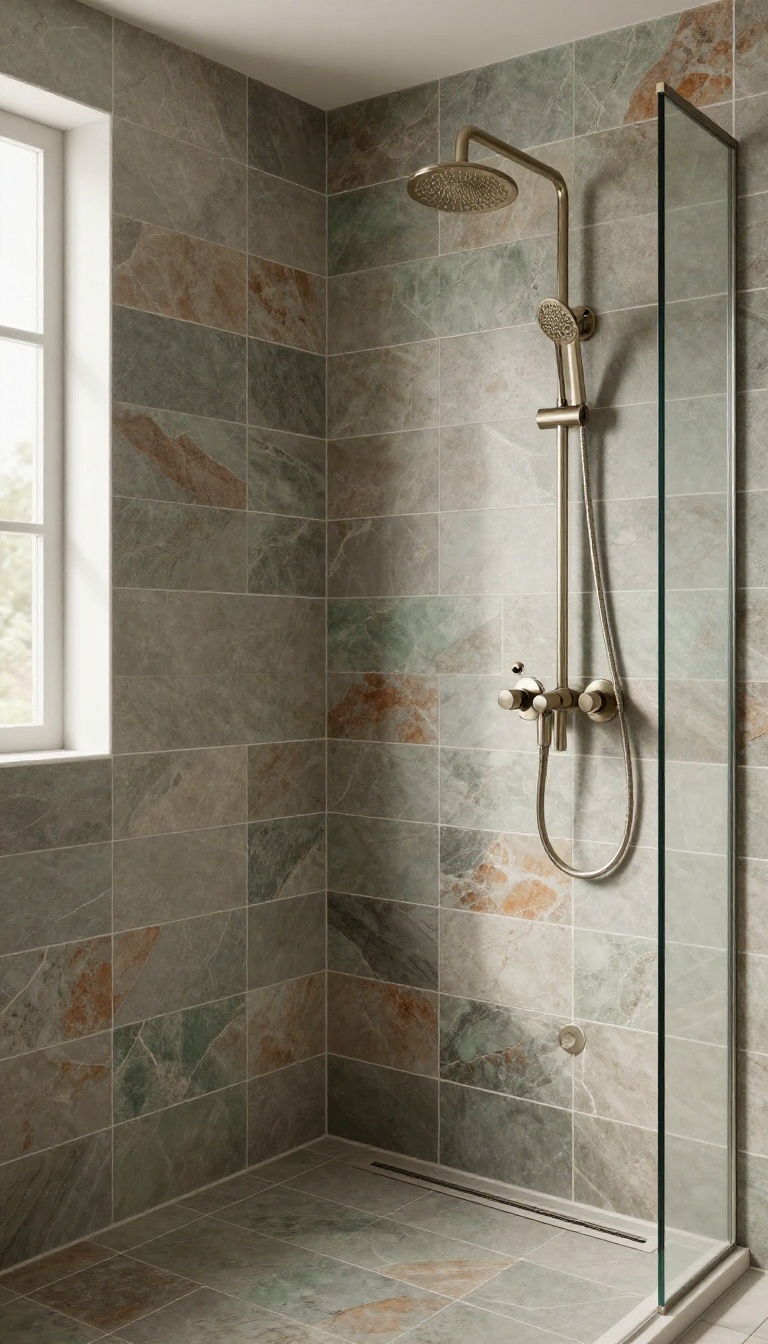
Slate is a classic choice for rustic showers, but the standard cleft finish can feel too rough underfoot. Honed slate changes the game by grinding the surface smooth while keeping the natural cleft texture and rich color variations. The result is a tile that feels like river stone—soft to the touch, yet full of organic character.
This finish also tones down the color palette, giving the slate a more muted, sophisticated look that pairs beautifully with crisp white grout and brushed nickel fixtures. It's the perfect way to bring rugged texture into your shower without sacrificing comfort or style.
Honed slate offers the best of both worlds: the earthy, layered look of natural stone with a smooth, almost silky feel. The honing process removes the sharp edges and rough patches, making it more comfortable for bare feet while still retaining that distinct cleft surface. This makes it an ideal choice for a shower floor, where safety and comfort matter.
Because honed slate has a lower sheen, it doesn't reflect light as much as polished stone. That means the color variations—from deep charcoal to subtle green and rust—appear more muted and blend seamlessly with a neutral palette. It's a grounding, calming effect that makes your shower feel like a serene retreat.
Why Honed Slate Works In Showers
Honed slate is naturally slip-resistant, even when wet, thanks to its slightly textured surface. The smooth finish makes it easier to clean than cleft slate, as there are fewer crevices for soap scum and grime to hide. Plus, the matte look hides water spots and mineral deposits better than glossy tiles, so your shower stays looking fresh with less effort.
Pairing With Fixtures And Grout
To keep the refined rustic vibe, choose brushed nickel or oil-rubbed bronze fixtures—they complement the stone's earthy tones without feeling too shiny. For grout, go with a light gray or warm beige to let the slate's natural color variations pop, while keeping the overall look cohesive. Avoid stark white grout, which can look too harsh against the dark stone.
Design Ideas To Try
Use large-format honed slate tiles on the walls for a seamless, modern look, and smaller mosaic tiles on the floor for better traction. Or, create a feature wall with stacked slate tiles in varying sizes to add visual interest. For a truly custom feel, mix honed slate with warm wood-look tile on the ceiling or an accent niche to bring in extra warmth.
2. Wood-Look Planks in a Herringbone Pattern
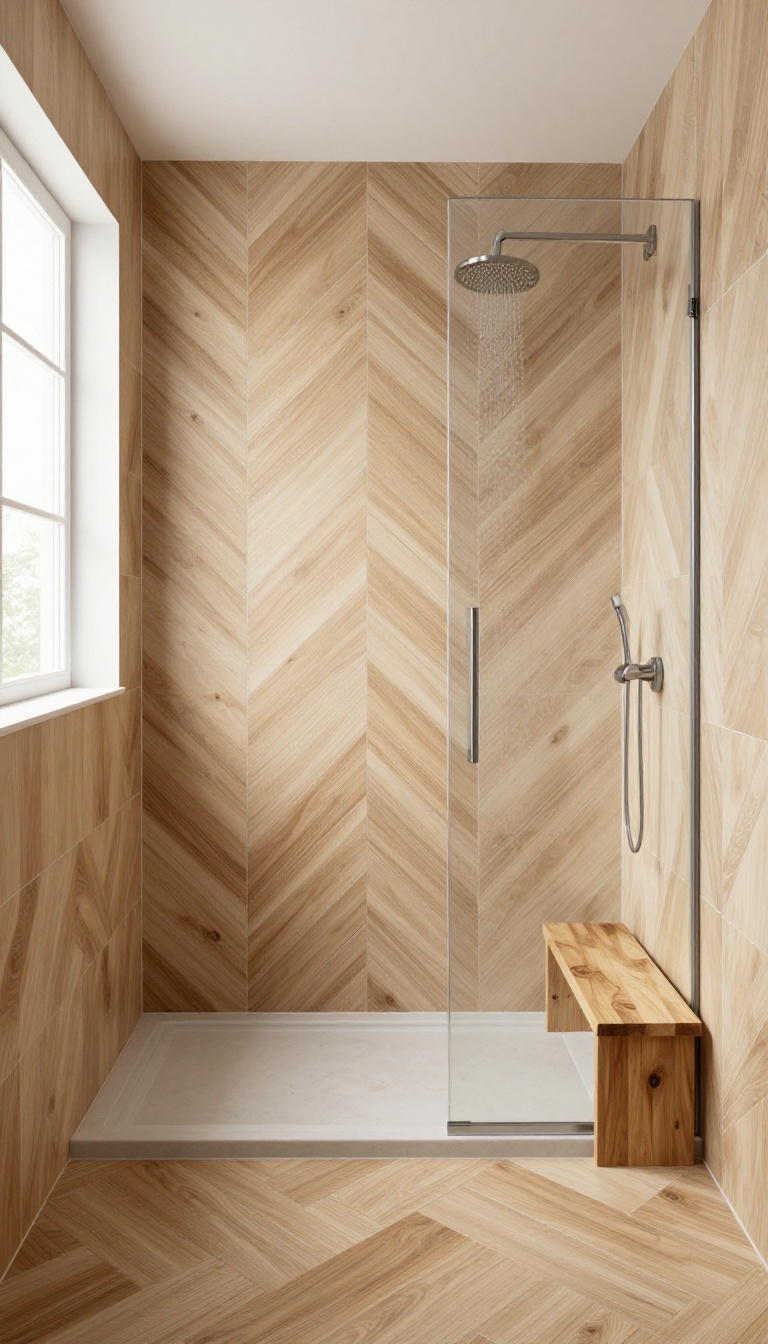
Porcelain planks that mimic reclaimed wood bring instant warmth and texture into a shower. But instead of laying them in a straightforward horizontal stack, try a herringbone pattern. That simple shift in direction adds a crisp, tailored geometry that balances the rustic grain.
The herringbone layout gives the wood-look tile a more refined, almost bespoke feel. It draws the eye upward and makes the space feel larger, while the natural wood tones keep things cozy. The contrast between the organic look of the planks and the precise pattern is what makes this idea stand out.
Why Herringbone Works With Wood-look Tile
Herringbone is a classic pattern that adds visual interest without overwhelming the space. When paired with wood-look planks, it creates a sense of movement and depth. The angled lines catch light differently, making the shower feel dynamic and inviting.
Plus, the pattern's inherent orderliness contrasts nicely with the rustic texture of the wood grain.
Choosing The Right Plank Size And Color
For a balanced look, go with planks that are around 6 inches wide and 24 to 36 inches long. That size works well for herringbone without looking too busy. As for color, pick a tone that matches your overall palette—lighter woods like white oak or ash feel airy, while darker walnut or hickory add drama.
Just make sure the grain pattern isn't too bold, or it might compete with the layout.
Grout And Finish Tips
Grout color matters more than you might think. A contrasting grout, like a warm gray or tan, can highlight the herringbone pattern, while a matching grout creates a more seamless, subtle effect. For a rustic feel, consider a matte finish on the tile and a slightly wider grout line.
That adds a handcrafted touch that fits the rustic vibe.
3. Large-Format Travertine with Glass Accents
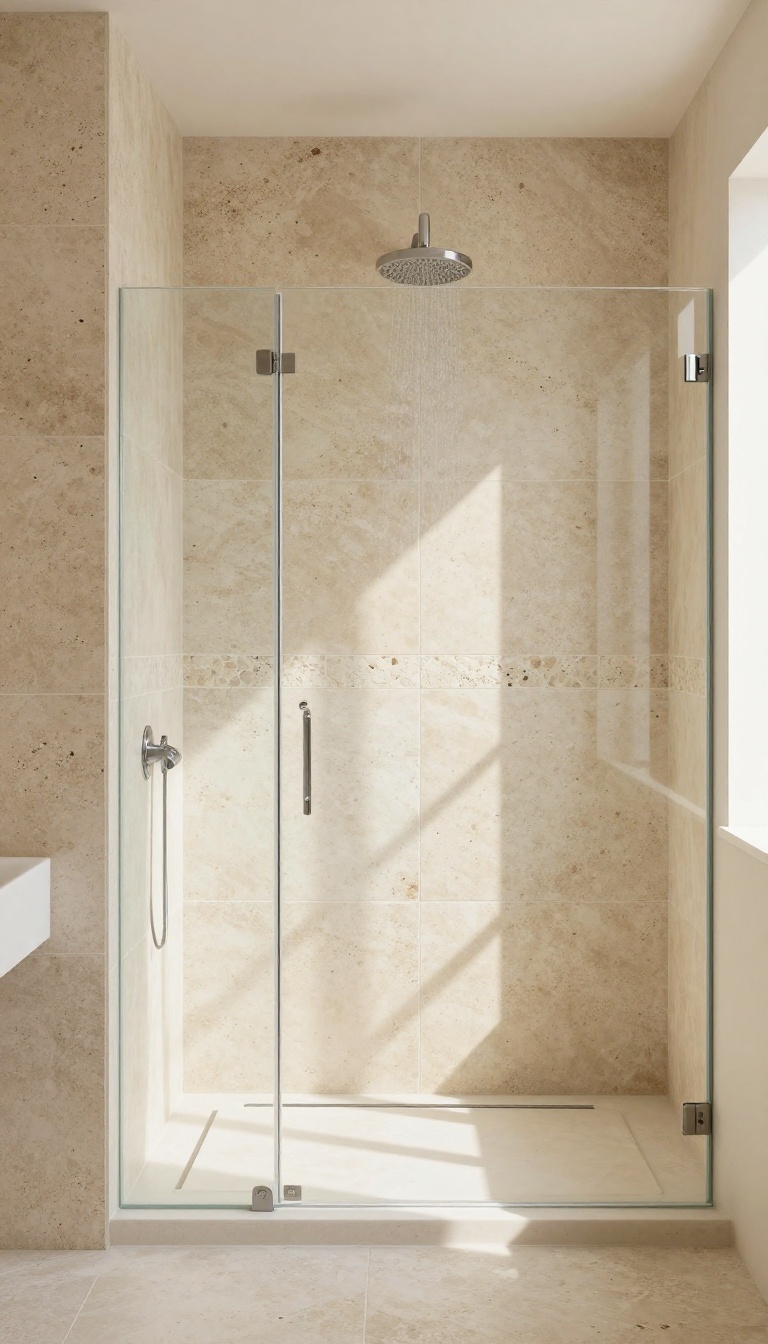
Travertine brings a sense of ancient warmth to any space, with its natural pits and soft, earthy tones. When you use it in large format tiles, the shower feels more open and less busy, letting the stone's character shine. Toss in a slim band of clear or frosted glass, and you get that crisp, modern contrast that makes the whole design feel intentional and fresh.
The beauty of this idea is in the balance. Large travertine tiles keep the visual calm, while the glass accent adds a subtle sparkle and a clean line that breaks up the texture. It's a look that works in both modern farmhouse and more contemporary settings, and it's surprisingly easy to pull off.
Why Large Format Works
Bigger tiles mean fewer grout lines, which makes the shower feel more seamless and spa-like. The natural variations in travertine become the focal point, and the glass strip acts as a visual pause that keeps the eye moving without feeling busy.
Choosing The Right Glass
Clear glass lets the stone do the talking, while frosted or tinted glass adds a layer of privacy and softness. If you want a bit of color, consider a smoky or sage-toned glass to tie in with the earthy palette. Just keep it in a thin strip—maybe 2 to 4 inches—so it stays an accent, not a distraction.
Placement Ideas
You can run the glass accent horizontally at eye level, or vertically behind the shower bench for a subtle highlight. Another option is to frame the niche or the shampoo shelf with glass tiles, which draws the eye to that functional spot without overwhelming the space.
4. Subway Tile with a Tumbled Edge
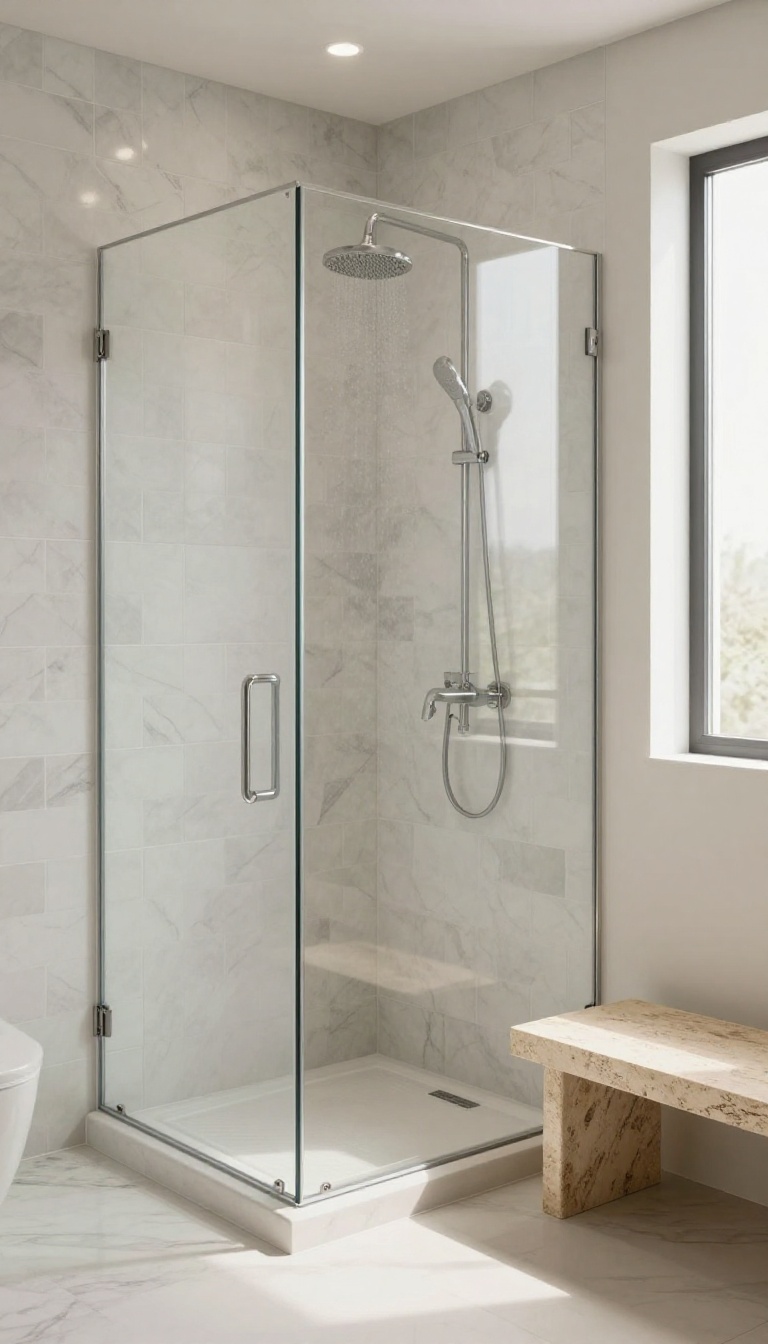
Subway tile is a go-to for clean, classic showers, but it doesn't have to feel stark or uniform. Choosing tumbled marble or a textured ceramic with slightly uneven edges brings a rustic softness to that familiar layout. The result is a tile that feels both timeless and organic, perfect for a space that balances crisp design with natural warmth.
Tumbled subway tile keeps the familiar rectangular shape but adds a gentle, worn-in feel. The edges are softly rounded and the surface has a matte, slightly pitted texture that catches light in a subtle way. This makes the tile look like it's been there for years, even when it's brand new.
It's an easy way to add character without going full rustic.
Why Tumbled Edges Work
The tumbling process smooths the corners and creates a more organic profile than the sharp, machine-cut edges of standard subway tile. This softness makes the tile feel more approachable and less clinical. It also adds a bit of depth and shadow, which gives the wall a handcrafted look that plain subway tile lacks.
Choosing The Right Material
Tumbled marble is the classic choice, offering natural variations in color and veining. If you prefer something more durable or budget-friendly, look for ceramic or porcelain tiles that replicate the tumbled texture. These can mimic the look of stone while being easier to maintain and less prone to staining.
Grout And Finish Tips
Use a grout color that complements the tile rather than matching it exactly. A soft white or warm gray can enhance the rustic feel, while a darker grout will make the tile pattern pop. For a truly crisp look, consider a matte finish on the tile and a satin or matte grout that won't compete with the texture.
Pairing With Other Elements
Tumbled subway tile pairs beautifully with natural wood accents, such as a teak bench or a wooden shower mat. It also works well with brushed nickel or oil-rubbed bronze fixtures, which echo the earthy tone. Keep the rest of the shower simple to let the tile shine, but don't be afraid to add a small niche or shelf in a contrasting material for visual interest.
5. Mixed Stone and Brick Tile Wall
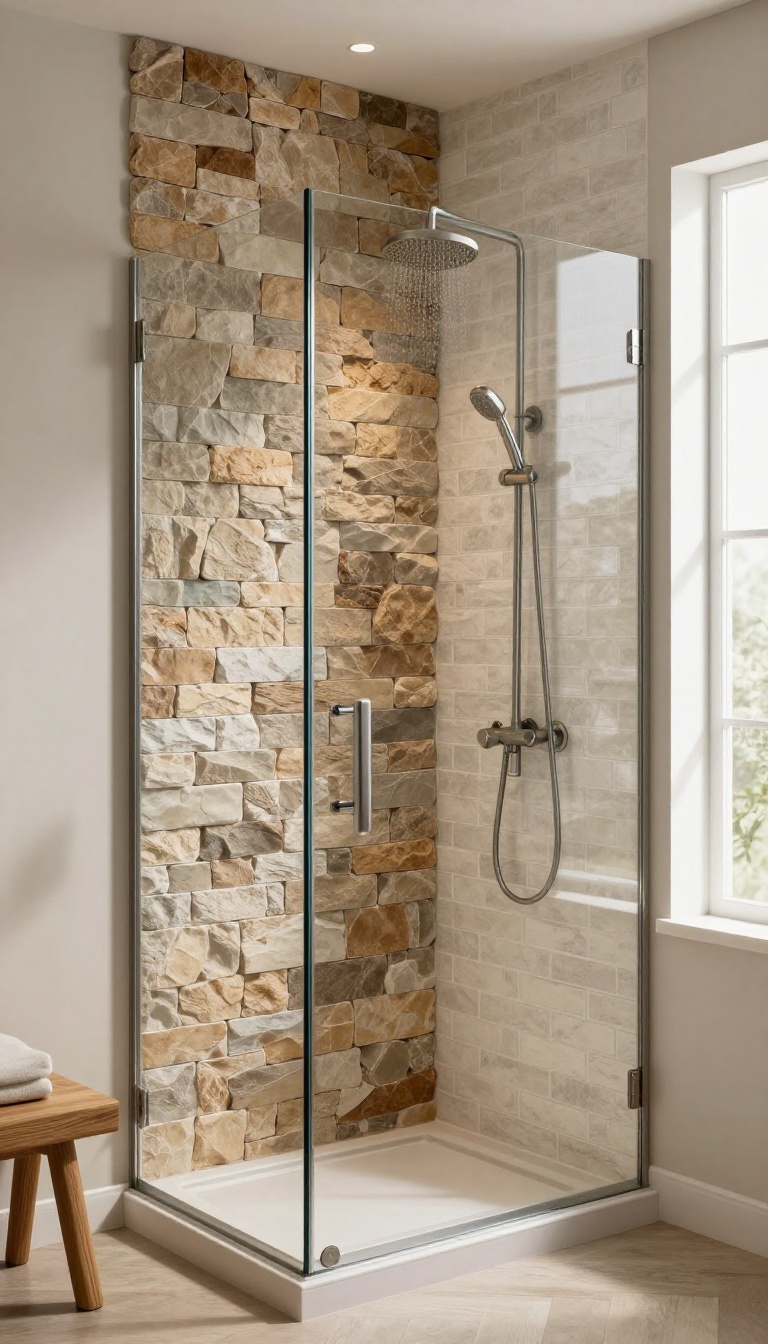
Mixing two different tile shapes in one shower might sound tricky, but when you pair stacked stone with brick-shaped tiles, it just works. The combination brings a natural, layered texture that feels both rustic and refined. This accent wall approach lets you play with materials without overwhelming the whole space.
A mixed stone and brick tile wall is all about contrast and balance. The rough, organic surface of stacked stone pairs beautifully with the clean, linear look of brick tiles. You get the warmth of natural texture plus the crispness of a structured pattern.
It's a custom feel that doesn't require a designer's budget.
Why This Combo Works
The magic lies in the interplay of textures. Stacked stone brings depth and irregularity, while brick tiles add order and repetition. Together, they create a visual rhythm that feels intentional and grounded.
Plus, the neutral tones in both materials make it easy to coordinate with other bathroom elements.
Placement Ideas
The most striking spot is the main shower wall behind the fixtures. You can also extend it to a niche or a half-wall for a subtle accent. If you're bold, wrap it around a corner to make the shower feel more spacious.
Keep the other walls simple with a solid tile or paint to let this feature shine.
Grout And Finish Tips
Choose a grout color that blends with the tiles to keep the look seamless, or go slightly darker for more definition. For the stone, consider a matte sealer to protect against moisture while preserving its natural look. The brick tiles can have a matte or slight gloss finish, depending on the vibe you want.
6. Pebble Floor with Large Wall Tiles
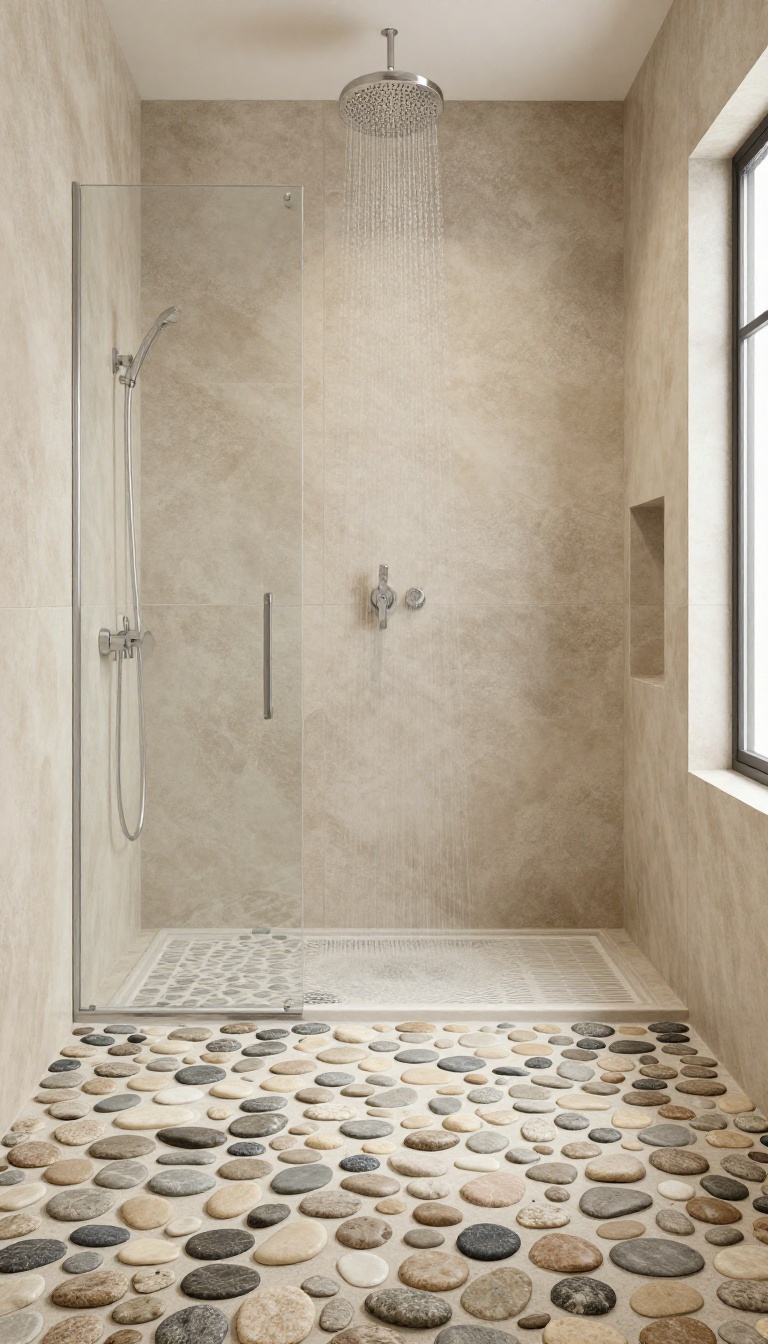
There's a reason pebble tiles are a favorite in spa showers—they give your feet a gentle massage while adding an organic, earthy touch. But if you pair them with small wall tiles, the look can get busy. The fix is simple: go big on the walls.
Large-format tiles in a soft neutral tone keep the shower feeling open and calm, letting the pebble floor be the star.
The combination of smooth pebbles underfoot and expansive wall tiles creates a nice contrast in texture without overwhelming the space. The pebbles bring that rustic, natural feel you want, while the large tiles add a crisp, modern edge. This pairing works especially well in walk-in showers where the floor is visible and the walls can stretch up uninterrupted.
Why This Combo Works
Pebble tiles are inherently busy—they have lots of small shapes and color variations. When you pair them with large wall tiles, you give the eye a place to rest. The big, smooth surfaces on the walls balance the visual noise of the pebbles, so the shower feels grounded but not chaotic.
It's a classic design trick: mix one busy element with one simple element to keep things harmonious.
Choosing The Right Pebbles
Not all pebble tiles are the same. For a refined rustic look, go for pebbles that are relatively flat and uniform in size. River stones with a mix of gray, beige, and taupe tones work well.
Avoid pebbles that are too round or bumpy—they can feel uncomfortable underfoot and look less polished. A matte finish is usually better than a glossy one, since it's more slip-resistant and looks more natural.
Picking The Large Wall Tile
The wall tile should be neutral and understated. Think soft gray, warm beige, or creamy white. Large-format tiles (like 12×24 inches or bigger) minimize grout lines, which helps the space feel more open and spa-like.
A subtle texture—like a honed stone or a matte porcelain—adds depth without competing with the pebbles. Stay away from heavy veining or busy patterns; you want the pebbles to be the focus.
Grout And Maintenance Tips
Use a grout color that blends with the pebbles to keep the floor looking seamless. For the walls, match the grout to the tile so the large surfaces feel even more expansive. Sealing is key, especially for natural stone pebbles.
A good sealer will protect against moisture and make cleaning easier. Sweep or vacuum the pebble floor regularly to prevent dirt from settling between the stones.
7. Hexagonal Cement Tiles with a Rustic Glaze
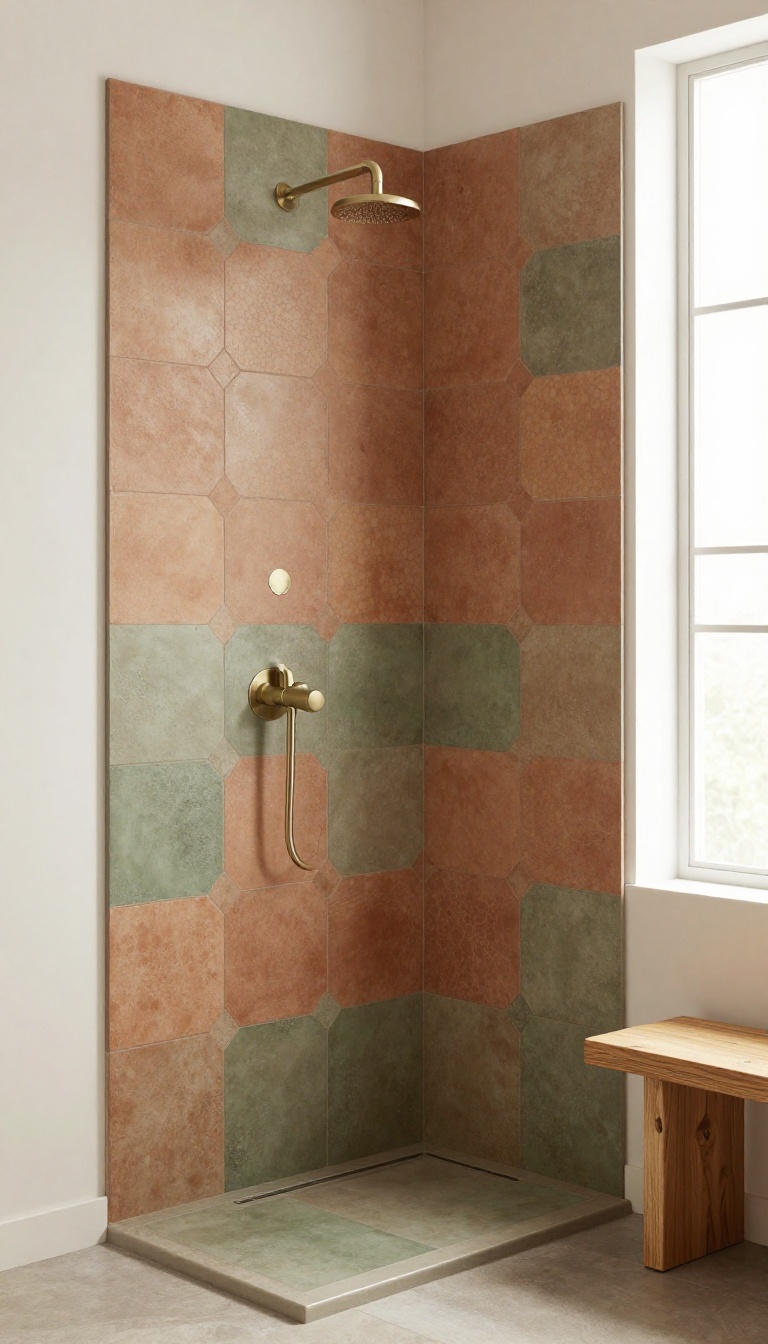
Hexagonal cement tiles in earthy hues like terracotta or sage bring a handcrafted feel. Their matte, slightly uneven surface adds rustic charm, while the geometric shape keeps the design sharp and modern. The result is a shower that feels both artisanal and crisp, perfect for those who want a touch of nature without sacrificing clean lines.
Cement tiles have been around for centuries, and their timeless appeal lies in their ability to blend durability with artistic expression. When you choose hexagons, you get a classic shape that feels fresh and contemporary. The rustic glaze—often achieved through a matte finish and subtle color variations—adds depth and warmth that glossy tiles just can't match.
This combination makes the tiles a standout feature in any shower, whether you're going for a full rustic overhaul or just adding a focal point.
Choosing The Right Color Palette
Stick to earthy tones like terracotta, sage green, or warm beige to keep the rustic vibe authentic. These colors pair beautifully with natural wood accents and brushed nickel fixtures. For a bolder look, mix two complementary shades in a random pattern—this adds visual interest without overwhelming the space.
Grout And Layout Tips
Use a grout color that blends with the tiles to maintain a seamless look, or go slightly darker to define each hexagon. A staggered or honeycomb layout works best to highlight the geometric shape. Consider a large-format hexagon for fewer grout lines and a cleaner appearance, or stick with small ones for a more intricate, handcrafted feel.
Pairing With Other Textures
To enhance the rustic charm, pair these tiles with natural stone or wood-look porcelain on an adjacent wall or the shower floor. A teak bench or a rainfall showerhead can further elevate the spa-like atmosphere. Keep the rest of the bathroom simple so the tile remains the hero.
8. Brick-Pattern Tile with White Grout
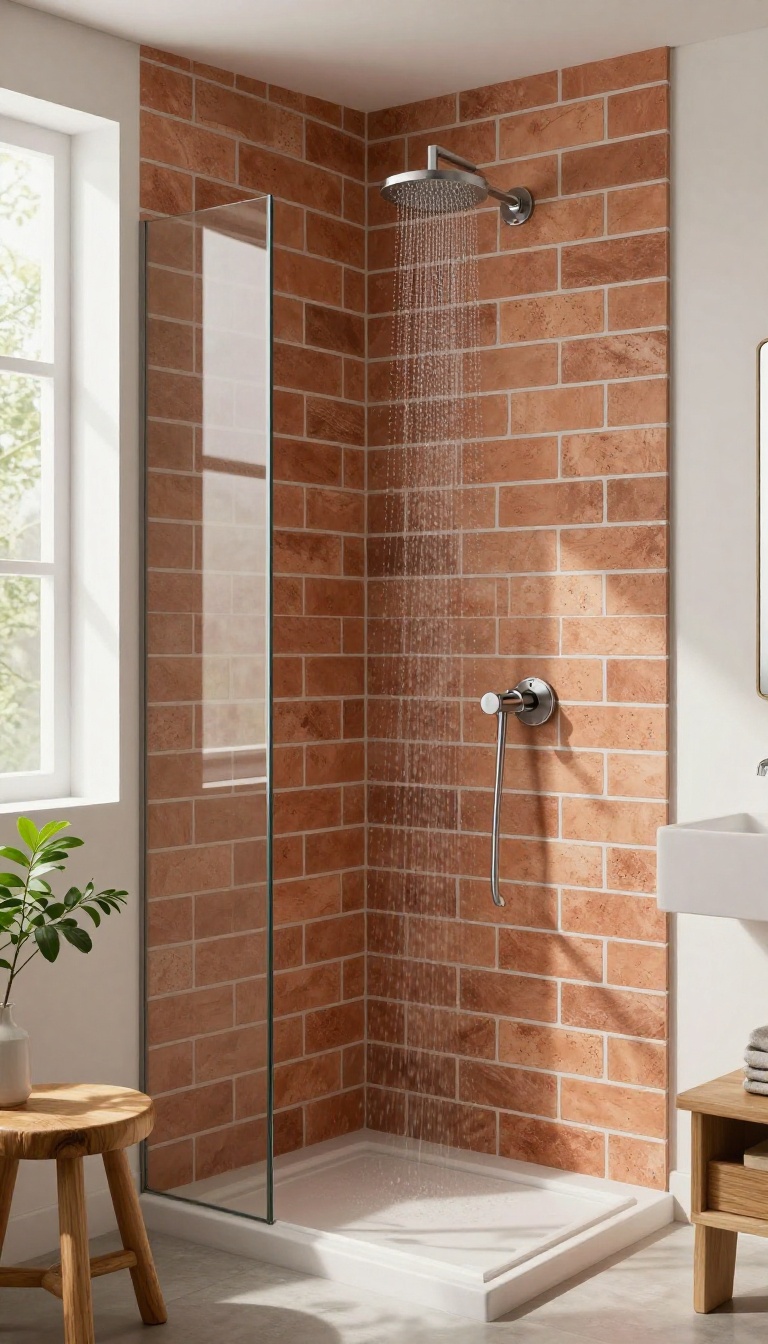
Brick-pattern tile brings a tactile, handmade quality to a shower, but the real magic happens when you pair it with white grout. The contrast creates a crisp, clean grid that keeps the rustic clay tones from feeling too heavy or dated. It's a simple swap that makes a big difference in how the space reads.
The warm, earthy color of brick-look tile instantly adds a farmhouse vibe, but the white grout is what gives it that polished, contemporary edge. Instead of blending into a muddy wall, each tile stands out, creating a sense of order and rhythm. This approach works especially well in smaller showers, where the clean lines can make the space feel more open and airy.
Why White Grout Works
White grout acts like a visual spacer, breaking up the clay tones and preventing the wall from feeling like a solid brown block. It also reflects light, adding a subtle brightness that makes the shower feel fresher. Plus, the crisp grid gives the rustic tile a more deliberate, designed look.
Choosing The Right Tile
Look for brick-shaped tiles in a matte finish with slight variations in color—this keeps the look natural and handcrafted. Avoid high-gloss options, as they can feel too slick and modern. A warm terracotta or ochre hue works beautifully, but you can also go with a softer beige if you want a lighter feel.
Grout And Maintenance Tips
Use a high-quality, stain-resistant white grout to keep it looking bright. Seal it properly, and consider a slightly wider grout line (around 1/8 inch) to emphasize the pattern. Regular cleaning with a mild, non-abrasive cleaner will help maintain that crisp contrast without damaging the tile or grout.
9. Marble and Wood Tile Combo
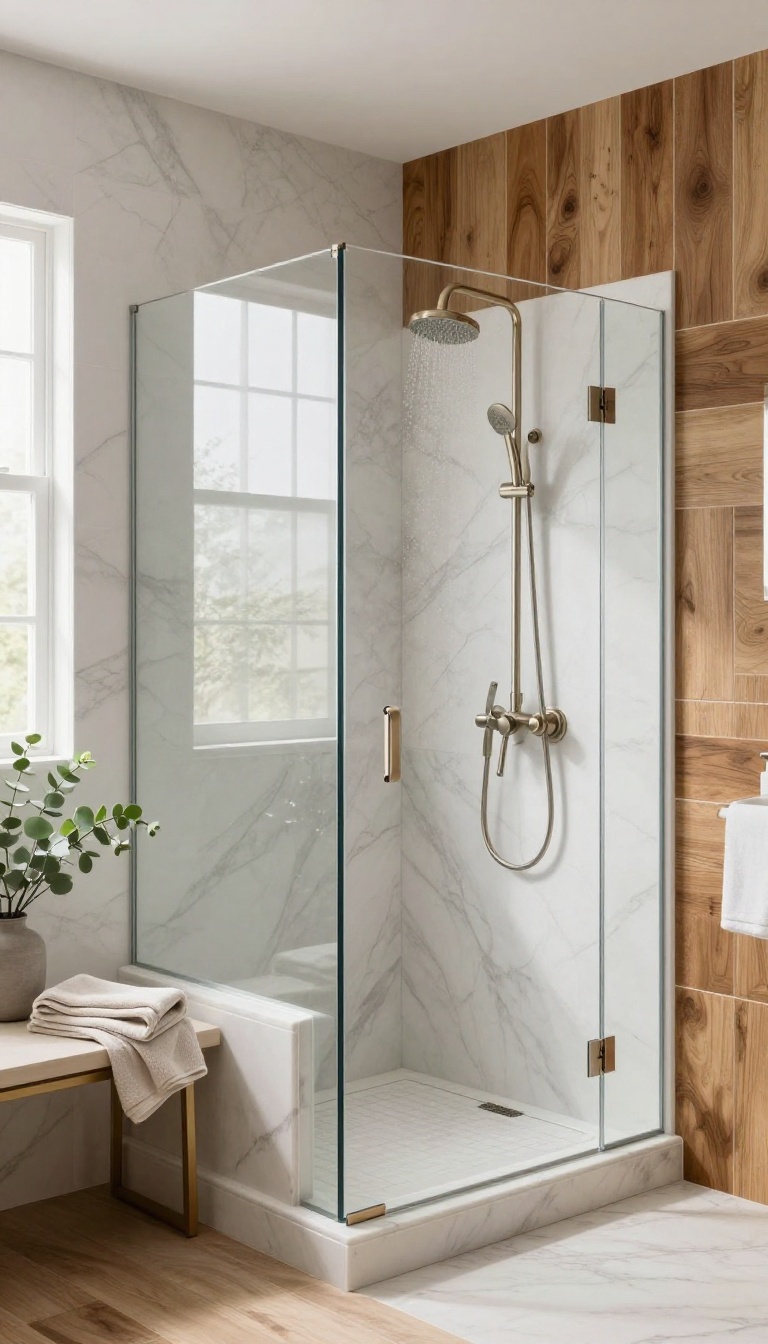
Mixing marble and wood-look tile might seem like a design clash, but in a rustic shower, it's a match made in heaven. The cool, veined marble brings a touch of elegance, while the warm wood tones add that cozy, earthy feel you're after. Together, they create a balanced, custom look that feels both upscale and inviting.
This combination works beautifully because it plays on contrast. The marble's smooth, polished surface reflects light and adds a crisp, clean element, while the wood-look tile introduces texture and warmth. You can use the marble on one wall and the wood on another, or even mix them in a single feature wall for a more dynamic effect.
The key is to keep the color palette cohesive—think soft whites and grays for the marble, paired with medium-toned woods like oak or walnut.
Choosing The Right Marble And Wood Tones
When picking your tiles, aim for marble with subtle veining in gray or beige, and wood-look tiles that have a natural grain and a matte finish. Avoid overly busy patterns that might clash. For a rustic vibe, opt for a tumbled or honed marble instead of a high-gloss finish, and choose wood tiles with a textured surface that mimics real timber.
Placement Strategies For Maximum Impact
A popular approach is to use marble on the shower walls and wood-look tile on the floor or as an accent strip. This grounds the space and adds warmth underfoot. Alternatively, you can create a feature wall behind the shower bench or niche with wood-look tile, surrounded by marble.
This draws the eye and adds visual interest without overwhelming the space.
Grout And Finishing Touches
Grout color matters more than you'd think. For a seamless look, choose a grout that blends with the marble—usually white or light gray. For the wood-look tile, a slightly darker grout helps hide dirt and mimics the natural gaps between planks.
Finish with brushed nickel or matte black fixtures to tie the rustic and refined elements together.
10. Textured Ceramic in Earthy Tones
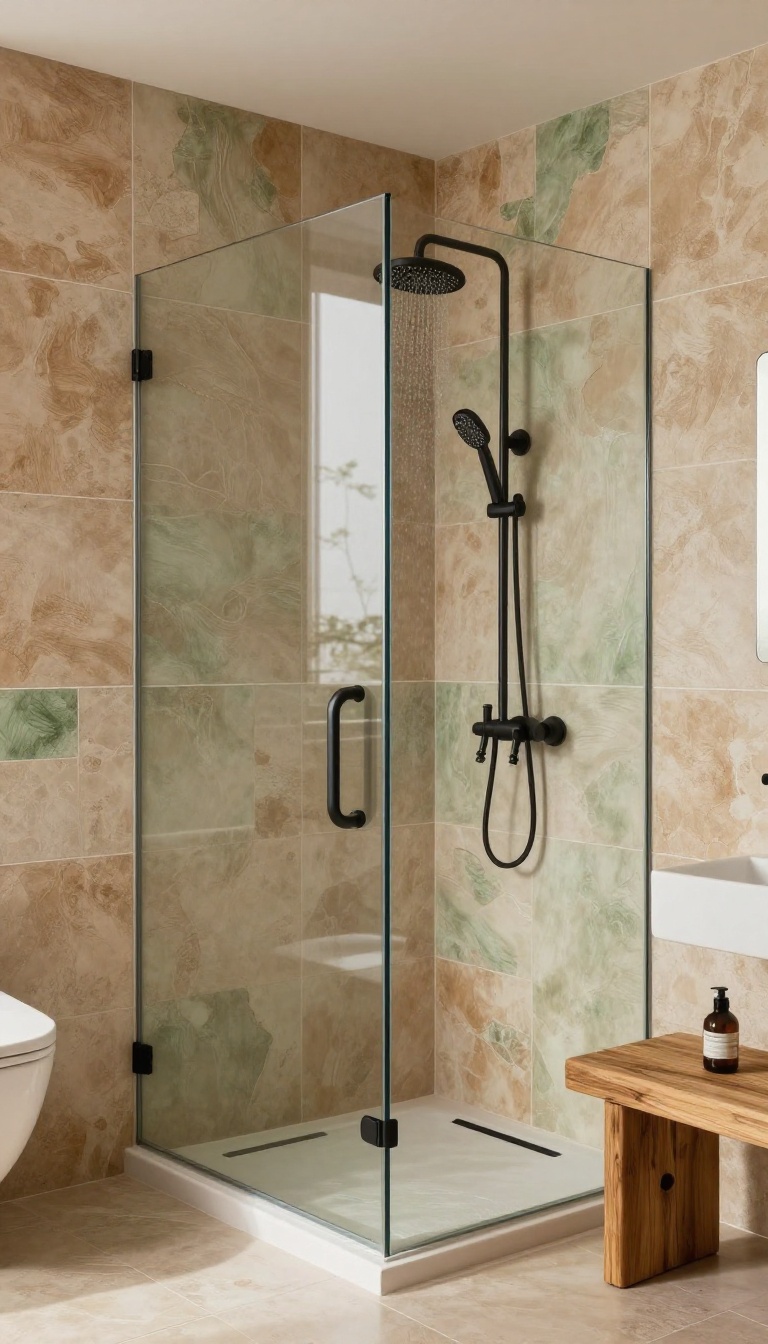
Large ceramic tiles with a subtle, handcrafted texture offer a fresh take on rustic style. Instead of rough stone or reclaimed wood, these tiles bring a softer, more refined organic feel. The uneven surface catches light in a way that adds depth and warmth, while muted earthy colors like sand, clay, or moss create a serene backdrop for your daily routine.
This idea is all about embracing imperfection in a controlled way. The texture is noticeable but not overwhelming, giving the shower a tactile quality that feels natural and inviting. Pair these tiles with matte black or brushed nickel fixtures to keep the look crisp and contemporary.
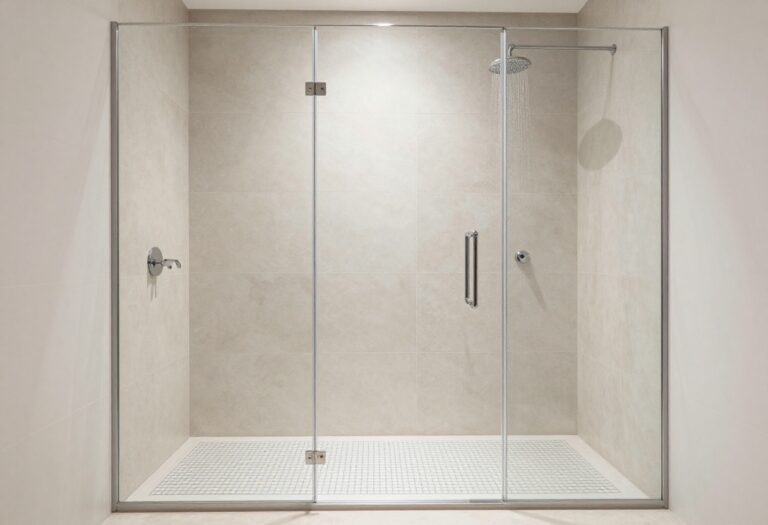
A glass shower door lets the texture shine without visual clutter.
Choosing The Right Texture
Not all textured ceramics are created equal. Look for tiles with a matte finish and a slightly rippled or dimpled surface. The texture should be subtle enough to clean easily but pronounced enough to catch light and add interest.
Consider large-format tiles (12×24 inches or bigger) to minimize grout lines and let the texture take center stage.
Color Palettes That Work
Earthy tones are the foundation of this look. Think warm sands, rich clays, and deep moss greens. These colors pair beautifully with natural wood accents, like a teak bench or a cedar stool.
For a more modern twist, mix in a few tiles in a contrasting shade, like a cool slate or a soft ivory, to create a subtle pattern.
Grout And Finish Details
Grout color matters more than you might think. Choose a grout that closely matches the tile to keep the surface seamless and highlight the texture. A slightly darker grout can also work, adding definition without stealing the show.
Finish the space with a rainfall showerhead and a simple linear drain to enhance the spa-like feel.
FAQ
What is the best tile for a rustic shower floor?
Pebble tiles or small-format mosaic tiles with a matte finish are ideal. They provide good traction and a natural, spa-like feel underfoot.
How do I keep rustic tile looking clean?
Seal natural stone tiles regularly and use a squeegee after each shower. For grout, choose a darker color or use a grout sealer to prevent staining.
Can I mix rustic tile with modern fixtures?
Absolutely. Pairing rustic tile with sleek, modern fixtures like brushed nickel or matte black creates a beautiful contrast that feels both current and timeless.
What grout color works best with rustic tile?
Neutral grout colors like warm gray, beige, or white work well. For a more seamless look, match the grout to the tile; for a crisper look, use a contrasting color.
Are rustic tiles hard to maintain?
It depends on the material. Porcelain and ceramic are low-maintenance, while natural stone requires more care. Regular sealing and gentle cleaning keep them looking great.
Conclusion
Blending rustic tile with crisp, modern details is all about balance—think textured surfaces paired with clean grout lines and simple fixtures. You don't need to overhaul the entire bathroom to get that custom feel; even one feature wall or a niche can shift the whole vibe. Start with the idea that speaks to your space, whether it's a warm terracotta or a cool slate.
Pair it with matte black or brushed nickel, and you'll have a shower that feels both grounded and polished. Pick your favorite, gather samples, and enjoy the process of making it yours.