15 Black and White Bedroom Ideas Aesthetic Rooms Need
Black and white bedrooms get a reputation for feeling cold, but the right mix of contrast and texture turns that around fast. A crisp white base paired with black accents can make even a small room look sharper and more intentional. The trick is knowing where to push contrast and where to soften it.
Too much black and the space feels heavy; too much white and it loses its edge. Balance is everything.
These 15 ideas cover walls, furniture, lighting, and the small details that pull a black and white room together. Pick a few that fit your space, then build from there.
1. Start with a Crisp White Base
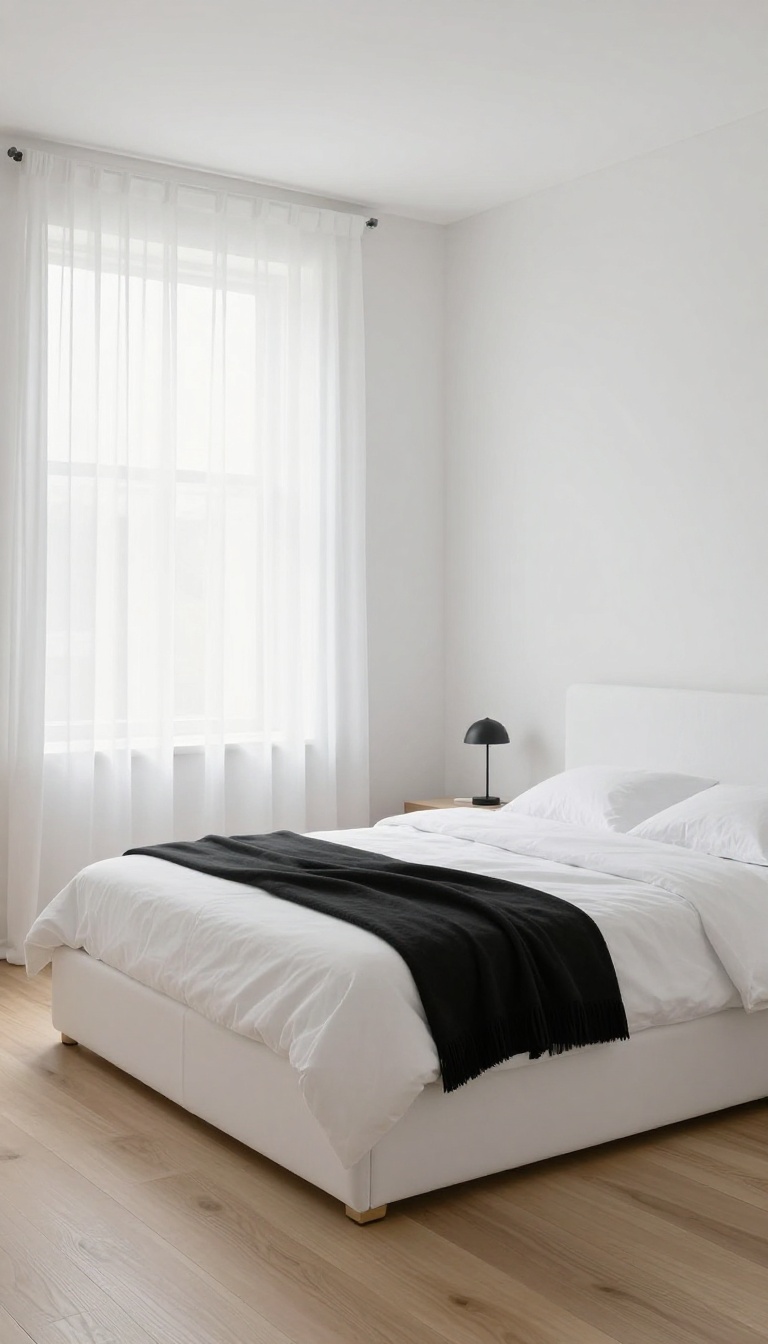
A white base does more than brighten a room. It gives black accents something to pop against, so every dark detail reads as intentional instead of accidental. Think of white walls, white bedding, and white curtains as your canvas.
Without that clean backdrop, black furniture and decor can start to feel heavy and mismatched. The goal isn't to make the room feel like a gallery. It's to create enough breathing room so the black pieces you add actually stand out.
White doesn't mean boring. It means you have a neutral starting point that makes everything else easier to layer. Once the base is set, you can add black in small doses and adjust as you go.
Start with the largest surfaces first. Walls, floors, and bedding carry the most visual weight, so getting those right makes the rest of the room fall into place. You don't need pure white everywhere.
Soft whites, warm whites, and off-whites all work. Just keep them consistent enough that the room feels cohesive rather than patchy.
Pick A White That Fits Your Light
North-facing rooms tend to feel cooler, so a warm white with yellow or beige undertones helps balance that out. South-facing rooms get more natural light, which means a crisp cool white won't feel harsh. Test paint samples on multiple walls before committing.
The same white can look completely different depending on the time of day and the direction of your windows.
Keep Bedding Simple And Bright
A white duvet or comforter instantly makes the bed feel like the cleanest spot in the room. Add a black throw blanket at the foot of the bed for contrast without covering up all that white. Stick to solid whites or subtle textures like linen or waffle weave.
Busy patterns fight with the black accents you'll add later.
Use White Curtains To Soften The Edges
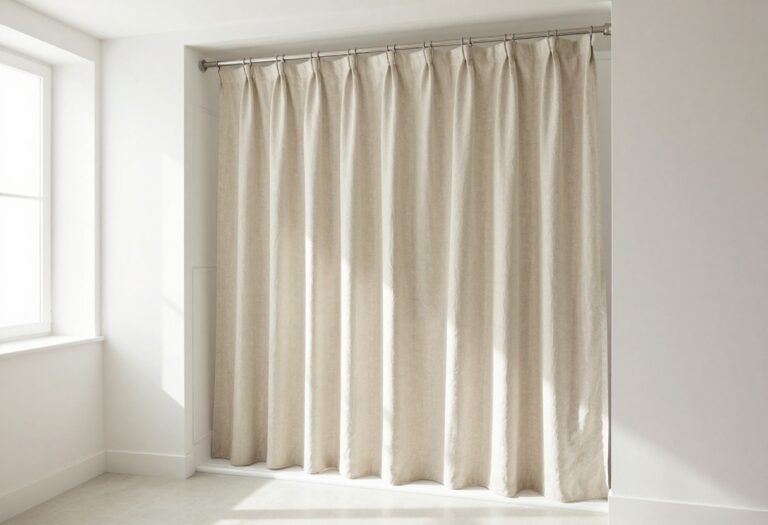
Floor-length white curtains make windows look larger and add a soft frame around the room. They also diffuse harsh daylight, which keeps black furniture from looking too stark. Choose a lightweight fabric that still offers some privacy.
Sheer layers work well if you want to keep the room bright but not exposed.
2. Add a Bold Black Accent Wall
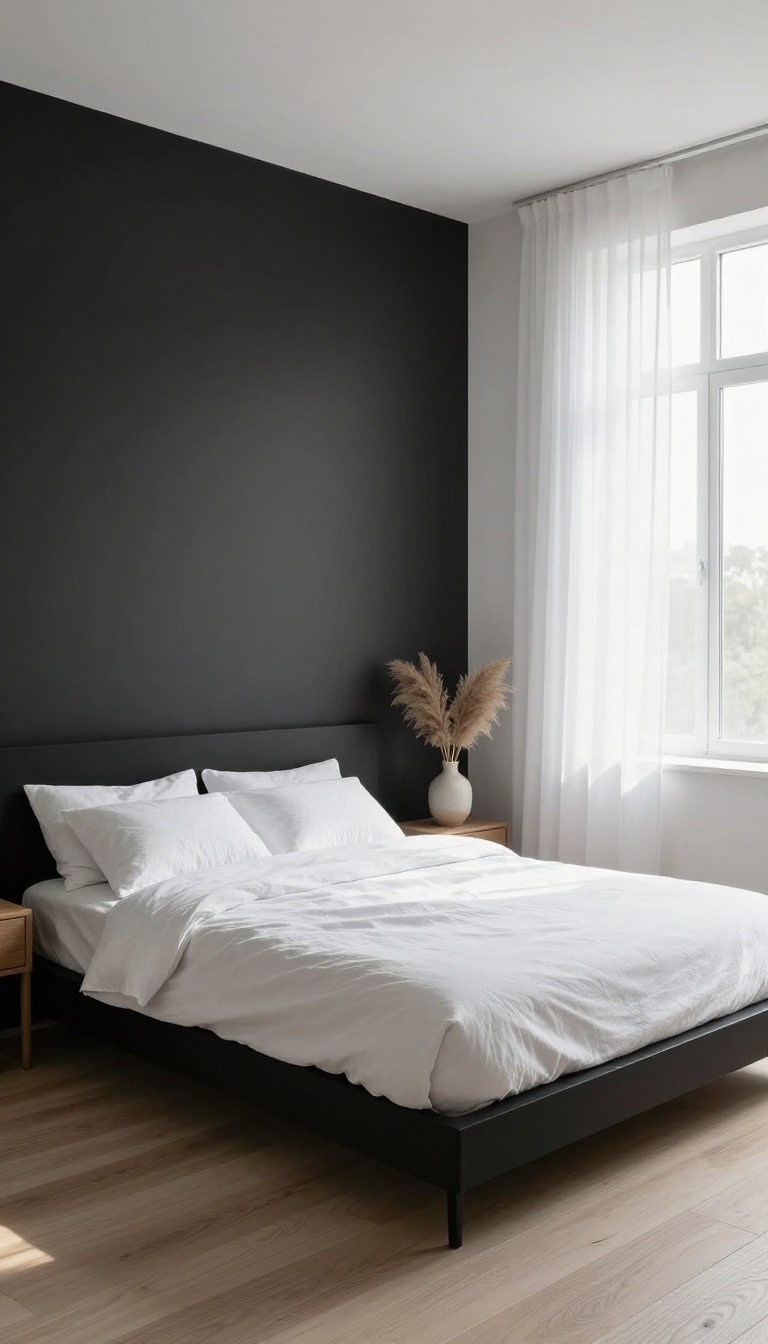
One black wall changes the whole mood of a bedroom without touching the other three. It gives the eye a place to land and makes white bedding, curtains, and trim pop harder than they would against a plain white box. The key is contrast.
Keep the surrounding walls light and the floors pale so the black reads as a deliberate focal point instead of a cave.
An accent wall works because it creates depth. Flat white rooms can feel like they have no dimension, but a dark plane behind the bed pulls the space forward and back at the same time. You do not need a huge room for this to work.
In fact, smaller bedrooms often benefit most because the dark wall visually pushes the other walls away. ### Pick the Right Wall The wall behind the headboard is the obvious choice, and it usually is the best one. It frames the bed, anchors the room, and gives you a natural place to hang art or skip art entirely. If your bed sits under a window, try the wall opposite the bed instead.
That way the black shows up in your line of sight when you walk in, but it does not fight with the window trim. Avoid accenting a wall that already has heavy built-ins, a fireplace, or a lot of doors. Too many features on one dark surface gets busy fast. ### Choose a Finish That Works With Light Matte black absorbs light and feels softer, almost like charcoal.
It hides imperfections better and works well in bedrooms because it does not bounce glare around the room. Satin or eggshell black reflects a little more light and can look sharper and more modern. It also wipes clean easier, which matters if the wall sits near a dresser or a doorway.
If you want the wall to feel less severe, ask for a black with a drop of brown or green in it. True black can look flat under warm bulbs, while a softened black keeps some richness. ### Balance It With White and Light Floors White furniture does the heavy lifting here. A white bed frame, white nightstands, or white bedding keeps the black wall from swallowing the room.
Light floors matter just as much. Pale wood, whitewashed planks, or a light rug under the bed gives the dark wall something to sit on instead of floating. Add one more white element near the wall, like a white lamp shade or a white picture frame, so the contrast repeats instead of showing up once and disappearing. ### Keep the Rest of the Room Quiet Let the accent wall be the loudest thing in the room.
Skip bold patterned curtains and busy bedding, and stick to solid whites, soft grays, and maybe one muted texture like linen or boucle. Metallic accents in brass or brushed nickel look great against black, but keep them small. A lamp base, a drawer pull, or a mirror frame is enough.
If the room starts feeling too dark, swap a black throw pillow for a cream one or add a light-colored bench at the foot of the bed. Small adjustments fix the balance without repainting.
Pick The Right Wall
The wall behind the headboard is the obvious choice, and it usually is the best one. It frames the bed, anchors the room, and gives you a natural place to hang art or skip art entirely. If your bed sits under a window, try the wall opposite the bed instead.
That way the black shows up in your line of sight when you walk in, but it does not fight with the window trim. Avoid accenting a wall that already has heavy built-ins, a fireplace, or a lot of doors. Too many features on one dark surface gets busy fast.
Choose A Finish That Works With Light
Matte black absorbs light and feels softer, almost like charcoal. It hides imperfections better and works well in bedrooms because it does not bounce glare around the room. Satin or eggshell black reflects a little more light and can look sharper and more modern.
It also wipes clean easier, which matters if the wall sits near a dresser or a doorway. If you want the wall to feel less severe, ask for a black with a drop of brown or green in it. True black can look flat under warm bulbs, while a softened black keeps some richness.
Balance It With White And Light Floors
White furniture does the heavy lifting here. A white bed frame, white nightstands, or white bedding keeps the black wall from swallowing the room. Light floors matter just as much.
Pale wood, whitewashed planks, or a light rug under the bed gives the dark wall something to sit on instead of floating. Add one more white element near the wall, like a white lamp shade or a white picture frame, so the contrast repeats instead of showing up once and disappearing.
Keep The Rest Of The Room Quiet
Let the accent wall be the loudest thing in the room. Skip bold patterned curtains and busy bedding, and stick to solid whites, soft grays, and maybe one muted texture like linen or boucle. Metallic accents in brass or brushed nickel look great against black, but keep them small.
A lamp base, a drawer pull, or a mirror frame is enough. If the room starts feeling too dark, swap a black throw pillow for a cream one or add a light-colored bench at the foot of the bed. Small adjustments fix the balance without repainting.
3. Mix Patterns for Visual Interest
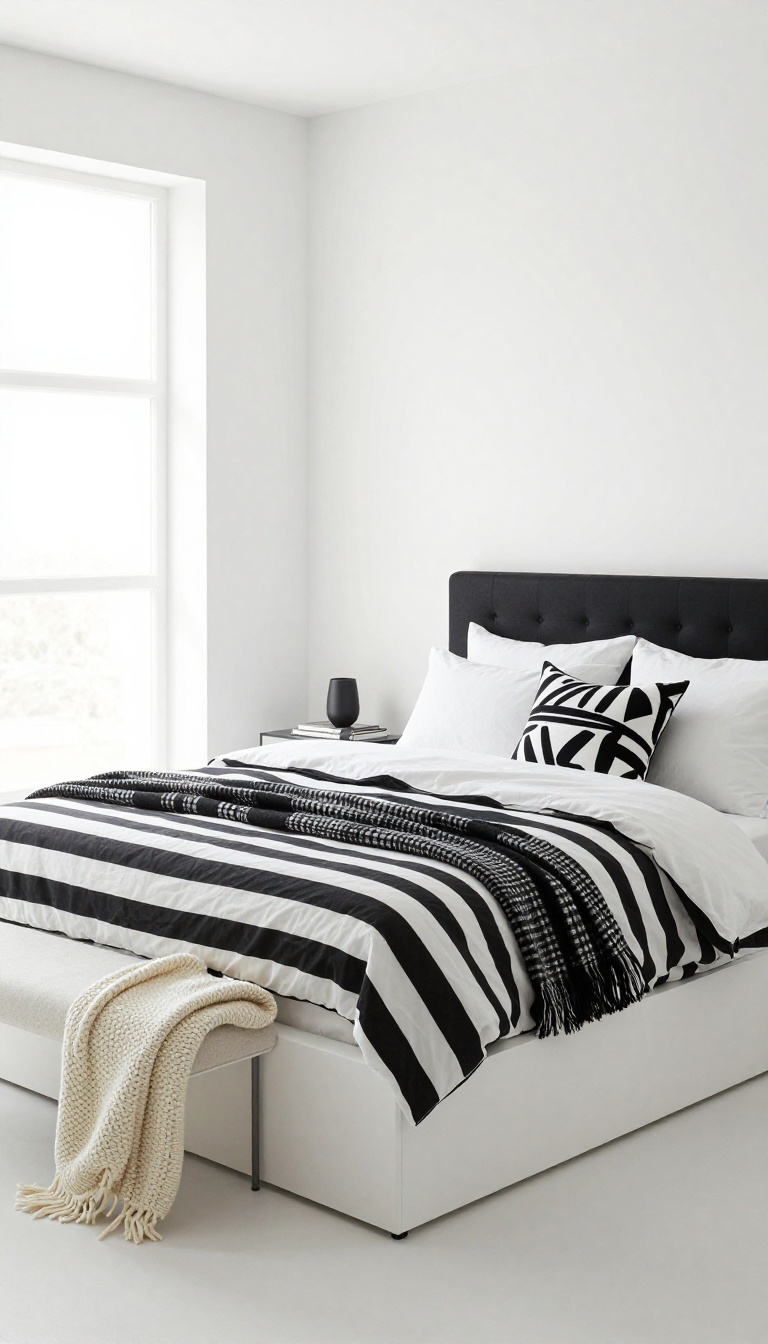
Pattern mixing in a black and white bedroom keeps the eye moving and stops the space from feeling flat. Stripes, checks, and abstract prints each bring a different rhythm, and when you layer them, the room gains energy without adding a single pop of color. The key is to vary scale and placement so patterns complement rather than compete.
Start with one bold pattern as your anchor, then add smaller-scale prints that echo the same palette. A striped duvet can pair with a checked throw, while an abstract pillow ties them together. Keep the background calm—white walls or a simple black headboard—so the patterns do the talking.
Balance is about contrast in size, not just color.
Vary Scale And Placement
Large stripes on bedding feel graphic and modern, while tiny checks on a lumbar pillow add texture without overwhelming. Place bold patterns on larger surfaces like curtains or a rug, and reserve smaller prints for accent pieces. This hierarchy keeps the room from looking chaotic.
Stick To Two Or Three Patterns
More than three patterns can turn a bedroom into a visual maze. Choose a stripe, a geometric, and a subtle abstract—then repeat each at least once. Repeating patterns in different spots makes the mix feel intentional rather than accidental.
Use Texture To Blend Patterns
A chunky knit blanket or a smooth leather bench can soften the transition between busy prints. Texture acts like a neutral, giving your eyes a place to rest. It also adds warmth, which black and white rooms often need.
4. Layer Textures for Warmth

Black and white can feel stark, but texture is your secret weapon. Adding chunky knits, faux fur, and linen brings softness and warmth without breaking the color scheme. These layers make the room feel lived-in and cozy, not cold and clinical.
Texture is what turns a black and white bedroom from a showroom into a sanctuary. It adds depth and invites you to touch and relax. The key is mixing different materials while sticking to your two-tone palette.
Chunky Knits
A chunky knit throw draped over the foot of the bed or a chair instantly adds warmth. The nubby texture contrasts nicely with smooth sheets. Choose cream or light gray to keep it within the black and white family.
Faux Fur Accents
Faux fur pillows or a small rug bring a touch of luxury and softness. They catch the light and add a cozy factor that plain fabrics can't match. Stick to white or black fur to stay on theme.
Linen Layers
Linen bedding or curtains add a relaxed, natural texture. The slight wrinkles and matte finish soften the room's edges. White linen keeps things airy, while black linen adds a subtle drama.
Mix And Match
Combine these textures for the best effect. A linen duvet with a chunky knit throw and faux fur pillows creates a tactile experience. Just keep the colors consistent so the room stays cohesive.
5. Choose Statement Lighting
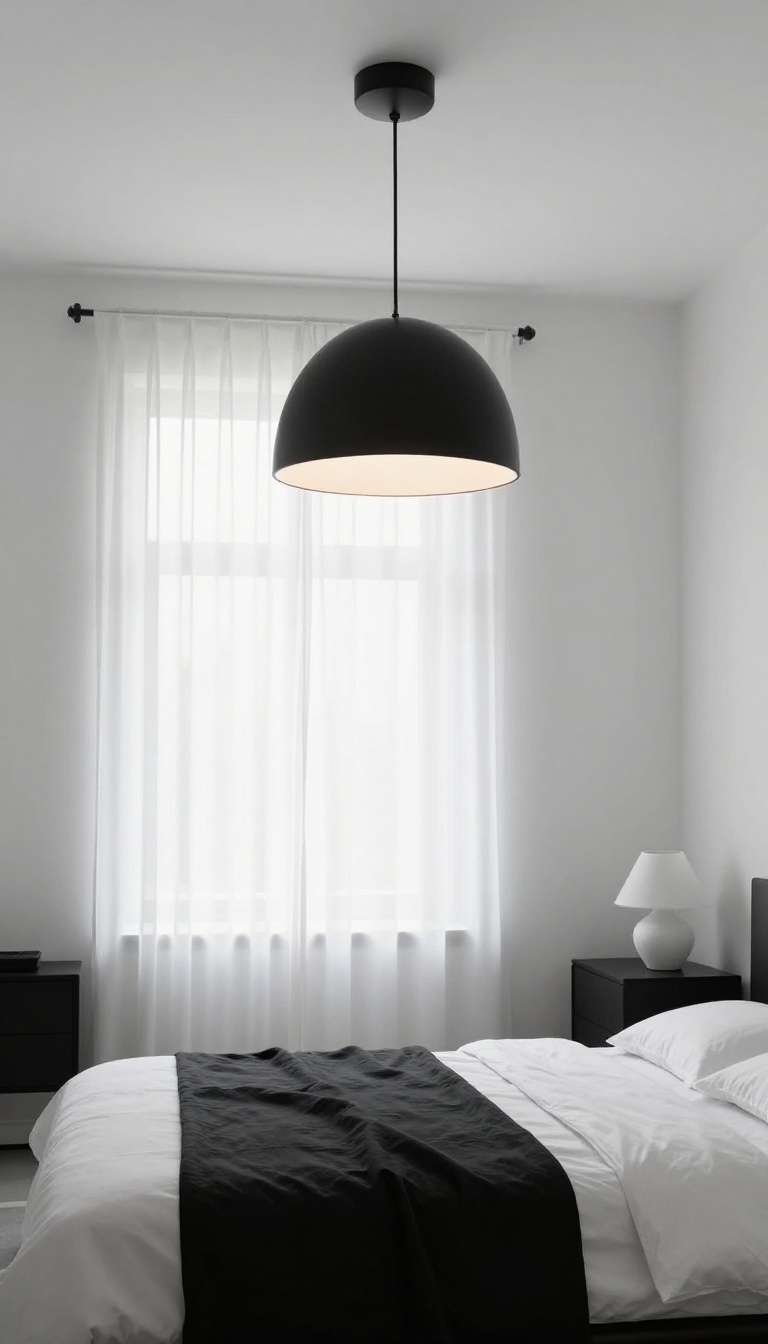
Lighting does more than help you see at night. In a black and white bedroom, the right fixture becomes a piece of art that anchors the whole look. A bold pendant or a sculptural lamp adds contrast and personality without changing your walls or furniture.
Statement lighting is your chance to go big on contrast. You can pick a black fixture that pops against white walls, or a white sculptural piece that stands out against a dark accent wall. Either way, the light itself becomes the focal point.
Don't settle for a basic flush mount. Look for shapes that feel intentional—geometric, organic, or oversized. The fixture should feel like it belongs in the room, not like an afterthought.
Scale matters. A tiny pendant in a large room gets lost. A massive chandelier in a small room overwhelms.
Measure your space and choose a fixture that fills it just right. You can also mix finishes. Matte black metal, glossy white ceramic, or even a black shade with a white interior all work.
The key is keeping the palette tight so the lighting stands out for the right reasons.
Pendant Lights That Pop
Hang a black pendant from the ceiling to create instant drama. A single oversized dome or a cluster of small globes both work. Just make sure it hangs high enough to walk under and low enough to feel connected to the bed.
Sculptural Lamps For Softness
A white ceramic or plaster lamp with a curvy shape adds softness to a black and white room. Place it on a nightstand or dresser. The organic form breaks up all the straight lines and adds a gallery feel.
Sconces For A Clean Look
Wall sconces save space and add symmetry. Choose black metal arms with white shades, or go fully white for a seamless look against a white wall. They're perfect for reading in bed without cluttering your nightstand.
6. Incorporate Metallic Accents
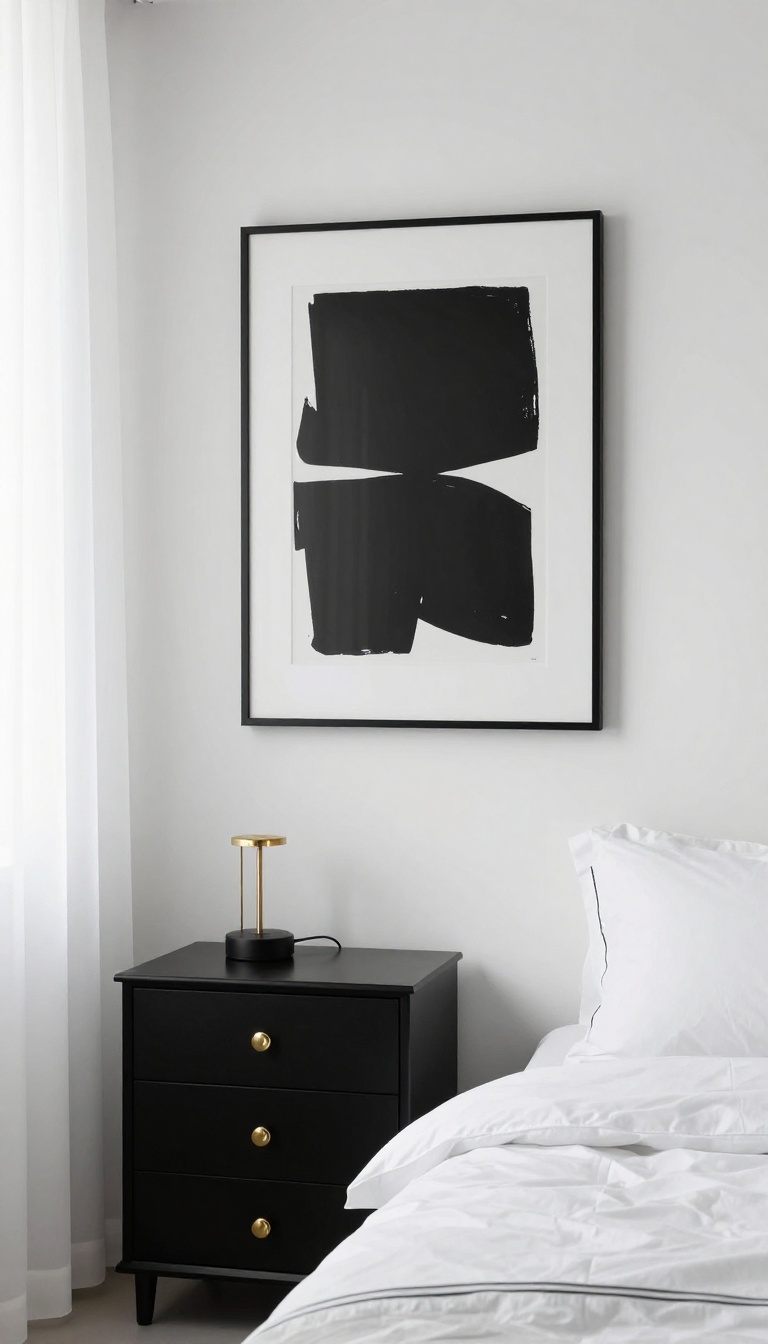
Black and white doesn't have to mean zero shine. A little metal here and there wakes up the whole room without messing with your monochrome base. Think of it as jewelry for your bedroom.
Metallic accents are the easiest way to add depth to a black and white palette. They catch light, create subtle reflections, and keep the space from looking flat. You're not adding a new color—just a finish that plays well with both black and white.
Hardware That Pops
Swap out basic knobs and pulls for polished chrome, brushed nickel, or unlacquered brass. On a black dresser, brass feels warm and a little vintage. On white cabinets, chrome looks clean and modern.
You can mix metals, but stick to two finishes max so it stays cohesive.
Frames And Fixtures
Picture frames, mirror edges, and light fixtures are prime spots for metal. A thin brass frame around a black and white print adds a subtle glow. A chrome pendant light over a nightstand feels sleek.
Just keep the lines simple so the metal reads as an accent, not a distraction.
Don't Overdo It
One or two metallic moments per wall is plenty. If every surface shines, the room starts to feel like a showroom. Let the metal highlight key areas—like a lamp, a mirror, or a set of drawer pulls—and leave the rest matte.
7. Play with Geometric Shapes
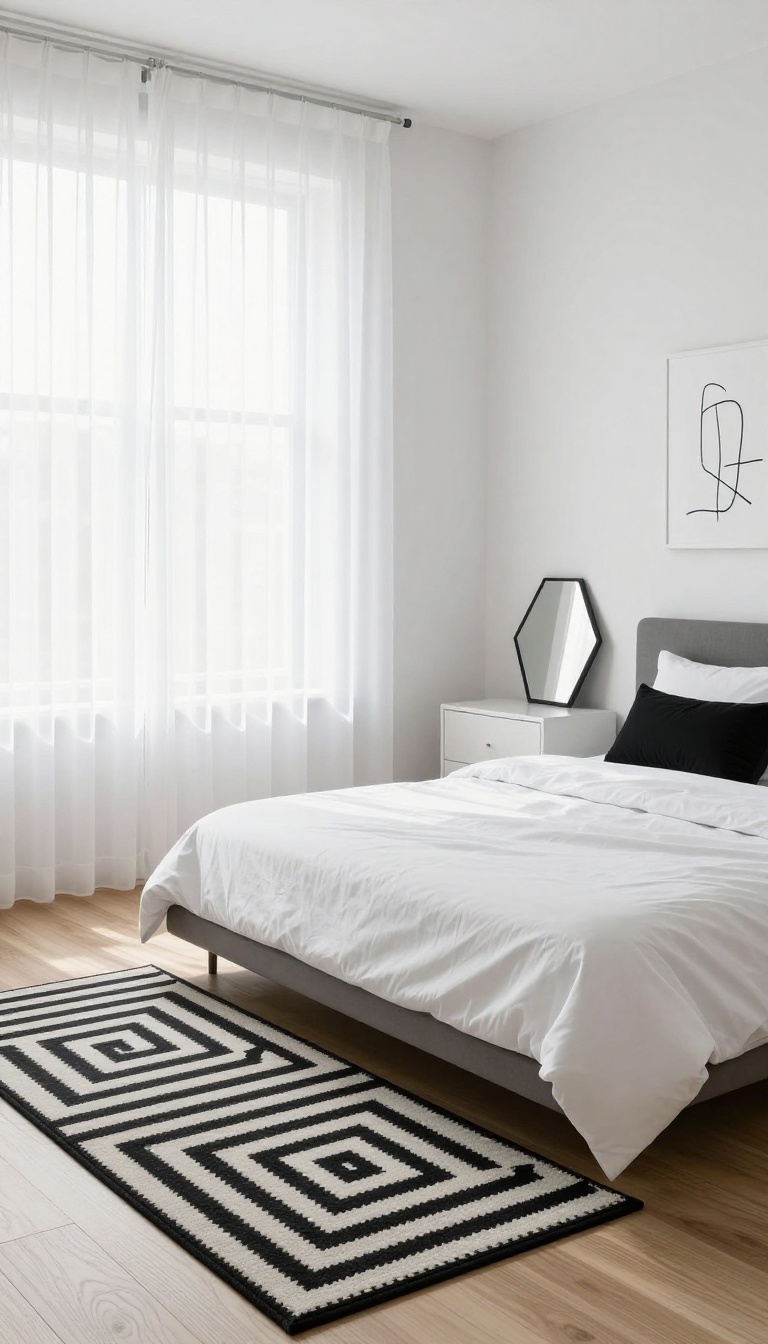
Straight lines, sharp angles, and repeating shapes give a black and white bedroom a modern, architectural feel. You don't need a full remodel to get there. A few well-placed geometric pieces can make the whole room look more designed.
The trick is to pick one or two shapes and repeat them. That's what makes it look intentional instead of random.
Geometric shapes work because they add structure. In a black and white room, where color isn't doing the heavy lifting, form becomes the star. A hexagon mirror, a striped rug, or a piece of abstract line art can all do the job.
You can go bold with oversized patterns or keep it subtle with small repeats. Either way, the goal is to create a rhythm that your eye can follow. That rhythm is what makes the room feel put together.
Start With The Floor
A geometric rug is the easiest place to begin. Look for black and white patterns like chevron, triangles, or a simple grid. It anchors the bed and adds instant visual interest without changing your walls.
If your room is small, choose a rug with a smaller-scale pattern so it doesn't overwhelm the space. A larger room can handle bigger, bolder shapes.
Mirrors That Do Double Duty
A geometric mirror reflects light and adds a sculptural element. Hexagons, octagons, or a cluster of small diamond mirrors can break up a plain wall. Place one above a dresser or nightstand for a balanced look.
Black frames keep the contrast sharp, while thin brass or white frames soften it. Either way, the shape becomes a focal point.
Art With Angles
Swap a traditional landscape for abstract geometric art. Think bold black lines on white canvas or a series of small squares. It ties the room together without adding clutter.
You can also lean a large geometric print on a shelf or dresser for a relaxed, gallery vibe. Keep the rest of the decor simple so the art stands out.
Don't Forget The Small Stuff
Geometric details can show up in unexpected places. A black and white striped duvet, a set of angular throw pillows, or a lampshade with a diamond pattern all count. Even drawer pulls with a hexagonal shape add a subtle touch.
Just remember to repeat the shape somewhere else in the room. One triangle pillow is a fluke; three is a theme.
8. Use Black Furniture as a Anchor
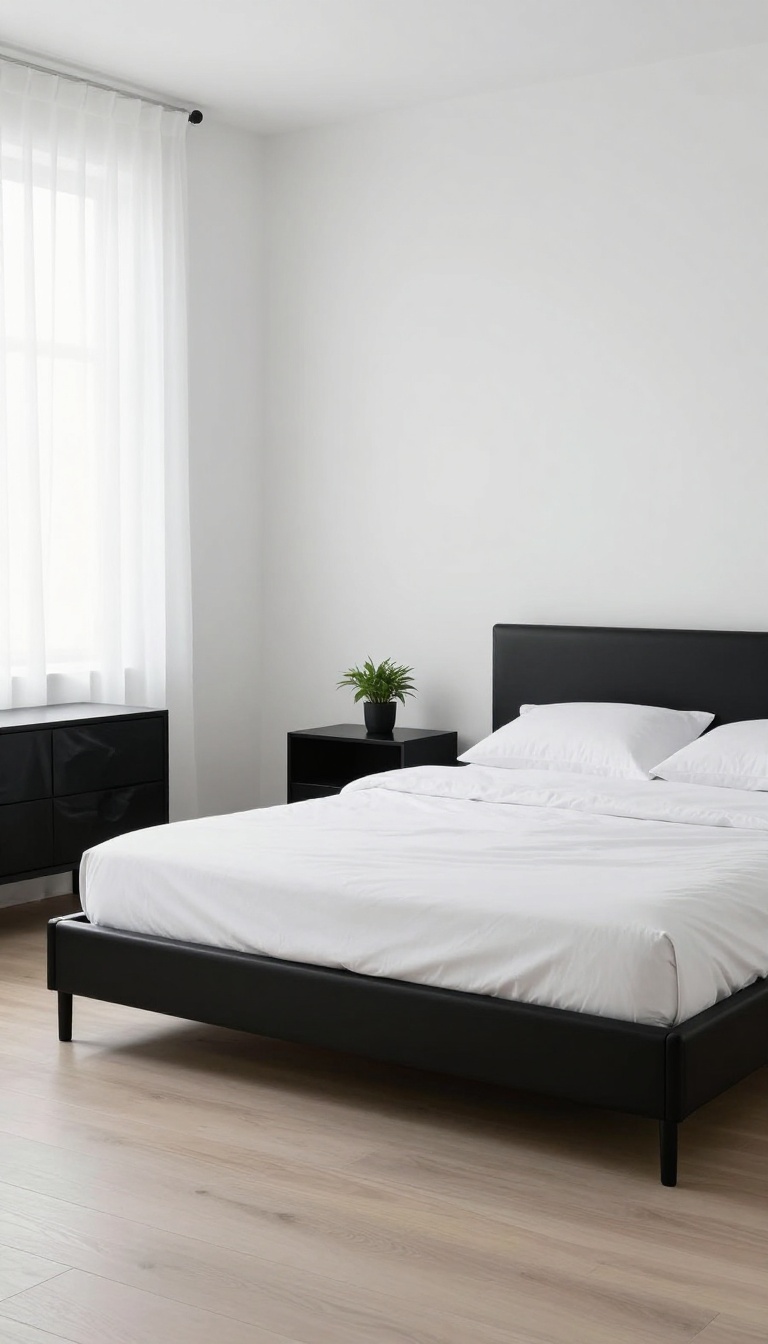
Black furniture does the heavy lifting in a black and white bedroom. It gives the eye a place to land and keeps the space from floating away into all that white. A black bed frame or dresser instantly adds weight and definition.
Without a dark anchor, a white room can feel unfinished. Black furniture solves that by creating a clear focal point. It also makes the white walls look intentional instead of empty.
The key is choosing pieces that feel solid but not overpowering. One or two black statement pieces are usually enough to ground the entire room.
A black bed frame is the most obvious place to start. It frames the bed like a picture frame, making the sleeping area feel deliberate and cozy. A low-profile black platform bed works well in modern spaces, while a black four-poster adds drama without closing in the room.
Dressers and nightstands in black do the same job on a smaller scale. They break up white walls and give your eye a rest from all the brightness. Just make sure the black pieces have some texture or sheen so they don't look like flat black holes.
You can also mix finishes—matte black with satin black—to add depth. The goal is contrast with cohesion, not a matching furniture set.
Why Black Furniture Works
Black absorbs light, so it creates a strong visual anchor. In a white room, that anchor keeps the space from feeling sterile. It also adds a sense of luxury and weight.
Think of it like a frame around a photograph. The black furniture frames the white space, making it feel curated rather than empty.
Choosing The Right Pieces
Start with the bed. A black headboard or full frame makes the biggest impact. If you're not ready for a full black bed, try a black bench at the foot of the bed or a black nightstand.
Dressers and wardrobes are next. A black dresser against a white wall is a classic black and white move. Just avoid too many black pieces—two or three is plenty.
Balancing Black And White
Balance is about distribution. If you have a black bed, keep the walls and bedding mostly white. Add black accents in small doses—a lamp, a picture frame, a throw pillow.
If your black furniture is heavy, soften it with white curtains or a light rug. The contrast should feel intentional, not accidental.
9. Add Greenery for a Pop of Life
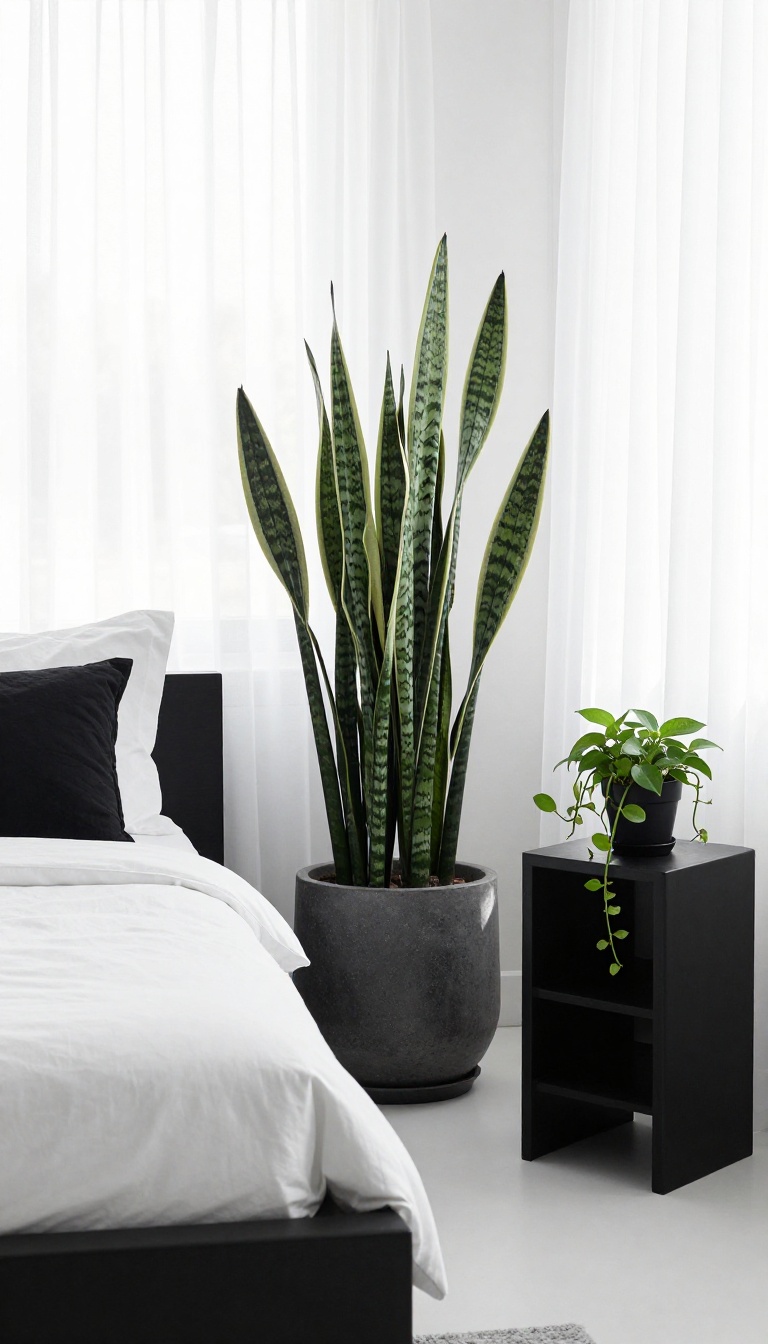
Black and white rooms can feel a little too perfect, like a photo that's been edited to death. A plant fixes that instantly. It throws in a shade of green that no paint chip can replicate, and it makes the whole space breathe.
You don't need a jungle. One or two well-placed plants are enough to break up the contrast and keep things from feeling sterile. Think of greenery as the third color in your palette, even if it's just a whisper.
The key is to pick plants that match the vibe you're going for. A tall, sculptural plant makes a bold statement, while a small trailing vine adds a soft, organic touch. Either way, the green pops against black and white without fighting for attention.
Placement matters more than quantity. A plant on a nightstand, a hanging planter in the corner, or a cluster on a dresser can all work. Just make sure it feels intentional, not like you forgot to water it and left it there.
If you're worried about maintenance, go for low-light varieties that thrive on neglect. Snake plants, pothos, and ZZ plants are basically indestructible. They'll keep your black and white scheme looking alive without adding stress to your routine.
Pick Plants That Match The Mood
For a modern, minimalist look, choose plants with clean lines and interesting shapes. A snake plant or a rubber tree fits that bill perfectly. If you want something softer, a Boston fern or a string of pearls adds a touch of romance.
Just avoid anything too bushy or chaotic, which can clutter the clean aesthetic.
Where To Place Them
Corners are your friend. A tall plant in an empty corner fills the space and draws the eye upward. Nightstands and dressers are great for smaller pots.
If you have a windowsill, that's prime real estate for a few succulents. Just keep them away from heavy traffic areas where they might get knocked over.
Keep It Low-maintenance
Not everyone has a green thumb, and that's fine. Fake plants have come a long way, and a high-quality faux fiddle leaf fig can fool almost anyone. If you go real, set a reminder to water once a week.
A little care goes a long way, and the payoff is a room that feels fresh and lived-in.
10. Create a Gallery Wall
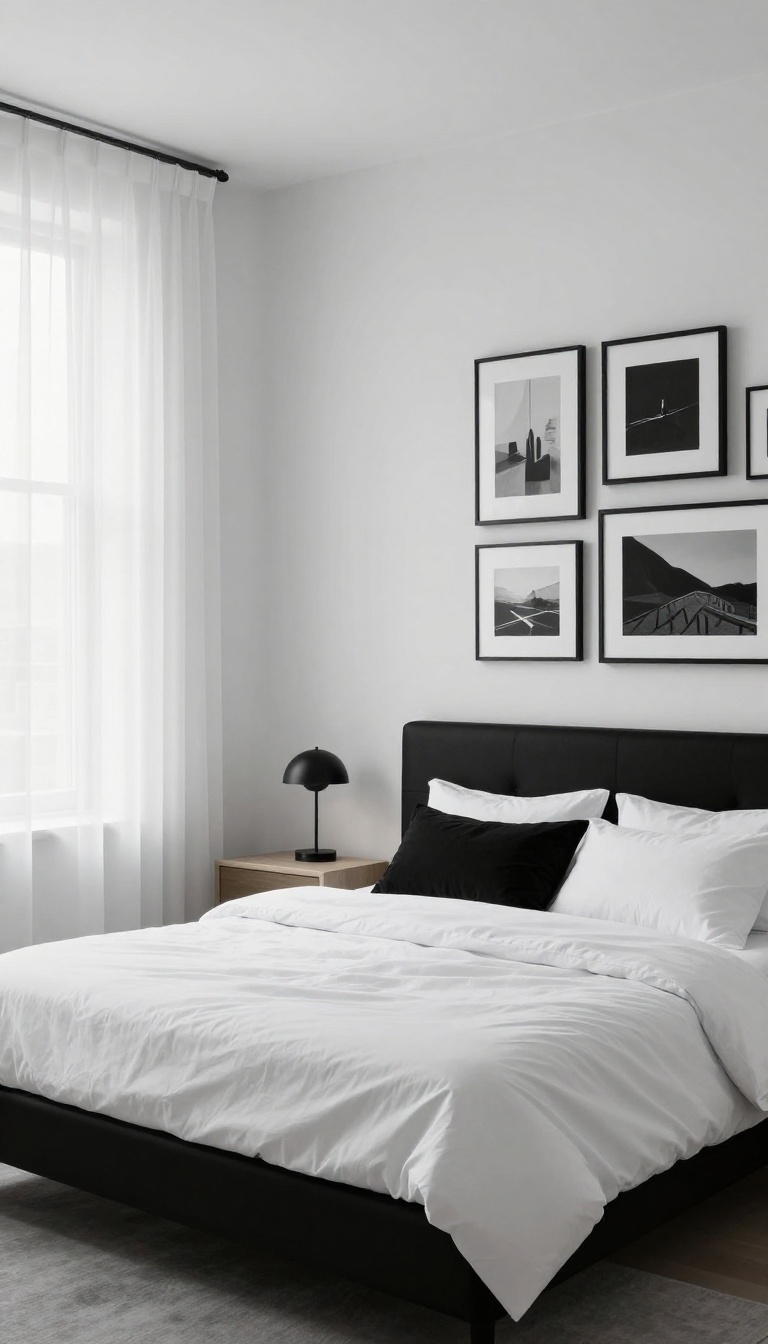
A gallery wall turns a plain wall into a personal statement. In a black and white bedroom, it adds visual interest without breaking the color scheme. The best part?
You can mix photos, art, and prints for a look that's uniquely yours.
Start by collecting pieces that speak to you. Black and white photography, abstract prints, or even your own snapshots converted to grayscale all work. The key is to keep the frames consistent—matching black or white frames create a cohesive look.
If you want a bit of contrast, use black frames on a white wall or white frames on a black accent wall.
Choosing Your Pieces
Mix sizes and orientations to keep it interesting. A large anchor piece surrounded by smaller ones creates balance. Stick to black and white or sepia tones to maintain the theme.
Don't be afraid to include a few personal photos—they make the space feel lived-in.
Layout Tips
Before you hammer any nails, lay everything out on the floor. Play with spacing until it feels right. A good rule of thumb is to keep 2-3 inches between frames.
For a clean look, align the tops or centers of the frames. For a more organic feel, go for a salon-style arrangement.
Hanging And Spacing
Hang your gallery wall at eye level, usually about 57 inches from the floor to the center of the arrangement. Use a level to keep things straight. If you're renting, consider damage-free hanging strips.
And don't forget to step back and check the balance from different angles.
11. Opt for Sheer White Curtains
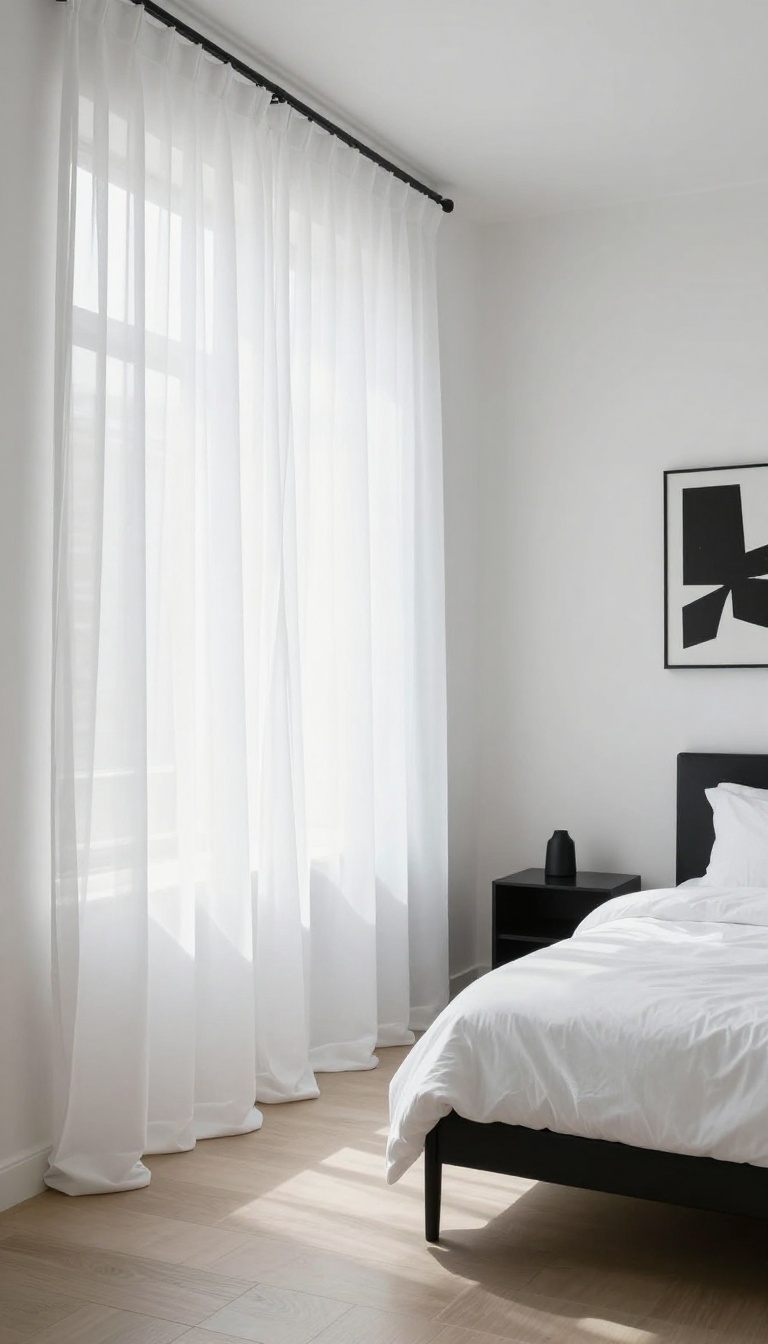
Heavy blackout drapes have their place, but a black and white bedroom usually wants something lighter at the window. Sheer white curtains filter daylight instead of blocking it, so the room stays bright without giving up privacy. They also soften the hard edges that black accents tend to create.
This is one of the easiest swaps you can make. Curtains take up a lot of visual space, and changing them shifts the whole mood of the room.
Sheer fabric works because it diffuses light rather than cutting it off. Instead of a harsh beam hitting one spot on the floor, you get an even glow that spreads across the walls and bedding. That softness matters in a room built on high contrast.
White sheers also keep the black elements from feeling like a wall of darkness. The light passes through, bounces around, and the black reads as deliberate rather than heavy.
Layer Them With Blackout Panels
The practical move is to hang both. Put blackout or heavier panels on the outside and sheers on the inside, then use them separately depending on the time of day. During the day, pull the heavy panels back and let the sheers do the work.
At night, close both for full darkness and privacy. You get the airy look without losing sleep quality.
Get The Length Right
Sheers look best when they just kiss the floor or puddle slightly. Anything shorter chops the wall and makes the window feel small. Mount the rod high, close to the ceiling, and extend it past the window frame on both sides.
That extra height and width makes the room feel taller and the window feel bigger.
Pick A Fabric That Hangs Well
Not all sheers are equal. Cheap polyester can look stiff and shiny, which fights the calm vibe you want. Look for linen blends, cotton voile, or a soft poly that drapes in gentle folds.
Hold the fabric up to the light before buying if you can. If it looks cloudy rather than clear, it'll filter light nicely without turning the room into a fishbowl.
12. Incorporate a Canopy Bed
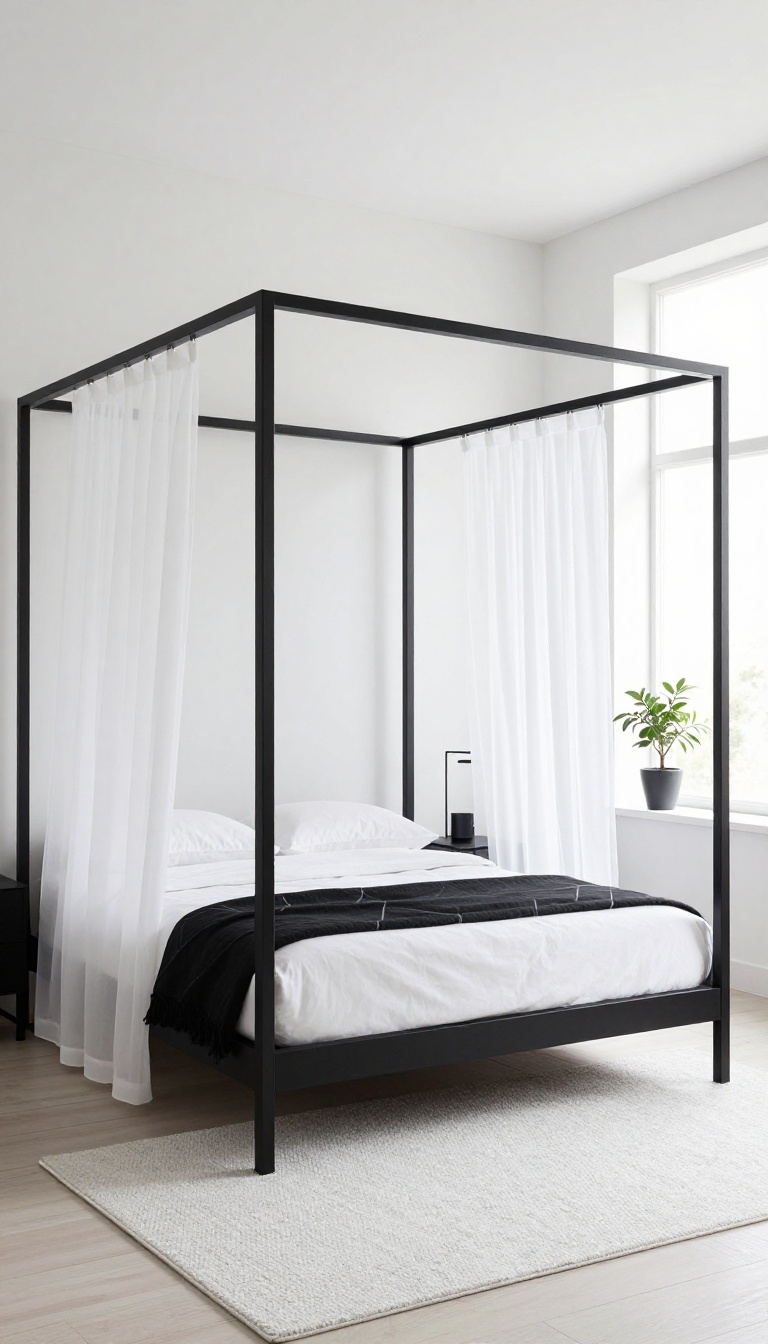
A canopy bed does something no other piece of furniture can: it turns sleeping into an event. In a black and white bedroom, the frame itself becomes a piece of graphic art, and the space inside feels like a room within a room. You don't need a palace-sized bedroom for this to work.
Even a simple four-poster in a small space can make the bed feel intentional instead of just pushed against a wall. The key is choosing the right frame color and keeping the surrounding decor from competing with it.
Canopy beds have a reputation for being fussy or old-fashioned, but the modern versions are clean, architectural, and surprisingly versatile. In a black and white scheme, the frame reads as a strong silhouette against pale walls, or as a soft outline against a dark backdrop. A black canopy bed makes a bold statement.
It anchors the room and gives the eye a clear focal point. A white canopy bed, on the other hand, feels airy and romantic, especially when paired with sheer drapes or a simple linen canopy. Either way, the bed becomes the centerpiece.
You can keep everything else minimal and let the frame do the talking, or layer in textures and patterns for a cozier feel. The choice depends on whether you want drama or calm.
Choosing The Right Frame
Black metal canopies feel industrial and sleek, while black wood adds warmth and weight. White frames disappear into the walls for a softer look, which is great for small rooms. If you want contrast, pick the opposite color of your walls.
If you want a seamless look, match the frame to your wall color and let the bedding stand out.
Drapes And Canopy Styling
You don't have to hang curtains on every post. A single sheer panel draped over the top or tied to one corner adds romance without blocking light. For a cleaner look, skip the fabric entirely and let the bare frame speak for itself.
If you do use drapes, stick to white or black to keep the palette tight.
Bedding That Balances The Frame
A black canopy bed can handle crisp white bedding with black accents, like a charcoal throw or patterned pillows. A white canopy bed looks best with layered whites and soft grays, maybe a black lumbar pillow for a pop. Keep the bedding simple so the frame remains the star.
13. Use Black and White Bedding Sets
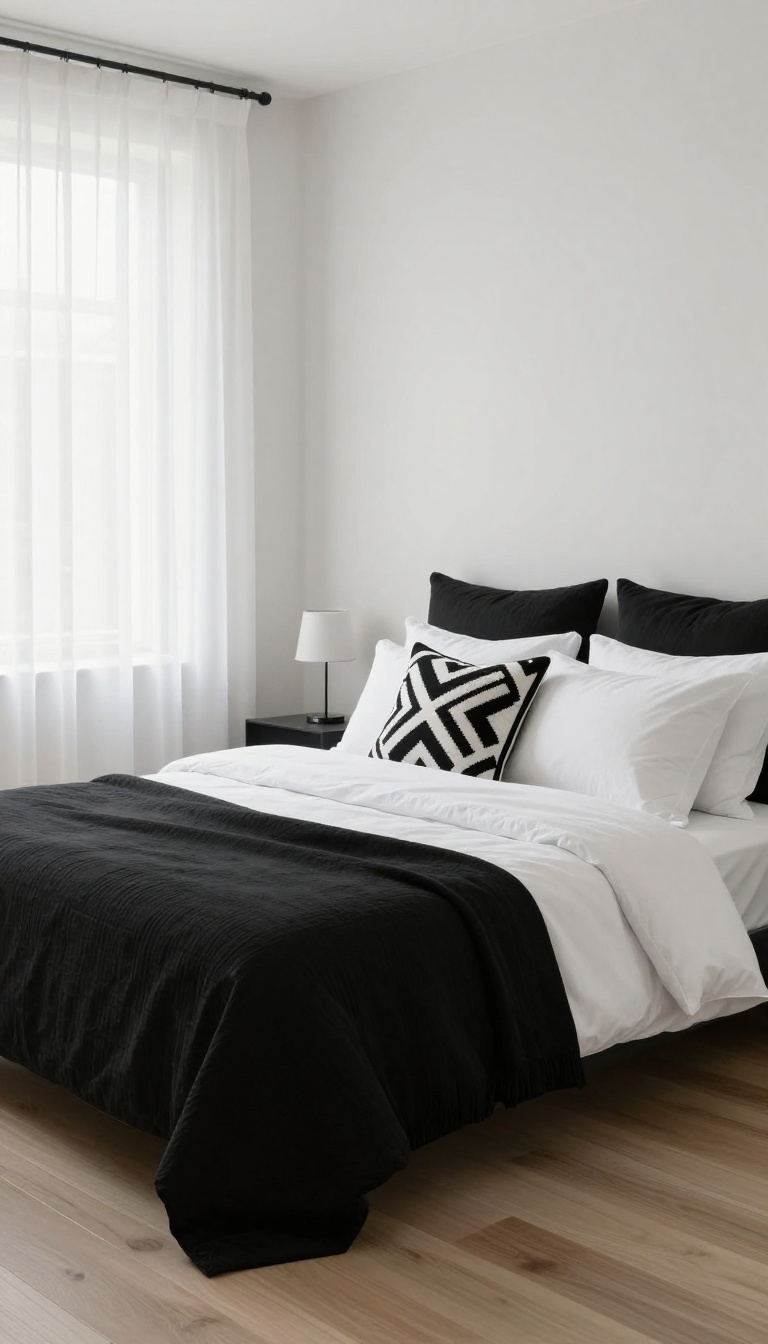
Your bedding takes up more visual space than almost anything else in the bedroom, so it's the fastest way to shift the whole look. A black and white duvet or comforter set gives you instant contrast without touching a paint can or rearranging furniture. The best part?
You can change the entire mood of the room in under five minutes.
Think of your bedding as the outfit your bed wears every day. A solid white duvet with a black throw at the foot keeps things clean and calm, while a bold geometric print turns the bed into the focal point. Reversible sets are the real MVP here because they give you two looks in one purchase.
Flip it to the lighter side when you want the room to feel airy, then switch to the darker side when you want drama. It's a small change that reads as a big design decision.
Go Bold With Patterns
Stripes, chevrons, and abstract shapes all work in black and white because the palette keeps things from feeling chaotic. A large-scale pattern on a white base adds energy without overwhelming a small room. If your walls are already busy, stick to a simpler print and let the bedding do just enough.
Try A Reversible Set
Reversible bedding is like getting two duvet covers for the price of one. One side might be solid black, the other crisp white, or you could get a pattern on one side and a solid on the other. Swap sides with the seasons or whenever you get bored.
It's the easiest room refresh you'll ever do.
Layer For Texture
A single duvet can look flat, so add a folded blanket or a couple of textured shams in the same color family. A chunky knit throw in black or white breaks up the smooth surface and makes the bed look styled, not just made. Mixing matte and slight sheen finishes also keeps things interesting up close.
14. Add a Vintage Touch
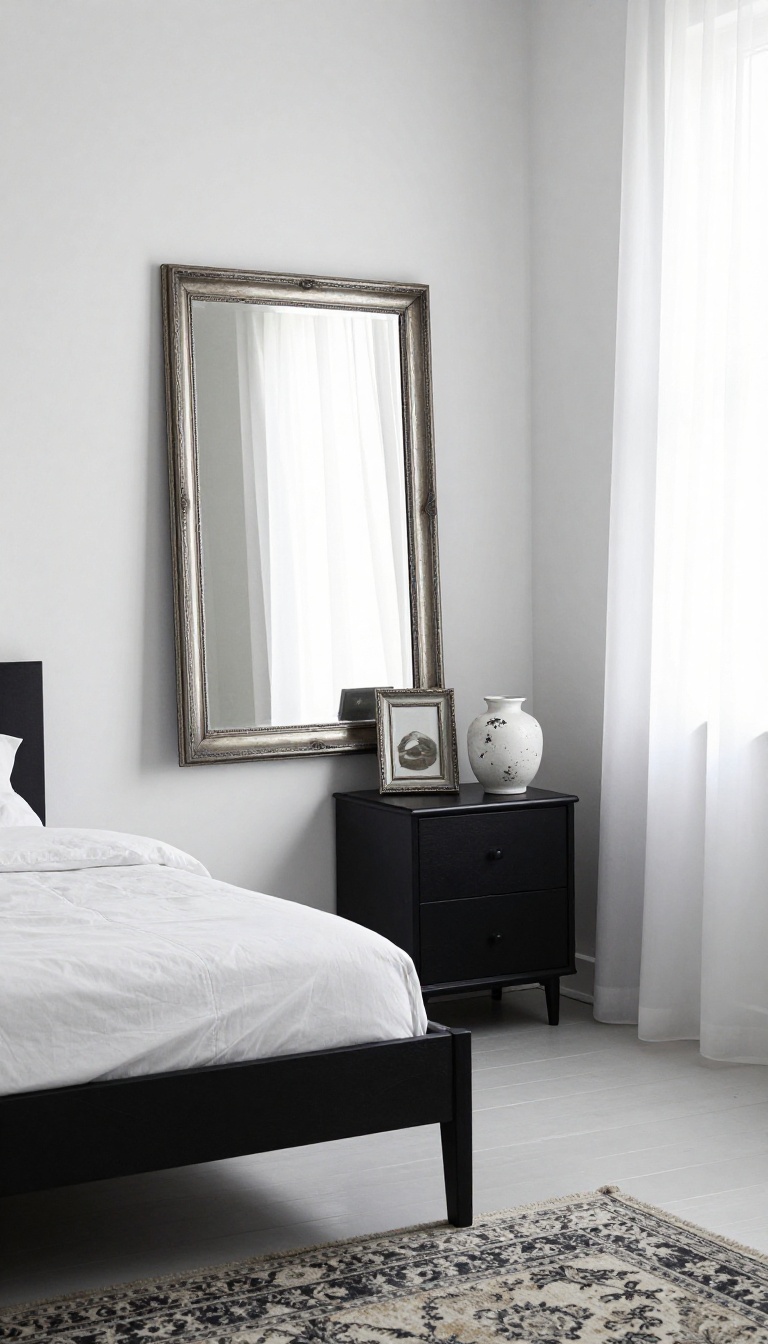
A black and white bedroom can start to feel a little too polished, like a showroom instead of a place where someone actually lives. Vintage pieces fix that fast. They bring in warmth, texture, and a sense of history that brand-new decor just can't fake.
You don't need to fill the room with antiques. One well-chosen piece is enough to shift the whole mood. A worn rug or an old mirror does more for character than a dozen matching accessories.
Vintage doesn't mean dusty or dated. In a black and white room, it means contrast in the best way: old against new, soft against sharp, imperfect against clean. That tension is what makes a space feel interesting.
The trick is to pick pieces that already lean black, white, or somewhere in between. A faded charcoal rug, a tarnished silver frame, a chipped white ceramic lamp. They slot into the palette without fighting it.
Start with one anchor piece and build around it. You'll know it's working when the room feels less like a catalog and more like it has a story.
Go For A Worn-in Rug
A vintage rug is the easiest way to soften a black and white room. Look for faded patterns in charcoal, ivory, or muted gray. The wear is the point.
It adds texture underfoot and breaks up all that clean contrast. Size matters more than style here. A rug that's too small makes the bed look like it's floating.
Go big enough that at least the front legs of your bed sit on it.
Hang An Antique Mirror
An old mirror with a chipped frame or a slightly cloudy surface adds instant character. It reflects light and makes the room feel bigger, but it also brings in that lived-in quality that new mirrors lack. Hunt for one with a black or gold frame.
Both work with black and white. Lean it against the wall or hang it above a dresser for a relaxed, collected look.
Mix In Small Old Things
You don't need big furniture to get the vintage feel. A brass candle holder, a stack of old books, or a ceramic vase with a crack in the glaze all do the job. Place them on a nightstand or shelf where they catch the eye.
Keep the rest of the surface simple so the vintage piece stands out. One or two small items is plenty. More than that and it starts to look cluttered.
15. Keep It Minimal with Clean Lines
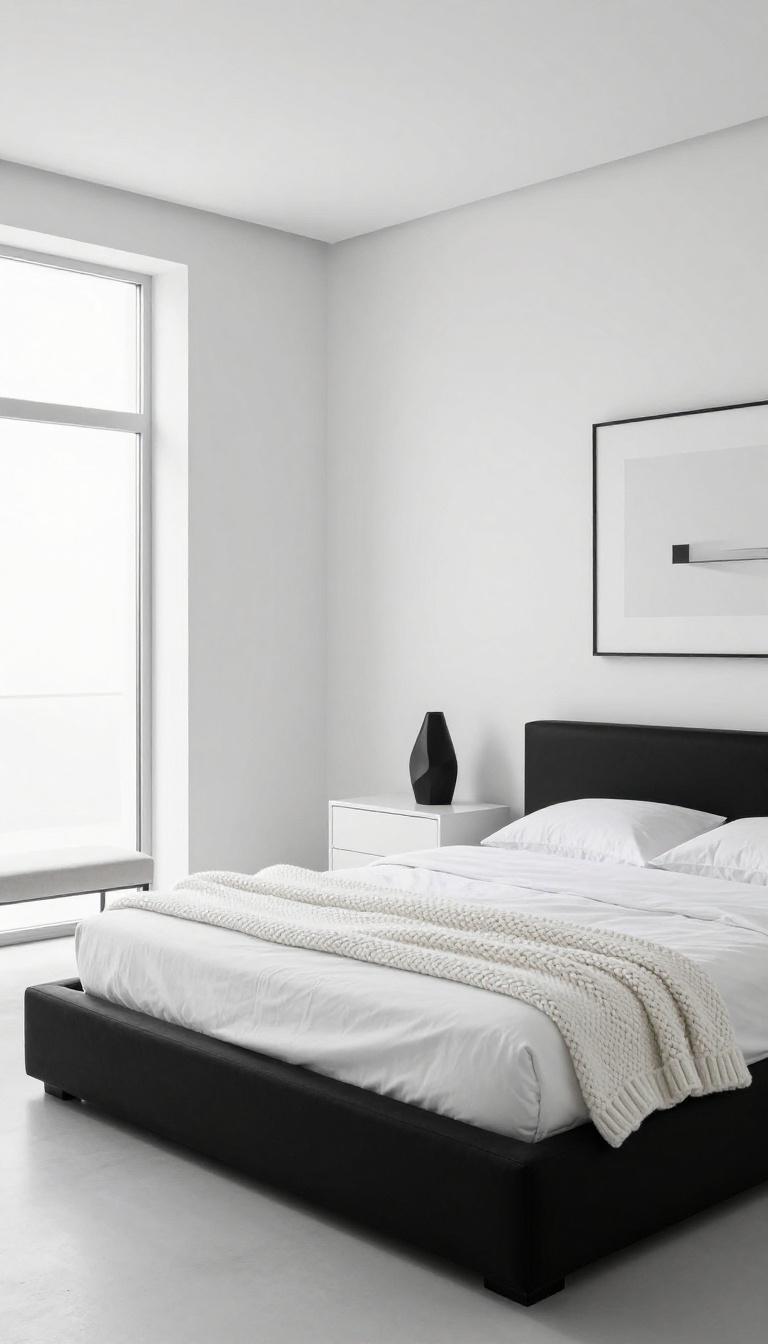
Minimalism isn't about empty space—it's about making every piece count. In a black and white bedroom, clean lines and sleek furniture let the contrast do the talking. Skip the clutter and watch the room feel instantly more polished.
When you strip away the extras, what's left has to work harder. That's the beauty of a minimal black and white bedroom: each item earns its place. The result is a calm, uncluttered space that still feels bold.
Choose Furniture With Simple Silhouettes
Look for pieces with straight lines and no ornate details. A platform bed with a low profile, a sleek dresser without handles, or a simple bench at the foot of the bed all fit the bill. These shapes keep the eye moving without distraction.
Stick To A Tight Color Palette
Limit yourself to black, white, and maybe one shade of gray. This doesn't mean it's boring—texture becomes your best friend. Mix matte and glossy finishes, or pair smooth surfaces with a chunky knit throw.
Hide The Clutter
Minimalism falls apart with visible mess. Use closed storage like drawers and cabinets to keep surfaces clear. A single piece of art or a sculptural lamp can be your only decor, and that's enough.
FAQ
Is a black and white bedroom too cold?
Not if you add textures like soft rugs, throws, and curtains. Warm lighting and wood tones can also help.
What colors go with black and white in a bedroom?
Metallics, gray, and natural wood tones work well. A pop of green from plants also adds life.
How can I make a black and white bedroom feel cozy?
Layer different fabrics, use dimmable warm lights, and include soft elements like a padded headboard or fluffy pillows.
Can I do black and white in a small bedroom?
Yes, just keep the balance light. Use more white than black and choose light-reflecting surfaces to avoid feeling closed in.
What is the best way to add personality to a black and white bedroom?
Incorporate personal items like books, art, or travel finds. A gallery wall or a unique light fixture can also reflect your style.
Conclusion
Black and white does not have to feel cold or unfinished. Pick one idea that solves your real problem, whether that is a flat-looking bed, a wall that feels empty, or a corner with nowhere to land. Live with it for a week before adding anything else.
Then layer in the next piece, like a warm bulb, a textured throw, or one wood tone that softens the contrast. You do not need all fifteen. A striking bedroom comes from a few steady moves, not a rushed overhaul.