11 Green Bed Frame Bedroom Ideas with Natural Charm
A green bed frame can turn a plain bedroom into a calm, nature-inspired retreat. It's a simple swap that shifts the whole mood of the room. But picking the right shade and styling it well takes a little thought.
Maybe you want a soft sage that feels like morning light in a forest. Or a deep emerald that adds a touch of drama. Either way, the frame becomes the anchor for everything else.
These 11 ideas show how to work green into your bedroom without it feeling like a jungle. You'll find practical styling tips and real-world inspiration for every budget.
1. Sage Green Bed Frame with Whitewashed Wood Accents
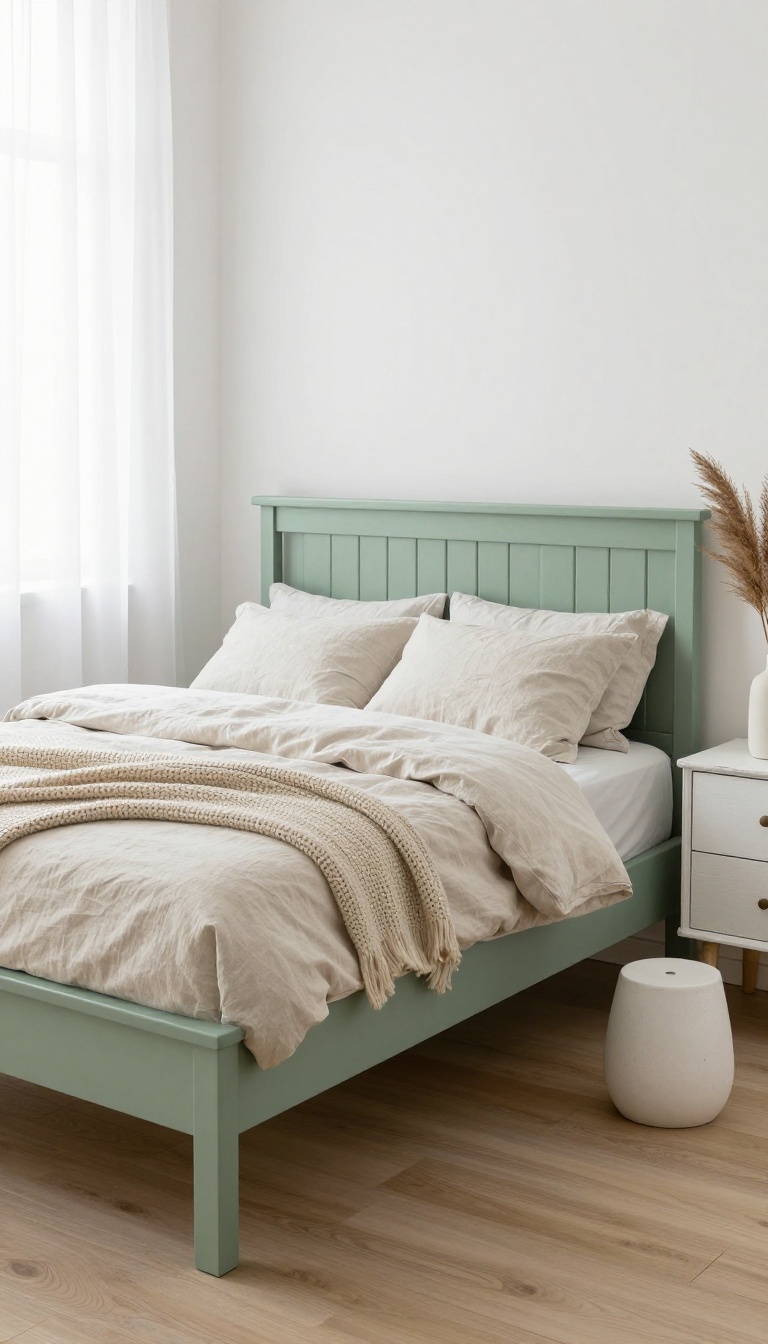
Sage green has a way of making a bedroom feel instantly calmer, like the first quiet hour of a weekend morning. When you pair that soft, muted frame with whitewashed wood pieces, the whole room opens up and breathes. It's a look that leans Scandinavian without feeling cold or overly styled.
The trick is keeping the palette light and layered. Whitewashed nightstands, a pale oak floor, and a few natural textures do most of the work. You get a space that feels airy but still grounded, and the green frame stays the star without shouting for attention.
Why This Combo Works
Sage green sits low on the saturation scale, so it never overwhelms a room. Whitewashed wood has that same soft, faded quality, which means the two finishes blend instead of competing. Together they create a gentle contrast that feels intentional but not fussy.
The whitewashed pieces also bounce light around, which matters if your bedroom doesn't get a ton of sun. Even a small nightstand can brighten a corner and make the green frame pop in a subtle way.
Picking The Right Whitewashed Pieces
You don't need a matching set. A whitewashed nightstand on one side and a simple white ceramic stool on the other can look relaxed and collected. If you want symmetry, choose two identical nightstands with visible wood grain and slightly distressed edges.
A whitewashed dresser or bench at the foot of the bed also works well. Just keep the lines clean and the finish matte, not glossy. Shiny white furniture fights the softness of sage green.
Textiles And Finishing Touches
Stick with bedding in oatmeal, cream, or pale gray linen. A chunky knit throw at the end of the bed adds warmth without adding visual weight. For pillows, mix a couple of solid sage or moss green covers with plain white ones to tie back to the frame.
Add a jute rug or a flatweave wool runner to soften the floor. A single potted olive tree or a small eucalyptus stem in a white vase brings in a little life. Skip heavy curtains and go with light linen or Roman shades instead.
2. Emerald Green Metal Bed Frame for a Vintage Touch
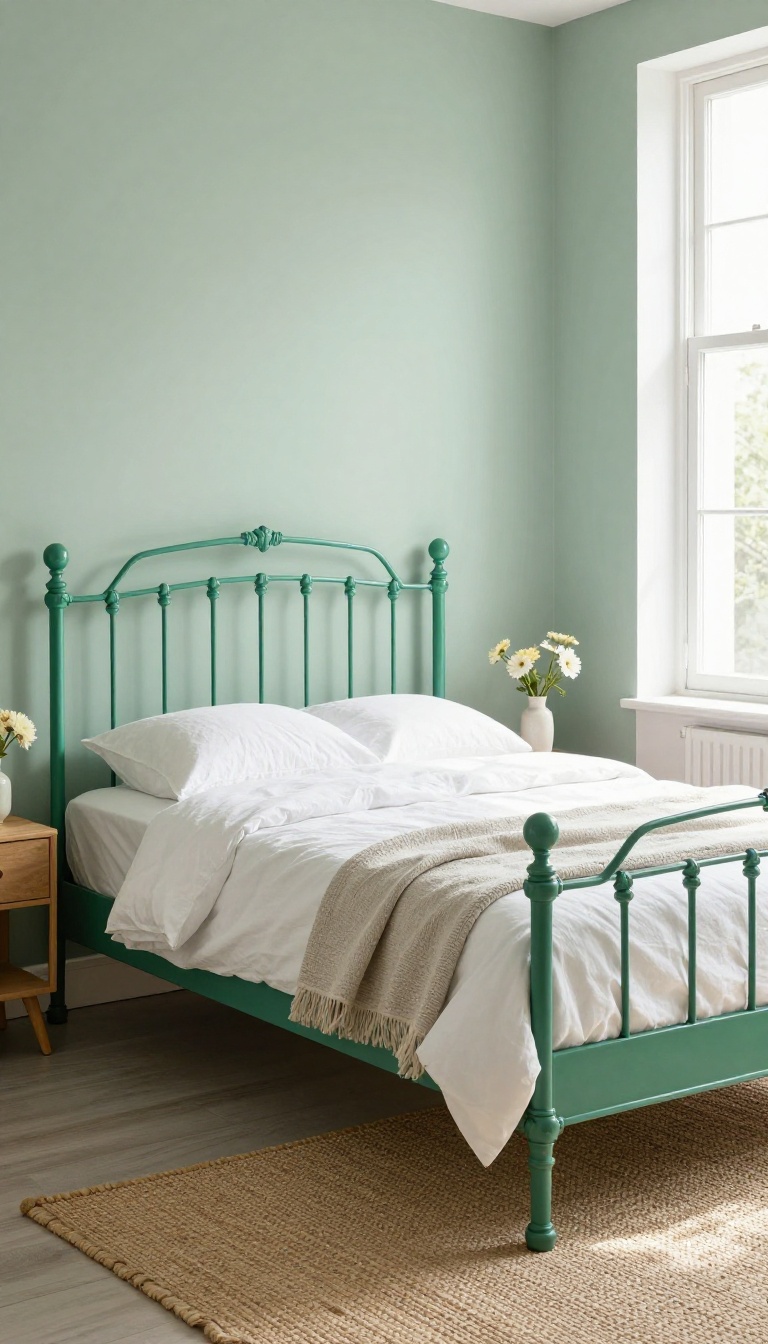
Metal bed frames get a bad rap for feeling cold or institutional. But when you coat one in a deep emerald green, that story flips completely. Suddenly you've got a piece that looks like it was pulled from a Parisian flea market or a Victorian novel.
The wrought-iron silhouette does the heavy lifting. Curved headboards, slim spindles, and little decorative flourishes all read as vintage without trying too hard. Emerald keeps it from looking dusty or dated.
This is the move if you want character without hunting down a genuine antique. It's also surprisingly affordable compared to solid wood statement beds.
Emerald is a tricky color to get right in a bedroom. Go too dark and the room feels like a cave. Go too bright and it turns cartoonish.
The sweet spot is a rich, slightly muted emerald with a hint of blue underneath. A metal frame handles that shade better than almost any other material. The thin lines of wrought iron don't swallow the color the way a chunky wood headboard would.
You get all the drama with none of the heaviness. What makes this work as a vintage look is the contrast. Shiny new metal reads modern.
Matte or slightly distressed emerald metal reads like it's been in the family for decades.
Why Emerald Works On Metal
Wood frames soak up green and turn it muddy. Metal reflects light, so emerald stays crisp and jewel-like. That's the whole trick.
The finish matters too. A powder-coated or satin emerald looks intentional and polished. A glossy one can tip into cheap territory fast.
If you're buying new, look for frames described as wrought-iron style or Victorian-inspired. Those usually have the right curves and cast details.
Bedding That Lets The Frame Breathe
Crisp white bedding is the obvious pairing, and it works for a reason. White makes emerald pop without competing with it. Think hotel-clean, not sterile.
Layer in a textured white duvet or a linen set with a little slub. Flat, shiny sheets make the whole bed look flat too. You want softness next to that hard metal.
Skip busy patterns. A single muted stripe or a thin charcoal border is about as far as you should push it.
Brass Lamps And Warm Finishes
Brass reading lamps are the secret weapon here. The warm gold tone sits right next to emerald without fighting it. It's a classic pairing for a reason.
Mount swing-arm brass sconces on either side of the headboard. They free up nightstand space and add that old-library glow. If you rent, plug-in versions exist and look just as good.
Carry brass into small details too. A curtain rod, a drawer pull, a picture frame. Just don't overdo it or the room starts looking like a hotel lobby.
Keeping It From Feeling Themed
The risk with vintage metal beds is going full costume drama. You don't want guests expecting a chambermaid to appear. Balance the old with something new.
A modern rug, a simple bench at the foot, or a clean-lined dresser keeps things grounded. One or two contemporary pieces reset the whole room. Also watch your wall color.
Soft warm white or a pale greige lets the emerald be the star. Painting the walls green too is usually a mistake.
3. Olive Green Upholstered Bed Frame with Linen Textures
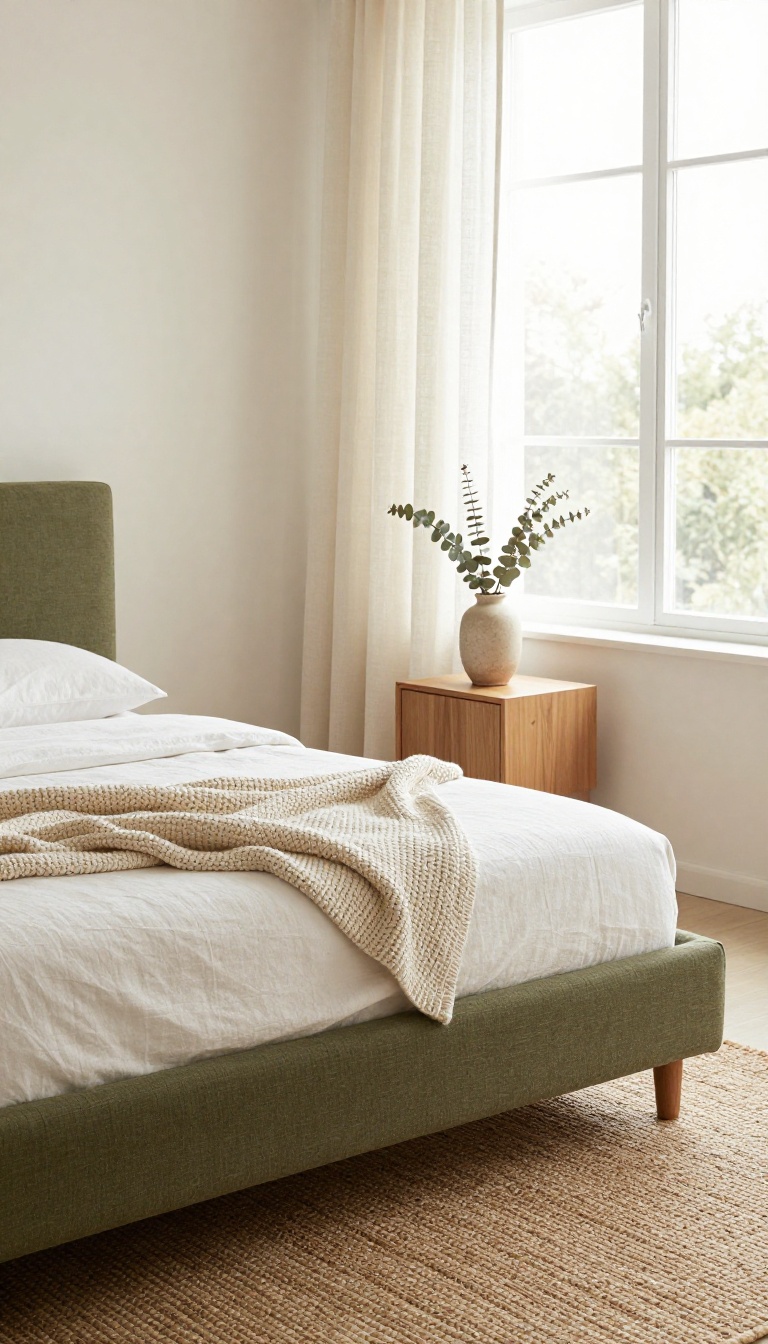
Olive green sits in that sweet spot between earthy and elegant. When you wrap a bed frame in soft upholstery, the color takes on a whole new level of warmth. It's inviting without being loud, and it pairs beautifully with natural fabrics like linen.
An upholstered olive bed frame is a game-changer for anyone who wants a bedroom that feels cozy but still put-together. The fabric softens the look, so the green doesn't come across as harsh or overly bold. Instead, it reads as a grounded, organic hue that works with almost any wood tone or neutral wall color.
What makes this combo so good is the texture play. Smooth linen against a chunky knit throw, or a woven rug underfoot, adds depth without clutter. You're basically layering comfort on comfort, and the result is a room you actually want to sink into at the end of the day.
Why Olive Works So Well
Olive is one of those colors that feels both timeless and current. It's muted enough to act as a neutral, but it still brings a subtle pop of color. That means you can switch up your bedding or accessories without worrying about clashing.
Plus, olive has a natural, earthy quality that instantly calms a space. It's like bringing a piece of the outdoors in, minus the bugs. If you want a bedroom that feels like a quiet retreat, this shade delivers.
Layering Linen For Softness
Linen curtains are a no-brainer here. They filter light in a way that makes the whole room glow, and their slightly rumpled texture feels relaxed, not fussy. Hang them from a simple rod to keep the look clean.
For bedding, consider a linen duvet cover in a lighter shade like oatmeal or pale gray. It'll contrast nicely with the olive frame and keep the bed from feeling too heavy. If you run warm at night, linen's breathability is a bonus.
Adding A Chunky Knit Throw
A chunky knit throw draped across the foot of the bed adds instant coziness. Go for a cream, camel, or soft gray to complement the olive without competing with it. The chunky texture also breaks up the smoothness of the upholstery, which keeps things interesting.
You can also layer a smaller knit pillow or two near the headboard. Just don't overdo it—two or three textures max is plenty. The goal is cozy, not cluttered.
4. Forest Green Canopy Bed Frame with Sheer Drapes
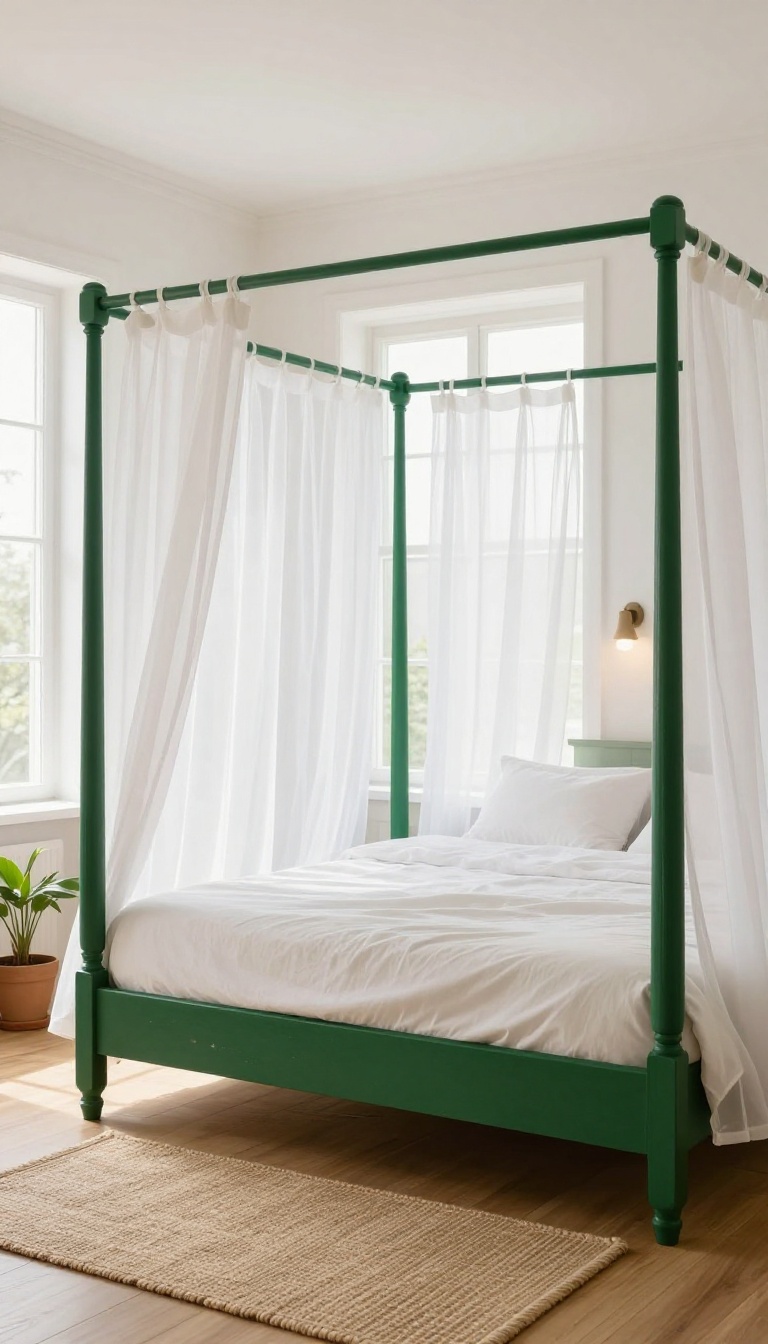
A canopy bed already commands attention, but painting it forest green takes it to another level. The deep, woodsy tone grounds the room while the tall frame adds vertical drama. Then you hang sheer white drapes, and suddenly the whole thing feels like a soft, romantic hideaway.
It's a combo that works in modern, traditional, and even boho bedrooms.
Forest green is dark enough to feel cozy but still clearly green, so it keeps that natural vibe. On a canopy frame, it reads as a statement without being loud. The sheer drapes lighten everything up, so the bed doesn't turn into a heavy green blob.
Together, they create a focal point that's dreamy and inviting. You don't need a huge budget. A basic metal or wood canopy bed can be spray-painted or brushed with a durable exterior paint.
Just make sure you prep the surface well. Then choose lightweight curtains—voile, chiffon, or even sheer linen—and hang them from the top rails. The result looks custom and expensive.
Styling around it is easy. Keep bedding simple in white, cream, or soft gray so the green stands out. Add a few plants or a woven rug to reinforce the nature theme.
And don't forget good lighting—a dimmable sconce or a small chandelier will make the drapes glow at night.
Choosing The Right Forest Green
Forest green isn't one color—it ranges from deep pine to slightly muted moss. For a canopy bed, go a shade or two darker than you think. It'll look richer and more dramatic.
Test a sample against your wall color and bedding before you commit. If your room gets little natural light, pick a green with a hint of blue or gray to keep it from looking black.
Hanging Sheer Drapes That Work
Sheer drapes should feel airy, not fussy. Use two panels per side—one at each corner—so you can tie them back or let them fall loose. Choose a fabric with a soft drape, like voile or chiffon.
Hang them from rings on a rod that matches your bed frame, or use clip rings for a quick fix. Keep the length just barely touching the floor for a clean look.
Styling The Rest Of The Room
Let the bed be the star. Keep nightstands simple—wood or black metal works well. Add a bench at the foot of the bed in a neutral fabric.
For color, pull in soft whites, warm beiges, and maybe a touch of brass or gold. A large plant in the corner ties the forest green back to nature. And layer in textures: a chunky knit throw, linen sheets, and a vintage rug.
5. Mint Green Bed Frame in a Small Bedroom
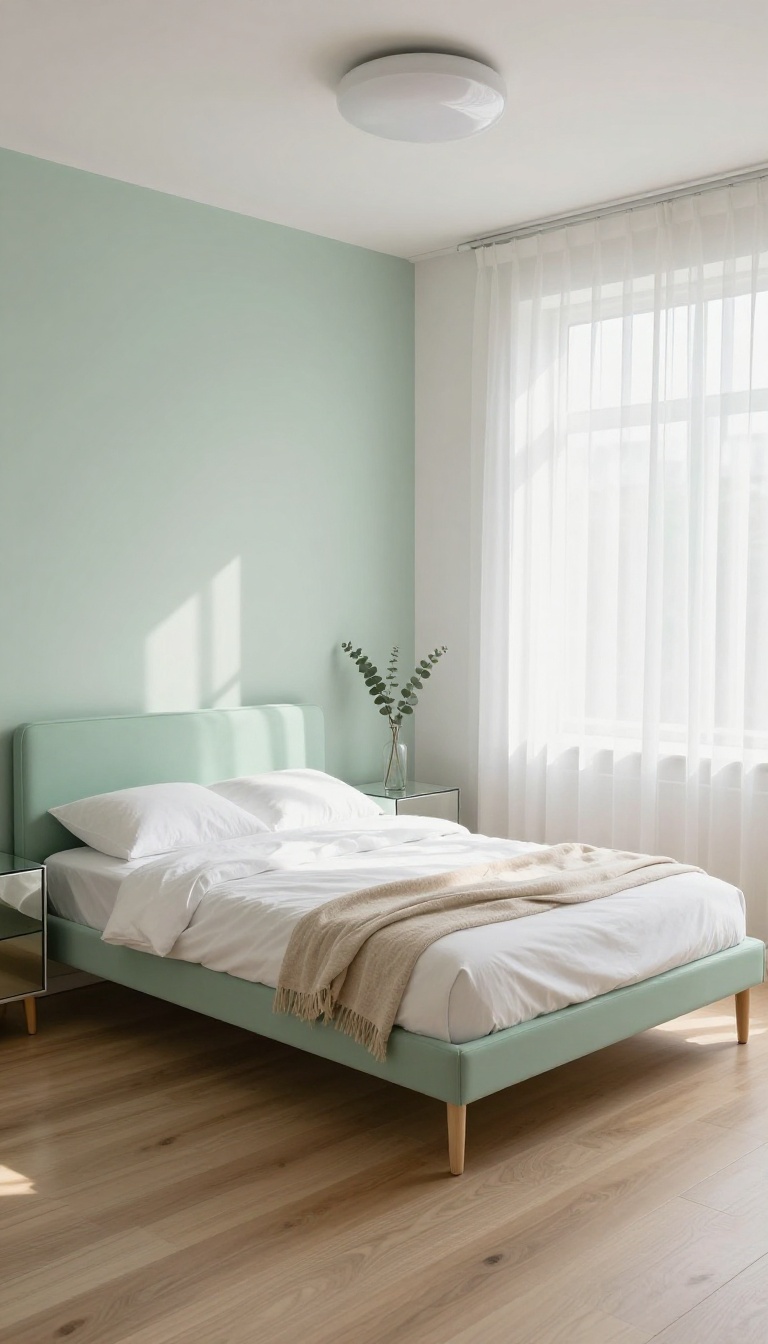
Mint green does something clever in a tight bedroom: it cools the walls without making the room feel like a cave. The pale, slightly blue undertone reflects light instead of soaking it up, so even a tiny space feels airier. Pair that with a low-profile frame and you've got a setup that looks intentional, not cramped.
The trick is keeping the frame from eating floor space. A low platform style with slim legs gives you the color without the bulk. Then you layer in pieces that bounce light around, like mirrored nightstands or a glossy ceiling fixture.
The result is a small room that feels open, fresh, and put-together.
Mint green is basically a cheat code for small bedrooms. It reads as neutral enough to pair with almost anything, but it still brings a soft dose of color. The key is balancing that cool tone with warm textures so the room doesn't feel like a dentist's office.
Start with the frame itself. A low-profile design keeps sightlines open, which makes the ceiling feel higher and the floor feel bigger. You want the bed to hug the ground a little, not tower over the room.
Slim tapered legs or a floating platform style both work well here. Then think about light. Small rooms live and die by how much light they bounce around.
Mirrored nightstands are the easiest win because they reflect whatever natural light comes through the window. A metallic or glass lamp base does the same trick on a smaller scale. Finally, don't forget the bedding.
Crisp white or cream linens keep the mint from feeling too sweet. Add one textured throw in a warm tone, like oatmeal or terracotta, to ground the whole look.
Why Mint Works In Tight Spaces
Mint green has a high light reflectance value, which is a fancy way of saying it bounces light instead of absorbing it. In a small bedroom, that translates to a room that feels brighter and more open, even on cloudy days. It's also a cool color, so it visually pushes walls back a bit.
That subtle optical trick makes the room feel wider than it actually is. If your bedroom gets very little natural light, mint is a safer bet than deeper greens like forest or emerald.
Pick A Low-profile Frame
A tall, chunky bed frame will swallow a small room. Look for a platform bed with a low headboard, ideally under 40 inches tall. If you want a headboard at all, choose one with a slim profile or an open, airy design like a spindle back.
Legs should be thin and tapered, not thick and blocky. You can also skip the headboard entirely and lean a large mirror or a piece of art against the wall instead. That keeps the visual weight low and the floor space clear.
Use Mirrors To Multiply Light
Mirrored nightstands are the MVP of small bedroom design. They disappear into the background while reflecting light and making the room feel twice as big. Place one on each side of the bed if you have the space, or just one if you're tight.
A round mirror above the bed or on the opposite wall does the same job. Just make sure it reflects something pleasant, like a window or a plant, not a cluttered corner. Keep the mirror frames simple, like thin brass or black metal, so they don't compete with the mint.
Keep The Rest Of The Palette Light
Mint green plays best with a light, airy palette. Stick to white, cream, pale gray, and soft blush for bedding and walls. If you want a little contrast, add warm wood tones or a single black accent, like a lamp or a picture frame.
Avoid heavy dark furniture, which will make the room feel smaller. A light jute rug or a flat-weave cotton rug also helps keep the floor feeling open. And don't forget to leave some empty space on the walls.
Breathing room is just as important as the furniture itself.
6. Dark Green Bed Frame with Gold Hardware
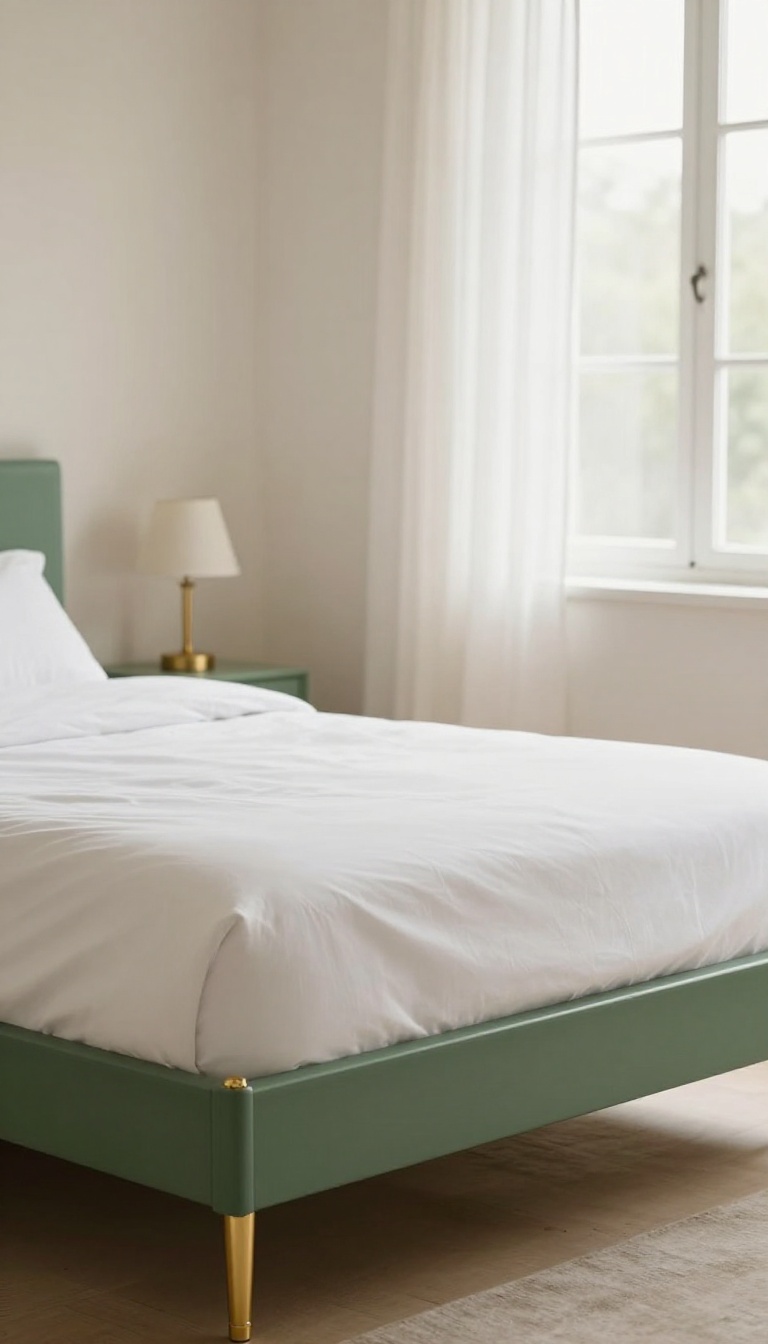
Dark green and gold is a pairing that shows up in fancy hotels and old libraries for a reason. It works. A hunter green frame with gold knobs or legs brings that same rich feel into a regular bedroom without turning it into a museum.
The trick is keeping everything else quiet so the frame gets to do the talking.
You don't need a huge budget to pull this off. A can of deep green paint and a set of gold knobs can transform a basic frame in an afternoon. The contrast between the dark, moody green and the warm, shiny gold is what makes it feel intentional.
It's a small detail that reads as expensive.
Pick The Right Green
Hunter green is the classic choice here, but it's not the only one. A deep forest green with a hint of blue looks almost black in low light, which makes the gold pop even more. Emerald is brighter and more jewel-like, so it works if you want the frame to be the star.
Stay away from anything too yellow or olive, since those can clash with gold's warmth.
Choose Hardware That Feels Solid
Gold hardware comes in a few finishes, and they don't all look the same. Brushed brass is subtle and ages well. Polished gold is shinier and more glam.
Antique brass sits somewhere in between and hides fingerprints better. Whatever you pick, go for knobs or pulls with a bit of weight. Flimsy hardware makes the whole frame feel cheap.
Keep The Room Neutral
This is where people mess up. A dark green frame with gold accents already has a lot going on. If you add patterned bedding, colorful art, and a bright rug, the room gets busy fast.
Stick to white, cream, oatmeal, or soft gray for walls and linens. A single wood tone, like light oak or walnut, ties it together without competing.
Add Warmth With Lighting
Gold looks best under warm light. Swap cool white bulbs for warm ones, around 2700K. A brass or gold table lamp on the nightstand echoes the hardware and makes the corner feel cozy.
If you have a dimmer, use it. Low light brings out the depth of the green and the glow of the gold.
7. Green Wooden Bed Frame with Natural Grain
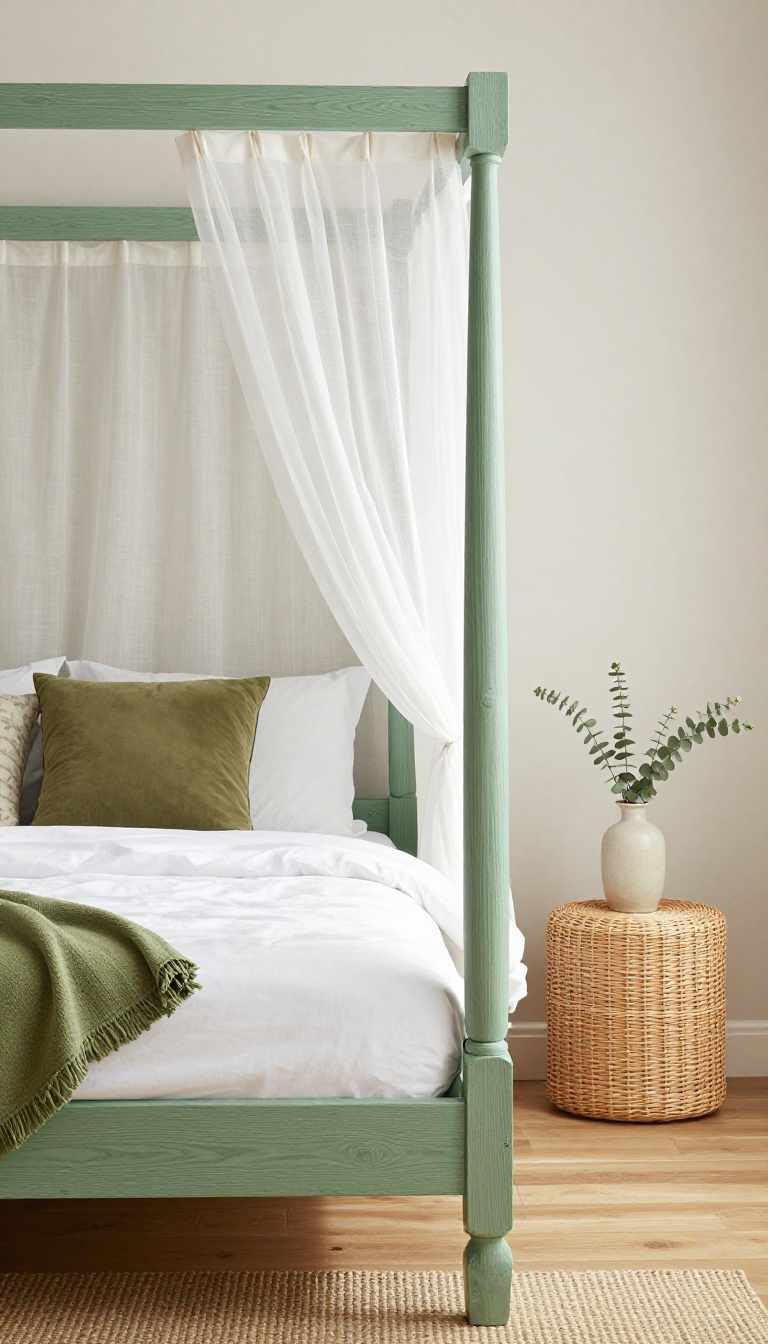
A translucent green stain lets the wood grain show through, so you get color without losing the natural texture. It's a softer approach than paint, and it works with almost any wood type. The result feels organic and a little bit custom, like you found the perfect piece instead of settling for a factory finish.
The key is to pick a stain that enhances the grain rather than covering it. Water-based stains in muted greens—think sage, olive, or moss—soak into the wood and leave the pattern visible. You'll want to test on a scrap piece first, because different woods take stain differently.
Oak and ash show grain beautifully, while pine can get blotchy if you're not careful. Once the frame is stained, style the rest of the room to complement that natural vibe. Rattan and jute are your best friends here.
They add texture without competing with the wood grain. Keep other colors earthy and muted so the green frame stays the star. For a cohesive look, repeat the green in small doses around the room.
A throw pillow, a ceramic vase, or a piece of art with green tones ties everything together. Just don't overdo it—the frame should feel like a natural part of the room, not a theme park.
Choosing The Right Stain
Water-based stains are easier to work with and clean up, and they let the grain show through. Gel stains give you more control and less blotching, especially on soft woods. Look for names like 'sage, ' 'fern, ' or 'moss' to find that translucent green you're after.
Pairing With Rattan And Jute
Rattan headboards or nightstands add a woven texture that plays nicely with visible wood grain. A jute rug under the bed grounds the space and adds warmth. Together, they make the green frame feel intentional and earthy.
Finishing Touches That Work
Stick with bedding in off-white, oatmeal, or soft gray to keep things calm. Add a plant or two for a living green accent. And if you want a little shine, choose brass or bronze hardware—it warms up the cool green tones.
8. Sage Green Platform Bed with Built-in Storage
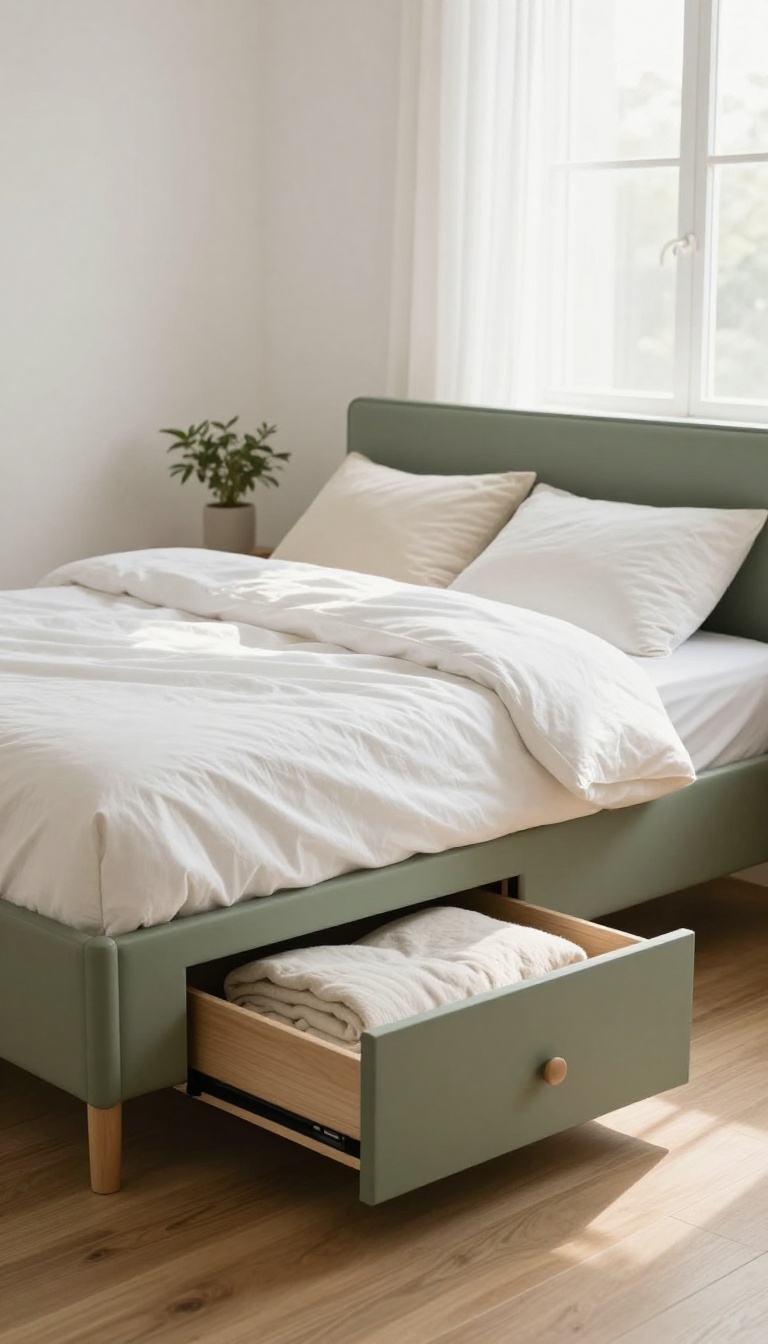
Sage green has a way of making a room feel instantly calmer, and when you pair it with a platform bed that hides drawers underneath, you get a double win. The soft, muted tone keeps things airy, while the built-in storage swallows up clutter without adding another piece of furniture. It's a smart pick for small bedrooms, guest rooms, or anyone who craves a tidy space that still looks put-together.
A platform bed with under-bed drawers is basically a two-for-one deal. You get the sleek, low-profile look that makes small rooms feel bigger, plus hidden spots for extra blankets, off-season clothes, or whatever else tends to pile up. Sage green softens the whole thing so it doesn't feel like a piece of utility furniture.
Why Sage Green Works So Well
Sage is one of those colors that plays nice with almost everything. It reads as neutral but still has enough personality to keep the room from feeling flat. Against white walls, it looks fresh and clean.
Next to warm wood tones, it brings out a cozy, earthy vibe. And because it's low-saturation, it won't overwhelm a small space the way a brighter green might.
Storage That Actually Disappears
The drawers on these beds sit flush with the frame, so they look like part of the design, not an afterthought. You can stash bulky items like comforters and pillows without sacrificing floor space. Some models even have drawers on both sides, which is great if you share the bed.
Just make sure you leave enough room to pull them out—about two feet of clearance on the side you use most.
Styling Tips To Keep It Looking Light
Stick with bedding in creamy whites, soft beiges, or pale grays to let the sage green stand out. Add a couple of textured throw pillows in a darker green or warm terracotta for depth. Keep the area under the bed visually open by avoiding a bed skirt—the whole point is to show off that clean platform line.
A simple jute rug underneath ties the natural theme together.
9. Green Bed Frame with Floral and Botanical Prints
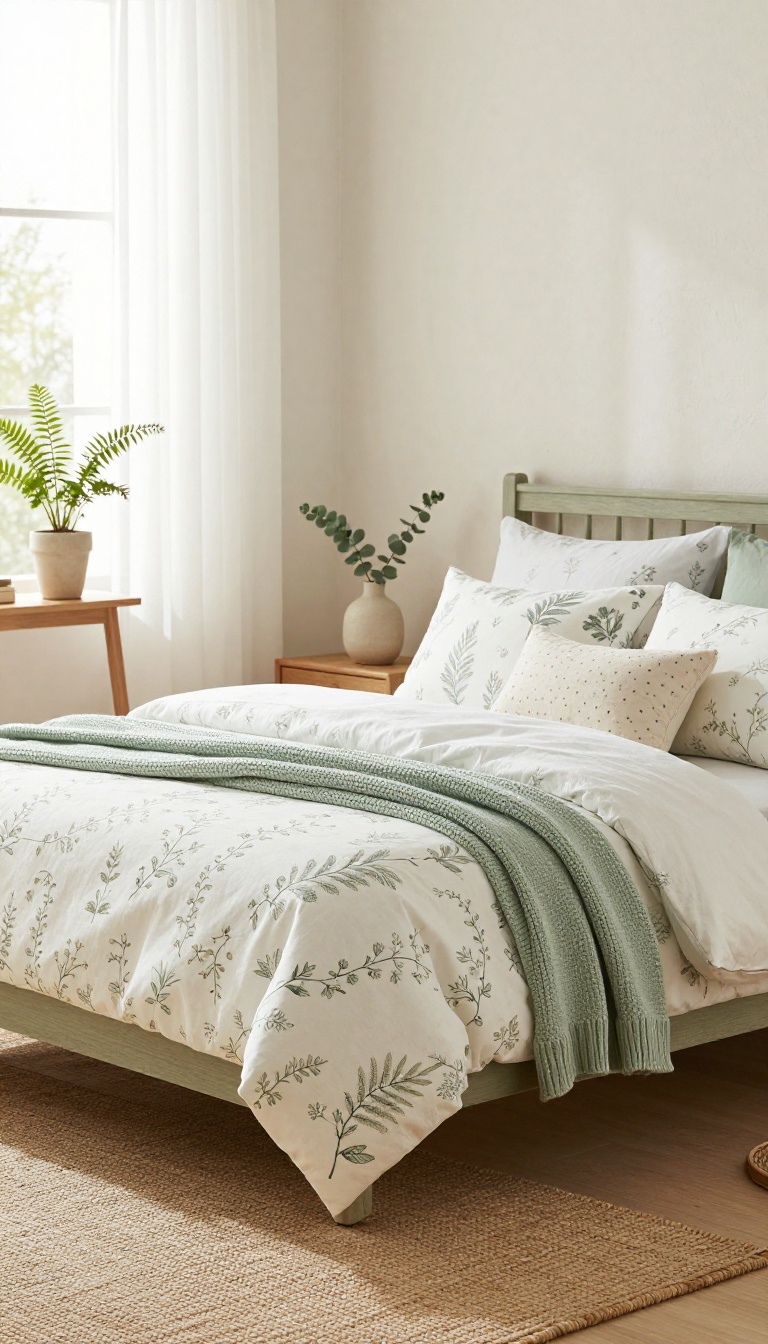
A green bed frame already brings the outdoors in, so leaning into that with floral and botanical prints feels like a natural next step. The trick is to echo the frame's color in your textiles without turning the bed into a chaotic garden. Stick to two or three print sizes and you'll get that layered, collected look that still feels calm.
Start by pulling one or two colors from your green frame and repeating them in the prints. A sage frame pairs beautifully with soft fern prints and faded rose motifs, while a deeper emerald can handle richer botanical patterns with darker leaves. The goal is harmony, not a matching set from a big-box store.
Mixing prints works when they share a common color thread and vary in scale.
Pick A Print Palette That Ties Back To The Frame
Choose prints that include your frame's green as a secondary color, not the star. For example, a white duvet with delicate green vines will make the frame pop without competing. If your frame is bold, keep the prints softer; if it's muted, you can go a little bolder with the patterns.
Mix Two Or Three Print Sizes For Balance
A large-scale floral duvet, medium botanical pillows, and a small-scale geometric or dotted accent pillow create a pleasing hierarchy. Three sizes is the sweet spot—any more and the bed starts to feel cluttered. Keep the smallest print for a lumbar pillow or a throw blanket to avoid visual noise.
Layer Textures To Keep It Cozy, Not Costumey
Prints can feel flat without texture, so add a chunky knit throw or linen sheets in a solid color that matches one of the print tones. A woven jute rug or a rattan lamp can also ground the look. The mix of smooth and rough textures makes the floral patterns feel intentional rather than theme-party.
10. Two-Tone Green Bed Frame for a Playful Look
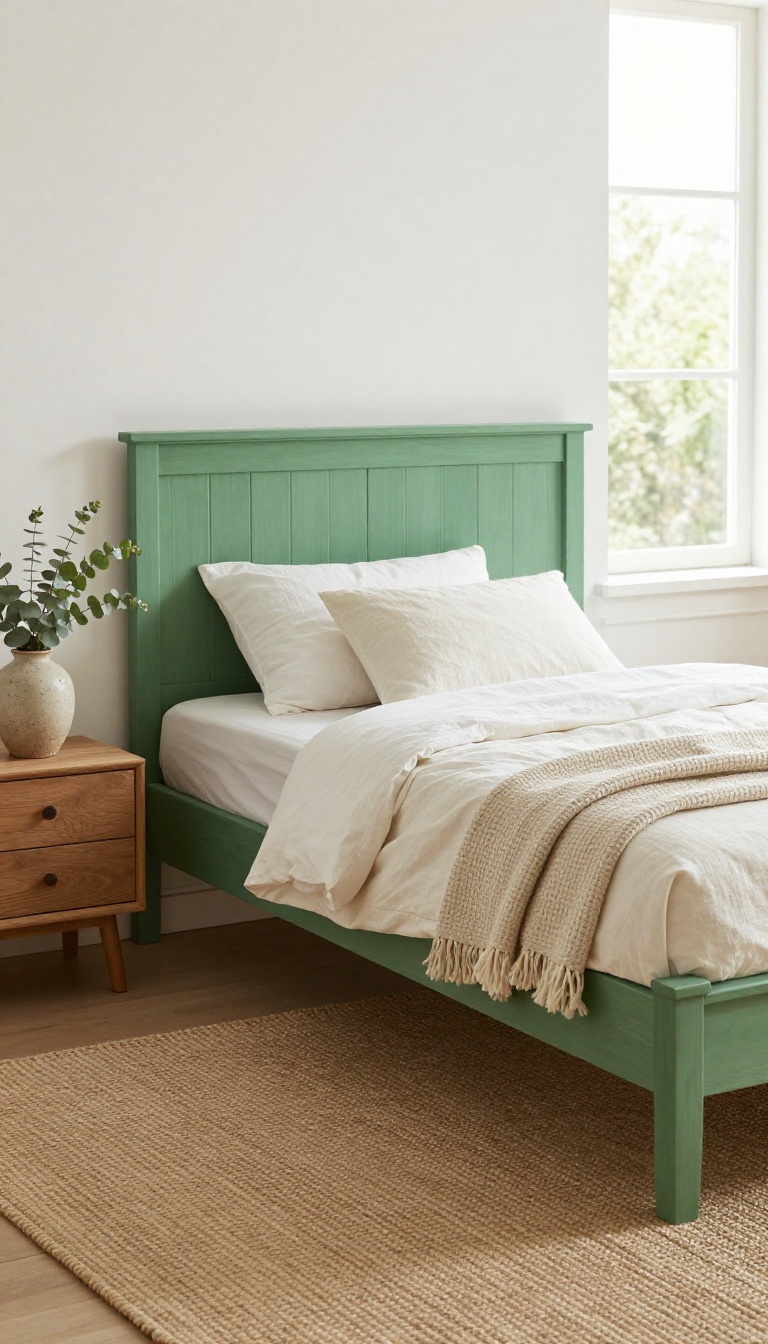
A two-tone green bed frame splits the color story into two distinct shades, usually a lighter green on the headboard and a darker green on the base. This creates instant depth without adding any extra furniture or wall paint. It's a smart way to make a simple frame feel custom and a little bit whimsical.
The contrast also keeps the bed from looking like one solid block of color. In kids' rooms, it reads as fun and energetic. In eclectic adult spaces, it feels collected and intentional rather than matchy-matchy.
The trick is choosing two greens that clearly relate to each other but don't blend into one another. You want the eye to catch the shift, not strain to find it. Think of it like a gradient you can actually see.
You can paint both tones yourself with a few cans of furniture paint, or buy a frame that already comes split. Either way, the effect is the same: a bed that looks like it has a personality.
Pick A Pair That Pops
Start with one green you love, then choose a second that sits at least two shades lighter or darker. A soft mint headboard over a forest green base feels fresh. A pale sage top with an olive bottom feels earthy.
Avoid pairing two greens that are nearly identical, because the two-tone effect will just look like a painting mistake.
Where It Works Best
Kids' rooms are a natural fit because the split color adds playful energy without turning the whole room into a theme. It also shines in guest rooms, dorms, and eclectic bedrooms where you're mixing eras and textures anyway. In a very formal primary bedroom, it can still work if you keep both greens deep and muted.
Style Around The Split
Let the lighter green lead your bedding and the darker green echo in a throw blanket or pillow. Keep the walls neutral so the frame stays the star. If you want a bolder look, pull in one accent color like mustard or blush, but stop there.
Too many colors will fight the two-tone frame.
Diy Tips For A Clean Line
If you're painting an existing frame, remove the hardware and sand lightly before you start. Use painter's tape along the seam where the headboard meets the base to get a crisp edge. Two thin coats beat one thick coat every time.
Let each coat dry fully so the finish stays smooth.
11. Green Bed Frame with Warm Wood and Leather Accents
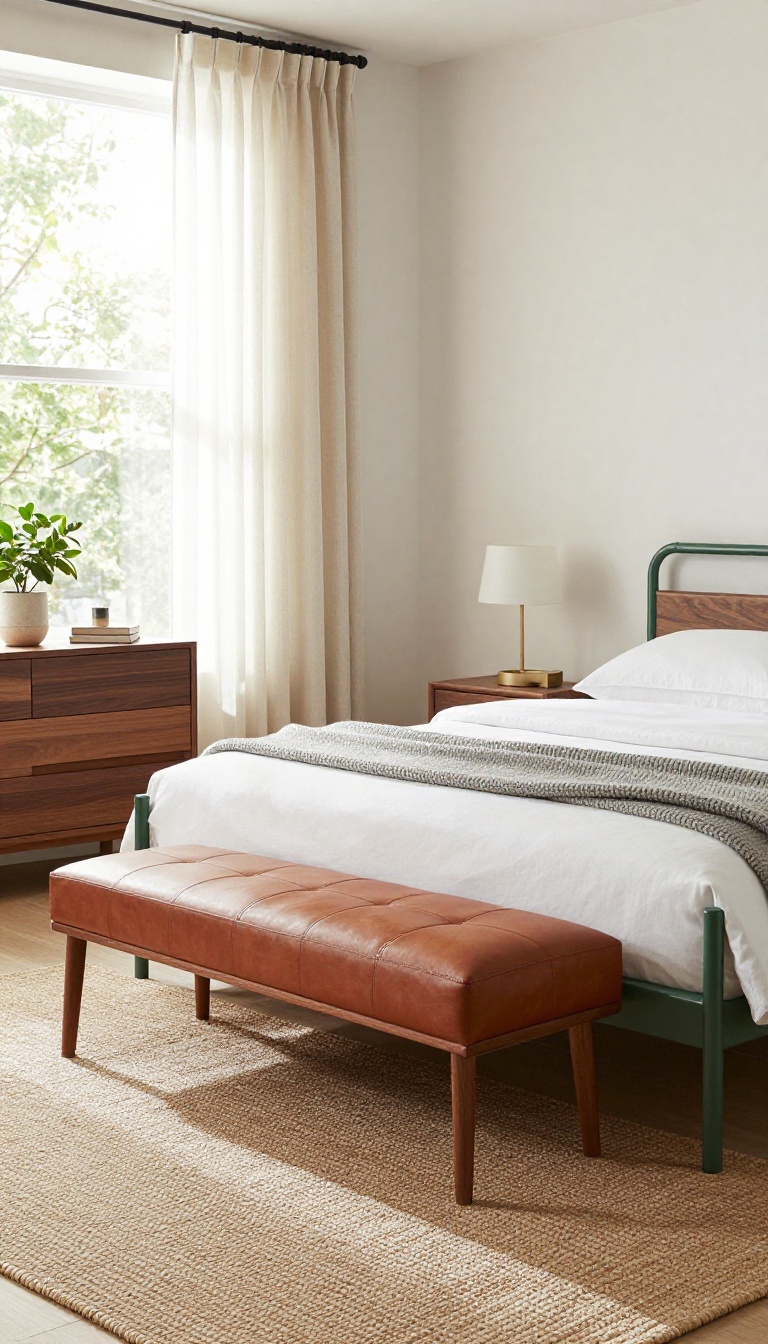
Green metal bed frames have a clean, almost industrial look on their own. But when you layer in warm wood furniture and a leather bench, the whole room gains a richness that feels collected over time. The contrast between cool green and warm brown creates depth.
It also adds a slightly masculine edge that works in modern lofts, rustic cabins, and even traditional homes. You don't need to overhaul your entire bedroom to pull this off. A few strategic pieces are enough to tie the look together.
The key is balancing materials. Green metal is sleek and cool, so it needs softer, warmer elements to keep the room from feeling cold. Wood brings organic texture, while leather adds a touch of luxury and durability.
Together, they create a space that feels grounded and inviting. Start with your bed frame as the anchor. Then choose wood tones that complement your green shade.
A medium walnut or oak works with almost any green, while darker woods pair beautifully with deep emerald or forest green. Lighter woods like ash or maple keep sage and mint from feeling too sweet. For leather, a bench at the foot of the bed is the easiest addition.
It provides seating, a place to drop a throw, and a visual break between the bed and the rest of the room. You can also introduce leather through a headboard, nightstand, or even drawer pulls.
Choosing The Right Wood Tones
Not all wood tones play nicely with green. Cool-toned woods like gray-washed oak can clash with warm greens, while very red woods like cherry might compete. Stick with neutral to warm browns for the most harmonious look.
If your green frame is the star, let the wood be a supporting actor. A simple wood nightstand or dresser in a matching tone keeps things cohesive. Mixing two wood tones is fine as long as they share a similar warmth.
Leather Pieces That Work
A leather bench is the classic choice, but you can also use a leather ottoman, chair, or even a leather-wrapped headboard. Cognac and tan leather add a pop of warmth without overwhelming the green. Black leather gives a sharper, more modern contrast.
It's a great option if your green is bright or if you want a bolder look. Just be sure to repeat the black somewhere else in the room, like in picture frames or lamp bases, so it doesn't feel random.
Styling Tips For Balance
Texture is your friend here. Add a chunky knit throw, a woven rug, or linen curtains to soften the metal frame. These fabrics also help absorb sound, making the room feel quieter.
Keep your color palette tight. Green, wood tones, and leather are the main players. You can introduce one accent color, like cream or rust, but avoid adding too many other hues.
The goal is richness, not chaos.
FAQ
What colors go best with a green bed frame?
Neutral tones like white, cream, and beige always work. For contrast, try blush pink, mustard yellow, or warm wood tones. Keep it simple to let the green stand out.
Is a green bed frame good for a small bedroom?
Yes, especially lighter shades like mint or sage. They reflect light and make the room feel bigger. Avoid very dark greens if the space is tiny and gets little natural light.
How do I style a green bed frame without it looking overwhelming?
Use green as an accent, not the whole room. Balance it with plenty of white or neutral bedding and keep other furniture in wood or metal tones.
Can I paint my existing bed frame green?
Absolutely. Sand it lightly, apply a primer, then use a furniture paint in your chosen green. A topcoat will help it last longer.
What bedding colors look best with a dark green bed frame?
Crisp white, soft grey, or warm cream work beautifully. You can also add a pop of pattern with floral or geometric prints in lighter greens.
Conclusion
A green bed frame is more than a color choice—it's a way to bring a bit of the outdoors in. Whether you go soft sage or bold emerald, the right shade can make your bedroom feel calmer and more inviting. Pick one idea that fits your space and budget, then build around it.
Small changes like bedding or lighting can make a big difference. Enjoy your refreshed, naturally charming bedroom.