10 Leather Couch Living Room Ideas with Timeless Appeal
A leather couch earns its keep the moment it survives spills, pets, and movie nights without showing its age. It's one of the few pieces that actually looks better as the years roll by.
But a leather sofa can also feel cold or heavy if you style it like a showroom. The trick is balancing its sleek surface with soft textures, warm layers, and a layout that invites people to sit down.
These ten ideas keep things practical and timeless. No trendy gimmicks, just moves that work in real living rooms.
1. Layer a Chunky Knit Throw Over the Arm

A leather couch has a way of looking sharp and polished, but that same sleekness can read as cold. The fastest fix is also the simplest: toss a chunky knit throw over one arm. It softens the edges, adds texture, and makes the whole room feel more inviting without any major effort.
The key is to keep it casual, not staged. You want the throw to look like it landed there naturally after a long Sunday of lounging. Drape it over the arm or let it spill onto the seat, but resist the urge to fold it into a perfect square.
A little messiness is what sells the lived-in look.
Pick The Right Throw
Chunky knits work best because they contrast with leather's smooth surface. Look for a throw with a loose, open weave and a bit of weight so it doesn't slide off. Wool, cotton, or a soft acrylic blend all work, but avoid anything too stiff or scratchy.
Color-wise, cream, oatmeal, or muted earth tones keep things timeless. If you want a little more personality, a deep rust or olive green adds warmth without feeling trendy.
Drape It Like You Mean It
Start by laying the throw over one arm, letting about a third of it hang down the side. Then pull the rest across the seat cushion at a slight angle. Fluff the folds with your hands so it looks relaxed, not flattened.
If your couch has a chaise, try draping it over the back corner instead. The goal is a soft, diagonal line that breaks up the leather's straight edges.
Adjust For The Season
In cooler months, go for a thicker, fuzzier knit and let more of it pool on the seat. When it warms up, switch to a lighter cotton throw and drape it more loosely over the arm. You can also swap colors to match the season, like a soft sage in spring or a warm camel in fall.
It's an easy way to keep the couch feeling fresh all year.
2. Pair with a Vintage Persian or Oriental Rug
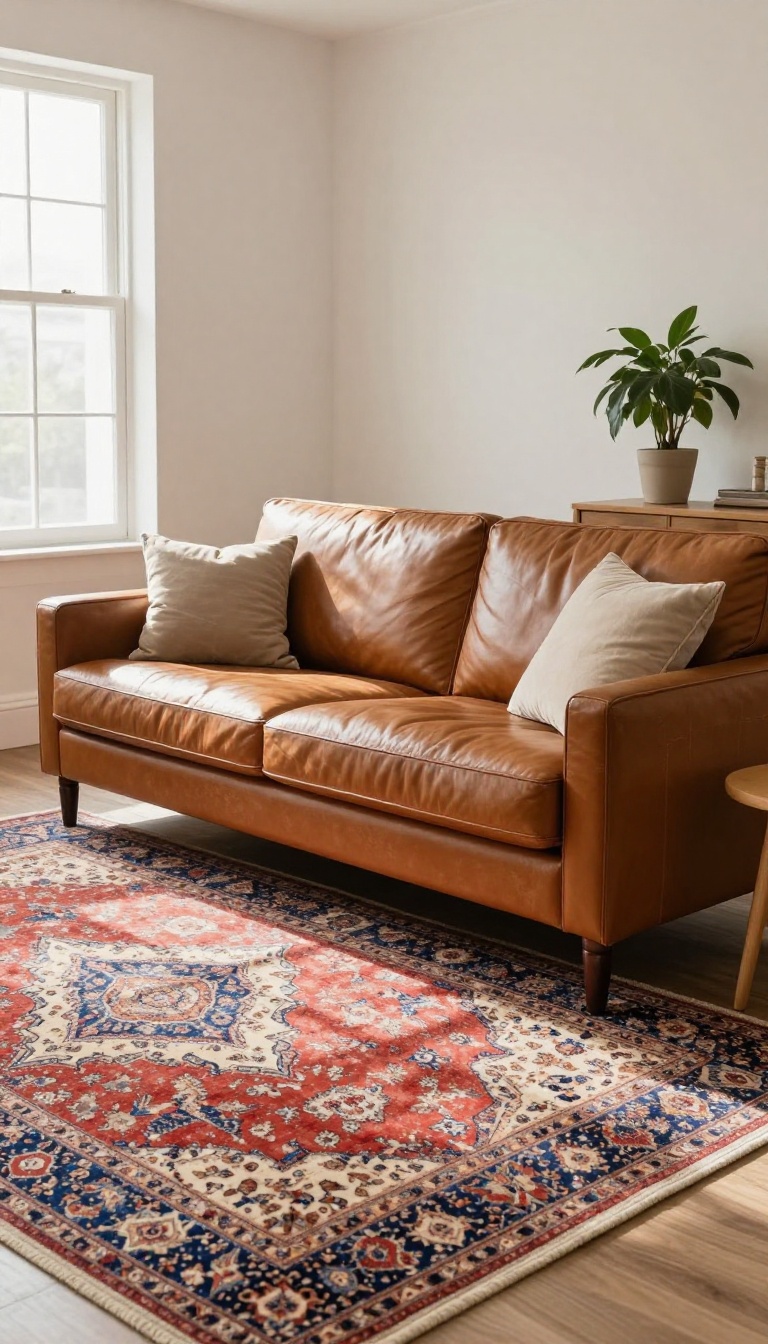
A leather couch is a big, solid block of color, and that's exactly why a patterned rug underneath it changes everything. A vintage Persian or Oriental rug brings in dozens of faded reds, blues, and creams that soften the leather instead of competing with it. The slightly worn pile is part of the appeal.
It makes the room look collected rather than bought all at once, and it quietly hides the scuffs and traffic marks that show up on any floor over time.
Why The Pattern Works So Well
Leather reads as one smooth surface, so your eye has nothing to grab onto. A Persian or Oriental rug gives it something to do, breaking up all that mass with pattern and movement. Look for a rug with some fade to it.
A rug that's a little washed out or worn in spots sits better with leather than a crisp, high-contrast new one. The goal is a lived-in look, not a showroom floor.
Getting The Size And Placement Right
Go bigger than you think. A rug that's too small makes the couch look like it's floating, so aim for something wide enough that the front legs of the sofa sit on it. In a larger room, you can float the whole seating area on the rug and leave a border of bare floor around it.
Either way, keep at least a few inches of rug visible on both sides of the couch.
Colors That Play Nice With Leather
Warm leathers like tan, cognac, and caramel love rugs with deep reds, rust, and navy. The tones echo each other without matching too closely. Dark brown or black leather can handle almost anything, so use the rug to bring in lighter creams and soft blues.
If your couch is gray or cool-toned, lean toward rugs with faded pinks and warm beiges to keep the room from feeling chilly.
Where To Find One Without Overpaying
You don't need a perfect antique. Estate sales, online marketplaces, and rug dealers all carry vintage pieces at a range of prices, and a few worn spots usually knock the cost down. Check the edges and corners for unraveling, and ask whether it's been cleaned.
A good rug pad underneath protects the floor, keeps the rug from sliding, and adds a little cushion underfoot.
3. Add a Pair of Linen or Cotton Pillows
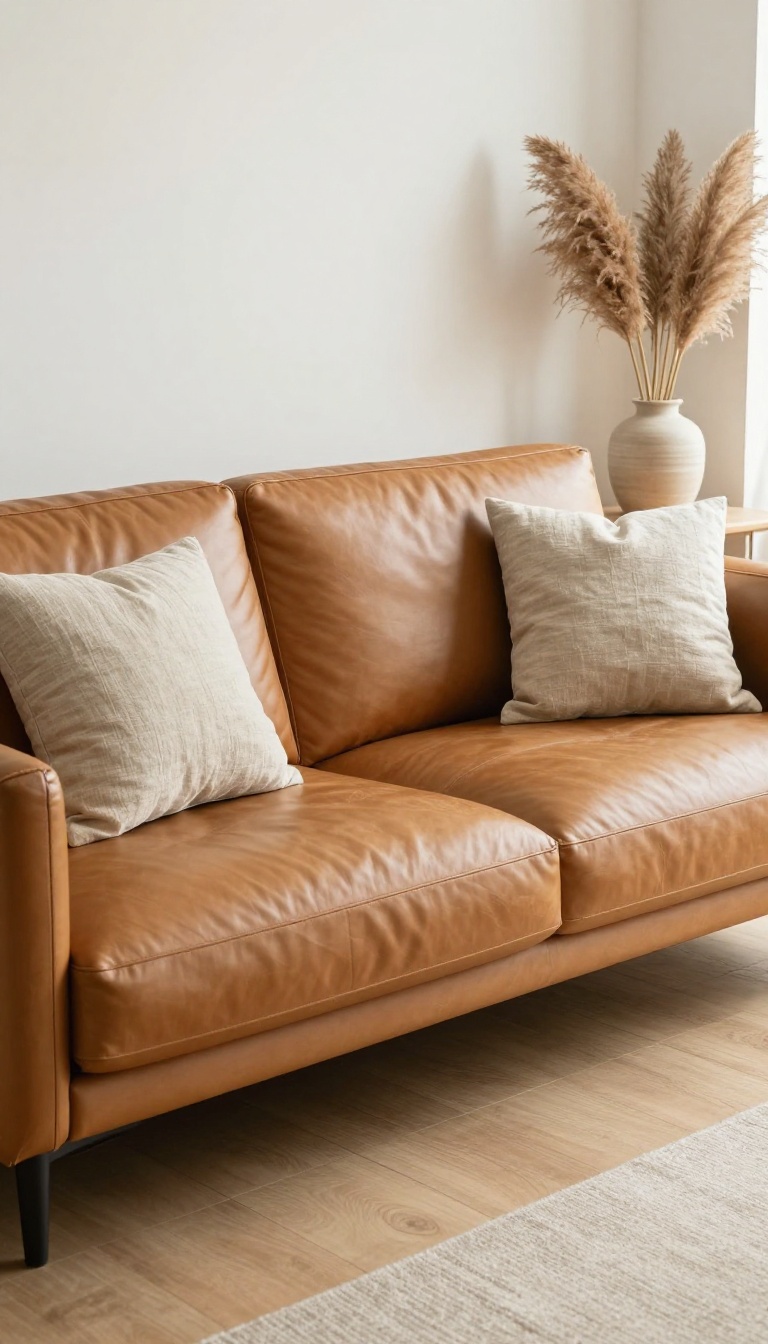
Leather has a natural sheen that can make a couch feel a little too polished. Toss on a couple of linen or cotton pillows and that shine gets a soft counterpoint. The contrast is subtle but powerful, and it keeps the whole room feeling relaxed instead of rigid.
Natural fabrics also bring a touch of texture that leather alone can't offer. They wrinkle a bit, they breathe, and they look better with a little lived-in wear. That's exactly the kind of easygoing vibe that makes a leather couch feel timeless.
Stick with neutral or muted tones to keep things calm. You're not trying to start a color riot here—just add a layer of comfort that makes the couch look and feel more inviting.
A pair of linen or cotton pillows is one of the simplest swaps you can make. They soften the edges of a leather couch without competing with it. And because they're natural fabrics, they age gracefully right alongside the leather.
The key is to keep the palette quiet. Think oatmeal, stone, sage, or faded denim. These colors blend with almost any leather tone, from warm caramel to cool charcoal.
They also keep the focus on the couch itself, which is the star of the show. You don't need a dozen pillows. Two is often enough—one on each end—to break up the leather's expanse and add a touch of softness.
If your couch is long, you might add a third in the middle, but keep it low and simple. When you're shopping, look for pillow covers you can wash. Linen and cotton both get softer over time, and being able to toss them in the laundry is a practical bonus.
Down or down-alternative inserts give a relaxed, slightly slouchy look that works well with leather's structured lines. Avoid anything too shiny or synthetic. Polyester blends can look cheap next to leather and they don't breathe.
Stick with natural fibers and you'll get that effortless, timeless feel you're after.
Why Natural Fabrics Work
Linen and cotton have a matte finish that contrasts with leather's subtle gleam. That difference in texture makes the couch look richer, not busier. Plus, natural fibers feel cool in summer and warm in winter, so they're comfortable year-round.
Choosing The Right Colors
Neutrals are your safest bet. Oatmeal, taupe, and soft gray work with almost any leather. If you want a hint of color, go for muted shades like olive, dusty blue, or terracotta.
They add interest without shouting.
Sizing And Placement
A 20-inch pillow is a good standard size for most couches. Place one in each corner, angled slightly. If you have a sectional, add a third or fourth to fill the space.
Keep them casual—don't chop them into perfect triangles.
4. Float the Couch Away from the Wall
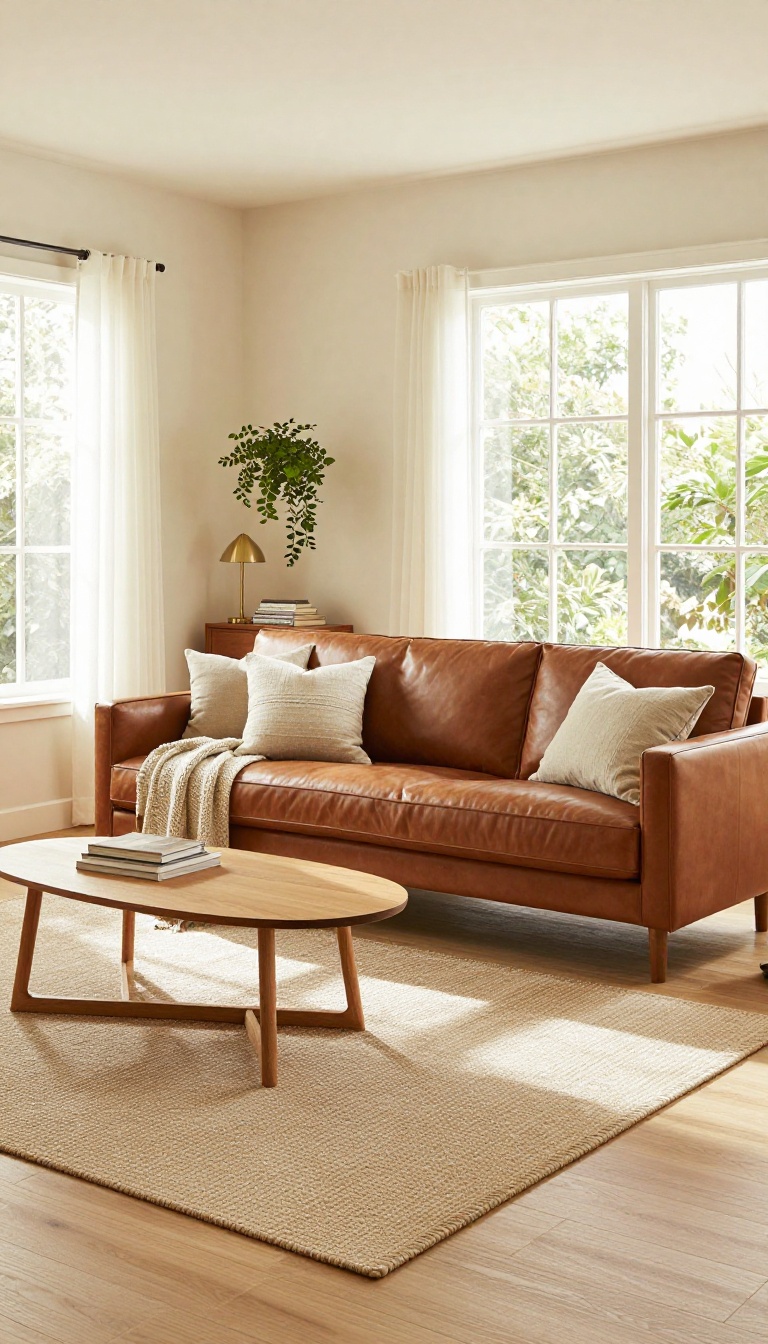
Pushing a leather couch flat against the wall feels safe, but it can make the room feel like a waiting area. Pull it forward a few feet and the whole space opens up. You get a cozier conversation zone and a spot to add something useful behind it.
Floating the sofa works because it breaks that long, flat line along the wall. Instead of one big block of seating, you create a defined area that feels intentional. The room instantly reads as more social and less like a row of seats.
How Far To Pull It Forward
You don't need to move it to the middle of the room. Even 12 to 18 inches off the wall makes a difference. If you have the space, go for 2 to 3 feet so people can walk behind it comfortably.
What To Put Behind The Sofa
A slim console table is the classic move. It gives you a landing spot for a lamp, a few books, or a small plant. If a table feels too heavy, a floor lamp in the corner works just as well.
You can also leave it open and let the space breathe.
Watch The Walkway
Make sure there's still a clear path around the couch. You want at least 30 inches of walking room if it's a main traffic route. If the room is tight, float it just on one side and keep the other end near a wall.
5. Mix in a Wood Coffee Table with Visible Grain
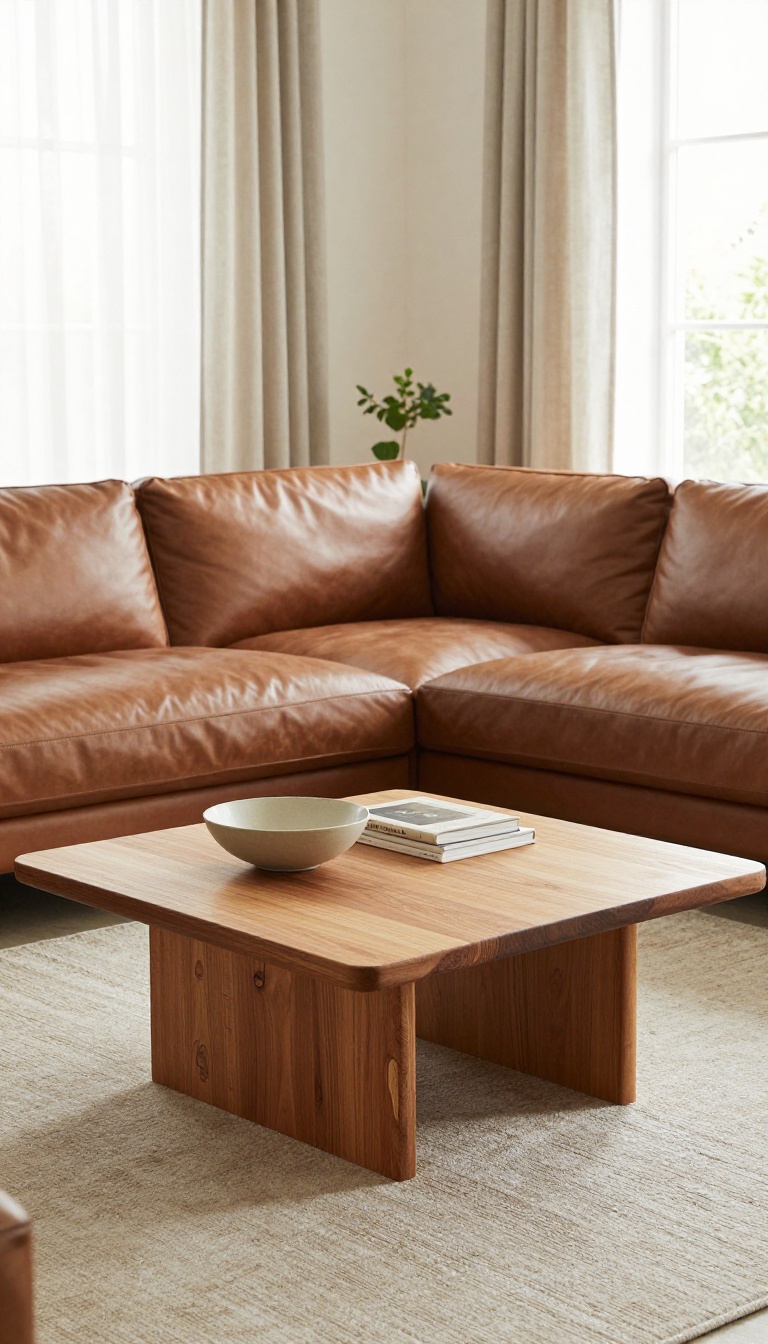
Leather has a cool, smooth surface that can make a room feel a little one-note. A wood coffee table with visible grain fixes that fast. The natural texture and warm tones of wood soften the leather's sleekness without fighting it for attention.
You don't need a fancy table. A simple, sturdy design with a clear grain—like oak, walnut, or reclaimed pine—does the job. The grain adds subtle movement and warmth, grounding the seating area.
It's a small swap that makes a big difference in how the whole room feels.
Why Wood Works
Leather is a man-made material in the sense that it's processed and uniform. Wood is the opposite—organic, irregular, and full of character. That contrast is what makes the pairing work.
The wood brings an earthy, natural element that balances leather's polished look. It also adds a bit of visual weight, which helps anchor the couch in the space.
Choosing The Right Table
Go for a table with a visible grain pattern. Avoid heavy lacquers or dark stains that hide the wood's natural beauty. A medium to light tone—like honey oak or natural walnut—pairs well with most leather colors.
Keep the shape simple: rectangular, round, or oval all work. Just make sure it's proportional to your couch. A table that's too small gets lost; too big and it crowds the room.
Styling Tips
Don't cover the whole table with decor. Let the grain show. A single bowl, a stack of books, or a small plant is enough.
If you use a tray, choose one with a matte finish to keep things relaxed. And skip the glass or metal coasters—they clash with the wood's warmth. A few fabric or cork coasters blend right in.
6. Use a Warm Neutral Paint Color on the Walls
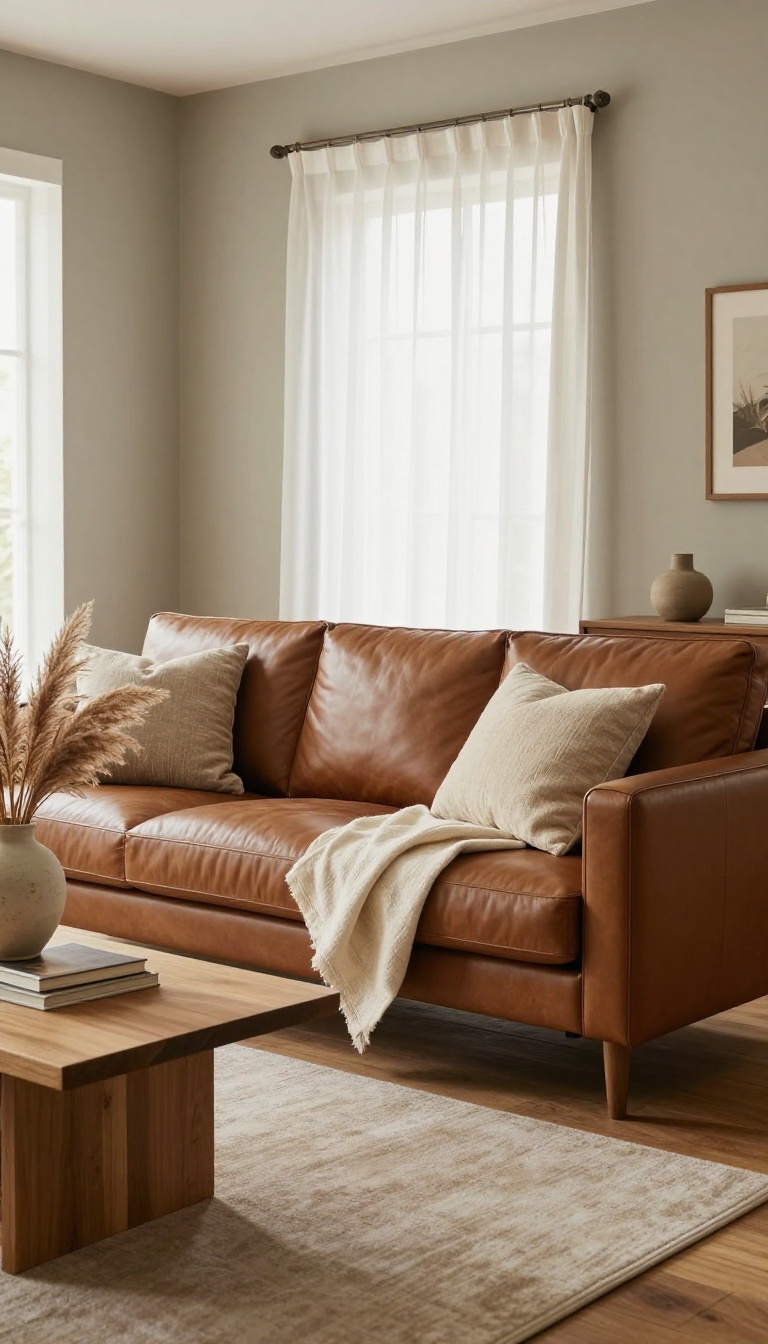
Your leather couch already brings plenty of character to the room. The walls shouldn't compete with it. Warm neutrals like soft white, greige, and muted beige create a calm backdrop that lets the leather take center stage.
They also keep the space feeling bright and open instead of heavy. And because these shades are so flexible, you won't have to repaint every time you swap out a throw pillow or rug.
The right wall color can make your leather couch look intentional rather than accidental. Warm neutrals do that by softening the contrast between the couch and the room without washing everything out. They also reflect light well, so even a dark leather sofa won't make the space feel like a cave.
And when you want to change things up later, these colors play nicely with almost any accent you bring in.
Why Warm Neutrals Work
Leather has a natural sheen and a slightly cool undertone in many finishes. Warm neutrals balance that out by adding a subtle glow to the walls. They also avoid the starkness of pure white, which can make leather look harsh by comparison.
The result is a room that feels cozy but still polished.
Best Shades To Try
Soft white with a hint of cream keeps things airy and clean. Greige, a mix of grey and beige, adds warmth without going yellow. Muted beige or oatmeal brings a soft, earthy feel that pairs beautifully with brown or tan leather.
For darker couches, a light warm grey keeps the contrast gentle.
How To Test Before You Commit
Paint large swatches on the wall and live with them for a few days. Check them in morning, afternoon, and evening light. Look at the swatches next to your couch, not just in isolation.
The right shade will make the leather look richer, not duller.
7. Style a Gallery Wall or Large Art Piece Above It
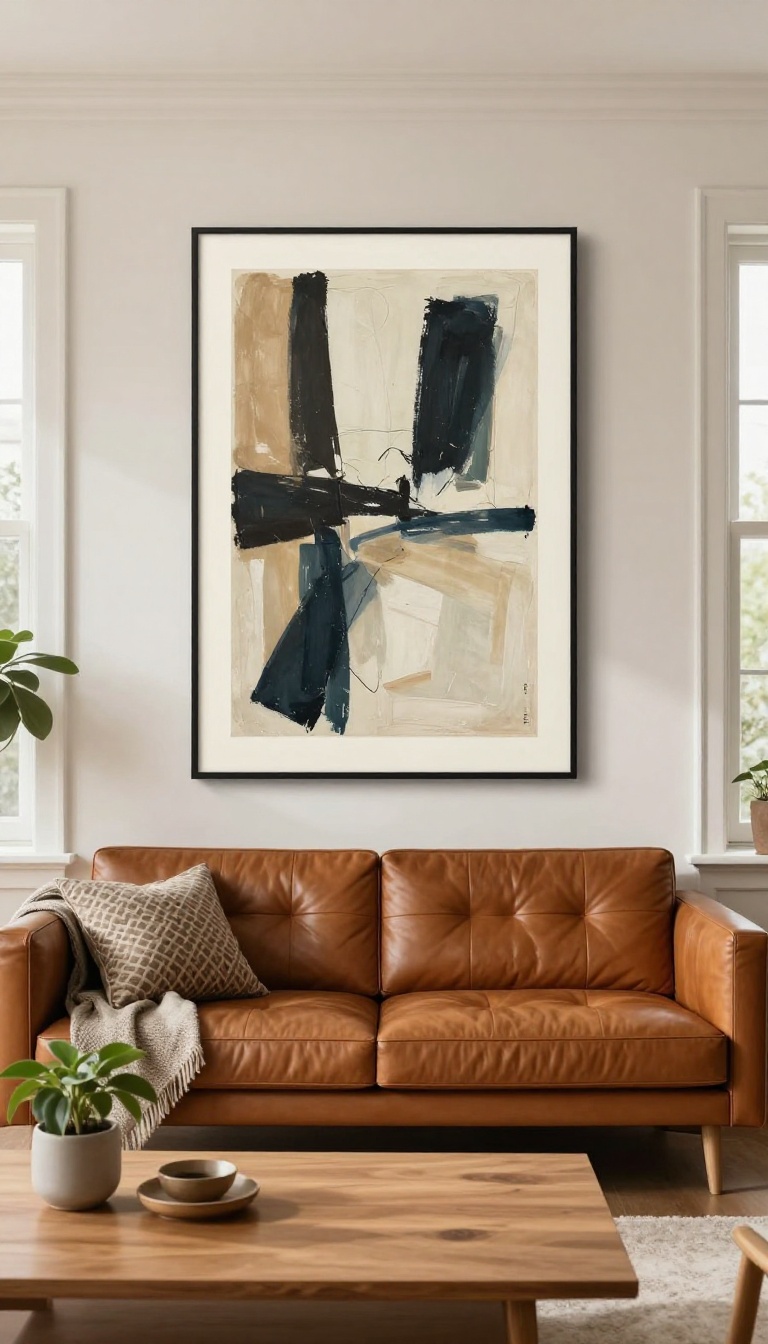
A leather couch tends to pull all the attention to the floor level. Art above it shifts the focus upward and gives the room a visual anchor. The right piece makes the couch feel intentional instead of like the only thing in the room.
It also softens the sleek look of leather by adding color, texture, and personality.
Art is the easiest way to tell the room's story without changing a single piece of furniture. A gallery wall or one oversized canvas can balance the weight of a leather couch and make the whole layout feel considered. The key is keeping the frame colors simple so the art stays timeless and the leather stays the star.
Choose Art That Fits The Scale
A tiny print floating above a big leather couch looks lost. Go wider than you think: a single piece should span about two-thirds of the couch width. If you prefer a gallery wall, keep the overall shape similar to the couch's proportions.
That way the arrangement feels grounded, not random.
Stick To Simple Frame Colors
Black, white, wood, or brass frames keep things classic and let the art do the talking. Matching every frame to the leather is a common mistake that makes the wall feel flat. A little contrast in the frame actually helps the leather stand out more.
Keep the palette tight and repeat it across the wall.
Hang It At The Right Height
The center of the art should sit around 57 to 60 inches from the floor. If you have a low-back couch, leave 6 to 10 inches of breathing room between the frame and the top of the sofa. Hanging too high makes the room feel disconnected.
Too low and it crowds the seating.
Mix In Texture Without Clutter
Add a woven basket, a slim console, or a pair of sconces under the art to bridge the gap between wall and couch. Keep the surface mostly clear so the art stays the focus. One or two objects with natural texture warm up the leather without competing with it.
Less really is more here.
8. Add a Slim Console Table Behind the Sofa
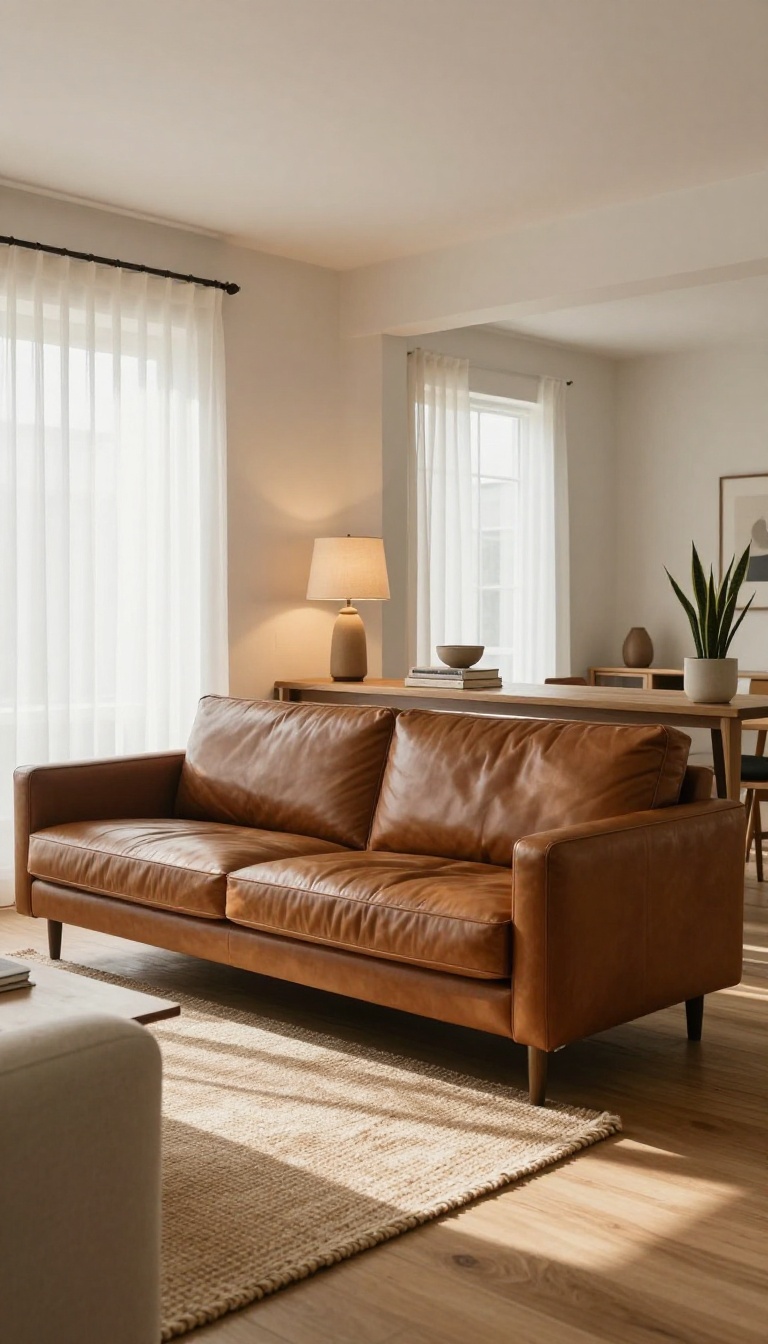
A slim console table tucked behind your leather couch does more than fill an awkward gap. It gives you a landing spot for a lamp, a stack of books, or a small plant—things that make the sofa feel like part of the room, not just a piece of furniture. And in open-plan spaces, it draws a soft line between zones without blocking the view.
The best part? It works in almost any living room, even if you're short on floor space.
The key is finding a console that's narrow enough to fit without crowding the walkway. Look for one that's 12 to 14 inches deep—anything wider starts to feel like a barrier. Height matters too: the tabletop should sit just below the back cushions so it doesn't poke up behind your head.
Once you've got the right piece, styling it is where the magic happens.
Pick The Right Size And Shape
Measure the length of your sofa first. A console that's a few inches shorter on each side looks intentional; one that's longer feels like it's trying too hard. For curved or rounded couches, a rectangular table can look off—consider a demilune or a narrow oval instead.
And if your sofa sits in the middle of the room, make sure there's at least 24 inches of walking space behind the console so people can pass comfortably.
Style It Without Clutter
Treat the console like a mantel: a few well-chosen pieces, not a catch-all. A pair of small lamps adds warm light and makes the sofa feel cozy at night. A single stack of books with a tiny bowl on top keeps things simple.
If you want greenery, go for a low-maintenance plant like a snake plant or a small fern—just make sure it doesn't block the lamp's glow. The goal is balance, not busyness.
Use It To Divide Open Spaces
In a big open room, a console behind the sofa acts like a low wall. It tells your eye where the living area ends and the dining or kitchen area begins, but it doesn't cut off conversation or light. Keep the styling low-profile so you can still see over it.
And if you need extra storage, choose a console with a shelf or two underneath—baskets or magazines can live there without adding visual weight.
9. Incorporate a Leather Ottoman or Bench
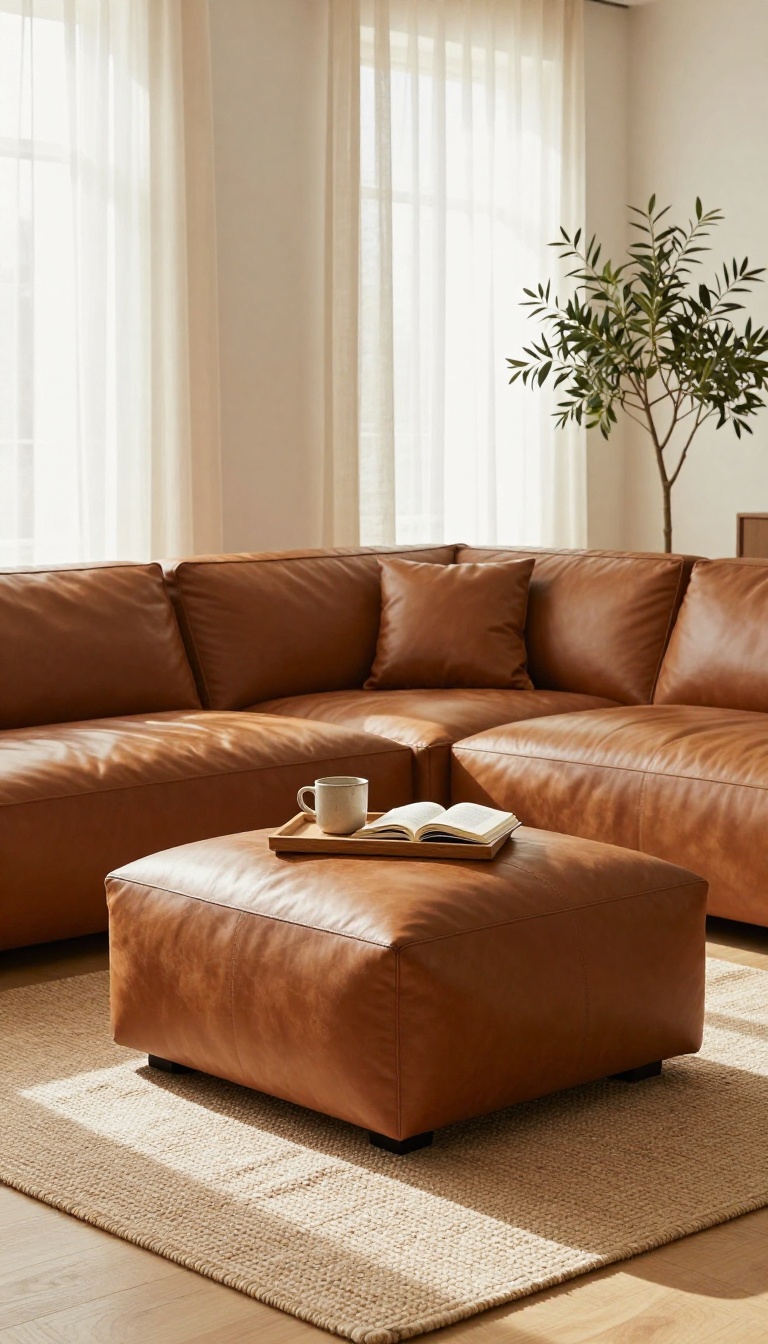
A matching leather ottoman or bench can tie your seating area together without making it look like a furniture set. It adds function—extra seating, a footrest, or a spot for a tray—while keeping the leather theme consistent. The key is to avoid a perfect match.
Choose a different shape or height so the pieces complement rather than clone each other.
Think of a leather ottoman as the flexible sidekick to your couch. It can be pulled up as a footrest, pushed against the sofa as a chaise extension, or moved across the room when you need extra seating. A bench works similarly, but often fits better in narrow spaces or at the foot of a sectional.
Leather stands up to daily use, so you don't have to baby these pieces. They can handle feet, snacks, and the occasional pet, just like your couch. And because they're easy to wipe down, they stay looking sharp with minimal effort.
The real trick is in the details. If your couch has rolled arms, a sleek, rectangular ottoman adds contrast. If your sofa is low and modern, a taller bench with slim legs can break up the visual weight.
Mixing shapes and heights keeps the room from feeling too matched.
Choose A Different Shape
A round ottoman softens a boxy sofa, while a rectangular one echoes clean lines. If your couch has a curved back, try a square bench for a bit of tension. The goal is balance, not symmetry.
Play With Height
A bench that sits slightly higher than your couch cushion can double as a console behind the sofa. A lower ottoman works better as a footrest. Just make sure the height difference feels intentional, not accidental.
Mix Leather Finishes
You don't need the exact same leather. A distressed ottoman with a smooth couch adds depth. A matte bench next to a shiny sofa creates a subtle contrast that looks collected over time.
10. Bring in a Large Potted Plant or Tree
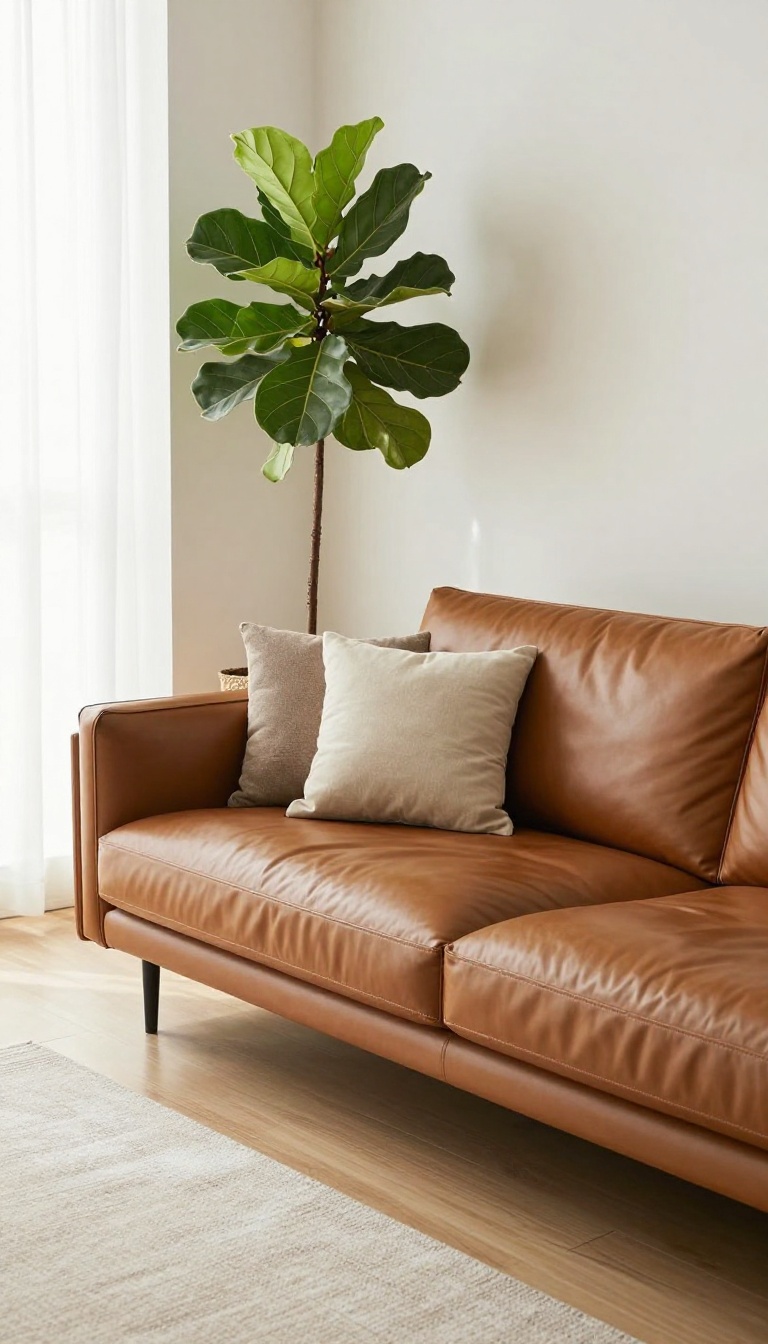
Leather furniture has a way of dominating a room with its rich texture and solid presence. Adding a tall plant or tree breaks up that visual weight and introduces a soft, organic element that feels instantly welcoming. It's a simple move that makes the space feel more lived-in and less like a furniture showroom.
A large potted plant or tree does more than just fill an empty corner. It adds height, color, and a touch of nature that balances the sleekness of leather. The right plant can also improve air quality and create a calming atmosphere.
Best of all, many low-maintenance options thrive indoors with minimal fuss.
Why Greenery Works With Leather
Leather's smooth, cool surface can sometimes feel a bit sterile. A leafy plant introduces texture and warmth that softens those hard edges. The contrast between the organic shapes of leaves and the clean lines of your couch creates visual interest without cluttering the room.
Best Plants For Low-maintenance Style
Fiddle leaf figs are a popular choice for their tall, sculptural look, but they need bright, indirect light. Snake plants are nearly indestructible and tolerate low light, making them perfect for busy households. Other great options include rubber trees, ZZ plants, and monstera—all of which add drama with minimal care.
Placement Tips For Maximum Impact
Place your plant where it can catch the eye without blocking traffic flow. A corner near the couch or beside a window works well. Use a stylish pot that complements your room's color palette—think woven baskets, ceramic planters, or metallic finishes.
If you have high ceilings, a tall tree like a ficus or palm can draw the eye upward and make the space feel grander.
FAQ
How do I keep a leather couch from looking too cold or formal?
Add soft textures like throws, pillows, and a rug. Warm lighting and natural materials like wood and plants also help balance the sleekness of leather.
What colors work best with a brown leather sofa?
Warm neutrals like cream, beige, and soft grey are safe bets. You can also add muted greens, blues, or rust for a bit of depth without clashing.
Can I mix leather with other upholstered furniture?
Absolutely. A fabric armchair or ottoman adds contrast and comfort. Just keep the color palette cohesive so the room feels intentional.
How do I arrange a living room around a leather couch?
Start by floating the couch away from the wall if space allows. Face it toward a focal point like a TV or fireplace, and add chairs or a loveseat to create a conversation circle.
What kind of rug looks best under a leather couch?
A vintage Persian or Oriental rug adds warmth and pattern. For a cleaner look, choose a large jute or wool rug in a neutral tone.
Conclusion
A leather couch already does most of the heavy lifting. It ages well, wipes clean, and looks better the more you live on it. So you do not need to rebuild the whole room around it.
Pick one idea that solves your biggest annoyance, whether that is a bare wall, a cold floor, or a corner nobody uses.
Live with that change for a week before adding another. Two or three done well will outlast a rushed weekend of shopping. Leather rewards patience, and so does a room you actually want to sit in.