11 Entry Living Room Ideas for a Welcoming First Look
Walking into a home where the entry living room feels put-together and inviting sets the tone for everything else. You don't need a huge budget or a designer to pull it off. A few smart choices can turn that pass-through space into a spot that actually works.
Maybe you've got a narrow area that collects shoes and mail, or a wide-open room that feels more like a hallway. Either way, the goal is the same: make it welcoming without making it fussy. The ideas ahead focus on real-life solutions that look good and handle daily traffic.
We'll cover everything from seating and storage to lighting and color. Each idea is simple to try, even if you're starting from scratch.
1. Start with a Defined Landing Zone
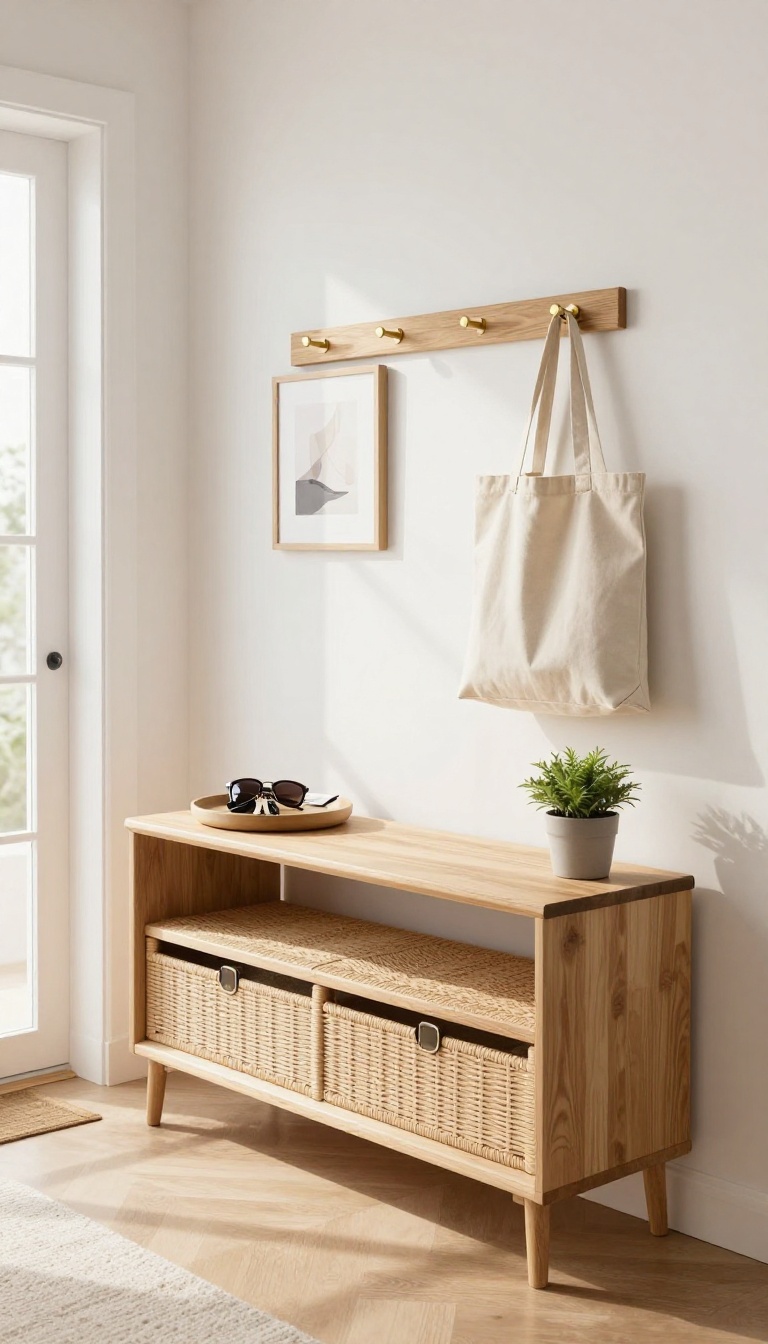
The entry living room often becomes a catch-all for keys, bags, and mail. Without a designated spot, clutter piles up and the space feels chaotic. A defined landing zone gives everything a home and sets a welcoming tone from the moment you walk in.
A landing zone is simply a dedicated area where you drop your daily essentials. It can be a console table, a floating shelf, or even a bench with storage. The key is to make it intentional so items don't end up on the floor or scattered across the room.
Choose The Right Spot
Pick a location that's immediately visible when you enter. It should be within arm's reach of the door so you can easily drop your keys and mail. If space is tight, a slim console table or a wall-mounted shelf works well.
Make sure it doesn't block walkways or doors.
Add Functional Pieces
A tray corrals keys, coins, and sunglasses. A small bowl can hold mail until you sort it. Hooks or a pegboard on the wall keep bags and coats off the floor.
If you have room, a bench with hidden storage lets you sit down to remove shoes and stash them away.
Style It To Match Your Home
The landing zone should feel like a natural extension of your decor. Choose a tray or bowl in a material that complements your style, like wood, metal, or ceramic. A small plant or a framed print adds personality without clutter.
Keep it simple so it stays functional.
2. Choose a Bench That Does Double Duty
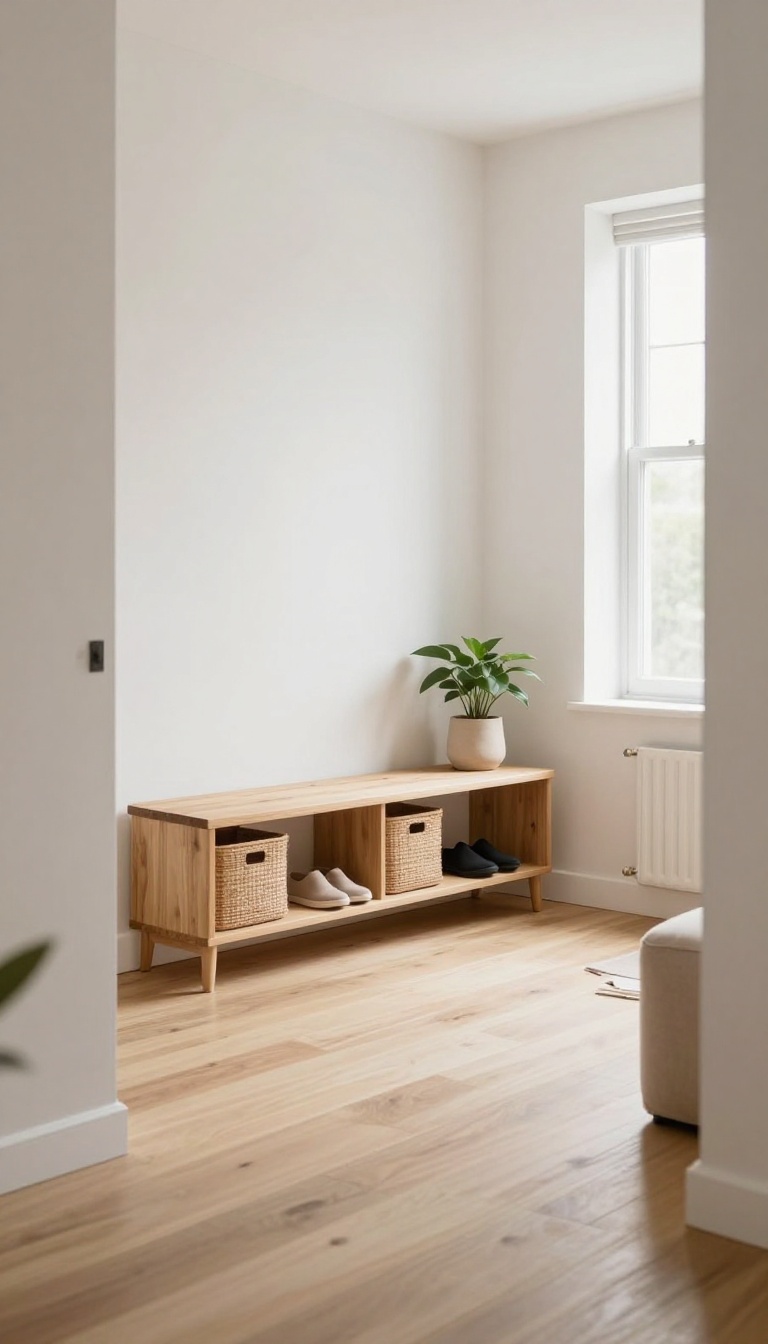
A bench in your entry living room solves two problems at once: it gives you a spot to sit while you tie your shoes, and it hides the clutter that usually piles up near the door. The best versions have storage underneath, so you can tuck away baskets, bins, or extra shoes without sacrificing style. It's a simple swap that makes the whole space feel more intentional.
Think about how you actually use your entry. You probably drop your bag, kick off your shoes, and maybe sort through mail. A bench with built-in storage turns that chaos into a system.
You get a comfortable seat plus a place to stash the stuff that would otherwise end up on the floor or a nearby table. When you're shopping, look for benches with open shelves, lift-up tops, or cubbies. Open shelves work well for baskets you can pull out easily.
Lift-up tops hide everything but require you to clear the seat before opening. Cubbies are great for organizing shoes or small items by person. Each style has trade-offs, so pick based on how tidy you want to keep things.
Placement matters too. Put the bench along the wall where you naturally walk in, or opposite the door if you have the space. Leave enough room to open the storage without bumping into other furniture.
A bench that's too deep can block traffic, so measure your entry before you buy.
Pick The Right Storage Style
Open shelves let you grab baskets in a hurry, which is perfect for busy mornings. Lift-up tops keep everything out of sight but need a clear seat to open. Cubbies work best if you want to assign a spot to each family member.
Match the style to your daily habits, not just the look.
Make It Comfortable
A bench is only useful if people actually sit on it. Add a cushion or a folded throw to soften the seat. Choose a fabric that hides dirt and wipes clean, especially if you have kids or pets.
A comfy bench invites you to slow down instead of rushing past.
Keep It Tidy
Use baskets or bins that fit the shelves snugly so nothing looks messy. Label them if you need to, or just keep similar items together. Every few weeks, clear out anything that doesn't belong.
A quick reset keeps the bench functional and welcoming.
3. Add a Runner or Area Rug for Warmth
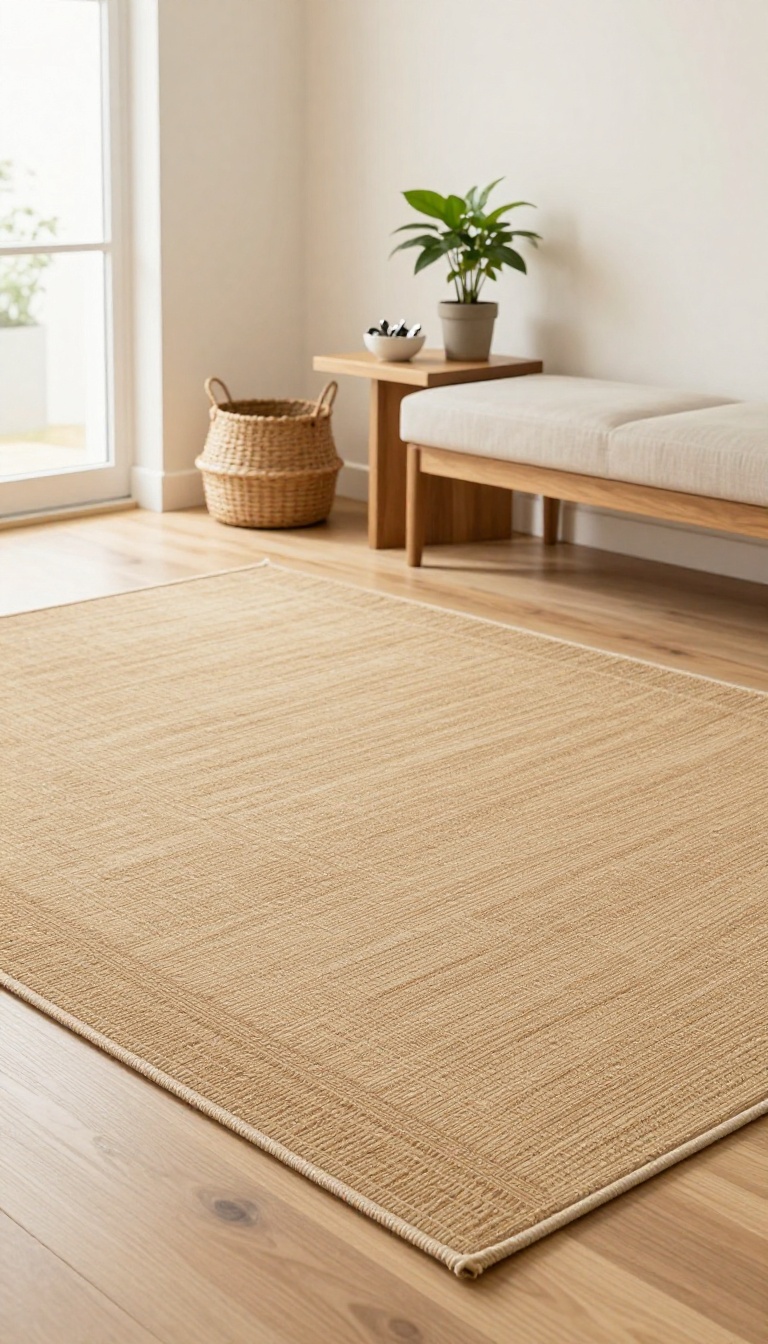
Bare floors in an entry living room can make even a nicely decorated space feel cold and unfinished. A rug fixes that in about five minutes. It also quietly handles the dirty work, catching grit and moisture before they track deeper into your home.
Think of a rug as the border between outside and inside. It tells your feet where the entry zone begins and gives the eye something soft to land on. Choose the wrong one and you'll be fighting it forever.
Choose the right one and you'll barely think about it again.
The size you pick matters more than the pattern. A rug that's too small looks like a floating bath mat, while one that's too big swallows the whole room. For a runner-style entry, aim for something that leaves a few inches of floor visible on each side.
In a wider entry living room, an area rug should anchor the seating or console area without creeping toward the door swing. Material is where most people go wrong. Plush, high-pile rugs feel amazing in a bedroom and terrible by a front door.
They trap crumbs, hold onto moisture, and show every footprint. Low-pile, flatweave, or washable styles are the practical picks here. Color doesn't have to be boring just because the rug is durable.
A pattern hides stains better than a solid light tone, and a darker base with a bit of warmth works in almost any palette.
Pick A Rug That Can Take A Beating
Look for materials like polypropylene, jute blends, or cotton flatweaves. They resist fading, clean up easily, and don't shed everywhere. Washable rugs have gotten genuinely good, so don't rule them out if you have pets or kids.
A rug pad is not optional. It keeps the rug from sliding, adds a little cushion, and helps the rug last longer. Trim the pad slightly smaller than the rug so the edges lie flat.
Tie It Into The Living Room Palette
Pull one or two colors from your living room and repeat them in the rug. That could be a muted blue, a warm rust, or a soft green. You don't need an exact match, just a family resemblance.
If your living room is mostly neutral, let the rug bring the pattern. If the room is already busy, keep the rug simple and let it do its quiet job.
4. Layer Lighting for a Cozy Glow
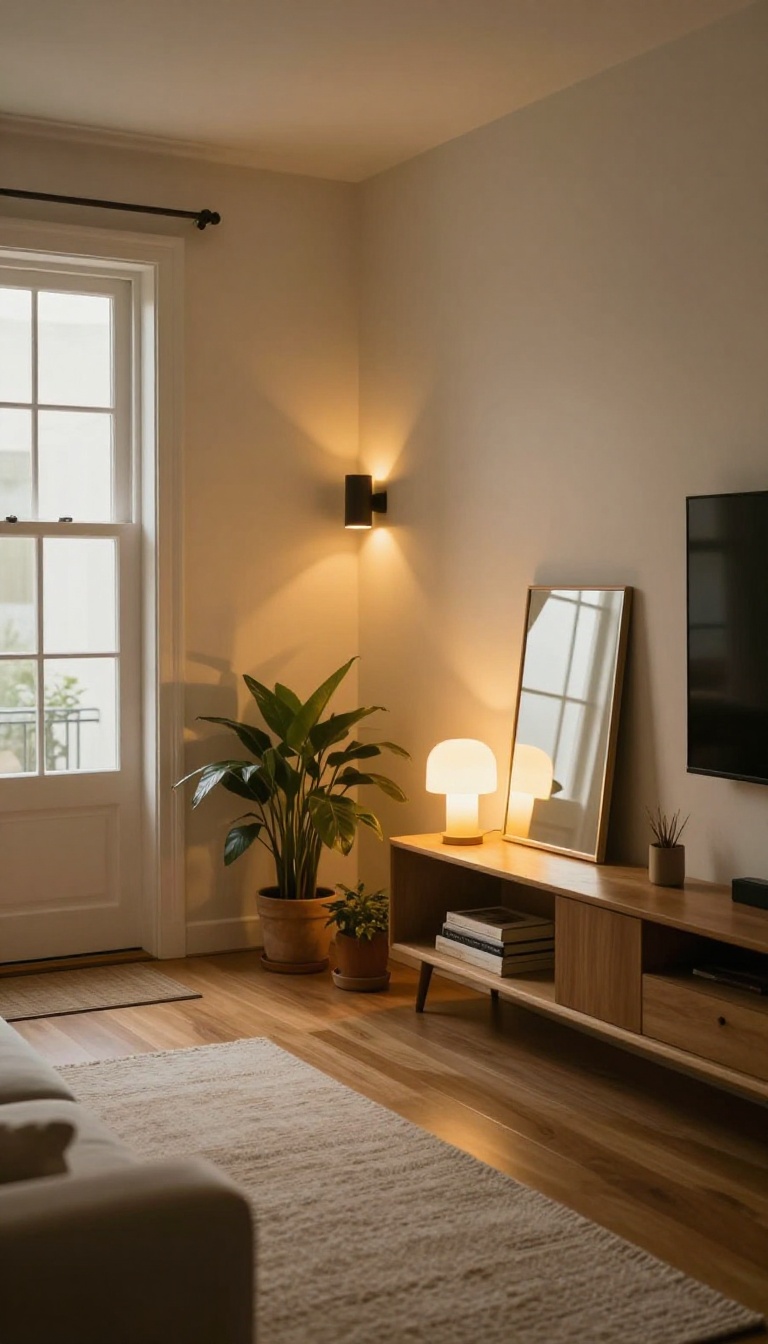
One overhead light in an entry living room often creates harsh shadows and a flat, unwelcoming feel. Layering different light sources—like a table lamp, wall sconce, or floor lamp—adds depth and warmth. The goal is to mix ambient, task, and accent lighting so the space feels cozy and functional at any hour.
Start by replacing cool white bulbs with warm ones (around 2700K) to instantly soften the space. Add a dimmer switch to your main light so you can adjust the brightness from bright for cleaning to soft for evening. Then, bring in a table lamp on a console or a wall sconce near the door for a gentle pool of light.
A floor lamp in a dark corner can also help balance the room. The key is to have at least two light sources on different levels—overhead and eye-level—so shadows don't dominate. If you have a mirror, angle a lamp toward it to bounce light around and make the entry feel larger.
Finally, consider a small accent light, like a battery-operated candle or a picture light, for a subtle glow that guides the eye.
Choose Warm Bulbs
Bulbs with a color temperature between 2700K and 3000K give off a soft, yellow-white light that feels inviting. Avoid daylight bulbs (5000K+) in the entry—they can make the space feel clinical. LED bulbs are fine; just check the label for warmth.
Add A Dimmer
A dimmer switch lets you control the mood without changing bulbs. If you can't install a wall dimmer, plug-in dimmers for lamps are an easy alternative. Being able to lower the lights at night makes the entry feel cozy rather than harsh.
Mix Light Heights
Combine overhead light with table lamps, wall sconces, or floor lamps. This layering eliminates dark corners and creates a balanced, welcoming atmosphere. Aim for at least one light source at eye level and one overhead.
5. Use a Mirror to Open Up the Space
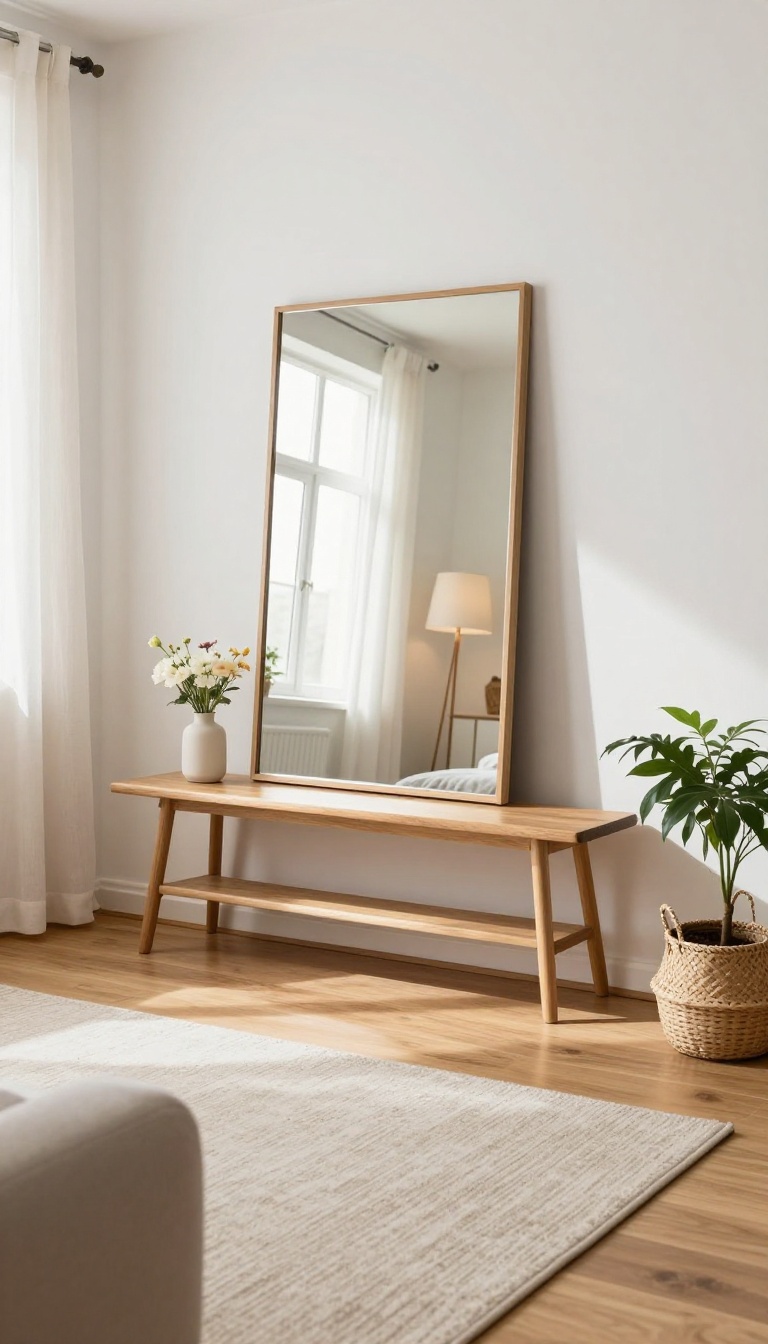
A mirror might be the hardest-working piece in your entry living room. It bounces light around, makes a tight corner feel twice as big, and gives you a quick glance before you walk out the door. You get function and style in one frame, which is a rare combo in a busy drop zone.
The trick is choosing the right mirror and placing it where it actually helps. You don't need a fancy antique or a custom size. A simple, well-proportioned mirror can do more for the space than a whole wall of decorations.
Pick A Size That Fits The Wall
A mirror that's too small looks like a stamp on a big wall. Too large, and it can overwhelm a narrow entry. Aim for a mirror that takes up about two-thirds of the width of the console or wall space below it.
If you're hanging it above a bench, leave at least six inches of breathing room on each side.
Hang It Where Light Lands
Mirrors work best when they catch natural light or reflect a lamp. Place one opposite a window, or across from a floor lamp, so the light bounces back into the room. In a dark entry, a mirror near a warm bulb can make the whole space feel brighter without adding another fixture.
Lean Or Hang For Easy Style
Leaning a large mirror against the wall gives you a relaxed, casual look and saves you from drilling holes. Just make sure it's secure, especially in a high-traffic spot. If you prefer a clean look, hang it at eye level so you can actually use it for a final check on your way out.
6. Bring in a Slim Console or Floating Shelf
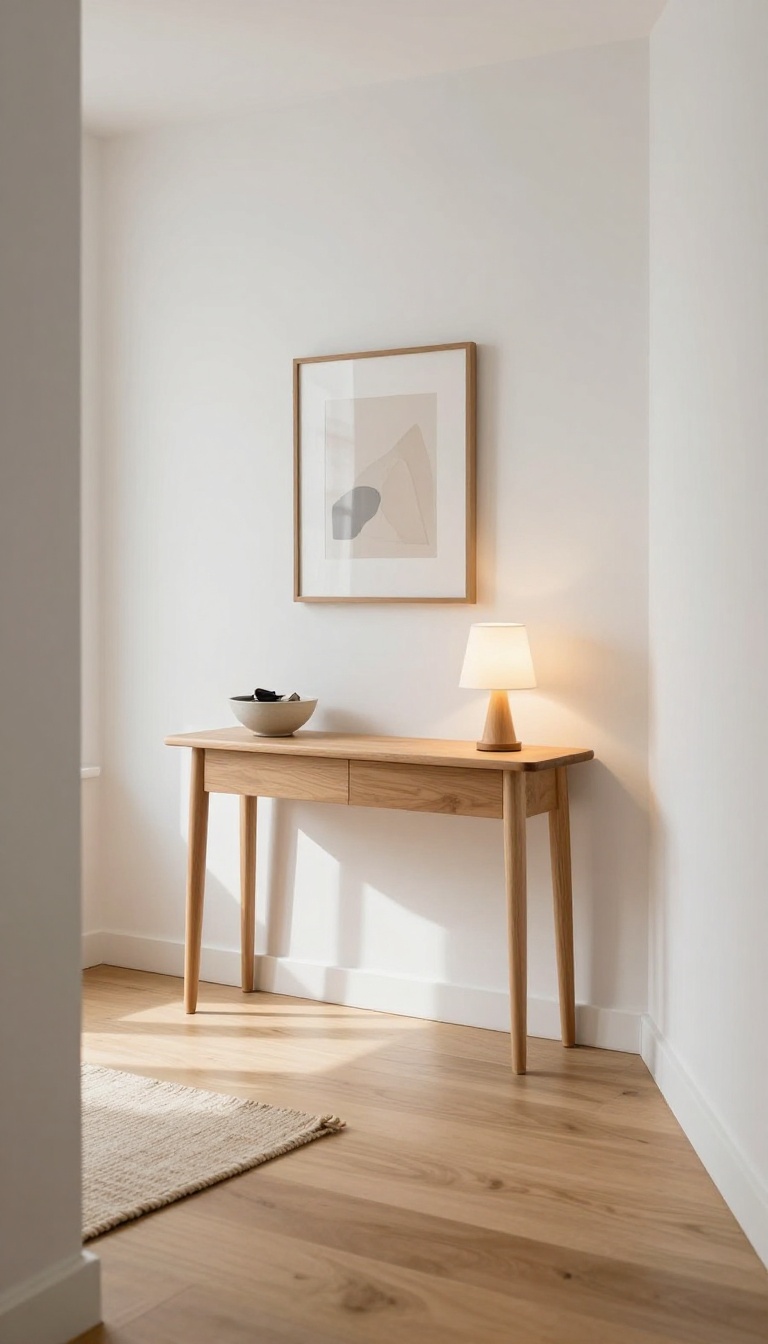
Floor space in an entry living room is precious real estate. A slim console table or a floating shelf gives you a spot to drop your keys and display a few nice things without eating up the room you need to walk through. It's a simple swap that makes a big difference in how the space functions and feels.
When you're working with a narrow entry or a busy pass-through, every inch counts. A bulky piece of furniture will make the area feel cramped and awkward. But going without any surface at all means clutter piles up on the floor or gets dumped on the nearest available spot.
A slim console or a wall-mounted shelf solves that problem by giving you just enough surface area while keeping the floor clear. You get a place for the essentials, and the room still feels open and easy to move through.
Pick The Right Depth
Consoles come in all shapes and sizes, but for an entry living room, depth matters most. Look for something around 12 to 14 inches deep. That's enough to hold a small lamp, a bowl, or a picture frame without jutting into your walking path.
If you go deeper, you'll start to feel the squeeze every time you walk by. Measure your space before you shop, and leave at least 30 inches of clearance for foot traffic. Floating shelves are even better for tight spots because they take up zero floor space.
Just make sure they're mounted securely into studs or with proper anchors, since they'll hold everyday items.
Style It Without Clutter
The trick to styling a slim console or shelf is restraint. You want it to look intentional, not like a dumping ground. Start with one small plant or a simple vase.
Add a bowl or tray for keys and loose change. Then finish with a piece of art leaning against the wall or hung just above. That's it.
Three or four items max. Rotate things out if they start to pile up. The goal is a surface that welcomes you home without becoming a magnet for random stuff.
A small tray or bowl keeps the clutter contained and makes it easy to tidy up in seconds.
Make It Work For Your Routine
Think about how you actually use your entry. If you always drop your keys and mail the second you walk in, put a bowl or tray right where your hand naturally lands. If you like to kick off your shoes, add a small basket underneath the console for them.
A floating shelf can hold a hook or two underneath for leashes or umbrellas. The point is to make the surface work for your daily habits, not just look pretty. When your entry setup matches your routine, it stays tidy without much effort.
And that makes the whole space feel more welcoming.
7. Incorporate a Gallery Wall or Large Art Piece
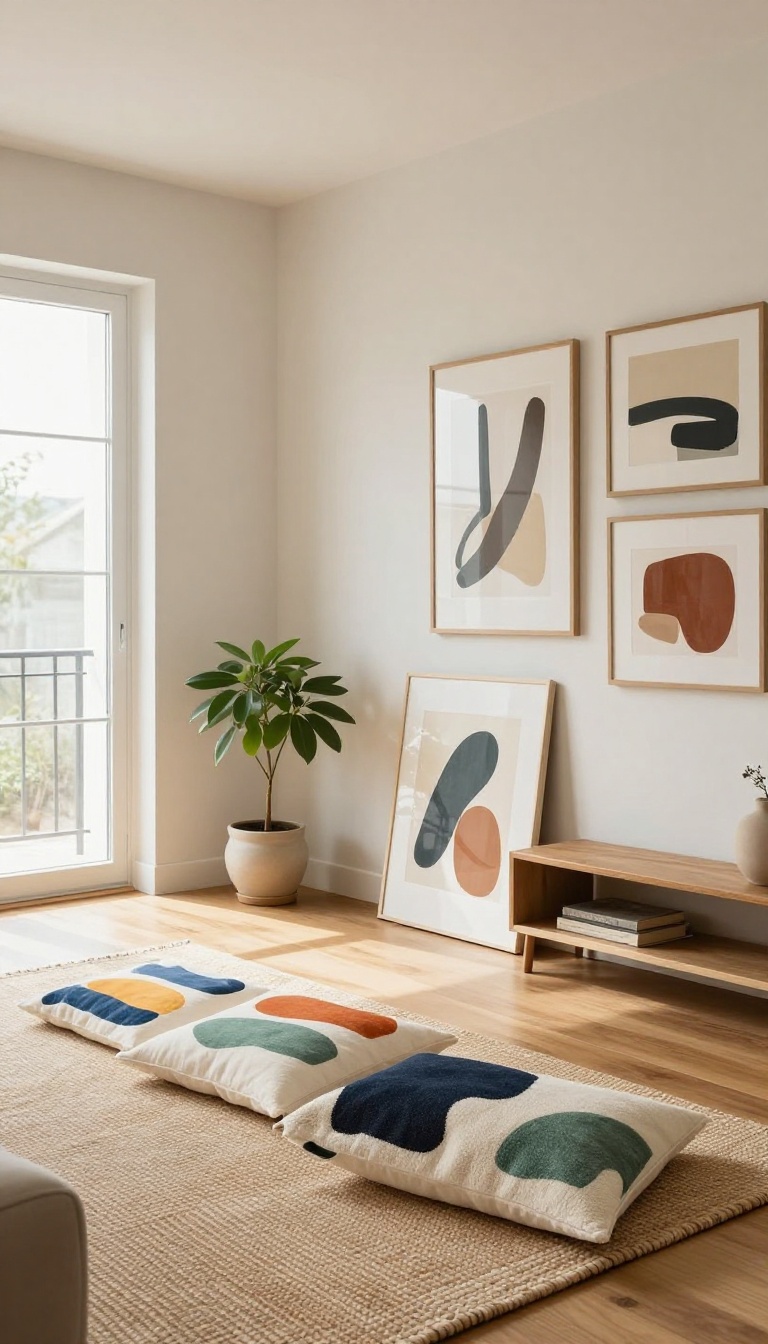
Art gives your entry living room a focal point and a sense of purpose. It tells guests something about your style before you even say hello. A single bold piece or a small collection can tie the whole space together.
You don't need a museum-quality collection. Even a few framed prints or a large canvas can make a big impact. The key is to choose pieces that speak to you and fit the scale of your wall.
Think of art as the anchor for your color scheme. Pull one or two hues from the artwork and repeat them in pillows, rugs, or accessories. That simple trick makes the room feel cohesive and intentional.
Art isn't just decoration—it's a conversation starter and a mood setter. In an entry living room, it's often the first thing people notice. So why not make it count?
A gallery wall lets you showcase multiple pieces and fill a large blank wall. A single oversized piece, on the other hand, makes a bold, modern statement. Both options work; it just depends on your space and your vibe.
When you're choosing art, consider the size of your wall. A tiny piece on a huge wall will look lost. A massive piece in a small space can feel overwhelming.
Measure before you buy or hang. Also, think about lighting. Art needs to be seen.
A picture light or a well-placed spotlight can make your pieces pop, especially in the evening. Finally, don't be afraid to mix things up. You can lean a large frame against the wall for a relaxed look, or hang pieces at eye level for a classic feel.
The goal is to make the space feel personal and pulled together.
How To Plan A Gallery Wall
Start by laying out your frames on the floor. This lets you play with arrangements without making holes in the wall. Try a grid for a clean look or a salon-style cluster for a more eclectic vibe.
Keep the spacing consistent—about 2 to 3 inches between frames. Use painter's tape to mark the layout on the wall before you commit. And don't forget to include a mix of sizes and orientations for visual interest.
Choosing The Right Large Art Piece
If you go with one big piece, make sure it's proportional to your wall. A good rule of thumb: the art should take up about two-thirds of the wall width above a console or bench. Pick something that reflects your personality.
Abstract, landscape, or a bold portrait—whatever draws you in. And consider the frame; a thin frame feels modern, while a thick one adds weight and tradition.
Lighting Your Art
Art deserves good light. If you have recessed lighting, aim a fixture at the piece. Otherwise, a plug-in picture light is an easy fix.
Just make sure the bulb isn't too hot or too bright—you want to highlight, not glare. For gallery walls, consider a few small spotlights or a track lighting system. It adds a gallery feel and makes the whole arrangement look intentional.
8. Add a Plant or Greenery for Life
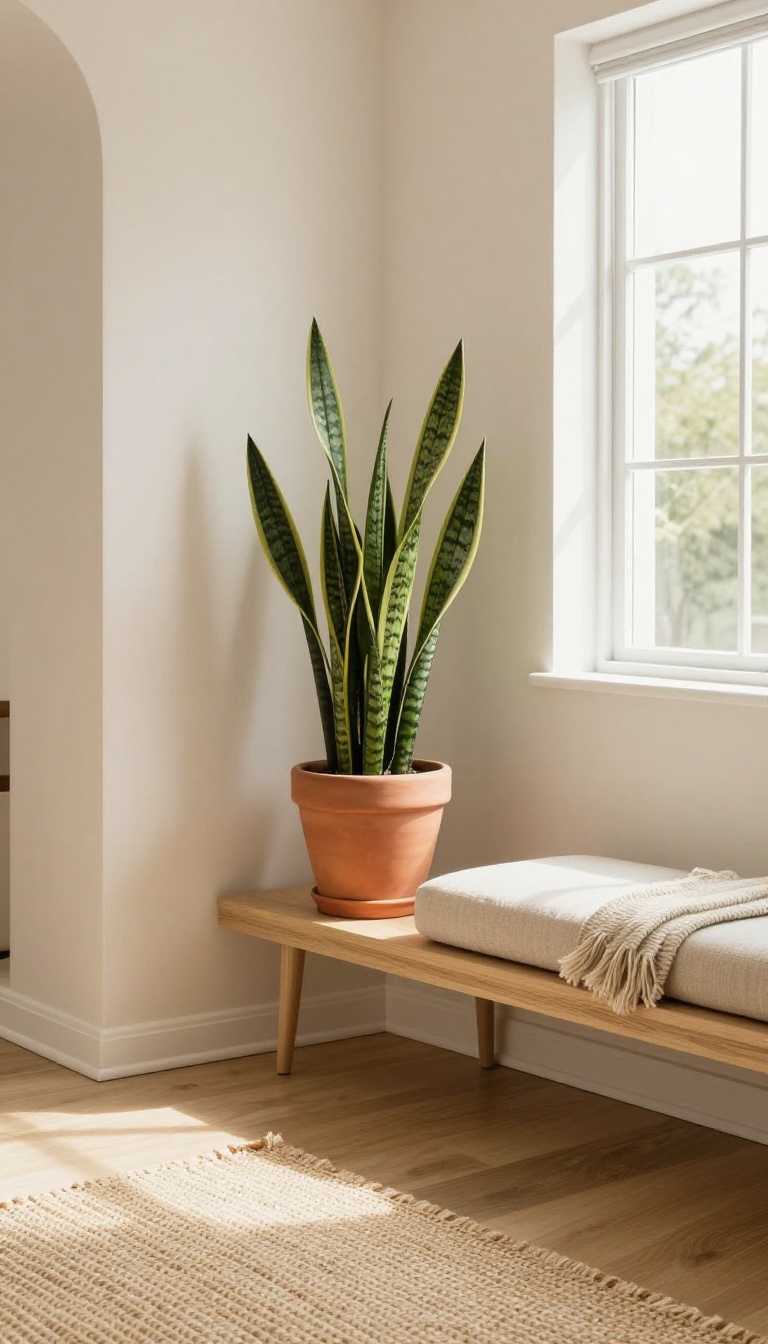
Nothing softens an entry living room quite like something alive and green. A single potted plant or a small vase of flowers instantly makes the space feel cared for, and it gives the eye a natural place to land. You don't need a jungle—just one healthy plant can do the heavy lifting.
The trick is picking something that actually survives your entry's conditions. If your space gets decent daylight, you have plenty of options. If it's dim and you only pass through, go with tough, forgiving varieties that shrug off neglect.
Either way, greenery adds warmth that furniture and paint alone can't match.
Plants bring a softness that hard surfaces can't. They also add a pop of color without committing to a bold wall or a loud rug. And because they're living things, they make the room feel less like a display and more like a home.
You don't have to be a plant person to pull this off. A few well-chosen picks will do the job, and they'll keep looking good even when life gets busy.
Pick Plants That Fit Your Light
Low-light entries are common, especially in apartments or homes with small windows. Snake plants, pothos, and ZZ plants handle dim conditions and only need water every couple of weeks. If your entry gets bright indirect light, try a rubber tree, peace lily, or a small fiddle leaf fig.
South-facing spots with direct sun can take a succulent or aloe. Match the plant to the light and you'll spend less time nursing it back to health.
Choose The Right Spot And Pot
Place your plant where it won't get bumped by bags or coats. A corner near the door or the end of a console table works well. The pot matters too—a simple ceramic or woven basket keeps things tidy and hides the plastic nursery container.
Make sure the pot has drainage, or use a liner, so you don't ruin your floors or furniture. A small tray underneath catches drips and makes watering easier.
Keep It Fresh Without The Fuss
If you want zero maintenance, go with a high-quality faux plant. Modern fakes look surprisingly real, and you never have to worry about watering. For real plants, set a reminder on your phone to check the soil once a week.
Stick your finger in about an inch—if it's dry, water it. Fresh flowers are another easy win: a simple bunch from the grocery store lasts a week and instantly brightens the space. Change the water every couple of days to keep them looking good.
9. Create Hidden Storage with Baskets and Bins
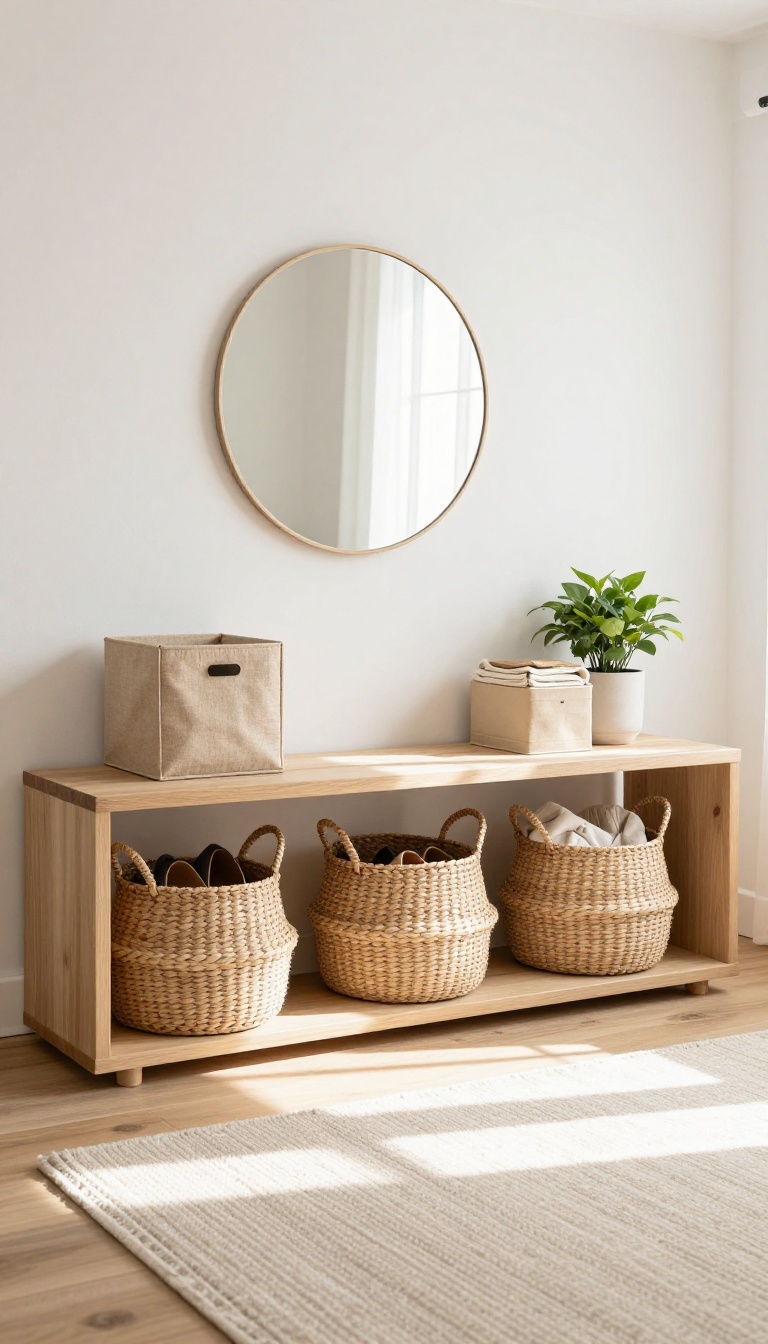
Clutter is the enemy of a welcoming entry, but you still need a place for shoes, hats, and leashes. Baskets and bins let you stash everyday items without sacrificing style. Tuck them under a bench, slide them onto a shelf, or stack them in a corner.
The result looks intentional, not messy.
Baskets and bins are the unsung heroes of a tidy entry living room. They corral the things that would otherwise pile up on the floor or a console. And because they come in so many materials and colors, you can match them to your decor.
The key is to choose a few that fit your space and your routine.
Pick The Right Baskets For Your Space
Woven baskets add texture and warmth, while fabric bins are soft and lightweight. For a more polished look, try metal or leather bins. Measure the spot where you plan to put them so they fit just right.
A basket that's too big will crowd the area; too small and it won't hold much.
Label For Easy Organization
If multiple people use the entry, labels keep everyone on the same page. Use a label maker, chalkboard tags, or simple adhesive labels. Assign each bin a category: shoes, hats, leashes, or mail.
That way, everyone knows where things go and cleanup is a breeze.
Style Your Storage
Don't just hide your bins—make them part of the decor. Group them in odd numbers for visual interest. Mix sizes and heights to add depth.
Place a small plant or a candle on top of a stack to dress it up. The goal is storage that looks like it belongs.
10. Use Color and Texture to Set the Mood
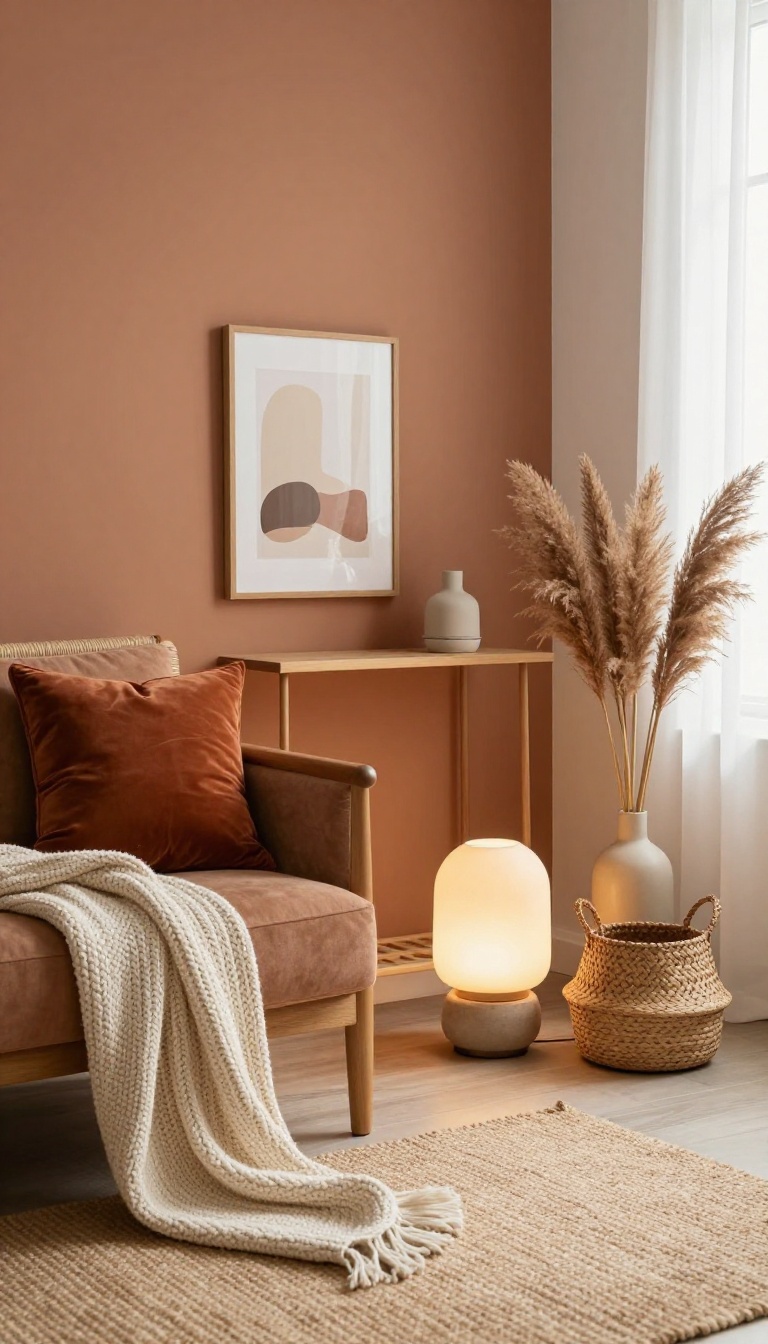
Color and texture do more than look pretty—they tell your brain how to feel when you walk through the door. A warm palette and soft surfaces say “relax, ” while cool tones and sleek finishes feel more energetic. You can shift the mood of your entry living room without replacing a single piece of furniture.
Paint, pillows, and throws are the easiest levers to pull.
Start with one color you love and build around it. An accent wall behind a console or bench anchors the space and gives your eye a place to land. Then echo that color in smaller doses—a lamp base, a vase, a framed print—so the room feels intentional, not themed.
Texture works the same way. A chunky knit throw, a woven basket, or a velvet cushion adds depth that flat paint alone can’t deliver. The goal is a space that feels layered but not cluttered, cozy but still easy to clean.
Pick A Palette That Flows Into The Living Room
Your entry shouldn’t feel like a separate room with its own rules. If your living room leans warm—think creams, terracottas, and woods—bring a lighter version of those tones into the entry. A soft beige wall with a rust-colored pillow bridges the two spaces.
If your living room is cool and modern, try a pale gray wall with a charcoal throw. The transition feels seamless when the colors relate, even if they’re not identical.
Layer Textures Where You’ll Actually Touch Them
Texture matters most in the spots you interact with daily. A bench with a woven seat, a jute rug underfoot, or a nubby throw draped over a chair invites you to linger. Mix rough and smooth: a smooth ceramic lamp next to a rough wooden bowl, or a soft cotton curtain against a brick wall.
Three textures in one small area is plenty. More than that starts to feel busy.
Use One Bold Moment—and Keep The Rest Calm
A single saturated color can wake up a neutral entry without overwhelming it. Try a deep green door, a navy console, or a mustard yellow pouf. Keep everything else quiet so that one piece gets to shine.
If you change your mind later, you’re only repainting or swapping one item. That’s a lot easier than redoing the whole room.
11. Keep It Functional with a Catch-All Tray and Hooks
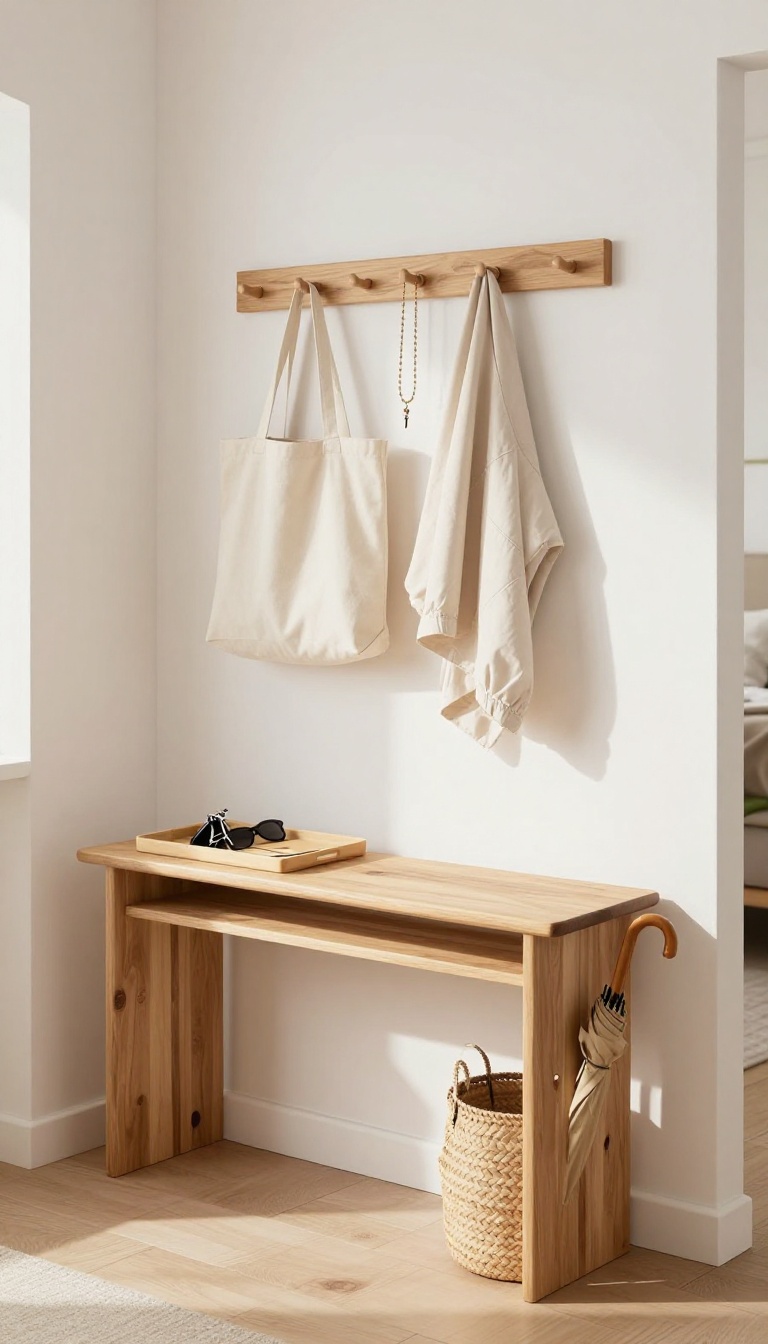
A tray and a few hooks might not sound like design statements, but they quietly do more work than almost anything else in an entry. They give the everyday stuff—keys, mail, leashes, umbrellas—a specific spot to land. When everything has a home, the clutter never gets a chance to take over.
The best part is how little effort this takes. You don't need custom built-ins or a fancy system. A simple tray on a console and a row of hooks on the wall can handle the daily drop zone and still look intentional.
Think of this setup as the entry's command center. It's where you walk in, empty your pockets, hang your bag, and move on. Without it, that same stuff ends up on the floor, the stairs, or the nearest flat surface.
The tray contains the small stuff. The hooks take care of the bulky stuff. Together, they keep the space from turning into a pile of random objects by Thursday.
And because it's so simple, you can adjust it as your needs change. Add a second hook for guests, swap the tray for a bowl, or move things around until the flow feels right.
Pick A Tray That Fits Your Drop Zone
The tray doesn't need to be fancy, but it should be big enough to hold what you actually carry. A shallow rectangular tray works for keys, sunglasses, and a few envelopes. A round one feels softer and works well on a small round table.
Material matters less than visibility. A light-colored tray on a dark console makes it obvious where things go. A dark tray on a light surface does the same.
The point is to create a visual target. If mail tends to pile up, add a small divider or a second smaller tray just for paper. That way, bills and invitations don't get mixed in with your keys.
Choose Hooks That Can Handle Real Life
Not all hooks are up to the job. Flimsy adhesive hooks might work for a light jacket, but they'll give up on a heavy backpack. Look for hooks rated for at least 10 to 15 pounds if you plan to hang bags or coats.
A row of three or four hooks at different heights can accommodate kids and adults. Lower hooks for little ones teach them to hang their own stuff early. Higher hooks keep grown-up items out of the way.
If you rent and can't drill, there are sturdy over-the-door hook racks and freestanding coat stands that do the same job without leaving holes.
Make It A Habit, Not A Chore
The system only works if you use it. The trick is to make the tray and hooks the first thing you touch when you walk in. Keep them right by the door, not across the room.
A small sign or a label isn't necessary, but consistency helps. If you always drop your keys in the tray, you'll never have to search for them again. If the leash always goes on the third hook, you can grab it without thinking.
Once the habit sticks, you'll notice the entry stays tidier with almost no effort. And when guests arrive, they see a clear, calm space instead of a chaotic pile.
FAQ
How do I make a small entry living room feel welcoming?
Focus on light, a clear landing spot, and a few personal touches. A mirror, a small rug, and a console with a tray can make a big difference without crowding the space.
What furniture works best in an entry living room?
Slim consoles, benches with storage, and floating shelves are great because they provide function without taking up too much floor space. Choose pieces that fit your layout and daily needs.
How can I keep the entry organized?
Use baskets, hooks, and a catch-all tray to give everything a place. A bench with hidden storage also helps hide shoes and bags quickly.
What lighting is best for an entry?
Layer a ceiling fixture with a table lamp or sconce for soft, even light. Warm white bulbs and a dimmer create a cozy atmosphere.
Should the entry match the living room style?
It doesn't have to match exactly, but carrying over colors, textures, or a similar vibe helps the spaces flow together. The entry can be a preview of the style you love.
Conclusion
Your entry living room doesn't need a complete overhaul to feel welcoming. Start with one or two ideas from this list, like a landing zone or a cozy rug, and build from there. Small changes add up fast.
The best entry is one that works for your daily life and makes you smile when you walk in. Mix function with a little personality, and you'll have a first look that feels like home.