17 Sofa Cleaning Hacks for Stains, Dust, Odor, and Grime
Your sofa endures spills, dust, pet hair, and daily wear, often showing signs of grime faster than you'd expect. Professional cleaning services are pricey, but you probably already have effective solutions in your pantry.
These 17 sofa cleaning hacks tackle stains, odors, and dust using common household items, saving you money and effort.
From blotting techniques to steam cleaning tips, each method targets a specific problem so your couch looks and smells fresh without harsh chemicals.
1. Blot, Don’t Rub – The Golden Rule of Stain Removal
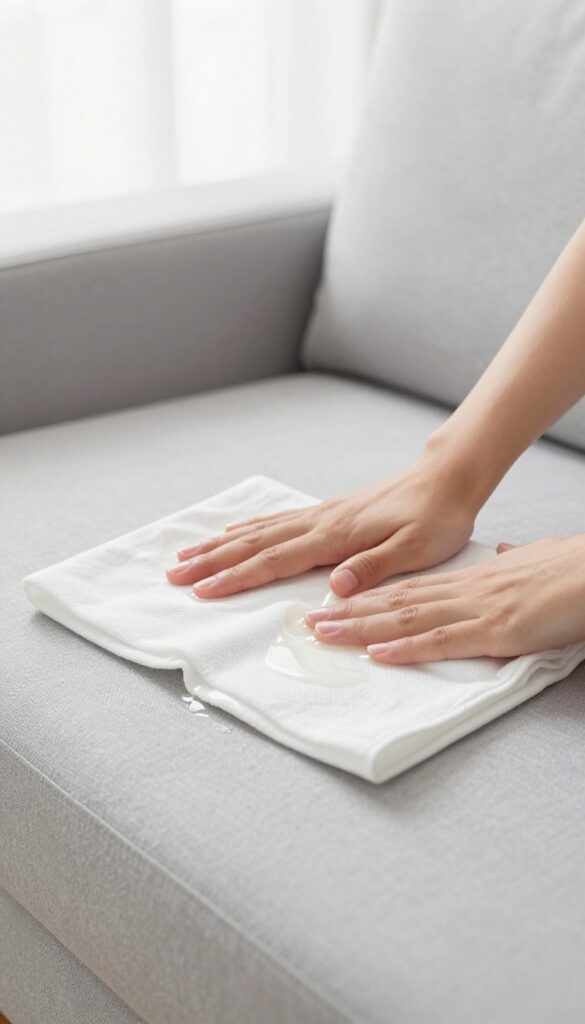
That first instinct to scrub a fresh spill? Fight it. Rubbing grinds the liquid deeper into the fibers, turning a small spot into a stubborn stain.
The golden rule is simple: blot.
Grab a clean, white cloth or paper towel. Press down firmly on the spill to absorb as much liquid as possible. Work from the outside in to prevent the stain from spreading.
Repeat with fresh sections of the cloth until no more moisture transfers. This method lifts the spill without damaging the fabric.
Why Blotting Works Better
When you rub, you push the stain molecules deeper into the cushion or weave. Blotting uses capillary action to draw the liquid upward into your cloth. It’s gentler on the fabric and prevents the stain from setting.
What To Use For Blotting
Always use a white cloth or paper towel to avoid color transfer. Avoid printed paper towels—the ink can bleed onto your sofa. Microfiber cloths are excellent because they’re absorbent and lint-free.
When To Blot Vs. When To Scrub
Blot for fresh liquid spills. For dried or sticky residues, you may need to gently agitate with a soft brush after applying a cleaning solution. But even then, blot first to loosen the stain.
2. Baking Soda + Vacuum – The Ultimate Deodorizer
Baking soda is a powerhouse when it comes to neutralizing odors, and it works wonders on sofas. Whether your couch smells like last night's popcorn, pet accidents, or just stale living, this simple hack will freshen it up fast. All you need is a box of baking soda and a vacuum cleaner.
Sprinkle a generous layer of baking soda over the entire sofa, making sure to get into the crevices and cushions. Let it sit for at least 15 minutes—longer for stronger odors. Then, vacuum thoroughly using the upholstery attachment to remove all the powder.
The baking soda absorbs and traps odors, leaving your sofa smelling clean and fresh.
Why Baking Soda Works
Baking soda is alkaline and reacts with acidic odor molecules, neutralizing them rather than just masking the smell. It's non-toxic and safe for most fabrics, making it an ideal choice for regular deodorizing.
Tips For Best Results
For tough odors, let the baking soda sit for a few hours or overnight. You can also add a few drops of essential oil to the powder before sprinkling for a light scent. Always test on an inconspicuous area first, especially on delicate fabrics.
When To Repeat
Repeat this process every few weeks or whenever you notice odors returning. It's a quick, inexpensive way to maintain a fresh-smelling sofa between deep cleans.
3. White Vinegar Solution for Tough Stains
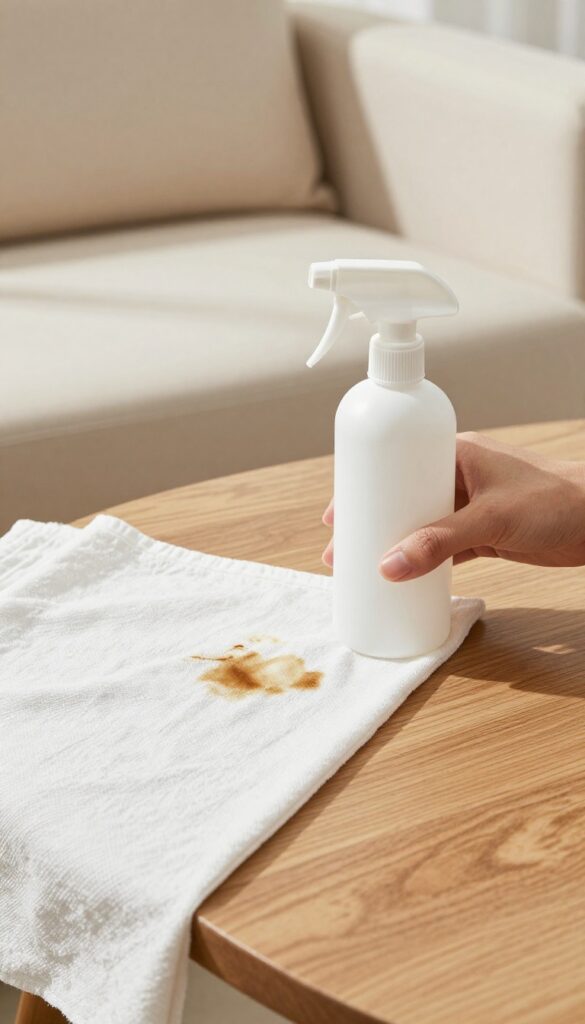
When water alone won't cut it, white vinegar steps in as a gentle but effective stain fighter. Its acidity breaks down grime, grease, and set-in spills without damaging most upholstery fabrics. Plus, it's cheap and probably already in your kitchen.
Mix equal parts white vinegar and water in a spray bottle. Lightly mist the stained area—don't soak it. Let it sit for 5–10 minutes, then blot with a clean cloth.
The vinegar smell fades as it dries, taking the stain with it. For extra stubborn spots, add a drop of dish soap to the mix.
Why Vinegar Works On Sofa Stains
White vinegar is a mild acid that dissolves alkaline residues like dried milk, coffee, or soda. It also cuts through grease from food or body oils. Unlike bleach, it won't discolor fabrics, and it's safe for most synthetic and natural fibers.
How To Apply Without Over-wetting
Always test on a hidden area first. Spray lightly, then blot—don't rub, or you'll spread the stain. Use a white cloth to avoid color transfer.
After blotting, let the spot air dry completely. If the stain persists, repeat once more.
When To Skip The Vinegar
Avoid vinegar on silk, wool, or antique upholstery—it can damage delicate fibers. Also, don't use it on water-based stains like ink or wine, as it may set them. For those, reach for a dedicated upholstery cleaner instead.
4. Dish Soap & Warm Water for Grease Marks
Grease stains from food spills or body oils can be stubborn, but dish soap is designed to cut through grease. A simple solution of a few drops of gentle dish soap in warm water creates an effective degreaser that won't damage most sofa fabrics. This hack is especially useful for kitchen-adjacent seating or after movie nights with buttery snacks.
To use this method, mix a few drops of mild dish soap (like Dawn or a similar brand) into a bowl of warm water until it's sudsy. Dip a clean white cloth or sponge into the solution, wring it out so it's damp but not soaking, and gently blot the grease stain. Work from the outside in to prevent spreading.
Avoid scrubbing, which can push the grease deeper into the fibers. Once the stain lifts, blot with a dry cloth to absorb excess moisture. Follow up with a damp cloth (water only) to remove any soap residue, then let the area air dry completely.
This works well on microfiber, cotton, and synthetic blends, but always test on a hidden spot first.
Why Dish Soap Works So Well
Dish soap contains surfactants that break down oils and grease, making it ideal for food spills like pizza grease, butter, or salad dressing. It's also effective for body oils from hair products or skin contact, which can build up on armrests and headrests over time.
Step-by-step Application
Mix a few drops of dish soap in warm water. Dip a white cloth, wring well, and blot the stain gently. Repeat until the grease lifts.
Rinse with a damp cloth and let dry. For stubborn stains, add a pinch of baking soda to the solution for extra abrasion.
Fabric Considerations
This method is safe for most synthetic fabrics like polyester and nylon. For delicate materials like silk or velvet, use a milder soap and test first. Avoid on untreated leather or suede, as water can cause damage.
Always check the manufacturer's cleaning code.
5. Rubbing Alcohol for Ink or Marker
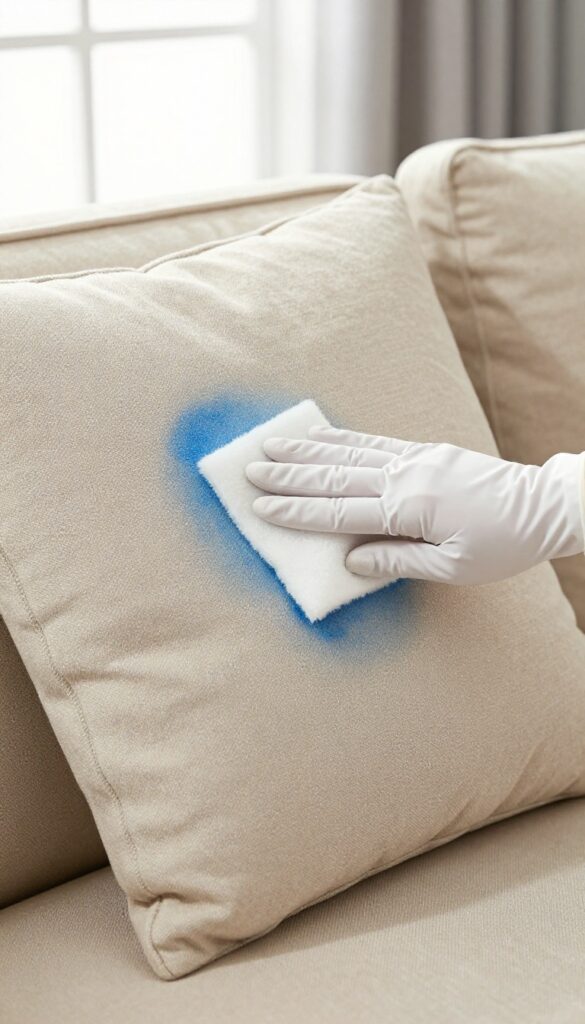
Ink stains from pens or markers can seem impossible to remove, but rubbing alcohol is your secret weapon. It breaks down the ink's solvents, making it lift right out of the fabric. Always test on a hidden area first to ensure it doesn't affect the color.
Dab a cotton ball or clean cloth with rubbing alcohol (isopropyl alcohol works best). Gently press it onto the ink stain—don't rub, as that can spread the ink. You'll see the ink transfer to the cotton ball.
Repeat with fresh cotton balls until no more ink comes up. Blot the area with a damp cloth to remove any alcohol residue, then let it air dry.
Why Rubbing Alcohol Works
Ink is designed to be permanent, but many inks are alcohol-soluble. Rubbing alcohol dissolves the ink's binding agents, allowing it to be absorbed into the cotton rather than staying trapped in the fabric fibers. It's effective on ballpoint pen, marker, and even some permanent marker stains.
Step-by-step Removal
First, blot any fresh ink with a paper towel to remove excess. Then, dampen a cotton ball with rubbing alcohol and press it onto the stain for a few seconds. Lift—don't wipe—and repeat with a fresh cotton ball.
Continue until the stain fades. Finally, blot with a damp cloth to remove alcohol, and let dry.
Safety Tips
Always test rubbing alcohol on an inconspicuous spot first, especially on delicate fabrics like velvet or silk. Avoid soaking the fabric; use minimal alcohol to prevent damage. Work in a well-ventilated area, and keep alcohol away from open flames.
6. Steam Clean with a Clothes Steamer
Your sofa fabric traps dust, allergens, and bacteria that plain vacuuming can't fully remove. A handheld garment steamer offers a gentle, chemical-free way to deep clean without soaking the cushions or waiting days for them to dry.
Steam cleaning with a clothes steamer is surprisingly effective for refreshing upholstery. The high temperature kills dust mites and loosens embedded dirt, while the moisture evaporates quickly, preventing mold or mildew. It's especially useful for delicate fabrics that can't handle harsh scrubbing or liquid cleaners.
Prep The Sofa
Vacuum the entire sofa thoroughly to remove loose dust, pet hair, and debris. Pay extra attention to crevices and seams where grime hides. Check the care tag to ensure your fabric can tolerate steam—most synthetic blends and cotton are fine, but velvet or silk may require caution.
Steam Technique
Fill your steamer with distilled water to avoid mineral deposits. Hold the steamer head a few inches from the fabric and move it in slow, overlapping strokes. Don't linger in one spot to prevent over-wetting.
For stubborn stains, pre-treat with a dab of mild detergent, then steam over the area.
Drying And Finishing
After steaming, let the sofa air dry completely before sitting on it. Open windows or use a fan to speed up drying. Once dry, fluff the cushions and give the fabric a light brush to restore texture.
The result is a sanitized, fresh-smelling couch without the expense of professional cleaning.
7. Lint Roller for Pet Hair & Dust
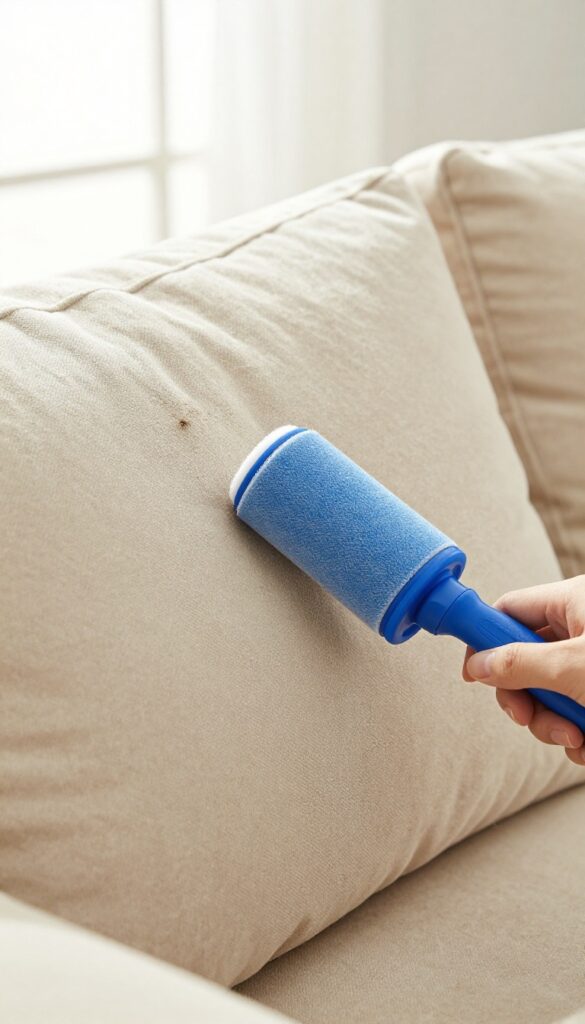
Pet hair and dust settle deep into sofa fibers, making them look worn and feel gritty. A lint roller is the quickest fix for a quick refresh between deep cleans. This simple tool grabs loose debris without any liquid or drying time.
Keep one in your couch-side drawer for instant touch-ups whenever guests pop by.
Why It Works
Lint rollers use adhesive sheets that trap hair, dust, and crumbs on contact. They work on most fabric types without damaging the weave. The sticky surface grabs particles that vacuums often miss, especially in crevices and along seams.
How To Use It Effectively
Roll in short, overlapping strokes, applying light pressure. Change the sheet as soon as it loses tackiness. For deep-set pet hair, roll in multiple directions to lift embedded strands.
Finish by wiping the fabric with a dry microfiber cloth to remove any leftover adhesive residue.
When To Reach For A Lint Roller
Use it daily on high-traffic spots like armrests and seat cushions. It’s perfect for a quick clean before guests arrive or after a pet has lounged on the sofa. For larger jobs, combine with vacuuming first, then use the roller for a final polish.
8. Vacuum with Upholstery Attachment Weekly
Dust, crumbs, and pet hair settle into your sofa's fibers faster than you realize. Left too long, they grind deeper, making your couch look dull and feel grimy. A quick weekly vacuum with the right attachment prevents that buildup and keeps your upholstery looking fresher between deep cleans.
Most people vacuum their floors but forget the sofa. That's a mistake because fabric fibers trap particles that wear down the material over time. Using the upholstery brush attachment lifts debris without damaging the fabric.
Make it a habit every week, and you'll notice less dust floating around and fewer stains setting in.
Why The Upholstery Attachment Matters
A regular vacuum head is too aggressive for sofa fabric. The upholstery brush has softer bristles that agitate fibers gently, releasing trapped dirt without fraying or stretching. It also reaches into crevices where crumbs and pet hair hide.
How To Vacuum Your Sofa Correctly
Start by removing all cushions and vacuuming both sides. Use slow, overlapping strokes in the direction of the fabric grain. Don't forget the backrest, armrests, and the base underneath cushions.
For crevices, switch to the crevice tool.
When To Vacuum More Often
If you have pets or kids, vacuum twice a week. High-traffic sofas collect dirt faster. Also, vacuum immediately after a spill once the area is dry to prevent residue from bonding with fibers.
9. Cornstarch for Greasy Spots
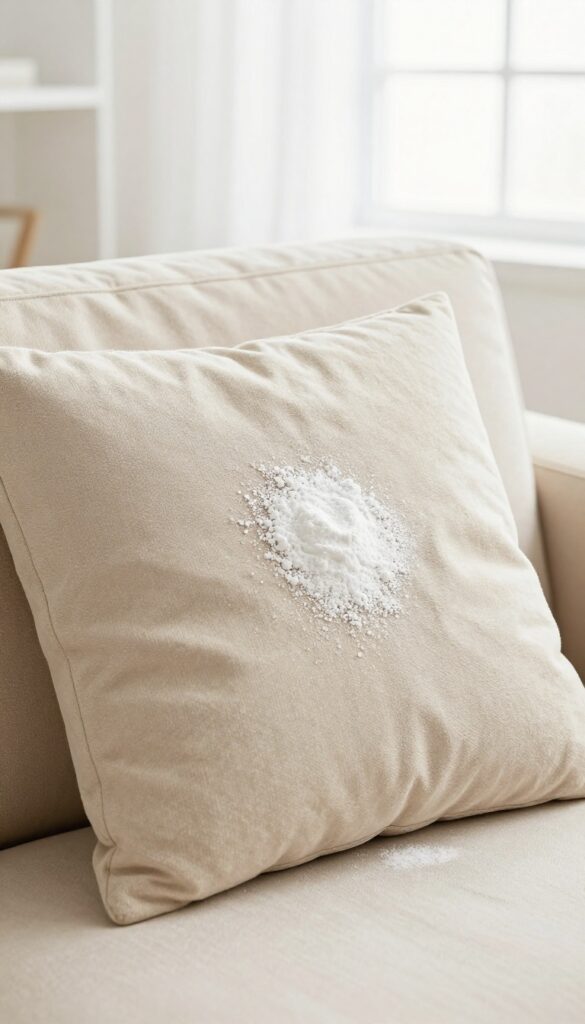
Grease stains from food spills or body oils can be stubborn, but cornstarch is a simple, effective remedy. This pantry staple absorbs grease without rubbing it deeper into the fabric, making it perfect for fresh stains.
Sprinkle a generous amount of cornstarch directly onto the greasy spot. Let it sit for at least 30 minutes to absorb the oil. Then, brush off the powder with a soft brush and vacuum the area.
For stubborn stains, repeat the process or follow up with a mild dish soap solution.
Why Cornstarch Works
Cornstarch is a fine, absorbent powder that pulls grease from fabric fibers without spreading the stain. Unlike liquids, it won't push the oil deeper into the cushion, making it safer for delicate upholstery.
Best Fabrics To Use This On
This method works well on microfiber, cotton, and polyester blends. Avoid using it on silk or velvet, as the powder can be difficult to remove completely and may leave a residue.
Tips For Best Results
Always test on an inconspicuous area first. For set-in grease stains, apply cornstarch and let it sit overnight. Brush gently to avoid damaging the fabric, and vacuum thoroughly afterward.
10. Hydrogen Peroxide for Blood Stains
Blood stains on your sofa can be alarming, but they don't have to be permanent. Hydrogen peroxide is a gentle yet effective solution that breaks down the proteins in blood without damaging most fabric types. The key is to act quickly and use the right concentration.
Hydrogen peroxide works by releasing oxygen bubbles that lift the stain from the fibers. For best results, use a 3% solution—the standard strength found in drugstores. Always test on an inconspicuous area first, especially on dark or delicate fabrics.
This hack is ideal for removable cushion covers or spot treatments.
How To Apply It Right
Blot the stain with a dry cloth to remove excess blood. Pour a small amount of 3% hydrogen peroxide directly onto the stain—enough to saturate it. You'll see it start to fizz almost immediately.
Let it bubble for a few minutes, then gently blot with a clean, damp cloth. Repeat if needed, then let the area air dry.
What To Avoid
Never use hot water or heat on a blood stain—it sets the protein and makes the stain permanent. Also avoid scrubbing, which can push the stain deeper into the fibers. Stick to blotting and dabbing motions.
If the stain is old or dried, hydrogen peroxide may still work, but it might require multiple applications.
Fabric Compatibility Tips
Hydrogen peroxide is generally safe for cotton, polyester, and synthetic blends. Avoid it on silk, wool, or leather, as it can cause discoloration or damage. For these materials, consider a professional cleaner or a different method.
Always check your sofa's care tag before proceeding.
11. Essential Oils for a Fresh Scent
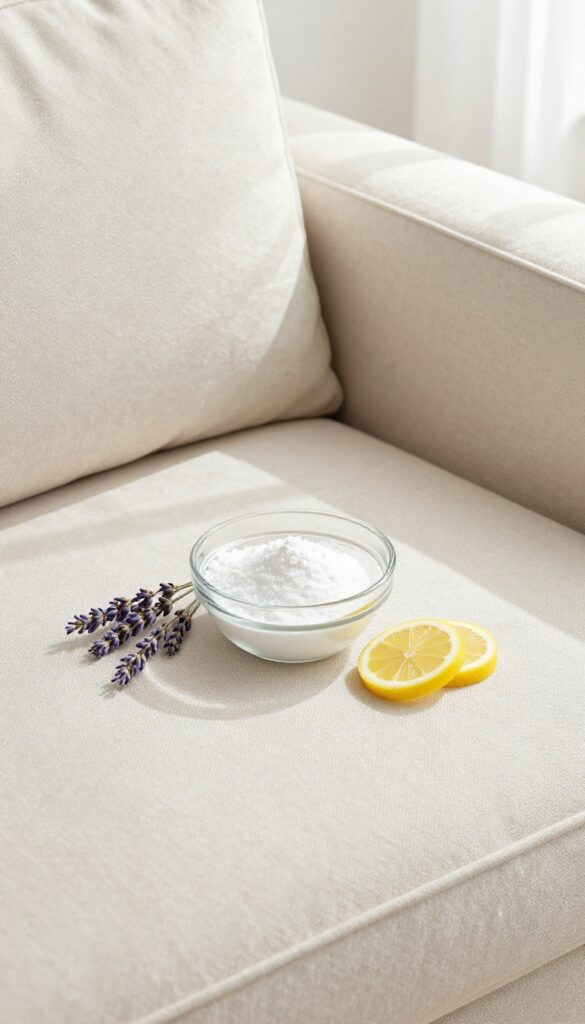
A fresh-smelling sofa makes the whole room feel cleaner. But many commercial fabric fresheners are loaded with chemicals that can irritate allergies or leave a synthetic scent. Essential oils offer a natural, customizable alternative that smells wonderful and can even help neutralize odors.
Using essential oils on your sofa is simple and safe when done correctly. The key is to mix them with a carrier like baking soda, which absorbs smells while the oil adds a pleasant fragrance. Always test a small hidden area first to ensure the oil doesn't stain or react with your fabric.
Choose The Right Oils
Lavender is a classic choice for its calming, floral scent that also repels moths. Lemon or orange oils bring a bright, clean citrus note that cuts through musty odors. Tea tree oil has antimicrobial properties and a fresh, medicinal smell that's great for killing bacteria.
Avoid oils with strong dyes or thick residues like cinnamon or clove, as they may stain.
How To Apply
Mix 10–15 drops of your chosen essential oil with 1 cup of baking soda in a bowl. Stir well to distribute the oil evenly, then let the mixture sit for an hour so the scent absorbs. Sprinkle the baking soda over your sofa, let it sit for at least 30 minutes (or overnight for deeper odor removal), then vacuum thoroughly.
Safety Tips
Always dilute essential oils—neat oils can damage fabric or cause skin irritation if you sit on the couch. Avoid using oils on delicate fabrics like silk or velvet without a patch test. If you have pets, check that the oils you choose are pet-safe (lavender and chamomile are generally fine, but tea tree and citrus can be toxic to cats and dogs in high concentrations).
12. Shaving Cream for Upholstery Stains
Shaving cream isn't just for grooming—it's a surprisingly effective upholstery cleaner. The foamy texture lifts dirt and oil from fabric without soaking it, making it ideal for fresh or set-in stains. Best of all, it's gentle enough for most sofa materials and costs pennies per use.
Plain shaving cream (the white foam kind, not gel) works wonders on makeup, ink, and food stains. Apply a small amount directly to the stain, let it sit for a minute, then gently rub with a damp cloth. Wipe away residue with a clean, damp cloth and let the area air dry.
Test on an inconspicuous spot first to ensure colorfastness.
Why Shaving Cream Works
Shaving cream contains surfactants that break down oils and lift particles from fabric fibers. Its thick foam clings to vertical surfaces without dripping, making it perfect for sofa cushions and armrests. Unlike harsh chemical cleaners, it's mild enough for daily use.
Step-by-step Application
Blot the stain first to remove excess. Squirt a dollop of shaving cream onto the stain, then use a soft-bristled brush or your fingers to work it in gently. Let it sit for 5-10 minutes, then wipe away with a damp microfiber cloth.
Repeat if needed, then vacuum the area once dry to restore texture.
Stains That Respond Best
Shaving cream is particularly effective on grease-based stains like butter, salad dressing, and body oils. It also lifts ink from pens and lipstick marks. For dried or stubborn stains, let the cream sit longer (up to 30 minutes) before wiping.
13. Sunlight for Natural Bleaching
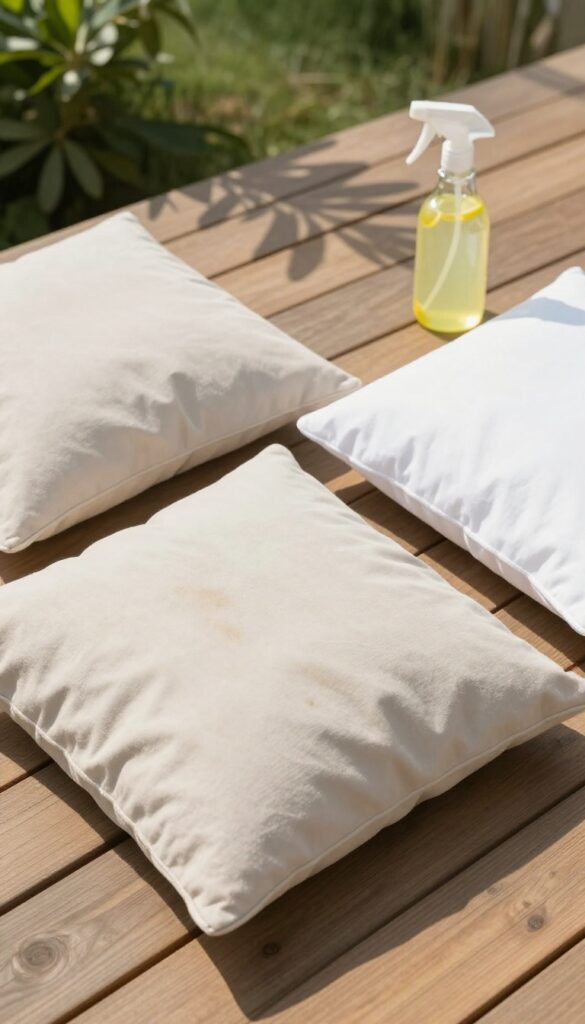
Sunlight isn't just for drying clothes—it's a powerful, free stain remover for your sofa cushions. Ultraviolet rays naturally break down organic stains and kill bacteria that cause odors. This method works best on removable cushion covers that can handle a few hours of direct sun without fading.
How Sunlight Lifts Stains
UV rays oxidize stain molecules, making them less visible over time. For light-colored fabrics, this can brighten the entire cushion. Darker fabrics may fade, so test a hidden spot first.
Sunlight also dries out moisture that leads to mildew, tackling musty smells at the source.
Step-by-step Sun Bleaching
Remove cushion covers if possible and check care labels. Lay them flat on a clean surface in direct sunlight. Leave for 2–4 hours, flipping halfway through.
For stubborn stains, pre-treat with lemon juice or hydrogen peroxide before sun exposure—but test for colorfastness first.
When To Skip This Hack
Avoid prolonged sun exposure on delicate fabrics like silk, velvet, or dark colors that may fade unevenly. Also skip if your sofa is in a humid area—moisture plus heat can encourage mold. For synthetic blends, limit sun time to prevent weakening fibers.
14. Fabric-Safe Carpet Cleaner for Deep Spots
Some stains just won't budge with gentle methods. That's when a carpet cleaner designed for upholstery can save the day. These machines use hot water and cleaning solution to extract dirt deep from the fibers.
Just be sure to test on a hidden area first to prevent fading or damage.
When a stubborn spot laughs at your usual tricks, it's time to bring out the big guns—a portable carpet cleaner with upholstery attachment. These machines are designed to flush out embedded grime without over-wetting your sofa. The key is using a cleaning solution that's specifically labeled for upholstery, not just carpets.
Fabric-safe formulas are gentler on fibers and less likely to cause discoloration. Always check the manufacturer's instructions for your sofa's fabric type before proceeding.
Why Upholstery-specific Cleaner Matters
Carpet cleaners often contain stronger detergents that can strip color or leave residue on sofa fabrics. Upholstery-safe solutions are pH-balanced and free of optical brighteners, making them safer for delicate materials like microfiber, cotton, or polyester blends. Using the wrong product could void your warranty or cause permanent damage, so stick with what's recommended for furniture.
Step-by-step Spot Cleaning
Start by vacuuming the area to remove loose dirt. Pre-treat the stain with a small amount of upholstery cleaner and let it sit for a few minutes. Use the carpet cleaner's upholstery tool to spray the solution and immediately extract it with the suction.
Work in overlapping passes until the water runs clear. Blot any excess moisture with a clean cloth and allow the sofa to air-dry completely.
Testing For Colorfastness
Before you go all in, test the cleaner on a hidden spot—like under a cushion or behind the sofa. Apply a small amount and blot with a white cloth. If any color transfers to the cloth, choose a different product or method.
This simple step prevents ugly surprises and keeps your sofa looking its best.
15. Pillow Fluffing & Rotation to Prevent Wear
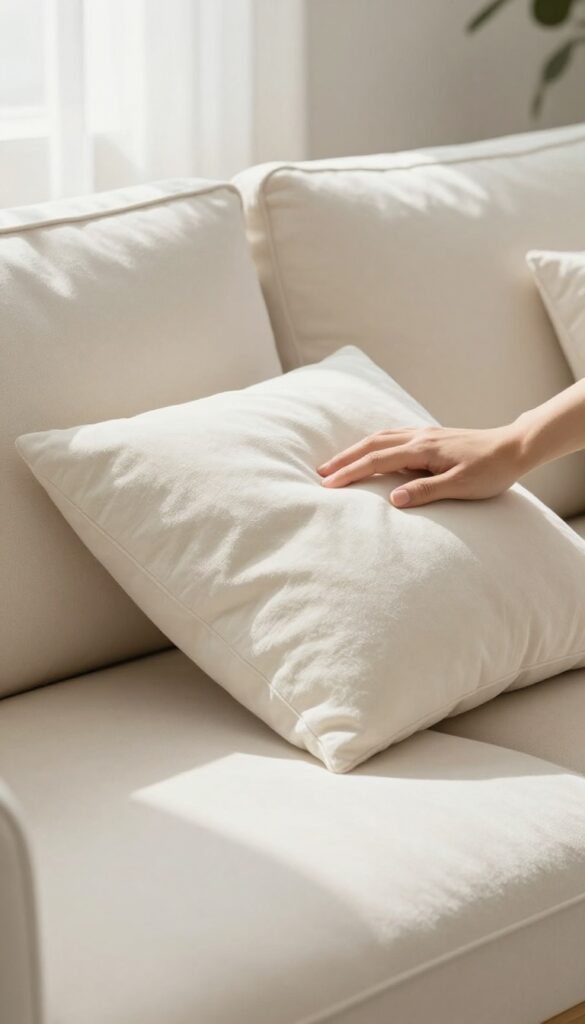
Cushions take the brunt of daily use, and they show it faster if you never give them a break. A simple weekly fluff and rotation routine can double their lifespan and keep your sofa looking even on both sides. This hack costs nothing but a few minutes of your time.
Fluffing and rotating cushions weekly distributes body weight and pressure more evenly, preventing permanent indentations. It also helps the fabric wear uniformly, so one side doesn't fade or flatten faster than the other. For removable cushions, flip them over and rotate front to back.
For attached cushions, lift and plump them to restore shape.
Why Rotation Matters
The spot where you always sit gets compressed more than the rest of the sofa. Over time, the foam loses resilience and the fabric wears thin. Rotating cushions swaps the high-traffic areas with less-used spots, giving each cushion a break.
This simple habit can prevent the need for re-stuffing or replacing cushions years earlier than expected.
How To Fluff Properly
Start by removing any loose covers if possible. Grasp the cushion by its edges and give it a good shake to redistribute the filling. For foam cushions, press down firmly in the center and then lift the edges to re-inflate the foam.
For fiber-filled cushions, punch and knead the filling to break up clumps. Do this every week for best results.
Rotation Schedule That Works
Set a recurring reminder on your phone for the same day each week. A good system is to rotate cushions every Sunday while you vacuum the sofa. If you have multiple seat cushions, label them with a fabric marker on the underside so you can track their positions.
Rotate front to back and also swap left and right cushions to balance wear.
16. Slipcovers as a Protective Layer
Machine-washable slipcovers are a game-changer for anyone tired of scrubbing stains out of upholstery. They act like a shield, catching spills and dirt before they reach the sofa fabric. Best of all, you can toss them in the wash and start fresh without any heavy cleaning.
Slipcovers extend the life of your sofa by preventing stains from setting. They're especially handy in homes with kids, pets, or frequent entertaining. Choose a snug fit to avoid constant readjusting, and look for fabrics like cotton or polyester blends that hold up to washing.
Choosing The Right Fabric
Opt for machine-washable materials that resist shrinking and fading. Cotton canvas is durable, while microfiber repels liquids. Avoid dry-clean-only covers—they defeat the purpose of easy maintenance.
Quick Removal For Spills
When a spill happens, unzip the cover and wash it immediately. This prevents stains from bonding with the fabric. Keep a spare cover on hand so your sofa stays protected while the other is in the laundry.
Seasonal Refresh
Swap slipcovers seasonally to change your decor and give the sofa a deep clean. Wash them on a gentle cycle with mild detergent, then air dry to maintain shape. This routine keeps your couch looking new year-round.
17. Professional Cleaning Once a Year
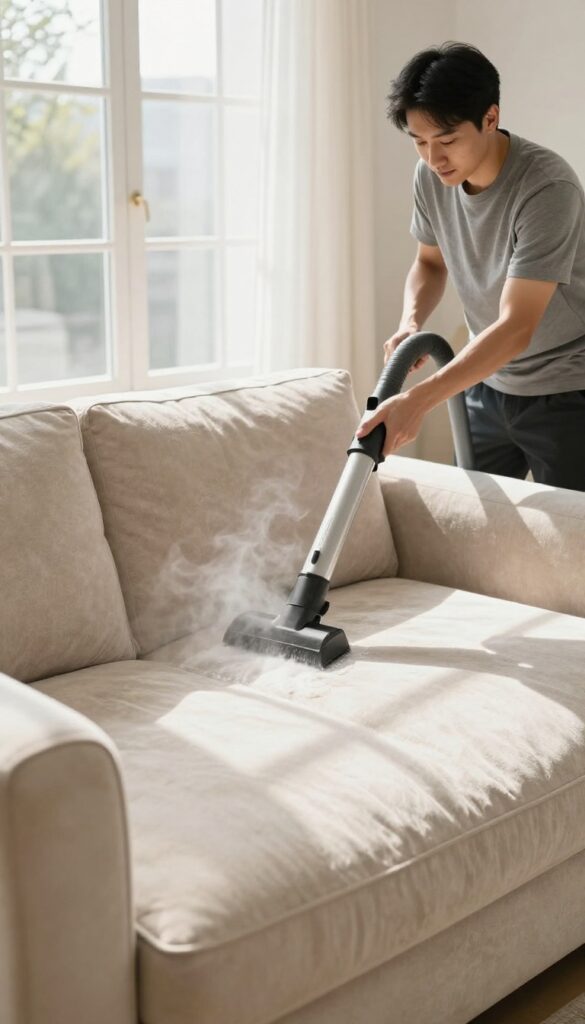
Even with regular spot cleaning and weekly vacuuming, your sofa accumulates deep-down grime that household methods can't fully remove. A professional deep steam clean once a year strips away embedded dirt, allergens, and bacteria, restoring the fabric's original texture and color. It's the one investment that pays for itself by extending your sofa's lifespan.
Annual professional cleaning isn't just about looks—it's about hygiene and durability. Steam cleaning reaches deep into the padding and fibers, flushing out oils, dust mites, and odors that settle over time. Many manufacturers recommend professional cleaning every 12–18 months to maintain warranty coverage.
Plus, it gives your sofa a fresh start, making your daily maintenance routine more effective throughout the year.
What Professional Cleaning Actually Does
A pro uses hot water extraction (steam cleaning) combined with specialized upholstery detergents. The machine injects hot water mixed with cleaner into the fabric, then vacuums it out along with dissolved grime. This process removes what surface cleaning leaves behind—like dried sweat, pet dander, and deep-set dust.
It also sanitizes without harsh chemicals, leaving your sofa fresh and safe for the whole family.
How To Prepare For The Appointment
Before the cleaner arrives, vacuum your sofa thoroughly to remove loose debris. Remove all cushions, pillows, and any removable covers (check if they're machine-washable). Clear the area around the sofa so the technician can move freely.
Point out any stubborn stains or spots you want them to focus on. Also, make sure the room is well-ventilated for faster drying after the cleaning.
Timing Your Annual Clean
Schedule professional cleaning during a season when you can leave windows open and the sofa can dry completely—spring or fall are ideal. Avoid cleaning right before a holiday or when you'll have guests, as drying can take 6–12 hours. If you have pets or allergies, consider twice-yearly cleanings.
Mark your calendar so you never skip this crucial maintenance step.
FAQ
Can I use bleach on my sofa?
Bleach is too harsh for most upholstery and can cause discoloration or fabric damage. Stick to gentler options like vinegar or dish soap.
How often should I vacuum my sofa?
Aim for once a week to prevent dust and dirt from settling deep into the fibers.
What’s the best way to remove pet odor?
Baking soda is excellent for absorbing odors. Sprinkle it on, let it sit for 15–20 minutes, then vacuum thoroughly.
Can I use a steam cleaner on all fabrics?
Check the manufacturer’s label. Steam is safe for most synthetic and cotton blends, but delicate fabrics like silk may require professional cleaning.
How do I remove old, set-in stains?
Try a paste of baking soda and water, let it dry, then vacuum. For stubborn stains, a vinegar solution or rubbing alcohol may help.
Conclusion
You don't need a professional cleaner or expensive products to keep your sofa looking great. These 17 hacks use everyday items you probably already have at home. Start with the most visible stains and work your way through the list.
Your couch will feel fresher, smell better, and last longer. Try a few this weekend—you'll be surprised by the results.